China Automotive Parts Magnesium Die Casting Market Outlook
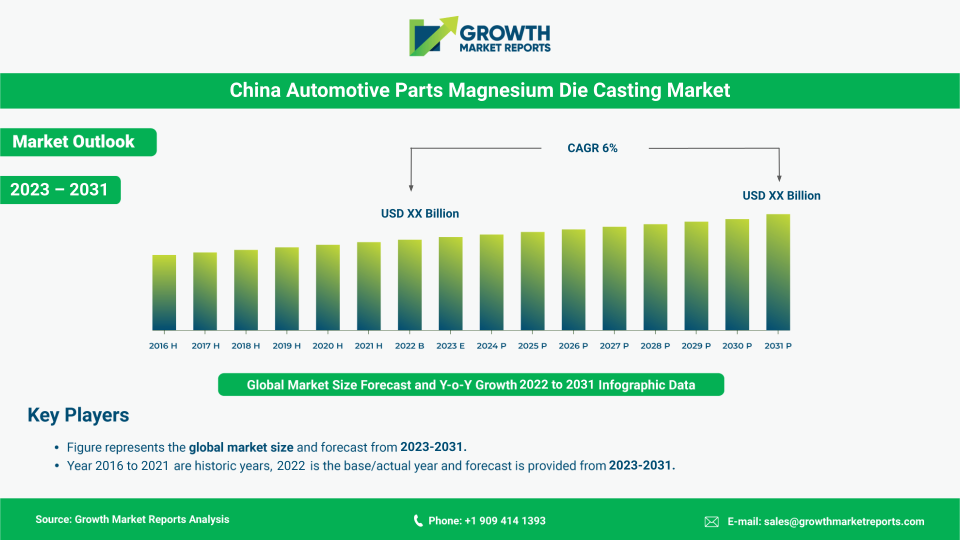
The China Automotive Parts Magnesium Die Casting Market size was valued at USD XX Billion in 2022 and is likely to reach USD XX Billion by 2031 expanding at a CAGR of 6% during 2023 – 2031. The growth of market is attributed to growing automotive industry during the forecast period.
The die casting is the metal casting process which forces the molten metal under a high pressure into a mold cavity. The various automotive parts have been made from the die casting such as engine cylinder head, gas engine parts, stator, brackets and electronic covers. Some of the advantages of die casting such as more design flexible and freedom to create complex parts, a wide variety of finishing get due to die casting.
The COVID-19 pandemic affected the demand and supply of the China automotive parts magnesium die casting market. Lockdown across the globe, supply chain disorders, and oscillating supply of raw materials forced manufacturers to shut down production leading to unfortunate decline in market growth. Launch of vaccines and used of infusion pump in the COVID-19 treatment is expected to contribute to the market growth over the forecast period.
Market Trends, Drivers, Restraints, and Opportunities
- The government initiative and reserve of magnesium in the automotive sector is projected to drive the China automotive parts magnesium die casting market.
- The availability of leading automobile manufacturer as well as the component manufacturing is estimated to drive the market during the forecast period.
- To reduce the weight of automobile the adoption of light weight ferrous material increasing this boosts the China automotive parts magnesium die casting market.
- The ongoing trade war between United States and China has slowdown the automobile sales for couple of year. This is hindering the China automotive parts magnesium die casting market.
- High cost of raw materials is hampering the market growth during the forecast period.
- The light weight automotive parts to reduce fuel consumption and energy saving mode is fueling the China automotive parts magnesium die casting market.
Scope of China Automotive Parts Magnesium Die Casting Market Report
The report on the China automotive parts magnesium die casting market includes an assessment of the market, trends, segments, and regional markets. Overview and dynamics have also been included in the report.
|
Attributes
|
Details
|
|
Report Title
|
Automotive Parts Magnesium Die Casting Market - China Industry Analysis, Growth, Share, Size, Trends, and Forecast
|
|
Base Year
|
2022
|
|
Historic Data
|
2016–2021
|
|
Forecast Period
|
2023–2031
|
|
Segmentation
|
Production Processes (Pressure Die Casting, Vacuum Die Casting, Squeeze Die Casting, and Semi-Solid Die Casting), and Applications (Engine Parts, Transmission Components, Body Parts, and Others)
|
|
Regional Scope
|
China
|
|
Report Coverage
|
Company Share, Market Analysis and Size, Competitive Landscape, Growth Factors, and Trends, and Revenue Forecast
|
|
Key Players Covered in the Report
|
Gibbs Die Casting Group; Pace Industries; Shiloh Industries Inc.; George Fischer AG; Meridian Lightweight Technologies
|
China Automotive Parts Magnesium Die Casting Market Segment Insights
The pressure die casting segment is expected to grow at a rapid pace
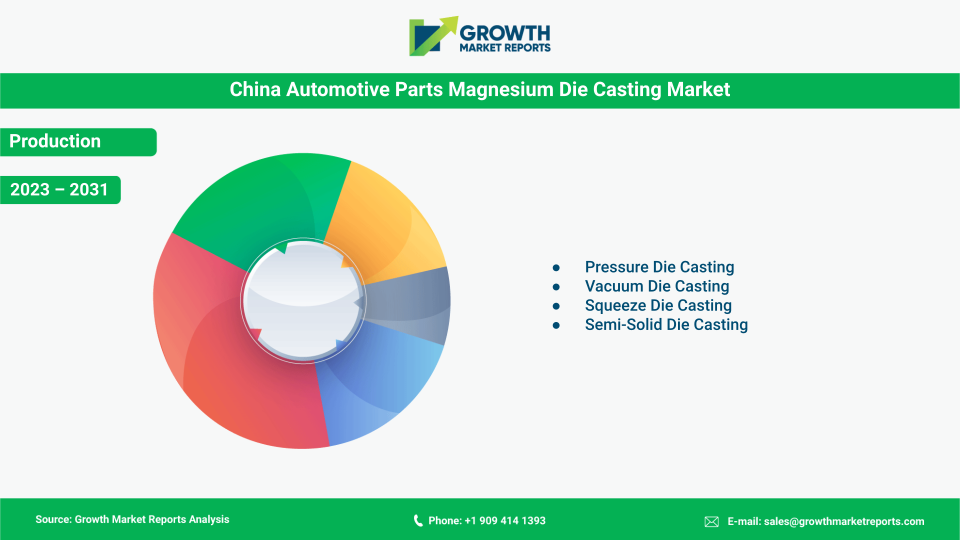
Based on production processes, the China automotive parts magnesium die casting market is segmented into pressure die casting, vacuum die casting, squeeze die casting, and semi-solid die casting. The pressure die casting segment is expected to grow at a rapid pace during the forecast period because of the high pressure die casting is used to make automobile body parts such as pillars, floor rails, and shock towers.
Cadillac XLR roadster's retractable hardtop convertible roof and top frame made from the magnesium alloys. Due to the high productivity and easy to manufacture the automotive parts is driving the market during the forecast period. However, the vacuum die casting segment is anticipated to hold a key share market during the forecast period due to productivity and flexibility of making large automobile parts.
The body parts segment is projected to expand at a considerable CAGR
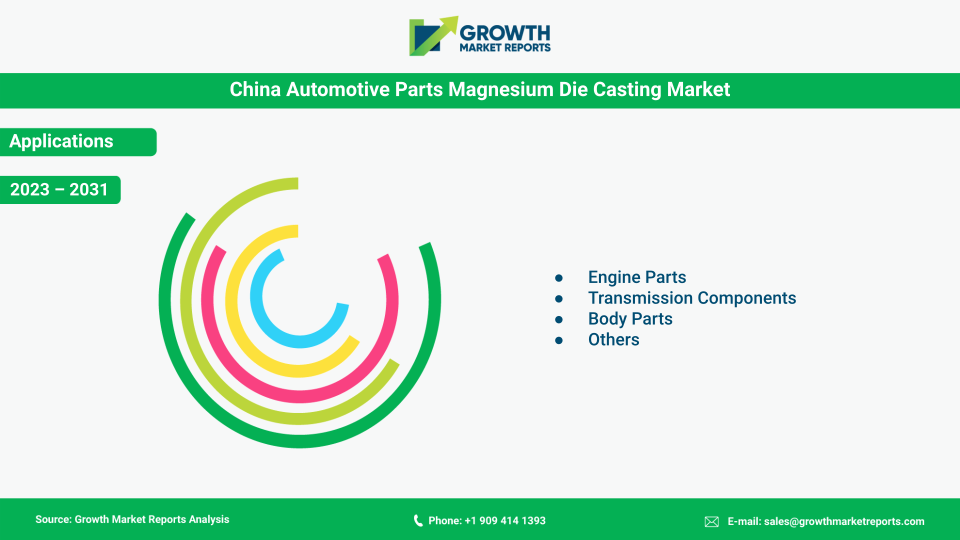
On the basis of applications, the China automotive parts magnesium die casting market is divided into engine parts, transmission components, body parts, and others. The body parts segment is projected to expand at a considerable CAGR during the forecast period owing to rising use of magnesium die casting to making automotive body parts.
GM has been used a single-piece die-cast roof frame, since the introduction of C-5 Corvette in 1997. In Europe German auto giants Mercedes and Volkswagen have used thin wall magnesium die castings. The purpose of manufacturing thin-wall castings, which are approximately less than two mm, lies in the design of casting, using proper radii, and smooth die-filling of the ribs to stiffen the parts.
On the other hand, the engine parts segment is anticipated to account for a major market share during the forecast period owing to making light weight engine parts.
Segments
The China automotive parts magnesium die casting market has been segmented on the basis of
Production processes
- Pressure Die Casting
- Vacuum Die Casting
- Squeeze Die Casting
- Semi-Solid Die Casting
Applications
- Engine Parts
- Transmission Components
- Body Parts
- Others
Key Players
Competitive Landscape
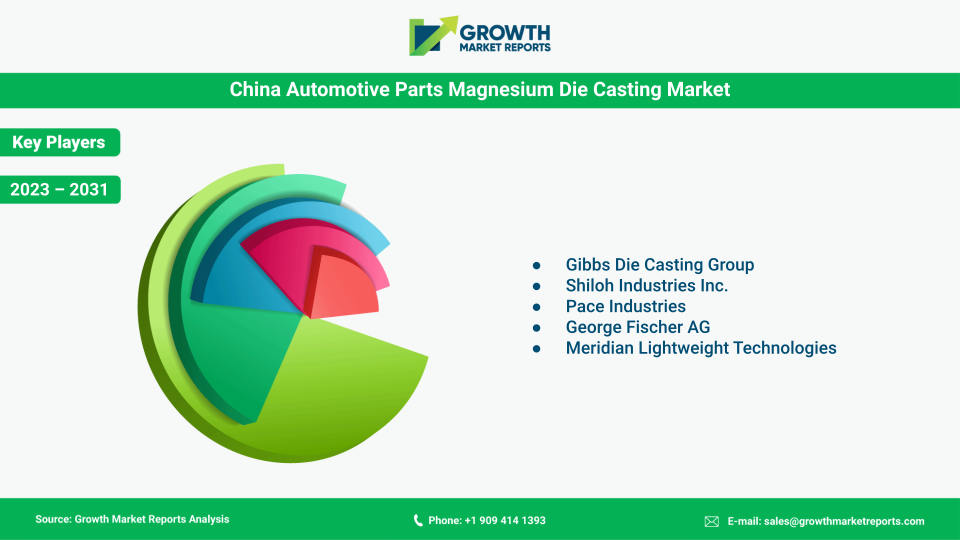
Some of the key market players competing in the China automotive parts magnesium die casting market are Gibbs Die Casting Group; Pace Industries; Shiloh Industries Inc.; George Fischer AG; Meridian Lightweight Technologies
These key players are constantly implementing several marketing strategies such as merger & acquisitions, capital investments, partnerships, and new product development to sustain industry position in the market.











 Request For Customization
 Enquiry Before Buying
 Speak With Analyst