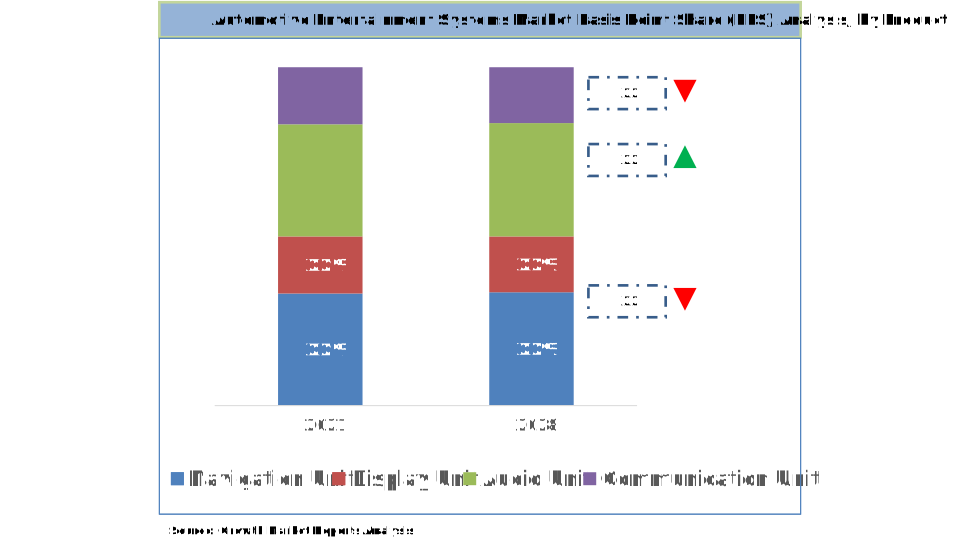
Segments - by Product Type (Audio Systems, Video Systems, Navigation Systems, Display Units, Others), by Vehicle Type (Passenger Cars, Commercial Vehicles, Electric Vehicles), by Connectivity (Wired, Wireless), by Component (Hardware, Software, Services), by Sales Channel (OEM, Aftermarket)
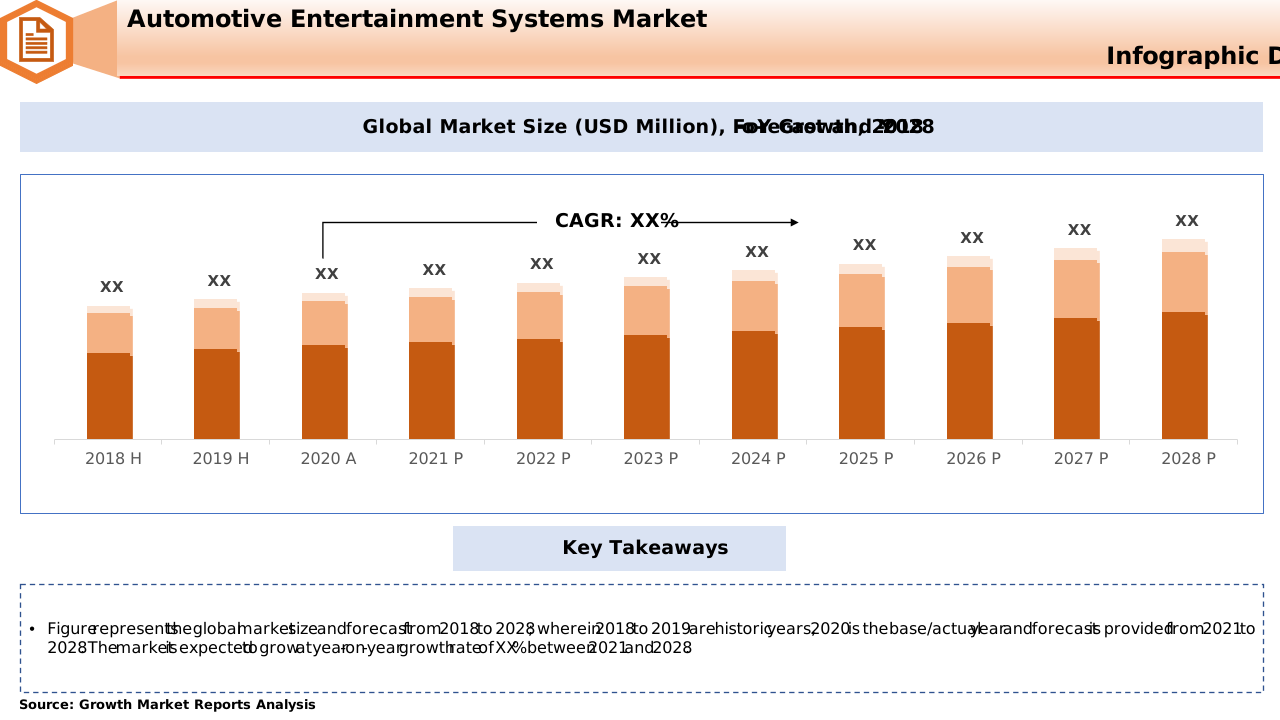
According to our latest research, the global automotive entertainment systems market size reached USD 34.7 billion in 2024, reflecting robust integration of advanced in-car infotainment solutions across the automotive industry. The market is projected to expand at a CAGR of 8.2% from 2025 to 2033, culminating in a forecasted value of USD 69.5 billion by 2033. This growth is primarily propelled by rising consumer demand for immersive in-vehicle experiences, the proliferation of connected car technologies, and increasing adoption of smart mobility solutions. As per our latest research, the market’s expansion is being further catalyzed by evolving digital lifestyles and the automotive sector’s shift towards electrification and autonomous driving innovations.
One of the principal growth drivers for the automotive entertainment systems market is the escalating consumer expectation for seamless and enhanced in-car connectivity. With the proliferation of smartphones and mobile internet, users now demand uninterrupted access to multimedia content, navigation services, and real-time information while on the move. This has prompted automakers to integrate sophisticated audio, video, and navigation systems, coupled with interactive display units, to offer a holistic entertainment experience. The convergence of entertainment and telematics is also influencing OEMs to offer advanced infotainment platforms as standard or premium features, thereby expanding the market’s addressable base. Additionally, the surge in ride-sharing and mobility-as-a-service (MaaS) models is further reinforcing the need for differentiated, value-added in-car experiences, fueling market growth.
Technological advancements remain a cornerstone of market expansion, particularly the adoption of wireless connectivity, cloud-based platforms, and artificial intelligence within automotive entertainment systems. The shift from traditional wired setups to wireless interfaces, such as Bluetooth, Wi-Fi, and cellular connectivity, has significantly elevated user convenience and system integration. Moreover, the integration of voice assistants, gesture controls, and personalized content recommendations is transforming the way occupants interact with in-car entertainment. These innovations are not only enhancing user engagement but are also opening avenues for over-the-air (OTA) updates and subscription-based services, which provide recurring revenue streams for automakers and technology vendors alike. As vehicles become increasingly autonomous, the role of entertainment systems is expected to evolve further, serving as a pivotal element in the passenger experience.
Another critical growth factor is the rapid electrification of vehicles and the emergence of electric vehicles (EVs) as mainstream transportation options. EV manufacturers are leveraging advanced entertainment systems as a key differentiator to attract tech-savvy consumers and compensate for the quieter cabin environment. The integration of large, high-definition display units, immersive audio systems, and real-time navigation tailored for EV charging infrastructure is becoming commonplace. Furthermore, regulatory mandates for enhanced driver and passenger safety are encouraging the adoption of infotainment systems that seamlessly integrate with advanced driver-assistance systems (ADAS), further boosting market penetration. The growing focus on sustainability and digital transformation in the automotive industry is expected to sustain the momentum of the automotive entertainment systems market in the coming years.
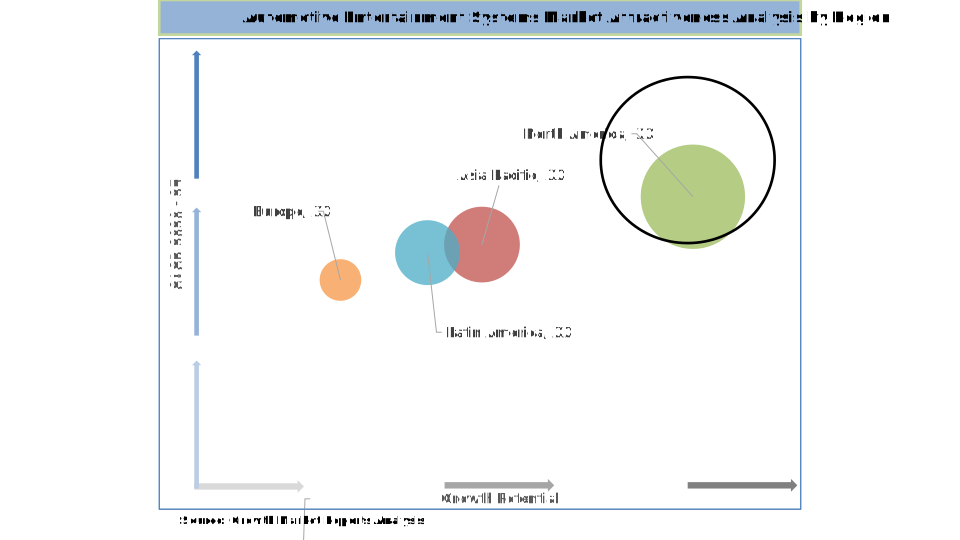
From a regional perspective, Asia Pacific remains the largest and fastest-growing market for automotive entertainment systems, underpinned by the rapid expansion of the automotive sector in China, India, and Southeast Asia. North America and Europe follow closely, benefiting from high vehicle ownership rates, strong consumer purchasing power, and early adoption of connected car technologies. Latin America and the Middle East & Africa are also witnessing steady growth, driven by rising disposable incomes and increasing urbanization. The competitive landscape is shaped by a mix of global technology leaders, automotive OEMs, and specialized infotainment solution providers, all vying to capture a larger share of this dynamic market.
The automotive entertainment systems market is segmented by product type into audio systems, video systems, navigation systems, display units, and others. Audio systems continue to dominate the market, owing to their ubiquity across all vehicle types and ongoing advancements in surround sound, noise cancellation, and immersive audio experiences. Premium audio brands are increasingly partnering with automakers to deliver branded sound systems that offer superior acoustic performance, catering to discerning consumers who prioritize high-quality audio. The adoption of digital signal processors (DSPs) and multi-zone audio capabilities is further enhancing the appeal of advanced audio systems, making them a key differentiator in both mass-market and luxury vehicles.
Video systems are witnessing rapid adoption, particularly in luxury and family-oriented vehicles, as consumers seek to enhance passenger entertainment during long journeys. Rear-seat entertainment units, integrated headrest displays, and foldable screens are becoming standard features in SUVs and minivans, offering a theater-like experience on the go. The integration of streaming services, gaming platforms, and content mirroring from personal devices is transforming video systems into interactive entertainment hubs. Automakers are also exploring augmented reality (AR) and virtual reality (VR) applications to deliver immersive content, further expanding the scope of in-car entertainment beyond traditional video playback.
Navigation systems have evolved from basic GPS modules to comprehensive, real-time navigation platforms that integrate with cloud services, traffic updates, and location-based information. Modern navigation systems offer dynamic route planning, predictive traffic analytics, and integration with infotainment platforms for a seamless user experience. The rise of electric vehicles has spurred the development of navigation solutions tailored for EV charging station locations and range optimization, adding further value for consumers. Voice-activated navigation and integration with smartphone apps are also gaining traction, making navigation systems an indispensable component of modern automotive entertainment solutions.
Display units are at the forefront of user interface innovation, transitioning from simple dashboards to expansive, high-resolution touchscreens and multi-display configurations. The adoption of OLED and QLED technologies is delivering vibrant visuals and enhanced durability, while haptic feedback and gesture controls are redefining user interaction. Display units now serve as the central hub for controlling audio, video, navigation, and vehicle settings, consolidating multiple functions into a single, intuitive interface. Automakers are experimenting with curved and wraparound displays, heads-up displays (HUDs), and augmented reality overlays to provide a more immersive and safer driving experience.
The "Others" category encompasses emerging product types such as gaming consoles, internet browsers, and smart assistant integrations, reflecting the market’s ongoing diversification. As consumer expectations continue to evolve, automotive entertainment systems are likely to incorporate additional functionalities, including health and wellness monitoring, social media access, and personalized content delivery. The convergence of entertainment and connectivity is expected to drive sustained innovation across all product segments, ensuring that automotive entertainment systems remain a focal point of vehicle differentiation and customer satisfaction.
| Attributes | Details |
| Report Title | automotive entertainment systems Market Research Report 2033 |
| By Product Type | Audio Systems, Video Systems, Navigation Systems, Display Units, Others |
| By Vehicle Type | Passenger Cars, Commercial Vehicles, Electric Vehicles |
| By Connectivity | Wired, Wireless |
| By Component | Hardware, Software, Services |
| By Sales Channel | OEM, Aftermarket |
| Regions Covered | North America, Europe, APAC, Latin America, MEA |
| Base Year | 2024 |
| Historic Data | 2018-2023 |
| Forecast Period | 2025-2033 |
| Number of Pages | 264 |
| Number of Tables & Figures | 295 |
| Customization Available | Yes, the report can be customized as per your need. |
The automotive entertainment systems market is segmented by vehicle type into passenger cars, commercial vehicles, and electric vehicles. Passenger cars represent the largest market share, driven by high production volumes, increasing consumer demand for premium features, and the proliferation of connected car technologies. Automakers are equipping a broader range of passenger vehicles, from entry-level sedans to luxury SUVs, with advanced infotainment systems to cater to diverse consumer preferences. The trend towards personalization and customization is prompting manufacturers to offer modular entertainment packages, allowing consumers to select features that best suit their needs and lifestyles.
Commercial vehicles, including trucks, buses, and vans, are increasingly adopting entertainment systems to enhance driver comfort and passenger satisfaction, particularly in long-haul and fleet operations. Fleet operators recognize the value of infotainment solutions in improving driver retention, reducing fatigue, and supporting navigation and telematics functionalities. In buses and coaches, rear-seat entertainment units and Wi-Fi connectivity are becoming standard offerings, catering to the growing demand for connected travel experiences. The integration of entertainment systems with telematics and fleet management platforms is also facilitating real-time monitoring and content delivery, further expanding the market’s reach within the commercial vehicle segment.
Electric vehicles (EVs) are emerging as a key growth segment for automotive entertainment systems, as manufacturers strive to differentiate their offerings in an increasingly competitive market. EVs typically feature quieter cabins and longer dwell times during charging, creating opportunities for immersive, high-tech entertainment experiences. Leading EV manufacturers are equipping their models with large, interactive touchscreens, premium audio systems, and advanced connectivity options to appeal to tech-savvy consumers. The integration of entertainment systems with vehicle energy management and charging infrastructure is also gaining prominence, providing users with real-time updates and tailored content during charging sessions.
The convergence of entertainment and safety is particularly relevant in the vehicle type segment, as automakers seek to balance occupant engagement with driver distraction mitigation. Advanced driver-assistance systems (ADAS) are being integrated with infotainment platforms to provide contextual alerts, voice-guided navigation, and hands-free controls, enhancing both safety and convenience. This trend is expected to accelerate with the advent of autonomous and semi-autonomous vehicles, where entertainment systems will play a central role in redefining the in-car experience for both drivers and passengers.
As the automotive industry continues to evolve, the boundaries between vehicle types are becoming increasingly blurred, with crossover models and shared mobility solutions driving demand for versatile, scalable entertainment platforms. The ability to deliver personalized, context-aware entertainment experiences across different vehicle types will be a key competitive advantage for automakers and infotainment solution providers in the coming years.
Connectivity is a critical segment of the automotive entertainment systems market, with the transition from wired to wireless technologies marking a significant paradigm shift. Wired connectivity, including USB, AUX, and HDMI interfaces, has traditionally served as the backbone for integrating external devices and peripherals with in-car entertainment systems. While wired connections offer reliability and high data transfer rates, they are increasingly being supplemented or replaced by wireless solutions that provide greater convenience and flexibility for users. Automakers are continuing to support wired interfaces to ensure compatibility with a wide range of devices, particularly in entry-level and mid-range vehicles.
Wireless connectivity is experiencing exponential growth, driven by the widespread adoption of Bluetooth, Wi-Fi, and cellular technologies in modern vehicles. Wireless solutions enable seamless pairing of smartphones, tablets, and wearable devices with the vehicle’s infotainment platform, facilitating hands-free calling, music streaming, and access to cloud-based services. The integration of wireless Apple CarPlay and Android Auto is becoming a standard feature in new vehicle models, allowing users to mirror their mobile apps and content directly onto the car’s display units. Wireless charging pads and over-the-air (OTA) software updates are further enhancing the value proposition of wireless connectivity in automotive entertainment systems.
The evolution of vehicle connectivity is closely linked to the rise of connected car platforms, which leverage embedded SIM cards, 4G/5G networks, and vehicle-to-everything (V2X) communication protocols to deliver real-time information, remote diagnostics, and personalized content. These platforms enable automakers and third-party service providers to offer subscription-based entertainment services, downloadable apps, and cloud gaming, transforming the in-car experience into an extension of the digital lifestyle. The ability to update and enhance entertainment system functionalities remotely is also reducing the need for physical upgrades, driving operational efficiencies for both OEMs and consumers.
Security and data privacy are emerging as critical considerations in the connectivity segment, as vehicles become increasingly reliant on wireless communication and cloud-based services. Automakers are investing in robust cybersecurity frameworks and encryption protocols to safeguard user data and prevent unauthorized access to in-car entertainment systems. Regulatory compliance and industry standards are shaping the development of secure connectivity solutions, ensuring that user trust is maintained as the market continues to evolve.
Looking ahead, the convergence of 5G networks, edge computing, and artificial intelligence is expected to unlock new possibilities for real-time content delivery, interactive entertainment, and immersive experiences within the automotive environment. The ability to provide ultra-low latency, high-bandwidth connectivity will be a key enabler for next-generation entertainment systems, supporting applications such as augmented reality navigation, cloud gaming, and personalized media streaming. As connectivity becomes a defining feature of automotive entertainment systems, industry stakeholders must continue to innovate and collaborate to deliver seamless, secure, and engaging in-car experiences.
The component segmentation of the automotive entertainment systems market encompasses hardware, software, and services, each playing a pivotal role in the development and deployment of advanced infotainment solutions. Hardware components form the physical backbone of entertainment systems, including head units, amplifiers, speakers, displays, and connectivity modules. The ongoing miniaturization and integration of hardware components are enabling automakers to deliver more compact, energy-efficient, and aesthetically pleasing infotainment solutions. Innovations in display technologies, such as OLED and QLED panels, are enhancing visual clarity and durability, while advancements in audio hardware are delivering richer, more immersive soundscapes.
Software is the driving force behind the functionality and user experience of automotive entertainment systems, encompassing operating systems, user interfaces, multimedia applications, and connectivity protocols. The shift towards open-source platforms and modular software architectures is enabling automakers to deliver customizable, upgradable infotainment solutions that cater to diverse consumer preferences. The integration of artificial intelligence, machine learning, and natural language processing is transforming software-driven entertainment systems into intelligent, context-aware platforms that anticipate user needs and deliver personalized content recommendations. The ability to support third-party apps and over-the-air updates is further enhancing the value proposition of software in the automotive entertainment ecosystem.
Services represent a rapidly growing component segment, reflecting the industry’s transition towards subscription-based and value-added offerings. Connected services, such as cloud-based music and video streaming, real-time navigation, and remote diagnostics, are becoming integral to the in-car entertainment experience. Automakers and technology vendors are partnering with content providers, telecommunications companies, and app developers to deliver a comprehensive suite of entertainment and information services, generating recurring revenue streams and fostering customer loyalty. The rise of mobility-as-a-service (MaaS) models is also driving demand for flexible, on-demand entertainment solutions that cater to shared and autonomous vehicle fleets.
The interplay between hardware, software, and services is shaping the competitive landscape of the automotive entertainment systems market, with industry stakeholders striving to deliver integrated, end-to-end solutions that address the evolving needs of consumers and automakers alike. The ability to offer seamless interoperability, rapid innovation cycles, and scalable deployment models will be critical to success in this dynamic market environment. As vehicles become increasingly connected and autonomous, the role of each component segment will continue to evolve, driving sustained growth and innovation across the automotive entertainment ecosystem.
The component segment is also witnessing increased collaboration between traditional automotive suppliers, technology giants, and startups, as the industry seeks to harness the collective expertise required to deliver next-generation entertainment solutions. Strategic partnerships, joint ventures, and mergers and acquisitions are becoming commonplace, as companies look to expand their capabilities and accelerate time-to-market for new products and services. The ongoing convergence of hardware, software, and services is expected to drive continued growth and differentiation in the automotive entertainment systems market over the forecast period.
The sales channel segmentation of the automotive entertainment systems market comprises original equipment manufacturers (OEMs) and the aftermarket, each offering distinct opportunities and challenges for industry stakeholders. OEMs represent the primary sales channel, accounting for the majority of market share, as automakers increasingly integrate advanced entertainment systems as standard or optional features in new vehicles. OEM-installed infotainment systems benefit from seamless integration with vehicle electronics, standardized quality control, and the ability to leverage brand partnerships with premium audio and technology providers. The trend towards factory-fitted entertainment solutions is being driven by consumer demand for convenience, reliability, and compatibility with other in-car systems.
The aftermarket segment remains a significant and dynamic sales channel, catering to consumers seeking to upgrade or customize their existing vehicles with the latest entertainment technologies. Aftermarket solutions offer a wide range of options, from entry-level head units and portable displays to high-end audio systems and advanced connectivity modules. The proliferation of online retail platforms and specialized installers is making it easier for consumers to access and install aftermarket entertainment systems, driving sustained demand in this segment. The aftermarket also serves as a testing ground for innovative features and technologies, as suppliers seek to differentiate their offerings and capture niche market segments.
The interplay between OEM and aftermarket sales channels is being shaped by evolving consumer preferences, regulatory requirements, and technological advancements. OEMs are increasingly adopting modular and upgradable infotainment architectures, allowing consumers to add or enhance features post-purchase through authorized service centers or over-the-air updates. This trend is blurring the lines between OEM and aftermarket solutions, creating new opportunities for collaboration and co-innovation between automakers, suppliers, and third-party service providers. The ability to deliver seamless integration, compatibility, and support across sales channels will be a key competitive advantage in the automotive entertainment systems market.
The rise of connected and autonomous vehicles is expected to further transform the sales channel landscape, as automakers and technology vendors explore new business models, such as subscription-based entertainment services, in-car advertising, and data-driven personalization. The ability to monetize in-car entertainment through recurring revenue streams and value-added services will be a critical driver of growth and profitability for both OEM and aftermarket players. As the market continues to evolve, stakeholders must remain agile and responsive to changing consumer expectations, regulatory developments, and technological innovations to capture emerging opportunities and sustain long-term success.
The sales channel segment is also witnessing increased focus on customer experience and support, as consumers demand intuitive, reliable, and easily upgradable entertainment solutions. The ability to provide comprehensive installation, maintenance, and technical support services will be essential for building customer loyalty and differentiating offerings in an increasingly competitive market. As the automotive entertainment systems market continues to grow, the balance between OEM and aftermarket sales channels will be shaped by ongoing innovation, collaboration, and a relentless focus on delivering value to consumers.
The automotive entertainment systems market is poised for significant opportunities, driven by the convergence of connectivity, digital content, and advanced user interfaces. One of the most promising opportunities lies in the integration of artificial intelligence and machine learning to deliver personalized, context-aware entertainment experiences. By analyzing user preferences, driving patterns, and environmental factors, AI-powered systems can curate content, recommend media, and optimize in-car experiences in real time. The rise of autonomous and semi-autonomous vehicles presents another major opportunity, as the reduction of driving responsibilities frees up occupants to engage with immersive entertainment, productivity, and wellness applications. Automakers and technology providers that can deliver seamless, intuitive, and engaging experiences will be well-positioned to capture a larger share of this expanding market.
Another key opportunity is the monetization of connected car data and the development of new business models centered around subscription-based services, in-car advertising, and on-demand content delivery. The ability to offer tailored entertainment packages, premium content, and exclusive experiences can drive recurring revenue streams and foster deeper customer engagement. Strategic partnerships with content providers, telecommunications companies, and app developers will be essential for creating compelling value propositions and expanding the ecosystem of in-car entertainment services. The ongoing electrification and digital transformation of the automotive industry also present opportunities for innovation in hardware, software, and service delivery, enabling stakeholders to differentiate their offerings and address emerging consumer needs.
Despite the numerous opportunities, the automotive entertainment systems market faces several restraining factors, with cybersecurity and data privacy emerging as major concerns. As vehicles become increasingly connected and reliant on cloud-based services, the risk of cyberattacks, data breaches, and unauthorized access to sensitive information is rising. Automakers and technology vendors must invest in robust security frameworks, encryption protocols, and regulatory compliance to safeguard user data and maintain consumer trust. Additionally, the complexity of integrating advanced entertainment systems with legacy vehicle architectures and ensuring compatibility across diverse platforms can pose technical and operational challenges. Regulatory requirements related to driver distraction, emissions, and safety standards may also impact the adoption and deployment of certain entertainment features, necessitating ongoing innovation and adaptation by industry stakeholders.
The regional analysis of the automotive entertainment systems market reveals distinct trends and growth dynamics across key geographies. Asia Pacific remains the largest and fastest-growing region, accounting for approximately USD 13.9 billion of the global market in 2024. The region’s dominance is underpinned by the rapid expansion of the automotive sector in China, India, Japan, and South Korea, coupled with rising disposable incomes and increasing consumer demand for connected and premium vehicles. The proliferation of electric vehicles, government incentives for smart mobility, and the presence of leading automotive OEMs and technology suppliers are further driving market growth. Asia Pacific is expected to maintain a strong growth trajectory, with a projected CAGR of 9.1% through 2033.
North America is the second-largest market, with a market size of USD 8.7 billion in 2024, driven by high vehicle ownership rates, strong consumer purchasing power, and early adoption of advanced infotainment technologies. The presence of leading automotive OEMs, technology giants, and a mature aftermarket ecosystem is fostering innovation and competition in the region. The growing popularity of electric and autonomous vehicles, coupled with the integration of AI-driven entertainment solutions, is expected to sustain market growth over the forecast period. North America’s focus on regulatory compliance, data privacy, and cybersecurity is also shaping the development and deployment of in-car entertainment systems.
Europe holds a significant share of the global automotive entertainment systems market, with a market size of USD 7.3 billion in 2024. The region’s growth is driven by strong demand for luxury and premium vehicles, stringent safety and emissions regulations, and a robust automotive manufacturing base. The adoption of connected car technologies, integration of advanced driver-assistance systems (ADAS), and emphasis on sustainability are influencing the evolution of entertainment systems in Europe. The region’s diverse regulatory landscape and focus on environmental stewardship present both opportunities and challenges for market participants. Latin America and Middle East & Africa are emerging as growth markets, with increasing urbanization, rising disposable incomes, and expanding automotive sectors contributing to steady demand for advanced entertainment solutions.
The competitive landscape of the global automotive entertainment systems market is characterized by intense rivalry, rapid technological innovation, and a diverse array of industry participants. Leading automotive OEMs, global technology giants, and specialized infotainment solution providers are all vying to capture a larger share of this dynamic market. The ability to deliver integrated, user-centric, and scalable entertainment platforms is a key differentiator, with companies investing heavily in research and development, strategic partnerships, and mergers and acquisitions to enhance their capabilities and expand their market presence. The convergence of hardware, software, and services is driving collaboration across traditional industry boundaries, as stakeholders seek to deliver comprehensive, end-to-end solutions that address the evolving needs of consumers and automakers alike.
Innovation remains at the forefront of competitive strategy, with companies focusing on the development of advanced user interfaces, AI-driven personalization, and seamless connectivity solutions. The integration of voice assistants, gesture controls, and augmented reality features is transforming the in-car entertainment experience, while the adoption of open-source platforms and modular architectures is enabling rapid innovation and customization. The rise of subscription-based services, in-car advertising, and data-driven personalization is creating new revenue streams and business models, further intensifying competition and driving differentiation in the market.
Customer experience and support are emerging as critical success factors in the automotive entertainment systems market, as consumers demand intuitive, reliable, and easily upgradable solutions. Companies are investing in comprehensive installation, maintenance, and technical support services to build customer loyalty and differentiate their offerings in an increasingly crowded market. The ability to deliver seamless integration, compatibility, and support across OEM and aftermarket channels is essential for capturing and retaining market share. As vehicles become increasingly connected and autonomous, the role of entertainment systems in shaping the overall in-car experience will continue to grow, creating new opportunities and challenges for industry participants.
Major players in the automotive entertainment systems market include Panasonic Corporation, Harman International (a subsidiary of Samsung Electronics), Alpine Electronics, Pioneer Corporation, Bosch, Continental AG, Denso Corporation, Clarion Co., Ltd., Sony Corporation, and Garmin Ltd. These companies are at the forefront of innovation, leveraging their expertise in audio, video, navigation, and connectivity technologies to deliver cutting-edge infotainment solutions. Strategic partnerships with automakers, content providers, and technology vendors are enabling these companies to expand their product portfolios and address emerging market trends. For example, Harman International is renowned for its premium audio systems and connected car solutions, while Bosch and Continental AG are leading providers of integrated infotainment platforms and advanced driver-assistance systems.
Other notable players include JVCKENWOOD Corporation, Mitsubishi Electric Corporation, Aisin Seiki Co., Ltd., and TomTom International BV, each contributing unique capabilities and innovations to the market. JVCKENWOOD and Alpine Electronics are recognized for their high-performance audio and video systems, while TomTom is a leading provider of navigation and location-based services. The competitive landscape is further enriched by the presence of emerging startups and niche players, who are driving innovation in areas such as AI-powered personalization, cloud-based services, and immersive content delivery. As the automotive entertainment systems market continues to evolve, collaboration, innovation, and customer-centricity will remain the cornerstones of competitive success.
The automotive entertainment systems market has been segmented on the basis of
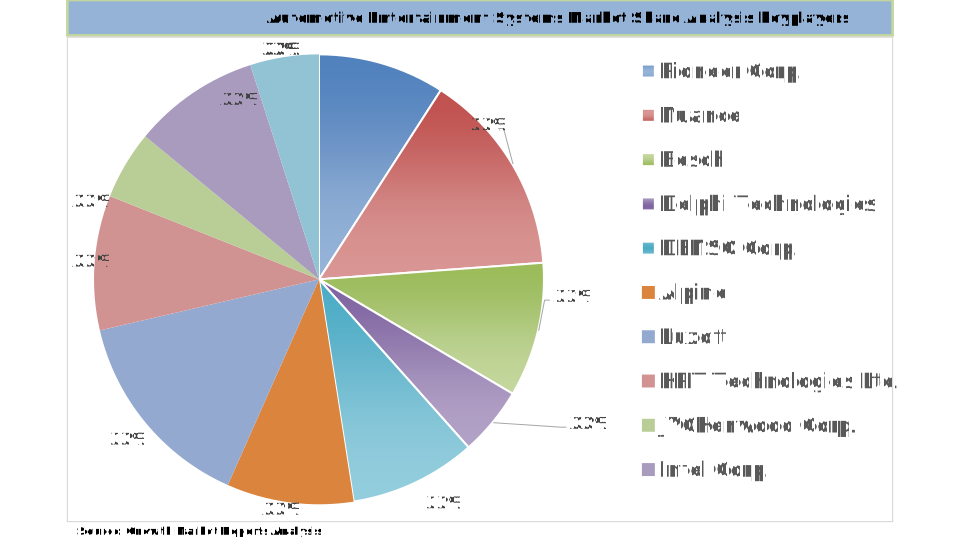
Key players competing in the global automotive entertainment systems market are Pioneer Corp.; Nuance; Bosch; Delphi Technologies; DENSO Corp.; Alpine; Luxoft; KPIT Technologies Ltd.; JVCKenwood Corp.; Intel Corp.; and Harman International Industries, Inc. As part of their efforts to expand their client base and acquire a competitive advantage over competitors, manufacturers operating in the market have adopted various strategic initiatives, such as partnerships, collaborations, and mergers & acquisitions. Moreover, companies are focusing on investment in R&D for development and launching of new products to maintain their competitive positions in the market.
Opportunities include AI-driven personalization, subscription-based services, in-car advertising, integration with autonomous vehicles, and new business models leveraging connected car data and digital content delivery.
The market is segmented into passenger cars, commercial vehicles, and electric vehicles. Passenger cars hold the largest share, while commercial and electric vehicles are rapidly adopting advanced entertainment systems.
Major challenges include cybersecurity and data privacy concerns, integration complexities with legacy vehicle architectures, regulatory requirements related to driver distraction and safety, and ensuring compatibility across diverse platforms.
Key players include Panasonic Corporation, Harman International, Bosch, Alpine Electronics, Pioneer Corporation, Continental AG, Denso Corporation, Sony Corporation, Garmin Ltd., and others.
EVs are a key growth segment, with manufacturers integrating advanced entertainment systems to differentiate their offerings. Features include large touchscreens, premium audio, and real-time navigation tailored for EV charging.
Connectivity is shifting from traditional wired interfaces (USB, AUX, HDMI) to wireless solutions like Bluetooth, Wi-Fi, and cellular. Wireless Apple CarPlay, Android Auto, and over-the-air updates are becoming standard features.
The market includes audio systems, video systems, navigation systems, display units, and emerging products such as gaming consoles, internet browsers, and smart assistant integrations.
Asia Pacific is the largest and fastest-growing region, followed by North America and Europe. Latin America and the Middle East & Africa are also experiencing steady growth due to rising disposable incomes and urbanization.
Key growth drivers include rising consumer demand for immersive in-car experiences, proliferation of connected car technologies, adoption of smart mobility solutions, and advancements in wireless connectivity, AI, and cloud-based platforms.
As of 2024, the global automotive entertainment systems market is valued at USD 34.7 billion, with projections to reach USD 69.5 billion by 2033.