Segments - by Product Type (Intake Air Filters, Cabin Air Filters), by Filter Media (Cellulose, Synthetic, Activated Carbon, Others), by Vehicle Type (Passenger Cars, Light Commercial Vehicles, Heavy Commercial Vehicles, Others), by Sales Channel (OEM, Aftermarket), by End-User (Automotive, Off-Road Vehicles, Others)
This report is updated with the latest market data and insights as of June 2026. Base year: 2025 | Forecast period: 2026-2034
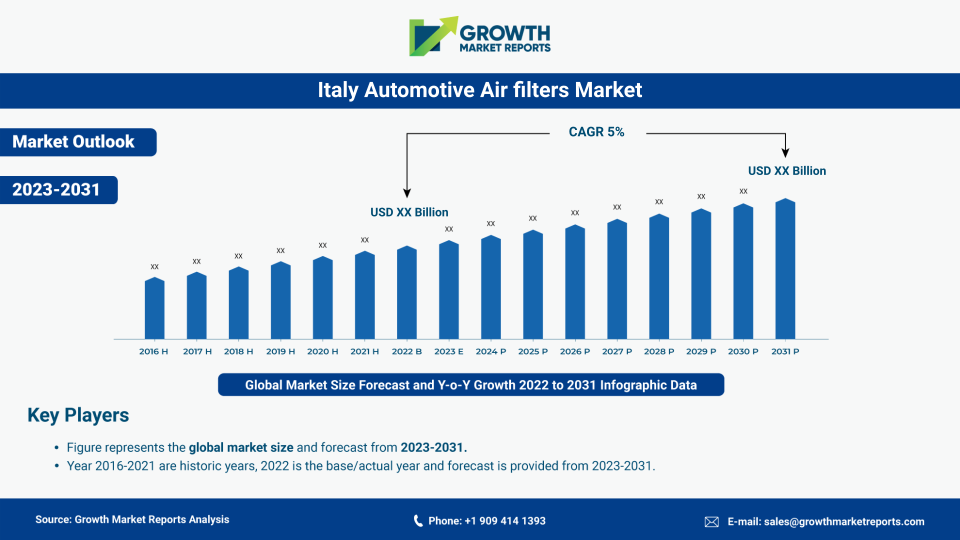
According to our latest research, the global automotive air filters market size reached USD 5.4 billion in 2025, reflecting the growing emphasis on vehicle performance and occupant air quality. The market is expected to expand at a CAGR of 6.3% during the forecast period, with the value projected to reach USD 9.4 billion by 2034. This growth is primarily driven by stringent emission regulations, rising vehicle production across key economies, and increasing consumer awareness regarding air quality and engine health.
One of the primary growth factors for the automotive air filters market is the global wave of tightening environmental legislation. Governments in major automotive markets, including the United States, the European Union member states, China, and India, are mandating advanced filtration systems to curb vehicular emissions and improve ambient air quality. Euro 7 standards in Europe and Bharat Stage VI norms in India are compelling automotive manufacturers to integrate high-performance air filters in both new production runs and existing vehicle lines. Rapid urbanization in emerging economies has elevated urban air pollution indices, prompting consumers to prioritize cabin air quality alongside engine protection when selecting and maintaining their vehicles.
The steady global rise in vehicle production and the expanding parc of registered vehicles continue to generate proportional demand for both OEM-fitted and aftermarket replacement filters. The growing popularity of light commercial vehicles in e-commerce logistics and last-mile delivery, combined with the mechanization of agriculture and construction in developing markets, is broadening the addressable customer base. Air filter demand across Latin America is accelerating as vehicle ownership rates climb and infrastructure investment intensifies, adding a meaningful high-growth dimension to the global picture.
Technological advancements in filter media and design are also playing a crucial role in the market's expansion. Manufacturers are investing heavily in research and development to create more efficient, durable, and environmentally responsible air filters. The introduction of synthetic nanofiber composites and multi-layer activated carbon media has significantly improved filtration efficiency, enabling more effective capture of fine particulate matter, allergens, and volatile organic compounds. These innovations not only sustain engine performance but also address the growing consumer preference for healthier in-cabin environments, particularly in high-density urban areas where pollution indices remain elevated. For a complementary view of fluid filtration dynamics, the automotive fuel filter market provides useful context on related powertrain filtration trends.
From a regional perspective, Asia Pacific remains the dominant market for automotive air filters, driven by large-scale vehicle production in China, India, Japan, and South Korea. North America and Europe hold significant shares, supported by mature automotive industries and rigorous regulatory frameworks. Latin America and the Middle East and Africa are emerging as high-growth regions, underpinned by rising vehicle ownership and increasing awareness about air quality management. The regional dynamics are expected to evolve further as governments and industry stakeholders continue to prioritize sustainability and environmental accountability across the entire vehicle lifecycle.
The automotive air filters market is segmented by product type into intake air filters and cabin air filters. Intake air filters play a critical role in protecting the engine from dust, debris, and other airborne contaminants, ensuring optimal combustion efficiency and engine longevity. These filters are essential for sustaining fuel economy and controlling emission levels, making them indispensable across passenger cars, commercial vehicles, and off-road equipment. The growing complexity of modern turbocharged and direct-injection engines, which are particularly sensitive to particulate ingestion, has accelerated demand for high-performance intake filtration solutions. Manufacturers focused on high-flow performance air filters are capturing growing interest from both OEMs developing sporty and performance-oriented platforms and aftermarket enthusiasts seeking power and efficiency gains.
Cabin air filters are designed to improve the quality of air inside the passenger compartment by filtering out pollutants such as fine dust, pollen, mold spores, allergens, and harmful gases. With rising consumer awareness about the health impacts of prolonged exposure to poor-quality cabin air, demand for cabin air filters has witnessed substantial growth through the 2019-2025 historical period and shows no sign of abating. Automakers are increasingly equipping vehicles with high-efficiency cabin air filters featuring activated carbon layers or antibacterial coatings as standard equipment rather than optional extras, particularly in premium and electric vehicle segments. This trend is most pronounced in urban markets where ambient pollution levels are persistently elevated.
The aftermarket replacement cycle for both intake and cabin air filters is a consistent revenue engine, driven by manufacturer-recommended replacement intervals of 12,000 to 30,000 kilometers depending on operating conditions and filter type. Vehicle owners are becoming more proactive about filter maintenance, encouraged by digital service reminders, in-car health monitoring features, and growing media coverage of air quality issues. The availability of diverse aftermarket products, from economy cellulose filters to premium multi-layer synthetic options, caters to a wide spectrum of consumer priorities and budgets.
Innovation in product design and materials continues to reshape the competitive landscape within the product type segment. Manufacturers are developing filters with greater dust-holding capacity, extended service life measured in years rather than months, and improved structural integrity under elevated pressure differentials. The integration of IoT-enabled monitoring sensors that alert drivers when filter replacement is due is emerging as a meaningful differentiator, particularly in fleet management applications where unplanned downtime carries significant cost implications. The role of the engine air filter in sustaining both power output and emission compliance remains a central selling point for OEM and aftermarket suppliers alike.
Overall, the product type segment is characterized by intense competition and continuous innovation, with manufacturers striving to meet the evolving needs of OEMs and aftermarket customers simultaneously. The accelerating adoption of battery electric vehicles is shifting the product mix gradually toward cabin air filters, as EVs eliminate the need for engine intake filtration while retaining, and indeed amplifying, demand for premium cabin air quality solutions. Intake air filters nonetheless retain a strong growth trajectory through 2034, underpinned by the vast installed base of combustion and hybrid powertrains that will remain in service for at least another decade.
| Attributes | Details |
| Report Title | Automotive Air Filters Market Research Report 2034 |
| By Product Type | Intake Air Filters, Cabin Air Filters |
| By Filter Media | Cellulose, Synthetic, Activated Carbon, Others |
| By Vehicle Type | Passenger Cars, Light Commercial Vehicles, Heavy Commercial Vehicles, Others |
| By Sales Channel | OEM, Aftermarket |
| By End-User | Automotive, Off-Road Vehicles, Others |
| Regions Covered | North America, Europe, APAC, Latin America, MEA |
| Base Year | 2025 |
| Historic Data | 2019-2024 |
| Forecast Period | 2026-2034 |
| Number of Pages | 299 |
| Number of Tables and Figures | 322 |
| Customization Available | Yes, the report can be customized as per your need. |
The choice of filter media is a critical factor influencing the performance and efficiency of automotive air filters. The market is segmented into cellulose, synthetic, activated carbon, and other media types. Cellulose-based filters, traditionally the most widely used, provide cost-effective filtration with moderate efficiency and remain popular in entry-level and mid-range vehicles where initial purchase cost is the primary consideration. However, their comparatively lower dust-holding capacity and shorter service life have prompted a steady migration toward synthetic and composite alternatives, a trend that accelerated noticeably between 2020 and 2025.
Synthetic filter media, made from materials such as polyester and polypropylene, have gained significant traction owing to superior filtration efficiency, structural durability, and resistance to moisture and chemical exposure. These filters capture finer particles and sustain lower pressure drop over longer service intervals, making them well suited to modern vehicles operating in challenging urban and industrial environments. The growing demand for turbocharged, direct-injection, and hybrid powertrains, all of which are particularly sensitive to contaminant ingestion, has further accelerated adoption of synthetic media in OEM specifications and premium aftermarket lines.
Activated carbon filters represent a rapidly expanding segment, particularly within the cabin air filter category. Designed to adsorb harmful gases, odors, and volatile organic compounds, these filters deliver a perceptibly healthier and more comfortable passenger environment. The surge in consumer health consciousness following heightened global awareness of respiratory health issues has driven automakers to offer activated carbon cabin filters as standard equipment across a broader range of model grades. Ongoing product development is focused on extending the adsorption lifespan of activated carbon layers and combining them with antibacterial or antiviral surface treatments.
Other filter media, including nanofiber composites and advanced multi-layered gradient structures, are emerging as premium solutions capable of meeting the most demanding OEM specifications. These materials achieve near-HEPA filtration efficiency while maintaining the low airflow restriction required by high-revving or turbocharged engines. Research and development investment is also directed toward bio-based and recyclable filter substrates, aligning product design with the automotive industry's broader sustainability commitments. As regulatory standards tighten further through the forecast period and consumer expectations rise, advanced media categories are projected to capture a growing share of total filter revenues.
The filter media segment is characterized by sustained technological competition, with leading manufacturers investing in proprietary material formulations and precision manufacturing processes to differentiate their offerings. Joint development programs between filtration specialists and automakers are increasingly common, enabling the co-design of media solutions optimized for specific engine architectures or cabin ventilation system layouts. This collaborative model is expected to deepen through 2034 as vehicle complexity continues to grow.
The automotive air filters market is segmented by vehicle type into passenger cars, light commercial vehicles (LCVs), heavy commercial vehicles (HCVs), and others including off-road and specialty vehicles. Passenger cars represent the largest segment, accounting for the majority of global filter units sold in 2025. High global passenger car production volumes, combined with increasing consumer attention to cabin air quality and engine maintenance, sustain robust demand for both intake and cabin filter products. Automakers are continuously upgrading their filtration specifications to satisfy evolving emission standards and to meet the rising expectations of health-conscious buyers.
Light commercial vehicles form a key growth segment, driven by the structural expansion of urban logistics, e-commerce fulfillment, and last-mile delivery services. LCVs typically operate in high-traffic urban corridors where airborne particulate concentrations are elevated, placing a premium on durable, high-efficiency filtration. Fleet operators in the logistics and service sectors are increasingly specifying premium filter solutions to reduce unscheduled maintenance events and extend engine service intervals, supporting above-average growth in the LCV filter market through 2034.
Heavy commercial vehicles, comprising long-haul trucks, construction equipment carriers, and public transit buses, require robust air filtration systems engineered for continuous operation in challenging environments. Extended filter service intervals are a critical requirement in this segment, as unscheduled filter replacements translate directly into costly vehicle downtime. Compliance with progressively tighter emission standards for diesel HCVs in North America, Europe, and increasingly in China and India is driving OEMs to adopt advanced multi-stage intake filtration systems. Infrastructure development programs across Asia Pacific, Africa, and Latin America are expected to sustain strong HCV demand through the forecast period.
The others category, covering agricultural machinery, mining equipment, forestry vehicles, and recreational off-road vehicles, represents a specialized but high-value segment. These applications typically demand heavy-duty intake filters with exceptional dust-holding capacity and structural resilience under severe vibration. The accelerating mechanization of agriculture in South and Southeast Asia and the expansion of mineral extraction operations in Africa and Latin America are creating new volume opportunities for manufacturers with proven off-road filtration credentials. Customization capability and reliable supply chain performance are the primary competitive factors in this niche.
The increasing electrification of light-duty vehicles is gradually reshaping volume dynamics within the vehicle type segment, as battery electric vehicles remove the intake filter requirement while simultaneously elevating the importance of cabin filtration. Hybrid vehicles, which retain combustion engines alongside electric drivetrains, continue to require both filter types and are expected to represent the fastest-growing sub-segment of the passenger car category through the mid-2030s.
The automotive air filters market is segmented by sales channel into OEM and aftermarket. The OEM segment covers filters integrated into vehicles during the manufacturing process. This channel benefits from the ongoing incorporation of advanced filtration specifications into new model launches, as automakers respond to tightening emission regulations and rising consumer quality expectations. Long-term supply agreements between filter manufacturers and global automakers provide revenue visibility and volume scale, making OEM relationships a strategic priority for leading industry players.
The aftermarket segment generates a substantial and structurally resilient share of total market revenue, anchored by the predictable replacement cycle across the global vehicle parc. As of 2025, the worldwide fleet of registered vehicles surpasses 1.5 billion units, providing an enormous installed base requiring periodic filter replacement. Growing vehicle owner awareness about the performance and health benefits of timely filter changes, promoted through manufacturer service campaigns, automotive media, and digital health monitoring platforms, is translating into more consistent aftermarket demand across all vehicle categories and geographies.
E-commerce has become a transformative distribution channel within the aftermarket, enabling consumers and independent workshops to access a broad product range at competitive prices with convenient home or workshop delivery. Platform-based automotive parts marketplaces are capturing a rising share of aftermarket filter volumes globally, incentivizing manufacturers to invest in digital catalog management, content marketing, and direct-to-consumer fulfillment capabilities. Traditional channels, including franchised dealerships, fast-fit service chains, and specialist automotive retailers, retain significant share by offering installation expertise and trusted brand environments.
The aftermarket is characterized by intense price competition, particularly at the entry and mid-market tiers where numerous regional manufacturers compete against global brands. Leading players are responding by differentiating through product quality credentials, longer-life value propositions, smart filter monitoring compatibility, and sustainability messaging. Brand loyalty programs and digital engagement tools that connect consumers to replacement reminders and product recommendations are increasingly used to drive repeat purchase frequency in a market where switching costs are inherently low.
OEM and aftermarket channels are complementary pillars of the overall market structure. Strong OEM placement establishes brand familiarity and sets quality benchmarks that carry over into aftermarket purchasing decisions. Manufacturers that succeed in both channels benefit from balanced revenue streams that provide resilience across the vehicle production cycle and the vehicle ownership lifecycle.
The end-user segment of the automotive air filters market encompasses automotive, off-road vehicles, and others. The automotive category, comprising passenger cars and commercial vehicles, accounts for the largest share of global market value in 2025. The widespread emphasis on fuel efficiency, emission compliance, and occupant wellness continues to drive investment in advanced filtration across the full spectrum of automotive end-users. Automakers are deepening their integration of high-performance filtration as a standard feature rather than an add-on, reflecting both regulatory obligations and brand differentiation strategies.
Off-road vehicles, including agricultural tractors, earthmoving machinery, mining trucks, and forest harvesting equipment, constitute a rapidly expanding end-user segment. These platforms are subjected to some of the most severe dust and contamination loading of any application, making filtration performance a direct determinant of equipment uptime and total cost of ownership. The accelerating mechanization of agriculture across South Asia, Southeast Asia, and Sub-Saharan Africa, combined with large-scale infrastructure construction programs, is generating sustained volume growth in purpose-built heavy-duty intake filter products for this segment.
The others category encompasses recreational vehicles, marine applications, power sport vehicles, and a range of industrial and specialty platforms. Demand in this segment is driven by the need for reliable air quality management across diverse and often extreme operating conditions. Manufacturers supplying this category typically offer customized or semi-custom solutions, leveraging materials science and application engineering expertise to address requirements that standard catalog products cannot meet. The growing electrification and automation of industrial platforms is influencing filtration requirements in this category, as sealed battery and electronics enclosures create new micro-filtration demands distinct from traditional intake filtration.
Across all end-user categories, manufacturers are adopting customer-centric product development processes, drawing on field performance data, OEM technical requirements, and regulatory foresight to anticipate evolving needs. Strategic engagement with fleet operators, agricultural cooperatives, and construction contractors is enabling filter manufacturers to position themselves as lifecycle cost management partners rather than commodity component suppliers.
Overall, the end-user segment is expected to register robust growth throughout the 2026-2034 forecast period. Tightening regulatory standards, expanding global vehicle populations, and rising end-user awareness of the operational and health benefits of superior air filtration will collectively sustain strong demand across all categories.
The automotive air filters market presents substantial opportunities for manufacturers capable of aligning their product portfolios with the structural shifts redefining the industry. The accelerating transition to electric and hybrid vehicles is creating strong demand for premium cabin air filtration solutions, as EV manufacturers seek to position superior in-cabin air quality as a differentiating feature of the electric ownership experience. Investment in multi-functional cabin filters combining activated carbon adsorption with antiviral, antibacterial, and fine particulate capture capabilities addresses this demand and commands favorable pricing premiums.
The aftermarket expansion opportunity is particularly significant in high-vehicle-parc emerging markets across Asia Pacific, Latin America, and the Middle East and Africa, where rising incomes and increasing vehicle ownership are only now translating into organized maintenance behavior. Digital distribution and e-commerce infrastructure development in these regions is lowering the barriers to aftermarket penetration for established global brands. The integration of smart filter monitoring technology, delivering real-time maintenance alerts through connected vehicle platforms and smartphone applications, is opening new revenue streams in value-added services that extend customer relationships beyond the point of filter sale.
Sustainability represents both an opportunity and an imperative. Manufacturers that successfully develop and commercialize bio-based, recyclable, or reusable filter solutions will gain competitive advantage as automakers tighten their supply chain sustainability requirements and as end-user preferences shift toward environmentally responsible products. Regulatory frameworks governing single-use automotive components are tightening in Europe and are expected to spread to other major markets during the forecast period, making early investment in circular filtration solutions strategically valuable.
The primary threat to market growth is the long-term structural displacement of intake air filter volumes as battery electric vehicle penetration rises in major markets. While the timeline for mass EV adoption remains subject to infrastructure, affordability, and policy variables, the trend is unambiguous. Manufacturers that do not proactively rebalance their portfolios toward cabin filtration and alternative filtration applications risk revenue erosion in the latter years of the forecast period. Additional threats include raw material price volatility, the risk of supply chain disruption in a globally integrated manufacturing network, and aggressive pricing from low-cost regional manufacturers, particularly in the cellulose filter segment.
Asia Pacific dominates the global automotive air filters market, representing an estimated USD 2.4 billion in 2025, equivalent to approximately 44.5% of global market value. This leadership reflects the region's unrivaled vehicle production volumes, with China, India, Japan, and South Korea collectively accounting for a majority of global automotive output. Rapid urbanization, rising disposable incomes, tightening domestic emission standards such as China 6b and Bharat Stage VI, and growing consumer awareness about air pollution health risks are all driving sustained demand for advanced filtration solutions. Asia Pacific is projected to register a CAGR of approximately 7.1% through 2034, outpacing all other regions and reinforcing its position as the engine of global market growth.
North America holds approximately 21.5% of global market value, equivalent to roughly USD 1.16 billion in 2025. The region's mature automotive industry, high vehicle ownership rates, and stringent EPA and CARB regulatory frameworks underpin consistent demand for high-performance air filtration. The robust aftermarket infrastructure, encompassing national service chains, specialty retailers, and a rapidly growing e-commerce channel, ensures strong ongoing replacement filter demand. The increasing share of hybrid vehicles in the U.S. and Canadian new vehicle mix is sustaining intake filter demand even as pure EV volumes rise.
Europe accounts for an estimated USD 1.05 billion in 2025, representing approximately 19.5% of the global market. The region's stringent Euro 7 emission framework, which entered force in 2025 for new passenger car type approvals, is compelling manufacturers to adopt higher-specification intake and cabin filtration systems. The strong European consumer preference for cabin air quality features, particularly activated carbon and multi-functional filters, is supporting premium product adoption. Sustainability considerations are particularly influential in Europe, with leading manufacturers accelerating development of recyclable and bio-based filter materials in response to automotive supply chain environmental requirements.
Latin America generated approximately USD 0.43 billion in 2025, with Brazil and Mexico representing the two largest national markets. Vehicle ownership growth, expanding logistics fleets, and increasing consumer awareness of filter maintenance benefits are driving above-average growth in this region. The outlook for automotive air filters across Latin America is favorable, with the region expected to register a CAGR above the global average through 2034 as formal aftermarket channels mature and vehicle parc expansion continues.
The Middle East and Africa contributed approximately USD 0.35 billion in 2025, equivalent to roughly 6.5% of global market value. Harsh operating environments characterized by extreme heat and high ambient dust concentrations create acute demand for durable, high-capacity air filters, particularly in the commercial vehicle and off-road equipment categories. Infrastructure investment programs across the Gulf Cooperation Council states and ongoing urbanization across Sub-Saharan Africa are expected to drive robust growth in this region through 2034. As regional dynamics continue to evolve, manufacturers that invest in local partnerships and tailored product specifications will be best positioned to capture the emerging opportunity.
The competitive landscape of the automotive air filters market in 2025 is characterized by the coexistence of global filtration specialists, diversified automotive component conglomerates, and agile regional manufacturers. Leading global players command significant advantages in OEM supply agreements, research and development investment capacity, global distribution reach, and brand equity accumulated across decades of performance demonstration. The market remains moderately fragmented at the tier below the top players, with numerous regional manufacturers competing effectively on price and geographic proximity in their home markets.
Innovation continues to be the primary basis of competitive differentiation among premium suppliers. The development of nanofiber filter media, smart filter monitoring systems, multi-functional cabin filters, and sustainable material solutions are all active areas of product investment. Manufacturers are also pursuing vertical integration of key filter media production to reduce dependency on external material suppliers and to exert greater control over product quality and margin. Joint development agreements with automakers for next-generation vehicle platforms provide selected suppliers with early access to specification requirements and multi-year volume commitments.
The aftermarket competitive environment is intensifying as e-commerce platforms lower barriers for both global brands and low-cost regional challengers to reach end consumers directly. Leading players are responding by investing in digital brand building, proprietary e-commerce storefronts, and platform partnerships that ensure prominent product placement and favorable consumer review profiles. Value-added services including filter monitoring subscriptions, installation support networks, and sustainability certifications are increasingly deployed to justify premium pricing and reduce the risk of consumer down-trading.
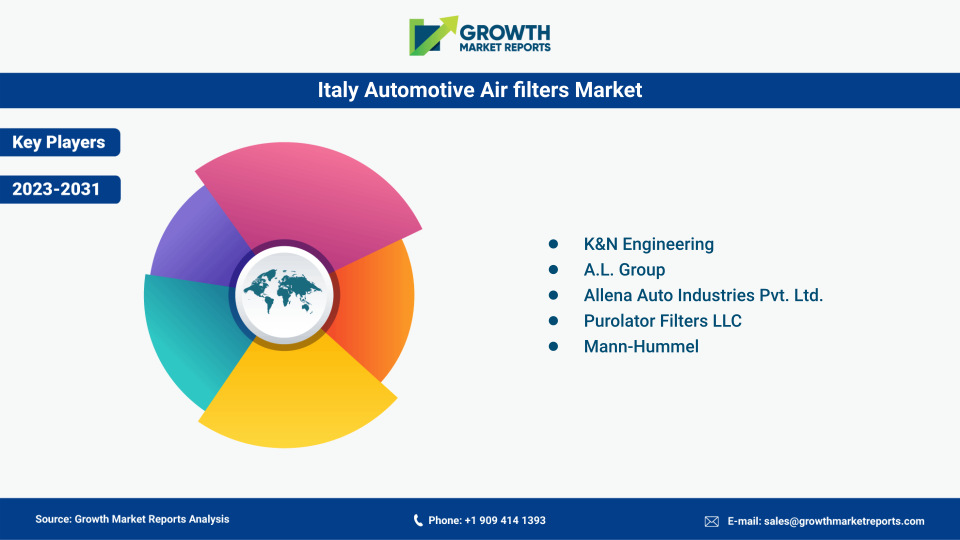
Mann+Hummel Group maintains its position as the global market leader in automotive filtration, offering comprehensive intake and cabin air filter ranges across OEM and aftermarket channels. Donaldson Company, Inc. is recognized for engineered filtration solutions, particularly in heavy commercial vehicle and off-road applications. Mahle GmbH combines deep OEM integration with an expanding aftermarket presence, leveraging its thermal management and filtration expertise across combustion and electrified powertrains. Denso Corporation brings strong OEM relationships with Japanese and global automakers, while Robert Bosch GmbH and Valeo S.A. leverage their diversified automotive component portfolios to bundle filtration offerings within broader system supply programs.
Parker Hannifin Corporation and Cummins Inc. are prominent in the commercial vehicle and industrial filtration segments, offering heavy-duty solutions designed for extended service intervals. K&N Engineering, Inc. leads the performance aftermarket niche, with reusable high-flow intake filters that appeal strongly to enthusiast consumers. Hengst SE, Freudenberg and Co. KG, UFI Filters S.p.A., and Sogefi S.p.A. are established European specialists with strong OEM footprints and growing global aftermarket distribution. Toyota Boshoku Corporation and ACDelco (General Motors) serve closely aligned OEM customer bases while maintaining competitive aftermarket positions supported by dealer network distribution. Collectively, these companies are investing in the capabilities required to navigate a market undergoing fundamental structural transformation through the 2026-2034 forecast period.
The Automotive Air Filters market has been segmented on the basis of
Key challenges include margin pressure from intense price competition, the gradual substitution of intake filters as pure-EV adoption rises in certain regions, raw material cost volatility, and the complexity of managing global supply chains across diverse regulatory environments. Opportunities include the growing demand for premium cabin air solutions in EVs and hybrids, expansion of the aftermarket in high-vehicle-parc emerging markets, the adoption of smart and connected filtration technologies, development of recyclable and bio-based filter materials, and strategic OEM partnerships tied to next-generation powertrain platforms.
Leading companies include Mann+Hummel Group, Donaldson Company Inc., Mahle GmbH, Denso Corporation, Sogefi S.p.A., Parker Hannifin Corporation, Toyota Boshoku Corporation, ACDelco (General Motors), Robert Bosch GmbH, Hengst SE, K&N Engineering Inc., Valeo S.A., Freudenberg and Co. KG, UFI Filters S.p.A., and Cummins Inc. These players compete on filtration efficiency, product breadth, OEM supply agreements, aftermarket reach, and sustainability credentials.
While fully battery electric vehicles do not require intake air filters for engine protection, they still need high-performance cabin air filters to maintain occupant air quality, as passengers in EVs tend to spend longer periods in enclosed cabins. Hybrid vehicles retain combustion engines and therefore require both intake and cabin filtration. The growing EV population is reshaping product mix toward cabin air solutions, spurring innovation in multi-layer and activated carbon cabin filters, and creating opportunities for manufacturers who can position cabin filtration as a key differentiator in the EV experience.
Key technology trends in 2025 include the integration of IoT-enabled sensors that provide real-time filter-life monitoring and replacement alerts, the development of nanofiber filter media that achieve near-HEPA efficiency with minimal airflow restriction, multi-functional cabin filters combining particulate capture with activated carbon and antiviral or antibacterial coatings, and the use of sustainable or bio-based materials to reduce environmental impact. Smart filtration systems that adapt to ambient air quality conditions are also gaining traction, particularly in premium and electric vehicles.
The aftermarket segment is a significant and growing revenue contributor, driven by the large global vehicle parc, increasing awareness about regular maintenance schedules, and the expanding array of performance-oriented and eco-friendly replacement options. The proliferation of e-commerce automotive parts platforms has broadened consumer access to competitively priced aftermarket filters. Service centers and fast-fit retailers continue to play a central role in aftermarket distribution, while digital filter-monitoring solutions are encouraging timely replacements and boosting repeat purchase rates.
Asia Pacific leads the global market with an estimated 44.5% share in 2025, supported by massive vehicle production volumes in China, India, Japan, and South Korea, along with rapid urbanization and rising disposable incomes. North America holds approximately 21.5% of the market, driven by strict EPA standards and a mature aftermarket. Europe accounts for around 19.5%, underpinned by stringent Euro 7 emission targets and strong demand for premium cabin filtration. Latin America and the Middle East and Africa are emerging growth regions, collectively contributing roughly 14.5% of market value.
The four main filter media categories are cellulose, synthetic, activated carbon, and advanced composite or nanofiber materials. Cellulose media offer cost-effective, adequate filtration for standard applications. Synthetic media, typically polyester or polypropylene, deliver higher filtration efficiency, longer service intervals, and better moisture resistance. Activated carbon media excel at adsorbing harmful gases, odors, and volatile organic compounds, making them popular in cabin air filters. Emerging nanofiber composites and multi-layer structures combine high efficiency with low pressure drop and extended durability.
The two primary product types are intake air filters and cabin air filters. Intake air filters protect the engine from dust, debris, and airborne contaminants to sustain combustion efficiency, fuel economy, and engine longevity. Cabin air filters remove pollen, particulate matter, allergens, and harmful gases from the air entering the passenger compartment, improving occupant health and comfort. Both types are available in OEM-fitted and aftermarket replacement variants.
Key demand drivers include stringent government emission standards across North America, Europe, and Asia Pacific, rapid expansion of the global vehicle fleet, growing urbanization and associated air pollution, rising consumer health awareness regarding cabin air quality, and the increasing complexity of modern combustion and hybrid powertrains that require advanced filtration to sustain efficiency.
The global automotive air filters market reached USD 5.4 billion in 2025 and is projected to expand at a CAGR of 6.3% from 2026 to 2034, reaching approximately USD 9.4 billion by 2034. This growth is underpinned by tightening emission regulations, rising global vehicle production, and increasing consumer focus on in-cabin air quality and engine health.