Segments - by Product Type (Paper Air Filter, Foam Air Filter, Cotton Air Filter, Others), by Vehicle Type (Passenger Cars, Light Commercial Vehicles, Heavy Commercial Vehicles, Others), by Sales Channel (OEM, Aftermarket), by End-User (Individual, Commercial, Industrial), by And Country (U.S., Canada, Mexico, Rest of America)
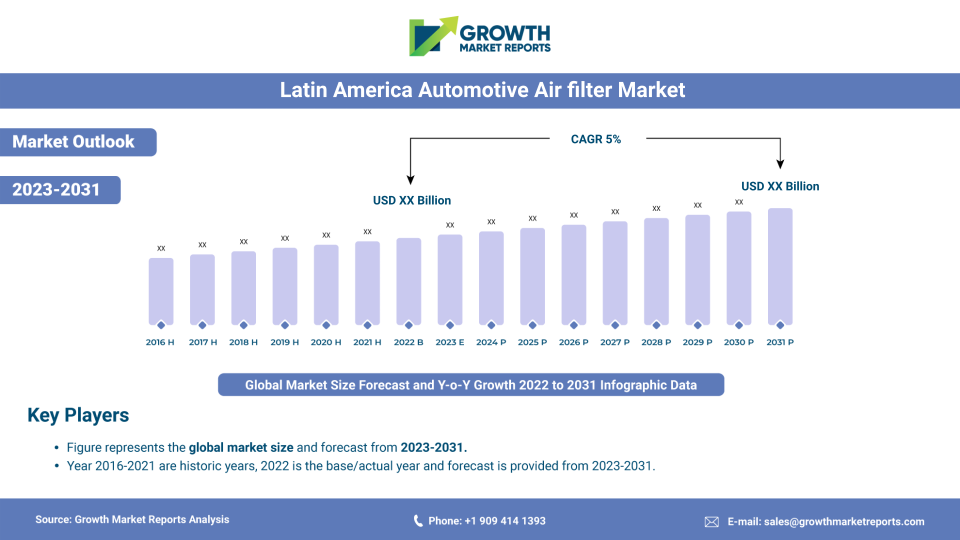
According to our latest research, the America automotive air filter market size reached USD 1.98 billion in 2024, reflecting robust demand across both OEM and aftermarket channels. The market is expected to grow at a CAGR of 5.7% during the forecast period, reaching an estimated USD 3.26 billion by 2033. This growth is driven by increasing vehicle production, stricter emission regulations, and heightened consumer awareness regarding vehicle maintenance and air quality. The market’s steady expansion is also propelled by the shift toward advanced filtration technologies and the growing penetration of passenger and commercial vehicles in North and Latin America. As per the latest research, the sector is poised for sustained growth, supported by evolving automotive standards and a rising focus on sustainability.
One of the primary growth factors for the America automotive air filter market is the increasing stringency of emission regulations across the continent. Regulatory bodies in the United States, Canada, and Mexico have introduced rigorous standards aimed at reducing vehicular emissions, compelling automakers to adopt high-efficiency air filtration systems. These regulations not only encourage the use of advanced air filters in new vehicles but also drive the replacement demand in the aftermarket segment. Furthermore, the growing awareness among consumers regarding the importance of regular air filter maintenance to ensure optimal engine performance and fuel efficiency is boosting the replacement cycle, thereby contributing to market growth. As vehicle owners become more conscious of the impact of clean air intake on engine longevity and emission control, the demand for high-quality air filters continues to rise.
Another significant driver is the steady increase in vehicle production and sales across the Americas, particularly in the passenger car and light commercial vehicle segments. The automotive industry in the United States and Mexico has witnessed a resurgence, with OEMs ramping up production to meet both domestic and export demand. This expansion directly translates into higher consumption of automotive air filters, both at the assembly line and in the aftermarket. Additionally, the rise of ride-sharing services and commercial fleets has led to increased vehicle utilization, which in turn necessitates more frequent air filter replacements. The trend toward urbanization and improved road infrastructure in emerging economies within the region further accelerates vehicle ownership rates, creating a positive outlook for the automotive air filter market.
Technological advancements in air filtration materials and designs are also playing a pivotal role in shaping the market landscape. Manufacturers are increasingly investing in research and development to introduce air filters with enhanced dust-holding capacity, longer service intervals, and improved filtration efficiency. The adoption of innovative materials such as synthetic fibers, multi-layered filtration media, and nanotechnology-based filters is gaining traction, particularly in premium vehicle segments. These advancements not only cater to the evolving needs of automakers but also align with consumer preferences for durable and high-performance components. The integration of smart sensors and monitoring systems in modern vehicles further supports timely air filter replacement, thereby driving market growth through both OEM and aftermarket channels.
From a regional perspective, North America remains the dominant market for automotive air filters, accounting for the largest share in terms of revenue and volume. The United States, with its mature automotive industry and high vehicle parc, leads the market, followed by Canada and Mexico. The Rest of America, including countries in South America and the Caribbean, is witnessing gradual growth, driven by increasing vehicle imports and infrastructure development. While the U.S. continues to set the pace with stringent regulatory frameworks and technological adoption, Mexico is emerging as a key manufacturing hub due to favorable trade agreements and cost advantages. This regional diversity presents both opportunities and challenges for market participants, necessitating tailored strategies to address varying customer preferences and regulatory environments.
The product type segment in the America automotive air filter market encompasses paper air filters, foam air filters, cotton air filters, and other specialized filtration solutions. Among these, paper air filters hold the largest market share due to their cost-effectiveness, ease of manufacturing, and widespread adoption by both OEMs and aftermarket suppliers. Paper filters are favored for their reliable filtration efficiency and compatibility with a broad range of vehicle types, making them the default choice for mass-market vehicles. However, the growing demand for higher performance and longer service intervals is gradually shifting attention toward advanced materials such as foam and cotton filters, which offer superior dust-holding capacity and reusability. This trend is particularly evident in the premium and commercial vehicle segments, where customers prioritize durability and reduced maintenance frequency.
Foam air filters are gaining popularity, especially in off-road and performance vehicles, due to their ability to capture larger particles and withstand harsh operating conditions. These filters are often used in applications where high airflow and resistance to clogging are essential, such as in heavy commercial vehicles and motorcycles. The flexibility of foam materials allows for custom designs that can be tailored to specific engine requirements, enhancing their appeal among specialty vehicle manufacturers. Despite their higher initial cost compared to paper filters, the extended lifespan and washability of foam filters make them a cost-effective choice over the long term, particularly for fleet operators and enthusiasts seeking enhanced engine protection.
Cotton air filters, often marketed as high-performance or reusable filters, are increasingly being adopted by automotive enthusiasts and premium vehicle owners. These filters are designed to provide superior filtration efficiency without compromising airflow, resulting in improved engine performance and fuel efficiency. The washable and reusable nature of cotton filters aligns with the growing consumer preference for sustainable and environmentally friendly automotive components. Leading brands in the aftermarket segment have successfully positioned cotton air filters as premium upgrades, driving their adoption in both the replacement and customization markets. The trend toward personalized vehicle maintenance and performance enhancement is expected to further boost the demand for cotton air filters in the coming years.
Other specialized air filters, including those incorporating activated carbon or nanotechnology, are emerging as niche solutions for vehicles operating in highly polluted or demanding environments. These filters offer additional benefits such as odor removal, allergen reduction, and enhanced particulate capture, catering to the needs of urban commuters and commercial fleets operating in metropolitan areas. While their market share remains relatively small compared to traditional paper and foam filters, the growing emphasis on cabin air quality and passenger health is expected to drive innovation and adoption in this segment. Manufacturers are investing in research to develop multi-functional filters that address both engine and cabin air quality requirements, reflecting the evolving landscape of the automotive air filter market.
| Attributes | Details |
| Report Title | America Automotive Air filter Market Research Report 2033 |
| By Product Type | Paper Air Filter, Foam Air Filter, Cotton Air Filter, Others |
| By Vehicle Type | Passenger Cars, Light Commercial Vehicles, Heavy Commercial Vehicles, Others |
| By Sales Channel | OEM, Aftermarket |
| By End-User | Individual, Commercial, Industrial |
| By And Country | U.S., Canada, Mexico, Rest of America |
| Regions Covered | North America, Europe, APAC, Latin America, MEA |
| Base Year | 2024 |
| Historic Data | 2018-2023 |
| Forecast Period | 2025-2033 |
| Number of Pages | 264 |
| Number of Tables & Figures | 313 |
| Customization Available | Yes, the report can be customized as per your need. |
The vehicle type segment of the America automotive air filter market is categorized into passenger cars, light commercial vehicles (LCVs), heavy commercial vehicles (HCVs), and others, including two-wheelers and specialty vehicles. Passenger cars represent the largest segment, accounting for a significant portion of air filter demand due to their sheer volume and high replacement frequency. The increasing popularity of personal mobility, coupled with the steady rise in vehicle ownership across urban and suburban areas, continues to drive the consumption of air filters in this segment. Automakers are focusing on enhancing the efficiency and longevity of air filters in new passenger car models to meet consumer expectations for lower maintenance costs and improved air quality.
Light commercial vehicles constitute the second-largest segment, fueled by the expansion of logistics, e-commerce, and last-mile delivery services across the Americas. These vehicles typically have higher utilization rates compared to passenger cars, resulting in more frequent air filter replacements. The growing trend of fleet management and the adoption of preventive maintenance practices among commercial operators are further boosting the demand for high-performance and durable air filters in the LCV segment. Manufacturers are responding by offering tailored filtration solutions that address the unique operating conditions and maintenance needs of commercial fleets, including extended service intervals and enhanced particulate capture capabilities.
Heavy commercial vehicles, including trucks and buses, form a critical segment of the market, particularly in regions with extensive transportation and logistics networks. Air filters used in HCVs are designed to withstand harsh operating environments, high dust loads, and prolonged service intervals. The increasing adoption of advanced filtration technologies, such as multi-stage and high-capacity filters, is driven by the need to comply with stringent emission regulations and minimize engine wear. The demand for heavy-duty air filters is expected to grow steadily, supported by the expansion of infrastructure projects, cross-border trade, and the modernization of public transportation fleets across the Americas.
The "others" category, encompassing two-wheelers, specialty vehicles, and off-road equipment, represents a niche yet growing segment within the automotive air filter market. The rising popularity of motorcycles and recreational vehicles, particularly in Latin America and rural areas, is creating new opportunities for air filter manufacturers. These vehicles often operate in challenging environments, necessitating robust and adaptable filtration solutions. As the market for electric and hybrid vehicles expands, there is also a growing need for specialized air filters that cater to the unique requirements of alternative powertrains and cabin air quality systems. This diversification of vehicle types underscores the importance of innovation and customization in the air filter market.
The sales channel segment of the America automotive air filter market is divided into OEM (Original Equipment Manufacturer) and aftermarket channels, each playing a distinct role in the distribution and consumption of air filters. The OEM segment is characterized by direct supply relationships between filter manufacturers and automotive assemblers, with a focus on meeting the stringent quality and performance standards set by automakers. OEM air filters are typically integrated into new vehicles during assembly, ensuring optimal compatibility and performance. The growth of the OEM segment is closely tied to trends in vehicle production and new model launches, with manufacturers continuously innovating to meet evolving regulatory and consumer demands.
The aftermarket segment, on the other hand, represents a significant portion of the market, driven by the large and aging vehicle parc across the Americas. As vehicles age, the need for regular maintenance and replacement of consumable components such as air filters becomes increasingly important. The aftermarket channel encompasses a diverse range of distribution networks, including authorized dealerships, independent repair shops, and online retailers. The rise of e-commerce platforms has democratized access to air filters, enabling consumers to easily compare products, prices, and brands. This shift toward digital sales channels is particularly pronounced in urban areas, where convenience and product variety are key purchasing considerations.
Aftermarket air filters are available in a wide range of quality and price points, catering to the diverse needs of vehicle owners. Leading brands have established strong reputations for reliability and performance, while private-label and generic products offer cost-effective alternatives for budget-conscious consumers. The increasing focus on preventive maintenance and the growing awareness of the impact of clean air intake on vehicle performance are encouraging more frequent air filter replacements, thereby driving aftermarket sales. Manufacturers are leveraging targeted marketing campaigns and educational initiatives to promote the benefits of timely air filter replacement, further stimulating demand in this segment.
The interplay between OEM and aftermarket channels is shaping the competitive landscape of the automotive air filter market. While OEM partnerships provide manufacturers with stable, long-term revenue streams and opportunities for product innovation, the aftermarket offers higher margins and greater flexibility to respond to changing consumer preferences. The ability to effectively serve both channels is a key success factor for market participants, necessitating robust supply chain management, product differentiation, and customer engagement strategies. As the market evolves, the integration of digital technologies and data analytics is expected to enhance the efficiency and responsiveness of both OEM and aftermarket distribution networks.
The end-user segment in the America automotive air filter market is classified into individual, commercial, and industrial users, each with distinct purchasing behaviors and requirements. Individual consumers, primarily vehicle owners and enthusiasts, represent the largest end-user group, driving demand for both OEM and aftermarket air filters. This segment is characterized by a focus on product quality, ease of installation, and brand reputation. The growing trend of DIY (do-it-yourself) vehicle maintenance, supported by online tutorials and readily available replacement parts, is encouraging individual consumers to take a proactive approach to air filter replacement. Manufacturers are responding by offering user-friendly products and comprehensive installation guides to enhance the customer experience.
Commercial end-users, including fleet operators, logistics companies, and ride-sharing service providers, constitute a significant and growing segment of the market. These users prioritize durability, cost-effectiveness, and minimal downtime, seeking air filters that can withstand high utilization rates and extended service intervals. The adoption of preventive maintenance programs and telematics solutions is enabling commercial operators to monitor air filter performance in real-time, ensuring timely replacements and reducing the risk of engine damage. Manufacturers are developing specialized filtration solutions that cater to the unique needs of commercial fleets, including heavy-duty filters and bulk purchase options. The increasing digitalization of fleet management is expected to further drive demand for advanced air filtration products in this segment.
Industrial end-users, such as mining, construction, and agricultural equipment operators, represent a niche but important market for automotive air filters. These applications often involve harsh operating environments with high levels of dust, debris, and contaminants, necessitating robust and high-capacity filtration systems. The emphasis on equipment uptime and reliability drives the adoption of premium air filters capable of delivering consistent performance under extreme conditions. Manufacturers are investing in the development of custom filtration solutions for industrial vehicles, leveraging advanced materials and engineering expertise to address the specific challenges faced by this segment. The growing focus on workplace safety and environmental compliance is expected to further stimulate demand for high-performance air filters in industrial applications.
The diverse needs of individual, commercial, and industrial end-users underscore the importance of product innovation, customization, and targeted marketing in the automotive air filter market. Manufacturers must balance the demands for cost-effectiveness, durability, and performance across different user segments, while also addressing evolving regulatory and environmental requirements. The ability to anticipate and respond to shifting end-user preferences will be a key determinant of success in the competitive landscape of the America automotive air filter market.
The America automotive air filter market is poised for significant opportunities in the coming years, driven by technological advancements and the growing emphasis on sustainability. The development of next-generation filtration materials, such as nanofibers and bio-based composites, presents a unique opportunity for manufacturers to differentiate their products and capture new market segments. These innovative materials offer enhanced filtration efficiency, longer service intervals, and reduced environmental impact, aligning with the evolving preferences of both consumers and regulators. The integration of smart sensors and IoT-enabled monitoring systems in modern vehicles is another promising avenue, enabling real-time tracking of air filter performance and predictive maintenance. As automakers increasingly adopt connected vehicle technologies, the demand for intelligent air filtration solutions is expected to rise, creating new revenue streams for market participants.
Expansion into emerging markets within the Americas, particularly in South and Central America, represents a substantial growth opportunity for automotive air filter manufacturers. Rapid urbanization, rising disposable incomes, and improving road infrastructure are driving vehicle ownership rates in these regions, creating a burgeoning demand for both OEM and aftermarket air filters. Strategic partnerships with local distributors, investments in localized manufacturing, and tailored product offerings can help companies tap into these high-potential markets. Additionally, the growing focus on cabin air quality and passenger health, particularly in the wake of the COVID-19 pandemic, is driving innovation in multi-functional air filters that address both engine and cabin air purification needs. This trend is expected to open new avenues for product development and market expansion.
Despite the positive outlook, the market faces certain threats and restraining factors that could impact growth. One of the primary challenges is the increasing adoption of electric vehicles (EVs), which typically have fewer air filtration requirements compared to internal combustion engine (ICE) vehicles. As the automotive industry transitions toward electrification, the demand for engine air filters is expected to decline, particularly in regions with high EV penetration. Additionally, fluctuations in raw material prices and supply chain disruptions can affect the profitability and operational efficiency of air filter manufacturers. The presence of low-cost, counterfeit products in the aftermarket segment poses a threat to established brands, potentially eroding market share and undermining consumer trust. To mitigate these risks, manufacturers must invest in innovation, quality assurance, and robust supply chain management strategies.
The regional analysis of the America automotive air filter market reveals distinct trends and growth patterns across the United States, Canada, Mexico, and the Rest of America. The United States dominates the market, accounting for approximately 60% of the total revenue in 2024, or around USD 1.19 billion. This leadership position is attributed to the country’s large vehicle parc, advanced automotive manufacturing ecosystem, and stringent emission regulations. The U.S. market is characterized by high consumer awareness, rapid adoption of innovative filtration technologies, and a well-established aftermarket distribution network. The growing focus on vehicle maintenance and preventive care is further driving air filter replacement rates, supporting steady market growth.
Canada represents a smaller but significant market, contributing nearly USD 270 million in 2024, or about 13.6% of the regional market share. The Canadian market is shaped by similar regulatory frameworks and consumer preferences as the U.S., with an added emphasis on durability and performance due to the country’s diverse climatic conditions. The adoption of advanced air filtration solutions is particularly strong in commercial and industrial vehicle segments, where harsh operating environments necessitate robust and reliable products. The Canadian market is expected to grow at a CAGR of 5.3% through 2033, driven by ongoing investments in transportation infrastructure and the expansion of commercial fleets.
Mexico and the Rest of America, which together account for roughly USD 520 million in 2024, are emerging as high-growth regions within the Americas. Mexico, in particular, is benefiting from its role as a key automotive manufacturing hub, supported by favorable trade agreements and competitive labor costs. The increasing localization of vehicle production and the expansion of export-oriented assembly plants are driving demand for OEM air filters. Meanwhile, the Rest of America, including countries in South and Central America, is witnessing gradual growth as vehicle imports rise and infrastructure development accelerates. While these regions currently represent a smaller share of the total market, their higher growth rates and untapped potential make them attractive targets for expansion and investment by air filter manufacturers.
The America automotive air filter market is characterized by intense competition, with a mix of global giants, regional players, and specialized manufacturers vying for market share. The competitive landscape is shaped by factors such as product quality, innovation, pricing strategies, distribution networks, and brand reputation. Leading companies are investing heavily in research and development to introduce advanced filtration technologies, enhance product durability, and meet evolving regulatory requirements. The ability to offer a comprehensive product portfolio that caters to diverse vehicle types, end-users, and sales channels is a key differentiator in this dynamic market. Strategic partnerships with automakers, fleet operators, and aftermarket distributors are also critical for maintaining a strong market presence and driving revenue growth.
Market leaders are leveraging their global manufacturing and distribution capabilities to achieve economies of scale and ensure consistent product quality. These companies are also focusing on sustainability initiatives, such as the development of recyclable and biodegradable filter materials, to align with growing environmental concerns and regulatory mandates. Digital transformation is another area of focus, with manufacturers adopting data analytics, IoT-enabled monitoring, and e-commerce platforms to enhance customer engagement and streamline operations. The emergence of counterfeit and low-quality products in the aftermarket segment has prompted established brands to invest in anti-counterfeiting technologies and consumer education campaigns to protect their market share and reinforce brand loyalty.
Regional players and niche manufacturers are capitalizing on their agility and deep understanding of local market dynamics to offer customized solutions and responsive customer service. These companies often excel in serving specific vehicle segments, end-user groups, or geographic regions, leveraging their expertise to address unique challenges and opportunities. The ability to quickly adapt to changing market conditions, regulatory requirements, and consumer preferences is a key strength of regional competitors. Collaboration with local distributors, participation in trade shows, and targeted marketing campaigns are common strategies employed by these players to build brand recognition and expand their customer base.
Some of the major companies operating in the America automotive air filter market include Mann+Hummel Group, Donaldson Company, Inc., Fram Group, Mahle GmbH, ACDelco, Bosch Auto Parts, Denso Corporation, and K&N Engineering, Inc.. Mann+Hummel Group is renowned for its extensive product portfolio and global reach, serving both OEM and aftermarket segments with innovative filtration solutions. Donaldson Company, Inc. is a leader in heavy-duty and industrial filtration, offering high-performance products tailored to commercial and industrial vehicles. Fram Group and Mahle GmbH are well-established brands in the passenger car and light commercial vehicle segments, known for their commitment to quality and product innovation.
ACDelco, a subsidiary of General Motors, has a strong presence in the OEM and aftermarket channels, providing a wide range of air filters for both GM and non-GM vehicles. Bosch Auto Parts and Denso Corporation are leading suppliers of advanced filtration technologies, leveraging their expertise in automotive systems integration and engineering. K&N Engineering, Inc. is a prominent player in the high-performance and reusable air filter segment, catering to automotive enthusiasts and premium vehicle owners. These companies are continuously expanding their product offerings, investing in research and development, and strengthening their distribution networks to maintain a competitive edge in the evolving America automotive air filter market.
The America Automotive Air filter market has been segmented on the basis of
Key players competing in the Latin America automotive air filter market include K&N Engineering; A.L. Group; Allena Auto Industries Pvt. Ltd.; Purolator Filters LLC; and Mann-Hummel
Some of these players are using several market strategies including mergers, acquisitions, partnerships, collaborations, capacity expansion, and product launches to increase their market shares.
In January 2020, Mann - Hummel added 30 new product to the aftermarket air filter series. These products have been added to the Purolator, Purolator One, and Purolator Tech product series.

Yes, the report offers customization options to meet specific research or business needs.
The United States dominates the market with about 60% share, followed by Canada and Mexico. Mexico and the Rest of America are emerging as high-growth regions due to increasing vehicle production and imports.
Innovations such as synthetic fibers, multi-layered media, nanotechnology-based filters, and smart sensors are improving filtration efficiency, extending service intervals, and enabling predictive maintenance.
Major companies include Mann+Hummel Group, Donaldson Company, Inc., Fram Group, Mahle GmbH, ACDelco, Bosch Auto Parts, Denso Corporation, and K&N Engineering, Inc.
Opportunities include technological advancements in filtration materials, expansion into emerging markets, and growing focus on cabin air quality. Threats include the rise of electric vehicles (which require fewer air filters), supply chain disruptions, and counterfeit products in the aftermarket.
Passenger cars represent the largest segment due to high ownership and replacement rates, followed by light commercial vehicles driven by logistics and delivery services, and heavy commercial vehicles that require durable filters for harsh conditions.
OEM channels supply air filters directly to vehicle manufacturers for new vehicles, focusing on quality and compatibility, while aftermarket channels cater to replacement needs through dealerships, repair shops, and online retailers, offering a wide range of options for consumers.
Paper air filters hold the largest market share due to cost-effectiveness and widespread adoption, while foam and cotton filters are gaining popularity for their superior performance and reusability, especially in premium and commercial vehicles.
Key growth drivers include increasing vehicle production, stricter emission regulations, heightened consumer awareness of vehicle maintenance and air quality, and advancements in filtration technologies.
The America automotive air filter market reached USD 1.98 billion in 2024 and is projected to grow at a CAGR of 5.7%, reaching approximately USD 3.26 billion by 2033.