Arthroscopy Market Research Report 2033

Arthroscopy Market Research Report 2033

Segments - by Product Type (Arthroscopes, Arthroscopic Implants, Visualization Systems, Fluid Management Systems, Radiofrequency Systems, Others), by Application (Knee Arthroscopy, Shoulder Arthroscopy, Hip Arthroscopy, Spine Arthroscopy, Foot & Ankle Arthroscopy, Others), by End-User (Hospitals, Ambulatory Surgical Centers, Specialty Clinics, Others)

https://growthmarketreports.com/raksha
Author : Raksha Sharma
https://growthmarketreports.com/Vaibhav
Fact-checked by : V. Chandola
https://growthmarketreports.com/Shruti
Editor : Shruti Bhat

Upcoming | Report ID :HC-2403 | 4.4 Rating | 37 Reviews | 280 Pages | Format : Docx PDF

Report Description


Arthroscopy Market Outlook

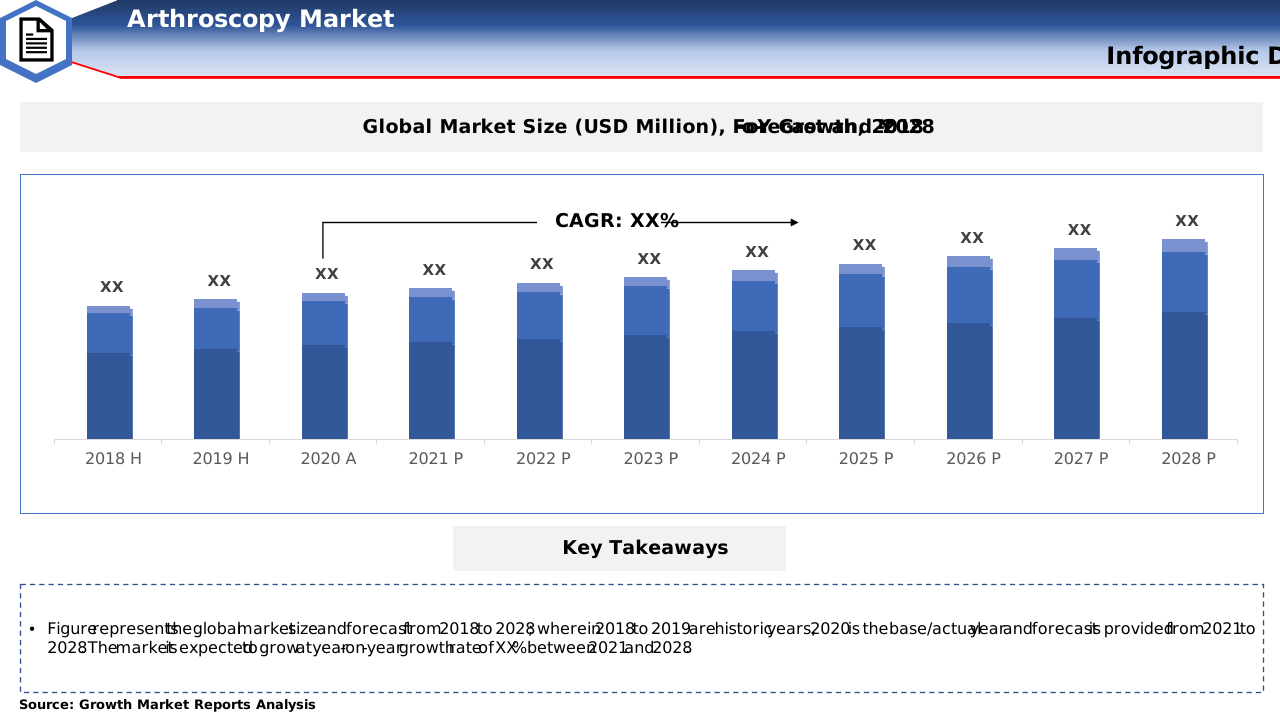
According to our latest research, the global arthroscopy market size reached USD 13.6 billion in 2024, driven by rising demand for minimally invasive surgical procedures and advancements in arthroscopic technologies. The market is expected to expand at a robust CAGR of 6.4% from 2025 to 2033, projecting a value of USD 23.7 billion by 2033. The consistent growth of this market is fueled by increasing incidences of sports injuries, osteoarthritis, and the growing geriatric population worldwide. As per the latest research, the adoption of arthroscopy continues to surge due to its benefits, including reduced recovery time, lower risk of infection, and improved surgical outcomes, making it a preferred choice for both patients and healthcare providers.

One of the primary growth factors propelling the arthroscopy market is the increasing prevalence of musculoskeletal disorders and orthopedic conditions globally. The aging population, particularly in developed regions, is highly susceptible to degenerative joint diseases such as osteoarthritis and rheumatoid arthritis, which often necessitate surgical intervention. The shift towards active lifestyles and the rising participation in sports and recreational activities have contributed to a higher incidence of sports-related injuries, further boosting the demand for arthroscopic procedures. Moreover, the growing awareness among patients about the advantages of minimally invasive surgeries, such as shorter hospital stays and faster rehabilitation, is encouraging more individuals to opt for arthroscopy over traditional open surgeries.

Technological advancements in arthroscopic equipment and techniques represent another significant driver for market expansion. Innovations such as high-definition visualization systems, advanced fluid management solutions, and the development of bioabsorbable implants have enhanced the precision, safety, and efficacy of arthroscopic procedures. These advancements have not only improved surgical outcomes but have also expanded the scope of arthroscopy to include a wider range of joints and complex procedures. Furthermore, the integration of robotics, 3D imaging, and artificial intelligence in arthroscopic surgeries is expected to revolutionize the market, providing surgeons with greater control and accuracy, and further reducing the invasiveness of procedures. This continuous innovation is attracting more healthcare facilities to invest in state-of-the-art arthroscopic equipment, thereby fueling market growth.

Favorable reimbursement policies and supportive government initiatives in many countries are also playing a crucial role in the growth of the arthroscopy market. Governments and health insurance providers are increasingly recognizing the long-term cost-effectiveness of minimally invasive surgeries, leading to broader coverage and higher patient affordability. Additionally, the expansion of healthcare infrastructure in emerging economies, coupled with rising healthcare expenditure, is facilitating greater access to advanced arthroscopic procedures. The increasing number of skilled orthopedic surgeons and the proliferation of specialized training programs are further supporting the widespread adoption of arthroscopy across various healthcare settings. Collectively, these factors are expected to sustain the upward trajectory of the arthroscopy market in the coming years.

From a regional perspective, North America continues to dominate the global arthroscopy market, accounting for the largest share due to its advanced healthcare system, high adoption rate of innovative technologies, and significant patient awareness. Europe follows closely, benefiting from a strong focus on orthopedic research and a growing elderly population. Meanwhile, the Asia Pacific region is witnessing the fastest growth, driven by rapid urbanization, increasing healthcare investments, and a rising burden of orthopedic conditions. Latin America and the Middle East & Africa are also experiencing steady growth, supported by improving healthcare access and the gradual adoption of advanced surgical techniques. Overall, the global arthroscopy market is poised for significant expansion, with each region contributing to its dynamic evolution.

Global Arthroscopy Industry Outlook

Product Type Analysis

The arthroscopy market by product type is segmented into arthroscopes, arthroscopic implants, visualization systems, fluid management systems, radiofrequency systems, and others. Arthroscopes, as the central instrument in minimally invasive joint surgeries, have witnessed increasing demand due to continual improvements in optical clarity and miniaturization. The integration of high-definition cameras and fiber optic technologies has significantly enhanced the surgeon’s ability to visualize intricate joint structures, leading to more precise diagnoses and interventions. This segment remains highly competitive, with leading manufacturers focusing on developing lightweight, ergonomic designs and disposable options to reduce infection risks. The growing frequency of arthroscopic procedures, especially in sports medicine and trauma care, is expected to maintain strong demand for arthroscopes throughout the forecast period.

Arthroscopic implants represent another critical segment, encompassing devices such as suture anchors, screws, and fixation devices used to repair or reconstruct damaged tissues within joints. The shift towards bioabsorbable and biocompatible materials has revolutionized this segment, enabling better integration with native tissues and reducing the need for secondary surgeries. Innovations in implant design, such as knotless suture anchors and all-suture devices, have simplified surgical techniques and improved patient outcomes. The increasing incidence of ligament injuries, rotator cuff tears, and meniscal repairs is driving the uptake of arthroscopic implants, particularly in younger, active populations. As the demand for outpatient and day-care arthroscopic procedures rises, the market for advanced and cost-effective implants is expected to grow rapidly.

Visualization systems have become indispensable in modern arthroscopy, offering surgeons enhanced clarity and depth perception during procedures. The adoption of 4K and 3D imaging technologies, coupled with advancements in digital image processing, has significantly improved the accuracy and safety of arthroscopic surgeries. These systems enable real-time monitoring and documentation, facilitating better intraoperative decision-making and postoperative analysis. The trend towards integrated operating rooms, where visualization systems are seamlessly connected with other surgical equipment, is gaining momentum, particularly in high-volume hospitals and specialty centers. As healthcare providers increasingly prioritize patient safety and surgical efficiency, the demand for state-of-the-art visualization systems is projected to witness substantial growth.

Fluid management and radiofrequency systems are essential for maintaining clear operative fields and achieving effective tissue ablation or coagulation during arthroscopic procedures. Fluid management systems help control intra-articular pressure, minimize bleeding, and remove debris, thereby enhancing visibility and reducing complications. Recent advancements have focused on developing automated and user-friendly systems that offer precise control and real-time feedback. Similarly, radiofrequency systems are widely used for tissue resection, hemostasis, and capsular shrinkage, offering minimally invasive alternatives to traditional cutting tools. The ongoing innovation in energy delivery and safety features is expanding the clinical applications of these systems, making them integral components of the arthroscopy market. Other product types, including shavers, power instruments, and accessories, continue to see steady demand as procedural volumes increase globally.

Report Scope

Attributes Details
Report Title Arthroscopy Market Research Report 2033
By Product Type Arthroscopes, Arthroscopic Implants, Visualization Systems, Fluid Management Systems, Radiofrequency Systems, Others
By Application Knee Arthroscopy, Shoulder Arthroscopy, Hip Arthroscopy, Spine Arthroscopy, Foot & Ankle Arthroscopy, Others
By End-User Hospitals, Ambulatory Surgical Centers, Specialty Clinics, Others
Regions Covered North America, Europe, APAC, Latin America, MEA
Base Year 2024
Historic Data 2018-2023
Forecast Period 2025-2033
Number of Pages 280
Number of Tables & Figures 257
Customization Available Yes, the report can be customized as per your need.

Application Analysis

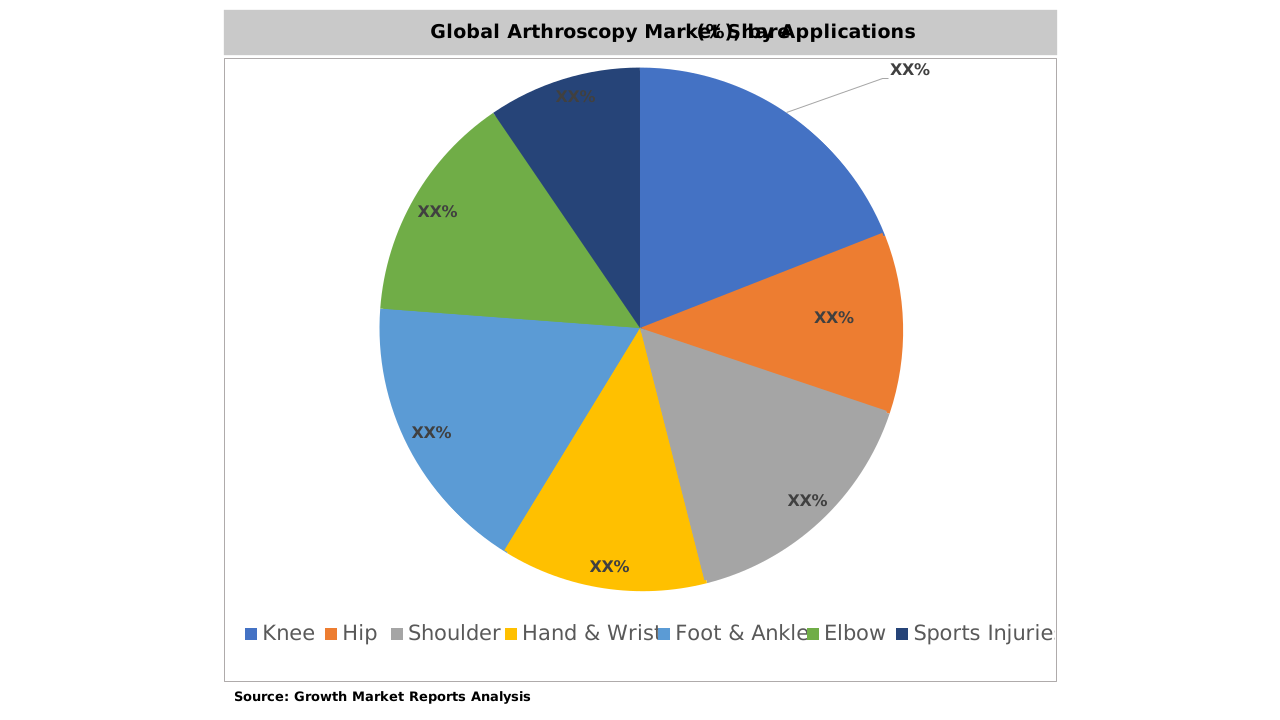
The arthroscopy market by application is segmented into knee arthroscopy, shoulder arthroscopy, hip arthroscopy, spine arthroscopy, foot & ankle arthroscopy, and others. Knee arthroscopy holds the largest market share, attributed to the high prevalence of knee injuries, particularly among athletes and the elderly. Procedures such as meniscectomy, ligament reconstruction, and cartilage repair are commonly performed using arthroscopic techniques, offering patients faster recovery and reduced postoperative pain. The rising incidence of sports-related injuries and osteoarthritis has led to a sustained increase in knee arthroscopy volumes worldwide. Additionally, the development of advanced instrumentation and tailored implants has expanded the range of treatable conditions, further driving the growth of this segment.

Shoulder arthroscopy is another rapidly growing application, driven by advancements in surgical techniques and the increasing recognition of shoulder pathologies such as rotator cuff tears, labral injuries, and impingement syndromes. The minimally invasive nature of arthroscopic shoulder procedures has made them highly attractive for both patients and surgeons, resulting in shorter hospital stays and improved functional outcomes. The growing adoption of outpatient shoulder arthroscopy, supported by enhanced anesthesia protocols and pain management strategies, is contributing to the expansion of this segment. As the population ages and the demand for active lifestyles persists, shoulder arthroscopy is expected to remain a significant contributor to the overall market.

Hip arthroscopy has emerged as a valuable tool for diagnosing and treating intra-articular hip disorders, including femoroacetabular impingement, labral tears, and synovitis. Technological advancements in hip-specific arthroscopic instruments and improved understanding of hip joint biomechanics have enabled surgeons to address complex pathologies with greater precision. The increasing awareness of hip preservation techniques and the desire to delay or avoid total hip replacement among younger patients are fueling the growth of this segment. Furthermore, ongoing research into biologic therapies and cartilage restoration is expected to expand the indications for hip arthroscopy, creating new opportunities for market players.

Spine, foot, and ankle arthroscopy segments are experiencing steady growth as minimally invasive approaches gain traction in the management of complex joint and soft tissue conditions. Spine arthroscopy, though technically challenging, offers significant benefits in selected cases of disc herniation, stenosis, and facet joint disorders. Similarly, foot and ankle arthroscopy is increasingly used for the treatment of ligament injuries, impingement syndromes, and osteochondral defects. The expansion of specialized training programs and the availability of dedicated instrumentation are supporting the adoption of arthroscopy in these anatomically challenging regions. Other applications, such as wrist and elbow arthroscopy, continue to evolve, driven by ongoing innovation and expanding clinical expertise.

End-User Analysis

The end-user segmentation of the arthroscopy market includes hospitals, ambulatory surgical centers (ASCs), specialty clinics, and others. Hospitals remain the dominant end-user, accounting for the largest share due to their comprehensive infrastructure, access to advanced technologies, and the presence of multidisciplinary teams. Hospitals are often the primary centers for complex and high-volume arthroscopic procedures, particularly in urban and metropolitan areas. The increasing investment in modernizing operating rooms, coupled with the integration of digital health solutions, is enhancing the efficiency and safety of arthroscopic surgeries in hospital settings. Additionally, the availability of skilled orthopedic surgeons and robust post-operative care facilities further strengthens the position of hospitals in the arthroscopy market.

Ambulatory surgical centers (ASCs) are witnessing rapid growth as preferred venues for arthroscopic procedures, especially for less complex and day-care surgeries. The shift towards outpatient care is driven by the desire to reduce healthcare costs, minimize hospital-acquired infections, and improve patient convenience. ASCs offer several advantages, including shorter wait times, personalized care, and faster discharge, making them attractive for both patients and surgeons. The proliferation of ASCs in developed markets, supported by favorable reimbursement policies and streamlined regulatory processes, is contributing to the expansion of this segment. As the trend towards minimally invasive and cost-effective care continues, ASCs are expected to capture a growing share of the arthroscopy market.

Specialty clinics, focusing exclusively on orthopedic and sports medicine, are playing an increasingly important role in the delivery of arthroscopic services. These clinics offer specialized expertise, customized rehabilitation programs, and advanced diagnostic capabilities, catering to the unique needs of athletes, active individuals, and patients with complex joint conditions. The integration of multidisciplinary teams, including physiotherapists, pain specialists, and sports scientists, enhances the overall patient experience and outcomes. The growing demand for personalized and patient-centric care is driving the establishment of new specialty clinics, particularly in urban centers and emerging markets. As awareness of arthroscopic procedures increases, specialty clinics are expected to play a pivotal role in expanding access and improving the quality of care.

Other end-users, such as academic and research institutions, are contributing to the advancement of arthroscopic techniques and technologies through clinical trials, training programs, and collaborative research initiatives. These institutions play a vital role in educating the next generation of orthopedic surgeons and fostering innovation in the field. The involvement of academic centers in multicenter studies and the development of evidence-based guidelines is supporting the widespread adoption of arthroscopy across diverse healthcare settings. As the demand for minimally invasive joint surgeries continues to rise, the collaboration between industry, academia, and healthcare providers will remain essential for sustaining market growth and driving continuous improvement in patient care.

Opportunities & Threats

The arthroscopy market is brimming with opportunities, particularly as advancements in technology continue to redefine the landscape of minimally invasive surgery. The integration of artificial intelligence, robotics, and 3D visualization is expected to revolutionize arthroscopic procedures, enabling greater precision, shorter operative times, and improved patient outcomes. The development of novel biomaterials, bioabsorbable implants, and regenerative therapies opens new possibilities for tissue preservation and joint restoration, catering to the growing demand for personalized and long-lasting solutions. Emerging markets present significant untapped potential, driven by expanding healthcare infrastructure, rising disposable incomes, and increasing awareness of arthroscopic procedures. Strategic collaborations between medical device manufacturers, healthcare providers, and research institutions are fostering innovation and accelerating the commercialization of next-generation arthroscopic technologies. As the global burden of musculoskeletal disorders continues to rise, the arthroscopy market is poised for sustained growth and transformation.

Another major opportunity lies in the expansion of training and education programs aimed at enhancing the skills of orthopedic surgeons and allied healthcare professionals. The complexity of arthroscopic procedures necessitates continuous learning and hands-on experience, prompting the establishment of simulation centers, online courses, and international fellowship programs. The adoption of telemedicine and remote proctoring is further democratizing access to expert guidance and mentorship, particularly in underserved regions. Moreover, the increasing focus on patient engagement and shared decision-making is driving the development of digital health platforms and mobile applications that support preoperative planning, postoperative rehabilitation, and long-term monitoring. By leveraging these opportunities, market players can differentiate their offerings, improve patient satisfaction, and capture a larger share of the growing arthroscopy market.

Despite the promising outlook, the arthroscopy market faces several restraining factors that could hinder its growth. High costs associated with advanced arthroscopic equipment, implants, and consumables remain a significant barrier, particularly in resource-constrained settings. The need for specialized training and the steep learning curve associated with certain procedures can limit the adoption of arthroscopy among less experienced surgeons and smaller healthcare facilities. Additionally, reimbursement challenges, regulatory hurdles, and the risk of complications such as infection, nerve damage, or instrument failure may deter some patients and providers from embracing arthroscopic surgery. Addressing these challenges will require sustained investment in research and development, targeted training initiatives, and ongoing efforts to improve the safety, affordability, and accessibility of arthroscopic care.

Regional Outlook

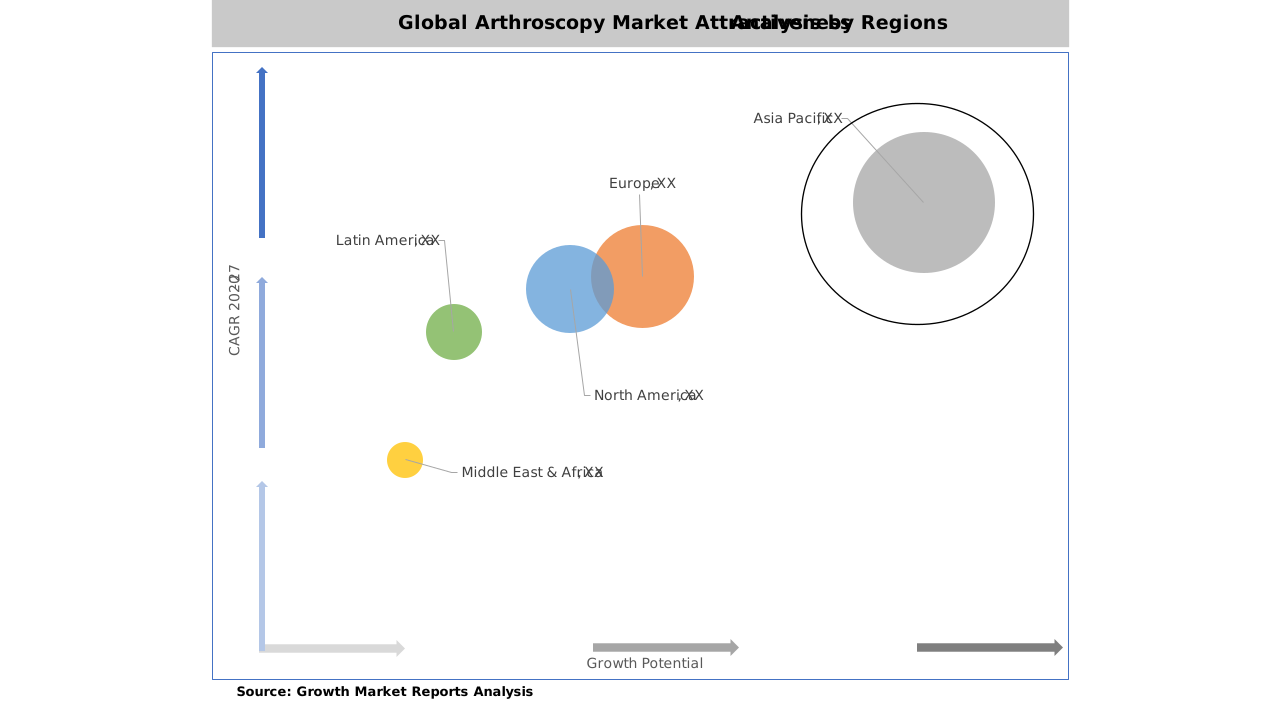
North America leads the global arthroscopy market, accounting for approximately 41% of the total market share in 2024, with a market value of nearly USD 5.6 billion. The region’s dominance can be attributed to its advanced healthcare infrastructure, high adoption rate of innovative technologies, and a large pool of skilled orthopedic surgeons. The United States, in particular, is a major contributor, driven by a strong focus on sports medicine, a high prevalence of musculoskeletal disorders, and favorable reimbursement policies. Canada is also witnessing growth, supported by increasing government investments in healthcare and a rising demand for minimally invasive procedures. The North American market is expected to maintain a steady CAGR of around 5.9% through 2033, as ongoing technological advancements and patient awareness continue to drive procedural volumes.

Europe holds the second-largest share of the arthroscopy market, with a market size of approximately USD 3.7 billion in 2024, representing 27% of the global market. Countries such as Germany, the United Kingdom, and France are at the forefront, benefiting from robust orthopedic research, a growing elderly population, and increasing investments in healthcare modernization. The region is characterized by a strong emphasis on quality of care, patient safety, and evidence-based practice, which has facilitated the widespread adoption of advanced arthroscopic techniques. Government initiatives to reduce surgical wait times and improve access to minimally invasive procedures are further supporting market growth. Europe is projected to experience a moderate CAGR of 6.1% during the forecast period, driven by ongoing innovation and expanding indications for arthroscopy.

The Asia Pacific region is emerging as the fastest-growing market for arthroscopy, with a market size of USD 2.5 billion in 2024, accounting for 18% of the global market. Rapid urbanization, rising disposable incomes, and increasing awareness of orthopedic health are key drivers in countries such as China, India, Japan, and South Korea. The expansion of healthcare infrastructure, coupled with government efforts to improve access to advanced surgical services, is facilitating the adoption of arthroscopic procedures. The region is witnessing a surge in sports injuries and age-related joint disorders, further boosting demand. The Asia Pacific market is expected to register a remarkable CAGR of 8.2% through 2033, as local manufacturers introduce cost-effective solutions and international companies expand their presence. Latin America and the Middle East & Africa, with market sizes of USD 1.0 billion and USD 0.8 billion respectively, are also showing steady growth, supported by improving healthcare access and gradual adoption of minimally invasive techniques.

Arthroscopy Market Statistics

Competitor Outlook

The competitive landscape of the arthroscopy market is characterized by the presence of several global and regional players, each striving to strengthen their market position through innovation, strategic partnerships, and geographic expansion. Leading companies are investing heavily in research and development to introduce next-generation arthroscopic devices, implants, and visualization systems that offer enhanced performance, safety, and ease of use. The market is witnessing a trend towards product miniaturization, integration of digital technologies, and the development of single-use and disposable instruments to reduce infection risks and procedural costs. Strategic collaborations with hospitals, ambulatory surgical centers, and academic institutions are enabling companies to expand their product portfolios and reach a broader customer base. Mergers and acquisitions are also common, as larger players seek to consolidate their market share and gain access to new technologies and markets.

Intense competition is driving continuous innovation, with companies focusing on differentiating their offerings through unique features, improved ergonomics, and value-added services such as training and technical support. The rise of local manufacturers, particularly in emerging markets, is increasing price competition and prompting global players to adapt their strategies to local market dynamics. Regulatory compliance, quality assurance, and customer support remain critical factors influencing purchasing decisions among healthcare providers. Companies are also leveraging digital marketing, educational initiatives, and participation in international conferences to enhance brand visibility and engage with key opinion leaders in the orthopedic community. As the market evolves, the ability to anticipate and respond to changing customer needs, regulatory requirements, and technological advancements will be crucial for sustained success.

Among the major players in the global arthroscopy market are Arthrex, Inc., Smith & Nephew plc, Stryker Corporation, Johnson & Johnson (DePuy Synthes), Zimmer Biomet Holdings, Inc., ConMed Corporation, and Medtronic plc. These companies have established strong brand recognition, extensive distribution networks, and a comprehensive portfolio of arthroscopic products. Arthrex, for instance, is renowned for its extensive range of innovative implants and surgical instruments, as well as its commitment to surgeon education and training. Smith & Nephew is a leader in advanced visualization systems and minimally invasive solutions, while Stryker is known for its integrated operating room technologies and robust research pipeline. Johnson & Johnson, through its DePuy Synthes division, offers a wide array of orthopedic and sports medicine solutions, with a focus on patient-centric care and clinical outcomes.

Zimmer Biomet and ConMed are also prominent players, offering a diverse range of arthroscopic devices, implants, and accessories tailored to various joint applications. Medtronic, although traditionally focused on neurosurgery and cardiovascular devices, has expanded its presence in the arthroscopy market through targeted acquisitions and product launches. In addition to these global leaders, several emerging companies and regional manufacturers are making significant inroads, particularly in the Asia Pacific and Latin American markets. These companies are leveraging their local expertise, cost-competitive manufacturing, and agile business models to capture market share and address unmet needs. As the competitive landscape continues to evolve, partnerships, innovation, and customer-centric strategies will remain key differentiators for success in the dynamic arthroscopy market.

Key Players

  • Arthrex, Inc.
  • Smith & Nephew plc
  • Stryker Corporation
  • Johnson & Johnson (DePuy Synthes)
  • Zimmer Biomet Holdings, Inc.
  • ConMed Corporation
  • Medtronic plc
  • Karl Storz SE & Co. KG
  • B. Braun Melsungen AG
  • Olympus Corporation
  • Richard Wolf GmbH
  • Wright Medical Group N.V.
  • NuVasive, Inc.
  • BioTek Instruments, Inc.
  • Cannuflow, Inc.
  • Sklar Surgical Instruments
  • GPC Medical Ltd.
  • Henke-Sass, Wolf GmbH
  • Smiths Medical (ICU Medical, Inc.)
  • Orthofix Medical Inc.
Arthroscopy Market Overview

Segments

The Arthroscopy market has been segmented on the basis of

Product Type

  • Arthroscopes
  • Arthroscopic Implants
  • Visualization Systems
  • Fluid Management Systems
  • Radiofrequency Systems
  • Others

Application

  • Knee Arthroscopy
  • Shoulder Arthroscopy
  • Hip Arthroscopy
  • Spine Arthroscopy
  • Foot & Ankle Arthroscopy
  • Others

End-User

  • Hospitals
  • Ambulatory Surgical Centers
  • Specialty Clinics
  • Others

Competitive Landscape

Key players competing in the arthroscopy market are Arthrex Inc.; Smith & Nephew plc; DePuy Synthes; and ConMed Corp. The main market players are continuously engaged in several business development activities such as mergers, acquisitions, research and developments, investments for innovative products, and collaborations to expand their market share. For instance, Zimmer Biomet announced an acquisition deal of Cayenne Medical to fuel its sports medicine division in May 2016.
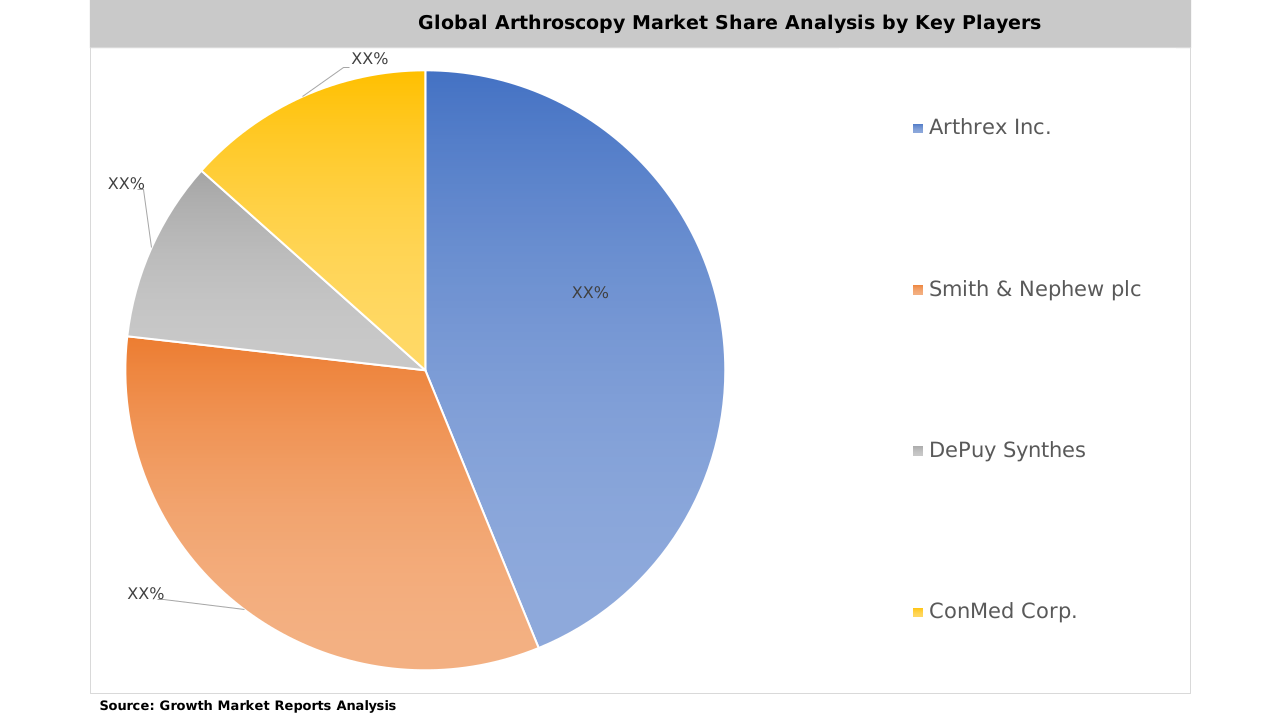

Global Arthroscopy Market keyplayers

Frequently Asked Questions

Opportunities include the adoption of AI and robotics, development of new biomaterials and regenerative therapies, expansion in emerging markets, and enhanced training and education programs for surgeons.

Major companies include Arthrex, Inc., Smith & Nephew plc, Stryker Corporation, Johnson & Johnson (DePuy Synthes), Zimmer Biomet Holdings, Inc., ConMed Corporation, Medtronic plc, and others.

Challenges include high costs of advanced equipment, the need for specialized training, reimbursement and regulatory hurdles, and risks of complications such as infection or instrument failure.

Innovations include high-definition and 3D visualization systems, robotics, artificial intelligence, bioabsorbable implants, and integrated operating rooms, all enhancing surgical precision and outcomes.

The main end-users are hospitals, ambulatory surgical centers (ASCs), specialty clinics, and academic/research institutions, with hospitals accounting for the largest share.

Knee arthroscopy holds the largest share, followed by shoulder and hip arthroscopy. These are driven by high rates of knee injuries, sports-related trauma, and degenerative joint diseases.

The market is segmented into arthroscopes, arthroscopic implants, visualization systems, fluid management systems, radiofrequency systems, and other accessories.

North America holds the largest market share due to advanced healthcare infrastructure and technology adoption. The Asia Pacific region is the fastest-growing, driven by rapid urbanization, rising healthcare investments, and increasing orthopedic conditions.

Key growth drivers include the rising demand for minimally invasive surgeries, increasing incidences of sports injuries and osteoarthritis, technological advancements in arthroscopic equipment, and a growing geriatric population.

The global arthroscopy market reached USD 13.6 billion in 2024 and is expected to grow at a CAGR of 6.4% from 2025 to 2033, reaching USD 23.7 billion by 2033.

Table Of Content

Chapter 1 Executive Summary
Chapter 2 Assumptions and Acronyms Used
Chapter 3 Research Methodology
Chapter 4 Arthroscopy Market Overview
   4.1 Introduction
      4.1.1 Market Taxonomy
      4.1.2 Market Definition
      4.1.3 Macro-Economic Factors Impacting the Market Growth
   4.2 Arthroscopy Market Dynamics
      4.2.1 Market Drivers
      4.2.2 Market Restraints
      4.2.3 Market Opportunity
   4.3 Arthroscopy Market - Supply Chain Analysis
      4.3.1 List of Key Suppliers
      4.3.2 List of Key Distributors
      4.3.3 List of Key Consumers
   4.4 Key Forces Shaping the Arthroscopy Market
      4.4.1 Bargaining Power of Suppliers
      4.4.2 Bargaining Power of Buyers
      4.4.3 Threat of Substitution
      4.4.4 Threat of New Entrants
      4.4.5 Competitive Rivalry
   4.5 Global Arthroscopy Market Size & Forecast, 2023-2032
      4.5.1 Arthroscopy Market Size and Y-o-Y Growth
      4.5.2 Arthroscopy Market Absolute $ Opportunity

Chapter 5 Global Arthroscopy Market Analysis and Forecast By Product Type
   5.1 Introduction
      5.1.1 Key Market Trends & Growth Opportunities By Product Type
      5.1.2 Basis Point Share (BPS) Analysis By Product Type
      5.1.3 Absolute $ Opportunity Assessment By Product Type
   5.2 Arthroscopy Market Size Forecast By Product Type
      5.2.1 Arthroscopes
      5.2.2 Arthroscopic Implants
      5.2.3 Visualization Systems
      5.2.4 Fluid Management Systems
      5.2.5 Radiofrequency Systems
      5.2.6 Others
   5.3 Market Attractiveness Analysis By Product Type

Chapter 6 Global Arthroscopy Market Analysis and Forecast By Application
   6.1 Introduction
      6.1.1 Key Market Trends & Growth Opportunities By Application
      6.1.2 Basis Point Share (BPS) Analysis By Application
      6.1.3 Absolute $ Opportunity Assessment By Application
   6.2 Arthroscopy Market Size Forecast By Application
      6.2.1 Knee Arthroscopy
      6.2.2 Shoulder Arthroscopy
      6.2.3 Hip Arthroscopy
      6.2.4 Spine Arthroscopy
      6.2.5 Foot & Ankle Arthroscopy
      6.2.6 Others
   6.3 Market Attractiveness Analysis By Application

Chapter 7 Global Arthroscopy Market Analysis and Forecast By End-User
   7.1 Introduction
      7.1.1 Key Market Trends & Growth Opportunities By End-User
      7.1.2 Basis Point Share (BPS) Analysis By End-User
      7.1.3 Absolute $ Opportunity Assessment By End-User
   7.2 Arthroscopy Market Size Forecast By End-User
      7.2.1 Hospitals
      7.2.2 Ambulatory Surgical Centers
      7.2.3 Specialty Clinics
      7.2.4 Others
   7.3 Market Attractiveness Analysis By End-User

Chapter 8 Global Arthroscopy Market Analysis and Forecast by Region
   8.1 Introduction
      8.1.1 Key Market Trends & Growth Opportunities By Region
      8.1.2 Basis Point Share (BPS) Analysis By Region
      8.1.3 Absolute $ Opportunity Assessment By Region
   8.2 Arthroscopy Market Size Forecast By Region
      8.2.1 North America
      8.2.2 Europe
      8.2.3 Asia Pacific
      8.2.4 Latin America
      8.2.5 Middle East & Africa (MEA)
   8.3 Market Attractiveness Analysis By Region

Chapter 9 Coronavirus Disease (COVID-19) Impact 
   9.1 Introduction 
   9.2 Current & Future Impact Analysis 
   9.3 Economic Impact Analysis 
   9.4 Government Policies 
   9.5 Investment Scenario

Chapter 10 North America Arthroscopy Analysis and Forecast
   10.1 Introduction
   10.2 North America Arthroscopy Market Size Forecast by Country
      10.2.1 U.S.
      10.2.2 Canada
   10.3 Basis Point Share (BPS) Analysis by Country
   10.4 Absolute $ Opportunity Assessment by Country
   10.5 Market Attractiveness Analysis by Country
   10.6 North America Arthroscopy Market Size Forecast By Product Type
      10.6.1 Arthroscopes
      10.6.2 Arthroscopic Implants
      10.6.3 Visualization Systems
      10.6.4 Fluid Management Systems
      10.6.5 Radiofrequency Systems
      10.6.6 Others
   10.7 Basis Point Share (BPS) Analysis By Product Type 
   10.8 Absolute $ Opportunity Assessment By Product Type 
   10.9 Market Attractiveness Analysis By Product Type
   10.10 North America Arthroscopy Market Size Forecast By Application
      10.10.1 Knee Arthroscopy
      10.10.2 Shoulder Arthroscopy
      10.10.3 Hip Arthroscopy
      10.10.4 Spine Arthroscopy
      10.10.5 Foot & Ankle Arthroscopy
      10.10.6 Others
   10.11 Basis Point Share (BPS) Analysis By Application 
   10.12 Absolute $ Opportunity Assessment By Application 
   10.13 Market Attractiveness Analysis By Application
   10.14 North America Arthroscopy Market Size Forecast By End-User
      10.14.1 Hospitals
      10.14.2 Ambulatory Surgical Centers
      10.14.3 Specialty Clinics
      10.14.4 Others
   10.15 Basis Point Share (BPS) Analysis By End-User 
   10.16 Absolute $ Opportunity Assessment By End-User 
   10.17 Market Attractiveness Analysis By End-User

Chapter 11 Europe Arthroscopy Analysis and Forecast
   11.1 Introduction
   11.2 Europe Arthroscopy Market Size Forecast by Country
      11.2.1 Germany
      11.2.2 France
      11.2.3 Italy
      11.2.4 U.K.
      11.2.5 Spain
      11.2.6 Russia
      11.2.7 Rest of Europe
   11.3 Basis Point Share (BPS) Analysis by Country
   11.4 Absolute $ Opportunity Assessment by Country
   11.5 Market Attractiveness Analysis by Country
   11.6 Europe Arthroscopy Market Size Forecast By Product Type
      11.6.1 Arthroscopes
      11.6.2 Arthroscopic Implants
      11.6.3 Visualization Systems
      11.6.4 Fluid Management Systems
      11.6.5 Radiofrequency Systems
      11.6.6 Others
   11.7 Basis Point Share (BPS) Analysis By Product Type 
   11.8 Absolute $ Opportunity Assessment By Product Type 
   11.9 Market Attractiveness Analysis By Product Type
   11.10 Europe Arthroscopy Market Size Forecast By Application
      11.10.1 Knee Arthroscopy
      11.10.2 Shoulder Arthroscopy
      11.10.3 Hip Arthroscopy
      11.10.4 Spine Arthroscopy
      11.10.5 Foot & Ankle Arthroscopy
      11.10.6 Others
   11.11 Basis Point Share (BPS) Analysis By Application 
   11.12 Absolute $ Opportunity Assessment By Application 
   11.13 Market Attractiveness Analysis By Application
   11.14 Europe Arthroscopy Market Size Forecast By End-User
      11.14.1 Hospitals
      11.14.2 Ambulatory Surgical Centers
      11.14.3 Specialty Clinics
      11.14.4 Others
   11.15 Basis Point Share (BPS) Analysis By End-User 
   11.16 Absolute $ Opportunity Assessment By End-User 
   11.17 Market Attractiveness Analysis By End-User

Chapter 12 Asia Pacific Arthroscopy Analysis and Forecast
   12.1 Introduction
   12.2 Asia Pacific Arthroscopy Market Size Forecast by Country
      12.2.1 China
      12.2.2 Japan
      12.2.3 South Korea
      12.2.4 India
      12.2.5 Australia
      12.2.6 South East Asia (SEA)
      12.2.7 Rest of Asia Pacific (APAC)
   12.3 Basis Point Share (BPS) Analysis by Country
   12.4 Absolute $ Opportunity Assessment by Country
   12.5 Market Attractiveness Analysis by Country
   12.6 Asia Pacific Arthroscopy Market Size Forecast By Product Type
      12.6.1 Arthroscopes
      12.6.2 Arthroscopic Implants
      12.6.3 Visualization Systems
      12.6.4 Fluid Management Systems
      12.6.5 Radiofrequency Systems
      12.6.6 Others
   12.7 Basis Point Share (BPS) Analysis By Product Type 
   12.8 Absolute $ Opportunity Assessment By Product Type 
   12.9 Market Attractiveness Analysis By Product Type
   12.10 Asia Pacific Arthroscopy Market Size Forecast By Application
      12.10.1 Knee Arthroscopy
      12.10.2 Shoulder Arthroscopy
      12.10.3 Hip Arthroscopy
      12.10.4 Spine Arthroscopy
      12.10.5 Foot & Ankle Arthroscopy
      12.10.6 Others
   12.11 Basis Point Share (BPS) Analysis By Application 
   12.12 Absolute $ Opportunity Assessment By Application 
   12.13 Market Attractiveness Analysis By Application
   12.14 Asia Pacific Arthroscopy Market Size Forecast By End-User
      12.14.1 Hospitals
      12.14.2 Ambulatory Surgical Centers
      12.14.3 Specialty Clinics
      12.14.4 Others
   12.15 Basis Point Share (BPS) Analysis By End-User 
   12.16 Absolute $ Opportunity Assessment By End-User 
   12.17 Market Attractiveness Analysis By End-User

Chapter 13 Latin America Arthroscopy Analysis and Forecast
   13.1 Introduction
   13.2 Latin America Arthroscopy Market Size Forecast by Country
      13.2.1 Brazil
      13.2.2 Mexico
      13.2.3 Rest of Latin America (LATAM)
   13.3 Basis Point Share (BPS) Analysis by Country
   13.4 Absolute $ Opportunity Assessment by Country
   13.5 Market Attractiveness Analysis by Country
   13.6 Latin America Arthroscopy Market Size Forecast By Product Type
      13.6.1 Arthroscopes
      13.6.2 Arthroscopic Implants
      13.6.3 Visualization Systems
      13.6.4 Fluid Management Systems
      13.6.5 Radiofrequency Systems
      13.6.6 Others
   13.7 Basis Point Share (BPS) Analysis By Product Type 
   13.8 Absolute $ Opportunity Assessment By Product Type 
   13.9 Market Attractiveness Analysis By Product Type
   13.10 Latin America Arthroscopy Market Size Forecast By Application
      13.10.1 Knee Arthroscopy
      13.10.2 Shoulder Arthroscopy
      13.10.3 Hip Arthroscopy
      13.10.4 Spine Arthroscopy
      13.10.5 Foot & Ankle Arthroscopy
      13.10.6 Others
   13.11 Basis Point Share (BPS) Analysis By Application 
   13.12 Absolute $ Opportunity Assessment By Application 
   13.13 Market Attractiveness Analysis By Application
   13.14 Latin America Arthroscopy Market Size Forecast By End-User
      13.14.1 Hospitals
      13.14.2 Ambulatory Surgical Centers
      13.14.3 Specialty Clinics
      13.14.4 Others
   13.15 Basis Point Share (BPS) Analysis By End-User 
   13.16 Absolute $ Opportunity Assessment By End-User 
   13.17 Market Attractiveness Analysis By End-User

Chapter 14 Middle East & Africa (MEA) Arthroscopy Analysis and Forecast
   14.1 Introduction
   14.2 Middle East & Africa (MEA) Arthroscopy Market Size Forecast by Country
      14.2.1 Saudi Arabia
      14.2.2 South Africa
      14.2.3 UAE
      14.2.4 Rest of Middle East & Africa (MEA)
   14.3 Basis Point Share (BPS) Analysis by Country
   14.4 Absolute $ Opportunity Assessment by Country
   14.5 Market Attractiveness Analysis by Country
   14.6 Middle East & Africa (MEA) Arthroscopy Market Size Forecast By Product Type
      14.6.1 Arthroscopes
      14.6.2 Arthroscopic Implants
      14.6.3 Visualization Systems
      14.6.4 Fluid Management Systems
      14.6.5 Radiofrequency Systems
      14.6.6 Others
   14.7 Basis Point Share (BPS) Analysis By Product Type 
   14.8 Absolute $ Opportunity Assessment By Product Type 
   14.9 Market Attractiveness Analysis By Product Type
   14.10 Middle East & Africa (MEA) Arthroscopy Market Size Forecast By Application
      14.10.1 Knee Arthroscopy
      14.10.2 Shoulder Arthroscopy
      14.10.3 Hip Arthroscopy
      14.10.4 Spine Arthroscopy
      14.10.5 Foot & Ankle Arthroscopy
      14.10.6 Others
   14.11 Basis Point Share (BPS) Analysis By Application 
   14.12 Absolute $ Opportunity Assessment By Application 
   14.13 Market Attractiveness Analysis By Application
   14.14 Middle East & Africa (MEA) Arthroscopy Market Size Forecast By End-User
      14.14.1 Hospitals
      14.14.2 Ambulatory Surgical Centers
      14.14.3 Specialty Clinics
      14.14.4 Others
   14.15 Basis Point Share (BPS) Analysis By End-User 
   14.16 Absolute $ Opportunity Assessment By End-User 
   14.17 Market Attractiveness Analysis By End-User

Chapter 15 Competition Landscape 
   15.1 Arthroscopy Market: Competitive Dashboard
   15.2 Global Arthroscopy Market: Market Share Analysis, 2023
   15.3 Company Profiles (Details – Overview, Financials, Developments, Strategy) 
      15.3.1 Arthrex, Inc.
Smith & Nephew plc
Stryker Corporation
Johnson & Johnson (DePuy Synthes)
Zimmer Biomet Holdings, Inc.
ConMed Corporation
Medtronic plc
Karl Storz SE & Co. KG
B. Braun Melsungen AG
Olympus Corporation
Richard Wolf GmbH
Wright Medical Group N.V.
NuVasive, Inc.
BioTek Instruments, Inc.
Cannuflow, Inc.
Sklar Surgical Instruments
GPC Medical Ltd.
Henke-Sass, Wolf GmbH
Smiths Medical (ICU Medical, Inc.)
Orthofix Medical Inc.

Methodology

Our Clients

The John Holland Group
Dassault Aviation
Deloitte
General Mills
Pfizer
Siemens Healthcare
FedEx Logistics
Nestle SA