Segments - by Service Type (Diagnostic Services, Surgical Services), by Specialty (Gastroenterology, Ophthalmology, Orthopedics, Pain Management, Urology, Dermatology, Others), by Ownership (Physician-Owned, Hospital-Owned, Corporate-Owned)
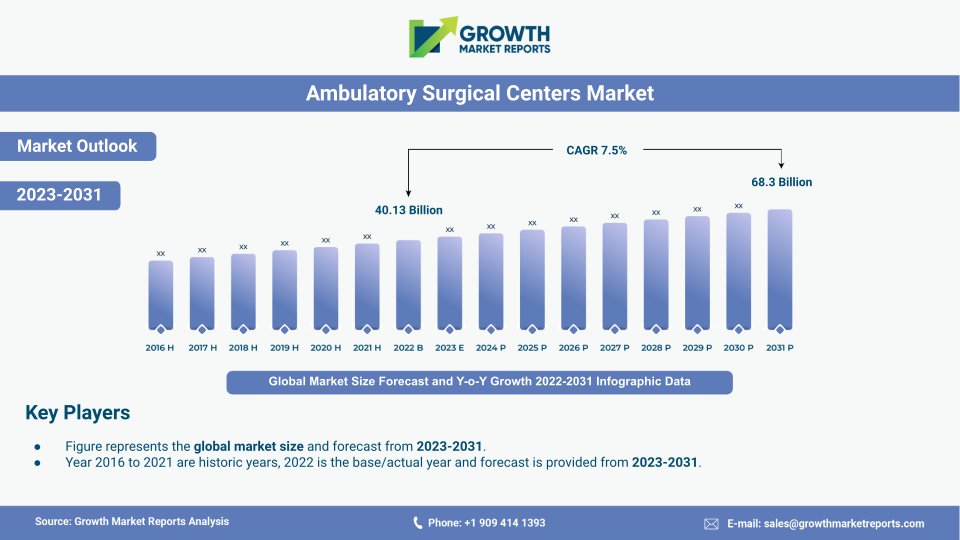
According to our latest research, the global Ambulatory Surgical Centers (ASCs) market size reached USD 99.3 billion in 2024, reflecting a robust expansion in recent years. The market is expected to maintain a strong growth trajectory, registering a CAGR of 6.4% from 2025 to 2033. By the end of 2033, the Ambulatory Surgical Centers market is forecasted to reach approximately USD 173.2 billion. This growth is primarily driven by the increasing demand for minimally invasive procedures, cost-efficiency compared to inpatient hospital care, and advancements in surgical technologies that enable more procedures to be performed safely in outpatient settings.
One of the most significant growth factors propelling the Ambulatory Surgical Centers market is the rising prevalence of chronic diseases and the aging global population. As the incidence of conditions such as cardiovascular disorders, gastrointestinal diseases, and ophthalmic problems continues to climb, there is a corresponding increase in the number of surgical procedures required. ASCs offer a convenient and cost-effective solution for patients needing diagnostic and surgical interventions without the extended recovery times and higher costs associated with traditional hospital stays. Furthermore, the shift toward value-based healthcare models has incentivized payers and providers to choose ASCs for eligible procedures, further driving market expansion.
Another key driver is the continuous innovation in medical technologies and surgical techniques, which has expanded the range of procedures that can be safely performed in outpatient settings. Minimally invasive surgeries, supported by advanced imaging, robotics, and anesthesia techniques, have significantly reduced patient risk and recovery times. This has led to a growing preference among patients and healthcare providers for ASCs over conventional hospitals. Additionally, the regulatory environment in many countries has evolved to support the establishment and operation of ASCs, with streamlined accreditation processes and reimbursement policies that favor outpatient care. These factors are collectively fueling the rapid growth of the Ambulatory Surgical Centers market worldwide.
The cost-effectiveness of ASCs compared to traditional inpatient hospitals is a critical factor influencing market growth. ASCs typically offer lower procedure costs due to reduced overhead, efficient scheduling, and shorter patient stays. This makes them highly attractive to both patients and payers, particularly in markets where healthcare costs are a significant concern. Insurers and government health programs are increasingly encouraging the use of ASCs for appropriate procedures, recognizing the potential for significant savings without compromising patient outcomes. This trend is expected to persist and intensify over the forecast period, further bolstering the growth of the global Ambulatory Surgical Centers market.
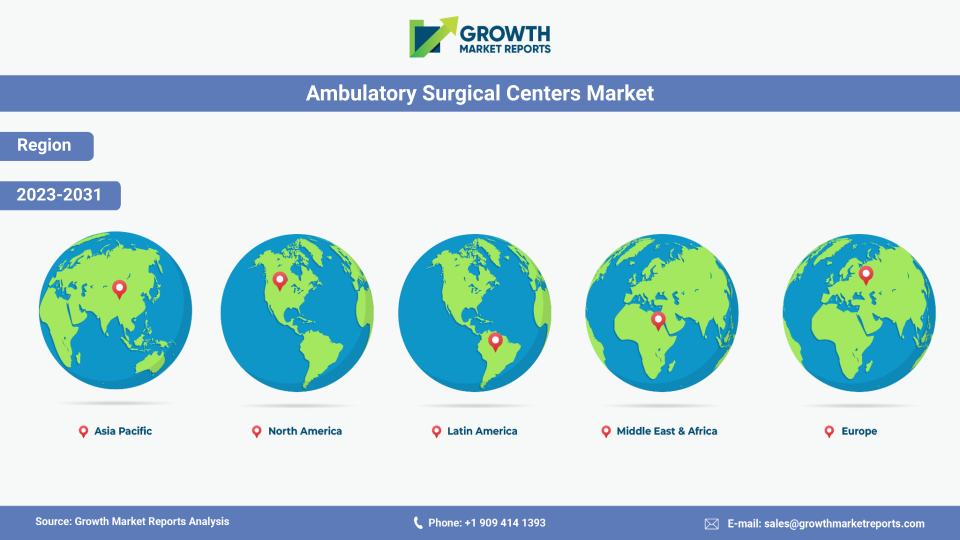
Regionally, North America remains the dominant market for ASCs, driven by a mature healthcare infrastructure, favorable reimbursement policies, and high patient awareness. However, rapid growth is also being observed in the Asia Pacific region, where rising healthcare expenditures, increasing adoption of advanced medical technologies, and expanding middle-class populations are driving demand for outpatient surgical services. Europe follows closely, with a strong focus on healthcare efficiency and cost containment. Meanwhile, Latin America and the Middle East & Africa are emerging as promising markets, supported by ongoing healthcare reforms and investments in healthcare infrastructure. These regional dynamics are shaping the global landscape of the Ambulatory Surgical Centers market and are expected to influence market trends over the coming years.
The Service Type segment of the Ambulatory Surgical Centers market is primarily divided into Diagnostic Services and Surgical Services. Diagnostic Services include a wide array of procedures such as imaging, laboratory tests, and endoscopic examinations, which are increasingly being performed in outpatient settings due to advancements in technology and increased patient convenience. The demand for diagnostic services in ASCs is growing steadily, as early detection and diagnosis of diseases are becoming a priority in preventive healthcare. The integration of advanced diagnostic equipment within ASCs has enabled more comprehensive care delivery, allowing patients to undergo both diagnostic and therapeutic procedures in the same facility, thereby enhancing patient satisfaction and operational efficiency.
Surgical Services, on the other hand, represent the largest revenue-generating segment within the Ambulatory Surgical Centers market. The shift towards minimally invasive surgical techniques has significantly expanded the range of procedures that can be safely performed in outpatient settings. Common surgeries conducted in ASCs include cataract removal, colonoscopies, orthopedic procedures, and pain management interventions. The adoption of innovative surgical tools, improved anesthesia methods, and enhanced infection control protocols has further contributed to the safety and efficacy of outpatient surgeries. As a result, both patients and healthcare providers are showing a marked preference for ASCs over traditional hospital-based surgical care.
The growth in surgical services is also influenced by the rising prevalence of chronic diseases and lifestyle-related conditions that necessitate frequent surgical interventions. ASCs offer a streamlined, patient-centric approach, reducing wait times and enabling faster recovery. This is particularly appealing to working-age populations and elderly patients who seek efficient and high-quality care. In addition, the growing emphasis on value-based healthcare and bundled payment models is encouraging healthcare systems to direct more surgical procedures to ASCs, where costs are lower and outcomes are often comparable or superior to inpatient care.
Furthermore, the COVID-19 pandemic has accelerated the transition of elective and non-emergency procedures from hospitals to ASCs, as hospitals prioritized resources for critical care. This shift has reinforced the role of ASCs in the healthcare ecosystem, prompting investments in facility expansion, staff training, and technology upgrades. As the pandemic subsides, the trend toward outpatient care is expected to persist, with ASCs continuing to capture a larger share of diagnostic and surgical procedures. The ongoing evolution of service offerings in ASCs, coupled with patient demand for convenience and affordability, is set to drive robust growth in this segment over the forecast period.
| Attributes | Details |
| Report Title | Ambulatory Surgical Centers Market Research Report 2033 |
| By Service Type | Diagnostic Services, Surgical Services |
| By Specialty | Gastroenterology, Ophthalmology, Orthopedics, Pain Management, Urology, Dermatology, Others |
| By Ownership | Physician-Owned, Hospital-Owned, Corporate-Owned |
| Regions Covered | North America, Europe, APAC, Latin America, MEA |
| Base Year | 2024 |
| Historic Data | 2018-2023 |
| Forecast Period | 2025-2033 |
| Number of Pages | 269 |
| Number of Tables & Figures | 332 |
| Customization Available | Yes, the report can be customized as per your need. |
The Specialty segment of the Ambulatory Surgical Centers market encompasses a wide range of medical disciplines, including Gastroenterology, Ophthalmology, Orthopedics, Pain Management, Urology, Dermatology, and Others. Gastroenterology procedures, such as colonoscopies and endoscopies, are among the most commonly performed in ASCs, driven by the increasing incidence of gastrointestinal disorders and the emphasis on preventive screenings for colorectal cancer. The efficiency and safety of these procedures in outpatient settings have made ASCs the preferred choice for both patients and physicians, resulting in substantial growth in this specialty segment.
Ophthalmology is another leading specialty, with cataract surgery being the most frequently performed outpatient procedure worldwide. The advent of advanced phacoemulsification techniques and intraocular lens implants has made it possible to perform these surgeries safely and efficiently in ASCs, with minimal patient downtime. The aging population, coupled with rising rates of diabetes and other risk factors for eye diseases, is fueling demand for ophthalmic surgeries in ASCs. Additionally, the cost-effectiveness and high patient satisfaction associated with outpatient eye surgeries are further bolstering the growth of this specialty.
Orthopedics represents a rapidly expanding specialty within the Ambulatory Surgical Centers market, particularly for procedures such as arthroscopies, joint replacements, and fracture repairs. Technological advancements in minimally invasive orthopedic surgery, combined with enhanced pain management protocols, have enabled more complex procedures to be safely performed in ASCs. This has led to shorter recovery times, reduced risk of hospital-acquired infections, and improved functional outcomes for patients. As the prevalence of musculoskeletal disorders and sports injuries continues to rise, the demand for orthopedic surgeries in ASCs is expected to grow significantly.
Pain Management, Urology, and Dermatology are also gaining traction as key specialties in the ASC landscape. Pain management procedures, including epidural injections and nerve blocks, are increasingly being performed in outpatient settings due to their minimally invasive nature and the growing burden of chronic pain conditions. Urology procedures, such as cystoscopies and lithotripsies, benefit from technological innovations that enhance precision and reduce patient discomfort. Dermatology, encompassing skin biopsies, excisions, and cosmetic interventions, is witnessing robust demand as patients seek convenient and affordable care. The diversification of specialties within ASCs is a testament to the versatility and adaptability of the ambulatory surgical model, positioning it for sustained growth across multiple therapeutic areas.
The Ownership segment of the Ambulatory Surgical Centers market is categorized into Physician-Owned, Hospital-Owned, and Corporate-Owned ASCs. Physician-Owned ASCs have historically dominated the market, driven by the desire among surgeons and specialists to have greater control over clinical operations, scheduling, and patient care. These centers often foster strong physician engagement and accountability, resulting in high-quality outcomes and patient satisfaction. However, physician-owned ASCs may face challenges related to capital investment, regulatory compliance, and negotiating power with payers, particularly as healthcare reimbursement models evolve.
Hospital-Owned ASCs have gained prominence in recent years as hospitals seek to expand their outpatient service offerings and capture a larger share of the surgical market. By partnering with or acquiring existing ASCs, hospitals can leverage their brand, resources, and administrative infrastructure to enhance operational efficiency and ensure compliance with regulatory standards. Hospital-owned ASCs are often integrated into broader healthcare networks, facilitating seamless patient referrals, coordinated care, and access to advanced diagnostic and therapeutic services. This model is particularly prevalent in regions with mature healthcare systems and stringent accreditation requirements.
Corporate-Owned ASCs, operated by large healthcare management companies or private equity firms, represent a growing segment in the Ambulatory Surgical Centers market. These entities bring significant capital, operational expertise, and scale to the management of ASCs, enabling investments in technology, staff training, and facility expansion. Corporate ownership models often prioritize standardization, quality assurance, and cost containment, making them attractive to payers and healthcare systems seeking consistent, high-quality care delivery. The increasing trend toward consolidation in the ASC market is expected to drive further growth in the corporate-owned segment, as smaller centers seek strategic partnerships or acquisitions to remain competitive.
The evolving ownership landscape is reshaping the competitive dynamics of the Ambulatory Surgical Centers market. While physician ownership remains a key driver of innovation and patient-centric care, hospital and corporate ownership models offer advantages in terms of scale, resources, and integration with broader healthcare systems. The choice of ownership structure often depends on factors such as regulatory environment, market maturity, access to capital, and strategic objectives. As the market continues to evolve, hybrid ownership models and joint ventures between physicians, hospitals, and corporate entities are likely to become increasingly common, fostering collaboration and driving further growth in the ASC sector.
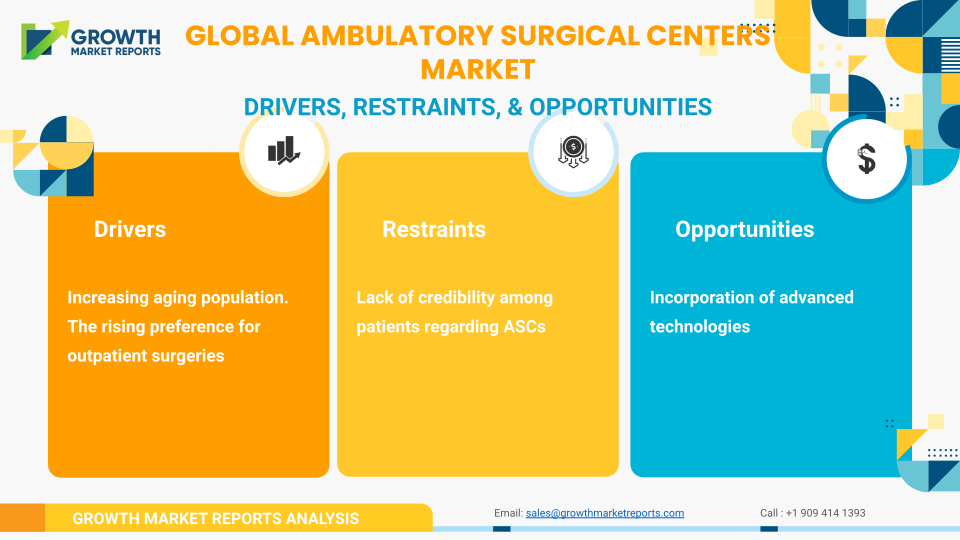
The Ambulatory Surgical Centers market is poised for significant opportunities, particularly as healthcare systems worldwide continue to emphasize cost containment, efficiency, and patient-centered care. One of the most promising opportunities lies in the expansion of service offerings, including the integration of advanced diagnostic modalities, telemedicine, and post-acute care services. By broadening the scope of care provided within ASCs, operators can capture a larger share of the outpatient market and enhance patient loyalty. Additionally, the adoption of digital health technologies, such as electronic health records, remote monitoring, and artificial intelligence-driven decision support, can improve clinical outcomes, streamline operations, and support data-driven decision-making. These innovations are expected to create new revenue streams and strengthen the competitive position of ASCs in the evolving healthcare landscape.
Another significant opportunity for growth in the Ambulatory Surgical Centers market is the expansion into emerging markets, particularly in Asia Pacific, Latin America, and the Middle East & Africa. These regions are experiencing rapid urbanization, rising disposable incomes, and increasing demand for high-quality healthcare services. Governments and private investors are actively supporting the development of healthcare infrastructure, including ASCs, to address unmet medical needs and reduce the burden on overcrowded hospitals. By leveraging local partnerships, adapting service offerings to regional preferences, and investing in workforce development, ASC operators can tap into these high-growth markets and diversify their revenue base. Furthermore, the ongoing shift toward value-based care and bundled payment models presents opportunities for ASCs to demonstrate their cost-effectiveness and secure favorable reimbursement arrangements with payers.
Despite these opportunities, the Ambulatory Surgical Centers market faces several restraining factors that could impede growth. Regulatory challenges, including complex licensing requirements, accreditation standards, and reimbursement policies, can pose significant barriers to entry and expansion, particularly in highly regulated markets. Additionally, the increasing consolidation of healthcare providers and payers may intensify competition and exert downward pressure on reimbursement rates for outpatient procedures. Concerns related to patient safety, quality assurance, and infection control also persist, necessitating continuous investments in staff training, facility upgrades, and compliance monitoring. Addressing these challenges will be critical for ASC operators to sustain growth and maintain their competitive edge in an increasingly dynamic and complex healthcare environment.
North America continues to lead the Ambulatory Surgical Centers market, accounting for the largest share of global revenues in 2024, with an estimated market value of USD 49.8 billion. The region’s dominance is attributed to its advanced healthcare infrastructure, widespread adoption of minimally invasive surgical techniques, and favorable reimbursement policies that incentivize outpatient care. The United States, in particular, has a well-established network of ASCs, supported by a robust regulatory framework and high patient awareness. The trend toward consolidation among ASC operators and the integration of digital health solutions are further enhancing the efficiency and quality of care delivery in North America. As the region continues to prioritize value-based care and cost containment, the ASC market is expected to maintain steady growth over the forecast period.
Europe represents another significant market for ASCs, with a market size of approximately USD 22.7 billion in 2024. The region’s growth is driven by increasing demand for efficient, cost-effective healthcare services, particularly in countries with aging populations and rising rates of chronic diseases. European healthcare systems are increasingly embracing outpatient care models to alleviate pressure on hospitals and improve patient access to timely surgical interventions. The adoption of advanced medical technologies and the implementation of standardized accreditation processes are supporting the expansion of ASCs across the region. The European ASC market is projected to grow at a CAGR of 5.8% from 2025 to 2033, reflecting ongoing investments in healthcare infrastructure and a strong focus on quality and safety.
The Asia Pacific region is emerging as a high-growth market for Ambulatory Surgical Centers, with a market value of USD 16.3 billion in 2024. Rapid urbanization, increasing healthcare expenditures, and a growing middle-class population are driving demand for accessible and affordable outpatient surgical services. Countries such as China, India, and Japan are witnessing significant investments in healthcare infrastructure, including the establishment of new ASCs and the modernization of existing facilities. The adoption of advanced surgical techniques and the expansion of insurance coverage are further supporting market growth in the region. Latin America and the Middle East & Africa, with market sizes of USD 6.4 billion and USD 4.1 billion respectively, are also experiencing increased interest in ASCs, driven by healthcare reforms and the need to address unmet surgical needs. These regions present significant opportunities for ASC operators to expand their footprint and capitalize on the growing demand for outpatient care.
The competitive landscape of the Ambulatory Surgical Centers market is characterized by a diverse mix of physician-owned centers, hospital-affiliated facilities, and corporate-owned networks. The market is highly fragmented, with numerous small and mid-sized players operating alongside large, integrated healthcare organizations. Consolidation is a key trend, as larger entities seek to expand their market share, achieve economies of scale, and enhance their bargaining power with payers and suppliers. Strategic partnerships, mergers and acquisitions, and joint ventures are commonplace, enabling ASC operators to broaden their service offerings, enter new geographic markets, and strengthen their operational capabilities. The competitive dynamics are further shaped by the increasing emphasis on quality, patient safety, and value-based care, with operators investing in technology, staff training, and process improvement to differentiate themselves in the market.
Innovation is a critical differentiator in the Ambulatory Surgical Centers market, with leading players leveraging advanced surgical technologies, digital health solutions, and data analytics to enhance clinical outcomes and operational efficiency. The adoption of electronic health records, telemedicine platforms, and remote monitoring tools is enabling ASCs to deliver more coordinated and patient-centric care. Operators are also focusing on expanding their specialty offerings, integrating diagnostic and therapeutic services, and developing comprehensive care pathways to address the evolving needs of patients and payers. These initiatives are helping ASC operators to build strong brand reputations, attract top clinical talent, and secure long-term contracts with insurers and healthcare systems.
Major companies in the Ambulatory Surgical Centers market include Envision Healthcare, Tenet Healthcare (United Surgical Partners International), Surgery Partners, Inc., HCA Healthcare, Inc., and Surgical Care Affiliates (Optum/UnitedHealth Group). Envision Healthcare is a leading operator of physician-led ASCs, offering a broad range of surgical and diagnostic services across multiple specialties. Tenet Healthcare, through its United Surgical Partners International subsidiary, operates one of the largest networks of ASCs in the United States, with a strong focus on quality, efficiency, and patient satisfaction. Surgery Partners, Inc. is known for its diversified portfolio of ASCs and its commitment to innovation and operational excellence.
HCA Healthcare, Inc. is a major hospital system with a growing portfolio of ASCs, leveraging its extensive resources and clinical expertise to deliver high-quality outpatient care. Surgical Care Affiliates, now part of Optum (a UnitedHealth Group company), operates a nationwide network of ASCs and is at the forefront of integrating value-based care models and digital health solutions. These companies are continuously investing in facility expansion, technology upgrades, and strategic partnerships to maintain their competitive edge in the rapidly evolving ASC market. As competition intensifies, operators are expected to focus on differentiation through quality, innovation, and patient experience, positioning themselves for sustained growth and success in the global Ambulatory Surgical Centers market.
The Ambulatory Surgical Centers market has been segmented on the basis of
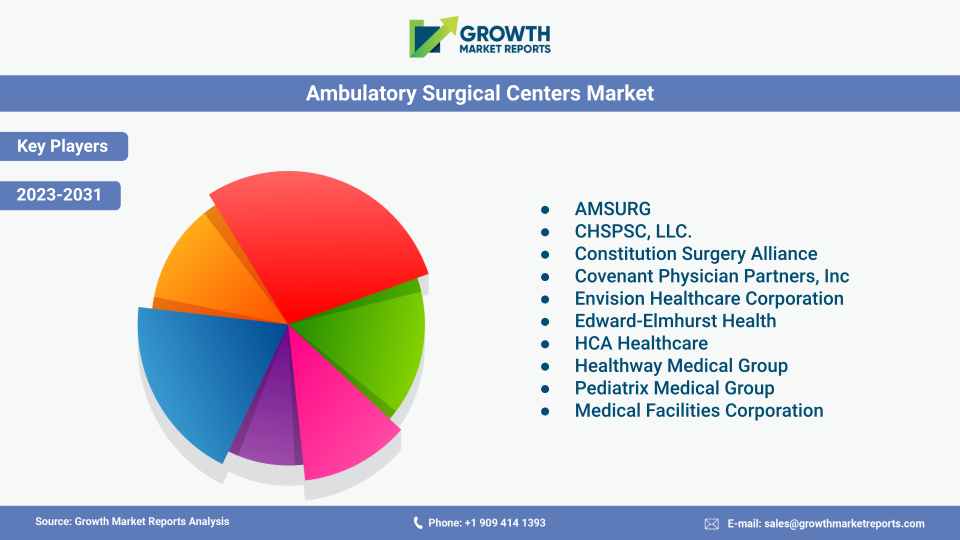
Key players competing in the global ambulatory surgical centers market are AMSURG; CHSPSC, LLC.; Constitution Surgery Alliance; Covenant Physician Partners, Inc; Envision Healthcare Corporation; Edward-Elmhurst Health; HCA Healthcare; Healthway Medical Group; Pediatrix Medical Group; Medical Facilities Corporation; Physicians Endoscopy, LLC; QHCCS, LLC; Surgery Partners; Surgical Care Affiliates; SurgCenter; TH Medical; ValueHealth® LLC; and Terveystalo
These companies are boosting their market share by adopting various strategies such as partnerships, mergers, reduction in production costs, launching new services, and implementing advanced technologies.
On Jan 20, 2022, ValueHealth LLC, a global provider of ambulatory centers, announced its partnership with Penn State Heath, a multi-hospital health system serving patients and communities across central Pennsylvania. This joint venture is expected to develop a high-performance surgical network in Pennsylvania.
The Ambulatory Surgical Centers market is expected to register a compound annual growth rate (CAGR) of 6.4% from 2025 to 2033.
Major companies include Envision Healthcare, Tenet Healthcare (United Surgical Partners International), Surgery Partners, Inc., HCA Healthcare, Inc., and Surgical Care Affiliates (Optum/UnitedHealth Group), among others.
Opportunities include expanding service offerings, integrating digital health technologies, and entering emerging markets. Challenges involve regulatory compliance, reimbursement pressures, and maintaining patient safety and quality standards.
The pandemic accelerated the shift of elective and non-emergency procedures from hospitals to ASCs, reinforcing their role in outpatient care and prompting investments in facility expansion and technology upgrades.
Ownership models include Physician-Owned, Hospital-Owned, and Corporate-Owned ASCs. Each model offers unique advantages in terms of clinical control, operational efficiency, and access to capital.
Common specialties include Gastroenterology, Ophthalmology, Orthopedics, Pain Management, Urology, and Dermatology, with procedures like colonoscopies, cataract surgeries, and joint replacements being frequently performed.
ASCs primarily offer Diagnostic Services (such as imaging and laboratory tests) and Surgical Services (including cataract removal, colonoscopies, orthopedic procedures, and pain management interventions).
North America is the dominant region, followed by Europe and Asia Pacific. Rapid growth is also seen in Latin America and the Middle East & Africa due to healthcare reforms and infrastructure investments.
Key growth drivers include increasing demand for minimally invasive procedures, cost-efficiency compared to inpatient hospital care, advancements in surgical technologies, rising prevalence of chronic diseases, and an aging global population.
As of 2024, the global Ambulatory Surgical Centers (ASC) market size reached USD 99.3 billion, with projections to grow to approximately USD 173.2 billion by 2033.