USB Type C Market Research Report 2033

USB Type C Market Research Report 2033

Segments - by Product Type (Cables, Adapters, Hubs, Docking Stations, Chargers, Others), by Application (Smartphones & Tablets, Laptops & PCs, Consumer Electronics, Automotive, Industrial, Others), by End-User (Consumer, Commercial, Industrial, Automotive, Others), by Distribution Channel (Online, Offline)

https://growthmarketreports.com/Debadatta
Author : Debadatta Patel
https://growthmarketreports.com/Vaibhav
Fact-checked by : V. Chandola
https://growthmarketreports.com/Shruti
Editor : Shruti Bhat

Upcoming | Report ID :CG-3796 | 4.5 Rating | 84 Reviews | 258 Pages | Format : Docx PDF

Report Description


USB Type C Market Outlook

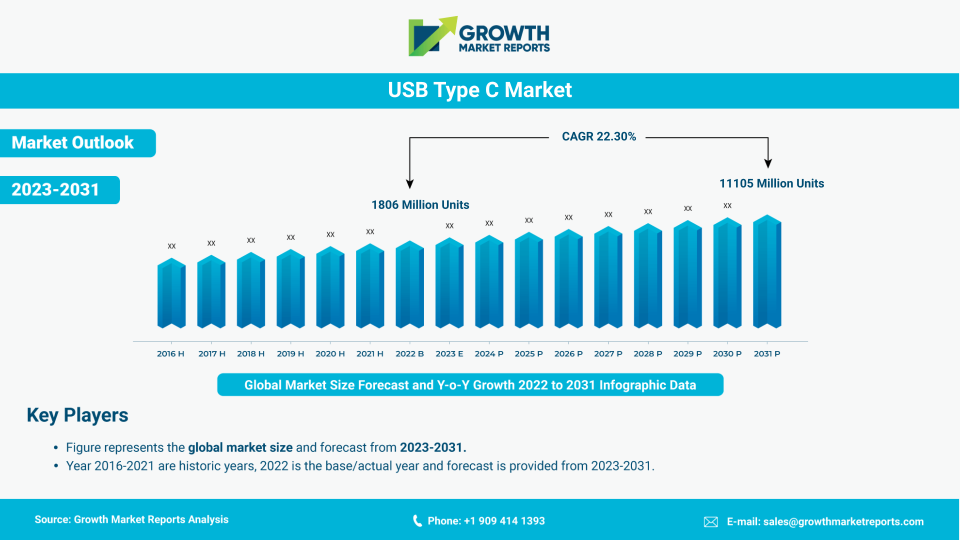
According to our latest research, the global USB Type C market size reached USD 8.4 billion in 2024, driven by robust demand across consumer electronics and automotive sectors. The market is expected to grow at a CAGR of 19.2% during the forecast period, reaching an estimated USD 28.7 billion by 2033. This remarkable growth is primarily fueled by the widespread adoption of USB Type C as a universal connectivity standard, rapid advancements in data transfer technologies, and increasing integration of USB Type C ports in next-generation devices.

One of the primary growth factors for the USB Type C market is the ongoing shift toward device standardization and interoperability. Major consumer electronics manufacturers are now prioritizing USB Type C interfaces due to their reversible design, high-speed data transfer capabilities, and ability to deliver power efficiently. This transition is not only limited to smartphones and laptops but is also expanding into tablets, monitors, and even compact home appliances. The European Union’s regulatory push for a common charging standard has further accelerated this trend, making USB Type C the preferred choice for manufacturers looking to streamline production and reduce electronic waste.

Additionally, the proliferation of high-performance devices requiring faster charging and data transfer has fueled the demand for USB Type C products. The interface supports advanced protocols such as Thunderbolt 3 and USB Power Delivery, enabling rapid charging and seamless connectivity between multiple devices. As consumers increasingly adopt devices with higher power requirements, USB Type C cables, adapters, and docking stations are becoming indispensable accessories. This is particularly evident in the gaming, professional content creation, and remote working segments, where users demand reliable, multi-functional, and high-speed connectivity solutions.

Another significant driver is the automotive sector’s integration of USB Type C ports into infotainment systems and in-car charging solutions. Modern vehicles are equipped with sophisticated electronic systems and infotainment units, necessitating robust connectivity options for passengers. USB Type C’s ability to support both data and power transmission with a single connector aligns perfectly with the automotive industry’s requirements for space-saving and future-proof solutions. This integration is expected to intensify as electric vehicles (EVs) and autonomous driving technologies become mainstream, further boosting the USB Type C market.

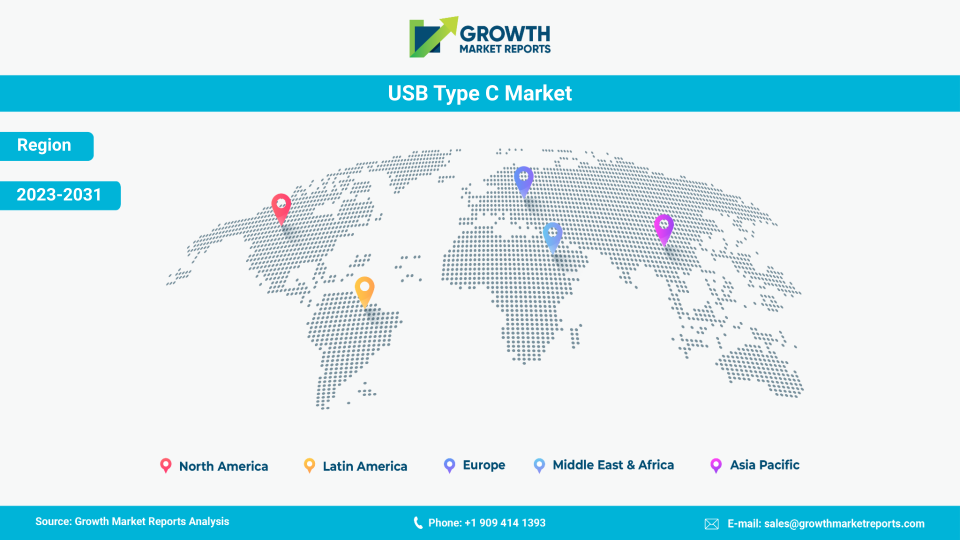
Regionally, Asia Pacific continues to dominate the USB Type C market, accounting for the largest revenue share in 2024. The region’s leadership can be attributed to its expansive electronics manufacturing ecosystem, rising smartphone penetration, and the presence of leading OEMs in China, Japan, and South Korea. North America and Europe are also witnessing significant growth, driven by regulatory initiatives and the rapid adoption of USB Type C in both consumer and commercial sectors. Latin America and the Middle East & Africa, while still emerging, are expected to register substantial growth rates as digital transformation accelerates in these regions.

Global USB Type C Industry Outlook

Product Type Analysis

The USB Type C market is segmented by product type into cables, adapters, hubs, docking stations, chargers, and others. Cables represent the largest product segment, driven by their indispensable role in connecting and charging an ever-expanding array of devices. As consumers and businesses transition to devices with USB Type C ports, demand for high-quality, durable cables with enhanced data transfer and power delivery capabilities has surged. The introduction of certified and ruggedized cables for professional and industrial use is further expanding the market, with manufacturers focusing on innovation in cable design to support higher wattages and longer lengths without signal degradation.

Adapters and hubs are witnessing robust growth as users seek to bridge the gap between legacy devices and newer USB Type C-only hardware. Adapters enable connectivity with older USB Type A, HDMI, VGA, and Ethernet ports, making them essential for professionals and consumers operating in hybrid device environments. Hubs, on the other hand, are gaining traction for their ability to consolidate multiple connections—such as USB, SD card, HDMI, and audio—into a single compact unit. This is particularly valuable for users of ultra-thin laptops and tablets that offer limited physical ports, driving demand in both consumer and commercial markets.

Docking stations have emerged as a critical product category, especially in enterprise settings where seamless workstation connectivity is paramount. Modern docking stations leverage USB Type C’s high bandwidth to support multiple monitors, high-speed storage, and network connectivity, all while charging the host device. The rise of remote and hybrid work models has further propelled the adoption of docking stations, as professionals require flexible, plug-and-play solutions for home and office setups. This trend is expected to continue, with innovations focusing on increased compatibility, integrated security features, and support for emerging display standards.

Chargers are another vital segment, benefiting from USB Type C’s ability to deliver higher power levels compared to previous USB standards. The widespread adoption of USB Power Delivery (PD) has enabled fast charging for smartphones, laptops, tablets, and even electric scooters. Manufacturers are introducing multi-port and GaN (gallium nitride) chargers that offer compact form factors and enhanced efficiency. The ongoing shift toward universal charging solutions, driven by regulatory mandates and consumer preferences, is expected to sustain strong growth in this segment throughout the forecast period.

The others category, encompassing emerging products such as USB Type C-enabled storage devices, display adapters, and audio peripherals, is also expanding as manufacturers explore new use cases and applications. As the USB Type C ecosystem matures, the product landscape will continue to evolve, with innovation centered around higher data rates, increased power delivery, and enhanced durability to cater to the diverse needs of consumers and enterprises.

Report Scope

Attributes Details
Report Title USB Type C Market Research Report 2033
By Product Type Cables, Adapters, Hubs, Docking Stations, Chargers, Others
By Application Smartphones & Tablets, Laptops & PCs, Consumer Electronics, Automotive, Industrial, Others
By End-User Consumer, Commercial, Industrial, Automotive, Others
By Distribution Channel Online, Offline
Regions Covered North America, Europe, APAC, Latin America, MEA
Base Year 2024
Historic Data 2018-2023
Forecast Period 2025-2033
Number of Pages 258
Number of Tables & Figures 386
Customization Available Yes, the report can be customized as per your need.

Application Analysis

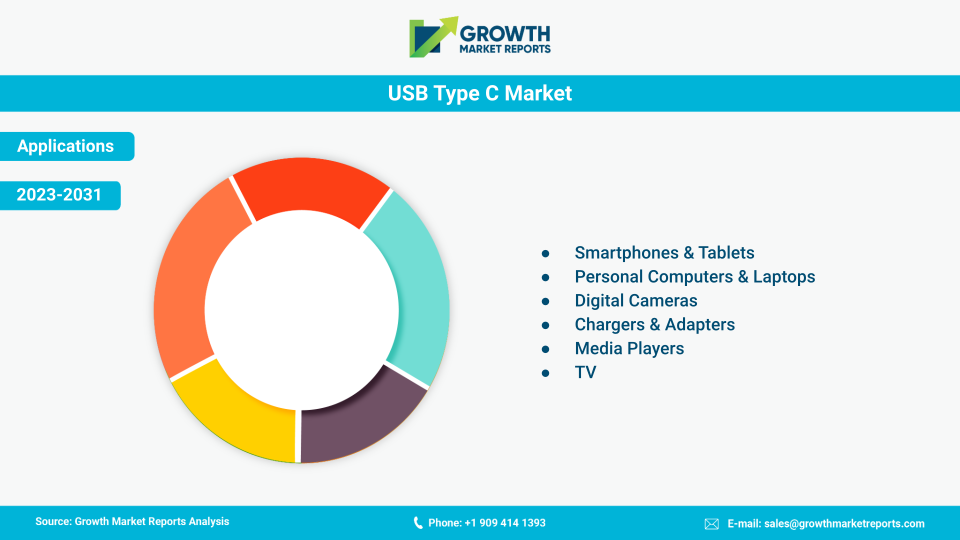
The application segment of the USB Type C market is broad, encompassing smartphones & tablets, laptops & PCs, consumer electronics, automotive, industrial, and others. Smartphones & tablets remain the dominant application, accounting for a significant share of global revenue. The ubiquity of USB Type C in flagship smartphones and tablets from major brands has set a new industry standard, enabling faster charging, efficient data transfer, and compatibility with a growing ecosystem of accessories. The trend toward slimmer device profiles and enhanced multimedia capabilities has further cemented USB Type C’s position in this segment.

Laptops & PCs represent another key application area, with USB Type C increasingly replacing traditional USB ports on ultrabooks, notebooks, and desktops. The interface’s ability to support Thunderbolt 3/4, high-resolution display output, and multi-device charging has made it indispensable for both consumers and professionals. As remote work, e-learning, and digital content creation continue to rise, demand for USB Type C-enabled laptops and accessories is expected to remain strong, driving sustained growth in this segment.

The consumer electronics segment encompasses a wide range of devices, including cameras, headphones, gaming consoles, smart home devices, and wearables. USB Type C’s versatility and compact design make it ideal for these applications, allowing manufacturers to offer enhanced functionality in smaller form factors. As consumers increasingly seek seamless connectivity between their devices, USB Type C is becoming the preferred interface for both charging and data transfer, further expanding its footprint in the consumer electronics market.

In the automotive sector, USB Type C is rapidly gaining traction as automakers integrate advanced infotainment systems, in-car charging solutions, and connectivity features. The interface’s ability to deliver high power and support data-intensive applications aligns with the growing demand for smart, connected vehicles. USB Type C ports are now standard in many new vehicle models, providing passengers with convenient charging and connectivity options for their smartphones, tablets, and other devices. This trend is expected to accelerate as electric vehicles and autonomous driving technologies become more prevalent.

The industrial application segment, while still emerging, is poised for significant growth as factories and production lines adopt USB Type C for machine interfaces, diagnostic tools, and industrial PCs. The interface’s robustness, high data rates, and power delivery capabilities make it suitable for demanding industrial environments. As Industry 4.0 initiatives drive increased automation and digitalization, USB Type C is expected to play a key role in enabling efficient, reliable, and future-proof connectivity across industrial applications.

End-User Analysis

The USB Type C market is segmented by end-user into consumer, commercial, industrial, automotive, and others. The consumer segment accounts for the largest share, driven by the widespread adoption of USB Type C-enabled devices in households worldwide. Consumers benefit from the interface’s universal compatibility, fast charging, and ease of use, making it a preferred choice for smartphones, tablets, laptops, and a growing array of smart home devices. The ongoing trend toward device convergence and the desire for clutter-free, efficient charging solutions are further propelling demand in this segment.

The commercial end-user segment encompasses businesses, educational institutions, and government organizations that rely on USB Type C for seamless connectivity and productivity. The proliferation of USB Type C-enabled laptops, docking stations, and peripherals has transformed modern workspaces, enabling flexible, efficient, and collaborative environments. As hybrid work models become the norm, commercial entities are investing in USB Type C infrastructure to support employee mobility, secure data transfer, and streamlined device management. This trend is expected to continue, with commercial adoption driving innovation in multi-port hubs, advanced docking solutions, and enterprise-grade cables.

In the industrial sector, USB Type C is gaining momentum as factories and production facilities upgrade their connectivity infrastructure to support automation, machine-to-machine communication, and real-time data analytics. The interface’s durability, high bandwidth, and power delivery capabilities make it suitable for industrial PCs, diagnostic tools, and sensor networks. As Industry 4.0 initiatives accelerate digital transformation in manufacturing, logistics, and energy sectors, USB Type C is poised to become a standard interface for industrial connectivity, driving growth in this segment.

The automotive end-user segment is witnessing rapid adoption of USB Type C as automakers integrate advanced infotainment systems, smart charging solutions, and connected vehicle technologies. USB Type C’s ability to support high-power charging and data-intensive applications aligns with the automotive industry’s focus on enhancing passenger experience and enabling next-generation features. As electric vehicles and autonomous driving technologies gain traction, the demand for robust, future-proof connectivity solutions is expected to drive further growth in the automotive end-user segment.

The others category includes sectors such as healthcare, defense, and aerospace, where USB Type C is being adopted for specialized applications requiring secure, high-speed data transfer and reliable power delivery. As the USB Type C ecosystem continues to expand, new use cases and opportunities are emerging across diverse end-user segments, contributing to the overall growth and diversification of the market.

Distribution Channel Analysis

The USB Type C market is segmented by distribution channel into online and offline channels. The online segment has witnessed exponential growth in recent years, driven by the increasing popularity of e-commerce platforms, direct-to-consumer sales, and digital marketplaces. Consumers and businesses alike are turning to online channels for the convenience of browsing a wide selection of USB Type C products, accessing detailed product information, and benefiting from competitive pricing and fast delivery. Leading e-commerce platforms such as Amazon, Alibaba, and Flipkart have expanded their offerings of USB Type C cables, adapters, hubs, and chargers, catering to a global customer base.

The offline distribution channel, which includes brick-and-mortar electronics stores, specialty retailers, and authorized resellers, remains a significant avenue for USB Type C product sales. Many consumers prefer to purchase accessories and peripherals in person, where they can assess product quality, seek expert advice, and ensure compatibility with their devices. Offline channels are particularly important in regions with limited internet penetration or where trust in online transactions is still developing. Retailers are responding to changing consumer preferences by enhancing in-store experiences, offering bundled deals, and providing technical support for USB Type C products.

Manufacturers are increasingly adopting an omnichannel approach, integrating online and offline distribution strategies to maximize market reach and customer engagement. This includes leveraging online platforms for product launches and promotions, while maintaining a strong presence in physical retail outlets for customer support and brand visibility. The rise of click-and-collect services, where customers order online and pick up in-store, is further blurring the lines between online and offline channels, offering consumers greater flexibility and choice.

The growing importance of online channels is also driving innovation in digital marketing, customer engagement, and after-sales support. Manufacturers and retailers are investing in user-friendly websites, mobile apps, and social media campaigns to attract and retain customers. Advanced analytics and personalized recommendations are being used to enhance the online shopping experience, while efficient logistics and return policies are building trust and loyalty among consumers.

As the USB Type C market continues to evolve, distribution channels will play a critical role in shaping consumer preferences, driving product adoption, and supporting market growth. The ongoing digital transformation of retail and the rise of direct-to-consumer brands are expected to further accelerate the shift toward online channels, while offline channels will continue to provide valuable touchpoints for customer interaction and brand building.

Opportunities & Threats

The USB Type C market presents significant opportunities for innovation and expansion, driven by the ongoing convergence of consumer electronics, automotive, and industrial applications. One of the most promising opportunities lies in the development of next-generation USB Type C products that support higher data rates, increased power delivery, and enhanced durability. As new standards such as USB4 and Thunderbolt 4 gain traction, manufacturers have the opportunity to differentiate their offerings by incorporating advanced features, improved materials, and backward compatibility. The growing demand for universal charging solutions, particularly in response to regulatory initiatives and consumer preferences, is also creating opportunities for manufacturers to develop multi-port chargers, hubs, and docking stations that cater to diverse device ecosystems.

Another key opportunity is the expansion of USB Type C into emerging markets and new application areas. As digital transformation accelerates in regions such as Latin America, the Middle East, and Africa, demand for affordable, reliable, and future-proof connectivity solutions is expected to rise. Manufacturers and distributors can capitalize on this trend by developing region-specific products, establishing local partnerships, and investing in targeted marketing campaigns. The adoption of USB Type C in healthcare, defense, and aerospace applications also presents new growth avenues, as these sectors require secure, high-speed data transfer and robust power delivery solutions for mission-critical operations.

Despite the numerous opportunities, the USB Type C market faces several restraining factors that could impact growth. One of the primary challenges is the proliferation of counterfeit and substandard products, particularly in the cables and chargers segment. These products not only pose safety risks to consumers but also undermine the reputation of reputable brands and erode market confidence. Addressing this challenge requires industry-wide collaboration on certification, quality assurance, and consumer education initiatives. Additionally, the rapid pace of technological advancement and the need for continuous product innovation can strain resources and increase development costs for manufacturers, potentially limiting the participation of smaller players in the market.

Regional Outlook

Asia Pacific remains the largest and most dynamic region in the global USB Type C market, accounting for approximately 42% of total revenue in 2024, or around USD 3.5 billion. The region’s dominance is underpinned by its robust electronics manufacturing ecosystem, high smartphone penetration, and the presence of leading OEMs such as Samsung, Huawei, Xiaomi, and Sony. China, Japan, and South Korea are at the forefront of USB Type C adoption, with government initiatives and industry collaborations further accelerating market growth. The region’s large and tech-savvy consumer base, coupled with rising demand for high-performance devices, is expected to sustain strong growth, with Asia Pacific projected to maintain a CAGR of 20.1% through 2033.

North America is the second-largest market, generating approximately USD 2.2 billion in revenue in 2024. The region’s growth is driven by the rapid adoption of USB Type C in consumer electronics, laptops, and automotive applications, as well as regulatory initiatives promoting universal charging standards. The United States, in particular, is witnessing increased demand for USB Type C-enabled devices and accessories, supported by a mature e-commerce ecosystem and strong consumer awareness. Canada and Mexico are also contributing to regional growth, with rising investments in digital infrastructure and smart mobility solutions.

Europe holds a significant share of the global USB Type C market, with revenues reaching USD 1.8 billion in 2024. The region’s growth is fueled by stringent regulatory mandates, such as the European Union’s directive on common charging standards, and a strong focus on sustainability and electronic waste reduction. Leading European OEMs and automotive manufacturers are rapidly integrating USB Type C into their product lines, further boosting market adoption. Latin America and the Middle East & Africa, while currently accounting for smaller shares, are expected to register above-average growth rates as digital transformation initiatives gain momentum and consumer electronics penetration increases.

USB Type C Market Statistics

Competitor Outlook

The USB Type C market is characterized by intense competition, rapid technological innovation, and a dynamic landscape of established players and emerging entrants. Leading companies are investing heavily in research and development to introduce advanced USB Type C products that offer higher data transfer rates, increased power delivery, and enhanced durability. Strategic collaborations, mergers and acquisitions, and partnerships with OEMs are common strategies employed by market leaders to expand their product portfolios, strengthen distribution networks, and enhance brand visibility. The competitive landscape is further shaped by the entry of new players, particularly in the cables and chargers segment, where barriers to entry are relatively low.

Innovation remains a key differentiator in the USB Type C market, with companies focusing on developing products that support the latest standards such as USB4 and Thunderbolt 4. Manufacturers are also prioritizing quality assurance, certification, and compliance with international safety standards to build consumer trust and mitigate the risks associated with counterfeit products. The growing importance of sustainability and environmental responsibility is prompting companies to explore eco-friendly materials, recyclable packaging, and energy-efficient manufacturing processes, enhancing their competitive positioning in the market.

The market is also witnessing increased collaboration between USB Type C product manufacturers and device OEMs, particularly in the consumer electronics and automotive sectors. These partnerships enable seamless integration of USB Type C interfaces into new devices, ensuring compatibility, performance, and user satisfaction. Companies are leveraging their expertise in connectivity solutions to offer customized products for specific applications, such as industrial automation, smart mobility, and healthcare, further diversifying their revenue streams and strengthening their market presence.

Major players in the USB Type C market include Belkin International, Inc., Anker Innovations, Inc., Apple Inc., Samsung Electronics Co., Ltd., Lenovo Group Limited, Dell Technologies Inc., HP Inc., Sony Corporation, Xiaomi Corporation, and Baseus Technology. These companies are recognized for their strong brand equity, extensive product portfolios, and global distribution networks. Belkin and Anker are leaders in the accessories segment, offering a wide range of USB Type C cables, chargers, and hubs known for their quality and reliability. Apple and Samsung are at the forefront of device integration, with their flagship smartphones, tablets, and laptops featuring USB Type C ports as standard. Lenovo, Dell, and HP dominate the laptop and PC market, driving innovation in docking stations and enterprise connectivity solutions.

Sony and Xiaomi are prominent players in the consumer electronics segment, leveraging their expertise in device design and user experience to offer USB Type C-enabled products that cater to diverse consumer needs. Baseus Technology, known for its affordable and innovative accessories, has rapidly expanded its presence in emerging markets, capitalizing on the growing demand for high-quality USB Type C products. These companies are continuously investing in R&D, marketing, and customer support to maintain their competitive edge and capture new growth opportunities in the evolving USB Type C market.

Key Players

  • Apple Inc.
  • Samsung Electronics Co., Ltd.
  • Intel Corporation
  • Texas Instruments Incorporated
  • Analog Devices, Inc.
  • STMicroelectronics N.V.
  • NXP Semiconductors N.V.
  • Cypress Semiconductor Corporation (Infineon Technologies AG)
  • Microchip Technology Inc.
  • ON Semiconductor Corporation
  • Renesas Electronics Corporation
  • TE Connectivity Ltd.
  • Molex LLC (Koch Industries)
  • Amphenol Corporation
  • Belkin International, Inc.
  • Foxconn Technology Group (Hon Hai Precision Industry Co., Ltd.)
  • JAE Electronics, Inc.
  • Lotes Co., Ltd.
  • Luxshare Precision Industry Co., Ltd.
  • Delock (Tragant Handels- und Beteiligungs-GmbH)
USB Type C Market Overview

Segments

The USB Type C market has been segmented on the basis of

Product Type

  • Cables
  • Adapters
  • Hubs
  • Docking Stations
  • Chargers
  • Others

Application

  • Smartphones & Tablets
  • Laptops & PCs
  • Consumer Electronics
  • Automotive
  • Industrial
  • Others

End-User

  • Consumer
  • Commercial
  • Industrial
  • Automotive
  • Others

Distribution Channel

  • Online
  • Offline

Competitive Landscape

Key players competing in the global USB Type C market are Texas Instruments Inc.; Analog Devices Inc.; Belkin International. Inc.; Microchip Technology. Inc.; Diodes. Inc.; Infineon Technologies AG; NXP Semiconductor Corporation; and ON Semiconductor Corporation. These players have constantly engaged in several market development strategies such as collaborations, Agreements, Mergers, and acquisitions to strengthen their geographical presence. Moreover, production capacity expansion and new product launches are widely adopted to increase their market share.
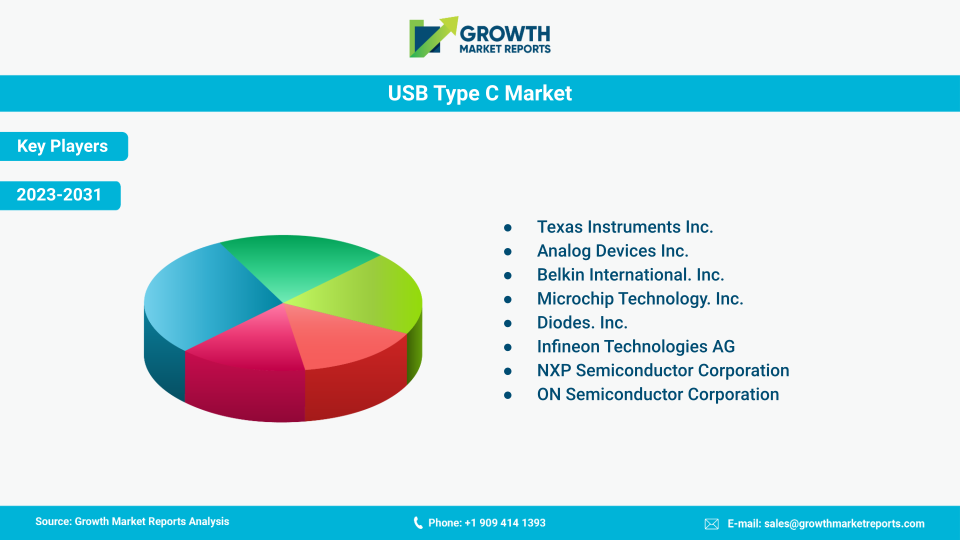

USB Type C Market Key Players

Frequently Asked Questions

Major challenges include the proliferation of counterfeit and substandard products, rapid technological changes requiring continuous innovation, and the need for industry-wide quality assurance and certification.

Key trends include the shift towards universal charging standards, adoption of advanced protocols like Thunderbolt 4 and USB4, and expansion into new sectors such as healthcare and industrial automation. Opportunities exist in developing high-performance, durable, and region-specific USB Type C products.

Key players include Apple Inc., Samsung Electronics, Belkin International, Anker Innovations, Lenovo, Dell Technologies, HP Inc., Sony Corporation, Xiaomi Corporation, and Baseus Technology.

USB Type C products are distributed through both online channels (e-commerce platforms, direct-to-consumer sales) and offline channels (electronics stores, specialty retailers, authorized resellers).

Automakers are integrating USB Type C ports into infotainment systems and in-car charging solutions, supporting both data and power transmission, which aligns with the needs of electric and autonomous vehicles.

Key applications include smartphones & tablets, laptops & PCs, consumer electronics, automotive, and industrial devices, with smartphones & tablets being the dominant segment.

The main product types include cables, adapters, hubs, docking stations, chargers, and others such as storage devices and audio peripherals.

Asia Pacific dominates the USB Type C market, accounting for the largest revenue share in 2024, followed by North America and Europe. Latin America and the Middle East & Africa are also experiencing rapid growth.

The USB Type C market is expected to grow at a CAGR of 19.2% from 2025 to 2033, reaching an estimated USD 28.7 billion by 2033.

As of 2024, the global USB Type C market size reached USD 8.4 billion, driven by strong demand in consumer electronics and automotive sectors.

Table Of Content

Chapter 1 Executive Summary
Chapter 2 Assumptions and Acronyms Used
Chapter 3 Research Methodology
Chapter 4 USB Type C Market Overview
   4.1 Introduction
      4.1.1 Market Taxonomy
      4.1.2 Market Definition
      4.1.3 Macro-Economic Factors Impacting the Market Growth
   4.2 USB Type C Market Dynamics
      4.2.1 Market Drivers
      4.2.2 Market Restraints
      4.2.3 Market Opportunity
   4.3 USB Type C Market - Supply Chain Analysis
      4.3.1 List of Key Suppliers
      4.3.2 List of Key Distributors
      4.3.3 List of Key Consumers
   4.4 Key Forces Shaping the USB Type C Market
      4.4.1 Bargaining Power of Suppliers
      4.4.2 Bargaining Power of Buyers
      4.4.3 Threat of Substitution
      4.4.4 Threat of New Entrants
      4.4.5 Competitive Rivalry
   4.5 Global USB Type C Market Size & Forecast, 2023-2032
      4.5.1 USB Type C Market Size and Y-o-Y Growth
      4.5.2 USB Type C Market Absolute $ Opportunity

Chapter 5 Global USB Type C Market Analysis and Forecast By Product Type
   5.1 Introduction
      5.1.1 Key Market Trends & Growth Opportunities By Product Type
      5.1.2 Basis Point Share (BPS) Analysis By Product Type
      5.1.3 Absolute $ Opportunity Assessment By Product Type
   5.2 USB Type C Market Size Forecast By Product Type
      5.2.1 Cables
      5.2.2 Adapters
      5.2.3 Hubs
      5.2.4 Docking Stations
      5.2.5 Chargers
      5.2.6 Others
   5.3 Market Attractiveness Analysis By Product Type

Chapter 6 Global USB Type C Market Analysis and Forecast By Application
   6.1 Introduction
      6.1.1 Key Market Trends & Growth Opportunities By Application
      6.1.2 Basis Point Share (BPS) Analysis By Application
      6.1.3 Absolute $ Opportunity Assessment By Application
   6.2 USB Type C Market Size Forecast By Application
      6.2.1 Smartphones & Tablets
      6.2.2 Laptops & PCs
      6.2.3 Consumer Electronics
      6.2.4 Automotive
      6.2.5 Industrial
      6.2.6 Others
   6.3 Market Attractiveness Analysis By Application

Chapter 7 Global USB Type C Market Analysis and Forecast By End-User
   7.1 Introduction
      7.1.1 Key Market Trends & Growth Opportunities By End-User
      7.1.2 Basis Point Share (BPS) Analysis By End-User
      7.1.3 Absolute $ Opportunity Assessment By End-User
   7.2 USB Type C Market Size Forecast By End-User
      7.2.1 Consumer
      7.2.2 Commercial
      7.2.3 Industrial
      7.2.4 Automotive
      7.2.5 Others
   7.3 Market Attractiveness Analysis By End-User

Chapter 8 Global USB Type C Market Analysis and Forecast By Distribution Channel
   8.1 Introduction
      8.1.1 Key Market Trends & Growth Opportunities By Distribution Channel
      8.1.2 Basis Point Share (BPS) Analysis By Distribution Channel
      8.1.3 Absolute $ Opportunity Assessment By Distribution Channel
   8.2 USB Type C Market Size Forecast By Distribution Channel
      8.2.1 Online
      8.2.2 Offline
   8.3 Market Attractiveness Analysis By Distribution Channel

Chapter 9 Global USB Type C Market Analysis and Forecast by Region
   9.1 Introduction
      9.1.1 Key Market Trends & Growth Opportunities By Region
      9.1.2 Basis Point Share (BPS) Analysis By Region
      9.1.3 Absolute $ Opportunity Assessment By Region
   9.2 USB Type C Market Size Forecast By Region
      9.2.1 North America
      9.2.2 Europe
      9.2.3 Asia Pacific
      9.2.4 Latin America
      9.2.5 Middle East & Africa (MEA)
   9.3 Market Attractiveness Analysis By Region

Chapter 10 Coronavirus Disease (COVID-19) Impact 
   10.1 Introduction 
   10.2 Current & Future Impact Analysis 
   10.3 Economic Impact Analysis 
   10.4 Government Policies 
   10.5 Investment Scenario

Chapter 11 North America USB Type C Analysis and Forecast
   11.1 Introduction
   11.2 North America USB Type C Market Size Forecast by Country
      11.2.1 U.S.
      11.2.2 Canada
   11.3 Basis Point Share (BPS) Analysis by Country
   11.4 Absolute $ Opportunity Assessment by Country
   11.5 Market Attractiveness Analysis by Country
   11.6 North America USB Type C Market Size Forecast By Product Type
      11.6.1 Cables
      11.6.2 Adapters
      11.6.3 Hubs
      11.6.4 Docking Stations
      11.6.5 Chargers
      11.6.6 Others
   11.7 Basis Point Share (BPS) Analysis By Product Type 
   11.8 Absolute $ Opportunity Assessment By Product Type 
   11.9 Market Attractiveness Analysis By Product Type
   11.10 North America USB Type C Market Size Forecast By Application
      11.10.1 Smartphones & Tablets
      11.10.2 Laptops & PCs
      11.10.3 Consumer Electronics
      11.10.4 Automotive
      11.10.5 Industrial
      11.10.6 Others
   11.11 Basis Point Share (BPS) Analysis By Application 
   11.12 Absolute $ Opportunity Assessment By Application 
   11.13 Market Attractiveness Analysis By Application
   11.14 North America USB Type C Market Size Forecast By End-User
      11.14.1 Consumer
      11.14.2 Commercial
      11.14.3 Industrial
      11.14.4 Automotive
      11.14.5 Others
   11.15 Basis Point Share (BPS) Analysis By End-User 
   11.16 Absolute $ Opportunity Assessment By End-User 
   11.17 Market Attractiveness Analysis By End-User
   11.18 North America USB Type C Market Size Forecast By Distribution Channel
      11.18.1 Online
      11.18.2 Offline
   11.19 Basis Point Share (BPS) Analysis By Distribution Channel 
   11.20 Absolute $ Opportunity Assessment By Distribution Channel 
   11.21 Market Attractiveness Analysis By Distribution Channel

Chapter 12 Europe USB Type C Analysis and Forecast
   12.1 Introduction
   12.2 Europe USB Type C Market Size Forecast by Country
      12.2.1 Germany
      12.2.2 France
      12.2.3 Italy
      12.2.4 U.K.
      12.2.5 Spain
      12.2.6 Russia
      12.2.7 Rest of Europe
   12.3 Basis Point Share (BPS) Analysis by Country
   12.4 Absolute $ Opportunity Assessment by Country
   12.5 Market Attractiveness Analysis by Country
   12.6 Europe USB Type C Market Size Forecast By Product Type
      12.6.1 Cables
      12.6.2 Adapters
      12.6.3 Hubs
      12.6.4 Docking Stations
      12.6.5 Chargers
      12.6.6 Others
   12.7 Basis Point Share (BPS) Analysis By Product Type 
   12.8 Absolute $ Opportunity Assessment By Product Type 
   12.9 Market Attractiveness Analysis By Product Type
   12.10 Europe USB Type C Market Size Forecast By Application
      12.10.1 Smartphones & Tablets
      12.10.2 Laptops & PCs
      12.10.3 Consumer Electronics
      12.10.4 Automotive
      12.10.5 Industrial
      12.10.6 Others
   12.11 Basis Point Share (BPS) Analysis By Application 
   12.12 Absolute $ Opportunity Assessment By Application 
   12.13 Market Attractiveness Analysis By Application
   12.14 Europe USB Type C Market Size Forecast By End-User
      12.14.1 Consumer
      12.14.2 Commercial
      12.14.3 Industrial
      12.14.4 Automotive
      12.14.5 Others
   12.15 Basis Point Share (BPS) Analysis By End-User 
   12.16 Absolute $ Opportunity Assessment By End-User 
   12.17 Market Attractiveness Analysis By End-User
   12.18 Europe USB Type C Market Size Forecast By Distribution Channel
      12.18.1 Online
      12.18.2 Offline
   12.19 Basis Point Share (BPS) Analysis By Distribution Channel 
   12.20 Absolute $ Opportunity Assessment By Distribution Channel 
   12.21 Market Attractiveness Analysis By Distribution Channel

Chapter 13 Asia Pacific USB Type C Analysis and Forecast
   13.1 Introduction
   13.2 Asia Pacific USB Type C Market Size Forecast by Country
      13.2.1 China
      13.2.2 Japan
      13.2.3 South Korea
      13.2.4 India
      13.2.5 Australia
      13.2.6 South East Asia (SEA)
      13.2.7 Rest of Asia Pacific (APAC)
   13.3 Basis Point Share (BPS) Analysis by Country
   13.4 Absolute $ Opportunity Assessment by Country
   13.5 Market Attractiveness Analysis by Country
   13.6 Asia Pacific USB Type C Market Size Forecast By Product Type
      13.6.1 Cables
      13.6.2 Adapters
      13.6.3 Hubs
      13.6.4 Docking Stations
      13.6.5 Chargers
      13.6.6 Others
   13.7 Basis Point Share (BPS) Analysis By Product Type 
   13.8 Absolute $ Opportunity Assessment By Product Type 
   13.9 Market Attractiveness Analysis By Product Type
   13.10 Asia Pacific USB Type C Market Size Forecast By Application
      13.10.1 Smartphones & Tablets
      13.10.2 Laptops & PCs
      13.10.3 Consumer Electronics
      13.10.4 Automotive
      13.10.5 Industrial
      13.10.6 Others
   13.11 Basis Point Share (BPS) Analysis By Application 
   13.12 Absolute $ Opportunity Assessment By Application 
   13.13 Market Attractiveness Analysis By Application
   13.14 Asia Pacific USB Type C Market Size Forecast By End-User
      13.14.1 Consumer
      13.14.2 Commercial
      13.14.3 Industrial
      13.14.4 Automotive
      13.14.5 Others
   13.15 Basis Point Share (BPS) Analysis By End-User 
   13.16 Absolute $ Opportunity Assessment By End-User 
   13.17 Market Attractiveness Analysis By End-User
   13.18 Asia Pacific USB Type C Market Size Forecast By Distribution Channel
      13.18.1 Online
      13.18.2 Offline
   13.19 Basis Point Share (BPS) Analysis By Distribution Channel 
   13.20 Absolute $ Opportunity Assessment By Distribution Channel 
   13.21 Market Attractiveness Analysis By Distribution Channel

Chapter 14 Latin America USB Type C Analysis and Forecast
   14.1 Introduction
   14.2 Latin America USB Type C Market Size Forecast by Country
      14.2.1 Brazil
      14.2.2 Mexico
      14.2.3 Rest of Latin America (LATAM)
   14.3 Basis Point Share (BPS) Analysis by Country
   14.4 Absolute $ Opportunity Assessment by Country
   14.5 Market Attractiveness Analysis by Country
   14.6 Latin America USB Type C Market Size Forecast By Product Type
      14.6.1 Cables
      14.6.2 Adapters
      14.6.3 Hubs
      14.6.4 Docking Stations
      14.6.5 Chargers
      14.6.6 Others
   14.7 Basis Point Share (BPS) Analysis By Product Type 
   14.8 Absolute $ Opportunity Assessment By Product Type 
   14.9 Market Attractiveness Analysis By Product Type
   14.10 Latin America USB Type C Market Size Forecast By Application
      14.10.1 Smartphones & Tablets
      14.10.2 Laptops & PCs
      14.10.3 Consumer Electronics
      14.10.4 Automotive
      14.10.5 Industrial
      14.10.6 Others
   14.11 Basis Point Share (BPS) Analysis By Application 
   14.12 Absolute $ Opportunity Assessment By Application 
   14.13 Market Attractiveness Analysis By Application
   14.14 Latin America USB Type C Market Size Forecast By End-User
      14.14.1 Consumer
      14.14.2 Commercial
      14.14.3 Industrial
      14.14.4 Automotive
      14.14.5 Others
   14.15 Basis Point Share (BPS) Analysis By End-User 
   14.16 Absolute $ Opportunity Assessment By End-User 
   14.17 Market Attractiveness Analysis By End-User
   14.18 Latin America USB Type C Market Size Forecast By Distribution Channel
      14.18.1 Online
      14.18.2 Offline
   14.19 Basis Point Share (BPS) Analysis By Distribution Channel 
   14.20 Absolute $ Opportunity Assessment By Distribution Channel 
   14.21 Market Attractiveness Analysis By Distribution Channel

Chapter 15 Middle East & Africa (MEA) USB Type C Analysis and Forecast
   15.1 Introduction
   15.2 Middle East & Africa (MEA) USB Type C Market Size Forecast by Country
      15.2.1 Saudi Arabia
      15.2.2 South Africa
      15.2.3 UAE
      15.2.4 Rest of Middle East & Africa (MEA)
   15.3 Basis Point Share (BPS) Analysis by Country
   15.4 Absolute $ Opportunity Assessment by Country
   15.5 Market Attractiveness Analysis by Country
   15.6 Middle East & Africa (MEA) USB Type C Market Size Forecast By Product Type
      15.6.1 Cables
      15.6.2 Adapters
      15.6.3 Hubs
      15.6.4 Docking Stations
      15.6.5 Chargers
      15.6.6 Others
   15.7 Basis Point Share (BPS) Analysis By Product Type 
   15.8 Absolute $ Opportunity Assessment By Product Type 
   15.9 Market Attractiveness Analysis By Product Type
   15.10 Middle East & Africa (MEA) USB Type C Market Size Forecast By Application
      15.10.1 Smartphones & Tablets
      15.10.2 Laptops & PCs
      15.10.3 Consumer Electronics
      15.10.4 Automotive
      15.10.5 Industrial
      15.10.6 Others
   15.11 Basis Point Share (BPS) Analysis By Application 
   15.12 Absolute $ Opportunity Assessment By Application 
   15.13 Market Attractiveness Analysis By Application
   15.14 Middle East & Africa (MEA) USB Type C Market Size Forecast By End-User
      15.14.1 Consumer
      15.14.2 Commercial
      15.14.3 Industrial
      15.14.4 Automotive
      15.14.5 Others
   15.15 Basis Point Share (BPS) Analysis By End-User 
   15.16 Absolute $ Opportunity Assessment By End-User 
   15.17 Market Attractiveness Analysis By End-User
   15.18 Middle East & Africa (MEA) USB Type C Market Size Forecast By Distribution Channel
      15.18.1 Online
      15.18.2 Offline
   15.19 Basis Point Share (BPS) Analysis By Distribution Channel 
   15.20 Absolute $ Opportunity Assessment By Distribution Channel 
   15.21 Market Attractiveness Analysis By Distribution Channel

Chapter 16 Competition Landscape 
   16.1 USB Type C Market: Competitive Dashboard
   16.2 Global USB Type C Market: Market Share Analysis, 2023
   16.3 Company Profiles (Details – Overview, Financials, Developments, Strategy) 
      16.3.1 Apple Inc.
Samsung Electronics Co., Ltd.
Intel Corporation
Texas Instruments Incorporated
Analog Devices, Inc.
STMicroelectronics N.V.
NXP Semiconductors N.V.
Cypress Semiconductor Corporation (Infineon Technologies AG)
Microchip Technology Inc.
ON Semiconductor Corporation
Renesas Electronics Corporation
TE Connectivity Ltd.
Molex LLC (Koch Industries)
Amphenol Corporation
Belkin International, Inc.
Foxconn Technology Group (Hon Hai Precision Industry Co., Ltd.)
JAE Electronics, Inc.
Lotes Co., Ltd.
Luxshare Precision Industry Co., Ltd.
Delock (Tragant Handels- und Beteiligungs-GmbH)

Methodology

Our Clients

Microsoft
Deloitte
Siemens Healthcare
Honda Motor Co. Ltd.
General Electric
Nestle SA
sinopec
General Mills