Segments - by Product Type (Towable Passenger Stairs, Self-Propelled Passenger Stairs, Motorized Passenger Stairs, Non-Motorized Passenger Stairs), by Material (Aluminum, Steel, Composite), by Height (Low, Medium, High), by Application (Commercial Airports, Military Airports, Private Airports), by End-User (Civil Aviation, Military Aviation)
According to our latest research, the global passenger stairs market size reached USD 1.23 billion in 2024, demonstrating steady expansion driven by rising air traffic and infrastructure modernization across the aviation sector. The market is projected to grow at a CAGR of 5.8% from 2025 to 2033, reaching an estimated USD 2.05 billion by 2033. This robust growth trajectory is underpinned by increasing investments in airport infrastructure, the proliferation of regional airports, and the evolving needs of both civil and military aviation segments. As per our latest research, the marketÂ’s momentum is further fueled by technological advancements in ground support equipment and the ongoing replacement of aging fleets with more efficient and safer passenger stairs.
A primary growth factor for the passenger stairs market is the unprecedented surge in global air passenger traffic, which has rebounded strongly post-pandemic. Airlines and airport authorities are making significant investments to enhance passenger handling capabilities, streamline boarding and deplaning processes, and comply with stringent safety regulations. The expansion and modernization of both commercial and military airports have necessitated the adoption of advanced passenger stairs, particularly those offering improved mobility, durability, and safety features. Furthermore, the trend towards low-cost carriers and regional connectivity initiatives in emerging economies has led to the creation of new airports and the expansion of existing ones, directly spurring demand for both motorized and non-motorized passenger stairs.
Technological innovation is another significant driver shaping the passenger stairs market. Manufacturers are increasingly focusing on the development of lightweight, corrosion-resistant materials such as aluminum and composites to enhance the operational efficiency and longevity of passenger stairs. The integration of smart controls, electric drivetrains, and automated safety features is becoming more prevalent, especially in self-propelled and motorized variants. These advancements not only reduce operational costs but also align with the aviation industryÂ’s broader sustainability goals by minimizing emissions and energy consumption. Additionally, the growing emphasis on passenger safety and comfort has prompted the adoption of ergonomic designs and enhanced anti-slip features, further accelerating market growth.
The passenger stairs market is also benefiting from the rising demand for military and private aviation services. Military airports, in particular, require robust and versatile ground support equipment capable of operating in challenging environments and supporting a wide range of aircraft. This has led to increased procurement of custom-engineered passenger stairs with specialized features such as reinforced structures and all-terrain capabilities. Meanwhile, the private aviation sector is witnessing a surge in demand for premium and aesthetically appealing passenger stairs, reflecting the high service standards expected by VIP clientele. Collectively, these factors are broadening the application scope of passenger stairs and contributing to sustained market expansion.
From a regional perspective, Asia Pacific dominates the passenger stairs market, accounting for the largest share in 2024, followed by North America and Europe. The rapid growth of the aviation industry in countries such as China, India, and Southeast Asian nations, coupled with substantial government investments in airport infrastructure, has positioned Asia Pacific as the epicenter of market activity. North America continues to exhibit stable demand, driven by ongoing airport upgrades and the presence of a mature aviation ecosystem. Europe is characterized by a strong focus on technological innovation and sustainability, with significant investments in modernizing ground support equipment fleets. Meanwhile, the Middle East & Africa and Latin America are emerging as high-potential regions, supported by airport expansion projects and increasing air travel connectivity.
The passenger stairs market is segmented by product type into towable passenger stairs, self-propelled passenger stairs, motorized passenger stairs, and non-motorized passenger stairs. Each product type serves distinct operational requirements and offers unique advantages to end-users. Towable passenger stairs remain widely used, particularly at airports with varying aircraft types and where flexibility is paramount. These stairs are typically attached to ground vehicles and can be maneuvered easily to different locations, making them ideal for both commercial and military applications. The demand for towable stairs is sustained by their cost-effectiveness, ease of maintenance, and adaptability across a range of aircraft sizes, from regional jets to wide-body planes.
Self-propelled passenger stairs represent a significant technological advancement in the market, offering enhanced mobility and operational efficiency. These stairs are equipped with integrated drive systems, allowing them to be operated independently without the need for towing vehicles. Airports with high passenger throughput and tight turnaround times increasingly prefer self-propelled variants due to their ability to quickly position and reposition at multiple gates. The adoption of electric and hybrid drive systems in self-propelled stairs is gaining traction, aligning with the industryÂ’s sustainability objectives and regulatory requirements for reduced emissions.
Within the motorized passenger stairs segment, manufacturers are focusing on innovation to deliver products that combine power, safety, and user-friendly controls. Motorized stairs are particularly favored at larger international airports, where the need to serve high-frequency, wide-body aircraft is pronounced. These stairs often feature advanced safety mechanisms, automated leveling systems, and ergonomic designs to ensure smooth and secure boarding for passengers. The integration of digital interfaces and telematics for real-time monitoring and diagnostics is becoming increasingly common, resulting in improved operational reliability and reduced downtime.
Non-motorized passenger stairs continue to find relevance, especially in smaller airports, private airstrips, and military installations where operational simplicity and minimal maintenance are priorities. These stairs are manually maneuvered and require minimal infrastructure support, making them cost-effective solutions for low-traffic environments. Their robust construction and ease of deployment make them particularly suitable for remote or temporary airfields. Overall, the diversity in product types ensures that the passenger stairs market can cater to a wide spectrum of operational needs, from high-capacity international terminals to remote military bases and private aviation hubs.
| Attributes | Details |
| Report Title | Passenger Stairs Market Research Report 2033 |
| By Product Type | Towable Passenger Stairs, Self-Propelled Passenger Stairs, Motorized Passenger Stairs, Non-Motorized Passenger Stairs |
| By Material | Aluminum, Steel, Composite |
| By Height | Low, Medium, High |
| By Application | Commercial Airports, Military Airports, Private Airports |
| By End-User | Civil Aviation, Military Aviation |
| Regions Covered | North America, Europe, APAC, Latin America, MEA |
| Base Year | 2024 |
| Historic Data | 2018-2023 |
| Forecast Period | 2025-2033 |
| Number of Pages | 280 |
| Number of Tables & Figures | 346 |
| Customization Available | Yes, the report can be customized as per your need. |
Material selection plays a crucial role in the performance, durability, and cost-effectiveness of passenger stairs. The market is segmented into aluminum, steel, and composite materials, each offering distinct benefits and trade-offs. Aluminum has emerged as the preferred material for modern passenger stairs due to its exceptional strength-to-weight ratio, corrosion resistance, and ease of fabrication. Aluminum stairs are significantly lighter than their steel counterparts, which translates into lower fuel consumption for tow vehicles and easier maneuverability. The growing emphasis on operational efficiency and sustainability is further propelling the adoption of aluminum in both commercial and military aviation settings.
Powered Stair Climbers are gaining traction in the passenger stairs market, offering a practical solution for airports with challenging terrains or multi-level boarding requirements. These climbers are equipped with advanced motorization and traction systems, allowing them to navigate inclines and uneven surfaces with ease. As airports continue to expand and modernize, the need for versatile ground support equipment that can adapt to diverse operational environments becomes increasingly critical. Powered Stair Climbers not only enhance the mobility and flexibility of passenger stairs but also improve safety and efficiency during boarding and deplaning processes. Their ability to handle varying aircraft door heights and complex airport layouts makes them an attractive option for both commercial and military applications. With the aviation industry's ongoing emphasis on innovation and operational excellence, Powered Stair Climbers are poised to play a pivotal role in shaping the future of passenger stairs technology.
Steel remains a popular choice for passenger stairs where maximum durability and load-bearing capacity are required. Steel stairs are known for their robustness and ability to withstand harsh operating conditions, making them ideal for military applications and airports with heavy traffic. However, steel is heavier and more susceptible to corrosion, necessitating regular maintenance and protective coatings. Despite these challenges, steel stairs continue to be favored in regions with extreme weather conditions or where operational demands are particularly rigorous.
The advent of composite materials is transforming the passenger stairs market by offering a compelling combination of lightweight construction, superior corrosion resistance, and design flexibility. Composite stairs are increasingly being adopted at airports focused on sustainability and long-term cost savings. These materials enable manufacturers to create innovative designs with enhanced safety features, such as integrated anti-slip surfaces and ergonomic handrails. Additionally, composite stairs require less frequent maintenance, further reducing the total cost of ownership for airport operators. The growing availability of advanced composites and manufacturing techniques is expected to drive further adoption in the coming years.
Material innovation is also being driven by regulatory pressures and industry standards aimed at improving safety and environmental performance. Manufacturers are investing in research and development to create new alloys and hybrid materials that offer the best attributes of aluminum, steel, and composites. This trend is expected to yield passenger stairs that are not only lighter and more durable but also more cost-effective and environmentally friendly. As airports and airlines increasingly prioritize sustainability and operational efficiency, material selection will remain a key differentiator in the passenger stairs market.
Passenger stairs are segmented by height into low, medium, and high categories, each designed to accommodate specific aircraft types and operational requirements. Low-height passenger stairs are primarily used for regional jets, turboprops, and small private aircraft. These stairs are characterized by their compact design, ease of deployment, and suitability for airports with limited space or infrastructure. The growing popularity of regional air travel and the proliferation of smaller airports have sustained demand for low-height passenger stairs, particularly in emerging markets and remote locations.
Medium-height passenger stairs serve a broader range of aircraft, including narrow-body jets and mid-sized commercial planes. These stairs offer a balance between versatility and capacity, making them a staple at both regional and international airports. Medium-height stairs are often equipped with adjustable platforms and enhanced safety features to accommodate varying aircraft door heights. The increasing adoption of modular designs and automated height adjustment mechanisms is further enhancing the operational flexibility and user experience of medium-height passenger stairs.
High-height passenger stairs are essential for servicing wide-body aircraft, including long-haul airliners and military transports. These stairs are engineered for maximum stability, load-bearing capacity, and reach, often featuring reinforced structures and advanced safety systems. The demand for high-height passenger stairs is driven by the expansion of international air travel, the introduction of new wide-body aircraft models, and the modernization of major airport terminals. Manufacturers are focusing on developing high-height stairs with integrated motorization, smart controls, and weather-resistant materials to meet the stringent requirements of large-scale commercial and military operations.
The segmentation by height allows airport operators to optimize their ground support equipment fleets based on the specific mix of aircraft handled at their facilities. The availability of customizable and multi-height passenger stairs further enhances operational efficiency, enabling airports to respond quickly to changing flight schedules and aircraft types. As air travel continues to evolve, the demand for versatile and adaptable passenger stairs across all height categories is expected to remain strong, supporting the overall growth of the market.
The passenger stairs market is segmented by application into commercial airports, military airports, and private airports, each representing unique operational environments and requirements. Commercial airports account for the largest share of the market, driven by the volume of passenger traffic, the diversity of aircraft types, and the need for rapid turnaround times. At these airports, passenger stairs are integral to efficient boarding and deplaning processes, particularly at gates without jet bridges or during remote stand operations. The ongoing expansion and modernization of commercial airports worldwide are fueling sustained demand for both motorized and non-motorized passenger stairs with advanced safety and ergonomic features.
Military airports represent a significant and specialized segment of the passenger stairs market. These facilities require robust, versatile, and often custom-engineered ground support equipment capable of operating in challenging environments and supporting a wide range of aircraft, from transport planes to helicopters. Military passenger stairs are typically designed for rapid deployment, enhanced durability, and compatibility with unique aircraft configurations. The increasing focus on military readiness, rapid mobility, and global operations is driving investments in advanced passenger stairs for military applications, including those with all-terrain capabilities and reinforced structures.
Private airports and fixed-base operators (FBOs) cater to business aviation, VIP transport, and private jet services. The demand for passenger stairs in this segment is characterized by a focus on aesthetics, comfort, and premium materials, reflecting the high service standards expected by discerning clientele. Private airports often require compact, easily deployable stairs that can be quickly positioned for a variety of aircraft sizes. The growth of the private aviation sector, particularly in regions with rising numbers of high-net-worth individuals and increased business travel, is contributing to the expansion of this segment.
Across all application segments, the adoption of smart technologies, modular designs, and sustainable materials is becoming increasingly prevalent. Airport operators and ground handling companies are seeking passenger stairs that not only meet operational requirements but also align with broader goals of safety, efficiency, and environmental responsibility. As the aviation industry continues to evolve, the passenger stairs market is expected to witness sustained demand across commercial, military, and private airport applications.
The passenger stairs market is segmented by end-user into civil aviation and military aviation, each with distinct operational needs and procurement dynamics. Civil aviation encompasses commercial airlines, airport operators, and ground handling companies responsible for passenger transport at public airports. This segment represents the largest share of the market, driven by the sheer volume of passenger movements, the diversity of aircraft types, and the need for efficient ground support operations. Civil aviation end-users prioritize passenger stairs that are cost-effective, easy to maintain, and compliant with international safety standards. The shift towards sustainability and digitalization is prompting civil aviation stakeholders to invest in advanced, energy-efficient, and smart passenger stairs.
Military aviation constitutes a significant and growing segment of the passenger stairs market. Military end-users require highly specialized ground support equipment capable of withstanding extreme conditions, supporting rapid deployment, and accommodating a wide range of aircraft, including cargo planes, troop transports, and helicopters. Military passenger stairs are often custom-engineered with reinforced structures, all-terrain mobility, and advanced safety features. The increasing focus on military readiness, global mobility, and humanitarian operations is driving sustained investments in high-performance passenger stairs for military aviation applications.
Procurement patterns and regulatory requirements differ significantly between civil and military aviation end-users. Civil aviation purchases are typically influenced by factors such as cost, compatibility with existing fleets, and compliance with airport authority regulations. In contrast, military procurement is driven by mission-specific requirements, durability, and the ability to operate in austere environments. Both segments, however, are increasingly prioritizing sustainability, operational efficiency, and the integration of smart technologies.
The convergence of civil and military aviation requirements is fostering innovation in the passenger stairs market. Manufacturers are developing modular, multi-purpose stairs that can be adapted for use across both segments, offering enhanced flexibility and cost savings for end-users. As global air travel and military operations continue to expand, the demand for advanced passenger stairs tailored to the unique needs of civil and military aviation is expected to drive market growth in the coming years.
The passenger stairs market presents numerous opportunities for growth and innovation, particularly as airports and airlines worldwide continue to modernize their ground support equipment fleets. The increasing adoption of electric and hybrid drive systems in motorized and self-propelled passenger stairs offers significant opportunities for manufacturers to differentiate their products and capture market share. The integration of smart controls, telematics, and IoT-enabled features is enabling real-time monitoring, predictive maintenance, and enhanced safety, aligning with the aviation industryÂ’s broader digital transformation initiatives. Furthermore, the growing emphasis on sustainability and environmental responsibility is driving demand for lightweight, recyclable materials and energy-efficient designs, creating new avenues for product development and market expansion.
Emerging markets, particularly in Asia Pacific, Latin America, and the Middle East & Africa, represent significant growth opportunities for the passenger stairs market. Rapid urbanization, rising disposable incomes, and government investments in airport infrastructure are fueling the expansion of commercial aviation in these regions. The proliferation of regional airports and the increasing penetration of low-cost carriers are further driving demand for cost-effective and versatile passenger stairs. Additionally, the expansion of military and private aviation sectors in these regions is creating new opportunities for manufacturers to supply specialized ground support equipment tailored to local requirements. Strategic partnerships, localization of manufacturing, and investments in after-sales service networks are key strategies for capitalizing on these opportunities.
Despite the positive outlook, the passenger stairs market faces several challenges and restraining factors. The high initial capital investment required for advanced motorized and self-propelled stairs can be a barrier for small and regional airports with limited budgets. Additionally, stringent regulatory requirements and certification processes can increase the time and cost of bringing new products to market. Fluctuations in raw material prices, particularly for aluminum and steel, can impact profit margins for manufacturers. Furthermore, the increasing adoption of passenger boarding bridges at major airports may reduce the demand for traditional passenger stairs in certain segments, necessitating diversification and innovation to sustain growth.
Asia Pacific leads the global passenger stairs market, accounting for approximately 38% of the total market value in 2024, or nearly USD 467 million. This dominance is driven by rapid growth in air passenger traffic, large-scale airport infrastructure projects, and the proliferation of low-cost carriers across the region. China, India, and Southeast Asian countries are at the forefront of this expansion, with numerous new airport developments and ongoing modernization of existing facilities. The regionÂ’s market is expected to grow at a CAGR of 7.2% from 2025 to 2033, outpacing other regions due to sustained investments and a favorable regulatory environment. The growing presence of both domestic and international manufacturers, coupled with rising demand for advanced and sustainable ground support equipment, is expected to further bolster market growth in Asia Pacific.
North America represents the second-largest regional market, with a market size of USD 325 million in 2024. The regionÂ’s mature aviation industry, extensive network of commercial and military airports, and strong focus on technological innovation underpin stable demand for passenger stairs. The United States accounts for the majority of North American market activity, driven by ongoing airport upgrades, fleet modernization programs, and regulatory compliance initiatives. Canada and Mexico also contribute to regional growth, particularly through investments in regional and private aviation infrastructure. The North American market is characterized by a high degree of competition, with established players continually investing in research and development to maintain their competitive edge.
Europe holds a significant share of the global passenger stairs market, valued at USD 285 million in 2024. The region is distinguished by its emphasis on sustainability, safety, and innovation, with a strong focus on the adoption of electric and hybrid ground support equipment. Major markets such as Germany, France, and the United Kingdom are leading the way in airport modernization and digital transformation initiatives. The European UnionÂ’s regulatory framework and environmental targets are driving the adoption of lightweight, energy-efficient passenger stairs. Meanwhile, the Middle East & Africa and Latin America are emerging as high-potential regions, collectively accounting for approximately USD 153 million in 2024. These regions are benefiting from airport expansion projects, increasing air travel connectivity, and rising investments in both commercial and military aviation infrastructure.
The passenger stairs market is characterized by a competitive landscape featuring a mix of global players, regional manufacturers, and specialized niche providers. Leading companies compete on the basis of product innovation, quality, reliability, and after-sales service. The marketÂ’s competitive dynamics are shaped by the ability to deliver technologically advanced, cost-effective, and customizable solutions that meet the diverse needs of commercial, military, and private aviation end-users. Strategic partnerships, mergers and acquisitions, and investments in research and development are common strategies employed by major players to strengthen their market position and expand their product portfolios.
Global manufacturers such as TLD Group, Mallaghan Engineering, and JBT Corporation have established strong reputations for delivering high-quality, innovative passenger stairs to airports worldwide. These companies leverage extensive distribution networks, robust after-sales service capabilities, and a commitment to continuous improvement to maintain their leadership positions. Regional players, including CIMC Airport Facilities and Weihai Guangtai Airport Equipment, are gaining prominence in fast-growing markets such as Asia Pacific by offering tailored solutions, competitive pricing, and localized support. The entry of new players focused on electric and composite passenger stairs is intensifying competition and driving further innovation in the market.
Product differentiation is a key focus area for market participants, with manufacturers investing in the development of lightweight materials, smart technologies, and modular designs. The integration of IoT-enabled features, advanced safety systems, and ergonomic enhancements is enabling companies to address evolving customer requirements and regulatory standards. In addition to product innovation, companies are increasingly prioritizing sustainability, offering energy-efficient and recyclable solutions that align with the aviation industryÂ’s environmental goals. The ability to provide comprehensive lifecycle support, including maintenance, training, and spare parts, is also emerging as a critical differentiator in the competitive landscape.
Some of the major companies operating in the passenger stairs market include TLD Group, Mallaghan Engineering, JBT Corporation, CIMC Airport Facilities, Weihai Guangtai Airport Equipment, AMSS Ltd, ACCESSAIR Systems, and CHARLATTE MANUTENTION. TLD Group is renowned for its wide range of ground support equipment, including advanced electric and hybrid passenger stairs. Mallaghan Engineering specializes in innovative, customizable solutions for both commercial and military applications. JBT Corporation is a global leader in airport equipment, offering a comprehensive portfolio of motorized and self-propelled stairs with cutting-edge safety and efficiency features. CIMC and Weihai Guangtai are prominent in the Asia Pacific market, leveraging local expertise and manufacturing capabilities to meet regional demand. AMSS Ltd and ACCESSAIR Systems focus on robust, military-grade solutions, while CHARLATTE MANUTENTION is known for its electric ground support equipment. Collectively, these companies are driving the evolution of the passenger stairs market through innovation, quality, and a relentless focus on customer satisfaction.
The Passenger Stairs market has been segmented on the basis of
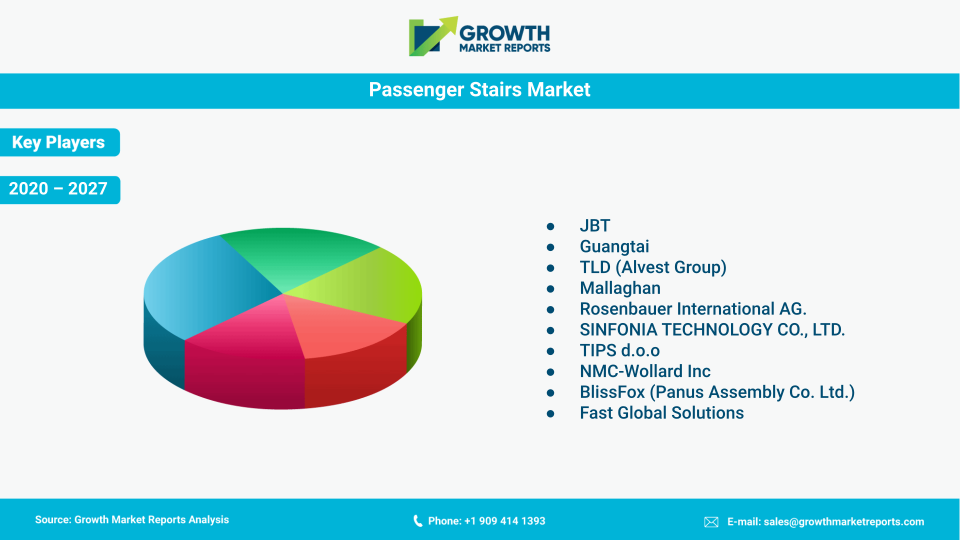
Key players in the market include SINFONIA TECHNOLOGY CO., LTD., TIPS d.o.o., TLD (Alvest Group), Rosenbauer International AG., NMC-Wollard Inc. and JBT among others. These companies are considered as key manufacturers of passenger stairs based on their revenue, research & development (R&D) activities, regional presence, and supply chain management system.The players are adopting key strategies such as acquisition, new product launches, and geographical expansion in order to strengthen their market position. For instance,
Major Manufactures include SINFONIA TECHNOLOGY CO., LTD., TIPS d.o.o., TLD (Alvest Group), Rosenbauer International AG., NMC-Wollard Inc., and JBT among others.
Military, airport and construction industries are some of the end-users driving the market growth.
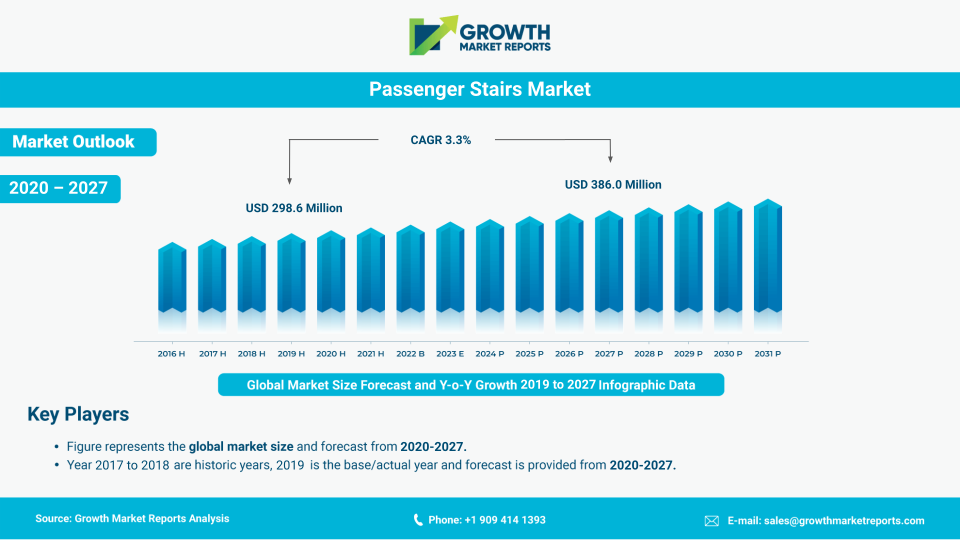
The base year considered for the global passenger stairs market report is 2019. The complete analysis period is 2017 to 2027, wherein, 2017 & 2018 are the historic years and the forecast is provided from 2020 to 2027.
The COVID-19 pandemic has negatively impacted the market growth during year 2019 -2020 to a major extent.
Factors such as competitive strength and market positioning are key areas considered while selecting top companies to be profiled.
The increasing number of airports & airlines, growing number of passenger journeys and introduction of technologically advanced passenger stairs are some of the factors driving the market growth.
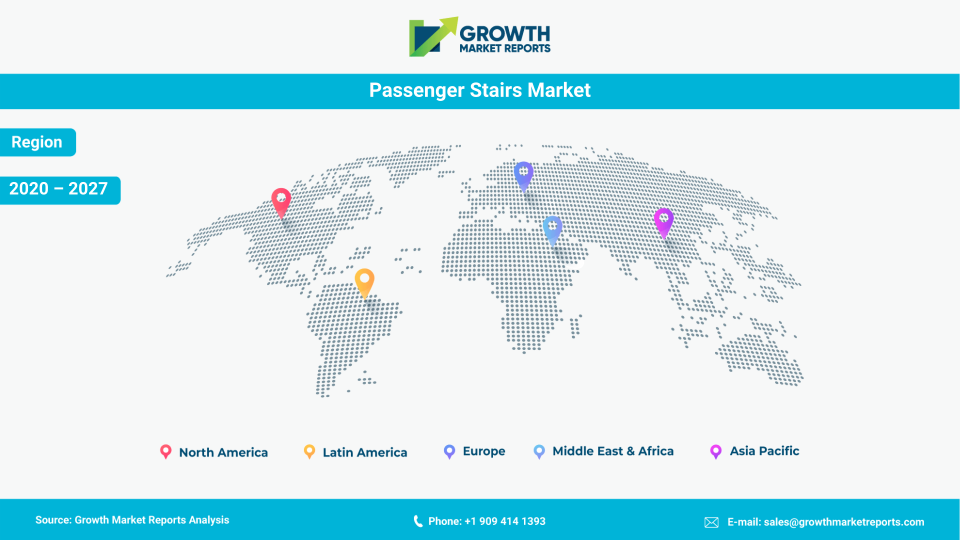
In addition to market size (in USD Million), the report provides volume data (in units) for all the five regions.
According to this Growth Market Reports report, the market from passenger stairs is likely to register a CAGR of 3.3% during forecast period 2020-2027, with an anticipated valuation of USD 386.0 million by the end of the 2027.
Yes, the report covers product specific information such as self-propelled passenger stairs and towable passenger stairs.
Additional company profiles can be provided on request.