Segments - by Product Type (True Wireless Earbuds, Neckband Earphones, On-Ear Wireless Earphones, Over-Ear Wireless Earphones), by Technology (Bluetooth, Wi-Fi, NFC, Others), by Application (Music & Entertainment, Sports & Fitness, Gaming, Calling, Others), by Distribution Channel (Online Stores, Offline Stores, Specialty Stores, Supermarkets/Hypermarkets, Others), by End-User (Consumer, Commercial, Industrial, Others)
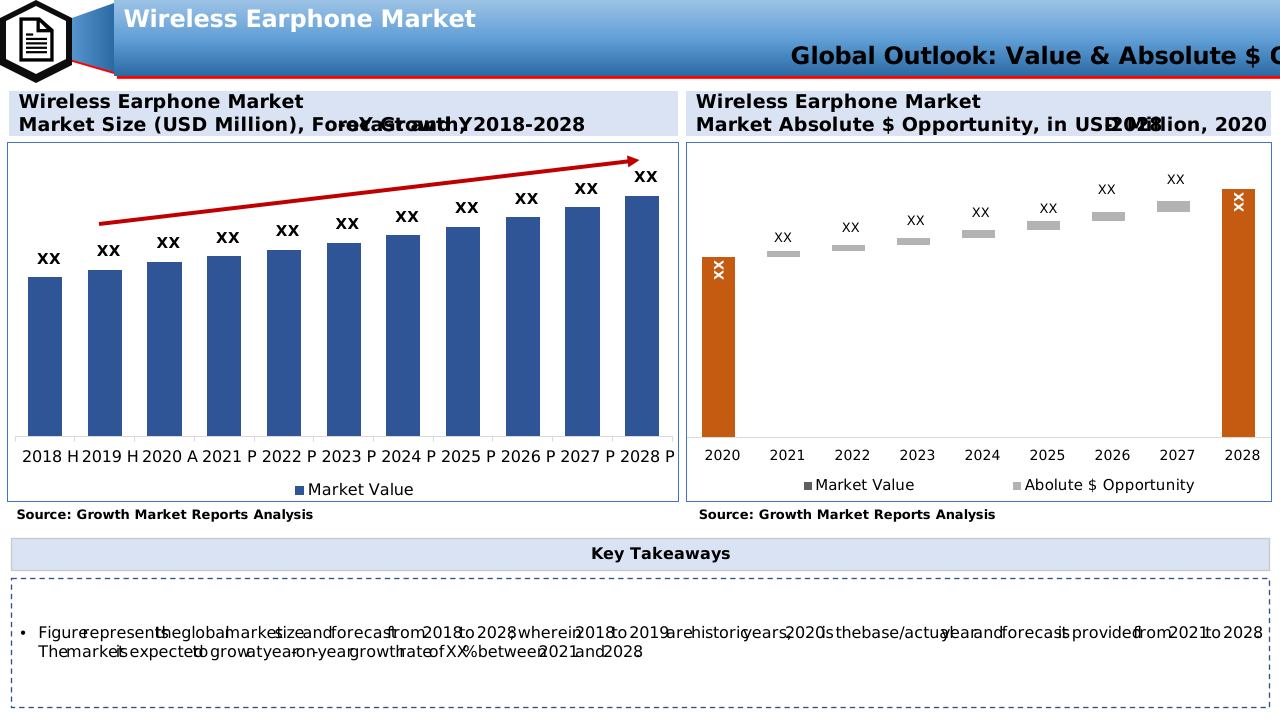
According to our latest research, the global wireless earphone market size reached USD 24.7 billion in 2024, registering a robust year-over-year expansion. The market is set to exhibit a strong growth trajectory, with a projected CAGR of 12.3% from 2025 to 2033. By the end of the forecast period, the wireless earphone market is anticipated to attain a value of approximately USD 70.1 billion. This remarkable growth is primarily attributed to the increasing adoption of wireless audio technologies, rapid advancements in Bluetooth connectivity, and the growing consumer inclination toward portable and convenient audio solutions.
One of the most significant growth factors propelling the wireless earphone market is the rapid technological evolution in wireless audio transmission. The transition from traditional wired earphones to wireless alternatives has been catalyzed by the elimination of headphone jacks in modern smartphones and the enhanced convenience offered by wireless devices. Manufacturers are investing heavily in R&D to introduce features such as active noise cancellation, longer battery life, and improved sound quality, which have collectively elevated the user experience. The proliferation of smart devices, coupled with the integration of voice assistants and touch controls, has further fueled consumer demand, especially among tech-savvy millennials and Gen Z users who prioritize seamless connectivity and multifunctionality in their audio gear.
Another crucial driver is the rising popularity of fitness and wellness trends across the globe. There is a growing segment of consumers seeking wireless earphones optimized for sports and fitness activities, which has led to the development of sweat-resistant, lightweight, and ergonomically designed products. The integration of health-tracking features, such as heart rate monitors and motion sensors, has expanded the application scope of wireless earphones beyond mere audio playback. Additionally, the COVID-19 pandemic has accelerated the adoption of remote working and online learning, further boosting the demand for wireless earphones as essential accessories for virtual meetings, online classes, and home entertainment systems.
Bluetooth Headphones have become an integral part of this evolving market, offering users a seamless and wire-free audio experience. The convenience of Bluetooth technology allows for easy pairing with a wide range of devices, making these headphones a popular choice among consumers. As advancements in Bluetooth technology continue to enhance connectivity and sound quality, Bluetooth Headphones are expected to maintain their stronghold in the market. Their versatility and compatibility with various smart devices make them a preferred option for users seeking both functionality and style in their audio accessories.
The market is also benefiting from the aggressive expansion of e-commerce platforms and the proliferation of online retail channels. The ease of product comparison, access to a wide range of brands, and frequent promotional offers have made online stores a preferred distribution channel for wireless earphones. Simultaneously, traditional offline channels, including specialty stores and supermarkets, continue to play a vital role in reaching consumers who prefer hands-on evaluation before purchase. The combination of omnichannel retail strategies and innovative marketing campaigns is expected to sustain the momentum of the wireless earphone market over the coming years.
Regionally, Asia Pacific stands out as the fastest-growing market, fueled by the burgeoning middle-class population, rapid urbanization, and increasing smartphone penetration. North America and Europe maintain their dominance due to high consumer spending power, early technology adoption, and the presence of leading market players. Meanwhile, Latin America and the Middle East & Africa are emerging as lucrative markets, driven by improving digital infrastructure and rising disposable incomes. The global wireless earphone market is thus characterized by dynamic regional trends, each contributing uniquely to the overall industry landscape.
The wireless earphone market is segmented by product type into True Wireless Earbuds, Neckband Earphones, On-Ear Wireless Earphones, and Over-Ear Wireless Earphones. Among these, true wireless earbuds have emerged as the most popular segment, accounting for the largest share of the market in 2024. Their compact design, portability, and advanced features such as touch controls and voice assistant integration have resonated strongly with consumers. The convenience of a completely wire-free experience, coupled with continuous improvements in battery life and charging technology, has positioned true wireless earbuds as a staple accessory for daily commutes, workouts, and leisure activities.
Neckband earphones continue to maintain a significant share, particularly among users who prioritize longer battery life and a secure fit during physical activities. Their flexible band design offers comfort and stability, making them a preferred choice for sports enthusiasts and frequent travelers. Manufacturers are enhancing these products with features like magnetic earbuds, fast charging, and water resistance, further broadening their appeal. Despite the surge in true wireless technology, neckband earphones remain relevant due to their unique value proposition and affordability.
On-ear and over-ear wireless earphones cater primarily to audiophiles and professional users who demand superior sound quality and immersive listening experiences. These segments are characterized by larger drivers, advanced noise-cancellation technologies, and premium materials that ensure comfort during extended usage. While these products are generally priced higher, their popularity is growing among consumers seeking high-fidelity audio for gaming, music production, and home entertainment. The integration of smart features, such as customizable sound profiles and multi-device connectivity, has further enhanced their market positioning.
The competitive landscape within the product type segment is marked by continuous innovation and frequent product launches. Leading brands are differentiating their offerings through design aesthetics, unique color options, and collaborations with renowned artists or sports personalities. This has not only expanded the target audience but also elevated brand loyalty and repeat purchases. As consumer preferences evolve, manufacturers are expected to introduce hybrid designs and modular components, further diversifying the product portfolio within the wireless earphone market.
Overall, the product type segment reflects the dynamic nature of consumer demand, with each category catering to specific use cases and lifestyle preferences. The ongoing convergence of fashion, technology, and functionality is expected to drive further growth and innovation, ensuring that wireless earphones remain at the forefront of the global audio accessories market.
| Attributes | Details |
| Report Title | Wireless Earphone Market Research Report 2033 |
| By Product Type | True Wireless Earbuds, Neckband Earphones, On-Ear Wireless Earphones, Over-Ear Wireless Earphones |
| By Technology | Bluetooth, Wi-Fi, NFC, Others |
| By Application | Music & Entertainment, Sports & Fitness, Gaming, Calling, Others |
| By Distribution Channel | Online Stores, Offline Stores, Specialty Stores, Supermarkets/Hypermarkets, Others |
| By End-User | Consumer, Commercial, Industrial, Others |
| Regions Covered | North America, Europe, APAC, Latin America, MEA |
| Base Year | 2024 |
| Historic Data | 2018-2023 |
| Forecast Period | 2025-2033 |
| Number of Pages | 289 |
| Number of Tables & Figures | 345 |
| Customization Available | Yes, the report can be customized as per your need. |
The wireless earphone market is segmented by technology into Bluetooth, Wi-Fi, NFC, and Others. Bluetooth technology currently dominates the market, underpinning the majority of wireless earphone products due to its reliability, energy efficiency, and widespread compatibility with smartphones, tablets, and laptops. The advent of advanced Bluetooth versions, such as Bluetooth 5.0 and above, has significantly improved data transmission speeds, range, and power consumption, resulting in seamless connectivity and enhanced user experiences. As a result, Bluetooth-enabled wireless earphones have become the industry standard, catering to a broad spectrum of applications from casual listening to professional use.
Wi-Fi-enabled wireless earphones are gradually gaining traction, particularly in the premium segment, where high-resolution audio streaming and multi-room connectivity are in demand. These devices offer superior sound quality and the ability to connect directly to cloud-based music services, making them ideal for home entertainment systems and audiophile-grade setups. However, the higher cost and increased power requirements of Wi-Fi technology have limited its adoption to niche markets. Nevertheless, as smart home ecosystems become more prevalent, Wi-Fi integration in wireless earphones is expected to grow, offering new opportunities for manufacturers and consumers alike.
NFC (Near Field Communication) technology, while less common, provides added convenience through one-touch pairing and device authentication. This feature is particularly appealing to users who frequently switch between multiple devices or require quick and secure connections. NFC-enabled wireless earphones are often positioned as premium products, targeting tech-savvy consumers who value seamless interoperability and enhanced security. The combination of NFC with Bluetooth technology is becoming increasingly popular, offering a holistic connectivity solution that addresses a wide range of user needs.
The "Others" category encompasses emerging wireless technologies such as infrared and proprietary radio frequency (RF) solutions. While these technologies are currently limited in scope, they hold potential for specialized applications in industrial and commercial environments where unique connectivity requirements exist. Manufacturers are exploring hybrid models that combine multiple wireless protocols, aiming to deliver versatile products capable of adapting to diverse usage scenarios. As the Internet of Things (IoT) ecosystem expands, the integration of multiple wireless technologies is anticipated to become a key differentiator in the wireless earphone market.
In summary, the technology segment is characterized by rapid innovation and evolving consumer expectations. Bluetooth remains the cornerstone of wireless earphone connectivity, but the growing adoption of Wi-Fi, NFC, and other advanced technologies is reshaping the competitive landscape. Manufacturers that invest in R&D and prioritize interoperability, security, and user convenience are likely to capture a larger share of this dynamic market segment.
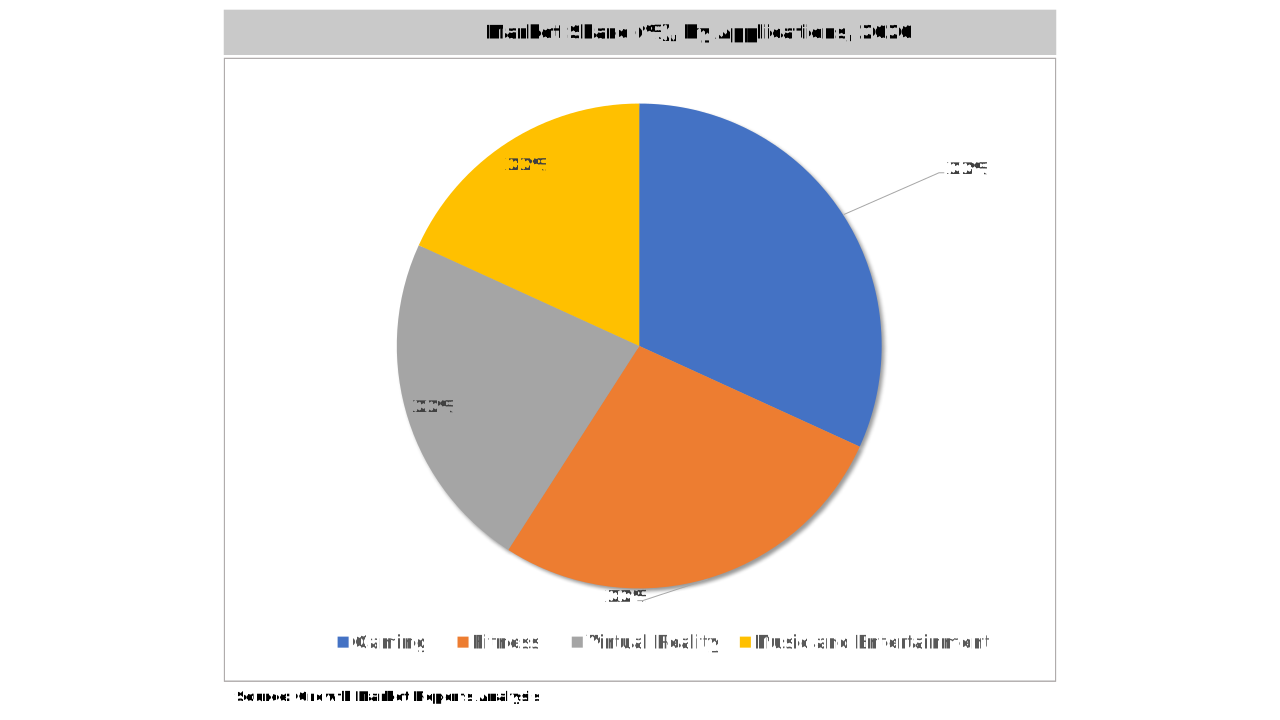
The application segment of the wireless earphone market includes Music & Entertainment, Sports & Fitness, Gaming, Calling, and Others. Music and entertainment remain the primary application, accounting for the largest market share in 2024. The surge in music streaming services, podcasts, and audiobooks has driven demand for high-quality wireless audio solutions that offer immersive sound experiences. Consumers are increasingly seeking earphones with features such as customizable equalizers, surround sound, and adaptive noise cancellation, enabling them to enjoy personalized audio content in various environments.
Sports and fitness applications represent a rapidly growing segment, fueled by the global emphasis on health and wellness. Wireless earphones designed for active lifestyles feature sweat and water resistance, secure fit, and lightweight construction, making them ideal companions for workouts, running, and outdoor activities. The integration of biometric sensors and fitness tracking capabilities has further expanded the utility of wireless earphones, transforming them into multifunctional wearables that support users' health goals. As fitness-conscious consumers continue to prioritize convenience and performance, this segment is expected to witness sustained growth throughout the forecast period.
The gaming application segment is experiencing significant momentum, driven by the rising popularity of mobile and console gaming. Gamers demand low-latency audio, surround sound, and ergonomic designs that provide comfort during extended play sessions. Wireless earphones tailored for gaming often incorporate features such as customizable sound profiles, integrated microphones, and multi-platform compatibility, enhancing the overall gaming experience. The proliferation of esports and online multiplayer games has further boosted demand for premium wireless audio accessories among professional and casual gamers alike.
Calling applications have gained prominence with the widespread adoption of remote work, online education, and virtual communication platforms. Wireless earphones equipped with advanced microphones, noise suppression, and voice clarity technologies have become essential tools for professionals, students, and business users. The ability to seamlessly switch between music playback and voice calls, coupled with long battery life and reliable connectivity, has elevated the role of wireless earphones in modern communication ecosystems. As hybrid work models become the norm, the demand for versatile wireless earphones optimized for calling applications is expected to rise.
The "Others" category encompasses emerging applications such as language translation, hearing assistance, and augmented reality experiences. As wireless earphones evolve into smart wearables, their application scope is expected to broaden, unlocking new opportunities for innovation and market expansion. Manufacturers that anticipate and address the diverse needs of different user segments are poised to lead the next wave of growth in the wireless earphone market.
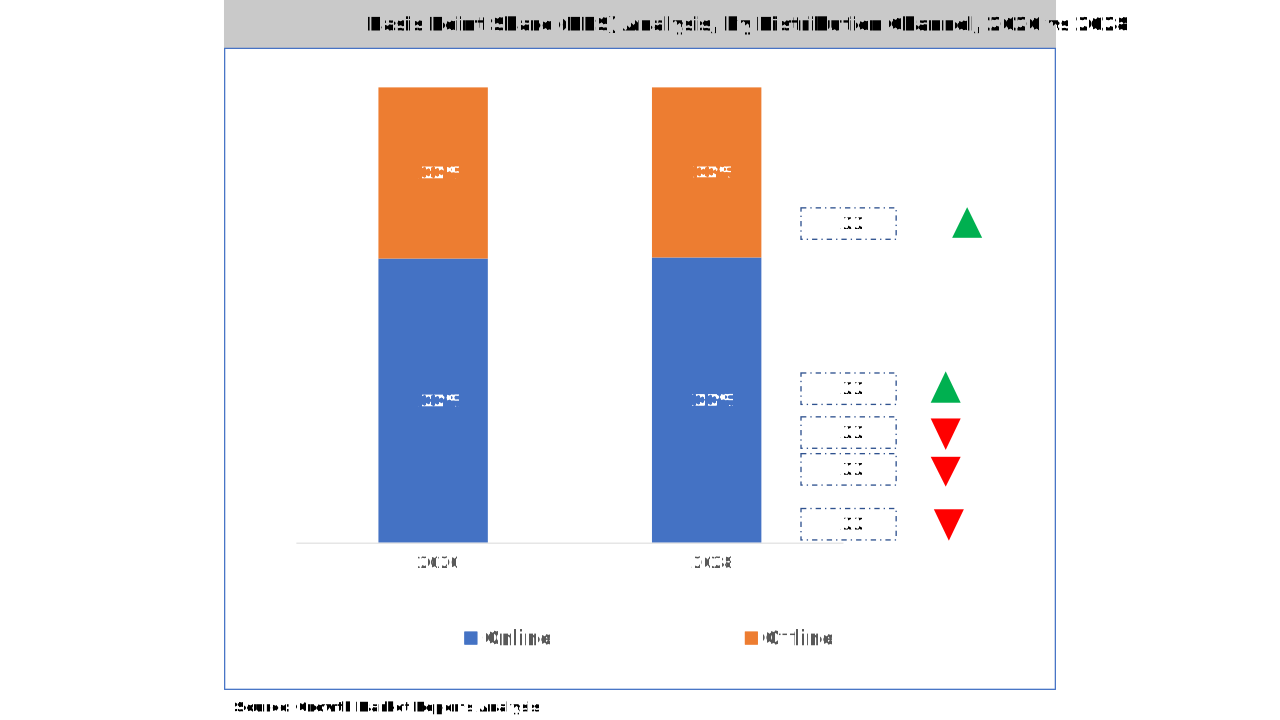
The wireless earphone market is distributed through Online Stores, Offline Stores, Specialty Stores, Supermarkets/Hypermarkets, and Others. Online stores have emerged as the dominant distribution channel, accounting for the largest share in 2024. The convenience of online shopping, coupled with access to a wide variety of brands and models, has made e-commerce platforms the preferred choice for consumers. Online retailers offer competitive pricing, detailed product information, and user reviews, enabling informed purchasing decisions. The integration of advanced logistics and same-day delivery services has further enhanced the appeal of online channels, particularly among urban consumers seeking quick and hassle-free shopping experiences.
Offline stores, including specialty electronics outlets and branded retail stores, continue to play a significant role in the wireless earphone market. These channels offer consumers the opportunity to physically evaluate products, test sound quality, and receive personalized recommendations from sales staff. Specialty stores, in particular, cater to audiophiles and professional users seeking high-end wireless earphones with advanced features. The experiential aspect of offline shopping, coupled with after-sales support and warranty services, remains a key differentiator for brick-and-mortar retailers.
Supermarkets and hypermarkets have also emerged as important distribution channels, especially in emerging markets where organized retail is expanding rapidly. These outlets offer a curated selection of wireless earphones at competitive prices, targeting price-sensitive consumers and impulse buyers. The presence of promotional displays and bundled offers has contributed to increased visibility and sales of wireless earphones in these retail environments. As supermarkets and hypermarkets continue to expand their electronics sections, their role in the distribution ecosystem is expected to grow.
The "Others" category includes direct-to-consumer (DTC) channels, pop-up stores, and vending machines. DTC channels, in particular, are gaining traction among leading brands seeking to establish direct relationships with customers and gather valuable feedback for product development. Pop-up stores and event-based retailing offer unique opportunities for brand engagement and experiential marketing, allowing manufacturers to showcase their latest innovations and connect with target audiences in high-traffic locations.
The distribution channel segment is characterized by intense competition and continuous evolution. Manufacturers are adopting omnichannel strategies to maximize reach and cater to diverse consumer preferences. The seamless integration of online and offline channels, coupled with data-driven marketing and personalized customer experiences, is expected to define the future of wireless earphone distribution.
The wireless earphone market serves a diverse range of end-users, including Consumer, Commercial, Industrial, and Others. The consumer segment dominates the market, driven by the widespread adoption of wireless earphones for personal entertainment, communication, and fitness activities. Rapid urbanization, rising disposable incomes, and the proliferation of smart devices have fueled demand among individual users seeking convenience, portability, and enhanced audio experiences. The consumer segment is characterized by frequent product upgrades and a strong preference for brands that offer innovative features and stylish designs.
The commercial segment encompasses businesses and organizations that deploy wireless earphones for professional use. This includes call centers, corporate offices, educational institutions, and healthcare facilities. Wireless earphones equipped with advanced microphones, noise cancellation, and long battery life are essential tools for remote collaboration, virtual meetings, and online training. The shift toward hybrid work models and digital transformation initiatives has accelerated the adoption of wireless earphones in commercial settings, driving demand for products that deliver reliability, comfort, and seamless connectivity.
The industrial segment, though relatively smaller, is witnessing steady growth as wireless earphones find applications in manufacturing, logistics, and field operations. Industrial-grade wireless earphones are designed to withstand harsh environments, offering features such as rugged construction, extended range, and integration with communication systems. These products enhance worker safety, productivity, and mobility by enabling hands-free communication and real-time information access. As Industry 4.0 initiatives gain momentum, the adoption of wireless earphones in industrial settings is expected to increase, creating new opportunities for manufacturers.
The "Others" category includes specialized end-users such as government agencies, defense organizations, and research institutions. These users often require customized wireless earphone solutions that meet stringent security, durability, and interoperability standards. Manufacturers are collaborating with key stakeholders to develop tailored products that address the unique needs of these segments, further diversifying the end-user landscape of the wireless earphone market.
Overall, the end-user segment reflects the versatility and adaptability of wireless earphones across diverse application domains. Manufacturers that understand and cater to the specific requirements of different user groups are well-positioned to capture incremental growth and establish long-term customer relationships.
The wireless earphone market presents numerous opportunities for growth and innovation. One of the most promising avenues is the integration of artificial intelligence (AI) and machine learning algorithms into wireless earphones. AI-powered features such as adaptive noise cancellation, personalized sound profiles, and real-time language translation are transforming the user experience and creating new value propositions. Additionally, the convergence of wireless earphones with wearable health devices opens up opportunities for health monitoring, fitness tracking, and wellness applications. Manufacturers that invest in AI-driven R&D and collaborate with technology partners are likely to gain a competitive edge and unlock untapped market potential.
Another significant opportunity lies in the expansion of wireless earphones into emerging markets. Rapid urbanization, increasing smartphone penetration, and rising disposable incomes are driving demand for affordable and feature-rich wireless audio solutions in regions such as Asia Pacific, Latin America, and the Middle East & Africa. Strategic partnerships with local distributors, targeted marketing campaigns, and localization of product offerings can help manufacturers capture a larger share of these high-growth markets. Furthermore, the adoption of sustainable materials and eco-friendly manufacturing processes presents an opportunity for brands to differentiate themselves and appeal to environmentally conscious consumers.
Despite these opportunities, the wireless earphone market faces several restraining factors. Intense competition and price wars among leading brands have led to margin pressures and commoditization of entry-level products. The proliferation of counterfeit and low-quality wireless earphones also poses a threat to brand reputation and consumer trust. Additionally, concerns regarding battery safety, electromagnetic radiation, and data privacy may hinder adoption among certain user segments. Manufacturers must address these challenges through continuous innovation, stringent quality control, and transparent communication to sustain growth and maintain market leadership.
The Asia Pacific region leads the wireless earphone market in terms of growth, with a market size of USD 8.2 billion in 2024 and an impressive projected CAGR of 14.1% through 2033. The regionÂ’s dominance is attributed to the massive population base, rapid urbanization, and increasing penetration of smartphones and internet services. Countries such as China, India, South Korea, and Japan are at the forefront, driven by rising disposable incomes, tech-savvy consumers, and a flourishing e-commerce ecosystem. Local manufacturers are launching affordable and innovative products, further accelerating adoption across urban and rural markets. The focus on fitness and wellness, coupled with government initiatives supporting digital infrastructure, is expected to sustain the regionÂ’s high growth rate throughout the forecast period.
North America remains a key contributor to the wireless earphone market, with a market size of USD 6.5 billion in 2024. The region is characterized by high consumer spending power, early adoption of cutting-edge technologies, and the presence of leading global brands. The U.S. and Canada account for the majority of regional sales, driven by strong demand for premium wireless earphones equipped with advanced features such as active noise cancellation, voice assistant integration, and health monitoring. The proliferation of streaming services, remote working, and online gaming is further boosting demand for wireless audio solutions. Strategic partnerships between manufacturers, content providers, and retailers are expected to drive continued innovation and market expansion in North America.
EuropeÂ’s wireless earphone market reached USD 5.1 billion in 2024, benefiting from high levels of digital literacy, strong consumer protection regulations, and a robust retail infrastructure. Western European countries, including Germany, the UK, and France, dominate regional sales, while Eastern Europe is witnessing rapid growth due to increasing smartphone adoption and rising disposable incomes. The emphasis on sustainability and eco-friendly products is influencing purchasing decisions, prompting manufacturers to adopt green manufacturing practices and recyclable materials. EuropeÂ’s market growth is expected to remain steady, supported by ongoing technological advancements and evolving consumer preferences.
The wireless earphone market is highly competitive, with a diverse mix of global giants, regional players, and emerging startups vying for market share. Leading companies are differentiating themselves through continuous innovation, aggressive marketing, and strategic collaborations. The competitive landscape is marked by frequent product launches, rapid adoption of new technologies, and a strong focus on design aesthetics and user experience. Brands are leveraging celebrity endorsements, influencer partnerships, and experiential marketing to build brand loyalty and capture the attention of younger consumers. The entry of new players and the expansion of existing brands into new geographies are intensifying competition and driving further innovation.
Major companies are investing heavily in research and development to introduce advanced features such as adaptive noise cancellation, biometric sensors, and AI-driven sound optimization. Strategic acquisitions and partnerships are enabling companies to expand their product portfolios, enhance distribution networks, and access new customer segments. The shift toward direct-to-consumer sales channels and subscription-based models is reshaping the competitive dynamics, allowing brands to build deeper relationships with customers and gather valuable data for product development. The emphasis on sustainability and ethical sourcing is also becoming a key differentiator, with leading brands committing to eco-friendly materials and responsible manufacturing practices.
The market is witnessing a blurring of boundaries between traditional audio brands and technology companies, as players from both sectors compete to deliver integrated audio-visual experiences. The convergence of wireless earphones with smart wearables, augmented reality devices, and health monitoring solutions is creating new opportunities for cross-industry collaboration and product innovation. Companies that can anticipate and adapt to evolving consumer preferences, regulatory requirements, and technological trends are likely to maintain a competitive edge and drive long-term growth in the wireless earphone market.
Some of the major companies operating in the wireless earphone market include Apple Inc., Samsung Electronics Co. Ltd., Sony Corporation, Bose Corporation, Sennheiser Electronic GmbH & Co. KG, JBL (Harman International), Xiaomi Corporation, OnePlus Technology (Shenzhen) Co. Ltd., Skullcandy Inc., and Jabra (GN Audio). Apple continues to lead the market with its AirPods series, renowned for seamless integration with the Apple ecosystem, advanced features, and premium design. Samsung and Sony are recognized for their diverse product portfolios and focus on sound quality, noise cancellation, and innovative design. Bose and Sennheiser cater to audiophiles and professional users, offering high-fidelity wireless earphones with superior comfort and durability.
JBL and Skullcandy are popular among younger consumers, offering stylish and affordable wireless earphones with vibrant sound profiles and bold designs. Xiaomi and OnePlus have captured significant market share in Asia and emerging markets by offering feature-rich products at competitive prices. Jabra is known for its focus on professional and enterprise users, delivering wireless earphones optimized for communication and collaboration. These companies are continuously expanding their product offerings, enhancing distribution networks, and investing in marketing and brand building to stay ahead in the intensely competitive wireless earphone market.
The Wireless Earphone market has been segmented on the basis of
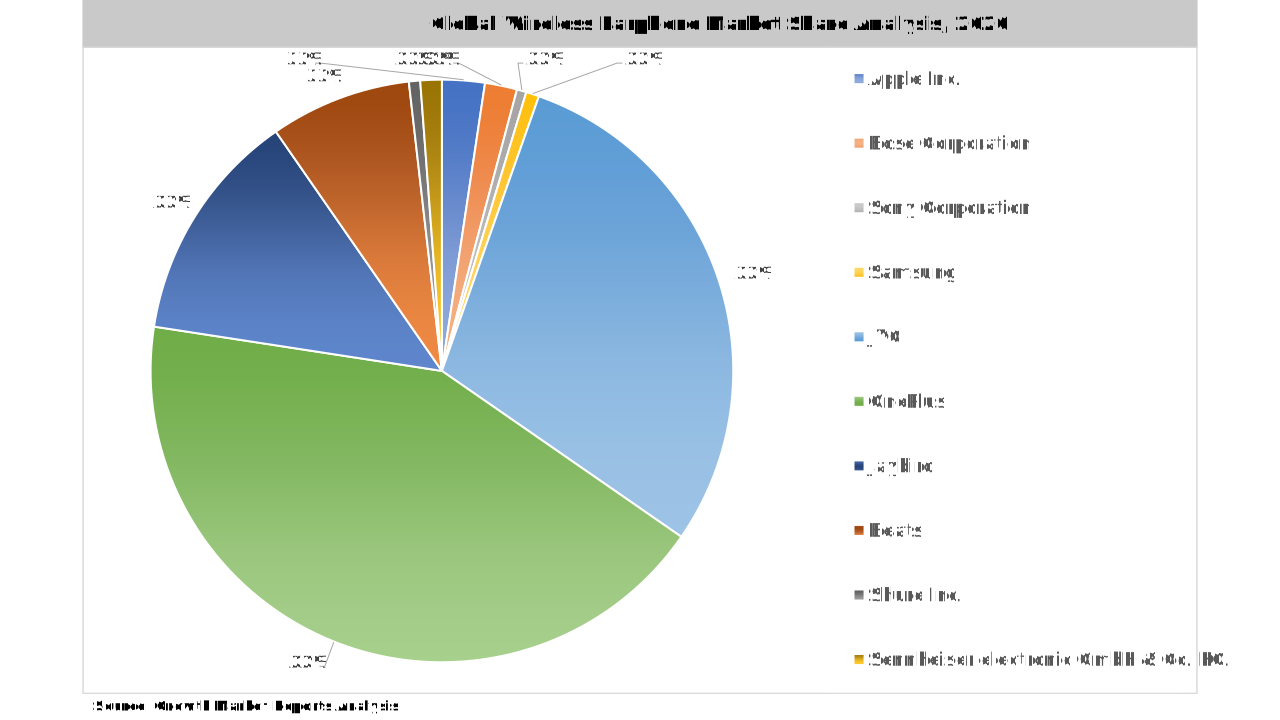
Major players of the market are Apple Inc., Bose Corporation, Sony Corporation, Samsung, JVC, OnePlus, Jaybird, Beats, Shure Inc., and Sennheiser electronic GmbH & Co. KG. Companies are engaging in partnerships, collaborations, and expanding their product offerings to expand their market share.
The market faces challenges such as intense competition, price wars, proliferation of counterfeit products, battery safety concerns, and data privacy issues. Addressing these is crucial for sustained growth.
Recent trends include AI-powered features like adaptive noise cancellation, integration with health monitoring, longer battery life, and eco-friendly materials. Manufacturers are also focusing on hybrid designs and modular components.
Key companies include Apple Inc., Samsung Electronics, Sony Corporation, Bose, Sennheiser, JBL, Xiaomi, OnePlus, Skullcandy, and Jabra, among others.
Wireless earphones are sold through online stores, offline stores, specialty stores, and supermarkets/hypermarkets. Online channels are the most dominant, offering convenience, variety, and competitive pricing.
Wireless earphones are widely used for music & entertainment, sports & fitness, gaming, and calling. Music and entertainment remain the largest application segment, while sports and fitness are rapidly growing.
Asia Pacific is the fastest-growing region, driven by rising smartphone penetration and urbanization. North America and Europe also hold significant market shares due to high consumer spending and early technology adoption.
Bluetooth is the dominant technology in wireless earphones, followed by Wi-Fi and NFC. Bluetooth 5.0 and above offer improved connectivity, while Wi-Fi and NFC are gaining traction in premium and tech-savvy segments.
True wireless earbuds are the most popular product type, accounting for the largest market share in 2024 due to their compact design, portability, and advanced features.
The wireless earphone market is expected to grow at a CAGR of 12.3% from 2025 to 2033, reaching approximately USD 70.1 billion by the end of the forecast period.
As of 2024, the global wireless earphone market size reached USD 24.7 billion, with strong year-over-year growth.