Segments - by Product Type (Radial, Bias), by Vehicle Type (Passenger Cars, Light Commercial Vehicles, Heavy Commercial Vehicles, Two-Wheelers, Off-the-Road Vehicles), by Distribution Channel (OEM, Aftermarket), by Rim Size (Up to 15 Inches, 16–20 Inches, Above 20 Inches), by Season (Summer, Winter, All-Season)
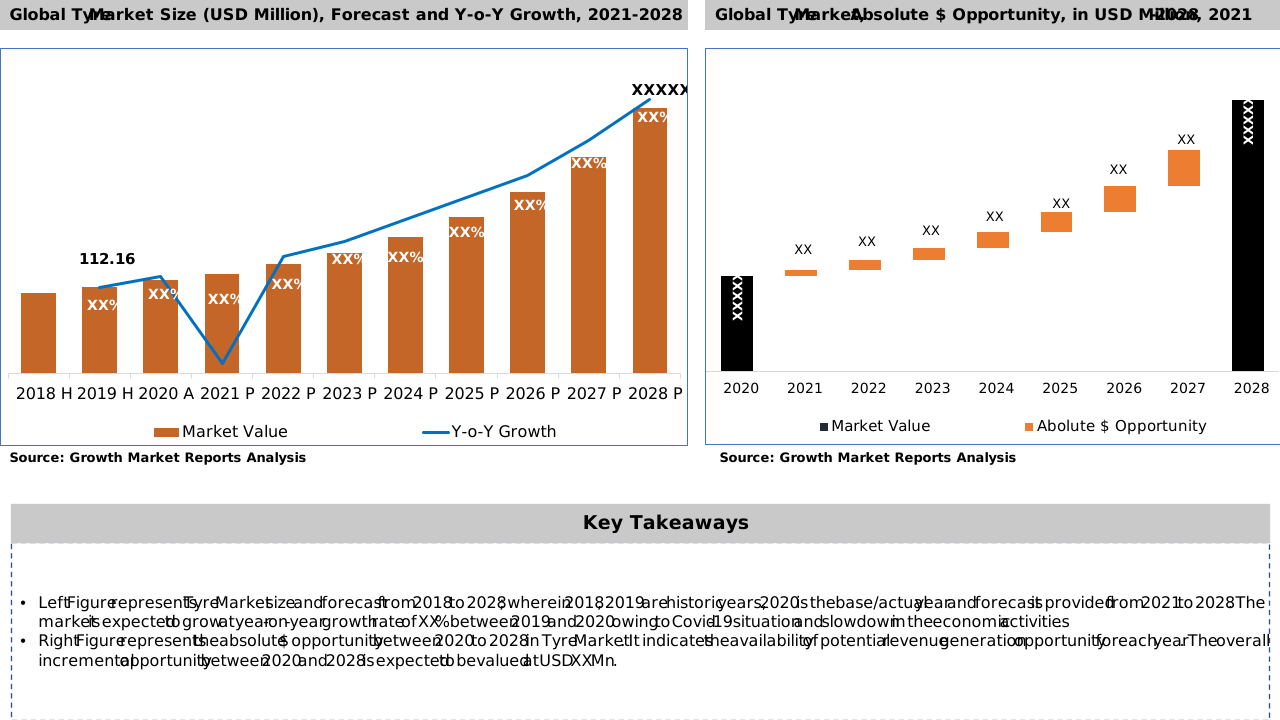
According to our latest research, the global tyre market size in 2024 reached USD 242.6 billion, reflecting robust expansion driven by rising vehicle production and replacement demand. The tyre market is expected to register a CAGR of 4.1% from 2025 to 2033, projecting the market value to reach approximately USD 348.3 billion by 2033. This growth is underpinned by technological advancements in tyre manufacturing, increasing vehicle parc, and a surge in demand for high-performance and durable tyres across both OEM and aftermarket channels. As per our latest research, the tyre industry continues to evolve rapidly, adapting to changing automotive trends and sustainability requirements.
One of the primary growth drivers for the global tyre market is the steady increase in vehicle production and ownership worldwide. Emerging economies, particularly in Asia Pacific and Latin America, are witnessing a significant rise in disposable incomes, urbanization, and infrastructure development, which in turn fuel the demand for both passenger and commercial vehicles. This upsurge in vehicle parc directly translates into higher demand for tyres, both as original equipment and as replacements. Additionally, the rapid expansion of e-commerce and logistics sectors has amplified the need for commercial vehicles, further boosting the demand for high-performance and durable tyres. The proliferation of ride-sharing and mobility services has also contributed to increased vehicle utilization rates, necessitating frequent tyre replacements and upgrades.
Technological innovation remains a cornerstone of growth within the tyre market. Manufacturers are investing heavily in research and development to introduce advanced tyre designs that offer enhanced safety, fuel efficiency, and sustainability. The integration of smart tyre technologies, such as sensors for real-time pressure monitoring and tread wear detection, is gaining traction, particularly among fleet operators and premium vehicle segments. Furthermore, the adoption of eco-friendly materials and processes to produce sustainable tyres is being driven by stringent environmental regulations and growing consumer awareness regarding carbon footprints. These innovations not only cater to evolving regulatory landscapes but also appeal to environmentally conscious consumers, fostering brand loyalty and market differentiation.
The replacement tyre segment, also known as the aftermarket, continues to be a significant contributor to market growth. As the average lifespan of vehicles increases globally, the need for periodic tyre replacements becomes more pronounced. Consumers are increasingly prioritizing performance, comfort, and safety, leading to a shift in preference towards premium and specialty tyres. The rise in automotive customization trends and motorsports culture has further spurred demand for specialized tyre variants, including all-terrain and performance tyres. Additionally, the growing prevalence of online tyre retailing platforms has made it easier for consumers to access a wide range of products, compare prices, and make informed purchasing decisions, thereby accelerating aftermarket sales.
Regionally, Asia Pacific dominates the global tyre market, accounting for the largest share in terms of both production and consumption. The region's strong automotive manufacturing base, coupled with burgeoning demand from populous countries such as China and India, underpins its leadership position. North America and Europe also represent significant markets, driven by high vehicle ownership rates, technological advancements, and stringent safety standards. Meanwhile, the Middle East & Africa and Latin America are emerging as high-potential regions, buoyed by infrastructure development and increasing vehicle imports. These regional dynamics are shaping the competitive landscape and influencing strategic investments by key players in the global tyre industry.
The tyre market is primarily segmented by product type into radial and bias tyres, each catering to distinct performance requirements and vehicle categories. Radial tyres, which dominate the global market, are characterized by their superior fuel efficiency, longer tread life, and enhanced ride comfort. Their construction, featuring layers of fabric cords that run radially across the tyre, allows for better flexibility and heat dissipation, making them ideal for passenger cars and commercial vehicles alike. The continued shift towards radialisation, especially in developing markets, has been propelled by government regulations mandating safer and more efficient tyres, as well as rising consumer demand for high-performance vehicles. Radial tyres have also gained traction in the heavy commercial vehicle segment, thanks to their ability to support greater loads and provide improved traction.
Bias tyres, while representing a smaller share of the global market, remain relevant in specific applications, particularly in off-the-road (OTR) vehicles and certain agricultural and industrial machinery. Their robust construction, with crisscrossed layers of fabric, offers superior resistance to cuts and punctures, making them suitable for rugged terrains and heavy-duty operations. However, bias tyres generally exhibit shorter tread life and higher rolling resistance compared to their radial counterparts. Despite these limitations, the demand for bias tyres persists in regions with challenging road conditions and limited access to advanced infrastructure. Manufacturers are also innovating within this segment by introducing reinforced materials and hybrid designs to enhance durability and performance.
The ongoing transition from bias to radial tyres is further accelerated by the increasing adoption of advanced manufacturing technologies. Automated production lines, precision engineering, and the use of high-quality raw materials have enabled manufacturers to produce radial tyres at competitive costs, thereby narrowing the price gap with bias tyres. This has encouraged fleet operators and individual consumers to opt for radial tyres, even in traditionally bias-dominated markets. Moreover, the growing emphasis on vehicle safety and fuel efficiency, particularly in the context of regulatory compliance, has reinforced the preference for radial tyres across both OEM and aftermarket channels.
Innovation in tyre design and materials is also reshaping the product type landscape. The integration of silica compounds, nano-materials, and advanced tread patterns has resulted in tyres that offer improved wet and dry grip, reduced rolling resistance, and enhanced longevity. These advancements are particularly evident in the premium and performance tyre segments, where consumers are willing to pay a premium for superior driving experiences. Additionally, the rise of electric vehicles (EVs) and hybrid vehicles is prompting tyre manufacturers to develop specialized radial tyres that cater to the unique torque and weight distribution characteristics of these vehicles, further expanding the scope of the radial segment.
In summary, while radial tyres continue to dominate the global market due to their superior performance attributes and widespread adoption, bias tyres retain their relevance in niche applications and challenging environments. The product type segment is expected to witness ongoing innovation and diversification, driven by evolving vehicle technologies, regulatory mandates, and changing consumer preferences. Manufacturers that can effectively balance cost, performance, and sustainability will be well-positioned to capture growth opportunities in this dynamic segment.
| Attributes | Details |
| Report Title | Tyre Market Research Report 2033 |
| By Product Type | Radial, Bias |
| By Vehicle Type | Passenger Cars, Light Commercial Vehicles, Heavy Commercial Vehicles, Two-Wheelers, Off-the-Road Vehicles |
| By Distribution Channel | OEM, Aftermarket |
| By Rim Size | Up to 15 Inches, 16–20 Inches, Above 20 Inches |
| By Season | Summer, Winter, All-Season |
| Regions Covered | North America, Europe, APAC, Latin America, MEA |
| Base Year | 2024 |
| Historic Data | 2018-2023 |
| Forecast Period | 2025-2033 |
| Number of Pages | 287 |
| Number of Tables & Figures | 258 |
| Customization Available | Yes, the report can be customized as per your need. |
The vehicle type segment of the tyre market encompasses a diverse range of categories, including passenger cars, light commercial vehicles (LCVs), heavy commercial vehicles (HCVs), two-wheelers, and off-the-road (OTR) vehicles. Passenger cars represent the largest share of the market, driven by the expanding global automotive fleet and rising consumer demand for personal mobility. The proliferation of compact cars, sedans, and SUVs in urban and suburban areas has led to increased tyre consumption, both as original equipment and in the replacement market. Consumers in this segment are increasingly prioritizing comfort, safety, and fuel efficiency, prompting manufacturers to develop tyres with advanced tread patterns, low rolling resistance, and enhanced grip.
Light commercial vehicles, including vans and pickup trucks, constitute a significant segment of the tyre market, particularly in regions with thriving e-commerce and logistics sectors. The surge in last-mile delivery services and urban freight transportation has driven demand for durable and high-performance tyres capable of withstanding frequent stop-and-go operations and varying load conditions. Manufacturers are responding by introducing tyres with reinforced sidewalls, improved tread compounds, and enhanced puncture resistance to cater to the unique requirements of LCV operators. Additionally, the growing trend of fleet management and telematics integration is fueling the adoption of smart tyres equipped with sensors for real-time monitoring and predictive maintenance.
Heavy commercial vehicles, including trucks and buses, are another critical segment, accounting for a substantial portion of overall tyre demand. The growth of cross-border trade, infrastructure development, and long-haul transportation networks has necessitated the use of tyres that offer superior load-bearing capacity, extended mileage, and optimal fuel efficiency. In this context, radial tyres have gained prominence due to their ability to deliver lower operating costs and enhanced safety. The increasing adoption of retreaded tyres in the HCV segment is also noteworthy, as it aligns with sustainability goals and cost-saving initiatives among fleet operators. Manufacturers are focusing on developing retreadable tyre designs and advanced rubber compounds to extend the service life of HCV tyres.
The two-wheeler segment, encompassing motorcycles, scooters, and mopeds, is experiencing robust growth, particularly in emerging markets with dense urban populations and limited public transportation infrastructure. The affordability, fuel efficiency, and convenience offered by two-wheelers have made them a preferred mode of transport in countries such as India, Indonesia, and Vietnam. Tyre manufacturers are catering to this segment by offering a wide range of products tailored to different riding conditions, including urban commuting, touring, and off-road adventures. Innovations such as tubeless tyres, puncture-resistant technologies, and enhanced grip compounds are gaining traction among two-wheeler users.
Off-the-road vehicles, including agricultural machinery, construction equipment, and mining trucks, represent a specialized segment of the tyre market. These vehicles operate in challenging environments characterized by rough terrains, heavy loads, and extreme weather conditions. As a result, OTR tyres are engineered for maximum durability, traction, and resistance to cuts and abrasions. The ongoing mechanization of agriculture and infrastructure development projects in emerging economies is driving demand for high-performance OTR tyres. Manufacturers are investing in advanced materials, tread designs, and manufacturing processes to meet the evolving needs of this segment and ensure reliable performance under demanding conditions.
The tyre market is segmented by distribution channel into OEM (Original Equipment Manufacturer) and aftermarket, each playing a pivotal role in shaping market dynamics and growth trajectories. The OEM segment comprises tyres supplied directly to vehicle manufacturers for fitment on new vehicles. This channel is characterized by long-term supply agreements, stringent quality standards, and close collaboration between tyre manufacturers and automotive OEMs. The demand in this segment is closely tied to new vehicle production trends, with fluctuations in automotive sales directly impacting OEM tyre volumes. As automakers increasingly prioritize fuel efficiency, safety, and sustainability, tyre manufacturers are compelled to innovate and deliver products that align with evolving vehicle technologies and regulatory requirements.
The aftermarket segment, on the other hand, encompasses tyres sold for replacement purposes through various retail and distribution channels. This segment accounts for a larger share of the global tyre market, driven by the growing vehicle parc and the need for periodic tyre replacements. The aftermarket is highly competitive, with a diverse array of players ranging from multinational brands to regional and local manufacturers. Consumers in this segment are increasingly seeking value-added services, such as tyre installation, balancing, and alignment, as well as convenient purchasing options through online platforms and brick-and-mortar stores. The rise of e-commerce has transformed the aftermarket landscape, enabling consumers to access a wide range of products, compare prices, and benefit from promotional offers.
OEM and aftermarket channels exhibit distinct demand drivers and purchasing behaviors. OEM demand is influenced by automotive production cycles, technological advancements, and regulatory mandates, while aftermarket demand is shaped by factors such as vehicle age, usage patterns, road conditions, and consumer preferences. The growing trend of vehicle customization and personalization has further fueled demand for specialty and performance tyres in the aftermarket segment. Additionally, the increasing adoption of digital platforms and mobile applications for tyre selection, booking, and installation services is enhancing customer convenience and driving sales growth in the replacement market.
Tyre manufacturers are adopting omnichannel strategies to capture opportunities across both OEM and aftermarket segments. Strategic partnerships with automakers, authorized dealerships, and independent retailers are enabling manufacturers to expand their market reach and strengthen brand visibility. Investments in digital infrastructure, supply chain optimization, and customer engagement initiatives are also enhancing the overall purchasing experience and fostering customer loyalty. Furthermore, the growing emphasis on sustainability and circular economy principles is prompting manufacturers to develop eco-friendly tyres and promote retreading and recycling initiatives in the aftermarket segment.
In conclusion, the distribution channel segment is a critical determinant of success in the global tyre market. OEM and aftermarket channels present unique opportunities and challenges, requiring manufacturers to adopt flexible and customer-centric approaches. By leveraging technology, innovation, and strategic partnerships, tyre manufacturers can effectively navigate the evolving distribution landscape and capitalize on emerging growth avenues.
The rim size segment of the tyre market is categorized into up to 15 inches, 16–20 inches, and above 20 inches, reflecting the diverse requirements of different vehicle types and applications. Tyres with rim sizes up to 15 inches are predominantly used in compact cars, entry-level sedans, and certain two-wheelers. This segment accounts for a significant share of the global market, particularly in emerging economies where small and mid-sized vehicles are prevalent. The affordability and widespread availability of tyres in this category make them a popular choice among budget-conscious consumers. Manufacturers are focusing on enhancing the performance, durability, and fuel efficiency of small-rim tyres to cater to the needs of urban commuters and first-time vehicle owners.
The 16–20 inch rim size segment is witnessing rapid growth, driven by the rising popularity of SUVs, crossovers, and premium vehicles. Consumers are increasingly opting for vehicles with larger wheels, which not only enhance aesthetics but also improve handling, stability, and ride comfort. Tyres in this category are designed to deliver superior performance across a range of driving conditions, including wet and dry surfaces, highways, and off-road terrains. Manufacturers are leveraging advanced materials, tread patterns, and noise-reduction technologies to develop tyres that offer a balance of performance, safety, and comfort. The growing trend of vehicle customization and aftermarket upgrades is further fueling demand for 16–20 inch tyres, as consumers seek to enhance the appearance and capabilities of their vehicles.
Tyres with rim sizes above 20 inches cater to high-performance vehicles, luxury cars, and specialized applications such as off-the-road and heavy commercial vehicles. This segment, although smaller in volume, commands a premium due to the advanced engineering, materials, and manufacturing processes involved. Tyres in this category are designed to withstand high speeds, heavy loads, and extreme driving conditions, making them ideal for sports cars, luxury SUVs, and construction equipment. The increasing adoption of electric vehicles and high-end automobiles is expected to drive demand for large-rim tyres, as these vehicles often require specialized tyres to accommodate unique torque and weight distribution characteristics.
The rim size segment is also influenced by regulatory standards and safety requirements. Governments and industry bodies are implementing stringent regulations pertaining to tyre labeling, performance, and environmental impact, prompting manufacturers to invest in research and development. Innovations such as run-flat technology, low rolling resistance compounds, and noise-reducing designs are being incorporated across different rim size categories to meet evolving regulatory and consumer expectations. Additionally, the growing emphasis on sustainability is driving the development of tyres with recycled materials and eco-friendly manufacturing processes, particularly in the premium and large-rim segments.
In summary, the rim size segment of the tyre market is characterized by diverse consumer preferences, technological innovation, and regulatory compliance. Manufacturers that can offer a comprehensive portfolio of products across different rim sizes, while maintaining a focus on performance, safety, and sustainability, are well-positioned to capture growth opportunities in this dynamic segment.
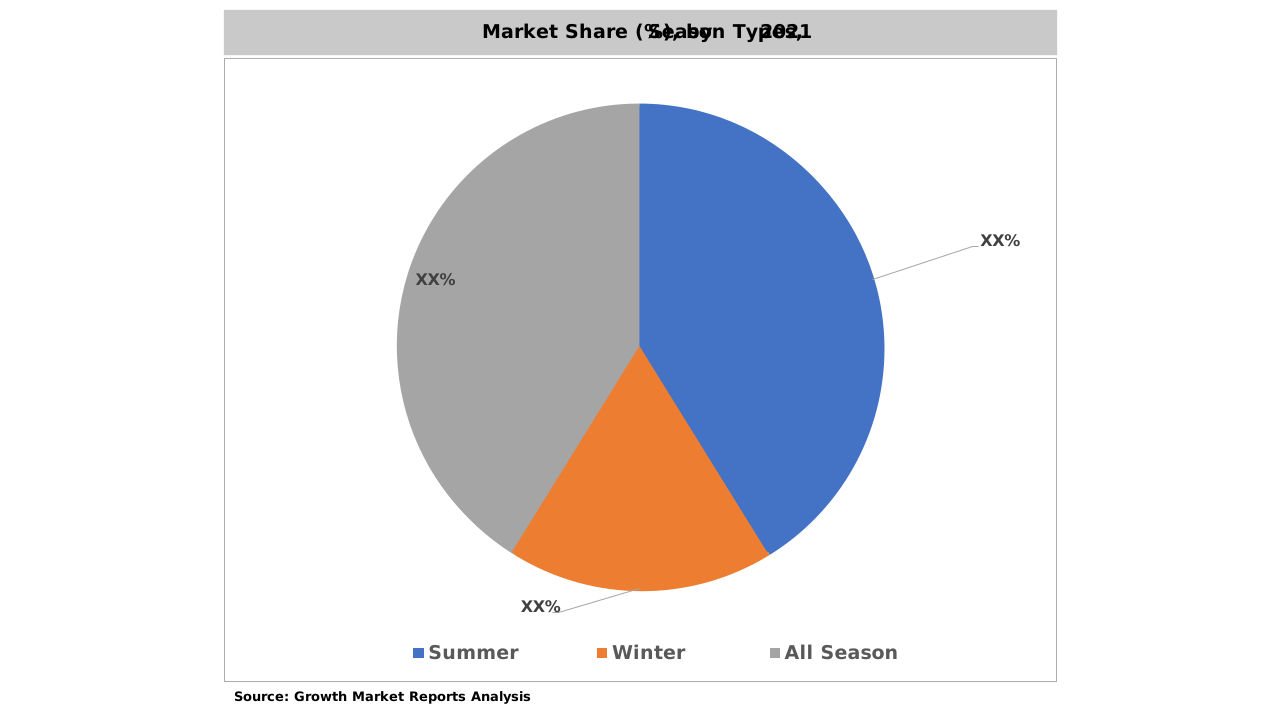
The season segment of the tyre market is divided into summer, winter, and all-season tyres, each designed to deliver optimal performance under specific climatic and road conditions. Summer tyres are engineered for warm weather, offering superior grip, handling, and braking performance on dry and wet roads. Their unique tread patterns and rubber compounds are optimized for temperatures above 7°C, making them ideal for regions with hot climates and minimal snowfall. The demand for summer tyres is particularly strong in Europe, North America, and parts of Asia Pacific, where seasonal tyre changes are mandated or recommended for safety reasons.
Winter tyres, on the other hand, are designed to provide enhanced traction, stability, and braking performance in cold, snowy, and icy conditions. Their specialized tread patterns, deeper grooves, and softer rubber compounds enable them to maintain flexibility and grip at temperatures below 7°C. The growing awareness of road safety and the implementation of regulations mandating the use of winter tyres in certain regions have driven demand for this segment. Manufacturers are continuously innovating to develop winter tyres that offer improved durability, reduced rolling resistance, and lower noise levels, catering to the needs of both passenger and commercial vehicles.
All-season tyres have emerged as a popular choice among consumers seeking convenience and versatility. These tyres are designed to deliver reliable performance across a wide range of weather conditions, eliminating the need for seasonal tyre changes. All-season tyres feature a balanced tread pattern and rubber compound that provide adequate grip and handling in both summer and winter conditions, although they may not match the specialized performance of dedicated summer or winter tyres. The growing preference for all-season tyres is particularly evident in regions with moderate climates and limited temperature extremes. Manufacturers are investing in advanced materials and tread designs to enhance the performance, longevity, and fuel efficiency of all-season tyres.
The season segment is also shaped by regulatory requirements, consumer awareness campaigns, and technological advancements. Governments in Europe, North America, and parts of Asia are implementing regulations and incentives to promote the use of appropriate tyres for different seasons, thereby enhancing road safety and reducing accident rates. Tyre manufacturers are leveraging these trends by offering a wide range of seasonal products, supported by marketing campaigns and educational initiatives aimed at informing consumers about the benefits of using the right tyres for specific weather conditions.
In conclusion, the season segment of the tyre market is characterized by evolving consumer preferences, regulatory mandates, and ongoing innovation. Manufacturers that can offer a comprehensive portfolio of summer, winter, and all-season tyres, supported by robust marketing and distribution networks, are well-positioned to capture market share and drive growth in this segment.
The global tyre market offers a multitude of opportunities for growth and innovation, driven by evolving automotive trends, technological advancements, and changing consumer preferences. One of the most promising opportunities lies in the development of smart and connected tyres, equipped with sensors for real-time monitoring of pressure, temperature, and tread wear. These intelligent tyres enable predictive maintenance, enhance vehicle safety, and reduce operational costs for fleet operators. The integration of Internet of Things (IoT) technology and data analytics is creating new revenue streams for tyre manufacturers, who can offer value-added services such as remote diagnostics, performance optimization, and customer engagement platforms. The growing adoption of electric and autonomous vehicles is also opening up new avenues for specialized tyre designs that cater to unique performance requirements, such as low rolling resistance, noise reduction, and enhanced durability.
Another significant opportunity in the tyre market is the increasing emphasis on sustainability and circular economy principles. Governments, industry bodies, and consumers are demanding eco-friendly products and practices, prompting manufacturers to invest in green technologies, recycled materials, and energy-efficient manufacturing processes. The development of sustainable tyres, including those made from renewable resources and featuring reduced carbon footprints, is gaining traction among environmentally conscious consumers and fleet operators. Additionally, the promotion of retreading and recycling initiatives is creating opportunities for cost savings, resource optimization, and environmental stewardship. Manufacturers that can effectively balance performance, cost, and sustainability will be well-positioned to capture market share and build long-term brand loyalty.
Despite these opportunities, the tyre market faces several restraining factors and threats that could impede growth. One of the primary challenges is the volatility in raw material prices, particularly for natural and synthetic rubber, steel, and petrochemical derivatives. Fluctuations in commodity prices can significantly impact production costs, profit margins, and pricing strategies for tyre manufacturers. Additionally, the tyre industry is subject to stringent regulatory requirements pertaining to safety, performance, labeling, and environmental impact. Compliance with these regulations necessitates ongoing investments in research and development, testing, and certification, which can strain financial resources and operational efficiency. The increasing prevalence of counterfeit and substandard tyres in certain markets also poses a threat to consumer safety, brand reputation, and market integrity.
The regional distribution of the global tyre market is characterized by significant variations in demand, production capacity, and growth trajectories. Asia Pacific dominates the market, accounting for approximately 46% of global tyre sales in 2024, with a market value of around USD 111.6 billion. The region's leadership is underpinned by its robust automotive manufacturing base, expanding vehicle parc, and rising disposable incomes in populous countries such as China, India, and Indonesia. The rapid urbanization, infrastructure development, and government initiatives to promote electric vehicles are further fueling demand for tyres across various vehicle segments. Key players are investing in capacity expansion, technology upgrades, and strategic partnerships to strengthen their presence in this high-growth region.
North America and Europe represent mature markets, collectively accounting for approximately 38% of global tyre sales, with market values of USD 46.1 billion and USD 46.1 billion respectively in 2024. These regions are characterized by high vehicle ownership rates, advanced automotive technologies, and stringent safety and environmental regulations. The demand for premium, high-performance, and specialty tyres is particularly strong in North America and Europe, driven by consumer preferences for comfort, safety, and sustainability. The aftermarket segment is well-developed, supported by extensive distribution networks, digital retail platforms, and value-added services. The tyre market in North America is expected to register a steady CAGR of 3.2% through 2033, while Europe is projected to grow at 2.8% CAGR, reflecting stable demand and ongoing innovation.
Latin America and Middle East & Africa are emerging as high-potential regions, collectively accounting for approximately 16% of global tyre sales, with market values of USD 19.4 billion and USD 19.4 billion respectively in 2024. These regions are witnessing increased vehicle imports, infrastructure investment, and urbanization, driving demand for both OEM and replacement tyres. The growth of agriculture, mining, and construction sectors is also boosting demand for specialized tyres in the OTR segment. However, these markets face challenges such as economic volatility, regulatory uncertainties, and the prevalence of counterfeit products. Manufacturers are focusing on expanding distribution networks, enhancing product offerings, and building brand awareness to capture growth opportunities in these dynamic regions.
The global tyre market is highly competitive, characterized by the presence of several multinational corporations, regional players, and emerging startups. The competitive landscape is shaped by factors such as technological innovation, brand reputation, product quality, pricing strategies, and distribution reach. Leading companies are investing heavily in research and development to introduce advanced tyre technologies, enhance performance attributes, and meet evolving regulatory requirements. Strategic partnerships, mergers and acquisitions, and capacity expansion initiatives are common strategies employed by key players to strengthen their market position and expand their global footprint. The rise of digitalization and e-commerce has also prompted manufacturers to enhance their online presence, streamline supply chains, and offer integrated customer experiences across multiple channels.
Brand differentiation is a critical success factor in the tyre market, with manufacturers leveraging marketing campaigns, sponsorships, and product innovation to build customer loyalty and drive sales. Premium and specialty tyre segments, in particular, are witnessing intense competition, as consumers increasingly seek high-performance, durable, and eco-friendly products. Companies are also focusing on sustainability initiatives, such as the development of green tyres, recycling programs, and carbon-neutral manufacturing processes, to align with global environmental goals and regulatory mandates. The ability to offer a comprehensive product portfolio, backed by robust aftersales support and value-added services, is essential for maintaining a competitive edge in this dynamic market.
The competitive landscape is further influenced by the entry of new players, particularly in emerging markets, who offer cost-effective alternatives and cater to niche segments. Regional manufacturers are leveraging their understanding of local market dynamics, distribution networks, and consumer preferences to capture market share from established global brands. However, the proliferation of counterfeit and substandard tyres poses a significant challenge, necessitating ongoing investments in quality assurance, brand protection, and consumer education initiatives. The increasing adoption of digital technologies, such as IoT-enabled smart tyres and predictive analytics, is also reshaping competitive dynamics, with companies vying to offer differentiated solutions and value-added services to customers.
Some of the major companies operating in the global tyre market include Bridgestone Corporation, Michelin, Goodyear Tire & Rubber Company, Continental AG, Sumitomo Rubber Industries, Pirelli & C. S.p.A., Hankook Tire & Technology, Yokohama Rubber Company, Cooper Tire & Rubber Company, and Apollo Tyres. These companies are recognized for their extensive product portfolios, technological leadership, and strong global presence. Bridgestone Corporation, for example, is a pioneer in sustainable tyre technologies and smart mobility solutions, while Michelin is renowned for its innovation in green tyres and premium products. Goodyear and Continental AG are leaders in the development of intelligent tyres and digital mobility platforms, catering to both OEM and aftermarket segments.
Sumitomo Rubber Industries, Pirelli, and Hankook Tire & Technology are known for their focus on high-performance and specialty tyres, with a strong emphasis on research and development. Yokohama Rubber Company and Cooper Tire & Rubber Company have established robust distribution networks and are expanding their presence in emerging markets through strategic partnerships and capacity expansion. Apollo Tyres, a leading player in the Asia Pacific region, is investing in advanced manufacturing technologies and sustainability initiatives to strengthen its competitive position. These companies are continuously innovating to address changing market demands, regulatory requirements, and consumer preferences, ensuring sustained growth and leadership in the global tyre market.
The Tyre market has been segmented on the basis of
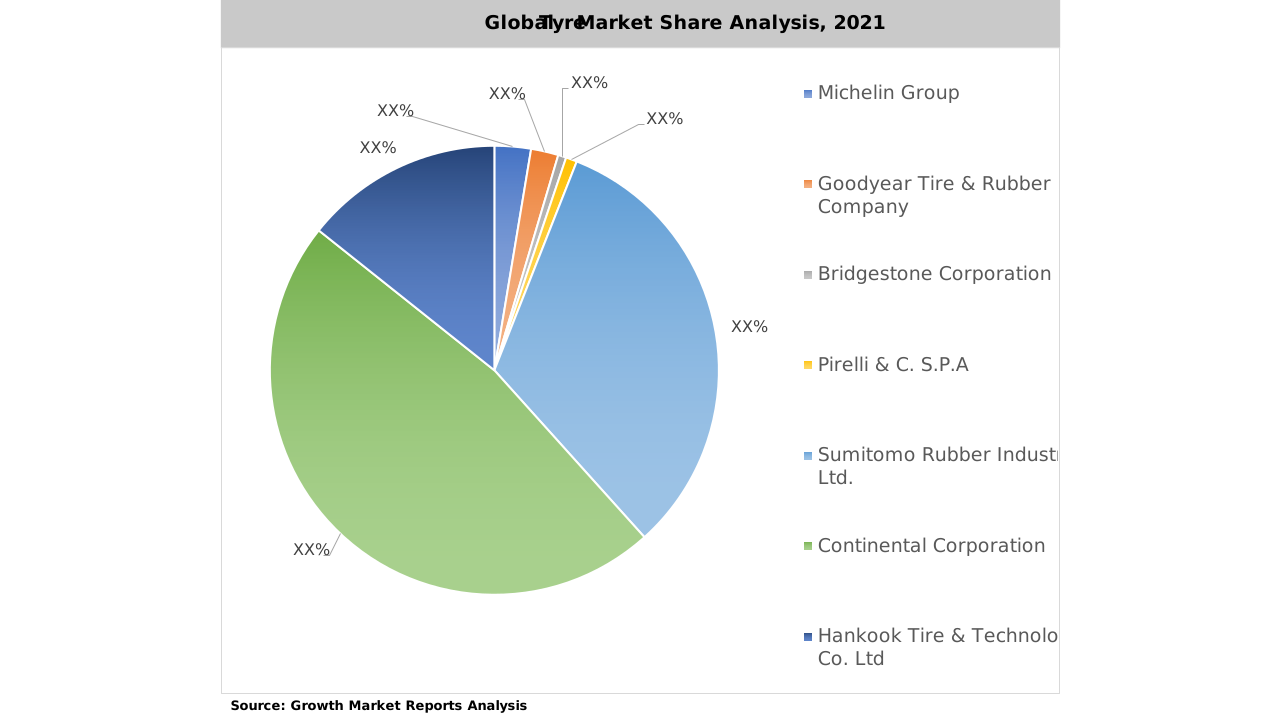
Key players competing in the global tyre market are Michelin Group; Goodyear Tire & Rubber Company; Bridgestone Corporation; Pirelli & C. S.P.A; Sumitomo Rubber Industries, Ltd.; Continental Corporation; and Hankook Tire & Technology Co. Ltd. These players have actively engaged in several market development activities including enterprise collaborations, agreements, mergers & acquisitions, production capacity expansion, new product launches, and partnerships to increase their market share.
Key challenges include volatility in raw material prices, stringent regulatory requirements, and the prevalence of counterfeit and substandard tyres in certain markets.
Major companies include Bridgestone Corporation, Michelin Group, Goodyear Tire & Rubber Company, Continental AG, Sumitomo Rubber Industries, Pirelli & C. S.p.A., Hankook Tire & Technology, Yokohama Rubber Company, and Apollo Tyres Ltd.
Technological trends include the integration of smart tyre technologies (such as sensors for real-time pressure monitoring), the use of eco-friendly materials, and the development of tyres for electric and autonomous vehicles.
Tyres are distributed through two main channels: OEM (Original Equipment Manufacturer) for new vehicles and aftermarket for replacement purposes. The aftermarket segment accounts for a larger share of the global market.
The tyre market is segmented by vehicle type into passenger cars, light commercial vehicles (LCVs), heavy commercial vehicles (HCVs), two-wheelers, and off-the-road (OTR) vehicles.
Key growth drivers include rising vehicle production, increasing vehicle ownership, technological advancements in tyre manufacturing, and growing demand for high-performance and durable tyres.
The tyre market is primarily segmented by product type into radial and bias tyres. Radial tyres dominate due to their superior performance, while bias tyres are used in specific applications like off-the-road vehicles and agricultural machinery.
Asia Pacific dominates the global tyre market, accounting for the largest share in both production and consumption, followed by North America and Europe.
The tyre market is expected to register a CAGR of 4.1% from 2025 to 2033, reaching approximately USD 348.3 billion by 2033.
According to the latest research, the global tyre market size reached USD 242.6 billion in 2024.