Thermal Spray Market Research Report 2033

Thermal Spray Market Research Report 2033

Segments - by Process (Combustion Flame, Electric Energy), by Material (Metals, Ceramics, Polymers, Carbides, Others), by Application (Aerospace, Automotive, Industrial Gas Turbine, Electronics, Energy & Power, Healthcare, Others), by End-Use Industry (Automotive, Aerospace, Industrial, Energy, Healthcare, Others)

https://growthmarketreports.com/Raksha
Author : Raksha Sharma
https://growthmarketreports.com/Vaibhav
Fact-checked by : V. Chandola
https://growthmarketreports.com/Shruti
Editor : Shruti Bhat

Upcoming | Report ID :MC-1106 | 4.2 Rating | 21 Reviews | 290 Pages | Format : Docx PDF

Report Description


Thermal Spray Market Outlook

As per our latest research, the global thermal spray market size in 2024 stands at USD 11.2 billion, with a robust year-on-year expansion driven by increasing demand across key industries. The market is expected to witness a CAGR of 6.8% from 2025 to 2033, reaching a forecasted value of USD 21.8 billion by 2033. Major growth factors include the rising adoption of advanced surface engineering solutions in aerospace, automotive, and energy sectors, as well as the increasing focus on extending component life and improving performance in harsh operating environments.

The growth trajectory of the thermal spray market is underpinned by several critical factors. One of the most significant drivers is the escalating demand for high-performance coatings that enhance wear resistance, corrosion protection, and thermal barriers in industrial applications. As industries such as aerospace and automotive strive to improve operational efficiency and reduce maintenance costs, thermal spray technologies have become indispensable. The increasing need for lightweight materials with superior surface properties, especially in aerospace and automotive manufacturing, further fuels the adoption of thermal spray processes. Additionally, the shift towards sustainability and the need for environmentally friendly coating methods are prompting manufacturers to invest in thermal spray solutions, which offer lower emissions and reduced waste compared to conventional coating techniques.

Another key growth factor is the rapid technological advancements in thermal spray equipment and materials. Innovations such as high-velocity oxy-fuel (HVOF) spraying, plasma spraying, and the development of novel feedstock materials have significantly improved coating quality, process efficiency, and application versatility. The integration of automation and robotics into thermal spray processes has further enhanced precision and repeatability, making it possible to coat complex geometries and large-scale components with minimal human intervention. These advancements are not only expanding the range of applications for thermal spray but also reducing operational costs and turnaround times, thereby making the technology more accessible to a broader range of industries.

The expanding application scope of thermal spray solutions across emerging sectors is also driving market growth. For instance, the electronics industry is increasingly utilizing thermal spray coatings to protect sensitive components from oxidation and wear, while the energy and power sector is leveraging these technologies to enhance the durability of turbine blades and boiler tubes. The healthcare industry, too, is witnessing a surge in demand for bio-compatible coatings for medical implants and devices. This diversification of end-use applications is creating new revenue streams for market players and stimulating further investment in research and development. The growing trend of industrial digitization and the adoption of Industry 4.0 principles are also expected to accelerate the integration of thermal spray technologies into smart manufacturing ecosystems.

Plasma Spray Coating Material is gaining significant attention as a pivotal component in the thermal spray market, particularly due to its versatility and effectiveness in creating high-quality coatings. This material is renowned for its ability to withstand extreme temperatures and harsh environments, making it ideal for applications in aerospace, automotive, and energy sectors. The unique properties of plasma spray coatings, such as their ability to form dense, wear-resistant layers, are driving their adoption across industries that demand high-performance solutions. As manufacturers continue to seek ways to enhance the durability and efficiency of critical components, the role of plasma spray coating material is becoming increasingly prominent. The ongoing advancements in plasma spray technology, including improvements in feedstock materials and spraying techniques, are further expanding its application potential and reinforcing its importance in the market.

From a regional perspective, the Asia Pacific region stands out as the fastest-growing market for thermal spray technologies, driven by rapid industrialization, expanding automotive and aerospace sectors, and increasing investments in infrastructure development. North America and Europe continue to dominate in terms of market share, owing to the strong presence of leading aerospace and automotive OEMs, well-established industrial bases, and a high degree of technological innovation. Meanwhile, Latin America and the Middle East & Africa are emerging as promising markets, supported by growing investments in energy and industrial sectors. Each region presents unique growth opportunities and challenges, shaped by local industry dynamics, regulatory frameworks, and economic conditions.

Global Thermal Spray Industry Outlook

Process Analysis

The process segment of the thermal spray market is primarily divided into combustion flame and electric energy-based techniques, each with distinct advantages and application areas. Combustion flame processes, including flame spraying and high-velocity oxy-fuel (HVOF) spraying, are widely used due to their cost-effectiveness and adaptability to a variety of materials. These methods are particularly popular in industries requiring robust coatings for wear and corrosion resistance, such as automotive and industrial machinery. The ability to deposit coatings rapidly and efficiently makes combustion flame processes a preferred choice for large-scale production environments, where speed and cost control are paramount.

Electric energy-based processes, such as plasma spraying and electric arc spraying, offer superior control over coating properties and enable the deposition of high-melting-point materials like ceramics and carbides. Plasma spraying, in particular, is valued for its versatility and ability to produce dense, high-quality coatings with excellent adhesion and uniformity. This makes it ideal for critical applications in aerospace, electronics, and healthcare, where performance and reliability are non-negotiable. The ongoing advancements in plasma torch design and power supply technology are further enhancing process efficiency, reducing energy consumption, and minimizing thermal distortion of substrates.

The choice between combustion flame and electric energy processes is often dictated by the specific requirements of the end-use application, including desired coating properties, substrate material, and production volume. For instance, while combustion flame processes are well-suited for applying thick coatings on large components, electric energy-based techniques are preferred for precision applications requiring thin, uniform coatings with controlled microstructures. The growing trend towards customization and the need to address increasingly complex performance challenges are prompting manufacturers to adopt hybrid approaches, combining the strengths of multiple thermal spray processes to achieve optimal results.

The process segment is also witnessing increased integration of automation and digital monitoring systems, enabling real-time process control and quality assurance. The adoption of Industry 4.0 principles is facilitating the development of smart thermal spray systems that can automatically adjust parameters based on feedback from in-line sensors, ensuring consistent coating quality and reducing operator dependency. This technological evolution is expected to drive further growth in the process segment, making thermal spray solutions more attractive to industries seeking to enhance productivity and maintain stringent quality standards.

Report Scope

Attributes Details
Report Title Thermal Spray Market Research Report 2033
By Process Combustion Flame, Electric Energy
By Material Metals, Ceramics, Polymers, Carbides, Others
By Application Aerospace, Automotive, Industrial Gas Turbine, Electronics, Energy & Power, Healthcare, Others
By End-Use Industry Automotive, Aerospace, Industrial, Energy, Healthcare, Others
Regions Covered North America, Europe, APAC, Latin America, MEA
Base Year 2024
Historic Data 2018-2023
Forecast Period 2025-2033
Number of Pages 290
Number of Tables & Figures 271
Customization Available Yes, the report can be customized as per your need.

Material Analysis

The material segment of the thermal spray market encompasses a diverse range of feedstock materials, including metals, ceramics, polymers, carbides, and others. Metals, such as nickel, cobalt, and aluminum alloys, represent a significant share of the market due to their excellent mechanical properties and compatibility with various thermal spray processes. These materials are extensively used in aerospace, automotive, and energy applications, where they provide essential protection against wear, corrosion, and high-temperature exposure. The ability to tailor the composition and microstructure of metal coatings through advanced thermal spray techniques is a key factor driving their adoption.

Ceramic materials, including alumina, zirconia, and titania, are gaining traction in applications requiring thermal insulation, electrical insulation, and high-temperature stability. Ceramics are widely used in the aerospace and electronics industries for coating turbine blades, exhaust components, and electronic substrates. Their superior hardness and resistance to chemical attack make them ideal for harsh operating environments. The development of new ceramic compositions and nano-structured coatings is expanding the performance envelope of thermal spray ceramics, enabling their use in increasingly demanding applications.

Carbides, such as tungsten carbide and chromium carbide, are highly valued for their exceptional hardness and abrasion resistance. These materials are commonly employed in industrial and mining equipment, where components are subjected to intense wear and impact. The ability to deposit carbide coatings with controlled thickness and microstructure using HVOF and plasma spray processes is a major advantage, allowing manufacturers to extend component life and reduce maintenance costs. The ongoing research into multi-component carbide systems and composite coatings is expected to further enhance the performance and versatility of carbide-based thermal spray materials.

Polymers and other specialized materials are also finding increasing application in the thermal spray market. Polymer coatings offer unique benefits such as low friction, chemical resistance, and electrical insulation, making them suitable for niche applications in electronics, healthcare, and food processing industries. The development of hybrid and functionally graded materials, which combine the properties of metals, ceramics, and polymers, is opening up new possibilities for customized solutions tailored to specific application requirements. This trend towards material innovation is expected to drive sustained growth in the material segment, as industries continue to seek advanced coatings that deliver superior performance and value.

Application Analysis

The application segment of the thermal spray market is characterized by its broad and diverse range of end-use areas, reflecting the versatility and adaptability of thermal spray technologies. The aerospace sector remains the largest application area, accounting for a significant share of the market due to the critical need for lightweight, high-performance coatings that can withstand extreme temperatures and mechanical stresses. Thermal spray coatings are extensively used on turbine blades, engine components, and landing gear to enhance durability, reduce friction, and improve fuel efficiency. The stringent regulatory requirements and emphasis on safety and reliability in the aerospace industry further underscore the importance of advanced thermal spray solutions.

The automotive industry is another major application area, leveraging thermal spray technologies to improve the wear resistance and longevity of engine parts, brake discs, and exhaust components. The shift towards electric vehicles and lightweight materials is driving the adoption of thermal spray coatings to enhance the performance and efficiency of critical components. The ability to deposit coatings with tailored properties, such as low friction or high thermal conductivity, is enabling automotive manufacturers to meet evolving performance and regulatory standards. The growing focus on sustainability and emissions reduction is also prompting the industry to explore eco-friendly thermal spray processes and materials.

Industrial gas turbines and energy & power applications represent significant growth opportunities for the thermal spray market. Thermal spray coatings are used to protect turbine blades, combustion chambers, and boiler tubes from high-temperature oxidation, corrosion, and erosion, thereby extending service life and reducing maintenance costs. The increasing demand for reliable and efficient power generation, coupled with the expansion of renewable energy infrastructure, is expected to drive further adoption of thermal spray technologies in this segment. The ability to refurbish and repair worn components using thermal spray processes is also contributing to cost savings and operational efficiency in the energy sector.

The electronics and healthcare industries are emerging as high-growth application areas for thermal spray solutions. In electronics, thermal spray coatings are used to provide electrical insulation, thermal management, and protection against environmental contaminants. The miniaturization of electronic devices and the need for enhanced reliability are driving the demand for advanced coating solutions. In healthcare, bio-compatible thermal spray coatings are being applied to medical implants, orthopedic devices, and surgical instruments to improve their performance, durability, and patient outcomes. The development of antimicrobial and drug-eluting coatings is further expanding the application scope of thermal spray technologies in the medical field.

End-Use Industry Analysis

The end-use industry segment of the thermal spray market is dominated by the automotive and aerospace sectors, which collectively account for a substantial portion of global demand. In the automotive industry, thermal spray coatings are critical for enhancing the performance and longevity of engine components, transmission systems, and exhaust parts. The push towards lightweight vehicles and the adoption of advanced manufacturing techniques are driving the need for high-performance coatings that can withstand harsh operating conditions and contribute to improved fuel efficiency. Automotive OEMs and suppliers are increasingly investing in thermal spray technologies to meet stringent quality and regulatory standards while maintaining competitive cost structures.

The aerospace industry continues to lead in terms of technological innovation and adoption of thermal spray solutions. The need for lightweight, high-strength, and heat-resistant coatings is paramount in aerospace applications, where component failure can have catastrophic consequences. Thermal spray coatings are used extensively on turbine blades, combustion chambers, and structural components to enhance durability, reduce maintenance requirements, and improve overall system reliability. The ongoing advancements in coating materials and application techniques are enabling aerospace manufacturers to push the boundaries of performance and efficiency, thereby maintaining their competitive edge in a highly demanding market.

The industrial sector, encompassing machinery, mining, and manufacturing equipment, represents a significant and growing end-use market for thermal spray technologies. The ability to refurbish and extend the service life of critical components through thermal spray coatings is a major driver in this segment. Industries are increasingly recognizing the cost-saving and productivity benefits of adopting thermal spray solutions for wear protection, corrosion resistance, and thermal management. The integration of thermal spray processes into maintenance and repair operations is also gaining traction, as companies seek to minimize downtime and maximize asset utilization.

Other end-use industries, such as energy, healthcare, and electronics, are also contributing to the expansion of the thermal spray market. The energy sector, in particular, is leveraging thermal spray coatings to enhance the durability and efficiency of power generation equipment, including turbines, boilers, and heat exchangers. In healthcare, the demand for bio-compatible and antimicrobial coatings is driving innovation and adoption of thermal spray solutions for medical devices and implants. The electronics industry is utilizing thermal spray technologies to address challenges related to thermal management, electrical insulation, and environmental protection. The diversification of end-use industries is creating new growth opportunities and stimulating further investment in research and development.

Opportunities & Threats

The thermal spray market is poised for significant growth, with numerous opportunities emerging across various sectors. One of the most promising opportunities lies in the increasing adoption of thermal spray coatings in emerging economies, particularly in Asia Pacific and Latin America. Rapid industrialization, infrastructure development, and the expansion of automotive and aerospace manufacturing are creating substantial demand for advanced surface engineering solutions. The growing focus on sustainable manufacturing practices and the need to reduce environmental impact are also driving the adoption of eco-friendly thermal spray processes and materials. Additionally, the ongoing advancements in digitalization and automation are enabling manufacturers to enhance process efficiency, reduce costs, and improve product quality, thereby unlocking new growth avenues.

Another significant opportunity is the development of new materials and coating technologies that address evolving industry requirements. The demand for lightweight, high-performance, and multifunctional coatings is prompting research into novel feedstock materials, such as nano-structured ceramics, composite powders, and functionally graded materials. The integration of artificial intelligence and machine learning into thermal spray process control is also expected to revolutionize the industry, enabling real-time optimization and predictive maintenance. As industries continue to seek innovative solutions to enhance product performance, durability, and sustainability, the thermal spray market is well-positioned to capitalize on these trends and expand its application scope.

Despite the favorable growth outlook, the thermal spray market faces several restraints that could hinder its expansion. One of the primary challenges is the high initial investment required for thermal spray equipment and process setup, which can be a barrier for small and medium-sized enterprises. The complexity of process optimization and the need for skilled operators also pose challenges, particularly in industries with limited technical expertise. Additionally, the stringent regulatory requirements related to emissions, workplace safety, and material handling can increase compliance costs and limit market penetration in certain regions. Addressing these challenges will require ongoing investment in research, workforce training, and the development of cost-effective and user-friendly thermal spray solutions.

Regional Outlook

Regionally, the Asia Pacific market is emerging as a powerhouse in the global thermal spray landscape, driven by rapid industrialization, expanding manufacturing capabilities, and significant investments in infrastructure development. In 2024, the Asia Pacific region accounted for approximately USD 3.7 billion of the global market, representing nearly one-third of the total market size. Countries such as China, India, Japan, and South Korea are at the forefront of this growth, with robust demand from automotive, aerospace, and energy sectors. The region is expected to register the highest CAGR of 8.1% during the forecast period, fueled by government initiatives to promote advanced manufacturing and the increasing presence of global OEMs.

North America remains a leading market for thermal spray technologies, with a market value of around USD 3.1 billion in 2024. The region benefits from a well-established industrial base, strong presence of aerospace and automotive giants, and a high degree of technological innovation. The United States, in particular, is a key driver of market growth, supported by ongoing investments in research and development, as well as the adoption of cutting-edge surface engineering solutions. The focus on extending the life of critical infrastructure, coupled with stringent regulatory standards, is further stimulating demand for advanced thermal spray coatings in North America.

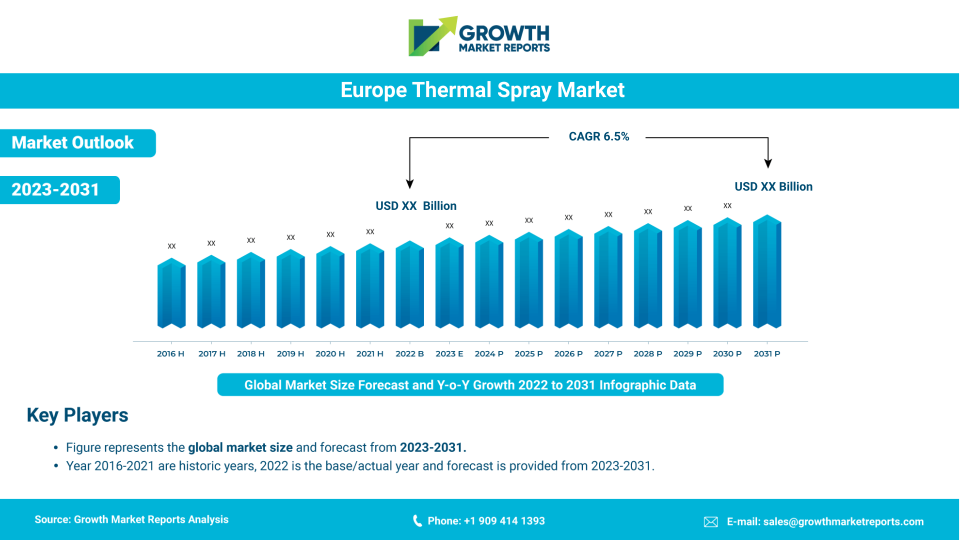
Europe also plays a significant role in the global thermal spray market, accounting for approximately USD 2.6 billion in 2024. The region is characterized by a strong emphasis on quality, innovation, and sustainability, with leading aerospace, automotive, and energy companies driving the adoption of thermal spray technologies. Germany, France, and the United Kingdom are key markets within Europe, supported by robust R&D activities and a skilled workforce. The region is expected to maintain steady growth over the forecast period, with increasing investments in renewable energy and advanced manufacturing further boosting market prospects. Meanwhile, Latin America and the Middle East & Africa, with market sizes of USD 1.1 billion and USD 0.7 billion respectively, are gradually gaining traction, driven by infrastructure development and the expansion of energy and industrial sectors.

Thermal Spray Market Statistics

Competitor Outlook

The thermal spray market is characterized by intense competition, with a mix of global giants and regional players vying for market share. The competitive landscape is shaped by continuous innovation, strategic partnerships, and a strong focus on research and development. Major players are investing heavily in the development of new materials, advanced process technologies, and digital solutions to enhance their product offerings and maintain a competitive edge. The market is also witnessing a trend towards consolidation, with leading companies acquiring smaller players to expand their geographic reach, diversify their product portfolios, and strengthen their technological capabilities.

Collaboration and strategic alliances are becoming increasingly important in the thermal spray market, as companies seek to leverage complementary strengths and accelerate the commercialization of new technologies. Partnerships with research institutions, universities, and end-user industries are facilitating the development of customized solutions that address specific performance requirements and regulatory standards. The integration of automation, robotics, and digital monitoring systems into thermal spray processes is also driving competitive differentiation, enabling companies to offer value-added services such as real-time quality assurance, predictive maintenance, and process optimization.

The emphasis on sustainability and environmental responsibility is prompting market leaders to develop eco-friendly thermal spray solutions that reduce emissions, energy consumption, and waste generation. Companies are actively exploring the use of recycled materials, water-based feedstocks, and low-emission process technologies to align with evolving regulatory requirements and customer preferences. The ability to deliver high-performance coatings while minimizing environmental impact is emerging as a key differentiator in the competitive landscape, with customers increasingly prioritizing sustainability in their procurement decisions.

Some of the major companies operating in the thermal spray market include Praxair Surface Technologies, Oerlikon Metco, Bodycote plc, Saint-Gobain, and Kennametal Inc. Praxair Surface Technologies is renowned for its comprehensive portfolio of thermal spray materials and equipment, serving a wide range of industries including aerospace, energy, and healthcare. Oerlikon Metco is a global leader in surface solutions, offering advanced coating technologies, materials, and services that enhance the performance and durability of critical components. Bodycote plc specializes in heat treatment and surface engineering services, with a strong focus on innovation and customer-centric solutions. Saint-Gobain is recognized for its expertise in advanced ceramics and thermal spray powders, catering to demanding applications in electronics, energy, and industrial sectors. Kennametal Inc. is a leading provider of wear-resistant solutions, leveraging its expertise in carbide materials and thermal spray technologies to deliver superior performance in mining, construction, and manufacturing industries.

These companies are continuously expanding their product and service offerings through strategic investments in research and development, acquisitions, and partnerships. They are also focusing on enhancing their global footprint by establishing new manufacturing facilities, distribution networks, and technical support centers in key growth markets. The ability to provide end-to-end solutions, from material development to process optimization and after-sales support, is enabling market leaders to build long-term relationships with customers and capture a larger share of the growing thermal spray market. As the industry continues to evolve, the competitive landscape is expected to become even more dynamic, with innovation, sustainability, and customer-centricity emerging as the key drivers of success.

Key Players

  • Oerlikon Metco
  • Praxair Surface Technologies (now part of Linde plc)
  • Bodycote plc
  • Curtiss-Wright Corporation
  • Sulzer Ltd.
  • Höganäs AB
  • Kennametal Inc.
  • Saint-Gobain S.A.
  • Fujimi Incorporated
  • Carpenter Technology Corporation
  • Wall Colmonoy Corporation
  • Cincinnati Thermal Spray, Inc.
  • A&A Coatings
  • Plasma-Tec, Inc.
  • ASB Industries, Inc. (now SURFACE TECHNOLOGY, INC.)
  • Tocalo Co., Ltd.
  • Progressive Surface, Inc.
  • Flame Spray Technologies B.V.
  • Thermion, Inc.
  • Metallisation Ltd.
Thermal Spray Market Overview

Segments

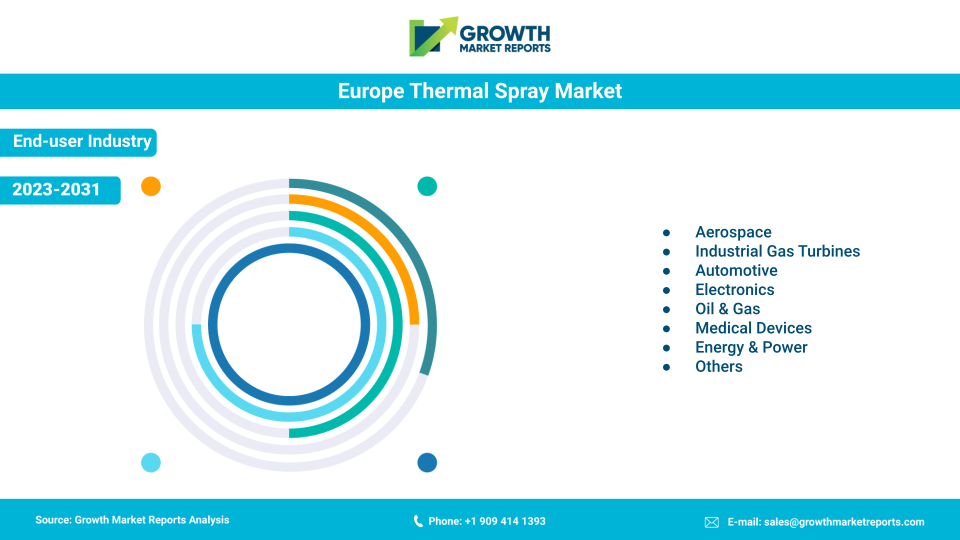
The Thermal Spray market has been segmented on the basis of

Process

  • Combustion Flame
  • Electric Energy

Material

  • Metals
  • Ceramics
  • Polymers
  • Carbides
  • Others

Application

  • Aerospace
  • Automotive
  • Industrial Gas Turbine
  • Electronics
  • Energy & Power
  • Healthcare
  • Others

End-Use Industry

  • Automotive
  • Aerospace
  • Industrial
  • Energy
  • Healthcare
  • Others

Competitive Landscape

The major players of the market are OC Oerlikon Management AG, Saint-Gobain, Hoganas AB, Linde Plc, and Bodycote.

Companies are into innovating newer technologies, and acquisition expand their market share.
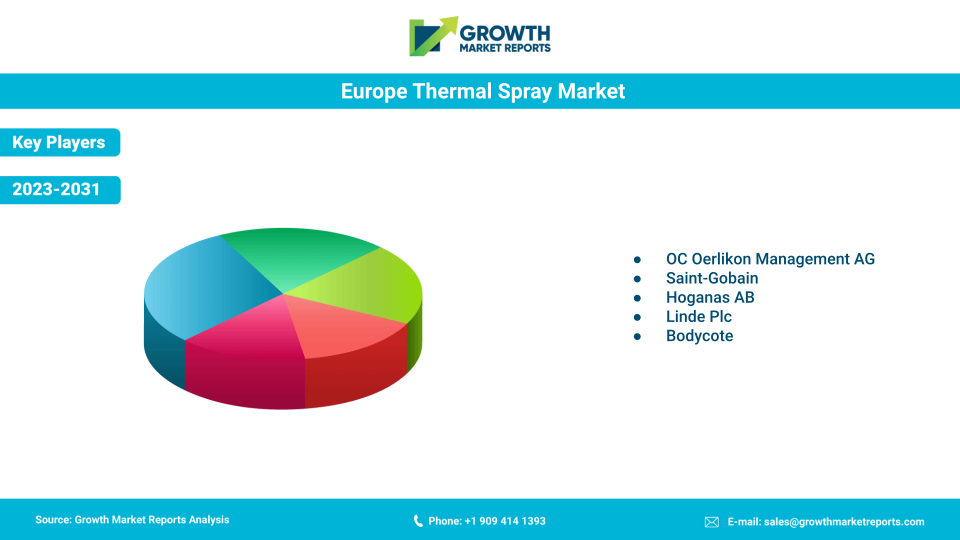
Europe Thermal Spray Market Key Players

Frequently Asked Questions

Challenges include high initial investment costs, the need for skilled operators, complex process optimization, and stringent regulatory requirements related to emissions and workplace safety.

Key trends include the development of eco-friendly and high-performance coatings, the integration of digitalization and AI for process optimization, and the expansion into emerging sectors like electronics and healthcare.

Major companies include Oerlikon Metco, Praxair Surface Technologies (Linde plc), Bodycote plc, Saint-Gobain S.A., Kennametal Inc., Sulzer Ltd., Höganäs AB, and others.

Thermal spray coatings are widely used for wear resistance, corrosion protection, thermal barriers, electrical insulation, and bio-compatibility in industries such as aerospace, automotive, energy, electronics, and healthcare.

Automation and the adoption of Industry 4.0 principles are enhancing process efficiency, precision, and repeatability in thermal spray applications. Smart systems with real-time monitoring are improving quality assurance and reducing operator dependency.

The major regional markets are Asia Pacific (fastest-growing), North America, and Europe. Asia Pacific is driven by rapid industrialization, while North America and Europe benefit from established aerospace and automotive sectors.

Common materials used include metals (nickel, cobalt, aluminum alloys), ceramics (alumina, zirconia, titania), carbides (tungsten carbide, chromium carbide), polymers, and hybrid or functionally graded materials.

Thermal spray processes are primarily divided into combustion flame techniques (such as flame spraying and high-velocity oxy-fuel or HVOF spraying) and electric energy-based techniques (such as plasma spraying and electric arc spraying).

Key industries driving demand include aerospace, automotive, energy & power, industrial gas turbines, electronics, and healthcare, due to their need for advanced surface engineering solutions and high-performance coatings.

As of 2024, the global thermal spray market size is valued at USD 11.2 billion. It is expected to grow at a CAGR of 6.8% from 2025 to 2033, reaching approximately USD 21.8 billion by 2033.

Table Of Content

Chapter 1 Executive Summary
Chapter 2 Assumptions and Acronyms Used
Chapter 3 Research Methodology
Chapter 4 Thermal Spray Market Overview
   4.1 Introduction
      4.1.1 Market Taxonomy
      4.1.2 Market Definition
      4.1.3 Macro-Economic Factors Impacting the Market Growth
   4.2 Thermal Spray Market Dynamics
      4.2.1 Market Drivers
      4.2.2 Market Restraints
      4.2.3 Market Opportunity
   4.3 Thermal Spray Market - Supply Chain Analysis
      4.3.1 List of Key Suppliers
      4.3.2 List of Key Distributors
      4.3.3 List of Key Consumers
   4.4 Key Forces Shaping the Thermal Spray Market
      4.4.1 Bargaining Power of Suppliers
      4.4.2 Bargaining Power of Buyers
      4.4.3 Threat of Substitution
      4.4.4 Threat of New Entrants
      4.4.5 Competitive Rivalry
   4.5 Global Thermal Spray Market Size & Forecast, 2023-2032
      4.5.1 Thermal Spray Market Size and Y-o-Y Growth
      4.5.2 Thermal Spray Market Absolute $ Opportunity

Chapter 5 Global Thermal Spray Market Analysis and Forecast By Process
   5.1 Introduction
      5.1.1 Key Market Trends & Growth Opportunities By Process
      5.1.2 Basis Point Share (BPS) Analysis By Process
      5.1.3 Absolute $ Opportunity Assessment By Process
   5.2 Thermal Spray Market Size Forecast By Process
      5.2.1 Combustion Flame
      5.2.2 Electric Energy
   5.3 Market Attractiveness Analysis By Process

Chapter 6 Global Thermal Spray Market Analysis and Forecast By Material
   6.1 Introduction
      6.1.1 Key Market Trends & Growth Opportunities By Material
      6.1.2 Basis Point Share (BPS) Analysis By Material
      6.1.3 Absolute $ Opportunity Assessment By Material
   6.2 Thermal Spray Market Size Forecast By Material
      6.2.1 Metals
      6.2.2 Ceramics
      6.2.3 Polymers
      6.2.4 Carbides
      6.2.5 Others
   6.3 Market Attractiveness Analysis By Material

Chapter 7 Global Thermal Spray Market Analysis and Forecast By Application
   7.1 Introduction
      7.1.1 Key Market Trends & Growth Opportunities By Application
      7.1.2 Basis Point Share (BPS) Analysis By Application
      7.1.3 Absolute $ Opportunity Assessment By Application
   7.2 Thermal Spray Market Size Forecast By Application
      7.2.1 Aerospace
      7.2.2 Automotive
      7.2.3 Industrial Gas Turbine
      7.2.4 Electronics
      7.2.5 Energy & Power
      7.2.6 Healthcare
      7.2.7 Others
   7.3 Market Attractiveness Analysis By Application

Chapter 8 Global Thermal Spray Market Analysis and Forecast By End-Use Industry
   8.1 Introduction
      8.1.1 Key Market Trends & Growth Opportunities By End-Use Industry
      8.1.2 Basis Point Share (BPS) Analysis By End-Use Industry
      8.1.3 Absolute $ Opportunity Assessment By End-Use Industry
   8.2 Thermal Spray Market Size Forecast By End-Use Industry
      8.2.1 Automotive
      8.2.2 Aerospace
      8.2.3 Industrial
      8.2.4 Energy
      8.2.5 Healthcare
      8.2.6 Others
   8.3 Market Attractiveness Analysis By End-Use Industry

Chapter 9 Global Thermal Spray Market Analysis and Forecast by Region
   9.1 Introduction
      9.1.1 Key Market Trends & Growth Opportunities By Region
      9.1.2 Basis Point Share (BPS) Analysis By Region
      9.1.3 Absolute $ Opportunity Assessment By Region
   9.2 Thermal Spray Market Size Forecast By Region
      9.2.1 North America
      9.2.2 Europe
      9.2.3 Asia Pacific
      9.2.4 Latin America
      9.2.5 Middle East & Africa (MEA)
   9.3 Market Attractiveness Analysis By Region

Chapter 10 Coronavirus Disease (COVID-19) Impact 
   10.1 Introduction 
   10.2 Current & Future Impact Analysis 
   10.3 Economic Impact Analysis 
   10.4 Government Policies 
   10.5 Investment Scenario

Chapter 11 North America Thermal Spray Analysis and Forecast
   11.1 Introduction
   11.2 North America Thermal Spray Market Size Forecast by Country
      11.2.1 U.S.
      11.2.2 Canada
   11.3 Basis Point Share (BPS) Analysis by Country
   11.4 Absolute $ Opportunity Assessment by Country
   11.5 Market Attractiveness Analysis by Country
   11.6 North America Thermal Spray Market Size Forecast By Process
      11.6.1 Combustion Flame
      11.6.2 Electric Energy
   11.7 Basis Point Share (BPS) Analysis By Process 
   11.8 Absolute $ Opportunity Assessment By Process 
   11.9 Market Attractiveness Analysis By Process
   11.10 North America Thermal Spray Market Size Forecast By Material
      11.10.1 Metals
      11.10.2 Ceramics
      11.10.3 Polymers
      11.10.4 Carbides
      11.10.5 Others
   11.11 Basis Point Share (BPS) Analysis By Material 
   11.12 Absolute $ Opportunity Assessment By Material 
   11.13 Market Attractiveness Analysis By Material
   11.14 North America Thermal Spray Market Size Forecast By Application
      11.14.1 Aerospace
      11.14.2 Automotive
      11.14.3 Industrial Gas Turbine
      11.14.4 Electronics
      11.14.5 Energy & Power
      11.14.6 Healthcare
      11.14.7 Others
   11.15 Basis Point Share (BPS) Analysis By Application 
   11.16 Absolute $ Opportunity Assessment By Application 
   11.17 Market Attractiveness Analysis By Application
   11.18 North America Thermal Spray Market Size Forecast By End-Use Industry
      11.18.1 Automotive
      11.18.2 Aerospace
      11.18.3 Industrial
      11.18.4 Energy
      11.18.5 Healthcare
      11.18.6 Others
   11.19 Basis Point Share (BPS) Analysis By End-Use Industry 
   11.20 Absolute $ Opportunity Assessment By End-Use Industry 
   11.21 Market Attractiveness Analysis By End-Use Industry

Chapter 12 Europe Thermal Spray Analysis and Forecast
   12.1 Introduction
   12.2 Europe Thermal Spray Market Size Forecast by Country
      12.2.1 Germany
      12.2.2 France
      12.2.3 Italy
      12.2.4 U.K.
      12.2.5 Spain
      12.2.6 Russia
      12.2.7 Rest of Europe
   12.3 Basis Point Share (BPS) Analysis by Country
   12.4 Absolute $ Opportunity Assessment by Country
   12.5 Market Attractiveness Analysis by Country
   12.6 Europe Thermal Spray Market Size Forecast By Process
      12.6.1 Combustion Flame
      12.6.2 Electric Energy
   12.7 Basis Point Share (BPS) Analysis By Process 
   12.8 Absolute $ Opportunity Assessment By Process 
   12.9 Market Attractiveness Analysis By Process
   12.10 Europe Thermal Spray Market Size Forecast By Material
      12.10.1 Metals
      12.10.2 Ceramics
      12.10.3 Polymers
      12.10.4 Carbides
      12.10.5 Others
   12.11 Basis Point Share (BPS) Analysis By Material 
   12.12 Absolute $ Opportunity Assessment By Material 
   12.13 Market Attractiveness Analysis By Material
   12.14 Europe Thermal Spray Market Size Forecast By Application
      12.14.1 Aerospace
      12.14.2 Automotive
      12.14.3 Industrial Gas Turbine
      12.14.4 Electronics
      12.14.5 Energy & Power
      12.14.6 Healthcare
      12.14.7 Others
   12.15 Basis Point Share (BPS) Analysis By Application 
   12.16 Absolute $ Opportunity Assessment By Application 
   12.17 Market Attractiveness Analysis By Application
   12.18 Europe Thermal Spray Market Size Forecast By End-Use Industry
      12.18.1 Automotive
      12.18.2 Aerospace
      12.18.3 Industrial
      12.18.4 Energy
      12.18.5 Healthcare
      12.18.6 Others
   12.19 Basis Point Share (BPS) Analysis By End-Use Industry 
   12.20 Absolute $ Opportunity Assessment By End-Use Industry 
   12.21 Market Attractiveness Analysis By End-Use Industry

Chapter 13 Asia Pacific Thermal Spray Analysis and Forecast
   13.1 Introduction
   13.2 Asia Pacific Thermal Spray Market Size Forecast by Country
      13.2.1 China
      13.2.2 Japan
      13.2.3 South Korea
      13.2.4 India
      13.2.5 Australia
      13.2.6 South East Asia (SEA)
      13.2.7 Rest of Asia Pacific (APAC)
   13.3 Basis Point Share (BPS) Analysis by Country
   13.4 Absolute $ Opportunity Assessment by Country
   13.5 Market Attractiveness Analysis by Country
   13.6 Asia Pacific Thermal Spray Market Size Forecast By Process
      13.6.1 Combustion Flame
      13.6.2 Electric Energy
   13.7 Basis Point Share (BPS) Analysis By Process 
   13.8 Absolute $ Opportunity Assessment By Process 
   13.9 Market Attractiveness Analysis By Process
   13.10 Asia Pacific Thermal Spray Market Size Forecast By Material
      13.10.1 Metals
      13.10.2 Ceramics
      13.10.3 Polymers
      13.10.4 Carbides
      13.10.5 Others
   13.11 Basis Point Share (BPS) Analysis By Material 
   13.12 Absolute $ Opportunity Assessment By Material 
   13.13 Market Attractiveness Analysis By Material
   13.14 Asia Pacific Thermal Spray Market Size Forecast By Application
      13.14.1 Aerospace
      13.14.2 Automotive
      13.14.3 Industrial Gas Turbine
      13.14.4 Electronics
      13.14.5 Energy & Power
      13.14.6 Healthcare
      13.14.7 Others
   13.15 Basis Point Share (BPS) Analysis By Application 
   13.16 Absolute $ Opportunity Assessment By Application 
   13.17 Market Attractiveness Analysis By Application
   13.18 Asia Pacific Thermal Spray Market Size Forecast By End-Use Industry
      13.18.1 Automotive
      13.18.2 Aerospace
      13.18.3 Industrial
      13.18.4 Energy
      13.18.5 Healthcare
      13.18.6 Others
   13.19 Basis Point Share (BPS) Analysis By End-Use Industry 
   13.20 Absolute $ Opportunity Assessment By End-Use Industry 
   13.21 Market Attractiveness Analysis By End-Use Industry

Chapter 14 Latin America Thermal Spray Analysis and Forecast
   14.1 Introduction
   14.2 Latin America Thermal Spray Market Size Forecast by Country
      14.2.1 Brazil
      14.2.2 Mexico
      14.2.3 Rest of Latin America (LATAM)
   14.3 Basis Point Share (BPS) Analysis by Country
   14.4 Absolute $ Opportunity Assessment by Country
   14.5 Market Attractiveness Analysis by Country
   14.6 Latin America Thermal Spray Market Size Forecast By Process
      14.6.1 Combustion Flame
      14.6.2 Electric Energy
   14.7 Basis Point Share (BPS) Analysis By Process 
   14.8 Absolute $ Opportunity Assessment By Process 
   14.9 Market Attractiveness Analysis By Process
   14.10 Latin America Thermal Spray Market Size Forecast By Material
      14.10.1 Metals
      14.10.2 Ceramics
      14.10.3 Polymers
      14.10.4 Carbides
      14.10.5 Others
   14.11 Basis Point Share (BPS) Analysis By Material 
   14.12 Absolute $ Opportunity Assessment By Material 
   14.13 Market Attractiveness Analysis By Material
   14.14 Latin America Thermal Spray Market Size Forecast By Application
      14.14.1 Aerospace
      14.14.2 Automotive
      14.14.3 Industrial Gas Turbine
      14.14.4 Electronics
      14.14.5 Energy & Power
      14.14.6 Healthcare
      14.14.7 Others
   14.15 Basis Point Share (BPS) Analysis By Application 
   14.16 Absolute $ Opportunity Assessment By Application 
   14.17 Market Attractiveness Analysis By Application
   14.18 Latin America Thermal Spray Market Size Forecast By End-Use Industry
      14.18.1 Automotive
      14.18.2 Aerospace
      14.18.3 Industrial
      14.18.4 Energy
      14.18.5 Healthcare
      14.18.6 Others
   14.19 Basis Point Share (BPS) Analysis By End-Use Industry 
   14.20 Absolute $ Opportunity Assessment By End-Use Industry 
   14.21 Market Attractiveness Analysis By End-Use Industry

Chapter 15 Middle East & Africa (MEA) Thermal Spray Analysis and Forecast
   15.1 Introduction
   15.2 Middle East & Africa (MEA) Thermal Spray Market Size Forecast by Country
      15.2.1 Saudi Arabia
      15.2.2 South Africa
      15.2.3 UAE
      15.2.4 Rest of Middle East & Africa (MEA)
   15.3 Basis Point Share (BPS) Analysis by Country
   15.4 Absolute $ Opportunity Assessment by Country
   15.5 Market Attractiveness Analysis by Country
   15.6 Middle East & Africa (MEA) Thermal Spray Market Size Forecast By Process
      15.6.1 Combustion Flame
      15.6.2 Electric Energy
   15.7 Basis Point Share (BPS) Analysis By Process 
   15.8 Absolute $ Opportunity Assessment By Process 
   15.9 Market Attractiveness Analysis By Process
   15.10 Middle East & Africa (MEA) Thermal Spray Market Size Forecast By Material
      15.10.1 Metals
      15.10.2 Ceramics
      15.10.3 Polymers
      15.10.4 Carbides
      15.10.5 Others
   15.11 Basis Point Share (BPS) Analysis By Material 
   15.12 Absolute $ Opportunity Assessment By Material 
   15.13 Market Attractiveness Analysis By Material
   15.14 Middle East & Africa (MEA) Thermal Spray Market Size Forecast By Application
      15.14.1 Aerospace
      15.14.2 Automotive
      15.14.3 Industrial Gas Turbine
      15.14.4 Electronics
      15.14.5 Energy & Power
      15.14.6 Healthcare
      15.14.7 Others
   15.15 Basis Point Share (BPS) Analysis By Application 
   15.16 Absolute $ Opportunity Assessment By Application 
   15.17 Market Attractiveness Analysis By Application
   15.18 Middle East & Africa (MEA) Thermal Spray Market Size Forecast By End-Use Industry
      15.18.1 Automotive
      15.18.2 Aerospace
      15.18.3 Industrial
      15.18.4 Energy
      15.18.5 Healthcare
      15.18.6 Others
   15.19 Basis Point Share (BPS) Analysis By End-Use Industry 
   15.20 Absolute $ Opportunity Assessment By End-Use Industry 
   15.21 Market Attractiveness Analysis By End-Use Industry

Chapter 16 Competition Landscape 
   16.1 Thermal Spray Market: Competitive Dashboard
   16.2 Global Thermal Spray Market: Market Share Analysis, 2023
   16.3 Company Profiles (Details – Overview, Financials, Developments, Strategy) 
      16.3.1 Oerlikon Metco
Praxair Surface Technologies (now part of Linde plc)
Bodycote plc
Curtiss-Wright Corporation
Sulzer Ltd.
Höganäs AB
Kennametal Inc.
Saint-Gobain S.A.
Fujimi Incorporated
Carpenter Technology Corporation
Wall Colmonoy Corporation
Cincinnati Thermal Spray, Inc.
A&A Coatings
Plasma-Tec, Inc.
ASB Industries, Inc. (now SURFACE TECHNOLOGY, INC.)
Tocalo Co., Ltd.
Progressive Surface, Inc.
Flame Spray Technologies B.V.
Thermion, Inc.
Metallisation Ltd.

Methodology

Our Clients

Siemens Healthcare
Nestle SA
Deloitte
General Mills
General Electric
Microsoft
Dassault Aviation
FedEx Logistics