Segments - by Form (Powder, Pellets, Tablets, Nanoparticles, Others), by Purity (Standard, High Purity, Ultra-High Purity), by Application (Refractories, Ceramics, Abrasives, Electronics, Paints & Coatings, Pharmaceuticals, Water Treatment, Others), by End-Use Industry (Metallurgy, Electronics, Chemical, Medical, Automotive, Others)
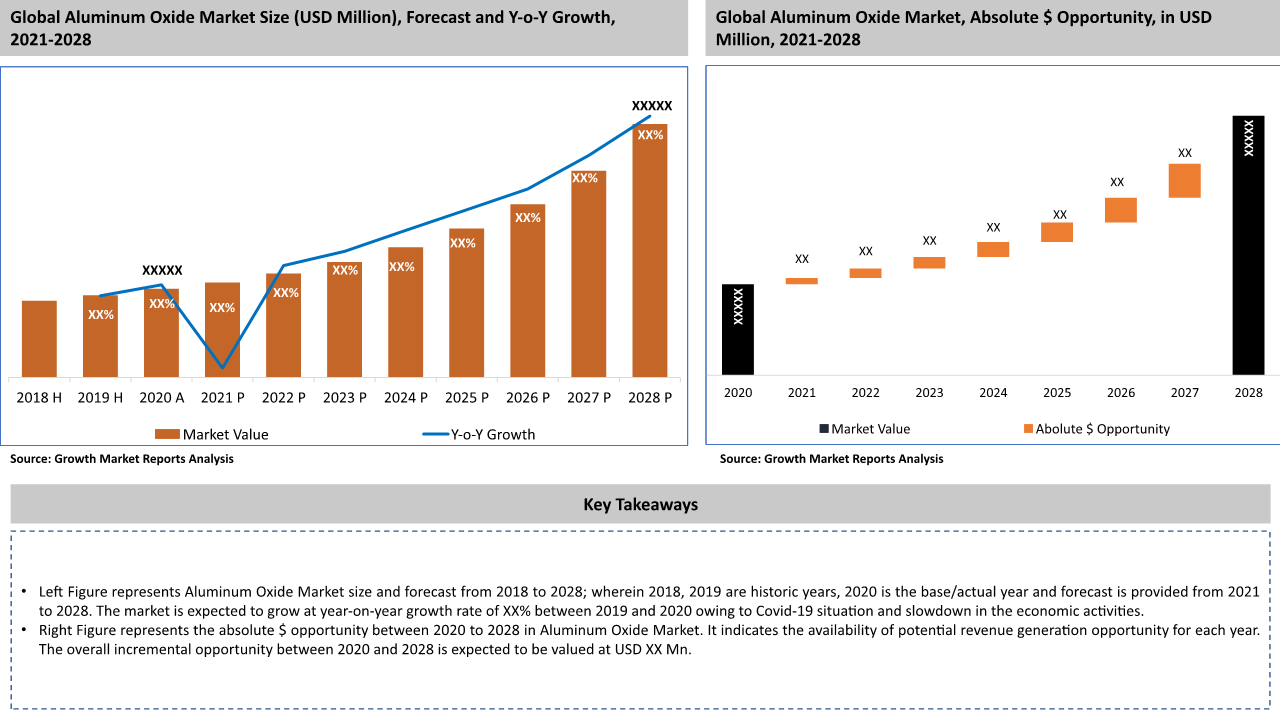
According to our latest research, the global aluminum oxide market size reached USD 7.42 billion in 2024, reflecting robust demand across diverse end-use industries. The market is expected to expand at a healthy CAGR of 4.8% from 2025 to 2033, reaching a projected value of USD 11.48 billion by 2033. This growth is propelled by surging applications in refractories, ceramics, abrasives, and the electronics sector, as well as the increasing adoption of high-purity and ultra-high purity grades for advanced technological uses. As per our latest research, the aluminum oxide market is poised for significant expansion, underpinned by ongoing innovation and increasing industrialization globally.
The primary growth factor for the aluminum oxide market is its indispensable role as a raw material in the production of refractories and ceramics. The construction and manufacturing sectors, especially in emerging economies, are experiencing rapid growth, which in turn is driving the demand for durable and high-performance materials. Aluminum oxideÂ’s high melting point and exceptional hardness make it a preferred choice for refractory linings in furnaces, kilns, incinerators, and reactors. The ceramics industry also relies heavily on aluminum oxide for producing tiles, sanitary ware, and advanced technical ceramics used in electronics and medical devices. This broad spectrum of applications ensures a steady and growing demand for aluminum oxide, further fueled by infrastructure development and urbanization in Asia Pacific and other developing regions.
Another significant driver for the aluminum oxide market is the increasing demand for high-purity and ultra-high purity grades in the electronics and semiconductor industries. As the world transitions towards more sophisticated electronic devices, the need for materials with exceptional electrical insulation, thermal conductivity, and chemical stability is rising. Aluminum oxide, particularly in its high-purity forms, is used in substrates for electronic circuits, insulators, and as a polishing agent for semiconductor wafers. The rapid pace of innovation in consumer electronics, telecommunications, and electric vehicles is amplifying the requirement for advanced materials, positioning aluminum oxide as a critical component in the value chain. Moreover, the ongoing miniaturization of electronic components and the proliferation of 5G technology are expected to further augment market growth.
Environmental regulations and sustainability trends are also shaping the aluminum oxide market landscape. The increasing adoption of aluminum oxide in water treatment, pharmaceuticals, and paints & coatings is a testament to its versatility and environmental compatibility. In water treatment, aluminum oxide is employed as an adsorbent and filtration medium, contributing to cleaner and safer water supplies. In the pharmaceutical sector, its use as an excipient and in controlled drug release formulations is gaining traction. The push for eco-friendly coatings and the need for non-toxic, durable abrasives in industrial processes are also boosting the consumption of aluminum oxide. These trends highlight the materialÂ’s alignment with global sustainability goals and its potential to support greener industrial processes.
Aluminum hydroxide is emerging as an important component in the aluminum oxide market, especially in applications that demand flame retardancy and smoke suppression. This compound, often used as a precursor in the production of aluminum oxide, plays a crucial role in enhancing the safety and performance of materials used in construction and electronics. The increasing emphasis on fire safety standards in building materials and electronic devices is driving the demand for aluminum hydroxide. Its ability to release water vapor when heated, thereby cooling the material and diluting flammable gases, makes it an effective flame retardant. As industries continue to innovate and prioritize safety, the integration of aluminum hydroxide into various formulations is expected to rise, further supporting the growth of the aluminum oxide market.
From a regional perspective, Asia Pacific continues to dominate the global aluminum oxide market, accounting for the largest share in 2024. The regionÂ’s leadership is driven by robust manufacturing activity, rapid urbanization, and significant investments in infrastructure and electronics. China, India, and Southeast Asian countries are major contributors, supported by favorable government policies and the presence of large-scale end-use industries. North America and Europe follow, with established markets in automotive, electronics, and advanced ceramics. The Middle East & Africa and Latin America are emerging as promising markets, fueled by investments in industrialization and resource extraction. This regional diversity ensures a balanced growth trajectory for the global aluminum oxide market.
The form segment of the aluminum oxide market encompasses powder, pellets, tablets, nanoparticles, and others, each tailored to specific industrial requirements. Aluminum oxide powder holds the largest market share owing to its widespread use in abrasives, refractories, and ceramics. Its fine particle size and high surface area make it ideal for polishing, grinding, and as a raw material in various chemical processes. The powder form is extensively utilized in the production of high-performance ceramics for electronics and medical devices, as well as in the manufacturing of refractory bricks and castables. The adaptability of aluminum oxide powder to different processing techniques and its compatibility with other materials underscore its dominance in the market.
Pellets and tablets are increasingly favored in applications that demand controlled release and uniformity, such as in pharmaceuticals, catalysts, and specialized ceramics. These forms offer advantages in handling, dosing, and process efficiency, particularly in automated manufacturing environments. The use of aluminum oxide pellets in water treatment and as catalyst supports in chemical synthesis is gaining momentum, driven by the need for precise and consistent performance. Tablets, on the other hand, are preferred in laboratory and research settings, where accurate measurement and reproducibility are critical. The growth of these segments is closely linked to advancements in process engineering and the rising demand for high-value, specialty applications.
High Purity Alumina (HPA) is gaining traction within the aluminum oxide market due to its superior properties and wide range of applications. Known for its exceptional purity levels, HPA is increasingly used in the production of LED lights, lithium-ion batteries, and other high-tech applications. The demand for HPA is driven by its ability to enhance the performance and longevity of products, making it a preferred choice for manufacturers aiming for quality and efficiency. As the global market for electronics and renewable energy solutions expands, the role of high purity alumina becomes even more critical. Its contribution to improving energy efficiency and reducing environmental impact aligns with the broader trends towards sustainability and technological advancement, positioning HPA as a key material in the future landscape of the aluminum oxide market.
Nanoparticles represent the fastest-growing segment within the aluminum oxide market, propelled by breakthroughs in nanotechnology and material science. Aluminum oxide nanoparticles exhibit unique properties such as high surface reactivity, enhanced mechanical strength, and superior optical characteristics. These attributes make them invaluable in cutting-edge applications, including advanced coatings, electronics, biomedical devices, and energy storage systems. The ongoing research and development in nanoparticle synthesis and functionalization are opening new avenues for the use of aluminum oxide in next-generation technologies. However, the high cost of production and regulatory challenges related to nanoparticle safety may temper the pace of market adoption in the near term.
Other forms of aluminum oxide, such as fibers and monolithic structures, cater to niche applications in aerospace, defense, and high-temperature industrial processes. These specialized forms are engineered for extreme environments where conventional materials may fail, offering superior resistance to thermal shock, corrosion, and mechanical wear. The demand for such high-performance materials is expected to rise with the growth of advanced manufacturing and the increasing complexity of industrial operations. Overall, the form segment of the aluminum oxide market is characterized by technological innovation, customization, and a strong focus on performance optimization.
| Attributes | Details |
| Report Title | Aluminum Oxide Market Research Report 2033 |
| By Form | Powder, Pellets, Tablets, Nanoparticles, Others |
| By Purity | Standard, High Purity, Ultra-High Purity |
| By Application | Refractories, Ceramics, Abrasives, Electronics, Paints & Coatings, Pharmaceuticals, Water Treatment, Others |
| By End-Use Industry | Metallurgy, Electronics, Chemical, Medical, Automotive, Others |
| Regions Covered | North America, Europe, APAC, Latin America, MEA |
| Base Year | 2024 |
| Historic Data | 2018-2023 |
| Forecast Period | 2025-2033 |
| Number of Pages | 251 |
| Number of Tables & Figures | 264 |
| Customization Available | Yes, the report can be customized as per your need. |
The purity segment of the aluminum oxide market is divided into standard, high purity, and ultra-high purity grades, each serving distinct end-use requirements. Standard purity aluminum oxide, typically ranging from 90% to 99%, is the most commonly produced and consumed grade, finding extensive use in refractories, ceramics, and abrasives. Its cost-effectiveness and satisfactory performance in high-temperature and abrasive environments make it the material of choice for bulk industrial applications. The widespread availability of standard purity aluminum oxide ensures its steady demand across traditional industries, particularly in developing regions where cost considerations are paramount.
High purity aluminum oxide, with purity levels exceeding 99.9%, is gaining prominence in advanced applications such as electronics, optics, and medical devices. The stringent quality requirements of these sectors necessitate materials with minimal impurities, exceptional chemical stability, and superior physical properties. High purity aluminum oxide is used in the fabrication of substrates for semiconductor devices, sapphire crystals for LEDs, and as a polishing agent in wafer manufacturing. The rapid expansion of the electronics industry and the growing adoption of LED lighting technologies are key drivers for the high purity segment. Moreover, advancements in purification technologies are enabling the production of high purity aluminum oxide at competitive costs, further boosting its market share.
Ultra-high purity aluminum oxide, with purity levels above 99.99%, represents a niche but rapidly growing segment. This grade is essential for cutting-edge applications in aerospace, defense, and quantum computing, where even trace impurities can compromise performance and reliability. Ultra-high purity aluminum oxide is used in the production of single crystal sapphire, high-precision optical components, and specialized coatings for extreme environments. The demand for this grade is closely tied to the pace of innovation in high-technology sectors and the increasing need for materials that meet the most exacting standards. While the production of ultra-high purity aluminum oxide is capital and technology-intensive, the premium pricing and critical applications justify the investment for manufacturers.
The purity segment of the aluminum oxide market is characterized by a clear trend towards higher grades, driven by the evolution of technology and the rising quality expectations of end-users. Manufacturers are investing in advanced purification processes, quality control systems, and supply chain integration to meet the growing demand for high and ultra-high purity aluminum oxide. The ability to deliver consistent, high-quality material is becoming a key differentiator in the market, particularly for suppliers targeting the electronics, medical, and aerospace industries. As the adoption of advanced technologies accelerates, the purity segment is expected to witness sustained growth and increasing value addition.
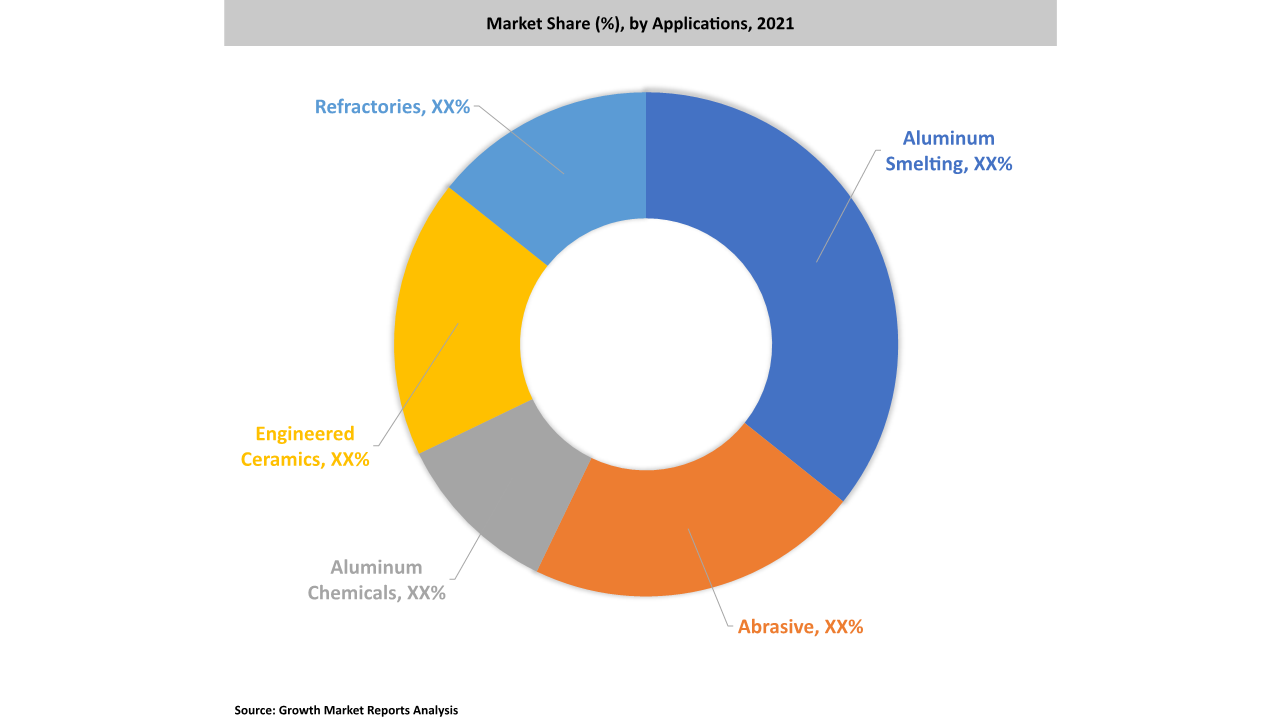
The application segment of the aluminum oxide market encompasses a diverse array of end-uses, reflecting the materialÂ’s versatility and performance attributes. Refractories represent the largest application segment, accounting for a significant share of global consumption. Aluminum oxideÂ’s high melting point, thermal stability, and resistance to chemical attack make it indispensable in the production of refractory bricks, castables, and linings for furnaces and reactors. The ongoing expansion of steel, cement, and glass manufacturing, particularly in Asia Pacific, is driving the demand for high-performance refractory materials and, by extension, aluminum oxide.
Ceramics is another major application area, leveraging aluminum oxideÂ’s exceptional hardness, wear resistance, and electrical insulation properties. The material is used in the production of tiles, sanitary ware, spark plugs, and advanced technical ceramics for electronics and medical devices. The trend towards lightweight, durable, and high-precision components in automotive and electronics manufacturing is boosting the consumption of aluminum oxide-based ceramics. Innovations in ceramic processing and the development of new formulations are further expanding the scope of applications, including in aerospace and defense.
Abrasives constitute a critical application segment, with aluminum oxide being the material of choice for grinding wheels, sandpapers, and blasting media. Its superior hardness and sharpness enable efficient material removal and surface finishing in metalworking, woodworking, and construction. The growth of the manufacturing sector and the increasing demand for precision machining are sustaining the market for aluminum oxide abrasives. Additionally, the shift towards automated and high-speed manufacturing processes is amplifying the need for consistent and high-quality abrasive materials.
Electronics, paints & coatings, pharmaceuticals, and water treatment are emerging as high-growth application segments. In electronics, aluminum oxide is used as an insulator, substrate, and polishing agent, supporting the production of semiconductors, LEDs, and advanced circuits. The paints & coatings industry benefits from aluminum oxideÂ’s hardness and opacity, which enhance the durability and appearance of coatings. In pharmaceuticals, the material serves as an excipient and in controlled drug delivery systems. Water treatment applications leverage aluminum oxideÂ’s adsorptive and filtration properties to remove contaminants and improve water quality. The diversification of applications and the alignment with sustainability trends are reinforcing the growth potential of the aluminum oxide market.
The end-use industry segment of the aluminum oxide market is led by metallurgy, which remains the largest consumer of the material. Aluminum oxide is a critical component in the extraction and refining of aluminum metal, serving as the primary feedstock in the Bayer process. The growth of the global aluminum industry, driven by demand from construction, transportation, and packaging sectors, is directly influencing the consumption of aluminum oxide. Additionally, the increasing focus on lightweight materials and energy efficiency in automotive and aerospace applications is supporting the use of aluminum and, by extension, aluminum oxide.
The electronics industry is emerging as a major end-user, leveraging aluminum oxideÂ’s unique properties for advanced electronic components, substrates, and insulators. The proliferation of smartphones, tablets, wearable devices, and electric vehicles is creating new opportunities for high-purity and engineered forms of aluminum oxide. The integration of aluminum oxide in semiconductor manufacturing, LED production, and energy storage systems is further expanding its role in the electronics value chain. The ongoing digital transformation and the adoption of smart technologies are expected to sustain the growth of this segment.
The chemical industry utilizes aluminum oxide as a catalyst support, adsorbent, and raw material for the synthesis of specialty chemicals. Its high surface area, chemical inertness, and thermal stability make it suitable for a wide range of chemical processes, including petrochemical refining, gas purification, and environmental remediation. The increasing emphasis on clean technologies and sustainable chemical processes is driving the adoption of aluminum oxide in catalytic and adsorption applications. The medical industry is also witnessing growing use of aluminum oxide in implants, prosthetics, and dental materials, owing to its biocompatibility and mechanical strength.
The automotive sector is another significant end-user, employing aluminum oxide in brake linings, engine components, and lightweight structural parts. The push for fuel efficiency, emissions reduction, and vehicle performance is fostering the use of advanced materials, including aluminum oxide-based ceramics and composites. The expansion of electric vehicle production and the development of autonomous driving technologies are expected to create new avenues for aluminum oxide applications in the automotive industry. Overall, the end-use industry segment of the aluminum oxide market is characterized by diversification, technological advancement, and a strong alignment with global industrial trends.
The aluminum oxide market is poised for substantial opportunities, driven by the rising adoption of high-purity grades in advanced electronics and semiconductor manufacturing. The ongoing shift towards miniaturization, higher processing speeds, and increased functionality in electronic devices is creating significant demand for materials with superior electrical insulation and thermal conductivity. Aluminum oxideÂ’s compatibility with cutting-edge fabrication processes, such as atomic layer deposition and chemical vapor deposition, positions it as a critical enabler of next-generation technologies. The expansion of 5G networks, the proliferation of electric vehicles, and the growth of renewable energy systems are expected to generate new revenue streams for aluminum oxide suppliers, especially those capable of delivering high and ultra-high purity grades.
Another major opportunity lies in the development of sustainable and environmentally friendly applications for aluminum oxide. The increasing focus on water treatment, air purification, and green chemistry is driving the demand for advanced adsorbents and catalysts. Aluminum oxideÂ’s ability to remove contaminants, support catalytic reactions, and withstand harsh operating conditions makes it a preferred choice for environmental applications. The growing emphasis on circular economy principles, resource efficiency, and carbon footprint reduction is encouraging the adoption of aluminum oxide in eco-friendly coatings, abrasives, and filtration systems. Manufacturers investing in sustainable production processes and value-added applications are well-positioned to capitalize on these emerging trends.
Despite the favorable growth outlook, the aluminum oxide market faces certain restraining factors, most notably the volatility in raw material prices and energy costs. The production of aluminum oxide is energy-intensive, and fluctuations in the prices of bauxite ore and energy inputs can significantly impact manufacturing costs and profit margins. Additionally, environmental regulations governing mining, refining, and waste management are becoming increasingly stringent, particularly in developed regions. Compliance with these regulations may require substantial investments in cleaner technologies, emissions control, and waste treatment, potentially increasing the cost of production. These challenges necessitate a proactive approach by market participants to enhance operational efficiency, secure stable raw material supplies, and adopt sustainable manufacturing practices.
Asia Pacific remains the dominant region in the global aluminum oxide market, accounting for approximately 49% of global revenue in 2024, or about USD 3.64 billion. The regionÂ’s leadership is underpinned by rapid industrialization, urbanization, and substantial investments in infrastructure, manufacturing, and electronics. China is the single largest consumer and producer of aluminum oxide, benefiting from its vast bauxite reserves, integrated supply chains, and robust end-use industries. India and Southeast Asian countries are also significant contributors, driven by government initiatives to boost domestic manufacturing and technological innovation. The high concentration of refractories, ceramics, and electronics production facilities in Asia Pacific ensures sustained demand for aluminum oxide, with the region expected to maintain a CAGR of 5.1% through 2033.
North America and Europe are mature markets for aluminum oxide, with a combined market size of approximately USD 2.96 billion in 2024. These regions are characterized by advanced manufacturing capabilities, a strong focus on research and development, and stringent quality standards. The United States and Germany are key players, leveraging aluminum oxide in high-value applications such as aerospace, defense, medical devices, and semiconductor manufacturing. The emphasis on sustainability, energy efficiency, and technological innovation is driving the adoption of high-purity and specialty grades in these markets. While growth rates are moderate compared to Asia Pacific, ongoing investments in advanced materials and clean technologies are expected to support steady market expansion.
Latin America and the Middle East & Africa are emerging markets for aluminum oxide, with a combined market size of around USD 0.82 billion in 2024. These regions are experiencing increased industrialization, infrastructure development, and resource extraction activities, creating new opportunities for aluminum oxide suppliers. Brazil, South Africa, and the Gulf countries are leading the adoption of aluminum oxide in metallurgy, construction, and water treatment applications. The relatively low penetration of advanced manufacturing and the reliance on imported technologies present both challenges and opportunities for market participants. As these regions continue to develop their industrial bases and invest in value-added applications, the demand for aluminum oxide is expected to grow at above-average rates, contributing to the overall expansion of the global market.
The aluminum oxide market is highly competitive, with a mix of global giants and regional players vying for market share. The competitive landscape is shaped by factors such as product quality, purity levels, technological innovation, supply chain integration, and customer service. Leading companies are focusing on expanding their production capacities, investing in research and development, and enhancing their value-added offerings to differentiate themselves in an increasingly crowded marketplace. The ability to deliver consistent, high-purity aluminum oxide and to cater to the evolving needs of advanced industries is becoming a critical success factor for market leaders.
Strategic partnerships, mergers, and acquisitions are common in the aluminum oxide market, as companies seek to strengthen their market positions, access new technologies, and expand their geographic footprints. Vertical integration, from bauxite mining to finished product manufacturing, is a key strategy employed by major players to ensure supply security, cost competitiveness, and quality control. The entry of new players, particularly in emerging markets, is intensifying competition and driving innovation in product development, process optimization, and customer engagement. The ongoing shift towards sustainable and eco-friendly production practices is also influencing competitive dynamics, with companies investing in green technologies and circular economy initiatives.
Major companies in the aluminum oxide market include Alcoa Corporation, Norsk Hydro ASA, Sumitomo Chemical Co., Ltd., Sasol Limited, Huber Engineered Materials, and Almatis GmbH. Alcoa Corporation is a global leader in bauxite mining, alumina refining, and aluminum production, with a strong focus on sustainability and innovation. Norsk Hydro ASA is renowned for its integrated operations and commitment to environmental stewardship, supplying high-quality aluminum oxide to a wide range of industries. Sumitomo Chemical Co., Ltd. leverages its expertise in advanced materials and chemical synthesis to deliver specialty aluminum oxide products for electronics, catalysts, and medical applications.
Sasol Limited is a key player in the production of high-purity and ultra-high purity aluminum oxide, serving the electronics, pharmaceutical, and water treatment sectors. Huber Engineered Materials specializes in engineered aluminum oxide products for ceramics, abrasives, and specialty chemicals, emphasizing customization and technical support. Almatis GmbH is a leading supplier of premium alumina materials, with a strong presence in refractories, ceramics, and abrasives. These companies are at the forefront of technological innovation, quality assurance, and customer-centric solutions, shaping the future trajectory of the global aluminum oxide market. As the market continues to evolve, the ability to anticipate industry trends, invest in R&D, and deliver sustainable value will be key determinants of long-term success.
The Aluminum Oxide market has been segmented on the basis of
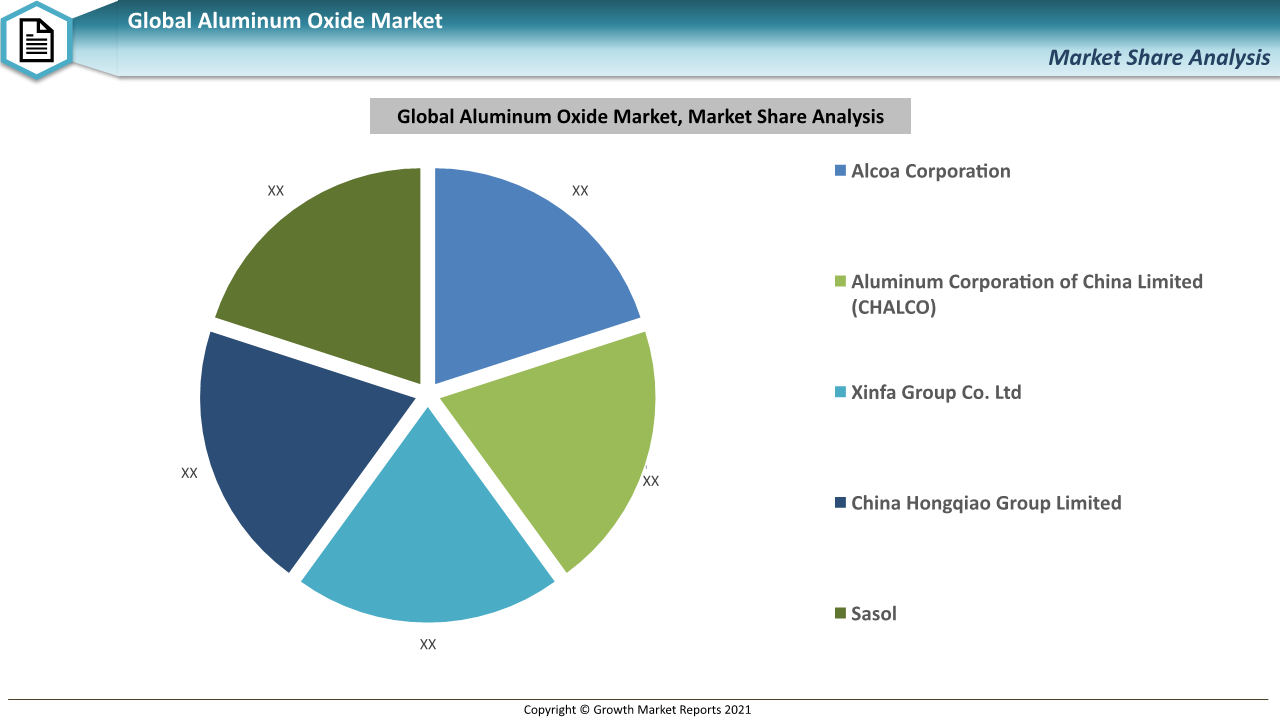
Key players competing in the global aluminum oxide market China Hongqiao Group Limited; Aluminum Corporation of China Limited (CHALCO); Xinfa Group Co. Ltd; Sasol; and Alcoa Corporation.
In water treatment, aluminum oxide acts as an adsorbent and filtration medium, while in pharmaceuticals, it is used as an excipient and in controlled drug release formulations.
Challenges include volatility in raw material and energy prices, stringent environmental regulations, and the high cost of producing ultra-high purity and nanoparticle forms.
Major companies include Alcoa Corporation, Norsk Hydro ASA, Sumitomo Chemical Co., Ltd., Sasol Limited, Huber Engineered Materials, Almatis GmbH, CHALCO, and Rio Tinto Group.
Key trends include the rising adoption of high-purity grades in electronics and semiconductors, growth in sustainable applications like water treatment, and increasing demand for advanced materials in 5G, electric vehicles, and renewable energy.
Asia Pacific is the leading region, accounting for about 49% of global revenue in 2024, driven by rapid industrialization, manufacturing, and infrastructure development, especially in China, India, and Southeast Asia.
Standard purity (90-99%) is used in bulk applications like refractories and ceramics, high purity (>99.9%) is essential for electronics and optics, while ultra-high purity (>99.99%) is required for aerospace, defense, and quantum computing.
Aluminum oxide is available in powder, pellets, tablets, nanoparticles, and other forms, each tailored to specific industrial applications such as abrasives, catalysts, and advanced coatings.
Key end-use industries include metallurgy, electronics, chemical, medical, and automotive sectors, with metallurgy and electronics being the largest consumers.
Aluminum oxide is widely used in refractories, ceramics, abrasives, electronics, paints & coatings, pharmaceuticals, and water treatment due to its high melting point, hardness, and chemical stability.
The global aluminum oxide market reached USD 7.42 billion in 2024 and is projected to grow at a CAGR of 4.8% from 2025 to 2033, reaching USD 11.48 billion by 2033.