Styrenic Block Copolymer Market Outlook 2031
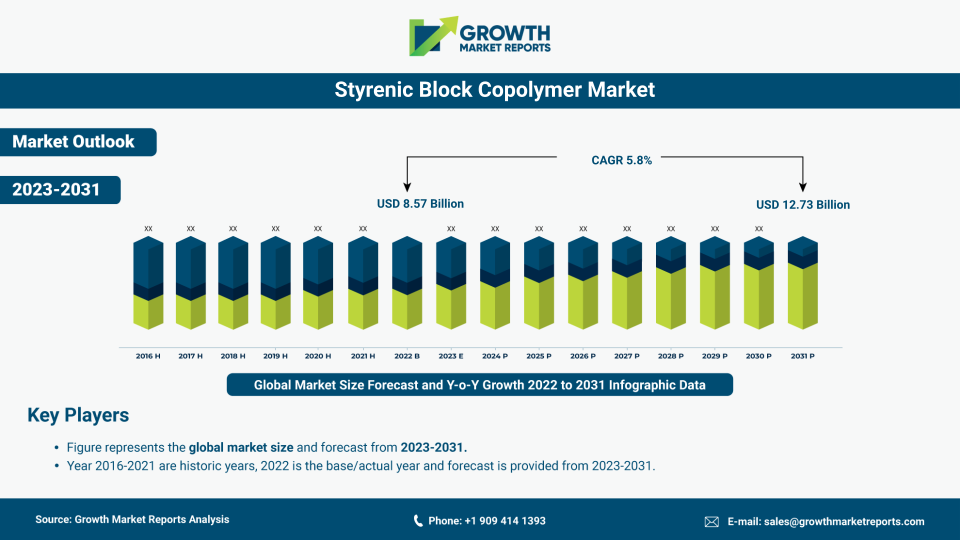
The global styrenic block copolymer market size was USD 8.57 Billion in 2022 and is likely to reach USD 12.73 Billion by 2031, expanding at a CAGR of 5.8% during 2023–2031. The market growth is attributed to the increasing demand for road and highway maintenance across the globe.
Increasing infrastructure spending and high demand for road & highway maintenance is expected to boost the styrenic block copolymer market during the forecast period. Constant development and road-building in both urban and rural areas are required, due to the increasing road traffic, which increases the demand for the asphalt paving industry.
Emerging countries such as India, China, and Brazil are spending high amounts to develop paved road networks. Several companies are spending huge amounts on the reconstruction and expansion of new roads in remote and rural areas to expand their paved road networks, which fuels the market.
-
In June 2023, Kraton Corporation announced the expansion of its manufacturing capabilities in Berre, France to produce up to 100% ISCC PLUS certified renewable SBC as a part of the CirKular+ ReNew Series through mass balance approach. This new series enables up to 85% cradle-to-gate carbon footprint reduction.
The market report finds that the COVID-19 pandemic hindered the styrenic block copolymer market, due to the strict regulations imposed by governments across the globe. The construction industry has negatively impacted during the pandemic, due to social distancing and the shutdown of factories & businesses globally. However, increasing demand for medical devices, food packaging, and hygiene products fueled the market.
Styrenic Block Copolymer Market Dynamics
Major Drivers
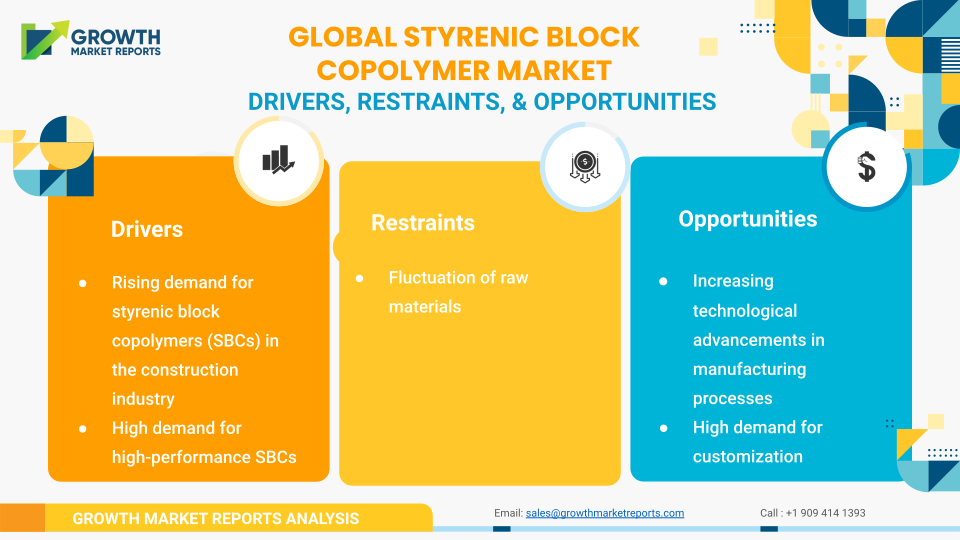
Rising demand for styrenic block copolymers (SBCs) in the construction industry is anticipated to fuel the market during the forecast period. The copolymers are considered suitable for the use in sealant, coating, and adhesives industries, owing to their physical and mechanical properties.Derived SBCs adhere to a wide range of surfaces and are used to produce high-quality tapes, sealants, and labels. The demand for housing units increases along with rising urbanization-related projects, due to increasing global population. This leads to the rising demand for styrenic block copolymers (SBCs) in the construction industry.
High demand for high-performance SBCs is projected to boost the market during the forecast period. SBCs are shifting towards high-performance applications, as they offer enhanced mechanical properties, chemical resistance, thermal stability, and advanced functionalities. Several SBC manufacturers are investing in research and development to develop innovative formulations to meet the specific requirements of SBC applications, which boosts the market.
Existing Restraints
Fluctuation of raw materials hampers the styrenic block copolymer market. The raw materials that are required to produce SBCs, which include styrene and polymers butadiene, have constant price changes, as they are derived by using crude oil and natural gas. The cost of these raw materials is highly sensitive to external factors, including the current state of the international trade market, economic conditions for trading partners,geopolitical relations,and oil production.
Emerging Opportunities
Increasing technological advancements in manufacturing processes is expected to create lucrative opportunities for the market players during the forecast period. Continuous development in the manufacturing processes such as compounding methods and polymerization technologies are driving the cost-effectiveness and efficiency of SBC production.
High demand for customization solutionsis likely to create immense opportunities for the market players in the coming years. Several customers are increasingly seeking customized SBC solutions to meet their specific requirements. Several manufacturers are focusing on providing custom-made solutions, including formulations, custom grades, and properties, which improve customer satisfaction and foster long-term partnerships.
-
In March 2022, Kraton Corporation collaborated with SABIC to produce ISCC IPC Certified renewable styrenic block copolymers at the manufacturing facility of Kartonin Berre, France. The newly launched ISCC IPC Certified renewable CirKular+ ReNew series expands the company’s existing suite solutions that are designed to advance the circular economy.
Scope of Styrenic Block Copolymer Market Report
The market report includes an assessment of the market trends, market segments, and regional markets. Overview and dynamics have also been included in the report.
|
Attributes
|
Details
|
|
Report Title
|
Styrenic Block Copolymer Market- Global Industry Analysis, Growth, Share, Size, Trends, and Forecast
|
|
Base Year
|
2022
|
|
Historic Data
|
2016–2021
|
|
Forecast Period
|
2023–2031
|
|
Segmentation
|
Product (Styrene Ethylene Butylene Styrene, Styrene Butadiene Styrene, Styrene Ethylene Propylene Styrene, Styrene Isoprene Styrene, and Others),Application (Healthcare, Adhesives & Sealants, Packaging, Paving & Roofing, Footwear, Toys, Paints & Coatings, and Others), and End-user (Automotive [Light Commercial Vehicles, Passenger Vehicles, and Heavy Commercial Vehicles], Construction [Commercial, Residential, Infrastructural, and Industrial], Food & Beverages, Electrical & Electronics, and Others)
|
|
Regional Scope
|
Asia Pacific, North America, Latin America, Europe, and Middle East & Africa
|
|
Report Coverage
|
Company Share, Market Analysis and Size, Competitive Landscape, Growth Factors, MarketTrends, and Revenue Forecast
|
|
Key Players Covered in the Report
|
Asahi Kasei Corporation; Avient Corporation.; BASF SE; China Petrochemical Corporation. (SINOPEC); Denka Company Limited; JSR Corporation; KUMHO PETROCHEMICAL; KURARAY CO., LTD; LCY GROUP; and LG Chem
|
Styrenic Block Copolymer Market Segment Insights
Product Segment Analysis
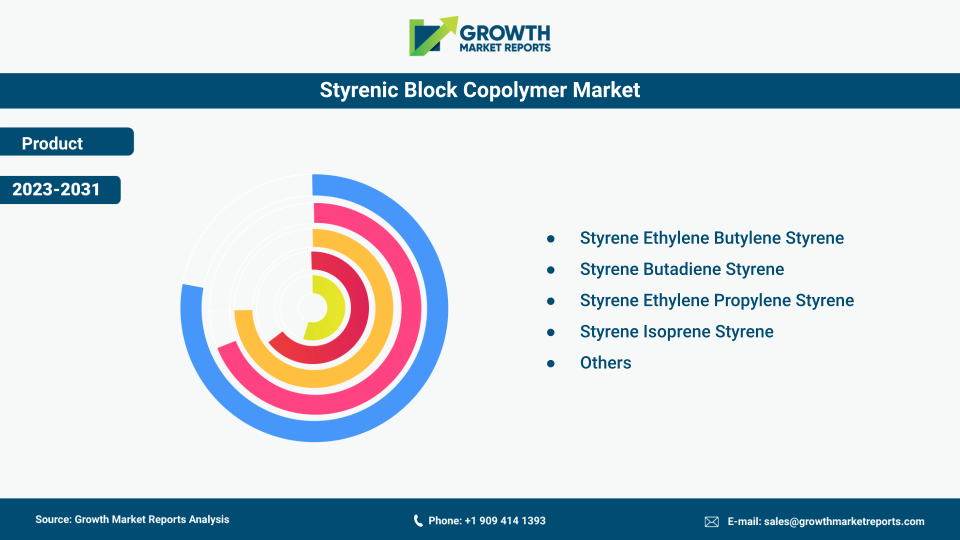
Based on product, the styrenic block copolymer market is divided into styrene ethylene butylene styrene, styrene butadiene styrene, styrene ethylene propylene styrene, styrene isoprene styrene, and others.The styrene butadiene styrene segment is expected to expand at a significant pace during the projection period, owing to the rising demand from the adhesives & sealants, construction, and polymer footwear industries.
SBS has the benefits of properties derived from polystyrene and butadiene.SBS is used in the building industry for paving and roofing applications. It offers long-term performance, outstanding waterproofing properties, enhanced aesthetics, and thermal deterioration tolerance stability over an extensive range of temperatures.
Application Segment Analysis
In terms of application, the global market is segregated into healthcare, adhesives & sealants, packaging, paving &roofing, footwear, toys, paints & coatings, and others. The adhesives & sealants segment is projected to register a considerable CAGR during the forecast period, as it is widely used for the production of hygiene products for children such as diapers.
Hot melt pressure-sensitive adhesives (HMPSAs) are important in manufacturing pressure-sensitive labels. There are various types of SBCs are used to formulate HMPSA. Hot melt adhesives are used to attach lightweight materials such as polyethylene or polypropylene substrates to tissue, non-wovens, paper, and fabric. The thin molecular weight distribution benefits SBCs to advance solubility rapidly and without the need for further processes.
-
In February 2023, Arkema launched the complete and integrated offering for pressure-sensitive adhesives, strengthened by the recent acquisition of Ashland performance adhesives and leading the acrylic value chain solutions. This offering provides customers with unique access to sustainable high-performance solutions for the fast-growing pressure-sensitive adhesives industry and for a wide variety of demanding applications such as labels, tapes, and specialty films.
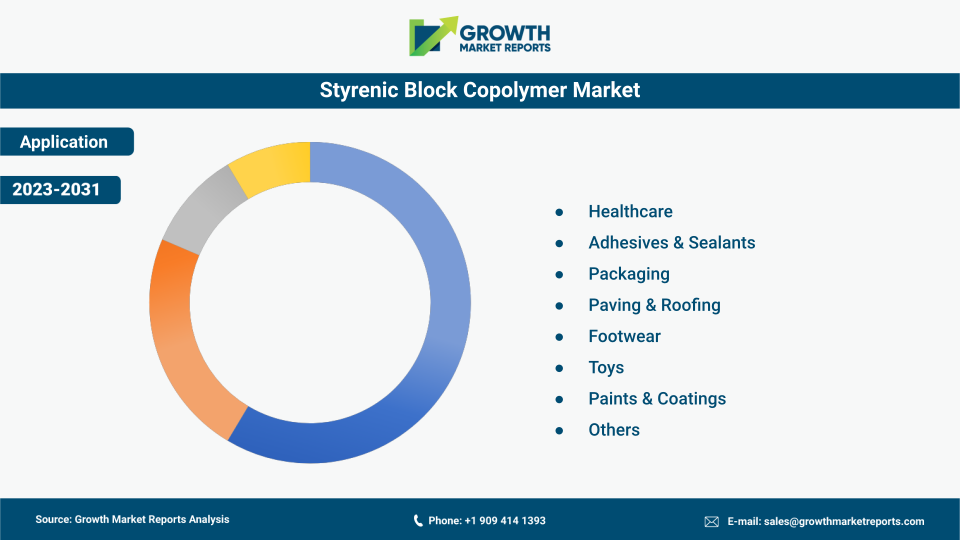
The paving & roofing segment is anticipated to account for a major market share in the coming years, owing to the increasing construction industry coupled with the rising consumer preference for personalized home interiors. Increasing development in the manufacturing and industrial industries has led to heavy spending on road maintenance and transport projects, which increases the demand for asphalt pavers. These pavers are typically used as a bitumen modifier in asphalt applied to roads.
End-user Segment Analysis
On the basis of end-user, the styrenic block copolymer market is segmented into automotive, construction, food & beverages, electrical & electronics, and others. The automotive segment is further classified into light commercial vehicles, passenger vehicles, and heavy commercial vehicles. The construction segment is further divided into commercial, residential, infrastructural, and industrial.
The construction segment is expected to register a robust growth rate during the forecast period, due to the increasing demand for the SBCs in the construction for asphalt and polymer modification. SBCs provide excellent bonding properties and flexibility. It is also used in roofing membranes, flooring, and insulation materials. SBCs are known for their durability and resistance to weathering, which makes them a suitable choice for construction projects.
Regional Analysis
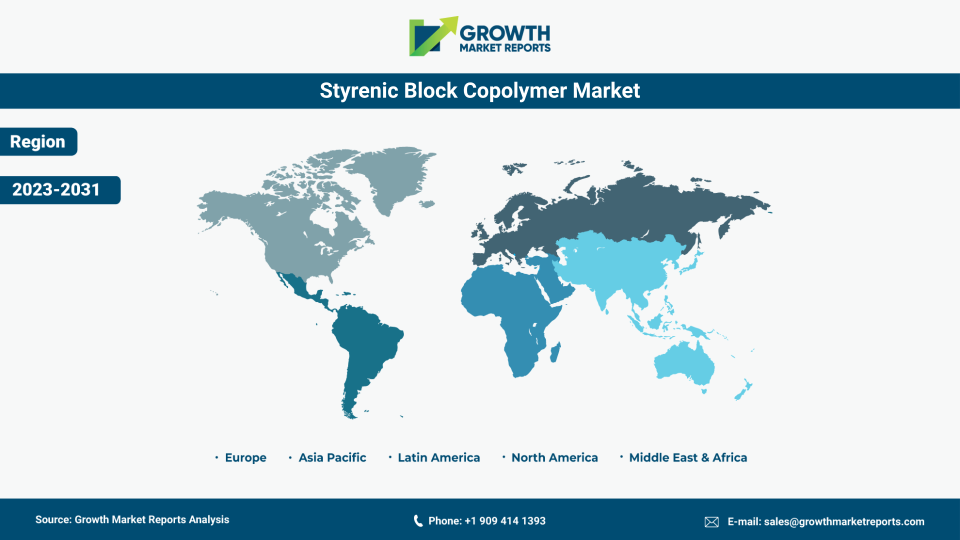
In terms of region, the global styrenic block copolymer market is classified as Asia Pacific, North America, Latin America, Europe, and Middle East & Africa. Asia Pacific is expected to dominate the market during the projection period, due to the increasing demand for SBCs for various applications such as footwear, paving & roofing, medical adhesives, and others in the region.
The regional market growth is further attributed to the increasing number of government organizations promoting basic amenities in emerging countries such as China, India, and Indonesia and the rising demand for affordable housing.China dominates the SBC market in the region, owing to the high demand for aesthetically appealing and sustainable materials in prefabricated buildings.
The market in North America is anticipated to expand at a rapid pace in the coming years, owing to the high demand for the SBCs product for paving & roofing applications in the region. The regional market growth is further attributed to the increasing solid expansion of infrastructures in Canada. The use of block copolymers in the medical industry to minimize reliance on PVC is approved by the US FDA and Pharmacopoeia, which increases the demand for the North America market.
Segments
The global styrenic block copolymer market has been segmented on the basis of
Product
- Styrene Ethylene Butylene Styrene
- Styrene Butadiene Styrene
- Styrene Ethylene Propylene Styrene
- Styrene Isoprene Styrene
- Others
Application
- Healthcare
- Adhesives & Sealants
- Packaging
- Paving & Roofing
- Footwear
- Toys
- Paints & Coatings
- Others
Region
- Asia Pacific
- North America
- Latin America
- Europe
- Middle East & Africa
Key Players
Competitive Landscape
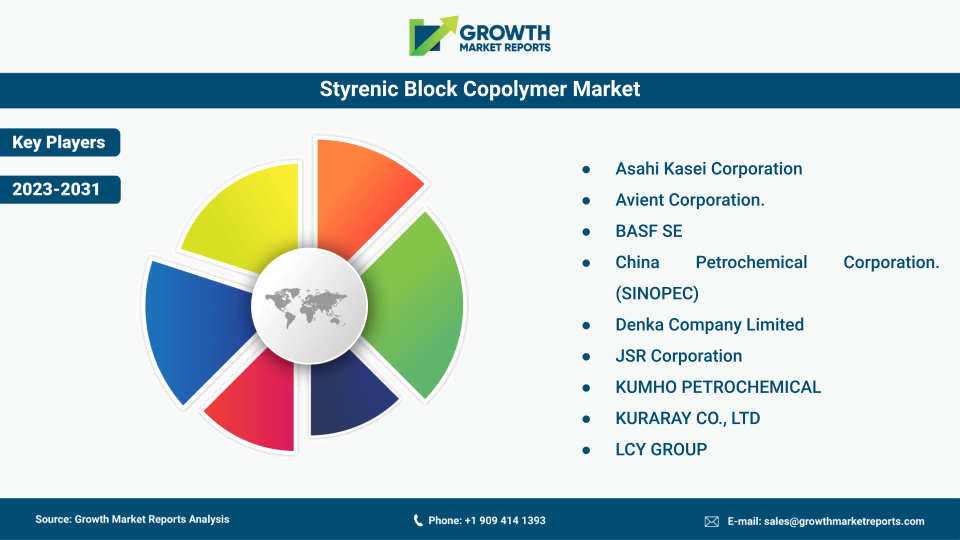
Key players competing in the global styrenic block copolymer market is Asahi Kasei Corporation; Avient Corporation.; BASF SE; China Petrochemical Corporation. (SINOPEC); Denka Company Limited; JSR Corporation; KUMHO PETROCHEMICAL; KURARAY CO., LTD; LCY GROUP; and LG Chem
These key players adopt various strategies including mergers, acquisitions, collaboration, partnerships, product launches, and production expansion to expand their consumer base globally.
-
In April 2023, Hainan Baling Chemical New Material Co., Ltd., a subsidiary of China Petroleum & Chemical Corporation (SINOPEC), launched the production of styrene-butadiene copolymer project in Hainan, China to reach an annual production capacity of 17,000 tons.











 Request For Customization
 Enquiry Before Buying
 Speak With Analyst