Segments - by Component (Software, Hardware, Services), by Deployment Mode (On-Premises, Cloud), by Organization Size (Small and Medium Enterprises, Large Enterprises), by Application (Data Backup and Recovery, Storage Virtualization, Performance Monitoring, Security and Compliance, Others), by End-User (BFSI, Healthcare, IT and Telecommunications, Retail, Manufacturing, Government, Others)
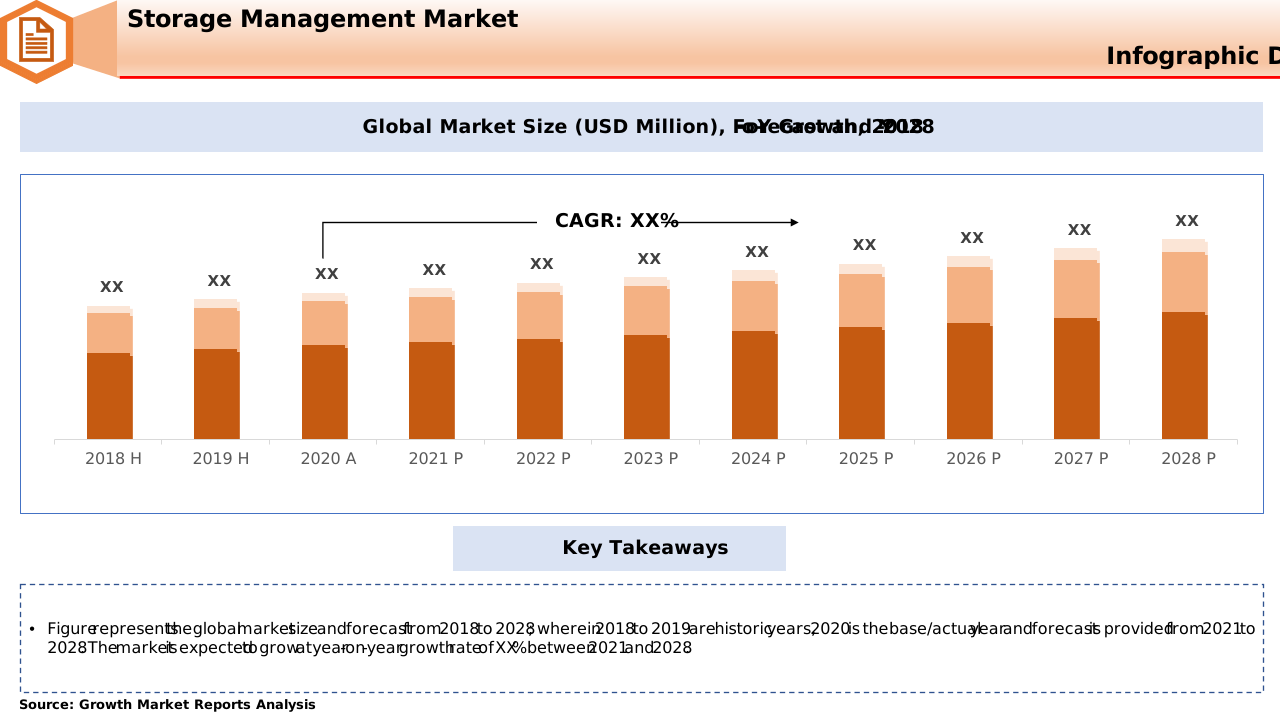
According to our latest research, the global storage management market size reached USD 55.3 billion in 2024, reflecting robust demand across diverse sectors. The market is poised to expand at a CAGR of 13.2% from 2025 to 2033, which will drive the market value to approximately USD 156.7 billion by 2033. This growth is primarily fueled by the exponential rise in data generation, increasing adoption of cloud-based solutions, and the critical need for efficient data backup, recovery, and compliance management.
The rapid proliferation of digital technologies and the surge in data-intensive applications are major growth drivers for the storage management market. Enterprises across sectors are generating unprecedented volumes of structured and unstructured data due to the adoption of IoT, AI, big data analytics, and digital transformation initiatives. The need to efficiently store, manage, and retrieve this data, while ensuring business continuity and compliance with evolving regulations, is pushing organizations to invest heavily in advanced storage management solutions. Additionally, the rise of remote work and the demand for seamless data access from multiple locations have further accentuated the need for robust storage management systems, making it a critical component of modern IT infrastructure.
Another significant growth factor is the shift towards hybrid and multi-cloud environments. As organizations aim to optimize costs, enhance scalability, and improve disaster recovery capabilities, they are increasingly adopting a mix of on-premises and cloud-based storage solutions. This hybrid approach necessitates sophisticated storage management tools that can provide unified visibility, performance monitoring, and policy enforcement across disparate environments. The growing complexity of IT ecosystems, coupled with the need to secure sensitive information and comply with stringent data privacy regulations such as GDPR and HIPAA, is propelling the demand for comprehensive storage management platforms that offer automation, security, and analytics capabilities.
Storage Management Software plays a pivotal role in the evolving landscape of data management. As organizations transition to hybrid and multi-cloud environments, the demand for sophisticated software solutions that can seamlessly manage storage across diverse platforms is increasing. These software solutions provide centralized control, enabling enterprises to automate tasks, enforce policies, and gain insights through analytics. The integration of AI and machine learning into storage management software is further enhancing its capabilities, allowing for predictive maintenance and intelligent data tiering. As data volumes continue to grow, the efficiency and flexibility offered by advanced storage management software are becoming indispensable for businesses aiming to optimize their storage infrastructure and maintain competitive advantage.
Furthermore, the emergence of edge computing and the increasing deployment of connected devices are contributing to the expansion of the storage management market. As data is generated closer to the source, organizations require decentralized storage solutions that can efficiently process, manage, and analyze data at the edge while ensuring seamless integration with core data centers and cloud platforms. This trend is driving innovation in storage virtualization, software-defined storage, and intelligent data tiering, enabling enterprises to optimize storage resources, reduce latency, and improve overall operational efficiency. The ongoing evolution of storage technologies, such as NVMe, all-flash arrays, and object storage, is also enhancing the capabilities of storage management solutions, supporting the marketÂ’s sustained growth trajectory.
From a regional perspective, North America continues to dominate the storage management market, accounting for a significant share due to the high concentration of technology-driven enterprises, early adoption of advanced IT solutions, and robust investment in cloud infrastructure. However, Asia Pacific is emerging as the fastest-growing region, driven by rapid digitalization, expanding IT spending, and increasing awareness about data security and compliance among enterprises in countries like China, India, and Japan. Europe and Latin America are also witnessing steady growth, supported by regulatory mandates and the growing adoption of cloud services. The Middle East & Africa region, while still nascent, is expected to show promising growth as digital transformation initiatives gain momentum across the region.
The component segment of the storage management market is broadly categorized into software, hardware, and services, each playing a pivotal role in shaping the overall market landscape. Software solutions remain at the forefront, driven by the need for advanced storage virtualization, automation, and analytics capabilities. Organizations are increasingly adopting software-defined storage (SDS) platforms that decouple storage hardware from management software, enabling greater flexibility, scalability, and cost efficiency. These solutions offer centralized management, policy-based automation, and seamless integration with cloud and on-premises environments, addressing the evolving needs of modern enterprises. The continuous innovation in software, such as AI-driven analytics and predictive maintenance, is further enhancing the value proposition for businesses seeking to optimize their storage infrastructure.
Hardware continues to represent a substantial portion of the storage management market, particularly in sectors with high-performance and low-latency requirements. The adoption of next-generation storage technologies, such as NVMe, all-flash arrays, and hyper-converged infrastructure, is enabling organizations to achieve faster data access, improved reliability, and greater storage density. Hardware components, including storage arrays, servers, and networking devices, are being enhanced with intelligent management features that facilitate seamless integration with software platforms. The trend towards hybrid and multi-cloud architectures is also driving demand for hardware solutions that support interoperability, scalability, and robust security measures, ensuring efficient data management across diverse environments.
The services segment is witnessing significant growth as organizations increasingly rely on managed services, consulting, and support to optimize their storage management strategies. Service providers offer a wide range of offerings, including storage assessment, migration, implementation, and ongoing maintenance, helping enterprises navigate the complexities of modern storage environments. The demand for specialized services, such as disaster recovery planning, data protection, and compliance management, is on the rise, particularly among small and medium enterprises (SMEs) that may lack in-house expertise. The growing emphasis on operational efficiency, cost optimization, and risk mitigation is driving organizations to partner with service providers that can deliver tailored solutions and ongoing support.
Integration and interoperability are critical considerations in the component segment, as organizations seek to maximize the value of their storage investments. The ability to seamlessly integrate software, hardware, and services across on-premises and cloud environments is essential for achieving unified management, automation, and analytics. Vendors are increasingly focusing on developing open standards, APIs, and plug-and-play solutions that facilitate interoperability and simplify storage management. This trend is enabling enterprises to leverage best-of-breed technologies, avoid vendor lock-in, and adapt to changing business requirements with greater agility. As the storage management market continues to evolve, the convergence of software, hardware, and services will remain a key driver of innovation and value creation.
| Attributes | Details |
| Report Title | Storage Management Market Research Report 2033 |
| By Component | Software, Hardware, Services |
| By Deployment Mode | On-Premises, Cloud |
| By Organization Size | Small and Medium Enterprises, Large Enterprises |
| By Application | Data Backup and Recovery, Storage Virtualization, Performance Monitoring, Security and Compliance, Others |
| By End-User | BFSI, Healthcare, IT and Telecommunications, Retail, Manufacturing, Government, Others |
| Regions Covered | North America, Europe, APAC, Latin America, MEA |
| Base Year | 2024 |
| Historic Data | 2018-2023 |
| Forecast Period | 2025-2033 |
| Number of Pages | 262 |
| Number of Tables & Figures | 325 |
| Customization Available | Yes, the report can be customized as per your need. |
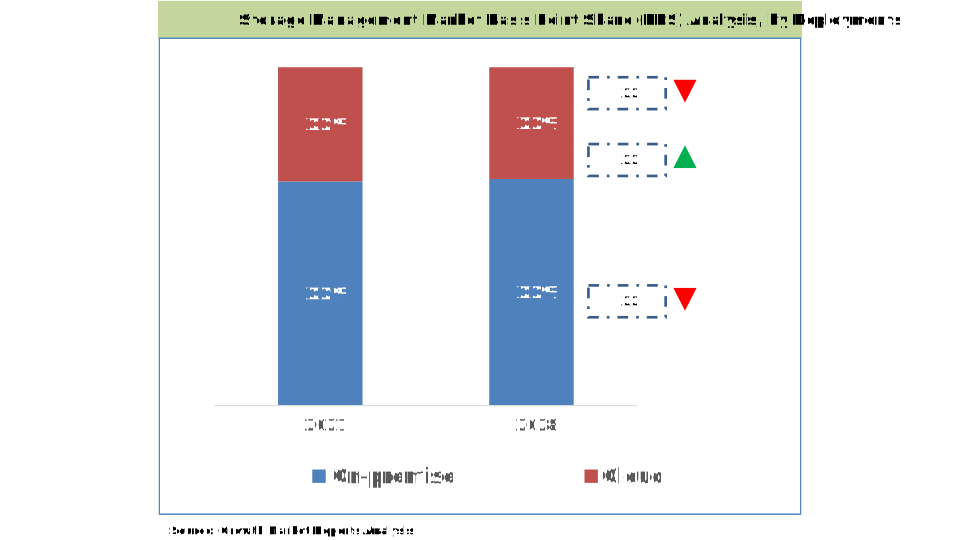
The deployment mode segment of the storage management market is characterized by the growing adoption of both on-premises and cloud-based solutions, each offering distinct advantages and addressing specific business needs. On-premises deployment remains a preferred choice for organizations with stringent data security, compliance, and performance requirements. Industries such as BFSI, healthcare, and government continue to invest in on-premises storage management solutions to maintain control over sensitive data, ensure regulatory compliance, and achieve low-latency access. These solutions offer robust customization, integration with legacy systems, and enhanced security features, making them suitable for mission-critical workloads and organizations with complex IT environments.
Cloud-based deployment is experiencing rapid growth, fueled by the increasing adoption of public, private, and hybrid cloud models. Cloud storage management solutions offer unparalleled scalability, flexibility, and cost efficiency, enabling organizations to dynamically allocate resources based on demand and avoid upfront capital expenditures. The ability to access data from anywhere, automate backup and disaster recovery processes, and leverage advanced analytics and AI capabilities is driving widespread adoption among enterprises of all sizes. Cloud deployment also facilitates seamless integration with other cloud-based applications and services, supporting digital transformation initiatives and enabling organizations to respond quickly to changing business needs.
The hybrid deployment model is gaining traction as organizations seek to balance the benefits of on-premises and cloud-based storage management. Hybrid solutions enable enterprises to store sensitive or mission-critical data on-premises while leveraging the scalability and cost advantages of the cloud for less sensitive workloads. This approach provides greater flexibility, business continuity, and disaster recovery capabilities, allowing organizations to optimize storage resources and minimize risk. The growing complexity of IT environments and the need for unified management across multiple deployment modes are driving demand for storage management platforms that offer seamless integration, centralized control, and policy-based automation.
Interoperability and data mobility are key considerations in the deployment mode segment, as organizations increasingly adopt multi-cloud and hybrid strategies. The ability to move data seamlessly between on-premises and cloud environments, ensure consistent policy enforcement, and maintain data integrity is essential for achieving operational efficiency and compliance. Vendors are responding by developing storage management solutions that support open standards, APIs, and cross-platform integration, enabling organizations to leverage the best features of each deployment mode. As the storage management market continues to evolve, the convergence of on-premises, cloud, and hybrid deployment models will play a critical role in shaping the future of data management.
The organization size segment of the storage management market is divided into small and medium enterprises (SMEs) and large enterprises, each exhibiting unique requirements and adoption patterns. Large enterprises dominate the market, accounting for a substantial share due to their extensive data volumes, complex IT infrastructures, and stringent regulatory requirements. These organizations require advanced storage management solutions that offer scalability, automation, and robust security features to support mission-critical workloads and ensure business continuity. Large enterprises are also early adopters of emerging technologies, such as AI-driven analytics, software-defined storage, and hybrid cloud solutions, enabling them to optimize storage resources, reduce costs, and improve operational efficiency.
Small and medium enterprises (SMEs) are increasingly recognizing the importance of efficient storage management as they undergo digital transformation and adopt cloud-based applications. While SMEs typically have limited IT budgets and resources, the availability of affordable, scalable, and easy-to-deploy storage management solutions is enabling them to enhance data protection, streamline operations, and comply with regulatory mandates. Cloud-based storage management platforms, in particular, are gaining traction among SMEs due to their low upfront costs, pay-as-you-go pricing models, and minimal maintenance requirements. The growing emphasis on data security, business continuity, and compliance is driving SMEs to invest in storage management solutions that offer robust features and support their growth objectives.
Customization and scalability are critical factors influencing storage management adoption across different organization sizes. Large enterprises often require highly customizable solutions that can integrate with existing IT systems, support complex workflows, and provide granular control over data access and policies. In contrast, SMEs prioritize ease of deployment, user-friendly interfaces, and cost-effective pricing models. Vendors are increasingly offering modular, scalable storage management platforms that cater to the diverse needs of organizations of all sizes, enabling them to start small and expand as their data management requirements evolve. This approach is fostering greater adoption and driving market growth across both segments.
The evolving threat landscape and the increasing frequency of cyberattacks are prompting organizations of all sizes to prioritize data protection and disaster recovery. Storage management solutions that offer advanced security features, automated backup and recovery, and real-time monitoring are in high demand, particularly among SMEs that may lack dedicated IT security teams. The growing awareness of the business impact of data breaches, ransomware attacks, and regulatory non-compliance is driving investment in comprehensive storage management platforms that can mitigate risks and ensure data integrity. As the storage management market continues to mature, the focus on security, scalability, and ease of use will remain paramount for organizations of all sizes.
The application segment of the storage management market encompasses a wide range of use cases, including data backup and recovery, storage virtualization, performance monitoring, security and compliance, and others. Data backup and recovery remains a cornerstone application, as organizations seek to protect critical data from loss, corruption, or cyberattacks. The increasing reliance on digital data, coupled with the growing threat of ransomware and other cyber risks, is driving demand for automated, reliable, and scalable backup and recovery solutions. These applications offer point-in-time recovery, continuous data protection, and seamless integration with cloud and on-premises environments, ensuring business continuity and minimizing downtime.
Storage virtualization is gaining prominence as organizations look to optimize storage resources, improve agility, and reduce costs. Virtualization technologies abstract physical storage resources, enabling centralized management, dynamic allocation, and efficient utilization of storage capacity. This approach supports the consolidation of storage assets, simplifies administration, and enhances scalability, making it particularly valuable for enterprises with complex, multi-vendor environments. The integration of AI and machine learning into storage virtualization solutions is further enhancing their capabilities, enabling predictive analytics, automated tiering, and intelligent workload placement.
Performance monitoring is a critical application area, as organizations strive to ensure optimal storage performance, minimize latency, and prevent bottlenecks. Advanced monitoring tools provide real-time visibility into storage utilization, I/O operations, and network traffic, enabling IT teams to proactively identify and resolve issues before they impact business operations. These solutions offer customizable dashboards, automated alerts, and historical analytics, supporting capacity planning, resource optimization, and SLA compliance. The growing complexity of hybrid and multi-cloud environments is driving demand for unified performance monitoring platforms that can provide end-to-end visibility across disparate storage systems.
Security and compliance are increasingly important applications in the storage management market, as organizations face growing regulatory scrutiny and evolving cyber threats. Storage management solutions that offer robust encryption, access controls, audit trails, and compliance reporting are in high demand, particularly in regulated industries such as healthcare, BFSI, and government. The ability to automate compliance processes, generate detailed reports, and enforce data retention policies is enabling organizations to streamline audits, reduce risk, and avoid costly penalties. As data privacy regulations continue to evolve, the focus on security and compliance will remain a key driver of storage management adoption.
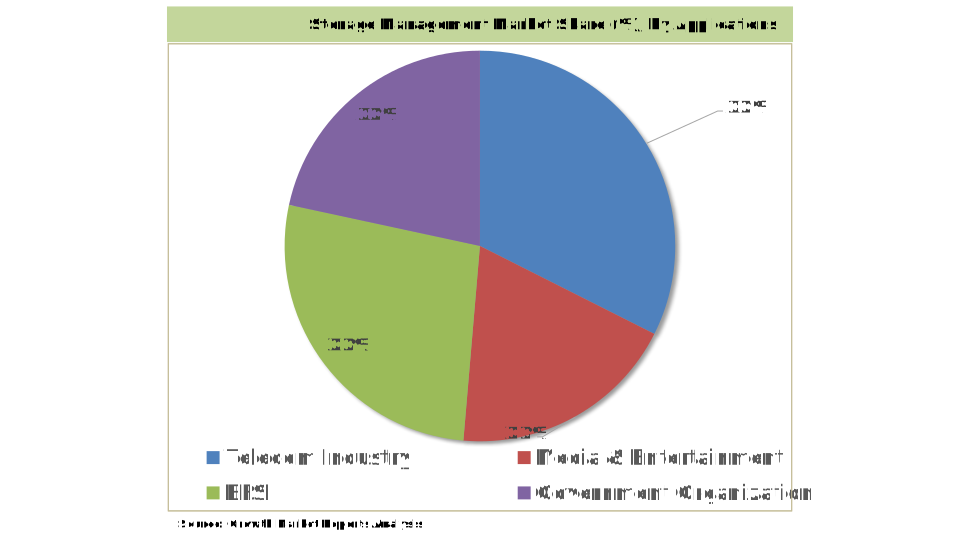
The end-user segment of the storage management market is highly diverse, with key verticals including BFSI, healthcare, IT and telecommunications, retail, manufacturing, government, and others. The BFSI sector is a major contributor to market growth, driven by the need to manage large volumes of sensitive financial data, ensure regulatory compliance, and support digital banking initiatives. Storage management solutions that offer robust security, real-time analytics, and seamless integration with core banking systems are in high demand, enabling financial institutions to enhance customer experience, mitigate risk, and maintain business continuity.
The healthcare industry is another significant end-user, as the digitization of medical records, imaging data, and telemedicine services generates massive data volumes that require efficient storage, management, and protection. Compliance with data privacy regulations such as HIPAA, as well as the need to ensure data availability for clinical decision-making, is driving investment in advanced storage management solutions. Healthcare organizations are adopting hybrid and cloud-based storage platforms that offer scalability, security, and disaster recovery capabilities, supporting the delivery of high-quality patient care.
The IT and telecommunications sector is at the forefront of storage management adoption, given its reliance on data-intensive applications, high-performance computing, and large-scale infrastructure deployments. These organizations require storage management solutions that can support rapid data growth, ensure low-latency access, and provide unified management across on-premises and cloud environments. The increasing adoption of 5G, IoT, and edge computing is further driving demand for storage management platforms that offer scalability, agility, and seamless integration with emerging technologies.
Other key end-users, including retail, manufacturing, and government, are also investing in storage management solutions to support digital transformation, enhance operational efficiency, and comply with regulatory mandates. Retailers are leveraging storage management platforms to support e-commerce, customer analytics, and omnichannel initiatives, while manufacturers are using these solutions to manage data from connected devices, sensors, and industrial automation systems. Government agencies are prioritizing data security, compliance, and disaster recovery, driving adoption of robust storage management solutions that can support mission-critical operations and ensure public trust.
The storage management market presents significant opportunities driven by the ongoing digital transformation across industries and the rapid growth of data volumes. The increasing adoption of cloud computing, AI, and big data analytics is creating new avenues for storage management vendors to offer innovative solutions that address emerging business needs. Enterprises are seeking storage management platforms that can provide unified visibility, automation, and analytics across hybrid and multi-cloud environments, enabling them to optimize resources, improve agility, and enhance decision-making. The growing emphasis on data protection, compliance, and business continuity is also driving demand for advanced storage management solutions that offer robust security, automated backup and recovery, and comprehensive compliance reporting.
Another major opportunity lies in the integration of AI and machine learning into storage management platforms. AI-driven analytics can provide predictive insights, automate routine tasks, and optimize storage allocation, enabling organizations to proactively manage performance, identify potential issues, and reduce operational costs. The rise of edge computing and the proliferation of IoT devices are also creating new opportunities for storage management vendors to develop decentralized, intelligent storage solutions that can efficiently process and manage data at the edge. As organizations continue to embrace digital transformation and adopt emerging technologies, the demand for advanced, scalable, and intelligent storage management solutions is expected to grow exponentially.
Despite the promising opportunities, the storage management market faces several challenges, including the increasing complexity of IT environments, evolving cyber threats, and the need to comply with stringent data privacy regulations. Organizations must navigate a rapidly changing landscape, where the proliferation of data sources, platforms, and applications requires seamless integration, interoperability, and unified management. The risk of data breaches, ransomware attacks, and regulatory non-compliance is a significant restrainer, prompting organizations to invest in robust security measures and comprehensive compliance frameworks. Vendors must continue to innovate and adapt to evolving market demands, addressing these challenges while delivering solutions that offer flexibility, scalability, and ease of use.
The regional analysis of the storage management market reveals distinct adoption patterns and growth trajectories across major geographies. North America remains the largest market, accounting for approximately USD 21.6 billion of the global market size in 2024, driven by the high concentration of technology-driven enterprises, early adoption of advanced IT solutions, and robust investment in cloud infrastructure. The region is characterized by a mature IT ecosystem, strong regulatory frameworks, and a focus on innovation, making it a key market for storage management vendors. The presence of leading technology companies, cloud service providers, and managed service providers further supports market growth, as organizations across sectors seek to optimize data management and ensure business continuity.
Asia Pacific is emerging as the fastest-growing region, with a projected CAGR of 15.8% from 2025 to 2033. The market size in Asia Pacific reached USD 13.2 billion in 2024, driven by rapid digitalization, expanding IT spending, and increasing awareness about data security and compliance among enterprises in countries such as China, India, Japan, and South Korea. The region is witnessing significant investment in cloud infrastructure, data centers, and digital transformation initiatives, creating new opportunities for storage management vendors. The growing adoption of IoT, AI, and edge computing is further accelerating demand for advanced storage management solutions that can support diverse business needs and regulatory requirements.
Europe and Latin America are also experiencing steady growth, supported by regulatory mandates, increasing adoption of cloud services, and the growing emphasis on data protection and compliance. The storage management market in Europe reached USD 11.6 billion in 2024, with strong demand from industries such as BFSI, healthcare, and government. Latin America, with a market size of USD 4.8 billion in 2024, is witnessing growing investment in digital infrastructure and IT modernization, particularly in Brazil and Mexico. The Middle East & Africa region, while still nascent with a market size of USD 4.1 billion in 2024, is expected to show promising growth as digital transformation initiatives gain momentum and organizations prioritize data management, security, and compliance.
The storage management market is characterized by intense competition, rapid innovation, and the presence of both established players and emerging vendors. The competitive landscape is shaped by the need to offer comprehensive, scalable, and intelligent storage management solutions that address the evolving needs of enterprises across diverse industries. Leading vendors are investing heavily in research and development to enhance their product portfolios, integrate advanced analytics and AI capabilities, and support hybrid and multi-cloud environments. The focus on interoperability, automation, and security is driving the development of next-generation storage management platforms that can deliver unified visibility, policy-based automation, and robust compliance features.
Strategic partnerships, mergers and acquisitions, and collaborations are common strategies among market players seeking to expand their market presence, enhance technological capabilities, and enter new geographies. Vendors are increasingly partnering with cloud service providers, hardware manufacturers, and managed service providers to deliver end-to-end storage management solutions that can support diverse deployment models and business requirements. The growing emphasis on customer-centric innovation is prompting vendors to offer modular, customizable solutions that cater to the unique needs of organizations of all sizes, from SMEs to large enterprises.
The competitive landscape is also influenced by the emergence of niche players and startups that are leveraging cutting-edge technologies, such as AI, machine learning, and edge computing, to disrupt traditional storage management paradigms. These companies are introducing innovative solutions that address specific pain points, such as intelligent data tiering, predictive analytics, and decentralized storage management, challenging established vendors and driving market dynamism. The increasing focus on open standards, APIs, and cross-platform integration is enabling organizations to adopt best-of-breed solutions and avoid vendor lock-in, further intensifying competition in the market.
Major companies operating in the storage management market include IBM Corporation, Dell Technologies, NetApp, Hewlett Packard Enterprise (HPE), Hitachi Vantara, Huawei Technologies, Pure Storage, Veritas Technologies, VMware, and Microsoft. IBM is renowned for its comprehensive storage management portfolio, including AI-driven analytics, hybrid cloud integration, and robust security features. Dell Technologies offers end-to-end storage solutions that support multi-cloud, software-defined, and hyper-converged environments, enabling organizations to optimize performance and reduce costs. NetApp is a leader in data management and cloud integration, providing scalable solutions for enterprise and cloud-native workloads. HPE focuses on intelligent storage, automation, and hybrid cloud capabilities, while Hitachi Vantara specializes in data-driven solutions for enterprise and industrial applications.
Huawei Technologies is expanding its presence in the global storage management market with innovative solutions that support AI, big data, and cloud environments. Pure Storage is recognized for its all-flash storage platforms and software-defined storage solutions that deliver high performance and reliability. Veritas Technologies offers comprehensive data protection, backup, and recovery solutions, with a strong focus on compliance and risk management. VMware is a key player in storage virtualization and cloud management, enabling organizations to achieve unified management across hybrid environments. Microsoft, with its Azure cloud platform and integrated storage management tools, is driving adoption among enterprises seeking scalable, secure, and cost-effective solutions. As competition intensifies, vendors will continue to innovate and differentiate their offerings to capture market share and support the evolving needs of organizations worldwide.
The Storage Management market has been segmented on the basis of
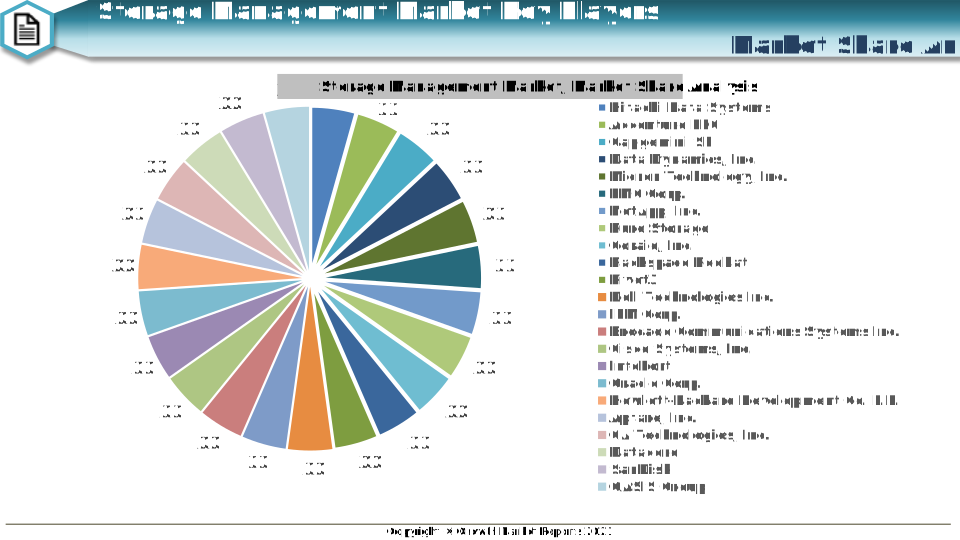
Key players competing in the global storage management market are Hitachi Data Systems; Accenture PLC; Capgemini SE; Data Dynamics, Inc.; Micron Technology,Inc.; EMC Corp.; NetApp, Inc.; Pure Storage; Coraid, Inc.; Rackspace Redhat; Pivot3; Dell Technologies Inc.; IBM Corp.; Brocade Communications Systems Inc.; Cisco Systems, Inc.; InfoFort; Oracle Corp.; Hewlett-Packard Development Co. L.P.; Aptare, Inc.; CA Technologies, Inc.; Datacore; SanDisk; and OASIS Group. Companies are focusing on investment in R&D to develop systems with better performance and higher security. Furthermore, companies have been widely engaged in strategic partnership, merger & acquisition, new product launch, and collaborations to boost their market share and acquiring new buyers.
Yes, the Storage Management Market Research Report 2033 offers customization options to address specific client requirements.
Opportunities include the integration of AI and machine learning, edge computing, and IoT-driven decentralized storage. Challenges involve increasing IT complexity, evolving cyber threats, and the need to comply with stringent data privacy regulations.
Large enterprises require scalable, customizable, and secure solutions for complex IT environments, while SMEs prefer affordable, easy-to-deploy, and scalable cloud-based solutions. Both segments prioritize data protection, disaster recovery, and compliance.
Major companies include IBM, Dell Technologies, Hewlett Packard Enterprise (HPE), NetApp, Hitachi Vantara, Pure Storage, Huawei Technologies, Microsoft, Amazon Web Services (AWS), Google Cloud, and others.
Major applications include data backup and recovery, storage virtualization, performance monitoring, security and compliance, and others. These help organizations protect data, optimize storage resources, monitor performance, and ensure regulatory compliance.
The market is segmented into software, hardware, and services. Software solutions, such as software-defined storage and AI-driven analytics, lead the market. Hardware includes storage arrays and servers, while services cover managed services, consulting, and support.
North America dominates the market due to advanced IT infrastructure and early technology adoption. Asia Pacific is the fastest-growing region, driven by rapid digitalization and expanding IT investments, while Europe and Latin America show steady growth. The Middle East & Africa region is nascent but expected to grow as digital transformation accelerates.
On-premises deployment is favored for stringent security and compliance needs, especially in BFSI and healthcare. Cloud-based solutions offer scalability, flexibility, and cost efficiency, while hybrid models combine the benefits of both, enabling organizations to optimize resources and ensure business continuity.
Key growth drivers include the exponential rise in data generation, increasing adoption of cloud-based solutions, the need for efficient data backup and recovery, compliance management, and the proliferation of digital technologies such as IoT, AI, and big data analytics.
The global storage management market reached USD 55.3 billion in 2024 and is projected to grow at a CAGR of 13.2% from 2025 to 2033, reaching approximately USD 156.7 billion by 2033.