Spirulina Market Research Report 2033

Spirulina Market Research Report 2033

Segments - by Product Type (Powder, Tablet, Capsule, Liquid, Others), by Application (Nutraceuticals, Food & Beverages, Cosmetics & Personal Care, Animal Feed, Others), by Distribution Channel (Online Stores, Supermarkets/Hypermarkets, Specialty Stores, Others)

https://growthmarketreports.com/Anuradha
Author : Anuradha B. More
https://growthmarketreports.com/Vaibhav
Fact-checked by : Vaibhav Chandola
https://growthmarketreports.com/Shruti
Editor : Shruti Bhat

Upcoming | Report ID :FB-2829 | 4.9 Rating | 68 Reviews | 290 Pages | Format : Docx PDF

Report Description


Spirulina Market Outlook

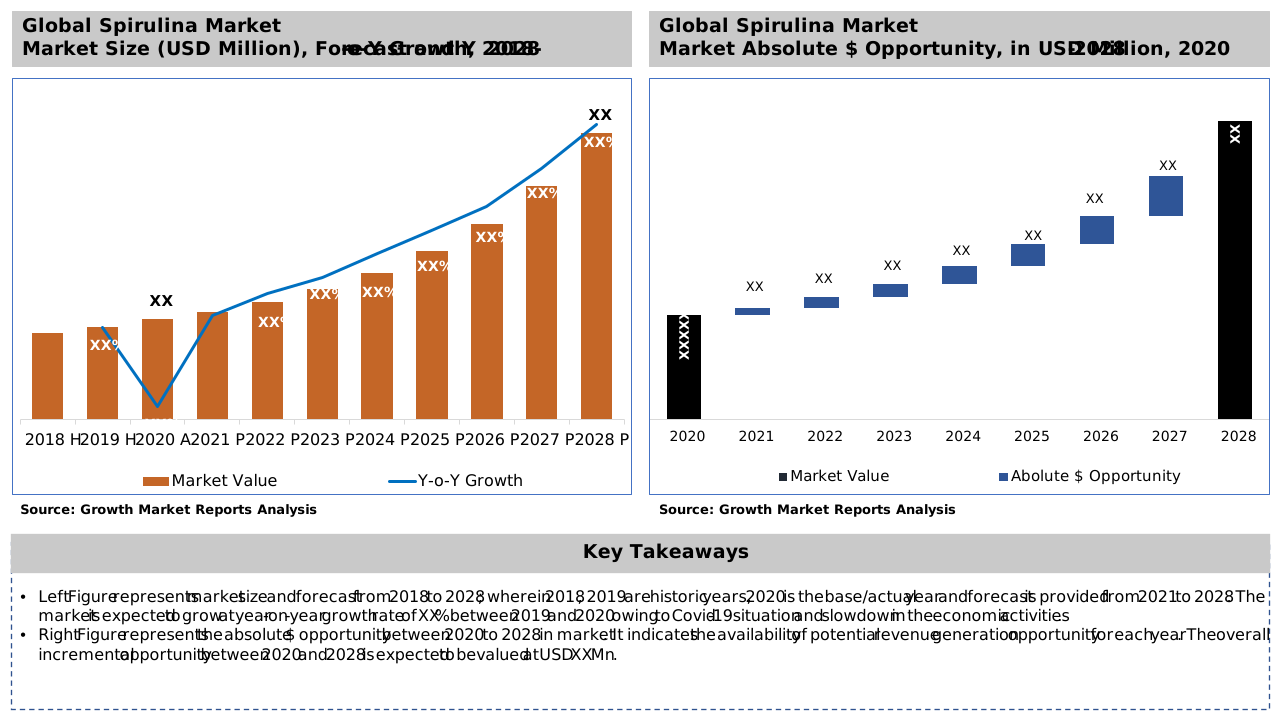
According to our latest research, the global spirulina market size in 2024 stands at USD 565 million, propelled by increasing consumer awareness regarding health benefits and the shift towards plant-based nutrition. The market is experiencing a robust CAGR of 8.3% and is forecasted to reach USD 1.14 billion by 2033. This strong growth trajectory is primarily driven by the rising demand for natural food supplements, expanding applications in the nutraceutical and food & beverage sectors, and a growing inclination towards sustainable food sources. The proliferation of veganism and the rising trend of preventive healthcare are significant contributors to the marketÂ’s expansion.

One of the primary growth factors for the spirulina market is the increasing consumer preference for natural and organic products. Spirulina, a blue-green algae, is recognized for its exceptional nutritional profile, boasting high levels of protein, vitamins, minerals, and antioxidants. As consumers become more health-conscious, there is a marked shift away from synthetic supplements towards plant-based alternatives like spirulina. The rising prevalence of lifestyle-related diseases such as obesity, diabetes, and cardiovascular ailments has further fueled the demand for functional foods and dietary supplements, positioning spirulina as a preferred ingredient in the wellness industry. Additionally, the clean label movement, which emphasizes transparency and the use of natural ingredients, has significantly boosted the adoption of spirulina in various product formulations.

The expansion of the food and beverage industry has also played a pivotal role in the growth of the spirulina market. SpirulinaÂ’s versatility allows it to be incorporated into a wide range of products, including smoothies, energy bars, snacks, beverages, and even confectionery. Food manufacturers are increasingly leveraging spirulinaÂ’s vibrant color and nutritional benefits to develop innovative products that cater to health-conscious consumers. Furthermore, the growing popularity of plant-based diets and veganism has opened new avenues for spirulina-infused foods, particularly in developed markets where consumers are seeking sustainable and ethical food choices. The use of spirulina as a natural coloring agent and functional ingredient in the food industry is expected to continue driving market growth over the forecast period.

Technological advancements in spirulina cultivation and processing have further accelerated market growth. Innovations in cultivation techniques, such as closed-loop systems and photobioreactors, have enhanced the yield and quality of spirulina, making it more accessible and affordable. These advancements have also contributed to improved sustainability, as spirulina cultivation requires significantly less land and water compared to traditional protein sources. The increasing adoption of sustainable practices in agriculture and food production aligns with global efforts to address environmental concerns, further boosting the spirulina market. Moreover, ongoing research and development activities are expanding the potential applications of spirulina beyond food and nutraceuticals, including its use in cosmetics, animal feed, and pharmaceuticals.

In the realm of food and beverage innovation, Spirulina Extract Color has emerged as a game-changer. Its vibrant hue not only enhances the visual appeal of products but also aligns with consumer demand for natural ingredients. As health-conscious consumers seek alternatives to synthetic dyes, Spirulina Extract Color offers a plant-based solution that is both appealing and nutritious. This trend is particularly evident in the beverage industry, where colorful, health-oriented drinks are gaining popularity. The use of Spirulina Extract Color in product formulations not only meets aesthetic requirements but also adds a layer of nutritional value, making it a preferred choice for manufacturers aiming to cater to the evolving preferences of their target audience.

From a regional perspective, Asia Pacific remains the dominant market for spirulina, accounting for the largest share in 2024, followed by North America and Europe. The strong presence of key spirulina producers, favorable climatic conditions for algae cultivation, and increasing government initiatives to promote microalgae-based industries are driving growth in the Asia Pacific region. North AmericaÂ’s market is characterized by a high demand for dietary supplements and functional foods, while Europe benefits from stringent regulations promoting natural ingredients in food and cosmetics. Latin America and the Middle East & Africa are emerging markets, with growing awareness and adoption of spirulina-based products, albeit at a relatively slower pace.

Global Spirulina Industry Outlook

Product Type Analysis

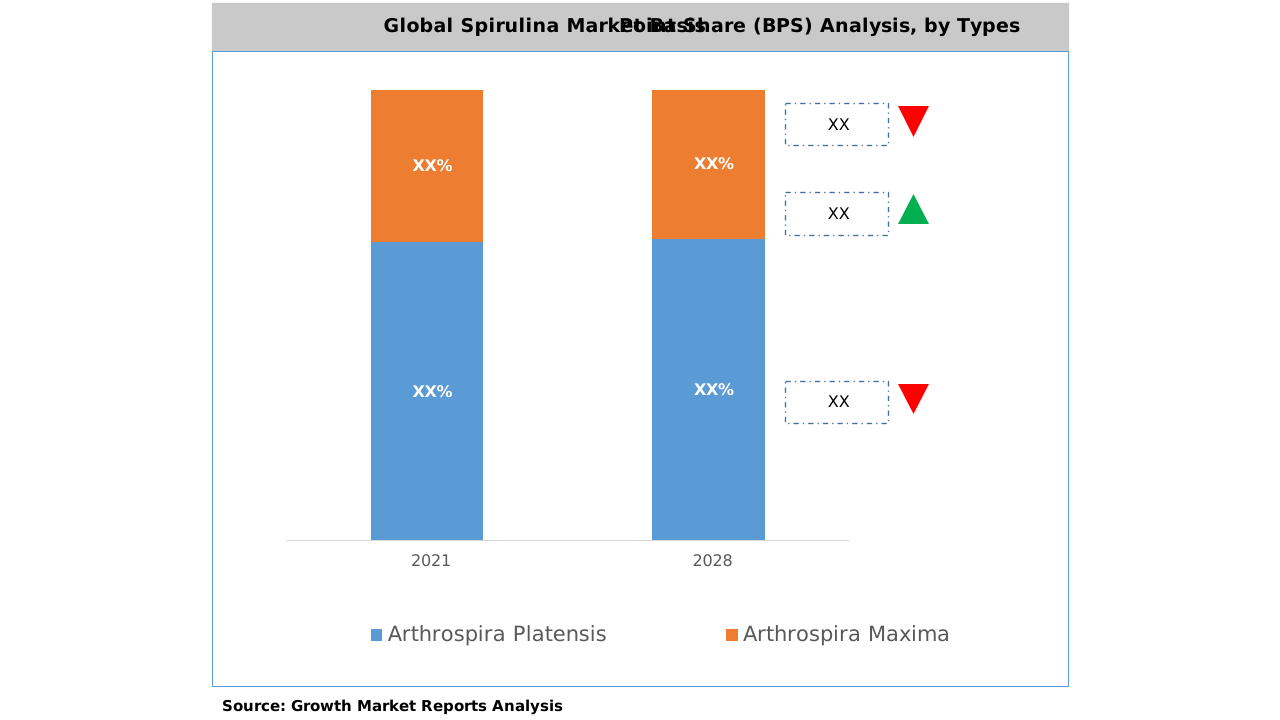
The spirulina market by product type is segmented into powder, tablet, capsule, liquid, and others, with each form catering to distinct consumer preferences and application requirements. Spirulina powder dominates the market, holding the largest share in 2024, due to its versatility and ease of incorporation into various food and beverage products. The powder form is widely favored by health-conscious consumers and fitness enthusiasts who add it to smoothies, juices, and energy bars for an instant nutritional boost. Its high solubility and bioavailability make it an ideal ingredient for both commercial food manufacturers and home users. Additionally, the powder form is preferred in the nutraceutical industry, where it is used as a base ingredient in dietary supplements and functional foods.

Tablets and capsules represent the next significant segments, appealing primarily to consumers seeking convenience and precise dosing. These forms are particularly popular in the dietary supplement market, where consumers prioritize ease of consumption and portability. Tablets and capsules are often marketed as immune boosters, energy enhancers, and general wellness supplements, targeting a broad demographic ranging from athletes to the elderly. The standardized dosage and extended shelf life of these forms further contribute to their growing adoption, especially in developed markets where regulatory standards are stringent and consumer trust is paramount.

Beyond its application in food and beverages, Spirulina Extracts are gaining traction in the cosmetics and personal care industry. Known for their antioxidant properties, these extracts are being incorporated into skincare products to enhance skin health and vitality. The natural origin of Spirulina Extracts resonates with consumers who are increasingly wary of synthetic ingredients and their potential side effects. As the beauty industry shifts towards clean and green formulations, Spirulina Extracts provide an effective and sustainable option. This shift is not only driven by consumer demand but also by regulatory pressures to reduce the environmental impact of cosmetic products. Consequently, Spirulina Extracts are set to play a pivotal role in the future of beauty and personal care.

The liquid segment, while smaller in comparison, is experiencing steady growth due to increasing demand for ready-to-consume health drinks and beverages. Liquid spirulina is often marketed as a superfood shot or a functional beverage, offering quick absorption and immediate health benefits. This form is gaining traction among urban consumers with busy lifestyles who seek convenient and effective ways to supplement their diets. The liquid format also allows for innovative product development, such as flavored spirulina shots and blends with other superfoods, appealing to younger consumers and those new to algae-based products.

Other forms of spirulina, including flakes, granules, and customized blends, cater to niche markets and specialized applications. For instance, spirulina flakes are used in gourmet cooking and culinary applications, while customized blends are developed for specific health conditions or targeted nutritional needs. The diversity in product types reflects the adaptability of spirulina to various consumer preferences and industry requirements, ensuring sustained demand across multiple segments. As research continues to uncover new health benefits and applications, the product type landscape is expected to evolve, with innovative formats emerging to meet changing market dynamics.

Report Scope

Attributes Details
Report Title Spirulina Market Research Report 2033
By Product Type Powder, Tablet, Capsule, Liquid, Others
By Application Nutraceuticals, Food & Beverages, Cosmetics & Personal Care, Animal Feed, Others
By Distribution Channel Online Stores, Supermarkets/Hypermarkets, Specialty Stores, Others
Regions Covered North America, Europe, APAC, Latin America, MEA
Base Year 2024
Historic Data 2018-2023
Forecast Period 2025-2033
Number of Pages 290
Number of Tables & Figures 285
Customization Available Yes, the report can be customized as per your need.

Application Analysis

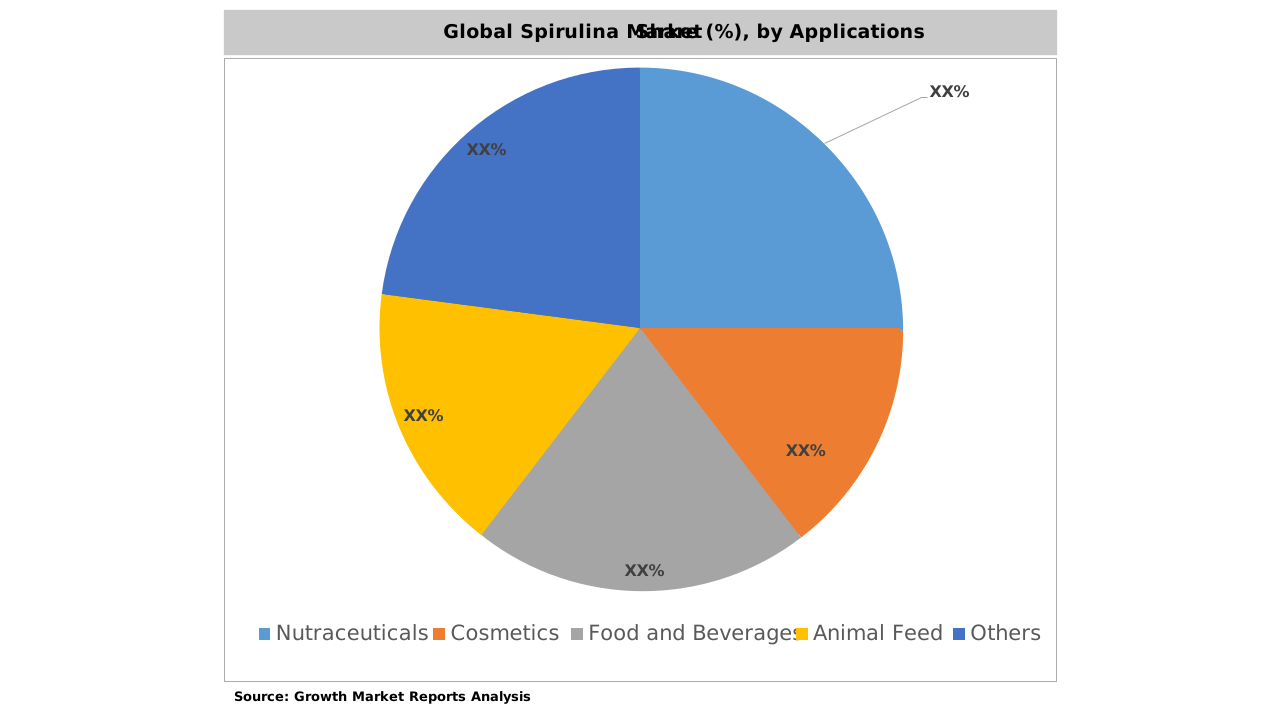
The application landscape of the spirulina market is broad, encompassing nutraceuticals, food & beverages, cosmetics & personal care, animal feed, and others. The nutraceuticals segment commands the largest share, driven by the rising demand for natural dietary supplements and functional foods. SpirulinaÂ’s rich nutrient profile, including high protein content, essential amino acids, and antioxidants, makes it a popular choice among health-conscious consumers and those seeking preventive healthcare solutions. The segment benefits from increasing awareness of lifestyle-related diseases and the growing trend of self-care, with consumers actively seeking products that support immunity, energy, and overall wellness.

The food & beverages segment is witnessing rapid growth, fueled by the increasing incorporation of spirulina into mainstream food products. Food manufacturers are leveraging spirulinaÂ’s natural color, flavor, and nutritional benefits to develop innovative offerings such as health bars, smoothies, snacks, and even baked goods. The segment is further supported by the clean label movement and the rising popularity of plant-based diets, particularly in developed markets. SpirulinaÂ’s status as a sustainable and ethical ingredient aligns with consumer values, driving its adoption in a wide range of food and beverage products.

Cosmetics & personal care represent an emerging application area for spirulina, with growing interest in natural and organic ingredients in skincare and haircare products. SpirulinaÂ’s antioxidant and anti-inflammatory properties make it an attractive ingredient for formulations targeting skin rejuvenation, anti-aging, and hydration. The segment is gaining momentum as consumers increasingly seek products that deliver both efficacy and safety, with minimal environmental impact. Leading cosmetic brands are incorporating spirulina extracts into creams, serums, and masks, capitalizing on its superfood status and market appeal.

Animal feed is another significant application, driven by the need for sustainable and nutrient-rich feed ingredients in the livestock and aquaculture industries. Spirulina serves as a valuable protein source for poultry, fish, and pets, enhancing growth rates, immunity, and overall health. The segment is supported by increasing regulations on antibiotic use in animal feed and the growing demand for organic and natural feed additives. Other applications, such as pharmaceuticals and biofertilizers, are also emerging, reflecting the expanding versatility and market potential of spirulina.

Distribution Channel Analysis

The distribution channel landscape for the spirulina market is segmented into online stores, supermarkets/hypermarkets, specialty stores, and others. Online stores have emerged as the fastest-growing channel, driven by the proliferation of e-commerce platforms and the increasing preference for convenient shopping experiences. Consumers are increasingly turning to online channels to access a wide variety of spirulina products, compare prices, and read reviews before making purchase decisions. The COVID-19 pandemic further accelerated the shift towards online shopping, with many brands enhancing their digital presence and direct-to-consumer offerings to capture a larger market share.

Supermarkets and hypermarkets remain important distribution channels, particularly in urban areas where consumers seek one-stop shopping experiences. These retail formats offer a diverse range of spirulina products, including powders, tablets, and ready-to-drink beverages, catering to different consumer needs. The visibility and accessibility of spirulina products in these stores play a crucial role in driving impulse purchases and brand awareness. In-store promotions, product demonstrations, and health-focused marketing campaigns further contribute to the growth of this channel.

Specialty stores, including health food stores and organic retailers, cater to a niche segment of health-conscious consumers seeking high-quality and authentic spirulina products. These stores often offer premium brands and customized formulations, providing personalized recommendations and expert advice. The trust and credibility associated with specialty stores make them a preferred choice for discerning consumers who prioritize product quality and safety. The segment is particularly strong in developed markets, where consumers are willing to pay a premium for certified and organic spirulina products.

Other distribution channels, such as pharmacies, wellness centers, and direct sales, also contribute to the market, particularly in regions with limited access to mainstream retail formats. The diversification of distribution channels reflects the growing accessibility and mainstream acceptance of spirulina products. As consumer preferences evolve and digitalization continues to reshape the retail landscape, companies are increasingly adopting omnichannel strategies to reach a broader audience and enhance customer engagement.

Opportunities & Threats

The spirulina market presents significant opportunities for growth, particularly in the development of innovative products and the expansion into emerging markets. The increasing demand for plant-based proteins and sustainable food sources offers a fertile ground for new product launches and brand differentiation. Companies can capitalize on the rising popularity of functional foods and beverages by incorporating spirulina into novel formulations, such as protein bars, energy drinks, and dairy alternatives. The cosmetics and personal care segment also offers untapped potential, with growing consumer interest in natural and organic ingredients. Strategic partnerships, research collaborations, and investments in R&D can further unlock new applications and drive market expansion.

Another key opportunity lies in the adoption of advanced cultivation and processing technologies to enhance yield, quality, and sustainability. Innovations such as closed-loop systems, photobioreactors, and genetic engineering can improve the efficiency and scalability of spirulina production, reducing costs and environmental impact. Companies that invest in sustainable practices and transparent supply chains are likely to gain a competitive edge, as consumers increasingly prioritize ethical and eco-friendly products. The expansion into emerging markets, particularly in Asia Pacific, Latin America, and Africa, offers opportunities for market penetration and growth, supported by rising awareness and favorable government policies.

Despite the promising outlook, the spirulina market faces certain restraining factors, including high production costs and quality control challenges. The cultivation of spirulina requires specific environmental conditions, and fluctuations in temperature, light, and water quality can impact yield and product consistency. Additionally, the risk of contamination and the presence of heavy metals or toxins pose significant quality and safety concerns. Regulatory challenges and the lack of standardized guidelines for spirulina cultivation and processing can further hinder market growth. Companies must invest in stringent quality assurance and compliance measures to address these challenges and maintain consumer trust.

Regional Outlook

The Asia Pacific region leads the global spirulina market, accounting for approximately 38% of the total market revenue in 2024. This dominance is attributed to favorable climatic conditions for algae cultivation, a strong presence of key producers, and supportive government initiatives promoting microalgae-based industries. Countries such as China, India, and Japan are at the forefront, with extensive research and development activities and robust supply chains. The regionÂ’s growing population, rising health awareness, and increasing adoption of plant-based diets further drive market growth. The Asia Pacific spirulina market is projected to grow at a CAGR of 9.1% over the forecast period, outpacing other regions.

North America holds the second-largest share of the spirulina market, driven by high consumer demand for dietary supplements, functional foods, and natural ingredients. The United States accounts for the majority of the regional revenue, supported by a well-established nutraceutical industry and a strong emphasis on preventive healthcare. The market benefits from advanced cultivation technologies, stringent quality standards, and a growing trend towards veganism and plant-based nutrition. North AmericaÂ’s spirulina market is expected to reach USD 295 million by 2033, reflecting steady growth and continued innovation in product development.

Europe represents a mature market for spirulina, characterized by stringent regulations promoting the use of natural and organic ingredients in food, cosmetics, and personal care products. Countries such as Germany, France, and the United Kingdom are leading adopters, with a strong focus on sustainability and environmental responsibility. The regionÂ’s market is supported by increasing consumer awareness, a growing demand for clean label products, and the presence of established health food retailers. Latin America and the Middle East & Africa are emerging markets, with growing awareness and adoption of spirulina-based products. While their market share remains relatively small, these regions offer significant growth potential, particularly as consumer education and disposable incomes rise.

Spirulina Market Statistics

Competitor Outlook

The global spirulina market is highly competitive, with a diverse landscape comprising multinational corporations, regional players, and start-ups. The market is characterized by continuous innovation, with companies investing in research and development to enhance product quality, expand applications, and improve sustainability. Strategic partnerships, mergers, and acquisitions are common, as companies seek to strengthen their market position and expand their geographic footprint. The competitive dynamics are further influenced by the increasing emphasis on clean label products, transparency, and ethical sourcing, with companies vying to differentiate themselves through unique value propositions and branding strategies.

Leading players in the spirulina market are focused on expanding their product portfolios to cater to evolving consumer preferences and emerging applications. Many companies are investing in advanced cultivation technologies, such as closed-loop systems and photobioreactors, to enhance yield, reduce costs, and improve environmental sustainability. Vertical integration, from cultivation to processing and distribution, is a common strategy among major players, enabling greater control over quality and supply chain efficiency. Companies are also leveraging digital platforms and e-commerce channels to reach a wider audience and enhance customer engagement.

Branding and marketing play a crucial role in the competitive landscape, with companies emphasizing the health benefits, sustainability, and purity of their spirulina products. Certifications such as organic, non-GMO, and fair trade are increasingly sought after, as consumers prioritize transparency and ethical sourcing. Companies are also investing in consumer education and awareness campaigns to highlight the unique advantages of spirulina and drive adoption across different segments. The ability to innovate and adapt to changing market trends is a key determinant of success in this dynamic and rapidly evolving market.

Some of the major companies operating in the global spirulina market include DIC Corporation, Cyanotech Corporation, Earthrise Nutritionals LLC, Algenol Biofuels Inc., Algaetech International Sdn Bhd, Fuqing King Dnarmsa Spirulina Co., Ltd., and Dongtai City Spirulina Bio-engineering Co., Ltd.. DIC Corporation and its subsidiary Earthrise Nutritionals are among the largest producers globally, with a strong focus on research, quality assurance, and sustainability. Cyanotech Corporation is recognized for its high-quality spirulina and astaxanthin products, catering to the nutraceutical and food industries. Algenol Biofuels is notable for its innovative approach to algae cultivation and biofuel production, while Algaetech International specializes in premium spirulina and related products for the health and wellness market.

Fuqing King Dnarmsa Spirulina and Dongtai City Spirulina Bio-engineering are prominent players in the Asia Pacific region, leveraging advanced cultivation techniques and robust supply chains to serve both domestic and international markets. These companies are at the forefront of technological innovation and sustainability, contributing to the regionÂ’s leadership in the global spirulina market. As competition intensifies, companies are expected to continue investing in product innovation, quality assurance, and sustainable practices to maintain their competitive edge and capitalize on the growing demand for spirulina-based products worldwide.

Key Players

  • DIC Corporation
  • Cyanotech Corporation
  • E.I.D. Parry (India) Limited
  • Algenol Biofuels Inc.
  • Prolgae Spirulina Supplies Pvt. Ltd.
  • Sensient Technologies Corporation
  • Dongtai City Spirulina Bio-engineering Co., Ltd.
  • Fuqing King Dnarmsa Spirulina Co., Ltd.
  • Tianjin Norland Biotech Co., Ltd.
  • Earthrise Nutritionals LLC
  • Now Foods
  • Far East Bio-Tec Co., Ltd.
  • BlueBioTech Int. GmbH
  • Naturex S.A.
  • Sun Chlorella Corporation
  • Algene Biotech
  • GNC Holdings Inc.
  • Parry Nutraceuticals
  • Nutrex Hawaii Inc.
  • Hydrolina Biotech Pvt. Ltd.
Spirulina Market Overview

Segments

The Spirulina market has been segmented on the basis of

Product Type

  • Powder
  • Tablet
  • Capsule
  • Liquid
  • Others

Application

  • Nutraceuticals
  • Food & Beverages
  • Cosmetics & Personal Care
  • Animal Feed
  • Others

Distribution Channel

  • Online Stores
  • Supermarkets/Hypermarkets
  • Specialty Stores
  • Others

Competitive Landscape

Key players in global spirulina market include Algene Biotech, Aller Aqua, BASF, Chr. Hansen A/S, Cyanotech Corporation, C.B.N. Spirulina Canada Co., Ltd, DDW - the Color House, DIC Corporation- Earthrise Nutritionals, Dohler Group, Fiorio Colori S.p.A, FMC Corporation, Hydro Linea Biotech, Naturex SA, Royal DSM, Sensient Technologies Corporation, and Solazyme, among others. These players engage in mergers & acquisitions, collaborations, agreements, and partnerships to strengthen their geographical presence.
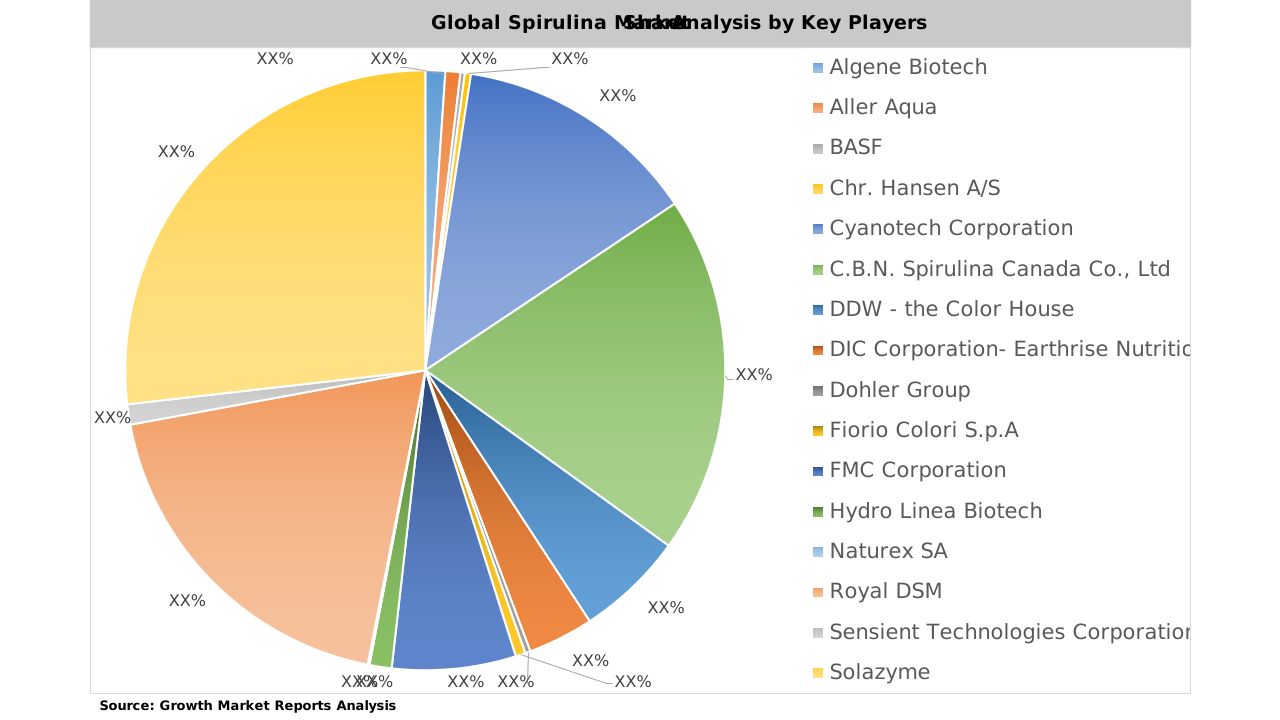

Global Spirulina Market Key Players

Frequently Asked Questions

Opportunities include developing innovative spirulina products, expanding into emerging markets, adopting advanced cultivation technologies, and increasing applications in cosmetics, animal feed, and pharmaceuticals.

Spirulina is rich in protein, vitamins, minerals, and antioxidants, supporting immunity, energy, and overall wellness. It is also valued for its sustainability and use as a natural coloring agent.

Major companies include DIC Corporation, Cyanotech Corporation, Earthrise Nutritionals LLC, Algenol Biofuels Inc., Algaetech International, Fuqing King Dnarmsa Spirulina, and Dongtai City Spirulina Bio-engineering.

Challenges include high production costs, quality control issues, risk of contamination, regulatory hurdles, and the need for specific environmental conditions for cultivation.

Spirulina products are distributed through online stores, supermarkets/hypermarkets, specialty stores, and other channels such as pharmacies and wellness centers. Online stores are the fastest-growing channel.

Asia Pacific leads the global spirulina market, followed by North America and Europe. Asia Pacific benefits from favorable cultivation conditions and strong government support.

Spirulina is widely used in nutraceuticals, food & beverages, cosmetics & personal care, animal feed, and emerging sectors like pharmaceuticals and biofertilizers.

Spirulina powder is the leading product type, favored for its versatility, ease of incorporation into foods and beverages, and high solubility.

Key growth drivers include rising consumer awareness of health benefits, a shift towards plant-based nutrition, increasing demand for natural food supplements, expanding applications in nutraceuticals and food & beverages, and the popularity of veganism and preventive healthcare.

As of 2024, the global spirulina market size is valued at USD 565 million, with strong growth projected to reach USD 1.14 billion by 2033.

Table Of Content

Chapter 1 Executive Summary
Chapter 2 Assumptions and Acronyms Used
Chapter 3 Research Methodology
Chapter 4 Spirulina Market Overview
   4.1 Introduction
      4.1.1 Market Taxonomy
      4.1.2 Market Definition
      4.1.3 Macro-Economic Factors Impacting the Market Growth
   4.2 Spirulina Market Dynamics
      4.2.1 Market Drivers
      4.2.2 Market Restraints
      4.2.3 Market Opportunity
   4.3 Spirulina Market - Supply Chain Analysis
      4.3.1 List of Key Suppliers
      4.3.2 List of Key Distributors
      4.3.3 List of Key Consumers
   4.4 Key Forces Shaping the Spirulina Market
      4.4.1 Bargaining Power of Suppliers
      4.4.2 Bargaining Power of Buyers
      4.4.3 Threat of Substitution
      4.4.4 Threat of New Entrants
      4.4.5 Competitive Rivalry
   4.5 Global Spirulina Market Size & Forecast, 2023-2032
      4.5.1 Spirulina Market Size and Y-o-Y Growth
      4.5.2 Spirulina Market Absolute $ Opportunity

Chapter 5 Global Spirulina Market Analysis and Forecast By Product Type
   5.1 Introduction
      5.1.1 Key Market Trends & Growth Opportunities By Product Type
      5.1.2 Basis Point Share (BPS) Analysis By Product Type
      5.1.3 Absolute $ Opportunity Assessment By Product Type
   5.2 Spirulina Market Size Forecast By Product Type
      5.2.1 Powder
      5.2.2 Tablet
      5.2.3 Capsule
      5.2.4 Liquid
      5.2.5 Others
   5.3 Market Attractiveness Analysis By Product Type

Chapter 6 Global Spirulina Market Analysis and Forecast By Application
   6.1 Introduction
      6.1.1 Key Market Trends & Growth Opportunities By Application
      6.1.2 Basis Point Share (BPS) Analysis By Application
      6.1.3 Absolute $ Opportunity Assessment By Application
   6.2 Spirulina Market Size Forecast By Application
      6.2.1 Nutraceuticals
      6.2.2 Food & Beverages
      6.2.3 Cosmetics & Personal Care
      6.2.4 Animal Feed
      6.2.5 Others
   6.3 Market Attractiveness Analysis By Application

Chapter 7 Global Spirulina Market Analysis and Forecast By Distribution Channel
   7.1 Introduction
      7.1.1 Key Market Trends & Growth Opportunities By Distribution Channel
      7.1.2 Basis Point Share (BPS) Analysis By Distribution Channel
      7.1.3 Absolute $ Opportunity Assessment By Distribution Channel
   7.2 Spirulina Market Size Forecast By Distribution Channel
      7.2.1 Online Stores
      7.2.2 Supermarkets/Hypermarkets
      7.2.3 Specialty Stores
      7.2.4 Others
   7.3 Market Attractiveness Analysis By Distribution Channel

Chapter 8 Global Spirulina Market Analysis and Forecast by Region
   8.1 Introduction
      8.1.1 Key Market Trends & Growth Opportunities By Region
      8.1.2 Basis Point Share (BPS) Analysis By Region
      8.1.3 Absolute $ Opportunity Assessment By Region
   8.2 Spirulina Market Size Forecast By Region
      8.2.1 North America
      8.2.2 Europe
      8.2.3 Asia Pacific
      8.2.4 Latin America
      8.2.5 Middle East & Africa (MEA)
   8.3 Market Attractiveness Analysis By Region

Chapter 9 Coronavirus Disease (COVID-19) Impact 
   9.1 Introduction 
   9.2 Current & Future Impact Analysis 
   9.3 Economic Impact Analysis 
   9.4 Government Policies 
   9.5 Investment Scenario

Chapter 10 North America Spirulina Analysis and Forecast
   10.1 Introduction
   10.2 North America Spirulina Market Size Forecast by Country
      10.2.1 U.S.
      10.2.2 Canada
   10.3 Basis Point Share (BPS) Analysis by Country
   10.4 Absolute $ Opportunity Assessment by Country
   10.5 Market Attractiveness Analysis by Country
   10.6 North America Spirulina Market Size Forecast By Product Type
      10.6.1 Powder
      10.6.2 Tablet
      10.6.3 Capsule
      10.6.4 Liquid
      10.6.5 Others
   10.7 Basis Point Share (BPS) Analysis By Product Type 
   10.8 Absolute $ Opportunity Assessment By Product Type 
   10.9 Market Attractiveness Analysis By Product Type
   10.10 North America Spirulina Market Size Forecast By Application
      10.10.1 Nutraceuticals
      10.10.2 Food & Beverages
      10.10.3 Cosmetics & Personal Care
      10.10.4 Animal Feed
      10.10.5 Others
   10.11 Basis Point Share (BPS) Analysis By Application 
   10.12 Absolute $ Opportunity Assessment By Application 
   10.13 Market Attractiveness Analysis By Application
   10.14 North America Spirulina Market Size Forecast By Distribution Channel
      10.14.1 Online Stores
      10.14.2 Supermarkets/Hypermarkets
      10.14.3 Specialty Stores
      10.14.4 Others
   10.15 Basis Point Share (BPS) Analysis By Distribution Channel 
   10.16 Absolute $ Opportunity Assessment By Distribution Channel 
   10.17 Market Attractiveness Analysis By Distribution Channel

Chapter 11 Europe Spirulina Analysis and Forecast
   11.1 Introduction
   11.2 Europe Spirulina Market Size Forecast by Country
      11.2.1 Germany
      11.2.2 France
      11.2.3 Italy
      11.2.4 U.K.
      11.2.5 Spain
      11.2.6 Russia
      11.2.7 Rest of Europe
   11.3 Basis Point Share (BPS) Analysis by Country
   11.4 Absolute $ Opportunity Assessment by Country
   11.5 Market Attractiveness Analysis by Country
   11.6 Europe Spirulina Market Size Forecast By Product Type
      11.6.1 Powder
      11.6.2 Tablet
      11.6.3 Capsule
      11.6.4 Liquid
      11.6.5 Others
   11.7 Basis Point Share (BPS) Analysis By Product Type 
   11.8 Absolute $ Opportunity Assessment By Product Type 
   11.9 Market Attractiveness Analysis By Product Type
   11.10 Europe Spirulina Market Size Forecast By Application
      11.10.1 Nutraceuticals
      11.10.2 Food & Beverages
      11.10.3 Cosmetics & Personal Care
      11.10.4 Animal Feed
      11.10.5 Others
   11.11 Basis Point Share (BPS) Analysis By Application 
   11.12 Absolute $ Opportunity Assessment By Application 
   11.13 Market Attractiveness Analysis By Application
   11.14 Europe Spirulina Market Size Forecast By Distribution Channel
      11.14.1 Online Stores
      11.14.2 Supermarkets/Hypermarkets
      11.14.3 Specialty Stores
      11.14.4 Others
   11.15 Basis Point Share (BPS) Analysis By Distribution Channel 
   11.16 Absolute $ Opportunity Assessment By Distribution Channel 
   11.17 Market Attractiveness Analysis By Distribution Channel

Chapter 12 Asia Pacific Spirulina Analysis and Forecast
   12.1 Introduction
   12.2 Asia Pacific Spirulina Market Size Forecast by Country
      12.2.1 China
      12.2.2 Japan
      12.2.3 South Korea
      12.2.4 India
      12.2.5 Australia
      12.2.6 South East Asia (SEA)
      12.2.7 Rest of Asia Pacific (APAC)
   12.3 Basis Point Share (BPS) Analysis by Country
   12.4 Absolute $ Opportunity Assessment by Country
   12.5 Market Attractiveness Analysis by Country
   12.6 Asia Pacific Spirulina Market Size Forecast By Product Type
      12.6.1 Powder
      12.6.2 Tablet
      12.6.3 Capsule
      12.6.4 Liquid
      12.6.5 Others
   12.7 Basis Point Share (BPS) Analysis By Product Type 
   12.8 Absolute $ Opportunity Assessment By Product Type 
   12.9 Market Attractiveness Analysis By Product Type
   12.10 Asia Pacific Spirulina Market Size Forecast By Application
      12.10.1 Nutraceuticals
      12.10.2 Food & Beverages
      12.10.3 Cosmetics & Personal Care
      12.10.4 Animal Feed
      12.10.5 Others
   12.11 Basis Point Share (BPS) Analysis By Application 
   12.12 Absolute $ Opportunity Assessment By Application 
   12.13 Market Attractiveness Analysis By Application
   12.14 Asia Pacific Spirulina Market Size Forecast By Distribution Channel
      12.14.1 Online Stores
      12.14.2 Supermarkets/Hypermarkets
      12.14.3 Specialty Stores
      12.14.4 Others
   12.15 Basis Point Share (BPS) Analysis By Distribution Channel 
   12.16 Absolute $ Opportunity Assessment By Distribution Channel 
   12.17 Market Attractiveness Analysis By Distribution Channel

Chapter 13 Latin America Spirulina Analysis and Forecast
   13.1 Introduction
   13.2 Latin America Spirulina Market Size Forecast by Country
      13.2.1 Brazil
      13.2.2 Mexico
      13.2.3 Rest of Latin America (LATAM)
   13.3 Basis Point Share (BPS) Analysis by Country
   13.4 Absolute $ Opportunity Assessment by Country
   13.5 Market Attractiveness Analysis by Country
   13.6 Latin America Spirulina Market Size Forecast By Product Type
      13.6.1 Powder
      13.6.2 Tablet
      13.6.3 Capsule
      13.6.4 Liquid
      13.6.5 Others
   13.7 Basis Point Share (BPS) Analysis By Product Type 
   13.8 Absolute $ Opportunity Assessment By Product Type 
   13.9 Market Attractiveness Analysis By Product Type
   13.10 Latin America Spirulina Market Size Forecast By Application
      13.10.1 Nutraceuticals
      13.10.2 Food & Beverages
      13.10.3 Cosmetics & Personal Care
      13.10.4 Animal Feed
      13.10.5 Others
   13.11 Basis Point Share (BPS) Analysis By Application 
   13.12 Absolute $ Opportunity Assessment By Application 
   13.13 Market Attractiveness Analysis By Application
   13.14 Latin America Spirulina Market Size Forecast By Distribution Channel
      13.14.1 Online Stores
      13.14.2 Supermarkets/Hypermarkets
      13.14.3 Specialty Stores
      13.14.4 Others
   13.15 Basis Point Share (BPS) Analysis By Distribution Channel 
   13.16 Absolute $ Opportunity Assessment By Distribution Channel 
   13.17 Market Attractiveness Analysis By Distribution Channel

Chapter 14 Middle East & Africa (MEA) Spirulina Analysis and Forecast
   14.1 Introduction
   14.2 Middle East & Africa (MEA) Spirulina Market Size Forecast by Country
      14.2.1 Saudi Arabia
      14.2.2 South Africa
      14.2.3 UAE
      14.2.4 Rest of Middle East & Africa (MEA)
   14.3 Basis Point Share (BPS) Analysis by Country
   14.4 Absolute $ Opportunity Assessment by Country
   14.5 Market Attractiveness Analysis by Country
   14.6 Middle East & Africa (MEA) Spirulina Market Size Forecast By Product Type
      14.6.1 Powder
      14.6.2 Tablet
      14.6.3 Capsule
      14.6.4 Liquid
      14.6.5 Others
   14.7 Basis Point Share (BPS) Analysis By Product Type 
   14.8 Absolute $ Opportunity Assessment By Product Type 
   14.9 Market Attractiveness Analysis By Product Type
   14.10 Middle East & Africa (MEA) Spirulina Market Size Forecast By Application
      14.10.1 Nutraceuticals
      14.10.2 Food & Beverages
      14.10.3 Cosmetics & Personal Care
      14.10.4 Animal Feed
      14.10.5 Others
   14.11 Basis Point Share (BPS) Analysis By Application 
   14.12 Absolute $ Opportunity Assessment By Application 
   14.13 Market Attractiveness Analysis By Application
   14.14 Middle East & Africa (MEA) Spirulina Market Size Forecast By Distribution Channel
      14.14.1 Online Stores
      14.14.2 Supermarkets/Hypermarkets
      14.14.3 Specialty Stores
      14.14.4 Others
   14.15 Basis Point Share (BPS) Analysis By Distribution Channel 
   14.16 Absolute $ Opportunity Assessment By Distribution Channel 
   14.17 Market Attractiveness Analysis By Distribution Channel

Chapter 15 Competition Landscape 
   15.1 Spirulina Market: Competitive Dashboard
   15.2 Global Spirulina Market: Market Share Analysis, 2023
   15.3 Company Profiles (Details – Overview, Financials, Developments, Strategy) 
      15.3.1 DIC Corporation
Cyanotech Corporation
E.I.D. Parry (India) Limited
Algenol Biofuels Inc.
Prolgae Spirulina Supplies Pvt. Ltd.
Sensient Technologies Corporation
Dongtai City Spirulina Bio-engineering Co., Ltd.
Fuqing King Dnarmsa Spirulina Co., Ltd.
Tianjin Norland Biotech Co., Ltd.
Earthrise Nutritionals LLC
Now Foods
Far East Bio-Tec Co., Ltd.
BlueBioTech Int. GmbH
Naturex S.A.
Sun Chlorella Corporation
Algene Biotech
GNC Holdings Inc.
Parry Nutraceuticals
Nutrex Hawaii Inc.
Hydrolina Biotech Pvt. Ltd.

Methodology

Our Clients

Microsoft
Siemens Healthcare
The John Holland Group
General Electric
FedEx Logistics
sinopec
Pfizer
Deloitte