Liquid Feed Supplements Market Research Report 2033

Liquid Feed Supplements Market Research Report 2033

Segments - by Product Type (Protein-based, Minerals, Vitamins, Others), by Livestock (Ruminants, Swine, Poultry, Aquaculture, Others), by Source (Molasses, Corn, Urea, Others), by Form (Blended Liquid Supplements, Suspension Supplements, Others), by Distribution Channel (Direct, Indirect)

https://growthmarketreports.com/Anuradha
Author : Anuradha B. More
https://growthmarketreports.com/Vaibhav
Fact-checked by : Vaibhav Chandola
https://growthmarketreports.com/Shruti
Editor : Shruti Bhat

Upcoming | Report ID :FB-586 | 4.5 Rating | 88 Reviews | 294 Pages | Format : Docx PDF

Report Description


Liquid Feed Supplements Market Outlook

According to our latest research, the global liquid feed supplements market size reached USD 7.86 billion in 2024, reflecting a robust demand across diverse livestock sectors. The market is projected to expand at a CAGR of 5.4% from 2025 to 2033, with the total value expected to attain USD 12.90 billion by 2033. This steady growth is primarily attributed to the rising emphasis on enhancing animal nutrition and productivity, coupled with the growing commercialization of livestock farming worldwide.

A key growth driver for the liquid feed supplements market is the increasing need for high-quality animal protein and dairy products, especially in emerging economies. As global populations surge and disposable incomes rise, consumers are demanding more animal-based food products. This trend is prompting livestock producers to seek efficient nutritional solutions that improve feed conversion ratios, animal health, and overall productivity. Liquid feed supplements, with their enhanced palatability, ease of mixing, and ability to deliver balanced nutrition, are becoming indispensable tools for modern livestock operations. Furthermore, the adoption of intensive farming practices necessitates the use of supplements to compensate for nutritional deficiencies in conventional feed, further fueling market expansion.

Another significant factor propelling market growth is the increasing awareness and implementation of sustainable animal husbandry practices. With environmental concerns and regulatory scrutiny intensifying, livestock farmers are under pressure to optimize resource utilization and minimize waste. Liquid feed supplements offer a practical solution by enabling precise nutrient delivery, reducing feed wastage, and improving nutrient absorption. These supplements also facilitate the inclusion of various micronutrients, probiotics, and functional additives, supporting animal welfare and reducing the risk of disease outbreaks. As a result, the market is witnessing heightened investments in product innovation, formulation customization, and research aimed at enhancing supplement efficacy and sustainability.

Technological advancements and the proliferation of organized retail channels are further accelerating the growth of the liquid feed supplements market. Innovations in formulation technologies, such as the development of suspension and blended liquid supplements, allow for the inclusion of a broader spectrum of nutrients and additives. Additionally, the expansion of direct and indirect distribution channels, including online platforms and specialized feed stores, is enhancing product accessibility for livestock producers globally. The integration of digital tools for feed formulation and livestock management is also enabling precise dosing and monitoring, thereby optimizing animal nutrition and performance. These factors collectively are contributing to the sustained expansion and diversification of the liquid feed supplements industry.

From a regional perspective, Asia Pacific leads the market in both consumption and production, driven by the sheer scale of livestock populations and rapid modernization of the animal husbandry sector. North America and Europe follow closely, benefiting from advanced agricultural practices, robust regulatory frameworks, and high awareness regarding animal nutrition. Latin America and the Middle East & Africa, while currently representing smaller shares, are poised for substantial growth due to increasing investments in livestock infrastructure and rising demand for animal-derived products. The competitive landscape is characterized by the presence of both global giants and regional players, each vying for market share through product innovation, strategic partnerships, and expansion into high-growth regions.

Global Liquid Feed Supplements Industry Outlook

Product Type Analysis

The product type segment of the liquid feed supplements market encompasses protein-based, mineral, vitamin, and other specialized supplements. Protein-based liquid feed supplements command the largest market share, as proteins are essential for muscle development, lactation, and overall animal growth. These supplements are particularly crucial for ruminants and dairy cattle, where protein deficiencies can result in reduced milk yield and poor health outcomes. The demand for protein-based supplements is further supported by the increasing adoption of high-yield livestock breeds that require enhanced nutritional support. Manufacturers are investing significantly in R&D to develop protein supplements with improved bioavailability and digestibility, ensuring optimal animal performance and minimizing nutrient wastage.

Mineral-based liquid feed supplements are gaining traction due to their critical role in supporting metabolic functions, bone development, and immune system health. Calcium, phosphorus, magnesium, and trace minerals such as zinc and copper are commonly included in these formulations. The growing prevalence of mineral deficiencies in intensive livestock systems, where animals may not have access to natural grazing, is driving the uptake of mineral supplements. Additionally, regulatory mandates for balanced mineral intake and the prevention of metabolic disorders are encouraging livestock producers to incorporate these products into their feeding regimes. Market players are focusing on developing chelated mineral supplements that offer higher absorption rates and reduced antagonism with other feed components.

Vitamin-based liquid feed supplements are essential for maintaining optimal animal health, productivity, and reproductive performance. Vitamins A, D, E, and B-complex are frequently incorporated into liquid formulations to address deficiencies arising from processed or stored feeds. The growing awareness of the impact of vitamin deficiencies on animal welfare and product quality is spurring demand for these supplements across all livestock categories. Innovations in stabilization and delivery technologies are enabling the inclusion of sensitive vitamins without compromising efficacy, further expanding the market for vitamin-based liquid feed supplements. Customized vitamin blends tailored to specific livestock species and production stages are also gaining popularity among progressive farmers.

The "others" category within the product type segment includes functional additives such as amino acids, probiotics, enzymes, and organic acids. These specialized supplements are increasingly being used to enhance feed efficiency, improve gut health, and boost immunity in livestock. The rising incidence of antibiotic resistance and regulatory restrictions on antibiotic use in animal feed are prompting producers to seek alternative solutions that promote animal health naturally. Liquid formulations offer a convenient and effective delivery system for these functional ingredients, ensuring uniform distribution and rapid absorption. The market for these advanced supplements is expected to grow rapidly as livestock producers adopt holistic approaches to animal nutrition and health management.

Report Scope

Attributes Details
Report Title Liquid Feed Supplements Market Research Report 2033
By Product Type Protein-based, Minerals, Vitamins, Others
By Livestock Ruminants, Swine, Poultry, Aquaculture, Others
By Source Molasses, Corn, Urea, Others
By Form Blended Liquid Supplements, Suspension Supplements, Others
By Distribution Channel Direct, Indirect
Regions Covered North America, Europe, APAC, Latin America, MEA
Base Year 2024
Historic Data 2018-2023
Forecast Period 2025-2033
Number of Pages 294
Number of Tables & Figures 318
Customization Available Yes, the report can be customized as per your need.

Livestock Analysis

The livestock segment of the liquid feed supplements market is categorized into ruminants, swine, poultry, aquaculture, and others. Ruminants, including cattle, sheep, and goats, represent the largest consumer base for liquid feed supplements. The high nutritional demands of dairy and beef cattle, coupled with the widespread adoption of intensive farming practices, are driving the use of supplements to enhance productivity and health. Liquid feed supplements are particularly valued in ruminant nutrition for their ability to deliver energy, protein, minerals, and vitamins in a highly bioavailable form. The growing demand for dairy products and premium beef is further stimulating the adoption of advanced nutritional strategies among ruminant producers.

Swine production is another significant segment, with liquid feed supplements playing a crucial role in supporting rapid growth rates, reproductive performance, and disease resistance. The intensification of pig farming and the shift towards large-scale commercial operations are creating opportunities for the adoption of scientifically formulated liquid supplements. These products help address common challenges such as nutrient imbalances, digestive disorders, and stress-related performance losses. The inclusion of amino acids, probiotics, and organic acids in liquid formulations is gaining traction as producers seek to optimize feed efficiency and reduce reliance on antibiotics. As a result, the swine segment is expected to witness steady growth over the forecast period.

Poultry, encompassing broilers, layers, and breeders, is a rapidly expanding segment within the liquid feed supplements market. The poultry industry is characterized by high turnover rates, short production cycles, and stringent requirements for feed quality and safety. Liquid feed supplements are increasingly being used to deliver essential nutrients, enhance immune function, and improve feed conversion ratios. The rising incidence of disease outbreaks and the phasing out of antibiotic growth promoters are prompting poultry producers to explore alternative nutritional solutions. Customized liquid supplements tailored to specific production stages, such as starter, grower, and finisher feeds, are gaining popularity for their ability to address the unique needs of different poultry categories.

Aquaculture is emerging as a dynamic segment, driven by the global surge in fish and seafood consumption. Liquid feed supplements are being adopted in aquaculture to improve feed palatability, nutrient absorption, and disease resistance among farmed fish and shrimp. The industry is facing challenges related to feed quality, water pollution, and disease management, creating opportunities for innovative liquid supplement formulations. The inclusion of functional ingredients such as enzymes, probiotics, and immunostimulants is enhancing the value proposition of liquid feed supplements in aquaculture. As the sector continues to expand, particularly in Asia Pacific and Latin America, the demand for specialized liquid supplements is expected to rise significantly.

Source Analysis

The source segment in the liquid feed supplements market is divided into molasses, corn, urea, and others. Molasses-based liquid feed supplements hold a dominant position due to their high energy content, palatability, and cost-effectiveness. Molasses, a by-product of sugar production, serves as an excellent carrier for nutrients and additives, making it a preferred choice for livestock producers worldwide. Its ability to enhance feed intake and mask the taste of less palatable ingredients has contributed to its widespread adoption. The availability of molasses in major sugar-producing regions, coupled with its relatively low cost, is expected to sustain its leading position in the market over the forecast period.

Corn-based liquid feed supplements are gaining popularity, particularly in regions with abundant corn production such as North America and parts of Europe. Corn provides a rich source of energy and can be easily incorporated into liquid formulations. The rising demand for energy-dense feeds in intensive livestock systems is driving the uptake of corn-based supplements. Additionally, advancements in processing technologies are enabling the extraction and concentration of specific nutrients from corn, enhancing the nutritional value of liquid supplements. The integration of corn derivatives, such as corn steep liquor and corn gluten, is further expanding the range of liquid feed supplement options available to producers.

Urea-based liquid feed supplements are primarily used in ruminant nutrition to provide a cost-effective source of non-protein nitrogen. Urea is rapidly converted to ammonia in the rumen, supporting microbial protein synthesis and improving fiber digestion. The use of urea-based supplements is particularly prevalent in regions where protein-rich feedstuffs are scarce or expensive. However, the inclusion of urea requires careful formulation and management to prevent toxicity and ensure animal safety. Market players are focusing on developing slow-release urea formulations and combining urea with other nutrients to optimize its utilization and minimize risks.

The "others" category includes a variety of alternative sources such as whey, beet pulp, and various plant extracts. These sources are being explored to diversify the ingredient base and address specific nutritional requirements or regional preferences. The growing emphasis on sustainability and the utilization of agricultural by-products are encouraging the development of novel liquid feed supplement formulations. The inclusion of functional ingredients derived from plants, algae, and fermentation processes is also gaining traction, particularly in markets with stringent regulations on feed additives. As the industry evolves, the range of sources used in liquid feed supplements is expected to expand, offering greater flexibility and customization for livestock producers.

Form Analysis

The form segment of the liquid feed supplements market is segmented into blended liquid supplements, suspension supplements, and others. Blended liquid supplements are the most widely used form, offering a homogeneous mixture of nutrients, additives, and carriers. These products are valued for their consistency, ease of handling, and ability to deliver balanced nutrition to livestock. Blended liquid supplements can be customized to meet the specific requirements of different animal species, production stages, and management systems. The growing demand for tailored nutritional solutions is driving innovation in blending technologies, enabling the inclusion of a broader array of nutrients and functional ingredients.

Suspension supplements represent a rapidly growing segment, characterized by the inclusion of insoluble or partially soluble ingredients suspended in a liquid matrix. This form allows for the delivery of nutrients that are not readily soluble in water or other carriers, such as certain minerals and vitamins. Suspension supplements offer the advantage of improved nutrient stability and reduced settling, ensuring uniform nutrient delivery throughout the feeding period. Advances in formulation and stabilization technologies are enhancing the performance and shelf-life of suspension supplements, making them increasingly attractive to livestock producers seeking reliable and effective nutritional solutions.

The "others" category within the form segment includes specialty formulations such as emulsions, gels, and concentrates. These products are designed to address specific challenges or requirements in animal nutrition, such as targeted delivery of bioactive compounds, enhanced palatability, or improved nutrient absorption. Specialty forms are gaining traction in niche markets, such as aquaculture and companion animal nutrition, where precise dosing and rapid nutrient uptake are critical. The development of novel delivery systems and the incorporation of advanced encapsulation technologies are expected to drive growth in this segment, offering new opportunities for product differentiation and value addition.

The choice of form is influenced by factors such as livestock species, feeding practices, infrastructure, and regulatory requirements. Blended and suspension supplements are particularly well-suited to large-scale commercial operations, where consistency and efficiency are paramount. Specialty forms are finding favor among progressive producers and markets with specific nutritional or regulatory needs. As the liquid feed supplements market continues to evolve, the diversity of available forms is expected to increase, providing livestock producers with greater flexibility and control over animal nutrition.

Distribution Channel Analysis

The distribution channel segment of the liquid feed supplements market is bifurcated into direct and indirect channels. Direct distribution channels, which include sales through company-owned outlets, dedicated sales teams, and direct-to-farm deliveries, account for a significant share of the market. These channels offer manufacturers greater control over pricing, product positioning, and customer relationships. Direct sales are particularly prevalent in regions with large commercial livestock operations, where producers require customized solutions and technical support. The ability to provide tailored formulations and on-site advisory services is a key differentiator for companies operating through direct distribution channels.

Indirect distribution channels encompass a wide range of intermediaries, including wholesalers, distributors, retail stores, cooperatives, and online platforms. These channels are essential for reaching small and medium-scale livestock producers, particularly in remote or fragmented markets. Indirect channels offer the advantage of broad market coverage, lower distribution costs, and access to established customer networks. The expansion of organized retail and the proliferation of e-commerce platforms are enhancing the accessibility and convenience of liquid feed supplement purchases for producers worldwide. Market players are increasingly leveraging digital marketing and logistics solutions to streamline indirect distribution and improve customer engagement.

The choice between direct and indirect distribution is influenced by factors such as market maturity, producer preferences, infrastructure, and regulatory environment. In developed markets with well-established commercial livestock sectors, direct channels are often favored for their ability to deliver high-value, customized solutions. In contrast, indirect channels are more prevalent in emerging markets, where smallholder farmers and fragmented supply chains dominate. Companies are adopting hybrid distribution strategies to maximize market reach and cater to the diverse needs of different customer segments.

The growing importance of customer education and technical support is shaping the evolution of distribution channels in the liquid feed supplements market. Manufacturers are investing in training programs, demonstration farms, and digital advisory platforms to enhance customer knowledge and drive product adoption. The integration of value-added services, such as feed analysis, formulation support, and health monitoring, is further differentiating leading players in the market. As competition intensifies, the ability to deliver superior customer experiences through efficient and responsive distribution networks will be a key determinant of success.

Opportunities & Threats

The liquid feed supplements market is poised for substantial growth, driven by several promising opportunities. One of the most significant opportunities lies in the ongoing shift towards precision livestock farming and digital agriculture. The integration of smart technologies, data analytics, and automated feeding systems is enabling livestock producers to optimize nutrient delivery and monitor animal health in real-time. Liquid feed supplements, with their compatibility with automated systems and ease of dosing, are ideally positioned to benefit from this trend. Companies that invest in the development of smart supplement delivery solutions, digital advisory platforms, and data-driven product customization will be well-placed to capture emerging opportunities in this evolving landscape.

Another major opportunity for market expansion is the increasing demand for sustainable and natural feed additives. As consumers and regulators place greater emphasis on food safety, animal welfare, and environmental sustainability, livestock producers are seeking alternatives to synthetic additives and antibiotics. The development of liquid feed supplements incorporating natural ingredients, such as plant extracts, probiotics, and organic acids, offers a compelling value proposition. Companies that prioritize sustainability, transparency, and traceability in their product offerings are likely to gain a competitive edge. Additionally, the expansion of the market into underpenetrated regions, such as Africa and Southeast Asia, presents significant growth prospects, given the rising demand for animal protein and the modernization of livestock production systems.

Despite the positive outlook, the liquid feed supplements market faces certain restraining factors. One of the primary challenges is the volatility in raw material prices, particularly for key ingredients such as molasses, corn, and urea. Fluctuations in agricultural commodity markets, driven by factors such as weather events, trade policies, and biofuel demand, can impact the availability and cost of raw materials. This, in turn, affects the profitability and pricing strategies of supplement manufacturers. Additionally, the market is subject to stringent regulatory requirements governing feed safety, quality, and labeling, which can increase compliance costs and create barriers to entry for new players. Companies must navigate these challenges through robust supply chain management, strategic sourcing, and ongoing investment in quality assurance and regulatory compliance.

Regional Outlook

Asia Pacific dominates the global liquid feed supplements market, accounting for approximately 35% of the total market value in 2024, or USD 2.75 billion. The region’s leadership is underpinned by its vast livestock populations, rapid urbanization, and rising consumer demand for animal protein. Countries such as China, India, and Vietnam are experiencing significant growth in commercial livestock farming, driving the adoption of advanced nutritional solutions. Government initiatives aimed at improving animal productivity, food security, and rural incomes are further supporting market expansion. The region’s market is projected to grow at a CAGR of 6.1% through 2033, outpacing the global average and offering lucrative opportunities for both local and international players.

North America holds a substantial share of the market, valued at USD 2.15 billion in 2024, driven by the presence of large-scale commercial livestock operations, advanced feed manufacturing infrastructure, and high awareness of animal nutrition. The United States is the largest market within the region, supported by robust demand from the dairy, beef, and poultry sectors. The adoption of precision feeding technologies and the emphasis on feed safety and traceability are key trends shaping the market in North America. The region is characterized by intense competition, with leading companies focusing on product innovation, strategic partnerships, and expansion into high-growth segments such as specialty supplements and natural additives.

Europe accounts for approximately USD 1.60 billion of the global market in 2024, benefiting from stringent regulatory standards, high animal welfare requirements, and a well-developed feed industry. The region is witnessing growing demand for sustainable and organic feed solutions, driven by consumer preferences and regulatory mandates. Countries such as Germany, France, and the United Kingdom are leading adopters of liquid feed supplements, particularly in the dairy and swine sectors. The market in Europe is expected to grow steadily, supported by ongoing investments in research, innovation, and sustainable agriculture. Latin America and the Middle East & Africa collectively account for the remaining market share, with significant growth potential driven by investments in livestock infrastructure, rising consumer incomes, and increasing awareness of animal nutrition.

Liquid Feed Supplements Market Statistics

Competitor Outlook

The liquid feed supplements market is characterized by a highly competitive landscape, with the presence of both global giants and regional players. The market’s competitiveness is driven by the need for continuous product innovation, customization, and value-added services. Leading companies are investing heavily in research and development to create advanced formulations that cater to the evolving needs of livestock producers. The focus is on enhancing nutrient bioavailability, improving palatability, and incorporating functional ingredients that support animal health and performance. Strategic collaborations, mergers, and acquisitions are common strategies employed by major players to expand their product portfolios, strengthen their market presence, and access new customer segments.

Innovation is a key differentiator in the market, with companies leveraging advancements in formulation technologies, digital tools, and feed delivery systems. The ability to offer tailored solutions that address specific nutritional challenges, production systems, and regional requirements is increasingly important. Companies are also investing in customer education, technical support, and advisory services to build long-term relationships and drive product adoption. The integration of digital platforms for feed formulation, monitoring, and advisory services is emerging as a critical success factor, enabling companies to deliver greater value to their customers and differentiate themselves in a crowded marketplace.

Sustainability and regulatory compliance are becoming central to competitive strategy in the liquid feed supplements market. Companies are prioritizing the development of natural, organic, and environmentally friendly products to align with changing consumer preferences and regulatory requirements. Transparency, traceability, and quality assurance are critical considerations for both producers and end-users. Market leaders are investing in supply chain management, certification, and quality control systems to ensure product integrity and build trust with customers. The ability to demonstrate compliance with international standards and certifications is increasingly important for accessing premium markets and securing long-term growth.

Some of the major companies operating in the liquid feed supplements market include Cargill Incorporated, Archer Daniels Midland Company (ADM), BASF SE, Land O’Lakes Inc., and Nutreco N.V. Cargill is a global leader with a broad portfolio of liquid feed supplements, leveraging its extensive supply chain, R&D capabilities, and global footprint. ADM is known for its focus on innovation and sustainability, offering a wide range of customized supplements for various livestock species. BASF SE is a prominent player in the specialty feed additives segment, with a strong emphasis on research and product development. Land O’Lakes Inc. is a major player in the North American market, known for its integrated approach to animal nutrition and strong customer relationships. Nutreco N.V. is a leading provider of animal nutrition solutions, with a strong presence in Europe, Asia, and Latin America, and a focus on sustainability and digital innovation.

In addition to these global giants, the market features a vibrant ecosystem of regional and local players, each contributing to product diversity and market dynamism. Companies are increasingly collaborating with research institutions, universities, and technology providers to drive innovation and address emerging challenges in animal nutrition. The competitive landscape is expected to remain dynamic, with ongoing consolidation, new entrants, and the emergence of niche players focused on specialty and value-added segments. As the market evolves, the ability to anticipate and respond to changing customer needs, regulatory requirements, and technological advancements will be critical for sustained success and leadership in the liquid feed supplements industry.

Key Players

  • Cargill, Inc.
  • Archer Daniels Midland Company (ADM)
  • Land O'Lakes, Inc.
  • Westway Feed Products LLC
  • GrainCorp Limited
  • Ridley Corporation Limited
  • Quality Liquid Feeds, Inc.
  • Dallas Keith Limited
  • Performance Feeds
  • Cowboy Mining Company
  • Midwest Liquid Feeds, LLC
  • Alltech, Inc.
  • Nutreco N.V.
  • BASF SE
  • Wilbur-Ellis Company
  • Pearson Square Solutions
  • Merrick's Inc.
  • New Generation Supplements, LLC
  • ProviCo Pty Ltd
  • Agri-King Inc.
Liquid Feed Supplements Market Overview

Segments

The Liquid Feed Supplements market has been segmented on the basis of

Product Type

  • Protein-based
  • Minerals
  • Vitamins
  • Others

Livestock

  • Ruminants
  • Swine
  • Poultry
  • Aquaculture
  • Others

Source

  • Molasses
  • Corn
  • Urea
  • Others

Form

  • Blended Liquid Supplements
  • Suspension Supplements
  • Others

Distribution Channel

  • Direct
  • Indirect

Competitive Landscape

Key players in the global liquid feed supplements market include Cargill, Basf, Archer Daniels Midland, Land O'Lakes, Graincorp, Ridley, Quality Liquid Feeds, Performance Feeds, Westway Feed Products, and Dallas Keith. Agreements with other firms, new product launches, and mergers & acquisitions are the most common tactics used by the major players.

In February 2019, Cargill invested USD 20 million in a venture to build a premix plant in Kota, India, for assisting farmers in improving animal welfare and efficiency through its wide portfolio of liquid feed supplements.

Land O'lakes, Inc., a member-owned agricultural cooperative headquartered in the US, joined Royal Agrifirm Group (Agrifirm) to create Agrilakes, a dairy animal feed joint venture in China. The firm is continuing its commercial expansion policy by concentrating on partnering with local successful firms and expanding its global footprint in the feed supplements market.

Archer Daniels Midland Company, one of the world's leading farm producers and food ingredient suppliers, announced the launch of its fourth animal nutrition manufacturing facility in North America in April 2019. Additionally, the organization stated that it made substantial improvements to extend and develop its animal nutrition capability. Protexin, a leading producer of probiotic supplements for animal feed markets based in the UK, was recently acquired by the Archer Daniels Midland Company.
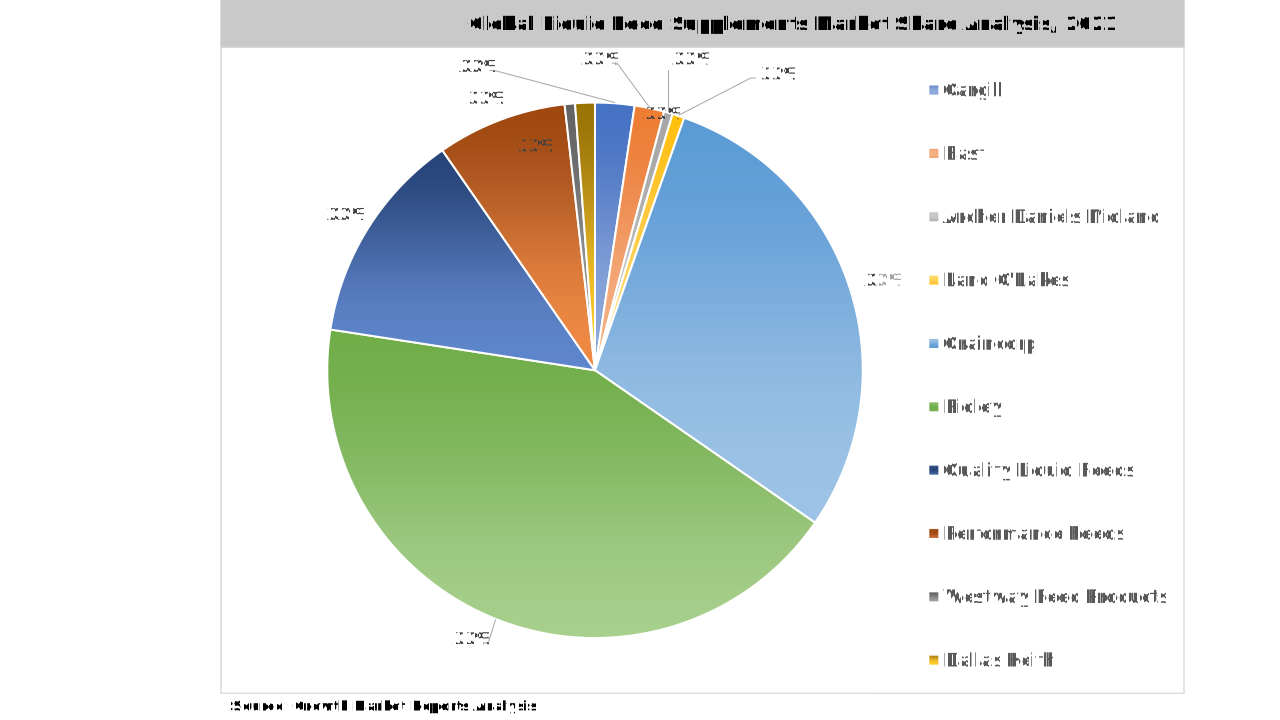
 

Liquid Feed Supplements Market By key Players

Frequently Asked Questions

Challenges include volatility in raw material prices, stringent regulatory requirements, and the need for continuous innovation and compliance with feed safety standards.

Key players include Cargill Incorporated, Archer Daniels Midland Company (ADM), BASF SE, Land O’Lakes Inc., Nutreco N.V., and several regional and local companies.

Major trends include the integration of digital agriculture and precision livestock farming, demand for sustainable and natural feed additives, and expansion into emerging markets.

Distribution channels include direct sales (company-owned outlets, direct-to-farm deliveries) and indirect channels (wholesalers, distributors, retail stores, cooperatives, and online platforms).

Common sources include molasses, corn, urea, and other alternatives such as whey, beet pulp, and plant extracts.

Ruminants (cattle, sheep, goats) are the largest consumers, followed by swine, poultry, and aquaculture.

The main product types include protein-based, mineral-based, vitamin-based, and specialized supplements such as amino acids, probiotics, enzymes, and organic acids.

Asia Pacific leads the market, followed by North America and Europe. Latin America and the Middle East & Africa are also experiencing significant growth.

Key growth drivers include rising demand for high-quality animal protein, increasing commercialization of livestock farming, emphasis on animal nutrition and productivity, and the adoption of sustainable animal husbandry practices.

As of 2024, the global liquid feed supplements market is valued at USD 7.86 billion and is projected to reach USD 12.90 billion by 2033.

Table Of Content

Chapter 1 Executive Summary
Chapter 2 Assumptions and Acronyms Used
Chapter 3 Research Methodology
Chapter 4 Liquid Feed Supplements Market Overview
   4.1 Introduction
      4.1.1 Market Taxonomy
      4.1.2 Market Definition
      4.1.3 Macro-Economic Factors Impacting the Market Growth
   4.2 Liquid Feed Supplements Market Dynamics
      4.2.1 Market Drivers
      4.2.2 Market Restraints
      4.2.3 Market Opportunity
   4.3 Liquid Feed Supplements Market - Supply Chain Analysis
      4.3.1 List of Key Suppliers
      4.3.2 List of Key Distributors
      4.3.3 List of Key Consumers
   4.4 Key Forces Shaping the Liquid Feed Supplements Market
      4.4.1 Bargaining Power of Suppliers
      4.4.2 Bargaining Power of Buyers
      4.4.3 Threat of Substitution
      4.4.4 Threat of New Entrants
      4.4.5 Competitive Rivalry
   4.5 Global Liquid Feed Supplements Market Size & Forecast, 2023-2032
      4.5.1 Liquid Feed Supplements Market Size and Y-o-Y Growth
      4.5.2 Liquid Feed Supplements Market Absolute $ Opportunity

Chapter 5 Global Liquid Feed Supplements Market Analysis and Forecast By Product Type
   5.1 Introduction
      5.1.1 Key Market Trends & Growth Opportunities By Product Type
      5.1.2 Basis Point Share (BPS) Analysis By Product Type
      5.1.3 Absolute $ Opportunity Assessment By Product Type
   5.2 Liquid Feed Supplements Market Size Forecast By Product Type
      5.2.1 Protein-based
      5.2.2 Minerals
      5.2.3 Vitamins
      5.2.4 Others
   5.3 Market Attractiveness Analysis By Product Type

Chapter 6 Global Liquid Feed Supplements Market Analysis and Forecast By Livestock
   6.1 Introduction
      6.1.1 Key Market Trends & Growth Opportunities By Livestock
      6.1.2 Basis Point Share (BPS) Analysis By Livestock
      6.1.3 Absolute $ Opportunity Assessment By Livestock
   6.2 Liquid Feed Supplements Market Size Forecast By Livestock
      6.2.1 Ruminants
      6.2.2 Swine
      6.2.3 Poultry
      6.2.4 Aquaculture
      6.2.5 Others
   6.3 Market Attractiveness Analysis By Livestock

Chapter 7 Global Liquid Feed Supplements Market Analysis and Forecast By Source
   7.1 Introduction
      7.1.1 Key Market Trends & Growth Opportunities By Source
      7.1.2 Basis Point Share (BPS) Analysis By Source
      7.1.3 Absolute $ Opportunity Assessment By Source
   7.2 Liquid Feed Supplements Market Size Forecast By Source
      7.2.1 Molasses
      7.2.2 Corn
      7.2.3 Urea
      7.2.4 Others
   7.3 Market Attractiveness Analysis By Source

Chapter 8 Global Liquid Feed Supplements Market Analysis and Forecast By Form
   8.1 Introduction
      8.1.1 Key Market Trends & Growth Opportunities By Form
      8.1.2 Basis Point Share (BPS) Analysis By Form
      8.1.3 Absolute $ Opportunity Assessment By Form
   8.2 Liquid Feed Supplements Market Size Forecast By Form
      8.2.1 Blended Liquid Supplements
      8.2.2 Suspension Supplements
      8.2.3 Others
   8.3 Market Attractiveness Analysis By Form

Chapter 9 Global Liquid Feed Supplements Market Analysis and Forecast By Distribution Channel
   9.1 Introduction
      9.1.1 Key Market Trends & Growth Opportunities By Distribution Channel
      9.1.2 Basis Point Share (BPS) Analysis By Distribution Channel
      9.1.3 Absolute $ Opportunity Assessment By Distribution Channel
   9.2 Liquid Feed Supplements Market Size Forecast By Distribution Channel
      9.2.1 Direct
      9.2.2 Indirect
   9.3 Market Attractiveness Analysis By Distribution Channel

Chapter 10 Global Liquid Feed Supplements Market Analysis and Forecast by Region
   10.1 Introduction
      10.1.1 Key Market Trends & Growth Opportunities By Region
      10.1.2 Basis Point Share (BPS) Analysis By Region
      10.1.3 Absolute $ Opportunity Assessment By Region
   10.2 Liquid Feed Supplements Market Size Forecast By Region
      10.2.1 North America
      10.2.2 Europe
      10.2.3 Asia Pacific
      10.2.4 Latin America
      10.2.5 Middle East & Africa (MEA)
   10.3 Market Attractiveness Analysis By Region

Chapter 11 Coronavirus Disease (COVID-19) Impact 
   11.1 Introduction 
   11.2 Current & Future Impact Analysis 
   11.3 Economic Impact Analysis 
   11.4 Government Policies 
   11.5 Investment Scenario

Chapter 12 North America Liquid Feed Supplements Analysis and Forecast
   12.1 Introduction
   12.2 North America Liquid Feed Supplements Market Size Forecast by Country
      12.2.1 U.S.
      12.2.2 Canada
   12.3 Basis Point Share (BPS) Analysis by Country
   12.4 Absolute $ Opportunity Assessment by Country
   12.5 Market Attractiveness Analysis by Country
   12.6 North America Liquid Feed Supplements Market Size Forecast By Product Type
      12.6.1 Protein-based
      12.6.2 Minerals
      12.6.3 Vitamins
      12.6.4 Others
   12.7 Basis Point Share (BPS) Analysis By Product Type 
   12.8 Absolute $ Opportunity Assessment By Product Type 
   12.9 Market Attractiveness Analysis By Product Type
   12.10 North America Liquid Feed Supplements Market Size Forecast By Livestock
      12.10.1 Ruminants
      12.10.2 Swine
      12.10.3 Poultry
      12.10.4 Aquaculture
      12.10.5 Others
   12.11 Basis Point Share (BPS) Analysis By Livestock 
   12.12 Absolute $ Opportunity Assessment By Livestock 
   12.13 Market Attractiveness Analysis By Livestock
   12.14 North America Liquid Feed Supplements Market Size Forecast By Source
      12.14.1 Molasses
      12.14.2 Corn
      12.14.3 Urea
      12.14.4 Others
   12.15 Basis Point Share (BPS) Analysis By Source 
   12.16 Absolute $ Opportunity Assessment By Source 
   12.17 Market Attractiveness Analysis By Source
   12.18 North America Liquid Feed Supplements Market Size Forecast By Form
      12.18.1 Blended Liquid Supplements
      12.18.2 Suspension Supplements
      12.18.3 Others
   12.19 Basis Point Share (BPS) Analysis By Form 
   12.20 Absolute $ Opportunity Assessment By Form 
   12.21 Market Attractiveness Analysis By Form
   12.22 North America Liquid Feed Supplements Market Size Forecast By Distribution Channel
      12.22.1 Direct
      12.22.2 Indirect
   12.23 Basis Point Share (BPS) Analysis By Distribution Channel 
   12.24 Absolute $ Opportunity Assessment By Distribution Channel 
   12.25 Market Attractiveness Analysis By Distribution Channel

Chapter 13 Europe Liquid Feed Supplements Analysis and Forecast
   13.1 Introduction
   13.2 Europe Liquid Feed Supplements Market Size Forecast by Country
      13.2.1 Germany
      13.2.2 France
      13.2.3 Italy
      13.2.4 U.K.
      13.2.5 Spain
      13.2.6 Russia
      13.2.7 Rest of Europe
   13.3 Basis Point Share (BPS) Analysis by Country
   13.4 Absolute $ Opportunity Assessment by Country
   13.5 Market Attractiveness Analysis by Country
   13.6 Europe Liquid Feed Supplements Market Size Forecast By Product Type
      13.6.1 Protein-based
      13.6.2 Minerals
      13.6.3 Vitamins
      13.6.4 Others
   13.7 Basis Point Share (BPS) Analysis By Product Type 
   13.8 Absolute $ Opportunity Assessment By Product Type 
   13.9 Market Attractiveness Analysis By Product Type
   13.10 Europe Liquid Feed Supplements Market Size Forecast By Livestock
      13.10.1 Ruminants
      13.10.2 Swine
      13.10.3 Poultry
      13.10.4 Aquaculture
      13.10.5 Others
   13.11 Basis Point Share (BPS) Analysis By Livestock 
   13.12 Absolute $ Opportunity Assessment By Livestock 
   13.13 Market Attractiveness Analysis By Livestock
   13.14 Europe Liquid Feed Supplements Market Size Forecast By Source
      13.14.1 Molasses
      13.14.2 Corn
      13.14.3 Urea
      13.14.4 Others
   13.15 Basis Point Share (BPS) Analysis By Source 
   13.16 Absolute $ Opportunity Assessment By Source 
   13.17 Market Attractiveness Analysis By Source
   13.18 Europe Liquid Feed Supplements Market Size Forecast By Form
      13.18.1 Blended Liquid Supplements
      13.18.2 Suspension Supplements
      13.18.3 Others
   13.19 Basis Point Share (BPS) Analysis By Form 
   13.20 Absolute $ Opportunity Assessment By Form 
   13.21 Market Attractiveness Analysis By Form
   13.22 Europe Liquid Feed Supplements Market Size Forecast By Distribution Channel
      13.22.1 Direct
      13.22.2 Indirect
   13.23 Basis Point Share (BPS) Analysis By Distribution Channel 
   13.24 Absolute $ Opportunity Assessment By Distribution Channel 
   13.25 Market Attractiveness Analysis By Distribution Channel

Chapter 14 Asia Pacific Liquid Feed Supplements Analysis and Forecast
   14.1 Introduction
   14.2 Asia Pacific Liquid Feed Supplements Market Size Forecast by Country
      14.2.1 China
      14.2.2 Japan
      14.2.3 South Korea
      14.2.4 India
      14.2.5 Australia
      14.2.6 South East Asia (SEA)
      14.2.7 Rest of Asia Pacific (APAC)
   14.3 Basis Point Share (BPS) Analysis by Country
   14.4 Absolute $ Opportunity Assessment by Country
   14.5 Market Attractiveness Analysis by Country
   14.6 Asia Pacific Liquid Feed Supplements Market Size Forecast By Product Type
      14.6.1 Protein-based
      14.6.2 Minerals
      14.6.3 Vitamins
      14.6.4 Others
   14.7 Basis Point Share (BPS) Analysis By Product Type 
   14.8 Absolute $ Opportunity Assessment By Product Type 
   14.9 Market Attractiveness Analysis By Product Type
   14.10 Asia Pacific Liquid Feed Supplements Market Size Forecast By Livestock
      14.10.1 Ruminants
      14.10.2 Swine
      14.10.3 Poultry
      14.10.4 Aquaculture
      14.10.5 Others
   14.11 Basis Point Share (BPS) Analysis By Livestock 
   14.12 Absolute $ Opportunity Assessment By Livestock 
   14.13 Market Attractiveness Analysis By Livestock
   14.14 Asia Pacific Liquid Feed Supplements Market Size Forecast By Source
      14.14.1 Molasses
      14.14.2 Corn
      14.14.3 Urea
      14.14.4 Others
   14.15 Basis Point Share (BPS) Analysis By Source 
   14.16 Absolute $ Opportunity Assessment By Source 
   14.17 Market Attractiveness Analysis By Source
   14.18 Asia Pacific Liquid Feed Supplements Market Size Forecast By Form
      14.18.1 Blended Liquid Supplements
      14.18.2 Suspension Supplements
      14.18.3 Others
   14.19 Basis Point Share (BPS) Analysis By Form 
   14.20 Absolute $ Opportunity Assessment By Form 
   14.21 Market Attractiveness Analysis By Form
   14.22 Asia Pacific Liquid Feed Supplements Market Size Forecast By Distribution Channel
      14.22.1 Direct
      14.22.2 Indirect
   14.23 Basis Point Share (BPS) Analysis By Distribution Channel 
   14.24 Absolute $ Opportunity Assessment By Distribution Channel 
   14.25 Market Attractiveness Analysis By Distribution Channel

Chapter 15 Latin America Liquid Feed Supplements Analysis and Forecast
   15.1 Introduction
   15.2 Latin America Liquid Feed Supplements Market Size Forecast by Country
      15.2.1 Brazil
      15.2.2 Mexico
      15.2.3 Rest of Latin America (LATAM)
   15.3 Basis Point Share (BPS) Analysis by Country
   15.4 Absolute $ Opportunity Assessment by Country
   15.5 Market Attractiveness Analysis by Country
   15.6 Latin America Liquid Feed Supplements Market Size Forecast By Product Type
      15.6.1 Protein-based
      15.6.2 Minerals
      15.6.3 Vitamins
      15.6.4 Others
   15.7 Basis Point Share (BPS) Analysis By Product Type 
   15.8 Absolute $ Opportunity Assessment By Product Type 
   15.9 Market Attractiveness Analysis By Product Type
   15.10 Latin America Liquid Feed Supplements Market Size Forecast By Livestock
      15.10.1 Ruminants
      15.10.2 Swine
      15.10.3 Poultry
      15.10.4 Aquaculture
      15.10.5 Others
   15.11 Basis Point Share (BPS) Analysis By Livestock 
   15.12 Absolute $ Opportunity Assessment By Livestock 
   15.13 Market Attractiveness Analysis By Livestock
   15.14 Latin America Liquid Feed Supplements Market Size Forecast By Source
      15.14.1 Molasses
      15.14.2 Corn
      15.14.3 Urea
      15.14.4 Others
   15.15 Basis Point Share (BPS) Analysis By Source 
   15.16 Absolute $ Opportunity Assessment By Source 
   15.17 Market Attractiveness Analysis By Source
   15.18 Latin America Liquid Feed Supplements Market Size Forecast By Form
      15.18.1 Blended Liquid Supplements
      15.18.2 Suspension Supplements
      15.18.3 Others
   15.19 Basis Point Share (BPS) Analysis By Form 
   15.20 Absolute $ Opportunity Assessment By Form 
   15.21 Market Attractiveness Analysis By Form
   15.22 Latin America Liquid Feed Supplements Market Size Forecast By Distribution Channel
      15.22.1 Direct
      15.22.2 Indirect
   15.23 Basis Point Share (BPS) Analysis By Distribution Channel 
   15.24 Absolute $ Opportunity Assessment By Distribution Channel 
   15.25 Market Attractiveness Analysis By Distribution Channel

Chapter 16 Middle East & Africa (MEA) Liquid Feed Supplements Analysis and Forecast
   16.1 Introduction
   16.2 Middle East & Africa (MEA) Liquid Feed Supplements Market Size Forecast by Country
      16.2.1 Saudi Arabia
      16.2.2 South Africa
      16.2.3 UAE
      16.2.4 Rest of Middle East & Africa (MEA)
   16.3 Basis Point Share (BPS) Analysis by Country
   16.4 Absolute $ Opportunity Assessment by Country
   16.5 Market Attractiveness Analysis by Country
   16.6 Middle East & Africa (MEA) Liquid Feed Supplements Market Size Forecast By Product Type
      16.6.1 Protein-based
      16.6.2 Minerals
      16.6.3 Vitamins
      16.6.4 Others
   16.7 Basis Point Share (BPS) Analysis By Product Type 
   16.8 Absolute $ Opportunity Assessment By Product Type 
   16.9 Market Attractiveness Analysis By Product Type
   16.10 Middle East & Africa (MEA) Liquid Feed Supplements Market Size Forecast By Livestock
      16.10.1 Ruminants
      16.10.2 Swine
      16.10.3 Poultry
      16.10.4 Aquaculture
      16.10.5 Others
   16.11 Basis Point Share (BPS) Analysis By Livestock 
   16.12 Absolute $ Opportunity Assessment By Livestock 
   16.13 Market Attractiveness Analysis By Livestock
   16.14 Middle East & Africa (MEA) Liquid Feed Supplements Market Size Forecast By Source
      16.14.1 Molasses
      16.14.2 Corn
      16.14.3 Urea
      16.14.4 Others
   16.15 Basis Point Share (BPS) Analysis By Source 
   16.16 Absolute $ Opportunity Assessment By Source 
   16.17 Market Attractiveness Analysis By Source
   16.18 Middle East & Africa (MEA) Liquid Feed Supplements Market Size Forecast By Form
      16.18.1 Blended Liquid Supplements
      16.18.2 Suspension Supplements
      16.18.3 Others
   16.19 Basis Point Share (BPS) Analysis By Form 
   16.20 Absolute $ Opportunity Assessment By Form 
   16.21 Market Attractiveness Analysis By Form
   16.22 Middle East & Africa (MEA) Liquid Feed Supplements Market Size Forecast By Distribution Channel
      16.22.1 Direct
      16.22.2 Indirect
   16.23 Basis Point Share (BPS) Analysis By Distribution Channel 
   16.24 Absolute $ Opportunity Assessment By Distribution Channel 
   16.25 Market Attractiveness Analysis By Distribution Channel

Chapter 17 Competition Landscape 
   17.1 Liquid Feed Supplements Market: Competitive Dashboard
   17.2 Global Liquid Feed Supplements Market: Market Share Analysis, 2023
   17.3 Company Profiles (Details – Overview, Financials, Developments, Strategy) 
      17.3.1 Cargill, Inc.
Archer Daniels Midland Company (ADM)
Land O'Lakes, Inc.
Westway Feed Products LLC
GrainCorp Limited
Ridley Corporation Limited
Quality Liquid Feeds, Inc.
Dallas Keith Limited
Performance Feeds
Cowboy Mining Company
Midwest Liquid Feeds, LLC
Alltech, Inc.
Nutreco N.V.
BASF SE
Wilbur-Ellis Company
Pearson Square Solutions
Merrick's Inc.
New Generation Supplements, LLC
ProviCo Pty Ltd
Agri-King Inc.

Methodology

Our Clients

General Mills
Dassault Aviation
Pfizer
FedEx Logistics
sinopec
Siemens Healthcare
Nestle SA
The John Holland Group