Edible Insects for Animal Feed Market Research Report 2033

Edible Insects for Animal Feed Market Research Report 2033

Segments - by Insect Type (Mealworms, Black Soldier Fly, Grasshoppers, Crickets, Silkworms, Others), by Application (Poultry Feed, Aquaculture Feed, Pet Food, Livestock Feed, Others), by Form (Whole Insects, Powder, Oil, Others), by Distribution Channel (Direct, Indirect)

https://growthmarketreports.com/raksha
Author : Raksha Sharma
https://growthmarketreports.com/Vaibhav
Fact-checked by : V. Chandola
https://growthmarketreports.com/Shruti
Editor : Shruti Bhat

Upcoming | Report ID :HC-594 | 4.8 Rating | 26 Reviews | 286 Pages | Format : Docx PDF

Report Description


Edible Insects for Animal Feed Market Outlook

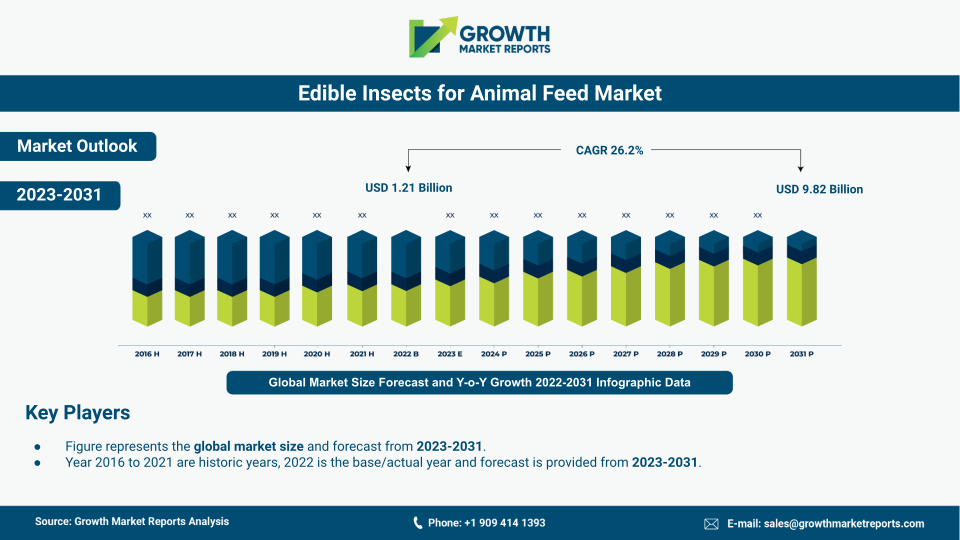
According to our latest research, the global edible insects for animal feed market size reached USD 3.2 billion in 2024, reflecting robust momentum in sustainable protein alternatives for animal nutrition. The market is registering a strong CAGR of 19.6% and is forecasted to reach USD 15.3 billion by 2033. This exceptional growth is primarily driven by the escalating demand for sustainable and high-protein feed ingredients, growing environmental concerns associated with traditional animal feed sources, and the rising acceptance of insect-based feed among livestock, aquaculture, and pet food manufacturers.

One of the primary growth factors fueling the edible insects for animal feed market is the urgent need for sustainable protein sources in the animal feed sector. Traditional feed ingredients such as fishmeal and soybean meal are increasingly coming under scrutiny due to their environmental footprint, including deforestation, water use, and overfishing. Insects, notably mealworms and the black soldier fly, offer a highly efficient conversion of organic waste into high-quality protein and fat, making them a viable, eco-friendly alternative. Their rapid reproduction rates and ability to thrive on organic side streams further enhance their sustainability credentials. As global animal protein production rises, the pressure on conventional feed resources intensifies, making insect-based feed an attractive and scalable solution for the future.

Another significant driver is the nutritional value and functional benefits that edible insects bring to animal feed formulations. Insects provide a balanced amino acid profile, essential fatty acids, vitamins, and minerals, which are crucial for the health and productivity of poultry, fish, pets, and livestock. Research has demonstrated that incorporating insect protein can improve feed conversion ratios, bolster immune responses, and even reduce the incidence of certain diseases in animals. These functional advantages are increasingly recognized by feed manufacturers and end-users, leading to a surge in product development and commercialization of insect-based feed solutions across the globe. Regulatory advancements, particularly in Europe and Asia, have also paved the way for the inclusion of insect-derived ingredients in commercial feed, further accelerating market adoption.

Technological innovation and investments in insect farming infrastructure are also propelling the edible insects for animal feed market forward. Advanced rearing techniques, automated processing systems, and scalable production models have significantly reduced the cost of insect protein, making it more competitive with traditional feed ingredients. Strategic partnerships between insect producers and major feed companies are facilitating knowledge transfer and expanding distribution networks. The emergence of vertically integrated insect farms, coupled with supportive government policies and funding, is creating a vibrant ecosystem for the edible insect industry. This wave of innovation is not only increasing production capacity but also ensuring consistent quality and safety standards, which are critical for large-scale adoption in animal feed applications.

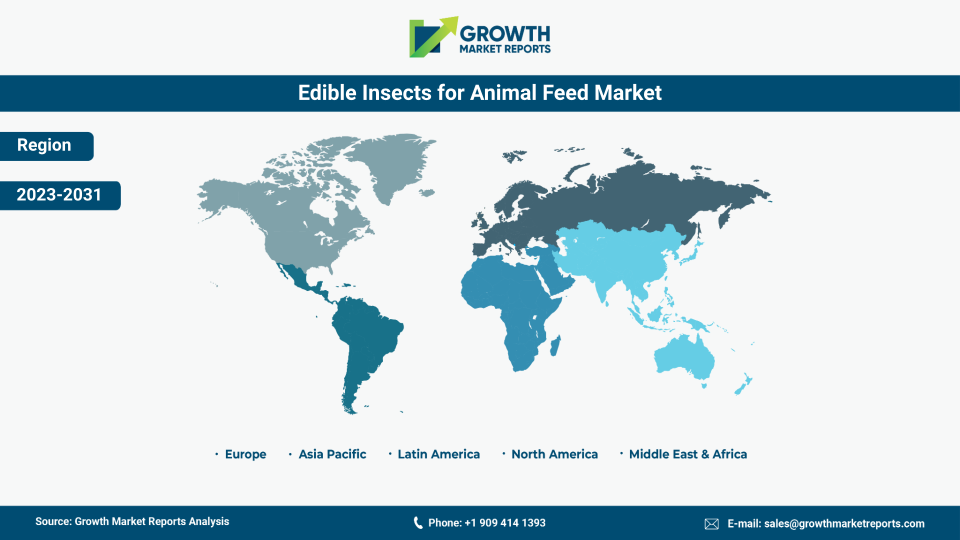
Regionally, Asia Pacific continues to dominate the edible insects for animal feed market, driven by a combination of large-scale aquaculture and livestock industries, favorable climatic conditions for insect farming, and cultural acceptance of insect consumption. Europe is rapidly catching up, supported by progressive regulatory frameworks and a strong focus on sustainability among feed manufacturers. North America is witnessing growing investments and pilot projects, while Latin America and the Middle East & Africa are emerging as promising markets due to their expanding animal protein sectors and increasing awareness of sustainable feed solutions. The regional dynamics are shaped by local feed demand, regulatory environments, and the availability of raw materials for insect rearing, making the global landscape highly diverse and competitive.

Smart Insect Farming is revolutionizing the way we approach sustainable animal feed production. By leveraging advanced technologies such as IoT, AI, and automation, smart insect farms are able to optimize the rearing conditions for insects, enhancing their growth rates and nutritional profiles. These farms utilize real-time data to monitor and adjust environmental parameters, ensuring optimal conditions for insect development. This not only improves the efficiency of insect farming but also reduces the environmental impact by minimizing resource use and waste. As the demand for sustainable protein sources continues to rise, smart insect farming is poised to play a crucial role in meeting global feed needs while supporting environmental sustainability.

Global Edible Insects for Animal Feed  Industry Outlook

Insect Type Analysis

The edible insects for animal feed market is segmented by insect type, including mealworms, black soldier fly, grasshoppers, crickets, silkworms, and others. Among these, the black soldier fly (BSF) has emerged as the dominant segment, owing to its unparalleled efficiency in converting organic waste into high-quality protein and fat. BSF larvae can thrive on a wide range of organic substrates, including food waste and agricultural byproducts, which makes them highly cost-effective and sustainable for mass production. The larvae are rich in essential amino acids, lauric acid, and micronutrients, making them particularly suitable for aquaculture and poultry feed. The scalability of BSF farming, alongside supportive regulatory approvals in key markets like Europe and Asia, has positioned it at the forefront of the edible insect industry for animal feed.

Mealworms are another significant insect type, valued for their balanced protein and fat content, as well as their mild flavor and digestibility. Mealworm protein is increasingly incorporated into pet food and specialty livestock feed, where nutritional quality and palatability are crucial. The relatively straightforward farming process and high feed conversion efficiency of mealworms make them an attractive option for commercial production. Additionally, ongoing research into the functional properties of mealworm-derived ingredients is expanding their application scope, particularly in high-value and niche feed markets. As consumer awareness of sustainable pet food options grows, mealworms are expected to play a more prominent role in the edible insects for animal feed market.

Crickets and grasshoppers, while less prevalent than BSF and mealworms, are gaining traction due to their high protein content and traditional use in animal and human diets in several regions. Crickets, in particular, are being explored for their potential in pet food and poultry feed, thanks to their digestibility and favorable nutrient profile. Grasshoppers are more commonly used in regions where their collection and farming are culturally accepted and economically viable. However, challenges related to scalability, regulatory approval, and consumer acceptance in Western markets have limited their widespread adoption in animal feed compared to BSF and mealworms.

Silkworms and other insect types, such as locusts and beetles, represent niche segments within the edible insects for animal feed market. Silkworm pupae, a byproduct of the silk industry, are rich in protein and fat and are increasingly being utilized in aquaculture and poultry feed, particularly in Asia. The use of other insects is often region-specific and influenced by local availability, traditional practices, and regulatory considerations. While these segments currently account for a smaller share of the market, ongoing research into their nutritional benefits and potential applications could unlock new growth opportunities in the coming years.

Report Scope

Attributes Details
Report Title Edible Insects for Animal Feed Market Research Report 2033
By Insect Type Mealworms, Black Soldier Fly, Grasshoppers, Crickets, Silkworms, Others
By Application Poultry Feed, Aquaculture Feed, Pet Food, Livestock Feed, Others
By Form Whole Insects, Powder, Oil, Others
By Distribution Channel Direct, Indirect
Regions Covered North America, Europe, APAC, Latin America, MEA
Base Year 2024
Historic Data 2018-2023
Forecast Period 2025-2033
Number of Pages 286
Number of Tables & Figures 286
Customization Available Yes, the report can be customized as per your need.

Application Analysis

The application segment of the edible insects for animal feed market encompasses poultry feed, aquaculture feed, pet food, livestock feed, and others. Aquaculture feed has emerged as the largest application segment, driven by the urgent need for sustainable alternatives to fishmeal, which is increasingly expensive and environmentally unsustainable. Insect protein, particularly from BSF and mealworms, offers a comparable amino acid profile to fishmeal and has been shown to enhance growth performance, feed efficiency, and disease resistance in fish and shrimp. Regulatory approvals in Europe and Asia for the use of insect protein in aquafeed have further spurred adoption, making aquaculture a key growth driver for the edible insects for animal feed market.

Poultry feed is another significant application area, as poultry producers seek to diversify protein sources and reduce reliance on soy and fishmeal. Insect-based feed ingredients provide high digestibility, essential nutrients, and functional benefits such as improved gut health and immune function in poultry. The inclusion of insect protein in broiler and layer diets has demonstrated positive effects on growth rates, feed conversion ratios, and overall bird health. As consumer demand for antibiotic-free and natural poultry products rises, insect-based feed is gaining traction as a viable and sustainable alternative.

The pet food segment is witnessing rapid growth, fueled by increasing pet ownership, rising demand for premium and sustainable pet food products, and growing awareness of the nutritional benefits of insect protein. Insect-based pet food is particularly appealing to environmentally conscious consumers seeking novel protein sources with a lower carbon footprint. Mealworms and crickets are commonly used in pet food formulations, offering high palatability, hypoallergenic properties, and essential nutrients for dogs, cats, and exotic pets. The premiumization trend in the pet food industry is expected to further drive the adoption of insect-based ingredients in this segment.

Insect-Protein Fish Feed is gaining traction as a sustainable alternative to traditional fishmeal in aquaculture. With the depletion of wild fish stocks and the increasing cost of fishmeal, the aquaculture industry is turning to insect protein as a viable solution. Insects such as black soldier fly larvae and mealworms offer a comparable amino acid profile to fishmeal, making them an excellent source of nutrition for fish and shrimp. The use of insect protein in fish feed not only supports the health and growth of aquatic species but also contributes to the reduction of the environmental footprint associated with aquaculture. As regulatory approvals expand and consumer acceptance grows, insect-protein fish feed is set to become a cornerstone of sustainable aquaculture practices.

Livestock feed, including feed for swine, cattle, and small ruminants, represents a growing application for edible insects, particularly in regions facing feed resource constraints or high feed costs. Insect protein can partially replace conventional protein sources, reducing feed costs and environmental impact. However, regulatory and scalability challenges remain, particularly in large-scale livestock operations. The "others" category includes specialty feeds for zoo animals, reptiles, and laboratory animals, where the unique nutritional and functional properties of insect protein are highly valued. As research and commercialization efforts continue, the application scope of edible insects in animal feed is expected to broaden significantly.

Form Analysis

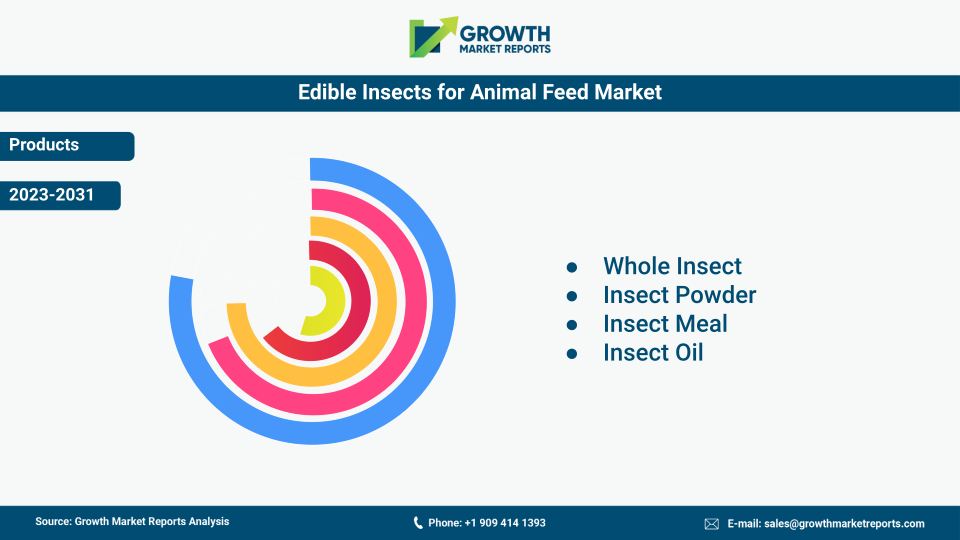
The edible insects for animal feed market is segmented by form into whole insects, powder, oil, and others. Insect powder is the most widely used form, owing to its versatility, ease of incorporation into feed formulations, and consistent nutritional profile. Powdered insect protein is produced through drying and grinding processes, resulting in a fine, stable product that can be easily blended with other feed ingredients. The high protein content, digestibility, and functional properties of insect powder make it suitable for aquaculture, poultry, pet food, and specialty feed applications. Advances in processing technology have improved the quality and safety of insect powder, further enhancing its appeal to feed manufacturers.

Whole insects are primarily used in niche and specialty feed applications, such as pet food for reptiles, birds, and exotic pets, as well as in certain aquaculture and poultry diets. Whole insects offer a natural feeding experience and are often preferred in markets where live or minimally processed feed is culturally accepted. However, the use of whole insects is limited by scalability, shelf-life, and handling challenges, making it less suitable for large-scale commercial feed production. Nonetheless, the demand for whole insects is expected to persist in specific segments, particularly in the premium pet food market.

Insect oil, derived from the fat fraction of insects such as BSF larvae, is gaining traction as a valuable feed ingredient, particularly in aquaculture and poultry feed. Insect oil is rich in lauric acid, omega fatty acids, and other bioactive compounds that promote animal health and growth. The inclusion of insect oil in feed formulations can enhance energy density, improve palatability, and support immune function. As processing technologies advance and production volumes increase, insect oil is expected to become an increasingly important component of the edible insects for animal feed market.

Other forms, such as insect meal, hydrolysates, and protein concentrates, are being developed to meet specific nutritional and functional requirements in animal feed. These value-added products are tailored for high-performance diets, specialty applications, and functional feed formulations. The diversification of product forms is driven by innovation in processing technologies, evolving feed industry requirements, and the need to optimize the nutritional and economic value of insect-derived ingredients. As the market matures, continued product development and customization will be key to addressing the diverse needs of animal feed manufacturers and end-users.

Distribution Channel Analysis

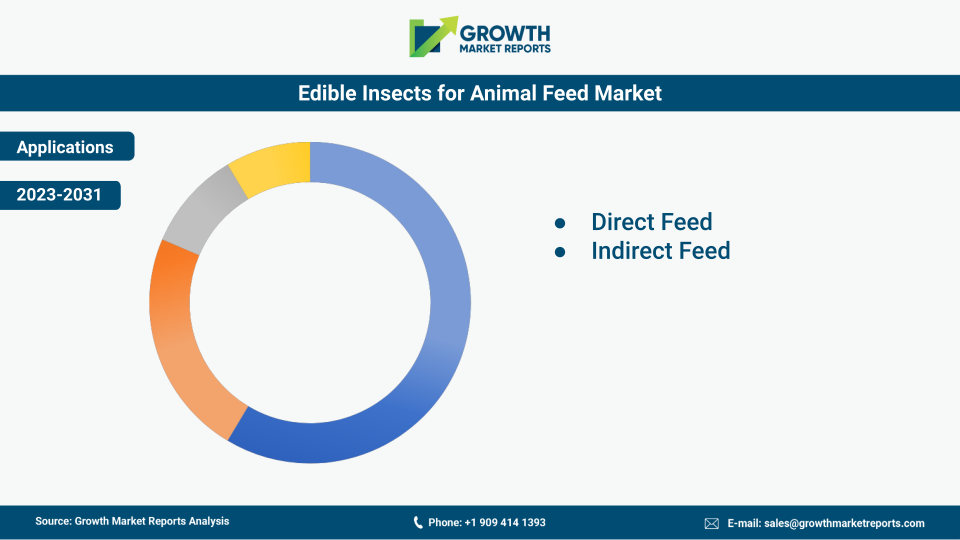
Distribution channels for edible insects for animal feed are broadly classified into direct and indirect channels. Direct distribution, which involves sales from insect producers to feed manufacturers or end-users, is the predominant channel in the early stages of market development. This approach enables close collaboration between producers and customers, facilitating product customization, technical support, and quality assurance. Direct sales are particularly important for large-scale feed manufacturers seeking consistent supply, traceability, and tailored nutritional solutions. As the market grows and production volumes increase, direct distribution is expected to remain a key channel, especially for strategic partnerships and long-term supply agreements.

Indirect distribution channels, including wholesalers, distributors, and online platforms, are gaining importance as the edible insects for animal feed market expands and diversifies. Indirect channels enable broader market reach, access to smaller feed producers, and efficient logistics management. Distributors play a crucial role in aggregating supply, managing inventory, and providing technical support to customers. The emergence of specialized feed ingredient distributors and online marketplaces is further enhancing market accessibility and transparency. As the market matures, the balance between direct and indirect distribution is expected to shift, with indirect channels playing a larger role in reaching new customer segments and geographies.

Integration of distribution channels with supply chain management systems, quality control protocols, and digital platforms is transforming the way insect-based feed ingredients are marketed and delivered. Producers are increasingly investing in logistics, warehousing, and customer service capabilities to ensure timely and reliable supply. Strategic alliances with established feed distributors and ingredient suppliers are facilitating market entry and expansion, particularly in regions with complex regulatory environments or fragmented feed industries. The evolution of distribution channels is a critical factor in scaling the edible insects for animal feed market and meeting the growing demand from diverse end-users.

Challenges in distribution include maintaining product quality and safety during storage and transportation, managing supply chain risks, and navigating regulatory requirements in different markets. Producers and distributors are addressing these challenges through investments in cold chain logistics, traceability systems, and compliance management. The development of standardized packaging, labeling, and documentation practices is also supporting the efficient and transparent movement of insect-based feed ingredients across borders. As the market continues to grow, the optimization of distribution channels will be essential for ensuring consistent supply, customer satisfaction, and long-term market success.

Opportunities & Threats

The edible insects for animal feed market presents significant opportunities for growth, innovation, and sustainability. One of the most promising opportunities lies in the expansion of insect farming infrastructure and the adoption of advanced rearing and processing technologies. Investments in automation, vertical farming, and waste-to-protein conversion systems are enabling large-scale, cost-effective production of high-quality insect protein and oil. These innovations are not only reducing production costs but also enhancing product consistency, safety, and traceability. The growing interest from venture capitalists, agritech companies, and multinational feed manufacturers is accelerating the commercialization and global expansion of the edible insect industry. Furthermore, the development of value-added products, such as functional feed additives and specialty ingredients, is opening new revenue streams and application areas for insect-based feed.

Another major opportunity is the alignment of the edible insects for animal feed market with global sustainability and circular economy initiatives. Insect farming offers a unique solution to the challenges of food waste management, resource efficiency, and greenhouse gas reduction. By converting organic side streams into high-value feed ingredients, insect producers are contributing to waste valorization and the reduction of environmental impact in the agri-food sector. The integration of insect farming into existing agricultural and food processing systems can create synergies, enhance resource use efficiency, and support the transition to more sustainable and resilient food systems. As governments, NGOs, and industry stakeholders increasingly prioritize sustainability, the edible insects for animal feed market is well positioned to benefit from supportive policies, funding, and public-private partnerships.

Despite the significant opportunities, the market faces important restrainers that could hinder its growth. Regulatory uncertainty and variability across regions remain a key challenge, as the approval process for insect-based feed ingredients can be complex, time-consuming, and costly. Differences in safety standards, labeling requirements, and allowable insect species create barriers to market entry and expansion. Additionally, consumer and end-user acceptance of insect-based feed, particularly in Western markets, is still evolving and can be influenced by perceptions of safety, quality, and sustainability. Addressing these challenges will require continued investment in research, stakeholder engagement, and the development of harmonized regulatory frameworks to ensure the safe and effective use of edible insects in animal feed.

Regional Outlook

The Asia Pacific region leads the global edible insects for animal feed market, accounting for USD 1.2 billion in 2024, driven by its large aquaculture and livestock industries, abundant organic waste streams, and cultural acceptance of insect consumption. Countries such as China, Thailand, Vietnam, and Indonesia are at the forefront of insect farming and commercialization, supported by favorable climatic conditions and government initiatives to promote sustainable agriculture. The region's strong demand for high-protein feed ingredients, coupled with its strategic position in global aquafeed and poultry supply chains, is fueling rapid market growth. With a projected CAGR of 21.2% through 2033, Asia Pacific is expected to maintain its leadership position, supported by ongoing investments in infrastructure, research, and regulatory development.

Europe is the second-largest market, with a value of USD 0.8 billion in 2024, reflecting its progressive regulatory environment and strong focus on sustainability among feed manufacturers. The European Union's approval of insect protein for aquaculture, poultry, and pig feed has catalyzed market development and attracted significant investment from insect producers and feed companies. Leading countries such as France, the Netherlands, and Germany are home to several large-scale insect farms and innovation hubs, driving research, product development, and commercialization. The region's emphasis on circular economy principles, waste reduction, and resource efficiency is further supporting the adoption of insect-based feed solutions. Europe is expected to maintain a robust growth trajectory, with a projected CAGR of 18.7% through 2033.

North America is an emerging market, valued at USD 0.6 billion in 2024, characterized by increasing investments, pilot projects, and growing awareness of the benefits of insect-based feed. The United States and Canada are witnessing the entry of new players, strategic partnerships, and the development of regulatory frameworks to support the commercialization of insect protein. The region's large pet food, aquaculture, and poultry industries provide significant growth potential, particularly as sustainability and alternative protein sources gain prominence. Latin America and the Middle East & Africa are smaller but rapidly growing markets, with a combined value of USD 0.6 billion in 2024, driven by expanding animal protein production, feed resource constraints, and increasing interest in sustainable agricultural practices. These regions are expected to experience accelerated growth as awareness, infrastructure, and regulatory support continue to develop.

Edible Insects for Animal Feed  Market Statistics

Competitor Outlook

The edible insects for animal feed market is characterized by a dynamic and rapidly evolving competitive landscape, with a mix of established players, innovative startups, and multinational feed companies vying for market share. Leading insect producers are focusing on scaling up production, optimizing rearing and processing technologies, and securing strategic partnerships with major feed manufacturers. The competitive environment is marked by intense research and development activity, as companies seek to differentiate their products through nutritional quality, functional benefits, and sustainability credentials. Mergers, acquisitions, and collaborations are common strategies for expanding market reach, accessing new technologies, and strengthening supply chains.

Innovation is a key driver of competition in the market, with companies investing in advanced farming systems, automated processing, and value-added product development. The ability to produce consistent, high-quality, and safe insect-derived ingredients at scale is a critical success factor. Companies are also focusing on traceability, certification, and compliance with regulatory standards to build trust and credibility with feed manufacturers and end-users. The development of proprietary strains, feed formulations, and functional additives is enabling companies to target specific animal species, production systems, and market segments, further intensifying competition.

Sustainability and circular economy principles are increasingly shaping competitive strategies, as companies seek to position themselves as leaders in responsible and resource-efficient feed production. Partnerships with food processors, waste management companies, and agricultural cooperatives are enabling the integration of insect farming into broader value chains, enhancing resource use efficiency and creating new business models. Companies that can demonstrate measurable environmental and social benefits are gaining a competitive edge, particularly in markets where sustainability is a key purchasing criterion for feed manufacturers and end-users.

Major players in the edible insects for animal feed market include Protix, AgriProtein, InnovaFeed, Entomo Farms, EnviroFlight, Ynsect, Hexafly, NextProtein, and Nutrition Technologies. Protix, based in the Netherlands, is a pioneer in large-scale black soldier fly production and has established partnerships with leading feed companies in Europe and beyond. AgriProtein, headquartered in South Africa, is a global leader in waste-to-protein solutions, leveraging black soldier fly larvae to produce sustainable feed ingredients. InnovaFeed, a French company, focuses on high-quality insect protein for aquaculture and livestock feed, with advanced production facilities and strong R&D capabilities. Entomo Farms, based in Canada, specializes in cricket and mealworm production for pet food and specialty feed applications.

EnviroFlight, a US-based company, is a key player in black soldier fly production for aquaculture, poultry, and pet food markets, with a focus on innovation and sustainability. Ynsect, a French biotech firm, is developing high-value insect protein and oil products for animal feed, leveraging cutting-edge technology and vertical integration. Hexafly, based in Ireland, is expanding its production capacity and product portfolio to serve the European and global markets. NextProtein, headquartered in Tunisia, is pioneering sustainable insect protein production for aquafeed and livestock feed in Africa and Europe. Nutrition Technologies, operating in Southeast Asia, is rapidly scaling up production and distribution of insect-based feed ingredients, targeting the region's growing aquaculture and livestock sectors.

These companies are at the forefront of the edible insects for animal feed market, driving innovation, commercialization, and market expansion. Their success is underpinned by a combination of technological leadership, strategic partnerships, and a commitment to sustainability. As the market continues to grow and evolve, competition is expected to intensify, with new entrants, disruptive technologies, and changing regulatory landscapes shaping the future of the industry.

Key Players

  • AgriProtein
  • Ynsect
  • Protix
  • EnviroFlight
  • InnovaFeed
  • Hexafly
  • NextProtein
  • Entomo Farms
  • Enterra Feed Corporation
  • Nutrition Technologies
  • BioflyTech
  • Entofood
  • Bugsolutely
  • Chapul Farms
  • MealFood Europe
  • Entobel
  • Insect Technology Group
  • HiProMine
  • Sfly
  • ECOFLY
Edible Insects for Animal Feed  Market Overview

Segments

The Edible Insects for Animal Feed market has been segmented on the basis of

Insect Type

  • Mealworms
  • Black Soldier Fly
  • Grasshoppers
  • Crickets
  • Silkworms
  • Others

Application

  • Poultry Feed
  • Aquaculture Feed
  • Pet Food
  • Livestock Feed
  • Others

Form

  • Whole Insects
  • Powder
  • Oil
  • Others

Distribution Channel

  • Direct
  • Indirect

Competitive Landscape

Key players operating in the edible insects for animal feed market share are Enviroflight, Agri Protein, Ynsect, Protix, Enterra Feed, Bioflytech, Proti-Farm, Entomotech, Nordic Insect Economy, Entomo Farms, Kreca, Deli Bugs, All Things Bugs, LLC, Tiny Farms, Global Bugs Asia Co., Ltd., Beta Hatch Inc., EntoCube Ltd., Rocky Mountain Micro Ranch, Armstrong Cricket Farm Georgia, Cowboy Cricket Farms, and ENTOBEL HOLDING PTE. LTD.
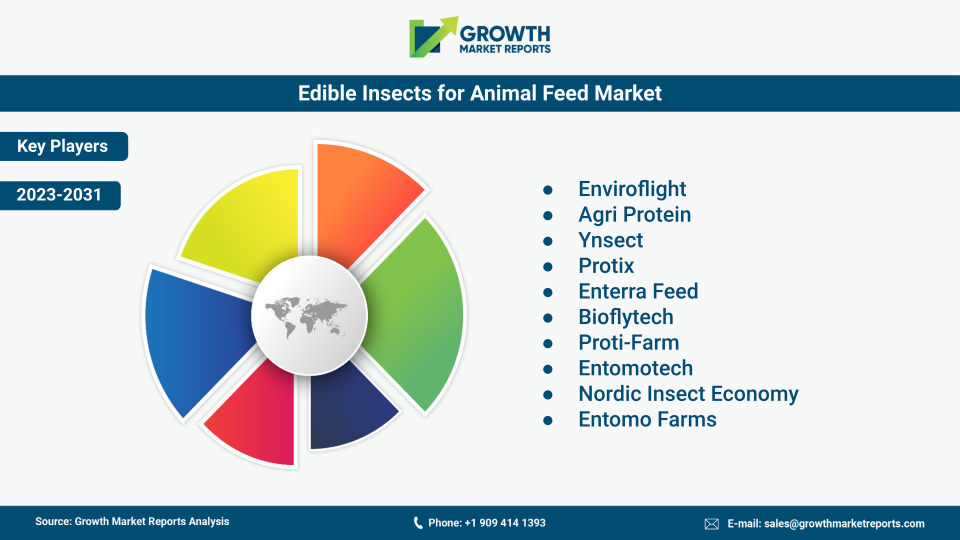

 Edible Insects for Animal Feed Market Key Players

Frequently Asked Questions

Insect farming converts organic waste into high-value protein and fat, reduces reliance on environmentally damaging feed sources, and supports circular economy initiatives by valorizing food and agricultural byproducts.

Major players include Protix, AgriProtein, InnovaFeed, Entomo Farms, EnviroFlight, Ynsect, Hexafly, NextProtein, and Nutrition Technologies, among others.

Challenges include regulatory uncertainty, consumer acceptance in Western markets, supply chain management, and maintaining product quality and safety during distribution.

Distribution channels include direct sales from producers to feed manufacturers and indirect channels such as wholesalers, distributors, and online platforms. Direct channels dominate in early market stages, while indirect channels are expanding as the market grows.

Insect-based feed ingredients are available in forms such as whole insects, powder, oil, and other processed forms like meal and protein concentrates. Insect powder is the most widely used form.

Asia Pacific leads the market, followed by Europe and North America. Latin America and the Middle East & Africa are emerging as promising regions due to expanding animal protein sectors and sustainable feed awareness.

Edible insects are used in poultry feed, aquaculture feed, pet food, livestock feed, and specialty feeds for zoo and laboratory animals. Aquaculture feed is currently the largest application segment.

The most common insect types used in animal feed are black soldier fly (BSF), mealworms, crickets, grasshoppers, silkworms, and others, with BSF being the dominant segment due to its efficiency and nutritional profile.

Key growth drivers include the demand for sustainable and high-protein feed ingredients, environmental concerns over traditional feed sources, and increasing acceptance of insect-based feed among livestock, aquaculture, and pet food manufacturers.

The global edible insects for animal feed market reached USD 3.2 billion in 2024 and is expected to grow at a CAGR of 19.6%, reaching USD 15.3 billion by 2033.

Table Of Content

Chapter 1 Executive Summary
Chapter 2 Assumptions and Acronyms Used
Chapter 3 Research Methodology
Chapter 4 Edible Insects for Animal Feed  Market Overview
   4.1 Introduction
      4.1.1 Market Taxonomy
      4.1.2 Market Definition
      4.1.3 Macro-Economic Factors Impacting the Market Growth
   4.2 Edible Insects for Animal Feed  Market Dynamics
      4.2.1 Market Drivers
      4.2.2 Market Restraints
      4.2.3 Market Opportunity
   4.3 Edible Insects for Animal Feed  Market - Supply Chain Analysis
      4.3.1 List of Key Suppliers
      4.3.2 List of Key Distributors
      4.3.3 List of Key Consumers
   4.4 Key Forces Shaping the Edible Insects for Animal Feed  Market
      4.4.1 Bargaining Power of Suppliers
      4.4.2 Bargaining Power of Buyers
      4.4.3 Threat of Substitution
      4.4.4 Threat of New Entrants
      4.4.5 Competitive Rivalry
   4.5 Global Edible Insects for Animal Feed  Market Size & Forecast, 2023-2032
      4.5.1 Edible Insects for Animal Feed  Market Size and Y-o-Y Growth
      4.5.2 Edible Insects for Animal Feed  Market Absolute $ Opportunity

Chapter 5 Global Edible Insects for Animal Feed  Market Analysis and Forecast By Insect Type
   5.1 Introduction
      5.1.1 Key Market Trends & Growth Opportunities By Insect Type
      5.1.2 Basis Point Share (BPS) Analysis By Insect Type
      5.1.3 Absolute $ Opportunity Assessment By Insect Type
   5.2 Edible Insects for Animal Feed  Market Size Forecast By Insect Type
      5.2.1 Mealworms
      5.2.2 Black Soldier Fly
      5.2.3 Grasshoppers
      5.2.4 Crickets
      5.2.5 Silkworms
      5.2.6 Others
   5.3 Market Attractiveness Analysis By Insect Type

Chapter 6 Global Edible Insects for Animal Feed  Market Analysis and Forecast By Application
   6.1 Introduction
      6.1.1 Key Market Trends & Growth Opportunities By Application
      6.1.2 Basis Point Share (BPS) Analysis By Application
      6.1.3 Absolute $ Opportunity Assessment By Application
   6.2 Edible Insects for Animal Feed  Market Size Forecast By Application
      6.2.1 Poultry Feed
      6.2.2 Aquaculture Feed
      6.2.3 Pet Food
      6.2.4 Livestock Feed
      6.2.5 Others
   6.3 Market Attractiveness Analysis By Application

Chapter 7 Global Edible Insects for Animal Feed  Market Analysis and Forecast By Form
   7.1 Introduction
      7.1.1 Key Market Trends & Growth Opportunities By Form
      7.1.2 Basis Point Share (BPS) Analysis By Form
      7.1.3 Absolute $ Opportunity Assessment By Form
   7.2 Edible Insects for Animal Feed  Market Size Forecast By Form
      7.2.1 Whole Insects
      7.2.2 Powder
      7.2.3 Oil
      7.2.4 Others
   7.3 Market Attractiveness Analysis By Form

Chapter 8 Global Edible Insects for Animal Feed  Market Analysis and Forecast By Distribution Channel
   8.1 Introduction
      8.1.1 Key Market Trends & Growth Opportunities By Distribution Channel
      8.1.2 Basis Point Share (BPS) Analysis By Distribution Channel
      8.1.3 Absolute $ Opportunity Assessment By Distribution Channel
   8.2 Edible Insects for Animal Feed  Market Size Forecast By Distribution Channel
      8.2.1 Direct
      8.2.2 Indirect
   8.3 Market Attractiveness Analysis By Distribution Channel

Chapter 9 Global Edible Insects for Animal Feed  Market Analysis and Forecast by Region
   9.1 Introduction
      9.1.1 Key Market Trends & Growth Opportunities By Region
      9.1.2 Basis Point Share (BPS) Analysis By Region
      9.1.3 Absolute $ Opportunity Assessment By Region
   9.2 Edible Insects for Animal Feed  Market Size Forecast By Region
      9.2.1 North America
      9.2.2 Europe
      9.2.3 Asia Pacific
      9.2.4 Latin America
      9.2.5 Middle East & Africa (MEA)
   9.3 Market Attractiveness Analysis By Region

Chapter 10 Coronavirus Disease (COVID-19) Impact 
   10.1 Introduction 
   10.2 Current & Future Impact Analysis 
   10.3 Economic Impact Analysis 
   10.4 Government Policies 
   10.5 Investment Scenario

Chapter 11 North America Edible Insects for Animal Feed  Analysis and Forecast
   11.1 Introduction
   11.2 North America Edible Insects for Animal Feed  Market Size Forecast by Country
      11.2.1 U.S.
      11.2.2 Canada
   11.3 Basis Point Share (BPS) Analysis by Country
   11.4 Absolute $ Opportunity Assessment by Country
   11.5 Market Attractiveness Analysis by Country
   11.6 North America Edible Insects for Animal Feed  Market Size Forecast By Insect Type
      11.6.1 Mealworms
      11.6.2 Black Soldier Fly
      11.6.3 Grasshoppers
      11.6.4 Crickets
      11.6.5 Silkworms
      11.6.6 Others
   11.7 Basis Point Share (BPS) Analysis By Insect Type 
   11.8 Absolute $ Opportunity Assessment By Insect Type 
   11.9 Market Attractiveness Analysis By Insect Type
   11.10 North America Edible Insects for Animal Feed  Market Size Forecast By Application
      11.10.1 Poultry Feed
      11.10.2 Aquaculture Feed
      11.10.3 Pet Food
      11.10.4 Livestock Feed
      11.10.5 Others
   11.11 Basis Point Share (BPS) Analysis By Application 
   11.12 Absolute $ Opportunity Assessment By Application 
   11.13 Market Attractiveness Analysis By Application
   11.14 North America Edible Insects for Animal Feed  Market Size Forecast By Form
      11.14.1 Whole Insects
      11.14.2 Powder
      11.14.3 Oil
      11.14.4 Others
   11.15 Basis Point Share (BPS) Analysis By Form 
   11.16 Absolute $ Opportunity Assessment By Form 
   11.17 Market Attractiveness Analysis By Form
   11.18 North America Edible Insects for Animal Feed  Market Size Forecast By Distribution Channel
      11.18.1 Direct
      11.18.2 Indirect
   11.19 Basis Point Share (BPS) Analysis By Distribution Channel 
   11.20 Absolute $ Opportunity Assessment By Distribution Channel 
   11.21 Market Attractiveness Analysis By Distribution Channel

Chapter 12 Europe Edible Insects for Animal Feed  Analysis and Forecast
   12.1 Introduction
   12.2 Europe Edible Insects for Animal Feed  Market Size Forecast by Country
      12.2.1 Germany
      12.2.2 France
      12.2.3 Italy
      12.2.4 U.K.
      12.2.5 Spain
      12.2.6 Russia
      12.2.7 Rest of Europe
   12.3 Basis Point Share (BPS) Analysis by Country
   12.4 Absolute $ Opportunity Assessment by Country
   12.5 Market Attractiveness Analysis by Country
   12.6 Europe Edible Insects for Animal Feed  Market Size Forecast By Insect Type
      12.6.1 Mealworms
      12.6.2 Black Soldier Fly
      12.6.3 Grasshoppers
      12.6.4 Crickets
      12.6.5 Silkworms
      12.6.6 Others
   12.7 Basis Point Share (BPS) Analysis By Insect Type 
   12.8 Absolute $ Opportunity Assessment By Insect Type 
   12.9 Market Attractiveness Analysis By Insect Type
   12.10 Europe Edible Insects for Animal Feed  Market Size Forecast By Application
      12.10.1 Poultry Feed
      12.10.2 Aquaculture Feed
      12.10.3 Pet Food
      12.10.4 Livestock Feed
      12.10.5 Others
   12.11 Basis Point Share (BPS) Analysis By Application 
   12.12 Absolute $ Opportunity Assessment By Application 
   12.13 Market Attractiveness Analysis By Application
   12.14 Europe Edible Insects for Animal Feed  Market Size Forecast By Form
      12.14.1 Whole Insects
      12.14.2 Powder
      12.14.3 Oil
      12.14.4 Others
   12.15 Basis Point Share (BPS) Analysis By Form 
   12.16 Absolute $ Opportunity Assessment By Form 
   12.17 Market Attractiveness Analysis By Form
   12.18 Europe Edible Insects for Animal Feed  Market Size Forecast By Distribution Channel
      12.18.1 Direct
      12.18.2 Indirect
   12.19 Basis Point Share (BPS) Analysis By Distribution Channel 
   12.20 Absolute $ Opportunity Assessment By Distribution Channel 
   12.21 Market Attractiveness Analysis By Distribution Channel

Chapter 13 Asia Pacific Edible Insects for Animal Feed  Analysis and Forecast
   13.1 Introduction
   13.2 Asia Pacific Edible Insects for Animal Feed  Market Size Forecast by Country
      13.2.1 China
      13.2.2 Japan
      13.2.3 South Korea
      13.2.4 India
      13.2.5 Australia
      13.2.6 South East Asia (SEA)
      13.2.7 Rest of Asia Pacific (APAC)
   13.3 Basis Point Share (BPS) Analysis by Country
   13.4 Absolute $ Opportunity Assessment by Country
   13.5 Market Attractiveness Analysis by Country
   13.6 Asia Pacific Edible Insects for Animal Feed  Market Size Forecast By Insect Type
      13.6.1 Mealworms
      13.6.2 Black Soldier Fly
      13.6.3 Grasshoppers
      13.6.4 Crickets
      13.6.5 Silkworms
      13.6.6 Others
   13.7 Basis Point Share (BPS) Analysis By Insect Type 
   13.8 Absolute $ Opportunity Assessment By Insect Type 
   13.9 Market Attractiveness Analysis By Insect Type
   13.10 Asia Pacific Edible Insects for Animal Feed  Market Size Forecast By Application
      13.10.1 Poultry Feed
      13.10.2 Aquaculture Feed
      13.10.3 Pet Food
      13.10.4 Livestock Feed
      13.10.5 Others
   13.11 Basis Point Share (BPS) Analysis By Application 
   13.12 Absolute $ Opportunity Assessment By Application 
   13.13 Market Attractiveness Analysis By Application
   13.14 Asia Pacific Edible Insects for Animal Feed  Market Size Forecast By Form
      13.14.1 Whole Insects
      13.14.2 Powder
      13.14.3 Oil
      13.14.4 Others
   13.15 Basis Point Share (BPS) Analysis By Form 
   13.16 Absolute $ Opportunity Assessment By Form 
   13.17 Market Attractiveness Analysis By Form
   13.18 Asia Pacific Edible Insects for Animal Feed  Market Size Forecast By Distribution Channel
      13.18.1 Direct
      13.18.2 Indirect
   13.19 Basis Point Share (BPS) Analysis By Distribution Channel 
   13.20 Absolute $ Opportunity Assessment By Distribution Channel 
   13.21 Market Attractiveness Analysis By Distribution Channel

Chapter 14 Latin America Edible Insects for Animal Feed  Analysis and Forecast
   14.1 Introduction
   14.2 Latin America Edible Insects for Animal Feed  Market Size Forecast by Country
      14.2.1 Brazil
      14.2.2 Mexico
      14.2.3 Rest of Latin America (LATAM)
   14.3 Basis Point Share (BPS) Analysis by Country
   14.4 Absolute $ Opportunity Assessment by Country
   14.5 Market Attractiveness Analysis by Country
   14.6 Latin America Edible Insects for Animal Feed  Market Size Forecast By Insect Type
      14.6.1 Mealworms
      14.6.2 Black Soldier Fly
      14.6.3 Grasshoppers
      14.6.4 Crickets
      14.6.5 Silkworms
      14.6.6 Others
   14.7 Basis Point Share (BPS) Analysis By Insect Type 
   14.8 Absolute $ Opportunity Assessment By Insect Type 
   14.9 Market Attractiveness Analysis By Insect Type
   14.10 Latin America Edible Insects for Animal Feed  Market Size Forecast By Application
      14.10.1 Poultry Feed
      14.10.2 Aquaculture Feed
      14.10.3 Pet Food
      14.10.4 Livestock Feed
      14.10.5 Others
   14.11 Basis Point Share (BPS) Analysis By Application 
   14.12 Absolute $ Opportunity Assessment By Application 
   14.13 Market Attractiveness Analysis By Application
   14.14 Latin America Edible Insects for Animal Feed  Market Size Forecast By Form
      14.14.1 Whole Insects
      14.14.2 Powder
      14.14.3 Oil
      14.14.4 Others
   14.15 Basis Point Share (BPS) Analysis By Form 
   14.16 Absolute $ Opportunity Assessment By Form 
   14.17 Market Attractiveness Analysis By Form
   14.18 Latin America Edible Insects for Animal Feed  Market Size Forecast By Distribution Channel
      14.18.1 Direct
      14.18.2 Indirect
   14.19 Basis Point Share (BPS) Analysis By Distribution Channel 
   14.20 Absolute $ Opportunity Assessment By Distribution Channel 
   14.21 Market Attractiveness Analysis By Distribution Channel

Chapter 15 Middle East & Africa (MEA) Edible Insects for Animal Feed  Analysis and Forecast
   15.1 Introduction
   15.2 Middle East & Africa (MEA) Edible Insects for Animal Feed  Market Size Forecast by Country
      15.2.1 Saudi Arabia
      15.2.2 South Africa
      15.2.3 UAE
      15.2.4 Rest of Middle East & Africa (MEA)
   15.3 Basis Point Share (BPS) Analysis by Country
   15.4 Absolute $ Opportunity Assessment by Country
   15.5 Market Attractiveness Analysis by Country
   15.6 Middle East & Africa (MEA) Edible Insects for Animal Feed  Market Size Forecast By Insect Type
      15.6.1 Mealworms
      15.6.2 Black Soldier Fly
      15.6.3 Grasshoppers
      15.6.4 Crickets
      15.6.5 Silkworms
      15.6.6 Others
   15.7 Basis Point Share (BPS) Analysis By Insect Type 
   15.8 Absolute $ Opportunity Assessment By Insect Type 
   15.9 Market Attractiveness Analysis By Insect Type
   15.10 Middle East & Africa (MEA) Edible Insects for Animal Feed  Market Size Forecast By Application
      15.10.1 Poultry Feed
      15.10.2 Aquaculture Feed
      15.10.3 Pet Food
      15.10.4 Livestock Feed
      15.10.5 Others
   15.11 Basis Point Share (BPS) Analysis By Application 
   15.12 Absolute $ Opportunity Assessment By Application 
   15.13 Market Attractiveness Analysis By Application
   15.14 Middle East & Africa (MEA) Edible Insects for Animal Feed  Market Size Forecast By Form
      15.14.1 Whole Insects
      15.14.2 Powder
      15.14.3 Oil
      15.14.4 Others
   15.15 Basis Point Share (BPS) Analysis By Form 
   15.16 Absolute $ Opportunity Assessment By Form 
   15.17 Market Attractiveness Analysis By Form
   15.18 Middle East & Africa (MEA) Edible Insects for Animal Feed  Market Size Forecast By Distribution Channel
      15.18.1 Direct
      15.18.2 Indirect
   15.19 Basis Point Share (BPS) Analysis By Distribution Channel 
   15.20 Absolute $ Opportunity Assessment By Distribution Channel 
   15.21 Market Attractiveness Analysis By Distribution Channel

Chapter 16 Competition Landscape 
   16.1 Edible Insects for Animal Feed  Market: Competitive Dashboard
   16.2 Global Edible Insects for Animal Feed  Market: Market Share Analysis, 2023
   16.3 Company Profiles (Details – Overview, Financials, Developments, Strategy) 
      16.3.1 AgriProtein
Ynsect
Protix
EnviroFlight
InnovaFeed
Hexafly
NextProtein
Entomo Farms
Enterra Feed Corporation
Nutrition Technologies
BioflyTech
Entofood
Bugsolutely
Chapul Farms
MealFood Europe
Entobel
Insect Technology Group
HiProMine
Sfly
ECOFLY

Methodology

Our Clients

Siemens Healthcare
sinopec
General Mills
FedEx Logistics
General Electric
Dassault Aviation
Microsoft
Honda Motor Co. Ltd.