Chlorella Ingredients Market Research Report 2033

Chlorella Ingredients Market Research Report 2033

Segments - by Product Type (Powder, Tablets, Extracts, Capsules, Others), by Source (Organic, Conventional), by Application (Dietary Supplements, Food & Beverages, Animal Feed, Pharmaceuticals, Cosmetics & Personal Care, Others), by Distribution Channel (Online Stores, Supermarkets/Hypermarkets, Specialty Stores, Others)

https://growthmarketreports.com/Anuradha
Author : Anuradha B. More
https://growthmarketreports.com/Vaibhav
Fact-checked by : Vaibhav Chandola
https://growthmarketreports.com/Shruti
Editor : Shruti Bhat

Upcoming | Report ID :FB-833 | 4.6 Rating | 96 Reviews | 276 Pages | Format : Docx PDF

Report Description


Chlorella Ingredients Market Outlook

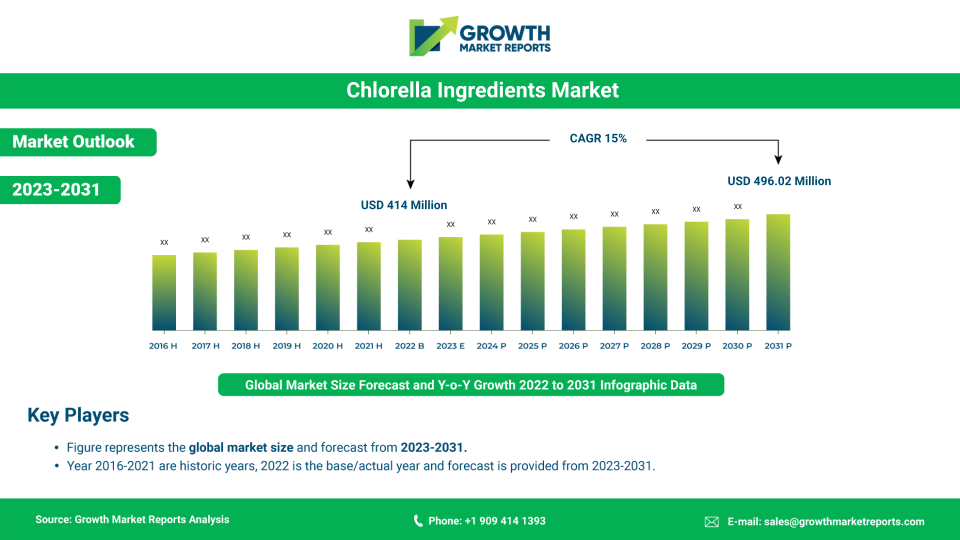
According to our latest research, the global chlorella ingredients market size reached USD 405 million in 2024, reflecting robust demand across key end-use industries. The market is projected to grow at a CAGR of 7.8% from 2025 to 2033, with the total market size expected to reach USD 815 million by 2033. Rising consumer awareness regarding the health benefits of chlorella, coupled with the rapid adoption of plant-based ingredients in dietary supplements, food and beverages, and cosmetics, is a primary growth driver for this market.

One of the most significant growth factors fueling the chlorella ingredients market is the increasing preference for natural and sustainable sources of nutrition. Chlorella, a nutrient-rich microalgae, is renowned for its high protein content, essential vitamins, minerals, and antioxidants. As consumers globally pivot towards healthier lifestyles and clean-label products, the demand for chlorella-based ingredients in dietary supplements and functional foods has surged. The trend is further amplified by the growing vegan and vegetarian population, who seek alternative sources of protein and micronutrients. Additionally, chlorella’s detoxifying properties and its ability to support immune health are driving its adoption among health-conscious individuals, further boosting market expansion.

Another pivotal growth factor is the expanding application scope of chlorella ingredients across diverse industries. Beyond dietary supplements, chlorella is increasingly being incorporated into food and beverage products, animal feed, pharmaceuticals, and cosmetics. The food and beverage sector, in particular, is witnessing a surge in the use of chlorella as a natural colorant, flavor enhancer, and nutritional fortifier in smoothies, energy bars, and health drinks. In the cosmetics industry, chlorella’s skin-rejuvenating and anti-aging properties are gaining traction, leading to its inclusion in a variety of skincare and personal care products. Pharmaceutical companies are also exploring chlorella’s therapeutic potential in managing cholesterol, hypertension, and other chronic conditions, thus broadening its market appeal.

Technological advancements in microalgae cultivation and processing have further catalyzed the growth of the chlorella ingredients market. Innovations such as closed photobioreactor systems and advanced extraction techniques have improved the yield, purity, and quality of chlorella ingredients, making them more accessible and cost-effective for manufacturers. These technological strides have also contributed to the development of novel chlorella-based products with enhanced bioavailability and functional properties. Additionally, strategic collaborations between research institutions and industry players are fostering the development of new applications and expanding the commercial viability of chlorella ingredients on a global scale.

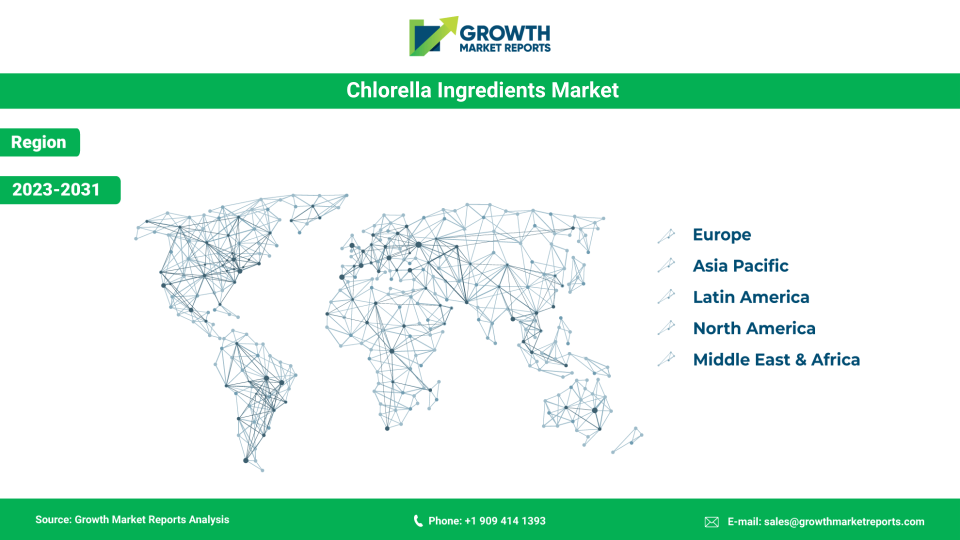
Regionally, Asia Pacific dominates the chlorella ingredients market, accounting for the largest share in 2024, followed by North America and Europe. The high market share in Asia Pacific can be attributed to the widespread use of chlorella in traditional diets, robust production infrastructure, and increasing health awareness among consumers. North America is witnessing rapid growth, driven by the rising demand for plant-based supplements and functional foods. Europe is also emerging as a key market, supported by stringent regulations favoring natural and organic ingredients. Latin America and the Middle East & Africa are gradually catching up, with growing investments in the health and wellness sector and increasing consumer inclination towards superfoods.

Global Chlorella Ingredients Industry Outlook

Product Type Analysis

The product type segment of the chlorella ingredients market comprises powder, tablets, extracts, capsules, and others. Chlorella powder dominates the market, owing to its versatility and ease of incorporation into a wide range of products such as smoothies, juices, and baked goods. The powder form is favored by both manufacturers and consumers due to its high concentration of nutrients and ease of dosage customization. It is particularly popular among health enthusiasts who prefer adding superfoods to their daily diet. Additionally, the powder segment benefits from efficient packaging and longer shelf life, making it a preferred choice in both the retail and food service channels.

Tablets and capsules represent another significant segment within the chlorella ingredients market, primarily targeting the dietary supplements industry. Tablets and capsules offer convenience, precise dosage, and portability, making them highly attractive to consumers seeking easy-to-consume health supplements. These forms are especially popular in North America and Europe, where busy lifestyles and increasing health awareness drive the demand for convenient nutritional solutions. The pharmaceutical-grade manufacturing of chlorella tablets and capsules ensures high purity and safety, further enhancing their market appeal. Moreover, the rising trend of preventive healthcare and self-medication is expected to fuel the growth of this segment in the coming years.

Chlorella extracts are gaining momentum as a specialized product type, particularly in the cosmetics, pharmaceuticals, and functional food sectors. Extracts are valued for their concentrated bioactive compounds, which offer targeted health and wellness benefits. In the cosmetics industry, chlorella extracts are incorporated into anti-aging creams, serums, and masks due to their antioxidant and skin-rejuvenating properties. Pharmaceutical applications of chlorella extracts are also on the rise, with ongoing research exploring their potential in disease prevention and management. The growing demand for high-value, functional ingredients is expected to propel the extracts segment’s growth during the forecast period.

The “others” category in the product type segment includes innovative forms such as chlorella-based gummies, beverages, and snacks. These novel product formats cater to diverse consumer preferences and expand the application scope of chlorella ingredients. Manufacturers are increasingly focusing on product innovation to differentiate their offerings and capture new market segments. The introduction of chlorella-infused ready-to-drink beverages and functional snacks is attracting younger consumers and fitness enthusiasts, further driving market growth. As consumer demand for convenient and novel health products continues to rise, the “others” segment is expected to witness steady expansion.

Report Scope

Attributes Details
Report Title Chlorella Ingredients Market Research Report 2033
By Product Type Powder, Tablets, Extracts, Capsules, Others
By Source Organic, Conventional
By Application Dietary Supplements, Food & Beverages, Animal Feed, Pharmaceuticals, Cosmetics & Personal Care, Others
By Distribution Channel Online Stores, Supermarkets/Hypermarkets, Specialty Stores, Others
Regions Covered North America, Europe, APAC, Latin America, MEA
Base Year 2024
Historic Data 2018-2023
Forecast Period 2025-2033
Number of Pages 276
Number of Tables & Figures 300
Customization Available Yes, the report can be customized as per your need.

Source Analysis

The source segment of the chlorella ingredients market is bifurcated into organic and conventional chlorella. Organic chlorella has witnessed substantial growth in recent years, fueled by the surging demand for clean-label and chemical-free products. Consumers are increasingly scrutinizing product labels and opting for ingredients that are certified organic, non-GMO, and sustainably sourced. Organic chlorella is cultivated without the use of synthetic fertilizers, pesticides, or genetically modified organisms, making it a preferred choice among health-conscious and environmentally-aware consumers. The rising popularity of organic dietary supplements and functional foods is a key driver for the organic chlorella segment.

Conventional chlorella, while still holding a significant market share, is typically more affordable and widely available compared to its organic counterpart. It caters to price-sensitive consumers and manufacturers seeking cost-effective ingredient solutions. Conventional chlorella is extensively used in animal feed, bulk food manufacturing, and mass-market dietary supplements. Despite the growing preference for organic products, the conventional segment continues to thrive due to its scalability and lower production costs. However, increasing regulatory scrutiny and consumer demand for transparency are prompting manufacturers to adopt more sustainable and responsible sourcing practices within the conventional segment.

The organic chlorella segment is particularly strong in developed markets such as North America and Europe, where regulatory frameworks and consumer awareness around organic certification are well established. In these regions, organic chlorella is often positioned as a premium product, commanding higher price points and enjoying strong demand in specialty health food stores and online platforms. The segment is also benefiting from the increasing adoption of organic ingredients in the cosmetics and personal care industry, where consumers are willing to pay a premium for products that align with their values of sustainability and wellness.

Conversely, the conventional chlorella segment remains dominant in emerging markets such as Asia Pacific and Latin America, where price sensitivity and limited access to certified organic products influence purchasing behavior. In these regions, conventional chlorella is widely used in large-scale food processing, animal nutrition, and pharmaceuticals. However, as consumer awareness and disposable incomes rise, there is a gradual shift towards organic products, creating new growth opportunities for organic chlorella producers. The ongoing transition towards sustainable agriculture and clean-label products is expected to reshape the competitive landscape of the source segment in the coming years.

Application Analysis

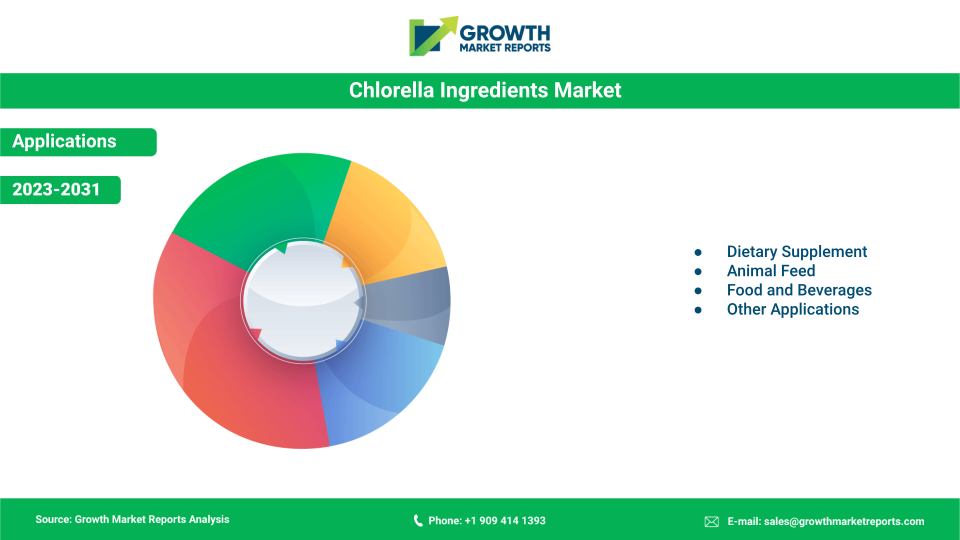
The application segment of the chlorella ingredients market encompasses dietary supplements, food and beverages, animal feed, pharmaceuticals, cosmetics and personal care, and others. Dietary supplements represent the largest application segment, accounting for a significant share of the global market. The increasing prevalence of lifestyle-related health issues, coupled with growing consumer awareness about preventive healthcare, has fueled the demand for chlorella-based supplements. Chlorella’s rich nutritional profile, including high protein, vitamins, minerals, and antioxidants, makes it a popular choice for individuals seeking to boost their overall health and immunity. The segment is further supported by the expanding distribution network of health and wellness retailers, both online and offline.

The food and beverages segment is witnessing robust growth, driven by the rising trend of functional foods and beverages. Chlorella is increasingly being incorporated into a variety of products such as energy bars, smoothies, juices, dairy alternatives, and bakery items. Its natural green color and mild flavor make it an attractive ingredient for manufacturers aiming to enhance the nutritional value and visual appeal of their products. The growing demand for plant-based and clean-label foods is a major driver for this segment. Additionally, the food and beverage industry’s focus on innovation and product differentiation is expected to further boost the adoption of chlorella ingredients.

Animal feed is another important application area for chlorella ingredients. Chlorella serves as a valuable feed additive, providing essential nutrients that promote animal health, growth, and immunity. It is particularly used in aquaculture, poultry, and livestock feed formulations. The increasing emphasis on sustainable and natural feed ingredients is driving the adoption of chlorella in the animal nutrition sector. Moreover, the growing demand for organic and antibiotic-free animal products is encouraging feed manufacturers to incorporate chlorella as a natural alternative to synthetic additives.

The pharmaceuticals and cosmetics & personal care segments are emerging as high-growth areas for chlorella ingredients. In pharmaceuticals, chlorella is being explored for its potential in managing chronic diseases, detoxification, and immune support. Clinical studies highlighting chlorella’s therapeutic benefits are encouraging pharmaceutical companies to invest in chlorella-based formulations. In the cosmetics industry, chlorella’s antioxidant and skin-rejuvenating properties are driving its inclusion in skincare, haircare, and personal care products. The growing consumer demand for natural and organic cosmetics is expected to propel the growth of this segment in the coming years.

The “others” category includes niche applications such as biofertilizers, bioplastics, and wastewater treatment, where chlorella’s unique properties are being leveraged for environmental and industrial purposes. As research and development efforts continue to uncover new uses for chlorella, the application spectrum of chlorella ingredients is expected to expand, creating new growth avenues for market players.

Distribution Channel Analysis

The distribution channel segment of the chlorella ingredients market is segmented into online stores, supermarkets/hypermarkets, specialty stores, and others. Online stores have emerged as a key distribution channel, driven by the rapid growth of e-commerce and changing consumer shopping behaviors. The convenience of online shopping, coupled with the availability of a wide range of products and detailed product information, has made online stores the preferred choice for purchasing chlorella-based supplements and health foods. The COVID-19 pandemic further accelerated the shift towards online retail, with consumers increasingly opting for contactless and home-delivered purchases. E-commerce platforms also enable manufacturers to reach a broader customer base and offer personalized marketing strategies, boosting sales and brand visibility.

Supermarkets and hypermarkets remain an important distribution channel, especially in developed markets where consumers value the ability to physically examine products before purchase. These retail formats offer a wide assortment of health and wellness products, including chlorella-based supplements, foods, and personal care items. The presence of dedicated health food sections and in-store promotions enhances product visibility and encourages impulse purchases. Supermarkets and hypermarkets also benefit from strong supplier relationships and efficient supply chain management, ensuring consistent product availability and competitive pricing.

Specialty stores, including health food stores, organic shops, and pharmacies, play a crucial role in the distribution of chlorella ingredients. These stores cater to a niche customer base seeking high-quality, premium, and specialty health products. The knowledgeable staff and personalized customer service offered by specialty stores create a trusted environment for consumers to seek expert advice and make informed purchasing decisions. Specialty stores are particularly popular among health-conscious consumers and those with specific dietary requirements, contributing to the growth of this distribution channel.

The “others” category includes direct sales, distributors, and institutional channels such as gyms, wellness centers, and clinics. Direct sales and distributor networks are essential for reaching remote and underserved markets, especially in emerging economies. Institutional channels are gaining traction as health and wellness programs become more prevalent in workplaces, schools, and fitness centers. Manufacturers are increasingly adopting multi-channel distribution strategies to maximize market reach and cater to diverse consumer preferences. The integration of digital and physical retail channels is expected to shape the future of chlorella ingredient distribution.

Opportunities & Threats

The chlorella ingredients market presents significant opportunities for growth and innovation. One of the most promising opportunities lies in the development of novel chlorella-based products targeting specific health and wellness needs. With rising consumer interest in personalized nutrition and functional foods, manufacturers can leverage advanced research and technology to create tailored formulations addressing immunity, detoxification, weight management, and skin health. The integration of chlorella with other superfoods and bioactive ingredients can further enhance product efficacy and appeal. Additionally, expanding into emerging markets with growing health awareness and rising disposable incomes offers untapped growth potential for market players.

Another key opportunity is the adoption of sustainable and eco-friendly production practices. As environmental concerns and regulatory pressures mount, companies investing in sustainable chlorella cultivation methods, such as closed-loop photobioreactors and renewable energy sources, can gain a competitive edge. Sustainable sourcing not only aligns with consumer values but also ensures long-term resource availability and cost efficiency. Collaborations with research institutions and government agencies can facilitate the development of innovative, sustainable, and high-quality chlorella ingredients, opening new avenues for market expansion.

Despite the favorable growth outlook, the chlorella ingredients market faces certain restraining factors. High production costs, particularly for organic and high-purity chlorella ingredients, remain a significant challenge for manufacturers. The complex cultivation and harvesting processes, coupled with stringent quality control requirements, contribute to elevated costs, which are often passed on to consumers in the form of premium pricing. Additionally, limited consumer awareness in certain regions and the presence of alternative superfood ingredients such as spirulina and wheatgrass may hinder market growth. Overcoming these challenges will require ongoing investments in technology, education, and marketing to drive broader adoption of chlorella ingredients.

Regional Outlook

Asia Pacific remains the largest and most dynamic region in the chlorella ingredients market, accounting for approximately 45% of the global market share in 2024. The region’s dominance is underpinned by a strong tradition of microalgae consumption, well-established production facilities, and a rapidly growing health and wellness industry. Japan, China, and South Korea are the leading markets, driven by high consumer awareness and robust demand for dietary supplements and functional foods. The region’s market size was estimated at USD 182 million in 2024, and it is projected to grow at a healthy CAGR of 8.2% through 2033, supported by rising disposable incomes and government initiatives promoting healthy lifestyles.

North America holds the second-largest share in the chlorella ingredients market, with a market size of USD 98 million in 2024. The region is characterized by high consumer awareness, a strong preference for plant-based and organic products, and a well-developed dietary supplements industry. The United States is the primary market, accounting for the majority of regional sales. The growing trend of preventive healthcare, coupled with the increasing adoption of functional foods and beverages, is expected to drive continued growth in North America. The region is also witnessing a surge in demand for natural cosmetics and personal care products containing chlorella extracts.

Europe represents a mature yet steadily growing market for chlorella ingredients, with a market size of USD 79 million in 2024. The region’s growth is driven by stringent regulations favoring natural and organic ingredients, high health consciousness among consumers, and the expanding vegan and vegetarian population. Germany, France, and the United Kingdom are the key markets, supported by a well-established retail infrastructure and strong demand for premium health products. Latin America and the Middle East & Africa are emerging markets, collectively accounting for USD 46 million in 2024. These regions are witnessing increased investments in the health and wellness sector, rising consumer awareness, and growing adoption of superfoods, creating new growth opportunities for chlorella ingredient manufacturers.

Chlorella Ingredients Market Statistics

Competitor Outlook

The competitive landscape of the chlorella ingredients market is characterized by a mix of established multinational corporations and emerging regional players. Leading companies are focusing on product innovation, strategic partnerships, and capacity expansion to strengthen their market position. The market is moderately consolidated, with a few key players accounting for a significant share, particularly in the organic and high-purity chlorella segments. Intense competition is driving continuous investments in research and development, with companies striving to develop novel applications and improve the nutritional profile and bioavailability of chlorella ingredients.

Product differentiation and branding play a critical role in the competitive dynamics of the market. Companies are leveraging clean-label claims, organic certifications, and sustainability credentials to appeal to health-conscious and environmentally-aware consumers. Strategic collaborations with research institutions, universities, and industry partners are fostering innovation and enabling the development of advanced cultivation and extraction technologies. Additionally, companies are expanding their distribution networks, both online and offline, to increase market penetration and reach new customer segments.

Mergers, acquisitions, and joint ventures are common strategies adopted by key players to enhance their product portfolios and geographic presence. The influx of venture capital and private equity investments is fueling the growth of innovative start-ups and niche players, particularly in the organic and specialty chlorella segments. The competitive landscape is also shaped by the entry of new players, attracted by the market’s growth potential and evolving consumer preferences. As competition intensifies, companies are prioritizing quality, safety, and transparency to build trust and loyalty among consumers.

Some of the major companies operating in the chlorella ingredients market include Sun Chlorella Corporation, Roquette Frères, EID Parry (India) Limited, FEMICO, Taiwan Chlorella Manufacturing Company, Fuqing King Dnarmsa Spirulina Co. Ltd, and Gong Bih Enterprise Co. Ltd. Sun Chlorella Corporation is recognized for its premium chlorella supplements and extensive global distribution network. Roquette Frères is a leading supplier of plant-based ingredients, with a strong focus on innovation and sustainability. EID Parry (India) Limited is a major player in the organic chlorella segment, leveraging advanced cultivation technologies and a robust supply chain. FEMICO and Taiwan Chlorella Manufacturing Company are prominent players in the Asia Pacific region, known for their high-quality products and extensive research capabilities. Fuqing King Dnarmsa Spirulina and Gong Bih Enterprise are expanding their presence through strategic partnerships and product diversification.

These companies are continuously investing in research and development to enhance product quality, expand their application portfolio, and address evolving consumer needs. They are also focusing on sustainable sourcing, traceability, and clean-label initiatives to differentiate their offerings in a competitive market. As the chlorella ingredients market continues to evolve, leading players are expected to maintain their competitive edge through innovation, strategic collaborations, and a strong commitment to quality and sustainability.

Key Players

  • Sun Chlorella Corporation
  • Fuqing King Dnarmsa Spirulina Co. Ltd.
  • E.I.D. Parry (India) Limited
  • Roquette Klötze GmbH & Co. KG
  • Yaeyama Shokusan Co., Ltd.
  • Taiwan Chlorella Manufacturing Company
  • Gong Bih Enterprise Co., Ltd.
  • Lvanqi
  • Tianjin Norland Biotech Co., Ltd.
  • Vedan Enterprise Corporation
  • Dongtai City Spirulina Bio-engineering Co., Ltd.
  • Daesang Corporation
  • Far East Bio-Tec Co., Ltd.
  • Green Source Organics
  • Seagrass Tech Private Limited
  • Organika Health Products Inc.
  • NOW Foods
  • The Green Labs LLC
  • Nutrex Hawaii Inc.
  • Bluetec Naturals Co., Ltd.
Chlorella Ingredients Market Overview

Segments

The Chlorella Ingredients market has been segmented on the basis of

Product Type

  • Powder
  • Tablets
  • Extracts
  • Capsules
  • Others

Source

  • Organic
  • Conventional

Application

  • Dietary Supplements
  • Food & Beverages
  • Animal Feed
  • Pharmaceuticals
  • Cosmetics & Personal Care
  • Others

Distribution Channel

  • Online Stores
  • Supermarkets/Hypermarkets
  • Specialty Stores
  • Others

Competitive Landscape

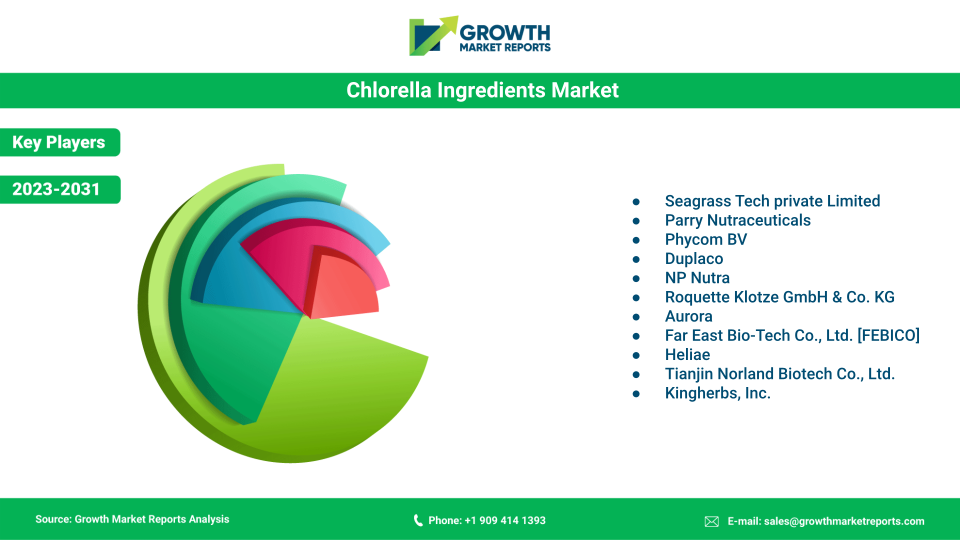
Key players competing in the chlorella ingredients market includes Seagrass Tech private Limited, Parry Nutraceuticals, Phycom BV, Duplaco, NP Nutra, Roquette Klotze GmbH & Co. KG, Aurora, Far East Bio-Tech Co., Ltd. [FEBICO], Heliae, Tianjin Norland Biotech Co., Ltd., and Kingherbs, Inc.

Some of these players are using several market strategies such as acquisitions, merger, collaborations, partnerships, capacity expansion, and product launches to enhance their market shares and to generate revenue and raise their production line of the business in the coming year.

 Chlorella Ingredients Market Key Players

Frequently Asked Questions

The market is expected to grow at a CAGR of 7.8% from 2025 to 2033, reaching an estimated USD 815 million by 2033.

Major companies include Sun Chlorella Corporation, Roquette Frères, EID Parry (India) Limited, FEMICO, Taiwan Chlorella Manufacturing Company, Fuqing King Dnarmsa Spirulina Co. Ltd, and Gong Bih Enterprise Co. Ltd.

Opportunities include developing novel chlorella-based products, expanding into emerging markets, and adopting sustainable production practices. Challenges involve high production costs, limited consumer awareness in some regions, and competition from alternative superfoods.

Key distribution channels include online stores, supermarkets/hypermarkets, specialty stores, and others such as direct sales and institutional channels like gyms and wellness centers.

Organic chlorella is cultivated without synthetic fertilizers, pesticides, or GMOs, appealing to health-conscious consumers. Conventional chlorella is more affordable and widely used in bulk manufacturing and animal feed.

Chlorella ingredients are used in dietary supplements, food and beverages, animal feed, pharmaceuticals, cosmetics and personal care products, and niche applications like biofertilizers and bioplastics.

The primary product types are chlorella powder, tablets, extracts, capsules, and innovative forms like gummies, beverages, and snacks. Powder is the most popular due to its versatility and nutrient concentration.

Asia Pacific leads the global market, accounting for about 45% of the share in 2024, followed by North America and Europe. Latin America and the Middle East & Africa are emerging markets with growing potential.

Key growth drivers include rising consumer awareness of chlorella’s health benefits, increasing adoption of plant-based and clean-label ingredients, expanding vegan and vegetarian populations, and technological advancements in microalgae cultivation.

As of 2024, the global chlorella ingredients market size reached USD 405 million, with strong demand across dietary supplements, food and beverages, cosmetics, and other industries.

Table Of Content

Chapter 1 Executive Summary
Chapter 2 Assumptions and Acronyms Used
Chapter 3 Research Methodology
Chapter 4 Chlorella Ingredients Market Overview
   4.1 Introduction
      4.1.1 Market Taxonomy
      4.1.2 Market Definition
      4.1.3 Macro-Economic Factors Impacting the Market Growth
   4.2 Chlorella Ingredients Market Dynamics
      4.2.1 Market Drivers
      4.2.2 Market Restraints
      4.2.3 Market Opportunity
   4.3 Chlorella Ingredients Market - Supply Chain Analysis
      4.3.1 List of Key Suppliers
      4.3.2 List of Key Distributors
      4.3.3 List of Key Consumers
   4.4 Key Forces Shaping the Chlorella Ingredients Market
      4.4.1 Bargaining Power of Suppliers
      4.4.2 Bargaining Power of Buyers
      4.4.3 Threat of Substitution
      4.4.4 Threat of New Entrants
      4.4.5 Competitive Rivalry
   4.5 Global Chlorella Ingredients Market Size & Forecast, 2023-2032
      4.5.1 Chlorella Ingredients Market Size and Y-o-Y Growth
      4.5.2 Chlorella Ingredients Market Absolute $ Opportunity

Chapter 5 Global Chlorella Ingredients Market Analysis and Forecast By Product Type
   5.1 Introduction
      5.1.1 Key Market Trends & Growth Opportunities By Product Type
      5.1.2 Basis Point Share (BPS) Analysis By Product Type
      5.1.3 Absolute $ Opportunity Assessment By Product Type
   5.2 Chlorella Ingredients Market Size Forecast By Product Type
      5.2.1 Powder
      5.2.2 Tablets
      5.2.3 Extracts
      5.2.4 Capsules
      5.2.5 Others
   5.3 Market Attractiveness Analysis By Product Type

Chapter 6 Global Chlorella Ingredients Market Analysis and Forecast By Source
   6.1 Introduction
      6.1.1 Key Market Trends & Growth Opportunities By Source
      6.1.2 Basis Point Share (BPS) Analysis By Source
      6.1.3 Absolute $ Opportunity Assessment By Source
   6.2 Chlorella Ingredients Market Size Forecast By Source
      6.2.1 Organic
      6.2.2 Conventional
   6.3 Market Attractiveness Analysis By Source

Chapter 7 Global Chlorella Ingredients Market Analysis and Forecast By Application
   7.1 Introduction
      7.1.1 Key Market Trends & Growth Opportunities By Application
      7.1.2 Basis Point Share (BPS) Analysis By Application
      7.1.3 Absolute $ Opportunity Assessment By Application
   7.2 Chlorella Ingredients Market Size Forecast By Application
      7.2.1 Dietary Supplements
      7.2.2 Food & Beverages
      7.2.3 Animal Feed
      7.2.4 Pharmaceuticals
      7.2.5 Cosmetics & Personal Care
      7.2.6 Others
   7.3 Market Attractiveness Analysis By Application

Chapter 8 Global Chlorella Ingredients Market Analysis and Forecast By Distribution Channel
   8.1 Introduction
      8.1.1 Key Market Trends & Growth Opportunities By Distribution Channel
      8.1.2 Basis Point Share (BPS) Analysis By Distribution Channel
      8.1.3 Absolute $ Opportunity Assessment By Distribution Channel
   8.2 Chlorella Ingredients Market Size Forecast By Distribution Channel
      8.2.1 Online Stores
      8.2.2 Supermarkets/Hypermarkets
      8.2.3 Specialty Stores
      8.2.4 Others
   8.3 Market Attractiveness Analysis By Distribution Channel

Chapter 9 Global Chlorella Ingredients Market Analysis and Forecast by Region
   9.1 Introduction
      9.1.1 Key Market Trends & Growth Opportunities By Region
      9.1.2 Basis Point Share (BPS) Analysis By Region
      9.1.3 Absolute $ Opportunity Assessment By Region
   9.2 Chlorella Ingredients Market Size Forecast By Region
      9.2.1 North America
      9.2.2 Europe
      9.2.3 Asia Pacific
      9.2.4 Latin America
      9.2.5 Middle East & Africa (MEA)
   9.3 Market Attractiveness Analysis By Region

Chapter 10 Coronavirus Disease (COVID-19) Impact 
   10.1 Introduction 
   10.2 Current & Future Impact Analysis 
   10.3 Economic Impact Analysis 
   10.4 Government Policies 
   10.5 Investment Scenario

Chapter 11 North America Chlorella Ingredients Analysis and Forecast
   11.1 Introduction
   11.2 North America Chlorella Ingredients Market Size Forecast by Country
      11.2.1 U.S.
      11.2.2 Canada
   11.3 Basis Point Share (BPS) Analysis by Country
   11.4 Absolute $ Opportunity Assessment by Country
   11.5 Market Attractiveness Analysis by Country
   11.6 North America Chlorella Ingredients Market Size Forecast By Product Type
      11.6.1 Powder
      11.6.2 Tablets
      11.6.3 Extracts
      11.6.4 Capsules
      11.6.5 Others
   11.7 Basis Point Share (BPS) Analysis By Product Type 
   11.8 Absolute $ Opportunity Assessment By Product Type 
   11.9 Market Attractiveness Analysis By Product Type
   11.10 North America Chlorella Ingredients Market Size Forecast By Source
      11.10.1 Organic
      11.10.2 Conventional
   11.11 Basis Point Share (BPS) Analysis By Source 
   11.12 Absolute $ Opportunity Assessment By Source 
   11.13 Market Attractiveness Analysis By Source
   11.14 North America Chlorella Ingredients Market Size Forecast By Application
      11.14.1 Dietary Supplements
      11.14.2 Food & Beverages
      11.14.3 Animal Feed
      11.14.4 Pharmaceuticals
      11.14.5 Cosmetics & Personal Care
      11.14.6 Others
   11.15 Basis Point Share (BPS) Analysis By Application 
   11.16 Absolute $ Opportunity Assessment By Application 
   11.17 Market Attractiveness Analysis By Application
   11.18 North America Chlorella Ingredients Market Size Forecast By Distribution Channel
      11.18.1 Online Stores
      11.18.2 Supermarkets/Hypermarkets
      11.18.3 Specialty Stores
      11.18.4 Others
   11.19 Basis Point Share (BPS) Analysis By Distribution Channel 
   11.20 Absolute $ Opportunity Assessment By Distribution Channel 
   11.21 Market Attractiveness Analysis By Distribution Channel

Chapter 12 Europe Chlorella Ingredients Analysis and Forecast
   12.1 Introduction
   12.2 Europe Chlorella Ingredients Market Size Forecast by Country
      12.2.1 Germany
      12.2.2 France
      12.2.3 Italy
      12.2.4 U.K.
      12.2.5 Spain
      12.2.6 Russia
      12.2.7 Rest of Europe
   12.3 Basis Point Share (BPS) Analysis by Country
   12.4 Absolute $ Opportunity Assessment by Country
   12.5 Market Attractiveness Analysis by Country
   12.6 Europe Chlorella Ingredients Market Size Forecast By Product Type
      12.6.1 Powder
      12.6.2 Tablets
      12.6.3 Extracts
      12.6.4 Capsules
      12.6.5 Others
   12.7 Basis Point Share (BPS) Analysis By Product Type 
   12.8 Absolute $ Opportunity Assessment By Product Type 
   12.9 Market Attractiveness Analysis By Product Type
   12.10 Europe Chlorella Ingredients Market Size Forecast By Source
      12.10.1 Organic
      12.10.2 Conventional
   12.11 Basis Point Share (BPS) Analysis By Source 
   12.12 Absolute $ Opportunity Assessment By Source 
   12.13 Market Attractiveness Analysis By Source
   12.14 Europe Chlorella Ingredients Market Size Forecast By Application
      12.14.1 Dietary Supplements
      12.14.2 Food & Beverages
      12.14.3 Animal Feed
      12.14.4 Pharmaceuticals
      12.14.5 Cosmetics & Personal Care
      12.14.6 Others
   12.15 Basis Point Share (BPS) Analysis By Application 
   12.16 Absolute $ Opportunity Assessment By Application 
   12.17 Market Attractiveness Analysis By Application
   12.18 Europe Chlorella Ingredients Market Size Forecast By Distribution Channel
      12.18.1 Online Stores
      12.18.2 Supermarkets/Hypermarkets
      12.18.3 Specialty Stores
      12.18.4 Others
   12.19 Basis Point Share (BPS) Analysis By Distribution Channel 
   12.20 Absolute $ Opportunity Assessment By Distribution Channel 
   12.21 Market Attractiveness Analysis By Distribution Channel

Chapter 13 Asia Pacific Chlorella Ingredients Analysis and Forecast
   13.1 Introduction
   13.2 Asia Pacific Chlorella Ingredients Market Size Forecast by Country
      13.2.1 China
      13.2.2 Japan
      13.2.3 South Korea
      13.2.4 India
      13.2.5 Australia
      13.2.6 South East Asia (SEA)
      13.2.7 Rest of Asia Pacific (APAC)
   13.3 Basis Point Share (BPS) Analysis by Country
   13.4 Absolute $ Opportunity Assessment by Country
   13.5 Market Attractiveness Analysis by Country
   13.6 Asia Pacific Chlorella Ingredients Market Size Forecast By Product Type
      13.6.1 Powder
      13.6.2 Tablets
      13.6.3 Extracts
      13.6.4 Capsules
      13.6.5 Others
   13.7 Basis Point Share (BPS) Analysis By Product Type 
   13.8 Absolute $ Opportunity Assessment By Product Type 
   13.9 Market Attractiveness Analysis By Product Type
   13.10 Asia Pacific Chlorella Ingredients Market Size Forecast By Source
      13.10.1 Organic
      13.10.2 Conventional
   13.11 Basis Point Share (BPS) Analysis By Source 
   13.12 Absolute $ Opportunity Assessment By Source 
   13.13 Market Attractiveness Analysis By Source
   13.14 Asia Pacific Chlorella Ingredients Market Size Forecast By Application
      13.14.1 Dietary Supplements
      13.14.2 Food & Beverages
      13.14.3 Animal Feed
      13.14.4 Pharmaceuticals
      13.14.5 Cosmetics & Personal Care
      13.14.6 Others
   13.15 Basis Point Share (BPS) Analysis By Application 
   13.16 Absolute $ Opportunity Assessment By Application 
   13.17 Market Attractiveness Analysis By Application
   13.18 Asia Pacific Chlorella Ingredients Market Size Forecast By Distribution Channel
      13.18.1 Online Stores
      13.18.2 Supermarkets/Hypermarkets
      13.18.3 Specialty Stores
      13.18.4 Others
   13.19 Basis Point Share (BPS) Analysis By Distribution Channel 
   13.20 Absolute $ Opportunity Assessment By Distribution Channel 
   13.21 Market Attractiveness Analysis By Distribution Channel

Chapter 14 Latin America Chlorella Ingredients Analysis and Forecast
   14.1 Introduction
   14.2 Latin America Chlorella Ingredients Market Size Forecast by Country
      14.2.1 Brazil
      14.2.2 Mexico
      14.2.3 Rest of Latin America (LATAM)
   14.3 Basis Point Share (BPS) Analysis by Country
   14.4 Absolute $ Opportunity Assessment by Country
   14.5 Market Attractiveness Analysis by Country
   14.6 Latin America Chlorella Ingredients Market Size Forecast By Product Type
      14.6.1 Powder
      14.6.2 Tablets
      14.6.3 Extracts
      14.6.4 Capsules
      14.6.5 Others
   14.7 Basis Point Share (BPS) Analysis By Product Type 
   14.8 Absolute $ Opportunity Assessment By Product Type 
   14.9 Market Attractiveness Analysis By Product Type
   14.10 Latin America Chlorella Ingredients Market Size Forecast By Source
      14.10.1 Organic
      14.10.2 Conventional
   14.11 Basis Point Share (BPS) Analysis By Source 
   14.12 Absolute $ Opportunity Assessment By Source 
   14.13 Market Attractiveness Analysis By Source
   14.14 Latin America Chlorella Ingredients Market Size Forecast By Application
      14.14.1 Dietary Supplements
      14.14.2 Food & Beverages
      14.14.3 Animal Feed
      14.14.4 Pharmaceuticals
      14.14.5 Cosmetics & Personal Care
      14.14.6 Others
   14.15 Basis Point Share (BPS) Analysis By Application 
   14.16 Absolute $ Opportunity Assessment By Application 
   14.17 Market Attractiveness Analysis By Application
   14.18 Latin America Chlorella Ingredients Market Size Forecast By Distribution Channel
      14.18.1 Online Stores
      14.18.2 Supermarkets/Hypermarkets
      14.18.3 Specialty Stores
      14.18.4 Others
   14.19 Basis Point Share (BPS) Analysis By Distribution Channel 
   14.20 Absolute $ Opportunity Assessment By Distribution Channel 
   14.21 Market Attractiveness Analysis By Distribution Channel

Chapter 15 Middle East & Africa (MEA) Chlorella Ingredients Analysis and Forecast
   15.1 Introduction
   15.2 Middle East & Africa (MEA) Chlorella Ingredients Market Size Forecast by Country
      15.2.1 Saudi Arabia
      15.2.2 South Africa
      15.2.3 UAE
      15.2.4 Rest of Middle East & Africa (MEA)
   15.3 Basis Point Share (BPS) Analysis by Country
   15.4 Absolute $ Opportunity Assessment by Country
   15.5 Market Attractiveness Analysis by Country
   15.6 Middle East & Africa (MEA) Chlorella Ingredients Market Size Forecast By Product Type
      15.6.1 Powder
      15.6.2 Tablets
      15.6.3 Extracts
      15.6.4 Capsules
      15.6.5 Others
   15.7 Basis Point Share (BPS) Analysis By Product Type 
   15.8 Absolute $ Opportunity Assessment By Product Type 
   15.9 Market Attractiveness Analysis By Product Type
   15.10 Middle East & Africa (MEA) Chlorella Ingredients Market Size Forecast By Source
      15.10.1 Organic
      15.10.2 Conventional
   15.11 Basis Point Share (BPS) Analysis By Source 
   15.12 Absolute $ Opportunity Assessment By Source 
   15.13 Market Attractiveness Analysis By Source
   15.14 Middle East & Africa (MEA) Chlorella Ingredients Market Size Forecast By Application
      15.14.1 Dietary Supplements
      15.14.2 Food & Beverages
      15.14.3 Animal Feed
      15.14.4 Pharmaceuticals
      15.14.5 Cosmetics & Personal Care
      15.14.6 Others
   15.15 Basis Point Share (BPS) Analysis By Application 
   15.16 Absolute $ Opportunity Assessment By Application 
   15.17 Market Attractiveness Analysis By Application
   15.18 Middle East & Africa (MEA) Chlorella Ingredients Market Size Forecast By Distribution Channel
      15.18.1 Online Stores
      15.18.2 Supermarkets/Hypermarkets
      15.18.3 Specialty Stores
      15.18.4 Others
   15.19 Basis Point Share (BPS) Analysis By Distribution Channel 
   15.20 Absolute $ Opportunity Assessment By Distribution Channel 
   15.21 Market Attractiveness Analysis By Distribution Channel

Chapter 16 Competition Landscape 
   16.1 Chlorella Ingredients Market: Competitive Dashboard
   16.2 Global Chlorella Ingredients Market: Market Share Analysis, 2023
   16.3 Company Profiles (Details – Overview, Financials, Developments, Strategy) 
      16.3.1 Sun Chlorella Corporation
Fuqing King Dnarmsa Spirulina Co. Ltd.
E.I.D. Parry (India) Limited
Roquette Klötze GmbH & Co. KG
Yaeyama Shokusan Co., Ltd.
Taiwan Chlorella Manufacturing Company
Gong Bih Enterprise Co., Ltd.
Lvanqi
Tianjin Norland Biotech Co., Ltd.
Vedan Enterprise Corporation
Dongtai City Spirulina Bio-engineering Co., Ltd.
Daesang Corporation
Far East Bio-Tec Co., Ltd.
Green Source Organics
Seagrass Tech Private Limited
Organika Health Products Inc.
NOW Foods
The Green Labs LLC
Nutrex Hawaii Inc.
Bluetec Naturals Co., Ltd.

Methodology

Our Clients

Microsoft
Pfizer
FedEx Logistics
Honda Motor Co. Ltd.
Deloitte
Siemens Healthcare
Nestle SA
General Mills