Segments - by Drug Type (Gene Therapy, Nusinersen, Risdiplam, Onasemnogene Abeparvovec, Others), by Disease Type (Type I, Type II, Type III, Type IV), by Route Of Administration (Oral, Intravenous, Others), by Distribution Channel (Hospital Pharmacies, Retail Pharmacies, Online Pharmacies)
This report is updated with the latest market data and insights as of June 2026. Base year: 2025 | Forecast period: 2026-2034
According to our latest research, the global spinal muscular atrophy treatment market size reached USD 2.73 billion in 2025, reflecting a robust expansion driven by innovative therapies and increasing diagnosis rates worldwide. The market is expected to maintain a strong growth trajectory with a CAGR of 13.7% from 2026 to 2034, reaching a projected value of USD 8.76 billion by 2034. This remarkable growth is primarily fueled by advancements in gene therapy, the increasing availability of disease-modifying treatments, and greater awareness leading to early diagnosis and intervention. For a broader perspective on neuromuscular conditions, insights from the spinal muscular atrophy therapeutics sector provide valuable context on pipeline evolution and competitive positioning.
One of the most significant growth factors in the spinal muscular atrophy treatment market is the rapid development and commercialization of novel gene therapies. The introduction of groundbreaking treatments such as onasemnogene abeparvovec has revolutionized the management of SMA, offering hope for improved survival and quality of life. These therapies target the underlying genetic causes of SMA, providing a transformative approach compared to traditional symptomatic management. As more gene therapies and disease-modifying drugs receive regulatory approval, the treatment paradigm is shifting, leading to increased adoption rates and expanding the eligible patient pool. Continued investment in research and development by pharmaceutical companies is expected to yield next-generation therapeutics, further propelling market growth through 2034.
Another critical driver is the growing emphasis on early diagnosis and newborn screening programs. Many countries have implemented or are actively implementing mandatory newborn screening for SMA, enabling identification of affected infants before the onset of severe symptoms. Early diagnosis allows timely initiation of treatment, which is crucial for maximizing therapeutic benefits and improving long-term outcomes. This trend is supported by increased awareness among healthcare professionals and patient advocacy organizations, which actively promote early detection and intervention. As a result, the number of patients receiving effective treatments at an early stage is rising, contributing to the overall expansion of the market.
The expanding reimbursement landscape and supportive government policies are also playing a pivotal role in market growth. High treatment costs, particularly for gene therapies, have historically posed challenges for patient access. However, many healthcare systems and insurance providers are recognizing the value of these innovative therapies and are adjusting their reimbursement frameworks accordingly. Governments in North America and Europe have introduced policies to facilitate access to life-saving SMA treatments, ensuring that financial barriers do not hinder patient care. This evolving reimbursement environment is expected to further stimulate market adoption as more patients gain access to advanced therapies. Similar reimbursement dynamics are observed in adjacent fields such as amyotrophic lateral sclerosis treatment, where outcomes-based agreements are reshaping payer relationships.
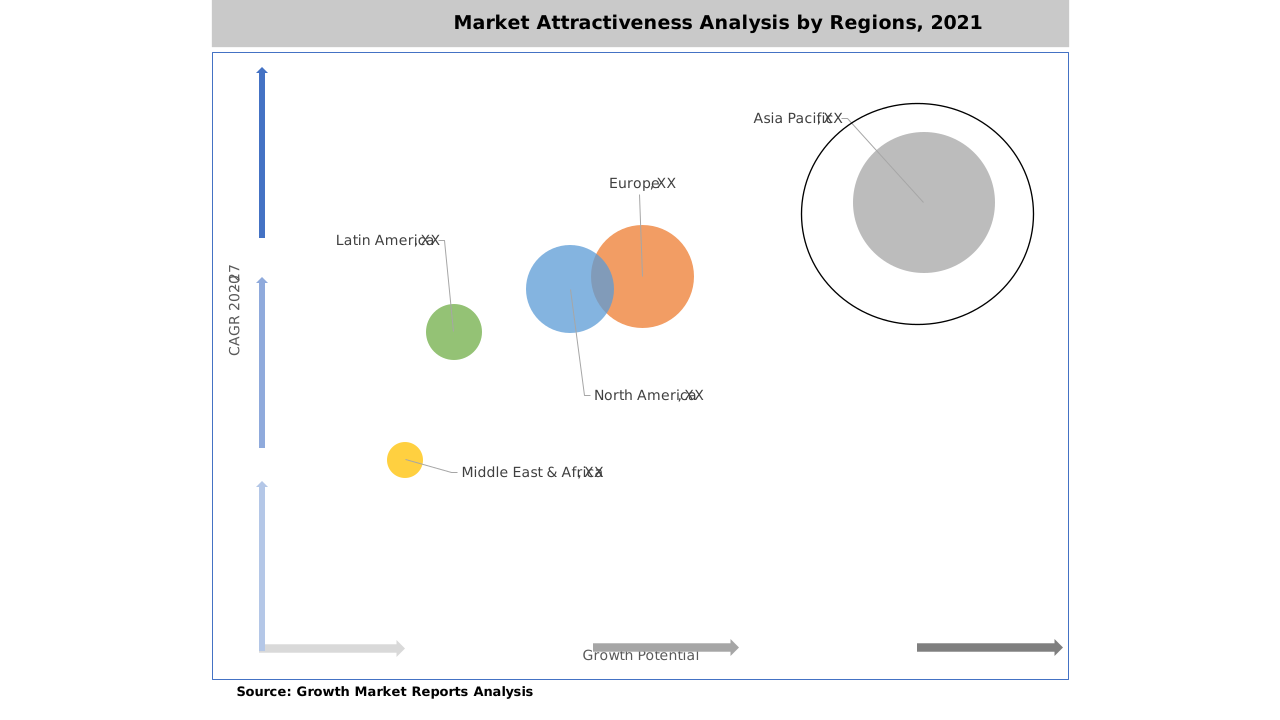
From a regional perspective, North America continues to dominate the spinal muscular atrophy treatment market, accounting for the largest share in 2025, followed by Europe and the Asia Pacific. The region's leadership is attributed to early adoption of novel therapies, robust healthcare infrastructure, and favorable reimbursement policies. Europe is also witnessing significant growth, driven by increased regulatory approvals and expanding access to advanced treatments. Meanwhile, Asia Pacific is emerging as a key growth market, supported by rising healthcare investments, improving diagnosis rates, and growing awareness. As the market continues to evolve, regional dynamics will play a crucial role in shaping the competitive landscape and future opportunities through 2034.
The spinal muscular atrophy treatment market is segmented by drug type into gene therapy, nusinersen, risdiplam, onasemnogene abeparvovec, and others. Among these, nusinersen currently holds the largest individual segment share at approximately 30.2% of the 2025 market, reflecting its long-established footprint since becoming the first approved disease-modifying therapy for SMA. Marketed under the brand name Spinraza by Biogen, nusinersen has demonstrated substantial improvements in motor function and survival across various SMA types. Its established safety and efficacy profile, along with widespread reimbursement in developed markets, have contributed to its sustained adoption. However, the need for repeated intrathecal dosing and the invasive nature of administration are gradually shifting patient and physician preference toward newer alternatives.
Gene therapy has emerged as a transformative and rapidly expanding segment, capturing approximately 28.5% of the market in 2025, particularly following the broad commercial rollout of onasemnogene abeparvovec. This therapy offers a one-time, potentially curative treatment by addressing the genetic root of SMA, significantly improving motor function and survival rates in affected infants. The high efficacy and long-term benefits of gene therapy have driven substantial demand, although its high cost remains a consideration for healthcare systems and payers. The gene therapy segment is expected to witness accelerating growth over the forecast period, supported by ongoing research and the anticipated introduction of next-generation gene-based treatments. Parallel progress in muscular dystrophy treatments is informing gene delivery platform innovations that are increasingly applicable to SMA therapy development.
Risdiplam, an oral SMN2 splicing modifier marketed as Evrysdi by Roche and PTC Therapeutics, accounts for approximately 25.8% of the 2025 market and has gained significant traction due to its convenient route of administration and favorable efficacy profile. Approved for use in both pediatric and adult patients across multiple geographies, risdiplam offers a non-invasive treatment option that can be administered at home, enhancing patient compliance and quality of life. Its broad indication and ease of use have driven rapid uptake, particularly in regions where access to specialized healthcare facilities may be limited. As more real-world evidence accumulates, risdiplam is expected to consolidate and expand its position in the SMA treatment landscape through 2034.
Onasemnogene abeparvovec as a standalone sub-segment accounts for approximately 10.3% of 2025 market revenue, reflecting its focus on the early-diagnosed infant population and the premium pricing associated with one-time administration. The "others" category, representing around 5.2% of the market, includes emerging therapies and supportive treatments that address specific symptoms or complications associated with SMA. These encompass small molecule drugs, investigational antisense oligonucleotides, and combination therapies under active clinical evaluation. Notably, pipeline candidates targeting muscle function and neuroprotection, including myostatin inhibitors and novel gene editing approaches, are advancing through trials and are expected to enter the market before 2030. Research into related conditions such as spinocerebellar ataxia therapeutics is also contributing molecular insights that may benefit future SMA pipeline development. The continued evolution of the drug type segment underscores the dynamic nature of the market, with innovation driving improved outcomes and greater patient choice.
| Attributes | Details |
| Report Title | Spinal Muscular Atrophy Treatment Market Research Report 2025-2034 |
| By Drug Type | Gene Therapy, Nusinersen, Risdiplam, Onasemnogene Abeparvovec, Others |
| By Disease Type | Type I, Type II, Type III, Type IV |
| By Route Of Administration | Oral, Intravenous, Others |
| By Distribution Channel | Hospital Pharmacies, Retail Pharmacies, Online Pharmacies |
| Regions Covered | North America, Europe, APAC, Latin America, MEA |
| Base Year | 2025 |
| Historic Data | 2019-2024 |
| Forecast Period | 2026-2034 |
| Number of Pages | 299 |
| Number of Tables & Figures | 302 |
| Customization Available | Yes, the report can be customized as per your need. |
The spinal muscular atrophy treatment market is further segmented by disease type into Type I, Type II, Type III, and Type IV SMA. Type I, also known as Werdnig-Hoffmann disease, is the most severe and accounts for the largest share of the market due to its early onset and high unmet medical need. Patients with Type I SMA typically present within the first six months of life and experience rapid motor decline without intervention. The availability of effective therapies has dramatically improved survival and motor outcomes for this group, driving significant demand for advanced treatments. Early diagnosis enabled through expanded newborn screening programs, especially across North America and Western Europe, remains critical for maximizing therapeutic benefits in Type I patients and continues to stimulate market growth as of 2025.
Type II SMA, characterized by onset between 6 and 18 months of age, represents the second-largest segment. These patients experience progressive muscle weakness but generally achieve the ability to sit independently. Advances in disease-modifying treatment have enabled many Type II patients to maintain or improve motor function, reducing the risk of respiratory and nutritional complications and enhancing quality of life. The growing availability of oral therapies such as risdiplam, which are particularly well-suited to this patient group, combined with increased awareness and early detection, is expected to drive continued growth in this segment through the forecast period.
Type III SMA, or Kugelberg-Welander disease, has a later onset and milder clinical course compared to Types I and II. Patients typically develop symptoms after 18 months of age and are able to walk at some point, though they may lose this ability over time. The introduction of oral and less invasive therapies has expanded treatment options for Type III patients, supporting improved long-term outcomes and greater treatment adherence. As more adults with SMA actively seek disease-modifying treatment, this segment is poised for steady growth, particularly in regions with well-established healthcare infrastructure and strong patient advocacy networks.
Type IV SMA is the rarest and mildest form, with adult onset and slow progression. While this segment represents a smaller proportion of the overall market, advances in molecular diagnostics and increased awareness are leading to higher identification rates among adult neurology populations. Treatment for Type IV patients focuses on maintaining function and preventing complications, with newer therapies offering meaningful disease modification benefits. As the understanding of SMA across the full disease spectrum continues to evolve, the disease type segment will remain a key focus for research and therapeutic innovation through 2034.
The route of administration is a crucial consideration in the spinal muscular atrophy treatment market, with options including oral, intravenous, and others (primarily intrathecal). Oral administration, exemplified by risdiplam, has gained significant traction since 2025 due to its convenience, non-invasiveness, and potential for at-home dosing. This route eliminates the need for hospital visits and specialized equipment, making it particularly attractive for pediatric and adult patients alike. The increasing adoption of oral therapies is expected to drive substantial growth in this segment, especially in regions with limited healthcare infrastructure or access challenges.
Intravenous administration remains the delivery route for certain gene therapies, such as onasemnogene abeparvovec, which is delivered as a single, high-impact infusion. While intravenous administration requires specialized facilities and trained personnel, the transformative benefits of these therapies have made them highly sought after, particularly for patients with severe forms of SMA diagnosed through newborn screening. The high efficacy and potential for long-term disease modification offered by intravenous gene therapies are driving demand, despite logistical and cost considerations that continue to be addressed through evolving healthcare delivery models.
Other routes of administration, primarily intrathecal delivery, are associated with nusinersen. Intrathecal administration involves direct injection into the cerebrospinal fluid, enabling targeted delivery to the central nervous system where motor neurons are affected. While highly effective, this method requires repeated procedures at regular intervals and specialized expertise, which can pose challenges for some patients and healthcare systems. Nonetheless, the proven benefits of intrathecal therapies ensure their continued relevance in the SMA treatment landscape. As the market evolves, interest in novel delivery methods that combine efficacy with enhanced convenience is intensifying, and advances in formulation science and device technology are expected to yield new options before 2034.
The distribution channel segment of the spinal muscular atrophy treatment market comprises hospital pharmacies, retail pharmacies, and online pharmacies. Hospital pharmacies currently dominate the market, reflecting the complexity and specialized nature of SMA treatments. Many advanced therapies, particularly gene therapies and intrathecal drugs, require administration in a hospital setting under the supervision of trained healthcare professionals. Hospital pharmacies play a critical role in ensuring the safe storage, handling, and dispensing of these high-value medications, as well as providing patient education and coordination of care across multidisciplinary teams.
Retail pharmacies are gaining prominence as oral and less invasive therapies become more widely available and prescribed. The ability to dispense oral medications such as risdiplam through retail channels enhances accessibility for patients, particularly those in remote or underserved areas. Retail pharmacies also offer the advantage of convenience and continuity of care, supporting long-term treatment adherence and patient engagement. As the portfolio of SMA treatments continues to expand, the role of retail pharmacies is expected to grow, particularly in regions with well-developed pharmacy networks across Europe and North America.
Online pharmacies represent a rapidly emerging distribution channel, driven by the increasing digitization of healthcare and the growing demand for home delivery of medications. Online platforms offer patients the convenience of ordering and receiving treatments without the need for frequent hospital or pharmacy visits, which is especially valuable for individuals with mobility challenges common in SMA. The acceleration of digital health adoption since 2020 has continued through 2025, and this trend is expected to persist as patients and caregivers seek flexible, patient-centric solutions. The evolving distribution landscape reflects broader trends toward outpatient care, with pharmaceutical companies and providers partnering across channels to ensure timely and equitable access.
The spinal muscular atrophy treatment market presents a wealth of opportunities, particularly in the realm of research and development. The ongoing pursuit of novel therapies, including next-generation gene editing technologies, redosable gene therapy platforms, and combination treatments, holds significant potential to further transform the SMA treatment landscape. Advances in precision medicine and personalized therapy approaches are enabling more targeted interventions, improving efficacy, and reducing the risk of adverse effects. Additionally, the expansion of newborn screening programs and early diagnosis initiatives, especially in Asia Pacific, Latin America, and the Middle East, offers the opportunity to identify and treat patients at the earliest possible stage, maximizing therapeutic benefits and improving long-term outcomes. As the understanding of SMA's genetic and molecular underpinnings deepens, new therapeutic targets are likely to emerge, fueling continued innovation and market growth through 2034.
Another significant opportunity lies in the expansion of access to advanced therapies in emerging markets. While North America and Europe currently account for the majority of SMA treatment revenue, there is growing and largely unmet demand in Asia Pacific, Latin America, and the Middle East and Africa. Improving healthcare infrastructure, rising awareness of rare diseases, and supportive government policies are creating favorable conditions for market entry and expansion. Pharmaceutical companies are increasingly focusing on strategic partnerships, local manufacturing, and tailored patient access programs to reach underserved populations. By addressing barriers to access and affordability through outcomes-based pricing and installment payment models, stakeholders can tap into a large and growing patient pool, unlocking new avenues for growth and impact over the next decade.
Despite these opportunities, the spinal muscular atrophy treatment market faces significant challenges. The high cost of advanced therapies remains the primary restraint, with gene therapies and disease-modifying drugs carrying substantial price tags that strain healthcare budgets. While reimbursement policies are evolving, disparities in access persist, particularly in low- and middle-income countries where most patients remain untreated. Logistical challenges associated with the administration of certain therapies, including the need for specialized cold-chain handling for gene therapies and specialized clinical settings for intrathecal delivery, can limit widespread adoption. Ensuring equitable access to life-saving treatments will require sustained collaboration between industry stakeholders, policymakers, patient advocacy groups, and international health organizations throughout the forecast period to 2034.
North America maintained its leadership position in the global spinal muscular atrophy treatment market in 2025, accounting for approximately 44.1% of total market revenue, translating to roughly USD 1.20 billion. The region's dominance is driven by early adoption of novel therapies, robust healthcare infrastructure, and comprehensive reimbursement policies that facilitate patient access to advanced treatments. The United States has been at the forefront of SMA research, regulatory approvals, and commercialization, with a high rate of newborn screening and early intervention now established as standard of care. As gene therapies and disease-modifying drugs continue to penetrate deeper into the patient population, North America is expected to maintain strong growth, supported by ongoing innovation, pipeline approvals, and favorable policy conditions through 2034.
Europe represents the second-largest regional market, with a market share of approximately 25.6% and a market value of roughly USD 698 million in 2025. The region's growth is fueled by increasing regulatory approvals from the EMA, expanding access to advanced therapies, and supportive government initiatives aimed at improving rare disease care under national health service frameworks. Major European countries, including Germany, France, the United Kingdom, Italy, and Spain, have implemented robust newborn screening programs and reimbursement frameworks that enhance patient access to SMA treatments. The European market is projected to grow at a CAGR of approximately 12.9% through 2034, as more member states adopt innovative therapies and invest in healthcare infrastructure modernization.
The Asia Pacific region is emerging as the fastest-growing market, with a share of approximately 19.8% and a market value of approximately USD 540 million in 2025. Rapidly improving healthcare infrastructure, rising awareness of rare diseases, and increasing government investment in healthcare are driving demand for SMA treatments across the region. Countries such as Japan, China, South Korea, and Australia are leading in terms of regulatory approvals and market access, while other emerging economies are gradually implementing newborn screening and early diagnosis initiatives. As pharmaceutical companies expand their regional presence and collaborate with local partners, Asia Pacific is expected to witness the highest growth rate among all regions, offering substantial opportunities for market participants. Latin America and the Middle East and Africa, holding approximately 6.2% and 4.3% market shares respectively in 2025, represent frontier growth markets where rising healthcare investment and improving diagnostic infrastructure are beginning to unlock meaningful demand for advanced SMA therapies.
The global spinal muscular atrophy treatment market is characterized by intense competition, with a concentrated group of major players dominating the landscape alongside an active field of emerging biotechnology companies. The competitive environment is shaped by the introduction of innovative therapies, ongoing research and development investment, and strategic collaborations aimed at expanding product portfolios and geographic market reach. Companies are investing heavily in clinical trials, regulatory submissions, and commercialization efforts to maintain and strengthen their positions in this rapidly evolving market. The focus on developing next-generation gene therapies, small molecule drugs, and combination treatment regimens is driving continuous innovation and differentiation among market leaders as of 2025.
Strategic partnerships and licensing agreements are common strategies employed by leading companies to enhance their competitive advantage. Collaborations with research institutions, biotechnology firms, and patient advocacy organizations enable companies to access cutting-edge technologies, accelerate product development, and expand their global footprint. Mergers and acquisitions remain prevalent, as companies seek to consolidate market positions and gain access to complementary assets and scientific expertise. In addition, an increasing emphasis on patient-centric care models and real-world evidence generation is shaping competitive dynamics, with companies striving to demonstrate the long-term value and clinical impact of their therapies across diverse patient populations and healthcare settings.
The competitive landscape is further influenced by the evolving regulatory environment and the complexity of navigating global reimbursement pathways. Companies are working closely with regulatory agencies, health technology assessment bodies, and payers to secure timely approvals and ensure broad patient access to their therapies. The very high cost of advanced treatments, particularly gene therapies, has prompted companies to explore innovative pricing and reimbursement models, including outcomes-based agreements, annuity payment structures, and risk-sharing arrangements. These efforts are aimed at balancing sustainable market growth with the imperative of ensuring equitable access to life-saving treatments for all eligible patients.
Among the major companies operating in the spinal muscular atrophy treatment market, Biogen Inc. remains a pioneer in the field, with Spinraza (nusinersen) as its flagship product and a strong ongoing commitment to SMA research, patient education, and support programs. Novartis AG has transformed the treatment landscape with Zolgensma (onasemnogene abeparvovec), the first approved gene therapy for SMA, which continues to generate strong revenue from infant and young child populations globally. F. Hoffmann-La Roche Ltd., in close collaboration with PTC Therapeutics, Inc., markets Evrysdi (risdiplam), an oral therapy that has rapidly grown its market share since approval due to its convenience and broad patient eligibility. These three companies collectively account for the majority of current SMA treatment revenue, and each is actively investing in lifecycle management and pipeline expansion to sustain competitive relevance through 2034.
Other notable players include Ionis Pharmaceuticals, Inc., which continues to play an important role in antisense oligonucleotide technology development, and Scholar Rock, Inc., which is advancing apitegromab, a selective inhibitor of latent myostatin, in later-stage trials targeting improved muscle function in SMA patients on background SMN therapy. Nippon Shinyaku Co., Ltd. has established a significant presence in Japan and select Asian markets with its own investigational compounds. Voyager Therapeutics, Inc. and Regenxbio Inc. are developing next-generation gene therapy platforms that may offer redosability and improved safety profiles compared to first-generation approaches. Vertex Pharmaceuticals Incorporated, Sarepta Therapeutics, Inc., Cytokinetics, Inc., Astellas Pharma Inc., and Pfizer Inc. round out the competitive field, bringing diverse scientific capabilities and commercial resources to the race for next-generation SMA treatments. As the market continues to evolve through the forecast period, competition is expected to intensify, driving further innovation, improved patient outcomes, and expanded global access to life-changing therapies.
The Spinal Muscular Atrophy Treatment market has been segmented on the basis of
Key growth opportunities include the expansion of newborn screening mandates in Asia Pacific, Latin America, and the Middle East, which will widen the diagnosed patient pool. Next-generation gene editing platforms, including CRISPR-based and redosable gene therapy approaches, offer transformative potential. Outcomes-based reimbursement models are improving payer acceptance of high-cost therapies. Additionally, combination treatment strategies and pipeline drugs targeting muscle function alongside SMN restoration could open new therapeutic dimensions and expand addressable patient populations significantly through 2034.
The primary challenges include the very high cost of gene therapies and disease-modifying drugs, which strains healthcare budgets and limits access in lower-income countries. Logistical demands for specialized administration, particularly for intrathecal and intravenous therapies, add complexity. Disparities in newborn screening coverage across emerging markets, reimbursement variability, and limited long-term efficacy data for newer therapies are additional barriers that market stakeholders must address through 2034.
Leading companies include Biogen Inc. (Spinraza), Novartis AG (Zolgensma), F. Hoffmann-La Roche Ltd. and PTC Therapeutics (Evrysdi/risdiplam), Ionis Pharmaceuticals, Scholar Rock, Nippon Shinyaku, Sarepta Therapeutics, Voyager Therapeutics, Regenxbio, and Vertex Pharmaceuticals, among others. These players are advancing next-generation therapies and competing through clinical innovation, pipeline development, and access programs.
The three principal routes are oral (risdiplam), intravenous (onasemnogene abeparvovec gene therapy), and intrathecal/other (nusinersen delivered via lumbar puncture). Oral administration is gaining the fastest share due to convenience and suitability for at-home dosing. Intravenous one-time gene therapy remains highly impactful for early-diagnosed infants, while intrathecal delivery retains importance for patients already established on nusinersen.
North America leads the global market, accounting for approximately 44.1% of total revenue in 2025, driven by early therapy adoption, robust healthcare infrastructure, and comprehensive reimbursement policies. Europe holds the second-largest share at around 25.6%, while Asia Pacific is the fastest-growing region at approximately 19.8% market share, supported by rising healthcare investment and expanding regulatory approvals in Japan, China, and South Korea.
Early diagnosis, enabled by mandatory newborn screening programs increasingly adopted across North America, Europe, and parts of Asia Pacific, is critical for maximizing therapeutic benefits. Initiating treatment before symptom onset, particularly in Type I SMA, has been shown to dramatically improve motor milestone achievement, survival rates, and long-term quality of life. Screening expansion is one of the most impactful public health measures supporting market growth through 2034.
The main drug types include gene therapy, nusinersen (an antisense oligonucleotide), risdiplam (an oral SMN2 splicing modifier), and onasemnogene abeparvovec (an AAV9-based gene replacement therapy). The "others" category encompasses supportive treatments, small molecules in clinical trials, and investigational combination approaches under active development.
Gene therapies, particularly onasemnogene abeparvovec (Zolgensma), along with nusinersen (Spinraza) and risdiplam (Evrysdi), are the primary growth drivers. The convenience of oral risdiplam and the transformative potential of one-time gene therapies are accelerating patient uptake globally. Emerging pipeline candidates targeting SMN-independent pathways are also attracting significant investment.
The SMA treatment market is projected to grow at a CAGR of 13.7% from 2026 to 2034, reaching approximately USD 8.76 billion by 2034. This sustained growth is underpinned by continued regulatory approvals, broadening reimbursement coverage, and the pipeline of next-generation gene therapies.
The global spinal muscular atrophy treatment market reached USD 2.73 billion in 2025, reflecting robust expansion driven by innovative therapies, expanding newborn screening programs, and increasing diagnosis rates across all SMA types.