Social Determinants of Health Market Research Report 2033

Social Determinants of Health Market Research Report 2033

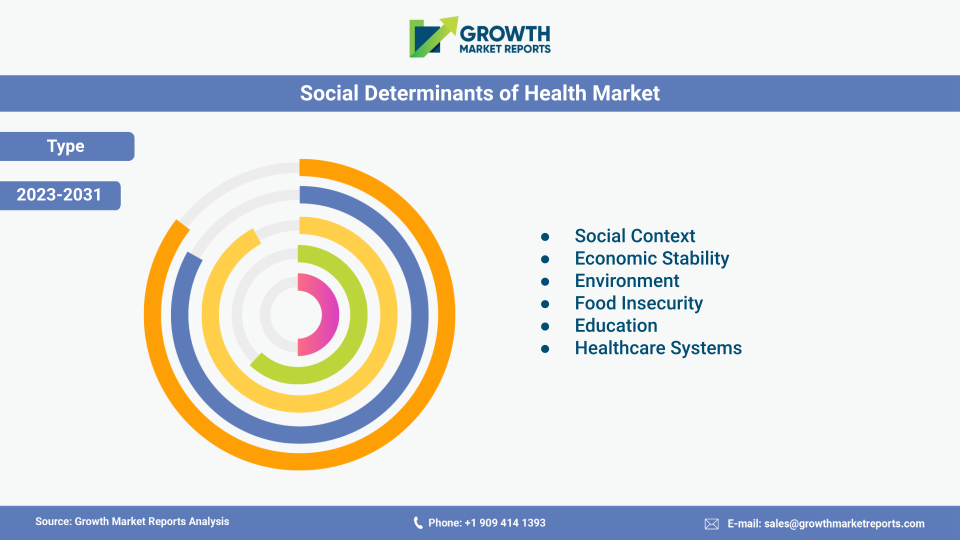
Segments - by Component (Software, Services, Data Analytics), by Application (Population Health Management, Value-Based Care, Risk Assessment, Patient Engagement, Others), by End-User (Healthcare Providers, Payers, Government Agencies, Pharmaceutical Companies, Others), by Deployment Mode (On-Premises, Cloud-Based)

https://growthmarketreports.com/raksha
Author : Raksha Sharma
https://growthmarketreports.com/Vaibhav
Fact-checked by : V. Chandola
https://growthmarketreports.com/Shruti
Editor : Shruti Bhat

Upcoming | Report ID :HC-5055 | 4.4 Rating | 48 Reviews | 270 Pages | Format : Docx PDF

Report Description


Social Determinants of Health Market Outlook

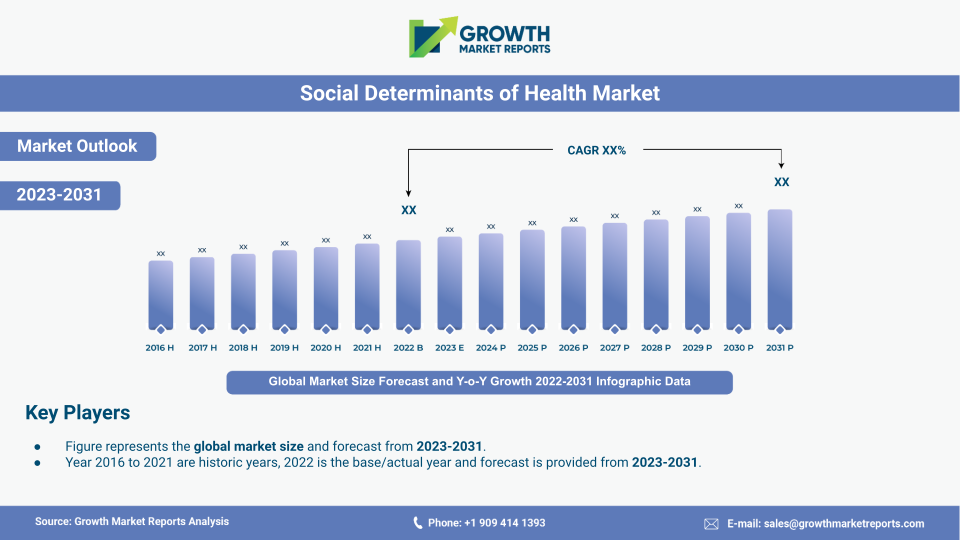
According to our latest research, the global Social Determinants of Health (SDOH) market size reached USD 7.2 billion in 2024, reflecting robust momentum driven by the integration of advanced analytics and digital health solutions across healthcare ecosystems. The market is anticipated to expand at a CAGR of 22.8% from 2025 to 2033, with the total market size expected to reach USD 59.6 billion by 2033. This accelerated growth is primarily fueled by the increasing recognition of the critical impact that social, economic, and environmental factors have on health outcomes, as well as the growing adoption of value-based care models globally. As per our latest research, the demand for holistic patient care and the need to address health disparities are the main catalysts propelling the SDOH market forward.

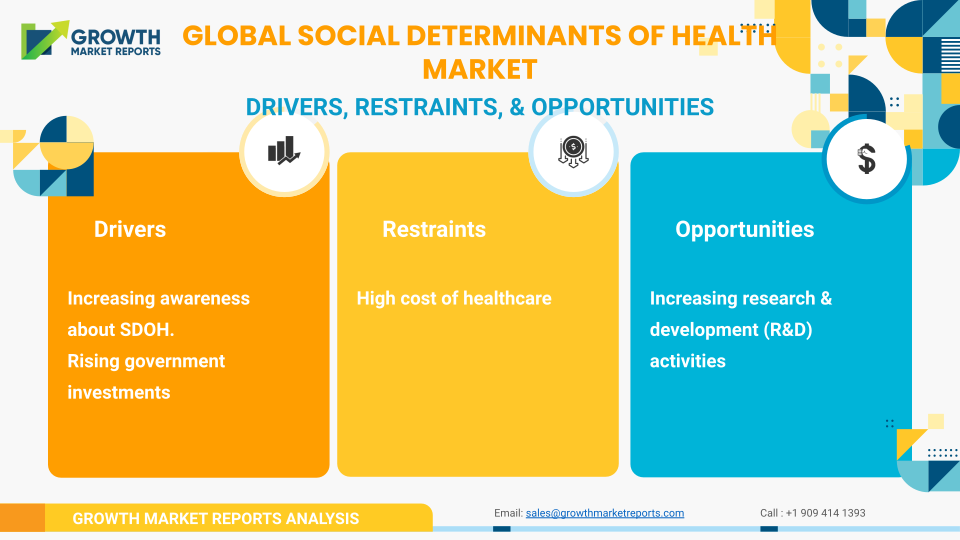
The surge in the Social Determinants of Health market is fundamentally driven by the global shift towards preventive healthcare and population health management. Healthcare organizations are increasingly recognizing that clinical care alone accounts for only a fraction of overall health outcomes, with social determinants such as housing, education, employment, and food security playing a pivotal role. This realization is prompting investments in SDOH data collection, analytics, and intervention programs that enable healthcare providers and payers to identify at-risk populations, design targeted interventions, and ultimately improve health equity. The proliferation of electronic health records (EHRs) and interoperable data platforms is further facilitating the integration of SDOH insights into clinical workflows, enhancing the ability to deliver personalized and effective care.

Another major growth driver for the SDOH market is the transition to value-based care and risk-based reimbursement models. Governments and private payers worldwide are incentivizing healthcare organizations to focus on outcomes rather than volume, which necessitates a comprehensive understanding of the social and environmental factors influencing patient health. As a result, there is a growing demand for advanced analytics, machine learning, and artificial intelligence solutions that can process and interpret large volumes of SDOH data. These technologies are enabling stakeholders to stratify risk, predict adverse health events, and allocate resources more efficiently, thereby reducing costs and improving quality of care. The increasing availability of real-time data from wearable devices, mobile applications, and community sources is also expanding the scope and effectiveness of SDOH initiatives.

Furthermore, regulatory mandates and policy initiatives are playing a crucial role in accelerating the adoption of SDOH solutions. In the United States, for instance, the Centers for Medicare & Medicaid Services (CMS) and other agencies have introduced guidelines and incentive programs that require healthcare organizations to screen for and address social determinants as part of routine care. Similar efforts are being observed in Europe and Asia Pacific, where governments are prioritizing health equity and social inclusion in their public health agendas. These policies are not only driving demand for SDOH data analytics and intervention platforms but are also fostering collaboration between healthcare providers, payers, community organizations, and technology vendors, thereby creating a vibrant and dynamic market landscape.

From a regional perspective, North America continues to dominate the SDOH market, accounting for the largest share in 2024, followed by Europe and Asia Pacific. The United States, in particular, is at the forefront due to its advanced healthcare infrastructure, strong regulatory support, and early adoption of health IT solutions. However, Asia Pacific is expected to witness the fastest growth over the forecast period, driven by rapid urbanization, rising healthcare expenditures, and increasing awareness of social health disparities. Europe also presents significant opportunities, especially with the implementation of digital health strategies and cross-sector collaborations aimed at addressing the root causes of health inequities. Latin America and the Middle East & Africa are gradually catching up, supported by government-led health reforms and international investments in healthcare infrastructure.

Global Social Determinants of Health Industry Outlook

Component Analysis

The component segment of the Social Determinants of Health market is primarily divided into software, services, and data analytics. Software solutions are at the core of SDOH initiatives, providing healthcare organizations with the tools needed to capture, integrate, and analyze social determinants data from various sources. These platforms often feature robust interoperability capabilities, allowing seamless data exchange between EHR systems, community organizations, and public health agencies. The growing emphasis on user-friendly interfaces and customizable dashboards is enabling clinicians and care teams to visualize SDOH insights in real time, facilitating informed decision-making and timely interventions. Furthermore, the integration of artificial intelligence and machine learning algorithms is enhancing the predictive capabilities of these software solutions, enabling proactive risk identification and resource allocation.

Services play a crucial role in the successful deployment and utilization of SDOH solutions. These include consulting, implementation, training, and support services that help organizations navigate the complexities of SDOH data integration, compliance, and workflow optimization. Service providers are increasingly offering end-to-end solutions that encompass needs assessment, strategy development, technology deployment, and ongoing monitoring and evaluation. This comprehensive approach is particularly valuable for healthcare providers and payers that lack in-house expertise or resources to manage SDOH initiatives independently. As a result, the services segment is experiencing steady growth, with demand being driven by both large health systems and smaller community-based organizations seeking to improve health outcomes and reduce disparities.

Data analytics represents one of the most dynamic and rapidly expanding components of the SDOH market. Advanced analytics platforms are enabling organizations to extract actionable insights from vast and diverse data sets, including clinical records, claims data, social services data, and patient-reported outcomes. These solutions leverage sophisticated algorithms to identify patterns, stratify risk, and predict health events based on social determinants. The ability to integrate structured and unstructured data sources is a key differentiator, as it allows for a more comprehensive understanding of the factors influencing individual and population health. Moreover, real-time analytics are empowering care teams to intervene promptly, track progress, and measure the impact of SDOH interventions on health outcomes and costs.

The interplay between software, services, and data analytics is creating a synergistic ecosystem that is driving innovation and adoption in the SDOH market. Leading vendors are increasingly offering integrated solutions that combine robust data management capabilities with advanced analytics and comprehensive support services. This holistic approach is enabling healthcare organizations to address the full spectrum of SDOH challenges, from data collection and integration to intervention and outcome measurement. As the market continues to mature, the demand for scalable, interoperable, and secure solutions is expected to rise, further fueling growth across all component segments.

Report Scope

Attributes Details
Report Title Social Determinants of Health Market Research Report 2033
By Component Software, Services, Data Analytics
By Application Population Health Management, Value-Based Care, Risk Assessment, Patient Engagement, Others
By End-User Healthcare Providers, Payers, Government Agencies, Pharmaceutical Companies, Others
By Deployment Mode On-Premises, Cloud-Based
Regions Covered North America, Europe, APAC, Latin America, MEA
Base Year 2024
Historic Data 2018-2023
Forecast Period 2025-2033
Number of Pages 270
Number of Tables & Figures 336
Customization Available Yes, the report can be customized as per your need.

Application Analysis

The application segment of the Social Determinants of Health market encompasses a diverse range of use cases, including population health management, value-based care, risk assessment, patient engagement, and others. Population health management remains a primary focus, as healthcare organizations strive to identify and address the social and environmental factors that contribute to health disparities within communities. By leveraging SDOH data, care teams can stratify populations based on risk, design targeted interventions, and monitor the effectiveness of community-based programs. This approach is not only improving health outcomes but also reducing healthcare costs by preventing avoidable hospitalizations and emergency department visits.

Value-based care is another key application area driving the adoption of SDOH solutions. As reimbursement models shift from fee-for-service to value-based arrangements, healthcare providers and payers are under increasing pressure to demonstrate improvements in quality, outcomes, and patient satisfaction. SDOH analytics are enabling organizations to identify high-risk individuals, address barriers to care, and coordinate services across clinical and social domains. This holistic approach is essential for achieving the goals of value-based care, as it recognizes the interconnectedness of social, economic, and environmental factors in shaping health outcomes. The ability to track and report on SDOH interventions is also supporting compliance with regulatory requirements and payer contracts.

Risk assessment is a critical application of SDOH data, particularly in the context of population health and chronic disease management. Advanced analytics platforms are enabling organizations to predict which individuals are most likely to experience adverse health events based on their social determinants profile. This proactive approach allows care teams to allocate resources more effectively, prioritize interventions, and prevent complications before they occur. Risk stratification is also supporting the development of personalized care plans that address the unique needs and circumstances of each patient, thereby improving engagement and adherence.

Patient engagement is emerging as a vital application of SDOH solutions, as healthcare organizations recognize the importance of involving patients in their own care. Digital platforms and mobile applications are enabling individuals to report on their social needs, access resources, and communicate with care teams in real time. This increased engagement is fostering trust, improving health literacy, and empowering patients to take a more active role in managing their health. Other applications of SDOH solutions include care coordination, resource allocation, and program evaluation, all of which are contributing to the overall effectiveness and sustainability of SDOH initiatives.

End-User Analysis

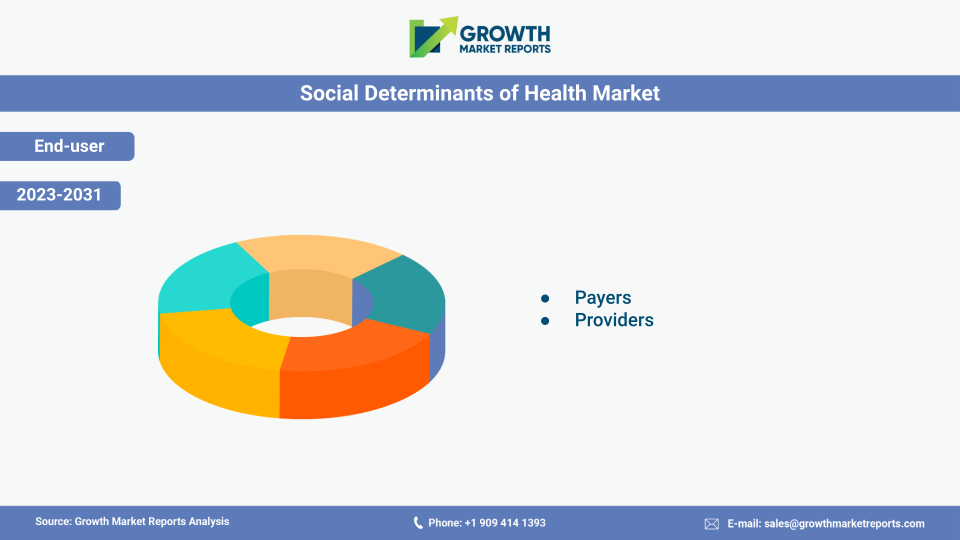
The end-user segment of the Social Determinants of Health market is comprised of healthcare providers, payers, government agencies, pharmaceutical companies, and others. Healthcare providers, including hospitals, health systems, and community health centers, represent the largest share of the market. These organizations are at the forefront of SDOH adoption, as they are directly responsible for delivering care and improving patient outcomes. Providers are leveraging SDOH data to identify at-risk populations, design targeted interventions, and coordinate services across clinical and social domains. The integration of SDOH insights into clinical workflows is enabling providers to deliver more personalized and effective care, while also supporting compliance with value-based care requirements.

Payers, including health insurance companies and managed care organizations, are increasingly investing in SDOH solutions as part of their efforts to manage risk and control costs. By analyzing SDOH data, payers can identify high-risk members, design targeted outreach programs, and incentivize providers to address social determinants as part of routine care. This approach is not only improving health outcomes but also reducing the financial burden associated with avoidable hospitalizations and emergency department visits. Payers are also collaborating with community organizations and social service agencies to address the root causes of health disparities and promote health equity.

Government agencies play a critical role in driving the adoption of SDOH solutions, particularly through policy initiatives, funding programs, and regulatory mandates. Public health agencies are leveraging SDOH data to inform policy decisions, allocate resources, and evaluate the impact of community-based programs. Governments are also fostering collaboration between healthcare providers, payers, and community organizations to address the social determinants of health at a population level. These efforts are particularly important in addressing health disparities and promoting social inclusion among vulnerable and underserved populations.

Pharmaceutical companies are emerging as important stakeholders in the SDOH market, as they seek to understand the social and environmental factors that influence medication adherence, treatment outcomes, and clinical trial participation. By integrating SDOH data into their research and development processes, pharmaceutical companies can design more effective interventions, improve patient recruitment and retention, and demonstrate the value of their products to payers and providers. Other end-users of SDOH solutions include academic institutions, research organizations, and non-profit organizations, all of which are contributing to the advancement and dissemination of SDOH best practices.

Deployment Mode Analysis

The deployment mode segment of the Social Determinants of Health market is bifurcated into on-premises and cloud-based solutions. On-premises deployment remains prevalent among large healthcare organizations and government agencies that require greater control over data security, privacy, and compliance. These organizations often have the infrastructure and resources necessary to manage and maintain SDOH solutions internally, ensuring that sensitive patient data is protected in accordance with regulatory requirements. On-premises solutions also offer greater customization and integration capabilities, allowing organizations to tailor SDOH platforms to their specific needs and workflows.

However, the cloud-based deployment mode is rapidly gaining traction, driven by its scalability, flexibility, and cost-effectiveness. Cloud-based SDOH solutions enable organizations to access advanced analytics and data management tools without the need for significant upfront investments in hardware or IT infrastructure. This is particularly appealing to smaller healthcare providers, community organizations, and payers that may lack the resources to deploy and maintain on-premises solutions. Cloud-based platforms also facilitate real-time data sharing and collaboration across multiple stakeholders, enhancing the ability to coordinate care and address social determinants at scale.

The adoption of cloud-based SDOH solutions is being further accelerated by advancements in data security, encryption, and regulatory compliance. Leading vendors are offering robust security features and compliance certifications, ensuring that patient data is protected in accordance with industry standards such as HIPAA, GDPR, and others. This is alleviating concerns around data privacy and fostering greater trust in cloud-based solutions among healthcare organizations and their partners. The ability to rapidly deploy and scale SDOH solutions in response to changing needs and priorities is also a key advantage of the cloud-based deployment model.

As the SDOH market continues to evolve, hybrid deployment models are emerging as a viable option for organizations seeking to balance the benefits of on-premises and cloud-based solutions. Hybrid models allow organizations to retain sensitive data on-premises while leveraging the scalability and flexibility of the cloud for analytics and collaboration. This approach is enabling organizations to optimize their SDOH strategies, enhance data integration, and accelerate the adoption of innovative technologies. Overall, the deployment mode segment is expected to witness significant growth, with cloud-based solutions leading the way in terms of adoption and innovation.

Opportunities & Threats

The Social Determinants of Health market presents a wealth of opportunities for stakeholders across the healthcare ecosystem. One of the most significant opportunities lies in the integration of SDOH data with emerging technologies such as artificial intelligence, machine learning, and predictive analytics. These technologies are enabling organizations to derive deeper insights from complex and diverse data sets, identify patterns and trends, and design targeted interventions that address the root causes of health disparities. The ability to leverage real-time data from wearable devices, mobile applications, and community sources is expanding the scope and effectiveness of SDOH initiatives, enabling organizations to deliver more personalized and proactive care. Additionally, the growing emphasis on health equity and social inclusion is creating opportunities for cross-sector collaboration, innovation, and investment in SDOH solutions.

Another major opportunity in the SDOH market is the expansion of value-based care and risk-based reimbursement models. As governments and payers continue to shift towards outcomes-based payment arrangements, there is a growing demand for solutions that enable organizations to measure, report, and improve performance on SDOH-related metrics. This is driving investments in advanced analytics, data integration, and care coordination platforms that support the goals of value-based care. Furthermore, the increasing focus on population health management and preventive care is creating opportunities for organizations to develop and scale innovative SDOH programs that address the social and environmental determinants of health at a community level. The rise of public-private partnerships and collaborative initiatives is also fostering a supportive environment for the growth and sustainability of the SDOH market.

Despite the numerous opportunities, the Social Determinants of Health market faces several challenges and threats that could hinder its growth. One of the primary restrainers is the complexity and fragmentation of SDOH data, which is often collected from disparate sources and stored in incompatible formats. This makes it difficult for organizations to integrate, analyze, and act on SDOH insights in a timely and effective manner. Data privacy and security concerns are also significant barriers, particularly given the sensitive nature of SDOH information and the increasing prevalence of cyber threats. Additionally, the lack of standardized frameworks and best practices for SDOH data collection, integration, and intervention is impeding the scalability and effectiveness of SDOH initiatives. Overcoming these challenges will require continued investment in technology, workforce development, and cross-sector collaboration.

Regional Outlook

North America remains the dominant region in the global Social Determinants of Health market, accounting for USD 3.1 billion of the market size in 2024. The United States is leading the way, driven by advanced healthcare infrastructure, strong regulatory support, and early adoption of health IT and SDOH solutions. The presence of major technology vendors and a robust ecosystem of healthcare providers, payers, and community organizations is further fueling growth in the region. Canada is also making significant strides, with government-led initiatives aimed at promoting health equity and addressing social determinants at the community level. The North American market is expected to maintain its leadership position over the forecast period, supported by ongoing investments in digital health and value-based care.

Europe is the second-largest market for Social Determinants of Health solutions, with a market size of USD 2.0 billion in 2024. The region is characterized by strong government support for health equity initiatives, widespread adoption of digital health technologies, and a focus on cross-sector collaboration. Countries such as the United Kingdom, Germany, and France are leading the way, with comprehensive strategies aimed at integrating SDOH data into public health and care delivery systems. The European market is projected to grow at a CAGR of 21.5% from 2025 to 2033, driven by ongoing investments in healthcare infrastructure and the implementation of digital health policies. The emphasis on social inclusion, preventive care, and population health management is creating a supportive environment for the growth of the SDOH market in Europe.

The Asia Pacific region is emerging as the fastest-growing market for Social Determinants of Health solutions, with a market size of USD 1.3 billion in 2024. Rapid urbanization, rising healthcare expenditures, and increasing awareness of health disparities are driving demand for SDOH solutions across the region. Countries such as China, India, and Australia are investing in digital health infrastructure, data analytics, and community-based programs to address the social and environmental determinants of health. The Asia Pacific market is expected to witness a CAGR of 26.2% over the forecast period, outpacing other regions in terms of growth. Latin America and the Middle East & Africa are also experiencing gradual adoption of SDOH solutions, supported by government-led health reforms, international investments, and the expansion of healthcare access to underserved populations.

Social Determinants of Health Market Statistics

Competitor Outlook

The competitive landscape of the Social Determinants of Health market is characterized by intense innovation, strategic partnerships, and a focus on integrated solutions. Leading technology vendors, healthcare IT companies, and analytics providers are vying for market share by developing comprehensive platforms that address the full spectrum of SDOH challenges. The market is witnessing a wave of mergers and acquisitions, as companies seek to expand their capabilities, enhance their product portfolios, and strengthen their geographic presence. Collaboration between healthcare providers, payers, community organizations, and technology vendors is becoming increasingly common, with stakeholders pooling resources and expertise to drive innovation and improve health outcomes.

Key players in the SDOH market are differentiating themselves through the development of advanced analytics, artificial intelligence, and machine learning capabilities. These technologies are enabling organizations to extract actionable insights from complex and diverse data sets, predict risk, and design targeted interventions. Vendors are also focusing on interoperability and data integration, ensuring that their solutions can seamlessly connect with existing EHR systems, care management platforms, and community resources. The ability to provide end-to-end solutions that encompass data collection, integration, analytics, and intervention is emerging as a key competitive advantage in the market.

The market is also characterized by the emergence of niche players and start-ups that are developing innovative solutions tailored to specific use cases, populations, or geographic regions. These companies are leveraging cloud-based platforms, mobile applications, and real-time data sources to deliver scalable and cost-effective SDOH solutions. Strategic partnerships with healthcare providers, payers, and community organizations are enabling these emerging players to gain traction and expand their reach. The increasing availability of funding and investment in digital health is further fueling innovation and competition in the SDOH market.

Major companies operating in the Social Determinants of Health market include LexisNexis Risk Solutions, Cerner Corporation (now part of Oracle Health), Epic Systems Corporation, Innovaccer, Health Catalyst, Unite Us, Socially Determined, and IBM Watson Health. LexisNexis Risk Solutions is renowned for its robust data analytics and risk assessment capabilities, enabling healthcare organizations to identify and address social determinants at scale. Cerner Corporation and Epic Systems are leading providers of EHR-integrated SDOH solutions, offering seamless data integration and workflow optimization. Innovaccer and Health Catalyst are known for their advanced analytics platforms, which leverage AI and machine learning to drive population health management and value-based care. Unite Us and Socially Determined are at the forefront of community-based care coordination, connecting healthcare providers with social service organizations to address the root causes of health disparities. IBM Watson Health is leveraging its expertise in AI and data analytics to deliver comprehensive SDOH solutions that support risk assessment, care coordination, and outcome measurement. These companies, along with a host of emerging players, are shaping the future of the SDOH market through innovation, collaboration, and a shared commitment to improving health equity and outcomes.

Key Players

  • Cerner Corporation
  • Epic Systems Corporation
  • UnitedHealth Group (Optum)
  • Health Catalyst
  • IBM Corporation
  • TransUnion Healthcare
  • LexisNexis Risk Solutions
  • WellSky
  • Innovaccer
  • MedeAnalytics
  • Socially Determined
  • Signify Health
  • Synergi Partners
  • Clear Impact
  • NowPow
  • Healthify (a WellSky company)
  • Deloitte
  • Conduent Incorporated
  • Change Healthcare
  • Wolters Kluwer
Social Determinants of Health Market Overview

Segments

The Social Determinants of Health market has been segmented on the basis of

Component

  • Software
  • Services
  • Data Analytics

Application

  • Population Health Management
  • Value-Based Care
  • Risk Assessment
  • Patient Engagement
  • Others

End-User

  • Healthcare Providers
  • Payers
  • Government Agencies
  • Pharmaceutical Companies
  • Others

Deployment Mode

  • On-Premises
  • Cloud-Based

Competitive Landscape

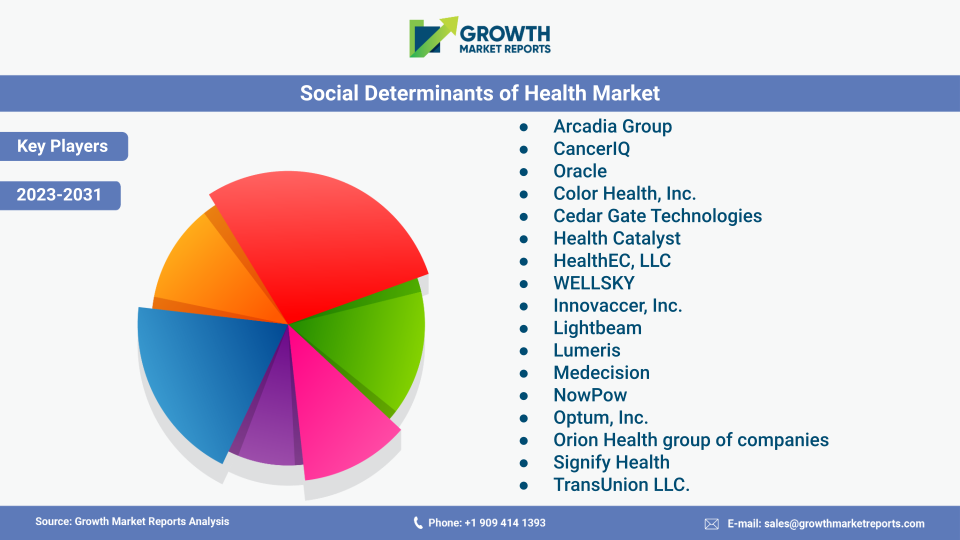
Key players competing in the global social determinants of health market are Arcadia Group; AMERIHEALTH CARITAS; CancerIQ; Oracle; Color Health, Inc.; Cedar Gate Technologies; Health Catalyst; HealthEC, LLC; WELLSKY; Blue Cross Blue Shield Association; Innovaccer, Inc.; Lightbeam; Lumeris; Medecision; NowPow; Elevance Health; Optum, Inc.; Orion Health group of companies; Signify Health; CVS.com; and TransUnion LLC.

These key players are adopting various strategies including mergers, acquisitions, collaboration, partnerships, product launches, and production expansion to expand their consumer base globally.

  • In March 2022, WellSky partnered with the Southeastern Michigan Health Association (SEMHA). The companies are likely to pool their initiatives that target and raise awareness for social determinants of health to achieve better health outcomes in communities in Michigan, the US.
  • In December 2021, TransUnion announced that it has completed the sale of TransUnion Healthcare, Inc. to nThrive, Inc. It is a leading healthcare revenue cycle management software-as-a-service (SaaS) platform backed by Clearlake Capital Group, L.P. for USD 1.735 Billion in cash.

Social Determinants of Health Market Key Players

Frequently Asked Questions

Technologies such as advanced analytics, artificial intelligence, machine learning, and interoperable data platforms are enabling organizations to extract actionable insights, predict risk, and design targeted interventions for improved health outcomes.

Major companies include LexisNexis Risk Solutions, Cerner Corporation (Oracle Health), Epic Systems Corporation, Innovaccer, Health Catalyst, Unite Us, Socially Determined, and IBM Watson Health.

Opportunities include integration with AI and machine learning, expansion of value-based care, and cross-sector collaboration. Challenges involve data fragmentation, privacy concerns, and lack of standardized frameworks for SDOH data management.

SDOH solutions can be deployed on-premises or via the cloud. Cloud-based solutions are gaining popularity due to scalability and cost-effectiveness, while on-premises deployments are favored for greater data control and security.

Key end-users include healthcare providers, payers (insurance companies), government agencies, pharmaceutical companies, academic institutions, and non-profit organizations.

Major applications include population health management, value-based care, risk assessment, patient engagement, care coordination, resource allocation, and program evaluation.

The SDOH market is segmented into software, services, and data analytics. Software solutions enable data integration and analysis, services support implementation and training, and data analytics provide actionable insights from diverse data sets.

North America dominates the SDOH market, particularly the United States, followed by Europe and Asia Pacific. Asia Pacific is expected to experience the fastest growth through 2033.

Key growth drivers include the shift towards preventive healthcare, adoption of value-based care models, increasing recognition of social, economic, and environmental impacts on health, and advancements in analytics and digital health solutions.

The global Social Determinants of Health (SDOH) market reached USD 7.2 billion in 2024 and is projected to grow at a CAGR of 22.8% from 2025 to 2033, reaching USD 59.6 billion by 2033.

Table Of Content

Chapter 1 Executive Summary
Chapter 2 Assumptions and Acronyms Used
Chapter 3 Research Methodology
Chapter 4 Social Determinants of Health Market Overview
   4.1 Introduction
      4.1.1 Market Taxonomy
      4.1.2 Market Definition
      4.1.3 Macro-Economic Factors Impacting the Market Growth
   4.2 Social Determinants of Health Market Dynamics
      4.2.1 Market Drivers
      4.2.2 Market Restraints
      4.2.3 Market Opportunity
   4.3 Social Determinants of Health Market - Supply Chain Analysis
      4.3.1 List of Key Suppliers
      4.3.2 List of Key Distributors
      4.3.3 List of Key Consumers
   4.4 Key Forces Shaping the Social Determinants of Health Market
      4.4.1 Bargaining Power of Suppliers
      4.4.2 Bargaining Power of Buyers
      4.4.3 Threat of Substitution
      4.4.4 Threat of New Entrants
      4.4.5 Competitive Rivalry
   4.5 Global Social Determinants of Health Market Size & Forecast, 2023-2032
      4.5.1 Social Determinants of Health Market Size and Y-o-Y Growth
      4.5.2 Social Determinants of Health Market Absolute $ Opportunity

Chapter 5 Global Social Determinants of Health Market Analysis and Forecast By Component
   5.1 Introduction
      5.1.1 Key Market Trends & Growth Opportunities By Component
      5.1.2 Basis Point Share (BPS) Analysis By Component
      5.1.3 Absolute $ Opportunity Assessment By Component
   5.2 Social Determinants of Health Market Size Forecast By Component
      5.2.1 Software
      5.2.2 Services
      5.2.3 Data Analytics
   5.3 Market Attractiveness Analysis By Component

Chapter 6 Global Social Determinants of Health Market Analysis and Forecast By Application
   6.1 Introduction
      6.1.1 Key Market Trends & Growth Opportunities By Application
      6.1.2 Basis Point Share (BPS) Analysis By Application
      6.1.3 Absolute $ Opportunity Assessment By Application
   6.2 Social Determinants of Health Market Size Forecast By Application
      6.2.1 Population Health Management
      6.2.2 Value-Based Care
      6.2.3 Risk Assessment
      6.2.4 Patient Engagement
      6.2.5 Others
   6.3 Market Attractiveness Analysis By Application

Chapter 7 Global Social Determinants of Health Market Analysis and Forecast By End-User
   7.1 Introduction
      7.1.1 Key Market Trends & Growth Opportunities By End-User
      7.1.2 Basis Point Share (BPS) Analysis By End-User
      7.1.3 Absolute $ Opportunity Assessment By End-User
   7.2 Social Determinants of Health Market Size Forecast By End-User
      7.2.1 Healthcare Providers
      7.2.2 Payers
      7.2.3 Government Agencies
      7.2.4 Pharmaceutical Companies
      7.2.5 Others
   7.3 Market Attractiveness Analysis By End-User

Chapter 8 Global Social Determinants of Health Market Analysis and Forecast By Deployment Mode
   8.1 Introduction
      8.1.1 Key Market Trends & Growth Opportunities By Deployment Mode
      8.1.2 Basis Point Share (BPS) Analysis By Deployment Mode
      8.1.3 Absolute $ Opportunity Assessment By Deployment Mode
   8.2 Social Determinants of Health Market Size Forecast By Deployment Mode
      8.2.1 On-Premises
      8.2.2 Cloud-Based
   8.3 Market Attractiveness Analysis By Deployment Mode

Chapter 9 Global Social Determinants of Health Market Analysis and Forecast by Region
   9.1 Introduction
      9.1.1 Key Market Trends & Growth Opportunities By Region
      9.1.2 Basis Point Share (BPS) Analysis By Region
      9.1.3 Absolute $ Opportunity Assessment By Region
   9.2 Social Determinants of Health Market Size Forecast By Region
      9.2.1 North America
      9.2.2 Europe
      9.2.3 Asia Pacific
      9.2.4 Latin America
      9.2.5 Middle East & Africa (MEA)
   9.3 Market Attractiveness Analysis By Region

Chapter 10 Coronavirus Disease (COVID-19) Impact 
   10.1 Introduction 
   10.2 Current & Future Impact Analysis 
   10.3 Economic Impact Analysis 
   10.4 Government Policies 
   10.5 Investment Scenario

Chapter 11 North America Social Determinants of Health Analysis and Forecast
   11.1 Introduction
   11.2 North America Social Determinants of Health Market Size Forecast by Country
      11.2.1 U.S.
      11.2.2 Canada
   11.3 Basis Point Share (BPS) Analysis by Country
   11.4 Absolute $ Opportunity Assessment by Country
   11.5 Market Attractiveness Analysis by Country
   11.6 North America Social Determinants of Health Market Size Forecast By Component
      11.6.1 Software
      11.6.2 Services
      11.6.3 Data Analytics
   11.7 Basis Point Share (BPS) Analysis By Component 
   11.8 Absolute $ Opportunity Assessment By Component 
   11.9 Market Attractiveness Analysis By Component
   11.10 North America Social Determinants of Health Market Size Forecast By Application
      11.10.1 Population Health Management
      11.10.2 Value-Based Care
      11.10.3 Risk Assessment
      11.10.4 Patient Engagement
      11.10.5 Others
   11.11 Basis Point Share (BPS) Analysis By Application 
   11.12 Absolute $ Opportunity Assessment By Application 
   11.13 Market Attractiveness Analysis By Application
   11.14 North America Social Determinants of Health Market Size Forecast By End-User
      11.14.1 Healthcare Providers
      11.14.2 Payers
      11.14.3 Government Agencies
      11.14.4 Pharmaceutical Companies
      11.14.5 Others
   11.15 Basis Point Share (BPS) Analysis By End-User 
   11.16 Absolute $ Opportunity Assessment By End-User 
   11.17 Market Attractiveness Analysis By End-User
   11.18 North America Social Determinants of Health Market Size Forecast By Deployment Mode
      11.18.1 On-Premises
      11.18.2 Cloud-Based
   11.19 Basis Point Share (BPS) Analysis By Deployment Mode 
   11.20 Absolute $ Opportunity Assessment By Deployment Mode 
   11.21 Market Attractiveness Analysis By Deployment Mode

Chapter 12 Europe Social Determinants of Health Analysis and Forecast
   12.1 Introduction
   12.2 Europe Social Determinants of Health Market Size Forecast by Country
      12.2.1 Germany
      12.2.2 France
      12.2.3 Italy
      12.2.4 U.K.
      12.2.5 Spain
      12.2.6 Russia
      12.2.7 Rest of Europe
   12.3 Basis Point Share (BPS) Analysis by Country
   12.4 Absolute $ Opportunity Assessment by Country
   12.5 Market Attractiveness Analysis by Country
   12.6 Europe Social Determinants of Health Market Size Forecast By Component
      12.6.1 Software
      12.6.2 Services
      12.6.3 Data Analytics
   12.7 Basis Point Share (BPS) Analysis By Component 
   12.8 Absolute $ Opportunity Assessment By Component 
   12.9 Market Attractiveness Analysis By Component
   12.10 Europe Social Determinants of Health Market Size Forecast By Application
      12.10.1 Population Health Management
      12.10.2 Value-Based Care
      12.10.3 Risk Assessment
      12.10.4 Patient Engagement
      12.10.5 Others
   12.11 Basis Point Share (BPS) Analysis By Application 
   12.12 Absolute $ Opportunity Assessment By Application 
   12.13 Market Attractiveness Analysis By Application
   12.14 Europe Social Determinants of Health Market Size Forecast By End-User
      12.14.1 Healthcare Providers
      12.14.2 Payers
      12.14.3 Government Agencies
      12.14.4 Pharmaceutical Companies
      12.14.5 Others
   12.15 Basis Point Share (BPS) Analysis By End-User 
   12.16 Absolute $ Opportunity Assessment By End-User 
   12.17 Market Attractiveness Analysis By End-User
   12.18 Europe Social Determinants of Health Market Size Forecast By Deployment Mode
      12.18.1 On-Premises
      12.18.2 Cloud-Based
   12.19 Basis Point Share (BPS) Analysis By Deployment Mode 
   12.20 Absolute $ Opportunity Assessment By Deployment Mode 
   12.21 Market Attractiveness Analysis By Deployment Mode

Chapter 13 Asia Pacific Social Determinants of Health Analysis and Forecast
   13.1 Introduction
   13.2 Asia Pacific Social Determinants of Health Market Size Forecast by Country
      13.2.1 China
      13.2.2 Japan
      13.2.3 South Korea
      13.2.4 India
      13.2.5 Australia
      13.2.6 South East Asia (SEA)
      13.2.7 Rest of Asia Pacific (APAC)
   13.3 Basis Point Share (BPS) Analysis by Country
   13.4 Absolute $ Opportunity Assessment by Country
   13.5 Market Attractiveness Analysis by Country
   13.6 Asia Pacific Social Determinants of Health Market Size Forecast By Component
      13.6.1 Software
      13.6.2 Services
      13.6.3 Data Analytics
   13.7 Basis Point Share (BPS) Analysis By Component 
   13.8 Absolute $ Opportunity Assessment By Component 
   13.9 Market Attractiveness Analysis By Component
   13.10 Asia Pacific Social Determinants of Health Market Size Forecast By Application
      13.10.1 Population Health Management
      13.10.2 Value-Based Care
      13.10.3 Risk Assessment
      13.10.4 Patient Engagement
      13.10.5 Others
   13.11 Basis Point Share (BPS) Analysis By Application 
   13.12 Absolute $ Opportunity Assessment By Application 
   13.13 Market Attractiveness Analysis By Application
   13.14 Asia Pacific Social Determinants of Health Market Size Forecast By End-User
      13.14.1 Healthcare Providers
      13.14.2 Payers
      13.14.3 Government Agencies
      13.14.4 Pharmaceutical Companies
      13.14.5 Others
   13.15 Basis Point Share (BPS) Analysis By End-User 
   13.16 Absolute $ Opportunity Assessment By End-User 
   13.17 Market Attractiveness Analysis By End-User
   13.18 Asia Pacific Social Determinants of Health Market Size Forecast By Deployment Mode
      13.18.1 On-Premises
      13.18.2 Cloud-Based
   13.19 Basis Point Share (BPS) Analysis By Deployment Mode 
   13.20 Absolute $ Opportunity Assessment By Deployment Mode 
   13.21 Market Attractiveness Analysis By Deployment Mode

Chapter 14 Latin America Social Determinants of Health Analysis and Forecast
   14.1 Introduction
   14.2 Latin America Social Determinants of Health Market Size Forecast by Country
      14.2.1 Brazil
      14.2.2 Mexico
      14.2.3 Rest of Latin America (LATAM)
   14.3 Basis Point Share (BPS) Analysis by Country
   14.4 Absolute $ Opportunity Assessment by Country
   14.5 Market Attractiveness Analysis by Country
   14.6 Latin America Social Determinants of Health Market Size Forecast By Component
      14.6.1 Software
      14.6.2 Services
      14.6.3 Data Analytics
   14.7 Basis Point Share (BPS) Analysis By Component 
   14.8 Absolute $ Opportunity Assessment By Component 
   14.9 Market Attractiveness Analysis By Component
   14.10 Latin America Social Determinants of Health Market Size Forecast By Application
      14.10.1 Population Health Management
      14.10.2 Value-Based Care
      14.10.3 Risk Assessment
      14.10.4 Patient Engagement
      14.10.5 Others
   14.11 Basis Point Share (BPS) Analysis By Application 
   14.12 Absolute $ Opportunity Assessment By Application 
   14.13 Market Attractiveness Analysis By Application
   14.14 Latin America Social Determinants of Health Market Size Forecast By End-User
      14.14.1 Healthcare Providers
      14.14.2 Payers
      14.14.3 Government Agencies
      14.14.4 Pharmaceutical Companies
      14.14.5 Others
   14.15 Basis Point Share (BPS) Analysis By End-User 
   14.16 Absolute $ Opportunity Assessment By End-User 
   14.17 Market Attractiveness Analysis By End-User
   14.18 Latin America Social Determinants of Health Market Size Forecast By Deployment Mode
      14.18.1 On-Premises
      14.18.2 Cloud-Based
   14.19 Basis Point Share (BPS) Analysis By Deployment Mode 
   14.20 Absolute $ Opportunity Assessment By Deployment Mode 
   14.21 Market Attractiveness Analysis By Deployment Mode

Chapter 15 Middle East & Africa (MEA) Social Determinants of Health Analysis and Forecast
   15.1 Introduction
   15.2 Middle East & Africa (MEA) Social Determinants of Health Market Size Forecast by Country
      15.2.1 Saudi Arabia
      15.2.2 South Africa
      15.2.3 UAE
      15.2.4 Rest of Middle East & Africa (MEA)
   15.3 Basis Point Share (BPS) Analysis by Country
   15.4 Absolute $ Opportunity Assessment by Country
   15.5 Market Attractiveness Analysis by Country
   15.6 Middle East & Africa (MEA) Social Determinants of Health Market Size Forecast By Component
      15.6.1 Software
      15.6.2 Services
      15.6.3 Data Analytics
   15.7 Basis Point Share (BPS) Analysis By Component 
   15.8 Absolute $ Opportunity Assessment By Component 
   15.9 Market Attractiveness Analysis By Component
   15.10 Middle East & Africa (MEA) Social Determinants of Health Market Size Forecast By Application
      15.10.1 Population Health Management
      15.10.2 Value-Based Care
      15.10.3 Risk Assessment
      15.10.4 Patient Engagement
      15.10.5 Others
   15.11 Basis Point Share (BPS) Analysis By Application 
   15.12 Absolute $ Opportunity Assessment By Application 
   15.13 Market Attractiveness Analysis By Application
   15.14 Middle East & Africa (MEA) Social Determinants of Health Market Size Forecast By End-User
      15.14.1 Healthcare Providers
      15.14.2 Payers
      15.14.3 Government Agencies
      15.14.4 Pharmaceutical Companies
      15.14.5 Others
   15.15 Basis Point Share (BPS) Analysis By End-User 
   15.16 Absolute $ Opportunity Assessment By End-User 
   15.17 Market Attractiveness Analysis By End-User
   15.18 Middle East & Africa (MEA) Social Determinants of Health Market Size Forecast By Deployment Mode
      15.18.1 On-Premises
      15.18.2 Cloud-Based
   15.19 Basis Point Share (BPS) Analysis By Deployment Mode 
   15.20 Absolute $ Opportunity Assessment By Deployment Mode 
   15.21 Market Attractiveness Analysis By Deployment Mode

Chapter 16 Competition Landscape 
   16.1 Social Determinants of Health Market: Competitive Dashboard
   16.2 Global Social Determinants of Health Market: Market Share Analysis, 2023
   16.3 Company Profiles (Details – Overview, Financials, Developments, Strategy) 
      16.3.1 Cerner Corporation
Epic Systems Corporation
UnitedHealth Group (Optum)
Health Catalyst
IBM Corporation
TransUnion Healthcare
LexisNexis Risk Solutions
WellSky
Innovaccer
MedeAnalytics
Socially Determined
Signify Health
Synergi Partners
Clear Impact
NowPow
Healthify (a WellSky company)
Deloitte
Conduent Incorporated
Change Healthcare
Wolters Kluwer

Methodology

Our Clients

FedEx Logistics
General Mills
Nestle SA
The John Holland Group
Microsoft
Dassault Aviation
General Electric
sinopec