Roast and Ground Coffee Market Research Report 2033

Roast and Ground Coffee Market Research Report 2033

Segments - by Product Type (Arabica, Robusta, Blend), by Packaging Type (Bags, Pods, Capsules, Others), by Distribution Channel (Supermarkets/Hypermarkets, Convenience Stores, Online Retail, Specialty Stores, Others), by End-User (Household, Commercial, Institutional)

https://growthmarketreports.com/Anuradha
Author : Anuradha B. More
https://growthmarketreports.com/Vaibhav
Fact-checked by : Vaibhav Chandola
https://growthmarketreports.com/Shruti
Editor : Shruti Bhat

Upcoming | Report ID :FB-659 | 4.5 Rating | 58 Reviews | 299 Pages | Format : Docx PDF

Report Description


Roast and Ground Coffee Market Outlook

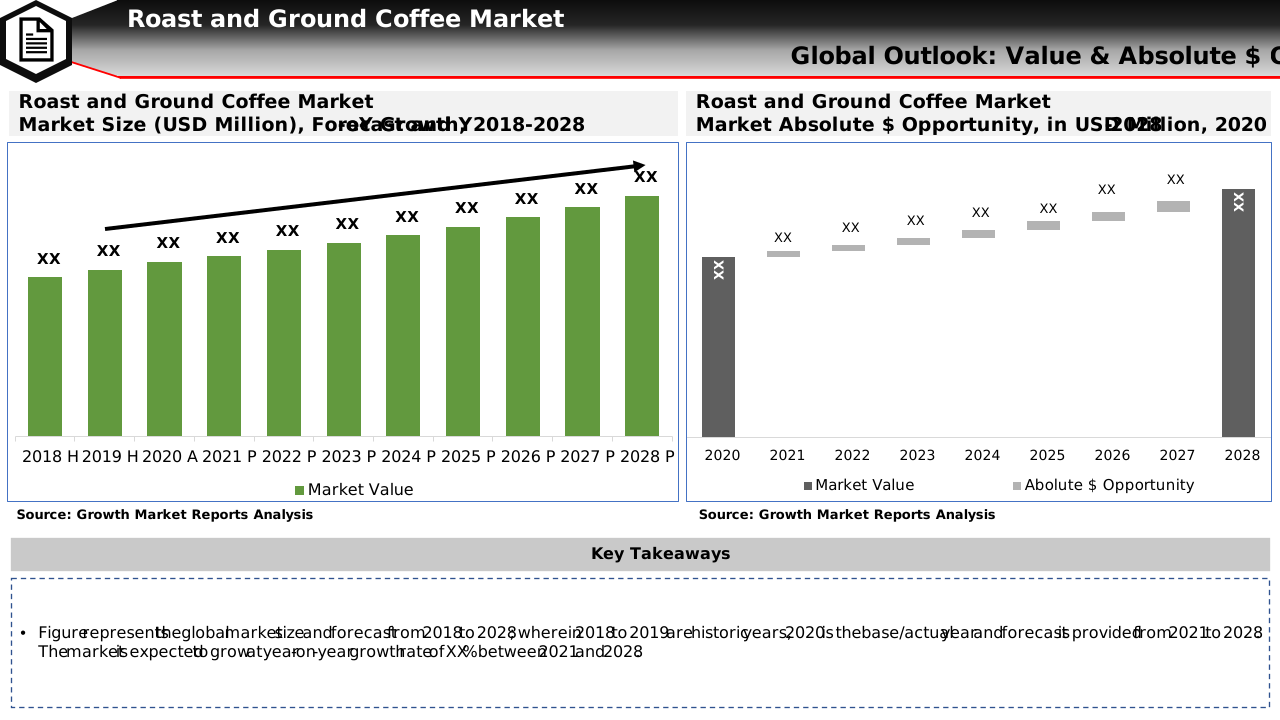
According to our latest research, the global roast and ground coffee market size reached USD 28.7 billion in 2024, reflecting robust demand across both developed and emerging markets. The market is expected to expand at a compound annual growth rate (CAGR) of 5.2% from 2025 to 2033, reaching a forecasted market size of USD 45.2 billion by 2033. This steady growth is primarily driven by evolving consumer preferences for premium coffee experiences, increasing urbanization, and the proliferation of specialty coffee outlets worldwide. As per our latest research, the marketÂ’s upward trajectory is further supported by innovations in product offerings and packaging, as well as the growing influence of the millennial demographic on consumption patterns.

One of the most significant growth factors in the roast and ground coffee market is the rising consumer inclination toward specialty and gourmet coffee. Consumers are increasingly seeking out high-quality, ethically sourced beans, and unique flavor profiles, which is driving demand for both Arabica and blended varieties. The emergence of third-wave coffee movements has elevated the coffee-drinking experience, encouraging consumers to appreciate the nuances of different roasts and origins. Additionally, the growth of café culture, particularly in urban centers, has contributed to a surge in out-of-home coffee consumption, further boosting the market for both household and commercial end-users. This trend is expected to intensify as consumers continue to prioritize premiumization and authenticity in their coffee choices.

Another pivotal growth driver is the expansion of convenient and innovative packaging solutions. The rise of single-serve pods and capsules, alongside traditional bagged coffee, has made it easier for consumers to enjoy high-quality coffee at home and on the go. These packaging innovations cater to busy lifestyles and the growing demand for portion control and freshness. Major players are investing in sustainable packaging materials to address environmental concerns, which not only enhances brand image but also appeals to eco-conscious consumers. The integration of QR codes and smart packaging technologies is further enhancing consumer engagement, providing information on sourcing, brewing methods, and traceability, thereby fostering brand loyalty.

Digital transformation and the growth of online retail channels are also accelerating the marketÂ’s expansion. E-commerce platforms have democratized access to a wide variety of roast and ground coffee products, enabling consumers in remote and underserved regions to explore premium and specialty offerings. Subscription services and direct-to-consumer models are gaining traction, offering personalized experiences and fostering deeper customer relationships. Furthermore, social media and digital marketing campaigns are playing a crucial role in shaping consumer perceptions, driving trial, and encouraging brand switching. These digital advancements are expected to remain a cornerstone of market growth, especially as younger consumers increasingly turn to online channels for their coffee purchases.

In recent years, the introduction of Microground Instant Coffee has revolutionized the convenience coffee segment. This innovative product combines the ease of instant coffee with the rich flavor profile of freshly brewed coffee, appealing to consumers who seek quality without sacrificing convenience. The microground process involves finely grinding whole coffee beans and blending them with instant coffee, resulting in a more robust taste and aroma. As consumer lifestyles become increasingly fast-paced, the demand for such convenient yet premium coffee solutions is on the rise. This trend is particularly evident in urban areas where time constraints often dictate consumer choices, making Microground Instant Coffee a popular option for both home and office consumption.

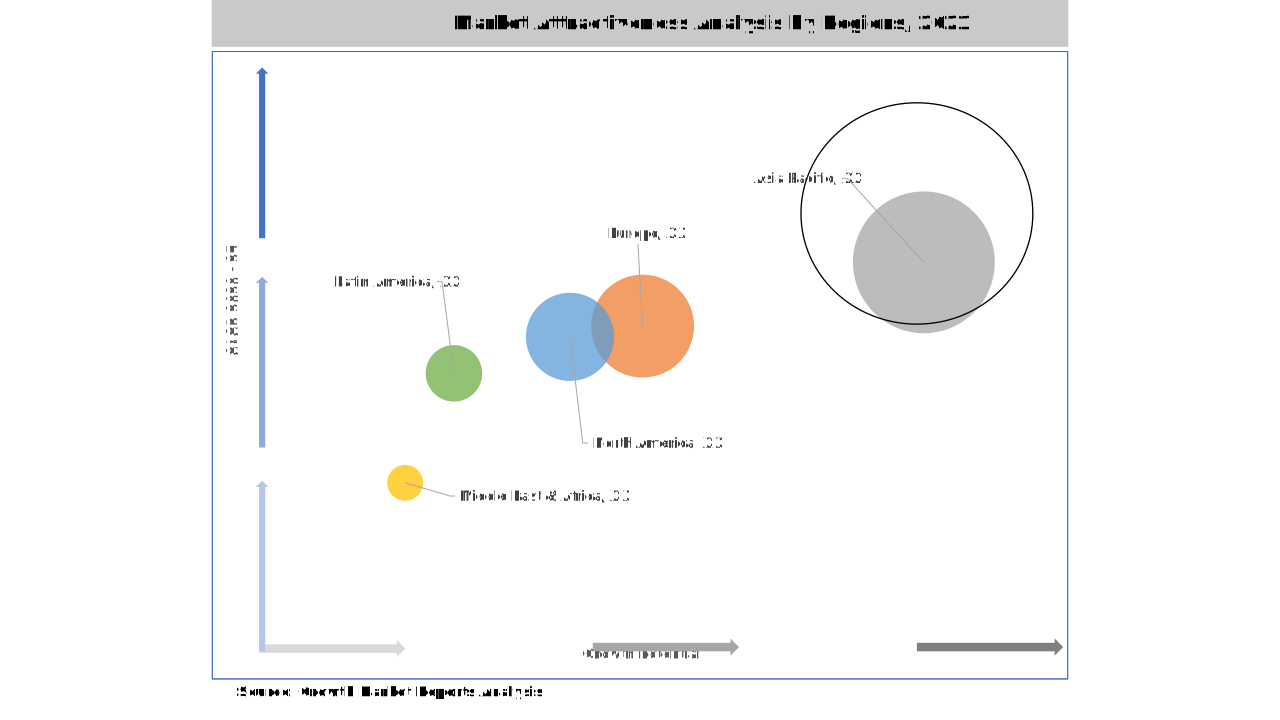
From a regional perspective, Europe continues to dominate the global roast and ground coffee market, accounting for the largest share due to its deeply entrenched coffee culture and high per capita consumption. North America follows closely, driven by the proliferation of specialty coffee shops and a strong preference for premium blends. The Asia Pacific region is witnessing the fastest growth, fueled by rising disposable incomes, urbanization, and the westernization of lifestyles. Latin America and the Middle East & Africa are also experiencing notable growth, supported by increasing café culture and expanding retail infrastructure. These regional dynamics underscore the diverse and evolving nature of the global roast and ground coffee market.

Global Roast and Ground Coffee Industry Outlook

Product Type Analysis

The product type segment of the roast and ground coffee market is primarily categorized into Arabica, Robusta, and Blend varieties. Among these, Arabica coffee continues to command the largest market share, owing to its superior flavor profile, lower caffeine content, and widespread consumer preference for its mild and aromatic taste. Arabica beans are predominantly sourced from high-altitude regions, which imparts distinct flavor characteristics highly valued by specialty coffee enthusiasts. The consistent demand for Arabica is further bolstered by its prominent use in premium blends and specialty offerings, particularly in markets such as Europe and North America, where consumers are willing to pay a premium for quality and traceability.

Robusta coffee, on the other hand, occupies a significant but distinct niche within the market. Known for its stronger, more bitter flavor and higher caffeine content, Robusta is favored in regions where consumers seek a more intense coffee experience or where price sensitivity is a key consideration. Robusta beans are also more resilient to pests and diseases, making them a popular choice among producers in regions with challenging growing conditions. The demand for Robusta is particularly strong in emerging markets and in the production of certain espresso blends, where its crema-enhancing properties are highly valued. As the global market evolves, the demand for Robusta is expected to remain stable, supported by its affordability and unique attributes.

Blended coffee products represent another important segment, catering to consumers who seek a balance of flavor, aroma, and price. Blends typically combine Arabica and Robusta beans in varying proportions, allowing manufacturers to create unique flavor profiles while optimizing cost structures. The popularity of blends is especially pronounced in the commercial and institutional sectors, where consistency and cost-effectiveness are paramount. Blends also offer an opportunity for brands to differentiate themselves by developing signature recipes that appeal to specific consumer segments. As the market matures, the trend toward customized and specialty blends is expected to gain momentum, driven by consumer demand for personalized coffee experiences.

In recent years, there has been a growing interest in single-origin and specialty coffee products, which has added further complexity to the product type segment. Single-origin coffees, often made from 100% Arabica beans, are prized for their unique flavor notes and traceability, appealing to discerning consumers and coffee connoisseurs. Specialty coffee shops and artisanal roasters are capitalizing on this trend by offering limited-edition and micro-lot releases, which command premium prices and foster brand loyalty. This segment is expected to grow as consumers become more educated about coffee origins and processing methods, further diversifying the product landscape within the roast and ground coffee market.

Report Scope

Attributes Details
Report Title Roast and Ground Coffee Market Research Report 2033
By Product Type Arabica, Robusta, Blend
By Packaging Type Bags, Pods, Capsules, Others
By Distribution Channel Supermarkets/Hypermarkets, Convenience Stores, Online Retail, Specialty Stores, Others
By End-User Household, Commercial, Institutional
Regions Covered North America, Europe, APAC, Latin America, MEA
Base Year 2024
Historic Data 2018-2023
Forecast Period 2025-2033
Number of Pages 299
Number of Tables & Figures 324
Customization Available Yes, the report can be customized as per your need.

Packaging Type Analysis

Packaging type plays a critical role in the roast and ground coffee market, influencing both consumer convenience and product freshness. Bags remain the most traditional and widely used packaging format, particularly for retail and bulk purchases. These are typically made from multi-layer materials designed to preserve freshness and prevent exposure to light, moisture, and oxygen. The popularity of bagged coffee is underpinned by its versatility, cost-effectiveness, and suitability for a wide range of product types, from premium single-origin beans to everyday blends. Manufacturers are increasingly adopting sustainable materials and resealable closures to enhance the appeal of bagged coffee and address growing environmental concerns.

Pods and capsules have emerged as a major growth segment within the packaging landscape, driven by the demand for convenience and single-serve solutions. These formats offer precise portion control, minimal preparation time, and consistent quality, making them particularly popular among busy consumers and office environments. The success of brands like Nespresso and Keurig has spurred widespread adoption of pods and capsules, prompting both established players and new entrants to expand their offerings in this category. However, the environmental impact of single-use packaging has prompted a shift toward recyclable and compostable materials, as well as the introduction of reusable pods, reflecting the marketÂ’s commitment to sustainability.

Other packaging types, such as tins, jars, and vacuum-sealed containers, continue to play a role in niche segments of the market. These formats are often associated with premium or specialty products, where presentation and shelf appeal are important differentiators. Vacuum-sealed packaging, in particular, is favored for its ability to extend shelf life and maintain flavor integrity, making it a popular choice for high-end and export-oriented brands. As consumer preferences evolve, manufacturers are experimenting with innovative packaging solutions, including smart packaging technologies that provide information on freshness, origin, and brewing recommendations, thereby enhancing the overall customer experience.

The rise of e-commerce and direct-to-consumer sales channels has also influenced packaging trends, with brands prioritizing packaging that is both durable for shipping and visually appealing for online presentation. Subscription services often leverage customized packaging to create a sense of exclusivity and personalization, further strengthening customer loyalty. As the market continues to expand, the interplay between convenience, sustainability, and aesthetics will remain a key focus for both manufacturers and consumers, shaping the future of packaging in the roast and ground coffee market.

Distribution Channel Analysis

The distribution channel landscape for roast and ground coffee is highly diversified, reflecting the marketÂ’s broad consumer base and evolving purchasing behaviors. Supermarkets and hypermarkets continue to dominate as the primary retail outlets for coffee, offering consumers a wide selection of brands, product types, and price points. The convenience of one-stop shopping, coupled with frequent promotions and discounts, makes these channels particularly attractive for household consumers. Retailers are increasingly dedicating shelf space to premium and specialty coffee products, responding to growing consumer demand for variety and quality. The strategic placement of coffee products in high-traffic areas further enhances visibility and drives impulse purchases.

Convenience stores represent another important distribution channel, particularly in urban areas and for on-the-go consumption. These outlets cater to busy consumers seeking quick, accessible coffee options, including single-serve packs and ready-to-brew formats. The expansion of convenience store chains in emerging markets has contributed to increased penetration of roast and ground coffee products, making them accessible to a broader consumer base. Partnerships between coffee brands and convenience store operators are also on the rise, enabling exclusive product launches and targeted marketing campaigns that drive brand awareness and trial.

Online retail has emerged as a transformative force in the roast and ground coffee market, offering unparalleled convenience, product variety, and customization. E-commerce platforms allow consumers to explore a vast array of coffee products, compare prices, read reviews, and access subscription services that deliver coffee directly to their doorsteps. The growth of online retail is particularly pronounced among younger consumers and in regions with limited brick-and-mortar retail infrastructure. Brands are leveraging digital marketing, social media, and influencer partnerships to engage consumers and drive online sales, resulting in a dynamic and rapidly evolving distribution landscape.

Specialty stores, including boutique coffee shops and artisanal roasters, play a crucial role in promoting premium and specialty coffee products. These outlets offer curated selections, expert guidance, and immersive experiences that educate consumers about coffee origins, roasting techniques, and brewing methods. The rise of specialty stores is closely linked to the third-wave coffee movement, which emphasizes quality, sustainability, and transparency. As consumer interest in specialty coffee continues to grow, these channels are expected to play an increasingly important role in shaping market trends and driving innovation within the roast and ground coffee segment.

End-User Analysis

The end-user segment of the roast and ground coffee market is broadly classified into household, commercial, and institutional categories. Household consumers represent the largest segment, driven by the widespread adoption of home brewing equipment and the growing desire for café-quality experiences at home. The proliferation of single-serve machines, French presses, and pour-over devices has empowered consumers to experiment with different brewing methods and flavor profiles, fueling demand for a diverse range of roast and ground coffee products. The trend toward premiumization is particularly evident in the household segment, with consumers willing to invest in higher-quality beans and specialty blends.

Commercial end-users, including coffee shops, restaurants, hotels, and offices, constitute a significant share of the market. These establishments rely on consistent supply and quality to meet the expectations of discerning customers and maintain competitive advantage. The growth of the café culture, particularly in urban centers, has driven demand for premium and specialty coffee offerings in the commercial sector. Additionally, the adoption of advanced brewing equipment and barista training programs has elevated the standard of coffee served in commercial settings, further stimulating market growth. The commercial segment is also characterized by a preference for bulk packaging and customized blends tailored to specific customer preferences.

Institutional end-users, such as educational institutions, hospitals, and corporate canteens, represent a growing segment of the market. These organizations prioritize cost-effectiveness, convenience, and reliability in their coffee procurement strategies. The expansion of institutional foodservice operations, particularly in emerging markets, has created new opportunities for coffee suppliers to expand their reach and diversify their customer base. Partnerships between coffee brands and institutional buyers are becoming increasingly common, enabling tailored product offerings and value-added services that enhance the overall coffee experience for end-users.

As consumer preferences continue to evolve, the boundaries between end-user segments are becoming increasingly blurred. For example, the rise of co-working spaces and flexible office environments has created new demand for premium coffee solutions that cater to both individual and group consumption. Similarly, the growth of at-home coffee subscriptions and direct-to-consumer models is enabling household consumers to access commercial-grade products and experiences. These trends underscore the dynamic and interconnected nature of the roast and ground coffee market, highlighting the importance of innovation and adaptability in meeting the diverse needs of end-users.

Opportunities & Threats

The roast and ground coffee market is rife with opportunities, particularly in the areas of product innovation and market expansion. The growing demand for specialty and single-origin coffees presents a significant opportunity for brands to differentiate themselves and capture premium price points. Innovations in roasting techniques, flavor infusions, and functional ingredients are enabling manufacturers to create unique value propositions that resonate with health-conscious and adventurous consumers. Additionally, the expansion of e-commerce and direct-to-consumer channels provides an opportunity for brands to reach new customer segments, personalize offerings, and build long-term relationships through subscription models and loyalty programs.

Sustainability and ethical sourcing represent another major opportunity for growth in the roast and ground coffee market. Consumers are increasingly prioritizing environmentally friendly packaging, fair trade certifications, and transparent supply chains. Brands that invest in sustainable sourcing practices and communicate their commitment to social and environmental responsibility are well-positioned to capture market share and build trust with conscientious consumers. Partnerships with coffee cooperatives, investments in community development, and the adoption of circular economy principles are becoming key differentiators in an increasingly competitive market landscape.

Despite these opportunities, the market faces several restraining factors, chief among them being price volatility and supply chain disruptions. Coffee is a commodity subject to significant fluctuations in price due to weather conditions, geopolitical instability, and changing trade policies. These factors can impact the cost and availability of raw materials, creating challenges for manufacturers and suppliers. Additionally, the ongoing threat of climate change poses long-term risks to coffee production, particularly in regions vulnerable to extreme weather events and shifting growing conditions. Addressing these challenges will require coordinated efforts across the value chain, including investment in resilient agricultural practices and diversified sourcing strategies.

Regional Outlook

Europe remains the largest regional market for roast and ground coffee, with a market size of USD 10.6 billion in 2024. The regionÂ’s deep-rooted coffee culture, high per capita consumption, and strong presence of specialty coffee shops underpin its leading position. Countries such as Germany, Italy, and France are key contributors, driven by a tradition of coffee consumption and a growing preference for premium and artisanal products. The European market is also characterized by a strong emphasis on sustainability, with consumers increasingly seeking out ethically sourced and environmentally friendly coffee options.

North America follows as the second-largest market, with a market size of USD 8.1 billion in 2024 and a projected CAGR of 4.8% through 2033. The regionÂ’s growth is fueled by the proliferation of specialty coffee shops, the rise of at-home brewing, and the increasing influence of the millennial demographic. The United States remains the dominant market within the region, supported by a vibrant coffee culture and a strong focus on innovation and product differentiation. Canada is also witnessing steady growth, driven by rising disposable incomes and the expansion of retail and online distribution channels.

The Asia Pacific region is experiencing the fastest growth in the global roast and ground coffee market, with a market size of USD 6.3 billion in 2024 and a projected CAGR of 6.7% through 2033. Rapid urbanization, rising middle-class incomes, and the westernization of lifestyles are driving increased coffee consumption across countries such as China, Japan, South Korea, and India. The region’s expanding café culture, coupled with growing interest in premium and specialty coffee products, is creating new opportunities for both local and international brands. Latin America and the Middle East & Africa are also witnessing notable growth, supported by expanding retail infrastructure and a growing appreciation for high-quality coffee experiences.

Roast and Ground Coffee Market Statistics

Competitor Outlook

The competitive landscape of the roast and ground coffee market is characterized by the presence of both global conglomerates and regional players, each vying for market share through product innovation, strategic partnerships, and targeted marketing campaigns. Leading companies are leveraging their extensive distribution networks, brand equity, and financial resources to expand their product portfolios and penetrate new markets. Mergers and acquisitions are a common strategy, enabling companies to gain access to new technologies, expertise, and customer segments. The market is also witnessing increased investment in sustainable sourcing, supply chain transparency, and digital transformation, as brands seek to differentiate themselves and build long-term customer loyalty.

Product innovation remains a key focus for market leaders, with companies introducing new flavors, packaging formats, and value-added offerings to cater to evolving consumer preferences. The rise of specialty and single-origin coffees has prompted established brands to collaborate with artisanal roasters and coffee cooperatives, enhancing their premium product offerings and strengthening their presence in the specialty segment. Additionally, the growing demand for convenient and sustainable packaging solutions is driving investment in research and development, as companies seek to balance functionality, aesthetics, and environmental impact.

Digital transformation is reshaping the competitive landscape, with brands increasingly leveraging e-commerce platforms, social media, and data analytics to engage consumers and drive sales. Direct-to-consumer models, subscription services, and personalized marketing campaigns are becoming integral to customer acquisition and retention strategies. Companies that successfully harness digital technologies to enhance the customer experience and streamline operations are well-positioned to gain a competitive edge in the dynamic roast and ground coffee market.

Major companies operating in the global roast and ground coffee market include Nestlé S.A., JDE Peet’s, The Kraft Heinz Company, Starbucks Corporation, Lavazza Group, Tchibo GmbH, and Melitta Group. Nestlé, through its Nescafé and Starbucks brands, commands a significant share of the global market, leveraging its extensive distribution network and strong brand recognition. JDE Peet’s is another major player, offering a diverse portfolio of brands such as Jacobs, Douwe Egberts, and Peet’s Coffee, with a strong presence in both retail and foodservice channels. The Kraft Heinz Company, through its Maxwell House and Gevalia brands, maintains a robust market position in North America.

Lavazza Group and Tchibo GmbH are prominent players in the European market, known for their commitment to quality, innovation, and sustainability. Melitta Group is recognized for its focus on premium coffee products and innovative brewing solutions. Starbucks Corporation, while primarily known for its café operations, has expanded its retail presence through packaged coffee products and strategic partnerships. These companies are continually investing in product development, marketing, and sustainability initiatives to maintain their competitive positions and capitalize on emerging market opportunities. As the market continues to evolve, collaboration, innovation, and a strong focus on consumer preferences will be essential for success in the global roast and ground coffee market.

Key Players

  • Nestlé S.A.
  • JDE Peet's
  • The Kraft Heinz Company
  • Starbucks Corporation
  • The J.M. Smucker Company
  • Tchibo GmbH
  • Lavazza Group
  • Keurig Dr Pepper Inc.
  • Strauss Group Ltd.
  • Melitta Group
  • Massimo Zanetti Beverage Group
  • UCC Ueshima Coffee Co., Ltd.
  • illycaffè S.p.A.
  • Dunkin' (Inspire Brands)
  • McDonald's Corporation
  • Peet's Coffee
  • Caribou Coffee Company, Inc.
  • Eight O'Clock Coffee Company
  • Gloria JeanÂ’s Coffees
  • Bewley's Limited
Roast and Ground Coffee Market Overview

Segments

The Roast and Ground Coffee market has been segmented on the basis of

Product Type

  • Arabica
  • Robusta
  • Blend

Packaging Type

  • Bags
  • Pods
  • Capsules
  • Others

Distribution Channel

  • Supermarkets/Hypermarkets
  • Convenience Stores
  • Online Retail
  • Specialty Stores
  • Others

End-User

  • Household
  • Commercial
  • Institutional

Competitive Landscape

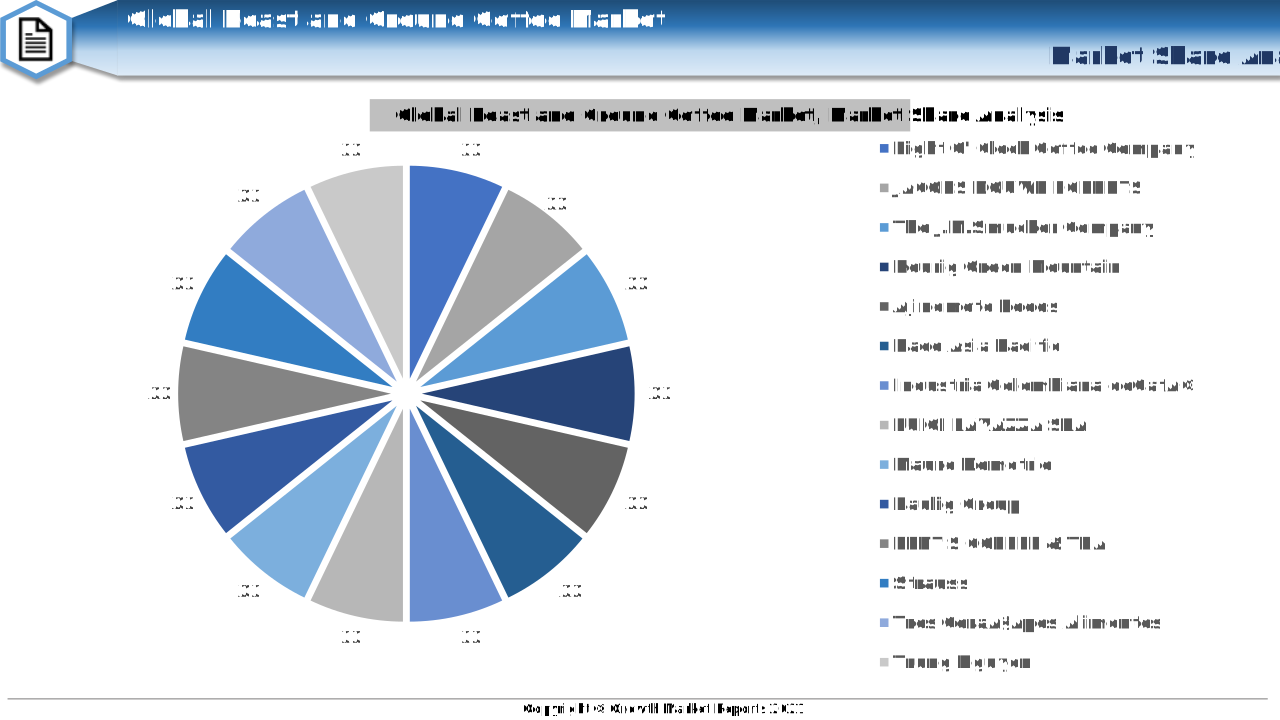
Key players competing in the global roast and ground coffee market include Eight O' Clock Coffee Company, JACOBS DOUWE EGBERTS, The J.M.Smucker Company, Keurig Green Mountain, Ajinomoto Foods, Haco Asia Pacific, Industria Colombiana deCafé, LUIGI LAVAZZA SPA, Mauro Demetrio, Paulig Group, PEET'S COFFEE & TEA, Strauss, Tres Corações Alimentos, and Trung Nguyen.

Most of these players have invested in several business strategies such as mergers, acquisitions, partnerships, collaborations, capacity expansion, and product launches to enhance their market shares.
 

Roast and Ground Coffee Market Share

Frequently Asked Questions

Consumers are increasingly seeking premium, ethically sourced, and specialty coffees, with a growing interest in unique flavors, single-origin products, and sustainable packaging. The influence of millennials and digital retail is also shaping demand.

Opportunities include product innovation, specialty and single-origin coffees, sustainable sourcing, and digital sales channels. Challenges involve price volatility, supply chain disruptions, and climate change impacts on coffee production.

Leading companies include Nestlé S.A., JDE Peet’s, The Kraft Heinz Company, Starbucks Corporation, Lavazza Group, Tchibo GmbH, Melitta Group, and others.

Key distribution channels include supermarkets/hypermarkets, convenience stores, online retail, specialty stores, and others. Online retail and subscription services are rapidly growing, especially among younger consumers.

Packaging innovations include the rise of single-serve pods and capsules, sustainable and resealable bags, vacuum-sealed containers, and smart packaging with QR codes for traceability and consumer engagement.

The market is primarily segmented into Arabica, Robusta, and Blend varieties. Arabica leads due to its superior flavor and lower caffeine, while Robusta is favored for its strong taste and affordability. Blends combine both types for balanced flavor and cost.

Europe holds the largest market share due to its strong coffee culture, followed by North America. The Asia Pacific region is experiencing the fastest growth, while Latin America and the Middle East & Africa are also seeing notable expansion.

Key growth drivers include evolving consumer preferences for premium coffee, increasing urbanization, the rise of specialty coffee outlets, innovative packaging solutions, and digital transformation in retail channels.

The roast and ground coffee market is expected to grow at a compound annual growth rate (CAGR) of 5.2% from 2025 to 2033, reaching USD 45.2 billion by 2033.

As of 2024, the global roast and ground coffee market size reached USD 28.7 billion, with strong demand across both developed and emerging markets.

Table Of Content

Chapter 1 Executive Summary
Chapter 2 Assumptions and Acronyms Used
Chapter 3 Research Methodology
Chapter 4 Roast and Ground Coffee Market Overview
   4.1 Introduction
      4.1.1 Market Taxonomy
      4.1.2 Market Definition
      4.1.3 Macro-Economic Factors Impacting the Market Growth
   4.2 Roast and Ground Coffee Market Dynamics
      4.2.1 Market Drivers
      4.2.2 Market Restraints
      4.2.3 Market Opportunity
   4.3 Roast and Ground Coffee Market - Supply Chain Analysis
      4.3.1 List of Key Suppliers
      4.3.2 List of Key Distributors
      4.3.3 List of Key Consumers
   4.4 Key Forces Shaping the Roast and Ground Coffee Market
      4.4.1 Bargaining Power of Suppliers
      4.4.2 Bargaining Power of Buyers
      4.4.3 Threat of Substitution
      4.4.4 Threat of New Entrants
      4.4.5 Competitive Rivalry
   4.5 Global Roast and Ground Coffee Market Size & Forecast, 2023-2032
      4.5.1 Roast and Ground Coffee Market Size and Y-o-Y Growth
      4.5.2 Roast and Ground Coffee Market Absolute $ Opportunity

Chapter 5 Global Roast and Ground Coffee Market Analysis and Forecast By Product Type
   5.1 Introduction
      5.1.1 Key Market Trends & Growth Opportunities By Product Type
      5.1.2 Basis Point Share (BPS) Analysis By Product Type
      5.1.3 Absolute $ Opportunity Assessment By Product Type
   5.2 Roast and Ground Coffee Market Size Forecast By Product Type
      5.2.1 Arabica
      5.2.2 Robusta
      5.2.3 Blend
   5.3 Market Attractiveness Analysis By Product Type

Chapter 6 Global Roast and Ground Coffee Market Analysis and Forecast By Packaging Type
   6.1 Introduction
      6.1.1 Key Market Trends & Growth Opportunities By Packaging Type
      6.1.2 Basis Point Share (BPS) Analysis By Packaging Type
      6.1.3 Absolute $ Opportunity Assessment By Packaging Type
   6.2 Roast and Ground Coffee Market Size Forecast By Packaging Type
      6.2.1 Bags
      6.2.2 Pods
      6.2.3 Capsules
      6.2.4 Others
   6.3 Market Attractiveness Analysis By Packaging Type

Chapter 7 Global Roast and Ground Coffee Market Analysis and Forecast By Distribution Channel
   7.1 Introduction
      7.1.1 Key Market Trends & Growth Opportunities By Distribution Channel
      7.1.2 Basis Point Share (BPS) Analysis By Distribution Channel
      7.1.3 Absolute $ Opportunity Assessment By Distribution Channel
   7.2 Roast and Ground Coffee Market Size Forecast By Distribution Channel
      7.2.1 Supermarkets/Hypermarkets
      7.2.2 Convenience Stores
      7.2.3 Online Retail
      7.2.4 Specialty Stores
      7.2.5 Others
   7.3 Market Attractiveness Analysis By Distribution Channel

Chapter 8 Global Roast and Ground Coffee Market Analysis and Forecast By End-User
   8.1 Introduction
      8.1.1 Key Market Trends & Growth Opportunities By End-User
      8.1.2 Basis Point Share (BPS) Analysis By End-User
      8.1.3 Absolute $ Opportunity Assessment By End-User
   8.2 Roast and Ground Coffee Market Size Forecast By End-User
      8.2.1 Household
      8.2.2 Commercial
      8.2.3 Institutional
   8.3 Market Attractiveness Analysis By End-User

Chapter 9 Global Roast and Ground Coffee Market Analysis and Forecast by Region
   9.1 Introduction
      9.1.1 Key Market Trends & Growth Opportunities By Region
      9.1.2 Basis Point Share (BPS) Analysis By Region
      9.1.3 Absolute $ Opportunity Assessment By Region
   9.2 Roast and Ground Coffee Market Size Forecast By Region
      9.2.1 North America
      9.2.2 Europe
      9.2.3 Asia Pacific
      9.2.4 Latin America
      9.2.5 Middle East & Africa (MEA)
   9.3 Market Attractiveness Analysis By Region

Chapter 10 Coronavirus Disease (COVID-19) Impact 
   10.1 Introduction 
   10.2 Current & Future Impact Analysis 
   10.3 Economic Impact Analysis 
   10.4 Government Policies 
   10.5 Investment Scenario

Chapter 11 North America Roast and Ground Coffee Analysis and Forecast
   11.1 Introduction
   11.2 North America Roast and Ground Coffee Market Size Forecast by Country
      11.2.1 U.S.
      11.2.2 Canada
   11.3 Basis Point Share (BPS) Analysis by Country
   11.4 Absolute $ Opportunity Assessment by Country
   11.5 Market Attractiveness Analysis by Country
   11.6 North America Roast and Ground Coffee Market Size Forecast By Product Type
      11.6.1 Arabica
      11.6.2 Robusta
      11.6.3 Blend
   11.7 Basis Point Share (BPS) Analysis By Product Type 
   11.8 Absolute $ Opportunity Assessment By Product Type 
   11.9 Market Attractiveness Analysis By Product Type
   11.10 North America Roast and Ground Coffee Market Size Forecast By Packaging Type
      11.10.1 Bags
      11.10.2 Pods
      11.10.3 Capsules
      11.10.4 Others
   11.11 Basis Point Share (BPS) Analysis By Packaging Type 
   11.12 Absolute $ Opportunity Assessment By Packaging Type 
   11.13 Market Attractiveness Analysis By Packaging Type
   11.14 North America Roast and Ground Coffee Market Size Forecast By Distribution Channel
      11.14.1 Supermarkets/Hypermarkets
      11.14.2 Convenience Stores
      11.14.3 Online Retail
      11.14.4 Specialty Stores
      11.14.5 Others
   11.15 Basis Point Share (BPS) Analysis By Distribution Channel 
   11.16 Absolute $ Opportunity Assessment By Distribution Channel 
   11.17 Market Attractiveness Analysis By Distribution Channel
   11.18 North America Roast and Ground Coffee Market Size Forecast By End-User
      11.18.1 Household
      11.18.2 Commercial
      11.18.3 Institutional
   11.19 Basis Point Share (BPS) Analysis By End-User 
   11.20 Absolute $ Opportunity Assessment By End-User 
   11.21 Market Attractiveness Analysis By End-User

Chapter 12 Europe Roast and Ground Coffee Analysis and Forecast
   12.1 Introduction
   12.2 Europe Roast and Ground Coffee Market Size Forecast by Country
      12.2.1 Germany
      12.2.2 France
      12.2.3 Italy
      12.2.4 U.K.
      12.2.5 Spain
      12.2.6 Russia
      12.2.7 Rest of Europe
   12.3 Basis Point Share (BPS) Analysis by Country
   12.4 Absolute $ Opportunity Assessment by Country
   12.5 Market Attractiveness Analysis by Country
   12.6 Europe Roast and Ground Coffee Market Size Forecast By Product Type
      12.6.1 Arabica
      12.6.2 Robusta
      12.6.3 Blend
   12.7 Basis Point Share (BPS) Analysis By Product Type 
   12.8 Absolute $ Opportunity Assessment By Product Type 
   12.9 Market Attractiveness Analysis By Product Type
   12.10 Europe Roast and Ground Coffee Market Size Forecast By Packaging Type
      12.10.1 Bags
      12.10.2 Pods
      12.10.3 Capsules
      12.10.4 Others
   12.11 Basis Point Share (BPS) Analysis By Packaging Type 
   12.12 Absolute $ Opportunity Assessment By Packaging Type 
   12.13 Market Attractiveness Analysis By Packaging Type
   12.14 Europe Roast and Ground Coffee Market Size Forecast By Distribution Channel
      12.14.1 Supermarkets/Hypermarkets
      12.14.2 Convenience Stores
      12.14.3 Online Retail
      12.14.4 Specialty Stores
      12.14.5 Others
   12.15 Basis Point Share (BPS) Analysis By Distribution Channel 
   12.16 Absolute $ Opportunity Assessment By Distribution Channel 
   12.17 Market Attractiveness Analysis By Distribution Channel
   12.18 Europe Roast and Ground Coffee Market Size Forecast By End-User
      12.18.1 Household
      12.18.2 Commercial
      12.18.3 Institutional
   12.19 Basis Point Share (BPS) Analysis By End-User 
   12.20 Absolute $ Opportunity Assessment By End-User 
   12.21 Market Attractiveness Analysis By End-User

Chapter 13 Asia Pacific Roast and Ground Coffee Analysis and Forecast
   13.1 Introduction
   13.2 Asia Pacific Roast and Ground Coffee Market Size Forecast by Country
      13.2.1 China
      13.2.2 Japan
      13.2.3 South Korea
      13.2.4 India
      13.2.5 Australia
      13.2.6 South East Asia (SEA)
      13.2.7 Rest of Asia Pacific (APAC)
   13.3 Basis Point Share (BPS) Analysis by Country
   13.4 Absolute $ Opportunity Assessment by Country
   13.5 Market Attractiveness Analysis by Country
   13.6 Asia Pacific Roast and Ground Coffee Market Size Forecast By Product Type
      13.6.1 Arabica
      13.6.2 Robusta
      13.6.3 Blend
   13.7 Basis Point Share (BPS) Analysis By Product Type 
   13.8 Absolute $ Opportunity Assessment By Product Type 
   13.9 Market Attractiveness Analysis By Product Type
   13.10 Asia Pacific Roast and Ground Coffee Market Size Forecast By Packaging Type
      13.10.1 Bags
      13.10.2 Pods
      13.10.3 Capsules
      13.10.4 Others
   13.11 Basis Point Share (BPS) Analysis By Packaging Type 
   13.12 Absolute $ Opportunity Assessment By Packaging Type 
   13.13 Market Attractiveness Analysis By Packaging Type
   13.14 Asia Pacific Roast and Ground Coffee Market Size Forecast By Distribution Channel
      13.14.1 Supermarkets/Hypermarkets
      13.14.2 Convenience Stores
      13.14.3 Online Retail
      13.14.4 Specialty Stores
      13.14.5 Others
   13.15 Basis Point Share (BPS) Analysis By Distribution Channel 
   13.16 Absolute $ Opportunity Assessment By Distribution Channel 
   13.17 Market Attractiveness Analysis By Distribution Channel
   13.18 Asia Pacific Roast and Ground Coffee Market Size Forecast By End-User
      13.18.1 Household
      13.18.2 Commercial
      13.18.3 Institutional
   13.19 Basis Point Share (BPS) Analysis By End-User 
   13.20 Absolute $ Opportunity Assessment By End-User 
   13.21 Market Attractiveness Analysis By End-User

Chapter 14 Latin America Roast and Ground Coffee Analysis and Forecast
   14.1 Introduction
   14.2 Latin America Roast and Ground Coffee Market Size Forecast by Country
      14.2.1 Brazil
      14.2.2 Mexico
      14.2.3 Rest of Latin America (LATAM)
   14.3 Basis Point Share (BPS) Analysis by Country
   14.4 Absolute $ Opportunity Assessment by Country
   14.5 Market Attractiveness Analysis by Country
   14.6 Latin America Roast and Ground Coffee Market Size Forecast By Product Type
      14.6.1 Arabica
      14.6.2 Robusta
      14.6.3 Blend
   14.7 Basis Point Share (BPS) Analysis By Product Type 
   14.8 Absolute $ Opportunity Assessment By Product Type 
   14.9 Market Attractiveness Analysis By Product Type
   14.10 Latin America Roast and Ground Coffee Market Size Forecast By Packaging Type
      14.10.1 Bags
      14.10.2 Pods
      14.10.3 Capsules
      14.10.4 Others
   14.11 Basis Point Share (BPS) Analysis By Packaging Type 
   14.12 Absolute $ Opportunity Assessment By Packaging Type 
   14.13 Market Attractiveness Analysis By Packaging Type
   14.14 Latin America Roast and Ground Coffee Market Size Forecast By Distribution Channel
      14.14.1 Supermarkets/Hypermarkets
      14.14.2 Convenience Stores
      14.14.3 Online Retail
      14.14.4 Specialty Stores
      14.14.5 Others
   14.15 Basis Point Share (BPS) Analysis By Distribution Channel 
   14.16 Absolute $ Opportunity Assessment By Distribution Channel 
   14.17 Market Attractiveness Analysis By Distribution Channel
   14.18 Latin America Roast and Ground Coffee Market Size Forecast By End-User
      14.18.1 Household
      14.18.2 Commercial
      14.18.3 Institutional
   14.19 Basis Point Share (BPS) Analysis By End-User 
   14.20 Absolute $ Opportunity Assessment By End-User 
   14.21 Market Attractiveness Analysis By End-User

Chapter 15 Middle East & Africa (MEA) Roast and Ground Coffee Analysis and Forecast
   15.1 Introduction
   15.2 Middle East & Africa (MEA) Roast and Ground Coffee Market Size Forecast by Country
      15.2.1 Saudi Arabia
      15.2.2 South Africa
      15.2.3 UAE
      15.2.4 Rest of Middle East & Africa (MEA)
   15.3 Basis Point Share (BPS) Analysis by Country
   15.4 Absolute $ Opportunity Assessment by Country
   15.5 Market Attractiveness Analysis by Country
   15.6 Middle East & Africa (MEA) Roast and Ground Coffee Market Size Forecast By Product Type
      15.6.1 Arabica
      15.6.2 Robusta
      15.6.3 Blend
   15.7 Basis Point Share (BPS) Analysis By Product Type 
   15.8 Absolute $ Opportunity Assessment By Product Type 
   15.9 Market Attractiveness Analysis By Product Type
   15.10 Middle East & Africa (MEA) Roast and Ground Coffee Market Size Forecast By Packaging Type
      15.10.1 Bags
      15.10.2 Pods
      15.10.3 Capsules
      15.10.4 Others
   15.11 Basis Point Share (BPS) Analysis By Packaging Type 
   15.12 Absolute $ Opportunity Assessment By Packaging Type 
   15.13 Market Attractiveness Analysis By Packaging Type
   15.14 Middle East & Africa (MEA) Roast and Ground Coffee Market Size Forecast By Distribution Channel
      15.14.1 Supermarkets/Hypermarkets
      15.14.2 Convenience Stores
      15.14.3 Online Retail
      15.14.4 Specialty Stores
      15.14.5 Others
   15.15 Basis Point Share (BPS) Analysis By Distribution Channel 
   15.16 Absolute $ Opportunity Assessment By Distribution Channel 
   15.17 Market Attractiveness Analysis By Distribution Channel
   15.18 Middle East & Africa (MEA) Roast and Ground Coffee Market Size Forecast By End-User
      15.18.1 Household
      15.18.2 Commercial
      15.18.3 Institutional
   15.19 Basis Point Share (BPS) Analysis By End-User 
   15.20 Absolute $ Opportunity Assessment By End-User 
   15.21 Market Attractiveness Analysis By End-User

Chapter 16 Competition Landscape 
   16.1 Roast and Ground Coffee Market: Competitive Dashboard
   16.2 Global Roast and Ground Coffee Market: Market Share Analysis, 2023
   16.3 Company Profiles (Details – Overview, Financials, Developments, Strategy) 
      16.3.1 Nestlé S.A.
JDE Peet's
The Kraft Heinz Company
Starbucks Corporation
The J.M. Smucker Company
Tchibo GmbH
Lavazza Group
Keurig Dr Pepper Inc.
Strauss Group Ltd.
Melitta Group
Massimo Zanetti Beverage Group
UCC Ueshima Coffee Co., Ltd.
illycaffè S.p.A.
Dunkin' (Inspire Brands)
McDonald's Corporation
Peet's Coffee
Caribou Coffee Company, Inc.
Eight O'Clock Coffee Company
Gloria Jean’s Coffees
Bewley's Limited

Methodology

Our Clients

Dassault Aviation
Microsoft
Deloitte
FedEx Logistics
The John Holland Group
General Electric
sinopec
Siemens Healthcare