Rapid Tests Kits Market Research Report 2033

Rapid Tests Kits Market Research Report 2033

Segments - by Product Type (Antigen Rapid Test Kits, Antibody Rapid Test Kits, Nucleic Acid Rapid Test Kits, Others), by Application (Infectious Disease, Pregnancy & Fertility, Drug Abuse, Oncology, Cardiology, Others), by Sample Type (Blood, Urine, Saliva, Nasal Swab, Others), by End-User (Hospitals & Clinics, Diagnostic Laboratories, Home Care, Others), by Distribution Channel (Online Pharmacies, Retail Pharmacies, Others)

https://growthmarketreports.com/raksha
Author : Raksha Sharma
https://growthmarketreports.com/Vaibhav
Fact-checked by : V. Chandola
https://growthmarketreports.com/Shruti
Editor : Shruti Bhat

Upcoming | Report ID :HC-3837 | 4.4 Rating | 32 Reviews | 257 Pages | Format : Docx PDF

Report Description


Rapid Test Kits Market Outlook

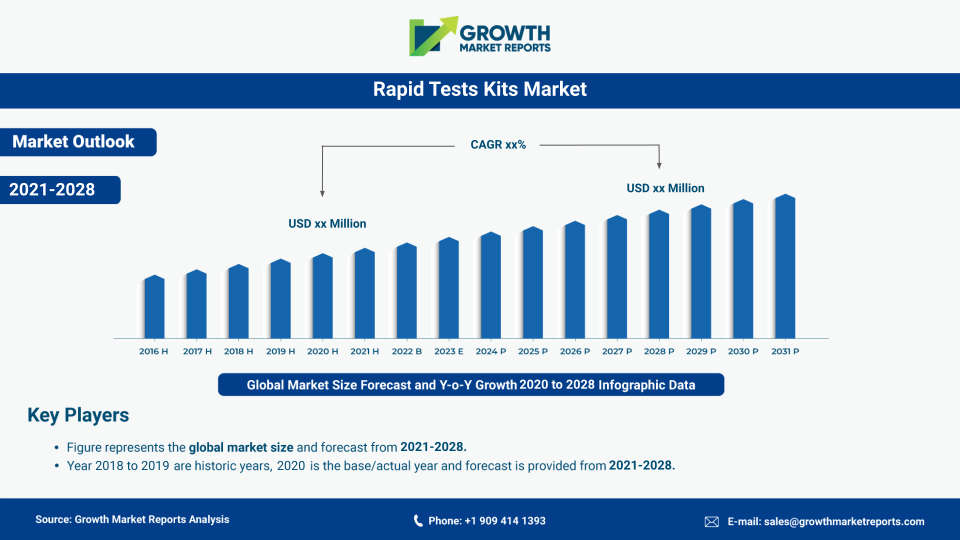
According to our latest research, the global rapid test kits market size reached USD 32.4 billion in 2024, reflecting a robust response to ongoing healthcare demands and public health initiatives worldwide. The market is expected to expand at a CAGR of 7.2% from 2025 to 2033, reaching a projected value of USD 60.7 billion by 2033. This growth is primarily driven by the increasing prevalence of infectious diseases, heightened awareness of early disease detection, and the growing need for point-of-care diagnostics across various healthcare settings.

The rapid test kits market is experiencing significant growth due to several critical factors. One of the principal drivers is the surge in demand for quick, reliable, and cost-effective diagnostic solutions, particularly in the wake of global health emergencies such as the COVID-19 pandemic. The pandemic underscored the importance of rapid diagnostic tools, prompting healthcare systems and governments to invest heavily in accessible testing infrastructure. This has not only accelerated innovation in rapid test kit technologies but also fostered greater public and professional acceptance of these products. Additionally, the expanding application of rapid test kits beyond infectious diseases, into areas such as oncology, cardiology, and drug abuse, is broadening the market’s scope and potential for sustained growth.

Another factor propelling the rapid test kits market is the increasing adoption of home-based and self-testing solutions. Consumers are seeking greater autonomy over their health, driving demand for user-friendly, accurate, and portable diagnostic kits. This trend is particularly pronounced in regions with limited access to traditional healthcare facilities, where rapid test kits can bridge significant gaps in diagnostic coverage. The proliferation of e-commerce and online pharmacies has further simplified the procurement process, making these kits more accessible to a broader population. Moreover, ongoing advancements in biotechnology and materials science are enhancing the sensitivity, specificity, and shelf-life of rapid test kits, contributing to their wider adoption across diverse healthcare landscapes.

The rapid test kits market is also benefiting from supportive government policies and increased funding for public health initiatives. Many countries are implementing screening programs for conditions such as HIV, malaria, and hepatitis, which rely heavily on rapid diagnostic tools for timely detection and intervention. Strategic collaborations between public health agencies, private companies, and non-governmental organizations are facilitating the distribution of rapid test kits in both urban and rural settings. Furthermore, regulatory agencies are streamlining approval processes for new rapid test products, expediting their entry into the market and ensuring timely availability during health crises. These collaborative efforts are expected to sustain market momentum over the forecast period.

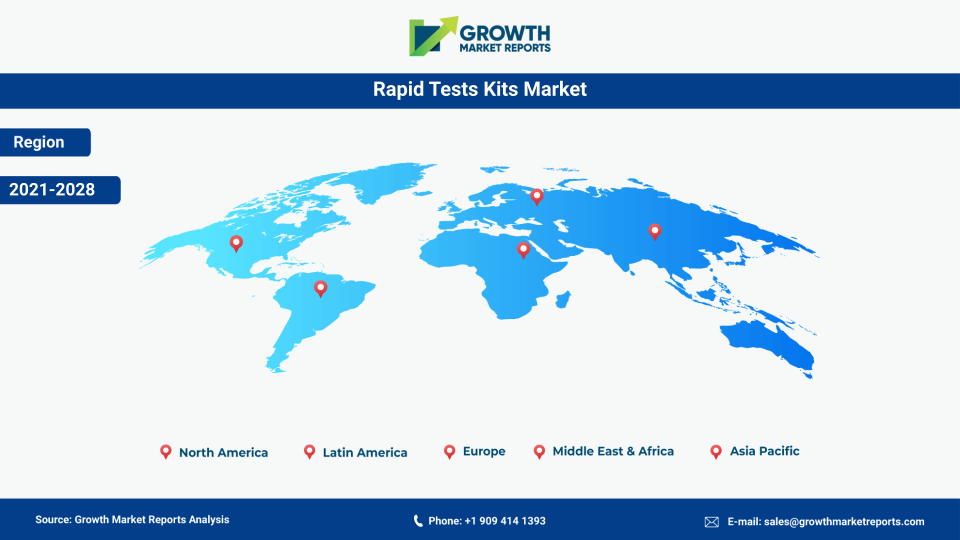
Regionally, the rapid test kits market demonstrates a dynamic outlook, with North America and Europe leading in terms of market share due to high healthcare expenditure, advanced infrastructure, and strong regulatory frameworks. However, the Asia Pacific region is emerging as the fastest-growing market, driven by large populations, rising healthcare investments, and increasing awareness about preventive healthcare. Latin America and the Middle East & Africa are also witnessing steady growth, supported by expanding access to healthcare services and targeted public health campaigns. The global landscape is thus characterized by a combination of mature markets with established demand and emerging regions with significant growth potential.

Global Rapid Tests Kits Industry Outlook

Product Type Analysis

The rapid test kits market is segmented by product type into antigen rapid test kits, antibody rapid test kits, nucleic acid rapid test kits, and others. Antigen rapid test kits have gained substantial traction, especially during the COVID-19 pandemic, due to their ability to deliver quick results and ease of use in mass screening programs. These kits are instrumental in the detection of viral infections, enabling timely isolation and treatment of affected individuals. Market players are continually investing in improving the accuracy and usability of antigen rapid test kits, ensuring they meet stringent regulatory standards and cater to both professional and home-based testing needs. The segment is expected to maintain strong growth, supported by the ongoing need for infectious disease surveillance.

Antibody rapid test kits are also witnessing significant demand, particularly for their role in epidemiological studies and post-infection surveillance. These kits help determine past exposure to infectious agents by detecting specific antibodies in blood samples. Their utility extends to monitoring vaccine efficacy and conducting large-scale seroprevalence studies, which are critical for public health planning. The growing emphasis on population-level immunity assessment and the development of multiplex antibody tests are expected to drive innovation and adoption in this segment. Furthermore, collaborations between diagnostic companies and research institutions are accelerating the introduction of advanced antibody rapid test kits into the market.

Nucleic acid rapid test kits represent a technologically advanced segment, leveraging molecular diagnostics to detect the genetic material of pathogens. These kits offer high sensitivity and specificity, making them invaluable for the early detection of infectious diseases such as HIV, influenza, and tuberculosis. While traditionally confined to laboratory settings, recent advancements have enabled the miniaturization and simplification of nucleic acid tests, making them suitable for point-of-care and decentralized use. The integration of isothermal amplification techniques and microfluidic technologies is further enhancing the performance and accessibility of nucleic acid rapid test kits, positioning this segment for robust growth over the forecast period.

The "others" category encompasses a range of specialized rapid test kits, including those for environmental monitoring, food safety, and veterinary diagnostics. These applications are gaining prominence as regulatory authorities and industries prioritize rapid and on-site testing to ensure safety and compliance. For instance, rapid test kits for detecting contaminants in food and water supplies are becoming essential tools in quality assurance programs. Similarly, veterinary rapid test kits are supporting disease surveillance and management in animal populations. The diversification of applications within this segment is expected to create new growth avenues and expand the overall market footprint.

Report Scope

Attributes Details
Report Title Rapid Tests Kits Market Research Report 2033
By Product Type Antigen Rapid Test Kits, Antibody Rapid Test Kits, Nucleic Acid Rapid Test Kits, Others
By Application Infectious Disease, Pregnancy & Fertility, Drug Abuse, Oncology, Cardiology, Others
By Sample Type Blood, Urine, Saliva, Nasal Swab, Others
By End-User Hospitals & Clinics, Diagnostic Laboratories, Home Care, Others
By Distribution Channel Online Pharmacies, Retail Pharmacies, Others
Regions Covered North America, Europe, APAC, Latin America, MEA
Base Year 2024
Historic Data 2018-2023
Forecast Period 2025-2033
Number of Pages 257
Number of Tables & Figures 251
Customization Available Yes, the report can be customized as per your need.

Application Analysis

By application, the rapid test kits market is segmented into infectious disease, pregnancy & fertility, drug abuse, oncology, cardiology, and others. Infectious disease testing remains the largest application segment, accounting for a significant share of the market. The ongoing burden of diseases such as HIV, malaria, hepatitis, and respiratory infections continues to drive demand for rapid diagnostic solutions. These kits enable timely identification and containment of outbreaks, particularly in resource-limited settings where access to laboratory infrastructure is constrained. The implementation of national and international disease control programs, coupled with the rising incidence of emerging infectious diseases, is expected to sustain high demand for rapid test kits in this segment.

Pregnancy & fertility testing is another major application area, with rapid test kits offering convenience, privacy, and quick results for individuals seeking to confirm pregnancy or monitor fertility. These kits are widely available through retail and online channels, making them accessible to a broad consumer base. Technological advancements have improved the sensitivity and reliability of pregnancy and ovulation tests, enhancing user confidence and adoption rates. The increasing trend of family planning and the growing awareness of reproductive health are expected to further drive market growth in this segment, particularly in developed regions with high consumer awareness.

The drug abuse testing segment is witnessing rising demand due to the growing prevalence of substance abuse and the need for rapid, on-site screening in workplaces, law enforcement, and rehabilitation centers. Rapid test kits for drug abuse detection offer quick and accurate identification of a wide range of substances, supporting timely intervention and compliance with regulatory requirements. The expansion of workplace drug testing programs and the introduction of multi-panel test kits capable of detecting multiple substances simultaneously are contributing to the segment's growth. Additionally, increasing government initiatives aimed at curbing substance abuse are expected to boost the adoption of drug abuse rapid test kits.

Oncology and cardiology applications represent emerging segments within the rapid test kits market, driven by the need for early detection and monitoring of cancer and cardiovascular conditions. Rapid test kits for tumor markers and cardiac biomarkers are being developed to facilitate point-of-care diagnosis and risk assessment, enabling prompt clinical decision-making. The rising incidence of cancer and cardiovascular diseases, coupled with advancements in biomarker discovery, is fueling innovation in this space. As healthcare providers increasingly prioritize early intervention and personalized medicine, the demand for specialized rapid test kits in oncology and cardiology is expected to grow.

The "others" application segment includes rapid test kits for autoimmune diseases, allergies, and metabolic disorders, among others. The expansion of test menus and the integration of multiplexing capabilities are enabling the simultaneous detection of multiple conditions, enhancing diagnostic efficiency and patient outcomes. As healthcare systems shift towards comprehensive and preventive care models, the adoption of rapid test kits for diverse applications is expected to increase, further driving market growth.

Sample Type Analysis

The rapid test kits market is segmented by sample type into blood, urine, saliva, nasal swab, and others. Blood-based rapid test kits dominate the market due to their widespread use in detecting a variety of conditions, including infectious diseases, metabolic disorders, and cardiac events. Blood samples offer high diagnostic accuracy and are compatible with a broad range of analytes, making them the preferred choice for many clinical applications. Advancements in microfluidic and lateral flow technologies have enabled the development of minimally invasive blood-based rapid test kits, enhancing patient comfort and compliance. The continued expansion of test menus and the integration of digital connectivity features are expected to drive further growth in this segment.

Urine-based rapid test kits are gaining popularity for their non-invasive nature and ease of collection, making them ideal for applications such as pregnancy testing, drug abuse screening, and urinary tract infection detection. These kits are widely used in both clinical and home settings, offering rapid results without the need for specialized equipment or training. The introduction of multi-analyte urine test kits capable of detecting multiple conditions simultaneously is enhancing diagnostic efficiency and convenience. As consumer demand for self-testing solutions increases, the urine-based rapid test kits segment is expected to witness steady growth.

Saliva-based rapid test kits are emerging as a promising alternative for non-invasive diagnostics, particularly in the detection of infectious diseases and drug abuse. Saliva samples are easy to collect and pose minimal risk to both patients and healthcare providers, making them suitable for mass screening and point-of-care applications. Recent advancements in assay sensitivity and specificity have improved the reliability of saliva-based rapid test kits, expanding their utility in clinical and non-clinical settings. The growing adoption of saliva-based testing in school and workplace screening programs is expected to drive segment growth over the forecast period.

Nasal swab-based rapid test kits have become particularly prominent in the context of respiratory infections, including COVID-19 and influenza. These kits offer high sensitivity for detecting viral antigens and nucleic acids, enabling timely diagnosis and containment of outbreaks. The ease of sample collection and rapid turnaround times have made nasal swab-based tests a cornerstone of public health screening initiatives. Ongoing research and development efforts are focused on improving the comfort and accuracy of nasal swab-based rapid test kits, ensuring their continued relevance in the evolving diagnostic landscape.

The "others" sample type category includes rapid test kits utilizing alternative specimens such as stool, sputum, and sweat. These specialized kits are designed for specific diagnostic applications, such as gastrointestinal infections and cystic fibrosis screening. The expansion of sample type options is enhancing the versatility of rapid test kits, enabling their use across a broader range of clinical scenarios. As research continues to uncover new biomarkers and sample matrices, the development of innovative rapid test kits tailored to diverse diagnostic needs is expected to accelerate.

End-User Analysis

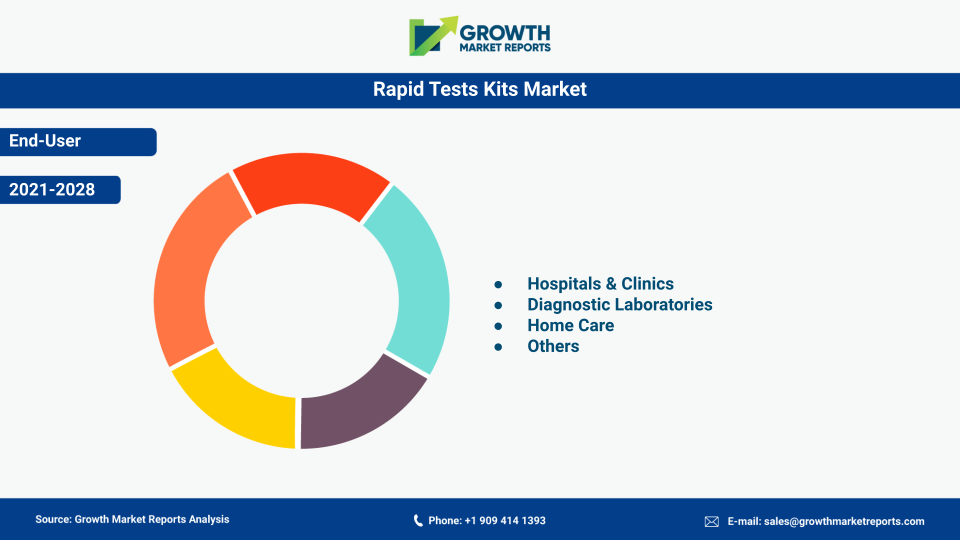
The rapid test kits market is segmented by end-user into hospitals & clinics, diagnostic laboratories, home care, and others. Hospitals and clinics represent the largest end-user segment, driven by the high volume of diagnostic procedures performed in these settings. Rapid test kits are essential tools in emergency departments, outpatient clinics, and inpatient wards, enabling timely diagnosis and treatment initiation. The integration of rapid testing into routine clinical workflows is improving patient outcomes and operational efficiency. Hospitals and clinics are also key adopters of new rapid test kit technologies, often participating in pilot programs and clinical trials to evaluate their performance and utility.

Diagnostic laboratories play a critical role in the rapid test kits market, particularly for confirmatory testing and large-scale screening programs. Laboratories leverage rapid test kits to streamline workflows, reduce turnaround times, and enhance diagnostic throughput. The adoption of automation and digital connectivity solutions is further improving the efficiency and scalability of laboratory-based rapid testing. As public health agencies and private organizations expand screening initiatives for infectious diseases and other conditions, the demand for rapid test kits in diagnostic laboratories is expected to grow steadily.

Home care is an increasingly important end-user segment, reflecting the growing trend towards decentralized and patient-centric healthcare. Rapid test kits designed for home use offer convenience, privacy, and empowerment, enabling individuals to monitor their health and make informed decisions. The proliferation of telehealth services and digital health platforms is facilitating remote consultation and follow-up, further supporting the adoption of home-based rapid test kits. Manufacturers are investing in user-friendly designs and comprehensive instructional materials to ensure accurate and reliable results in non-clinical settings. The home care segment is expected to experience robust growth, particularly in developed markets with high consumer awareness.

The "others" end-user category encompasses a diverse range of settings, including workplaces, schools, correctional facilities, and community health centers. Rapid test kits are increasingly being deployed in these environments to support public health initiatives, ensure compliance with regulatory requirements, and safeguard population health. For example, workplace drug testing programs and school-based infectious disease screening are driving demand for rapid test kits tailored to specific use cases. The expansion of end-user applications is enhancing the reach and impact of rapid diagnostic solutions, contributing to overall market growth.

Distribution Channel Analysis

The rapid test kits market is segmented by distribution channel into online pharmacies, retail pharmacies, and others. Online pharmacies have emerged as a significant channel for rapid test kit distribution, offering convenience, accessibility, and a broad product selection. The COVID-19 pandemic accelerated the shift towards online purchasing, as consumers sought to minimize in-person interactions and access essential healthcare products from the safety of their homes. Online platforms are also facilitating the dissemination of educational materials and user reviews, empowering consumers to make informed choices. As e-commerce infrastructure continues to expand, the online pharmacy segment is expected to capture an increasing share of the rapid test kits market.

Retail pharmacies remain a vital distribution channel, providing immediate access to rapid test kits for a wide range of health concerns. Pharmacies serve as trusted healthcare touchpoints, offering personalized advice and support to consumers. The widespread presence of retail pharmacies in urban and rural areas ensures broad market penetration and accessibility. Many pharmacies are also expanding their in-store diagnostic services, integrating rapid test kits into wellness programs and health screenings. The combination of convenience, trust, and professional support is expected to sustain the importance of retail pharmacies in the distribution of rapid test kits.

The "others" distribution channel category includes hospital supply chains, diagnostic distributors, and direct sales to healthcare institutions. These channels are critical for ensuring the timely and efficient delivery of rapid test kits to high-volume users such as hospitals, laboratories, and public health agencies. Strategic partnerships between manufacturers, distributors, and healthcare providers are optimizing supply chain management and enhancing product availability. As demand for rapid test kits continues to grow, the development of robust and resilient distribution networks will be essential for meeting the needs of diverse end-users across global markets.

Opportunities & Threats

The rapid test kits market presents numerous opportunities for growth and innovation. One key opportunity lies in the expansion of test menus to cover a broader range of diseases and health conditions. As research uncovers new biomarkers and diagnostic targets, manufacturers can develop rapid test kits for emerging infectious diseases, chronic conditions, and personalized medicine applications. The integration of digital technologies, such as smartphone connectivity and data analytics, offers additional opportunities to enhance the functionality and value of rapid test kits. These innovations can facilitate remote monitoring, real-time data sharing, and integration with electronic health records, supporting more comprehensive and coordinated healthcare delivery.

Another significant opportunity is the expansion of rapid test kits into underserved and resource-limited regions. By developing affordable, robust, and easy-to-use diagnostic solutions, companies can address critical gaps in healthcare access and contribute to global health equity. Public-private partnerships, donor funding, and government initiatives can support the distribution and adoption of rapid test kits in low- and middle-income countries. Additionally, the growing demand for home-based and self-testing solutions presents a lucrative opportunity for manufacturers to develop consumer-friendly products that empower individuals to take charge of their health. As healthcare systems worldwide shift towards preventive care and early intervention, the role of rapid test kits is expected to become increasingly central.

Despite these opportunities, the rapid test kits market faces several restraining factors. One notable challenge is the variability in test accuracy and reliability, particularly among products designed for home use. Inconsistent performance can undermine user confidence and limit market adoption, especially in critical applications such as infectious disease screening. Regulatory agencies are addressing this issue by enforcing stringent quality standards and post-market surveillance, but manufacturers must continue to invest in research and development to ensure consistent product performance. Additionally, the risk of counterfeit and substandard products entering the market poses a threat to both patient safety and brand reputation. Addressing these challenges will be essential for sustaining long-term growth and maintaining trust in rapid diagnostic solutions.

Regional Outlook

North America dominates the rapid test kits market, accounting for approximately 38% of the global market size, or USD 12.3 billion in 2024. The region’s leadership is attributed to high healthcare spending, advanced diagnostic infrastructure, and proactive public health policies. The United States, in particular, has been at the forefront of rapid test kit adoption, driven by large-scale screening initiatives and robust investment in healthcare innovation. The presence of leading diagnostic companies and a favorable regulatory environment further support market growth in North America. The region is expected to maintain steady expansion, with a projected CAGR of 6.5% through 2033.

Europe represents the second-largest market, with a market size of USD 8.7 billion in 2024, or about 27% of the global total. The region benefits from well-established healthcare systems, high awareness of early disease detection, and strong government support for public health initiatives. Countries such as Germany, the United Kingdom, and France are leading adopters of rapid test kits, particularly in infectious disease and chronic disease management. The European Union’s focus on harmonizing diagnostic regulations and fostering innovation is expected to drive further growth in the region. Collaborative efforts between public health agencies and private sector players are enhancing the availability and accessibility of rapid test kits across diverse healthcare settings.

The Asia Pacific region is emerging as the fastest-growing market, with a market size of USD 7.1 billion in 2024 and a projected CAGR of 9.1% through 2033. Rapid urbanization, rising healthcare expenditure, and increasing awareness of preventive health are fueling demand for rapid test kits in countries such as China, India, and Japan. The expansion of healthcare infrastructure and targeted public health campaigns are improving access to diagnostic services in both urban and rural areas. Additionally, local manufacturers are playing an increasingly important role in meeting regional demand and driving innovation. The Asia Pacific region is expected to capture a growing share of the global market, supported by favorable demographic and economic trends.

Rapid Tests Kits Market Statistics

Competitor Outlook

The rapid test kits market is characterized by intense competition, with a diverse array of multinational corporations, regional players, and emerging startups vying for market share. The competitive landscape is shaped by continuous innovation, strategic partnerships, and mergers and acquisitions. Leading companies are investing heavily in research and development to expand their product portfolios and enhance the performance of their rapid test kits. The focus is on developing products with higher sensitivity, specificity, and user-friendliness, as well as integrating digital technologies to facilitate data management and remote monitoring. Companies are also prioritizing regulatory compliance and quality assurance to maintain their competitive edge in a highly regulated market.

Strategic collaborations and partnerships are a common feature of the competitive landscape, enabling companies to leverage complementary strengths and accelerate product development. For example, diagnostic companies are partnering with biotechnology firms, academic institutions, and public health agencies to advance research and bring innovative rapid test kits to market. Mergers and acquisitions are also prevalent, as companies seek to expand their geographic footprint and diversify their product offerings. These activities are contributing to market consolidation and intensifying competition among leading players.

Market leaders are also focusing on expanding their presence in emerging markets, where demand for rapid diagnostic solutions is growing rapidly. Companies are adapting their products and distribution strategies to meet the unique needs of diverse regions, including the development of affordable and robust rapid test kits for resource-limited settings. Local partnerships and investments in manufacturing capacity are supporting market penetration and ensuring product availability in high-growth regions. The ability to navigate complex regulatory environments and respond to evolving healthcare needs is a key determinant of success in the global rapid test kits market.

Major companies operating in the rapid test kits market include Abbott Laboratories, F. Hoffmann-La Roche AG, Siemens Healthineers, Becton, Dickinson and Company (BD), QuidelOrtho Corporation, Bio-Rad Laboratories, Thermo Fisher Scientific, Danaher Corporation, and Cardinal Health. Abbott Laboratories is renowned for its extensive portfolio of rapid diagnostic solutions, including the widely used BinaxNOW and Panbio test kits. F. Hoffmann-La Roche AG is a global leader in molecular and immunoassay-based rapid test kits, with a strong focus on infectious disease diagnostics. Siemens Healthineers and BD are prominent players in point-of-care testing, offering a broad range of rapid test kits for hospital and laboratory use.

QuidelOrtho Corporation has established a strong presence in the rapid influenza and COVID-19 testing markets, leveraging its expertise in immunoassay technology. Bio-Rad Laboratories and Thermo Fisher Scientific are driving innovation in molecular rapid test kits, with a focus on high-sensitivity assays for infectious and genetic diseases. Danaher Corporation, through its subsidiaries, offers a comprehensive suite of rapid diagnostic solutions for clinical, environmental, and food safety applications. Cardinal Health is a key distributor of rapid test kits, ensuring broad market access and efficient supply chain management. Collectively, these companies are shaping the future of the rapid test kits market through ongoing investment in research, product development, and global expansion.

Key Players

  • Abbott Laboratories
  • F. Hoffmann-La Roche Ltd
  • Siemens Healthineers
  • Becton, Dickinson and Company (BD)
  • QuidelOrtho Corporation
  • Danaher Corporation
  • bioMérieux SA
  • Thermo Fisher Scientific Inc.
  • Bio-Rad Laboratories, Inc.
  • OraSure Technologies, Inc.
  • Chembio Diagnostics, Inc.
  • Hologic, Inc.
  • Meridian Bioscience, Inc.
  • SD Biosensor, Inc.
  • GenBody Inc.
  • Access Bio, Inc.
  • LumiraDx Limited
  • ACON Laboratories, Inc.
  • Sekisui Diagnostics LLC
  • Abingdon Health plc
Rapid Tests Kits Market Overview

Segments

The Rapid Tests Kits market has been segmented on the basis of

Product Type

  • Antigen Rapid Test Kits
  • Antibody Rapid Test Kits
  • Nucleic Acid Rapid Test Kits
  • Others

Application

  • Infectious Disease
  • Pregnancy & Fertility
  • Drug Abuse
  • Oncology
  • Cardiology
  • Others

Sample Type

  • Blood
  • Urine
  • Saliva
  • Nasal Swab
  • Others

End-User

  • Hospitals & Clinics
  • Diagnostic Laboratories
  • Home Care
  • Others

Distribution Channel

  • Online Pharmacies
  • Retail Pharmacies
  • Others

Competitive Landscape

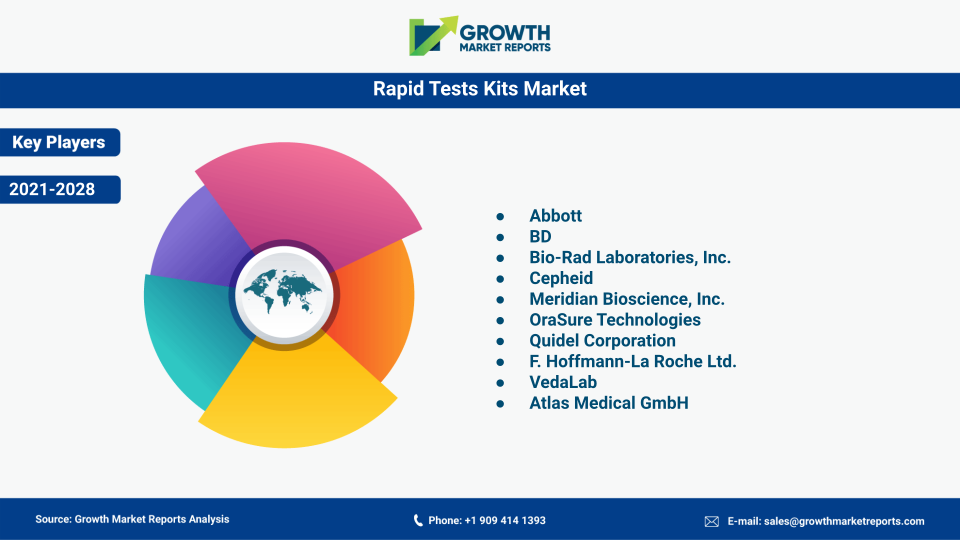
  • Key players operating in the market are Abbott, BD, Bio-Rad Laboratories, Inc., Cepheid, Meridian Bioscience, Inc., OraSure Technologies, Quidel Corporation, F. Hoffmann-La Roche Ltd. , VedaLab, Atlas Medical GmbH, Abingdon Health, Vitrosens Biotechnology, Advin Health care, Rapikit, and MP Biomedicals. These companies are considered as key manufacturers of rapid test based on their revenue, research development (R&D) activities, product offerings, regional presence, and supply chain management system.
  • The players are adopting key strategies such as acquisition, collaborations, and geographical expansion where potential opportunity for the rapid test market.
  • On December 26, 2020, Abbott’s Binaxnow Covid-19 rapid test received FDA emergency use authorization for first virtually guided, at-home rapid test using EMED'S digital health platform.
  • On February 22 2021, BD collaborated with Scanwell Health for at-home rapid test for Covid-19, using a BD antigen test and the Scanwell Health mobile app.
  •  On March 30 2021, BD received FDA emergency use authorization for BD Veritor System, which is a rapid antigen test that can detect SARS-CoV-2, influenza A, and influenza B in a single test.
Rapid Tests Kits Market Key Players

Frequently Asked Questions

Additional company profiles are provided on request

According to this GMR report, the Rapid Tests Kits market is expected to register a CAGR of 11.3% during the forecast period, 2020-2028, with an anticipated valuation of USD 10,982.9 million by the end of 2028.

In addition to market size (in US$ Million), Company Market Share (in % for base year 2020), Regulatory Landscape, Technology Landscape, Patent Analysis, Consumer Survey, and Pipeline /Clinical Trial Analysis are available in the report.

The Rapid Tests Kits market is projected to expand at a rapid pace globally, owing to the Increasing Prevalence of Infectious Diseases, Sudden Outbreak & Spread of COVID-19, Growing Preference for Home Healthcare, and Rising Geriatric Population.

End-uses of Rapid Tests Kits include Hospitals & Clinics, Diagnostic Laboratories, Home Care, and Others.

The base year considered for the Global Rapid Tests Kits Market report is 2020. The complete analysis period is 2018 to 2028, wherein, 2018 and 2019 are the historic years, and the forecast is provided from 2020 to 2028.

Factors such as competitive strength and market positioning are key areas considered while selecting top companies to be profiled.

The global rapid test Market was positively impacted by the covid-19, owing to the increase in demand for rapid test kits for COVID testing.

Factors such as Product Launch, Government Initiatives & Regulations, GDP, Healthcare Industry, Prevalence of Diseases, R&D Industry are analyzed in the final report.

Major players include Abbott, BD, Bio-Rad Laboratories, Inc., Cepheid, Meridian Bioscience, Inc., OraSure Technologies, Quidel Corporation, F. Hoffmann-La Roche Ltd. , VedaLab, Atlas Medical GmbH, Abingdon Health, Vitrosens Biotechnology, Advin Health care, Rapikit, and MP Biomedicals, and others.

Table Of Content

Chapter 1 Executive Summary
Chapter 2 Assumptions and Acronyms Used
Chapter 3 Research Methodology
Chapter 4 Rapid Tests Kits Market Overview
   4.1 Introduction
      4.1.1 Market Taxonomy
      4.1.2 Market Definition
      4.1.3 Macro-Economic Factors Impacting the Market Growth
   4.2 Rapid Tests Kits Market Dynamics
      4.2.1 Market Drivers
      4.2.2 Market Restraints
      4.2.3 Market Opportunity
   4.3 Rapid Tests Kits Market - Supply Chain Analysis
      4.3.1 List of Key Suppliers
      4.3.2 List of Key Distributors
      4.3.3 List of Key Consumers
   4.4 Key Forces Shaping the Rapid Tests Kits Market
      4.4.1 Bargaining Power of Suppliers
      4.4.2 Bargaining Power of Buyers
      4.4.3 Threat of Substitution
      4.4.4 Threat of New Entrants
      4.4.5 Competitive Rivalry
   4.5 Global Rapid Tests Kits Market Size & Forecast, 2023-2032
      4.5.1 Rapid Tests Kits Market Size and Y-o-Y Growth
      4.5.2 Rapid Tests Kits Market Absolute $ Opportunity

Chapter 5 Global Rapid Tests Kits Market Analysis and Forecast By Product Type
   5.1 Introduction
      5.1.1 Key Market Trends & Growth Opportunities By Product Type
      5.1.2 Basis Point Share (BPS) Analysis By Product Type
      5.1.3 Absolute $ Opportunity Assessment By Product Type
   5.2 Rapid Tests Kits Market Size Forecast By Product Type
      5.2.1 Antigen Rapid Test Kits
      5.2.2 Antibody Rapid Test Kits
      5.2.3 Nucleic Acid Rapid Test Kits
      5.2.4 Others
   5.3 Market Attractiveness Analysis By Product Type

Chapter 6 Global Rapid Tests Kits Market Analysis and Forecast By Application
   6.1 Introduction
      6.1.1 Key Market Trends & Growth Opportunities By Application
      6.1.2 Basis Point Share (BPS) Analysis By Application
      6.1.3 Absolute $ Opportunity Assessment By Application
   6.2 Rapid Tests Kits Market Size Forecast By Application
      6.2.1 Infectious Disease
      6.2.2 Pregnancy & Fertility
      6.2.3 Drug Abuse
      6.2.4 Oncology
      6.2.5 Cardiology
      6.2.6 Others
   6.3 Market Attractiveness Analysis By Application

Chapter 7 Global Rapid Tests Kits Market Analysis and Forecast By Sample Type
   7.1 Introduction
      7.1.1 Key Market Trends & Growth Opportunities By Sample Type
      7.1.2 Basis Point Share (BPS) Analysis By Sample Type
      7.1.3 Absolute $ Opportunity Assessment By Sample Type
   7.2 Rapid Tests Kits Market Size Forecast By Sample Type
      7.2.1 Blood
      7.2.2 Urine
      7.2.3 Saliva
      7.2.4 Nasal Swab
      7.2.5 Others
   7.3 Market Attractiveness Analysis By Sample Type

Chapter 8 Global Rapid Tests Kits Market Analysis and Forecast By End-User
   8.1 Introduction
      8.1.1 Key Market Trends & Growth Opportunities By End-User
      8.1.2 Basis Point Share (BPS) Analysis By End-User
      8.1.3 Absolute $ Opportunity Assessment By End-User
   8.2 Rapid Tests Kits Market Size Forecast By End-User
      8.2.1 Hospitals & Clinics
      8.2.2 Diagnostic Laboratories
      8.2.3 Home Care
      8.2.4 Others
   8.3 Market Attractiveness Analysis By End-User

Chapter 9 Global Rapid Tests Kits Market Analysis and Forecast By Distribution Channel
   9.1 Introduction
      9.1.1 Key Market Trends & Growth Opportunities By Distribution Channel
      9.1.2 Basis Point Share (BPS) Analysis By Distribution Channel
      9.1.3 Absolute $ Opportunity Assessment By Distribution Channel
   9.2 Rapid Tests Kits Market Size Forecast By Distribution Channel
      9.2.1 Online Pharmacies
      9.2.2 Retail Pharmacies
      9.2.3 Others
   9.3 Market Attractiveness Analysis By Distribution Channel

Chapter 10 Global Rapid Tests Kits Market Analysis and Forecast by Region
   10.1 Introduction
      10.1.1 Key Market Trends & Growth Opportunities By Region
      10.1.2 Basis Point Share (BPS) Analysis By Region
      10.1.3 Absolute $ Opportunity Assessment By Region
   10.2 Rapid Tests Kits Market Size Forecast By Region
      10.2.1 North America
      10.2.2 Europe
      10.2.3 Asia Pacific
      10.2.4 Latin America
      10.2.5 Middle East & Africa (MEA)
   10.3 Market Attractiveness Analysis By Region

Chapter 11 Coronavirus Disease (COVID-19) Impact 
   11.1 Introduction 
   11.2 Current & Future Impact Analysis 
   11.3 Economic Impact Analysis 
   11.4 Government Policies 
   11.5 Investment Scenario

Chapter 12 North America Rapid Tests Kits Analysis and Forecast
   12.1 Introduction
   12.2 North America Rapid Tests Kits Market Size Forecast by Country
      12.2.1 U.S.
      12.2.2 Canada
   12.3 Basis Point Share (BPS) Analysis by Country
   12.4 Absolute $ Opportunity Assessment by Country
   12.5 Market Attractiveness Analysis by Country
   12.6 North America Rapid Tests Kits Market Size Forecast By Product Type
      12.6.1 Antigen Rapid Test Kits
      12.6.2 Antibody Rapid Test Kits
      12.6.3 Nucleic Acid Rapid Test Kits
      12.6.4 Others
   12.7 Basis Point Share (BPS) Analysis By Product Type 
   12.8 Absolute $ Opportunity Assessment By Product Type 
   12.9 Market Attractiveness Analysis By Product Type
   12.10 North America Rapid Tests Kits Market Size Forecast By Application
      12.10.1 Infectious Disease
      12.10.2 Pregnancy & Fertility
      12.10.3 Drug Abuse
      12.10.4 Oncology
      12.10.5 Cardiology
      12.10.6 Others
   12.11 Basis Point Share (BPS) Analysis By Application 
   12.12 Absolute $ Opportunity Assessment By Application 
   12.13 Market Attractiveness Analysis By Application
   12.14 North America Rapid Tests Kits Market Size Forecast By Sample Type
      12.14.1 Blood
      12.14.2 Urine
      12.14.3 Saliva
      12.14.4 Nasal Swab
      12.14.5 Others
   12.15 Basis Point Share (BPS) Analysis By Sample Type 
   12.16 Absolute $ Opportunity Assessment By Sample Type 
   12.17 Market Attractiveness Analysis By Sample Type
   12.18 North America Rapid Tests Kits Market Size Forecast By End-User
      12.18.1 Hospitals & Clinics
      12.18.2 Diagnostic Laboratories
      12.18.3 Home Care
      12.18.4 Others
   12.19 Basis Point Share (BPS) Analysis By End-User 
   12.20 Absolute $ Opportunity Assessment By End-User 
   12.21 Market Attractiveness Analysis By End-User
   12.22 North America Rapid Tests Kits Market Size Forecast By Distribution Channel
      12.22.1 Online Pharmacies
      12.22.2 Retail Pharmacies
      12.22.3 Others
   12.23 Basis Point Share (BPS) Analysis By Distribution Channel 
   12.24 Absolute $ Opportunity Assessment By Distribution Channel 
   12.25 Market Attractiveness Analysis By Distribution Channel

Chapter 13 Europe Rapid Tests Kits Analysis and Forecast
   13.1 Introduction
   13.2 Europe Rapid Tests Kits Market Size Forecast by Country
      13.2.1 Germany
      13.2.2 France
      13.2.3 Italy
      13.2.4 U.K.
      13.2.5 Spain
      13.2.6 Russia
      13.2.7 Rest of Europe
   13.3 Basis Point Share (BPS) Analysis by Country
   13.4 Absolute $ Opportunity Assessment by Country
   13.5 Market Attractiveness Analysis by Country
   13.6 Europe Rapid Tests Kits Market Size Forecast By Product Type
      13.6.1 Antigen Rapid Test Kits
      13.6.2 Antibody Rapid Test Kits
      13.6.3 Nucleic Acid Rapid Test Kits
      13.6.4 Others
   13.7 Basis Point Share (BPS) Analysis By Product Type 
   13.8 Absolute $ Opportunity Assessment By Product Type 
   13.9 Market Attractiveness Analysis By Product Type
   13.10 Europe Rapid Tests Kits Market Size Forecast By Application
      13.10.1 Infectious Disease
      13.10.2 Pregnancy & Fertility
      13.10.3 Drug Abuse
      13.10.4 Oncology
      13.10.5 Cardiology
      13.10.6 Others
   13.11 Basis Point Share (BPS) Analysis By Application 
   13.12 Absolute $ Opportunity Assessment By Application 
   13.13 Market Attractiveness Analysis By Application
   13.14 Europe Rapid Tests Kits Market Size Forecast By Sample Type
      13.14.1 Blood
      13.14.2 Urine
      13.14.3 Saliva
      13.14.4 Nasal Swab
      13.14.5 Others
   13.15 Basis Point Share (BPS) Analysis By Sample Type 
   13.16 Absolute $ Opportunity Assessment By Sample Type 
   13.17 Market Attractiveness Analysis By Sample Type
   13.18 Europe Rapid Tests Kits Market Size Forecast By End-User
      13.18.1 Hospitals & Clinics
      13.18.2 Diagnostic Laboratories
      13.18.3 Home Care
      13.18.4 Others
   13.19 Basis Point Share (BPS) Analysis By End-User 
   13.20 Absolute $ Opportunity Assessment By End-User 
   13.21 Market Attractiveness Analysis By End-User
   13.22 Europe Rapid Tests Kits Market Size Forecast By Distribution Channel
      13.22.1 Online Pharmacies
      13.22.2 Retail Pharmacies
      13.22.3 Others
   13.23 Basis Point Share (BPS) Analysis By Distribution Channel 
   13.24 Absolute $ Opportunity Assessment By Distribution Channel 
   13.25 Market Attractiveness Analysis By Distribution Channel

Chapter 14 Asia Pacific Rapid Tests Kits Analysis and Forecast
   14.1 Introduction
   14.2 Asia Pacific Rapid Tests Kits Market Size Forecast by Country
      14.2.1 China
      14.2.2 Japan
      14.2.3 South Korea
      14.2.4 India
      14.2.5 Australia
      14.2.6 South East Asia (SEA)
      14.2.7 Rest of Asia Pacific (APAC)
   14.3 Basis Point Share (BPS) Analysis by Country
   14.4 Absolute $ Opportunity Assessment by Country
   14.5 Market Attractiveness Analysis by Country
   14.6 Asia Pacific Rapid Tests Kits Market Size Forecast By Product Type
      14.6.1 Antigen Rapid Test Kits
      14.6.2 Antibody Rapid Test Kits
      14.6.3 Nucleic Acid Rapid Test Kits
      14.6.4 Others
   14.7 Basis Point Share (BPS) Analysis By Product Type 
   14.8 Absolute $ Opportunity Assessment By Product Type 
   14.9 Market Attractiveness Analysis By Product Type
   14.10 Asia Pacific Rapid Tests Kits Market Size Forecast By Application
      14.10.1 Infectious Disease
      14.10.2 Pregnancy & Fertility
      14.10.3 Drug Abuse
      14.10.4 Oncology
      14.10.5 Cardiology
      14.10.6 Others
   14.11 Basis Point Share (BPS) Analysis By Application 
   14.12 Absolute $ Opportunity Assessment By Application 
   14.13 Market Attractiveness Analysis By Application
   14.14 Asia Pacific Rapid Tests Kits Market Size Forecast By Sample Type
      14.14.1 Blood
      14.14.2 Urine
      14.14.3 Saliva
      14.14.4 Nasal Swab
      14.14.5 Others
   14.15 Basis Point Share (BPS) Analysis By Sample Type 
   14.16 Absolute $ Opportunity Assessment By Sample Type 
   14.17 Market Attractiveness Analysis By Sample Type
   14.18 Asia Pacific Rapid Tests Kits Market Size Forecast By End-User
      14.18.1 Hospitals & Clinics
      14.18.2 Diagnostic Laboratories
      14.18.3 Home Care
      14.18.4 Others
   14.19 Basis Point Share (BPS) Analysis By End-User 
   14.20 Absolute $ Opportunity Assessment By End-User 
   14.21 Market Attractiveness Analysis By End-User
   14.22 Asia Pacific Rapid Tests Kits Market Size Forecast By Distribution Channel
      14.22.1 Online Pharmacies
      14.22.2 Retail Pharmacies
      14.22.3 Others
   14.23 Basis Point Share (BPS) Analysis By Distribution Channel 
   14.24 Absolute $ Opportunity Assessment By Distribution Channel 
   14.25 Market Attractiveness Analysis By Distribution Channel

Chapter 15 Latin America Rapid Tests Kits Analysis and Forecast
   15.1 Introduction
   15.2 Latin America Rapid Tests Kits Market Size Forecast by Country
      15.2.1 Brazil
      15.2.2 Mexico
      15.2.3 Rest of Latin America (LATAM)
   15.3 Basis Point Share (BPS) Analysis by Country
   15.4 Absolute $ Opportunity Assessment by Country
   15.5 Market Attractiveness Analysis by Country
   15.6 Latin America Rapid Tests Kits Market Size Forecast By Product Type
      15.6.1 Antigen Rapid Test Kits
      15.6.2 Antibody Rapid Test Kits
      15.6.3 Nucleic Acid Rapid Test Kits
      15.6.4 Others
   15.7 Basis Point Share (BPS) Analysis By Product Type 
   15.8 Absolute $ Opportunity Assessment By Product Type 
   15.9 Market Attractiveness Analysis By Product Type
   15.10 Latin America Rapid Tests Kits Market Size Forecast By Application
      15.10.1 Infectious Disease
      15.10.2 Pregnancy & Fertility
      15.10.3 Drug Abuse
      15.10.4 Oncology
      15.10.5 Cardiology
      15.10.6 Others
   15.11 Basis Point Share (BPS) Analysis By Application 
   15.12 Absolute $ Opportunity Assessment By Application 
   15.13 Market Attractiveness Analysis By Application
   15.14 Latin America Rapid Tests Kits Market Size Forecast By Sample Type
      15.14.1 Blood
      15.14.2 Urine
      15.14.3 Saliva
      15.14.4 Nasal Swab
      15.14.5 Others
   15.15 Basis Point Share (BPS) Analysis By Sample Type 
   15.16 Absolute $ Opportunity Assessment By Sample Type 
   15.17 Market Attractiveness Analysis By Sample Type
   15.18 Latin America Rapid Tests Kits Market Size Forecast By End-User
      15.18.1 Hospitals & Clinics
      15.18.2 Diagnostic Laboratories
      15.18.3 Home Care
      15.18.4 Others
   15.19 Basis Point Share (BPS) Analysis By End-User 
   15.20 Absolute $ Opportunity Assessment By End-User 
   15.21 Market Attractiveness Analysis By End-User
   15.22 Latin America Rapid Tests Kits Market Size Forecast By Distribution Channel
      15.22.1 Online Pharmacies
      15.22.2 Retail Pharmacies
      15.22.3 Others
   15.23 Basis Point Share (BPS) Analysis By Distribution Channel 
   15.24 Absolute $ Opportunity Assessment By Distribution Channel 
   15.25 Market Attractiveness Analysis By Distribution Channel

Chapter 16 Middle East & Africa (MEA) Rapid Tests Kits Analysis and Forecast
   16.1 Introduction
   16.2 Middle East & Africa (MEA) Rapid Tests Kits Market Size Forecast by Country
      16.2.1 Saudi Arabia
      16.2.2 South Africa
      16.2.3 UAE
      16.2.4 Rest of Middle East & Africa (MEA)
   16.3 Basis Point Share (BPS) Analysis by Country
   16.4 Absolute $ Opportunity Assessment by Country
   16.5 Market Attractiveness Analysis by Country
   16.6 Middle East & Africa (MEA) Rapid Tests Kits Market Size Forecast By Product Type
      16.6.1 Antigen Rapid Test Kits
      16.6.2 Antibody Rapid Test Kits
      16.6.3 Nucleic Acid Rapid Test Kits
      16.6.4 Others
   16.7 Basis Point Share (BPS) Analysis By Product Type 
   16.8 Absolute $ Opportunity Assessment By Product Type 
   16.9 Market Attractiveness Analysis By Product Type
   16.10 Middle East & Africa (MEA) Rapid Tests Kits Market Size Forecast By Application
      16.10.1 Infectious Disease
      16.10.2 Pregnancy & Fertility
      16.10.3 Drug Abuse
      16.10.4 Oncology
      16.10.5 Cardiology
      16.10.6 Others
   16.11 Basis Point Share (BPS) Analysis By Application 
   16.12 Absolute $ Opportunity Assessment By Application 
   16.13 Market Attractiveness Analysis By Application
   16.14 Middle East & Africa (MEA) Rapid Tests Kits Market Size Forecast By Sample Type
      16.14.1 Blood
      16.14.2 Urine
      16.14.3 Saliva
      16.14.4 Nasal Swab
      16.14.5 Others
   16.15 Basis Point Share (BPS) Analysis By Sample Type 
   16.16 Absolute $ Opportunity Assessment By Sample Type 
   16.17 Market Attractiveness Analysis By Sample Type
   16.18 Middle East & Africa (MEA) Rapid Tests Kits Market Size Forecast By End-User
      16.18.1 Hospitals & Clinics
      16.18.2 Diagnostic Laboratories
      16.18.3 Home Care
      16.18.4 Others
   16.19 Basis Point Share (BPS) Analysis By End-User 
   16.20 Absolute $ Opportunity Assessment By End-User 
   16.21 Market Attractiveness Analysis By End-User
   16.22 Middle East & Africa (MEA) Rapid Tests Kits Market Size Forecast By Distribution Channel
      16.22.1 Online Pharmacies
      16.22.2 Retail Pharmacies
      16.22.3 Others
   16.23 Basis Point Share (BPS) Analysis By Distribution Channel 
   16.24 Absolute $ Opportunity Assessment By Distribution Channel 
   16.25 Market Attractiveness Analysis By Distribution Channel

Chapter 17 Competition Landscape 
   17.1 Rapid Tests Kits Market: Competitive Dashboard
   17.2 Global Rapid Tests Kits Market: Market Share Analysis, 2023
   17.3 Company Profiles (Details – Overview, Financials, Developments, Strategy) 
      17.3.1 Abbott Laboratories
F. Hoffmann-La Roche Ltd
Siemens Healthineers
Becton, Dickinson and Company (BD)
QuidelOrtho Corporation
Danaher Corporation
bioMérieux SA
Thermo Fisher Scientific Inc.
Bio-Rad Laboratories, Inc.
OraSure Technologies, Inc.
Chembio Diagnostics, Inc.
Hologic, Inc.
Meridian Bioscience, Inc.
SD Biosensor, Inc.
GenBody Inc.
Access Bio, Inc.
LumiraDx Limited
ACON Laboratories, Inc.
Sekisui Diagnostics LLC
Abingdon Health plc

Methodology

Our Clients

Siemens Healthcare
Dassault Aviation
sinopec
Honda Motor Co. Ltd.
General Mills
The John Holland Group
Pfizer
FedEx Logistics