Segments - by Product Type (Diagnostic Radiopharmaceuticals, Therapeutic Radiopharmaceuticals), by Application (Oncology, Cardiology, Neurology, Endocrinology, Others), by Source (Nuclear Reactors, Cyclotrons), by End-User (Hospitals, Diagnostic Centers, Research Institutes, Others)
According to our latest research, the global radiopharmaceuticals market size in 2024 stands at USD 7.9 billion, reflecting a robust trajectory driven by increasing adoption in diagnostic and therapeutic applications. The market is witnessing a compound annual growth rate (CAGR) of 8.6% from 2025 to 2033. By 2033, the radiopharmaceuticals market is projected to reach USD 16.8 billion, as per our detailed analysis. This remarkable growth is primarily fueled by the rising prevalence of chronic diseases, advancements in nuclear medicine, and expanding applications in oncology, cardiology, and neurology.
One of the most significant growth factors in the radiopharmaceuticals market is the increasing incidence of cancer and cardiovascular diseases globally. The World Health Organization (WHO) reports a steady rise in cancer cases, which has intensified the demand for advanced diagnostic and therapeutic solutions. Radiopharmaceuticals, particularly those used in positron emission tomography (PET) and single-photon emission computed tomography (SPECT), are at the forefront of early disease detection and targeted therapy. The integration of radiopharmaceuticals into personalized medicine protocols, allowing for tailored treatment regimens, further accelerates market expansion. Moreover, the growing geriatric population, which is more susceptible to chronic illnesses, is contributing to the sustained demand for these innovative medical solutions.
Technological advancements in radiopharmaceutical production and imaging techniques are another pivotal driver for market growth. The development of novel radioisotopes, improved labeling techniques, and enhanced imaging modalities have significantly increased the efficacy and safety profiles of radiopharmaceuticals. These advancements facilitate higher precision in disease localization, staging, and monitoring, which, in turn, improves patient outcomes. Additionally, ongoing research and development initiatives, supported by government and private sector investments, are paving the way for next-generation radiopharmaceuticals with broader therapeutic windows and reduced side effects. The increasing number of clinical trials and regulatory approvals for new radiopharmaceutical agents also underscores the market's dynamic nature.
Furthermore, the expansion of healthcare infrastructure and increased awareness about the benefits of nuclear medicine are propelling the radiopharmaceuticals market forward. Emerging economies, particularly in Asia Pacific and Latin America, are witnessing significant investments in healthcare facilities, diagnostic centers, and nuclear medicine departments. These regions are rapidly adopting advanced diagnostic and therapeutic techniques, driven by favorable government policies, rising healthcare expenditure, and strategic collaborations with international radiopharmaceutical companies. The growing acceptance of radiopharmaceuticals among healthcare professionals and patients, coupled with improved reimbursement frameworks, is further enhancing market penetration and accessibility.
From a regional perspective, North America continues to dominate the global radiopharmaceuticals market, accounting for the largest revenue share in 2024. The region's leadership is attributed to its well-established healthcare infrastructure, high prevalence of chronic diseases, and strong presence of leading radiopharmaceutical manufacturers. Europe follows closely, driven by robust research activities and supportive regulatory environments. Meanwhile, Asia Pacific is emerging as the fastest-growing region, fueled by increasing healthcare investments and a rapidly expanding patient base. Latin America and the Middle East & Africa are also showing promising growth, albeit from a smaller base, as they gradually enhance their nuclear medicine capabilities and infrastructure.
The logistics of radiopharmaceuticals play a crucial role in ensuring the timely and safe delivery of these critical medical products. Radiopharmaceutical Logistics involves a complex supply chain that must accommodate the short half-lives of many radioisotopes, necessitating precise coordination from production to patient administration. This logistical challenge is compounded by the need for specialized transportation and storage facilities that comply with stringent regulatory standards. As the demand for radiopharmaceuticals continues to grow, advancements in logistics technology and infrastructure are essential to maintain the integrity and efficacy of these products. Companies are increasingly investing in innovative solutions to enhance the efficiency of radiopharmaceutical logistics, ensuring that healthcare providers can access the necessary isotopes without delay. These efforts are vital for supporting the expanding applications of radiopharmaceuticals in diagnostics and therapy, ultimately improving patient outcomes across various medical fields.
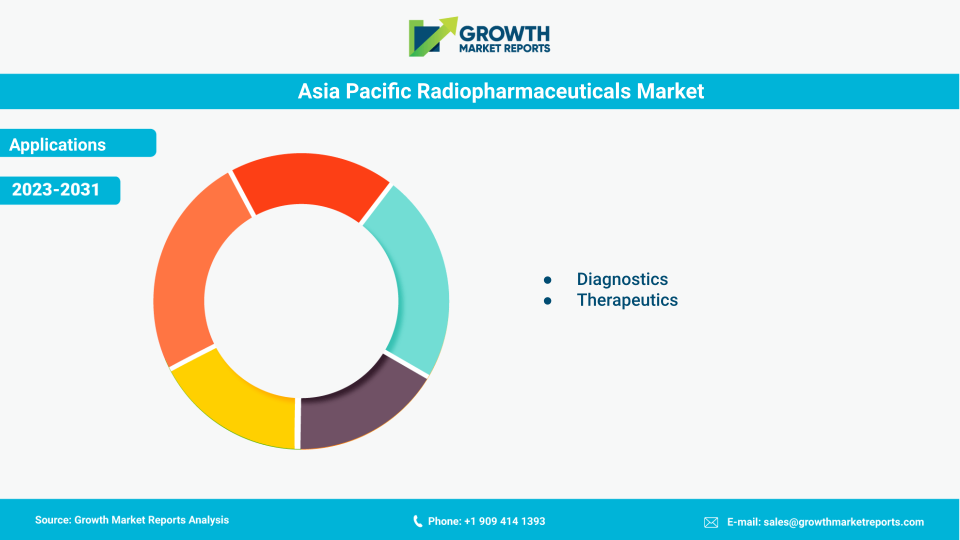
The radiopharmaceuticals market is broadly segmented by product type into diagnostic radiopharmaceuticals and therapeutic radiopharmaceuticals. Diagnostic radiopharmaceuticals, which include agents used in PET and SPECT imaging, currently hold the largest share of the market. This dominance is largely due to the widespread adoption of advanced imaging techniques for early detection and monitoring of diseases such as cancer, cardiovascular disorders, and neurological conditions. The increasing preference for non-invasive diagnostic procedures and the continuous introduction of innovative radiotracers are further solidifying the position of diagnostic radiopharmaceuticals. The expansion of diagnostic applications beyond oncology, into cardiology and neurology, is also contributing to robust segment growth.
On the other hand, therapeutic radiopharmaceuticals are experiencing rapid growth, driven by the rising demand for targeted therapies in oncology and other chronic diseases. These agents deliver radioactive isotopes directly to diseased tissues, minimizing damage to healthy cells and enhancing treatment efficacy. The approval of several new radiotherapeutic agents for conditions such as prostate cancer, neuroendocrine tumors, and bone metastases has significantly expanded the therapeutic radiopharmaceuticals market. The ongoing development of alpha and beta-emitting radiopharmaceuticals, which offer superior therapeutic outcomes, is expected to further accelerate segment growth over the forecast period.
The interplay between diagnostic and therapeutic radiopharmaceuticals is giving rise to the concept of theranostics, where the same molecule is used for both diagnosis and therapy. This integrated approach is gaining traction in personalized medicine, as it allows for real-time monitoring of treatment response and timely adjustments to therapy. The growing adoption of theranostic agents is expected to blur the traditional boundaries between diagnostic and therapeutic segments, leading to new opportunities for market participants. Companies investing in the development of theranostic platforms are likely to gain a competitive edge in the evolving radiopharmaceuticals landscape.
Despite the promising outlook, both diagnostic and therapeutic radiopharmaceuticals face challenges related to regulatory approvals, production scalability, and supply chain logistics. The short half-lives of many radioisotopes necessitate efficient production and distribution networks, particularly for time-sensitive diagnostic procedures. Addressing these challenges requires close collaboration between manufacturers, healthcare providers, and regulatory authorities to ensure the timely and safe delivery of radiopharmaceuticals to end-users.
Radiopharmacy is an integral component of the healthcare system, specializing in the preparation and dispensing of radiopharmaceuticals for diagnostic and therapeutic purposes. This field combines principles of pharmacy and nuclear medicine to ensure the safe handling and accurate dosing of radioactive compounds. Radiopharmacists play a critical role in the healthcare team, collaborating with physicians and technologists to optimize patient care. The increasing complexity of radiopharmaceuticals, driven by advancements in molecular imaging and targeted therapies, underscores the importance of specialized training and expertise in radiopharmacy. As the demand for personalized medicine grows, radiopharmacies are evolving to support the development and implementation of novel radiotracers and theranostic agents. This evolution is crucial for enhancing the precision and effectiveness of nuclear medicine procedures, ultimately contributing to improved health outcomes for patients worldwide.
| Attributes | Details |
| Report Title | Radiopharmaceuticals Market Research Report 2033 |
| By Product Type | Diagnostic Radiopharmaceuticals, Therapeutic Radiopharmaceuticals |
| By Application | Oncology, Cardiology, Neurology, Endocrinology, Others |
| By Source | Nuclear Reactors, Cyclotrons |
| By End-User | Hospitals, Diagnostic Centers, Research Institutes, Others |
| Regions Covered | North America, Europe, APAC, Latin America, MEA |
| Base Year | 2024 |
| Historic Data | 2018-2023 |
| Forecast Period | 2025-2033 |
| Number of Pages | 299 |
| Number of Tables & Figures | 295 |
| Customization Available | Yes, the report can be customized as per your need. |
The application landscape of the radiopharmaceuticals market is diverse, encompassing oncology, cardiology, neurology, endocrinology, and several other therapeutic areas. Among these, oncology remains the largest and most dynamic application segment, accounting for a substantial share of market revenue. The growing burden of cancer worldwide, coupled with the need for precise diagnostic and therapeutic solutions, has made radiopharmaceuticals an indispensable tool in oncology. PET and SPECT imaging are widely used for tumor detection, staging, and monitoring, while therapeutic radiopharmaceuticals are increasingly employed for targeted cancer treatments. The development of novel radiotracers and radiotherapeutic agents for various cancer types is expected to further strengthen the oncology segment's dominance.
Cardiology is another critical application area, with radiopharmaceuticals playing a pivotal role in the diagnosis and management of cardiovascular diseases. Nuclear cardiology procedures, such as myocardial perfusion imaging, are essential for assessing blood flow, detecting coronary artery disease, and evaluating cardiac function. The rising prevalence of heart diseases, especially in aging populations, is driving the demand for advanced radiopharmaceuticals in cardiology. Continuous innovations in radiotracer development and imaging technologies are enhancing the accuracy and reliability of nuclear cardiology procedures, leading to improved patient outcomes.
Neurology represents a rapidly growing application segment, fueled by the increasing incidence of neurological disorders such as Alzheimer's disease, Parkinson's disease, and epilepsy. Radiopharmaceuticals are instrumental in the early detection and monitoring of these conditions, enabling timely intervention and better disease management. The advent of new radiotracers targeting specific neurological pathways and biomarkers is expanding the scope of nuclear medicine in neurology. Research efforts aimed at developing radiopharmaceuticals for neurodegenerative diseases and brain tumors are expected to drive significant growth in this segment over the coming years.
Endocrinology and other therapeutic areas also contribute to the expanding application base of radiopharmaceuticals. In endocrinology, radiopharmaceuticals are used for the diagnosis and treatment of thyroid disorders, parathyroid diseases, and certain types of hormone-secreting tumors. The increasing awareness of nuclear medicine's benefits in these areas, coupled with ongoing research and development, is broadening the application spectrum of radiopharmaceuticals. As healthcare providers continue to recognize the value of nuclear medicine across various specialties, the application landscape is expected to become even more diversified.
Radiopharmaceuticals are primarily sourced from nuclear reactors and cyclotrons, each playing a distinct role in the production of various radioisotopes. Nuclear reactors have traditionally been the mainstay for producing key radioisotopes such as molybdenum-99 (Mo-99), which decays to technetium-99m (Tc-99m), the most widely used isotope in diagnostic imaging. The reliability and scalability of reactor-based production make it suitable for meeting the high-volume demands of global healthcare systems. However, the aging infrastructure of many nuclear reactors and periodic supply disruptions have highlighted the need for alternative production methods.
Cyclotrons, on the other hand, are increasingly being adopted for the production of short-lived radioisotopes used in PET imaging, such as fluorine-18 and carbon-11. The decentralized nature of cyclotron-based production allows for greater flexibility and proximity to end-users, reducing logistical challenges associated with transporting short-lived isotopes. The growing installation of cyclotrons in hospitals and diagnostic centers, particularly in developed regions, is supporting the expansion of PET imaging capabilities. Advances in cyclotron technology are also enabling the production of a broader range of radioisotopes, further enhancing their utility in nuclear medicine.
The choice between nuclear reactors and cyclotrons often depends on the specific radioisotopes required, the intended application, and the healthcare infrastructure of a given region. While reactors remain essential for large-scale production of certain isotopes, cyclotrons offer a viable solution for localized, on-demand production of PET tracers. The ongoing shift towards cyclotron-based production, driven by technological advancements and the need for supply chain resilience, is expected to reshape the radiopharmaceuticals supply landscape over the forecast period.
Efforts to develop alternative production methods, such as linear accelerators and generator-based systems, are also gaining traction. These innovations aim to address supply chain vulnerabilities and ensure the continuous availability of critical radioisotopes. Collaboration between governments, research institutions, and industry players is crucial for advancing these technologies and ensuring a stable, diversified supply of radiopharmaceuticals to meet growing global demand.
The end-user landscape for radiopharmaceuticals encompasses hospitals, diagnostic centers, research institutes, and other healthcare facilities. Hospitals represent the largest end-user segment, given their central role in providing comprehensive diagnostic and therapeutic services. The integration of nuclear medicine departments within hospitals enables the seamless delivery of radiopharmaceutical-based procedures, from initial diagnosis to ongoing treatment and monitoring. The increasing adoption of advanced imaging technologies and the expansion of oncology and cardiology departments are driving the demand for radiopharmaceuticals in hospital settings.
Diagnostic centers are another significant end-user group, particularly in regions with well-developed outpatient care networks. These centers specialize in providing a range of imaging services, including PET, SPECT, and CT scans, often in collaboration with hospitals and referring physicians. The rise of standalone diagnostic centers, equipped with state-of-the-art nuclear medicine facilities, is enhancing patient access to radiopharmaceutical-based diagnostics. The growing trend towards outpatient care, driven by cost-effectiveness and patient convenience, is expected to further boost the demand for radiopharmaceuticals in diagnostic centers.
Research institutes play a vital role in advancing the development and application of radiopharmaceuticals. These institutions are at the forefront of discovering new radioisotopes, developing innovative radiotracers, and conducting clinical trials to evaluate safety and efficacy. Collaboration between research institutes, academic centers, and industry players is essential for translating scientific discoveries into commercially viable products. The increasing focus on translational research and the establishment of dedicated nuclear medicine research centers are expected to drive significant advancements in the field.
Other end-users, including specialty clinics and pharmaceutical companies, also contribute to the growing demand for radiopharmaceuticals. These entities often focus on niche applications, such as targeted therapies for rare diseases or the development of companion diagnostics for personalized medicine. The expanding ecosystem of end-users, coupled with ongoing investments in healthcare infrastructure, is expected to create new opportunities for market growth and innovation.
The radiopharmaceuticals market presents numerous opportunities for growth and innovation. One of the most promising areas is the development of novel radiotracers and radiotherapeutic agents targeting previously underserved diseases. Advances in molecular imaging and targeted therapy are opening new avenues for addressing conditions such as neurodegenerative disorders, rare cancers, and infectious diseases. Companies that invest in research and development, strategic partnerships, and regulatory compliance are well-positioned to capitalize on these emerging opportunities. Additionally, the increasing adoption of theranostic approaches, which combine diagnostic and therapeutic capabilities in a single agent, is expected to revolutionize personalized medicine and drive long-term market growth.
Another significant opportunity lies in the expansion of radiopharmaceuticals into emerging markets, particularly in Asia Pacific and Latin America. These regions are experiencing rapid growth in healthcare infrastructure, rising disease prevalence, and increasing awareness of nuclear medicine's benefits. Strategic investments in local production facilities, distribution networks, and training programs can help companies tap into these high-potential markets. Furthermore, advancements in cyclotron and alternative production technologies are expected to enhance supply chain resilience and reduce dependence on aging nuclear reactor infrastructure. The integration of artificial intelligence and digital health solutions into nuclear medicine workflows also offers the potential to improve diagnostic accuracy, streamline operations, and enhance patient outcomes.
Despite the positive outlook, the radiopharmaceuticals market faces several restraining factors that could hinder growth. Regulatory challenges, particularly related to the approval and commercialization of new radiopharmaceutical agents, remain a significant barrier. The complex and evolving regulatory landscape, coupled with stringent safety and efficacy requirements, can delay product launches and increase development costs. Supply chain vulnerabilities, especially for short-lived radioisotopes, pose additional risks, as disruptions can impact the availability of critical diagnostic and therapeutic procedures. Addressing these challenges requires coordinated efforts between industry stakeholders, regulatory authorities, and healthcare providers to ensure the safe, timely, and efficient delivery of radiopharmaceuticals to patients worldwide.
North America continues to lead the global radiopharmaceuticals market, with a market size of USD 3.1 billion in 2024. The region's dominance is underpinned by its advanced healthcare infrastructure, high disease prevalence, and strong presence of leading radiopharmaceutical manufacturers. The United States, in particular, accounts for the majority of North America's market share, driven by robust research and development activities, favorable reimbursement policies, and a well-established regulatory framework. The region is also home to several world-class nuclear medicine centers and academic institutions, which contribute to ongoing innovation and market development.
Europe represents the second-largest regional market, with a size of USD 2.2 billion in 2024 and a CAGR of 8.1% projected through 2033. The region benefits from a strong tradition of nuclear medicine research, supportive regulatory environments, and increasing investments in healthcare infrastructure. Key markets such as Germany, France, and the United Kingdom are at the forefront of adopting advanced radiopharmaceuticals for both diagnostic and therapeutic applications. The European market is characterized by a high degree of collaboration between industry players, research institutions, and healthcare providers, which fosters innovation and accelerates the adoption of new technologies.
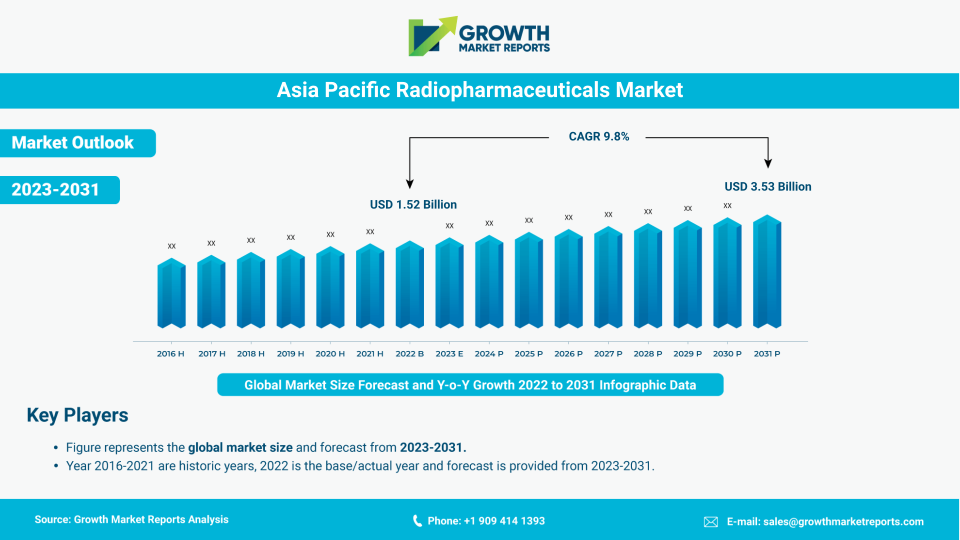
The Asia Pacific region is emerging as the fastest-growing market for radiopharmaceuticals, with a market size of USD 1.6 billion in 2024. Rapid economic growth, rising healthcare expenditure, and a growing patient population are driving demand for advanced diagnostic and therapeutic solutions. Countries such as China, India, and Japan are investing heavily in expanding their nuclear medicine capabilities, including the installation of cyclotrons and the establishment of new production facilities. The region's CAGR is forecasted at 10.2% from 2025 to 2033, reflecting the significant growth potential. Latin America and the Middle East & Africa, with market sizes of USD 0.6 billion and USD 0.4 billion respectively in 2024, are also witnessing steady growth as they enhance their healthcare infrastructure and adopt advanced nuclear medicine technologies.
The radiopharmaceuticals market is characterized by intense competition, with a mix of established multinational corporations and emerging players vying for market share. Leading companies are focusing on expanding their product portfolios, investing in research and development, and forming strategic alliances to strengthen their market positions. The competitive landscape is further shaped by ongoing mergers and acquisitions, as companies seek to enhance their technological capabilities and geographic reach. Innovation remains a key differentiator, with firms investing heavily in the development of next-generation radiopharmaceuticals, theranostic agents, and advanced imaging technologies.
Market leaders are also prioritizing regulatory compliance and quality assurance to ensure the safety and efficacy of their products. The complex and highly regulated nature of the radiopharmaceuticals market necessitates close collaboration with regulatory authorities, healthcare providers, and research institutions. Companies that can navigate the regulatory landscape effectively and bring innovative products to market quickly are likely to gain a competitive advantage. Additionally, supply chain management is a critical focus area, as the timely and reliable delivery of radiopharmaceuticals is essential for meeting patient needs and maintaining market credibility.
Strategic partnerships and collaborations are playing an increasingly important role in the competitive dynamics of the radiopharmaceuticals market. Companies are joining forces with academic institutions, research organizations, and healthcare providers to accelerate the development and commercialization of new products. These collaborations facilitate knowledge sharing, access to advanced technologies, and the pooling of resources for large-scale clinical trials. The integration of artificial intelligence and digital health solutions into nuclear medicine workflows is also emerging as a competitive differentiator, enabling companies to offer more comprehensive and value-added solutions to healthcare providers.
Major companies operating in the global radiopharmaceuticals market include Siemens Healthineers, GE Healthcare, Lantheus Holdings, Cardinal Health, Bracco Imaging, Jubilant Radiopharma, Curium Pharma, Bayer AG, Advanced Accelerator Applications (a Novartis company), and Telix Pharmaceuticals. Siemens Healthineers and GE Healthcare are renowned for their extensive product portfolios and strong presence in both diagnostic and therapeutic radiopharmaceuticals. Lantheus Holdings and Curium Pharma are recognized for their expertise in the production and distribution of key radioisotopes and radiotracers. Cardinal Health and Bracco Imaging have established themselves as leading suppliers of radiopharmaceuticals to hospitals and diagnostic centers worldwide.
Jubilant Radiopharma and Advanced Accelerator Applications are at the forefront of developing innovative radiotherapeutic agents and expanding their presence in emerging markets. Bayer AG and Telix Pharmaceuticals are investing heavily in research and development to bring new theranostic agents to market. These companies are also actively pursuing strategic collaborations and licensing agreements to broaden their product offerings and strengthen their competitive positions. The competitive landscape is expected to remain dynamic, with ongoing innovation, regulatory developments, and market expansion shaping the future of the global radiopharmaceuticals market.
The Radiopharmaceuticals market has been segmented on the basis of
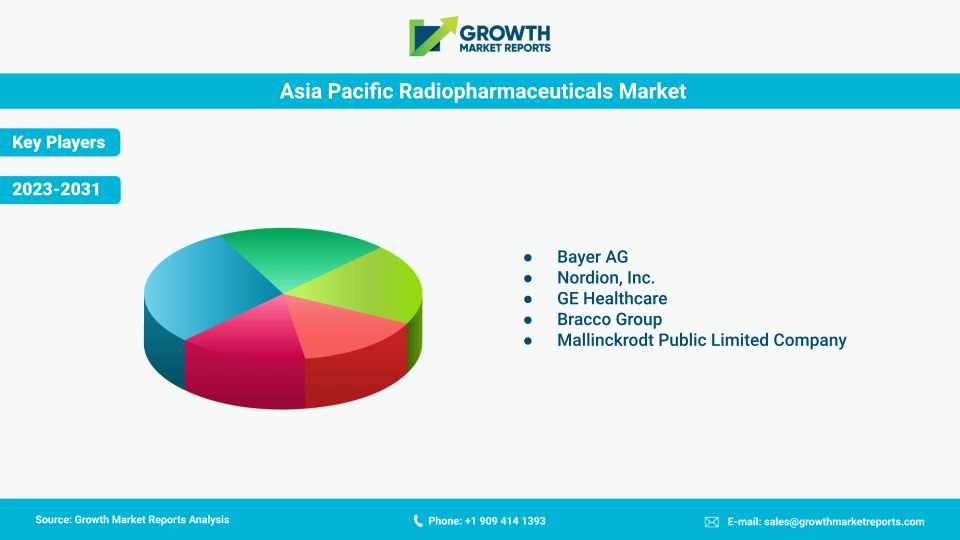
Key players competing in the Asia Pacific radiopharmaceuticals market are Bayer AG; Nordion, Inc.; GE Healthcare; Bracco Group; and Mallinckrodt Public Limited Company.
The main market players are continuously engaged in various business expansion activities such as mergers and acquisitions, research and developments, investments for innovative products, and collaborations. For instance, Nordion, Inc. introduced a new custom dose for TheraSphere, in March 2012.
Challenges include regulatory hurdles for new product approvals, supply chain vulnerabilities for short-lived isotopes, production scalability, and the need for efficient distribution networks.
Major companies include Siemens Healthineers, GE Healthcare, Lantheus Holdings, Cardinal Health, Bracco Imaging, Jubilant Radiopharma, Curium Pharma, Bayer AG, Advanced Accelerator Applications (Novartis), and Telix Pharmaceuticals.
Radiopharmaceuticals are mainly produced using nuclear reactors (for isotopes like molybdenum-99) and cyclotrons (for short-lived PET isotopes like fluorine-18). Advances in cyclotron technology and alternative methods are enhancing supply chain resilience.
Radiopharmaceuticals are primarily used in oncology, cardiology, neurology, and endocrinology for disease diagnosis, monitoring, and targeted therapy.
Theranostics is an integrated approach using the same molecule for both diagnosis and therapy, enabling real-time monitoring and personalized treatment. Its adoption is blurring the lines between diagnostic and therapeutic segments and creating new market opportunities.
The market is segmented into diagnostic radiopharmaceuticals (used in PET and SPECT imaging) and therapeutic radiopharmaceuticals (used for targeted therapies in oncology and other chronic diseases).
North America leads the global radiopharmaceuticals market, followed by Europe. Asia Pacific is the fastest-growing region, while Latin America and the Middle East & Africa are also experiencing steady growth.
Key growth drivers include the rising prevalence of chronic diseases such as cancer and cardiovascular conditions, advancements in nuclear medicine, expanding applications in oncology, cardiology, and neurology, and the growing geriatric population.
The radiopharmaceuticals market is expected to grow at a compound annual growth rate (CAGR) of 8.6% from 2025 to 2033, reaching USD 16.8 billion by 2033.
The global radiopharmaceuticals market size in 2024 is estimated at USD 7.9 billion, driven by increasing adoption in diagnostic and therapeutic applications.