Mobile Cloud Market Research Report 2033

Mobile Cloud Market Research Report 2033

Segments - by Component (Software, Services, Hardware), by Application (Gaming, Entertainment, Utilities, Productivity, Education, Healthcare, Others), by Deployment Mode (Public Cloud, Private Cloud, Hybrid Cloud), by Organization Size (Small and Medium Enterprises, Large Enterprises), by End-User (BFSI, IT and Telecommunications, Retail, Healthcare, Government, Media and Entertainment, Others)

https://growthmarketreports.com/Raksha
Author : Raksha Sharma
https://growthmarketreports.com/Vaibhav
Fact-checked by : V. Chandola
https://growthmarketreports.com/Shruti
Editor : Shruti Bhat

Upcoming | Report ID :ICT-SE-3204 | 4.3 Rating | 77 Reviews | 281 Pages | Format : Docx PDF

Report Description


Mobile Cloud Market Outlook

According to our latest research, the global mobile cloud market size reached USD 104.2 billion in 2024, underscoring its rapid expansion amid the digital transformation era. The market is projected to sustain a robust CAGR of 23.8% from 2025 to 2033, with the total value anticipated to climb to USD 843.9 billion by 2033. This remarkable growth trajectory is primarily driven by the increasing adoption of mobile devices, the proliferation of high-speed internet connectivity, and the surge in demand for cloud-based applications across various industry verticals. As per our latest research, organizations globally are accelerating investments in mobile cloud solutions to enhance agility, scalability, and cost-efficiency, further propelling the market’s expansion.

A significant growth factor for the mobile cloud market is the exponential rise in smartphone penetration and mobile device usage worldwide. With billions of users relying on smartphones and tablets for both personal and professional activities, the need for seamless data access and synchronization across devices has never been more critical. Mobile cloud solutions enable users to store, access, and manage data remotely, eliminating the constraints of device storage and enhancing user experience. Moreover, the emergence of 5G networks and advancements in wireless technologies are facilitating faster data transfer, lower latency, and improved connectivity, making cloud-based mobile applications more efficient and reliable. These technological advancements are not only increasing the adoption of mobile cloud services but also fostering innovation in application development, further driving market growth.

Another pivotal driver of the mobile cloud market is the growing preference for cloud-based applications in enterprises and businesses of all sizes. Organizations are increasingly leveraging mobile cloud platforms to streamline operations, enhance workforce mobility, and enable real-time collaboration among employees. The shift towards remote and hybrid work models has further amplified the demand for mobile cloud solutions, allowing employees to access critical business applications and data securely from any location. Additionally, mobile cloud platforms offer scalability, cost-effectiveness, and ease of integration with existing IT infrastructure, making them an attractive choice for businesses aiming to optimize their digital transformation journeys. The integration of artificial intelligence, machine learning, and analytics within mobile cloud services is also empowering organizations to derive actionable insights, automate processes, and deliver personalized experiences to end-users.

The proliferation of industry-specific mobile cloud applications is another major catalyst fueling market growth. Sectors such as healthcare, education, retail, BFSI, and media & entertainment are increasingly deploying mobile cloud solutions to enhance customer engagement, streamline workflows, and improve service delivery. In healthcare, for instance, mobile cloud platforms are enabling telemedicine, remote patient monitoring, and secure sharing of medical records, while in retail, they are facilitating personalized shopping experiences, inventory management, and mobile payments. The versatility and adaptability of mobile cloud technologies are encouraging organizations across diverse sectors to adopt these solutions, thereby expanding the market’s footprint. Furthermore, the rising trend of integrating Internet of Things (IoT) devices with mobile cloud platforms is creating new avenues for innovation and growth, as businesses seek to harness the power of connected devices and real-time data analytics.

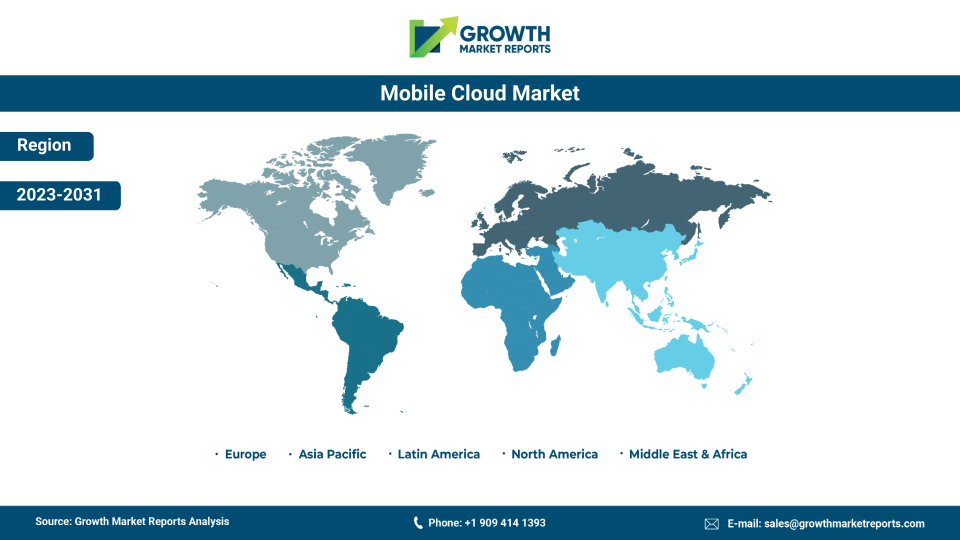
From a regional perspective, the mobile cloud market exhibits strong growth potential across all major geographies, with Asia Pacific, North America, and Europe emerging as key contributors. Asia Pacific is witnessing the fastest growth, driven by the rapid digitalization of economies, increasing smartphone adoption, and significant investments in cloud infrastructure by regional governments and enterprises. North America, with its mature IT ecosystem and high penetration of advanced mobile technologies, remains a dominant market, while Europe is experiencing steady growth due to stringent data privacy regulations and increasing focus on digital innovation. The Middle East & Africa and Latin America are also showing promising growth prospects, fueled by rising mobile internet usage and expanding digital services. Collectively, these regional trends are shaping the global mobile cloud market landscape and paving the way for sustained expansion in the coming years.

Global Mobile Cloud Industry Outlook

Component Analysis

The mobile cloud market is segmented by component into software, services, and hardware, each playing a pivotal role in shaping the overall market dynamics. The software segment holds a substantial share, owing to the proliferation of mobile applications and the continuous evolution of cloud-based platforms. Software solutions, including mobile application development platforms, cloud storage, and data management tools, are critical for enabling seamless integration, security, and scalability of mobile cloud environments. The demand for advanced software solutions is further amplified by the increasing complexity of mobile applications and the need for efficient data synchronization across multiple devices. As organizations prioritize agility and innovation, investments in robust software platforms are expected to remain a key growth driver for the mobile cloud market.

The services segment is witnessing significant growth, driven by the rising demand for consulting, integration, support, and managed services. Businesses are increasingly seeking expert guidance to navigate the complexities of mobile cloud adoption, optimize their cloud strategies, and ensure seamless migration of applications and data. Service providers are offering a wide range of value-added services, including cloud assessment, architecture design, security implementation, and ongoing maintenance, to help organizations maximize the benefits of mobile cloud solutions. The growing emphasis on security and compliance, coupled with the need for continuous support and monitoring, is fueling the demand for managed services, making the services segment a vital component of the mobile cloud market.

The hardware segment, while smaller compared to software and services, plays a crucial role in supporting the underlying infrastructure of mobile cloud environments. This segment encompasses servers, storage devices, networking equipment, and other hardware components required to host and manage cloud-based mobile applications. The adoption of advanced hardware solutions, such as high-performance servers and storage systems, is essential for ensuring the reliability, scalability, and security of mobile cloud services. With the increasing deployment of edge computing and IoT devices, the demand for specialized hardware solutions is expected to grow, further contributing to the overall expansion of the mobile cloud market.

The interplay between software, services, and hardware is driving innovation and enabling organizations to build robust, scalable, and secure mobile cloud ecosystems. As the market continues to evolve, vendors are focusing on delivering integrated solutions that combine the strengths of each component, offering customers a comprehensive suite of tools and services to support their mobile cloud initiatives. The ongoing advancements in cloud technologies, coupled with the growing adoption of hybrid and multi-cloud architectures, are expected to further accelerate the growth of the component segments in the mobile cloud market.

Report Scope

Attributes Details
Report Title Mobile Cloud Market Research Report 2033
By Component Software, Services, Hardware
By Application Gaming, Entertainment, Utilities, Productivity, Education, Healthcare, Others
By Deployment Mode Public Cloud, Private Cloud, Hybrid Cloud
By Organization Size Small and Medium Enterprises, Large Enterprises
By End-User BFSI, IT and Telecommunications, Retail, Healthcare, Government, Media and Entertainment, Others
Regions Covered North America, Europe, APAC, Latin America, MEA
Base Year 2024
Historic Data 2018-2023
Forecast Period 2025-2033
Number of Pages 281
Number of Tables & Figures 299
Customization Available Yes, the report can be customized as per your need.

Application Analysis

The application landscape of the mobile cloud market is diverse, encompassing gaming, entertainment, utilities, productivity, education, healthcare, and other sectors. Gaming and entertainment represent some of the largest and fastest-growing segments, driven by the increasing popularity of mobile gaming, video streaming, and digital content consumption. Mobile cloud platforms enable seamless access to high-quality games and multimedia content, regardless of device limitations, by offloading processing and storage to the cloud. This not only enhances user experience but also allows developers to deliver richer, more immersive applications without being constrained by hardware capabilities. The integration of cloud-based features such as real-time multiplayer gaming, social sharing, and in-app purchases is further fueling the growth of the gaming and entertainment segments.

The utilities and productivity application segments are gaining traction as businesses and individuals seek efficient tools to manage tasks, schedules, and workflows on the go. Mobile cloud solutions offer a wide range of productivity applications, including document editing, project management, and collaboration tools, enabling users to work seamlessly from any location. The ability to access, share, and synchronize data across devices in real-time is a key advantage of mobile cloud platforms, driving adoption among professionals and enterprises. Additionally, the integration of AI-powered features, such as smart assistants and automated workflows, is enhancing the functionality and value proposition of productivity and utility applications.

In the education sector, mobile cloud applications are revolutionizing the way students and educators interact, learn, and collaborate. Cloud-based learning management systems, virtual classrooms, and digital content repositories are enabling remote and hybrid learning models, making education more accessible and flexible. The scalability and cost-effectiveness of mobile cloud solutions are particularly beneficial for educational institutions, allowing them to deliver personalized learning experiences and manage resources efficiently. The growing adoption of mobile devices among students and the increasing emphasis on digital literacy are expected to drive further growth in the education segment of the mobile cloud market.

The healthcare segment is witnessing rapid adoption of mobile cloud applications, driven by the need for secure, real-time access to patient data, telemedicine services, and remote patient monitoring. Mobile cloud platforms enable healthcare providers to store, share, and analyze medical records securely, improving care coordination and patient outcomes. The integration of AI and machine learning capabilities within mobile cloud applications is enabling advanced diagnostics, predictive analytics, and personalized medicine. As regulatory requirements for data privacy and security become more stringent, the demand for compliant and secure mobile cloud solutions in healthcare is expected to rise, further propelling market growth.

Deployment Mode Analysis

The mobile cloud market is segmented by deployment mode into public cloud, private cloud, and hybrid cloud, each offering distinct advantages and addressing specific organizational needs. The public cloud segment dominates the market, driven by its cost-effectiveness, scalability, and ease of deployment. Public cloud platforms enable organizations to access a wide range of mobile cloud services without the need for significant upfront investments in infrastructure. The flexibility and pay-as-you-go pricing models offered by public cloud providers are particularly attractive to small and medium enterprises (SMEs) and startups, enabling them to scale their operations rapidly and efficiently. The increasing availability of public cloud services across regions and the continuous expansion of data center networks are further fueling the growth of this segment.

The private cloud segment is gaining traction among organizations with stringent security, compliance, and customization requirements. Private cloud deployments offer enhanced control over data, applications, and infrastructure, making them ideal for industries such as BFSI, healthcare, and government, where data privacy and regulatory compliance are paramount. Organizations can tailor private cloud environments to meet their specific needs, ensuring optimal performance, security, and integration with existing IT systems. The adoption of private cloud solutions is being driven by the growing emphasis on data sovereignty, the need to comply with industry-specific regulations, and the desire to maintain greater control over sensitive information.

The hybrid cloud segment is emerging as a preferred deployment model for organizations seeking to balance the benefits of public and private cloud environments. Hybrid cloud solutions enable businesses to leverage the scalability and cost-efficiency of public cloud services while maintaining control over critical data and applications in private cloud environments. This approach offers greater flexibility, allowing organizations to optimize workloads, enhance disaster recovery capabilities, and ensure business continuity. The increasing adoption of hybrid and multi-cloud strategies is being driven by the need for agility, resilience, and the ability to respond quickly to changing business requirements. As organizations continue to embrace digital transformation, the demand for hybrid cloud solutions is expected to rise, contributing to the overall growth of the mobile cloud market.

The choice of deployment mode is influenced by a variety of factors, including organizational size, industry requirements, regulatory landscape, and budget constraints. Vendors are responding to these diverse needs by offering a range of deployment options, along with tools and services to facilitate seamless migration, integration, and management of mobile cloud environments. As the market matures, the focus is shifting towards delivering unified, interoperable solutions that enable organizations to harness the full potential of mobile cloud technologies, regardless of deployment model.

Organization Size Analysis

The mobile cloud market is segmented by organization size into small and medium enterprises (SMEs) and large enterprises, each with distinct adoption patterns and requirements. SMEs are increasingly embracing mobile cloud solutions to enhance operational efficiency, reduce IT costs, and gain access to advanced technologies without significant capital investments. The scalability, flexibility, and pay-per-use pricing models offered by mobile cloud platforms are particularly attractive to SMEs, enabling them to compete effectively with larger organizations. The ability to quickly deploy and scale applications, coupled with the availability of managed services and support, is driving widespread adoption among SMEs across various industry verticals.

Large enterprises, on the other hand, are leveraging mobile cloud solutions to drive digital transformation, enhance workforce mobility, and enable real-time collaboration across global operations. These organizations require robust, scalable, and secure mobile cloud platforms capable of supporting complex workflows, large volumes of data, and stringent compliance requirements. The integration of advanced features such as AI, analytics, and automation within mobile cloud environments is enabling large enterprises to streamline processes, improve decision-making, and deliver personalized experiences to customers and employees. The growing focus on innovation, agility, and customer-centricity is driving continued investments in mobile cloud technologies among large enterprises.

The adoption of mobile cloud solutions by organizations of all sizes is being facilitated by the increasing availability of tailored offerings, flexible pricing models, and comprehensive support services. Vendors are developing solutions specifically designed to address the unique needs of SMEs and large enterprises, ensuring seamless integration with existing IT infrastructure and alignment with business objectives. The ongoing shift towards remote and hybrid work models is further accelerating the adoption of mobile cloud platforms, as organizations seek to enable secure, anytime-anywhere access to applications and data for their employees.

As the competitive landscape intensifies, organizations are prioritizing investments in mobile cloud solutions to enhance agility, drive innovation, and maintain a competitive edge in the digital economy. The ability to rapidly deploy, scale, and manage mobile applications is becoming a key differentiator, enabling organizations to respond quickly to changing market conditions and customer demands. The growing emphasis on digital transformation, coupled with the increasing complexity of IT environments, is expected to drive sustained growth in both the SME and large enterprise segments of the mobile cloud market.

End-User Analysis

The end-user landscape of the mobile cloud market is broad, encompassing BFSI, IT and telecommunications, retail, healthcare, government, media and entertainment, and other sectors. The BFSI sector is a major adopter of mobile cloud solutions, leveraging these platforms to enhance customer engagement, streamline operations, and ensure compliance with regulatory requirements. Mobile cloud technologies enable banks and financial institutions to offer secure, real-time access to services, facilitate mobile payments, and deliver personalized financial products to customers. The growing emphasis on digital banking, cybersecurity, and customer experience is driving continued investments in mobile cloud solutions within the BFSI sector.

The IT and telecommunications sector is at the forefront of mobile cloud adoption, driven by the need to support rapidly evolving technologies, manage large-scale data traffic, and deliver innovative services to customers. Mobile cloud platforms enable telecom operators and IT service providers to optimize network performance, enhance service delivery, and support the deployment of next-generation applications such as 5G, IoT, and edge computing. The ability to scale resources dynamically, ensure high availability, and integrate with existing IT systems is critical for success in this highly competitive sector.

In the retail sector, mobile cloud solutions are transforming the way businesses interact with customers, manage inventory, and optimize supply chains. Retailers are leveraging mobile cloud platforms to deliver personalized shopping experiences, enable mobile payments, and streamline order fulfillment processes. The integration of AI and analytics within mobile cloud environments is enabling retailers to gain deeper insights into customer behavior, optimize marketing strategies, and enhance operational efficiency. The growing adoption of omnichannel retail models and the increasing use of mobile devices for shopping are expected to drive further growth in the retail segment of the mobile cloud market.

The healthcare, government, and media & entertainment sectors are also witnessing significant adoption of mobile cloud solutions, driven by the need for secure, scalable, and efficient platforms to support critical applications and services. In healthcare, mobile cloud technologies are enabling telemedicine, remote patient monitoring, and secure sharing of medical records, while in government, they are facilitating digital service delivery, citizen engagement, and efficient management of public resources. The media and entertainment sector is leveraging mobile cloud platforms to deliver high-quality content, enable real-time collaboration, and support the creation and distribution of digital media. The versatility and adaptability of mobile cloud solutions are enabling organizations across diverse sectors to drive innovation, enhance service delivery, and achieve their digital transformation goals.

Opportunities & Threats

The mobile cloud market presents a wealth of opportunities for vendors, service providers, and end-users alike. One of the most significant opportunities lies in the growing demand for industry-specific mobile cloud applications tailored to the unique needs of sectors such as healthcare, education, BFSI, and retail. Vendors that can deliver customized solutions, integrate advanced technologies such as AI and IoT, and ensure compliance with industry regulations are well-positioned to capture a larger share of the market. The increasing adoption of 5G networks and the proliferation of connected devices are also creating new avenues for innovation, enabling the development of next-generation mobile cloud applications with enhanced performance, security, and scalability. As organizations continue to embrace digital transformation, the demand for integrated, end-to-end mobile cloud solutions is expected to rise, presenting significant growth opportunities for market participants.

Another key opportunity in the mobile cloud market is the rising trend of hybrid and multi-cloud adoption, as organizations seek to optimize workloads, enhance resilience, and ensure business continuity. Vendors that can offer seamless integration, interoperability, and unified management across multiple cloud environments are likely to gain a competitive advantage. The growing emphasis on data privacy, security, and compliance is also driving demand for advanced security solutions and services, creating new opportunities for vendors specializing in cloud security, identity management, and threat detection. Additionally, the increasing focus on sustainability and energy efficiency is prompting organizations to adopt green cloud solutions, further expanding the scope of the mobile cloud market.

Despite the numerous opportunities, the mobile cloud market faces several challenges and threats that could restrain growth. One of the primary restrainers is the growing concern over data privacy, security, and regulatory compliance, particularly in highly regulated sectors such as healthcare, BFSI, and government. The increasing frequency and sophistication of cyberattacks, coupled with the complexity of managing data across multiple cloud environments, pose significant risks for organizations. Ensuring the security and integrity of sensitive data, maintaining compliance with evolving regulations, and addressing issues related to data sovereignty are critical challenges that need to be addressed to sustain market growth. Vendors must invest in robust security frameworks, continuous monitoring, and proactive threat detection to mitigate these risks and build trust among customers.

Regional Outlook

Regionally, the Asia Pacific market is emerging as a powerhouse in the mobile cloud landscape, with a market size of USD 31.5 billion in 2024 and an anticipated CAGR of 27.2% from 2025 to 2033. This rapid growth is driven by the increasing penetration of smartphones, expanding 5G infrastructure, and significant investments in digital transformation initiatives by governments and enterprises across countries such as China, India, Japan, and South Korea. The region’s large and tech-savvy population, coupled with the rise of mobile-first business models, is fueling demand for mobile cloud solutions across various sectors, including retail, BFSI, healthcare, and education. The increasing focus on innovation, digital literacy, and smart city initiatives is expected to further accelerate market growth in Asia Pacific.

North America continues to be a dominant force in the global mobile cloud market, with a market size of USD 36.7 billion in 2024. The region’s mature IT ecosystem, high adoption of advanced mobile technologies, and strong presence of leading cloud service providers are key factors driving market growth. Organizations in North America are early adopters of cutting-edge technologies such as AI, IoT, and edge computing, leveraging mobile cloud platforms to enhance agility, innovation, and customer engagement. The increasing adoption of hybrid and multi-cloud strategies, coupled with stringent data privacy regulations, is shaping the regional market landscape and driving demand for secure, scalable, and compliant mobile cloud solutions.

Europe is experiencing steady growth in the mobile cloud market, with a market size of USD 24.8 billion in 2024, driven by the increasing focus on digital innovation, data privacy, and regulatory compliance. The region’s diverse and highly regulated markets are prompting organizations to adopt mobile cloud solutions that offer enhanced security, flexibility, and integration capabilities. The growing emphasis on sustainability, energy efficiency, and green cloud initiatives is also influencing market dynamics in Europe. Meanwhile, the Middle East & Africa and Latin America are showing promising growth prospects, with market sizes of USD 6.3 billion and USD 4.9 billion in 2024, respectively. These regions are benefiting from rising mobile internet usage, expanding digital services, and increasing investments in cloud infrastructure. Collectively, these regional trends are shaping the global mobile cloud market landscape and paving the way for sustained expansion in the coming years.

Mobile Cloud Market Statistics

Competitor Outlook

The competitive landscape of the mobile cloud market is characterized by intense rivalry among global technology giants, innovative startups, and specialized service providers. Leading players are focusing on expanding their product portfolios, enhancing service offerings, and investing in research and development to stay ahead in the rapidly evolving market. Strategic partnerships, mergers and acquisitions, and collaborations are common strategies employed by market participants to strengthen their market positions, expand their customer base, and gain access to new technologies and markets. The ability to deliver integrated, end-to-end mobile cloud solutions that address the diverse needs of customers is becoming a key differentiator in the competitive landscape.

Innovation is at the core of the market’s competitive dynamics, with vendors continuously developing new features, functionalities, and services to meet the evolving demands of customers. The integration of advanced technologies such as artificial intelligence, machine learning, analytics, and IoT within mobile cloud platforms is enabling vendors to deliver differentiated value propositions and drive customer engagement. Security, scalability, and ease of integration are critical factors influencing customer preferences, prompting vendors to invest in robust security frameworks, seamless interoperability, and user-friendly interfaces. The growing emphasis on customer-centricity, agility, and responsiveness is shaping the competitive strategies of market players, as organizations seek to deliver superior experiences and outcomes for their customers.

The market is also witnessing the emergence of niche players and specialized service providers that offer tailored solutions for specific industries, deployment models, or use cases. These players are leveraging their domain expertise, agility, and customer-centric approach to carve out a niche in the highly competitive market. As the demand for industry-specific mobile cloud applications and services continues to rise, the competitive landscape is expected to become more fragmented, with new entrants and innovative startups challenging established players.

Some of the major companies operating in the mobile cloud market include Amazon Web Services (AWS), Microsoft Corporation, Google LLC, IBM Corporation, Oracle Corporation, Salesforce.com, Inc., Alibaba Cloud, VMware, Inc., Huawei Technologies Co., Ltd., and SAP SE. These companies are at the forefront of innovation, offering a wide range of mobile cloud solutions, services, and platforms to customers across the globe. AWS and Microsoft Azure are leading the market with their comprehensive cloud ecosystems, robust security features, and extensive partner networks. Google Cloud is focusing on AI-driven solutions and seamless integration with mobile applications, while IBM and Oracle are leveraging their expertise in enterprise IT and industry-specific solutions to capture market share.

Salesforce.com is a key player in the mobile cloud market, particularly in the CRM and enterprise application segments, offering cloud-based solutions that enable organizations to enhance customer engagement, automate workflows, and drive growth. Alibaba Cloud and Huawei are strengthening their presence in the Asia Pacific market, leveraging their local expertise, strong infrastructure, and tailored offerings to meet the unique needs of regional customers. VMware and SAP are focusing on hybrid and multi-cloud solutions, enabling organizations to optimize workloads and ensure business continuity. As competition intensifies, these companies are expected to continue investing in innovation, partnerships, and customer success to maintain their leadership positions in the mobile cloud market.

Key Players

  • Amazon Web Services (AWS)
  • Microsoft Corporation
  • Google LLC
  • IBM Corporation
  • Oracle Corporation
  • Alibaba Cloud
  • Salesforce.com, Inc.
  • SAP SE
  • VMware, Inc.
  • Apple Inc.
  • Huawei Technologies Co., Ltd.
  • Tencent Cloud
  • Samsung Electronics Co., Ltd.
  • Cisco Systems, Inc.
  • Rackspace Technology
  • Hewlett Packard Enterprise (HPE)
  • Dell Technologies Inc.
  • AT&T Inc.
  • Verizon Communications Inc.
  • Red Hat, Inc.
Mobile Cloud Market Overview

Segments

The Mobile Cloud market has been segmented on the basis of

Component

  • Software
  • Services
  • Hardware

Application

  • Gaming
  • Entertainment
  • Utilities
  • Productivity
  • Education
  • Healthcare
  • Others

Deployment Mode

  • Public Cloud
  • Private Cloud
  • Hybrid Cloud

Organization Size

  • Small and Medium Enterprises
  • Large Enterprises

End-User

  • BFSI
  • IT and Telecommunications
  • Retail
  • Healthcare
  • Government
  • Media and Entertainment
  • Others

Competitive Landscape

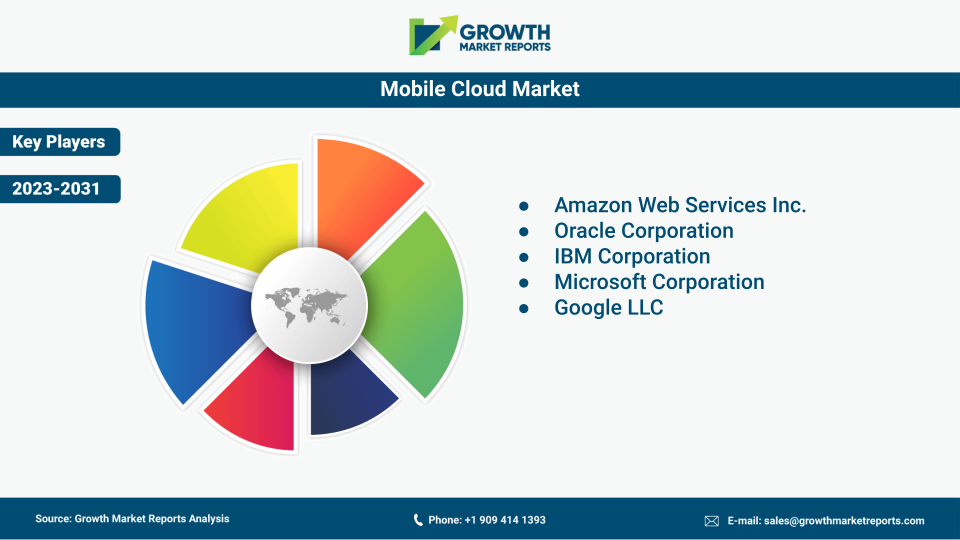
TSome of the major players competing in the global mobile cloud market include Amazon Web Services, Inc.; Oracle; IBM Corporation; Microsoft; Google LLC; Akamai Technologies; VMware, Inc; OpsRamp, Inc.; RACKSPACE TECHNOLOGY; Salesforce, Inc.; Fujitsu; Apple Inc.; CINC Systems; Cisco Systems, Inc.

  • In August 2023, Lenovo and VMware, Inc. announced the first turnkey solutions from their joint Edge and Cloud Innovation Labs, delivering modern hybrid multi-cloud capabilities to mid-size companies and helping customers more easily harness data to empower their intelligent transformation.
  • In July 2023, Rakuten Mobile partners with Oracle Communications cloud-native converged policy and charging solutions to support its fast-growing 4G and 5G services, with plans to onboard to Rakuten Symphony’s Symworld Marketplace. Oracle is expected to help the operator strategically monetize its 4G and 5G networks by supporting new business models and experiences.
  • In October 2018, Oracle NetSuite declared a series of different innovations to benefit administrations across industries to increase revenue and endow business operators.

Mobile Cloud Market Key Players

Frequently Asked Questions

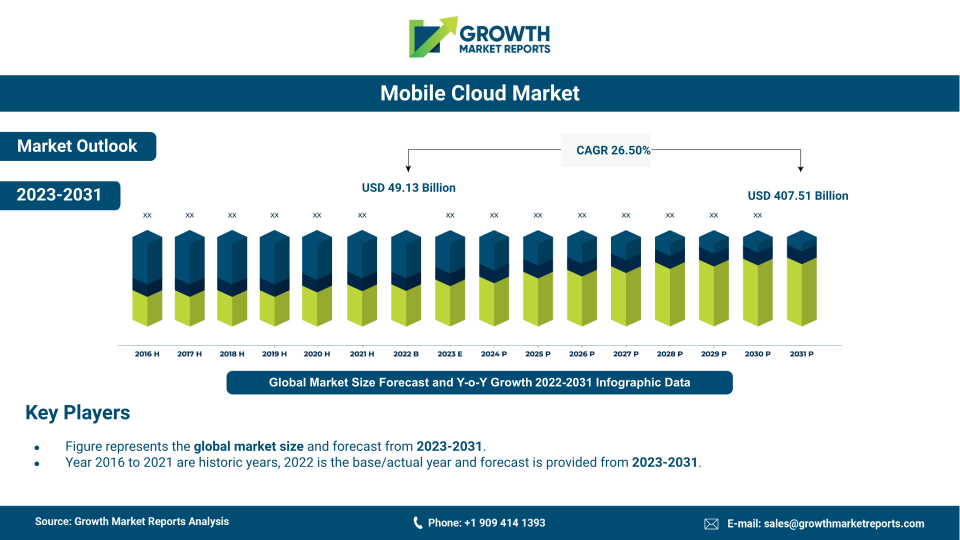
The mobile cloud market was valued at USD 49.13 Billion in 2022 and is expected projected to reach USD 407.51 billion by 2031

The market for cloud computing is growing with a CAGR of 26.50% during the forecast period 2023-2031

The forecast period for the mobile cloud market is 2023-2031

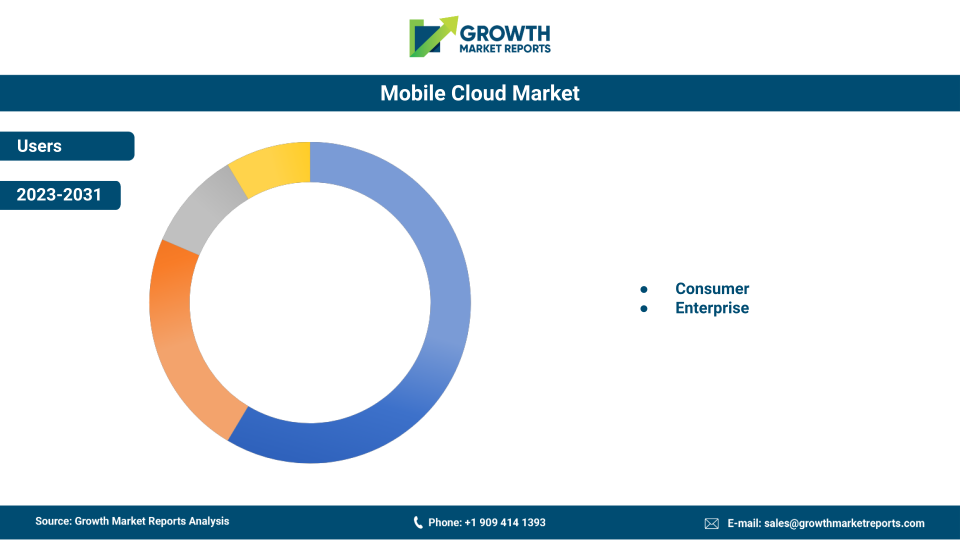
Application and end-user are the two segments covered in the market

Table Of Content

Chapter 1 Executive Summary
Chapter 2 Assumptions and Acronyms Used
Chapter 3 Research Methodology
Chapter 4 Mobile Cloud Market Overview
   4.1 Introduction
      4.1.1 Market Taxonomy
      4.1.2 Market Definition
      4.1.3 Macro-Economic Factors Impacting the Market Growth
   4.2 Mobile Cloud Market Dynamics
      4.2.1 Market Drivers
      4.2.2 Market Restraints
      4.2.3 Market Opportunity
   4.3 Mobile Cloud Market - Supply Chain Analysis
      4.3.1 List of Key Suppliers
      4.3.2 List of Key Distributors
      4.3.3 List of Key Consumers
   4.4 Key Forces Shaping the Mobile Cloud Market
      4.4.1 Bargaining Power of Suppliers
      4.4.2 Bargaining Power of Buyers
      4.4.3 Threat of Substitution
      4.4.4 Threat of New Entrants
      4.4.5 Competitive Rivalry
   4.5 Global Mobile Cloud Market Size & Forecast, 2023-2032
      4.5.1 Mobile Cloud Market Size and Y-o-Y Growth
      4.5.2 Mobile Cloud Market Absolute $ Opportunity

Chapter 5 Global Mobile Cloud Market Analysis and Forecast By Component
   5.1 Introduction
      5.1.1 Key Market Trends & Growth Opportunities By Component
      5.1.2 Basis Point Share (BPS) Analysis By Component
      5.1.3 Absolute $ Opportunity Assessment By Component
   5.2 Mobile Cloud Market Size Forecast By Component
      5.2.1 Software
      5.2.2 Services
      5.2.3 Hardware
   5.3 Market Attractiveness Analysis By Component

Chapter 6 Global Mobile Cloud Market Analysis and Forecast By Application
   6.1 Introduction
      6.1.1 Key Market Trends & Growth Opportunities By Application
      6.1.2 Basis Point Share (BPS) Analysis By Application
      6.1.3 Absolute $ Opportunity Assessment By Application
   6.2 Mobile Cloud Market Size Forecast By Application
      6.2.1 Gaming
      6.2.2 Entertainment
      6.2.3 Utilities
      6.2.4 Productivity
      6.2.5 Education
      6.2.6 Healthcare
      6.2.7 Others
   6.3 Market Attractiveness Analysis By Application

Chapter 7 Global Mobile Cloud Market Analysis and Forecast By Deployment Mode
   7.1 Introduction
      7.1.1 Key Market Trends & Growth Opportunities By Deployment Mode
      7.1.2 Basis Point Share (BPS) Analysis By Deployment Mode
      7.1.3 Absolute $ Opportunity Assessment By Deployment Mode
   7.2 Mobile Cloud Market Size Forecast By Deployment Mode
      7.2.1 Public Cloud
      7.2.2 Private Cloud
      7.2.3 Hybrid Cloud
   7.3 Market Attractiveness Analysis By Deployment Mode

Chapter 8 Global Mobile Cloud Market Analysis and Forecast By Organization Size
   8.1 Introduction
      8.1.1 Key Market Trends & Growth Opportunities By Organization Size
      8.1.2 Basis Point Share (BPS) Analysis By Organization Size
      8.1.3 Absolute $ Opportunity Assessment By Organization Size
   8.2 Mobile Cloud Market Size Forecast By Organization Size
      8.2.1 Small and Medium Enterprises
      8.2.2 Large Enterprises
   8.3 Market Attractiveness Analysis By Organization Size

Chapter 9 Global Mobile Cloud Market Analysis and Forecast By End-User
   9.1 Introduction
      9.1.1 Key Market Trends & Growth Opportunities By End-User
      9.1.2 Basis Point Share (BPS) Analysis By End-User
      9.1.3 Absolute $ Opportunity Assessment By End-User
   9.2 Mobile Cloud Market Size Forecast By End-User
      9.2.1 BFSI
      9.2.2 IT and Telecommunications
      9.2.3 Retail
      9.2.4 Healthcare
      9.2.5 Government
      9.2.6 Media and Entertainment
      9.2.7 Others
   9.3 Market Attractiveness Analysis By End-User

Chapter 10 Global Mobile Cloud Market Analysis and Forecast by Region
   10.1 Introduction
      10.1.1 Key Market Trends & Growth Opportunities By Region
      10.1.2 Basis Point Share (BPS) Analysis By Region
      10.1.3 Absolute $ Opportunity Assessment By Region
   10.2 Mobile Cloud Market Size Forecast By Region
      10.2.1 North America
      10.2.2 Europe
      10.2.3 Asia Pacific
      10.2.4 Latin America
      10.2.5 Middle East & Africa (MEA)
   10.3 Market Attractiveness Analysis By Region

Chapter 11 Coronavirus Disease (COVID-19) Impact 
   11.1 Introduction 
   11.2 Current & Future Impact Analysis 
   11.3 Economic Impact Analysis 
   11.4 Government Policies 
   11.5 Investment Scenario

Chapter 12 North America Mobile Cloud Analysis and Forecast
   12.1 Introduction
   12.2 North America Mobile Cloud Market Size Forecast by Country
      12.2.1 U.S.
      12.2.2 Canada
   12.3 Basis Point Share (BPS) Analysis by Country
   12.4 Absolute $ Opportunity Assessment by Country
   12.5 Market Attractiveness Analysis by Country
   12.6 North America Mobile Cloud Market Size Forecast By Component
      12.6.1 Software
      12.6.2 Services
      12.6.3 Hardware
   12.7 Basis Point Share (BPS) Analysis By Component 
   12.8 Absolute $ Opportunity Assessment By Component 
   12.9 Market Attractiveness Analysis By Component
   12.10 North America Mobile Cloud Market Size Forecast By Application
      12.10.1 Gaming
      12.10.2 Entertainment
      12.10.3 Utilities
      12.10.4 Productivity
      12.10.5 Education
      12.10.6 Healthcare
      12.10.7 Others
   12.11 Basis Point Share (BPS) Analysis By Application 
   12.12 Absolute $ Opportunity Assessment By Application 
   12.13 Market Attractiveness Analysis By Application
   12.14 North America Mobile Cloud Market Size Forecast By Deployment Mode
      12.14.1 Public Cloud
      12.14.2 Private Cloud
      12.14.3 Hybrid Cloud
   12.15 Basis Point Share (BPS) Analysis By Deployment Mode 
   12.16 Absolute $ Opportunity Assessment By Deployment Mode 
   12.17 Market Attractiveness Analysis By Deployment Mode
   12.18 North America Mobile Cloud Market Size Forecast By Organization Size
      12.18.1 Small and Medium Enterprises
      12.18.2 Large Enterprises
   12.19 Basis Point Share (BPS) Analysis By Organization Size 
   12.20 Absolute $ Opportunity Assessment By Organization Size 
   12.21 Market Attractiveness Analysis By Organization Size
   12.22 North America Mobile Cloud Market Size Forecast By End-User
      12.22.1 BFSI
      12.22.2 IT and Telecommunications
      12.22.3 Retail
      12.22.4 Healthcare
      12.22.5 Government
      12.22.6 Media and Entertainment
      12.22.7 Others
   12.23 Basis Point Share (BPS) Analysis By End-User 
   12.24 Absolute $ Opportunity Assessment By End-User 
   12.25 Market Attractiveness Analysis By End-User

Chapter 13 Europe Mobile Cloud Analysis and Forecast
   13.1 Introduction
   13.2 Europe Mobile Cloud Market Size Forecast by Country
      13.2.1 Germany
      13.2.2 France
      13.2.3 Italy
      13.2.4 U.K.
      13.2.5 Spain
      13.2.6 Russia
      13.2.7 Rest of Europe
   13.3 Basis Point Share (BPS) Analysis by Country
   13.4 Absolute $ Opportunity Assessment by Country
   13.5 Market Attractiveness Analysis by Country
   13.6 Europe Mobile Cloud Market Size Forecast By Component
      13.6.1 Software
      13.6.2 Services
      13.6.3 Hardware
   13.7 Basis Point Share (BPS) Analysis By Component 
   13.8 Absolute $ Opportunity Assessment By Component 
   13.9 Market Attractiveness Analysis By Component
   13.10 Europe Mobile Cloud Market Size Forecast By Application
      13.10.1 Gaming
      13.10.2 Entertainment
      13.10.3 Utilities
      13.10.4 Productivity
      13.10.5 Education
      13.10.6 Healthcare
      13.10.7 Others
   13.11 Basis Point Share (BPS) Analysis By Application 
   13.12 Absolute $ Opportunity Assessment By Application 
   13.13 Market Attractiveness Analysis By Application
   13.14 Europe Mobile Cloud Market Size Forecast By Deployment Mode
      13.14.1 Public Cloud
      13.14.2 Private Cloud
      13.14.3 Hybrid Cloud
   13.15 Basis Point Share (BPS) Analysis By Deployment Mode 
   13.16 Absolute $ Opportunity Assessment By Deployment Mode 
   13.17 Market Attractiveness Analysis By Deployment Mode
   13.18 Europe Mobile Cloud Market Size Forecast By Organization Size
      13.18.1 Small and Medium Enterprises
      13.18.2 Large Enterprises
   13.19 Basis Point Share (BPS) Analysis By Organization Size 
   13.20 Absolute $ Opportunity Assessment By Organization Size 
   13.21 Market Attractiveness Analysis By Organization Size
   13.22 Europe Mobile Cloud Market Size Forecast By End-User
      13.22.1 BFSI
      13.22.2 IT and Telecommunications
      13.22.3 Retail
      13.22.4 Healthcare
      13.22.5 Government
      13.22.6 Media and Entertainment
      13.22.7 Others
   13.23 Basis Point Share (BPS) Analysis By End-User 
   13.24 Absolute $ Opportunity Assessment By End-User 
   13.25 Market Attractiveness Analysis By End-User

Chapter 14 Asia Pacific Mobile Cloud Analysis and Forecast
   14.1 Introduction
   14.2 Asia Pacific Mobile Cloud Market Size Forecast by Country
      14.2.1 China
      14.2.2 Japan
      14.2.3 South Korea
      14.2.4 India
      14.2.5 Australia
      14.2.6 South East Asia (SEA)
      14.2.7 Rest of Asia Pacific (APAC)
   14.3 Basis Point Share (BPS) Analysis by Country
   14.4 Absolute $ Opportunity Assessment by Country
   14.5 Market Attractiveness Analysis by Country
   14.6 Asia Pacific Mobile Cloud Market Size Forecast By Component
      14.6.1 Software
      14.6.2 Services
      14.6.3 Hardware
   14.7 Basis Point Share (BPS) Analysis By Component 
   14.8 Absolute $ Opportunity Assessment By Component 
   14.9 Market Attractiveness Analysis By Component
   14.10 Asia Pacific Mobile Cloud Market Size Forecast By Application
      14.10.1 Gaming
      14.10.2 Entertainment
      14.10.3 Utilities
      14.10.4 Productivity
      14.10.5 Education
      14.10.6 Healthcare
      14.10.7 Others
   14.11 Basis Point Share (BPS) Analysis By Application 
   14.12 Absolute $ Opportunity Assessment By Application 
   14.13 Market Attractiveness Analysis By Application
   14.14 Asia Pacific Mobile Cloud Market Size Forecast By Deployment Mode
      14.14.1 Public Cloud
      14.14.2 Private Cloud
      14.14.3 Hybrid Cloud
   14.15 Basis Point Share (BPS) Analysis By Deployment Mode 
   14.16 Absolute $ Opportunity Assessment By Deployment Mode 
   14.17 Market Attractiveness Analysis By Deployment Mode
   14.18 Asia Pacific Mobile Cloud Market Size Forecast By Organization Size
      14.18.1 Small and Medium Enterprises
      14.18.2 Large Enterprises
   14.19 Basis Point Share (BPS) Analysis By Organization Size 
   14.20 Absolute $ Opportunity Assessment By Organization Size 
   14.21 Market Attractiveness Analysis By Organization Size
   14.22 Asia Pacific Mobile Cloud Market Size Forecast By End-User
      14.22.1 BFSI
      14.22.2 IT and Telecommunications
      14.22.3 Retail
      14.22.4 Healthcare
      14.22.5 Government
      14.22.6 Media and Entertainment
      14.22.7 Others
   14.23 Basis Point Share (BPS) Analysis By End-User 
   14.24 Absolute $ Opportunity Assessment By End-User 
   14.25 Market Attractiveness Analysis By End-User

Chapter 15 Latin America Mobile Cloud Analysis and Forecast
   15.1 Introduction
   15.2 Latin America Mobile Cloud Market Size Forecast by Country
      15.2.1 Brazil
      15.2.2 Mexico
      15.2.3 Rest of Latin America (LATAM)
   15.3 Basis Point Share (BPS) Analysis by Country
   15.4 Absolute $ Opportunity Assessment by Country
   15.5 Market Attractiveness Analysis by Country
   15.6 Latin America Mobile Cloud Market Size Forecast By Component
      15.6.1 Software
      15.6.2 Services
      15.6.3 Hardware
   15.7 Basis Point Share (BPS) Analysis By Component 
   15.8 Absolute $ Opportunity Assessment By Component 
   15.9 Market Attractiveness Analysis By Component
   15.10 Latin America Mobile Cloud Market Size Forecast By Application
      15.10.1 Gaming
      15.10.2 Entertainment
      15.10.3 Utilities
      15.10.4 Productivity
      15.10.5 Education
      15.10.6 Healthcare
      15.10.7 Others
   15.11 Basis Point Share (BPS) Analysis By Application 
   15.12 Absolute $ Opportunity Assessment By Application 
   15.13 Market Attractiveness Analysis By Application
   15.14 Latin America Mobile Cloud Market Size Forecast By Deployment Mode
      15.14.1 Public Cloud
      15.14.2 Private Cloud
      15.14.3 Hybrid Cloud
   15.15 Basis Point Share (BPS) Analysis By Deployment Mode 
   15.16 Absolute $ Opportunity Assessment By Deployment Mode 
   15.17 Market Attractiveness Analysis By Deployment Mode
   15.18 Latin America Mobile Cloud Market Size Forecast By Organization Size
      15.18.1 Small and Medium Enterprises
      15.18.2 Large Enterprises
   15.19 Basis Point Share (BPS) Analysis By Organization Size 
   15.20 Absolute $ Opportunity Assessment By Organization Size 
   15.21 Market Attractiveness Analysis By Organization Size
   15.22 Latin America Mobile Cloud Market Size Forecast By End-User
      15.22.1 BFSI
      15.22.2 IT and Telecommunications
      15.22.3 Retail
      15.22.4 Healthcare
      15.22.5 Government
      15.22.6 Media and Entertainment
      15.22.7 Others
   15.23 Basis Point Share (BPS) Analysis By End-User 
   15.24 Absolute $ Opportunity Assessment By End-User 
   15.25 Market Attractiveness Analysis By End-User

Chapter 16 Middle East & Africa (MEA) Mobile Cloud Analysis and Forecast
   16.1 Introduction
   16.2 Middle East & Africa (MEA) Mobile Cloud Market Size Forecast by Country
      16.2.1 Saudi Arabia
      16.2.2 South Africa
      16.2.3 UAE
      16.2.4 Rest of Middle East & Africa (MEA)
   16.3 Basis Point Share (BPS) Analysis by Country
   16.4 Absolute $ Opportunity Assessment by Country
   16.5 Market Attractiveness Analysis by Country
   16.6 Middle East & Africa (MEA) Mobile Cloud Market Size Forecast By Component
      16.6.1 Software
      16.6.2 Services
      16.6.3 Hardware
   16.7 Basis Point Share (BPS) Analysis By Component 
   16.8 Absolute $ Opportunity Assessment By Component 
   16.9 Market Attractiveness Analysis By Component
   16.10 Middle East & Africa (MEA) Mobile Cloud Market Size Forecast By Application
      16.10.1 Gaming
      16.10.2 Entertainment
      16.10.3 Utilities
      16.10.4 Productivity
      16.10.5 Education
      16.10.6 Healthcare
      16.10.7 Others
   16.11 Basis Point Share (BPS) Analysis By Application 
   16.12 Absolute $ Opportunity Assessment By Application 
   16.13 Market Attractiveness Analysis By Application
   16.14 Middle East & Africa (MEA) Mobile Cloud Market Size Forecast By Deployment Mode
      16.14.1 Public Cloud
      16.14.2 Private Cloud
      16.14.3 Hybrid Cloud
   16.15 Basis Point Share (BPS) Analysis By Deployment Mode 
   16.16 Absolute $ Opportunity Assessment By Deployment Mode 
   16.17 Market Attractiveness Analysis By Deployment Mode
   16.18 Middle East & Africa (MEA) Mobile Cloud Market Size Forecast By Organization Size
      16.18.1 Small and Medium Enterprises
      16.18.2 Large Enterprises
   16.19 Basis Point Share (BPS) Analysis By Organization Size 
   16.20 Absolute $ Opportunity Assessment By Organization Size 
   16.21 Market Attractiveness Analysis By Organization Size
   16.22 Middle East & Africa (MEA) Mobile Cloud Market Size Forecast By End-User
      16.22.1 BFSI
      16.22.2 IT and Telecommunications
      16.22.3 Retail
      16.22.4 Healthcare
      16.22.5 Government
      16.22.6 Media and Entertainment
      16.22.7 Others
   16.23 Basis Point Share (BPS) Analysis By End-User 
   16.24 Absolute $ Opportunity Assessment By End-User 
   16.25 Market Attractiveness Analysis By End-User

Chapter 17 Competition Landscape 
   17.1 Mobile Cloud Market: Competitive Dashboard
   17.2 Global Mobile Cloud Market: Market Share Analysis, 2023
   17.3 Company Profiles (Details – Overview, Financials, Developments, Strategy) 
      17.3.1 Amazon Web Services (AWS)
Microsoft Corporation
Google LLC
IBM Corporation
Oracle Corporation
Alibaba Cloud
Salesforce.com, Inc.
SAP SE
VMware, Inc.
Apple Inc.
Huawei Technologies Co., Ltd.
Tencent Cloud
Samsung Electronics Co., Ltd.
Cisco Systems, Inc.
Rackspace Technology
Hewlett Packard Enterprise (HPE)
Dell Technologies Inc.
AT&T Inc.
Verizon Communications Inc.
Red Hat, Inc.

Methodology

Our Clients

Honda Motor Co. Ltd.
Siemens Healthcare
Dassault Aviation
FedEx Logistics
sinopec
General Electric
Deloitte
Microsoft