Segments - by Vehicle Type (Pickup Trucks, Vans, Mini Trucks, Others), by Fuel Type (Diesel, Petrol, Electric, Others), by Application (Logistics, Construction, E-commerce, Passenger Transportation, Others), by End-User (Fleet Operators, Individual Owners, Others)
As per our latest research, the global Light Commercial Vehicle (LCV) market size reached USD 670.5 billion in 2024, reflecting robust demand across key industries. The market is anticipated to expand at a CAGR of 5.7% during the forecast period, with the value projected to reach approximately USD 1,099.3 billion by 2033. This sustained growth is driven by the rapid expansion of e-commerce logistics, evolving urbanization trends, and the ongoing shift towards electrification and sustainability in commercial transportation. The LCV marketÂ’s dynamism is underpinned by technological advancements, regulatory changes, and shifting consumer preferences, making it a focal point for stakeholders globally.
The primary growth factor for the Light Commercial Vehicle market lies in the explosive expansion of e-commerce and last-mile delivery services. As consumers increasingly prefer online shopping, the need for efficient, reliable, and flexible logistics solutions has never been greater. LCVs, with their versatility and adaptability, are the backbone of urban and suburban delivery networks. Retail giants and logistics service providers are ramping up their LCV fleets to meet the surging demand for same-day and next-day deliveries. Furthermore, the integration of advanced telematics and fleet management solutions enhances operational efficiency, reduces downtime, and optimizes route planning, further propelling the adoption of LCVs across the globe.
Another significant driver of the LCV market is the accelerating transition towards electric and hybrid vehicles. With governments worldwide tightening emission norms and offering incentives for clean mobility, manufacturers are investing heavily in the development of electric LCVs (e-LCVs). These vehicles not only help fleet operators comply with regulatory requirements but also offer lower total cost of ownership due to reduced fuel and maintenance expenses. The proliferation of charging infrastructure, coupled with advancements in battery technology, is reducing range anxiety and making electric LCVs a viable option for urban logistics, construction, and passenger transportation. This shift towards sustainable mobility is expected to reshape the competitive landscape of the LCV market over the next decade.
Urbanization and infrastructure development, particularly in emerging economies, are also fueling LCV market growth. As cities expand and new commercial hubs emerge, the need for efficient transportation of goods and people becomes paramount. LCVs are increasingly being used in construction, small business operations, and passenger transit, offering the ideal balance between payload capacity, maneuverability, and cost-effectiveness. Governments are also investing in road infrastructure and smart city initiatives, which facilitate smoother operations for LCV fleets. In addition, the rise of small and medium-sized enterprises (SMEs) and the gig economy is creating new opportunities for individual owners and fleet operators alike, further boosting market expansion.
From a regional perspective, Asia Pacific continues to dominate the global LCV market, accounting for the largest share in 2024. This dominance is attributed to the massive population base, rapid urbanization, and the booming e-commerce sector in countries like China and India. North America and Europe are also significant markets, driven by technological innovation, stringent emission standards, and a strong focus on electric mobility. Meanwhile, Latin America and the Middle East & Africa are witnessing steady growth, supported by infrastructure development and increasing investments in logistics and transportation. Each region presents unique opportunities and challenges, shaping the global trajectory of the LCV market.
The Light Commercial Vehicle market is segmented by vehicle type into pickup trucks, vans, mini trucks, and others, each catering to distinct operational needs and customer preferences. Pickup trucks, renowned for their durability and versatility, remain a staple in markets such as North America and Australia, where they are used extensively for both commercial and personal purposes. Their robust build and powerful engines make them suitable for construction, agriculture, and utility services. The segment benefits from continuous innovations in safety, comfort, and connectivity, making modern pickups more appealing to a broader customer base. In 2024, pickup trucks accounted for a significant portion of the global LCV market, reflecting their enduring popularity.
Vans are the preferred choice for urban logistics, passenger transportation, and small business operations, especially in densely populated cities. Their compact size, combined with ample cargo space, makes them ideal for last-mile deliveries and shuttle services. Automakers are increasingly focusing on the electrification of vans, with several models now offering zero-emission solutions tailored for urban environments. The adoption of electric vans is particularly strong in Europe, where low-emission zones are driving fleet operators to transition away from traditional internal combustion engines. Innovations in modular interiors and advanced safety features further enhance the appeal of vans, positioning them as a key growth driver within the LCV segment.
Mini trucks, while smaller in size, play a crucial role in emerging markets across Asia and Latin America. Their affordability, fuel efficiency, and ability to navigate narrow urban streets make them indispensable for small businesses and local delivery services. Mini trucks are often used for transporting goods within cities, supporting the informal economy, and enabling micro-entrepreneurship. Manufacturers are responding to market demands by introducing models with improved payload capacity, enhanced safety, and better fuel economy. The segment is also witnessing the entry of electric mini trucks, which are gaining traction due to their low operating costs and compliance with urban emission regulations.
Other vehicle types in the LCV market include specialized vehicles such as chassis cabs and custom-built models designed for niche applications. These vehicles are tailored to meet specific industry requirements, such as refrigerated transport, mobile workshops, and emergency services. The demand for customized LCVs is rising as businesses seek solutions that align with their unique operational needs. OEMs and aftermarket suppliers are collaborating to offer a wide range of customization options, from body configurations to advanced telematics integration. This trend is expected to gain momentum, particularly in developed markets where businesses prioritize efficiency and differentiation.
| Attributes | Details |
| Report Title | Light Commercial Vehicle (LCV) Market Research Report 2033 |
| By Vehicle Type | Pickup Trucks, Vans, Mini Trucks, Others |
| By Fuel Type | Diesel, Petrol, Electric, Others |
| By Application | Logistics, Construction, E-commerce, Passenger Transportation, Others |
| By End-User | Fleet Operators, Individual Owners, Others |
| Regions Covered | North America, Europe, APAC, Latin America, MEA |
| Base Year | 2024 |
| Historic Data | 2018-2023 |
| Forecast Period | 2025-2033 |
| Number of Pages | 288 |
| Number of Tables & Figures | 345 |
| Customization Available | Yes, the report can be customized as per your need. |
The fuel type segment of the Light Commercial Vehicle market encompasses diesel, petrol, electric, and other alternative fuels, each with its own set of advantages and challenges. Diesel-powered LCVs have traditionally dominated the market, owing to their superior torque, fuel efficiency, and long-range capabilities. They are particularly favored in regions with extensive logistics networks and long-haul transportation needs. However, tightening emission standards and increasing fuel prices are prompting fleet operators to explore cleaner alternatives. Manufacturers are responding by developing advanced diesel engines that comply with Euro 6 and other stringent regulations, while also reducing noise and particulate emissions.
The rise of the Electric Light Commercial Vehicle is a testament to the industry's commitment to sustainability and innovation. As urban areas become increasingly congested and emission regulations tighten, electric LCVs offer a viable solution for reducing the carbon footprint of commercial transportation. These vehicles provide zero-emission mobility, making them ideal for urban logistics and last-mile delivery services. With advancements in battery technology and the expansion of charging infrastructure, electric LCVs are becoming more accessible and practical for fleet operators. The shift towards electric mobility is not only driven by regulatory pressures but also by the economic benefits of lower operating costs and enhanced energy efficiency. As a result, the Electric Light Commercial Vehicle segment is poised for significant growth in the coming years.
Petrol-powered LCVs are popular in markets with shorter delivery routes and less stringent emission regulations. They offer lower upfront costs, smoother operation, and are often preferred by individual owners and small businesses. Recent advancements in petrol engine technology have improved fuel efficiency and reduced emissions, making them a viable option for urban and suburban applications. The segment is also witnessing the integration of hybrid powertrains, which combine the benefits of petrol engines with electric propulsion for enhanced performance and reduced environmental impact. This hybridization trend is expected to gain traction as regulatory pressures mount and consumer preferences shift towards greener mobility solutions.
The electric LCV segment is experiencing exponential growth, driven by global efforts to reduce carbon emissions and promote sustainable transportation. Electric LCVs (e-LCVs) offer zero tailpipe emissions, lower operating costs, and are increasingly supported by government incentives and subsidies. Major automakers are launching a diverse range of electric vans, pickups, and mini trucks, targeting urban logistics, passenger transport, and municipal fleets. The expansion of charging infrastructure and advancements in battery technology are addressing key barriers such as range anxiety and charging times. As a result, the electric LCV segment is projected to witness the highest CAGR among all fuel types during the forecast period.
Other alternative fuels, such as compressed natural gas (CNG), liquefied petroleum gas (LPG), and hydrogen, are also gaining traction in specific markets. These options offer lower emissions compared to conventional fuels and are increasingly being adopted by fleet operators seeking to diversify their energy mix. CNG and LPG vehicles are particularly popular in regions with established refueling infrastructure, while hydrogen fuel cell LCVs are being piloted in select markets for their fast refueling times and long-range capabilities. The ongoing innovation in alternative fuel technologies is expected to create new growth avenues for the LCV market, especially as decarbonization efforts intensify worldwide.
The application landscape of the Light Commercial Vehicle market is highly diverse, spanning logistics, construction, e-commerce, passenger transportation, and other specialized uses. The logistics segment remains the largest application area, driven by the rapid growth of supply chain networks, last-mile delivery services, and the globalization of trade. LCVs are essential for the efficient movement of goods across urban and rural areas, offering the flexibility and agility required for dynamic logistics operations. Fleet operators are leveraging advanced telematics, route optimization, and real-time tracking to maximize vehicle utilization and minimize operational costs, further boosting demand for LCVs in the logistics sector.
The construction industry is another major consumer of LCVs, utilizing them for transporting materials, equipment, and personnel to and from job sites. The ruggedness and payload capacity of pickup trucks, vans, and mini trucks make them ideal for navigating challenging terrains and carrying heavy loads. As infrastructure development accelerates in emerging economies, the demand for specialized LCVs equipped with features such as reinforced chassis, towing capabilities, and off-road performance is on the rise. Construction companies are also adopting electric and hybrid LCVs to meet sustainability targets and comply with green building standards, reflecting a broader industry shift towards environmentally responsible practices.
E-commerce has emerged as a transformative force in the LCV market, reshaping the way goods are delivered to consumers. The surge in online shopping has led to an unprecedented demand for fast, reliable, and cost-effective delivery solutions. LCVs, particularly vans and mini trucks, are at the forefront of this revolution, enabling retailers and logistics providers to fulfill same-day and next-day delivery promises. The integration of digital platforms, automated warehousing, and real-time tracking is enhancing the efficiency of e-commerce logistics, driving further investment in LCV fleets. Electric LCVs are particularly well-suited for urban e-commerce deliveries, offering zero-emission solutions that align with city regulations and corporate sustainability goals.
Passenger transportation represents a significant application segment, encompassing shuttle services, ride-sharing, and public transit. LCVs are increasingly being used for group travel, airport transfers, and employee transportation, offering a cost-effective and flexible alternative to traditional buses and taxis. The growing popularity of mobility-as-a-service (MaaS) platforms is creating new opportunities for LCV operators, as consumers seek convenient and on-demand transportation options. Manufacturers are responding by developing passenger-focused LCV models with enhanced comfort, safety, and connectivity features, further expanding the marketÂ’s reach.
Other applications of LCVs include emergency services, mobile workshops, and specialized utility vehicles. These vehicles are customized to meet the unique requirements of industries such as healthcare, telecommunications, and public safety. The ability to tailor LCVs for specific tasks, combined with advancements in vehicle technology and connectivity, is driving innovation and diversification within the market. As businesses and government agencies seek to optimize operational efficiency and service delivery, the demand for specialized LCVs is expected to grow steadily over the forecast period.
The end-user segment of the Light Commercial Vehicle market is broadly categorized into fleet operators, individual owners, and others, each with distinct purchasing behaviors and operational requirements. Fleet operators, including logistics companies, e-commerce platforms, and construction firms, represent the largest end-user group. They typically purchase LCVs in bulk, prioritizing factors such as total cost of ownership, reliability, and aftersales support. Fleet operators are increasingly adopting advanced fleet management solutions, telematics, and predictive maintenance technologies to optimize vehicle utilization and minimize downtime. The shift towards electric and hybrid LCVs is particularly pronounced among large fleet operators, who are under pressure to meet sustainability targets and comply with emission regulations.
Individual owners, comprising small business owners, entrepreneurs, and self-employed professionals, form a significant segment of the LCV market, especially in emerging economies. These customers prioritize affordability, versatility, and ease of maintenance when selecting LCVs. The rise of the gig economy and the proliferation of app-based delivery and transportation services have created new opportunities for individual owners to participate in the commercial mobility ecosystem. Automakers are responding by offering flexible financing options, tailored service packages, and customizable vehicle configurations to cater to the diverse needs of this segment. The growing availability of compact and electric LCVs is further enhancing the appeal of LCV ownership among individuals.
The ‘others’ category includes government agencies, non-profit organizations, and specialized service providers that utilize LCVs for a wide range of applications. These entities often require customized vehicles for tasks such as emergency response, public works, and community services. The demand for purpose-built LCVs is driven by the need for operational efficiency, reliability, and compliance with regulatory standards. Manufacturers and aftermarket suppliers are collaborating to develop solutions that address the unique requirements of these end-users, including enhanced safety features, specialized equipment, and connectivity solutions. The ongoing digital transformation of public services is also creating new opportunities for LCV adoption in this segment.
Across all end-user segments, the trend towards digitalization and data-driven decision-making is reshaping the LCV market. Fleet operators and individual owners alike are leveraging telematics, connected vehicle platforms, and predictive analytics to enhance operational efficiency, reduce costs, and improve customer service. The integration of mobility-as-a-service (MaaS) models and shared mobility solutions is also influencing purchasing decisions, as businesses seek to maximize asset utilization and adapt to changing market dynamics. As technology continues to evolve, the end-user landscape of the LCV market is expected to become increasingly diverse and dynamic.
The Light Commercial Vehicle market is ripe with opportunities driven by technological innovation, regulatory support for green mobility, and the burgeoning e-commerce sector. The rapid adoption of electric vehicles, supported by government incentives and expanding charging infrastructure, presents a significant growth avenue for manufacturers and fleet operators. As battery technology advances and economies of scale bring down costs, electric LCVs are becoming increasingly accessible to a wider range of customers. Additionally, the integration of digital platforms, telematics, and IoT solutions is enabling smarter fleet management, predictive maintenance, and enhanced safety, creating new value propositions for both OEMs and end-users. The ongoing urbanization and infrastructure development in emerging economies further amplify the marketÂ’s growth potential, as businesses and governments seek efficient and sustainable transportation solutions.
Another major opportunity lies in the customization and specialization of LCVs to meet the evolving needs of diverse industries. As businesses seek to differentiate themselves and optimize operational efficiency, the demand for purpose-built LCVs is on the rise. OEMs and aftermarket suppliers are investing in research and development to offer a wide range of customization options, from modular interiors to advanced telematics integration. The rise of mobility-as-a-service (MaaS) platforms and shared mobility solutions is also creating new opportunities for LCV operators, as consumers increasingly prefer on-demand and flexible transportation options. The convergence of electrification, connectivity, and automation is expected to drive innovation and create new business models within the LCV market.
Despite these opportunities, the LCV market faces several restraining factors, including the high upfront cost of electric and hybrid vehicles, limited charging infrastructure in certain regions, and the ongoing volatility in raw material prices. The transition to electric mobility requires significant investment in charging networks, battery technology, and workforce training, which can pose challenges for smaller fleet operators and individual owners. Additionally, the global semiconductor shortage and supply chain disruptions have impacted vehicle production and delivery timelines, creating uncertainty for manufacturers and customers alike. Regulatory complexities, particularly in emerging markets, can also hinder market growth by creating barriers to entry and increasing compliance costs. Addressing these challenges will be critical for stakeholders seeking to capitalize on the marketÂ’s long-term potential.
The Asia Pacific region leads the global Light Commercial Vehicle market, accounting for the largest share with USD 265.7 billion in 2024. This dominance is driven by the rapid urbanization, expanding e-commerce sector, and significant investments in infrastructure development across countries like China, India, and Southeast Asia. The region is also witnessing a surge in demand for electric LCVs, supported by government incentives, local manufacturing initiatives, and the proliferation of charging infrastructure. The presence of leading OEMs and a robust supplier base further strengthens the regionÂ’s competitive position, making it a key growth engine for the global LCV market.
North America represents the second-largest market, with a value of USD 185.2 billion in 2024, and is expected to grow at a CAGR of 5.2% through 2033. The market is characterized by strong demand for pickup trucks, advanced fleet management solutions, and a growing emphasis on electric and hybrid LCVs. The United States and Canada are at the forefront of technological innovation, with major automakers launching new electric LCV models and investing in autonomous driving technologies. The regionÂ’s well-developed logistics and transportation infrastructure, coupled with a vibrant e-commerce ecosystem, continues to drive market expansion. Regulatory support for clean mobility and the adoption of connected vehicle technologies are further enhancing the marketÂ’s growth prospects.
Europe holds a significant share of the global LCV market, valued at USD 145.8 billion in 2024, and is distinguished by its stringent emission standards and strong focus on sustainability. The region is a pioneer in the adoption of electric and hybrid LCVs, with leading cities implementing low-emission zones and offering incentives for clean mobility solutions. The presence of established OEMs, robust R&D capabilities, and a mature aftermarket ecosystem contribute to the regionÂ’s competitive advantage. Latin America and the Middle East & Africa, while smaller in terms of market size, are witnessing steady growth driven by infrastructure development, urbanization, and increasing investments in logistics and transportation. These regions present untapped opportunities for market players seeking to expand their global footprint and capitalize on emerging trends.
The competitive landscape of the Light Commercial Vehicle market is characterized by intense rivalry, rapid technological innovation, and a dynamic mix of global and regional players. Leading OEMs are investing heavily in research and development to launch new models, enhance vehicle performance, and integrate advanced technologies such as electrification, connectivity, and autonomous driving. The race to capture market share is driving continuous product innovation, with manufacturers focusing on improving fuel efficiency, safety, and comfort to meet the evolving needs of customers. Strategic partnerships, mergers and acquisitions, and collaborations with technology providers are common strategies employed by key players to strengthen their market position and expand their product portfolios.
In the electric LCV segment, competition is intensifying as both established automakers and new entrants vie for leadership in the fast-growing market. Companies are leveraging their expertise in battery technology, vehicle design, and charging infrastructure to differentiate their offerings and cater to the unique requirements of fleet operators and individual owners. The integration of digital platforms, telematics, and fleet management solutions is becoming a key differentiator, enabling manufacturers to offer value-added services and enhance customer loyalty. The ability to scale production, manage supply chain complexities, and respond to changing regulatory environments will be critical success factors for market leaders in the coming years.
Regional players are also making significant inroads, particularly in emerging markets where local knowledge, cost competitiveness, and agility are key advantages. These companies are focusing on developing affordable, fuel-efficient, and versatile LCVs tailored to the specific needs of local customers. Collaborations with local governments, suppliers, and service providers are enabling regional players to expand their distribution networks, enhance aftersales support, and capture a larger share of the market. As the LCV market becomes increasingly globalized, the ability to adapt to local market dynamics and regulatory requirements will be essential for sustained growth and profitability.
Major companies in the global Light Commercial Vehicle market include Ford Motor Company, Daimler AG (Mercedes-Benz), Toyota Motor Corporation, Nissan Motor Co., Ltd., Groupe PSA (now Stellantis), Isuzu Motors Ltd., Volkswagen AG, Tata Motors Limited, General Motors Company, and Renault S.A. These industry leaders are at the forefront of innovation, launching new models, expanding their electric vehicle portfolios, and investing in digital transformation. Ford and Mercedes-Benz are recognized for their strong presence in the pickup and van segments, while Toyota and Nissan are known for their reliability and fuel efficiency. Tata Motors and Isuzu are prominent players in emerging markets, offering a wide range of mini trucks and specialized vehicles. Volkswagen and Renault are driving the adoption of electric LCVs in Europe, leveraging their expertise in battery technology and sustainable mobility.
In summary, the Light Commercial Vehicle market is poised for significant growth, driven by technological innovation, regulatory support, and evolving customer needs. The competitive landscape will continue to evolve as market players invest in new technologies, expand their global reach, and adapt to changing market dynamics. Success in this dynamic market will depend on the ability to innovate, collaborate, and deliver value-added solutions that meet the diverse and evolving needs of customers worldwide.
The Light Commercial Vehicle (LCV) market has been segmented on the basis of
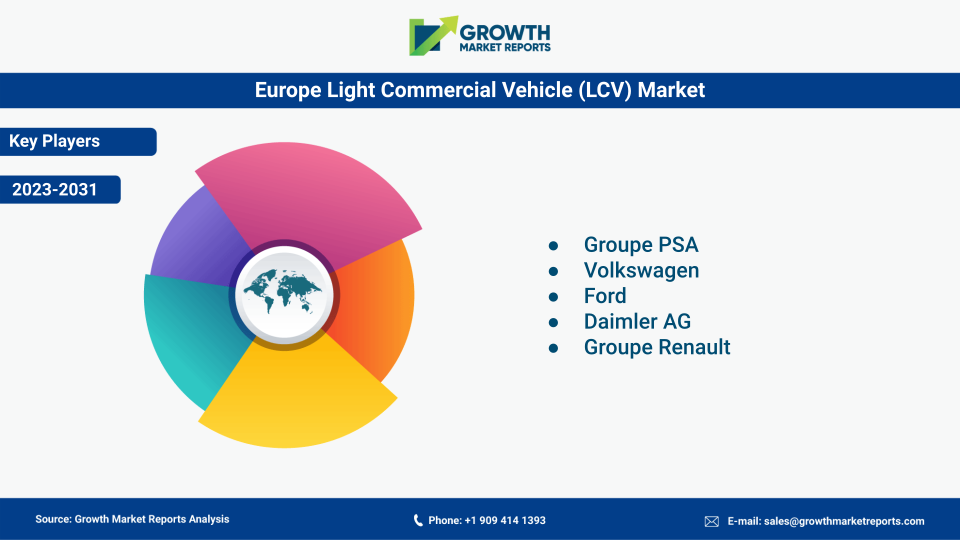
Key players competing in the Europe light commercial vehicle market are Groupe PSA; Volkswagen; Ford; Daimler AG; and Groupe Renault. The Europe light commercial vehicle (LCV) market is relatively concentrated, with a small number of active participants due to of the presence of large commercial vehicle manufacturers in the region.
Major companies include Ford Motor Company, Daimler AG (Mercedes-Benz), Toyota Motor Corporation, Nissan Motor Co., Ltd., Groupe PSA (Stellantis), Isuzu Motors Ltd., Volkswagen AG, Tata Motors Limited, General Motors Company, and Renault S.A.
The main fuel types are diesel, petrol, electric, and alternative fuels such as CNG, LPG, and hydrogen. Diesel remains dominant, but electric and alternative fuels are rapidly gaining traction.
Challenges include the high upfront cost of electric and hybrid vehicles, limited charging infrastructure in some regions, supply chain disruptions, regulatory complexities, and raw material price volatility.
Primary end-users include fleet operators (such as logistics and e-commerce companies), individual owners (small business owners and entrepreneurs), government agencies, and specialized service providers.
LCVs are widely used in logistics, construction, e-commerce, passenger transportation, emergency services, mobile workshops, and other specialized applications.
Electrification is a major trend, with increasing adoption of electric LCVs (e-LCVs) driven by stricter emission norms, government incentives, advancements in battery technology, and expanding charging infrastructure.
The LCV market includes pickup trucks, vans, mini trucks, and specialized vehicles such as chassis cabs and custom-built models for niche applications.
Asia Pacific leads the global LCV market, followed by North America and Europe. Asia Pacific's dominance is due to rapid urbanization, a large population, and a booming e-commerce sector.
Key growth drivers include the rapid expansion of e-commerce and last-mile delivery services, urbanization, the shift towards electric and sustainable vehicles, technological advancements, and regulatory changes.
The global Light Commercial Vehicle (LCV) market reached USD 670.5 billion in 2024 and is projected to grow at a CAGR of 5.7%, reaching approximately USD 1,099.3 billion by 2033.