Large Molecule Drug Substance CDMO Market Research Report 2033

Large Molecule Drug Substance CDMO Market Research Report 2033

Segments - by Service Type (Process Development, Manufacturing, Analytical and Quality Control, Fill-Finish, Others), by Molecule Type (Monoclonal Antibodies, Recombinant Proteins, Vaccines, Cell and Gene Therapies, Others), by End-User (Pharmaceutical Companies, Biotechnology Companies, Others), by Scale Of Operation (Clinical, Commercial)

https://growthmarketreports.com/raksha
Author : Raksha Sharma
https://growthmarketreports.com/Vaibhav
Fact-checked by : V. Chandola
https://growthmarketreports.com/Shruti
Editor : Shruti Bhat

Upcoming | Report ID :HC-6412 | 5.0 Rating | 68 Reviews | 260 Pages | Format : Docx PDF

Report Description


Large Molecule Drug Substance CDMO Market Outlook

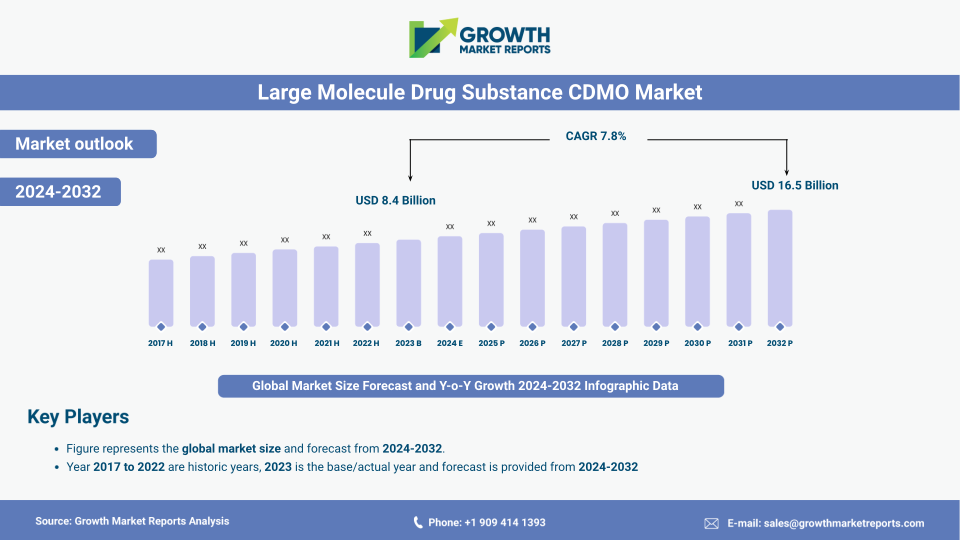
According to our latest research, the global Large Molecule Drug Substance CDMO market size reached USD 9.8 billion in 2024, driven by robust demand for biopharmaceutical outsourcing. The market is expected to expand at a strong CAGR of 9.7% from 2025 to 2033, reaching a forecasted value of USD 22.7 billion by 2033. This growth is fueled by the increasing complexity of biologics, rising investments in advanced therapies, and the need for specialized manufacturing capabilities among pharmaceutical and biotechnology companies worldwide.

One of the primary growth drivers for the Large Molecule Drug Substance CDMO market is the surging demand for biologics and biosimilars. The global pharmaceutical industry is witnessing a paradigm shift from small molecule drugs to large molecule biologics, such as monoclonal antibodies, recombinant proteins, and cell and gene therapies. These advanced therapeutics offer higher efficacy and specificity, particularly in the treatment of chronic and rare diseases. However, their development and manufacturing require sophisticated infrastructure, skilled workforce, and stringent quality control, which many pharmaceutical companies lack in-house. As a result, outsourcing to Contract Development and Manufacturing Organizations (CDMOs) has become a strategic imperative, enabling biopharma companies to accelerate product development, reduce capital expenditure, and access specialized expertise in large molecule drug substance production.

Another significant factor propelling the market is the increasing adoption of innovative manufacturing technologies and process development solutions. CDMOs are investing heavily in state-of-the-art facilities, single-use bioprocessing systems, and digital process management tools to enhance efficiency, scalability, and regulatory compliance. The shift towards modular and flexible manufacturing platforms enables rapid changeovers and supports the production of multiple large molecule modalities under one roof. Furthermore, the rising trend of personalized medicine and the emergence of advanced therapies such as cell and gene therapies are compelling CDMOs to expand their service offerings and capabilities. This technological evolution is not only improving the quality and yield of biologics but also reducing time-to-market, which is a critical success factor in the competitive biopharmaceutical landscape.

Regulatory support and favorable government initiatives are also contributing to the growth of the Large Molecule Drug Substance CDMO market. Authorities in major markets like the United States, Europe, and Asia Pacific are streamlining approval pathways for biologics and biosimilars, encouraging innovation, and incentivizing investments in biomanufacturing infrastructure. These measures are fostering a conducive environment for CDMOs to collaborate with pharmaceutical and biotechnology companies throughout the drug development lifecycle. Moreover, the increasing prevalence of chronic diseases, aging populations, and growing healthcare expenditure in emerging economies are expanding the addressable market for large molecule therapeutics, thereby driving the demand for specialized CDMO services.

Large Molecule Bioanalytical Technologies are playing an increasingly pivotal role in the biopharmaceutical industry, particularly in the context of large molecule drug development. These technologies are essential for the characterization and quantification of complex biologics, including monoclonal antibodies, recombinant proteins, and cell and gene therapies. As the demand for biologics continues to rise, the need for sophisticated bioanalytical tools and techniques has become more pronounced. CDMOs are investing in cutting-edge bioanalytical platforms to ensure accurate and reliable data, which is crucial for regulatory submissions and product approvals. The integration of advanced bioanalytical technologies is not only enhancing the quality and safety of biologics but also accelerating the drug development process, providing a competitive edge in the rapidly evolving biopharmaceutical landscape.

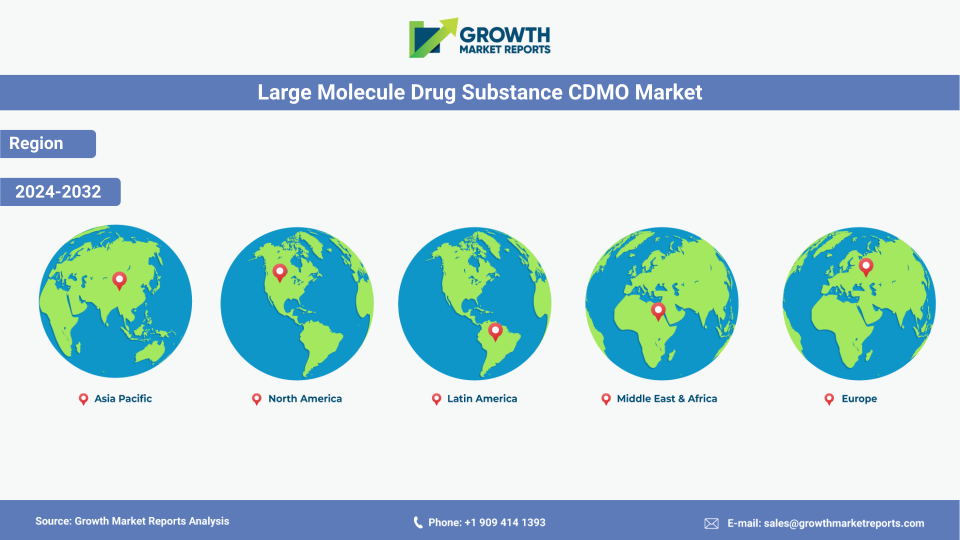
From a regional perspective, North America currently dominates the Large Molecule Drug Substance CDMO market, accounting for the largest revenue share in 2024. This leadership is attributed to the presence of major pharmaceutical and biotechnology companies, advanced healthcare infrastructure, and a strong innovation ecosystem. However, the Asia Pacific region is experiencing the fastest growth, fueled by rising investments in biomanufacturing, expanding clinical trial activity, and supportive government policies. Europe remains a significant market, benefiting from robust R&D activity and a well-established regulatory framework. Latin America and the Middle East & Africa are emerging as promising markets due to increasing healthcare investments and growing demand for affordable biologics. Each region presents unique opportunities and challenges, shaping the competitive dynamics of the global Large Molecule Drug Substance CDMO market.

Global Large Molecule Drug Substance CDMO  Industry Outlook

Service Type Analysis

The Service Type segment in the Large Molecule Drug Substance CDMO market is broadly categorized into Process Development, Manufacturing, Analytical and Quality Control, Fill-Finish, and Others. Process Development services are in high demand as biopharma companies increasingly seek to optimize upstream and downstream processes for large molecule therapeutics. CDMOs specializing in process development leverage advanced bioprocessing technologies, high-throughput screening, and digital twins to streamline cell line development, media optimization, and purification processes. This not only enhances yield and product quality but also ensures scalability and regulatory compliance. As the complexity of biologics continues to rise, process development services remain a critical differentiator for CDMOs, enabling clients to de-risk development programs and accelerate timelines to clinical and commercial milestones.

Manufacturing services represent the largest revenue segment, reflecting the core value proposition of Large Molecule Drug Substance CDMOs. The manufacturing of biologics, including monoclonal antibodies, recombinant proteins, and vaccines, requires state-of-the-art facilities, GMP compliance, and robust quality management systems. CDMOs are investing in capacity expansion, automation, and single-use technologies to accommodate the growing pipeline of large molecule drugs. The demand for flexible manufacturing solutions, such as multi-product facilities and modular cleanrooms, is on the rise, allowing CDMOs to efficiently manage variable batch sizes and rapidly switch between products. This flexibility is particularly important for clients developing advanced therapies or targeting niche indications, where production volumes can fluctuate significantly.

Analytical and Quality Control services are indispensable in the Large Molecule Drug Substance CDMO market, given the stringent regulatory requirements and complex nature of biologics. CDMOs offer a comprehensive suite of analytical testing, characterization, and quality assurance services, covering raw material testing, in-process controls, release testing, and stability studies. Advanced analytical techniques, such as mass spectrometry, chromatography, and bioassays, are employed to ensure product purity, potency, and safety. The integration of digital quality management systems and real-time data analytics is further enhancing the reliability and efficiency of quality control processes. These capabilities are critical for meeting global regulatory standards and ensuring the consistent supply of high-quality biologics to the market.

Fill-Finish services constitute another vital segment, encompassing the aseptic filling, packaging, and labeling of large molecule drug substances. The fill-finish process is highly sensitive, requiring precise control over environmental conditions, container closure integrity, and product sterility. CDMOs with advanced fill-finish capabilities are in high demand, especially for biologics that require specialized handling, such as lyophilized formulations or cell-based therapies. The trend towards personalized medicine and small-batch production is driving the adoption of flexible, automated fill-finish lines that can accommodate varying batch sizes and container types. This segment is expected to witness robust growth as the pipeline of large molecule therapeutics continues to expand.

The Others category includes ancillary services such as regulatory consulting, supply chain management, and technology transfer support. As the biopharmaceutical landscape becomes increasingly complex, clients are seeking end-to-end solutions from CDMOs, encompassing everything from early-stage development to commercial launch. This integrated approach not only streamlines project management but also reduces risk and accelerates time-to-market. CDMOs that can offer a comprehensive suite of services, backed by deep technical expertise and global regulatory knowledge, are well-positioned to capture a larger share of the Large Molecule Drug Substance CDMO market.

Report Scope

Attributes Details
Report Title Large Molecule Drug Substance CDMO Market Research Report 2033
By Service Type Process Development, Manufacturing, Analytical and Quality Control, Fill-Finish, Others
By Molecule Type Monoclonal Antibodies, Recombinant Proteins, Vaccines, Cell and Gene Therapies, Others
By End-User Pharmaceutical Companies, Biotechnology Companies, Others
By Scale Of Operation Clinical, Commercial
Regions Covered North America, Europe, APAC, Latin America, MEA
Base Year 2024
Historic Data 2018-2023
Forecast Period 2025-2033
Number of Pages 260
Number of Tables & Figures 383
Customization Available Yes, the report can be customized as per your need.

Molecule Type Analysis

The Molecule Type segment is a critical determinant of service demand in the Large Molecule Drug Substance CDMO market. Monoclonal Antibodies (mAbs) dominate this segment, reflecting their widespread adoption in the treatment of cancer, autoimmune disorders, and infectious diseases. The complexity of mAb development and manufacturing, including cell line engineering, upstream and downstream processing, and stringent quality control, drives strong demand for specialized CDMO services. CDMOs with expertise in mAb production are leveraging advanced bioprocessing technologies, such as perfusion systems and high-throughput analytics, to enhance yield, purity, and scalability. As the pipeline of biosimilar mAbs expands, driven by patent expirations and cost pressures, the demand for efficient and cost-effective CDMO solutions is expected to grow further.

Recombinant Proteins represent another significant sub-segment, encompassing a wide range of therapeutic proteins used in the treatment of metabolic disorders, hemophilia, and other chronic diseases. The production of recombinant proteins involves complex expression systems, purification processes, and analytical characterization. CDMOs are investing in advanced microbial and mammalian expression platforms, continuous processing, and integrated analytics to meet the diverse needs of clients. The trend towards next-generation biologics, such as fusion proteins and antibody-drug conjugates, is further expanding the scope of CDMO services in this segment. As regulatory agencies tighten quality and safety requirements, the role of CDMOs in ensuring compliance and product consistency becomes even more critical.

The Vaccines sub-segment has witnessed unprecedented growth in recent years, driven by the global response to emerging infectious diseases, such as COVID-19. CDMOs have played a pivotal role in scaling up vaccine production, leveraging their expertise in cell culture, viral vector manufacturing, and fill-finish operations. The ongoing demand for pandemic preparedness, seasonal vaccines, and novel vaccine platforms, such as mRNA and viral vectors, is expected to sustain strong growth in this segment. CDMOs with flexible manufacturing capabilities and global supply chain networks are particularly well-positioned to support large-scale vaccine production and distribution.

Cell and Gene Therapies represent the most dynamic and rapidly growing sub-segment within the Molecule Type category. These advanced therapies offer transformative potential for the treatment of genetic disorders, cancer, and rare diseases. However, their development and manufacturing pose unique challenges, including complex cell culture processes, viral vector production, and stringent regulatory oversight. CDMOs specializing in cell and gene therapy services are investing in dedicated GMP facilities, automation, and closed-system processing to address these challenges. The increasing number of clinical trials and regulatory approvals for cell and gene therapies is driving robust demand for specialized CDMO services, with a focus on scalability, process optimization, and regulatory compliance.

The Others category includes novel large molecule modalities, such as peptides, oligonucleotides, and antibody fragments. As the biopharmaceutical industry continues to innovate, the demand for CDMO services tailored to these emerging modalities is expected to rise. CDMOs that can offer flexible, technology-agnostic solutions and adapt to evolving client needs will be well-positioned to capture growth opportunities in this segment.

End-User Analysis

The End-User segment in the Large Molecule Drug Substance CDMO market is primarily composed of Pharmaceutical Companies, Biotechnology Companies, and Others. Pharmaceutical companies, particularly large multinational firms, are increasingly outsourcing large molecule drug substance development and manufacturing to CDMOs to focus on core competencies such as R&D, marketing, and commercialization. This strategic shift is driven by the need to access specialized expertise, reduce capital investment in manufacturing infrastructure, and accelerate time-to-market. Pharmaceutical companies are also leveraging CDMO partnerships to manage portfolio complexity, address capacity constraints, and mitigate supply chain risks, particularly in the wake of global disruptions such as the COVID-19 pandemic.

Biotechnology Companies, including both established players and emerging startups, represent a significant and growing end-user segment for Large Molecule Drug Substance CDMOs. These companies often lack the resources and infrastructure to support large-scale manufacturing and regulatory compliance. By partnering with CDMOs, biotechnology firms can focus on early-stage discovery and clinical development, while leveraging external expertise for process development, scale-up, and commercial production. The increasing number of biotech startups, fueled by venture capital investments and scientific breakthroughs in biologics, is driving robust demand for flexible and scalable CDMO solutions. CDMOs that can offer tailored services, rapid project turnaround, and regulatory support are particularly attractive to this segment.

The Others category includes academic research institutions, government agencies, and non-profit organizations involved in large molecule drug development. These entities often collaborate with CDMOs to access specialized manufacturing capabilities, technology transfer expertise, and regulatory support for translational research and public health initiatives. The growing emphasis on public-private partnerships, particularly in areas such as pandemic preparedness and rare disease research, is expanding the role of CDMOs in supporting a diverse range of end-users. CDMOs that can demonstrate flexibility, technical excellence, and a commitment to quality are well-positioned to capture opportunities in this segment.

Across all end-user categories, the trend towards integrated, end-to-end CDMO solutions is becoming increasingly pronounced. Clients are seeking partners that can support the entire drug development lifecycle, from early-stage process development to commercial manufacturing and supply chain management. This integrated approach not only streamlines project execution but also enhances risk management, regulatory compliance, and overall project success. CDMOs that can offer a comprehensive suite of services, backed by deep scientific and regulatory expertise, are emerging as preferred partners for pharmaceutical, biotechnology, and other end-users in the Large Molecule Drug Substance CDMO market.

Scale of Operation Analysis

The Scale of Operation segment in the Large Molecule Drug Substance CDMO market is divided into Clinical and Commercial scales, reflecting the distinct needs of clients at different stages of the drug development lifecycle. Clinical-scale CDMO services are focused on supporting early-stage development, process optimization, and the production of small batches for preclinical and clinical trials. These services require flexibility, rapid turnaround, and the ability to adapt to evolving project requirements. CDMOs specializing in clinical-scale operations are investing in modular facilities, single-use technologies, and digital process management tools to enhance efficiency and reduce time-to-clinic. The increasing number of clinical trials for large molecule therapeutics, including biosimilars and advanced therapies, is driving strong demand for clinical-scale CDMO services.

Commercial-scale CDMO services are geared towards large-scale, GMP-compliant manufacturing of approved biologics for global distribution. This segment requires significant investments in infrastructure, quality management systems, and regulatory compliance. CDMOs with commercial-scale capabilities are expanding their manufacturing footprints, adopting automation and digitalization, and building robust supply chain networks to meet the growing demand for large molecule drugs. The trend towards blockbuster biologics, such as monoclonal antibodies and vaccines, is driving capacity expansion and innovation in commercial-scale manufacturing. CDMOs that can offer reliable, scalable, and cost-effective commercial manufacturing solutions are becoming strategic partners for pharmaceutical and biotechnology companies worldwide.

The transition from clinical to commercial manufacturing presents unique challenges, including technology transfer, process scale-up, and regulatory submissions. CDMOs that can seamlessly manage this transition, leveraging integrated project teams and standardized processes, are highly valued by clients. The ability to support late-stage development, regulatory filings, and commercial launch under one roof not only accelerates time-to-market but also reduces risk and ensures product quality. As the pipeline of large molecule therapeutics continues to grow, the demand for CDMOs with end-to-end capabilities across both clinical and commercial scales is expected to increase.

Another important trend in the Scale of Operation segment is the growing demand for flexible manufacturing solutions that can accommodate variable batch sizes, multi-product portfolios, and personalized medicine requirements. CDMOs are investing in modular facilities, single-use systems, and digital process control to enhance operational agility and responsiveness. This flexibility is particularly important for clients developing advanced therapies, rare disease treatments, or niche biologics, where production volumes can fluctuate significantly. CDMOs that can offer scalable, technology-agnostic solutions are well-positioned to capture growth opportunities in both clinical and commercial segments.

Opportunities & Threats

The Large Molecule Drug Substance CDMO market presents significant opportunities for growth and innovation, driven by the expanding pipeline of biologics, biosimilars, and advanced therapies. The increasing complexity of large molecule drugs, coupled with the need for specialized manufacturing capabilities, is compelling pharmaceutical and biotechnology companies to seek strategic partnerships with CDMOs. This trend is creating opportunities for CDMOs to expand their service offerings, invest in advanced technologies, and differentiate themselves through technical expertise and regulatory compliance. The emergence of new therapeutic modalities, such as cell and gene therapies, mRNA vaccines, and antibody-drug conjugates, is further expanding the addressable market for CDMO services. CDMOs that can demonstrate flexibility, innovation, and a commitment to quality are well-positioned to capture a larger share of this dynamic market.

Another major opportunity lies in the growing demand for integrated, end-to-end CDMO solutions. Clients are increasingly seeking partners that can support the entire drug development lifecycle, from early-stage process development to commercial manufacturing and supply chain management. This integrated approach not only streamlines project execution but also enhances risk management, regulatory compliance, and overall project success. CDMOs that can offer a comprehensive suite of services, backed by deep scientific and regulatory expertise, are emerging as preferred partners for pharmaceutical, biotechnology, and other end-users. The trend towards digitalization, automation, and data-driven decision-making is also creating opportunities for CDMOs to enhance operational efficiency, reduce costs, and improve product quality.

Despite these opportunities, the Large Molecule Drug Substance CDMO market faces several threats and restrainers. One of the primary challenges is the high capital investment required for facility expansion, technology adoption, and regulatory compliance. The complex and evolving regulatory landscape for biologics and advanced therapies poses significant risks, particularly for CDMOs operating in multiple geographies. Additionally, the market is becoming increasingly competitive, with new entrants and established players vying for market share. Price pressures, supply chain disruptions, and talent shortages are further exacerbating these challenges. CDMOs must continuously invest in innovation, quality management, and workforce development to remain competitive and mitigate these risks.

Regional Outlook

North America remains the largest regional market for Large Molecule Drug Substance CDMO services, accounting for approximately USD 4.2 billion in 2024. The regionÂ’s dominance is underpinned by the presence of leading pharmaceutical and biotechnology companies, a robust innovation ecosystem, and advanced manufacturing infrastructure. The United States, in particular, is a global hub for biopharmaceutical R&D and manufacturing, supported by favorable regulatory policies, strong intellectual property protection, and a skilled workforce. The North American market is expected to maintain steady growth, driven by ongoing investments in biologics, biosimilars, and advanced therapies. The regionÂ’s CDMOs are also at the forefront of adopting new technologies, such as single-use bioprocessing and digital manufacturing, to enhance efficiency and scalability.

Europe is the second-largest market, with a value of approximately USD 3.1 billion in 2024. The region benefits from a well-established regulatory framework, a strong tradition of pharmaceutical innovation, and active government support for biomanufacturing. Key countries such as Germany, Switzerland, and the United Kingdom are home to major CDMOs and biopharmaceutical companies, driving demand for large molecule drug substance services. The European market is characterized by a focus on quality, compliance, and sustainability, with CDMOs investing in green manufacturing practices and digital transformation. The region is expected to grow at a healthy CAGR of 8.9% through 2033, supported by increasing investments in advanced therapies and personalized medicine.

The Asia Pacific region is emerging as the fastest-growing market for Large Molecule Drug Substance CDMO services, with a value of USD 1.8 billion in 2024. The regionÂ’s growth is fueled by rising investments in biomanufacturing, expanding clinical trial activity, and supportive government policies. Countries such as China, India, South Korea, and Singapore are investing heavily in biopharmaceutical infrastructure, talent development, and regulatory harmonization. The Asia Pacific market is expected to outpace other regions in terms of CAGR, driven by the increasing demand for affordable biologics, biosimilars, and advanced therapies. Latin America and the Middle East & Africa are smaller but rapidly growing markets, collectively accounting for less than USD 1 billion in 2024. These regions offer significant long-term potential, driven by rising healthcare investments, growing disease burden, and increasing demand for high-quality biologics.

Large Molecule Drug Substance CDMO  Market Statistics

Competitor Outlook

The competitive landscape of the Large Molecule Drug Substance CDMO market is characterized by intense rivalry, ongoing consolidation, and a strong focus on innovation and quality. Leading CDMOs are differentiating themselves through investments in advanced manufacturing technologies, expansion of service portfolios, and strategic partnerships with pharmaceutical and biotechnology companies. The market is witnessing a wave of mergers and acquisitions, as players seek to enhance their capabilities, expand geographic reach, and access new client segments. The ability to offer integrated, end-to-end solutions, backed by deep scientific and regulatory expertise, is emerging as a key competitive advantage in this dynamic market.

Innovation is a critical success factor in the Large Molecule Drug Substance CDMO market, with leading players investing in digitalization, automation, and next-generation bioprocessing technologies. The adoption of single-use systems, continuous processing, and real-time analytics is enabling CDMOs to enhance operational efficiency, reduce costs, and improve product quality. The trend towards personalized medicine and advanced therapies is driving demand for flexible, scalable manufacturing solutions, compelling CDMOs to invest in modular facilities and technology-agnostic platforms. Companies that can demonstrate a commitment to quality, regulatory compliance, and client-centricity are well-positioned to capture a larger share of the market.

Strategic partnerships and collaborations are playing an increasingly important role in the competitive dynamics of the Large Molecule Drug Substance CDMO market. Pharmaceutical and biotechnology companies are seeking long-term partnerships with CDMOs that can support their evolving needs, from early-stage development to commercial manufacturing and global supply chain management. CDMOs are responding by expanding their service offerings, investing in talent development, and building robust project management capabilities. The ability to offer tailored solutions, rapid project turnaround, and seamless technology transfer is becoming a key differentiator for leading CDMOs.

Some of the major companies in the Large Molecule Drug Substance CDMO market include Lonza Group, Samsung Biologics, Catalent Inc., Fujifilm Diosynth Biotechnologies, Boehringer Ingelheim BioXcellence, WuXi Biologics, Thermo Fisher Scientific (Patheon), AGC Biologics, and AbbVie Contract Manufacturing. Lonza Group is recognized for its comprehensive service portfolio, global manufacturing network, and expertise in biologics and advanced therapies. Samsung Biologics has emerged as a global leader in large-scale biomanufacturing, offering end-to-end solutions and state-of-the-art facilities. Catalent Inc. is known for its focus on innovation, digitalization, and client-centric service delivery, while Fujifilm Diosynth Biotechnologies is a pioneer in advanced bioprocessing and cell and gene therapy manufacturing.

Boehringer Ingelheim BioXcellence and WuXi Biologics are leading players in the global CDMO market, with a strong focus on quality, compliance, and client partnerships. Thermo Fisher Scientific (Patheon) leverages its extensive scientific expertise and global footprint to deliver integrated CDMO solutions across the drug development lifecycle. AGC Biologics and AbbVie Contract Manufacturing are recognized for their technical excellence, regulatory expertise, and commitment to innovation. These companies, along with a growing number of regional and specialty CDMOs, are shaping the future of the Large Molecule Drug Substance CDMO market through continuous investment, collaboration, and a relentless focus on quality and client success.

Key Players

  • Lonza
  • Samsung Biologics
  • Boehringer Ingelheim BioXcellence
  • WuXi Biologics
  • Catalent
  • Fujifilm Diosynth Biotechnologies
  • Thermo Fisher Scientific (Patheon)
  • Sartorius Stedim BioOutsource
  • AGC Biologics
  • AbbVie Contract Manufacturing
  • Baxter BioPharma Solutions
  • Rentschler Biopharma
  • KBI Biopharma
  • JHL Biotech
  • Cytiva (formerly GE Healthcare Life Sciences)
  • Recipharm
  • Eurofins CDMO
  • Almac Group
  • Syngene International
  • CordenPharma
Large Molecule Drug Substance CDMO  Market Overview

Segments

The Large Molecule Drug Substance CDMO market has been segmented on the basis of

Service Type

  • Process Development
  • Manufacturing
  • Analytical and Quality Control
  • Fill-Finish
  • Others

Molecule Type

  • Monoclonal Antibodies
  • Recombinant Proteins
  • Vaccines
  • Cell and Gene Therapies
  • Others

End-User

  • Pharmaceutical Companies
  • Biotechnology Companies
  • Others

Scale Of Operation

  • Clinical
  • Commercial

Competitive Landscape

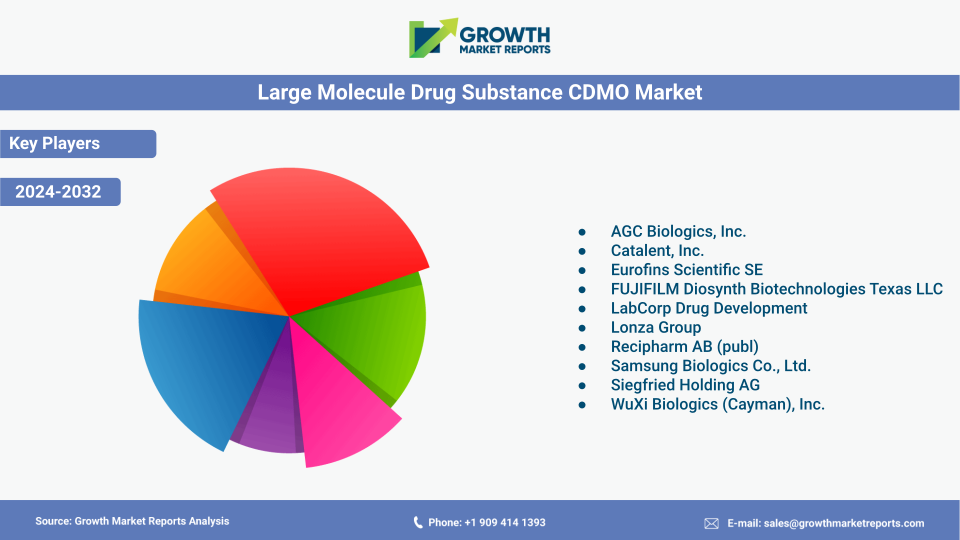
Key players competing in the global large molecule drug substance CDMO market are

AGC Biologics, Inc.; Catalent, Inc.; Eurofins Scientific SE; FUJIFILM Diosynth Biotechnologies Texas LLC; LabCorp Drug Development; Lonza Group; Recipharm AB (publ); Samsung Biologics Co., Ltd.; Siegfried Holding AG; and WuXi Biologics (Cayman), Inc.

These companies adopted development strategies including mergers, acquisitions, partnerships, collaboration, product launches, and production expansion to expand their consumer base globally. For instance,

  • In October 2022, WuXi partnered with Toregem BioPharma, a Japan-based biotechnology company, primarily to supply medicinal substances for the development of dental regeneration medications. As part of the partnership, an antibody called TRG035 is expected to be developed to treat congenital dementia. The partnership aligns with WuXi's mission to support international partners in creating ground-breaking biologics solutions for patients across the globe.

  • In October 2022, RoosterBio, a US-based biotechnology company, and FUJIFILM Diosynth Biotechnologies partnered specifically to supply stem cell products. The partnership includes cell therapies and GMP exosome production. Through the partnership, FUJIFILM is able to provide its clients full-service CDMO solutions for cell therapy.

  • In September 2021, Twist Bioscience, a synthetic biology company in the US, and Boehringer collaborated. By combining the experience of Twist Bioscience in drug discovery and development with its ability to create strong, diverse therapeutic antibodies, Boehringer is expected to be well equipped to serve its customers and patients as a result of this agreement.

    Large Molecule Drug Substance CDMO Market Key Players

Frequently Asked Questions

Major players include Lonza Group, Samsung Biologics, Boehringer Ingelheim BioXcellence, WuXi Biologics, Catalent, Fujifilm Diosynth Biotechnologies, Thermo Fisher Scientific (Patheon), AGC Biologics, AbbVie Contract Manufacturing, and others.

Notable trends include the shift towards integrated, end-to-end CDMO solutions, adoption of digitalization and automation, demand for flexible and scalable manufacturing, and the rise of advanced therapies such as cell and gene therapies.

Key challenges include high capital investment requirements, complex and evolving regulatory landscapes, increasing competition, price pressures, supply chain disruptions, and talent shortages.

Primary end-users are pharmaceutical companies, biotechnology companies, academic research institutions, government agencies, and non-profit organizations involved in drug development.

The most common molecule types include monoclonal antibodies, recombinant proteins, vaccines, cell and gene therapies, and other novel large molecule modalities such as peptides and oligonucleotides.

CDMOs offer a range of services including process development, manufacturing, analytical and quality control, fill-finish, regulatory consulting, supply chain management, and technology transfer support.

North America currently dominates the market, followed by Europe and the Asia Pacific region. Asia Pacific is the fastest-growing region due to increased biomanufacturing investments and supportive government policies.

Key growth drivers include the rising demand for biologics and biosimilars, increasing complexity of biologic drugs, investments in advanced therapies, adoption of innovative manufacturing technologies, and favorable regulatory support.

The global Large Molecule Drug Substance CDMO market is expected to grow from USD 9.8 billion in 2024 to USD 22.7 billion by 2033, at a CAGR of 9.7% during the forecast period.

The Large Molecule Drug Substance CDMO market refers to the industry of Contract Development and Manufacturing Organizations (CDMOs) that provide specialized services for the development and manufacturing of large molecule biologic drugs, such as monoclonal antibodies, recombinant proteins, vaccines, and cell and gene therapies.

Table Of Content

Chapter 1 Executive Summary
Chapter 2 Assumptions and Acronyms Used
Chapter 3 Research Methodology
Chapter 4 Large Molecule Drug Substance CDMO  Market Overview
   4.1 Introduction
      4.1.1 Market Taxonomy
      4.1.2 Market Definition
      4.1.3 Macro-Economic Factors Impacting the Market Growth
   4.2 Large Molecule Drug Substance CDMO  Market Dynamics
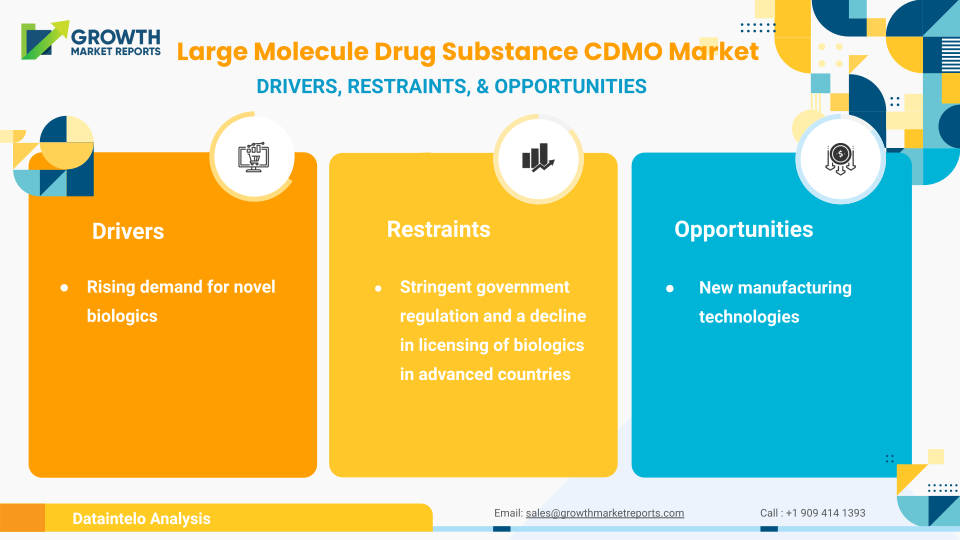
      4.2.1 Market Drivers
      4.2.2 Market Restraints
      4.2.3 Market Opportunity
   4.3 Large Molecule Drug Substance CDMO  Market - Supply Chain Analysis
      4.3.1 List of Key Suppliers
      4.3.2 List of Key Distributors
      4.3.3 List of Key Consumers
   4.4 Key Forces Shaping the Large Molecule Drug Substance CDMO  Market
      4.4.1 Bargaining Power of Suppliers
      4.4.2 Bargaining Power of Buyers
      4.4.3 Threat of Substitution
      4.4.4 Threat of New Entrants
      4.4.5 Competitive Rivalry
   4.5 Global Large Molecule Drug Substance CDMO  Market Size & Forecast, 2023-2032
      4.5.1 Large Molecule Drug Substance CDMO  Market Size and Y-o-Y Growth
      4.5.2 Large Molecule Drug Substance CDMO  Market Absolute $ Opportunity

Chapter 5 Global Large Molecule Drug Substance CDMO  Market Analysis and Forecast By Service Type
   5.1 Introduction
      5.1.1 Key Market Trends & Growth Opportunities By Service Type
      5.1.2 Basis Point Share (BPS) Analysis By Service Type
      5.1.3 Absolute $ Opportunity Assessment By Service Type
   5.2 Large Molecule Drug Substance CDMO  Market Size Forecast By Service Type
      5.2.1 Process Development
      5.2.2 Manufacturing
      5.2.3 Analytical and Quality Control
      5.2.4 Fill-Finish
      5.2.5 Others
   5.3 Market Attractiveness Analysis By Service Type

Chapter 6 Global Large Molecule Drug Substance CDMO  Market Analysis and Forecast By Molecule Type
   6.1 Introduction
      6.1.1 Key Market Trends & Growth Opportunities By Molecule Type
      6.1.2 Basis Point Share (BPS) Analysis By Molecule Type
      6.1.3 Absolute $ Opportunity Assessment By Molecule Type
   6.2 Large Molecule Drug Substance CDMO  Market Size Forecast By Molecule Type
      6.2.1 Monoclonal Antibodies
      6.2.2 Recombinant Proteins
      6.2.3 Vaccines
      6.2.4 Cell and Gene Therapies
      6.2.5 Others
   6.3 Market Attractiveness Analysis By Molecule Type

Chapter 7 Global Large Molecule Drug Substance CDMO  Market Analysis and Forecast By End-User
   7.1 Introduction
      7.1.1 Key Market Trends & Growth Opportunities By End-User
      7.1.2 Basis Point Share (BPS) Analysis By End-User
      7.1.3 Absolute $ Opportunity Assessment By End-User
   7.2 Large Molecule Drug Substance CDMO  Market Size Forecast By End-User
      7.2.1 Pharmaceutical Companies
      7.2.2 Biotechnology Companies
      7.2.3 Others
   7.3 Market Attractiveness Analysis By End-User

Chapter 8 Global Large Molecule Drug Substance CDMO  Market Analysis and Forecast By Scale Of Operation
   8.1 Introduction
      8.1.1 Key Market Trends & Growth Opportunities By Scale Of Operation
      8.1.2 Basis Point Share (BPS) Analysis By Scale Of Operation
      8.1.3 Absolute $ Opportunity Assessment By Scale Of Operation
   8.2 Large Molecule Drug Substance CDMO  Market Size Forecast By Scale Of Operation
      8.2.1 Clinical
      8.2.2 Commercial
   8.3 Market Attractiveness Analysis By Scale Of Operation

Chapter 9 Global Large Molecule Drug Substance CDMO  Market Analysis and Forecast by Region
   9.1 Introduction
      9.1.1 Key Market Trends & Growth Opportunities By Region
      9.1.2 Basis Point Share (BPS) Analysis By Region
      9.1.3 Absolute $ Opportunity Assessment By Region
   9.2 Large Molecule Drug Substance CDMO  Market Size Forecast By Region
      9.2.1 North America
      9.2.2 Europe
      9.2.3 Asia Pacific
      9.2.4 Latin America
      9.2.5 Middle East & Africa (MEA)
   9.3 Market Attractiveness Analysis By Region

Chapter 10 Coronavirus Disease (COVID-19) Impact 
   10.1 Introduction 
   10.2 Current & Future Impact Analysis 
   10.3 Economic Impact Analysis 
   10.4 Government Policies 
   10.5 Investment Scenario

Chapter 11 North America Large Molecule Drug Substance CDMO  Analysis and Forecast
   11.1 Introduction
   11.2 North America Large Molecule Drug Substance CDMO  Market Size Forecast by Country
      11.2.1 U.S.
      11.2.2 Canada
   11.3 Basis Point Share (BPS) Analysis by Country
   11.4 Absolute $ Opportunity Assessment by Country
   11.5 Market Attractiveness Analysis by Country
   11.6 North America Large Molecule Drug Substance CDMO  Market Size Forecast By Service Type
      11.6.1 Process Development
      11.6.2 Manufacturing
      11.6.3 Analytical and Quality Control
      11.6.4 Fill-Finish
      11.6.5 Others
   11.7 Basis Point Share (BPS) Analysis By Service Type 
   11.8 Absolute $ Opportunity Assessment By Service Type 
   11.9 Market Attractiveness Analysis By Service Type
   11.10 North America Large Molecule Drug Substance CDMO  Market Size Forecast By Molecule Type
      11.10.1 Monoclonal Antibodies
      11.10.2 Recombinant Proteins
      11.10.3 Vaccines
      11.10.4 Cell and Gene Therapies
      11.10.5 Others
   11.11 Basis Point Share (BPS) Analysis By Molecule Type 
   11.12 Absolute $ Opportunity Assessment By Molecule Type 
   11.13 Market Attractiveness Analysis By Molecule Type
   11.14 North America Large Molecule Drug Substance CDMO  Market Size Forecast By End-User
      11.14.1 Pharmaceutical Companies
      11.14.2 Biotechnology Companies
      11.14.3 Others
   11.15 Basis Point Share (BPS) Analysis By End-User 
   11.16 Absolute $ Opportunity Assessment By End-User 
   11.17 Market Attractiveness Analysis By End-User
   11.18 North America Large Molecule Drug Substance CDMO  Market Size Forecast By Scale Of Operation
      11.18.1 Clinical
      11.18.2 Commercial
   11.19 Basis Point Share (BPS) Analysis By Scale Of Operation 
   11.20 Absolute $ Opportunity Assessment By Scale Of Operation 
   11.21 Market Attractiveness Analysis By Scale Of Operation

Chapter 12 Europe Large Molecule Drug Substance CDMO  Analysis and Forecast
   12.1 Introduction
   12.2 Europe Large Molecule Drug Substance CDMO  Market Size Forecast by Country
      12.2.1 Germany
      12.2.2 France
      12.2.3 Italy
      12.2.4 U.K.
      12.2.5 Spain
      12.2.6 Russia
      12.2.7 Rest of Europe
   12.3 Basis Point Share (BPS) Analysis by Country
   12.4 Absolute $ Opportunity Assessment by Country
   12.5 Market Attractiveness Analysis by Country
   12.6 Europe Large Molecule Drug Substance CDMO  Market Size Forecast By Service Type
      12.6.1 Process Development
      12.6.2 Manufacturing
      12.6.3 Analytical and Quality Control
      12.6.4 Fill-Finish
      12.6.5 Others
   12.7 Basis Point Share (BPS) Analysis By Service Type 
   12.8 Absolute $ Opportunity Assessment By Service Type 
   12.9 Market Attractiveness Analysis By Service Type
   12.10 Europe Large Molecule Drug Substance CDMO  Market Size Forecast By Molecule Type
      12.10.1 Monoclonal Antibodies
      12.10.2 Recombinant Proteins
      12.10.3 Vaccines
      12.10.4 Cell and Gene Therapies
      12.10.5 Others
   12.11 Basis Point Share (BPS) Analysis By Molecule Type 
   12.12 Absolute $ Opportunity Assessment By Molecule Type 
   12.13 Market Attractiveness Analysis By Molecule Type
   12.14 Europe Large Molecule Drug Substance CDMO  Market Size Forecast By End-User
      12.14.1 Pharmaceutical Companies
      12.14.2 Biotechnology Companies
      12.14.3 Others
   12.15 Basis Point Share (BPS) Analysis By End-User 
   12.16 Absolute $ Opportunity Assessment By End-User 
   12.17 Market Attractiveness Analysis By End-User
   12.18 Europe Large Molecule Drug Substance CDMO  Market Size Forecast By Scale Of Operation
      12.18.1 Clinical
      12.18.2 Commercial
   12.19 Basis Point Share (BPS) Analysis By Scale Of Operation 
   12.20 Absolute $ Opportunity Assessment By Scale Of Operation 
   12.21 Market Attractiveness Analysis By Scale Of Operation

Chapter 13 Asia Pacific Large Molecule Drug Substance CDMO  Analysis and Forecast
   13.1 Introduction
   13.2 Asia Pacific Large Molecule Drug Substance CDMO  Market Size Forecast by Country
      13.2.1 China
      13.2.2 Japan
      13.2.3 South Korea
      13.2.4 India
      13.2.5 Australia
      13.2.6 South East Asia (SEA)
      13.2.7 Rest of Asia Pacific (APAC)
   13.3 Basis Point Share (BPS) Analysis by Country
   13.4 Absolute $ Opportunity Assessment by Country
   13.5 Market Attractiveness Analysis by Country
   13.6 Asia Pacific Large Molecule Drug Substance CDMO  Market Size Forecast By Service Type
      13.6.1 Process Development
      13.6.2 Manufacturing
      13.6.3 Analytical and Quality Control
      13.6.4 Fill-Finish
      13.6.5 Others
   13.7 Basis Point Share (BPS) Analysis By Service Type 
   13.8 Absolute $ Opportunity Assessment By Service Type 
   13.9 Market Attractiveness Analysis By Service Type
   13.10 Asia Pacific Large Molecule Drug Substance CDMO  Market Size Forecast By Molecule Type
      13.10.1 Monoclonal Antibodies
      13.10.2 Recombinant Proteins
      13.10.3 Vaccines
      13.10.4 Cell and Gene Therapies
      13.10.5 Others
   13.11 Basis Point Share (BPS) Analysis By Molecule Type 
   13.12 Absolute $ Opportunity Assessment By Molecule Type 
   13.13 Market Attractiveness Analysis By Molecule Type
   13.14 Asia Pacific Large Molecule Drug Substance CDMO  Market Size Forecast By End-User
      13.14.1 Pharmaceutical Companies
      13.14.2 Biotechnology Companies
      13.14.3 Others
   13.15 Basis Point Share (BPS) Analysis By End-User 
   13.16 Absolute $ Opportunity Assessment By End-User 
   13.17 Market Attractiveness Analysis By End-User
   13.18 Asia Pacific Large Molecule Drug Substance CDMO  Market Size Forecast By Scale Of Operation
      13.18.1 Clinical
      13.18.2 Commercial
   13.19 Basis Point Share (BPS) Analysis By Scale Of Operation 
   13.20 Absolute $ Opportunity Assessment By Scale Of Operation 
   13.21 Market Attractiveness Analysis By Scale Of Operation

Chapter 14 Latin America Large Molecule Drug Substance CDMO  Analysis and Forecast
   14.1 Introduction
   14.2 Latin America Large Molecule Drug Substance CDMO  Market Size Forecast by Country
      14.2.1 Brazil
      14.2.2 Mexico
      14.2.3 Rest of Latin America (LATAM)
   14.3 Basis Point Share (BPS) Analysis by Country
   14.4 Absolute $ Opportunity Assessment by Country
   14.5 Market Attractiveness Analysis by Country
   14.6 Latin America Large Molecule Drug Substance CDMO  Market Size Forecast By Service Type
      14.6.1 Process Development
      14.6.2 Manufacturing
      14.6.3 Analytical and Quality Control
      14.6.4 Fill-Finish
      14.6.5 Others
   14.7 Basis Point Share (BPS) Analysis By Service Type 
   14.8 Absolute $ Opportunity Assessment By Service Type 
   14.9 Market Attractiveness Analysis By Service Type
   14.10 Latin America Large Molecule Drug Substance CDMO  Market Size Forecast By Molecule Type
      14.10.1 Monoclonal Antibodies
      14.10.2 Recombinant Proteins
      14.10.3 Vaccines
      14.10.4 Cell and Gene Therapies
      14.10.5 Others
   14.11 Basis Point Share (BPS) Analysis By Molecule Type 
   14.12 Absolute $ Opportunity Assessment By Molecule Type 
   14.13 Market Attractiveness Analysis By Molecule Type
   14.14 Latin America Large Molecule Drug Substance CDMO  Market Size Forecast By End-User
      14.14.1 Pharmaceutical Companies
      14.14.2 Biotechnology Companies
      14.14.3 Others
   14.15 Basis Point Share (BPS) Analysis By End-User 
   14.16 Absolute $ Opportunity Assessment By End-User 
   14.17 Market Attractiveness Analysis By End-User
   14.18 Latin America Large Molecule Drug Substance CDMO  Market Size Forecast By Scale Of Operation
      14.18.1 Clinical
      14.18.2 Commercial
   14.19 Basis Point Share (BPS) Analysis By Scale Of Operation 
   14.20 Absolute $ Opportunity Assessment By Scale Of Operation 
   14.21 Market Attractiveness Analysis By Scale Of Operation

Chapter 15 Middle East & Africa (MEA) Large Molecule Drug Substance CDMO  Analysis and Forecast
   15.1 Introduction
   15.2 Middle East & Africa (MEA) Large Molecule Drug Substance CDMO  Market Size Forecast by Country
      15.2.1 Saudi Arabia
      15.2.2 South Africa
      15.2.3 UAE
      15.2.4 Rest of Middle East & Africa (MEA)
   15.3 Basis Point Share (BPS) Analysis by Country
   15.4 Absolute $ Opportunity Assessment by Country
   15.5 Market Attractiveness Analysis by Country
   15.6 Middle East & Africa (MEA) Large Molecule Drug Substance CDMO  Market Size Forecast By Service Type
      15.6.1 Process Development
      15.6.2 Manufacturing
      15.6.3 Analytical and Quality Control
      15.6.4 Fill-Finish
      15.6.5 Others
   15.7 Basis Point Share (BPS) Analysis By Service Type 
   15.8 Absolute $ Opportunity Assessment By Service Type 
   15.9 Market Attractiveness Analysis By Service Type
   15.10 Middle East & Africa (MEA) Large Molecule Drug Substance CDMO  Market Size Forecast By Molecule Type
      15.10.1 Monoclonal Antibodies
      15.10.2 Recombinant Proteins
      15.10.3 Vaccines
      15.10.4 Cell and Gene Therapies
      15.10.5 Others
   15.11 Basis Point Share (BPS) Analysis By Molecule Type 
   15.12 Absolute $ Opportunity Assessment By Molecule Type 
   15.13 Market Attractiveness Analysis By Molecule Type
   15.14 Middle East & Africa (MEA) Large Molecule Drug Substance CDMO  Market Size Forecast By End-User
      15.14.1 Pharmaceutical Companies
      15.14.2 Biotechnology Companies
      15.14.3 Others
   15.15 Basis Point Share (BPS) Analysis By End-User 
   15.16 Absolute $ Opportunity Assessment By End-User 
   15.17 Market Attractiveness Analysis By End-User
   15.18 Middle East & Africa (MEA) Large Molecule Drug Substance CDMO  Market Size Forecast By Scale Of Operation
      15.18.1 Clinical
      15.18.2 Commercial
   15.19 Basis Point Share (BPS) Analysis By Scale Of Operation 
   15.20 Absolute $ Opportunity Assessment By Scale Of Operation 
   15.21 Market Attractiveness Analysis By Scale Of Operation

Chapter 16 Competition Landscape 
   16.1 Large Molecule Drug Substance CDMO  Market: Competitive Dashboard
   16.2 Global Large Molecule Drug Substance CDMO  Market: Market Share Analysis, 2023
   16.3 Company Profiles (Details – Overview, Financials, Developments, Strategy) 
      16.3.1 Lonza
Samsung Biologics
Boehringer Ingelheim BioXcellence
WuXi Biologics
Catalent
Fujifilm Diosynth Biotechnologies
Thermo Fisher Scientific (Patheon)
Sartorius Stedim BioOutsource
AGC Biologics
AbbVie Contract Manufacturing
Baxter BioPharma Solutions
Rentschler Biopharma
KBI Biopharma
JHL Biotech
Cytiva (formerly GE Healthcare Life Sciences)
Recipharm
Eurofins CDMO
Almac Group
Syngene International
CordenPharma

Methodology

Our Clients

General Mills
Dassault Aviation
Nestle SA
General Electric
Siemens Healthcare
FedEx Logistics
The John Holland Group
Pfizer