Kidney Infection Market Research Report 2033

Kidney Infection Market Research Report 2033

Segments - by Type (Acute Kidney Infection, Chronic Kidney Infection), by Diagnosis (Urine Tests, Blood Tests, Imaging Tests, Others), by Treatment (Antibiotics, Hospitalization, Surgery, Others), by End-User (Hospitals, Clinics, Ambulatory Surgical Centers, Others)

https://growthmarketreports.com/raksha
Author : Raksha Sharma
https://growthmarketreports.com/Vaibhav
Fact-checked by : V. Chandola
https://growthmarketreports.com/Shruti
Editor : Shruti Bhat

Upcoming | Report ID :HC-5885 | 4.3 Rating | 70 Reviews | 278 Pages | Format : Docx PDF

Report Description


Kidney Infection Market Outlook

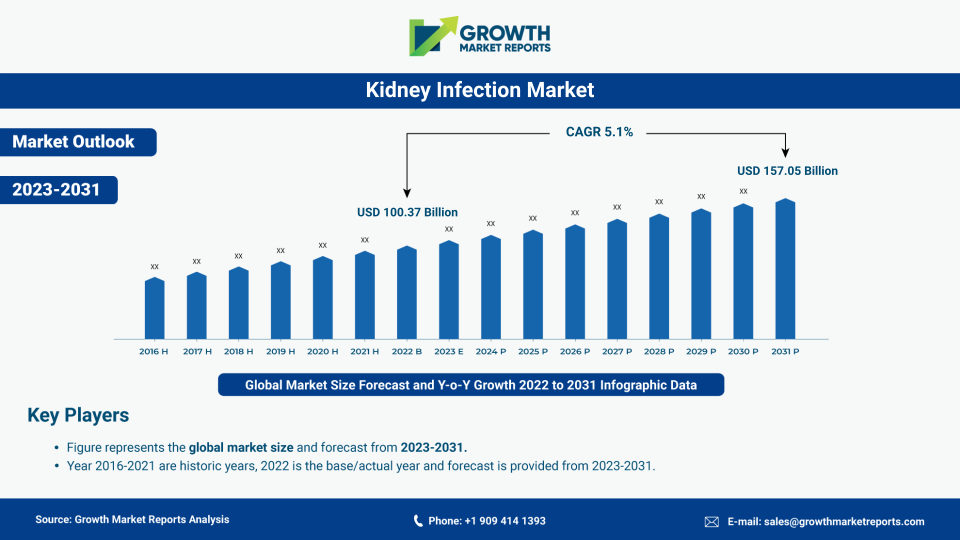
According to our latest research, the global kidney infection market size reached USD 3.72 billion in 2024, reflecting a robust demand for advanced diagnostic and treatment solutions. The market is expected to expand at a CAGR of 5.8% from 2025 to 2033, reaching a projected value of USD 6.23 billion by 2033. This growth is primarily driven by the rising incidence of urinary tract infections (UTIs), increasing prevalence of chronic kidney diseases, and heightened awareness regarding early diagnosis and effective management of kidney infections. As per our recent findings, technological advancements in diagnostic modalities and the introduction of novel therapeutics are further boosting the momentum of the kidney infection market worldwide.

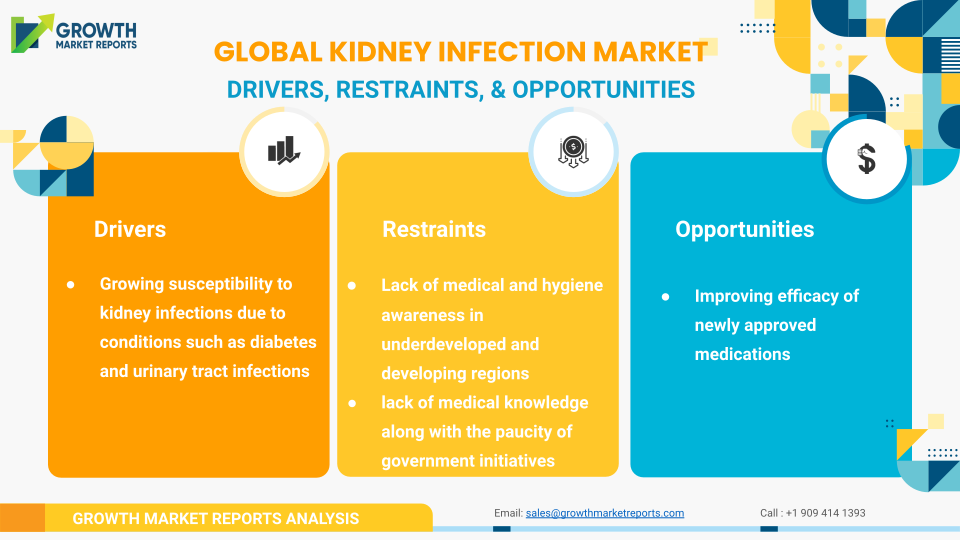
One of the most significant growth factors driving the kidney infection market is the increasing prevalence of risk factors such as diabetes, hypertension, and urinary tract abnormalities, which predispose individuals to kidney infections. The global burden of diabetes and hypertension continues to rise, particularly in developing regions, contributing to a higher incidence of both acute and chronic kidney infections. Additionally, the aging population is more susceptible to urinary tract and kidney infections due to age-related changes in renal function and immune response. The growing awareness of these risk factors among healthcare professionals and patients alike has led to earlier diagnosis, prompt treatment, and improved patient outcomes, all of which are positively impacting the market's growth trajectory.

Another crucial driver for the kidney infection market is the ongoing development and adoption of advanced diagnostic technologies. Innovations such as rapid urine and blood tests, high-resolution imaging modalities, and molecular diagnostic techniques have significantly improved the accuracy and speed of kidney infection diagnosis. These advancements not only facilitate timely intervention but also help in differentiating between acute and chronic kidney infections, enabling personalized treatment approaches. Furthermore, the integration of artificial intelligence and machine learning in diagnostic imaging is enhancing the efficiency of disease detection, thereby supporting the expansion of the kidney infection market. The increased investment in research and development by both public and private sectors is expected to yield further breakthroughs in the coming years.

The kidney infection market is also benefiting from the introduction of novel treatment options and the expansion of healthcare infrastructure, particularly in emerging economies. The availability of a broader range of antibiotics, minimally invasive surgical techniques, and improved hospitalization protocols has led to better management of complicated kidney infections. Additionally, government initiatives aimed at improving access to healthcare services and raising public awareness about the importance of early diagnosis and treatment are contributing to market growth. Pharmaceutical companies are actively focusing on developing new antimicrobial agents to combat antibiotic-resistant strains, addressing a critical need in the management of kidney infections. These combined efforts are expected to sustain the market's upward trajectory over the forecast period.

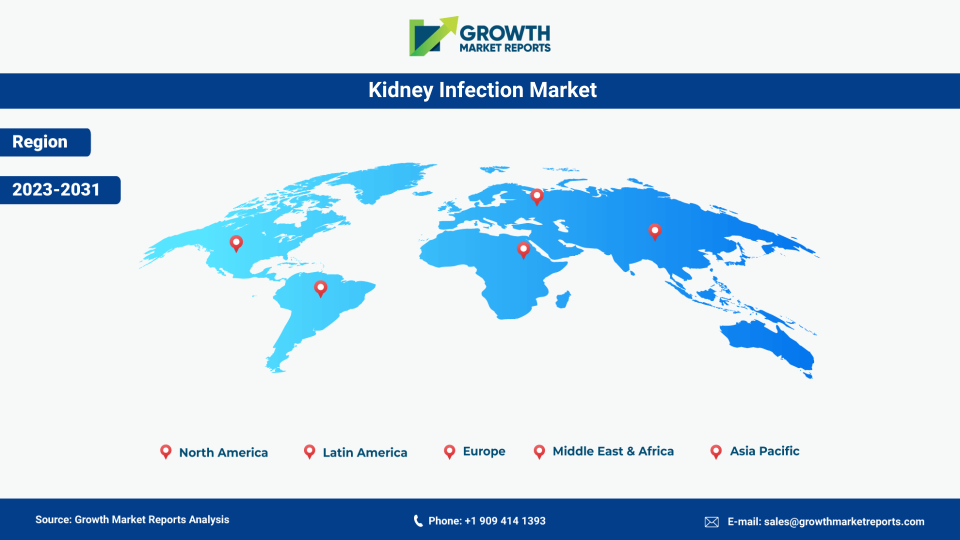
Regionally, North America continues to dominate the kidney infection market owing to its well-established healthcare infrastructure, high adoption of advanced diagnostic and treatment technologies, and significant investments in research and development. Europe follows closely, supported by favorable reimbursement policies and a high prevalence of risk factors. The Asia Pacific region is anticipated to witness the fastest growth during the forecast period, driven by a large patient pool, increasing healthcare expenditure, and rapid improvements in healthcare infrastructure. Latin America and the Middle East & Africa are also expected to contribute to market growth, albeit at a slower pace, due to ongoing efforts to enhance healthcare accessibility and awareness in these regions.

Global Kidney Infection Industry Outlook

Type Analysis

The type segment of the kidney infection market is primarily categorized into acute kidney infection and chronic kidney infection. Acute kidney infection, also known as acute pyelonephritis, is characterized by a sudden and severe infection of the kidney, often resulting from an ascending urinary tract infection. This segment commands a significant share of the market due to the high incidence and rapid onset of symptoms, necessitating immediate medical attention. The acute kidney infection segment benefits from advancements in rapid diagnostic techniques and the availability of effective antibiotic regimens, which have greatly improved patient outcomes. The increasing awareness about the importance of early intervention and the growing number of emergency room visits for urinary tract-related complications are further propelling the growth of this segment.

Chronic kidney infection, or chronic pyelonephritis, represents a smaller but steadily growing segment within the market. This condition is typically the result of recurrent or inadequately treated acute infections, leading to long-term renal damage and functional impairment. The chronic kidney infection segment is witnessing increased attention due to the rising prevalence of chronic kidney disease (CKD) globally. The management of chronic infections often requires a multidisciplinary approach, including prolonged antibiotic therapy, surgical intervention, and ongoing monitoring of renal function. The growing emphasis on preventive care and regular health check-ups, particularly among high-risk populations such as diabetics and the elderly, is expected to drive demand for chronic kidney infection management solutions.

The distinction between acute and chronic kidney infections is crucial for clinicians, as it directly influences the choice of diagnostic and therapeutic strategies. While acute infections typically require immediate antibiotic therapy and supportive care, chronic infections may necessitate long-term management and intervention to prevent further renal deterioration. This differentiation has led to the development of specialized diagnostic tools and treatment protocols tailored to each type, thereby enhancing the overall effectiveness of kidney infection management. The increasing adoption of evidence-based guidelines and best practices in clinical settings is contributing to better patient outcomes and reducing the burden of chronic complications.

Furthermore, the type segment is influenced by demographic and epidemiological trends, such as the rising incidence of urinary tract abnormalities, increased use of urinary catheters, and the growing prevalence of immunocompromised conditions. These factors are contributing to a higher risk of both acute and chronic kidney infections, underscoring the need for continuous innovation in diagnostic and treatment modalities. The ongoing research into the pathophysiology and risk factors associated with different types of kidney infections is expected to yield new insights and drive the development of targeted therapies in the future.

Report Scope

Attributes Details
Report Title Kidney Infection Market Research Report 2033
By Type Acute Kidney Infection, Chronic Kidney Infection
By Diagnosis Urine Tests, Blood Tests, Imaging Tests, Others
By Treatment Antibiotics, Hospitalization, Surgery, Others
By End-User Hospitals, Clinics, Ambulatory Surgical Centers, Others
Regions Covered North America, Europe, APAC, Latin America, MEA
Base Year 2024
Historic Data 2018-2023
Forecast Period 2025-2033
Number of Pages 278
Number of Tables & Figures 290
Customization Available Yes, the report can be customized as per your need.

Diagnosis Analysis

The diagnosis segment of the kidney infection market encompasses a range of modalities, including urine tests, blood tests, imaging tests, and other specialized diagnostic procedures. Urine tests, such as urinalysis and urine culture, remain the cornerstone of kidney infection diagnosis due to their simplicity, cost-effectiveness, and ability to provide rapid results. These tests are widely utilized in primary care and emergency settings to detect the presence of bacteria, white blood cells, and other markers indicative of infection. The widespread availability and ease of use of urine tests have made them the first line of investigation for suspected kidney infections, contributing to their dominant share in the diagnosis segment.

Blood tests, including complete blood count (CBC), blood cultures, and markers of renal function such as serum creatinine and blood urea nitrogen (BUN), play a crucial role in assessing the severity and systemic impact of kidney infections. These tests are particularly important in cases of complicated or severe infections, where there is a risk of sepsis or acute kidney injury. The integration of advanced laboratory technologies and automated analyzers has improved the accuracy and turnaround time of blood tests, enabling timely clinical decision-making. The growing emphasis on comprehensive patient assessment and the need for early identification of complications are driving the demand for blood-based diagnostic solutions in the kidney infection market.

Imaging tests, such as ultrasound, computed tomography (CT), and magnetic resonance imaging (MRI), are increasingly being employed to evaluate the extent of renal involvement, identify structural abnormalities, and guide therapeutic interventions. These modalities are particularly valuable in cases of recurrent or complicated kidney infections, where anatomical factors may play a role in disease persistence or recurrence. The adoption of high-resolution imaging and the application of artificial intelligence in image analysis are enhancing the diagnostic accuracy and efficiency of these tests. The rising availability of imaging facilities, especially in urban and semi-urban areas, is further contributing to the growth of this segment.

Other diagnostic modalities, including molecular tests and biomarkers, are gaining traction in the kidney infection market as research advances in the field of infectious diseases. The development of rapid molecular assays for pathogen identification and antimicrobial resistance profiling is enabling more targeted and effective treatment strategies. The increasing focus on personalized medicine and the need to address the growing challenge of antibiotic resistance are expected to drive the adoption of these innovative diagnostic approaches. Overall, the diagnosis segment is characterized by continuous innovation and the integration of multidisciplinary technologies aimed at improving the accuracy, speed, and cost-effectiveness of kidney infection diagnosis.

Treatment Analysis

The treatment segment of the kidney infection market is broadly classified into antibiotics, hospitalization, surgery, and other supportive therapies. Antibiotics remain the mainstay of kidney infection treatment, with a wide range of agents available to target both common and resistant pathogens. The choice of antibiotic therapy is guided by the severity of infection, patient comorbidities, and local resistance patterns. The introduction of new antibiotics and the optimization of dosing regimens have significantly improved the efficacy of treatment, reducing the risk of complications and recurrence. The increasing prevalence of multidrug-resistant organisms, however, poses a significant challenge and underscores the need for ongoing research and development in this area.

Hospitalization is often required for patients with severe or complicated kidney infections, such as those with sepsis, renal abscess, or underlying comorbidities. Inpatient care involves intravenous antibiotic administration, close monitoring of renal function, and supportive measures such as fluid management and pain control. The availability of advanced healthcare facilities and the implementation of standardized treatment protocols have contributed to improved outcomes for hospitalized patients. The rising incidence of complicated kidney infections and the growing burden of comorbid conditions are expected to drive demand for hospitalization services in the coming years.

Surgical intervention is indicated in cases where anatomical abnormalities, obstructive uropathy, or abscess formation contribute to the persistence or recurrence of kidney infections. Minimally invasive surgical techniques, such as percutaneous drainage and endoscopic procedures, have gained popularity due to their reduced morbidity and faster recovery times. The increasing adoption of these techniques, coupled with advancements in surgical instrumentation and imaging guidance, is enhancing the effectiveness of surgical management for kidney infections. The focus on early identification and correction of underlying anatomical factors is expected to reduce the risk of chronic complications and improve long-term renal outcomes.

Other treatment modalities, including supportive therapies such as pain management, hydration, and dietary modifications, play an important role in the comprehensive management of kidney infections. The emphasis on holistic patient care and the integration of multidisciplinary approaches are contributing to better overall outcomes. The development of patient education programs and self-management tools is empowering individuals to take an active role in their treatment, reducing the risk of recurrence and improving quality of life. The treatment segment is characterized by a dynamic landscape, with ongoing research aimed at developing novel therapeutics and optimizing existing treatment protocols to address emerging challenges in kidney infection management.

End-User Analysis

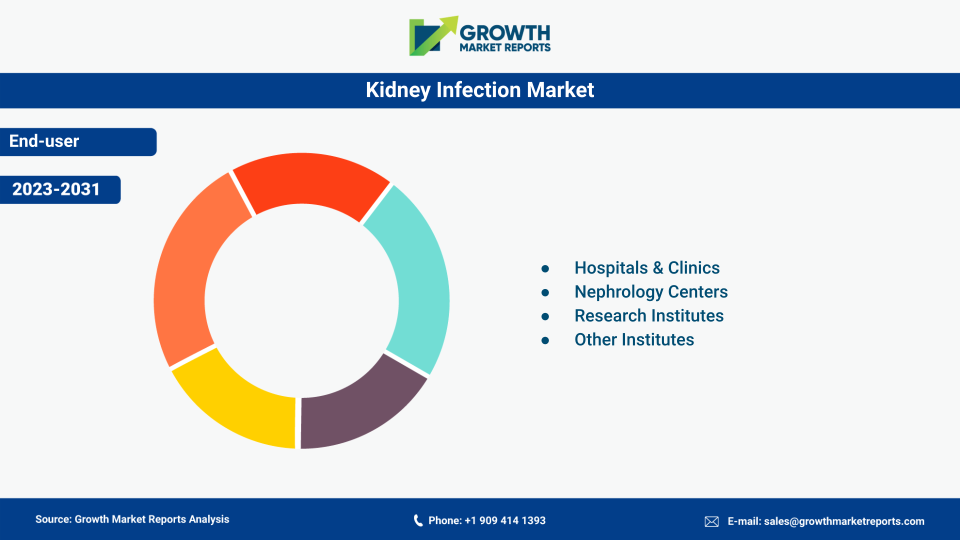
The end-user segment of the kidney infection market is segmented into hospitals, clinics, ambulatory surgical centers, and other healthcare settings. Hospitals remain the primary end-user for kidney infection diagnosis and treatment, accounting for the largest market share. This dominance is attributed to the availability of advanced diagnostic and therapeutic facilities, skilled healthcare professionals, and the capacity to manage severe and complicated cases. Hospitals serve as referral centers for patients with acute or chronic kidney infections requiring specialized care, including intravenous therapy, surgical intervention, and intensive monitoring. The increasing incidence of hospital-acquired infections and the focus on infection control practices are further driving the demand for hospital-based kidney infection management.

Clinics, including primary care and specialty clinics, play a vital role in the early detection and management of kidney infections. These settings are often the first point of contact for patients presenting with urinary symptoms, and they are equipped to perform basic diagnostic tests and initiate empirical antibiotic therapy. The growing emphasis on preventive care and the expansion of outpatient services are contributing to the increasing utilization of clinics for kidney infection management. The convenience, accessibility, and cost-effectiveness of clinic-based care are particularly appealing to patients with uncomplicated infections or those requiring follow-up monitoring.

Ambulatory surgical centers (ASCs) are emerging as important end-users in the kidney infection market, particularly for patients requiring minimally invasive surgical procedures or day-care interventions. The rapid growth of ASCs is driven by the trend toward outpatient care, shorter hospital stays, and reduced healthcare costs. These centers are equipped with state-of-the-art surgical and diagnostic facilities, enabling the efficient management of select kidney infection cases that do not require prolonged hospitalization. The increasing adoption of minimally invasive techniques and the focus on patient-centered care are expected to drive the growth of ASCs in the coming years.

Other end-users, including home healthcare providers and long-term care facilities, are gaining prominence in the management of kidney infections, particularly among elderly and chronically ill patients. The shift toward home-based care and the use of telemedicine platforms are facilitating remote monitoring, early intervention, and improved patient adherence to treatment regimens. The integration of digital health technologies and patient education initiatives is empowering individuals to actively participate in their care, reducing the risk of complications and hospital readmissions. The end-user segment is characterized by a diverse and evolving landscape, with ongoing efforts to enhance accessibility, efficiency, and quality of kidney infection care across all healthcare settings.

Opportunities & Threats

The kidney infection market presents several compelling opportunities for growth and innovation. One of the most significant opportunities lies in the development and commercialization of novel diagnostic technologies, including rapid molecular assays, point-of-care testing devices, and artificial intelligence-driven imaging solutions. These advancements have the potential to revolutionize the early detection and differentiation of kidney infections, enabling more targeted and effective treatment strategies. The increasing investment in research and development by both public and private sectors is expected to yield new diagnostic tools that address current limitations and unmet clinical needs. Additionally, the expansion of telemedicine and digital health platforms offers opportunities to enhance patient engagement, improve adherence to treatment regimens, and facilitate remote monitoring, particularly in underserved and rural areas.

Another key opportunity in the kidney infection market is the development of new therapeutics to address the growing challenge of antibiotic resistance. The emergence of multidrug-resistant pathogens has complicated the management of kidney infections, necessitating the discovery of novel antimicrobial agents and alternative treatment approaches. Pharmaceutical companies are actively investing in the research and development of new antibiotics, combination therapies, and adjunctive treatments to improve outcomes for patients with resistant infections. The growing emphasis on antimicrobial stewardship and the implementation of evidence-based guidelines are supporting the rational use of antibiotics, reducing the risk of resistance development. Furthermore, the increasing focus on personalized medicine and the identification of patient-specific risk factors are expected to drive the adoption of tailored treatment approaches, enhancing the overall effectiveness of kidney infection management.

Despite these opportunities, the kidney infection market faces several significant threats and restrainers that may hinder its growth. One of the primary challenges is the limited access to advanced diagnostic and treatment facilities in low- and middle-income countries, where the burden of kidney infections is often highest. Inadequate healthcare infrastructure, shortage of skilled healthcare professionals, and financial constraints pose significant barriers to timely diagnosis and effective management. Additionally, the rising prevalence of antibiotic resistance and the slow pace of new drug development threaten to undermine the progress made in kidney infection care. The lack of awareness and delayed presentation of symptoms, particularly in rural and underserved populations, further exacerbate the risk of complications and chronic kidney damage. Addressing these challenges will require coordinated efforts from governments, healthcare providers, and industry stakeholders to improve access, education, and innovation in kidney infection management.

Regional Outlook

North America continues to lead the global kidney infection market, accounting for the largest share of USD 1.38 billion in 2024. This dominance is driven by a well-established healthcare infrastructure, high adoption of advanced diagnostic and treatment technologies, and significant investments in research and development. The United States, in particular, is a major contributor to the regional market, supported by favorable reimbursement policies, a high prevalence of risk factors such as diabetes and obesity, and ongoing public health initiatives aimed at improving kidney health. The region is expected to maintain a steady growth rate, with a projected CAGR of 5.2% through 2033, reaching an estimated value of USD 2.19 billion.

Europe holds the second-largest share of the kidney infection market, with a market size of USD 1.02 billion in 2024. The region benefits from a strong healthcare system, widespread access to diagnostic and treatment facilities, and a high level of awareness among healthcare professionals and patients. Countries such as Germany, the United Kingdom, and France are at the forefront of kidney infection research and innovation, supported by government funding and collaborative initiatives. The European market is expected to grow at a CAGR of 5.6% over the forecast period, reaching approximately USD 1.67 billion by 2033. The increasing focus on preventive care, early diagnosis, and the management of chronic kidney diseases is expected to drive sustained demand for kidney infection solutions in the region.

The Asia Pacific region is poised for the fastest growth in the kidney infection market, with a market size of USD 0.92 billion in 2024 and a projected CAGR of 7.1% through 2033. This rapid expansion is attributed to a large and growing patient population, rising healthcare expenditure, and significant improvements in healthcare infrastructure across countries such as China, India, and Japan. The increasing prevalence of risk factors, such as diabetes and hypertension, and the growing awareness of kidney health are driving demand for advanced diagnostic and treatment solutions. Government initiatives aimed at improving healthcare access and affordability are further supporting market growth. Latin America and the Middle East & Africa, with market sizes of USD 0.24 billion and USD 0.16 billion respectively in 2024, are expected to experience moderate growth, driven by ongoing efforts to enhance healthcare infrastructure and awareness in these regions.

Kidney Infection Market Statistics

Competitor Outlook

The kidney infection market is characterized by a highly competitive landscape, with numerous global and regional players vying for market share through product innovation, strategic collaborations, and expansion into emerging markets. Leading companies are focused on developing advanced diagnostic tools, novel therapeutics, and integrated care solutions to address the evolving needs of patients and healthcare providers. The competitive environment is further intensified by the entry of new players, particularly in the diagnostics and digital health segments, who are leveraging cutting-edge technologies to disrupt traditional models of care. The increasing emphasis on research and development, coupled with robust investment in clinical trials and regulatory approvals, is driving a wave of innovation and differentiation in the market.

Strategic partnerships and mergers and acquisitions are common strategies employed by key players to strengthen their market position and expand their product portfolios. Collaborations between pharmaceutical companies, diagnostic firms, and healthcare providers are enabling the development of comprehensive solutions that span the entire spectrum of kidney infection management, from early detection to long-term follow-up. The integration of digital health platforms and telemedicine services is also facilitating greater reach and accessibility, particularly in underserved regions. Companies are increasingly investing in patient education and support programs to enhance adherence to treatment regimens and improve patient outcomes, further differentiating their offerings in a crowded marketplace.

The competitive landscape is also shaped by the growing focus on personalized medicine and the development of targeted therapies for specific patient populations. Companies are leveraging advances in genomics, molecular diagnostics, and data analytics to identify patient-specific risk factors and tailor treatment approaches accordingly. This shift toward precision medicine is expected to drive the adoption of innovative diagnostic and therapeutic solutions, creating new opportunities for market growth. Regulatory compliance and quality assurance remain critical considerations for market participants, as the demand for safe, effective, and high-quality products continues to rise.

Some of the major companies operating in the kidney infection market include Pfizer Inc., GlaxoSmithKline plc, Merck & Co., Inc., Abbott Laboratories, Siemens Healthineers, F. Hoffmann-La Roche Ltd, Becton, Dickinson and Company, Boston Scientific Corporation, Baxter International Inc., and Fresenius Medical Care AG & Co. KGaA. These companies are recognized for their extensive product portfolios, strong research and development capabilities, and global presence. For instance, Pfizer Inc. and GlaxoSmithKline plc are leading players in the antibiotics segment, with a focus on developing new antimicrobial agents to address the challenge of antibiotic resistance. Abbott Laboratories and Siemens Healthineers are prominent in the diagnostics space, offering a range of innovative solutions for rapid and accurate detection of kidney infections.

F. Hoffmann-La Roche Ltd and Becton, Dickinson and Company are known for their commitment to advancing diagnostic technologies and improving patient care through integrated solutions. Boston Scientific Corporation, Baxter International Inc., and Fresenius Medical Care AG & Co. KGaA are actively involved in the development of medical devices and surgical solutions for the management of complicated kidney infections. These companies are continuously investing in research, clinical trials, and regulatory approvals to bring new and improved products to market. The competitive landscape is expected to remain dynamic, with ongoing innovation and strategic initiatives shaping the future of the kidney infection market.

Key Players

  • Pfizer Inc.
  • GlaxoSmithKline plc
  • Novartis AG
  • AstraZeneca plc
  • Merck & Co., Inc.
  • Bayer AG
  • F. Hoffmann-La Roche Ltd
  • Sanofi S.A.
  • AbbVie Inc.
  • Bristol-Myers Squibb Company
  • Cipla Limited
  • Allergan plc
  • Astellas Pharma Inc.
  • Teva Pharmaceutical Industries Ltd.
  • Sun Pharmaceutical Industries Ltd.
  • Shionogi & Co., Ltd.
  • Eli Lilly and Company
  • Johnson & Johnson
  • Baxter International Inc.
  • Becton, Dickinson and Company (BD)
Kidney Infection Market Overview

Segments

The Kidney Infection market has been segmented on the basis of

Type

  • Acute Kidney Infection
  • Chronic Kidney Infection

Diagnosis

  • Urine Tests
  • Blood Tests
  • Imaging Tests
  • Others

Treatment

  • Antibiotics
  • Hospitalization
  • Surgery
  • Others

End-User

  • Hospitals
  • Clinics
  • Ambulatory Surgical Centers
  • Others

Competitive Landscape

The competitive landscape of the global kidney infection market report provides key insights into the growth strategies and development initiatives implemented by the key players in the market.

Key players competing in the kidney infection market are AbbVie Inc.; Akebia Therapeutics, Inc.; Amgen Inc.; AstraZeneca; F. Hoffman-La Roche Ltd.; Johnson & Johnson Services, Inc.; Kissei Pharmaceutical Co., Ltd.; Maruishi Pharmaceutical Co., Ltd.; Pfizer Inc.; Sanofi; and Teva Pharmaceutical Industries Ltd.

These companies adopted development strategies including mergers, acquisitions, partnerships, collaboration, product launches, and production expansion to expand their consumer base worldwide. The competitive landscape covers key insights into growth strategies adopted by major market players. For instance,

  • In September 2022, Kissei Pharmaceutical Co., Ltd. along with Maruishi Pharmaceutical Co., Ltd. submitted an application for Difelikefalin for FDA to treat Hemodialysis.


Kidney Infection Market Key Players

Frequently Asked Questions

Opportunities include the development of rapid molecular diagnostics, AI-driven imaging, new antibiotics to combat resistance, expansion of telemedicine, and personalized medicine approaches for tailored treatment.

Key players include Pfizer Inc., GlaxoSmithKline plc, Merck & Co., Inc., Abbott Laboratories, Siemens Healthineers, F. Hoffmann-La Roche Ltd, Becton, Dickinson and Company, Boston Scientific Corporation, Baxter International Inc., and Fresenius Medical Care AG & Co. KGaA.

Challenges include limited access to advanced healthcare in low- and middle-income countries, rising antibiotic resistance, slow development of new drugs, and lack of awareness leading to delayed diagnosis.

Major end-users include hospitals, clinics, ambulatory surgical centers, and other healthcare settings such as home healthcare and long-term care facilities.

Treatments include antibiotics, hospitalization for severe cases, surgical intervention for anatomical issues or abscesses, and supportive therapies such as pain management and hydration.

Common diagnostic methods include urine tests (urinalysis, urine culture), blood tests (CBC, blood cultures, renal function markers), imaging tests (ultrasound, CT, MRI), and advanced molecular diagnostics.

The market is segmented into acute kidney infection (acute pyelonephritis) and chronic kidney infection (chronic pyelonephritis).

North America leads the market, followed by Europe. The Asia Pacific region is expected to experience the fastest growth due to a large patient pool and improving healthcare infrastructure.

Key growth drivers include the rising incidence of urinary tract infections (UTIs), increasing prevalence of chronic kidney diseases, technological advancements in diagnostics, and heightened awareness about early diagnosis and management.

As of 2024, the global kidney infection market size is valued at USD 3.72 billion.

Table Of Content

Chapter 1 Executive Summary
Chapter 2 Assumptions and Acronyms Used
Chapter 3 Research Methodology
Chapter 4 Kidney Infection Market Overview
   4.1 Introduction
      4.1.1 Market Taxonomy
      4.1.2 Market Definition
      4.1.3 Macro-Economic Factors Impacting the Market Growth
   4.2 Kidney Infection Market Dynamics
      4.2.1 Market Drivers
      4.2.2 Market Restraints
      4.2.3 Market Opportunity
   4.3 Kidney Infection Market - Supply Chain Analysis
      4.3.1 List of Key Suppliers
      4.3.2 List of Key Distributors
      4.3.3 List of Key Consumers
   4.4 Key Forces Shaping the Kidney Infection Market
      4.4.1 Bargaining Power of Suppliers
      4.4.2 Bargaining Power of Buyers
      4.4.3 Threat of Substitution
      4.4.4 Threat of New Entrants
      4.4.5 Competitive Rivalry
   4.5 Global Kidney Infection Market Size & Forecast, 2023-2032
      4.5.1 Kidney Infection Market Size and Y-o-Y Growth
      4.5.2 Kidney Infection Market Absolute $ Opportunity

Chapter 5 Global Kidney Infection Market Analysis and Forecast By Type
   5.1 Introduction
      5.1.1 Key Market Trends & Growth Opportunities By Type
      5.1.2 Basis Point Share (BPS) Analysis By Type
      5.1.3 Absolute $ Opportunity Assessment By Type
   5.2 Kidney Infection Market Size Forecast By Type
      5.2.1 Acute Kidney Infection
      5.2.2 Chronic Kidney Infection
   5.3 Market Attractiveness Analysis By Type

Chapter 6 Global Kidney Infection Market Analysis and Forecast By Diagnosis
   6.1 Introduction
      6.1.1 Key Market Trends & Growth Opportunities By Diagnosis
      6.1.2 Basis Point Share (BPS) Analysis By Diagnosis
      6.1.3 Absolute $ Opportunity Assessment By Diagnosis
   6.2 Kidney Infection Market Size Forecast By Diagnosis
      6.2.1 Urine Tests
      6.2.2 Blood Tests
      6.2.3 Imaging Tests
      6.2.4 Others
   6.3 Market Attractiveness Analysis By Diagnosis

Chapter 7 Global Kidney Infection Market Analysis and Forecast By Treatment
   7.1 Introduction
      7.1.1 Key Market Trends & Growth Opportunities By Treatment
      7.1.2 Basis Point Share (BPS) Analysis By Treatment
      7.1.3 Absolute $ Opportunity Assessment By Treatment
   7.2 Kidney Infection Market Size Forecast By Treatment
      7.2.1 Antibiotics
      7.2.2 Hospitalization
      7.2.3 Surgery
      7.2.4 Others
   7.3 Market Attractiveness Analysis By Treatment

Chapter 8 Global Kidney Infection Market Analysis and Forecast By End-User
   8.1 Introduction
      8.1.1 Key Market Trends & Growth Opportunities By End-User
      8.1.2 Basis Point Share (BPS) Analysis By End-User
      8.1.3 Absolute $ Opportunity Assessment By End-User
   8.2 Kidney Infection Market Size Forecast By End-User
      8.2.1 Hospitals
      8.2.2 Clinics
      8.2.3 Ambulatory Surgical Centers
      8.2.4 Others
   8.3 Market Attractiveness Analysis By End-User

Chapter 9 Global Kidney Infection Market Analysis and Forecast by Region
   9.1 Introduction
      9.1.1 Key Market Trends & Growth Opportunities By Region
      9.1.2 Basis Point Share (BPS) Analysis By Region
      9.1.3 Absolute $ Opportunity Assessment By Region
   9.2 Kidney Infection Market Size Forecast By Region
      9.2.1 North America
      9.2.2 Europe
      9.2.3 Asia Pacific
      9.2.4 Latin America
      9.2.5 Middle East & Africa (MEA)
   9.3 Market Attractiveness Analysis By Region

Chapter 10 Coronavirus Disease (COVID-19) Impact 
   10.1 Introduction 
   10.2 Current & Future Impact Analysis 
   10.3 Economic Impact Analysis 
   10.4 Government Policies 
   10.5 Investment Scenario

Chapter 11 North America Kidney Infection Analysis and Forecast
   11.1 Introduction
   11.2 North America Kidney Infection Market Size Forecast by Country
      11.2.1 U.S.
      11.2.2 Canada
   11.3 Basis Point Share (BPS) Analysis by Country
   11.4 Absolute $ Opportunity Assessment by Country
   11.5 Market Attractiveness Analysis by Country
   11.6 North America Kidney Infection Market Size Forecast By Type
      11.6.1 Acute Kidney Infection
      11.6.2 Chronic Kidney Infection
   11.7 Basis Point Share (BPS) Analysis By Type 
   11.8 Absolute $ Opportunity Assessment By Type 
   11.9 Market Attractiveness Analysis By Type
   11.10 North America Kidney Infection Market Size Forecast By Diagnosis
      11.10.1 Urine Tests
      11.10.2 Blood Tests
      11.10.3 Imaging Tests
      11.10.4 Others
   11.11 Basis Point Share (BPS) Analysis By Diagnosis 
   11.12 Absolute $ Opportunity Assessment By Diagnosis 
   11.13 Market Attractiveness Analysis By Diagnosis
   11.14 North America Kidney Infection Market Size Forecast By Treatment
      11.14.1 Antibiotics
      11.14.2 Hospitalization
      11.14.3 Surgery
      11.14.4 Others
   11.15 Basis Point Share (BPS) Analysis By Treatment 
   11.16 Absolute $ Opportunity Assessment By Treatment 
   11.17 Market Attractiveness Analysis By Treatment
   11.18 North America Kidney Infection Market Size Forecast By End-User
      11.18.1 Hospitals
      11.18.2 Clinics
      11.18.3 Ambulatory Surgical Centers
      11.18.4 Others
   11.19 Basis Point Share (BPS) Analysis By End-User 
   11.20 Absolute $ Opportunity Assessment By End-User 
   11.21 Market Attractiveness Analysis By End-User

Chapter 12 Europe Kidney Infection Analysis and Forecast
   12.1 Introduction
   12.2 Europe Kidney Infection Market Size Forecast by Country
      12.2.1 Germany
      12.2.2 France
      12.2.3 Italy
      12.2.4 U.K.
      12.2.5 Spain
      12.2.6 Russia
      12.2.7 Rest of Europe
   12.3 Basis Point Share (BPS) Analysis by Country
   12.4 Absolute $ Opportunity Assessment by Country
   12.5 Market Attractiveness Analysis by Country
   12.6 Europe Kidney Infection Market Size Forecast By Type
      12.6.1 Acute Kidney Infection
      12.6.2 Chronic Kidney Infection
   12.7 Basis Point Share (BPS) Analysis By Type 
   12.8 Absolute $ Opportunity Assessment By Type 
   12.9 Market Attractiveness Analysis By Type
   12.10 Europe Kidney Infection Market Size Forecast By Diagnosis
      12.10.1 Urine Tests
      12.10.2 Blood Tests
      12.10.3 Imaging Tests
      12.10.4 Others
   12.11 Basis Point Share (BPS) Analysis By Diagnosis 
   12.12 Absolute $ Opportunity Assessment By Diagnosis 
   12.13 Market Attractiveness Analysis By Diagnosis
   12.14 Europe Kidney Infection Market Size Forecast By Treatment
      12.14.1 Antibiotics
      12.14.2 Hospitalization
      12.14.3 Surgery
      12.14.4 Others
   12.15 Basis Point Share (BPS) Analysis By Treatment 
   12.16 Absolute $ Opportunity Assessment By Treatment 
   12.17 Market Attractiveness Analysis By Treatment
   12.18 Europe Kidney Infection Market Size Forecast By End-User
      12.18.1 Hospitals
      12.18.2 Clinics
      12.18.3 Ambulatory Surgical Centers
      12.18.4 Others
   12.19 Basis Point Share (BPS) Analysis By End-User 
   12.20 Absolute $ Opportunity Assessment By End-User 
   12.21 Market Attractiveness Analysis By End-User

Chapter 13 Asia Pacific Kidney Infection Analysis and Forecast
   13.1 Introduction
   13.2 Asia Pacific Kidney Infection Market Size Forecast by Country
      13.2.1 China
      13.2.2 Japan
      13.2.3 South Korea
      13.2.4 India
      13.2.5 Australia
      13.2.6 South East Asia (SEA)
      13.2.7 Rest of Asia Pacific (APAC)
   13.3 Basis Point Share (BPS) Analysis by Country
   13.4 Absolute $ Opportunity Assessment by Country
   13.5 Market Attractiveness Analysis by Country
   13.6 Asia Pacific Kidney Infection Market Size Forecast By Type
      13.6.1 Acute Kidney Infection
      13.6.2 Chronic Kidney Infection
   13.7 Basis Point Share (BPS) Analysis By Type 
   13.8 Absolute $ Opportunity Assessment By Type 
   13.9 Market Attractiveness Analysis By Type
   13.10 Asia Pacific Kidney Infection Market Size Forecast By Diagnosis
      13.10.1 Urine Tests
      13.10.2 Blood Tests
      13.10.3 Imaging Tests
      13.10.4 Others
   13.11 Basis Point Share (BPS) Analysis By Diagnosis 
   13.12 Absolute $ Opportunity Assessment By Diagnosis 
   13.13 Market Attractiveness Analysis By Diagnosis
   13.14 Asia Pacific Kidney Infection Market Size Forecast By Treatment
      13.14.1 Antibiotics
      13.14.2 Hospitalization
      13.14.3 Surgery
      13.14.4 Others
   13.15 Basis Point Share (BPS) Analysis By Treatment 
   13.16 Absolute $ Opportunity Assessment By Treatment 
   13.17 Market Attractiveness Analysis By Treatment
   13.18 Asia Pacific Kidney Infection Market Size Forecast By End-User
      13.18.1 Hospitals
      13.18.2 Clinics
      13.18.3 Ambulatory Surgical Centers
      13.18.4 Others
   13.19 Basis Point Share (BPS) Analysis By End-User 
   13.20 Absolute $ Opportunity Assessment By End-User 
   13.21 Market Attractiveness Analysis By End-User

Chapter 14 Latin America Kidney Infection Analysis and Forecast
   14.1 Introduction
   14.2 Latin America Kidney Infection Market Size Forecast by Country
      14.2.1 Brazil
      14.2.2 Mexico
      14.2.3 Rest of Latin America (LATAM)
   14.3 Basis Point Share (BPS) Analysis by Country
   14.4 Absolute $ Opportunity Assessment by Country
   14.5 Market Attractiveness Analysis by Country
   14.6 Latin America Kidney Infection Market Size Forecast By Type
      14.6.1 Acute Kidney Infection
      14.6.2 Chronic Kidney Infection
   14.7 Basis Point Share (BPS) Analysis By Type 
   14.8 Absolute $ Opportunity Assessment By Type 
   14.9 Market Attractiveness Analysis By Type
   14.10 Latin America Kidney Infection Market Size Forecast By Diagnosis
      14.10.1 Urine Tests
      14.10.2 Blood Tests
      14.10.3 Imaging Tests
      14.10.4 Others
   14.11 Basis Point Share (BPS) Analysis By Diagnosis 
   14.12 Absolute $ Opportunity Assessment By Diagnosis 
   14.13 Market Attractiveness Analysis By Diagnosis
   14.14 Latin America Kidney Infection Market Size Forecast By Treatment
      14.14.1 Antibiotics
      14.14.2 Hospitalization
      14.14.3 Surgery
      14.14.4 Others
   14.15 Basis Point Share (BPS) Analysis By Treatment 
   14.16 Absolute $ Opportunity Assessment By Treatment 
   14.17 Market Attractiveness Analysis By Treatment
   14.18 Latin America Kidney Infection Market Size Forecast By End-User
      14.18.1 Hospitals
      14.18.2 Clinics
      14.18.3 Ambulatory Surgical Centers
      14.18.4 Others
   14.19 Basis Point Share (BPS) Analysis By End-User 
   14.20 Absolute $ Opportunity Assessment By End-User 
   14.21 Market Attractiveness Analysis By End-User

Chapter 15 Middle East & Africa (MEA) Kidney Infection Analysis and Forecast
   15.1 Introduction
   15.2 Middle East & Africa (MEA) Kidney Infection Market Size Forecast by Country
      15.2.1 Saudi Arabia
      15.2.2 South Africa
      15.2.3 UAE
      15.2.4 Rest of Middle East & Africa (MEA)
   15.3 Basis Point Share (BPS) Analysis by Country
   15.4 Absolute $ Opportunity Assessment by Country
   15.5 Market Attractiveness Analysis by Country
   15.6 Middle East & Africa (MEA) Kidney Infection Market Size Forecast By Type
      15.6.1 Acute Kidney Infection
      15.6.2 Chronic Kidney Infection
   15.7 Basis Point Share (BPS) Analysis By Type 
   15.8 Absolute $ Opportunity Assessment By Type 
   15.9 Market Attractiveness Analysis By Type
   15.10 Middle East & Africa (MEA) Kidney Infection Market Size Forecast By Diagnosis
      15.10.1 Urine Tests
      15.10.2 Blood Tests
      15.10.3 Imaging Tests
      15.10.4 Others
   15.11 Basis Point Share (BPS) Analysis By Diagnosis 
   15.12 Absolute $ Opportunity Assessment By Diagnosis 
   15.13 Market Attractiveness Analysis By Diagnosis
   15.14 Middle East & Africa (MEA) Kidney Infection Market Size Forecast By Treatment
      15.14.1 Antibiotics
      15.14.2 Hospitalization
      15.14.3 Surgery
      15.14.4 Others
   15.15 Basis Point Share (BPS) Analysis By Treatment 
   15.16 Absolute $ Opportunity Assessment By Treatment 
   15.17 Market Attractiveness Analysis By Treatment
   15.18 Middle East & Africa (MEA) Kidney Infection Market Size Forecast By End-User
      15.18.1 Hospitals
      15.18.2 Clinics
      15.18.3 Ambulatory Surgical Centers
      15.18.4 Others
   15.19 Basis Point Share (BPS) Analysis By End-User 
   15.20 Absolute $ Opportunity Assessment By End-User 
   15.21 Market Attractiveness Analysis By End-User

Chapter 16 Competition Landscape 
   16.1 Kidney Infection Market: Competitive Dashboard
   16.2 Global Kidney Infection Market: Market Share Analysis, 2023
   16.3 Company Profiles (Details – Overview, Financials, Developments, Strategy) 
      16.3.1 Pfizer Inc.
GlaxoSmithKline plc
Novartis AG
AstraZeneca plc
Merck & Co., Inc.
Bayer AG
F. Hoffmann-La Roche Ltd
Sanofi S.A.
AbbVie Inc.
Bristol-Myers Squibb Company
Cipla Limited
Allergan plc
Astellas Pharma Inc.
Teva Pharmaceutical Industries Ltd.
Sun Pharmaceutical Industries Ltd.
Shionogi & Co., Ltd.
Eli Lilly and Company
Johnson & Johnson
Baxter International Inc.
Becton, Dickinson and Company (BD)

Methodology

Our Clients

Nestle SA
Dassault Aviation
Honda Motor Co. Ltd.
Microsoft
The John Holland Group
Deloitte
Siemens Healthcare
General Electric