Segments - by Service Type (Process Development, Analytical & Bioanalytical Services, Manufacturing, Regulatory Support, Others), by Drug Type (Small Molecules, Biologics), by Phase (Preclinical, Phase I, Phase II, Phase III), by End-User (Pharmaceutical Companies, Biotechnology Companies, Academic & Research Institutes, Others)
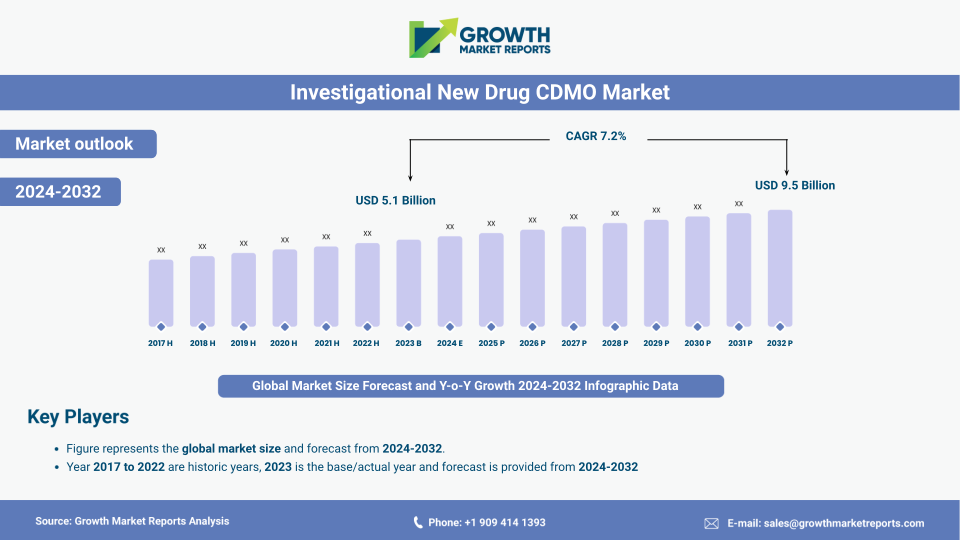
According to our latest research, the global Investigational New Drug (IND) CDMO market size reached USD 5.8 billion in 2024. The market is poised for robust expansion, projected to grow at a CAGR of 8.6% from 2025 to 2033, reaching an estimated USD 12.1 billion by 2033. This impressive growth trajectory is primarily driven by the increasing complexity of drug development, rising demand for outsourcing services among pharmaceutical and biotechnology companies, and the surge in novel drug candidates entering early-phase clinical trials.
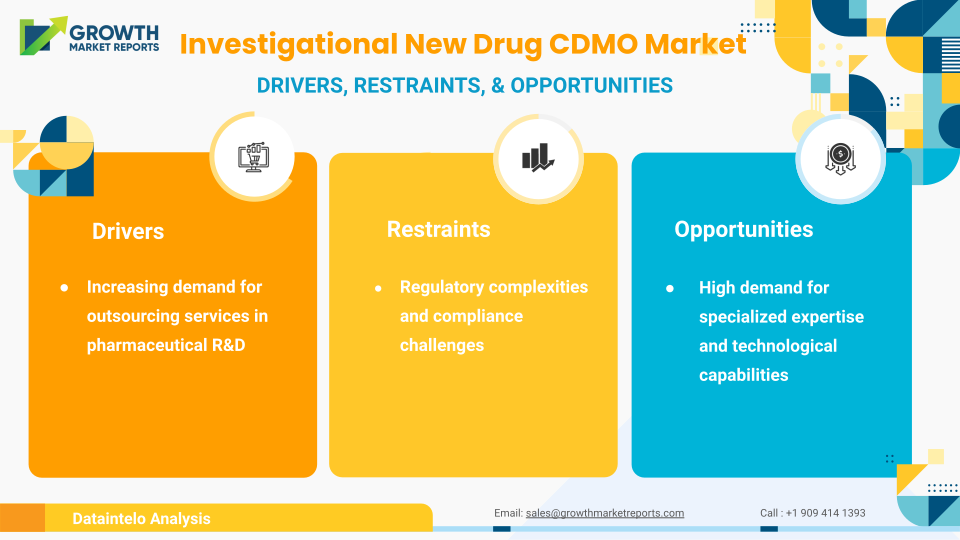
One of the most significant growth factors for the Investigational New Drug (IND) CDMO market is the escalating demand for specialized outsourcing services as pharmaceutical and biotechnology firms seek to streamline their operations and focus on core competencies. The complexity of drug development has increased, particularly with the rise of biologics and advanced therapies, necessitating expert support in process development, manufacturing, and regulatory navigation. CDMOs are uniquely positioned to provide end-to-end solutions for IND applications, enabling sponsors to accelerate timelines and reduce costs. The industry is further buoyed by a growing pipeline of innovative therapies, such as cell and gene therapies, which require specialized manufacturing and analytical capabilities that many sponsors lack in-house.
Another key driver is the evolving regulatory landscape, which has become more stringent and globally harmonized, especially for early-phase clinical trials. Regulatory agencies such as the FDA, EMA, and others have introduced new guidelines and expedited pathways for investigational drugs, placing a premium on robust documentation, analytical validation, and compliance. CDMOs with expertise in regulatory support are increasingly in demand, as sponsors seek to avoid costly delays and ensure successful IND submissions. This trend is particularly pronounced among small and mid-sized biotechs, which often lack the internal resources to navigate complex regulatory requirements and therefore rely heavily on CDMO partners for guidance and execution.
Technological advancements also play a pivotal role in driving the growth of the IND CDMO market. The adoption of cutting-edge technologies such as automation, high-throughput screening, and advanced analytical platforms has significantly enhanced the efficiency and reliability of process development and manufacturing. CDMOs are investing heavily in these technologies to differentiate themselves and offer value-added services to clients. Additionally, the increasing adoption of digital solutions for data management, remote monitoring, and quality assurance is transforming the operational landscape, enabling greater transparency and collaboration between CDMOs and sponsors. These technological innovations not only improve service quality but also support the scalability required for the growing number of IND applications worldwide.
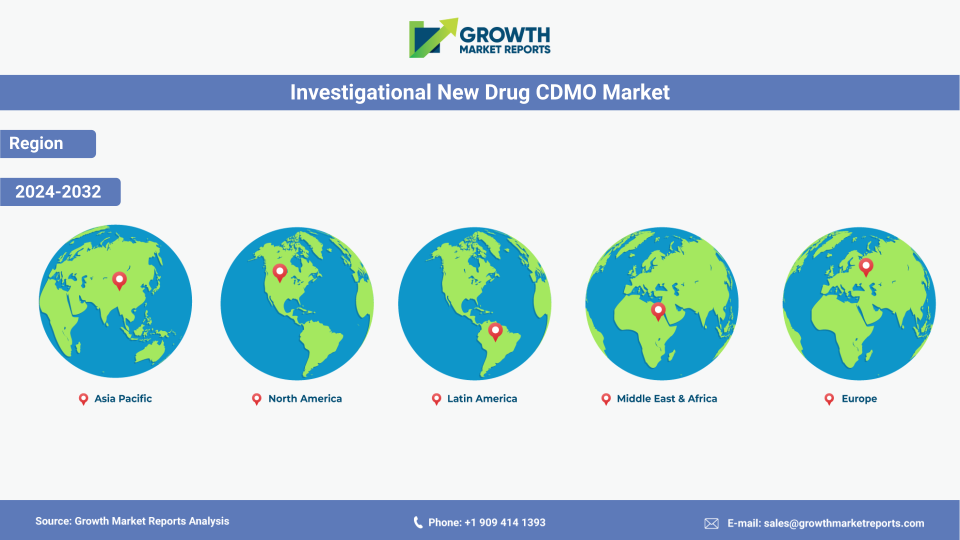
From a regional perspective, North America continues to dominate the global IND CDMO market, accounting for the largest revenue share in 2024, followed by Europe and Asia Pacific. The dominance of North America is attributed to the presence of leading pharmaceutical and biotechnology companies, a well-established regulatory framework, and significant investments in R&D. Europe is also witnessing substantial growth, driven by increasing clinical trial activity and supportive government policies. Meanwhile, Asia Pacific is emerging as a lucrative market, fueled by cost advantages, a burgeoning biopharmaceutical sector, and improving regulatory standards. Latin America and the Middle East & Africa, while representing smaller shares, are expected to experience steady growth as multinational companies expand their clinical research activities in these regions.
The service type segment in the Investigational New Drug (IND) CDMO market encompasses a broad spectrum of offerings, including process development, analytical and bioanalytical services, manufacturing, regulatory support, and other specialized services. Among these, process development and analytical services are witnessing the highest demand, as they form the foundation of successful IND submissions. Process development services involve the design, optimization, and scale-up of manufacturing processes for both small molecules and biologics, ensuring that the drug candidate can be produced consistently and efficiently. CDMOs with expertise in process development are increasingly sought after, particularly for complex molecules and novel modalities that require tailored approaches to synthesis and purification.
Analytical and bioanalytical services have become indispensable in the IND CDMO landscape, given the growing emphasis on data integrity, method validation, and comprehensive characterization of drug candidates. These services are critical for demonstrating the safety, purity, and potency of investigational drugs, as required by regulatory agencies. The demand for advanced analytical techniques, such as mass spectrometry, chromatography, and next-generation sequencing, has surged, prompting CDMOs to invest in state-of-the-art laboratories and highly skilled personnel. Furthermore, the rise of biologics and biosimilars has created new challenges in analytical testing, driving the need for specialized bioanalytical platforms and expertise.
Manufacturing services, encompassing both clinical and preclinical production, represent another vital segment of the IND CDMO market. As the number of IND applications rises, sponsors increasingly rely on CDMOs to provide flexible, GMP-compliant manufacturing solutions that can accommodate small-scale batches for early-phase trials. The ability to rapidly scale up production as a candidate progresses through clinical phases is a key differentiator for leading CDMOs. Additionally, the trend towards personalized medicine and orphan drugs has heightened the demand for small-batch, high-complexity manufacturing, necessitating agile and technologically advanced CDMO partners.
Regulatory support services are gaining prominence as sponsors navigate a complex and evolving global regulatory environment. CDMOs offering comprehensive regulatory consulting, dossier preparation, and submission management are in high demand, particularly among emerging biotechs with limited in-house regulatory expertise. These services help ensure that IND applications meet the stringent requirements of regulatory authorities, reducing the risk of delays or rejections. Other specialized services, such as project management, clinical supply logistics, and quality assurance, further enhance the value proposition of full-service CDMOs, enabling sponsors to streamline their IND development programs and accelerate time-to-market.
| Attributes | Details |
| Report Title | Investigational New Drug CDMO Market Market Research Report 2033 |
| By Service Type | Process Development, Analytical & Bioanalytical Services, Manufacturing, Regulatory Support, Others |
| By Drug Type | Small Molecules, Biologics |
| By Phase | Preclinical, Phase I, Phase II, Phase III |
| By End-User | Pharmaceutical Companies, Biotechnology Companies, Academic & Research Institutes, Others |
| Regions Covered | North America, Europe, APAC, Latin America, MEA |
| Base Year | 2024 |
| Historic Data | 2018-2023 |
| Forecast Period | 2025-2033 |
| Number of Pages | 285 |
| Number of Tables & Figures | 258 |
| Customization Available | Yes, the report can be customized as per your need. |
The drug type segment of the Investigational New Drug (IND) CDMO market is broadly categorized into small molecules and biologics. Small molecules have traditionally dominated the market, owing to their well-established development pathways, lower production costs, and extensive use in a wide range of therapeutic areas. However, the landscape is rapidly evolving with the increasing prominence of biologics, which include monoclonal antibodies, recombinant proteins, vaccines, and advanced therapies such as cell and gene therapies. The shift towards biologics is driven by their higher efficacy, specificity, and potential to address unmet medical needs, particularly in oncology, immunology, and rare diseases.
CDMOs specializing in small molecule development continue to play a crucial role in the IND ecosystem, offering expertise in synthetic chemistry, process optimization, and analytical characterization. These services are essential for sponsors seeking to advance small molecule candidates through preclinical and early clinical phases, ensuring that they meet regulatory requirements for safety, quality, and reproducibility. The competitive landscape among small molecule CDMOs is characterized by a focus on innovation, cost efficiency, and rapid turnaround times, as sponsors seek to maximize the value of their R&D investments.
Deuterated Drug Development is an emerging area of interest within the pharmaceutical industry, offering potential advantages in terms of improved pharmacokinetics and reduced metabolic liabilities. This innovative approach involves the substitution of hydrogen atoms with deuterium in drug molecules, which can lead to enhanced stability and efficacy. As the industry continues to explore the benefits of deuterated compounds, CDMOs are playing a crucial role in facilitating this research. By leveraging their expertise in synthetic chemistry and process optimization, CDMOs are helping sponsors to efficiently develop and scale up deuterated drug candidates, thereby accelerating their path to clinical trials and eventual market entry.
The biologics segment is experiencing the fastest growth within the IND CDMO market, reflecting the surge in biopharmaceutical innovation and the increasing number of biologics entering clinical development. Biologics development presents unique challenges, including complex manufacturing processes, stringent quality control, and the need for specialized analytical capabilities. CDMOs with advanced bioprocessing infrastructure, expertise in cell culture and protein expression, and experience in regulatory submissions are in high demand. The rise of biosimilars and the expansion of cell and gene therapy pipelines further underscore the need for CDMOs that can provide end-to-end support for biologics IND applications.
The interplay between small molecules and biologics is shaping the strategic direction of leading CDMOs, many of which are expanding their service portfolios to address both segments. This diversification enables CDMOs to capture a broader client base and respond to shifting market dynamics. As the drug development landscape continues to evolve, the ability to offer integrated solutions across small molecules and biologics will be a key differentiator, driving sustained growth and competitiveness in the IND CDMO market.
The phase segment of the Investigational New Drug (IND) CDMO market is divided into preclinical, Phase I, Phase II, and Phase III services, reflecting the sequential stages of drug development. Preclinical services are foundational, encompassing in vitro and in vivo studies to evaluate the safety, pharmacokinetics, and pharmacodynamics of drug candidates before they enter human trials. CDMOs offering preclinical services provide critical support in study design, assay development, and data analysis, enabling sponsors to generate robust evidence for IND submissions. The increasing complexity of preclinical studies, particularly for biologics and advanced therapies, is driving demand for specialized CDMO expertise and infrastructure.
Phase I services focus on first-in-human trials, where the primary objective is to assess the safety, tolerability, and pharmacokinetics of investigational drugs in healthy volunteers or patients. CDMOs play a pivotal role in manufacturing clinical trial material, managing logistics, and ensuring compliance with Good Manufacturing Practices (GMP). The ability to rapidly produce small batches of high-quality drug product is a key differentiator, as sponsors seek to minimize delays and accelerate clinical development timelines. The trend towards adaptive trial designs and decentralized trials is further influencing the demand for flexible and responsive CDMO partners in Phase I.
Phase II and Phase III services represent the later stages of clinical development, where the emphasis shifts to demonstrating efficacy, optimizing dosing, and confirming safety in larger patient populations. CDMOs supporting these phases must possess the capacity to scale up manufacturing, manage complex supply chains, and provide comprehensive analytical and regulatory support. The growing prevalence of multi-center, global clinical trials is driving demand for CDMOs with international reach and expertise in navigating diverse regulatory environments. Additionally, the increasing focus on specialty and orphan drugs, which often require customized trial designs and manufacturing approaches, is shaping the service offerings of leading CDMOs in Phase II and III.
The integration of services across all phases of drug development is becoming a key trend in the IND CDMO market, as sponsors seek to streamline workflows, reduce handoffs, and ensure continuity of quality and compliance. CDMOs that can provide seamless support from preclinical through Phase III are well-positioned to capture long-term partnerships and drive sustained growth. The ability to adapt to changing client needs and regulatory requirements across all phases will be a critical success factor in the evolving IND CDMO landscape.
The end-user segment of the Investigational New Drug (IND) CDMO market includes pharmaceutical companies, biotechnology companies, academic and research institutes, and other organizations involved in drug development. Pharmaceutical companies have traditionally been the largest consumers of CDMO services, leveraging external expertise to enhance operational efficiency, reduce costs, and accelerate time-to-market. The trend towards outsourcing non-core activities, such as process development, manufacturing, and regulatory support, has intensified as pharmaceutical companies seek to focus resources on innovation and commercialization.
Biotechnology companies represent a rapidly growing segment of the IND CDMO market, driven by the surge in biotech startups and the increasing number of novel drug candidates entering clinical development. Many biotech firms operate with lean structures and limited in-house capabilities, making them highly dependent on CDMO partners for end-to-end support. CDMOs that can offer integrated solutions, from preclinical studies to clinical manufacturing and regulatory submissions, are particularly attractive to biotech clients seeking to optimize R&D investments and mitigate risk.
Academic and research institutes are also emerging as important end-users of IND CDMO services, particularly in the context of translational research and early-stage drug discovery. These institutions often collaborate with industry partners to advance promising drug candidates from the laboratory to the clinic, relying on CDMOs for specialized expertise in process development, analytical testing, and regulatory compliance. The increasing emphasis on public-private partnerships and government funding for translational research is further expanding the role of academic institutions in the IND CDMO ecosystem.
Other end-users, including non-profit organizations, government agencies, and contract research organizations (CROs), contribute to the diversity of the IND CDMO market. These entities often engage CDMOs for specific projects or to support large-scale clinical programs, leveraging external capabilities to achieve strategic objectives. The ability of CDMOs to tailor services to the unique needs of different end-users, while maintaining high standards of quality and compliance, is a key factor driving market growth and client satisfaction.
The Investigational New Drug (IND) CDMO market presents numerous opportunities for growth and innovation. One of the most promising opportunities lies in the expansion of advanced therapy medicinal products (ATMPs), including cell and gene therapies. As these therapies progress from discovery to clinical development, sponsors require specialized manufacturing and analytical services that few organizations can provide. CDMOs that invest in state-of-the-art facilities, skilled personnel, and regulatory expertise are well-positioned to capture a significant share of this high-growth segment. Additionally, the increasing adoption of digital technologies and data analytics offers opportunities to enhance service quality, streamline operations, and improve client engagement.
Another major opportunity is the globalization of clinical research, which is driving demand for CDMO services in emerging markets such as Asia Pacific and Latin America. The cost advantages, expanding biopharma infrastructure, and improving regulatory frameworks in these regions are attracting multinational sponsors seeking to diversify their clinical trial portfolios. CDMOs with a strong presence in these markets can leverage local expertise and resources to offer competitive solutions to global clients. Furthermore, the trend towards integrated, end-to-end service models creates opportunities for CDMOs to establish long-term partnerships with sponsors, providing comprehensive support from preclinical development to commercial manufacturing.
Despite these opportunities, the IND CDMO market faces several restraining factors. One of the primary challenges is the high level of regulatory scrutiny and the need for continuous compliance with evolving guidelines. CDMOs must invest heavily in quality systems, documentation, and staff training to maintain regulatory approval and client trust. Failure to meet regulatory requirements can result in project delays, financial penalties, and reputational damage. Additionally, the market is characterized by intense competition and pricing pressures, which can impact profitability and limit the ability of smaller players to invest in innovation and capacity expansion.
North America remains the largest regional market for Investigational New Drug (IND) CDMO services, accounting for approximately USD 2.7 billion of the global market in 2024. The regionÂ’s dominance is underpinned by a robust pharmaceutical and biotechnology industry, a favorable regulatory environment, and significant investments in R&D and clinical trials. The United States, in particular, serves as a global hub for drug development, with a high concentration of leading CDMOs, research institutions, and clinical trial sites. The North American IND CDMO market is projected to maintain a steady CAGR of 7.9% through 2033, driven by continued innovation and the growing demand for advanced therapies.
Europe represents the second-largest regional market, with a value of approximately USD 1.6 billion in 2024. The region benefits from a strong academic research base, supportive government policies, and a growing emphasis on translational medicine. Key markets such as Germany, the United Kingdom, and Switzerland are at the forefront of biopharmaceutical innovation, attracting significant investment in IND development and CDMO services. The European market is expected to grow at a CAGR of 8.4% over the forecast period, supported by increasing clinical trial activity and the expansion of biopharmaceutical manufacturing capacity.
Asia Pacific is emerging as a high-growth region in the IND CDMO market, with a market size of USD 1.1 billion in 2024 and a projected CAGR of 10.2% through 2033. The regionÂ’s rapid growth is fueled by cost advantages, expanding biopharma infrastructure, and improving regulatory standards in countries such as China, India, and South Korea. Multinational sponsors are increasingly turning to Asia Pacific CDMOs to access large patient populations, accelerate clinical timelines, and reduce development costs. Latin America and the Middle East & Africa, while smaller in market size, are also experiencing steady growth as global sponsors expand their clinical research activities into these regions, leveraging local expertise and resources to drive innovation and market access.
The competitive landscape of the Investigational New Drug (IND) CDMO market is characterized by a mix of global leaders, specialized regional players, and emerging innovators. The market is highly fragmented, with a large number of CDMOs offering a diverse range of services across different phases of drug development. Leading players are distinguished by their scale, breadth of service offerings, technological capabilities, and track record of regulatory compliance. The ability to offer integrated, end-to-end solutions is becoming an increasingly important competitive advantage, as sponsors seek to streamline workflows and minimize the risks associated with multiple service providers.
Strategic partnerships, mergers, and acquisitions are common in the IND CDMO market, as companies seek to expand their capabilities, geographic reach, and client base. Large CDMOs are investing in state-of-the-art facilities, digital technologies, and specialized expertise to differentiate themselves and capture a larger share of the market. At the same time, niche players are carving out positions in high-growth segments such as biologics, cell and gene therapies, and advanced analytical services. The competitive intensity is further heightened by the entry of new players and the expansion of existing CROs into the CDMO space, creating a dynamic and rapidly evolving market environment.
Innovation is a key driver of competitiveness in the IND CDMO market. Companies that invest in advanced technologies, such as automation, high-throughput screening, and digital data management, are better positioned to deliver high-quality, efficient, and cost-effective services to clients. The ability to adapt to changing regulatory requirements, client needs, and market dynamics is essential for sustained success. CDMOs that foster a culture of continuous improvement, collaboration, and client-centricity are likely to maintain a strong competitive position in the years ahead.
Some of the major companies operating in the Investigational New Drug (IND) CDMO market include Catalent Inc., Lonza Group, Thermo Fisher Scientific Inc., WuXi AppTec, Samsung Biologics, Charles River Laboratories, and Syngene International. These companies are recognized for their global reach, comprehensive service portfolios, and commitment to quality and innovation. Catalent Inc. is a leader in advanced delivery technologies and integrated development solutions, serving both small molecule and biologics clients. Lonza Group is renowned for its expertise in biologics manufacturing and process development, while Thermo Fisher Scientific offers a broad range of analytical, manufacturing, and regulatory support services.
WuXi AppTec and Samsung Biologics have established themselves as leading CDMOs in the Asia Pacific region, leveraging their scale, technological capabilities, and strong client relationships to drive growth. Charles River Laboratories and Syngene International are known for their strengths in preclinical and early-phase development, offering specialized expertise in toxicology, pharmacology, and bioanalytical services. These companies, along with a host of regional and niche players, are shaping the future of the IND CDMO market through continuous investment in innovation, capacity expansion, and client engagement.
The Investigational New Drug CDMO market has been segmented on the basis of
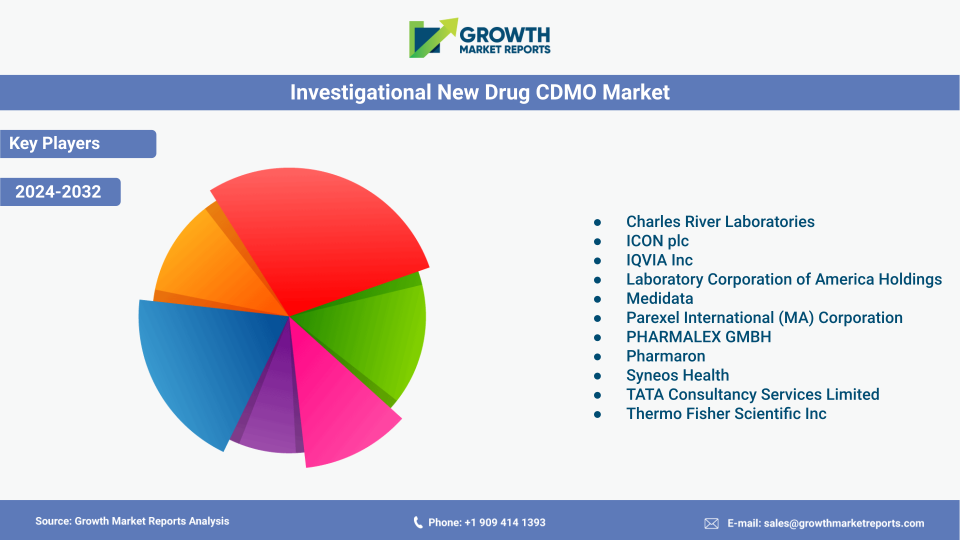
Key players competing in the global investigational new drug CDMO market are Charles River Laboratories; ICON plc; IQVIA Inc; Laboratory Corporation of America Holdings; Medidata; Parexel International (MA) Corporation; PHARMALEX GMBH; Pharmaron; Syneos Health; TATA Consultancy Services Limited; and Thermo Fisher Scientific Inc.
These companies use development strategies including mergers, acquisitions, partnerships, collaboration, and product launches to expand their consumer base worldwide. For instance,
On September 1, 2022, PHARMALEX GMBH, a prominent global consulting solutions provider serving biotech, pharma, medtech, and related industries, disclosed the inauguration of its latest branch in Beijing, China. The establishment of this branch underscores the company's commitment to delivering exceptional regulatory expertise to clients within this region. Moreover, PHARMALEX GMBH announed plans that expands its local footprint and granting clients increased access to comprehensive regulatory solutions throughout the country.
Technological advancements such as automation, high-throughput screening, advanced analytical platforms, and digital data management are enhancing efficiency, service quality, and scalability in the IND CDMO market.
Major companies include Catalent Inc., Lonza Group, Thermo Fisher Scientific, WuXi AppTec, Samsung Biologics, Charles River Laboratories, and Syngene International, among others.
Opportunities include growth in advanced therapies (like cell and gene therapies), digital transformation, and expansion into emerging markets. Challenges include stringent regulatory requirements, intense competition, and pricing pressures.
Main end-users include pharmaceutical companies, biotechnology companies, academic and research institutes, non-profit organizations, government agencies, and contract research organizations (CROs).
The market is segmented into small molecules and biologics. While small molecules have traditionally dominated, the biologics segment—including monoclonal antibodies, recombinant proteins, and cell and gene therapies—is growing rapidly.
IND CDMOs offer a range of services including process development, analytical and bioanalytical services, manufacturing, regulatory support, project management, clinical supply logistics, and quality assurance.
North America leads the IND CDMO market, followed by Europe and Asia Pacific. North America’s dominance is due to its strong pharmaceutical and biotech industry, robust regulatory framework, and significant R&D investments.
Key growth drivers include increasing complexity in drug development, rising demand for outsourcing among pharmaceutical and biotech companies, a surge in novel drug candidates, evolving regulatory requirements, and advancements in technology such as automation and advanced analytics.
The global IND CDMO market is expected to grow from USD 5.8 billion in 2024 to approximately USD 12.1 billion by 2033, at a CAGR of 8.6% during the forecast period.
The Investigational New Drug (IND) CDMO market refers to the industry of Contract Development and Manufacturing Organizations (CDMOs) that provide specialized outsourcing services for the development, manufacturing, and regulatory support of investigational drugs during early-phase clinical trials.