Segments - by Offering (Meal, Bakery & Confectionery, Beverages, Others), by Flight Type (Full Service, Low Cost, Hybrid), by Airline Class (Economy, Business, First Class), by Service Type (In-house, Outsourced)
This report is updated with the latest market data and insights as of June 2026. Base year: 2025 | Forecast period: 2026-2034
According to our latest research, the global inflight catering market size reached USD 19.8 billion in 2025, driven by the sustained resurgence of international air travel and rapidly evolving passenger expectations around onboard dining. The market is expected to grow at a CAGR of 6.1% from 2026 to 2034, reaching an estimated USD 33.8 billion by 2034. This robust growth is underpinned by rising global passenger volumes, increasing demand for premium inflight experiences, and the continued expansion of airline fleets across both mature and emerging markets.
Several core growth factors are propelling the inflight catering market forward in 2025 and beyond. The near-complete recovery of the global aviation sector has been instrumental, with airlines not only reinstating pre-pandemic routes but actively launching new long-haul and ultra-long-haul connections. As competition among carriers intensifies, inflight catering has emerged as a critical differentiator for passenger satisfaction and brand loyalty. The increasing prevalence of extended-range flights has necessitated the provision of high-quality, diverse, and nutritionally balanced meal options to meet the expectations of discerning travelers. This has driven significant investment in menu innovation, encompassing regionally inspired cuisines, health-conscious choices, plant-based alternatives, and certified dietary-specific offerings, all of which are contributing meaningfully to the market's expansion. The broader inflight services landscape is evolving in tandem, creating synergistic growth opportunities across the passenger experience value chain.
Technological advancements are further shaping the inflight catering market landscape. Airlines and catering providers are leveraging digital platforms for pre-ordering meals, personalizing passenger preferences, and optimizing end-to-end supply chain management. The integration of artificial intelligence and advanced data analytics allows for more accurate prediction of passenger demand, meaningful reduction of food wastage, and continuous enhancement of operational efficiency. Additionally, the widespread adoption of eco-friendly packaging and sustainable sourcing practices aligns with the growing emphasis on environmental responsibility across the aviation industry. These innovations not only enhance the passenger experience but also support airlines in meeting ambitious sustainability targets, driving long-term market growth. Providers focused on zero-waste inflight catering are gaining traction as airlines seek to reduce carbon footprints and meet regulatory ESG benchmarks.
Another significant growth driver is the evolving demographic and psychographic profile of air travelers. With a growing proportion of millennial and Gen Z passengers, demand has risen sharply for unique, customizable, and high-quality inflight dining. These passengers prioritize health, sustainability, and authenticity in their food choices, prompting airlines to collaborate with celebrated chefs, renowned restaurant groups, and local food producers. The trend toward premiumization is particularly pronounced in business and first class cabins, where gourmet meals and exclusive beverage selections have become standard. This shift is no longer limited to full-service carriers. Even low-cost and hybrid airlines are enhancing their inflight catering portfolios to attract a broader customer base and grow ancillary revenue streams. The parallel growth of private jet catering further illustrates the broader consumer appetite for elevated onboard dining experiences.
From a regional perspective, Asia Pacific continues to be the fastest-growing market for inflight catering, fueled by rapid urbanization, a burgeoning middle class, and the accelerating expansion of both full-service and low-cost carriers. North America and Europe remain mature markets, characterized by high passenger volumes and a sustained focus on service quality and culinary innovation. The Middle East, with its strategic geographic location and world-class hub airlines, is witnessing robust growth in inflight catering services. Latin America and Africa are emerging markets showing steady progress as air connectivity improves and inbound tourism rebounds. Each region presents unique opportunities shaped by local consumer preferences, regulatory environments, and competitive dynamics.
The inflight catering market by offering is segmented into meal, bakery and confectionery, beverages, and others, each playing a distinct role in shaping the passenger dining experience. The meal segment remains the cornerstone of inflight catering, accounting for approximately 52.4% of revenue in 2025. Airlines continue to invest heavily in developing diverse meal options that cater to various dietary needs, including vegetarian, vegan, gluten-free, halal, and kosher choices. The focus on quality, freshness, and regional authenticity has intensified, with many airlines collaborating with celebrity chefs and renowned restaurant brands to create signature dishes. This not only enhances passenger satisfaction but also functions as a powerful marketing tool, differentiating airlines in a highly competitive environment. The growing infrastructure around airport catering services is enabling catering providers to scale meal preparation and distribution more efficiently than ever before.
Bakery and confectionery offerings have gained significant traction, particularly on long-haul and premium flights, contributing approximately 18.7% of market revenue in 2025. Passengers increasingly expect a selection of fresh breads, artisanal pastries, and gourmet desserts as part of their inflight dining experience. The rising demand for handcrafted and locally sourced bakery products reflects broader consumer trends toward authenticity and quality. Airlines are responding by expanding their bakery and confectionery menus, often featuring regional specialties that resonate with both local and international travelers. This segment is also witnessing innovation in packaging and presentation, with a focus on maintaining freshness and visual appeal throughout the duration of the flight.
The beverages segment, encompassing both alcoholic and non-alcoholic options, accounts for approximately 20.3% of the 2025 market and plays a crucial role in enhancing the overall inflight experience. Premiumization is the defining trend, with airlines curating exclusive wine lists, craft beers, specialty coffees, and artisanal teas to cater to diverse passenger preferences. The inclusion of signature cocktails and mocktails developed in collaboration with renowned mixologists further elevates the beverage offering in premium cabins. Health-conscious travelers are also driving demand for natural juices, functional beverages, and low-sugar alternatives, prompting airlines to diversify their portfolios accordingly. The ability to personalize beverage choices through digital pre-ordering is becoming increasingly important to passenger satisfaction and ancillary revenue generation. The evolution of inflight fine dining is closely tied to the sophistication of both food and beverage curation across premium airline classes.
The "others" category, representing approximately 8.6% of the 2025 market, includes a wide range of supplementary offerings such as snacks, fresh fruits, and specialty dietary items. This segment is particularly important for short-haul and low-cost carriers, where full meal services may not be operationally feasible. Airlines are focusing on providing high-quality, convenient, and health-forward snack options to meet the evolving needs of modern travelers. The trend toward individually packaged and hygiene-forward items has continued beyond the pandemic period, now embedded as a passenger expectation. As passenger preferences continue to evolve, the flexibility to offer a diverse range of catering options remains a key differentiator for airlines across all segments and carrier types.
| Attributes | Details |
| Report Title | Inflight Catering Market Research Report 2034 |
| By Offering | Meal, Bakery & Confectionery, Beverages, Others |
| By Flight Type | Full Service, Low Cost, Hybrid |
| By Airline Class | Economy, Business, First Class |
| By Service Type | In-house, Outsourced |
| Regions Covered | North America, Europe, APAC, Latin America, MEA |
| Countries Covered | North America (United States, Canada), Europe (Germany, France, Italy, United Kingdom, Spain, Russia, Rest of Europe), Asia Pacific (China, Japan, South Korea, India, Australia, South East Asia (SEA), Rest of Asia Pacific), Latin America (Mexico, Brazil, Rest of Latin America), Middle East & Africa (Saudi Arabia, South Africa, United Arab Emirates, Rest of Middle East & Africa) |
| Base Year | 2025 |
| Historic Data | 2019-2024 |
| Forecast Period | 2026-2034 |
| Number of Pages | 271 |
| Number of Tables & Figures | 354 |
| Customization Available | Yes, the report can be customized as per your need. |
The inflight catering market is segmented by flight type into full service, low cost, and hybrid carriers, each with distinct operational models and service expectations. Full-service carriers dominate the market, offering comprehensive meal and beverage services as part of the base ticket price, particularly on long-haul and international routes. These airlines prioritize quality, variety, and personalization, featuring multi-course meals, premium beverages, and extensive dietary accommodation. The emphasis on service excellence and passenger comfort drives continuous innovation in menu design, presentation, and delivery. Full-service carriers are also at the forefront of integrating digital technologies to enhance the inflight dining experience, including pre-ordering systems, AI-driven personalization, and real-time feedback platforms that allow iterative menu improvement.
Low-cost carriers (LCCs) have traditionally offered limited or no complimentary inflight catering, focusing instead on cost efficiency and ancillary revenue generation. However, evolving passenger expectations have prompted many LCCs to expand their catering offerings significantly by 2025, introducing a broader range of buy-on-board meals, premium snacks, and beverages. The emphasis is on convenience, affordability, and customization, with passengers able to select and purchase items based on individual preferences. The adoption of digital ordering platforms and contactless payment systems has streamlined the process, enhancing operational efficiency and passenger satisfaction simultaneously. As competition intensifies, LCCs are investing more deliberately in the quality and diversity of their inflight catering menus to attract quality-conscious customers.
Hybrid carriers, which combine elements of both full-service and low-cost models, represent a growing and increasingly important segment within the inflight catering market. These airlines offer a flexible approach to inflight dining, providing complimentary meals and beverages on select routes or in specific cabin classes while offering buy-on-board options elsewhere. The hybrid model allows airlines to cater to a wider range of passenger preferences and budgets, optimizing both service quality and profitability. Innovation is a key focus for hybrid carriers in 2025, with experimentation in new menu concepts, regionally inspired dishes, and sustainable packaging solutions. The ability to balance cost control with an enhanced passenger experience positions hybrid carriers as important players in the evolving inflight catering landscape.
The segmentation by flight type underscores the importance of adaptability and ongoing innovation in the inflight catering market. Airlines must continuously assess and align their catering strategies with passenger expectations, competitive dynamics, and operational constraints. The integration of digital technologies, a commitment to sustainability, and a focus on quality and personalization are common threads across all flight types, shaping the future direction of inflight catering and sustaining market growth through 2034.
The inflight catering market is further segmented by airline class into economy, business, and first class, each defined by distinct service levels and passenger expectations. The economy class segment represents the largest volume of passengers and is a major driver of overall market demand. Airlines are increasingly focused on enhancing the quality and variety of meals offered in economy class, recognizing the direct impact of inflight dining on overall passenger satisfaction scores and repeat bookings. The introduction of healthier options, regionally inspired dishes, and customizable meal choices reflects a broader trend toward personalization and inclusivity. Digital pre-selection platforms are enabling airlines to reduce food waste and improve operational efficiency, while simultaneously giving economy passengers a greater sense of agency over their dining experience.
Business class passengers expect a premium inflight dining experience defined by quality, variety, and attentive presentation. Airlines are investing in gourmet menus, curated wine and beverage selections, and personalized service to meet the expectations of this high-value segment. Collaborations with celebrated chefs, renowned restaurant groups, and luxury lifestyle brands are increasingly standard, providing business class passengers with a genuinely memorable dining experience at altitude. The focus on wellness and sustainability is also evident, with airlines offering organic, locally sourced, and dietary-specific meal options that align with the priorities of frequent business travelers. Business class catering has become a critical differentiator for airlines in 2025, directly influencing corporate account retention and overall brand perception.
First class represents the pinnacle of inflight catering, with airlines delivering an exceptional and exclusive dining experience that rivals the finest restaurants on the ground. Multi-course gourmet meals, bespoke beverage pairings, and personalized service are standard features in first class cabins. Airlines frequently feature signature dishes created by globally recognized chefs, complemented by rare wines, vintage champagnes, and aged spirits. The attention to detail extends to premium tableware, artistic presentation, and the precise timing of each meal course, ensuring a seamless and luxurious experience. First class catering functions both as a reflection of the airline's brand identity and as a critical factor in attracting and retaining ultra-high-net-worth passengers. The related growth of airport lounge catering mirrors these premiumization trends, with airlines extending the fine dining experience from the lounge through to the aircraft.
The segmentation by airline class highlights the diverse and continuously evolving nature of inflight catering, with airlines innovating at every level to meet the unique needs and preferences of different passenger segments. The ability to deliver high-quality, personalized, and memorable dining experiences across all cabin classes remains a key driver of market growth and competitive differentiation in the global inflight catering industry.
The inflight catering market is segmented by service type into in-house and outsourced services, each offering distinct advantages and strategic trade-offs. In-house catering involves airlines managing their own catering operations, including menu development, food preparation, quality control, and logistics. This approach allows for greater control over consistency and customization, enabling airlines to align their catering offerings tightly with brand values and evolving passenger expectations. In-house catering is particularly prevalent among full-service and premium carriers, where differentiation and quality are paramount strategic priorities. However, it requires significant capital investment in infrastructure, skilled culinary talent, and sophisticated supply chain management, making it less viable for smaller or budget-focused airlines.
Outsourced catering services involve partnering with specialized inflight catering providers who manage all aspects of food preparation, packaging, and delivery logistics. This model offers compelling advantages, including cost efficiency, rapid scalability, and immediate access to a wide range of culinary expertise and global procurement networks. Outsourced catering is the dominant model for low-cost and hybrid carriers, as well as for full-service airlines operating in regions where local in-house capabilities are limited. The ability to customize menus, accommodate diverse dietary requirements, and consistently meet food safety and hygiene standards are critical factors driving ongoing adoption of outsourced catering solutions. The development of sophisticated catering logistics platforms is enhancing the speed, traceability, and compliance of outsourced operations across global networks.
The choice between in-house and outsourced catering is influenced by airline size, route network breadth, passenger profile, and overarching strategic priorities. Many airlines in 2025 adopt a hybrid approach, combining in-house capabilities for flagship routes or premium cabin classes with outsourced solutions for regional or charter operations. This allows airlines to optimize cost, quality, and flexibility while leveraging the complementary strengths of both models. The increasing complexity of passenger dietary preferences, tightening regulatory requirements, and ambitious sustainability commitments are prompting airlines and catering providers to collaborate more deeply, driving innovation and continuous improvement across the service delivery chain.
The segmentation by service type underscores the strategic importance of operational excellence, technology adoption, and trusted partnerships in the inflight catering market. As airlines seek to enhance the passenger experience while managing costs and regulatory complexity, the ability to deliver high-quality, scalable, and sustainable catering solutions will remain a primary determinant of competitive success in this dynamic global market.
The inflight catering market presents significant opportunities for growth and sustained innovation through 2034. The increasing demand for personalized and premium inflight dining experiences is driving airlines and catering providers to invest in menu innovation, technology integration, and far-reaching sustainability initiatives. The rise of digital platforms enables airlines to offer pre-ordering, deep customization, and real-time feedback mechanisms, simultaneously enhancing passenger satisfaction and operational efficiency. The growing emphasis on health, wellness, and environmental responsibility opens new avenues for product development, including certified organic, plant-based, and locally sourced meal options. Airlines that can effectively leverage these converging trends to deliver differentiated and memorable inflight dining experiences will be well-positioned to capture market share and drive long-term revenue growth through the forecast period.
Another major opportunity lies in the expansion of air travel across emerging markets, particularly in Asia Pacific, Latin America, and Sub-Saharan Africa. Rapid urbanization, rising disposable incomes, and improving air connectivity are fueling passenger growth in these regions, generating new and sustained demand for inflight catering services. Airlines and catering providers that can adapt to local tastes, dietary preferences, and cultural nuances will be best placed to capitalize on these high-growth markets. Strategic partnerships, targeted investment in local supply chains, and the development of regionally authentic menus will be critical success factors. The capacity to scale operations while ensuring food safety compliance and maintaining consistent quality across geographically diverse markets will represent a meaningful competitive advantage.
Despite the positive outlook, the inflight catering market faces several notable restraints and threats. The high cost and operational complexity of catering, particularly in the context of persistent input price inflation and economic uncertainty, can compress profit margins across the value chain. Airlines must balance the imperative for quality and innovation with stringent cost control and efficiency targets. Evolving regulatory requirements related to food safety, allergen labeling, and sustainability reporting add layers of compliance complexity, requiring continuous investment in systems, processes, and personnel. The ongoing risk of supply chain disruptions, skilled labor shortages, and geopolitical instability also poses material challenges for airlines and catering providers alike. Mitigating these risks requires robust supply chain diversification, proactive contingency planning, and sustained investment in workforce development and technology infrastructure.
The regional distribution of the inflight catering market reflects the varying dynamics of air travel demand, carrier mix, and passenger preferences across the globe. In Asia Pacific, the market is witnessing the fastest growth, with a market size of approximately USD 5.9 billion in 2025 and a projected CAGR of 7.5% through 2034. This growth is driven by the accelerating expansion of both full-service and low-cost carriers, increasing disposable incomes, and a rapidly growing middle class seeking premium travel experiences. Airlines across the region are investing in innovative and regionally authentic catering offerings to serve the diverse tastes of a vast and varied passenger base, further fueling market expansion.
In North America, the inflight catering market is characterized by high aggregate passenger volumes and a sustained focus on service quality and culinary innovation. The market size in 2025 was approximately USD 5.1 billion, with steady growth expected as airlines continue to enhance their inflight offerings and leverage technology to improve both operational efficiency and personalization. The emphasis on sustainability, health-conscious menus, and bespoke service is particularly pronounced in this region, reflecting broader consumer trends. Leading airlines are collaborating with award-winning chefs and local producers to create distinctive and memorable dining experiences, driving meaningful brand differentiation and customer loyalty.
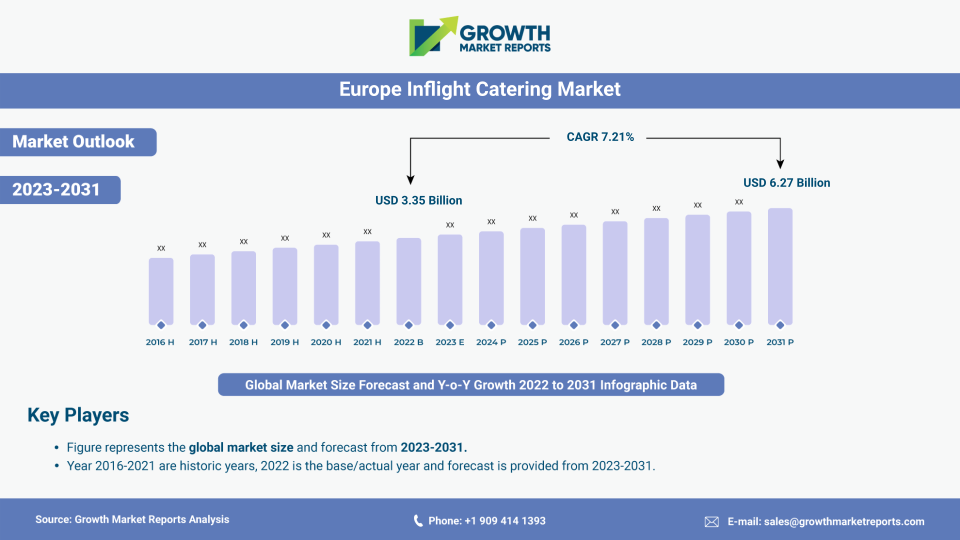
Europe remains a mature and highly competitive market, with a market size of approximately USD 4.4 billion in 2025. The focus on quality, sustainability, and innovation is central to the region's inflight catering offerings, with airlines investing in premium menus, eco-certified packaging, and digital platforms for meal selection and passenger feedback. The Middle East and Africa region, with a combined market size of approximately USD 2.4 billion in 2025, is anchored by world-class hub airlines and a strategic geographic location that positions the region as a nexus for global air travel. Airlines in the Middle East are at the forefront of inflight catering innovation, offering luxurious and diverse dining experiences designed to attract and retain high-value international passengers. Latin America, with a market size of approximately USD 2.0 billion in 2025, is showing steady and accelerating growth as air connectivity deepens and both inbound and domestic tourism continues to rebound, presenting expanding opportunities for airlines and catering providers operating in the region.
The inflight catering market is highly competitive, with a mix of global, regional, and specialist players competing on the basis of service quality, menu innovation, operational scale, and technological capability. The competitive landscape in 2025 is shaped by factors including culinary differentiation, the ability to accommodate diverse dietary requirements at scale, responsiveness to sustainability mandates, and the depth of digital integration across the ordering and delivery experience. Leading airlines are increasingly partnering with celebrated chefs, luxury hospitality brands, and local food artisans to create signature catering programs that reinforce brand identity and justify premium pricing. Technology, sustainability, and personalization are the three pillars around which competitive strategy in this market is increasingly organized.
Major inflight catering providers operate extensive global networks of purpose-built kitchens, temperature-controlled logistics hubs, and integrated supply chains, enabling them to serve hundreds of airlines across multiple continents with consistent quality and regulatory compliance. Strategic partnerships with airlines, airports, food manufacturers, and technology companies are critical to maintaining competitiveness and driving continuous improvement. The trend toward consolidation remains active, with mergers and acquisitions enabling companies to expand geographic coverage, diversify service offerings, and realize material operational synergies. Smaller specialist providers continue to compete effectively in niche segments by offering deep culinary expertise, agility, and the ability to deliver highly customized solutions that larger providers may struggle to match.
Innovation remains the most powerful driver of competitive advantage in the inflight catering market. Leading companies are investing in research and development to pioneer new menu concepts, advance sustainable packaging technology, and enhance the sensory quality of food prepared and stored at altitude. The deployment of AI-powered demand forecasting tools is transforming procurement efficiency and food waste management across the industry. Sustainability credentials, including verified supply chain transparency, reduced single-use plastics, and measurable carbon reduction commitments, are becoming important factors in airline procurement decisions, raising the competitive bar for all market participants.
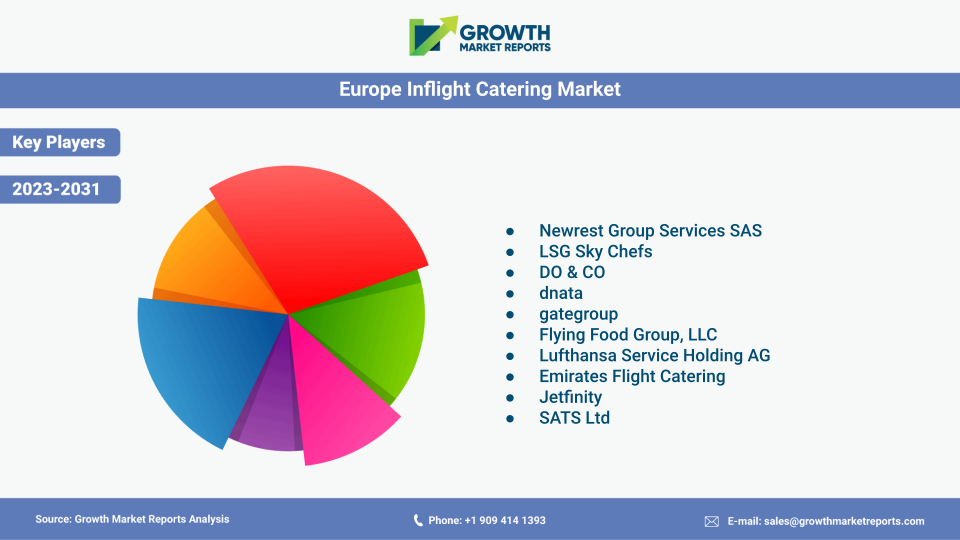
Some of the major companies operating in the inflight catering market include LSG Sky Chefs, gategroup, SATS Ltd., dnata, DO & CO, Newrest, and Emirates Flight Catering. LSG Sky Chefs, a subsidiary of Lufthansa Group, is one of the largest inflight catering providers globally, serving more than 200 airlines across over 50 countries and continuously investing in digital transformation and sustainability. gategroup operates a global network of catering facilities and is recognized for its focus on innovation, quality management, and customer-centric solutions. SATS Ltd., headquartered in Singapore, is the leading provider across Asia Pacific, offering integrated catering and ground handling services with a growing footprint in gateway cities across the region. dnata, part of the Emirates Group, provides catering services to more than 300 airlines across multiple continents, leveraging its scale and operational expertise. DO & CO, the Austrian premium catering specialist, is renowned for its gourmet philosophy and prestigious partnerships with leading full-service carriers. Emirates Flight Catering, based in Dubai, operates one of the largest and most technologically advanced catering facilities in the world, producing hundreds of thousands of meals daily for Emirates and partner airlines. These companies collectively define the standards of quality, innovation, and operational excellence in the global inflight catering market.
The Inflight Catering market has been segmented on the basis of
Leading companies in the global inflight catering market include LSG Sky Chefs, gategroup, SATS Ltd., dnata, DO & CO, Newrest, Emirates Flight Catering, Cathay Pacific Catering Services, Saudi Airlines Catering Company, Flying Food Group, Alpha Flight Services, TajSATS Air Catering Ltd., Bangkok Air Catering, Air Culinaire Worldwide, and Journey Group plc. These players collectively serve hundreds of airlines across all major global regions.
Major challenges include managing high operational costs amid fluctuating input prices, navigating complex food safety and regulatory compliance requirements across multiple jurisdictions, addressing supply chain disruptions and labor shortages, and reducing food waste. Airlines and catering providers must also balance the rising cost of premium ingredients and sustainable packaging with the need to maintain competitive pricing and profitability.
Business and first class catering is increasingly defined by gourmet multi-course menus developed with world-renowned chefs, curated premium beverage selections including exclusive wines and craft spirits, and bespoke table settings. Wellness-oriented offerings, such as organic and plant-based meals, along with personalized pre-ordering and real-time dietary customization, are central trends shaping the premium inflight dining experience in 2025.
Full-service carriers provide comprehensive complimentary meal and beverage services, particularly on long-haul routes, with a strong emphasis on quality and personalization. Low-cost carriers typically offer buy-on-board options, focusing on convenience, affordability, and ancillary revenue. Hybrid carriers blend both models, offering complimentary catering on select routes or classes while providing paid options elsewhere, balancing cost efficiency with passenger satisfaction.
The inflight catering market by offering is segmented into meals, bakery and confectionery, beverages, and others. Meals hold the largest share at approximately 52.4% of the 2025 market, followed by beverages at 20.3%, bakery and confectionery at 18.7%, and the others category at 8.6%, which includes snacks, specialty dietary items, and fresh fruits.
Asia Pacific is the fastest-growing region, with a projected CAGR of approximately 7.5% through 2034, driven by rapid fleet expansion among full-service and low-cost carriers, a growing middle class, and rising disposable incomes. The Middle East also shows robust growth, supported by its hub airlines and increasing international passenger traffic.
Airlines are innovating through collaborations with celebrity chefs and renowned restaurants, adoption of AI-driven demand forecasting to reduce food waste, introduction of plant-based and regionally inspired menus, and deployment of digital pre-ordering systems. Sustainable packaging and responsible sourcing have also become central pillars of inflight catering innovation as of 2025.
Key growth drivers include the sustained recovery and expansion of global air travel, increasing passenger expectations for premium and personalized dining, the proliferation of long-haul routes, and growing investment in digital pre-ordering and menu customization platforms. The rise of health-conscious and sustainability-focused consumers is also prompting airlines to innovate their catering portfolios.
The inflight catering market is projected to grow at a CAGR of 6.1% from 2026 to 2034, reaching an estimated USD 33.8 billion by 2034. This growth trajectory reflects rising air travel demand, menu innovation, and increased investment in onboard dining quality across all carrier types.
The global inflight catering market reached USD 19.8 billion in 2025, reflecting strong recovery and expansion across all major aviation regions. Growth is supported by increased passenger volumes, premiumization of airline services, and the ongoing reinstatement of international routes.