Online Travel Market Research Report 2033

Online Travel Market Research Report 2033

Segments - by Service Type (Transportation, Travel Accommodation, Vacation Packages, Others), by Platform (Mobile, Desktop), by Booking Method (Direct, Travel Agents), by End User (Individual, Corporate), by Age Group (18-30 Years, 31-50 Years, Above 50 Years)

https://growthmarketreports.com/Debadatta
Author : Debadatta Patel
https://growthmarketreports.com/Vaibhav
Fact-checked by : V. Chandola
https://growthmarketreports.com/Shruti
Editor : Shruti Bhat

Upcoming | Report ID :CG-1135 | 4.9 Rating | 9 Reviews | 270 Pages | Format : Docx PDF

Report Description


Online Travel Market Outlook

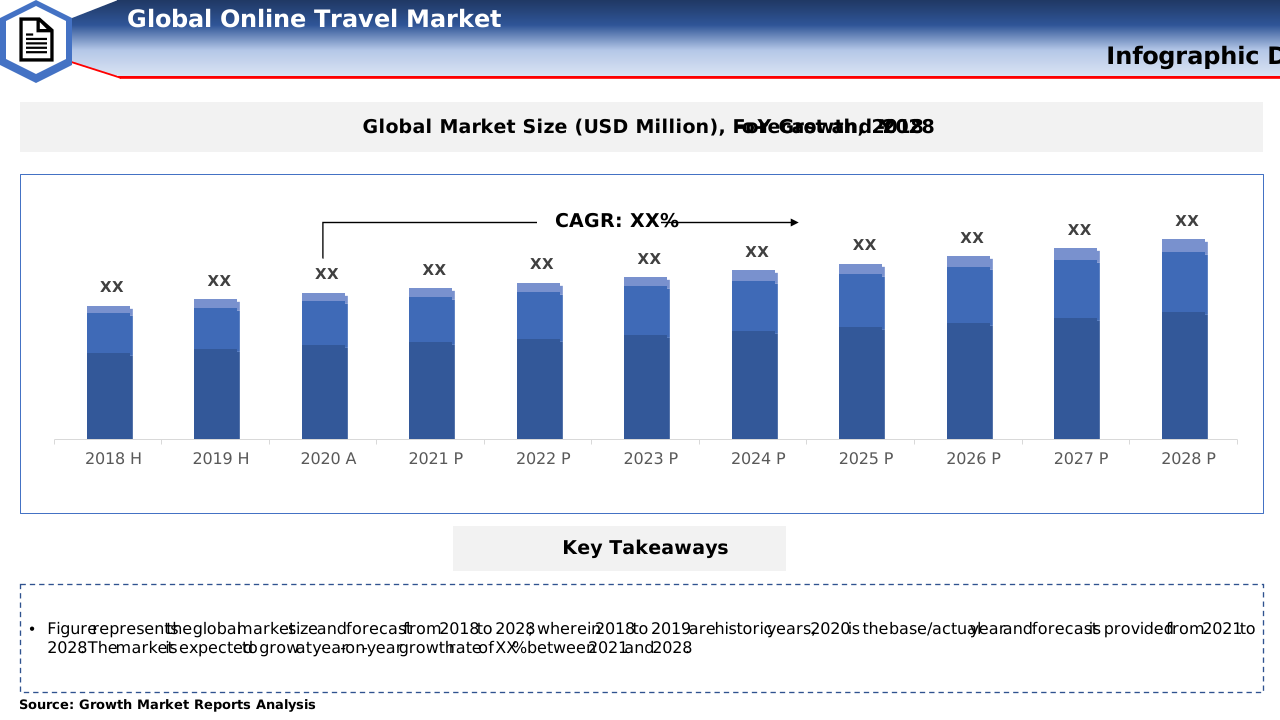
According to our latest research, the global online travel market size reached USD 540 billion in 2024, with a robust compound annual growth rate (CAGR) of 10.2% from 2025 to 2033. This expansion is primarily driven by the increasing penetration of internet and smartphones, digital transformation in the travel industry, and the growing consumer preference for convenient and personalized travel booking experiences. By leveraging the current CAGR, the market is forecasted to reach USD 1,260 billion by 2033, underscoring the substantial growth potential and rapidly evolving trends in the online travel ecosystem worldwide.

One of the most significant growth factors for the online travel market is the widespread adoption of digital technologies, which has fundamentally transformed the way consumers plan, book, and experience travel. The proliferation of smartphones and the increasing accessibility of high-speed internet have empowered travelers to access real-time information, compare prices, and make bookings on-the-go. Online travel agencies (OTAs) and travel service providers are investing heavily in advanced technologies such as artificial intelligence, machine learning, and big data analytics to enhance user experiences, offer personalized recommendations, and streamline the booking process. This digital shift has not only improved operational efficiencies but also enabled businesses to reach a broader and more diverse customer base across the globe, fueling the ongoing expansion of the online travel market.

Another key driver is the evolving preferences and expectations of modern travelers, particularly among younger demographics who prioritize convenience, flexibility, and customization. The demand for unique and tailor-made travel experiences has led to the emergence of niche travel platforms and specialized service offerings, ranging from adventure travel to eco-tourism and wellness retreats. The integration of user-generated content, reviews, and social media platforms into online travel services has further enhanced consumer confidence and decision-making. Additionally, the growing trend of last-minute bookings and the increasing popularity of vacation packages that bundle transportation, accommodation, and activities are contributing to the market’s growth. These factors collectively underscore the shift towards a more customer-centric and dynamic online travel landscape.

The online travel market is also benefiting from strategic partnerships and collaborations between travel service providers, technology firms, and payment gateways. These alliances are enabling seamless, secure, and integrated booking experiences, while also expanding the range of services available to consumers. The rise of mobile payment solutions and digital wallets has further simplified transactions, making it easier for travelers to book and pay for services regardless of their location. Furthermore, the adoption of cloud-based platforms and APIs has facilitated real-time inventory management and dynamic pricing, allowing travel companies to respond swiftly to changing market conditions and consumer demands. These technological advancements are expected to continue driving growth and innovation in the online travel market over the forecast period.

From a regional perspective, Asia Pacific is emerging as the fastest-growing market for online travel, supported by a rapidly expanding middle class, increasing disposable incomes, and rising internet penetration. North America and Europe, while more mature markets, continue to witness steady growth driven by technological innovation and the presence of established industry players. The Middle East & Africa and Latin America are also showing promising potential, fueled by infrastructural developments and the growing adoption of digital travel platforms. Each region presents unique opportunities and challenges, with local consumer behaviors, regulatory environments, and competitive dynamics shaping the trajectory of the online travel market in these geographies.

Global Online Travel Industry Outlook

Service Type Analysis

The online travel market is segmented by service type into transportation, travel accommodation, vacation packages, and others, each contributing significantly to the overall market growth. Transportation services, which include air, rail, and bus bookings, represent the largest share of the market, driven by the increasing preference for online ticketing and the integration of multimodal transportation options. The availability of real-time schedules, dynamic pricing, and instant booking confirmations through online platforms has revolutionized the transportation segment, making it more accessible and user-friendly for travelers worldwide. Moreover, partnerships between OTAs and transportation providers have enabled seamless connectivity and enhanced convenience, further propelling the growth of this segment.

Travel accommodation is another major segment, encompassing online bookings for hotels, resorts, vacation rentals, and alternative lodging options. The rise of sharing economy platforms such as Airbnb and the growing popularity of boutique hotels and unique stays have expanded the range of accommodation choices available to consumers. Online platforms offer detailed descriptions, images, reviews, and ratings, empowering travelers to make informed decisions based on their preferences and budget. The integration of loyalty programs, personalized recommendations, and flexible cancellation policies has also contributed to the increasing adoption of online accommodation booking services, making this segment a key driver of market growth.

The vacation packages segment is gaining traction as travelers seek comprehensive and hassle-free travel solutions that bundle transportation, accommodation, and activities. Online travel platforms are leveraging advanced algorithms and data analytics to curate personalized vacation packages that cater to diverse interests and budgets. This segment is particularly popular among families and group travelers who value convenience, cost savings, and the assurance of a well-organized itinerary. The ability to customize packages, access exclusive deals, and benefit from integrated customer support has further boosted the demand for online vacation package bookings, making it a rapidly growing segment within the online travel market.

The others segment includes ancillary services such as travel insurance, car rentals, and guided tours, which are increasingly being integrated into online travel platforms. The convenience of booking these services alongside primary travel components enhances the overall travel experience and provides added value to consumers. Online platforms are continuously expanding their service offerings to include a wide range of travel-related products, catering to the evolving needs of modern travelers. The growing emphasis on safety, security, and personalized experiences is expected to drive further growth in this segment, as consumers seek comprehensive and reliable solutions for their travel needs.

Report Scope

Attributes Details
Report Title Online Travel Market Research Report 2033
By Service Type Transportation, Travel Accommodation, Vacation Packages, Others
By Platform Mobile, Desktop
By Booking Method Direct, Travel Agents
By End User Individual, Corporate
By Age Group 18-30 Years, 31-50 Years, Above 50 Years
Regions Covered North America, Europe, APAC, Latin America, MEA
Base Year 2024
Historic Data 2018-2023
Forecast Period 2025-2033
Number of Pages 270
Number of Tables & Figures 253
Customization Available Yes, the report can be customized as per your need.

Platform Analysis

The online travel market is segmented by platform into mobile and desktop, each playing a crucial role in shaping consumer behavior and market dynamics. The proliferation of smartphones and the increasing availability of high-speed internet have led to a significant shift towards mobile-based travel bookings. Mobile platforms offer unparalleled convenience, enabling travelers to search, compare, and book travel services anytime and anywhere. The integration of user-friendly apps, mobile wallets, and location-based services has further enhanced the mobile booking experience, making it the preferred choice for a growing segment of consumers, particularly among younger demographics.

Desktop platforms, while witnessing a gradual decline in market share, continue to play a vital role, especially for more complex or high-value bookings such as international travel and customized vacation packages. The larger screen size, detailed interface, and the ability to access comprehensive information make desktop platforms suitable for in-depth research and planning. Many consumers prefer to use desktops for initial research and comparison before finalizing their bookings on mobile devices, reflecting the growing trend of cross-platform usage in the online travel market.

The integration of advanced technologies such as artificial intelligence, machine learning, and chatbots into both mobile and desktop platforms has significantly enhanced the user experience. These technologies enable personalized recommendations, real-time assistance, and seamless navigation, reducing friction in the booking process and increasing customer satisfaction. As travel companies continue to invest in digital innovation, the distinction between mobile and desktop platforms is becoming increasingly blurred, with a focus on providing a consistent and integrated omni-channel experience across all touchpoints.

The growing adoption of mobile-first strategies by online travel agencies and service providers is expected to drive further growth in the mobile segment. Features such as push notifications, instant deals, and one-click booking are designed to capture the attention of on-the-go travelers and encourage spontaneous bookings. Additionally, the integration of augmented reality (AR) and virtual reality (VR) technologies into mobile apps is enhancing the pre-travel experience, allowing users to explore destinations and accommodations virtually before making a decision. These innovations are set to redefine the future of online travel bookings and shape the competitive landscape of the market.

Booking Method Analysis

The online travel market is segmented by booking method into direct and travel agents, each offering distinct advantages and catering to different consumer preferences. Direct bookings, which involve reserving travel services through the official websites or apps of airlines, hotels, and other service providers, are gaining popularity due to the perceived benefits of lower prices, exclusive deals, and enhanced customer service. Many travel brands are investing in loyalty programs, personalized offers, and seamless booking interfaces to encourage direct bookings and reduce dependency on third-party intermediaries.

Travel agents, including both traditional and online travel agencies (OTAs), continue to play a significant role in the online travel ecosystem. OTAs offer a one-stop platform for comparing multiple options, accessing bundled deals, and benefiting from expert advice and customer support. For complex itineraries, group travel, or specialized services, consumers often prefer the convenience and expertise provided by travel agents. The ability to access a wide range of options, read reviews, and benefit from price transparency makes OTAs a popular choice among travelers seeking value and convenience.

The competitive dynamics between direct and agent-based bookings are evolving, with both channels leveraging technology to enhance their value propositions. Direct booking platforms are focusing on user experience, personalization, and loyalty, while OTAs are expanding their service offerings, integrating advanced search and comparison tools, and partnering with a broader range of service providers. The growing trend of meta-search engines, which aggregate results from multiple sources, is further blurring the lines between direct and agent-based bookings, providing consumers with greater choice and flexibility.

As the online travel market continues to mature, the importance of an integrated and seamless booking experience across channels is becoming increasingly evident. Travel companies are adopting omni-channel strategies to ensure consistency, convenience, and personalization, regardless of the booking method. The rise of voice search, chatbots, and AI-driven assistants is further transforming the booking landscape, enabling faster and more intuitive interactions. These developments are expected to shape the future of online travel bookings, with a focus on delivering value, convenience, and satisfaction to consumers.

End User Analysis

The online travel market is segmented by end user into individual and corporate segments, each exhibiting unique characteristics and driving distinct growth trends. The individual segment, comprising leisure travelers, families, and solo adventurers, represents the largest share of the market. The increasing desire for personalized and memorable travel experiences, coupled with the convenience of online booking platforms, is fueling the growth of this segment. Online travel agencies and service providers are focusing on curating tailored offerings, exclusive deals, and flexible options to cater to the diverse needs of individual travelers.

The corporate segment, encompassing business travelers and organizations, is also witnessing significant growth, driven by the rising trend of corporate travel and the increasing adoption of online booking tools by enterprises. Corporate travel management platforms offer a range of features, including policy compliance, expense tracking, and consolidated reporting, enabling organizations to streamline their travel operations and optimize costs. The integration of advanced analytics, mobile apps, and self-service tools is enhancing the efficiency and convenience of corporate travel bookings, making this segment an important growth driver for the online travel market.

The growing emphasis on work-life balance and the rise of “bleisure” travel, where business travelers extend their trips for leisure purposes, is blurring the lines between individual and corporate travel segments. Online travel platforms are responding by offering hybrid solutions that cater to both business and leisure needs, including flexible booking options, loyalty programs, and personalized recommendations. This convergence is creating new opportunities for market players to innovate and capture a larger share of the online travel market.

Furthermore, the increasing adoption of digital payment solutions, mobile apps, and real-time communication tools is enhancing the overall travel experience for both individual and corporate users. The ability to access instant information, manage bookings, and receive support on-the-go is becoming a key differentiator in the competitive online travel landscape. As travel preferences and behaviors continue to evolve, the focus on delivering seamless, personalized, and integrated solutions will remain central to the growth and success of the online travel market.

Age Group Analysis

The online travel market is segmented by age group into 18-30 years, 31-50 years, and above 50 years, each exhibiting distinct travel preferences and booking behaviors. The 18-30 years segment, often referred to as millennials and Gen Z, is characterized by a strong preference for digital platforms, spontaneous travel decisions, and experiential travel. This demographic is highly active on social media, relies heavily on peer reviews and user-generated content, and values convenience and flexibility in travel bookings. Online travel platforms are targeting this segment with mobile-first strategies, personalized recommendations, and exclusive deals to capture their attention and loyalty.

The 31-50 years age group represents a significant portion of the market, encompassing professionals, families, and frequent travelers. This segment is characterized by higher purchasing power, a preference for value-driven and well-organized travel experiences, and a willingness to invest in premium services and amenities. Online travel platforms are focusing on offering comprehensive vacation packages, family-friendly options, and loyalty programs to cater to the needs of this demographic. The integration of advanced search and comparison tools, flexible payment options, and personalized offers is enhancing the booking experience for this age group, making it a key driver of market growth.

The above 50 years segment, often referred to as baby boomers and seniors, is increasingly embracing online travel platforms for convenience, transparency, and access to a wide range of options. While this demographic may have initially been slower to adopt digital booking tools, the growing familiarity with technology and the desire for hassle-free travel experiences are driving increased adoption. Online travel agencies are responding by offering user-friendly interfaces, dedicated customer support, and tailored offerings that cater to the preferences and needs of older travelers. The focus on safety, security, and personalized service is particularly important for this segment, contributing to its growing presence in the online travel market.

As the online travel market continues to evolve, the ability to understand and cater to the unique preferences of different age groups will be critical for sustained growth and competitive advantage. Market players are leveraging data analytics, segmentation strategies, and targeted marketing campaigns to engage and retain customers across all age groups. The ongoing digital transformation and the increasing integration of advanced technologies are expected to further enhance the booking experience and drive growth across all demographic segments.

Opportunities & Threats

The online travel market presents significant opportunities for growth and innovation, particularly through the integration of emerging technologies and the expansion of service offerings. The adoption of artificial intelligence, machine learning, and data analytics is enabling travel companies to deliver highly personalized experiences, optimize pricing strategies, and enhance customer engagement. The rise of new travel trends such as sustainable tourism, adventure travel, and wellness tourism is creating opportunities for niche platforms and specialized service providers to capture untapped market segments. Furthermore, the increasing adoption of mobile payment solutions, digital wallets, and contactless technologies is simplifying transactions and enhancing the overall booking experience, driving further growth in the online travel market.

Another major opportunity lies in the expansion into emerging markets, particularly in Asia Pacific, Latin America, and the Middle East & Africa, where rising internet penetration, growing disposable incomes, and increasing travel aspirations are driving demand for online travel services. Market players are investing in localized platforms, language support, and region-specific offerings to cater to the unique needs and preferences of consumers in these regions. Strategic partnerships with local service providers, technology firms, and payment gateways are enabling seamless and integrated travel experiences, positioning companies to capture a larger share of the global online travel market. The ongoing digital transformation and the increasing focus on customer-centric solutions are expected to create new avenues for growth and differentiation in the coming years.

Despite the numerous growth opportunities, the online travel market faces several challenges and restraining factors, including intense competition, regulatory complexities, and cybersecurity risks. The presence of multiple players and the low barriers to entry have led to price wars, margin pressures, and the need for continuous innovation to stay ahead. Regulatory issues related to data privacy, consumer protection, and cross-border transactions can pose significant challenges, particularly for global players operating in multiple jurisdictions. Additionally, the increasing incidence of cyberattacks, data breaches, and online fraud is raising concerns about the safety and security of online travel platforms. Addressing these challenges will require ongoing investments in technology, compliance, and risk management to ensure sustained growth and consumer trust in the online travel market.

Regional Outlook

The Asia Pacific region is emerging as the fastest-growing market for online travel, with a market size of USD 210 billion in 2024 and a projected CAGR of 13.5% through 2033. The rapid expansion of the middle class, increasing disposable incomes, and rising internet and smartphone penetration are driving the adoption of online travel services across countries such as China, India, Japan, and Southeast Asian nations. Localized platforms, language support, and region-specific offerings are enabling market players to cater to the diverse needs and preferences of consumers in this dynamic region. The ongoing digital transformation and the increasing focus on customer-centric solutions are expected to further accelerate growth in the Asia Pacific online travel market.

North America remains a mature and highly competitive market, with a market size of USD 150 billion in 2024. The region is characterized by high internet penetration, advanced digital infrastructure, and the presence of established industry players. Technological innovation, the integration of advanced analytics, and the growing popularity of mobile booking platforms are driving steady growth in the North American online travel market. The increasing demand for personalized experiences, sustainable travel options, and flexible booking policies is shaping consumer behavior and influencing market dynamics in the region. Market players are focusing on differentiation, customer engagement, and loyalty programs to maintain their competitive edge in this highly saturated market.

Europe, with a market size of USD 120 billion in 2024, continues to witness steady growth driven by the increasing adoption of online booking platforms, the rise of low-cost carriers, and the growing popularity of vacation packages. The region’s diverse travel landscape, rich cultural heritage, and proximity to multiple destinations make it a popular choice for both leisure and business travelers. The integration of advanced technologies, the focus on sustainability, and the increasing demand for unique and experiential travel options are expected to drive further growth in the European online travel market. Latin America and the Middle East & Africa, with market sizes of USD 35 billion and USD 25 billion respectively, are also showing promising potential, supported by infrastructural developments, rising travel aspirations, and the growing adoption of digital travel platforms.

Online Travel Market Statistics

Competitor Outlook

The online travel market is characterized by intense competition, with a mix of global giants, regional players, and niche platforms vying for market share. The competitive landscape is shaped by continuous innovation, aggressive marketing strategies, and a strong focus on customer experience. Leading players are investing heavily in technology, data analytics, and artificial intelligence to deliver personalized recommendations, optimize pricing, and enhance operational efficiencies. Strategic partnerships, mergers and acquisitions, and the expansion of service offerings are common strategies employed by market participants to strengthen their market position and capture new growth opportunities.

Online travel agencies (OTAs) such as Booking Holdings, Expedia Group, and Trip.com Group dominate the global market, offering a wide range of travel services, including transportation, accommodation, vacation packages, and ancillary services. These platforms leverage their extensive networks, advanced technology infrastructure, and strong brand recognition to attract and retain customers. The rise of meta-search engines such as Kayak and Skyscanner, which aggregate results from multiple sources, is further intensifying competition and providing consumers with greater choice and transparency.

Regional players and specialized platforms are also making significant inroads, particularly in emerging markets where localized offerings, language support, and region-specific services are key differentiators. Companies such as MakeMyTrip in India, Despegar in Latin America, and Almosafer in the Middle East are leveraging their deep understanding of local consumer preferences and regulatory environments to capture market share. The growing popularity of alternative accommodation platforms such as Airbnb and Vrbo is reshaping the accommodation segment, offering unique and personalized travel experiences that appeal to a broad range of travelers.

Major companies in the online travel market include Booking Holdings Inc., Expedia Group Inc., Trip.com Group Limited, Airbnb Inc., MakeMyTrip Limited, Despegar.com Corp., Trivago N.V., Agoda Company Pte. Ltd., Skyscanner Ltd., and Almosafer. Booking Holdings, through its brands such as Booking.com and Priceline, is a global leader in online accommodation bookings, offering a vast inventory and advanced technology solutions. Expedia Group operates a comprehensive portfolio of travel brands, including Expedia, Hotels.com, and Vrbo, catering to both leisure and business travelers. Trip.com Group is a dominant player in the Asia Pacific region, leveraging its extensive network and technology capabilities to offer a wide range of travel services. Airbnb has revolutionized the accommodation segment with its peer-to-peer platform, enabling unique and personalized stays. MakeMyTrip and Despegar are leading regional players, focusing on localized offerings and customer engagement to drive growth in their respective markets.

In summary, the online travel market is poised for continued growth and transformation, driven by technological innovation, evolving consumer preferences, and the expansion into new markets. The competitive landscape will remain dynamic, with market players focusing on differentiation, customer experience, and strategic partnerships to capture new opportunities and maintain their competitive edge. As the market continues to evolve, the ability to adapt to changing trends, leverage emerging technologies, and deliver value to consumers will be critical for sustained success in the global online travel industry.

Key Players

  • Booking Holdings Inc.
  • Expedia Group
  • Airbnb Inc.
  • Trip.com Group
  • MakeMyTrip Limited
  • Tripadvisor Inc.
  • TUI Group
  • Despegar.com
  • eDreams ODIGEO
  • Agoda
  • Traveloka
  • Lastminute.com Group
  • Hopper
  • KAYAK
  • Skyscanner
  • Trivago
  • Cleartrip
  • Ctrip
  • Orbitz
  • Priceline.com
Online Travel Market Overview

Segments

The Online Travel market has been segmented on the basis of

Service Type

  • Transportation
  • Travel Accommodation
  • Vacation Packages
  • Others

Platform

  • Mobile
  • Desktop

Booking Method

  • Direct
  • Travel Agents

End User

  • Individual
  • Corporate

Age Group

  • 18-30 Years
  • 31-50 Years
  • Above 50 Years

Competitive Landscape

Booking Holdings Inc., Expedia Group, Trip.com Group Limited, TripAdvisor LLC, Hurb, Hostelworld Group, CheapOair.Com, Thomas Cook Group plc, Trivago, and MakeMyTrip Pvt. Ltd. are some of the key players in the market.

Frequently Asked Questions

Millennials and Gen Z (18-30) prefer mobile and experiential travel, 31-50 year-olds seek value and family options, while those above 50 value convenience, safety, and user-friendly interfaces.

Opportunities include AI-driven personalization, expansion in emerging markets, and mobile payments. Challenges involve intense competition, regulatory complexities, and cybersecurity risks.

Major companies include Booking Holdings, Expedia Group, Airbnb, Trip.com Group, MakeMyTrip, Despegar, Agoda, Skyscanner, Trivago, and others.

Travelers book either directly through provider websites/apps or via travel agents and online travel agencies (OTAs). Both channels are leveraging technology for better user experiences.

Mobile platforms are rapidly gaining share due to convenience and mobile-first strategies, while desktop remains important for complex bookings and in-depth research. Cross-platform usage is common.

The market is segmented into transportation (air, rail, bus), travel accommodation (hotels, vacation rentals), vacation packages, and ancillary services like insurance and car rentals.

Asia Pacific is the fastest-growing region, driven by rising middle class and internet access. North America and Europe remain mature markets, while Latin America and the Middle East & Africa show promising potential.

Key growth drivers include increasing internet and smartphone penetration, digital transformation, demand for personalized travel experiences, and advancements in AI, machine learning, and big data analytics.

The online travel market is expected to grow at a compound annual growth rate (CAGR) of 10.2% from 2025 to 2033, reaching approximately USD 1,260 billion by 2033.

As of 2024, the global online travel market reached USD 540 billion, with strong growth projected through 2033.

Table Of Content

Chapter 1 Executive Summary
Chapter 2 Assumptions and Acronyms Used
Chapter 3 Research Methodology
Chapter 4 Online Travel Market Overview
   4.1 Introduction
      4.1.1 Market Taxonomy
      4.1.2 Market Definition
      4.1.3 Macro-Economic Factors Impacting the Market Growth
   4.2 Online Travel Market Dynamics
      4.2.1 Market Drivers
      4.2.2 Market Restraints
      4.2.3 Market Opportunity
   4.3 Online Travel Market - Supply Chain Analysis
      4.3.1 List of Key Suppliers
      4.3.2 List of Key Distributors
      4.3.3 List of Key Consumers
   4.4 Key Forces Shaping the Online Travel Market
      4.4.1 Bargaining Power of Suppliers
      4.4.2 Bargaining Power of Buyers
      4.4.3 Threat of Substitution
      4.4.4 Threat of New Entrants
      4.4.5 Competitive Rivalry
   4.5 Global Online Travel Market Size & Forecast, 2023-2032
      4.5.1 Online Travel Market Size and Y-o-Y Growth
      4.5.2 Online Travel Market Absolute $ Opportunity

Chapter 5 Global Online Travel Market Analysis and Forecast By Service Type
   5.1 Introduction
      5.1.1 Key Market Trends & Growth Opportunities By Service Type
      5.1.2 Basis Point Share (BPS) Analysis By Service Type
      5.1.3 Absolute $ Opportunity Assessment By Service Type
   5.2 Online Travel Market Size Forecast By Service Type
      5.2.1 Transportation
      5.2.2 Travel Accommodation
      5.2.3 Vacation Packages
      5.2.4 Others
   5.3 Market Attractiveness Analysis By Service Type

Chapter 6 Global Online Travel Market Analysis and Forecast By Platform
   6.1 Introduction
      6.1.1 Key Market Trends & Growth Opportunities By Platform
      6.1.2 Basis Point Share (BPS) Analysis By Platform
      6.1.3 Absolute $ Opportunity Assessment By Platform
   6.2 Online Travel Market Size Forecast By Platform
      6.2.1 Mobile
      6.2.2 Desktop
   6.3 Market Attractiveness Analysis By Platform

Chapter 7 Global Online Travel Market Analysis and Forecast By Booking Method
   7.1 Introduction
      7.1.1 Key Market Trends & Growth Opportunities By Booking Method
      7.1.2 Basis Point Share (BPS) Analysis By Booking Method
      7.1.3 Absolute $ Opportunity Assessment By Booking Method
   7.2 Online Travel Market Size Forecast By Booking Method
      7.2.1 Direct
      7.2.2 Travel Agents
   7.3 Market Attractiveness Analysis By Booking Method

Chapter 8 Global Online Travel Market Analysis and Forecast By End User
   8.1 Introduction
      8.1.1 Key Market Trends & Growth Opportunities By End User
      8.1.2 Basis Point Share (BPS) Analysis By End User
      8.1.3 Absolute $ Opportunity Assessment By End User
   8.2 Online Travel Market Size Forecast By End User
      8.2.1 Individual
      8.2.2 Corporate
   8.3 Market Attractiveness Analysis By End User

Chapter 9 Global Online Travel Market Analysis and Forecast By Age Group
   9.1 Introduction
      9.1.1 Key Market Trends & Growth Opportunities By Age Group
      9.1.2 Basis Point Share (BPS) Analysis By Age Group
      9.1.3 Absolute $ Opportunity Assessment By Age Group
   9.2 Online Travel Market Size Forecast By Age Group
      9.2.1 18-30 Years
      9.2.2 31-50 Years
      9.2.3 Above 50 Years
   9.3 Market Attractiveness Analysis By Age Group

Chapter 10 Global Online Travel Market Analysis and Forecast by Region
   10.1 Introduction
      10.1.1 Key Market Trends & Growth Opportunities By Region
      10.1.2 Basis Point Share (BPS) Analysis By Region
      10.1.3 Absolute $ Opportunity Assessment By Region
   10.2 Online Travel Market Size Forecast By Region
      10.2.1 North America
      10.2.2 Europe
      10.2.3 Asia Pacific
      10.2.4 Latin America
      10.2.5 Middle East & Africa (MEA)
   10.3 Market Attractiveness Analysis By Region

Chapter 11 Coronavirus Disease (COVID-19) Impact 
   11.1 Introduction 
   11.2 Current & Future Impact Analysis 
   11.3 Economic Impact Analysis 
   11.4 Government Policies 
   11.5 Investment Scenario

Chapter 12 North America Online Travel Analysis and Forecast
   12.1 Introduction
   12.2 North America Online Travel Market Size Forecast by Country
      12.2.1 U.S.
      12.2.2 Canada
   12.3 Basis Point Share (BPS) Analysis by Country
   12.4 Absolute $ Opportunity Assessment by Country
   12.5 Market Attractiveness Analysis by Country
   12.6 North America Online Travel Market Size Forecast By Service Type
      12.6.1 Transportation
      12.6.2 Travel Accommodation
      12.6.3 Vacation Packages
      12.6.4 Others
   12.7 Basis Point Share (BPS) Analysis By Service Type 
   12.8 Absolute $ Opportunity Assessment By Service Type 
   12.9 Market Attractiveness Analysis By Service Type
   12.10 North America Online Travel Market Size Forecast By Platform
      12.10.1 Mobile
      12.10.2 Desktop
   12.11 Basis Point Share (BPS) Analysis By Platform 
   12.12 Absolute $ Opportunity Assessment By Platform 
   12.13 Market Attractiveness Analysis By Platform
   12.14 North America Online Travel Market Size Forecast By Booking Method
      12.14.1 Direct
      12.14.2 Travel Agents
   12.15 Basis Point Share (BPS) Analysis By Booking Method 
   12.16 Absolute $ Opportunity Assessment By Booking Method 
   12.17 Market Attractiveness Analysis By Booking Method
   12.18 North America Online Travel Market Size Forecast By End User
      12.18.1 Individual
      12.18.2 Corporate
   12.19 Basis Point Share (BPS) Analysis By End User 
   12.20 Absolute $ Opportunity Assessment By End User 
   12.21 Market Attractiveness Analysis By End User
   12.22 North America Online Travel Market Size Forecast By Age Group
      12.22.1 18-30 Years
      12.22.2 31-50 Years
      12.22.3 Above 50 Years
   12.23 Basis Point Share (BPS) Analysis By Age Group 
   12.24 Absolute $ Opportunity Assessment By Age Group 
   12.25 Market Attractiveness Analysis By Age Group

Chapter 13 Europe Online Travel Analysis and Forecast
   13.1 Introduction
   13.2 Europe Online Travel Market Size Forecast by Country
      13.2.1 Germany
      13.2.2 France
      13.2.3 Italy
      13.2.4 U.K.
      13.2.5 Spain
      13.2.6 Russia
      13.2.7 Rest of Europe
   13.3 Basis Point Share (BPS) Analysis by Country
   13.4 Absolute $ Opportunity Assessment by Country
   13.5 Market Attractiveness Analysis by Country
   13.6 Europe Online Travel Market Size Forecast By Service Type
      13.6.1 Transportation
      13.6.2 Travel Accommodation
      13.6.3 Vacation Packages
      13.6.4 Others
   13.7 Basis Point Share (BPS) Analysis By Service Type 
   13.8 Absolute $ Opportunity Assessment By Service Type 
   13.9 Market Attractiveness Analysis By Service Type
   13.10 Europe Online Travel Market Size Forecast By Platform
      13.10.1 Mobile
      13.10.2 Desktop
   13.11 Basis Point Share (BPS) Analysis By Platform 
   13.12 Absolute $ Opportunity Assessment By Platform 
   13.13 Market Attractiveness Analysis By Platform
   13.14 Europe Online Travel Market Size Forecast By Booking Method
      13.14.1 Direct
      13.14.2 Travel Agents
   13.15 Basis Point Share (BPS) Analysis By Booking Method 
   13.16 Absolute $ Opportunity Assessment By Booking Method 
   13.17 Market Attractiveness Analysis By Booking Method
   13.18 Europe Online Travel Market Size Forecast By End User
      13.18.1 Individual
      13.18.2 Corporate
   13.19 Basis Point Share (BPS) Analysis By End User 
   13.20 Absolute $ Opportunity Assessment By End User 
   13.21 Market Attractiveness Analysis By End User
   13.22 Europe Online Travel Market Size Forecast By Age Group
      13.22.1 18-30 Years
      13.22.2 31-50 Years
      13.22.3 Above 50 Years
   13.23 Basis Point Share (BPS) Analysis By Age Group 
   13.24 Absolute $ Opportunity Assessment By Age Group 
   13.25 Market Attractiveness Analysis By Age Group

Chapter 14 Asia Pacific Online Travel Analysis and Forecast
   14.1 Introduction
   14.2 Asia Pacific Online Travel Market Size Forecast by Country
      14.2.1 China
      14.2.2 Japan
      14.2.3 South Korea
      14.2.4 India
      14.2.5 Australia
      14.2.6 South East Asia (SEA)
      14.2.7 Rest of Asia Pacific (APAC)
   14.3 Basis Point Share (BPS) Analysis by Country
   14.4 Absolute $ Opportunity Assessment by Country
   14.5 Market Attractiveness Analysis by Country
   14.6 Asia Pacific Online Travel Market Size Forecast By Service Type
      14.6.1 Transportation
      14.6.2 Travel Accommodation
      14.6.3 Vacation Packages
      14.6.4 Others
   14.7 Basis Point Share (BPS) Analysis By Service Type 
   14.8 Absolute $ Opportunity Assessment By Service Type 
   14.9 Market Attractiveness Analysis By Service Type
   14.10 Asia Pacific Online Travel Market Size Forecast By Platform
      14.10.1 Mobile
      14.10.2 Desktop
   14.11 Basis Point Share (BPS) Analysis By Platform 
   14.12 Absolute $ Opportunity Assessment By Platform 
   14.13 Market Attractiveness Analysis By Platform
   14.14 Asia Pacific Online Travel Market Size Forecast By Booking Method
      14.14.1 Direct
      14.14.2 Travel Agents
   14.15 Basis Point Share (BPS) Analysis By Booking Method 
   14.16 Absolute $ Opportunity Assessment By Booking Method 
   14.17 Market Attractiveness Analysis By Booking Method
   14.18 Asia Pacific Online Travel Market Size Forecast By End User
      14.18.1 Individual
      14.18.2 Corporate
   14.19 Basis Point Share (BPS) Analysis By End User 
   14.20 Absolute $ Opportunity Assessment By End User 
   14.21 Market Attractiveness Analysis By End User
   14.22 Asia Pacific Online Travel Market Size Forecast By Age Group
      14.22.1 18-30 Years
      14.22.2 31-50 Years
      14.22.3 Above 50 Years
   14.23 Basis Point Share (BPS) Analysis By Age Group 
   14.24 Absolute $ Opportunity Assessment By Age Group 
   14.25 Market Attractiveness Analysis By Age Group

Chapter 15 Latin America Online Travel Analysis and Forecast
   15.1 Introduction
   15.2 Latin America Online Travel Market Size Forecast by Country
      15.2.1 Brazil
      15.2.2 Mexico
      15.2.3 Rest of Latin America (LATAM)
   15.3 Basis Point Share (BPS) Analysis by Country
   15.4 Absolute $ Opportunity Assessment by Country
   15.5 Market Attractiveness Analysis by Country
   15.6 Latin America Online Travel Market Size Forecast By Service Type
      15.6.1 Transportation
      15.6.2 Travel Accommodation
      15.6.3 Vacation Packages
      15.6.4 Others
   15.7 Basis Point Share (BPS) Analysis By Service Type 
   15.8 Absolute $ Opportunity Assessment By Service Type 
   15.9 Market Attractiveness Analysis By Service Type
   15.10 Latin America Online Travel Market Size Forecast By Platform
      15.10.1 Mobile
      15.10.2 Desktop
   15.11 Basis Point Share (BPS) Analysis By Platform 
   15.12 Absolute $ Opportunity Assessment By Platform 
   15.13 Market Attractiveness Analysis By Platform
   15.14 Latin America Online Travel Market Size Forecast By Booking Method
      15.14.1 Direct
      15.14.2 Travel Agents
   15.15 Basis Point Share (BPS) Analysis By Booking Method 
   15.16 Absolute $ Opportunity Assessment By Booking Method 
   15.17 Market Attractiveness Analysis By Booking Method
   15.18 Latin America Online Travel Market Size Forecast By End User
      15.18.1 Individual
      15.18.2 Corporate
   15.19 Basis Point Share (BPS) Analysis By End User 
   15.20 Absolute $ Opportunity Assessment By End User 
   15.21 Market Attractiveness Analysis By End User
   15.22 Latin America Online Travel Market Size Forecast By Age Group
      15.22.1 18-30 Years
      15.22.2 31-50 Years
      15.22.3 Above 50 Years
   15.23 Basis Point Share (BPS) Analysis By Age Group 
   15.24 Absolute $ Opportunity Assessment By Age Group 
   15.25 Market Attractiveness Analysis By Age Group

Chapter 16 Middle East & Africa (MEA) Online Travel Analysis and Forecast
   16.1 Introduction
   16.2 Middle East & Africa (MEA) Online Travel Market Size Forecast by Country
      16.2.1 Saudi Arabia
      16.2.2 South Africa
      16.2.3 UAE
      16.2.4 Rest of Middle East & Africa (MEA)
   16.3 Basis Point Share (BPS) Analysis by Country
   16.4 Absolute $ Opportunity Assessment by Country
   16.5 Market Attractiveness Analysis by Country
   16.6 Middle East & Africa (MEA) Online Travel Market Size Forecast By Service Type
      16.6.1 Transportation
      16.6.2 Travel Accommodation
      16.6.3 Vacation Packages
      16.6.4 Others
   16.7 Basis Point Share (BPS) Analysis By Service Type 
   16.8 Absolute $ Opportunity Assessment By Service Type 
   16.9 Market Attractiveness Analysis By Service Type
   16.10 Middle East & Africa (MEA) Online Travel Market Size Forecast By Platform
      16.10.1 Mobile
      16.10.2 Desktop
   16.11 Basis Point Share (BPS) Analysis By Platform 
   16.12 Absolute $ Opportunity Assessment By Platform 
   16.13 Market Attractiveness Analysis By Platform
   16.14 Middle East & Africa (MEA) Online Travel Market Size Forecast By Booking Method
      16.14.1 Direct
      16.14.2 Travel Agents
   16.15 Basis Point Share (BPS) Analysis By Booking Method 
   16.16 Absolute $ Opportunity Assessment By Booking Method 
   16.17 Market Attractiveness Analysis By Booking Method
   16.18 Middle East & Africa (MEA) Online Travel Market Size Forecast By End User
      16.18.1 Individual
      16.18.2 Corporate
   16.19 Basis Point Share (BPS) Analysis By End User 
   16.20 Absolute $ Opportunity Assessment By End User 
   16.21 Market Attractiveness Analysis By End User
   16.22 Middle East & Africa (MEA) Online Travel Market Size Forecast By Age Group
      16.22.1 18-30 Years
      16.22.2 31-50 Years
      16.22.3 Above 50 Years
   16.23 Basis Point Share (BPS) Analysis By Age Group 
   16.24 Absolute $ Opportunity Assessment By Age Group 
   16.25 Market Attractiveness Analysis By Age Group

Chapter 17 Competition Landscape 
   17.1 Online Travel Market: Competitive Dashboard
   17.2 Global Online Travel Market: Market Share Analysis, 2023
   17.3 Company Profiles (Details – Overview, Financials, Developments, Strategy) 
      17.3.1 Booking Holdings Inc.
Expedia Group
Airbnb Inc.
Trip.com Group
MakeMyTrip Limited
Tripadvisor Inc.
TUI Group
Despegar.com
eDreams ODIGEO
Agoda
Traveloka
Lastminute.com Group
Hopper
KAYAK
Skyscanner
Trivago
Cleartrip
Ctrip
Orbitz
Priceline.com

Methodology

Our Clients

Honda Motor Co. Ltd.
Deloitte
Siemens Healthcare
The John Holland Group
FedEx Logistics
sinopec
Dassault Aviation
General Electric