Hydraulic Piston Pumps Market Research Report 2033

Hydraulic Piston Pumps Market Research Report 2033

Segments - by Product Type (Axial Piston Pumps, Radial Piston Pumps, Bent Axis Piston Pumps, In-line Piston Pumps, Others), by Application (Construction, Agriculture, Mining, Oil & Gas, Industrial Machinery, Automotive, Others), by Operation (Single Acting, Double Acting), by End-User (OEMs, Aftermarket)

https://growthmarketreports.com/Raksha
Author : Raksha Sharma
https://growthmarketreports.com/Vaibhav
Fact-checked by : V. Chandola
https://growthmarketreports.com/Rucha
Editor : Rucha Phatak

Upcoming | Report ID :CM-603 | 5.0 Rating | 17 Reviews | 253 Pages | Format : Docx PDF

Report Description


Hydraulic Piston Pumps Market Outlook

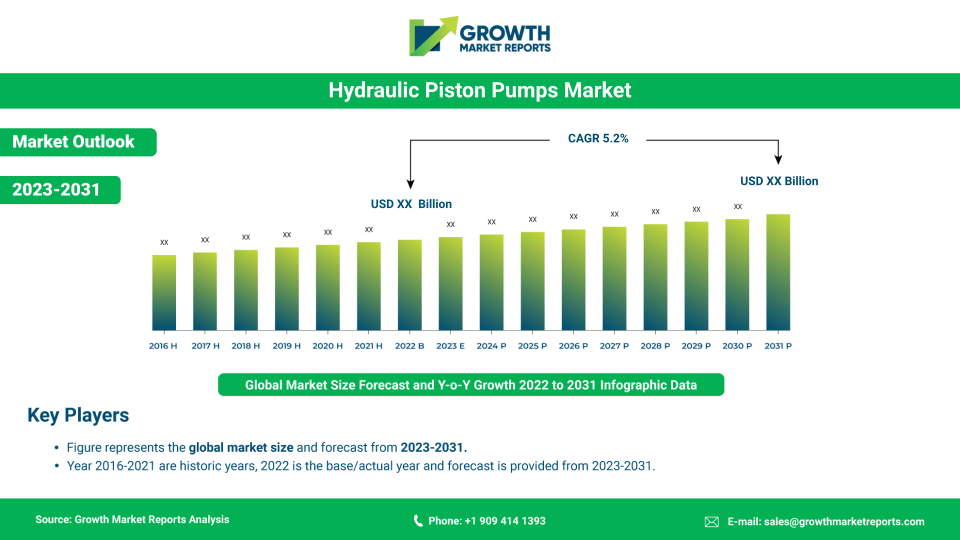
According to our latest research, the global hydraulic piston pumps market size reached USD 2.91 billion in 2024, reflecting robust demand across industrial, construction, and agricultural sectors. The market is projected to grow at a CAGR of 5.3% from 2025 to 2033, leading to a forecasted market size of USD 4.62 billion by 2033. This growth trajectory is primarily driven by the increasing adoption of advanced hydraulic technologies in heavy machinery, the expansion of infrastructure projects worldwide, and the ongoing modernization of manufacturing processes.

One of the major growth factors propelling the hydraulic piston pumps market is the surge in global infrastructure development, particularly in emerging economies. Governments and private sector players are investing heavily in the construction of roads, bridges, urban spaces, and smart cities, which necessitates the use of high-performance hydraulic equipment. Hydraulic piston pumps, known for their efficiency, durability, and ability to handle high-pressure applications, are integral components in construction machinery such as excavators, loaders, and cranes. As urbanization accelerates and megacities expand, the demand for reliable hydraulic systems continues to rise, directly boosting the market for piston pumps.

Another significant driver is the rapid technological advancement in hydraulic systems, leading to the development of more energy-efficient and compact piston pumps. Manufacturers are focusing on innovations such as variable displacement pumps, which offer improved control, energy savings, and reduced operational costs. These advancements are highly attractive to industries like automotive, mining, and oil & gas, where operational efficiency and reduced downtime are critical. Additionally, the integration of IoT and smart monitoring solutions in hydraulic systems is enhancing predictive maintenance capabilities, further increasing the adoption of hydraulic piston pumps in diverse industrial applications.

The growing emphasis on sustainability and environmental regulations is also shaping the hydraulic piston pumps market. Industries are under increasing pressure to minimize their carbon footprint and improve energy usage. Modern hydraulic piston pumps are designed to deliver high performance while consuming less energy and reducing emissions. This aligns with the global shift towards green manufacturing and the adoption of environmentally friendly technologies. As a result, companies are upgrading their existing hydraulic systems with advanced piston pumps, fueling aftermarket demand and opening new revenue streams for manufacturers and service providers.

Regionally, Asia Pacific dominates the hydraulic piston pumps market both in terms of production and consumption, accounting for the largest market share in 2024. This is attributed to the region’s rapid industrialization, substantial infrastructure investments, and the presence of major manufacturing hubs in countries like China, India, and Japan. North America and Europe also represent significant markets, driven by technological innovation and the modernization of legacy industrial systems. Meanwhile, the Middle East & Africa and Latin America are emerging as high-growth regions due to increasing investments in mining, oil & gas, and construction sectors. The diverse regional dynamics ensure a broad spectrum of opportunities and challenges for market participants.

Global Hydraulic Piston Pumps Industry Outlook

Product Type Analysis

The hydraulic piston pumps market is segmented by product type, with axial piston pumps leading in terms of adoption and market share. Axial piston pumps are widely preferred due to their high efficiency, compact design, and ability to handle variable flow rates and pressures. These pumps are extensively used in heavy-duty applications such as construction equipment, agricultural machinery, and industrial systems. Their versatility and robust performance make them the backbone of many hydraulic systems, especially where space and weight are critical considerations. The ongoing advancements in axial piston pump technology, including improved sealing and wear-resistant materials, are further enhancing their reliability and lifespan, driving continued demand across industries.

Radial piston pumps represent another significant segment, known for their ability to deliver high pressure at low flow rates, making them ideal for applications requiring precise control and consistent performance. These pumps are commonly found in machine tools, presses, and industrial automation systems. The unique construction of radial piston pumps allows them to operate effectively in harsh environments, contributing to their widespread use in mining, oil & gas, and heavy machinery sectors. As industries increasingly prioritize operational safety and efficiency, the demand for radial piston pumps is expected to grow, particularly in regions with mature industrial bases.

The bent axis piston pumps segment is gaining traction, especially in applications requiring high power density and superior dynamic response. These pumps are often utilized in mobile hydraulic systems, such as those found in earthmoving equipment and agricultural vehicles. The bent axis design offers distinct advantages in terms of efficiency and reduced maintenance, making them suitable for continuous and demanding operations. As the construction and agriculture sectors expand in emerging economies, the adoption of bent axis piston pumps is projected to rise, supported by ongoing product innovations and the availability of customized solutions from leading manufacturers.

In-line piston pumps, while representing a smaller share compared to axial and radial types, are valued for their straightforward design and ease of integration into existing hydraulic systems. These pumps find applications in both stationary and mobile equipment, offering reliable performance in medium-duty operations. The continued focus on cost-effective and easily maintainable hydraulic solutions is expected to drive steady demand for in-line piston pumps, particularly in small and medium enterprises (SMEs) and the aftermarket segment. Other niche product types, including specialized piston pumps for unique industrial needs, contribute additional diversity to the market, ensuring manufacturers can cater to a wide array of customer requirements.

Report Scope

Attributes Details
Report Title Hydraulic Piston Pumps Market Research Report 2033
By Product Type Axial Piston Pumps, Radial Piston Pumps, Bent Axis Piston Pumps, In-line Piston Pumps, Others
By Application Construction, Agriculture, Mining, Oil & Gas, Industrial Machinery, Automotive, Others
By Operation Single Acting, Double Acting
By End-User OEMs, Aftermarket
Regions Covered North America, Europe, APAC, Latin America, MEA
Base Year 2024
Historic Data 2018-2023
Forecast Period 2025-2033
Number of Pages 253
Number of Tables & Figures 398
Customization Available Yes, the report can be customized as per your need.

Application Analysis

The construction industry stands out as the largest application segment for hydraulic piston pumps, accounting for a substantial portion of the global market. The extensive use of hydraulic systems in construction machinery such as excavators, bulldozers, and cranes underlines the critical role of piston pumps in enabling efficient and precise movement of heavy loads. The ongoing boom in infrastructure development, particularly in Asia Pacific and the Middle East, is fueling continuous demand for high-performance hydraulic pumps. Furthermore, the trend towards automation and smart construction equipment is amplifying the need for advanced piston pump technologies capable of supporting complex operational requirements and remote monitoring.

In the agriculture sector, hydraulic piston pumps are essential components in modern farming equipment, including tractors, harvesters, and irrigation systems. The push towards mechanized and precision agriculture is driving the adoption of sophisticated hydraulic solutions that improve productivity, reduce labor intensity, and enable efficient resource utilization. With global food demand rising and agricultural practices evolving, the market for hydraulic piston pumps in this segment is poised for sustained growth. Government initiatives to modernize agriculture and support rural infrastructure development are further accelerating the deployment of advanced hydraulic equipment.

The mining and oil & gas industries are also significant contributors to the hydraulic piston pumps market. These sectors rely heavily on robust and reliable hydraulic systems to power drilling rigs, loaders, and transportation equipment in challenging environments. The ability of piston pumps to operate under extreme pressures and temperatures makes them indispensable for mining operations and oil extraction processes. As commodity prices stabilize and investments in resource exploration increase, the demand for durable and high-capacity hydraulic pumps is expected to rise, particularly in regions with abundant natural resources and ongoing energy projects.

Industrial machinery and automotive applications represent additional growth avenues for the hydraulic piston pumps market. In manufacturing environments, piston pumps are integral to automation systems, presses, and material handling equipment, supporting high-precision and high-speed operations. The automotive sector leverages hydraulic piston pumps in assembly lines, testing facilities, and vehicle systems, benefiting from their reliability and performance. As industries embrace digitalization and smart manufacturing, the integration of advanced hydraulic solutions, including IoT-enabled piston pumps, is expected to become more prevalent, driving further market expansion.

Operation Analysis

The hydraulic piston pumps market is segmented by operation into single acting and double acting pumps. Single acting piston pumps, which generate hydraulic power during only one direction of piston movement, are preferred in applications where simplicity, cost-effectiveness, and minimal maintenance are paramount. These pumps are commonly used in small-scale industrial systems, agricultural sprayers, and light-duty construction equipment. Their straightforward operation and ease of repair make them ideal for environments where downtime must be minimized and operational demands are moderate. The steady demand from SMEs and the aftermarket sector ensures a stable market for single acting piston pumps.

Double acting piston pumps, on the other hand, deliver hydraulic power during both directions of piston movement, offering higher efficiency and consistent output. These pumps are essential in heavy-duty applications requiring continuous and high-pressure operation, such as in large construction machinery, mining equipment, and industrial automation systems. The ability to handle greater loads and deliver precise control over fluid flow makes double acting pumps the preferred choice for demanding environments. As industries increasingly seek to maximize productivity and operational uptime, the adoption of double acting piston pumps is expected to accelerate, driving innovation in pump design and materials.

The choice between single acting and double acting pumps is influenced by factors such as application requirements, operational environment, and total cost of ownership. Manufacturers are responding to diverse customer needs by offering a wide range of pump configurations, including customizable options for specific industries. The trend towards modular and scalable hydraulic systems is further supporting the integration of both single and double acting piston pumps, enabling end-users to optimize performance and reduce maintenance costs. This dynamic market landscape encourages continuous product development and the introduction of advanced features such as integrated sensors and smart controls.

The competitive interplay between single acting and double acting piston pumps also drives advancements in materials science and manufacturing processes. Companies are investing in research and development to enhance pump durability, reduce weight, and improve energy efficiency. The adoption of advanced coatings, wear-resistant alloys, and precision engineering techniques is enabling the production of pumps that can withstand harsh operating conditions and deliver long-term reliability. As the market evolves, the balance between single and double acting pump adoption will continue to shift in response to changing industry needs and technological progress.

End-User Analysis

The OEM (Original Equipment Manufacturer) segment dominates the hydraulic piston pumps market, reflecting the strong demand from equipment manufacturers across construction, agriculture, mining, and industrial sectors. OEMs are increasingly focused on integrating advanced hydraulic solutions into their machinery to enhance performance, reduce energy consumption, and comply with stringent regulatory standards. The trend towards custom-engineered hydraulic systems is driving collaboration between pump manufacturers and OEMs, resulting in tailored solutions that address specific application requirements. This close partnership ensures a steady flow of demand for high-quality piston pumps and fosters innovation in product design and functionality.

The aftermarket segment represents a significant and growing opportunity within the hydraulic piston pumps market. As the installed base of hydraulic equipment expands worldwide, the need for replacement parts, maintenance, and upgrades is rising. Aftermarket sales are driven by factors such as equipment aging, technological obsolescence, and the desire to enhance system efficiency. Manufacturers and distributors are capitalizing on this trend by offering comprehensive service packages, including predictive maintenance, remote diagnostics, and rapid spare parts delivery. The shift towards proactive maintenance strategies is further boosting aftermarket demand, as end-users seek to minimize downtime and extend the lifespan of their hydraulic systems.

The interplay between OEM and aftermarket demand shapes the competitive dynamics of the hydraulic piston pumps market. While OEMs drive innovation and set the standards for performance and reliability, the aftermarket segment provides a steady revenue stream and opportunities for customer engagement. Leading companies are investing in digital platforms and service networks to support both segments, ensuring seamless product support and value-added services. This dual focus enhances brand loyalty and positions manufacturers as trusted partners throughout the equipment lifecycle.

End-user preferences are also evolving in response to broader industry trends, such as the adoption of Industry 4.0 technologies and the shift towards sustainable manufacturing. OEMs and aftermarket customers alike are seeking hydraulic solutions that offer greater energy efficiency, reduced environmental impact, and enhanced connectivity. The integration of smart sensors, real-time monitoring, and data analytics into piston pumps is enabling predictive maintenance and performance optimization, further aligning with the needs of modern end-users. As these trends continue to shape the market, manufacturers that can deliver innovative and customer-centric solutions are poised for long-term success.

Opportunities & Threats

The hydraulic piston pumps market presents a multitude of opportunities, particularly in the context of rapid industrialization and infrastructure development in emerging economies. Countries across Asia Pacific, Latin America, and the Middle East are investing heavily in construction, mining, and energy projects, creating substantial demand for advanced hydraulic equipment. The growing adoption of automation and digitalization in manufacturing processes further expands the application scope of hydraulic piston pumps, as industries seek to enhance productivity, reduce operational costs, and improve safety. Manufacturers that can offer innovative, energy-efficient, and customizable solutions are well-positioned to capture these growth opportunities and establish a strong market presence.

Another significant opportunity lies in the increasing emphasis on sustainability and environmental compliance. As regulatory frameworks become more stringent and industries prioritize green manufacturing, there is a rising demand for hydraulic piston pumps that deliver high performance with minimal energy consumption and reduced emissions. The development of eco-friendly hydraulic fluids, advanced sealing technologies, and smart monitoring systems is enabling manufacturers to meet these requirements and differentiate their offerings. Additionally, the expansion of aftermarket services, including predictive maintenance and digital support, presents new revenue streams and strengthens customer relationships, further enhancing market growth prospects.

Despite these opportunities, the hydraulic piston pumps market faces certain restraining factors that could impact its growth trajectory. One of the primary challenges is the high initial cost associated with advanced hydraulic systems, which can deter adoption among small and medium enterprises with limited capital budgets. Additionally, the market is characterized by intense competition and price pressures, particularly from low-cost manufacturers in developing regions. Technological complexity and the need for skilled maintenance personnel can also pose barriers to widespread adoption, especially in regions with limited technical expertise. Addressing these challenges requires ongoing investment in research and development, cost optimization, and the provision of comprehensive training and support services to end-users.

Regional Outlook

Asia Pacific emerged as the largest regional market for hydraulic piston pumps in 2024, with a market size of USD 1.13 billion, accounting for approximately 39% of the global market. The region’s dominance is driven by rapid industrialization, large-scale infrastructure projects, and the presence of major manufacturing hubs in China, India, Japan, and Southeast Asian countries. The construction, mining, and agriculture sectors in Asia Pacific are experiencing robust growth, supported by government initiatives and increasing foreign investments. The region is expected to maintain its leadership position throughout the forecast period, with a projected CAGR of 6.1% from 2025 to 2033, outpacing other regions in terms of market expansion.

North America represents the second-largest market, with a 2024 market size of USD 760 million. The region’s growth is underpinned by technological innovation, the modernization of industrial infrastructure, and the widespread adoption of automation in manufacturing processes. The United States and Canada are key contributors, benefiting from strong demand in construction, oil & gas, and automotive applications. North America’s focus on energy efficiency and sustainability is driving the adoption of advanced hydraulic piston pumps, particularly those equipped with smart monitoring and predictive maintenance capabilities. The region is expected to witness steady growth, supported by ongoing investments in industrial automation and infrastructure renewal.

Europe holds a significant share of the hydraulic piston pumps market, with a market size of USD 630 million in 2024. The region is characterized by a mature industrial base, stringent regulatory standards, and a strong emphasis on innovation and sustainability. Germany, France, Italy, and the United Kingdom are leading markets, driven by demand in automotive, industrial machinery, and renewable energy sectors. Europe’s commitment to green manufacturing and energy-efficient technologies is fostering the adoption of next-generation hydraulic piston pumps. The region is expected to maintain moderate growth, with manufacturers focusing on product differentiation, digitalization, and value-added services to remain competitive.

Hydraulic Piston Pumps Market Statistics

Competitor Outlook

The global hydraulic piston pumps market is highly competitive, with a diverse landscape comprising multinational corporations, regional players, and specialized manufacturers. The market is characterized by continuous innovation, with leading companies investing heavily in research and development to enhance pump efficiency, durability, and integration with digital technologies. Strategic collaborations, mergers and acquisitions, and expansion into emerging markets are common strategies employed by major players to strengthen their market position and broaden their product portfolios. The focus on sustainability, energy efficiency, and smart solutions is shaping the competitive dynamics, as companies strive to meet evolving customer demands and regulatory requirements.

Product differentiation and customer-centric solutions are key competitive advantages in the hydraulic piston pumps market. Leading manufacturers are leveraging advanced materials, precision engineering, and digital technologies to develop pumps that offer superior performance, reduced maintenance, and extended service life. The integration of IoT-enabled monitoring, predictive maintenance, and remote diagnostics is becoming increasingly prevalent, enabling companies to provide value-added services and enhance customer loyalty. Additionally, the ability to offer customized solutions tailored to specific industry requirements is a critical success factor, particularly in sectors such as construction, mining, and agriculture.

The competitive landscape is also shaped by the presence of regional players and niche manufacturers, who cater to specialized applications and local market needs. These companies often focus on cost-effective solutions, rapid delivery, and personalized customer support, enabling them to compete effectively with larger multinational corporations. The aftermarket segment presents significant opportunities for both established and emerging players, as the demand for maintenance, repairs, and system upgrades continues to grow. Companies that can offer comprehensive service packages, including digital support and predictive analytics, are well-positioned to capture a larger share of the aftermarket business.

Major companies operating in the hydraulic piston pumps market include Bosch Rexroth AG, Eaton Corporation plc, Parker Hannifin Corporation, Kawasaki Heavy Industries, Danfoss Group, Bucher Hydraulics, and HAWE Hydraulik SE. Bosch Rexroth AG is renowned for its advanced hydraulic solutions and global service network, catering to a wide range of industries. Eaton Corporation plc is a leader in energy-efficient hydraulic systems, with a strong focus on innovation and sustainability. Parker Hannifin Corporation offers a comprehensive portfolio of hydraulic pumps, valves, and components, supported by extensive R&D capabilities. Kawasaki Heavy Industries is recognized for its high-performance piston pumps used in construction and industrial applications. Danfoss Group specializes in energy-efficient and smart hydraulic solutions, while Bucher Hydraulics and HAWE Hydraulik SE are known for their expertise in customized and precision-engineered pumps. These companies are continuously expanding their product offerings, enhancing digital capabilities, and strengthening their global presence to maintain a competitive edge in the dynamic hydraulic piston pumps market.

Key Players

  • Bosch Rexroth AG
  • Parker Hannifin Corporation
  • Eaton Corporation plc
  • Kawasaki Heavy Industries, Ltd.
  • Danfoss Group
  • HAWE Hydraulik SE
  • Yuken Kogyo Co., Ltd.
  • Linde Hydraulics GmbH & Co. KG
  • Hydac International GmbH
  • Daikin Industries, Ltd.
  • Moog Inc.
  • Casappa S.p.A.
  • Bucher Hydraulics GmbH
  • Tokyo Keiki Inc.
  • Atos S.p.A.
  • Veljan Denison Limited
  • Bosch Industries Pvt. Ltd.
  • Oilgear Company
  • KYB Corporation
  • ARGO-HYTOS Group
Hydraulic Piston Pumps Market Overview

Segments

The Hydraulic Piston Pumps market has been segmented on the basis of

Product Type

  • Axial Piston Pumps
  • Radial Piston Pumps
  • Bent Axis Piston Pumps
  • In-line Piston Pumps
  • Others

Application

  • Construction
  • Agriculture
  • Mining
  • Oil & Gas
  • Industrial Machinery
  • Automotive
  • Others

Operation

  • Single Acting
  • Double Acting

End-User

  • OEMs
  • Aftermarket

Competitive Landscape

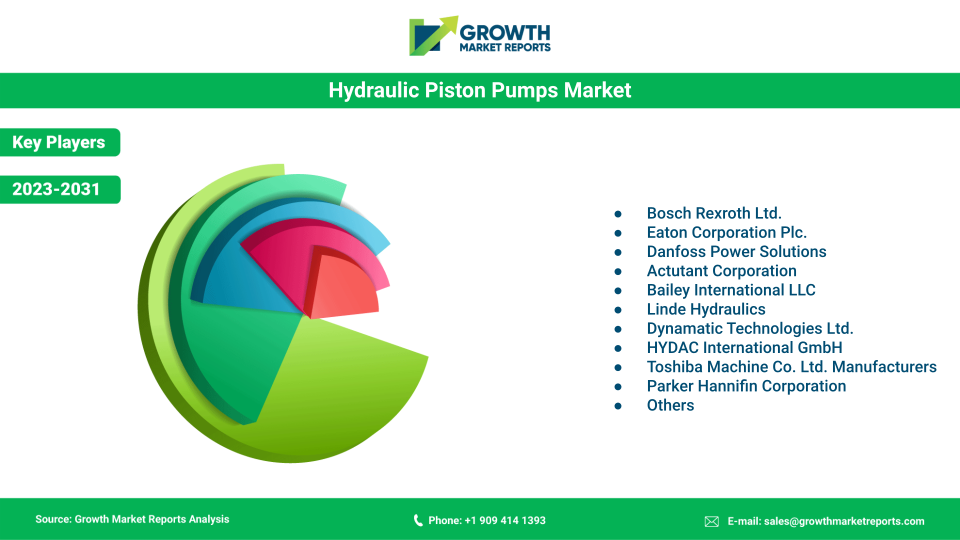
Some of the leading manufacturers in the global hydraulic piston pumps market are Bosch Rexroth Ltd., Eaton Corporation Plc., Danfoss Power Solutions, Actutant Corporation, Bailey International LLC, Linde Hydraulics, Dynamatic Technologies Ltd., HYDAC International GmbH, Toshiba Machine Co. Ltd. Manufacturers, Parker Hannifin Corporation, Kawasaki Heavy Industries Ltd., Daikin Industries Ltd., and Bucher Hydraulics.

Companies are focusing on expanding their product portfolio and are striving to cater to various industries.

Hydraulic Piston Pumps Market Key Players

Frequently Asked Questions

Yes, the hydraulic piston pumps market research report can be customized according to specific client needs.

Key challenges include high initial costs of advanced systems, intense competition from low-cost manufacturers, technological complexity, and the need for skilled maintenance personnel.

Growing emphasis on sustainability and environmental regulations is driving demand for energy-efficient and low-emission hydraulic piston pumps, supporting green manufacturing and compliance with stricter standards.

Key companies include Bosch Rexroth AG, Parker Hannifin Corporation, Eaton Corporation plc, Kawasaki Heavy Industries, Danfoss Group, HAWE Hydraulik SE, Yuken Kogyo, Linde Hydraulics, Hydac International, Daikin Industries, Moog Inc., Casappa, Bucher Hydraulics, Tokyo Keiki, Atos, Veljan Denison, Oilgear, and KYB Corporation.

Single acting pumps generate hydraulic power in one direction of piston movement and are valued for simplicity and low maintenance, while double acting pumps deliver power in both directions, offering higher efficiency and consistent output for heavy-duty applications.

Innovations include variable displacement pumps, energy-efficient designs, IoT integration for smart monitoring, improved sealing, wear-resistant materials, and predictive maintenance capabilities.

Asia Pacific is the largest regional market, accounting for approximately 39% of the global market in 2024, driven by rapid industrialization and major infrastructure projects.

The market is segmented by product type into axial piston pumps, radial piston pumps, bent axis piston pumps, in-line piston pumps, and other specialized types.

Key industries fueling demand include construction, agriculture, mining, oil & gas, industrial machinery, and automotive sectors, with construction being the largest application segment.

The global hydraulic piston pumps market reached USD 2.91 billion in 2024 and is projected to grow at a CAGR of 5.3% from 2025 to 2033, reaching an estimated USD 4.62 billion by 2033.

Table Of Content

Chapter 1 Executive Summary
Chapter 2 Assumptions and Acronyms Used
Chapter 3 Research Methodology
Chapter 4 Hydraulic Piston Pumps Market Overview
   4.1 Introduction
      4.1.1 Market Taxonomy
      4.1.2 Market Definition
      4.1.3 Macro-Economic Factors Impacting the Market Growth
   4.2 Hydraulic Piston Pumps Market Dynamics
      4.2.1 Market Drivers
      4.2.2 Market Restraints
      4.2.3 Market Opportunity
   4.3 Hydraulic Piston Pumps Market - Supply Chain Analysis
      4.3.1 List of Key Suppliers
      4.3.2 List of Key Distributors
      4.3.3 List of Key Consumers
   4.4 Key Forces Shaping the Hydraulic Piston Pumps Market
      4.4.1 Bargaining Power of Suppliers
      4.4.2 Bargaining Power of Buyers
      4.4.3 Threat of Substitution
      4.4.4 Threat of New Entrants
      4.4.5 Competitive Rivalry
   4.5 Global Hydraulic Piston Pumps Market Size & Forecast, 2023-2032
      4.5.1 Hydraulic Piston Pumps Market Size and Y-o-Y Growth
      4.5.2 Hydraulic Piston Pumps Market Absolute $ Opportunity

Chapter 5 Global Hydraulic Piston Pumps Market Analysis and Forecast By Product Type
   5.1 Introduction
      5.1.1 Key Market Trends & Growth Opportunities By Product Type
      5.1.2 Basis Point Share (BPS) Analysis By Product Type
      5.1.3 Absolute $ Opportunity Assessment By Product Type
   5.2 Hydraulic Piston Pumps Market Size Forecast By Product Type
      5.2.1 Axial Piston Pumps
      5.2.2 Radial Piston Pumps
      5.2.3 Bent Axis Piston Pumps
      5.2.4 In-line Piston Pumps
      5.2.5 Others
   5.3 Market Attractiveness Analysis By Product Type

Chapter 6 Global Hydraulic Piston Pumps Market Analysis and Forecast By Application
   6.1 Introduction
      6.1.1 Key Market Trends & Growth Opportunities By Application
      6.1.2 Basis Point Share (BPS) Analysis By Application
      6.1.3 Absolute $ Opportunity Assessment By Application
   6.2 Hydraulic Piston Pumps Market Size Forecast By Application
      6.2.1 Construction
      6.2.2 Agriculture
      6.2.3 Mining
      6.2.4 Oil & Gas
      6.2.5 Industrial Machinery
      6.2.6 Automotive
      6.2.7 Others
   6.3 Market Attractiveness Analysis By Application

Chapter 7 Global Hydraulic Piston Pumps Market Analysis and Forecast By Operation
   7.1 Introduction
      7.1.1 Key Market Trends & Growth Opportunities By Operation
      7.1.2 Basis Point Share (BPS) Analysis By Operation
      7.1.3 Absolute $ Opportunity Assessment By Operation
   7.2 Hydraulic Piston Pumps Market Size Forecast By Operation
      7.2.1 Single Acting
      7.2.2 Double Acting
   7.3 Market Attractiveness Analysis By Operation

Chapter 8 Global Hydraulic Piston Pumps Market Analysis and Forecast By End-User
   8.1 Introduction
      8.1.1 Key Market Trends & Growth Opportunities By End-User
      8.1.2 Basis Point Share (BPS) Analysis By End-User
      8.1.3 Absolute $ Opportunity Assessment By End-User
   8.2 Hydraulic Piston Pumps Market Size Forecast By End-User
      8.2.1 OEMs
      8.2.2 Aftermarket
   8.3 Market Attractiveness Analysis By End-User

Chapter 9 Global Hydraulic Piston Pumps Market Analysis and Forecast by Region
   9.1 Introduction
      9.1.1 Key Market Trends & Growth Opportunities By Region
      9.1.2 Basis Point Share (BPS) Analysis By Region
      9.1.3 Absolute $ Opportunity Assessment By Region
   9.2 Hydraulic Piston Pumps Market Size Forecast By Region
      9.2.1 North America
      9.2.2 Europe
      9.2.3 Asia Pacific
      9.2.4 Latin America
      9.2.5 Middle East & Africa (MEA)
   9.3 Market Attractiveness Analysis By Region

Chapter 10 Coronavirus Disease (COVID-19) Impact 
   10.1 Introduction 
   10.2 Current & Future Impact Analysis 
   10.3 Economic Impact Analysis 
   10.4 Government Policies 
   10.5 Investment Scenario

Chapter 11 North America Hydraulic Piston Pumps Analysis and Forecast
   11.1 Introduction
   11.2 North America Hydraulic Piston Pumps Market Size Forecast by Country
      11.2.1 U.S.
      11.2.2 Canada
   11.3 Basis Point Share (BPS) Analysis by Country
   11.4 Absolute $ Opportunity Assessment by Country
   11.5 Market Attractiveness Analysis by Country
   11.6 North America Hydraulic Piston Pumps Market Size Forecast By Product Type
      11.6.1 Axial Piston Pumps
      11.6.2 Radial Piston Pumps
      11.6.3 Bent Axis Piston Pumps
      11.6.4 In-line Piston Pumps
      11.6.5 Others
   11.7 Basis Point Share (BPS) Analysis By Product Type 
   11.8 Absolute $ Opportunity Assessment By Product Type 
   11.9 Market Attractiveness Analysis By Product Type
   11.10 North America Hydraulic Piston Pumps Market Size Forecast By Application
      11.10.1 Construction
      11.10.2 Agriculture
      11.10.3 Mining
      11.10.4 Oil & Gas
      11.10.5 Industrial Machinery
      11.10.6 Automotive
      11.10.7 Others
   11.11 Basis Point Share (BPS) Analysis By Application 
   11.12 Absolute $ Opportunity Assessment By Application 
   11.13 Market Attractiveness Analysis By Application
   11.14 North America Hydraulic Piston Pumps Market Size Forecast By Operation
      11.14.1 Single Acting
      11.14.2 Double Acting
   11.15 Basis Point Share (BPS) Analysis By Operation 
   11.16 Absolute $ Opportunity Assessment By Operation 
   11.17 Market Attractiveness Analysis By Operation
   11.18 North America Hydraulic Piston Pumps Market Size Forecast By End-User
      11.18.1 OEMs
      11.18.2 Aftermarket
   11.19 Basis Point Share (BPS) Analysis By End-User 
   11.20 Absolute $ Opportunity Assessment By End-User 
   11.21 Market Attractiveness Analysis By End-User

Chapter 12 Europe Hydraulic Piston Pumps Analysis and Forecast
   12.1 Introduction
   12.2 Europe Hydraulic Piston Pumps Market Size Forecast by Country
      12.2.1 Germany
      12.2.2 France
      12.2.3 Italy
      12.2.4 U.K.
      12.2.5 Spain
      12.2.6 Russia
      12.2.7 Rest of Europe
   12.3 Basis Point Share (BPS) Analysis by Country
   12.4 Absolute $ Opportunity Assessment by Country
   12.5 Market Attractiveness Analysis by Country
   12.6 Europe Hydraulic Piston Pumps Market Size Forecast By Product Type
      12.6.1 Axial Piston Pumps
      12.6.2 Radial Piston Pumps
      12.6.3 Bent Axis Piston Pumps
      12.6.4 In-line Piston Pumps
      12.6.5 Others
   12.7 Basis Point Share (BPS) Analysis By Product Type 
   12.8 Absolute $ Opportunity Assessment By Product Type 
   12.9 Market Attractiveness Analysis By Product Type
   12.10 Europe Hydraulic Piston Pumps Market Size Forecast By Application
      12.10.1 Construction
      12.10.2 Agriculture
      12.10.3 Mining
      12.10.4 Oil & Gas
      12.10.5 Industrial Machinery
      12.10.6 Automotive
      12.10.7 Others
   12.11 Basis Point Share (BPS) Analysis By Application 
   12.12 Absolute $ Opportunity Assessment By Application 
   12.13 Market Attractiveness Analysis By Application
   12.14 Europe Hydraulic Piston Pumps Market Size Forecast By Operation
      12.14.1 Single Acting
      12.14.2 Double Acting
   12.15 Basis Point Share (BPS) Analysis By Operation 
   12.16 Absolute $ Opportunity Assessment By Operation 
   12.17 Market Attractiveness Analysis By Operation
   12.18 Europe Hydraulic Piston Pumps Market Size Forecast By End-User
      12.18.1 OEMs
      12.18.2 Aftermarket
   12.19 Basis Point Share (BPS) Analysis By End-User 
   12.20 Absolute $ Opportunity Assessment By End-User 
   12.21 Market Attractiveness Analysis By End-User

Chapter 13 Asia Pacific Hydraulic Piston Pumps Analysis and Forecast
   13.1 Introduction
   13.2 Asia Pacific Hydraulic Piston Pumps Market Size Forecast by Country
      13.2.1 China
      13.2.2 Japan
      13.2.3 South Korea
      13.2.4 India
      13.2.5 Australia
      13.2.6 South East Asia (SEA)
      13.2.7 Rest of Asia Pacific (APAC)
   13.3 Basis Point Share (BPS) Analysis by Country
   13.4 Absolute $ Opportunity Assessment by Country
   13.5 Market Attractiveness Analysis by Country
   13.6 Asia Pacific Hydraulic Piston Pumps Market Size Forecast By Product Type
      13.6.1 Axial Piston Pumps
      13.6.2 Radial Piston Pumps
      13.6.3 Bent Axis Piston Pumps
      13.6.4 In-line Piston Pumps
      13.6.5 Others
   13.7 Basis Point Share (BPS) Analysis By Product Type 
   13.8 Absolute $ Opportunity Assessment By Product Type 
   13.9 Market Attractiveness Analysis By Product Type
   13.10 Asia Pacific Hydraulic Piston Pumps Market Size Forecast By Application
      13.10.1 Construction
      13.10.2 Agriculture
      13.10.3 Mining
      13.10.4 Oil & Gas
      13.10.5 Industrial Machinery
      13.10.6 Automotive
      13.10.7 Others
   13.11 Basis Point Share (BPS) Analysis By Application 
   13.12 Absolute $ Opportunity Assessment By Application 
   13.13 Market Attractiveness Analysis By Application
   13.14 Asia Pacific Hydraulic Piston Pumps Market Size Forecast By Operation
      13.14.1 Single Acting
      13.14.2 Double Acting
   13.15 Basis Point Share (BPS) Analysis By Operation 
   13.16 Absolute $ Opportunity Assessment By Operation 
   13.17 Market Attractiveness Analysis By Operation
   13.18 Asia Pacific Hydraulic Piston Pumps Market Size Forecast By End-User
      13.18.1 OEMs
      13.18.2 Aftermarket
   13.19 Basis Point Share (BPS) Analysis By End-User 
   13.20 Absolute $ Opportunity Assessment By End-User 
   13.21 Market Attractiveness Analysis By End-User

Chapter 14 Latin America Hydraulic Piston Pumps Analysis and Forecast
   14.1 Introduction
   14.2 Latin America Hydraulic Piston Pumps Market Size Forecast by Country
      14.2.1 Brazil
      14.2.2 Mexico
      14.2.3 Rest of Latin America (LATAM)
   14.3 Basis Point Share (BPS) Analysis by Country
   14.4 Absolute $ Opportunity Assessment by Country
   14.5 Market Attractiveness Analysis by Country
   14.6 Latin America Hydraulic Piston Pumps Market Size Forecast By Product Type
      14.6.1 Axial Piston Pumps
      14.6.2 Radial Piston Pumps
      14.6.3 Bent Axis Piston Pumps
      14.6.4 In-line Piston Pumps
      14.6.5 Others
   14.7 Basis Point Share (BPS) Analysis By Product Type 
   14.8 Absolute $ Opportunity Assessment By Product Type 
   14.9 Market Attractiveness Analysis By Product Type
   14.10 Latin America Hydraulic Piston Pumps Market Size Forecast By Application
      14.10.1 Construction
      14.10.2 Agriculture
      14.10.3 Mining
      14.10.4 Oil & Gas
      14.10.5 Industrial Machinery
      14.10.6 Automotive
      14.10.7 Others
   14.11 Basis Point Share (BPS) Analysis By Application 
   14.12 Absolute $ Opportunity Assessment By Application 
   14.13 Market Attractiveness Analysis By Application
   14.14 Latin America Hydraulic Piston Pumps Market Size Forecast By Operation
      14.14.1 Single Acting
      14.14.2 Double Acting
   14.15 Basis Point Share (BPS) Analysis By Operation 
   14.16 Absolute $ Opportunity Assessment By Operation 
   14.17 Market Attractiveness Analysis By Operation
   14.18 Latin America Hydraulic Piston Pumps Market Size Forecast By End-User
      14.18.1 OEMs
      14.18.2 Aftermarket
   14.19 Basis Point Share (BPS) Analysis By End-User 
   14.20 Absolute $ Opportunity Assessment By End-User 
   14.21 Market Attractiveness Analysis By End-User

Chapter 15 Middle East & Africa (MEA) Hydraulic Piston Pumps Analysis and Forecast
   15.1 Introduction
   15.2 Middle East & Africa (MEA) Hydraulic Piston Pumps Market Size Forecast by Country
      15.2.1 Saudi Arabia
      15.2.2 South Africa
      15.2.3 UAE
      15.2.4 Rest of Middle East & Africa (MEA)
   15.3 Basis Point Share (BPS) Analysis by Country
   15.4 Absolute $ Opportunity Assessment by Country
   15.5 Market Attractiveness Analysis by Country
   15.6 Middle East & Africa (MEA) Hydraulic Piston Pumps Market Size Forecast By Product Type
      15.6.1 Axial Piston Pumps
      15.6.2 Radial Piston Pumps
      15.6.3 Bent Axis Piston Pumps
      15.6.4 In-line Piston Pumps
      15.6.5 Others
   15.7 Basis Point Share (BPS) Analysis By Product Type 
   15.8 Absolute $ Opportunity Assessment By Product Type 
   15.9 Market Attractiveness Analysis By Product Type
   15.10 Middle East & Africa (MEA) Hydraulic Piston Pumps Market Size Forecast By Application
      15.10.1 Construction
      15.10.2 Agriculture
      15.10.3 Mining
      15.10.4 Oil & Gas
      15.10.5 Industrial Machinery
      15.10.6 Automotive
      15.10.7 Others
   15.11 Basis Point Share (BPS) Analysis By Application 
   15.12 Absolute $ Opportunity Assessment By Application 
   15.13 Market Attractiveness Analysis By Application
   15.14 Middle East & Africa (MEA) Hydraulic Piston Pumps Market Size Forecast By Operation
      15.14.1 Single Acting
      15.14.2 Double Acting
   15.15 Basis Point Share (BPS) Analysis By Operation 
   15.16 Absolute $ Opportunity Assessment By Operation 
   15.17 Market Attractiveness Analysis By Operation
   15.18 Middle East & Africa (MEA) Hydraulic Piston Pumps Market Size Forecast By End-User
      15.18.1 OEMs
      15.18.2 Aftermarket
   15.19 Basis Point Share (BPS) Analysis By End-User 
   15.20 Absolute $ Opportunity Assessment By End-User 
   15.21 Market Attractiveness Analysis By End-User

Chapter 16 Competition Landscape 
   16.1 Hydraulic Piston Pumps Market: Competitive Dashboard
   16.2 Global Hydraulic Piston Pumps Market: Market Share Analysis, 2023
   16.3 Company Profiles (Details – Overview, Financials, Developments, Strategy) 
      16.3.1 Bosch Rexroth AG
Parker Hannifin Corporation
Eaton Corporation plc
Kawasaki Heavy Industries, Ltd.
Danfoss Group
HAWE Hydraulik SE
Yuken Kogyo Co., Ltd.
Linde Hydraulics GmbH & Co. KG
Hydac International GmbH
Daikin Industries, Ltd.
Moog Inc.
Casappa S.p.A.
Bucher Hydraulics GmbH
Tokyo Keiki Inc.
Atos S.p.A.
Veljan Denison Limited
Bosch Industries Pvt. Ltd.
Oilgear Company
KYB Corporation
ARGO-HYTOS Group

Methodology

Our Clients

General Electric
General Mills
Deloitte
Microsoft
FedEx Logistics
sinopec
Nestle SA
Siemens Healthcare