High-performance Tire Market Research Report 2033

High-performance Tire Market Research Report 2033

Segments - by Product Type (Summer Tires, All-Season Tires, Winter Tires, Track & Competition Tires), by Vehicle Type (Passenger Cars, Light Commercial Vehicles, Heavy Commercial Vehicles, Sports Cars, Others), by Sales Channel (OEM, Aftermarket), by Material (Natural Rubber, Synthetic Rubber, Others)

https://growthmarketreports.com/Raksha
Author : Raksha Sharma
https://growthmarketreports.com/Vaibhav
Fact-checked by : V. Chandola
https://growthmarketreports.com/Shruti
Editor : Shruti Bhat

Upcoming | Report ID :AL-2651 | 4.5 Rating | 30 Reviews | 256 Pages | Format : Docx PDF

Report Description


High-performance Tire Market Outlook

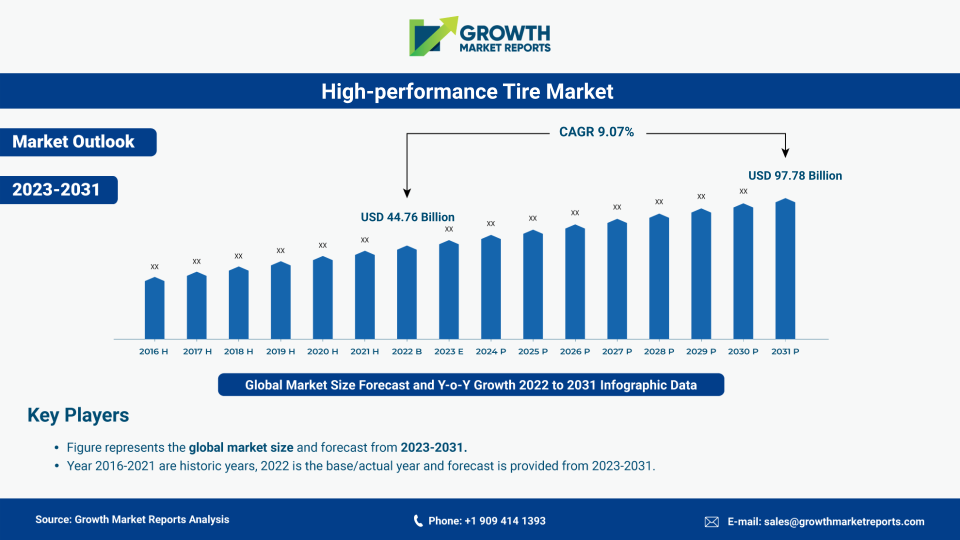
According to our latest research, the global high-performance tire market size reached USD 41.2 billion in 2024, reflecting the sectorÂ’s robust demand across multiple automotive applications. The market is projected to expand at a CAGR of 7.3% during the forecast period, reaching a value of USD 77.7 billion by 2033. This impressive growth is primarily driven by rising consumer preference for vehicles with enhanced safety, superior handling, and advanced performance, as well as continuous innovations in tire technology and materials.

One of the primary growth factors for the high-performance tire market is the increasing adoption of sports and luxury vehicles globally. As disposable incomes rise and automotive enthusiasts seek vehicles that deliver not only speed but also agility and safety, the demand for high-performance tires has surged. These tires provide superior grip, shorter braking distances, and improved cornering stability, attributes that are highly valued among performance-oriented drivers. Furthermore, the proliferation of motorsports and track events has created a robust aftermarket for specialized tire products, further fueling market expansion.

Technological advancements in tire design and manufacturing have also played a crucial role in market growth. Leading manufacturers are investing in research and development to introduce innovative tread patterns, advanced rubber compounds, and reinforced sidewalls that enhance tire durability, safety, and fuel efficiency. The integration of smart tire technologies, such as pressure monitoring and real-time performance analytics, is becoming increasingly prevalent, providing end-users with actionable insights and improving the overall driving experience. These innovations are not only appealing to performance car owners but are also being adopted by mainstream vehicle manufacturers to differentiate their offerings.

Stricter regulatory norms regarding vehicle emissions and road safety standards have further stimulated the adoption of high-performance tires. Governments across major automotive markets are mandating the use of tires that meet specific performance and safety criteria, compelling both OEMs and aftermarket suppliers to focus on quality and compliance. Additionally, the increasing penetration of electric and hybrid vehicles, which require specialized tires to handle higher torque and unique load characteristics, is creating new avenues for market players. These factors collectively contribute to a dynamic and competitive landscape, offering significant opportunities for growth and innovation.

The emergence of Track Day Tire options has further fueled the enthusiasm among motorsports aficionados and casual racers alike. These specialized tires are engineered to deliver peak performance on the racetrack, offering unparalleled grip and precision handling. As track days become increasingly popular, both as a hobby and a competitive pursuit, the demand for such tires has surged. Track Day Tires are designed to withstand the rigors of high-speed racing, providing the necessary durability and heat resistance required for optimal performance. This niche market is witnessing significant innovation, with manufacturers leveraging advanced rubber compounds and tread designs to cater to the specific needs of track enthusiasts. The growing community of track day participants is not only driving sales but also fostering a culture of continuous improvement and innovation in tire technology.

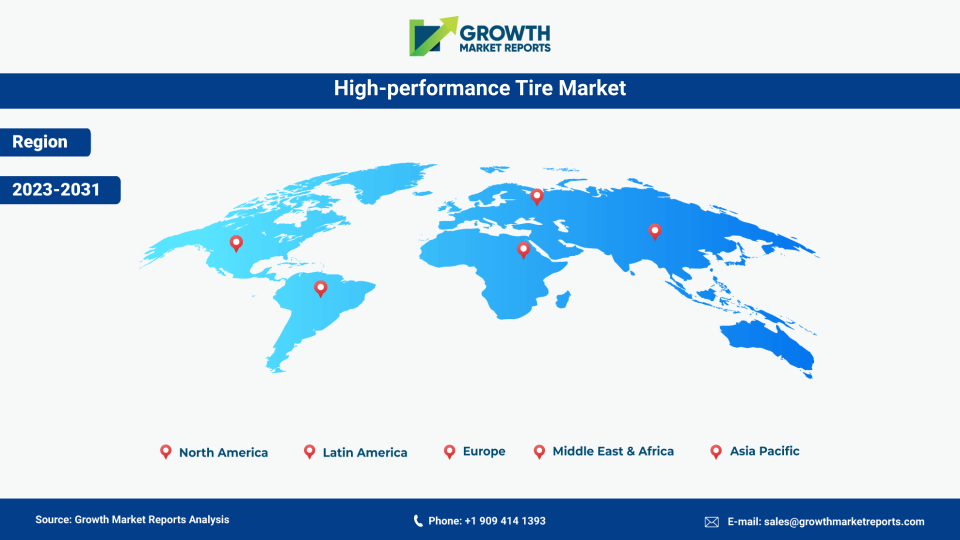
From a regional perspective, the Asia Pacific region continues to dominate the high-performance tire market, accounting for the largest share in 2024. This dominance is attributed to the rapid expansion of the automotive industry, particularly in China, Japan, and India, where rising urbanization and a burgeoning middle class are driving vehicle sales. North America and Europe also represent significant markets, fueled by strong consumer demand for performance vehicles, stringent regulatory standards, and a well-established motorsports culture. Meanwhile, Latin America and the Middle East & Africa are witnessing steady growth, supported by increasing investments in infrastructure and a gradual shift towards premium automotive products.

Global High-performance Tire Industry Outlook

Product Type Analysis

The high-performance tire market is segmented by product type into summer tires, all-season tires, winter tires, and track & competition tires, each catering to distinct driving conditions and consumer preferences. Summer tires are designed for optimal performance in warm weather, offering superior grip and handling on dry and wet roads. Their advanced tread compounds and patterns reduce rolling resistance and enhance cornering stability, making them the preferred choice for sports cars and high-speed driving enthusiasts. The segment continues to grow as more consumers in temperate regions opt for specialized tires during the hotter months, and as OEMs equip premium vehicles with summer tire options as standard.

All-season tires hold a substantial share of the market due to their versatility and practicality. Engineered to perform reasonably well across a range of weather conditions, these tires combine the characteristics of both summer and winter tires, offering balanced traction, durability, and comfort. The increasing preference for all-season tires among passenger car owners, particularly in regions with moderate climates, is driving segment growth. Manufacturers are continuously innovating to improve the performance envelope of all-season tires, integrating silica compounds and adaptive tread designs to enhance wet and dry handling while maintaining acceptable winter performance.

Winter tires, also known as snow tires, are specifically designed to deliver superior traction and control in snowy, icy, and cold conditions. Their unique rubber formulations remain flexible at low temperatures, and their aggressive tread patterns effectively channel slush and snow away from the contact patch. The demand for winter tires is particularly strong in regions with harsh winters, such as Northern Europe, North America, and parts of Asia. Regulatory mandates in several countries requiring the use of winter tires during certain months have further propelled this segment, prompting tire manufacturers to expand their winter product portfolios and invest in advanced cold-weather technologies.

Track & competition tires represent a niche but rapidly growing segment, catering to motorsports professionals and enthusiasts who demand maximum performance on the racetrack. These tires are engineered for extreme grip, precise handling, and resistance to high temperatures generated during aggressive driving. The segment benefits from the rising popularity of amateur racing events, track days, and performance driving schools, which has created a vibrant aftermarket for competition-grade tires. Leading brands are leveraging their motorsports expertise to develop innovative compounds and constructions that deliver the ultimate in performance and safety, while also trickling down these technologies to their mainstream high-performance offerings.

Report Scope

Attributes Details
Report Title High-performance Tire Market Research Report 2033
By Product Type Summer Tires, All-Season Tires, Winter Tires, Track & Competition Tires
By Vehicle Type Passenger Cars, Light Commercial Vehicles, Heavy Commercial Vehicles, Sports Cars, Others
By Sales Channel OEM, Aftermarket
By Material Natural Rubber, Synthetic Rubber, Others
Regions Covered North America, Europe, APAC, Latin America, MEA
Base Year 2024
Historic Data 2018-2023
Forecast Period 2025-2033
Number of Pages 256
Number of Tables & Figures 334
Customization Available Yes, the report can be customized as per your need.

Vehicle Type Analysis

The high-performance tire market can be further segmented by vehicle type, including passenger cars, light commercial vehicles, heavy commercial vehicles, sports cars, and others. Passenger cars constitute the largest share of the market, driven by the sheer volume of vehicles on the road and the growing consumer demand for enhanced driving dynamics and safety features. The proliferation of premium and luxury sedans, coupled with the increasing adoption of sport-tuned variants by mainstream automakers, has spurred the uptake of high-performance tires in this segment. Manufacturers are responding with a wide array of options tailored to different vehicle classes and driving preferences, from ultra-high-performance summer tires to all-season touring models.

Light commercial vehicles (LCVs) are another important segment, as businesses and fleet operators seek tires that deliver both performance and durability under varying load conditions. The rise of e-commerce and last-mile delivery services has led to a surge in demand for LCVs, many of which are now equipped with high-performance tires to ensure safety, efficiency, and reliability. Tire manufacturers are developing specialized products for this segment, focusing on reinforced sidewalls, enhanced tread life, and improved fuel efficiency to meet the unique requirements of commercial operators.

Heavy commercial vehicles (HCVs), including trucks and buses, represent a smaller but growing market for high-performance tires. As regulatory pressures mount regarding vehicle emissions and road safety, fleet operators are increasingly investing in premium tire solutions that offer lower rolling resistance, longer service life, and superior wet and dry traction. Advances in tire construction and materials have enabled manufacturers to develop high-performance products that can withstand the demanding conditions faced by HCVs, such as high loads, frequent stops, and long-distance travel. The segment is expected to witness steady growth as the global logistics and transportation industries continue to expand.

Sports cars and other performance-oriented vehicles form a highly lucrative segment, characterized by discerning customers who prioritize handling, acceleration, and braking performance. High-performance tires are an essential component of these vehicles, often specified by OEMs as original equipment to maximize the driving experience. The ongoing trend towards electrification in the sports car segment has also driven demand for tires that can handle the unique torque characteristics and weight distribution of electric powertrains. Manufacturers are leveraging motorsports-derived technologies to develop products that deliver exceptional grip, stability, and responsiveness, further cementing their position in this premium market.

Sales Channel Analysis

The high-performance tire market is distributed through two primary sales channels: OEM (original equipment manufacturer) and aftermarket. The OEM segment accounts for a significant portion of the market, as automakers increasingly equip new vehicles with high-performance tires to enhance their appeal and meet regulatory requirements. Partnerships between tire manufacturers and automotive OEMs are becoming more strategic, with joint development initiatives aimed at optimizing tire performance for specific vehicle models. This collaboration ensures that new vehicles deliver the desired levels of safety, comfort, and handling right from the factory, driving steady growth in the OEM channel.

The aftermarket segment is equally vital, offering consumers a wide range of replacement and upgrade options for their vehicles. The aftermarket is characterized by a high degree of customization, as drivers seek tires that cater to their specific driving styles, seasonal needs, and performance aspirations. The rise of online retail channels and specialized tire shops has made it easier for consumers to access and compare high-performance tire options, driving competition and innovation in the segment. Manufacturers are leveraging digital platforms to engage directly with customers, offer personalized recommendations, and provide value-added services such as installation and maintenance.

Within the aftermarket, motorsports and enthusiast-driven demand play a significant role in shaping product offerings and marketing strategies. Track days, performance driving events, and automotive clubs have created a vibrant community of consumers who are willing to invest in premium tires to maximize their vehicles' potential. Tire brands are actively engaging with these communities through sponsorships, product demonstrations, and technical support, building brand loyalty and driving repeat business. The aftermarket also serves as a testing ground for new technologies and materials, with successful innovations often making their way into OEM applications.

Both sales channels are subject to evolving consumer preferences, regulatory changes, and technological advancements. OEMs are increasingly demanding tires that meet stringent fuel efficiency and emissions targets, while aftermarket customers prioritize performance, aesthetics, and value. Tire manufacturers must balance these competing demands by offering a comprehensive portfolio of products and services, supported by robust distribution networks and responsive customer support. As the market continues to evolve, the ability to anticipate and respond to changing sales channel dynamics will be a key determinant of success for industry players.

Material Analysis

The choice of materials plays a critical role in determining the performance, durability, and environmental impact of high-performance tires. Natural rubber remains a fundamental component of tire manufacturing, prized for its elasticity, resilience, and ability to maintain grip under a wide range of temperatures. Advances in rubber cultivation and processing have enabled manufacturers to produce higher-quality natural rubber with improved consistency and performance characteristics. However, fluctuations in natural rubber prices and concerns about sustainability have prompted the industry to explore alternative sourcing strategies and invest in eco-friendly cultivation practices.

Synthetic rubber is another key material, offering advantages such as enhanced wear resistance, improved heat dissipation, and greater design flexibility. Synthetic rubber compounds can be engineered to deliver specific performance attributes, such as increased traction, reduced rolling resistance, or improved wet weather handling. The development of advanced polymers and nanomaterials has further expanded the capabilities of synthetic rubber, enabling the production of tires that meet the demanding requirements of high-performance applications. Manufacturers are also exploring the use of recycled and bio-based synthetic rubbers as part of their sustainability initiatives.

In addition to natural and synthetic rubber, high-performance tires incorporate a variety of other materials to enhance performance and durability. These include steel and textile reinforcements, silica fillers, and specialty additives that improve tread wear, reduce rolling resistance, and enhance grip. The integration of smart materials, such as self-healing polymers and conductive compounds for tire pressure monitoring systems, is an emerging trend that promises to further elevate the capabilities of high-performance tires. Manufacturers are investing in research and development to optimize material formulations and production processes, balancing performance gains with cost and environmental considerations.

The ongoing shift towards sustainability is driving innovation in tire materials, with manufacturers seeking to reduce the environmental footprint of their products without compromising performance. Initiatives such as the use of renewable raw materials, closed-loop recycling processes, and low-emission manufacturing technologies are gaining traction across the industry. Regulatory pressures and consumer demand for eco-friendly products are expected to accelerate the adoption of sustainable materials in high-performance tires, creating new opportunities for differentiation and value creation.

Opportunities & Threats

The high-performance tire market presents numerous opportunities for growth and innovation, particularly as automotive technologies evolve and consumer expectations rise. One of the most promising opportunities lies in the integration of smart tire technologies, such as embedded sensors and real-time performance monitoring systems. These advancements enable drivers to optimize tire performance, enhance safety, and extend tire life, while also providing valuable data to manufacturers for product development and customer support. The growing adoption of electric and autonomous vehicles presents another significant opportunity, as these vehicles require specialized tires capable of handling unique load, torque, and wear characteristics.

Emerging markets, particularly in Asia Pacific and Latin America, offer substantial growth potential for high-performance tire manufacturers. Rapid urbanization, rising incomes, and expanding automotive fleets are driving demand for premium vehicles and associated components, including high-performance tires. Strategic investments in local manufacturing, distribution, and marketing capabilities can help companies capture market share and build brand loyalty in these dynamic regions. Furthermore, the increasing emphasis on sustainability and environmental stewardship is creating opportunities for manufacturers to differentiate their products through the use of eco-friendly materials and production processes.

Despite these opportunities, the high-performance tire market faces several restraining factors and threats. Volatility in raw material prices, particularly for natural and synthetic rubber, can impact profitability and disrupt supply chains. Stringent regulatory requirements regarding tire labeling, emissions, and safety standards impose additional compliance costs and complexity, particularly for manufacturers operating in multiple jurisdictions. Intense competition, both from established players and new entrants, puts pressure on pricing and margins, necessitating continuous innovation and operational efficiency. Additionally, economic downturns and fluctuations in automotive sales can have a direct impact on market demand, underscoring the importance of diversification and risk management strategies.

Regional Outlook

Asia Pacific emerged as the largest regional market for high-performance tires in 2024, accounting for approximately USD 17.3 billion of the global market share. This dominance is driven by the rapid expansion of the automotive industry in countries such as China, Japan, and India, where rising disposable incomes and a growing middle class are fueling demand for premium vehicles and associated components. The region is also home to several leading tire manufacturers and a robust supply chain ecosystem, enabling efficient production and distribution of high-performance tires. Continued investments in infrastructure and transportation, coupled with supportive government policies, are expected to sustain strong growth in the Asia Pacific market, with a projected CAGR of 8.1% through 2033.

North America is another significant market, with a high penetration of performance vehicles and a well-established motorsports culture. In 2024, the region accounted for USD 10.8 billion in high-performance tire sales, driven by strong consumer demand for SUVs, sports cars, and luxury vehicles. Stringent regulatory standards regarding vehicle safety and emissions have further encouraged the adoption of advanced tire technologies. The presence of leading automotive OEMs and a vibrant aftermarket ecosystem provides ample opportunities for tire manufacturers to introduce innovative products and capture market share. Growth in North America is expected to remain steady, supported by ongoing investments in research and development and a strong focus on customer engagement.

Europe continues to be a key market for high-performance tires, with a market size of USD 8.7 billion in 2024. The region benefits from a mature automotive industry, high consumer awareness regarding vehicle safety and performance, and a favorable regulatory environment. The popularity of premium and luxury vehicles, coupled with a strong tradition of motorsports and performance driving, underpins demand for high-performance tires. European manufacturers are at the forefront of sustainability initiatives, investing in eco-friendly materials and production processes to meet evolving regulatory and consumer expectations. The market is expected to grow at a moderate pace, with opportunities for differentiation through innovation and sustainability.

High-performance Tire Market Statistics

Competitor Outlook

The high-performance tire market is characterized by intense competition, with a mix of global giants and regional players vying for market share. Leading companies invest heavily in research and development to introduce cutting-edge technologies, enhance product performance, and meet evolving regulatory standards. Strategic partnerships with automotive OEMs, motorsports teams, and aftermarket distributors are common, enabling manufacturers to align their product offerings with market trends and customer preferences. The ability to offer a comprehensive product portfolio, backed by robust distribution and aftersales support, is a key differentiator in this dynamic market.

Innovation is a central theme in the competitive landscape, with manufacturers focusing on advanced tread designs, novel rubber compounds, and smart tire technologies to deliver superior performance and value. The integration of digital solutions, such as tire pressure monitoring systems and connected tire platforms, is becoming increasingly important as consumers and fleet operators seek to optimize safety, efficiency, and cost of ownership. Sustainability is another area of focus, with leading brands investing in eco-friendly materials, energy-efficient manufacturing processes, and end-of-life tire recycling initiatives to reduce their environmental footprint and appeal to environmentally conscious customers.

Mergers, acquisitions, and strategic alliances are shaping the competitive dynamics of the high-performance tire market, enabling companies to expand their geographic reach, access new technologies, and enhance their product portfolios. The entry of new players, particularly from emerging markets, is intensifying competition and driving innovation across the value chain. Established brands leverage their strong brand equity, extensive distribution networks, and deep technical expertise to maintain their leadership positions, while also exploring opportunities in niche segments such as electric vehicle tires and motorsports.

Some of the major companies operating in the high-performance tire market include Michelin, Bridgestone Corporation, Continental AG, Goodyear Tire & Rubber Company, Pirelli & C. S.p.A., Yokohama Rubber Co., Ltd., and Hankook Tire & Technology Co., Ltd.. Michelin is renowned for its focus on innovation and sustainability, offering a wide range of high-performance tires for both OEM and aftermarket applications. Bridgestone Corporation is a global leader with a strong presence in motorsports and a comprehensive portfolio of performance-oriented products. Continental AG is known for its advanced tire technologies and commitment to safety, while Goodyear Tire & Rubber Company leverages its extensive distribution network and brand recognition to capture market share across multiple segments.

Pirelli & C. S.p.A. is synonymous with high-performance and luxury vehicle tires, serving as the exclusive supplier to several prestigious motorsports events. Yokohama Rubber Co., Ltd. and Hankook Tire & Technology Co., Ltd. are prominent players in the Asia Pacific region, with a growing international footprint and a focus on innovation and quality. These companies are continuously investing in research and development, strategic partnerships, and sustainability initiatives to maintain their competitive edge and capitalize on emerging opportunities in the high-performance tire market.

Key Players

  • Michelin
  • Bridgestone Corporation
  • Goodyear Tire & Rubber Company
  • Continental AG
  • Pirelli & C. S.p.A.
  • Sumitomo Rubber Industries, Ltd.
  • Yokohama Rubber Company
  • Hankook Tire & Technology Co., Ltd.
  • Toyo Tire Corporation
  • Cooper Tire & Rubber Company
  • Kumho Tire Co., Inc.
  • Apollo Tyres Ltd.
  • Nokian Tyres plc
  • Maxxis International
  • Giti Tire
  • Nexen Tire Corporation
  • Sailun Group Co., Ltd.
  • Linglong Tire
  • Triangle Tire Co., Ltd.
  • ZC Rubber (Zhongce Rubber Group Co., Ltd.)
High-performance Tire Market Overview

Segments

The High-performance Tire market has been segmented on the basis of

Product Type

  • Summer Tires
  • All-Season Tires
  • Winter Tires
  • Track & Competition Tires

Vehicle Type

  • Passenger Cars
  • Light Commercial Vehicles
  • Heavy Commercial Vehicles
  • Sports Cars
  • Others

Sales Channel

  • OEM
  • Aftermarket

Material

  • Natural Rubber
  • Synthetic Rubber
  • Others

Competitive Landscape

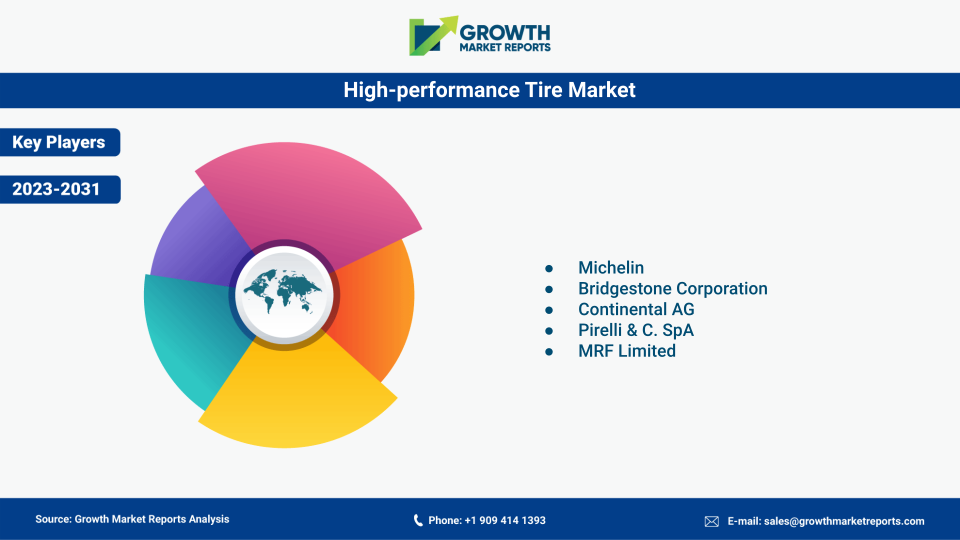
Key players competing in the high-performance tire market include Michelin; Bridgestone Corporation; Continental AG; Pirelli & C. SpA; MRF Limited.

Some of these players are targeting on business strategies such as mergers, acquisitions, partnerships, collaborations, capacity expansion, and product launches to increase their market shares. For instance

In October 2021, Bridgestone Corporation announced premium highway touring tires to unlock full potentials of the vehicles such as SUV’s, CUV’s and trucks.

In October 2021, Bridgestone Corporation developed custom engineered Potenza sports tires for the Ferrari Roma.

In July 2021, Bridgestone Corporation announced a partnership with Lamborghini to develop custom Potenza race tires for Huracan STO supercar.

In April 2021, Michelin introduced a new range of tires developed entirely virtually for the headlining LE MANS hypercar class.
 

High-performance Tire Market Key Players

Frequently Asked Questions

Opportunities include the integration of smart tire technologies, growth in emerging markets, and demand from electric and autonomous vehicles. Challenges involve raw material price volatility, regulatory compliance, intense competition, and economic fluctuations.

Major players include Michelin, Bridgestone Corporation, Goodyear Tire & Rubber Company, Continental AG, Pirelli & C. S.p.A., Yokohama Rubber Co., Ltd., and Hankook Tire & Technology Co., Ltd.

Innovations include advanced tread patterns, smart tire technologies like pressure monitoring and real-time analytics, improved rubber compounds, and the integration of eco-friendly materials.

High-performance tires are made from natural rubber, synthetic rubber, steel and textile reinforcements, silica fillers, and specialty additives. There is also a growing focus on sustainable and eco-friendly materials.

High-performance tires are distributed through OEM (original equipment manufacturer) and aftermarket channels. OEMs equip new vehicles with these tires, while the aftermarket offers replacement and upgrade options.

The market is segmented into passenger cars, light commercial vehicles, heavy commercial vehicles, sports cars, and others, with passenger cars holding the largest share.

The market is segmented into summer tires, all-season tires, winter tires, and track & competition tires, each designed for specific driving conditions and consumer needs.

Asia Pacific leads the market, followed by North America and Europe. The Asia Pacific region's dominance is due to rapid automotive industry growth in countries like China, Japan, and India.

Key growth drivers include rising consumer preference for vehicles with enhanced safety and performance, increasing adoption of sports and luxury vehicles, advancements in tire technology, and stricter regulatory standards for safety and emissions.

The global high-performance tire market reached USD 41.2 billion in 2024 and is projected to grow at a CAGR of 7.3%, reaching USD 77.7 billion by 2033.

Table Of Content

Chapter 1 Executive Summary
Chapter 2 Assumptions and Acronyms Used
Chapter 3 Research Methodology
Chapter 4 High-performance Tire Market Overview
   4.1 Introduction
      4.1.1 Market Taxonomy
      4.1.2 Market Definition
      4.1.3 Macro-Economic Factors Impacting the Market Growth
   4.2 High-performance Tire Market Dynamics
      4.2.1 Market Drivers
      4.2.2 Market Restraints
      4.2.3 Market Opportunity
   4.3 High-performance Tire Market - Supply Chain Analysis
      4.3.1 List of Key Suppliers
      4.3.2 List of Key Distributors
      4.3.3 List of Key Consumers
   4.4 Key Forces Shaping the High-performance Tire Market
      4.4.1 Bargaining Power of Suppliers
      4.4.2 Bargaining Power of Buyers
      4.4.3 Threat of Substitution
      4.4.4 Threat of New Entrants
      4.4.5 Competitive Rivalry
   4.5 Global High-performance Tire Market Size & Forecast, 2023-2032
      4.5.1 High-performance Tire Market Size and Y-o-Y Growth
      4.5.2 High-performance Tire Market Absolute $ Opportunity

Chapter 5 Global High-performance Tire Market Analysis and Forecast By Product Type
   5.1 Introduction
      5.1.1 Key Market Trends & Growth Opportunities By Product Type
      5.1.2 Basis Point Share (BPS) Analysis By Product Type
      5.1.3 Absolute $ Opportunity Assessment By Product Type
   5.2 High-performance Tire Market Size Forecast By Product Type
      5.2.1 Summer Tires
      5.2.2 All-Season Tires
      5.2.3 Winter Tires
      5.2.4 Track & Competition Tires
   5.3 Market Attractiveness Analysis By Product Type

Chapter 6 Global High-performance Tire Market Analysis and Forecast By Vehicle Type
   6.1 Introduction
      6.1.1 Key Market Trends & Growth Opportunities By Vehicle Type
      6.1.2 Basis Point Share (BPS) Analysis By Vehicle Type
      6.1.3 Absolute $ Opportunity Assessment By Vehicle Type
   6.2 High-performance Tire Market Size Forecast By Vehicle Type
      6.2.1 Passenger Cars
      6.2.2 Light Commercial Vehicles
      6.2.3 Heavy Commercial Vehicles
      6.2.4 Sports Cars
      6.2.5 Others
   6.3 Market Attractiveness Analysis By Vehicle Type

Chapter 7 Global High-performance Tire Market Analysis and Forecast By Sales Channel
   7.1 Introduction
      7.1.1 Key Market Trends & Growth Opportunities By Sales Channel
      7.1.2 Basis Point Share (BPS) Analysis By Sales Channel
      7.1.3 Absolute $ Opportunity Assessment By Sales Channel
   7.2 High-performance Tire Market Size Forecast By Sales Channel
      7.2.1 OEM
      7.2.2 Aftermarket
   7.3 Market Attractiveness Analysis By Sales Channel

Chapter 8 Global High-performance Tire Market Analysis and Forecast By Material
   8.1 Introduction
      8.1.1 Key Market Trends & Growth Opportunities By Material
      8.1.2 Basis Point Share (BPS) Analysis By Material
      8.1.3 Absolute $ Opportunity Assessment By Material
   8.2 High-performance Tire Market Size Forecast By Material
      8.2.1 Natural Rubber
      8.2.2 Synthetic Rubber
      8.2.3 Others
   8.3 Market Attractiveness Analysis By Material

Chapter 9 Global High-performance Tire Market Analysis and Forecast by Region
   9.1 Introduction
      9.1.1 Key Market Trends & Growth Opportunities By Region
      9.1.2 Basis Point Share (BPS) Analysis By Region
      9.1.3 Absolute $ Opportunity Assessment By Region
   9.2 High-performance Tire Market Size Forecast By Region
      9.2.1 North America
      9.2.2 Europe
      9.2.3 Asia Pacific
      9.2.4 Latin America
      9.2.5 Middle East & Africa (MEA)
   9.3 Market Attractiveness Analysis By Region

Chapter 10 Coronavirus Disease (COVID-19) Impact 
   10.1 Introduction 
   10.2 Current & Future Impact Analysis 
   10.3 Economic Impact Analysis 
   10.4 Government Policies 
   10.5 Investment Scenario

Chapter 11 North America High-performance Tire Analysis and Forecast
   11.1 Introduction
   11.2 North America High-performance Tire Market Size Forecast by Country
      11.2.1 U.S.
      11.2.2 Canada
   11.3 Basis Point Share (BPS) Analysis by Country
   11.4 Absolute $ Opportunity Assessment by Country
   11.5 Market Attractiveness Analysis by Country
   11.6 North America High-performance Tire Market Size Forecast By Product Type
      11.6.1 Summer Tires
      11.6.2 All-Season Tires
      11.6.3 Winter Tires
      11.6.4 Track & Competition Tires
   11.7 Basis Point Share (BPS) Analysis By Product Type 
   11.8 Absolute $ Opportunity Assessment By Product Type 
   11.9 Market Attractiveness Analysis By Product Type
   11.10 North America High-performance Tire Market Size Forecast By Vehicle Type
      11.10.1 Passenger Cars
      11.10.2 Light Commercial Vehicles
      11.10.3 Heavy Commercial Vehicles
      11.10.4 Sports Cars
      11.10.5 Others
   11.11 Basis Point Share (BPS) Analysis By Vehicle Type 
   11.12 Absolute $ Opportunity Assessment By Vehicle Type 
   11.13 Market Attractiveness Analysis By Vehicle Type
   11.14 North America High-performance Tire Market Size Forecast By Sales Channel
      11.14.1 OEM
      11.14.2 Aftermarket
   11.15 Basis Point Share (BPS) Analysis By Sales Channel 
   11.16 Absolute $ Opportunity Assessment By Sales Channel 
   11.17 Market Attractiveness Analysis By Sales Channel
   11.18 North America High-performance Tire Market Size Forecast By Material
      11.18.1 Natural Rubber
      11.18.2 Synthetic Rubber
      11.18.3 Others
   11.19 Basis Point Share (BPS) Analysis By Material 
   11.20 Absolute $ Opportunity Assessment By Material 
   11.21 Market Attractiveness Analysis By Material

Chapter 12 Europe High-performance Tire Analysis and Forecast
   12.1 Introduction
   12.2 Europe High-performance Tire Market Size Forecast by Country
      12.2.1 Germany
      12.2.2 France
      12.2.3 Italy
      12.2.4 U.K.
      12.2.5 Spain
      12.2.6 Russia
      12.2.7 Rest of Europe
   12.3 Basis Point Share (BPS) Analysis by Country
   12.4 Absolute $ Opportunity Assessment by Country
   12.5 Market Attractiveness Analysis by Country
   12.6 Europe High-performance Tire Market Size Forecast By Product Type
      12.6.1 Summer Tires
      12.6.2 All-Season Tires
      12.6.3 Winter Tires
      12.6.4 Track & Competition Tires
   12.7 Basis Point Share (BPS) Analysis By Product Type 
   12.8 Absolute $ Opportunity Assessment By Product Type 
   12.9 Market Attractiveness Analysis By Product Type
   12.10 Europe High-performance Tire Market Size Forecast By Vehicle Type
      12.10.1 Passenger Cars
      12.10.2 Light Commercial Vehicles
      12.10.3 Heavy Commercial Vehicles
      12.10.4 Sports Cars
      12.10.5 Others
   12.11 Basis Point Share (BPS) Analysis By Vehicle Type 
   12.12 Absolute $ Opportunity Assessment By Vehicle Type 
   12.13 Market Attractiveness Analysis By Vehicle Type
   12.14 Europe High-performance Tire Market Size Forecast By Sales Channel
      12.14.1 OEM
      12.14.2 Aftermarket
   12.15 Basis Point Share (BPS) Analysis By Sales Channel 
   12.16 Absolute $ Opportunity Assessment By Sales Channel 
   12.17 Market Attractiveness Analysis By Sales Channel
   12.18 Europe High-performance Tire Market Size Forecast By Material
      12.18.1 Natural Rubber
      12.18.2 Synthetic Rubber
      12.18.3 Others
   12.19 Basis Point Share (BPS) Analysis By Material 
   12.20 Absolute $ Opportunity Assessment By Material 
   12.21 Market Attractiveness Analysis By Material

Chapter 13 Asia Pacific High-performance Tire Analysis and Forecast
   13.1 Introduction
   13.2 Asia Pacific High-performance Tire Market Size Forecast by Country
      13.2.1 China
      13.2.2 Japan
      13.2.3 South Korea
      13.2.4 India
      13.2.5 Australia
      13.2.6 South East Asia (SEA)
      13.2.7 Rest of Asia Pacific (APAC)
   13.3 Basis Point Share (BPS) Analysis by Country
   13.4 Absolute $ Opportunity Assessment by Country
   13.5 Market Attractiveness Analysis by Country
   13.6 Asia Pacific High-performance Tire Market Size Forecast By Product Type
      13.6.1 Summer Tires
      13.6.2 All-Season Tires
      13.6.3 Winter Tires
      13.6.4 Track & Competition Tires
   13.7 Basis Point Share (BPS) Analysis By Product Type 
   13.8 Absolute $ Opportunity Assessment By Product Type 
   13.9 Market Attractiveness Analysis By Product Type
   13.10 Asia Pacific High-performance Tire Market Size Forecast By Vehicle Type
      13.10.1 Passenger Cars
      13.10.2 Light Commercial Vehicles
      13.10.3 Heavy Commercial Vehicles
      13.10.4 Sports Cars
      13.10.5 Others
   13.11 Basis Point Share (BPS) Analysis By Vehicle Type 
   13.12 Absolute $ Opportunity Assessment By Vehicle Type 
   13.13 Market Attractiveness Analysis By Vehicle Type
   13.14 Asia Pacific High-performance Tire Market Size Forecast By Sales Channel
      13.14.1 OEM
      13.14.2 Aftermarket
   13.15 Basis Point Share (BPS) Analysis By Sales Channel 
   13.16 Absolute $ Opportunity Assessment By Sales Channel 
   13.17 Market Attractiveness Analysis By Sales Channel
   13.18 Asia Pacific High-performance Tire Market Size Forecast By Material
      13.18.1 Natural Rubber
      13.18.2 Synthetic Rubber
      13.18.3 Others
   13.19 Basis Point Share (BPS) Analysis By Material 
   13.20 Absolute $ Opportunity Assessment By Material 
   13.21 Market Attractiveness Analysis By Material

Chapter 14 Latin America High-performance Tire Analysis and Forecast
   14.1 Introduction
   14.2 Latin America High-performance Tire Market Size Forecast by Country
      14.2.1 Brazil
      14.2.2 Mexico
      14.2.3 Rest of Latin America (LATAM)
   14.3 Basis Point Share (BPS) Analysis by Country
   14.4 Absolute $ Opportunity Assessment by Country
   14.5 Market Attractiveness Analysis by Country
   14.6 Latin America High-performance Tire Market Size Forecast By Product Type
      14.6.1 Summer Tires
      14.6.2 All-Season Tires
      14.6.3 Winter Tires
      14.6.4 Track & Competition Tires
   14.7 Basis Point Share (BPS) Analysis By Product Type 
   14.8 Absolute $ Opportunity Assessment By Product Type 
   14.9 Market Attractiveness Analysis By Product Type
   14.10 Latin America High-performance Tire Market Size Forecast By Vehicle Type
      14.10.1 Passenger Cars
      14.10.2 Light Commercial Vehicles
      14.10.3 Heavy Commercial Vehicles
      14.10.4 Sports Cars
      14.10.5 Others
   14.11 Basis Point Share (BPS) Analysis By Vehicle Type 
   14.12 Absolute $ Opportunity Assessment By Vehicle Type 
   14.13 Market Attractiveness Analysis By Vehicle Type
   14.14 Latin America High-performance Tire Market Size Forecast By Sales Channel
      14.14.1 OEM
      14.14.2 Aftermarket
   14.15 Basis Point Share (BPS) Analysis By Sales Channel 
   14.16 Absolute $ Opportunity Assessment By Sales Channel 
   14.17 Market Attractiveness Analysis By Sales Channel
   14.18 Latin America High-performance Tire Market Size Forecast By Material
      14.18.1 Natural Rubber
      14.18.2 Synthetic Rubber
      14.18.3 Others
   14.19 Basis Point Share (BPS) Analysis By Material 
   14.20 Absolute $ Opportunity Assessment By Material 
   14.21 Market Attractiveness Analysis By Material

Chapter 15 Middle East & Africa (MEA) High-performance Tire Analysis and Forecast
   15.1 Introduction
   15.2 Middle East & Africa (MEA) High-performance Tire Market Size Forecast by Country
      15.2.1 Saudi Arabia
      15.2.2 South Africa
      15.2.3 UAE
      15.2.4 Rest of Middle East & Africa (MEA)
   15.3 Basis Point Share (BPS) Analysis by Country
   15.4 Absolute $ Opportunity Assessment by Country
   15.5 Market Attractiveness Analysis by Country
   15.6 Middle East & Africa (MEA) High-performance Tire Market Size Forecast By Product Type
      15.6.1 Summer Tires
      15.6.2 All-Season Tires
      15.6.3 Winter Tires
      15.6.4 Track & Competition Tires
   15.7 Basis Point Share (BPS) Analysis By Product Type 
   15.8 Absolute $ Opportunity Assessment By Product Type 
   15.9 Market Attractiveness Analysis By Product Type
   15.10 Middle East & Africa (MEA) High-performance Tire Market Size Forecast By Vehicle Type
      15.10.1 Passenger Cars
      15.10.2 Light Commercial Vehicles
      15.10.3 Heavy Commercial Vehicles
      15.10.4 Sports Cars
      15.10.5 Others
   15.11 Basis Point Share (BPS) Analysis By Vehicle Type 
   15.12 Absolute $ Opportunity Assessment By Vehicle Type 
   15.13 Market Attractiveness Analysis By Vehicle Type
   15.14 Middle East & Africa (MEA) High-performance Tire Market Size Forecast By Sales Channel
      15.14.1 OEM
      15.14.2 Aftermarket
   15.15 Basis Point Share (BPS) Analysis By Sales Channel 
   15.16 Absolute $ Opportunity Assessment By Sales Channel 
   15.17 Market Attractiveness Analysis By Sales Channel
   15.18 Middle East & Africa (MEA) High-performance Tire Market Size Forecast By Material
      15.18.1 Natural Rubber
      15.18.2 Synthetic Rubber
      15.18.3 Others
   15.19 Basis Point Share (BPS) Analysis By Material 
   15.20 Absolute $ Opportunity Assessment By Material 
   15.21 Market Attractiveness Analysis By Material

Chapter 16 Competition Landscape 
   16.1 High-performance Tire Market: Competitive Dashboard
   16.2 Global High-performance Tire Market: Market Share Analysis, 2023
   16.3 Company Profiles (Details – Overview, Financials, Developments, Strategy) 
      16.3.1 Michelin
Bridgestone Corporation
Goodyear Tire & Rubber Company
Continental AG
Pirelli & C. S.p.A.
Sumitomo Rubber Industries, Ltd.
Yokohama Rubber Company
Hankook Tire & Technology Co., Ltd.
Toyo Tire Corporation
Cooper Tire & Rubber Company
Kumho Tire Co., Inc.
Apollo Tyres Ltd.
Nokian Tyres plc
Maxxis International
Giti Tire
Nexen Tire Corporation
Sailun Group Co., Ltd.
Linglong Tire
Triangle Tire Co., Ltd.
ZC Rubber (Zhongce Rubber Group Co., Ltd.)

Methodology

Our Clients

Siemens Healthcare
Microsoft
Dassault Aviation
Pfizer
Nestle SA
The John Holland Group
General Electric
sinopec