Government Cloud Market Research Report 2033

Government Cloud Market Research Report 2033

Segments - by Component (Solution, Services), by Deployment Model (Public Cloud, Private Cloud, Hybrid Cloud), by Service Model (Infrastructure as a Service, Platform as a Service, Software as a Service), by Application (Storage, Disaster Recovery, Security and Compliance, Analytics, Others), by End-User (Federal Government, State and Local Government, Defense and Military, Others)

https://growthmarketreports.com/Raksha
Author : Raksha Sharma
https://growthmarketreports.com/Vaibhav
Fact-checked by : V. Chandola
https://growthmarketreports.com/Shruti
Editor : Shruti Bhat

Upcoming | Report ID :ICT-SE-3751 | 4.2 Rating | 39 Reviews | 286 Pages | Format : Docx PDF

Report Description


Government Cloud Market Outlook

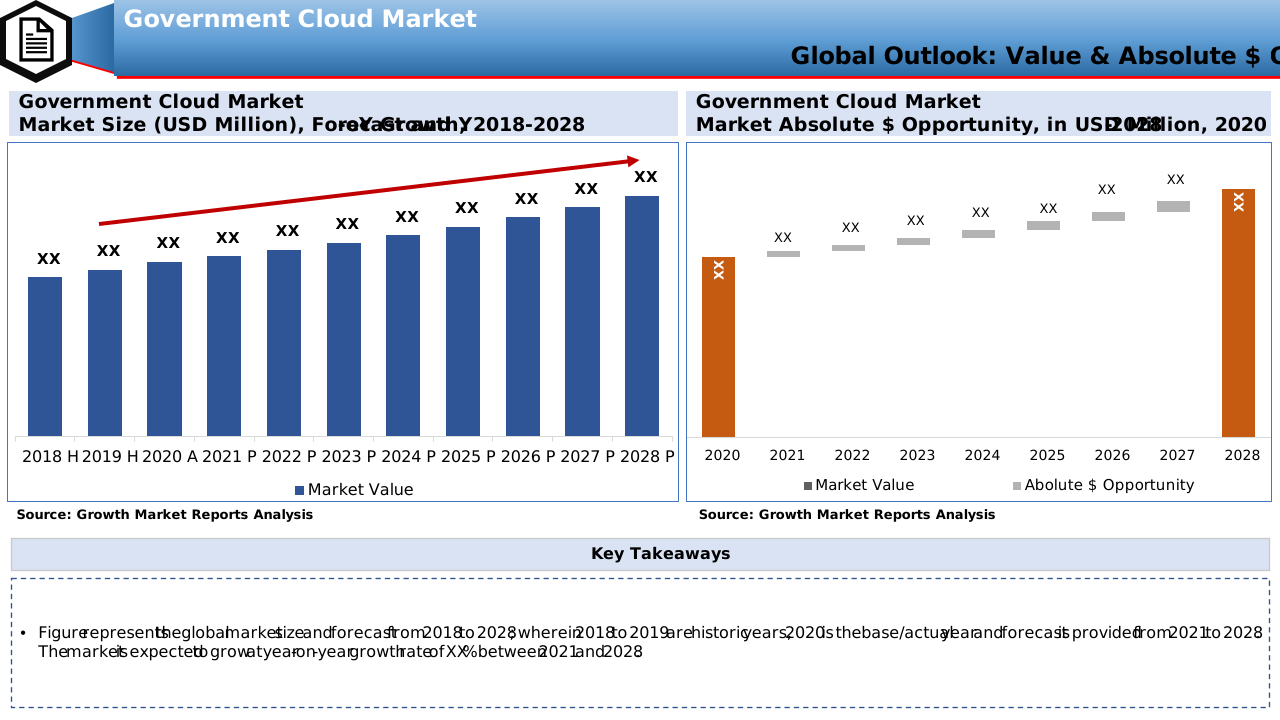
According to our latest research, the global government cloud market size reached USD 33.2 billion in 2024, reflecting a robust adoption of cloud technologies across public sector entities. The market demonstrates a strong growth trajectory, with a projected CAGR of 16.4% from 2025 to 2033. By the end of 2033, the government cloud market is forecasted to attain a value of USD 98.4 billion, driven by increasing digital transformation initiatives, stringent data security requirements, and the growing need for scalable IT infrastructure within governmental organizations. This impressive growth is attributed to governments worldwide prioritizing modernization and resilience in public service delivery.

The primary growth factor for the government cloud market is the urgent need for enhanced data security, privacy, and regulatory compliance, which cloud solutions are uniquely positioned to address. Governments are increasingly handling vast amounts of sensitive data, ranging from citizen information to national security details, making the adoption of secure and compliant cloud platforms a necessity. The implementation of advanced cloud security protocols, including encryption, identity and access management, and regular compliance audits, ensures that government agencies can mitigate risks associated with data breaches and cyberattacks. Furthermore, cloud vendors are continuously innovating to offer government-specific solutions that meet strict regulatory requirements, thereby fostering trust and accelerating cloud adoption in the public sector.

Another significant driver is the cost-effectiveness and operational agility that cloud computing brings to government agencies. Traditional on-premises IT infrastructures are not only capital-intensive but also lack the flexibility to scale with changing demands. By transitioning to cloud-based models, governments can significantly reduce capital expenditures on hardware and maintenance, while also benefiting from the pay-as-you-go pricing structures of cloud services. This financial efficiency enables agencies to allocate more resources toward mission-critical projects and citizen-centric services. Furthermore, cloud platforms empower governments to rapidly deploy new applications and services, improve interdepartmental collaboration, and respond more effectively to emergencies and evolving public needs.

A further catalyst for market growth is the increasing emphasis on digital transformation and modernization of legacy systems. The COVID-19 pandemic accentuated the need for resilient and accessible government services, prompting accelerated cloud adoption for remote work, virtual service delivery, and data-driven policy-making. Cloud environments facilitate seamless integration of emerging technologies such as artificial intelligence, big data analytics, and Internet of Things (IoT), enabling governments to enhance their decision-making capabilities and offer innovative services to citizens. As digital transformation remains a top priority for public sector leaders, cloud adoption is expected to remain on an upward trajectory, supported by both national and regional digitalization strategies.

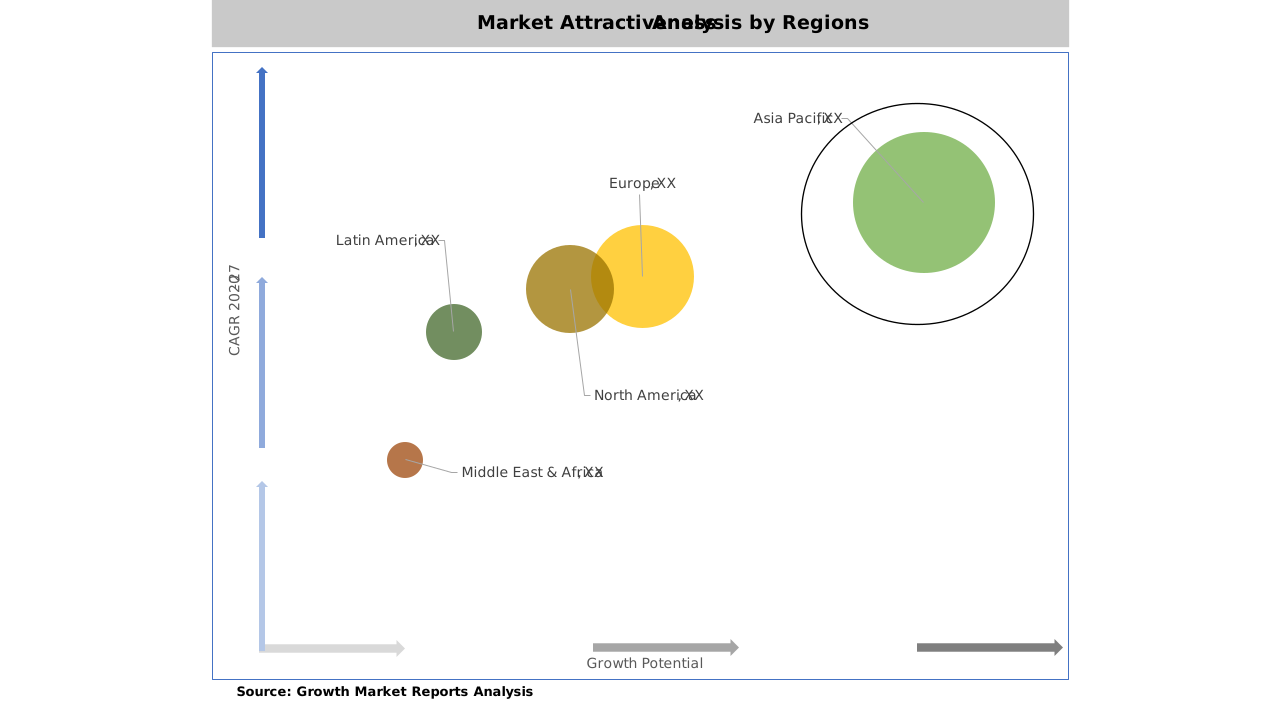
From a regional perspective, North America continues to dominate the government cloud market, underpinned by significant investments from federal and state agencies, a mature cloud ecosystem, and the presence of leading cloud service providers. Europe follows closely, driven by stringent data protection regulations such as GDPR and a strong focus on digital sovereignty. The Asia Pacific region is witnessing rapid growth, fueled by government-led digital initiatives, increasing internet penetration, and the modernization of public infrastructure in countries like China, India, and Australia. Meanwhile, Latin America and the Middle East & Africa are gradually embracing cloud technologies, with investments primarily focused on improving public service delivery and enhancing disaster recovery capabilities.

Global Government Cloud Industry Outlook

Component Analysis

The government cloud market is segmented by component into solutions and services, each playing a pivotal role in the overall ecosystem. Solutions encompass a wide array of cloud-based software and platforms tailored to meet the unique requirements of government agencies. These include cloud storage, security and compliance modules, analytics platforms, and disaster recovery solutions. The demand for robust and customizable solutions is intensifying as governments seek to modernize their IT infrastructure, streamline operations, and enhance service delivery to citizens. Vendors are increasingly focusing on interoperability, scalability, and integration capabilities to cater to the diverse needs of public sector organizations, ensuring seamless migration from legacy systems to the cloud.

Services, on the other hand, constitute a significant portion of the government cloud market, encompassing consulting, implementation, migration, support, and managed services. As cloud adoption becomes more complex, government agencies are seeking expert guidance to navigate the intricacies of cloud strategy, security, and compliance. Service providers play a crucial role in facilitating smooth transitions, minimizing operational disruptions, and ensuring that cloud deployments align with regulatory requirements. Additionally, managed services are gaining traction as governments look to offload routine IT management tasks and focus on strategic initiatives. The growing reliance on third-party expertise is expected to drive the services segment at a rapid pace in the coming years.

The interplay between solutions and services is critical to the success of government cloud projects. While solutions provide the technological backbone, it is the associated services that ensure successful implementation, optimization, and long-term sustainability. Cloud vendors are increasingly offering bundled packages that combine software, infrastructure, and professional services, providing government clients with end-to-end solutions that address both technical and operational challenges. This holistic approach not only accelerates cloud adoption but also enhances the value proposition for public sector customers.

Moreover, the evolution of component offerings is being shaped by emerging technologies and changing government priorities. Artificial intelligence, machine learning, and advanced analytics are being integrated into cloud solutions to enable smarter decision-making, predictive analytics, and proactive risk management. Simultaneously, the demand for specialized services such as cloud security assessments, compliance audits, and business continuity planning is on the rise. As governments continue to embrace digital transformation, the component landscape of the government cloud market will remain dynamic, with innovation and customization at its core.

Report Scope

Attributes Details
Report Title Government Cloud Market Research Report 2033
By Component Solution, Services
By Deployment Model Public Cloud, Private Cloud, Hybrid Cloud
By Service Model Infrastructure as a Service, Platform as a Service, Software as a Service
By Application Storage, Disaster Recovery, Security and Compliance, Analytics, Others
By End-User Federal Government, State and Local Government, Defense and Military, Others
Regions Covered North America, Europe, APAC, Latin America, MEA
Base Year 2024
Historic Data 2018-2023
Forecast Period 2025-2033
Number of Pages 286
Number of Tables & Figures 355
Customization Available Yes, the report can be customized as per your need.

Deployment Model Analysis

The deployment model segment of the government cloud market comprises public cloud, private cloud, and hybrid cloud, each offering distinct advantages and considerations for government agencies. Public cloud solutions, delivered by third-party providers, offer unparalleled scalability, flexibility, and cost-efficiency. They are particularly well-suited for non-sensitive workloads, public-facing applications, and disaster recovery scenarios where rapid provisioning and elastic resources are paramount. The adoption of public cloud in the government sector is being propelled by the need to quickly deploy new services, accommodate fluctuating demands, and reduce the burden of infrastructure management.

Private cloud deployments, in contrast, are dedicated environments either hosted on-premises or by a trusted service provider, offering enhanced control, security, and compliance. Government agencies dealing with highly sensitive data, such as defense, law enforcement, and critical infrastructure, often prefer private cloud solutions to maintain stringent data governance and regulatory adherence. Private clouds enable agencies to tailor security protocols, access controls, and data residency requirements to their specific needs, making them ideal for mission-critical applications and confidential information management.

Hybrid cloud models are gaining significant traction in the government sector, as they combine the best of both public and private clouds. Hybrid architectures allow agencies to seamlessly integrate on-premises infrastructure with public and private cloud resources, enabling workload portability, data sovereignty, and optimized resource utilization. Governments are leveraging hybrid clouds to maintain sensitive data and legacy applications in secure private environments while taking advantage of the scalability and innovation offered by public cloud platforms for less sensitive workloads. The hybrid approach also facilitates business continuity, disaster recovery, and compliance with evolving regulatory frameworks.

The choice of deployment model is influenced by a variety of factors, including data sensitivity, regulatory requirements, budget constraints, and existing IT infrastructure. Governments are increasingly adopting multi-cloud and hybrid strategies to avoid vendor lock-in, enhance resilience, and optimize costs. Cloud service providers are responding by offering flexible deployment options, interoperability tools, and comprehensive management platforms that empower agencies to orchestrate complex cloud environments with ease. As the government cloud market matures, the deployment model segment will continue to evolve in response to shifting priorities and technological advancements.

Service Model Analysis

The government cloud market is segmented by service model into Infrastructure as a Service (IaaS), Platform as a Service (PaaS), and Software as a Service (SaaS), each catering to different layers of the cloud stack and government requirements. IaaS provides the foundational infrastructure—compute, storage, and networking resources—delivered as a service. Government agencies leverage IaaS to build, deploy, and manage applications without the need to invest in physical hardware, enabling rapid scaling and efficient resource allocation. IaaS is particularly popular for hosting legacy applications, supporting disaster recovery, and accommodating temporary workloads during peak demand periods.

PaaS offers a higher level of abstraction, providing a platform for developers to build, test, and deploy applications without worrying about underlying infrastructure management. Governments utilize PaaS to accelerate the development of custom applications, improve collaboration among development teams, and streamline the software development lifecycle. PaaS platforms often include integrated development tools, middleware, and database management systems, enabling agencies to innovate and deliver new digital services more rapidly. The adoption of PaaS in the public sector is being driven by the need for agility, faster time-to-market, and support for emerging technologies such as AI and big data analytics.

SaaS delivers fully managed software applications over the cloud, eliminating the need for local installation, maintenance, and upgrades. Government agencies are increasingly adopting SaaS solutions for a wide range of applications, including email, collaboration, case management, financial management, and citizen engagement platforms. The SaaS model offers significant advantages in terms of cost savings, ease of deployment, and automatic updates, enabling governments to focus on core operations while benefiting from the latest functionality and security enhancements. SaaS adoption is also facilitated by the availability of government-specific solutions that address unique regulatory and operational requirements.

The interplay between IaaS, PaaS, and SaaS is shaping the way governments approach cloud adoption and digital transformation. Many agencies are adopting a multi-service model strategy, leveraging the strengths of each layer to build resilient, scalable, and future-proof IT ecosystems. Cloud vendors are investing in integrated platforms that seamlessly connect IaaS, PaaS, and SaaS offerings, simplifying management and enhancing interoperability. As the demand for digital services continues to grow, the service model segment of the government cloud market will remain a key driver of innovation and value creation.

Application Analysis

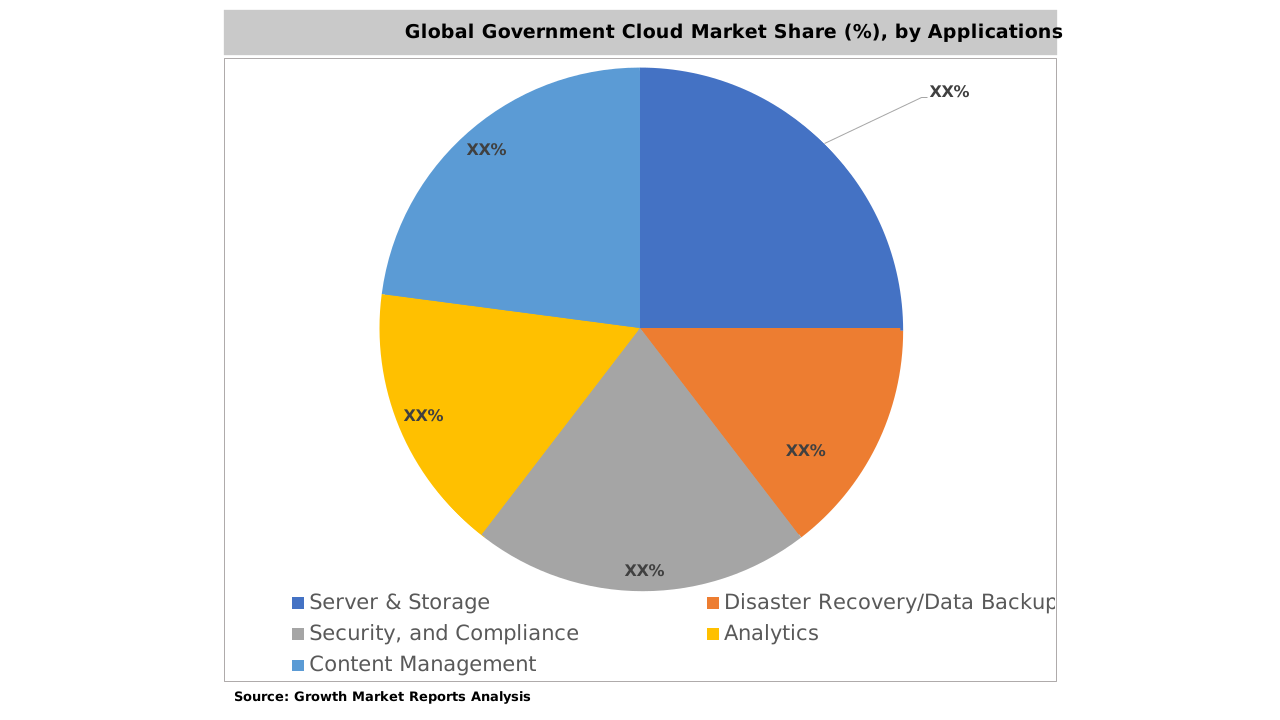
The application segment of the government cloud market encompasses a diverse range of use cases, including storage, disaster recovery, security and compliance, analytics, and others. Cloud-based storage solutions are in high demand among government agencies seeking to manage and protect vast volumes of data generated by public services, law enforcement, healthcare, and administrative functions. Cloud storage offers enhanced scalability, data durability, and cost-efficiency compared to traditional storage systems, enabling agencies to meet growing data retention and access requirements. Additionally, advanced storage solutions integrate seamlessly with backup, archiving, and data management tools, ensuring data integrity and compliance with regulatory mandates.

Disaster recovery is another critical application area, as governments must ensure the continuity of operations and rapid recovery from disruptions caused by natural disasters, cyberattacks, or system failures. Cloud-based disaster recovery solutions provide automated backup, failover, and restoration capabilities, minimizing downtime and data loss. These solutions enable agencies to maintain business continuity plans that are both cost-effective and scalable, allowing for quick adaptation to changing risk environments. The adoption of disaster recovery as a service (DRaaS) is on the rise, as it offers governments the flexibility to tailor recovery strategies to specific workloads and compliance requirements.

Security and compliance applications are at the forefront of government cloud adoption, given the sensitive nature of public sector data and the complexity of regulatory frameworks. Cloud platforms are integrating advanced security features such as encryption, multi-factor authentication, intrusion detection, and continuous monitoring to safeguard data and applications. Compliance tools automate the enforcement of policies, audit trails, and reporting, helping agencies adhere to standards such as FISMA, FedRAMP, GDPR, and local data protection laws. The growing threat landscape and evolving regulatory requirements are driving continuous innovation in cloud security and compliance solutions tailored to government needs.

Analytics is transforming the way governments leverage data to inform policy decisions, optimize resource allocation, and enhance public services. Cloud-based analytics platforms provide powerful tools for data integration, visualization, and predictive modeling, enabling agencies to extract actionable insights from disparate data sources. Governments are investing in analytics applications to support initiatives such as smart cities, public health surveillance, crime prevention, and environmental monitoring. The integration of artificial intelligence and machine learning capabilities further enhances the value of analytics in the public sector, driving improved outcomes and operational efficiency.

Other application areas include citizen engagement, case management, human resources, and procurement, all of which benefit from the scalability, flexibility, and innovation offered by cloud technologies. As governments continue to expand their digital service portfolios, the application segment of the government cloud market will diversify further, creating new opportunities for cloud vendors and service providers to deliver tailored solutions that address the evolving needs of the public sector.

End-User Analysis

The government cloud market serves a wide range of end-users, including federal government, state and local government, defense and military, and others. Federal government agencies are leading adopters of cloud technologies, driven by large-scale digital transformation initiatives, stringent regulatory requirements, and the need for secure, scalable IT infrastructure. Federal agencies are leveraging cloud platforms to modernize legacy systems, enhance data sharing and collaboration, and improve the delivery of public services. The federal segment is characterized by complex procurement processes, rigorous security standards, and a strong emphasis on compliance, making it a key focus area for cloud vendors and service providers.

State and local governments are increasingly embracing cloud solutions to address budget constraints, improve operational efficiency, and enhance citizen engagement. The adoption of cloud technologies at the state and local level is being driven by the need to modernize aging infrastructure, support remote work, and deliver digital services such as online permitting, tax filing, and emergency response. State and local agencies often face unique challenges related to funding, resource availability, and regulatory diversity, necessitating tailored cloud solutions that balance cost, functionality, and compliance. Cloud vendors are responding with flexible pricing models, pre-configured solutions, and support services designed to meet the specific needs of these agencies.

Defense and military organizations represent a critical end-user segment, with unique requirements for security, resilience, and mission assurance. The adoption of cloud technologies in defense is focused on enhancing operational agility, supporting intelligence and surveillance missions, and enabling secure collaboration across distributed environments. Defense agencies require cloud solutions that meet the highest standards of security, including classified data handling, secure communications, and continuous monitoring. The integration of cloud with emerging technologies such as AI, machine learning, and IoT is transforming defense operations, enabling real-time decision-making and force readiness.

Other end-users of government cloud solutions include educational institutions, public healthcare providers, transportation authorities, and regulatory bodies. These organizations are leveraging cloud technologies to improve service delivery, support data-driven decision-making, and enhance collaboration across departments and agencies. As the scope of government cloud adoption expands, the end-user segment will continue to diversify, creating new opportunities for innovation and growth in the public sector cloud market.

Opportunities & Threats

The government cloud market presents significant opportunities for growth and innovation, particularly as governments worldwide accelerate their digital transformation initiatives. One of the most promising opportunities lies in the integration of cloud with emerging technologies such as artificial intelligence, machine learning, and the Internet of Things. These technologies enable governments to harness the power of data for predictive analytics, smart city initiatives, and real-time decision-making. Cloud platforms provide the scalability, flexibility, and computational power required to support these advanced applications, positioning governments to deliver innovative services, improve operational efficiency, and enhance citizen engagement. Additionally, the growing emphasis on open data and interoperability is creating opportunities for cloud vendors to develop solutions that facilitate data sharing, collaboration, and transparency across government agencies.

Another key opportunity stems from the increasing focus on cybersecurity and regulatory compliance in the public sector. As governments face growing threats from cyberattacks, data breaches, and ransomware, the demand for secure, compliant cloud solutions is reaching new heights. Cloud vendors that can demonstrate robust security credentials, compliance with industry standards, and a track record of successful government deployments are well-positioned to capture market share. Furthermore, the shift towards hybrid and multi-cloud strategies is opening up opportunities for vendors to offer value-added services such as cloud management, orchestration, and security monitoring. As governments seek to balance innovation with risk management, the ability to provide trusted, compliant, and resilient cloud solutions will be a key differentiator in the market.

Despite the numerous opportunities, the government cloud market faces significant restrainers, chief among them being concerns around data sovereignty, privacy, and vendor lock-in. Governments are often hesitant to move sensitive data to the cloud due to fears of losing control over data location, access, and jurisdiction. Regulatory requirements related to data residency and cross-border data transfers further complicate cloud adoption, particularly in regions with strict data protection laws. Additionally, the risk of vendor lock-in—where agencies become dependent on a single cloud provider—can limit flexibility, increase costs, and hinder innovation. Addressing these challenges requires cloud vendors to invest in transparent, interoperable, and portable solutions that empower governments to maintain control over their data and avoid long-term dependencies on specific providers.

Regional Outlook

North America remains the largest and most mature market for government cloud solutions, accounting for approximately USD 14.2 billion of the global market in 2024. The region's dominance is driven by significant investments from federal, state, and local government agencies, a well-established cloud ecosystem, and the presence of leading cloud service providers such as Amazon Web Services, Microsoft Azure, and Google Cloud. The United States, in particular, is at the forefront of cloud adoption in the public sector, with initiatives such as FedRAMP and the Cloud Smart strategy setting the standard for secure, compliant cloud deployments. Canada is also making strides in government cloud adoption, with a focus on digital government initiatives and data sovereignty.

Europe represents the second-largest regional market, with a government cloud market size of approximately USD 8.8 billion in 2024. The region's growth is underpinned by stringent data protection regulations such as GDPR, a strong emphasis on digital sovereignty, and robust investment in public sector digital transformation. Countries such as the United Kingdom, Germany, and France are leading adopters, leveraging cloud technologies to modernize public services, enhance cybersecurity, and improve operational efficiency. The European government cloud market is expected to grow at a CAGR of 15.2% through 2033, driven by continued investments in e-government, smart cities, and cross-border data initiatives.

The Asia Pacific government cloud market is experiencing rapid growth, with a market size of USD 6.2 billion in 2024. The region's expansion is fueled by government-led digital initiatives, increasing internet penetration, and the modernization of public infrastructure in countries such as China, India, Japan, and Australia. Governments in the Asia Pacific are investing in cloud solutions to improve service delivery, support economic development, and enhance disaster recovery capabilities. The region is also witnessing significant investments in cloud security, compliance, and data localization, reflecting the diverse regulatory landscape and evolving threat environment. As digital transformation accelerates, the Asia Pacific government cloud market is poised for sustained growth in the coming years.

Government Cloud Market Statistics

Competitor Outlook

The competitive landscape of the government cloud market is characterized by the presence of global technology giants, specialized cloud vendors, and regional players, all vying for a share of the rapidly expanding public sector cloud market. Leading cloud service providers such as Amazon Web Services (AWS), Microsoft Azure, and Google Cloud dominate the market, leveraging their extensive infrastructure, robust security capabilities, and comprehensive service portfolios to win large government contracts. These vendors have made significant investments in government-specific solutions, compliance certifications, and partnerships with public sector organizations, positioning themselves as trusted partners for digital transformation initiatives.

In addition to the global leaders, a number of specialized cloud vendors and system integrators are carving out niches in the government cloud market by offering tailored solutions, managed services, and consulting expertise. Companies such as Oracle, IBM, Salesforce, and VMware are focusing on hybrid and multi-cloud deployments, advanced analytics, and security solutions designed to meet the unique needs of government agencies. These vendors are differentiating themselves through deep domain expertise, flexible deployment models, and a commitment to compliance with government regulations and standards.

The competitive dynamics are further shaped by the emergence of regional players and startups that offer innovative solutions and localized support. In Europe, companies such as OVHcloud and T-Systems are gaining traction by providing data sovereignty, compliance, and data localization services tailored to the needs of European governments. In Asia Pacific, local vendors are partnering with government agencies to deliver cloud solutions that address regional regulatory requirements and language preferences. The growing emphasis on open-source, interoperability, and vendor neutrality is also creating opportunities for new entrants to challenge established players and drive innovation in the market.

Major companies in the government cloud market include Amazon Web Services (AWS), which offers the AWS GovCloud (US) regions specifically designed for sensitive government workloads; Microsoft Corporation, with its Azure Government platform providing secure, compliant cloud services for US government agencies; and Google LLC, which delivers Google Cloud for Government with a focus on security, scalability, and AI-driven analytics. Other key players include IBM Corporation, known for its hybrid cloud and AI capabilities; Oracle Corporation, offering secure cloud infrastructure and SaaS applications; Salesforce, with its Government Cloud CRM solutions; and VMware, specializing in multi-cloud management and virtualization. These companies are investing heavily in R&D, compliance certifications, and strategic partnerships to expand their footprint in the government cloud market and address the evolving needs of public sector customers.

Key Players

  • Microsoft Corporation
  • Amazon Web Services (AWS)
  • Google LLC
  • IBM Corporation
  • Oracle Corporation
  • Salesforce, Inc.
  • SAP SE
  • Alibaba Cloud
  • Dell Technologies
  • Hewlett Packard Enterprise (HPE)
  • VMware, Inc.
  • Cisco Systems, Inc.
  • CGI Inc.
  • ATOS SE
  • Workday, Inc.
  • Rackspace Technology
  • Fujitsu Limited
  • T-Systems International GmbH
  • Capgemini SE
  • Verizon Communications Inc.
Government Cloud Market Overview

Segments

The Government Cloud market has been segmented on the basis of

Component

  • Solution
  • Services

Deployment Model

  • Public Cloud
  • Private Cloud
  • Hybrid Cloud

Service Model

  • Infrastructure as a Service
  • Platform as a Service
  • Software as a Service

Application

  • Storage
  • Disaster Recovery
  • Security and Compliance
  • Analytics
  • Others

End-User

  • Federal Government
  • State and Local Government
  • Defense and Military
  • Others

Competitive Landscape

Key players competing in the government cloud market include Amazon Web Services Inc.; AT&T Inc.; CGI Inc.; Cisco Systems Inc.; Dell Inc.

These key players are constantly implementing several marketing strategies such as merger & acquisitions, capital investments, partnerships, and new product development to sustain industry position in the market.
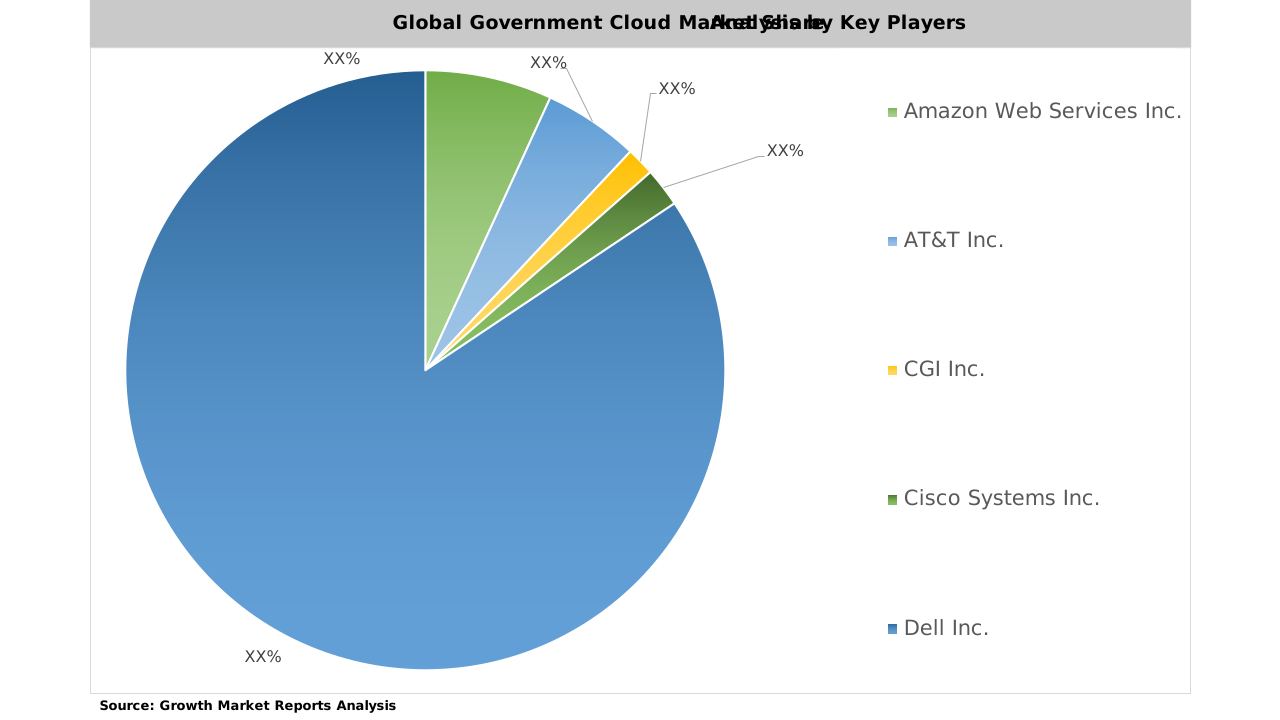

Global Government Cloud Market Keyplayers

Frequently Asked Questions

Yes, the Government Cloud Market Research Report 2033 can be customized according to specific requirements.

Key players include Microsoft Corporation, Amazon Web Services (AWS), Google LLC, IBM Corporation, Oracle Corporation, Salesforce, SAP SE, Alibaba Cloud, Dell Technologies, HPE, VMware, Cisco, CGI, ATOS, Workday, Rackspace, Fujitsu, T-Systems, Capgemini, and Verizon.

Opportunities include integration with AI, machine learning, IoT, and a focus on cybersecurity and regulatory compliance. Challenges involve data sovereignty concerns, privacy, regulatory complexities, and the risk of vendor lock-in.

Major end-users include federal government, state and local government, defense and military organizations, as well as public healthcare providers, educational institutions, and regulatory bodies.

Key applications include cloud storage, disaster recovery, security and compliance, analytics, citizen engagement, case management, human resources, and procurement.

North America is the largest and most mature market, followed by Europe and Asia Pacific. North America leads due to significant investments and a mature cloud ecosystem, while Europe is driven by strict data protection laws and Asia Pacific by rapid digital initiatives.

The government cloud market offers Infrastructure as a Service (IaaS), Platform as a Service (PaaS), and Software as a Service (SaaS), each catering to different government IT needs and application layers.

The main deployment models are public cloud, private cloud, and hybrid cloud. Hybrid cloud is gaining traction due to its ability to combine security and scalability, while public cloud is favored for non-sensitive workloads and private cloud for highly sensitive data.

Key drivers include the need for enhanced data security and privacy, regulatory compliance, cost-effectiveness, operational agility, and the push for digital transformation and modernization of legacy systems.

The global government cloud market reached USD 33.2 billion in 2024 and is projected to grow at a CAGR of 16.4% from 2025 to 2033, reaching USD 98.4 billion by the end of 2033.

Table Of Content

Chapter 1 Executive Summary
Chapter 2 Assumptions and Acronyms Used
Chapter 3 Research Methodology
Chapter 4 Government Cloud Market Overview
   4.1 Introduction
      4.1.1 Market Taxonomy
      4.1.2 Market Definition
      4.1.3 Macro-Economic Factors Impacting the Market Growth
   4.2 Government Cloud Market Dynamics
      4.2.1 Market Drivers
      4.2.2 Market Restraints
      4.2.3 Market Opportunity
   4.3 Government Cloud Market - Supply Chain Analysis
      4.3.1 List of Key Suppliers
      4.3.2 List of Key Distributors
      4.3.3 List of Key Consumers
   4.4 Key Forces Shaping the Government Cloud Market
      4.4.1 Bargaining Power of Suppliers
      4.4.2 Bargaining Power of Buyers
      4.4.3 Threat of Substitution
      4.4.4 Threat of New Entrants
      4.4.5 Competitive Rivalry
   4.5 Global Government Cloud Market Size & Forecast, 2023-2032
      4.5.1 Government Cloud Market Size and Y-o-Y Growth
      4.5.2 Government Cloud Market Absolute $ Opportunity

Chapter 5 Global Government Cloud Market Analysis and Forecast By Component
   5.1 Introduction
      5.1.1 Key Market Trends & Growth Opportunities By Component
      5.1.2 Basis Point Share (BPS) Analysis By Component
      5.1.3 Absolute $ Opportunity Assessment By Component
   5.2 Government Cloud Market Size Forecast By Component
      5.2.1 Solution
      5.2.2 Services
   5.3 Market Attractiveness Analysis By Component

Chapter 6 Global Government Cloud Market Analysis and Forecast By Deployment Model
   6.1 Introduction
      6.1.1 Key Market Trends & Growth Opportunities By Deployment Model
      6.1.2 Basis Point Share (BPS) Analysis By Deployment Model
      6.1.3 Absolute $ Opportunity Assessment By Deployment Model
   6.2 Government Cloud Market Size Forecast By Deployment Model
      6.2.1 Public Cloud
      6.2.2 Private Cloud
      6.2.3 Hybrid Cloud
   6.3 Market Attractiveness Analysis By Deployment Model

Chapter 7 Global Government Cloud Market Analysis and Forecast By Service Model
   7.1 Introduction
      7.1.1 Key Market Trends & Growth Opportunities By Service Model
      7.1.2 Basis Point Share (BPS) Analysis By Service Model
      7.1.3 Absolute $ Opportunity Assessment By Service Model
   7.2 Government Cloud Market Size Forecast By Service Model
      7.2.1 Infrastructure as a Service
      7.2.2 Platform as a Service
      7.2.3 Software as a Service
   7.3 Market Attractiveness Analysis By Service Model

Chapter 8 Global Government Cloud Market Analysis and Forecast By Application
   8.1 Introduction
      8.1.1 Key Market Trends & Growth Opportunities By Application
      8.1.2 Basis Point Share (BPS) Analysis By Application
      8.1.3 Absolute $ Opportunity Assessment By Application
   8.2 Government Cloud Market Size Forecast By Application
      8.2.1 Storage
      8.2.2 Disaster Recovery
      8.2.3 Security and Compliance
      8.2.4 Analytics
      8.2.5 Others
   8.3 Market Attractiveness Analysis By Application

Chapter 9 Global Government Cloud Market Analysis and Forecast By End-User
   9.1 Introduction
      9.1.1 Key Market Trends & Growth Opportunities By End-User
      9.1.2 Basis Point Share (BPS) Analysis By End-User
      9.1.3 Absolute $ Opportunity Assessment By End-User
   9.2 Government Cloud Market Size Forecast By End-User
      9.2.1 Federal Government
      9.2.2 State and Local Government
      9.2.3 Defense and Military
      9.2.4 Others
   9.3 Market Attractiveness Analysis By End-User

Chapter 10 Global Government Cloud Market Analysis and Forecast by Region
   10.1 Introduction
      10.1.1 Key Market Trends & Growth Opportunities By Region
      10.1.2 Basis Point Share (BPS) Analysis By Region
      10.1.3 Absolute $ Opportunity Assessment By Region
   10.2 Government Cloud Market Size Forecast By Region
      10.2.1 North America
      10.2.2 Europe
      10.2.3 Asia Pacific
      10.2.4 Latin America
      10.2.5 Middle East & Africa (MEA)
   10.3 Market Attractiveness Analysis By Region

Chapter 11 Coronavirus Disease (COVID-19) Impact 
   11.1 Introduction 
   11.2 Current & Future Impact Analysis 
   11.3 Economic Impact Analysis 
   11.4 Government Policies 
   11.5 Investment Scenario

Chapter 12 North America Government Cloud Analysis and Forecast
   12.1 Introduction
   12.2 North America Government Cloud Market Size Forecast by Country
      12.2.1 U.S.
      12.2.2 Canada
   12.3 Basis Point Share (BPS) Analysis by Country
   12.4 Absolute $ Opportunity Assessment by Country
   12.5 Market Attractiveness Analysis by Country
   12.6 North America Government Cloud Market Size Forecast By Component
      12.6.1 Solution
      12.6.2 Services
   12.7 Basis Point Share (BPS) Analysis By Component 
   12.8 Absolute $ Opportunity Assessment By Component 
   12.9 Market Attractiveness Analysis By Component
   12.10 North America Government Cloud Market Size Forecast By Deployment Model
      12.10.1 Public Cloud
      12.10.2 Private Cloud
      12.10.3 Hybrid Cloud
   12.11 Basis Point Share (BPS) Analysis By Deployment Model 
   12.12 Absolute $ Opportunity Assessment By Deployment Model 
   12.13 Market Attractiveness Analysis By Deployment Model
   12.14 North America Government Cloud Market Size Forecast By Service Model
      12.14.1 Infrastructure as a Service
      12.14.2 Platform as a Service
      12.14.3 Software as a Service
   12.15 Basis Point Share (BPS) Analysis By Service Model 
   12.16 Absolute $ Opportunity Assessment By Service Model 
   12.17 Market Attractiveness Analysis By Service Model
   12.18 North America Government Cloud Market Size Forecast By Application
      12.18.1 Storage
      12.18.2 Disaster Recovery
      12.18.3 Security and Compliance
      12.18.4 Analytics
      12.18.5 Others
   12.19 Basis Point Share (BPS) Analysis By Application 
   12.20 Absolute $ Opportunity Assessment By Application 
   12.21 Market Attractiveness Analysis By Application
   12.22 North America Government Cloud Market Size Forecast By End-User
      12.22.1 Federal Government
      12.22.2 State and Local Government
      12.22.3 Defense and Military
      12.22.4 Others
   12.23 Basis Point Share (BPS) Analysis By End-User 
   12.24 Absolute $ Opportunity Assessment By End-User 
   12.25 Market Attractiveness Analysis By End-User

Chapter 13 Europe Government Cloud Analysis and Forecast
   13.1 Introduction
   13.2 Europe Government Cloud Market Size Forecast by Country
      13.2.1 Germany
      13.2.2 France
      13.2.3 Italy
      13.2.4 U.K.
      13.2.5 Spain
      13.2.6 Russia
      13.2.7 Rest of Europe
   13.3 Basis Point Share (BPS) Analysis by Country
   13.4 Absolute $ Opportunity Assessment by Country
   13.5 Market Attractiveness Analysis by Country
   13.6 Europe Government Cloud Market Size Forecast By Component
      13.6.1 Solution
      13.6.2 Services
   13.7 Basis Point Share (BPS) Analysis By Component 
   13.8 Absolute $ Opportunity Assessment By Component 
   13.9 Market Attractiveness Analysis By Component
   13.10 Europe Government Cloud Market Size Forecast By Deployment Model
      13.10.1 Public Cloud
      13.10.2 Private Cloud
      13.10.3 Hybrid Cloud
   13.11 Basis Point Share (BPS) Analysis By Deployment Model 
   13.12 Absolute $ Opportunity Assessment By Deployment Model 
   13.13 Market Attractiveness Analysis By Deployment Model
   13.14 Europe Government Cloud Market Size Forecast By Service Model
      13.14.1 Infrastructure as a Service
      13.14.2 Platform as a Service
      13.14.3 Software as a Service
   13.15 Basis Point Share (BPS) Analysis By Service Model 
   13.16 Absolute $ Opportunity Assessment By Service Model 
   13.17 Market Attractiveness Analysis By Service Model
   13.18 Europe Government Cloud Market Size Forecast By Application
      13.18.1 Storage
      13.18.2 Disaster Recovery
      13.18.3 Security and Compliance
      13.18.4 Analytics
      13.18.5 Others
   13.19 Basis Point Share (BPS) Analysis By Application 
   13.20 Absolute $ Opportunity Assessment By Application 
   13.21 Market Attractiveness Analysis By Application
   13.22 Europe Government Cloud Market Size Forecast By End-User
      13.22.1 Federal Government
      13.22.2 State and Local Government
      13.22.3 Defense and Military
      13.22.4 Others
   13.23 Basis Point Share (BPS) Analysis By End-User 
   13.24 Absolute $ Opportunity Assessment By End-User 
   13.25 Market Attractiveness Analysis By End-User

Chapter 14 Asia Pacific Government Cloud Analysis and Forecast
   14.1 Introduction
   14.2 Asia Pacific Government Cloud Market Size Forecast by Country
      14.2.1 China
      14.2.2 Japan
      14.2.3 South Korea
      14.2.4 India
      14.2.5 Australia
      14.2.6 South East Asia (SEA)
      14.2.7 Rest of Asia Pacific (APAC)
   14.3 Basis Point Share (BPS) Analysis by Country
   14.4 Absolute $ Opportunity Assessment by Country
   14.5 Market Attractiveness Analysis by Country
   14.6 Asia Pacific Government Cloud Market Size Forecast By Component
      14.6.1 Solution
      14.6.2 Services
   14.7 Basis Point Share (BPS) Analysis By Component 
   14.8 Absolute $ Opportunity Assessment By Component 
   14.9 Market Attractiveness Analysis By Component
   14.10 Asia Pacific Government Cloud Market Size Forecast By Deployment Model
      14.10.1 Public Cloud
      14.10.2 Private Cloud
      14.10.3 Hybrid Cloud
   14.11 Basis Point Share (BPS) Analysis By Deployment Model 
   14.12 Absolute $ Opportunity Assessment By Deployment Model 
   14.13 Market Attractiveness Analysis By Deployment Model
   14.14 Asia Pacific Government Cloud Market Size Forecast By Service Model
      14.14.1 Infrastructure as a Service
      14.14.2 Platform as a Service
      14.14.3 Software as a Service
   14.15 Basis Point Share (BPS) Analysis By Service Model 
   14.16 Absolute $ Opportunity Assessment By Service Model 
   14.17 Market Attractiveness Analysis By Service Model
   14.18 Asia Pacific Government Cloud Market Size Forecast By Application
      14.18.1 Storage
      14.18.2 Disaster Recovery
      14.18.3 Security and Compliance
      14.18.4 Analytics
      14.18.5 Others
   14.19 Basis Point Share (BPS) Analysis By Application 
   14.20 Absolute $ Opportunity Assessment By Application 
   14.21 Market Attractiveness Analysis By Application
   14.22 Asia Pacific Government Cloud Market Size Forecast By End-User
      14.22.1 Federal Government
      14.22.2 State and Local Government
      14.22.3 Defense and Military
      14.22.4 Others
   14.23 Basis Point Share (BPS) Analysis By End-User 
   14.24 Absolute $ Opportunity Assessment By End-User 
   14.25 Market Attractiveness Analysis By End-User

Chapter 15 Latin America Government Cloud Analysis and Forecast
   15.1 Introduction
   15.2 Latin America Government Cloud Market Size Forecast by Country
      15.2.1 Brazil
      15.2.2 Mexico
      15.2.3 Rest of Latin America (LATAM)
   15.3 Basis Point Share (BPS) Analysis by Country
   15.4 Absolute $ Opportunity Assessment by Country
   15.5 Market Attractiveness Analysis by Country
   15.6 Latin America Government Cloud Market Size Forecast By Component
      15.6.1 Solution
      15.6.2 Services
   15.7 Basis Point Share (BPS) Analysis By Component 
   15.8 Absolute $ Opportunity Assessment By Component 
   15.9 Market Attractiveness Analysis By Component
   15.10 Latin America Government Cloud Market Size Forecast By Deployment Model
      15.10.1 Public Cloud
      15.10.2 Private Cloud
      15.10.3 Hybrid Cloud
   15.11 Basis Point Share (BPS) Analysis By Deployment Model 
   15.12 Absolute $ Opportunity Assessment By Deployment Model 
   15.13 Market Attractiveness Analysis By Deployment Model
   15.14 Latin America Government Cloud Market Size Forecast By Service Model
      15.14.1 Infrastructure as a Service
      15.14.2 Platform as a Service
      15.14.3 Software as a Service
   15.15 Basis Point Share (BPS) Analysis By Service Model 
   15.16 Absolute $ Opportunity Assessment By Service Model 
   15.17 Market Attractiveness Analysis By Service Model
   15.18 Latin America Government Cloud Market Size Forecast By Application
      15.18.1 Storage
      15.18.2 Disaster Recovery
      15.18.3 Security and Compliance
      15.18.4 Analytics
      15.18.5 Others
   15.19 Basis Point Share (BPS) Analysis By Application 
   15.20 Absolute $ Opportunity Assessment By Application 
   15.21 Market Attractiveness Analysis By Application
   15.22 Latin America Government Cloud Market Size Forecast By End-User
      15.22.1 Federal Government
      15.22.2 State and Local Government
      15.22.3 Defense and Military
      15.22.4 Others
   15.23 Basis Point Share (BPS) Analysis By End-User 
   15.24 Absolute $ Opportunity Assessment By End-User 
   15.25 Market Attractiveness Analysis By End-User

Chapter 16 Middle East & Africa (MEA) Government Cloud Analysis and Forecast
   16.1 Introduction
   16.2 Middle East & Africa (MEA) Government Cloud Market Size Forecast by Country
      16.2.1 Saudi Arabia
      16.2.2 South Africa
      16.2.3 UAE
      16.2.4 Rest of Middle East & Africa (MEA)
   16.3 Basis Point Share (BPS) Analysis by Country
   16.4 Absolute $ Opportunity Assessment by Country
   16.5 Market Attractiveness Analysis by Country
   16.6 Middle East & Africa (MEA) Government Cloud Market Size Forecast By Component
      16.6.1 Solution
      16.6.2 Services
   16.7 Basis Point Share (BPS) Analysis By Component 
   16.8 Absolute $ Opportunity Assessment By Component 
   16.9 Market Attractiveness Analysis By Component
   16.10 Middle East & Africa (MEA) Government Cloud Market Size Forecast By Deployment Model
      16.10.1 Public Cloud
      16.10.2 Private Cloud
      16.10.3 Hybrid Cloud
   16.11 Basis Point Share (BPS) Analysis By Deployment Model 
   16.12 Absolute $ Opportunity Assessment By Deployment Model 
   16.13 Market Attractiveness Analysis By Deployment Model
   16.14 Middle East & Africa (MEA) Government Cloud Market Size Forecast By Service Model
      16.14.1 Infrastructure as a Service
      16.14.2 Platform as a Service
      16.14.3 Software as a Service
   16.15 Basis Point Share (BPS) Analysis By Service Model 
   16.16 Absolute $ Opportunity Assessment By Service Model 
   16.17 Market Attractiveness Analysis By Service Model
   16.18 Middle East & Africa (MEA) Government Cloud Market Size Forecast By Application
      16.18.1 Storage
      16.18.2 Disaster Recovery
      16.18.3 Security and Compliance
      16.18.4 Analytics
      16.18.5 Others
   16.19 Basis Point Share (BPS) Analysis By Application 
   16.20 Absolute $ Opportunity Assessment By Application 
   16.21 Market Attractiveness Analysis By Application
   16.22 Middle East & Africa (MEA) Government Cloud Market Size Forecast By End-User
      16.22.1 Federal Government
      16.22.2 State and Local Government
      16.22.3 Defense and Military
      16.22.4 Others
   16.23 Basis Point Share (BPS) Analysis By End-User 
   16.24 Absolute $ Opportunity Assessment By End-User 
   16.25 Market Attractiveness Analysis By End-User

Chapter 17 Competition Landscape 
   17.1 Government Cloud Market: Competitive Dashboard
   17.2 Global Government Cloud Market: Market Share Analysis, 2023
   17.3 Company Profiles (Details – Overview, Financials, Developments, Strategy) 
      17.3.1 Microsoft Corporation
Amazon Web Services (AWS)
Google LLC
IBM Corporation
Oracle Corporation
Salesforce, Inc.
SAP SE
Alibaba Cloud
Dell Technologies
Hewlett Packard Enterprise (HPE)
VMware, Inc.
Cisco Systems, Inc.
CGI Inc.
ATOS SE
Workday, Inc.
Rackspace Technology
Fujitsu Limited
T-Systems International GmbH
Capgemini SE
Verizon Communications Inc.

Methodology

Our Clients

Pfizer
Honda Motor Co. Ltd.
Nestle SA
FedEx Logistics
Deloitte
sinopec
Siemens Healthcare
Microsoft