Food Grade Magnesium Derivatives Market Research Report 2033

Food Grade Magnesium Derivatives Market Research Report 2033

Segments - by Product Type (Magnesium Oxide, Magnesium Hydroxide, Magnesium Carbonate, Magnesium Sulfate, Magnesium Chloride, Others), by Application (Food Additives, Nutritional Supplements, Bakery and Confectionery, Beverages, Dairy Products, Others), by Form (Powder, Granules, Liquid, Others), by Distribution Channel (Online Stores, Supermarkets/Hypermarkets, Specialty Stores, Others)

https://growthmarketreports.com/Anuradha
Author : Anuradha B. More
https://growthmarketreports.com/Vaibhav
Fact-checked by : Vaibhav Chandola
https://growthmarketreports.com/Shruti
Editor : Shruti Bhat

Upcoming | Report ID :FB-4993 | 4.0 Rating | 86 Reviews | 273 Pages | Format : Docx PDF

Report Description


Food Grade Magnesium Derivatives Market Outlook

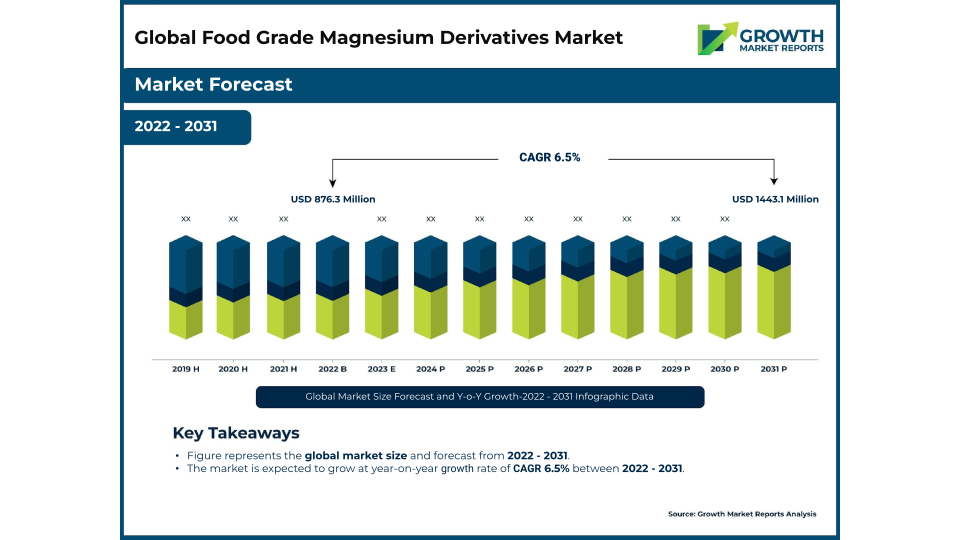
According to our latest research, the global Food Grade Magnesium Derivatives market size stood at USD 1.42 billion in 2024, reflecting robust demand across food and beverage applications. The market is projected to expand at a compound annual growth rate (CAGR) of 6.2% from 2025 to 2033. By the end of 2033, the market is forecasted to reach USD 2.45 billion. This sustained growth is largely driven by the increasing consumer awareness regarding magnesiumÂ’s health benefits and its critical role in food fortification and dietary supplementation.

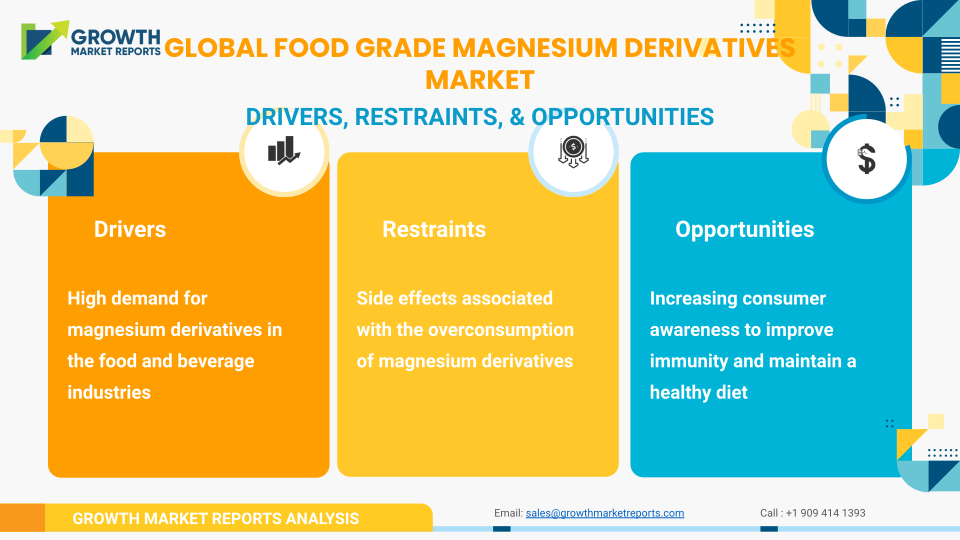
One of the primary growth drivers for the Food Grade Magnesium Derivatives market is the rising prevalence of magnesium deficiency globally. Modern diets, often lacking in essential minerals, have heightened the demand for magnesium-enriched foods and supplements. As consumers become more health-conscious, food manufacturers are increasingly incorporating magnesium derivatives such as magnesium oxide, magnesium sulfate, and magnesium carbonate into their product formulations. The trend toward functional foods and beverages, which offer added health benefits beyond basic nutrition, is further accelerating the marketÂ’s expansion. Regulatory support for food fortification programs, especially in emerging economies, has also played a significant role in boosting the adoption of food grade magnesium derivatives.

Another significant factor propelling the market growth is the expanding application landscape of magnesium derivatives within the food and beverage industry. These compounds are widely utilized as food additives, acidity regulators, anti-caking agents, and nutritional supplements. The bakery and confectionery sector, in particular, has witnessed a surge in demand for magnesium derivatives to enhance product texture, shelf life, and nutritional content. The beverage industry is also leveraging magnesium compounds to develop fortified drinks and functional beverages targeting health-conscious consumers. The versatility of magnesium derivatives in addressing various formulation challenges and regulatory requirements makes them indispensable for food manufacturers aiming to differentiate their products in a competitive marketplace.

Technological advancements and innovation in product development are further shaping the growth trajectory of the Food Grade Magnesium Derivatives market. The emergence of new processing techniques has enabled the production of high-purity, bioavailable magnesium compounds suitable for use in a diverse range of food applications. Companies are investing in research and development to create magnesium derivatives with improved solubility, stability, and sensory attributes, catering to evolving consumer preferences. Additionally, the proliferation of online distribution channels is making magnesium-fortified products more accessible to a broader consumer base, thereby driving market penetration and expansion.

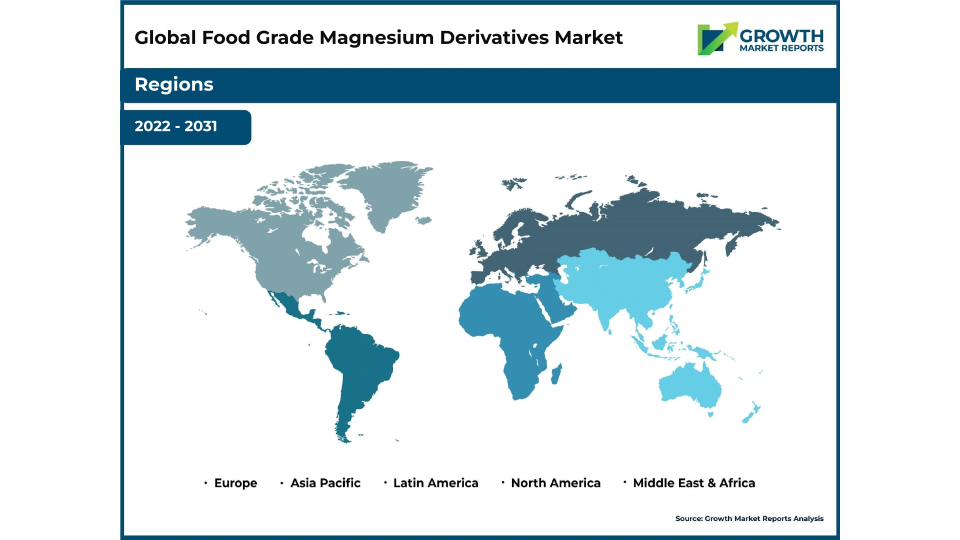
From a regional perspective, Asia Pacific remains the largest and fastest-growing market for food grade magnesium derivatives, accounting for a significant share of global consumption in 2024. The regionÂ’s growth is underpinned by rising disposable incomes, urbanization, and a growing middle-class population seeking healthier food options. North America and Europe also represent substantial markets, driven by strong regulatory frameworks for food fortification and high consumer awareness regarding dietary supplements. Meanwhile, Latin America and the Middle East & Africa are emerging as attractive markets, supported by improving economic conditions and increasing investments in the food processing sector. The interplay of these regional dynamics is expected to sustain the upward momentum of the global market through 2033.

In recent years, the development of advanced magnesium compounds has led to the introduction of specialized products like the Di?n?butylmagnesium chloride complex. This complex is gaining attention for its unique properties that make it suitable for various industrial applications, including its potential use in the synthesis of other magnesium derivatives. Its ability to act as a catalyst in chemical reactions is particularly noteworthy, as it opens up new possibilities for innovation in the food grade magnesium derivatives market. The growing interest in such complexes underscores the industry's commitment to exploring new frontiers in magnesium chemistry, which could lead to enhanced product offerings and improved performance in food applications.

Global Food Grade Magnesium Derivatives Industry Outlook

Product Type Analysis

The product type segment of the Food Grade Magnesium Derivatives market is diversified, encompassing magnesium oxide, magnesium hydroxide, magnesium carbonate, magnesium sulfate, magnesium chloride, and others. Magnesium oxide leads this segment, attributed to its widespread use as a food additive and nutritional supplement. Its high magnesium content and excellent bioavailability make it a preferred choice for fortifying a variety of food products. Food manufacturers rely on magnesium oxide to enhance the mineral profile of processed foods, bakery items, and dairy products, addressing the nutritional needs of health-conscious consumers. The segmentÂ’s dominance is reinforced by robust demand from both established and emerging markets.

Magnesium hydroxide is gaining traction due to its utility as an antacid and acidity regulator in food applications. Its mild taste and neutral pH make it suitable for incorporation into beverages, confectionery, and dairy products. The growing trend toward clean label and natural food additives is further boosting the adoption of magnesium hydroxide, as it is perceived as a safer alternative to synthetic additives. Food manufacturers are increasingly leveraging its functional properties to improve product quality and extend shelf life, especially in the bakery and beverage sectors. The segment is expected to witness steady growth, supported by ongoing product innovation and expanding application scope.

Magnesium carbonate is widely used as an anti-caking agent in powdered food products, such as baking powders, spices, and instant mixes. Its ability to prevent clumping and improve product flowability is highly valued by food processors. The segment is experiencing increased demand from the bakery and confectionery industry, where consistent texture and quality are paramount. Additionally, magnesium carbonateÂ’s role as a dietary supplement is gaining prominence, driven by rising consumer awareness of magnesiumÂ’s health benefits. The segmentÂ’s growth is further supported by advancements in production technology, enabling the manufacture of high-purity, food-grade magnesium carbonate.

Magnesium sulfate and magnesium chloride are also integral to the food grade magnesium derivatives market, serving as essential ingredients in food fortification and preservation. Magnesium sulfate is commonly used in beverages and dairy products for its mineral content and functional properties, while magnesium chloride is favored for its role in tofu production and as a coagulant in cheese making. Both segments are benefiting from the growing demand for fortified and functional foods, particularly in Asia Pacific and North America. The introduction of innovative product formulations and expanding application areas are expected to drive the growth of these segments in the coming years.

Among the various forms of magnesium derivatives, Magnesium Stearate Pharma Grade stands out due to its high purity and consistent quality, making it an essential ingredient in the pharmaceutical and nutraceutical industries. Its role as a lubricant in the production of tablets and capsules ensures smooth manufacturing processes and high-quality end products. The demand for Magnesium Stearate Pharma Grade is increasing as manufacturers seek reliable excipients that meet stringent regulatory standards. This trend is indicative of the broader movement towards high-grade magnesium compounds that not only serve the food industry but also extend their utility to health-related applications, thereby broadening the market's scope and potential.

Report Scope

Attributes Details
Report Title Food Grade Magnesium Derivatives Market Research Report 2033
By Product Type Magnesium Oxide, Magnesium Hydroxide, Magnesium Carbonate, Magnesium Sulfate, Magnesium Chloride, Others
By Application Food Additives, Nutritional Supplements, Bakery and Confectionery, Beverages, Dairy Products, Others
By Form Powder, Granules, Liquid, Others
By Distribution Channel Online Stores, Supermarkets/Hypermarkets, Specialty Stores, Others
Regions Covered North America, Europe, APAC, Latin America, MEA
Base Year 2024
Historic Data 2018-2023
Forecast Period 2025-2033
Number of Pages 273
Number of Tables & Figures 299
Customization Available Yes, the report can be customized as per your need.

Application Analysis

The application segment of the Food Grade Magnesium Derivatives market is broad, reflecting the versatility of these compounds across the food and beverage industry. Food additives remain the largest application area, with magnesium derivatives playing a critical role in enhancing product safety, stability, and nutritional value. The increasing focus on food safety regulations and quality standards has prompted food manufacturers to use magnesium compounds as anti-caking agents, acidity regulators, and preservatives. This trend is particularly pronounced in processed foods, where maintaining product integrity during storage and transportation is essential. The segmentÂ’s growth is reinforced by the rising demand for convenience foods and ready-to-eat meals.

Nutritional supplements represent a rapidly growing application segment, driven by the global trend toward preventive healthcare and wellness. Magnesium derivatives are widely used in dietary supplements to address magnesium deficiency and support overall health. The segment is benefiting from increasing consumer awareness of the health benefits associated with adequate magnesium intake, including improved cardiovascular health, bone strength, and muscle function. The proliferation of online retail channels and the introduction of innovative supplement formats, such as gummies and effervescent tablets, are making magnesium supplements more accessible to a wider consumer base. This is expected to sustain the segmentÂ’s robust growth over the forecast period.

The bakery and confectionery sector is a major consumer of food grade magnesium derivatives, utilizing these compounds to improve dough texture, enhance leavening, and extend product shelf life. Magnesium derivatives are valued for their ability to regulate acidity, prevent clumping, and stabilize emulsions, all of which are critical for achieving consistent product quality. The segment is witnessing increased demand from both industrial and artisanal bakeries, as consumers seek healthier, fortified bakery products. The trend toward clean label and natural ingredients is also driving the adoption of magnesium derivatives derived from natural sources, further supporting segment growth.

Beverages and dairy products are emerging as significant application areas for food grade magnesium derivatives, fueled by the growing popularity of functional and fortified drinks. Magnesium compounds are used to enhance the mineral content of sports drinks, energy beverages, and plant-based milk alternatives, catering to the needs of health-conscious consumers. In the dairy sector, magnesium derivatives are employed to improve product texture, prevent curdling, and enhance nutritional value. The increasing demand for lactose-free and plant-based dairy alternatives is creating new opportunities for magnesium derivative applications, particularly in developed markets such as North America and Europe.

Form Analysis

The form segment of the Food Grade Magnesium Derivatives market includes powder, granules, liquid, and others, each offering unique advantages for specific food applications. Powdered magnesium derivatives dominate the market, owing to their ease of handling, long shelf life, and versatility in food processing. Food manufacturers prefer powdered forms for their ability to blend seamlessly into dry mixes, bakery products, and dietary supplements. The segmentÂ’s growth is supported by increasing demand from the bakery, confectionery, and supplement industries, where maintaining product consistency and quality is paramount. Technological advancements in powder processing and packaging are further enhancing the appeal of this segment.

Granules are gaining popularity as a preferred form of magnesium derivatives, particularly in applications requiring precise dosing and controlled release. Granulated magnesium compounds are widely used in nutritional supplements, instant beverage mixes, and effervescent tablets, where uniform particle size and rapid dissolution are critical. The segment is experiencing robust growth, driven by the rising demand for convenient, on-the-go supplement formats and functional beverages. Innovations in granulation technology are enabling the production of high-purity, free-flowing granules with improved bioavailability, catering to the evolving needs of food and supplement manufacturers.

Liquid magnesium derivatives are increasingly being adopted in beverage and dairy applications, where rapid solubility and homogenous dispersion are essential. Liquid forms are favored for fortifying ready-to-drink beverages, plant-based milk, and dairy alternatives, as they ensure even distribution of magnesium throughout the product matrix. The segmentÂ’s growth is supported by the expanding market for functional and fortified drinks, as well as the increasing consumer preference for liquid dietary supplements. Advances in liquid formulation technology are enabling the development of stable, shelf-stable magnesium solutions that can be easily incorporated into a wide range of food and beverage products.

The others category includes innovative forms such as microencapsulated magnesium derivatives and chelated magnesium complexes, which offer enhanced stability, bioavailability, and sensory attributes. These advanced forms are gaining traction in specialized applications, such as medical nutrition, infant formula, and premium dietary supplements. The segment is expected to witness steady growth, driven by ongoing research and development efforts aimed at improving the functional properties and consumer appeal of magnesium-fortified products. As food manufacturers continue to explore new application areas and product formats, the demand for diverse forms of food grade magnesium derivatives is expected to rise.

Distribution Channel Analysis

The distribution channel segment of the Food Grade Magnesium Derivatives market includes online stores, supermarkets/hypermarkets, specialty stores, and others. Online stores have emerged as a significant distribution channel, driven by the rapid growth of e-commerce and changing consumer shopping habits. Consumers are increasingly turning to online platforms to purchase magnesium-fortified foods and supplements, attracted by the convenience, competitive pricing, and access to a wide range of products. The segmentÂ’s growth is supported by the proliferation of online health and wellness retailers, as well as the expansion of direct-to-consumer sales channels by leading supplement brands. Enhanced digital marketing strategies and personalized product recommendations are further driving online sales.

Supermarkets and hypermarkets remain a dominant distribution channel for food grade magnesium derivatives, particularly in developed markets. These retail outlets offer consumers the convenience of one-stop shopping and the ability to compare different brands and product formats. The segmentÂ’s growth is underpinned by the increasing availability of fortified foods, dietary supplements, and functional beverages in mainstream retail settings. Supermarkets and hypermarkets are also investing in in-store promotions, product sampling, and educational campaigns to raise consumer awareness of the health benefits associated with magnesium-fortified products. The segment is expected to maintain its strong position, supported by ongoing retail consolidation and expansion.

Specialty stores, including health food stores, vitamin shops, and organic retailers, play a crucial role in the distribution of premium and niche magnesium derivative products. These outlets cater to health-conscious consumers seeking high-quality, natural, and organic food products. The segment is experiencing steady growth, driven by the rising demand for clean label, non-GMO, and allergen-free magnesium derivatives. Specialty stores are also leveraging their expertise in product curation and customer education to differentiate themselves from mainstream retailers. As consumer preferences shift toward healthier and more sustainable food options, specialty stores are expected to capture a growing share of the market.

The others category includes institutional sales, direct sales to food manufacturers, and distribution through food service channels. These channels are particularly important for bulk purchases by food processors, bakeries, and beverage manufacturers seeking to incorporate magnesium derivatives into their product formulations. The segmentÂ’s growth is supported by the increasing adoption of magnesium-fortified ingredients in the food service industry, as well as the expansion of private label and contract manufacturing arrangements. As the demand for magnesium-enriched foods continues to rise, the role of diverse distribution channels in ensuring product availability and accessibility will become increasingly important.

Opportunities & Threats

The Food Grade Magnesium Derivatives market presents significant opportunities for growth, particularly in the area of product innovation and new application development. As consumer demand for functional foods and beverages continues to rise, manufacturers have the opportunity to develop novel magnesium-fortified products targeting specific health benefits, such as bone health, cardiovascular wellness, and stress management. The growing trend toward clean label and natural ingredients is also creating opportunities for the development of magnesium derivatives derived from sustainable and organic sources. Companies investing in research and development to create high-purity, bioavailable, and sensory-optimized magnesium compounds are well-positioned to capture emerging market opportunities.

Another key opportunity lies in the expansion of distribution channels, particularly through e-commerce and direct-to-consumer sales. The rapid growth of online retail platforms is making magnesium-fortified foods and supplements more accessible to consumers worldwide, enabling manufacturers to reach new customer segments and geographic markets. Strategic partnerships with online retailers, health and wellness platforms, and digital marketing agencies can help companies enhance brand visibility, drive consumer engagement, and accelerate sales growth. Additionally, the increasing adoption of personalized nutrition and digital health solutions is creating new avenues for marketing and distributing magnesium derivative products tailored to individual consumer needs.

Despite these opportunities, the market faces certain restrainers, including regulatory challenges and supply chain complexities. Stringent food safety and quality regulations, particularly in developed markets, require manufacturers to adhere to rigorous standards for ingredient sourcing, processing, and labeling. Compliance with these regulations can increase production costs and limit the introduction of new products. Additionally, fluctuations in the availability and pricing of raw materials, such as magnesium ores and salts, can impact the cost structure and profitability of market participants. Companies must navigate these challenges by investing in supply chain resilience, regulatory compliance, and continuous quality improvement to sustain long-term growth.

Regional Outlook

The Asia Pacific region dominates the global Food Grade Magnesium Derivatives market, accounting for approximately 41% of the total market value in 2024, or around USD 582 million. The regionÂ’s leadership is driven by robust demand from populous countries such as China, India, and Japan, where rising disposable incomes, urbanization, and growing health awareness are fueling the consumption of fortified foods and dietary supplements. The presence of a large food processing industry and favorable government policies supporting food fortification initiatives further bolster market growth in Asia Pacific. The region is expected to maintain its leading position, with a projected CAGR of 7.1% through 2033, outpacing other global markets.

North America represents the second-largest market, with a market size of USD 370 million in 2024, accounting for 26% of the global market share. The regionÂ’s growth is underpinned by strong regulatory frameworks for food safety and dietary supplementation, as well as high consumer awareness regarding the health benefits of magnesium. The United States and Canada are key contributors to market growth, driven by the widespread availability of magnesium-fortified foods, beverages, and supplements in retail and online channels. The region is expected to witness steady growth, supported by ongoing product innovation, increasing demand for functional foods, and the expansion of e-commerce platforms.

Europe holds a significant share of the global market, valued at USD 295 million in 2024, or approximately 21% of the global total. The regionÂ’s market is characterized by stringent food safety regulations, a well-established food processing industry, and a strong emphasis on preventive healthcare. Countries such as Germany, France, and the United Kingdom are leading consumers of magnesium derivatives, driven by high levels of health consciousness and a preference for fortified and functional food products. The region is expected to experience moderate growth over the forecast period, supported by increasing investments in food innovation and the rising popularity of plant-based and organic foods. Latin America and the Middle East & Africa collectively account for the remaining 12% of the market, with growth prospects driven by improving economic conditions and increasing investments in the food and beverage sector.

Food Grade Magnesium Derivatives Market Statistics

Competitor Outlook

The Food Grade Magnesium Derivatives market is characterized by a competitive and fragmented landscape, with numerous global and regional players vying for market share. Leading companies are focused on product innovation, quality assurance, and strategic partnerships to strengthen their market position. The competitive environment is further intensified by the entry of new players offering specialized and high-purity magnesium derivatives tailored to specific food applications. Companies are investing heavily in research and development to create differentiated products with enhanced bioavailability, solubility, and sensory attributes, catering to the evolving needs of food manufacturers and consumers.

Strategic collaborations and mergers and acquisitions are common in this market, as companies seek to expand their product portfolios, enhance production capabilities, and enter new geographic markets. Partnerships with food manufacturers, ingredient suppliers, and research institutions are enabling companies to leverage complementary expertise and accelerate the development of innovative magnesium-fortified products. Additionally, investments in advanced manufacturing technologies and quality control systems are helping market participants meet stringent regulatory requirements and maintain high standards of product safety and consistency.

Brand reputation and customer trust are critical success factors in the food grade magnesium derivatives market. Leading companies are differentiating themselves through transparent sourcing practices, third-party certifications, and a commitment to sustainability. The growing consumer preference for natural, organic, and non-GMO ingredients is prompting companies to invest in sustainable sourcing and eco-friendly production processes. Companies with a strong focus on customer education, marketing, and after-sales support are better positioned to capture market share and build long-term customer loyalty.

The major players in the global Food Grade Magnesium Derivatives market include Israel Chemicals Ltd. (ICL), Koninklijke DSM N.V., Grecian Magnesite S.A., Magnesia GmbH, Jost Chemical Co., Albion Minerals, NutraScience Labs, and Compass Minerals International, Inc. These companies are recognized for their extensive product portfolios, global distribution networks, and strong research and development capabilities. For instance, Israel Chemicals Ltd. (ICL) is a leading supplier of high-purity magnesium derivatives for food applications, leveraging advanced production technologies and a robust supply chain. Koninklijke DSM N.V. is renowned for its focus on innovation and sustainability, offering a wide range of magnesium-fortified ingredients for the food and beverage industry.

Grecian Magnesite S.A. and Magnesia GmbH are prominent European players specializing in the production of high-quality magnesium oxide and carbonate for food applications. Jost Chemical Co. and Albion Minerals are recognized for their expertise in developing highly bioavailable magnesium compounds for nutritional supplements and fortified foods. NutraScience Labs and Compass Minerals International, Inc. have established strong market positions through a combination of product innovation, customer-centric solutions, and strategic partnerships with food manufacturers and retailers. These companies are expected to play a pivotal role in shaping the future of the Food Grade Magnesium Derivatives market through continued investment in research, technology, and sustainability initiatives.

Key Players

  • Grecian Magnesite S.A.
  • Martin Marietta Magnesia Specialties LLC
  • Koninklijke DSM N.V.
  • Nedmag B.V.
  • Magnesia GmbH
  • RHI Magnesita N.V.
  • ICL Group Ltd.
  • Jost Chemical Co.
  • Albion Minerals
  • Gadot Biochemical Industries Ltd.
  • Lehmann&Voss&Co.
  • Kyowa Chemical Industry Co., Ltd.
  • Magnesium Elektron Ltd.
  • Qinghai Salt Lake Industry Co., Ltd.
  • Sinwon Chemical Co., Ltd.
  • Zhejiang Garden Biochemical High-Tech Co., Ltd.
  • Meishen Technology Co., Ltd.
  • Yantai Dongcheng Biochemical Co., Ltd.
  • Weifang Xinyuan Magnesium Industry Co., Ltd.
  • Hebei Gaoyi Chemical Co., Ltd.
Food Grade Magnesium Derivatives Market Overview

Segments

The Food Grade Magnesium Derivatives market has been segmented on the basis of

Product Type

  • Magnesium Oxide
  • Magnesium Hydroxide
  • Magnesium Carbonate
  • Magnesium Sulfate
  • Magnesium Chloride
  • Others

Application

  • Food Additives
  • Nutritional Supplements
  • Bakery and Confectionery
  • Beverages
  • Dairy Products
  • Others

Form

  • Powder
  • Granules
  • Liquid
  • Others

Distribution Channel

  • Online Stores
  • Supermarkets/Hypermarkets
  • Specialty Stores
  • Others

Competitive Landscape

Key players in the global food grade magnesium derivatives market are Grecian Magnesite; Sinwon Industrial Co., Ltd.; OLE Chemical Co., Ltd.; Martin Marietta Magnesia Specialties; Compass Minerals; Ibar Northeast; Hawkins; ICL; K + S Aktiengesellschaft; NikoMag; Rahul Magnesia Pvt. Ltd.; Novotech Nutraceuticals, Inc.; Jungbunzlauer Suisse AG; Oksihim, Ltd.; James M. Brown Ltd.; RX Chemicals; Vizag Chemicals; Dr. Paul Lohmann GmbH & Co. KGaA; Corbion; Gadot Biochemical Industries Ltd.

These major companies adopt various business development strategies including mergers, acquisitions, partnerships, collaboration, product launches, and production capacity expansion to expand their consumer base and enhance their market share.

  • In August 2021, NikoMag increased the production of magnesium hydroxide to 40,000 tons per year, without compromising on product quality.
  • In July 2019, K + S Aktiengesellschaft invested USD 36 million and expanded the production of the Werra Plant at the Wintershall site in Germany for higher production of magnesium sulfate anhydrous.
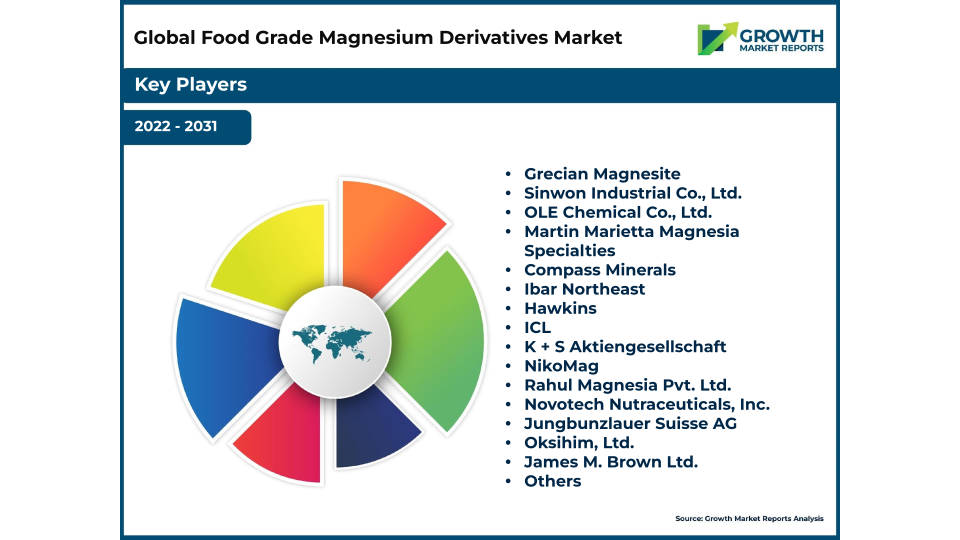

Global Food Grade Magnesium Derivatives Market Key Players

Frequently Asked Questions

Trends include increasing demand for functional and fortified foods, technological advancements for improved bioavailability, growth in online retail, and a shift toward sustainable and natural ingredient sourcing.

Major companies include Israel Chemicals Ltd. (ICL), Koninklijke DSM N.V., Grecian Magnesite S.A., Magnesia GmbH, Jost Chemical Co., Albion Minerals, NutraScience Labs, and Compass Minerals International, Inc.

Opportunities include product innovation, development of clean label and natural magnesium derivatives, and expansion through e-commerce. Challenges include stringent regulatory requirements and supply chain complexities.

Distribution channels include online stores, supermarkets/hypermarkets, specialty stores, and direct sales to food manufacturers and food service channels. Online sales are growing rapidly due to the expansion of e-commerce.

Food grade magnesium derivatives are available in powder, granules, liquid, and innovative forms such as microencapsulated and chelated magnesium complexes, each catering to specific food and supplement applications.

Asia Pacific is the largest and fastest-growing region, accounting for about 41% of the market in 2024. North America and Europe also hold significant shares, while Latin America and the Middle East & Africa are emerging markets.

Food grade magnesium derivatives are primarily used as food additives, nutritional supplements, anti-caking agents, acidity regulators, and in bakery, confectionery, beverage, and dairy products.

The most commonly used food grade magnesium derivatives are magnesium oxide, magnesium hydroxide, magnesium carbonate, magnesium sulfate, and magnesium chloride. Magnesium oxide leads due to its high bioavailability and widespread use in food fortification.

Key growth drivers include rising consumer awareness of magnesium’s health benefits, increasing prevalence of magnesium deficiency, demand for fortified and functional foods, regulatory support for food fortification, and technological advancements in product development.

The global Food Grade Magnesium Derivatives market was valued at USD 1.42 billion in 2024 and is projected to reach USD 2.45 billion by 2033, growing at a CAGR of 6.2% from 2025 to 2033.

Table Of Content

Chapter 1 Executive Summary
Chapter 2 Assumptions and Acronyms Used
Chapter 3 Research Methodology
Chapter 4 Food Grade Magnesium Derivatives Market Overview
   4.1 Introduction
      4.1.1 Market Taxonomy
      4.1.2 Market Definition
      4.1.3 Macro-Economic Factors Impacting the Market Growth
   4.2 Food Grade Magnesium Derivatives Market Dynamics
      4.2.1 Market Drivers
      4.2.2 Market Restraints
      4.2.3 Market Opportunity
   4.3 Food Grade Magnesium Derivatives Market - Supply Chain Analysis
      4.3.1 List of Key Suppliers
      4.3.2 List of Key Distributors
      4.3.3 List of Key Consumers
   4.4 Key Forces Shaping the Food Grade Magnesium Derivatives Market
      4.4.1 Bargaining Power of Suppliers
      4.4.2 Bargaining Power of Buyers
      4.4.3 Threat of Substitution
      4.4.4 Threat of New Entrants
      4.4.5 Competitive Rivalry
   4.5 Global Food Grade Magnesium Derivatives Market Size & Forecast, 2023-2032
      4.5.1 Food Grade Magnesium Derivatives Market Size and Y-o-Y Growth
      4.5.2 Food Grade Magnesium Derivatives Market Absolute $ Opportunity

Chapter 5 Global Food Grade Magnesium Derivatives Market Analysis and Forecast By Product Type
   5.1 Introduction
      5.1.1 Key Market Trends & Growth Opportunities By Product Type
      5.1.2 Basis Point Share (BPS) Analysis By Product Type
      5.1.3 Absolute $ Opportunity Assessment By Product Type
   5.2 Food Grade Magnesium Derivatives Market Size Forecast By Product Type
      5.2.1 Magnesium Oxide
      5.2.2 Magnesium Hydroxide
      5.2.3 Magnesium Carbonate
      5.2.4 Magnesium Sulfate
      5.2.5 Magnesium Chloride
      5.2.6 Others
   5.3 Market Attractiveness Analysis By Product Type

Chapter 6 Global Food Grade Magnesium Derivatives Market Analysis and Forecast By Application
   6.1 Introduction
      6.1.1 Key Market Trends & Growth Opportunities By Application
      6.1.2 Basis Point Share (BPS) Analysis By Application
      6.1.3 Absolute $ Opportunity Assessment By Application
   6.2 Food Grade Magnesium Derivatives Market Size Forecast By Application
      6.2.1 Food Additives
      6.2.2 Nutritional Supplements
      6.2.3 Bakery and Confectionery
      6.2.4 Beverages
      6.2.5 Dairy Products
      6.2.6 Others
   6.3 Market Attractiveness Analysis By Application

Chapter 7 Global Food Grade Magnesium Derivatives Market Analysis and Forecast By Form
   7.1 Introduction
      7.1.1 Key Market Trends & Growth Opportunities By Form
      7.1.2 Basis Point Share (BPS) Analysis By Form
      7.1.3 Absolute $ Opportunity Assessment By Form
   7.2 Food Grade Magnesium Derivatives Market Size Forecast By Form
      7.2.1 Powder
      7.2.2 Granules
      7.2.3 Liquid
      7.2.4 Others
   7.3 Market Attractiveness Analysis By Form

Chapter 8 Global Food Grade Magnesium Derivatives Market Analysis and Forecast By Distribution Channel
   8.1 Introduction
      8.1.1 Key Market Trends & Growth Opportunities By Distribution Channel
      8.1.2 Basis Point Share (BPS) Analysis By Distribution Channel
      8.1.3 Absolute $ Opportunity Assessment By Distribution Channel
   8.2 Food Grade Magnesium Derivatives Market Size Forecast By Distribution Channel
      8.2.1 Online Stores
      8.2.2 Supermarkets/Hypermarkets
      8.2.3 Specialty Stores
      8.2.4 Others
   8.3 Market Attractiveness Analysis By Distribution Channel

Chapter 9 Global Food Grade Magnesium Derivatives Market Analysis and Forecast by Region
   9.1 Introduction
      9.1.1 Key Market Trends & Growth Opportunities By Region
      9.1.2 Basis Point Share (BPS) Analysis By Region
      9.1.3 Absolute $ Opportunity Assessment By Region
   9.2 Food Grade Magnesium Derivatives Market Size Forecast By Region
      9.2.1 North America
      9.2.2 Europe
      9.2.3 Asia Pacific
      9.2.4 Latin America
      9.2.5 Middle East & Africa (MEA)
   9.3 Market Attractiveness Analysis By Region

Chapter 10 Coronavirus Disease (COVID-19) Impact 
   10.1 Introduction 
   10.2 Current & Future Impact Analysis 
   10.3 Economic Impact Analysis 
   10.4 Government Policies 
   10.5 Investment Scenario

Chapter 11 North America Food Grade Magnesium Derivatives Analysis and Forecast
   11.1 Introduction
   11.2 North America Food Grade Magnesium Derivatives Market Size Forecast by Country
      11.2.1 U.S.
      11.2.2 Canada
   11.3 Basis Point Share (BPS) Analysis by Country
   11.4 Absolute $ Opportunity Assessment by Country
   11.5 Market Attractiveness Analysis by Country
   11.6 North America Food Grade Magnesium Derivatives Market Size Forecast By Product Type
      11.6.1 Magnesium Oxide
      11.6.2 Magnesium Hydroxide
      11.6.3 Magnesium Carbonate
      11.6.4 Magnesium Sulfate
      11.6.5 Magnesium Chloride
      11.6.6 Others
   11.7 Basis Point Share (BPS) Analysis By Product Type 
   11.8 Absolute $ Opportunity Assessment By Product Type 
   11.9 Market Attractiveness Analysis By Product Type
   11.10 North America Food Grade Magnesium Derivatives Market Size Forecast By Application
      11.10.1 Food Additives
      11.10.2 Nutritional Supplements
      11.10.3 Bakery and Confectionery
      11.10.4 Beverages
      11.10.5 Dairy Products
      11.10.6 Others
   11.11 Basis Point Share (BPS) Analysis By Application 
   11.12 Absolute $ Opportunity Assessment By Application 
   11.13 Market Attractiveness Analysis By Application
   11.14 North America Food Grade Magnesium Derivatives Market Size Forecast By Form
      11.14.1 Powder
      11.14.2 Granules
      11.14.3 Liquid
      11.14.4 Others
   11.15 Basis Point Share (BPS) Analysis By Form 
   11.16 Absolute $ Opportunity Assessment By Form 
   11.17 Market Attractiveness Analysis By Form
   11.18 North America Food Grade Magnesium Derivatives Market Size Forecast By Distribution Channel
      11.18.1 Online Stores
      11.18.2 Supermarkets/Hypermarkets
      11.18.3 Specialty Stores
      11.18.4 Others
   11.19 Basis Point Share (BPS) Analysis By Distribution Channel 
   11.20 Absolute $ Opportunity Assessment By Distribution Channel 
   11.21 Market Attractiveness Analysis By Distribution Channel

Chapter 12 Europe Food Grade Magnesium Derivatives Analysis and Forecast
   12.1 Introduction
   12.2 Europe Food Grade Magnesium Derivatives Market Size Forecast by Country
      12.2.1 Germany
      12.2.2 France
      12.2.3 Italy
      12.2.4 U.K.
      12.2.5 Spain
      12.2.6 Russia
      12.2.7 Rest of Europe
   12.3 Basis Point Share (BPS) Analysis by Country
   12.4 Absolute $ Opportunity Assessment by Country
   12.5 Market Attractiveness Analysis by Country
   12.6 Europe Food Grade Magnesium Derivatives Market Size Forecast By Product Type
      12.6.1 Magnesium Oxide
      12.6.2 Magnesium Hydroxide
      12.6.3 Magnesium Carbonate
      12.6.4 Magnesium Sulfate
      12.6.5 Magnesium Chloride
      12.6.6 Others
   12.7 Basis Point Share (BPS) Analysis By Product Type 
   12.8 Absolute $ Opportunity Assessment By Product Type 
   12.9 Market Attractiveness Analysis By Product Type
   12.10 Europe Food Grade Magnesium Derivatives Market Size Forecast By Application
      12.10.1 Food Additives
      12.10.2 Nutritional Supplements
      12.10.3 Bakery and Confectionery
      12.10.4 Beverages
      12.10.5 Dairy Products
      12.10.6 Others
   12.11 Basis Point Share (BPS) Analysis By Application 
   12.12 Absolute $ Opportunity Assessment By Application 
   12.13 Market Attractiveness Analysis By Application
   12.14 Europe Food Grade Magnesium Derivatives Market Size Forecast By Form
      12.14.1 Powder
      12.14.2 Granules
      12.14.3 Liquid
      12.14.4 Others
   12.15 Basis Point Share (BPS) Analysis By Form 
   12.16 Absolute $ Opportunity Assessment By Form 
   12.17 Market Attractiveness Analysis By Form
   12.18 Europe Food Grade Magnesium Derivatives Market Size Forecast By Distribution Channel
      12.18.1 Online Stores
      12.18.2 Supermarkets/Hypermarkets
      12.18.3 Specialty Stores
      12.18.4 Others
   12.19 Basis Point Share (BPS) Analysis By Distribution Channel 
   12.20 Absolute $ Opportunity Assessment By Distribution Channel 
   12.21 Market Attractiveness Analysis By Distribution Channel

Chapter 13 Asia Pacific Food Grade Magnesium Derivatives Analysis and Forecast
   13.1 Introduction
   13.2 Asia Pacific Food Grade Magnesium Derivatives Market Size Forecast by Country
      13.2.1 China
      13.2.2 Japan
      13.2.3 South Korea
      13.2.4 India
      13.2.5 Australia
      13.2.6 South East Asia (SEA)
      13.2.7 Rest of Asia Pacific (APAC)
   13.3 Basis Point Share (BPS) Analysis by Country
   13.4 Absolute $ Opportunity Assessment by Country
   13.5 Market Attractiveness Analysis by Country
   13.6 Asia Pacific Food Grade Magnesium Derivatives Market Size Forecast By Product Type
      13.6.1 Magnesium Oxide
      13.6.2 Magnesium Hydroxide
      13.6.3 Magnesium Carbonate
      13.6.4 Magnesium Sulfate
      13.6.5 Magnesium Chloride
      13.6.6 Others
   13.7 Basis Point Share (BPS) Analysis By Product Type 
   13.8 Absolute $ Opportunity Assessment By Product Type 
   13.9 Market Attractiveness Analysis By Product Type
   13.10 Asia Pacific Food Grade Magnesium Derivatives Market Size Forecast By Application
      13.10.1 Food Additives
      13.10.2 Nutritional Supplements
      13.10.3 Bakery and Confectionery
      13.10.4 Beverages
      13.10.5 Dairy Products
      13.10.6 Others
   13.11 Basis Point Share (BPS) Analysis By Application 
   13.12 Absolute $ Opportunity Assessment By Application 
   13.13 Market Attractiveness Analysis By Application
   13.14 Asia Pacific Food Grade Magnesium Derivatives Market Size Forecast By Form
      13.14.1 Powder
      13.14.2 Granules
      13.14.3 Liquid
      13.14.4 Others
   13.15 Basis Point Share (BPS) Analysis By Form 
   13.16 Absolute $ Opportunity Assessment By Form 
   13.17 Market Attractiveness Analysis By Form
   13.18 Asia Pacific Food Grade Magnesium Derivatives Market Size Forecast By Distribution Channel
      13.18.1 Online Stores
      13.18.2 Supermarkets/Hypermarkets
      13.18.3 Specialty Stores
      13.18.4 Others
   13.19 Basis Point Share (BPS) Analysis By Distribution Channel 
   13.20 Absolute $ Opportunity Assessment By Distribution Channel 
   13.21 Market Attractiveness Analysis By Distribution Channel

Chapter 14 Latin America Food Grade Magnesium Derivatives Analysis and Forecast
   14.1 Introduction
   14.2 Latin America Food Grade Magnesium Derivatives Market Size Forecast by Country
      14.2.1 Brazil
      14.2.2 Mexico
      14.2.3 Rest of Latin America (LATAM)
   14.3 Basis Point Share (BPS) Analysis by Country
   14.4 Absolute $ Opportunity Assessment by Country
   14.5 Market Attractiveness Analysis by Country
   14.6 Latin America Food Grade Magnesium Derivatives Market Size Forecast By Product Type
      14.6.1 Magnesium Oxide
      14.6.2 Magnesium Hydroxide
      14.6.3 Magnesium Carbonate
      14.6.4 Magnesium Sulfate
      14.6.5 Magnesium Chloride
      14.6.6 Others
   14.7 Basis Point Share (BPS) Analysis By Product Type 
   14.8 Absolute $ Opportunity Assessment By Product Type 
   14.9 Market Attractiveness Analysis By Product Type
   14.10 Latin America Food Grade Magnesium Derivatives Market Size Forecast By Application
      14.10.1 Food Additives
      14.10.2 Nutritional Supplements
      14.10.3 Bakery and Confectionery
      14.10.4 Beverages
      14.10.5 Dairy Products
      14.10.6 Others
   14.11 Basis Point Share (BPS) Analysis By Application 
   14.12 Absolute $ Opportunity Assessment By Application 
   14.13 Market Attractiveness Analysis By Application
   14.14 Latin America Food Grade Magnesium Derivatives Market Size Forecast By Form
      14.14.1 Powder
      14.14.2 Granules
      14.14.3 Liquid
      14.14.4 Others
   14.15 Basis Point Share (BPS) Analysis By Form 
   14.16 Absolute $ Opportunity Assessment By Form 
   14.17 Market Attractiveness Analysis By Form
   14.18 Latin America Food Grade Magnesium Derivatives Market Size Forecast By Distribution Channel
      14.18.1 Online Stores
      14.18.2 Supermarkets/Hypermarkets
      14.18.3 Specialty Stores
      14.18.4 Others
   14.19 Basis Point Share (BPS) Analysis By Distribution Channel 
   14.20 Absolute $ Opportunity Assessment By Distribution Channel 
   14.21 Market Attractiveness Analysis By Distribution Channel

Chapter 15 Middle East & Africa (MEA) Food Grade Magnesium Derivatives Analysis and Forecast
   15.1 Introduction
   15.2 Middle East & Africa (MEA) Food Grade Magnesium Derivatives Market Size Forecast by Country
      15.2.1 Saudi Arabia
      15.2.2 South Africa
      15.2.3 UAE
      15.2.4 Rest of Middle East & Africa (MEA)
   15.3 Basis Point Share (BPS) Analysis by Country
   15.4 Absolute $ Opportunity Assessment by Country
   15.5 Market Attractiveness Analysis by Country
   15.6 Middle East & Africa (MEA) Food Grade Magnesium Derivatives Market Size Forecast By Product Type
      15.6.1 Magnesium Oxide
      15.6.2 Magnesium Hydroxide
      15.6.3 Magnesium Carbonate
      15.6.4 Magnesium Sulfate
      15.6.5 Magnesium Chloride
      15.6.6 Others
   15.7 Basis Point Share (BPS) Analysis By Product Type 
   15.8 Absolute $ Opportunity Assessment By Product Type 
   15.9 Market Attractiveness Analysis By Product Type
   15.10 Middle East & Africa (MEA) Food Grade Magnesium Derivatives Market Size Forecast By Application
      15.10.1 Food Additives
      15.10.2 Nutritional Supplements
      15.10.3 Bakery and Confectionery
      15.10.4 Beverages
      15.10.5 Dairy Products
      15.10.6 Others
   15.11 Basis Point Share (BPS) Analysis By Application 
   15.12 Absolute $ Opportunity Assessment By Application 
   15.13 Market Attractiveness Analysis By Application
   15.14 Middle East & Africa (MEA) Food Grade Magnesium Derivatives Market Size Forecast By Form
      15.14.1 Powder
      15.14.2 Granules
      15.14.3 Liquid
      15.14.4 Others
   15.15 Basis Point Share (BPS) Analysis By Form 
   15.16 Absolute $ Opportunity Assessment By Form 
   15.17 Market Attractiveness Analysis By Form
   15.18 Middle East & Africa (MEA) Food Grade Magnesium Derivatives Market Size Forecast By Distribution Channel
      15.18.1 Online Stores
      15.18.2 Supermarkets/Hypermarkets
      15.18.3 Specialty Stores
      15.18.4 Others
   15.19 Basis Point Share (BPS) Analysis By Distribution Channel 
   15.20 Absolute $ Opportunity Assessment By Distribution Channel 
   15.21 Market Attractiveness Analysis By Distribution Channel

Chapter 16 Competition Landscape 
   16.1 Food Grade Magnesium Derivatives Market: Competitive Dashboard
   16.2 Global Food Grade Magnesium Derivatives Market: Market Share Analysis, 2023
   16.3 Company Profiles (Details – Overview, Financials, Developments, Strategy) 
      16.3.1 Grecian Magnesite S.A.
Martin Marietta Magnesia Specialties LLC
Koninklijke DSM N.V.
Nedmag B.V.
Magnesia GmbH
RHI Magnesita N.V.
ICL Group Ltd.
Jost Chemical Co.
Albion Minerals
Gadot Biochemical Industries Ltd.
Lehmann&Voss&Co.
Kyowa Chemical Industry Co., Ltd.
Magnesium Elektron Ltd.
Qinghai Salt Lake Industry Co., Ltd.
Sinwon Chemical Co., Ltd.
Zhejiang Garden Biochemical High-Tech Co., Ltd.
Meishen Technology Co., Ltd.
Yantai Dongcheng Biochemical Co., Ltd.
Weifang Xinyuan Magnesium Industry Co., Ltd.
Hebei Gaoyi Chemical Co., Ltd.

Methodology

Our Clients

Microsoft
The John Holland Group
sinopec
Deloitte
Nestle SA
Pfizer
Siemens Healthcare
FedEx Logistics