Food & Agriculture Technology and Products Market Research Report 2033

Food & Agriculture Technology and Products Market Research Report 2033

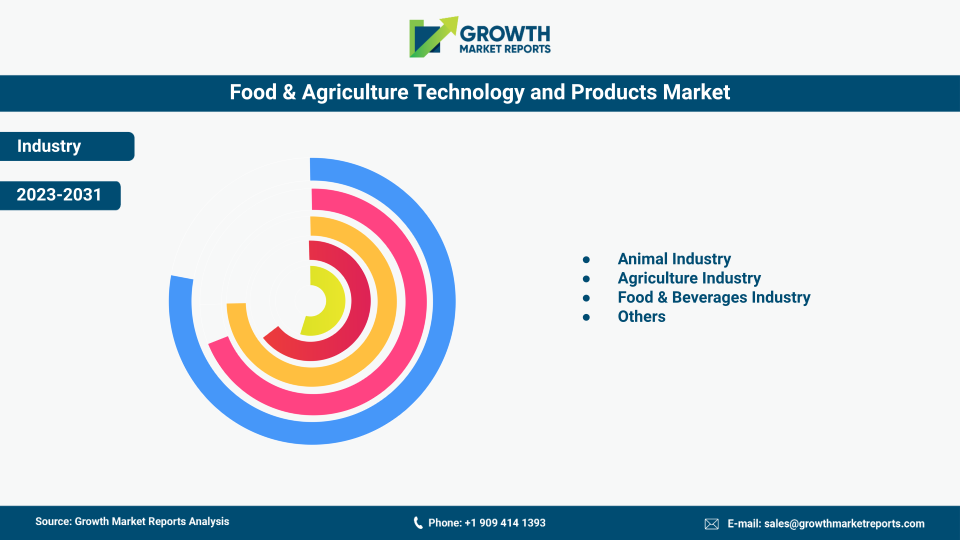
Segments - by Technology (Genetically Modified Seeds, Precision Farming, Aquaculture, Vertical Farming, Food Safety Technology, Others), by Product (Agri Inputs, Biotech Seeds, Crop Protection Chemicals, Animal Feed, Food Safety Products, Others), by Application (Crop Production, Animal Husbandry, Food Processing, Supply Chain Management, Others), by End-User (Farmers, Food Manufacturers, Retailers, Others)

https://growthmarketreports.com/Anuradha
Author : Anuradha B. More
https://growthmarketreports.com/Vaibhav
Fact-checked by : Vaibhav Chandola
https://growthmarketreports.com/Shruti
Editor : Shruti Bhat

Upcoming | Report ID :FB-5122 | 4.1 Rating | 46 Reviews | 280 Pages | Format : Docx PDF

Report Description


Food & Agriculture Technology and Products Market Outlook

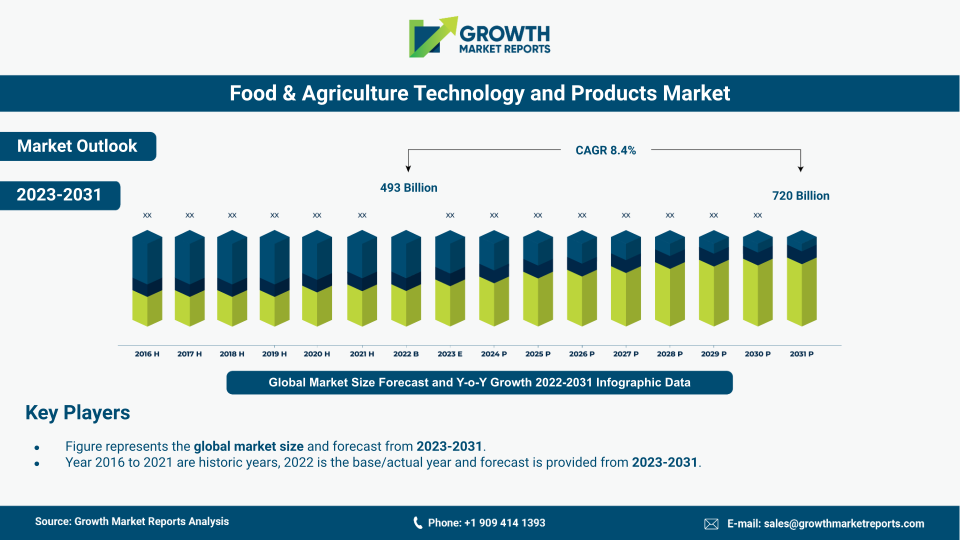
As per our latest research, the global Food & Agriculture Technology and Products market size in 2024 stands at USD 658.7 billion, reflecting robust expansion driven by technological advancements and increasing demand for sustainable agricultural solutions. The market is projected to grow at a CAGR of 8.3% from 2025 to 2033, reaching a forecasted size of USD 1,280.4 billion by 2033. This growth is primarily attributed to the integration of digital technologies, rising concerns over food safety, and the growing necessity for efficient food supply chains in response to global population growth and climate change.

The Food & Agriculture Technology and Products market is experiencing a significant transformation due to the integration of cutting-edge technologies such as precision farming, genetically modified seeds, and vertical farming. These innovations are enabling higher crop yields, optimized resource utilization, and improved food quality, which are essential in meeting the ever-increasing global food demand. Governments and private stakeholders are investing heavily in research and development to foster innovations that enhance productivity while minimizing environmental impact. The adoption of smart farming solutions and IoT-based monitoring systems is also playing a pivotal role in driving market growth, as these technologies provide real-time data and insights, leading to better decision-making and resource allocation.

Another critical growth factor for the Food & Agriculture Technology and Products market is the rising awareness and regulatory emphasis on food safety and traceability. With consumers becoming more conscious about the origin and quality of their food, there is a growing demand for technologies that ensure food safety throughout the supply chain. This has led to the deployment of advanced food safety technologies, blockchain-based tracking systems, and robust quality control measures across the industry. The increasing prevalence of foodborne illnesses and stringent regulatory frameworks are compelling food manufacturers and producers to adopt innovative solutions that guarantee product integrity, thereby fueling market expansion.

Sustainability concerns and climate change are also shaping the trajectory of the Food & Agriculture Technology and Products market. The agricultural sector is under immense pressure to reduce its carbon footprint and adopt eco-friendly practices. Technologies such as precision irrigation, biotechnology, and sustainable crop protection chemicals are being widely adopted to address these challenges. Furthermore, the shift towards alternative protein sources, such as plant-based and cultured meat, is gaining momentum, reflecting changing consumer preferences and the need for sustainable food production methods. These trends are expected to continue propelling the market forward, as stakeholders prioritize sustainability alongside productivity.

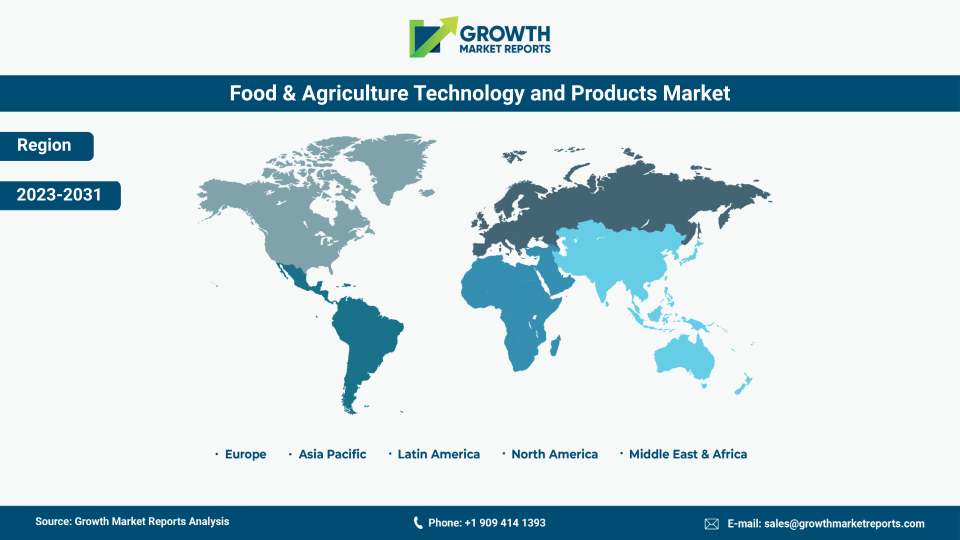
Regionally, Asia Pacific dominates the Food & Agriculture Technology and Products market, accounting for the largest share in 2024, followed closely by North America and Europe. Rapid population growth, rising disposable incomes, and government initiatives aimed at modernizing agriculture are key factors driving market expansion in Asia Pacific. North America and Europe, on the other hand, are characterized by high technology adoption rates and strong regulatory frameworks supporting food safety and sustainability. Emerging economies in Latin America and the Middle East & Africa are also witnessing increased investments in agricultural technology, driven by the need to improve food security and enhance supply chain efficiency.

Global Food & Agriculture Technology and Products Industry Outlook

Technology Analysis

The technology segment of the Food & Agriculture Technology and Products market encompasses a diverse range of innovations, including genetically modified seeds, precision farming, aquaculture, vertical farming, food safety technology, and other emerging solutions. Genetically modified seeds have revolutionized crop production by enhancing yield, resistance to pests, and adaptability to adverse climatic conditions. Precision farming leverages data analytics, satellite imagery, and IoT devices to optimize planting, fertilization, and irrigation, resulting in significant resource savings and yield improvements. Vertical farming, which involves growing crops in controlled indoor environments, is gaining traction in urban areas due to its ability to produce fresh produce year-round with minimal land and water usage.

Aquaculture technology is another vital component, addressing the growing global demand for seafood by enabling efficient and sustainable fish farming practices. Innovations in water quality management, feed optimization, and disease control are driving productivity in this segment, ensuring a stable supply of high-quality aquatic products. Food safety technology, encompassing rapid detection systems, blockchain-based traceability, and automated quality control, is becoming increasingly important in ensuring compliance with stringent regulations and meeting consumer expectations for safe and transparent food products. The integration of these technologies across the value chain is transforming traditional agricultural practices and creating new growth opportunities.

The adoption of advanced technologies is not without challenges. High initial investment costs, the need for skilled labor, and the complexity of integrating new systems with existing infrastructure can pose barriers to widespread adoption, particularly in developing regions. However, the long-term benefits in terms of increased productivity, reduced resource consumption, and enhanced food safety are compelling more stakeholders to invest in these solutions. Government incentives, public-private partnerships, and international collaborations are playing a crucial role in accelerating technology adoption and bridging the gap between developed and developing markets.

Looking ahead, the technology segment is expected to witness continued innovation, driven by advancements in artificial intelligence, machine learning, and robotics. These technologies are enabling the development of autonomous machinery, predictive analytics, and automated supply chain management systems, further enhancing the efficiency and sustainability of food and agriculture operations. As the industry evolves, the convergence of multiple technologies will be instrumental in addressing the complex challenges facing the global food system.

Report Scope

Attributes Details
Report Title Food & Agriculture Technology and Products Market Research Report 2033
By Technology Genetically Modified Seeds, Precision Farming, Aquaculture, Vertical Farming, Food Safety Technology, Others
By Product Agri Inputs, Biotech Seeds, Crop Protection Chemicals, Animal Feed, Food Safety Products, Others
By Application Crop Production, Animal Husbandry, Food Processing, Supply Chain Management, Others
By End-User Farmers, Food Manufacturers, Retailers, Others
Regions Covered North America, Europe, APAC, Latin America, MEA
Base Year 2024
Historic Data 2018-2023
Forecast Period 2025-2033
Number of Pages 280
Number of Tables & Figures 321
Customization Available Yes, the report can be customized as per your need.

Product Analysis

The product segment of the Food & Agriculture Technology and Products market includes agri inputs, biotech seeds, crop protection chemicals, animal feed, food safety products, and other related offerings. Agri inputs such as fertilizers, pesticides, and growth regulators are essential for maintaining soil fertility and protecting crops from pests and diseases. The demand for high-quality agri inputs is rising as farmers seek to maximize yields and ensure the sustainability of their operations. Biotech seeds, engineered for superior performance and resistance to environmental stresses, are increasingly being adopted to improve crop resilience and productivity.

Crop protection chemicals play a crucial role in safeguarding crops from pests, weeds, and diseases, thereby preventing yield losses and ensuring food security. The development of eco-friendly and bio-based crop protection solutions is gaining momentum, driven by regulatory pressures and consumer demand for sustainable agricultural practices. Animal feed products, formulated to provide balanced nutrition and promote animal health, are essential for the efficient production of meat, dairy, and other animal-based food products. Innovations in feed formulation and the use of alternative protein sources are contributing to the growth of this segment.

Food safety products, including testing kits, sanitizers, and monitoring systems, are becoming indispensable in the food processing and supply chain sectors. These products help detect contaminants, pathogens, and adulterants, ensuring that food products meet regulatory standards and are safe for consumption. The increasing incidence of foodborne illnesses and the globalization of food supply chains are driving demand for robust food safety solutions. Other products, such as packaging materials and storage solutions, are also evolving to meet the changing needs of the industry, with a focus on sustainability and efficiency.

The product segment is characterized by intense competition and continuous innovation, as companies strive to differentiate their offerings and capture market share. Strategic collaborations, mergers and acquisitions, and investments in research and development are common strategies employed by leading players to strengthen their product portfolios and expand their market presence. The growing emphasis on sustainable and organic products is expected to shape the future of this segment, with consumers increasingly seeking products that align with their values and environmental concerns.

Application Analysis

The application segment of the Food & Agriculture Technology and Products market spans crop production, animal husbandry, food processing, supply chain management, and other related fields. Crop production remains the largest application area, driven by the need to enhance yields, optimize resource utilization, and ensure food security for a growing global population. The adoption of precision agriculture, biotechnology, and integrated pest management systems is transforming traditional farming practices and enabling more efficient and sustainable crop production.

Animal husbandry is another critical application, encompassing the breeding, raising, and management of livestock for meat, dairy, and other animal-based products. Technological advancements in genetics, nutrition, and disease management are improving animal health and productivity, while also addressing concerns related to animal welfare and environmental impact. The integration of digital tools and data analytics is enabling more precise and effective management of livestock operations, leading to higher efficiency and profitability.

Food processing is a rapidly growing application area, driven by the increasing demand for processed and convenience foods. Innovations in processing technology, packaging, and food safety are enabling manufacturers to produce high-quality, safe, and nutritious products that meet the evolving preferences of consumers. The adoption of automation, robotics, and IoT-based monitoring systems is enhancing efficiency and reducing operational costs in food processing facilities.

Supply chain management is becoming increasingly important in the Food & Agriculture Technology and Products market, as companies seek to ensure the timely and efficient delivery of food products from farm to table. The use of blockchain technology, real-time tracking systems, and advanced logistics solutions is improving transparency, traceability, and efficiency across the supply chain. This is particularly important in the context of globalized food markets, where products often travel long distances and pass through multiple intermediaries before reaching consumers.

End-User Analysis

The end-user segment of the Food & Agriculture Technology and Products market includes farmers, food manufacturers, retailers, and other stakeholders involved in the production, processing, and distribution of food products. Farmers are the primary end-users of agricultural technologies and products, as they seek to improve productivity, reduce costs, and enhance the sustainability of their operations. The adoption of precision farming, biotechnology, and data-driven decision-making tools is enabling farmers to achieve these objectives and remain competitive in an increasingly challenging environment.

Food manufacturers are also significant end-users, leveraging advanced processing technologies, food safety solutions, and supply chain management systems to produce high-quality, safe, and innovative products. The increasing complexity of food manufacturing processes and the need to comply with stringent regulatory requirements are driving demand for integrated solutions that enhance efficiency and ensure product integrity. Retailers, including supermarkets, grocery stores, and online platforms, play a crucial role in the distribution of food products and are increasingly adopting technologies that improve inventory management, traceability, and customer engagement.

Other end-users, such as government agencies, research institutions, and non-governmental organizations, are also contributing to the growth of the Food & Agriculture Technology and Products market. These stakeholders are involved in research, policy development, and capacity-building initiatives that support the adoption of innovative solutions and promote sustainable agricultural practices. Collaborative efforts between public and private sectors are essential for addressing the complex challenges facing the global food system and ensuring the long-term sustainability of the industry.

The end-user segment is characterized by diverse needs and preferences, reflecting the varied roles and responsibilities of different stakeholders within the food and agriculture value chain. Companies operating in this market must develop tailored solutions that address the specific requirements of each end-user group, while also ensuring scalability and interoperability across different applications and geographies. The growing emphasis on customer-centricity and value-added services is expected to drive innovation and differentiation in this segment.

Opportunities & Threats

The Food & Agriculture Technology and Products market presents numerous opportunities for growth and innovation, driven by the increasing adoption of digital technologies, rising demand for sustainable solutions, and the need to address food security challenges. The integration of artificial intelligence, machine learning, and big data analytics is enabling the development of smart farming solutions that optimize resource utilization, enhance productivity, and reduce environmental impact. The growing popularity of alternative protein sources, such as plant-based and cultured meat, is also creating new market opportunities, as consumers seek healthier and more sustainable food options.

Expansion into emerging markets represents another significant opportunity for companies operating in the Food & Agriculture Technology and Products market. Rapid urbanization, population growth, and rising incomes in regions such as Asia Pacific, Latin America, and the Middle East & Africa are driving demand for advanced agricultural technologies and products. Strategic partnerships, investments in local infrastructure, and tailored product offerings are essential for capturing growth opportunities in these markets and addressing the unique challenges faced by local stakeholders.

Despite the numerous opportunities, the market also faces several threats and restraining factors. High initial investment costs, limited access to financing, and the complexity of integrating new technologies with existing systems can hinder adoption, particularly among smallholder farmers and stakeholders in developing regions. Regulatory uncertainties, intellectual property concerns, and resistance to change are additional challenges that companies must navigate to succeed in this dynamic market. Addressing these barriers will require coordinated efforts from industry players, policymakers, and other stakeholders to create an enabling environment for innovation and growth.

Regional Outlook

The regional landscape of the Food & Agriculture Technology and Products market is characterized by significant variations in market size, growth rates, and adoption patterns. In 2024, Asia Pacific leads the market with a value of USD 232.1 billion, driven by rapid population growth, increasing food demand, and government initiatives aimed at modernizing agriculture. The region is witnessing widespread adoption of precision farming, biotechnology, and smart irrigation solutions, particularly in countries such as China, India, and Japan. The market in Asia Pacific is projected to grow at a CAGR of 9.1% from 2025 to 2033, outpacing other regions and solidifying its position as the largest and fastest-growing market globally.

North America is the second-largest market, valued at USD 184.3 billion in 2024, characterized by high technology adoption rates, strong regulatory frameworks, and a well-established food processing industry. The United States and Canada are at the forefront of innovation, with significant investments in research and development, automation, and sustainable agriculture. The market in North America is expected to maintain steady growth, supported by the increasing demand for organic and non-GMO products, as well as the expansion of vertical farming and aquaculture operations.

Europe holds a substantial share of the global market, with a value of USD 143.7 billion in 2024, driven by stringent food safety regulations, a strong focus on sustainability, and the presence of leading technology providers. The European Union's emphasis on sustainable agriculture and the transition to a circular economy is fostering the adoption of innovative solutions across the region. Latin America and the Middle East & Africa are emerging markets, with values of USD 57.6 billion and USD 41.0 billion respectively in 2024, and are expected to witness robust growth due to increasing investments in agricultural infrastructure, rising food demand, and efforts to improve food security and supply chain efficiency.

Food & Agriculture Technology and Products Market Statistics

Competitor Outlook

The competitive landscape of the Food & Agriculture Technology and Products market is highly dynamic, with a mix of established multinational corporations, innovative startups, and regional players vying for market share. Companies are focusing on product innovation, strategic partnerships, and mergers and acquisitions to strengthen their market position and expand their global footprint. The market is characterized by intense competition, rapid technological advancements, and evolving customer preferences, necessitating continuous investment in research and development to stay ahead of the curve. Leading players are leveraging their extensive distribution networks, brand reputation, and technological expertise to capture a larger share of the market.

Innovation is a key differentiator in this market, with companies investing heavily in the development of new products and solutions that address the evolving needs of customers. The increasing emphasis on sustainability, food safety, and digitalization is driving the adoption of advanced technologies such as artificial intelligence, blockchain, and IoT across the value chain. Strategic collaborations between technology providers, agricultural producers, and research institutions are fostering the development of integrated solutions that enhance productivity, efficiency, and traceability.

The market also features a growing number of startups and emerging players, particularly in areas such as vertical farming, alternative proteins, and precision agriculture. These companies are introducing disruptive innovations and challenging traditional business models, prompting established players to accelerate their own innovation efforts. The influx of venture capital and private equity investments is supporting the growth of these startups, enabling them to scale their operations and expand into new markets.

Some of the major companies operating in the Food & Agriculture Technology and Products market include Bayer AG, Syngenta Group, Corteva Agriscience, BASF SE, Archer Daniels Midland Company (ADM), Cargill, Inc., John Deere, AGCO Corporation, Nutrien Ltd., and Trimble Inc. Bayer AG and Syngenta Group are global leaders in crop protection and biotechnology, with extensive portfolios of seeds, crop protection chemicals, and digital farming solutions. Corteva Agriscience is known for its innovative seed technologies and crop protection products, while BASF SE is a major player in agricultural chemicals and sustainability solutions. ADM and Cargill are leading agribusiness companies with a strong presence in food processing, animal nutrition, and supply chain management.

John Deere and AGCO Corporation are prominent manufacturers of agricultural machinery and precision farming equipment, offering a wide range of solutions for farmers and agribusinesses. Nutrien Ltd. is a leading provider of crop inputs and services, while Trimble Inc. specializes in precision agriculture technologies and data analytics. These companies are continuously investing in research and development, expanding their product offerings, and exploring new business models to maintain their competitive edge in the rapidly evolving Food & Agriculture Technology and Products market.

Key Players

  • Cargill, Inc.
  • Archer Daniels Midland Company (ADM)
  • Bayer AG
  • Syngenta AG
  • Deere & Company (John Deere)
  • BASF SE
  • Corteva Agriscience
  • CNH Industrial N.V.
  • Nutrien Ltd.
  • AGCO Corporation
  • Kubota Corporation
  • Yara International ASA
  • Trimble Inc.
  • Valmont Industries, Inc.
  • The Mosaic Company
  • Olam International
  • Tyson Foods, Inc.
  • DuPont de Nemours, Inc.
  • Indigo Ag, Inc.
  • Givaudan SA
Food & Agriculture Technology and Products Market Overview

Segments

The Food & Agriculture Technology and Products market has been segmented on the basis of

Technology

  • Genetically Modified Seeds
  • Precision Farming
  • Aquaculture
  • Vertical Farming
  • Food Safety Technology
  • Others

Product

  • Agri Inputs
  • Biotech Seeds
  • Crop Protection Chemicals
  • Animal Feed
  • Food Safety Products
  • Others

Application

  • Crop Production
  • Animal Husbandry
  • Food Processing
  • Supply Chain Management
  • Others

End-User

  • Farmers
  • Food Manufacturers
  • Retailers
  • Others

Competitive Landscape

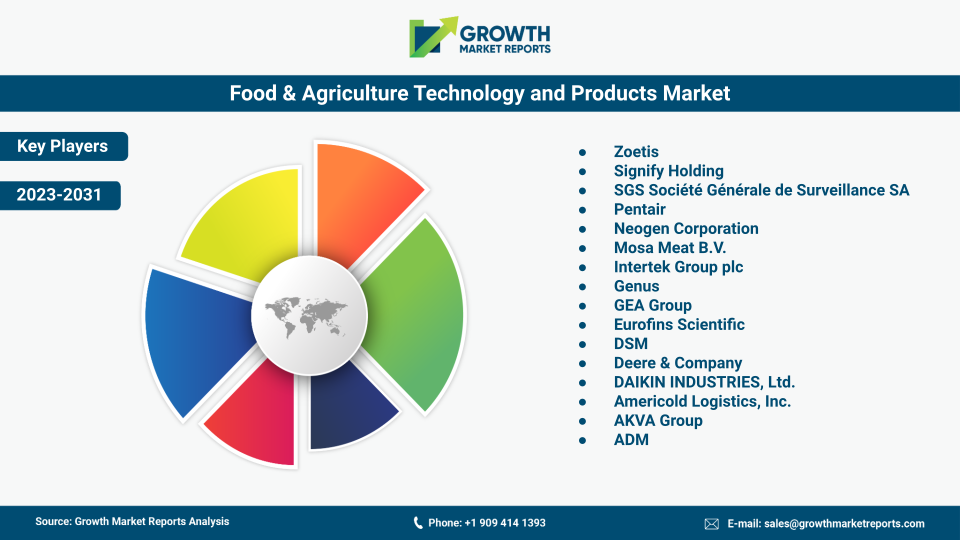
Key players competing in the global food & agriculture technology and products market are Zoetis; Signify Holding; SGS Société Générale de Surveillance SA; Pentair; Neogen Corporation; Mosa Meat B.V.; Intertek Group plc; Genus; GEA Group; Eurofins Scientific; DSM; Deere & Company; DAIKIN INDUSTRIES, Ltd.; Americold Logistics, Inc.; AKVA Group; and ADM.

These key players utilize strategies such as acquisitions, collaboration, partnerships, product launches, mergers, and production expansion to expand their consumer base globally.

Food & Agriculture Technology and Products Market Key Players

Frequently Asked Questions

Key players include Bayer AG, Syngenta Group, Corteva Agriscience, BASF SE, Archer Daniels Midland Company (ADM), Cargill, John Deere, AGCO Corporation, Nutrien Ltd., and Trimble Inc.

Major end-users include farmers, food manufacturers, retailers, government agencies, research institutions, and NGOs.

Key applications include crop production, animal husbandry, food processing, and supply chain management.

Technologies such as blockchain, rapid detection systems, and automated quality control are enhancing food safety and traceability throughout the supply chain.

The main product segments include agri inputs, biotech seeds, crop protection chemicals, animal feed, food safety products, and other related offerings.

Asia Pacific leads the market, followed by North America and Europe, with rapid growth also seen in Latin America and the Middle East & Africa.

Rising global population, climate change, the need for sustainable agriculture, food safety concerns, and the push for efficient food supply chains are major factors driving demand.

Key technologies include precision farming, genetically modified seeds, vertical farming, aquaculture technology, food safety technology, artificial intelligence, IoT, and blockchain-based traceability.

The market is expected to grow at a CAGR of 8.3% from 2025 to 2033, reaching USD 1,280.4 billion by 2033.

As of 2024, the global Food & Agriculture Technology and Products market is valued at USD 658.7 billion.

Table Of Content

Chapter 1 Executive Summary
Chapter 2 Assumptions and Acronyms Used
Chapter 3 Research Methodology
Chapter 4 Food & Agriculture Technology and Products Market Overview
   4.1 Introduction
      4.1.1 Market Taxonomy
      4.1.2 Market Definition
      4.1.3 Macro-Economic Factors Impacting the Market Growth
   4.2 Food & Agriculture Technology and Products Market Dynamics
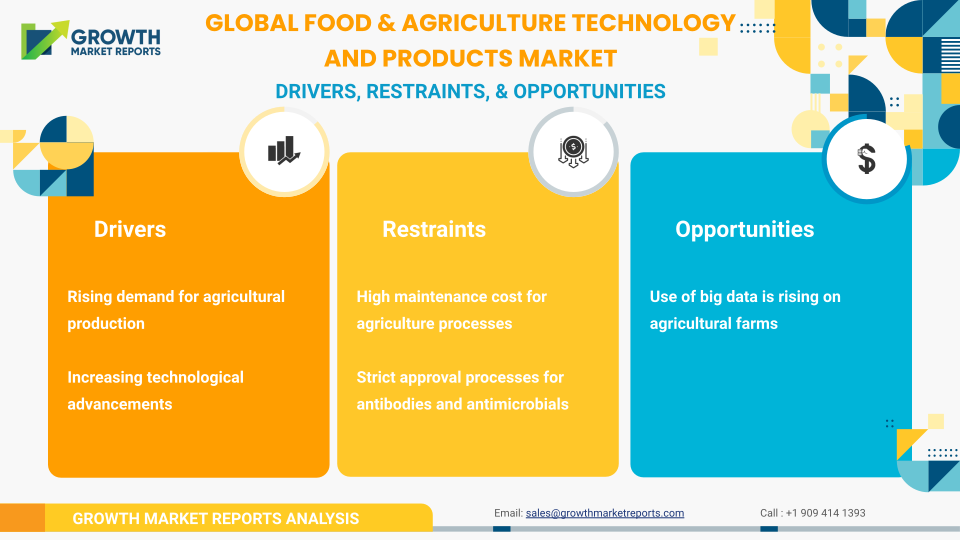
      4.2.1 Market Drivers
      4.2.2 Market Restraints
      4.2.3 Market Opportunity
   4.3 Food & Agriculture Technology and Products Market - Supply Chain Analysis
      4.3.1 List of Key Suppliers
      4.3.2 List of Key Distributors
      4.3.3 List of Key Consumers
   4.4 Key Forces Shaping the Food & Agriculture Technology and Products Market
      4.4.1 Bargaining Power of Suppliers
      4.4.2 Bargaining Power of Buyers
      4.4.3 Threat of Substitution
      4.4.4 Threat of New Entrants
      4.4.5 Competitive Rivalry
   4.5 Global Food & Agriculture Technology and Products Market Size & Forecast, 2023-2032
      4.5.1 Food & Agriculture Technology and Products Market Size and Y-o-Y Growth
      4.5.2 Food & Agriculture Technology and Products Market Absolute $ Opportunity

Chapter 5 Global Food & Agriculture Technology and Products Market Analysis and Forecast By Technology
   5.1 Introduction
      5.1.1 Key Market Trends & Growth Opportunities By Technology
      5.1.2 Basis Point Share (BPS) Analysis By Technology
      5.1.3 Absolute $ Opportunity Assessment By Technology
   5.2 Food & Agriculture Technology and Products Market Size Forecast By Technology
      5.2.1 Genetically Modified Seeds
      5.2.2 Precision Farming
      5.2.3 Aquaculture
      5.2.4 Vertical Farming
      5.2.5 Food Safety Technology
      5.2.6 Others
   5.3 Market Attractiveness Analysis By Technology

Chapter 6 Global Food & Agriculture Technology and Products Market Analysis and Forecast By Product
   6.1 Introduction
      6.1.1 Key Market Trends & Growth Opportunities By Product
      6.1.2 Basis Point Share (BPS) Analysis By Product
      6.1.3 Absolute $ Opportunity Assessment By Product
   6.2 Food & Agriculture Technology and Products Market Size Forecast By Product
      6.2.1 Agri Inputs
      6.2.2 Biotech Seeds
      6.2.3 Crop Protection Chemicals
      6.2.4 Animal Feed
      6.2.5 Food Safety Products
      6.2.6 Others
   6.3 Market Attractiveness Analysis By Product

Chapter 7 Global Food & Agriculture Technology and Products Market Analysis and Forecast By Application
   7.1 Introduction
      7.1.1 Key Market Trends & Growth Opportunities By Application
      7.1.2 Basis Point Share (BPS) Analysis By Application
      7.1.3 Absolute $ Opportunity Assessment By Application
   7.2 Food & Agriculture Technology and Products Market Size Forecast By Application
      7.2.1 Crop Production
      7.2.2 Animal Husbandry
      7.2.3 Food Processing
      7.2.4 Supply Chain Management
      7.2.5 Others
   7.3 Market Attractiveness Analysis By Application

Chapter 8 Global Food & Agriculture Technology and Products Market Analysis and Forecast By End-User
   8.1 Introduction
      8.1.1 Key Market Trends & Growth Opportunities By End-User
      8.1.2 Basis Point Share (BPS) Analysis By End-User
      8.1.3 Absolute $ Opportunity Assessment By End-User
   8.2 Food & Agriculture Technology and Products Market Size Forecast By End-User
      8.2.1 Farmers
      8.2.2 Food Manufacturers
      8.2.3 Retailers
      8.2.4 Others
   8.3 Market Attractiveness Analysis By End-User

Chapter 9 Global Food & Agriculture Technology and Products Market Analysis and Forecast by Region
   9.1 Introduction
      9.1.1 Key Market Trends & Growth Opportunities By Region
      9.1.2 Basis Point Share (BPS) Analysis By Region
      9.1.3 Absolute $ Opportunity Assessment By Region
   9.2 Food & Agriculture Technology and Products Market Size Forecast By Region
      9.2.1 North America
      9.2.2 Europe
      9.2.3 Asia Pacific
      9.2.4 Latin America
      9.2.5 Middle East & Africa (MEA)
   9.3 Market Attractiveness Analysis By Region

Chapter 10 Coronavirus Disease (COVID-19) Impact 
   10.1 Introduction 
   10.2 Current & Future Impact Analysis 
   10.3 Economic Impact Analysis 
   10.4 Government Policies 
   10.5 Investment Scenario

Chapter 11 North America Food & Agriculture Technology and Products Analysis and Forecast
   11.1 Introduction
   11.2 North America Food & Agriculture Technology and Products Market Size Forecast by Country
      11.2.1 U.S.
      11.2.2 Canada
   11.3 Basis Point Share (BPS) Analysis by Country
   11.4 Absolute $ Opportunity Assessment by Country
   11.5 Market Attractiveness Analysis by Country
   11.6 North America Food & Agriculture Technology and Products Market Size Forecast By Technology
      11.6.1 Genetically Modified Seeds
      11.6.2 Precision Farming
      11.6.3 Aquaculture
      11.6.4 Vertical Farming
      11.6.5 Food Safety Technology
      11.6.6 Others
   11.7 Basis Point Share (BPS) Analysis By Technology 
   11.8 Absolute $ Opportunity Assessment By Technology 
   11.9 Market Attractiveness Analysis By Technology
   11.10 North America Food & Agriculture Technology and Products Market Size Forecast By Product
      11.10.1 Agri Inputs
      11.10.2 Biotech Seeds
      11.10.3 Crop Protection Chemicals
      11.10.4 Animal Feed
      11.10.5 Food Safety Products
      11.10.6 Others
   11.11 Basis Point Share (BPS) Analysis By Product 
   11.12 Absolute $ Opportunity Assessment By Product 
   11.13 Market Attractiveness Analysis By Product
   11.14 North America Food & Agriculture Technology and Products Market Size Forecast By Application
      11.14.1 Crop Production
      11.14.2 Animal Husbandry
      11.14.3 Food Processing
      11.14.4 Supply Chain Management
      11.14.5 Others
   11.15 Basis Point Share (BPS) Analysis By Application 
   11.16 Absolute $ Opportunity Assessment By Application 
   11.17 Market Attractiveness Analysis By Application
   11.18 North America Food & Agriculture Technology and Products Market Size Forecast By End-User
      11.18.1 Farmers
      11.18.2 Food Manufacturers
      11.18.3 Retailers
      11.18.4 Others
   11.19 Basis Point Share (BPS) Analysis By End-User 
   11.20 Absolute $ Opportunity Assessment By End-User 
   11.21 Market Attractiveness Analysis By End-User

Chapter 12 Europe Food & Agriculture Technology and Products Analysis and Forecast
   12.1 Introduction
   12.2 Europe Food & Agriculture Technology and Products Market Size Forecast by Country
      12.2.1 Germany
      12.2.2 France
      12.2.3 Italy
      12.2.4 U.K.
      12.2.5 Spain
      12.2.6 Russia
      12.2.7 Rest of Europe
   12.3 Basis Point Share (BPS) Analysis by Country
   12.4 Absolute $ Opportunity Assessment by Country
   12.5 Market Attractiveness Analysis by Country
   12.6 Europe Food & Agriculture Technology and Products Market Size Forecast By Technology
      12.6.1 Genetically Modified Seeds
      12.6.2 Precision Farming
      12.6.3 Aquaculture
      12.6.4 Vertical Farming
      12.6.5 Food Safety Technology
      12.6.6 Others
   12.7 Basis Point Share (BPS) Analysis By Technology 
   12.8 Absolute $ Opportunity Assessment By Technology 
   12.9 Market Attractiveness Analysis By Technology
   12.10 Europe Food & Agriculture Technology and Products Market Size Forecast By Product
      12.10.1 Agri Inputs
      12.10.2 Biotech Seeds
      12.10.3 Crop Protection Chemicals
      12.10.4 Animal Feed
      12.10.5 Food Safety Products
      12.10.6 Others
   12.11 Basis Point Share (BPS) Analysis By Product 
   12.12 Absolute $ Opportunity Assessment By Product 
   12.13 Market Attractiveness Analysis By Product
   12.14 Europe Food & Agriculture Technology and Products Market Size Forecast By Application
      12.14.1 Crop Production
      12.14.2 Animal Husbandry
      12.14.3 Food Processing
      12.14.4 Supply Chain Management
      12.14.5 Others
   12.15 Basis Point Share (BPS) Analysis By Application 
   12.16 Absolute $ Opportunity Assessment By Application 
   12.17 Market Attractiveness Analysis By Application
   12.18 Europe Food & Agriculture Technology and Products Market Size Forecast By End-User
      12.18.1 Farmers
      12.18.2 Food Manufacturers
      12.18.3 Retailers
      12.18.4 Others
   12.19 Basis Point Share (BPS) Analysis By End-User 
   12.20 Absolute $ Opportunity Assessment By End-User 
   12.21 Market Attractiveness Analysis By End-User

Chapter 13 Asia Pacific Food & Agriculture Technology and Products Analysis and Forecast
   13.1 Introduction
   13.2 Asia Pacific Food & Agriculture Technology and Products Market Size Forecast by Country
      13.2.1 China
      13.2.2 Japan
      13.2.3 South Korea
      13.2.4 India
      13.2.5 Australia
      13.2.6 South East Asia (SEA)
      13.2.7 Rest of Asia Pacific (APAC)
   13.3 Basis Point Share (BPS) Analysis by Country
   13.4 Absolute $ Opportunity Assessment by Country
   13.5 Market Attractiveness Analysis by Country
   13.6 Asia Pacific Food & Agriculture Technology and Products Market Size Forecast By Technology
      13.6.1 Genetically Modified Seeds
      13.6.2 Precision Farming
      13.6.3 Aquaculture
      13.6.4 Vertical Farming
      13.6.5 Food Safety Technology
      13.6.6 Others
   13.7 Basis Point Share (BPS) Analysis By Technology 
   13.8 Absolute $ Opportunity Assessment By Technology 
   13.9 Market Attractiveness Analysis By Technology
   13.10 Asia Pacific Food & Agriculture Technology and Products Market Size Forecast By Product
      13.10.1 Agri Inputs
      13.10.2 Biotech Seeds
      13.10.3 Crop Protection Chemicals
      13.10.4 Animal Feed
      13.10.5 Food Safety Products
      13.10.6 Others
   13.11 Basis Point Share (BPS) Analysis By Product 
   13.12 Absolute $ Opportunity Assessment By Product 
   13.13 Market Attractiveness Analysis By Product
   13.14 Asia Pacific Food & Agriculture Technology and Products Market Size Forecast By Application
      13.14.1 Crop Production
      13.14.2 Animal Husbandry
      13.14.3 Food Processing
      13.14.4 Supply Chain Management
      13.14.5 Others
   13.15 Basis Point Share (BPS) Analysis By Application 
   13.16 Absolute $ Opportunity Assessment By Application 
   13.17 Market Attractiveness Analysis By Application
   13.18 Asia Pacific Food & Agriculture Technology and Products Market Size Forecast By End-User
      13.18.1 Farmers
      13.18.2 Food Manufacturers
      13.18.3 Retailers
      13.18.4 Others
   13.19 Basis Point Share (BPS) Analysis By End-User 
   13.20 Absolute $ Opportunity Assessment By End-User 
   13.21 Market Attractiveness Analysis By End-User

Chapter 14 Latin America Food & Agriculture Technology and Products Analysis and Forecast
   14.1 Introduction
   14.2 Latin America Food & Agriculture Technology and Products Market Size Forecast by Country
      14.2.1 Brazil
      14.2.2 Mexico
      14.2.3 Rest of Latin America (LATAM)
   14.3 Basis Point Share (BPS) Analysis by Country
   14.4 Absolute $ Opportunity Assessment by Country
   14.5 Market Attractiveness Analysis by Country
   14.6 Latin America Food & Agriculture Technology and Products Market Size Forecast By Technology
      14.6.1 Genetically Modified Seeds
      14.6.2 Precision Farming
      14.6.3 Aquaculture
      14.6.4 Vertical Farming
      14.6.5 Food Safety Technology
      14.6.6 Others
   14.7 Basis Point Share (BPS) Analysis By Technology 
   14.8 Absolute $ Opportunity Assessment By Technology 
   14.9 Market Attractiveness Analysis By Technology
   14.10 Latin America Food & Agriculture Technology and Products Market Size Forecast By Product
      14.10.1 Agri Inputs
      14.10.2 Biotech Seeds
      14.10.3 Crop Protection Chemicals
      14.10.4 Animal Feed
      14.10.5 Food Safety Products
      14.10.6 Others
   14.11 Basis Point Share (BPS) Analysis By Product 
   14.12 Absolute $ Opportunity Assessment By Product 
   14.13 Market Attractiveness Analysis By Product
   14.14 Latin America Food & Agriculture Technology and Products Market Size Forecast By Application
      14.14.1 Crop Production
      14.14.2 Animal Husbandry
      14.14.3 Food Processing
      14.14.4 Supply Chain Management
      14.14.5 Others
   14.15 Basis Point Share (BPS) Analysis By Application 
   14.16 Absolute $ Opportunity Assessment By Application 
   14.17 Market Attractiveness Analysis By Application
   14.18 Latin America Food & Agriculture Technology and Products Market Size Forecast By End-User
      14.18.1 Farmers
      14.18.2 Food Manufacturers
      14.18.3 Retailers
      14.18.4 Others
   14.19 Basis Point Share (BPS) Analysis By End-User 
   14.20 Absolute $ Opportunity Assessment By End-User 
   14.21 Market Attractiveness Analysis By End-User

Chapter 15 Middle East & Africa (MEA) Food & Agriculture Technology and Products Analysis and Forecast
   15.1 Introduction
   15.2 Middle East & Africa (MEA) Food & Agriculture Technology and Products Market Size Forecast by Country
      15.2.1 Saudi Arabia
      15.2.2 South Africa
      15.2.3 UAE
      15.2.4 Rest of Middle East & Africa (MEA)
   15.3 Basis Point Share (BPS) Analysis by Country
   15.4 Absolute $ Opportunity Assessment by Country
   15.5 Market Attractiveness Analysis by Country
   15.6 Middle East & Africa (MEA) Food & Agriculture Technology and Products Market Size Forecast By Technology
      15.6.1 Genetically Modified Seeds
      15.6.2 Precision Farming
      15.6.3 Aquaculture
      15.6.4 Vertical Farming
      15.6.5 Food Safety Technology
      15.6.6 Others
   15.7 Basis Point Share (BPS) Analysis By Technology 
   15.8 Absolute $ Opportunity Assessment By Technology 
   15.9 Market Attractiveness Analysis By Technology
   15.10 Middle East & Africa (MEA) Food & Agriculture Technology and Products Market Size Forecast By Product
      15.10.1 Agri Inputs
      15.10.2 Biotech Seeds
      15.10.3 Crop Protection Chemicals
      15.10.4 Animal Feed
      15.10.5 Food Safety Products
      15.10.6 Others
   15.11 Basis Point Share (BPS) Analysis By Product 
   15.12 Absolute $ Opportunity Assessment By Product 
   15.13 Market Attractiveness Analysis By Product
   15.14 Middle East & Africa (MEA) Food & Agriculture Technology and Products Market Size Forecast By Application
      15.14.1 Crop Production
      15.14.2 Animal Husbandry
      15.14.3 Food Processing
      15.14.4 Supply Chain Management
      15.14.5 Others
   15.15 Basis Point Share (BPS) Analysis By Application 
   15.16 Absolute $ Opportunity Assessment By Application 
   15.17 Market Attractiveness Analysis By Application
   15.18 Middle East & Africa (MEA) Food & Agriculture Technology and Products Market Size Forecast By End-User
      15.18.1 Farmers
      15.18.2 Food Manufacturers
      15.18.3 Retailers
      15.18.4 Others
   15.19 Basis Point Share (BPS) Analysis By End-User 
   15.20 Absolute $ Opportunity Assessment By End-User 
   15.21 Market Attractiveness Analysis By End-User

Chapter 16 Competition Landscape 
   16.1 Food & Agriculture Technology and Products Market: Competitive Dashboard
   16.2 Global Food & Agriculture Technology and Products Market: Market Share Analysis, 2023
   16.3 Company Profiles (Details – Overview, Financials, Developments, Strategy) 
      16.3.1 Cargill, Inc.
Archer Daniels Midland Company (ADM)
Bayer AG
Syngenta AG
Deere & Company (John Deere)
BASF SE
Corteva Agriscience
CNH Industrial N.V.
Nutrien Ltd.
AGCO Corporation
Kubota Corporation
Yara International ASA
Trimble Inc.
Valmont Industries, Inc.
The Mosaic Company
Olam International
Tyson Foods, Inc.
DuPont de Nemours, Inc.
Indigo Ag, Inc.
Givaudan SA

Methodology

Our Clients

The John Holland Group
Pfizer
Nestle SA
Siemens Healthcare
FedEx Logistics
Honda Motor Co. Ltd.
Microsoft
Deloitte