fondaparinux Market Research Report 2033

fondaparinux Market Research Report 2033

Segments - by Product Type (Branded, Generic), by Application (Deep Vein Thrombosis, Pulmonary Embolism, Acute Coronary Syndrome, Others), by Distribution Channel (Hospital Pharmacies, Retail Pharmacies, Online Pharmacies, Others), by End-User (Hospitals, Clinics, Ambulatory Surgical Centers, Others)

https://growthmarketreports.com/raksha
Author : Raksha Sharma
https://growthmarketreports.com/Vaibhav
Fact-checked by : V. Chandola
https://growthmarketreports.com/Shruti
Editor : Shruti Bhat

Upcoming | Report ID :HC-2462 | 4.3 Rating | 9 Reviews | 265 Pages | Format : Docx PDF

Report Description


Fondaparinux Market Outlook

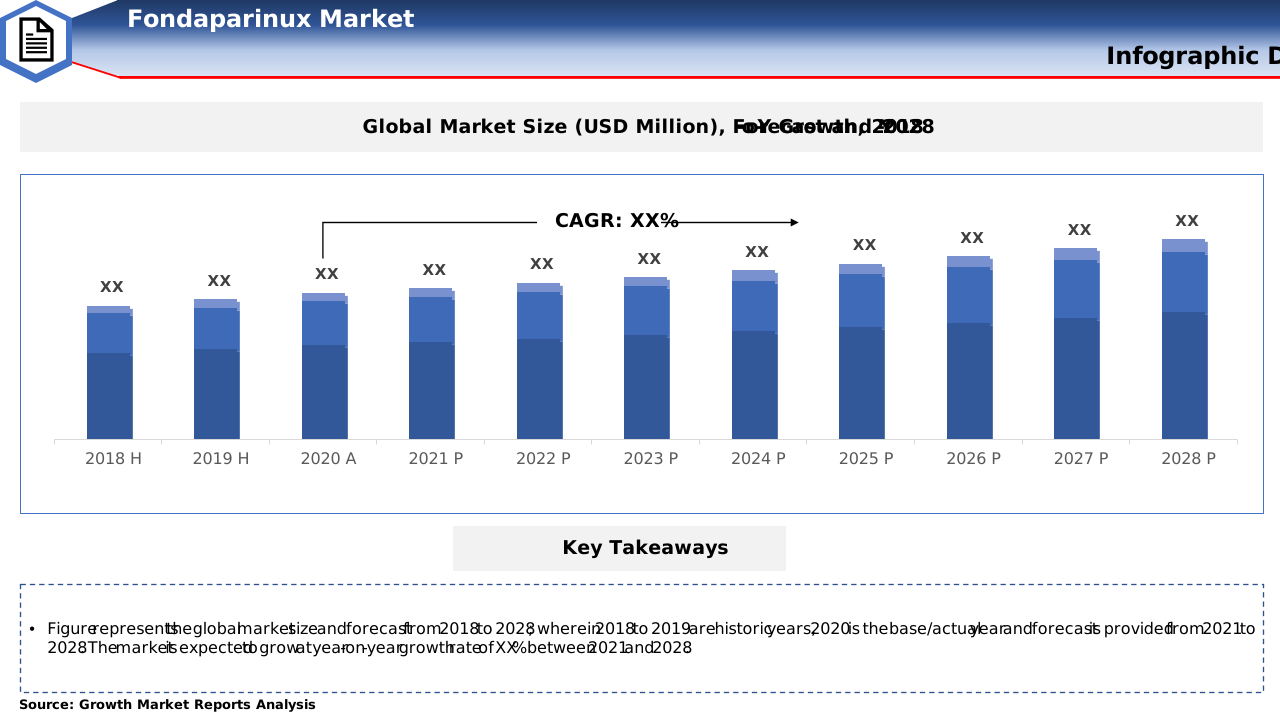
According to our latest research, the global fondaparinux market size reached USD 520 million in 2024, reflecting a robust growth trajectory driven by increasing incidences of thromboembolic disorders and the demand for advanced anticoagulant therapies. The market is witnessing a steady compound annual growth rate (CAGR) of 7.1% from 2025 to 2033, with projections indicating the market will reach approximately USD 965 million by 2033. The surge in the aging population, growing awareness about venous thromboembolism (VTE), and the expanding adoption of fondaparinux in both developed and emerging regions are key contributors to this growth.

The primary growth factor for the fondaparinux market is the rising prevalence of deep vein thrombosis (DVT) and pulmonary embolism (PE) worldwide. With sedentary lifestyles, increasing obesity rates, and the growing geriatric population, the incidence rates of thromboembolic events are climbing steadily. Fondaparinux, a synthetic anticoagulant, has gained significant traction as a preferred therapy due to its predictable pharmacokinetics, low risk of heparin-induced thrombocytopenia, and ease of administration. Furthermore, the heightened focus on post-surgical thromboprophylaxis, especially in orthopedic and cancer surgeries, has further catalyzed demand. The growing clinical evidence supporting fondaparinux’s efficacy and safety profile compared to traditional anticoagulants like heparin and warfarin continues to drive its adoption across various healthcare settings.

Another critical driver is the continuous advancement in healthcare infrastructure and the expansion of hospital and clinic networks globally. As healthcare systems in emerging economies strengthen, access to advanced therapeutics such as fondaparinux becomes more widespread. Simultaneously, regulatory approvals for generic versions have made fondaparinux more accessible and affordable, broadening its reach beyond urban centers to rural and semi-urban populations. The growing penetration of health insurance and government initiatives to reduce the burden of thromboembolic diseases also play a significant role in market expansion. Moreover, the increasing integration of digital health and telemedicine platforms is facilitating better disease management and timely intervention, further propelling market growth.

The fondaparinux market is also benefitting from the increasing investments in research and development activities by major pharmaceutical companies. The focus on developing novel formulations, expanding approved indications, and exploring combination therapies is expected to open new avenues for market players. Additionally, the rise of online pharmacies and e-commerce platforms is transforming the distribution landscape, enabling easier access to medications for patients while ensuring compliance with safety standards. The growing collaboration between pharmaceutical companies, healthcare providers, and regulatory agencies is fostering innovation and ensuring the availability of high-quality, cost-effective anticoagulant therapies worldwide.

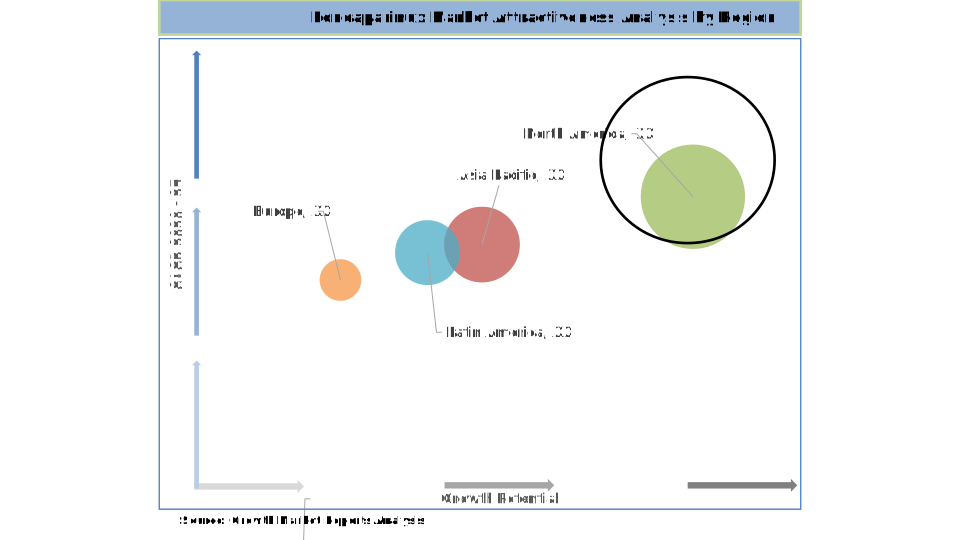
From a regional perspective, North America continues to dominate the fondaparinux market, driven by high healthcare expenditure, advanced healthcare infrastructure, and a large patient pool suffering from cardiovascular and thromboembolic disorders. However, Asia Pacific is emerging as the fastest-growing region, attributed to the rising prevalence of chronic diseases, increasing healthcare investments, and growing awareness about the benefits of anticoagulant therapy. Europe also holds a significant share, supported by favorable reimbursement policies and strong presence of leading pharmaceutical companies. Latin America and Middle East & Africa are witnessing gradual growth, fueled by improving healthcare access and increasing adoption of advanced therapeutics.

Global fondaparinux  Industry Outlook

Product Type Analysis

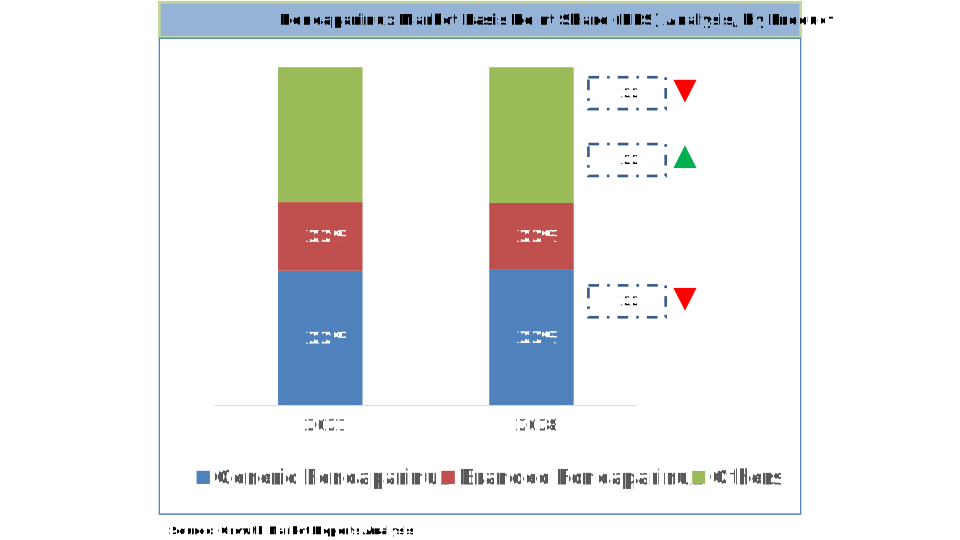
The fondaparinux market is segmented by product type into branded and generic formulations. Branded fondaparinux, led by well-established pharmaceutical companies, has historically dominated the market due to its proven efficacy, extensive clinical data, and strong brand recognition among healthcare professionals. These products are often preferred in hospitals and clinics where established treatment protocols and trust in manufacturer reliability are paramount. The branded segment continues to benefit from ongoing research, post-marketing surveillance, and strategic marketing efforts that reinforce brand loyalty and physician confidence. However, the high cost associated with branded formulations has been a limiting factor, especially in cost-sensitive markets and among populations with limited insurance coverage.

The generic segment has witnessed remarkable growth in recent years, propelled by patent expirations and the entry of multiple manufacturers. Generic fondaparinux offers a cost-effective alternative without compromising on efficacy or safety, making it increasingly popular across both developed and developing markets. Regulatory bodies such as the FDA and EMA have streamlined approval processes for generics, ensuring that these products meet stringent quality standards. This has led to increased competition, driving down prices and expanding patient access. The proliferation of generics is particularly significant in emerging economies, where affordability is a critical factor in treatment decisions.

The competitive dynamics between branded and generic fondaparinux are reshaping the market landscape. While branded products continue to hold a significant share in regions with strong healthcare reimbursement systems, generics are rapidly gaining ground, especially in markets where out-of-pocket expenditure is high. Pharmaceutical companies are adopting strategies such as co-marketing agreements, patient assistance programs, and value-added services to differentiate their offerings and maintain market share. The increasing acceptance of generics among healthcare providers and patients is expected to further accelerate the growth of this segment over the forecast period.

Innovation in formulation and delivery mechanisms is another key trend within the product type segment. Companies are investing in the development of extended-release formulations, pre-filled syringes, and combination therapies to enhance patient convenience and compliance. These advancements are not only improving therapeutic outcomes but also providing a competitive edge to market players. The ongoing focus on quality assurance, pharmacovigilance, and regulatory compliance is ensuring that both branded and generic fondaparinux products meet the highest standards of safety and efficacy, thereby fostering trust and driving market growth.

Report Scope

Attributes Details
Report Title fondaparinux Market Research Report 2033
By Product Type Branded, Generic
By Application Deep Vein Thrombosis, Pulmonary Embolism, Acute Coronary Syndrome, Others
By Distribution Channel Hospital Pharmacies, Retail Pharmacies, Online Pharmacies, Others
By End-User Hospitals, Clinics, Ambulatory Surgical Centers, Others
Regions Covered North America, Europe, APAC, Latin America, MEA
Base Year 2024
Historic Data 2018-2023
Forecast Period 2025-2033
Number of Pages 265
Number of Tables & Figures 390
Customization Available Yes, the report can be customized as per your need.

Application Analysis

The application segment of the fondaparinux market encompasses deep vein thrombosis (DVT), pulmonary embolism (PE), acute coronary syndrome (ACS), and other indications. Among these, DVT represents the largest application segment, owing to the high incidence of venous thromboembolism globally and the established role of fondaparinux in its prevention and treatment. The drug’s predictable anticoagulant effect, minimal drug interactions, and low risk of adverse events make it a preferred choice for both prophylaxis and therapeutic management of DVT. Hospitals and clinics are increasingly incorporating fondaparinux into their treatment protocols, particularly for orthopedic and cancer surgery patients who are at elevated risk for thromboembolic complications.

Pulmonary embolism is another significant application area, with fondaparinux demonstrating efficacy in both acute management and secondary prevention. The growing awareness about the life-threatening nature of PE and the importance of early intervention has led to increased utilization of fondaparinux in emergency and critical care settings. The drug’s favorable safety profile, especially in patients with a history of heparin-induced thrombocytopenia, further supports its adoption in this segment. The expansion of diagnostic capabilities and the implementation of standardized treatment guidelines are also contributing to the growth of the PE application segment.

In the context of acute coronary syndrome, fondaparinux is gaining traction as an adjunctive therapy to reduce the risk of recurrent ischemic events. Clinical trials have demonstrated its effectiveness in improving outcomes for patients with unstable angina and non-ST segment elevation myocardial infarction (NSTEMI). The integration of fondaparinux into ACS management protocols, particularly in combination with antiplatelet agents, is driving demand in this segment. The increasing burden of cardiovascular diseases globally, coupled with advancements in diagnostic and therapeutic modalities, is expected to sustain the growth of the ACS application segment over the forecast period.

Other applications of fondaparinux include its use in the management of superficial vein thrombosis, thromboprophylaxis in high-risk surgical patients, and off-label indications in specific patient populations. Ongoing research is exploring the potential of fondaparinux in new therapeutic areas, such as cancer-associated thrombosis and pediatric thromboprophylaxis. The expanding body of clinical evidence supporting the safety and efficacy of fondaparinux in diverse patient populations is likely to drive further adoption and market expansion across multiple indications.

Distribution Channel Analysis

The distribution channel segment of the fondaparinux market includes hospital pharmacies, retail pharmacies, online pharmacies, and other channels. Hospital pharmacies constitute the largest distribution channel, reflecting the high demand for fondaparinux in inpatient and acute care settings. Hospitals are the primary point of care for patients with DVT, PE, and ACS, where timely administration of anticoagulant therapy is critical. The integration of fondaparinux into hospital formularies, coupled with the presence of trained healthcare professionals, ensures safe and effective use of the drug. The increasing number of hospital admissions for thromboembolic disorders and the expansion of hospital infrastructure in emerging markets are further strengthening the dominance of this channel.

Retail pharmacies also play a significant role in the distribution of fondaparinux, particularly for patients requiring long-term prophylaxis or outpatient management. The convenience, accessibility, and personalized services offered by retail pharmacies make them a preferred choice for many patients. The growing trend of prescription refills, patient counseling, and medication adherence programs in retail settings is enhancing the overall patient experience and driving sales through this channel. Retail pharmacies are also expanding their presence in rural and underserved areas, thereby increasing access to fondaparinux for a broader patient base.

Online pharmacies are emerging as a dynamic and rapidly growing distribution channel, driven by the increasing adoption of digital health solutions and e-commerce platforms. Online pharmacies offer several advantages, including convenience, privacy, competitive pricing, and home delivery of medications. The COVID-19 pandemic has accelerated the shift towards online purchasing, with patients and healthcare providers increasingly leveraging telemedicine and digital prescriptions. Regulatory authorities are implementing stringent guidelines to ensure the safety, quality, and authenticity of medications sold online, thereby fostering trust and encouraging market growth through this channel.

Other distribution channels, such as specialty pharmacies and direct sales to healthcare institutions, also contribute to the overall market landscape. Specialty pharmacies cater to patients with complex medical needs, offering tailored services such as medication management, patient education, and support programs. Direct sales to hospitals, clinics, and ambulatory surgical centers are facilitated through strategic partnerships and supply agreements with pharmaceutical companies. The diversification of distribution channels is enhancing market reach, improving patient access, and supporting the sustained growth of the fondaparinux market.

End-User Analysis

The end-user segment of the fondaparinux market includes hospitals, clinics, ambulatory surgical centers (ASCs), and other healthcare facilities. Hospitals represent the largest end-user segment, accounting for the majority of fondaparinux consumption. The high volume of surgical procedures, critical care admissions, and complex case management in hospitals necessitates the use of advanced anticoagulant therapies such as fondaparinux. Hospitals are equipped with specialized medical staff, diagnostic capabilities, and comprehensive treatment protocols, ensuring optimal patient outcomes. The increasing prevalence of thromboembolic disorders, coupled with the expansion of hospital infrastructure in emerging markets, is driving demand in this segment.

Clinics are also significant end-users of fondaparinux, particularly for outpatient management and follow-up care. Clinics offer a convenient and accessible setting for patients requiring ongoing prophylaxis or monitoring of anticoagulant therapy. The growing trend of day surgeries, minimally invasive procedures, and early discharge protocols is increasing the utilization of fondaparinux in clinic settings. Clinics are also playing a vital role in patient education, medication adherence, and post-treatment monitoring, thereby supporting long-term disease management and reducing the risk of complications.

Ambulatory surgical centers (ASCs) are emerging as important end-users, driven by the shift towards outpatient surgical procedures and the need for effective thromboprophylaxis. ASCs offer cost-effective, efficient, and high-quality care for a wide range of surgical interventions, including orthopedic, gynecological, and cardiovascular procedures. The use of fondaparinux in ASCs is supported by its ease of administration, predictable anticoagulant effect, and favorable safety profile. The growing adoption of enhanced recovery protocols and the emphasis on patient safety are further boosting demand in this segment.

Other end-users, such as rehabilitation centers, long-term care facilities, and home healthcare providers, also contribute to the fondaparinux market. These settings cater to patients with chronic conditions, limited mobility, or high risk of recurrent thromboembolic events. The increasing focus on integrated care, patient-centric approaches, and multidisciplinary collaboration is enhancing the delivery of anticoagulant therapy across diverse healthcare environments. The expanding role of allied health professionals, telemedicine, and remote monitoring is further supporting the adoption of fondaparinux in non-traditional care settings.

Opportunities & Threats

The fondaparinux market presents significant opportunities for growth, driven by the increasing prevalence of thromboembolic disorders and the growing demand for advanced anticoagulant therapies. The rising awareness about the importance of early diagnosis, prevention, and management of VTE is creating a favorable environment for market expansion. Pharmaceutical companies have the opportunity to capitalize on the growing demand by investing in research and development, exploring new indications, and developing innovative formulations. The expansion of healthcare infrastructure, particularly in emerging economies, is opening new avenues for market penetration and patient access. Strategic collaborations, partnerships, and mergers and acquisitions are also enabling companies to strengthen their market presence, diversify their product portfolios, and enhance their competitive advantage.

The proliferation of digital health solutions, telemedicine, and e-commerce platforms is transforming the distribution landscape and creating new opportunities for market players. The increasing adoption of online pharmacies, electronic prescriptions, and remote patient monitoring is enhancing patient convenience, improving medication adherence, and enabling timely intervention. The integration of artificial intelligence, data analytics, and real-world evidence in clinical decision-making is facilitating personalized medicine and optimizing treatment outcomes. Regulatory agencies are also playing a proactive role in supporting innovation, streamlining approval processes, and ensuring the availability of high-quality, affordable medications. These trends are expected to drive sustained growth and create new opportunities for stakeholders across the fondaparinux market value chain.

Despite the positive outlook, the fondaparinux market faces certain restraining factors that could impact growth. The high cost of branded formulations, limited awareness in some regions, and the risk of adverse events such as bleeding complications are key challenges. Stringent regulatory requirements, complex manufacturing processes, and the need for continuous pharmacovigilance also pose barriers to market entry and expansion. Additionally, the availability of alternative anticoagulant therapies, such as direct oral anticoagulants (DOACs), may limit the uptake of fondaparinux in certain patient populations. Addressing these challenges will require a concerted effort from industry stakeholders, healthcare providers, and policymakers to ensure the safe, effective, and equitable use of fondaparinux worldwide.

Regional Outlook

North America remains the largest regional market for fondaparinux, accounting for approximately USD 220 million in 2024. The region’s dominance is attributed to advanced healthcare infrastructure, high prevalence of thromboembolic disorders, and strong presence of leading pharmaceutical companies. The United States, in particular, is a major contributor, driven by high healthcare spending, robust insurance coverage, and widespread adoption of advanced therapeutics. Canada also plays a significant role, supported by favorable reimbursement policies and government initiatives to reduce the burden of cardiovascular diseases. The North American market is expected to maintain a steady CAGR of 6.7% over the forecast period, reaching an estimated USD 390 million by 2033.

Europe holds the second-largest share of the global fondaparinux market, with a market size of approximately USD 140 million in 2024. The region benefits from a well-established healthcare system, strong regulatory framework, and high awareness about thromboembolic disease management. Countries such as Germany, France, the United Kingdom, and Italy are leading contributors, supported by comprehensive healthcare coverage and active participation in clinical research. The European market is characterized by the widespread availability of both branded and generic fondaparinux, competitive pricing, and strong collaboration between industry stakeholders and healthcare providers. The region is projected to achieve a CAGR of 6.9%, reaching around USD 250 million by 2033.

Asia Pacific is emerging as the fastest-growing regional market, with a current market size of USD 110 million in 2024 and a projected CAGR of 8.2% through 2033. The rapid growth is driven by increasing healthcare investments, rising prevalence of chronic diseases, and expanding access to advanced therapeutics. Countries such as China, India, Japan, and South Korea are at the forefront, supported by government initiatives, growing healthcare infrastructure, and increasing awareness about the benefits of anticoagulant therapy. Latin America and Middle East & Africa are also witnessing gradual growth, with market sizes of USD 30 million and USD 20 million respectively in 2024. These regions are benefiting from improving healthcare access, rising disease burden, and increasing adoption of advanced therapeutics, albeit at a slower pace compared to North America, Europe, and Asia Pacific.

fondaparinux  Market Statistics

Competitor Outlook

The fondaparinux market is highly competitive, characterized by the presence of several multinational and regional pharmaceutical companies. The competitive landscape is shaped by factors such as product innovation, pricing strategies, regulatory approvals, and strategic partnerships. Leading companies are focusing on expanding their product portfolios, investing in research and development, and enhancing their manufacturing capabilities to maintain a competitive edge. The entry of generic manufacturers has intensified competition, leading to price erosion and increased accessibility of fondaparinux in both developed and emerging markets. Companies are also leveraging digital health solutions, patient support programs, and value-added services to differentiate their offerings and strengthen customer loyalty.

Strategic collaborations, mergers and acquisitions, and licensing agreements are common strategies adopted by market players to enhance their market presence and access new geographies. Companies are also investing in clinical trials to expand the approved indications of fondaparinux and explore its potential in new therapeutic areas. The focus on quality assurance, regulatory compliance, and pharmacovigilance is ensuring the availability of safe, effective, and high-quality products. The growing emphasis on sustainability, corporate social responsibility, and patient-centric approaches is further shaping the competitive dynamics of the market.

The competitive landscape is also influenced by the increasing role of contract manufacturing organizations (CMOs) and contract research organizations (CROs), which are enabling companies to optimize their operations, reduce costs, and accelerate product development. The integration of advanced technologies, such as artificial intelligence, data analytics, and automation, is enhancing efficiency, improving decision-making, and driving innovation across the value chain. Companies are also focusing on building strong relationships with healthcare providers, payers, and regulatory authorities to ensure market access and reimbursement for their products.

Major companies operating in the fondaparinux market include Mylan N.V., Aspen Pharmacare Holdings Limited, Dr. Reddy’s Laboratories, Pfizer Inc., GlaxoSmithKline plc, and Apotex Inc. Mylan N.V. is a leading generic manufacturer with a strong global presence and a diverse product portfolio. Aspen Pharmacare Holdings Limited is a prominent player in the branded segment, known for its focus on quality and innovation. Dr. Reddy’s Laboratories, based in India, is expanding its footprint in emerging markets through strategic partnerships and product launches. Pfizer Inc. and GlaxoSmithKline plc are global pharmaceutical giants with a strong focus on research and development, regulatory compliance, and market expansion. Apotex Inc. is a key player in the generic segment, leveraging its manufacturing capabilities and distribution network to enhance market reach. These companies are continuously investing in innovation, quality assurance, and customer engagement to maintain their competitive advantage and drive growth in the global fondaparinux market.

Key Players

  • Aspen Pharmacare
  • Mylan N.V. (Viatris)
  • Pfizer Inc.
  • Sanofi S.A.
  • Teva Pharmaceutical Industries Ltd.
  • Dr. Reddy’s Laboratories Ltd.
  • Fresenius Kabi AG
  • Apotex Inc.
  • Sandoz (Novartis AG)
  • Cipla Limited
  • Zydus Lifesciences Limited
  • Alchemia Limited
  • Baxter International Inc.
  • Sun Pharmaceutical Industries Ltd.
  • Aurobindo Pharma Limited
  • Gland Pharma Limited
  • Hikma Pharmaceuticals PLC
  • Emcure Pharmaceuticals Ltd.
  • Lupin Limited
  • Bharat Serums and Vaccines Limited
fondaparinux  Market Overview

Segments

The fondaparinux market has been segmented on the basis of

Product Type

  • Branded
  • Generic

Application

  • Deep Vein Thrombosis
  • Pulmonary Embolism
  • Acute Coronary Syndrome
  • Others

Distribution Channel

  • Hospital Pharmacies
  • Retail Pharmacies
  • Online Pharmacies
  • Others

End-User

  • Hospitals
  • Clinics
  • Ambulatory Surgical Centers
  • Others

Competitive Landscape

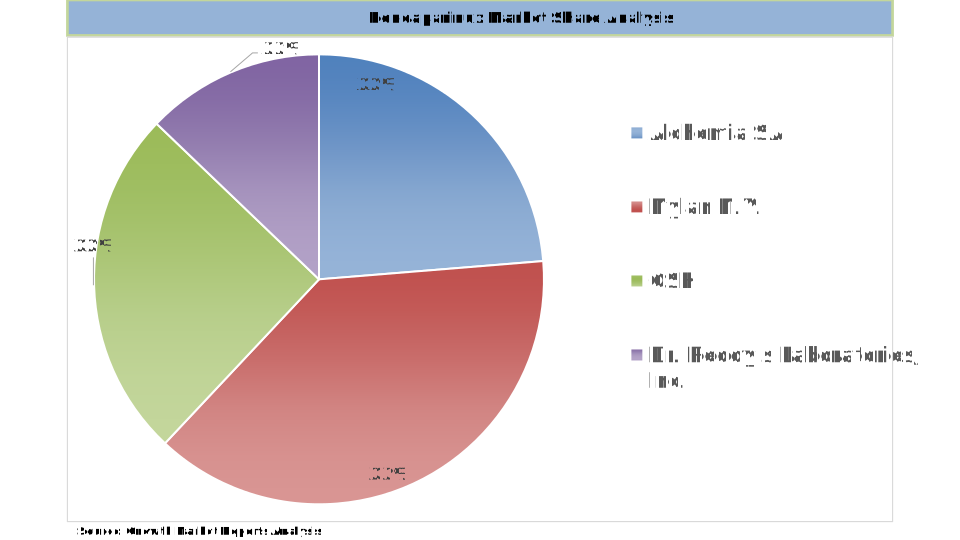
Key players competing in the global fondaparinux market are Alchemia SA; Mylan N.V.; GSK; and Dr. Reddy’s Laboratories, Inc. Many of these players have adopted business strategies such as launch of new products, advancement of technologies, partnerships, mergers, and production capacity expansion in order to increase their expansion, their consumer base, and market position globally.
For example, Mylan N.V. acquired the U.S. IP rights and marketing from Aspen Global, Inc. in September 2014 for the Arixtra injection and its generic form. In another event, Alchemia Ltd. entered into a partnership with Dr. Reddy’s Laboratories Ltd. as a strategic alliance and together launched a drug in 2011 in the U.S.

global fondaparinux market keyplayers

Frequently Asked Questions

Yes, the fondaparinux market research report offers customization options to meet specific client requirements.

Innovation is driving the development of novel formulations, extended-release products, pre-filled syringes, and combination therapies. Companies are also leveraging digital health, AI, and data analytics to improve patient outcomes and streamline distribution.

Opportunities include increasing prevalence of thromboembolic disorders, expanding healthcare infrastructure, and digital health adoption. Challenges include high cost of branded drugs, risk of bleeding complications, regulatory hurdles, and competition from alternative anticoagulants like DOACs.

Major companies include Aspen Pharmacare, Mylan N.V. (Viatris), Pfizer Inc., Sanofi S.A., Teva Pharmaceutical Industries Ltd., Dr. Reddy’s Laboratories, Fresenius Kabi AG, Apotex Inc., Sandoz (Novartis AG), Cipla Limited, and others.

Fondaparinux is distributed through hospital pharmacies, retail pharmacies, online pharmacies, and specialty pharmacies. Hospital pharmacies account for the largest share, but online pharmacies are rapidly growing due to the rise of digital health and e-commerce.

North America is the largest regional market, followed by Europe and Asia Pacific. North America benefits from advanced healthcare infrastructure and high prevalence of thromboembolic disorders, while Asia Pacific is the fastest-growing region due to increasing healthcare investments and disease awareness.

Fondaparinux is primarily used for the prevention and treatment of deep vein thrombosis (DVT), pulmonary embolism (PE), and acute coronary syndrome (ACS). It is also used in other indications such as superficial vein thrombosis and thromboprophylaxis in high-risk surgical patients.

The fondaparinux market is segmented into branded and generic formulations. Branded products dominate in regions with strong reimbursement systems, while generics are rapidly gaining market share due to affordability and increased accessibility.

Key growth drivers include the rising prevalence of thromboembolic disorders such as deep vein thrombosis (DVT) and pulmonary embolism (PE), an aging population, increasing obesity rates, improved healthcare infrastructure, and growing clinical evidence supporting fondaparinux’s safety and efficacy.

As of 2024, the global fondaparinux market size reached USD 520 million and is projected to grow at a CAGR of 7.1% from 2025 to 2033, reaching approximately USD 965 million by 2033.

Table Of Content

Chapter 1 Executive Summary
Chapter 2 Assumptions and Acronyms Used
Chapter 3 Research Methodology
Chapter 4 fondaparinux  Market Overview
   4.1 Introduction
      4.1.1 Market Taxonomy
      4.1.2 Market Definition
      4.1.3 Macro-Economic Factors Impacting the Market Growth
   4.2 fondaparinux  Market Dynamics
      4.2.1 Market Drivers
      4.2.2 Market Restraints
      4.2.3 Market Opportunity
   4.3 fondaparinux  Market - Supply Chain Analysis
      4.3.1 List of Key Suppliers
      4.3.2 List of Key Distributors
      4.3.3 List of Key Consumers
   4.4 Key Forces Shaping the fondaparinux  Market
      4.4.1 Bargaining Power of Suppliers
      4.4.2 Bargaining Power of Buyers
      4.4.3 Threat of Substitution
      4.4.4 Threat of New Entrants
      4.4.5 Competitive Rivalry
   4.5 Global fondaparinux  Market Size & Forecast, 2023-2032
      4.5.1 fondaparinux  Market Size and Y-o-Y Growth
      4.5.2 fondaparinux  Market Absolute $ Opportunity

Chapter 5 Global fondaparinux  Market Analysis and Forecast By Product Type
   5.1 Introduction
      5.1.1 Key Market Trends & Growth Opportunities By Product Type
      5.1.2 Basis Point Share (BPS) Analysis By Product Type
      5.1.3 Absolute $ Opportunity Assessment By Product Type
   5.2 fondaparinux  Market Size Forecast By Product Type
      5.2.1 Branded
      5.2.2 Generic
   5.3 Market Attractiveness Analysis By Product Type

Chapter 6 Global fondaparinux  Market Analysis and Forecast By Application
   6.1 Introduction
      6.1.1 Key Market Trends & Growth Opportunities By Application
      6.1.2 Basis Point Share (BPS) Analysis By Application
      6.1.3 Absolute $ Opportunity Assessment By Application
   6.2 fondaparinux  Market Size Forecast By Application
      6.2.1 Deep Vein Thrombosis
      6.2.2 Pulmonary Embolism
      6.2.3 Acute Coronary Syndrome
      6.2.4 Others
   6.3 Market Attractiveness Analysis By Application

Chapter 7 Global fondaparinux  Market Analysis and Forecast By Distribution Channel
   7.1 Introduction
      7.1.1 Key Market Trends & Growth Opportunities By Distribution Channel
      7.1.2 Basis Point Share (BPS) Analysis By Distribution Channel
      7.1.3 Absolute $ Opportunity Assessment By Distribution Channel
   7.2 fondaparinux  Market Size Forecast By Distribution Channel
      7.2.1 Hospital Pharmacies
      7.2.2 Retail Pharmacies
      7.2.3 Online Pharmacies
      7.2.4 Others
   7.3 Market Attractiveness Analysis By Distribution Channel

Chapter 8 Global fondaparinux  Market Analysis and Forecast By End-User
   8.1 Introduction
      8.1.1 Key Market Trends & Growth Opportunities By End-User
      8.1.2 Basis Point Share (BPS) Analysis By End-User
      8.1.3 Absolute $ Opportunity Assessment By End-User
   8.2 fondaparinux  Market Size Forecast By End-User
      8.2.1 Hospitals
      8.2.2 Clinics
      8.2.3 Ambulatory Surgical Centers
      8.2.4 Others
   8.3 Market Attractiveness Analysis By End-User

Chapter 9 Global fondaparinux  Market Analysis and Forecast by Region
   9.1 Introduction
      9.1.1 Key Market Trends & Growth Opportunities By Region
      9.1.2 Basis Point Share (BPS) Analysis By Region
      9.1.3 Absolute $ Opportunity Assessment By Region
   9.2 fondaparinux  Market Size Forecast By Region
      9.2.1 North America
      9.2.2 Europe
      9.2.3 Asia Pacific
      9.2.4 Latin America
      9.2.5 Middle East & Africa (MEA)
   9.3 Market Attractiveness Analysis By Region

Chapter 10 Coronavirus Disease (COVID-19) Impact 
   10.1 Introduction 
   10.2 Current & Future Impact Analysis 
   10.3 Economic Impact Analysis 
   10.4 Government Policies 
   10.5 Investment Scenario

Chapter 11 North America fondaparinux  Analysis and Forecast
   11.1 Introduction
   11.2 North America fondaparinux  Market Size Forecast by Country
      11.2.1 U.S.
      11.2.2 Canada
   11.3 Basis Point Share (BPS) Analysis by Country
   11.4 Absolute $ Opportunity Assessment by Country
   11.5 Market Attractiveness Analysis by Country
   11.6 North America fondaparinux  Market Size Forecast By Product Type
      11.6.1 Branded
      11.6.2 Generic
   11.7 Basis Point Share (BPS) Analysis By Product Type 
   11.8 Absolute $ Opportunity Assessment By Product Type 
   11.9 Market Attractiveness Analysis By Product Type
   11.10 North America fondaparinux  Market Size Forecast By Application
      11.10.1 Deep Vein Thrombosis
      11.10.2 Pulmonary Embolism
      11.10.3 Acute Coronary Syndrome
      11.10.4 Others
   11.11 Basis Point Share (BPS) Analysis By Application 
   11.12 Absolute $ Opportunity Assessment By Application 
   11.13 Market Attractiveness Analysis By Application
   11.14 North America fondaparinux  Market Size Forecast By Distribution Channel
      11.14.1 Hospital Pharmacies
      11.14.2 Retail Pharmacies
      11.14.3 Online Pharmacies
      11.14.4 Others
   11.15 Basis Point Share (BPS) Analysis By Distribution Channel 
   11.16 Absolute $ Opportunity Assessment By Distribution Channel 
   11.17 Market Attractiveness Analysis By Distribution Channel
   11.18 North America fondaparinux  Market Size Forecast By End-User
      11.18.1 Hospitals
      11.18.2 Clinics
      11.18.3 Ambulatory Surgical Centers
      11.18.4 Others
   11.19 Basis Point Share (BPS) Analysis By End-User 
   11.20 Absolute $ Opportunity Assessment By End-User 
   11.21 Market Attractiveness Analysis By End-User

Chapter 12 Europe fondaparinux  Analysis and Forecast
   12.1 Introduction
   12.2 Europe fondaparinux  Market Size Forecast by Country
      12.2.1 Germany
      12.2.2 France
      12.2.3 Italy
      12.2.4 U.K.
      12.2.5 Spain
      12.2.6 Russia
      12.2.7 Rest of Europe
   12.3 Basis Point Share (BPS) Analysis by Country
   12.4 Absolute $ Opportunity Assessment by Country
   12.5 Market Attractiveness Analysis by Country
   12.6 Europe fondaparinux  Market Size Forecast By Product Type
      12.6.1 Branded
      12.6.2 Generic
   12.7 Basis Point Share (BPS) Analysis By Product Type 
   12.8 Absolute $ Opportunity Assessment By Product Type 
   12.9 Market Attractiveness Analysis By Product Type
   12.10 Europe fondaparinux  Market Size Forecast By Application
      12.10.1 Deep Vein Thrombosis
      12.10.2 Pulmonary Embolism
      12.10.3 Acute Coronary Syndrome
      12.10.4 Others
   12.11 Basis Point Share (BPS) Analysis By Application 
   12.12 Absolute $ Opportunity Assessment By Application 
   12.13 Market Attractiveness Analysis By Application
   12.14 Europe fondaparinux  Market Size Forecast By Distribution Channel
      12.14.1 Hospital Pharmacies
      12.14.2 Retail Pharmacies
      12.14.3 Online Pharmacies
      12.14.4 Others
   12.15 Basis Point Share (BPS) Analysis By Distribution Channel 
   12.16 Absolute $ Opportunity Assessment By Distribution Channel 
   12.17 Market Attractiveness Analysis By Distribution Channel
   12.18 Europe fondaparinux  Market Size Forecast By End-User
      12.18.1 Hospitals
      12.18.2 Clinics
      12.18.3 Ambulatory Surgical Centers
      12.18.4 Others
   12.19 Basis Point Share (BPS) Analysis By End-User 
   12.20 Absolute $ Opportunity Assessment By End-User 
   12.21 Market Attractiveness Analysis By End-User

Chapter 13 Asia Pacific fondaparinux  Analysis and Forecast
   13.1 Introduction
   13.2 Asia Pacific fondaparinux  Market Size Forecast by Country
      13.2.1 China
      13.2.2 Japan
      13.2.3 South Korea
      13.2.4 India
      13.2.5 Australia
      13.2.6 South East Asia (SEA)
      13.2.7 Rest of Asia Pacific (APAC)
   13.3 Basis Point Share (BPS) Analysis by Country
   13.4 Absolute $ Opportunity Assessment by Country
   13.5 Market Attractiveness Analysis by Country
   13.6 Asia Pacific fondaparinux  Market Size Forecast By Product Type
      13.6.1 Branded
      13.6.2 Generic
   13.7 Basis Point Share (BPS) Analysis By Product Type 
   13.8 Absolute $ Opportunity Assessment By Product Type 
   13.9 Market Attractiveness Analysis By Product Type
   13.10 Asia Pacific fondaparinux  Market Size Forecast By Application
      13.10.1 Deep Vein Thrombosis
      13.10.2 Pulmonary Embolism
      13.10.3 Acute Coronary Syndrome
      13.10.4 Others
   13.11 Basis Point Share (BPS) Analysis By Application 
   13.12 Absolute $ Opportunity Assessment By Application 
   13.13 Market Attractiveness Analysis By Application
   13.14 Asia Pacific fondaparinux  Market Size Forecast By Distribution Channel
      13.14.1 Hospital Pharmacies
      13.14.2 Retail Pharmacies
      13.14.3 Online Pharmacies
      13.14.4 Others
   13.15 Basis Point Share (BPS) Analysis By Distribution Channel 
   13.16 Absolute $ Opportunity Assessment By Distribution Channel 
   13.17 Market Attractiveness Analysis By Distribution Channel
   13.18 Asia Pacific fondaparinux  Market Size Forecast By End-User
      13.18.1 Hospitals
      13.18.2 Clinics
      13.18.3 Ambulatory Surgical Centers
      13.18.4 Others
   13.19 Basis Point Share (BPS) Analysis By End-User 
   13.20 Absolute $ Opportunity Assessment By End-User 
   13.21 Market Attractiveness Analysis By End-User

Chapter 14 Latin America fondaparinux  Analysis and Forecast
   14.1 Introduction
   14.2 Latin America fondaparinux  Market Size Forecast by Country
      14.2.1 Brazil
      14.2.2 Mexico
      14.2.3 Rest of Latin America (LATAM)
   14.3 Basis Point Share (BPS) Analysis by Country
   14.4 Absolute $ Opportunity Assessment by Country
   14.5 Market Attractiveness Analysis by Country
   14.6 Latin America fondaparinux  Market Size Forecast By Product Type
      14.6.1 Branded
      14.6.2 Generic
   14.7 Basis Point Share (BPS) Analysis By Product Type 
   14.8 Absolute $ Opportunity Assessment By Product Type 
   14.9 Market Attractiveness Analysis By Product Type
   14.10 Latin America fondaparinux  Market Size Forecast By Application
      14.10.1 Deep Vein Thrombosis
      14.10.2 Pulmonary Embolism
      14.10.3 Acute Coronary Syndrome
      14.10.4 Others
   14.11 Basis Point Share (BPS) Analysis By Application 
   14.12 Absolute $ Opportunity Assessment By Application 
   14.13 Market Attractiveness Analysis By Application
   14.14 Latin America fondaparinux  Market Size Forecast By Distribution Channel
      14.14.1 Hospital Pharmacies
      14.14.2 Retail Pharmacies
      14.14.3 Online Pharmacies
      14.14.4 Others
   14.15 Basis Point Share (BPS) Analysis By Distribution Channel 
   14.16 Absolute $ Opportunity Assessment By Distribution Channel 
   14.17 Market Attractiveness Analysis By Distribution Channel
   14.18 Latin America fondaparinux  Market Size Forecast By End-User
      14.18.1 Hospitals
      14.18.2 Clinics
      14.18.3 Ambulatory Surgical Centers
      14.18.4 Others
   14.19 Basis Point Share (BPS) Analysis By End-User 
   14.20 Absolute $ Opportunity Assessment By End-User 
   14.21 Market Attractiveness Analysis By End-User

Chapter 15 Middle East & Africa (MEA) fondaparinux  Analysis and Forecast
   15.1 Introduction
   15.2 Middle East & Africa (MEA) fondaparinux  Market Size Forecast by Country
      15.2.1 Saudi Arabia
      15.2.2 South Africa
      15.2.3 UAE
      15.2.4 Rest of Middle East & Africa (MEA)
   15.3 Basis Point Share (BPS) Analysis by Country
   15.4 Absolute $ Opportunity Assessment by Country
   15.5 Market Attractiveness Analysis by Country
   15.6 Middle East & Africa (MEA) fondaparinux  Market Size Forecast By Product Type
      15.6.1 Branded
      15.6.2 Generic
   15.7 Basis Point Share (BPS) Analysis By Product Type 
   15.8 Absolute $ Opportunity Assessment By Product Type 
   15.9 Market Attractiveness Analysis By Product Type
   15.10 Middle East & Africa (MEA) fondaparinux  Market Size Forecast By Application
      15.10.1 Deep Vein Thrombosis
      15.10.2 Pulmonary Embolism
      15.10.3 Acute Coronary Syndrome
      15.10.4 Others
   15.11 Basis Point Share (BPS) Analysis By Application 
   15.12 Absolute $ Opportunity Assessment By Application 
   15.13 Market Attractiveness Analysis By Application
   15.14 Middle East & Africa (MEA) fondaparinux  Market Size Forecast By Distribution Channel
      15.14.1 Hospital Pharmacies
      15.14.2 Retail Pharmacies
      15.14.3 Online Pharmacies
      15.14.4 Others
   15.15 Basis Point Share (BPS) Analysis By Distribution Channel 
   15.16 Absolute $ Opportunity Assessment By Distribution Channel 
   15.17 Market Attractiveness Analysis By Distribution Channel
   15.18 Middle East & Africa (MEA) fondaparinux  Market Size Forecast By End-User
      15.18.1 Hospitals
      15.18.2 Clinics
      15.18.3 Ambulatory Surgical Centers
      15.18.4 Others
   15.19 Basis Point Share (BPS) Analysis By End-User 
   15.20 Absolute $ Opportunity Assessment By End-User 
   15.21 Market Attractiveness Analysis By End-User

Chapter 16 Competition Landscape 
   16.1 fondaparinux  Market: Competitive Dashboard
   16.2 Global fondaparinux  Market: Market Share Analysis, 2023
   16.3 Company Profiles (Details – Overview, Financials, Developments, Strategy) 
      16.3.1 Aspen Pharmacare
Mylan N.V. (Viatris)
Pfizer Inc.
Sanofi S.A.
Teva Pharmaceutical Industries Ltd.
Dr. Reddy’s Laboratories Ltd.
Fresenius Kabi AG
Apotex Inc.
Sandoz (Novartis AG)
Cipla Limited
Zydus Lifesciences Limited
Alchemia Limited
Baxter International Inc.
Sun Pharmaceutical Industries Ltd.
Aurobindo Pharma Limited
Gland Pharma Limited
Hikma Pharmaceuticals PLC
Emcure Pharmaceuticals Ltd.
Lupin Limited
Bharat Serums and Vaccines Limited

Methodology

Our Clients

Microsoft
The John Holland Group
Dassault Aviation
sinopec
Pfizer
General Mills
FedEx Logistics
Deloitte