Double Walled Corrugated HDPE Pipe Market Research Report 2033

Double Walled Corrugated HDPE Pipe Market Research Report 2033

Segments - by Product Type (Perforated, Non-Perforated), by Diameter (Below 300 mm, 300–600 mm, Above 600 mm), by Application (Drainage & Sewerage, Storm Water Management, Industrial, Agricultural, Others), by End-User (Municipal, Industrial, Residential, Others)

https://growthmarketreports.com/Raksha
Author : Raksha Sharma
https://growthmarketreports.com/Vaibhav
Fact-checked by : V. Chandola
https://growthmarketreports.com/Rucha
Editor : Rucha Phatak

Upcoming | Report ID :CM-6438 | 4.9 Rating | 43 Reviews | 267 Pages | Format : Docx PDF

Report Description


Double Walled Corrugated HDPE Pipe Market Outlook

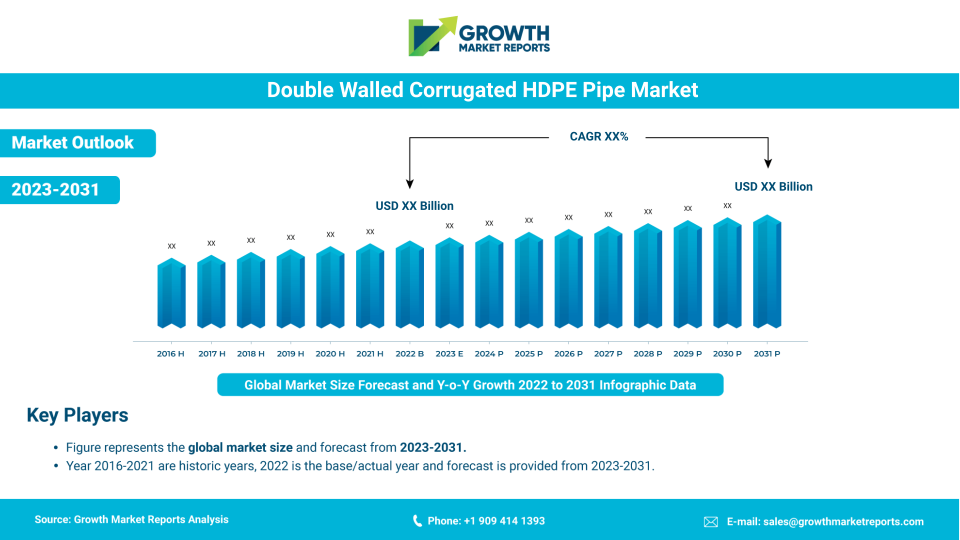
As per our latest research, the global Double Walled Corrugated HDPE Pipe market size reached USD 2.64 billion in 2024, reflecting robust demand across infrastructure and industrial sectors. The market is expected to expand at a CAGR of 6.8% from 2025 to 2033, reaching a forecasted value of USD 5.17 billion by 2033. This growth is driven by the increasing need for durable, corrosion-resistant piping solutions in water management, urban drainage, and industrial applications worldwide. The surge in infrastructure development and the adoption of sustainable piping alternatives are key factors propelling the market forward.

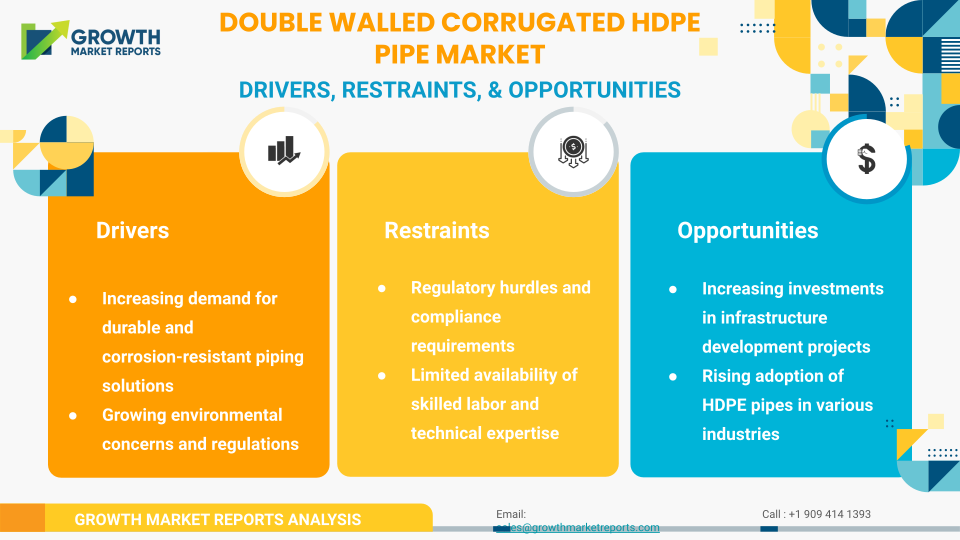
One of the primary growth factors for the Double Walled Corrugated HDPE Pipe market is the rapid urbanization and infrastructure development occurring across emerging economies. As cities expand, the demand for reliable drainage, sewerage, and stormwater management systems intensifies. Double walled corrugated HDPE pipes offer significant advantages over traditional materials such as concrete and metal, including higher resistance to corrosion, lighter weight, and ease of installation. These features make them particularly suitable for large-scale municipal projects, where efficiency and long-term durability are paramount. Additionally, the push for sustainable construction practices has led to increased adoption of HDPE pipes, which are recyclable and have a lower environmental footprint compared to conventional alternatives.

Another major driver is the rising focus on efficient water management and the mitigation of urban flooding. Governments and municipal authorities are investing heavily in upgrading existing drainage and sewerage networks to cope with increased rainfall and climate change-induced weather events. Double walled corrugated HDPE pipes, with their superior hydraulic performance and structural integrity, are increasingly specified for such projects. Their flexibility allows for installation in challenging terrains, including areas prone to soil movement or seismic activity. Furthermore, the agricultural sector is contributing to market growth through the adoption of these pipes for irrigation and drainage, enhancing crop yields and reducing water wastage.

Industrial expansion, particularly in sectors such as mining, oil & gas, and manufacturing, is also fueling the demand for double walled corrugated HDPE pipes. These industries require robust piping systems that can withstand aggressive chemicals, high pressures, and abrasive materials. HDPE pipes excel in such environments due to their chemical inertness and high impact resistance. The replacement of aging metal and concrete pipelines with HDPE solutions is gaining momentum, supported by lower lifecycle costs and reduced maintenance requirements. The versatility of double walled corrugated HDPE pipes, which can be tailored to various diameters and specifications, further enhances their appeal across diverse industrial applications.

In the context of sustainable infrastructure, the role of Composite Pipes is becoming increasingly prominent. These pipes, known for their multi-layered construction, offer enhanced durability and resistance to environmental stressors. This makes them an ideal choice for applications that demand long-lasting performance and minimal maintenance. As the construction industry moves towards more eco-friendly practices, the adoption of Composite Pipes is expected to rise, driven by their ability to reduce material usage and improve overall system efficiency. Their versatility allows them to be used in a variety of settings, from residential plumbing to large-scale industrial projects, providing a reliable solution for modern infrastructure needs.

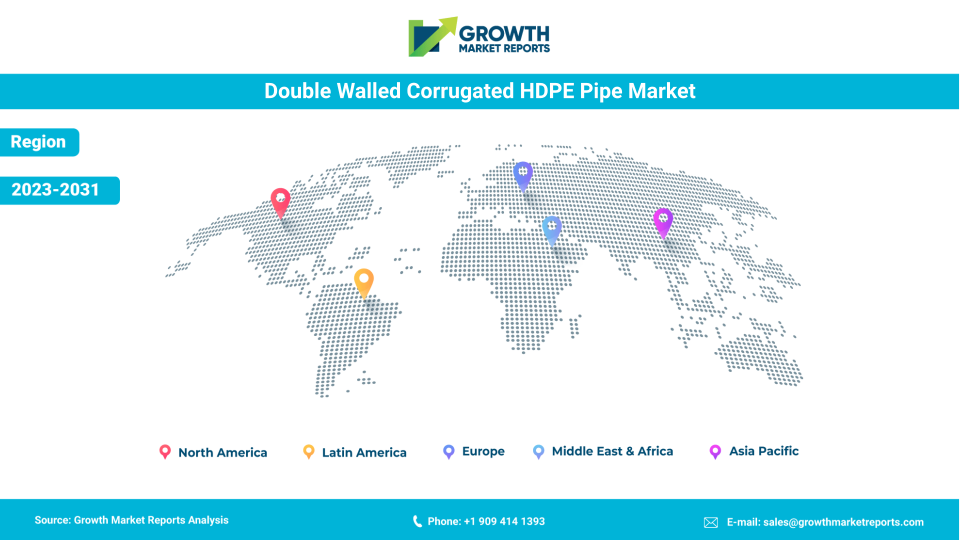
From a regional perspective, Asia Pacific remains the dominant market for double walled corrugated HDPE pipes, accounting for over 40% of global demand in 2024. This is attributable to large-scale infrastructure projects in China, India, and Southeast Asia, where governments are prioritizing urban development and water management. North America and Europe are also witnessing steady growth, driven by the need to upgrade aging water and sewerage infrastructure, as well as the growing emphasis on environmental compliance. The Middle East & Africa and Latin America, while smaller in market share, are expected to register above-average growth rates as investment in infrastructure accelerates.

Global Double Walled Corrugated HDPE Pipe Industry Outlook

Product Type Analysis

The Product Type segment of the Double Walled Corrugated HDPE Pipe market is bifurcated into Perforated and Non-Perforated pipes, each serving distinct applications and customer requirements. Perforated pipes are primarily used in drainage and sub-surface water management systems, where the ability to allow water infiltration is crucial. These pipes are commonly deployed in agricultural fields, landscaping, and stormwater management projects. The demand for perforated pipes is increasing as urban planners and engineers seek efficient solutions for groundwater recharge and prevention of waterlogging, particularly in flood-prone urban areas.

Non-perforated double walled corrugated HDPE pipes, on the other hand, are extensively utilized in sewerage, industrial waste transport, and potable water conveyance. Their impermeable structure ensures the safe and efficient transport of fluids without leakage, making them ideal for municipal and industrial applications. The non-perforated segment commands a larger share of the market, driven by the ongoing replacement of traditional piping materials in critical infrastructure projects. These pipes are favored for their long service life, resistance to chemical attack, and ability to withstand high external loads, which are essential for deep burial and heavy traffic zones.

Technological advancements in pipe manufacturing have further enhanced the performance characteristics of both perforated and non-perforated variants. Innovations such as improved jointing systems, enhanced ring stiffness, and better abrasion resistance are enabling wider adoption across challenging environments. Manufacturers are also focusing on customizable solutions, offering pipes with specific perforation patterns or wall thicknesses to meet project-specific requirements. This trend is particularly evident in regions with diverse soil and climatic conditions, where tailored solutions can significantly improve system performance and longevity.

The competitive landscape within the product type segment is marked by continuous innovation and product differentiation. Leading players are investing in R&D to develop pipes with enhanced durability, reduced installation time, and improved hydraulic efficiency. The growing emphasis on green infrastructure and sustainable construction is also prompting manufacturers to explore eco-friendly materials and processes, further strengthening the market position of double walled corrugated HDPE pipes. As regulatory standards for water management and environmental protection become more stringent, the adoption of both perforated and non-perforated HDPE pipes is expected to accelerate globally.

Report Scope

Attributes Details
Report Title Double Walled Corrugated HDPE Pipe Market Research Report 2033
By Product Type Perforated, Non-Perforated
By Diameter Below 300 mm, 300–600 mm, Above 600 mm
By Application Drainage & Sewerage, Storm Water Management, Industrial, Agricultural, Others
By End-User Municipal, Industrial, Residential, Others
Regions Covered North America, Europe, APAC, Latin America, MEA
Base Year 2024
Historic Data 2018-2023
Forecast Period 2025-2033
Number of Pages 267
Number of Tables & Figures 255
Customization Available Yes, the report can be customized as per your need.

Diameter Analysis

The Diameter segment of the Double Walled Corrugated HDPE Pipe market is categorized into Below 300 mm, 300–600 mm, and Above 600 mm pipes, each catering to specific application needs. Pipes with diameters below 300 mm are predominantly used in residential and small-scale commercial projects, such as garden drainage, minor stormwater collection, and sub-surface irrigation. These smaller diameter pipes are favored for their flexibility, ease of handling, and suitability for tight installation spaces. The demand for below 300 mm pipes is expected to grow steadily, supported by the rising trend of urban gardening, landscaping, and decentralized water management solutions.

The 300–600 mm diameter segment represents the largest share of the market, as these pipes are widely utilized in municipal drainage, sewerage, and stormwater management systems. Their optimal size makes them suitable for both medium-scale urban infrastructure and larger commercial developments. The versatility of 300–600 mm pipes allows for efficient handling of moderate to high flow rates, ensuring reliable performance in diverse environmental conditions. Municipal authorities and engineering firms prefer this diameter range for its balance between hydraulic capacity and installation efficiency, especially in retrofitting projects where space constraints are a concern.

Pipes with diameters above 600 mm are primarily deployed in large-scale infrastructure projects, including major stormwater channels, industrial effluent transport, and flood control systems. These large diameter pipes are engineered to handle substantial volumes of water and withstand significant external pressures, making them indispensable for critical infrastructure. The adoption of above 600 mm pipes is gaining momentum in regions prone to heavy rainfall, urban flooding, and rapid industrialization. Their robust construction and superior load-bearing capacity ensure long-term reliability, reducing the need for frequent maintenance and replacement.

Market trends indicate a growing preference for customized diameter solutions, driven by the increasing complexity of infrastructure projects and the need for optimized hydraulic performance. Manufacturers are expanding their product portfolios to include a wider range of diameters, offering project-specific solutions that enhance system efficiency and reduce overall costs. The integration of advanced manufacturing technologies, such as extrusion and co-extrusion, is enabling the production of pipes with precise dimensions and consistent quality. As urbanization and industrialization continue to accelerate globally, the demand for double walled corrugated HDPE pipes across all diameter segments is expected to remain robust.

Application Analysis

The Application segment of the Double Walled Corrugated HDPE Pipe market encompasses Drainage & Sewerage, Storm Water Management, Industrial, Agricultural, and Others, reflecting the diverse utility of these pipes across end-use sectors. Drainage and sewerage applications account for the largest market share, driven by the urgent need to upgrade aging urban infrastructure and comply with stringent environmental regulations. Double walled corrugated HDPE pipes are preferred for their ability to resist corrosion, chemical attack, and root intrusion, ensuring reliable performance in both gravity and pressurized sewerage systems.

Storm water management is another critical application area, particularly in regions experiencing increased rainfall variability and urban flooding. The superior hydraulic efficiency and structural integrity of HDPE pipes make them ideal for stormwater conveyance, retention, and infiltration systems. Municipalities and developers are investing in advanced stormwater management solutions to mitigate flood risks, protect property, and enhance urban resilience. The flexibility and lightweight nature of double walled corrugated HDPE pipes facilitate rapid installation and adaptation to complex site conditions, further driving their adoption in this segment.

In the industrial sector, double walled corrugated HDPE pipes are utilized for transporting process water, effluents, and chemicals in manufacturing, mining, and oil & gas operations. Their high resistance to abrasion, impact, and chemical exposure ensures long service life and minimal maintenance, reducing operational costs for industrial users. The growing emphasis on environmental compliance and the need to safely manage industrial waste streams are prompting companies to replace traditional metal and concrete pipelines with HDPE alternatives. The versatility of these pipes, which can be manufactured in various sizes and configurations, supports their widespread adoption across diverse industrial applications.

Agricultural applications represent a growing segment of the market, as farmers and agribusinesses seek efficient solutions for irrigation, drainage, and water conservation. Double walled corrugated HDPE pipes are increasingly used in sub-surface drainage systems, which help prevent waterlogging, improve soil aeration, and enhance crop yields. Their durability and resistance to environmental stressors make them well-suited for deployment in challenging agricultural environments. The adoption of modern irrigation and drainage technologies is particularly pronounced in regions facing water scarcity and climate variability, further bolstering market growth in this segment.

End-User Analysis

The End-User segment of the Double Walled Corrugated HDPE Pipe market is divided into Municipal, Industrial, Residential, and Others, each representing unique demand drivers and application requirements. The municipal sector dominates the market, accounting for over 45% of global demand in 2024. Municipalities are the primary consumers of double walled corrugated HDPE pipes, utilizing them in water supply, drainage, sewerage, and stormwater management projects. The need to replace aging infrastructure, comply with environmental regulations, and accommodate urban growth is driving sustained investment in municipal piping systems.

Industrial end-users are increasingly adopting double walled corrugated HDPE pipes for process water, effluent, and chemical transport. The advantages of HDPE pipes, including chemical inertness, high impact resistance, and ease of installation, make them an attractive choice for industries seeking to enhance operational efficiency and reduce maintenance costs. The trend towards industrial automation and modernization is further supporting the replacement of legacy piping systems with advanced HDPE solutions. Additionally, the growing focus on sustainability and environmental stewardship is prompting industrial users to select materials with lower lifecycle impacts.

The residential sector, while smaller in market share, is experiencing steady growth as homeowners and developers recognize the benefits of double walled corrugated HDPE pipes for rainwater harvesting, garden drainage, and wastewater management. The lightweight and flexible nature of these pipes makes them easy to install in residential settings, reducing labor costs and project timelines. The increasing adoption of green building practices and water conservation initiatives is also contributing to market expansion in this segment. As urban populations continue to rise, the demand for efficient and sustainable residential water management solutions is expected to grow.

The "Others" category includes applications in transportation, sports facilities, and specialized infrastructure projects. For example, airports, highways, and railways are utilizing double walled corrugated HDPE pipes for sub-surface drainage and stormwater management. These applications require robust piping systems capable of withstanding heavy loads and challenging environmental conditions. The versatility and performance advantages of HDPE pipes are driving their adoption in these niche segments, further expanding the overall market footprint.

Opportunities & Threats

A significant opportunity for the Double Walled Corrugated HDPE Pipe market lies in the ongoing global push for sustainable infrastructure development. Governments and international organizations are increasingly prioritizing green construction practices, which emphasize the use of recyclable materials and energy-efficient systems. Double walled corrugated HDPE pipes, being fully recyclable and offering a lower carbon footprint than traditional materials, are well-positioned to capitalize on this trend. The integration of smart technologies, such as sensor-enabled monitoring systems, presents another avenue for market growth, enabling real-time performance tracking and predictive maintenance for critical infrastructure.

Emerging markets in Asia Pacific, Africa, and Latin America present substantial growth opportunities as these regions embark on ambitious infrastructure expansion programs. Rapid urbanization, population growth, and industrialization are driving demand for modern water management, drainage, and sewerage solutions. International funding and public-private partnerships are supporting large-scale projects, creating a favorable environment for the adoption of double walled corrugated HDPE pipes. Additionally, the increasing frequency of extreme weather events is prompting governments to invest in resilient infrastructure, further boosting market prospects.

However, the market faces certain restraints, primarily related to the volatility of raw material prices and the initial cost of HDPE pipes compared to conventional alternatives. Fluctuations in crude oil prices, which directly impact the cost of polyethylene, can affect profit margins for manufacturers and create pricing pressures in competitive markets. Additionally, the lack of awareness and technical expertise in some developing regions may hinder the adoption of advanced piping solutions. Addressing these challenges will require targeted education, training initiatives, and strategic partnerships between manufacturers, governments, and industry stakeholders.

Regional Outlook

Asia Pacific continues to lead the global Double Walled Corrugated HDPE Pipe market, with a market size of approximately USD 1.08 billion in 2024, representing over 40% of global demand. This dominance is driven by extensive infrastructure development in China, India, and Southeast Asia, where governments are investing heavily in urbanization, water management, and flood control projects. The region is expected to maintain a strong growth trajectory, with a projected CAGR of 7.5% from 2025 to 2033, outpacing other regions due to rapid industrialization and urban expansion.

North America holds the second-largest market share, valued at around USD 0.74 billion in 2024. The region's growth is underpinned by the need to upgrade aging water and sewerage infrastructure, particularly in the United States and Canada. Environmental regulations and the focus on sustainable construction are further driving the adoption of double walled corrugated HDPE pipes. Europe follows closely, with a market size of USD 0.61 billion, supported by investments in smart cities, green infrastructure, and compliance with stringent environmental standards. Both North America and Europe are expected to experience steady growth, albeit at a slightly lower CAGR compared to Asia Pacific.

The Middle East & Africa and Latin America, while accounting for a combined market size of USD 0.21 billion in 2024, are emerging as high-potential regions for future growth. Rapid urbanization, infrastructure modernization, and an increasing focus on water conservation are driving demand for advanced piping solutions. The implementation of large-scale projects, supported by international funding and government initiatives, is expected to accelerate market expansion in these regions. As awareness of the benefits of double walled corrugated HDPE pipes grows, and technical expertise improves, these markets are poised to contribute significantly to global market growth over the forecast period.

Double Walled Corrugated HDPE Pipe Market Statistics

Competitor Outlook

The competitive landscape of the Double Walled Corrugated HDPE Pipe market is characterized by a mix of global industry leaders and regional players, each striving to enhance their market share through innovation, strategic partnerships, and expansion into emerging markets. Leading companies are focusing on product differentiation, offering pipes with advanced features such as higher ring stiffness, improved jointing systems, and enhanced chemical resistance. The emphasis on sustainability and environmental compliance is prompting manufacturers to adopt eco-friendly production processes and recyclable materials, further strengthening their market position.

Mergers, acquisitions, and collaborations are common strategies employed by key players to broaden their product portfolios and expand their geographic presence. Companies are investing in research and development to introduce new products that cater to evolving customer needs, such as pipes with integrated sensors for real-time monitoring or those designed for specific environmental conditions. The increasing complexity of infrastructure projects is driving demand for customized solutions, prompting manufacturers to offer a wider range of diameters, lengths, and configurations. This trend is particularly evident in regions with diverse soil and climatic conditions, where tailored solutions can significantly improve system performance and longevity.

Regional players are leveraging their local market knowledge and distribution networks to compete effectively against global giants. They are focusing on cost-effective manufacturing, responsive customer service, and quick turnaround times to capture market share in price-sensitive segments. The entry of new players, particularly in emerging markets, is intensifying competition and driving innovation across the industry. As the market matures, companies are expected to place greater emphasis on digitalization, smart manufacturing, and value-added services to differentiate themselves and enhance customer loyalty.

Some of the major companies operating in the Double Walled Corrugated HDPE Pipe market include Advanced Drainage Systems, Inc., JM Eagle, Inc., Prinsco, Inc., Lane Enterprises, Inc., Polieco Group, Centraltubi S.p.A., Pars Ethylene Kish, Aliaxis Group S.A., and Tijaria Polypipes Ltd. Advanced Drainage Systems, Inc. is a global leader known for its wide range of high-performance drainage solutions and strong focus on sustainability. JM Eagle, Inc. is one of the worldÂ’s largest plastic pipe manufacturers, offering a comprehensive portfolio of HDPE products for municipal, industrial, and agricultural applications. Prinsco, Inc. and Lane Enterprises, Inc. are prominent players in the North American market, renowned for their innovative product designs and commitment to quality.

Polieco Group and Centraltubi S.p.A. are leading European manufacturers, with a strong presence in infrastructure and industrial projects across the continent. Pars Ethylene Kish and Tijaria Polypipes Ltd. are key players in the Middle East and Asia, respectively, focusing on expanding their product offerings and entering new markets. Aliaxis Group S.A. operates globally, leveraging its extensive distribution network and technical expertise to serve a diverse customer base. These companies are continuously investing in R&D, expanding their manufacturing capacities, and pursuing strategic collaborations to maintain their competitive edge in the rapidly evolving Double Walled Corrugated HDPE Pipe market.

Key Players

  • JM Eagle
  • ADS (Advanced Drainage Systems)
  • Tijaria Polypipes Ltd.
  • Prakash Pipes Limited
  • Astral Pipes
  • Kuzeyboru
  • Pars Ethylene Kish
  • Nandi Group
  • Aliaxis Group
  • Tigre Group
  • Chevron Phillips Chemical Company
  • Lane Enterprises, Inc.
  • Corma Inc.
  • Sangir Plastics Pvt. Ltd.
  • PLASSON Group
  • Kangtai Pipe Industry
  • Junxing Pipe Group
  • Weida Group
  • Oriplast Limited
  • Shree Darshan Pipes
Double Walled Corrugated HDPE Pipe Market Overview

Segments

The Double Walled Corrugated HDPE Pipe market has been segmented on the basis of

Product Type

  • Perforated
  • Non-Perforated

Diameter

  • Below 300 mm
  • 300–600 mm
  • Above 600 mm

Application

  • Drainage & Sewerage
  • Storm Water Management
  • Industrial
  • Agricultural
  • Others

End-User

  • Municipal
  • Industrial
  • Residential
  • Others

Competitive Landscape

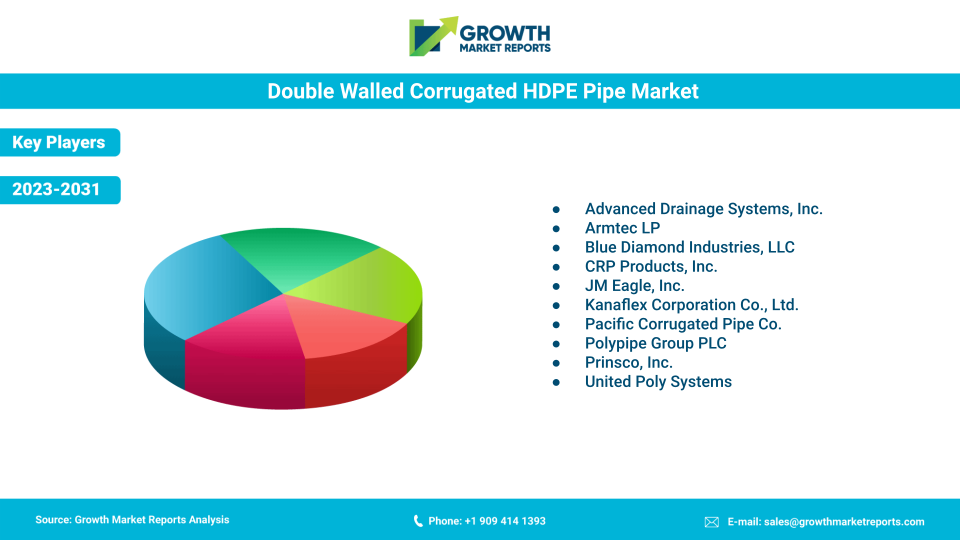
Key players competing in the global double walled corrugated HDPE pipe market are Advanced Drainage Systems, Inc.; Armtec LP; Blue Diamond Industries, LLC; CRP Products, Inc.; JM Eagle, Inc.; Kanaflex Corporation Co., Ltd.; Pacific Corrugated Pipe Co.; Polypipe Group PLC; Prinsco, Inc.; and United Poly Systems.

  • In November 2023, Blue Diamond Industries entered into a strategic partnership with a global infrastructure development company to supply HDPE pipes for a series of projects.

  • In August 2022, Kaizen Capital LLC completed the acquisition of Kanaflex Corporation and its subsidiaries, renowned for their expertise in lightweight hose and pipe technology manufacturing.

    Double Walled Corrugated HDPE Pipe Market Key Players

Frequently Asked Questions

Trends include increased adoption of sustainable and recyclable materials, integration of smart technologies for monitoring, product customization, and expansion into emerging markets driven by infrastructure investment.

Key companies include Advanced Drainage Systems, Inc., JM Eagle, Inc., Prinsco, Inc., Lane Enterprises, Inc., Polieco Group, Centraltubi S.p.A., Pars Ethylene Kish, Aliaxis Group S.A., and Tijaria Polypipes Ltd.

Challenges include volatility in raw material prices (especially polyethylene), higher initial costs compared to traditional pipes, and lack of awareness or technical expertise in some developing regions.

Advantages include high resistance to corrosion and chemicals, lightweight design, ease of installation, long service life, recyclability, and lower environmental footprint compared to concrete or metal pipes.

The main end-users are municipal authorities, industrial sectors, residential developers, and specialized infrastructure projects such as transportation and sports facilities.

Asia Pacific is the dominant region, accounting for over 40% of global demand in 2024, followed by North America and Europe. The Middle East & Africa and Latin America are emerging as high-growth regions.

Perforated pipes allow water infiltration and are mainly used in drainage and sub-surface water management, while non-perforated pipes are used for sewerage, industrial waste, and potable water transport due to their impermeable structure.

These pipes are widely used in drainage and sewerage, storm water management, industrial applications, and agricultural irrigation and drainage.

Key growth drivers include rapid urbanization, infrastructure development, increased demand for durable and corrosion-resistant piping, and the adoption of sustainable construction practices.

The global Double Walled Corrugated HDPE Pipe market reached USD 2.64 billion in 2024 and is projected to grow at a CAGR of 6.8% from 2025 to 2033, reaching USD 5.17 billion by 2033.

Table Of Content

Chapter 1 Executive Summary
Chapter 2 Assumptions and Acronyms Used
Chapter 3 Research Methodology
Chapter 4 Double Walled Corrugated HDPE Pipe Market Overview
   4.1 Introduction
      4.1.1 Market Taxonomy
      4.1.2 Market Definition
      4.1.3 Macro-Economic Factors Impacting the Market Growth
   4.2 Double Walled Corrugated HDPE Pipe Market Dynamics
      4.2.1 Market Drivers
      4.2.2 Market Restraints
      4.2.3 Market Opportunity
   4.3 Double Walled Corrugated HDPE Pipe Market - Supply Chain Analysis
      4.3.1 List of Key Suppliers
      4.3.2 List of Key Distributors
      4.3.3 List of Key Consumers
   4.4 Key Forces Shaping the Double Walled Corrugated HDPE Pipe Market
      4.4.1 Bargaining Power of Suppliers
      4.4.2 Bargaining Power of Buyers
      4.4.3 Threat of Substitution
      4.4.4 Threat of New Entrants
      4.4.5 Competitive Rivalry
   4.5 Global Double Walled Corrugated HDPE Pipe Market Size & Forecast, 2023-2032
      4.5.1 Double Walled Corrugated HDPE Pipe Market Size and Y-o-Y Growth
      4.5.2 Double Walled Corrugated HDPE Pipe Market Absolute $ Opportunity

Chapter 5 Global Double Walled Corrugated HDPE Pipe Market Analysis and Forecast By Product Type
   5.1 Introduction
      5.1.1 Key Market Trends & Growth Opportunities By Product Type
      5.1.2 Basis Point Share (BPS) Analysis By Product Type
      5.1.3 Absolute $ Opportunity Assessment By Product Type
   5.2 Double Walled Corrugated HDPE Pipe Market Size Forecast By Product Type
      5.2.1 Perforated
      5.2.2 Non-Perforated
   5.3 Market Attractiveness Analysis By Product Type

Chapter 6 Global Double Walled Corrugated HDPE Pipe Market Analysis and Forecast By Diameter
   6.1 Introduction
      6.1.1 Key Market Trends & Growth Opportunities By Diameter
      6.1.2 Basis Point Share (BPS) Analysis By Diameter
      6.1.3 Absolute $ Opportunity Assessment By Diameter
   6.2 Double Walled Corrugated HDPE Pipe Market Size Forecast By Diameter
      6.2.1 Below 300 mm
      6.2.2 300–600 mm
      6.2.3 Above 600 mm
   6.3 Market Attractiveness Analysis By Diameter

Chapter 7 Global Double Walled Corrugated HDPE Pipe Market Analysis and Forecast By Application
   7.1 Introduction
      7.1.1 Key Market Trends & Growth Opportunities By Application
      7.1.2 Basis Point Share (BPS) Analysis By Application
      7.1.3 Absolute $ Opportunity Assessment By Application
   7.2 Double Walled Corrugated HDPE Pipe Market Size Forecast By Application
      7.2.1 Drainage & Sewerage
      7.2.2 Storm Water Management
      7.2.3 Industrial
      7.2.4 Agricultural
      7.2.5 Others
   7.3 Market Attractiveness Analysis By Application

Chapter 8 Global Double Walled Corrugated HDPE Pipe Market Analysis and Forecast By End-User
   8.1 Introduction
      8.1.1 Key Market Trends & Growth Opportunities By End-User
      8.1.2 Basis Point Share (BPS) Analysis By End-User
      8.1.3 Absolute $ Opportunity Assessment By End-User
   8.2 Double Walled Corrugated HDPE Pipe Market Size Forecast By End-User
      8.2.1 Municipal
      8.2.2 Industrial
      8.2.3 Residential
      8.2.4 Others
   8.3 Market Attractiveness Analysis By End-User

Chapter 9 Global Double Walled Corrugated HDPE Pipe Market Analysis and Forecast by Region
   9.1 Introduction
      9.1.1 Key Market Trends & Growth Opportunities By Region
      9.1.2 Basis Point Share (BPS) Analysis By Region
      9.1.3 Absolute $ Opportunity Assessment By Region
   9.2 Double Walled Corrugated HDPE Pipe Market Size Forecast By Region
      9.2.1 North America
      9.2.2 Europe
      9.2.3 Asia Pacific
      9.2.4 Latin America
      9.2.5 Middle East & Africa (MEA)
   9.3 Market Attractiveness Analysis By Region

Chapter 10 Coronavirus Disease (COVID-19) Impact 
   10.1 Introduction 
   10.2 Current & Future Impact Analysis 
   10.3 Economic Impact Analysis 
   10.4 Government Policies 
   10.5 Investment Scenario

Chapter 11 North America Double Walled Corrugated HDPE Pipe Analysis and Forecast
   11.1 Introduction
   11.2 North America Double Walled Corrugated HDPE Pipe Market Size Forecast by Country
      11.2.1 U.S.
      11.2.2 Canada
   11.3 Basis Point Share (BPS) Analysis by Country
   11.4 Absolute $ Opportunity Assessment by Country
   11.5 Market Attractiveness Analysis by Country
   11.6 North America Double Walled Corrugated HDPE Pipe Market Size Forecast By Product Type
      11.6.1 Perforated
      11.6.2 Non-Perforated
   11.7 Basis Point Share (BPS) Analysis By Product Type 
   11.8 Absolute $ Opportunity Assessment By Product Type 
   11.9 Market Attractiveness Analysis By Product Type
   11.10 North America Double Walled Corrugated HDPE Pipe Market Size Forecast By Diameter
      11.10.1 Below 300 mm
      11.10.2 300–600 mm
      11.10.3 Above 600 mm
   11.11 Basis Point Share (BPS) Analysis By Diameter 
   11.12 Absolute $ Opportunity Assessment By Diameter 
   11.13 Market Attractiveness Analysis By Diameter
   11.14 North America Double Walled Corrugated HDPE Pipe Market Size Forecast By Application
      11.14.1 Drainage & Sewerage
      11.14.2 Storm Water Management
      11.14.3 Industrial
      11.14.4 Agricultural
      11.14.5 Others
   11.15 Basis Point Share (BPS) Analysis By Application 
   11.16 Absolute $ Opportunity Assessment By Application 
   11.17 Market Attractiveness Analysis By Application
   11.18 North America Double Walled Corrugated HDPE Pipe Market Size Forecast By End-User
      11.18.1 Municipal
      11.18.2 Industrial
      11.18.3 Residential
      11.18.4 Others
   11.19 Basis Point Share (BPS) Analysis By End-User 
   11.20 Absolute $ Opportunity Assessment By End-User 
   11.21 Market Attractiveness Analysis By End-User

Chapter 12 Europe Double Walled Corrugated HDPE Pipe Analysis and Forecast
   12.1 Introduction
   12.2 Europe Double Walled Corrugated HDPE Pipe Market Size Forecast by Country
      12.2.1 Germany
      12.2.2 France
      12.2.3 Italy
      12.2.4 U.K.
      12.2.5 Spain
      12.2.6 Russia
      12.2.7 Rest of Europe
   12.3 Basis Point Share (BPS) Analysis by Country
   12.4 Absolute $ Opportunity Assessment by Country
   12.5 Market Attractiveness Analysis by Country
   12.6 Europe Double Walled Corrugated HDPE Pipe Market Size Forecast By Product Type
      12.6.1 Perforated
      12.6.2 Non-Perforated
   12.7 Basis Point Share (BPS) Analysis By Product Type 
   12.8 Absolute $ Opportunity Assessment By Product Type 
   12.9 Market Attractiveness Analysis By Product Type
   12.10 Europe Double Walled Corrugated HDPE Pipe Market Size Forecast By Diameter
      12.10.1 Below 300 mm
      12.10.2 300–600 mm
      12.10.3 Above 600 mm
   12.11 Basis Point Share (BPS) Analysis By Diameter 
   12.12 Absolute $ Opportunity Assessment By Diameter 
   12.13 Market Attractiveness Analysis By Diameter
   12.14 Europe Double Walled Corrugated HDPE Pipe Market Size Forecast By Application
      12.14.1 Drainage & Sewerage
      12.14.2 Storm Water Management
      12.14.3 Industrial
      12.14.4 Agricultural
      12.14.5 Others
   12.15 Basis Point Share (BPS) Analysis By Application 
   12.16 Absolute $ Opportunity Assessment By Application 
   12.17 Market Attractiveness Analysis By Application
   12.18 Europe Double Walled Corrugated HDPE Pipe Market Size Forecast By End-User
      12.18.1 Municipal
      12.18.2 Industrial
      12.18.3 Residential
      12.18.4 Others
   12.19 Basis Point Share (BPS) Analysis By End-User 
   12.20 Absolute $ Opportunity Assessment By End-User 
   12.21 Market Attractiveness Analysis By End-User

Chapter 13 Asia Pacific Double Walled Corrugated HDPE Pipe Analysis and Forecast
   13.1 Introduction
   13.2 Asia Pacific Double Walled Corrugated HDPE Pipe Market Size Forecast by Country
      13.2.1 China
      13.2.2 Japan
      13.2.3 South Korea
      13.2.4 India
      13.2.5 Australia
      13.2.6 South East Asia (SEA)
      13.2.7 Rest of Asia Pacific (APAC)
   13.3 Basis Point Share (BPS) Analysis by Country
   13.4 Absolute $ Opportunity Assessment by Country
   13.5 Market Attractiveness Analysis by Country
   13.6 Asia Pacific Double Walled Corrugated HDPE Pipe Market Size Forecast By Product Type
      13.6.1 Perforated
      13.6.2 Non-Perforated
   13.7 Basis Point Share (BPS) Analysis By Product Type 
   13.8 Absolute $ Opportunity Assessment By Product Type 
   13.9 Market Attractiveness Analysis By Product Type
   13.10 Asia Pacific Double Walled Corrugated HDPE Pipe Market Size Forecast By Diameter
      13.10.1 Below 300 mm
      13.10.2 300–600 mm
      13.10.3 Above 600 mm
   13.11 Basis Point Share (BPS) Analysis By Diameter 
   13.12 Absolute $ Opportunity Assessment By Diameter 
   13.13 Market Attractiveness Analysis By Diameter
   13.14 Asia Pacific Double Walled Corrugated HDPE Pipe Market Size Forecast By Application
      13.14.1 Drainage & Sewerage
      13.14.2 Storm Water Management
      13.14.3 Industrial
      13.14.4 Agricultural
      13.14.5 Others
   13.15 Basis Point Share (BPS) Analysis By Application 
   13.16 Absolute $ Opportunity Assessment By Application 
   13.17 Market Attractiveness Analysis By Application
   13.18 Asia Pacific Double Walled Corrugated HDPE Pipe Market Size Forecast By End-User
      13.18.1 Municipal
      13.18.2 Industrial
      13.18.3 Residential
      13.18.4 Others
   13.19 Basis Point Share (BPS) Analysis By End-User 
   13.20 Absolute $ Opportunity Assessment By End-User 
   13.21 Market Attractiveness Analysis By End-User

Chapter 14 Latin America Double Walled Corrugated HDPE Pipe Analysis and Forecast
   14.1 Introduction
   14.2 Latin America Double Walled Corrugated HDPE Pipe Market Size Forecast by Country
      14.2.1 Brazil
      14.2.2 Mexico
      14.2.3 Rest of Latin America (LATAM)
   14.3 Basis Point Share (BPS) Analysis by Country
   14.4 Absolute $ Opportunity Assessment by Country
   14.5 Market Attractiveness Analysis by Country
   14.6 Latin America Double Walled Corrugated HDPE Pipe Market Size Forecast By Product Type
      14.6.1 Perforated
      14.6.2 Non-Perforated
   14.7 Basis Point Share (BPS) Analysis By Product Type 
   14.8 Absolute $ Opportunity Assessment By Product Type 
   14.9 Market Attractiveness Analysis By Product Type
   14.10 Latin America Double Walled Corrugated HDPE Pipe Market Size Forecast By Diameter
      14.10.1 Below 300 mm
      14.10.2 300–600 mm
      14.10.3 Above 600 mm
   14.11 Basis Point Share (BPS) Analysis By Diameter 
   14.12 Absolute $ Opportunity Assessment By Diameter 
   14.13 Market Attractiveness Analysis By Diameter
   14.14 Latin America Double Walled Corrugated HDPE Pipe Market Size Forecast By Application
      14.14.1 Drainage & Sewerage
      14.14.2 Storm Water Management
      14.14.3 Industrial
      14.14.4 Agricultural
      14.14.5 Others
   14.15 Basis Point Share (BPS) Analysis By Application 
   14.16 Absolute $ Opportunity Assessment By Application 
   14.17 Market Attractiveness Analysis By Application
   14.18 Latin America Double Walled Corrugated HDPE Pipe Market Size Forecast By End-User
      14.18.1 Municipal
      14.18.2 Industrial
      14.18.3 Residential
      14.18.4 Others
   14.19 Basis Point Share (BPS) Analysis By End-User 
   14.20 Absolute $ Opportunity Assessment By End-User 
   14.21 Market Attractiveness Analysis By End-User

Chapter 15 Middle East & Africa (MEA) Double Walled Corrugated HDPE Pipe Analysis and Forecast
   15.1 Introduction
   15.2 Middle East & Africa (MEA) Double Walled Corrugated HDPE Pipe Market Size Forecast by Country
      15.2.1 Saudi Arabia
      15.2.2 South Africa
      15.2.3 UAE
      15.2.4 Rest of Middle East & Africa (MEA)
   15.3 Basis Point Share (BPS) Analysis by Country
   15.4 Absolute $ Opportunity Assessment by Country
   15.5 Market Attractiveness Analysis by Country
   15.6 Middle East & Africa (MEA) Double Walled Corrugated HDPE Pipe Market Size Forecast By Product Type
      15.6.1 Perforated
      15.6.2 Non-Perforated
   15.7 Basis Point Share (BPS) Analysis By Product Type 
   15.8 Absolute $ Opportunity Assessment By Product Type 
   15.9 Market Attractiveness Analysis By Product Type
   15.10 Middle East & Africa (MEA) Double Walled Corrugated HDPE Pipe Market Size Forecast By Diameter
      15.10.1 Below 300 mm
      15.10.2 300–600 mm
      15.10.3 Above 600 mm
   15.11 Basis Point Share (BPS) Analysis By Diameter 
   15.12 Absolute $ Opportunity Assessment By Diameter 
   15.13 Market Attractiveness Analysis By Diameter
   15.14 Middle East & Africa (MEA) Double Walled Corrugated HDPE Pipe Market Size Forecast By Application
      15.14.1 Drainage & Sewerage
      15.14.2 Storm Water Management
      15.14.3 Industrial
      15.14.4 Agricultural
      15.14.5 Others
   15.15 Basis Point Share (BPS) Analysis By Application 
   15.16 Absolute $ Opportunity Assessment By Application 
   15.17 Market Attractiveness Analysis By Application
   15.18 Middle East & Africa (MEA) Double Walled Corrugated HDPE Pipe Market Size Forecast By End-User
      15.18.1 Municipal
      15.18.2 Industrial
      15.18.3 Residential
      15.18.4 Others
   15.19 Basis Point Share (BPS) Analysis By End-User 
   15.20 Absolute $ Opportunity Assessment By End-User 
   15.21 Market Attractiveness Analysis By End-User

Chapter 16 Competition Landscape 
   16.1 Double Walled Corrugated HDPE Pipe Market: Competitive Dashboard
   16.2 Global Double Walled Corrugated HDPE Pipe Market: Market Share Analysis, 2023
   16.3 Company Profiles (Details – Overview, Financials, Developments, Strategy) 
      16.3.1 JM Eagle
ADS (Advanced Drainage Systems)
Tijaria Polypipes Ltd.
Prakash Pipes Limited
Astral Pipes
Kuzeyboru
Pars Ethylene Kish
Nandi Group
Aliaxis Group
Tigre Group
Chevron Phillips Chemical Company
Lane Enterprises, Inc.
Corma Inc.
Sangir Plastics Pvt. Ltd.
PLASSON Group
Kangtai Pipe Industry
Junxing Pipe Group
Weida Group
Oriplast Limited
Shree Darshan Pipes

Methodology

Our Clients

Dassault Aviation
General Mills
Honda Motor Co. Ltd.
Microsoft
Pfizer
sinopec
Nestle SA
The John Holland Group