Cloud Collaboration Market Research Report 2033

Cloud Collaboration Market Research Report 2033

Segments - by Component (Solutions, Services), by Deployment Mode (Public Cloud, Private Cloud, Hybrid Cloud), by Organization Size (Large Enterprises, Small and Medium Enterprises), by Application (Project Management, Communication Tools, Document Management, Others), by End-User (BFSI, Healthcare, IT and Telecommunications, Retail, Education, Government, Manufacturing, Others)

https://growthmarketreports.com/Raksha
Author : Raksha Sharma
https://growthmarketreports.com/Vaibhav
Fact-checked by : V. Chandola
https://growthmarketreports.com/Shruti
Editor : Shruti Bhat

Upcoming | Report ID :ICT-SE-3380 | 4.3 Rating | 9 Reviews | 258 Pages | Format : Docx PDF

Report Description


Cloud Collaboration Market Outlook

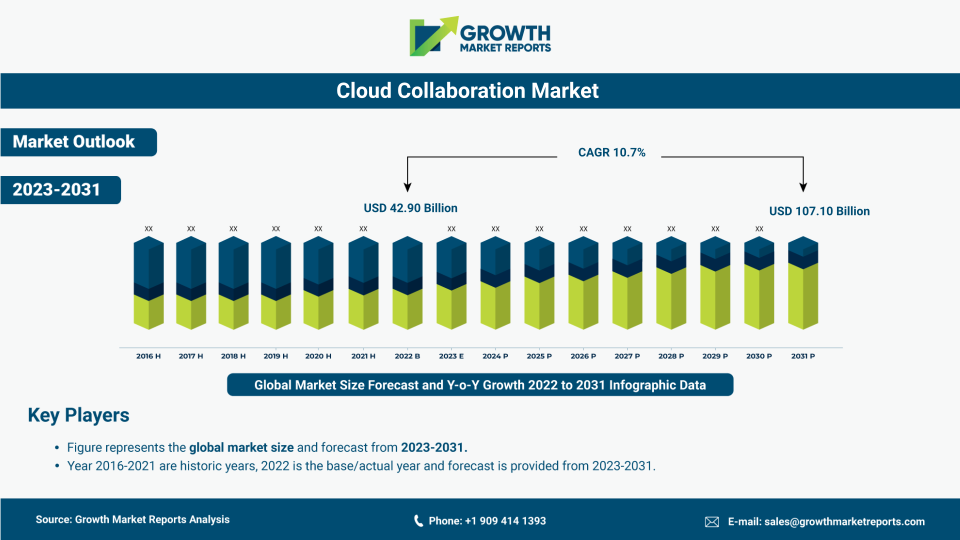
According to our latest research, the global cloud collaboration market size reached USD 52.4 billion in 2024, demonstrating robust momentum across industries. The market is experiencing a strong compound annual growth rate (CAGR) of 13.8% and is forecasted to attain a value of USD 138.9 billion by 2033. This impressive growth is fueled by the surging demand for seamless remote work solutions, increasing digital transformation initiatives, and the proliferation of cloud-based tools that enable real-time collaboration and productivity enhancements.

One of the primary growth factors driving the cloud collaboration market is the widespread adoption of remote and hybrid work models. The COVID-19 pandemic has fundamentally altered workplace dynamics, compelling organizations across sectors to invest in cloud collaboration platforms to maintain business continuity and ensure effective communication among distributed teams. Enterprises are increasingly recognizing the value of cloud-based solutions in facilitating project management, document sharing, and team communication, regardless of geographic boundaries. As companies continue to prioritize flexible work environments, the demand for scalable and secure cloud collaboration tools is expected to surge, further propelling market growth.

Another significant driver is the rapid digital transformation initiatives undertaken by both large enterprises and small and medium-sized enterprises (SMEs). Organizations are leveraging cloud collaboration platforms to streamline workflows, enhance productivity, and foster innovation. The integration of advanced technologies such as artificial intelligence, machine learning, and automation within cloud collaboration tools is enabling smarter decision-making, personalized user experiences, and improved workflow automation. Furthermore, the need to reduce operational costs, increase agility, and accelerate time-to-market for products and services is compelling businesses to transition from traditional on-premises solutions to cloud-based collaboration platforms.

The growing emphasis on data security, compliance, and regulatory requirements is also shaping the evolution of the cloud collaboration market. Vendors are investing heavily in strengthening security protocols, implementing end-to-end encryption, and ensuring compliance with international standards such as GDPR and HIPAA. These efforts are instilling confidence among organizations to adopt cloud collaboration solutions for critical business functions. Additionally, the rise of industry-specific collaboration tools tailored for sectors such as healthcare, BFSI, and education is expanding the marketÂ’s addressable base and creating new avenues for growth.

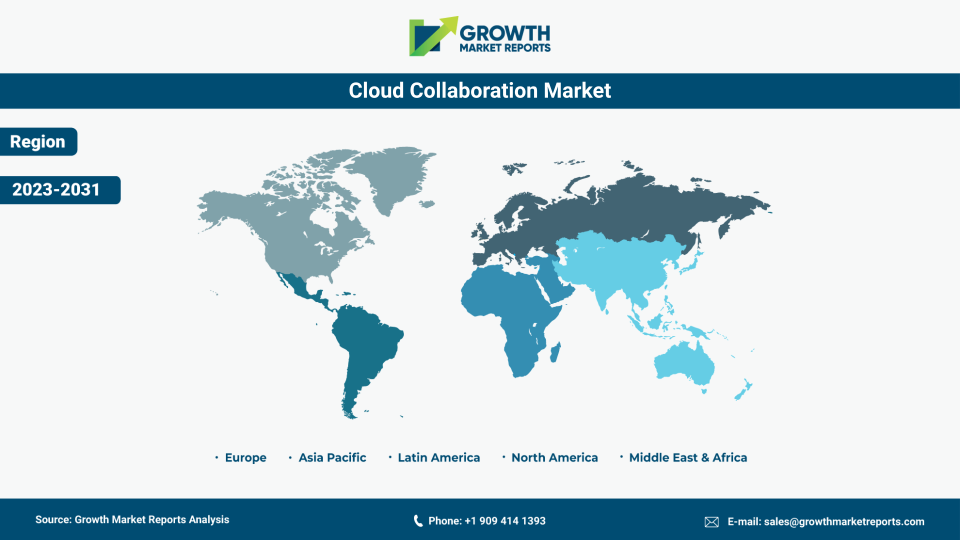
From a regional perspective, North America holds the dominant share in the global cloud collaboration market due to the presence of leading technology providers, early adoption of cloud technologies, and a mature digital infrastructure. However, the Asia Pacific region is witnessing the fastest growth, driven by rapid digitalization, expanding internet penetration, and increasing investments in cloud infrastructure by enterprises and governments. Europe, Latin America, and the Middle East & Africa are also experiencing steady growth, supported by evolving regulatory landscapes and rising awareness about the benefits of cloud collaboration solutions.

Global Cloud Collaboration Industry Outlook

Component Analysis

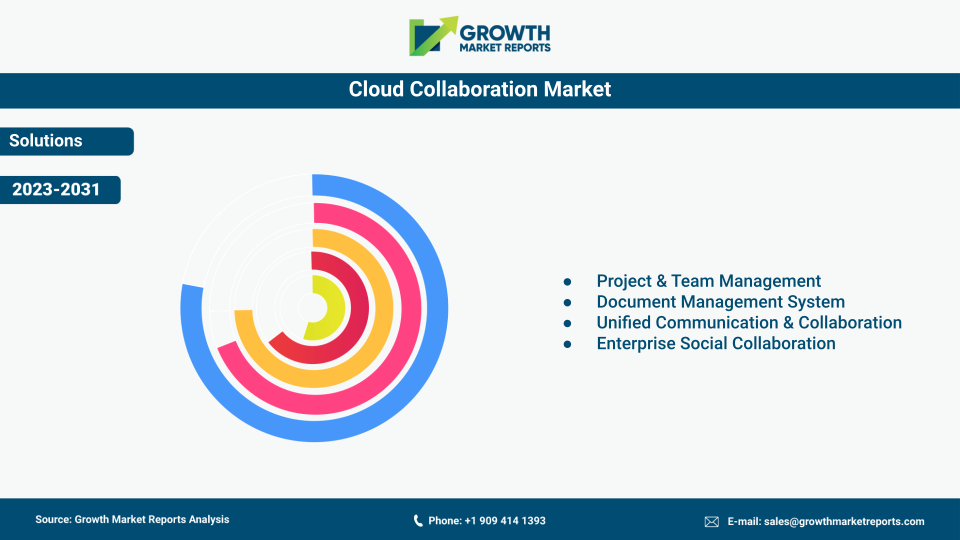
The cloud collaboration market by component is broadly segmented into solutions and services. The solutions segment encompasses a wide array of software products designed to facilitate teamwork, communication, and project management within organizations. These include document management systems, communication tools, project tracking platforms, and integrated suites that offer end-to-end collaboration capabilities. The growing demand for unified solutions that bring together multiple collaboration functionalities under a single platform is driving innovation in this segment. Enterprises are seeking customizable and scalable solutions that can be seamlessly integrated with existing IT infrastructure, thereby reducing complexity and enhancing user adoption.

On the other hand, the services segment comprises professional and managed services that support the deployment, customization, and ongoing management of cloud collaboration platforms. Professional services include consulting, implementation, integration, and training, while managed services involve the continuous monitoring, maintenance, and optimization of collaboration solutions. As organizations strive to maximize the return on investment from their cloud collaboration initiatives, the demand for expert guidance and support services is on the rise. Service providers are differentiating themselves by offering industry-specific expertise, rapid deployment models, and proactive support to address evolving business needs.

The interplay between solutions and services is critical for the successful adoption of cloud collaboration tools. While robust software solutions provide the foundational capabilities for collaboration, the effectiveness of these tools is often contingent on the quality of implementation and user training. Organizations are increasingly opting for end-to-end service offerings that encompass solution design, deployment, user onboarding, and ongoing support. This holistic approach ensures that collaboration platforms are tailored to the unique requirements of each organization and deliver tangible business outcomes.

Furthermore, the integration of advanced features such as AI-powered analytics, real-time language translation, and workflow automation is enhancing the value proposition of cloud collaboration solutions. Vendors are continuously innovating to offer differentiated functionalities that address the specific pain points of diverse industries. The convergence of solutions and services is expected to remain a key trend in the cloud collaboration market, as organizations seek comprehensive offerings that drive productivity, efficiency, and business agility.

Report Scope

Attributes Details
Report Title Cloud Collaboration Market Research Report 2033
By Component Solutions, Services
By Deployment Mode Public Cloud, Private Cloud, Hybrid Cloud
By Organization Size Large Enterprises, Small and Medium Enterprises
By Application Project Management, Communication Tools, Document Management, Others
By End-User BFSI, Healthcare, IT and Telecommunications, Retail, Education, Government, Manufacturing, Others
Regions Covered North America, Europe, APAC, Latin America, MEA
Base Year 2024
Historic Data 2018-2023
Forecast Period 2025-2033
Number of Pages 258
Number of Tables & Figures 380
Customization Available Yes, the report can be customized as per your need.

Deployment Mode Analysis

The cloud collaboration market by deployment mode is segmented into public cloud, private cloud, and hybrid cloud. The public cloud segment dominates the market, owing to its cost-effectiveness, scalability, and ease of deployment. Organizations, particularly SMEs, are gravitating towards public cloud solutions to leverage advanced collaboration tools without incurring significant upfront infrastructure costs. Public cloud platforms enable rapid provisioning of resources, seamless access to the latest features, and simplified management, making them an attractive option for businesses seeking agility and flexibility.

Enterprise Collaboration is becoming increasingly critical as organizations strive to enhance productivity and innovation across distributed teams. By leveraging cloud-based platforms, enterprises can streamline communication, improve project management, and foster a culture of collaboration that transcends geographical boundaries. These platforms offer a suite of tools that enable seamless integration with existing IT infrastructure, ensuring that teams can work together efficiently and effectively. As the need for agile and responsive collaboration solutions grows, enterprises are investing in technologies that support real-time communication and data sharing, further driving the expansion of the cloud collaboration market.

Private cloud deployment, while representing a smaller share of the market, is gaining traction among large enterprises and organizations with stringent data security and compliance requirements. Private cloud environments offer greater control over data, enhanced customization, and the ability to meet industry-specific regulatory standards. Sectors such as healthcare, BFSI, and government are increasingly opting for private cloud collaboration solutions to safeguard sensitive information and maintain compliance with data protection laws. The growing emphasis on data privacy and the rise of industry-specific regulations are expected to fuel the adoption of private cloud deployment models.

Hybrid cloud deployment is emerging as a strategic choice for organizations seeking to balance the benefits of public and private cloud environments. Hybrid models enable businesses to leverage the scalability and cost advantages of the public cloud for non-sensitive workloads, while retaining critical data and applications in a secure private cloud environment. This approach provides the flexibility to adapt to changing business needs, optimize resource allocation, and ensure business continuity. The increasing complexity of enterprise IT environments and the need for seamless integration between on-premises and cloud-based systems are driving the adoption of hybrid cloud collaboration solutions.

As organizations continue to navigate the evolving landscape of cloud technologies, the choice of deployment mode is influenced by factors such as data sensitivity, regulatory compliance, scalability requirements, and total cost of ownership. Vendors are responding by offering deployment-agnostic solutions that can be tailored to meet the unique needs of each organization. The ability to seamlessly transition between deployment models and integrate with existing IT infrastructure is becoming a key differentiator in the cloud collaboration market.

Organization Size Analysis

The cloud collaboration market is segmented by organization size into large enterprises and small and medium enterprises (SMEs). Large enterprises account for a significant share of the market, driven by their substantial IT budgets, complex collaboration needs, and global operations. These organizations are investing in advanced cloud collaboration platforms to enable cross-functional teams, support remote work, and enhance productivity across multiple geographies. The need for robust security, compliance, and integration capabilities is prompting large enterprises to opt for comprehensive collaboration suites that offer end-to-end functionality and scalability.

Small and medium enterprises (SMEs) are emerging as a key growth segment in the cloud collaboration market. The democratization of cloud technologies has made advanced collaboration tools accessible to SMEs, enabling them to compete on a level playing field with larger counterparts. SMEs are leveraging cloud collaboration platforms to streamline operations, reduce IT overhead, and foster innovation. The pay-as-you-go pricing models offered by cloud vendors are particularly attractive to SMEs, as they enable organizations to scale their collaboration capabilities in line with business growth.

The adoption patterns of cloud collaboration solutions vary significantly between large enterprises and SMEs. While large organizations prioritize integration with existing enterprise systems, customization, and compliance, SMEs focus on ease of use, affordability, and rapid deployment. Vendors are tailoring their offerings to address the unique requirements of each segment, providing modular solutions that can be customized to fit the specific needs of different organization sizes.

The increasing convergence of collaboration and productivity tools is blurring the lines between solutions targeted at large enterprises and SMEs. As the market matures, vendors are introducing flexible licensing models, self-service deployment options, and industry-specific templates to cater to the diverse needs of organizations of all sizes. The ongoing shift towards hybrid and remote work models is expected to drive continued growth in both segments, as organizations seek to empower their workforce with cutting-edge collaboration tools.

Application Analysis

Within the cloud collaboration market, application segments include project management, communication tools, document management, and others. Project management applications are witnessing significant adoption, as organizations seek to streamline task allocation, track progress, and ensure timely delivery of projects. Cloud-based project management tools offer real-time visibility into project status, facilitate collaboration among geographically dispersed teams, and enable agile methodologies. The integration of features such as Gantt charts, Kanban boards, and automated notifications is enhancing the effectiveness of these tools and driving market growth.

Communication tools constitute another critical application segment, encompassing instant messaging, video conferencing, and unified communications platforms. The shift towards remote and hybrid work models has accelerated the adoption of cloud-based communication tools, enabling teams to stay connected and collaborate effectively from any location. The integration of AI-powered features such as real-time transcription, sentiment analysis, and language translation is further enhancing the user experience and promoting inclusivity within diverse teams.

Document management applications are essential for organizations seeking to centralize, secure, and streamline access to critical business documents. Cloud-based document management systems enable real-time document sharing, version control, and collaborative editing, reducing the risk of data silos and ensuring that teams are always working with the latest information. The growing emphasis on data security, compliance, and auditability is driving the adoption of advanced document management solutions that offer encryption, access controls, and detailed activity logs.

Other application areas within the cloud collaboration market include workflow automation, knowledge management, and virtual whiteboarding. These applications are enabling organizations to automate routine tasks, capture institutional knowledge, and foster creativity through collaborative brainstorming sessions. The continuous evolution of application functionalities, driven by user feedback and technological advancements, is expanding the scope of cloud collaboration solutions and creating new opportunities for market growth.

End-User Analysis

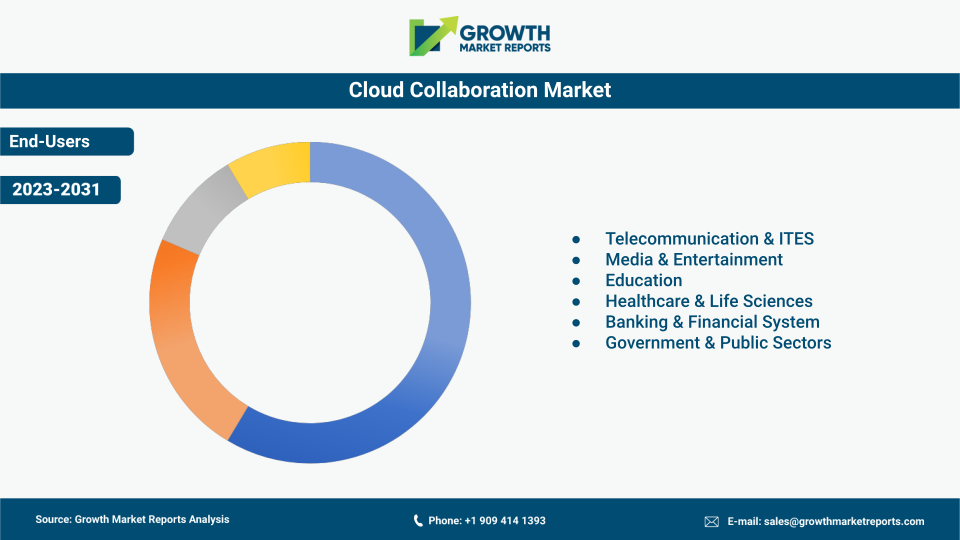
The cloud collaboration market serves a diverse range of end-users, including BFSI, healthcare, IT and telecommunications, retail, education, government, manufacturing, and others. The BFSI sector is a major adopter of cloud collaboration solutions, leveraging these platforms to enhance customer service, streamline internal processes, and ensure regulatory compliance. The need for secure communication, document sharing, and workflow automation is driving the adoption of specialized collaboration tools tailored for the financial services industry.

Healthcare organizations are increasingly adopting cloud collaboration platforms to facilitate telemedicine, enable secure sharing of patient records, and support interdisciplinary collaboration among healthcare professionals. The integration of collaboration tools with electronic health record (EHR) systems and compliance with healthcare regulations such as HIPAA are critical considerations for this sector. The shift towards value-based care and the growing emphasis on patient-centricity are further fueling the adoption of cloud collaboration solutions in healthcare.

The IT and telecommunications sector is at the forefront of cloud collaboration adoption, driven by the need to support distributed teams, accelerate product development, and foster innovation. Organizations in this sector are leveraging cloud collaboration platforms to streamline project management, facilitate knowledge sharing, and enable agile methodologies. The rapid pace of technological change and the need for continuous learning are prompting IT and telecom companies to invest in advanced collaboration tools that support real-time communication and knowledge dissemination.

Other key end-users include retail, education, government, and manufacturing. Retailers are using cloud collaboration platforms to enhance supply chain visibility, improve customer engagement, and support omnichannel strategies. Educational institutions are adopting cloud-based collaboration tools to enable remote learning, facilitate teacher-student interaction, and support collaborative research. Government agencies are leveraging these solutions to drive digital transformation, improve service delivery, and ensure transparency. Manufacturing organizations are utilizing cloud collaboration platforms to streamline product development, enhance supply chain coordination, and support Industry 4.0 initiatives.

Opportunities & Threats

The cloud collaboration market presents significant opportunities for vendors, enterprises, and service providers. The ongoing shift towards hybrid and remote work models is creating a sustained demand for cloud-based collaboration tools that enable seamless communication, project management, and document sharing. The integration of emerging technologies such as artificial intelligence, machine learning, and automation is opening new avenues for innovation, enabling organizations to derive actionable insights from collaboration data, automate routine tasks, and personalize user experiences. The growing adoption of industry-specific collaboration solutions tailored for sectors such as healthcare, BFSI, and education is expanding the marketÂ’s addressable base and creating new revenue streams for vendors.

Another major opportunity lies in the rising demand for secure and compliant cloud collaboration solutions. As organizations navigate an increasingly complex regulatory landscape, the need for solutions that offer robust data protection, encryption, and compliance with international standards is paramount. Vendors that can demonstrate a strong commitment to security, offer advanced compliance features, and provide industry-specific certifications are well-positioned to capture a larger share of the market. The proliferation of mobile devices and the increasing adoption of bring-your-own-device (BYOD) policies are also driving demand for mobile-friendly collaboration tools that enable employees to work from anywhere, at any time.

Despite the numerous opportunities, the cloud collaboration market faces several restraining factors. Data security and privacy concerns remain a significant challenge, particularly for organizations operating in highly regulated industries. The risk of data breaches, unauthorized access, and compliance violations can deter organizations from fully embracing cloud collaboration solutions. Additionally, the complexity of integrating cloud collaboration tools with existing legacy systems, the need for change management, and the potential for user resistance can hinder the successful adoption of these platforms. Vendors must address these challenges by offering robust security features, seamless integration capabilities, and comprehensive training and support services to ensure successful implementation.

Regional Outlook

North America remains the largest regional market for cloud collaboration, accounting for approximately USD 19.2 billion in 2024. The regionÂ’s dominance is attributed to the presence of leading technology providers, high levels of digital literacy, and early adoption of cloud technologies across industries. The United States, in particular, is a major driver of market growth, with organizations across sectors investing heavily in cloud collaboration platforms to support remote work, enhance productivity, and drive digital transformation. Canada is also witnessing strong growth, supported by government initiatives to promote digitalization and the increasing adoption of cloud technologies among SMEs.

The Asia Pacific region is experiencing the fastest growth in the cloud collaboration market, with a projected CAGR of 16.2% from 2025 to 2033. The market size in Asia Pacific reached USD 12.7 billion in 2024, and is expected to surpass USD 43.5 billion by 2033. Rapid digitalization, expanding internet penetration, and increasing investments in cloud infrastructure are driving market growth in countries such as China, India, Japan, and Australia. Enterprises in the region are leveraging cloud collaboration platforms to enhance operational efficiency, support remote work, and drive innovation. Government initiatives to promote digital transformation and the rise of tech-savvy millennials in the workforce are further accelerating adoption.

Europe, Latin America, and the Middle East & Africa are also witnessing steady growth in the cloud collaboration market. Europe accounted for USD 10.8 billion in 2024, driven by the increasing focus on data privacy, compliance with GDPR, and the growing adoption of cloud-based collaboration tools among enterprises and public sector organizations. Latin America and the Middle East & Africa, with market sizes of USD 5.1 billion and USD 4.6 billion respectively in 2024, are experiencing rising demand for cloud collaboration solutions, supported by improving digital infrastructure, increasing awareness about the benefits of cloud technologies, and government-led digitalization initiatives. The regional landscape is characterized by varying levels of maturity, regulatory frameworks, and adoption patterns, creating unique opportunities and challenges for vendors operating in these markets.

Cloud Collaboration Market Statistics

Competitor Outlook

The cloud collaboration market is highly competitive, characterized by the presence of established technology giants, innovative startups, and niche solution providers. The competitive landscape is shaped by continuous innovation, strategic partnerships, mergers and acquisitions, and a relentless focus on customer-centricity. Leading vendors are investing heavily in research and development to enhance the functionality, security, and user experience of their collaboration platforms. The ability to offer integrated solutions that encompass communication, project management, document management, and workflow automation is emerging as a key differentiator in the market.

Strategic partnerships and alliances are playing a crucial role in expanding market reach and enhancing value propositions. Vendors are collaborating with system integrators, managed service providers, and industry-specific solution providers to deliver comprehensive offerings that address the unique needs of different sectors. Mergers and acquisitions are also reshaping the competitive landscape, enabling companies to acquire new technologies, enter new markets, and strengthen their competitive position. The rise of open APIs and interoperability standards is fostering ecosystem development, enabling third-party developers to build complementary solutions and extend the capabilities of cloud collaboration platforms.

Customer-centricity is at the heart of competitive strategy in the cloud collaboration market. Vendors are focusing on delivering seamless user experiences, offering flexible pricing models, and providing comprehensive support services to drive adoption and retention. The ability to offer industry-specific solutions, rapid deployment models, and proactive support is becoming increasingly important as organizations seek to maximize the value of their cloud collaboration investments. The growing emphasis on security, compliance, and data privacy is prompting vendors to obtain industry certifications, implement advanced security features, and demonstrate a strong commitment to protecting customer data.

Some of the major companies operating in the cloud collaboration market include Microsoft Corporation, Google LLC, Cisco Systems Inc., IBM Corporation, Slack Technologies (now part of Salesforce), Zoom Video Communications, Inc., Atlassian Corporation Plc, Citrix Systems, Inc., Box, Inc., and Adobe Inc. Microsoft, with its Teams platform, dominates the market by offering a comprehensive suite of collaboration tools integrated with Office 365. Google Workspace is renowned for its ease of use, real-time collaboration features, and seamless integration with other Google services. Cisco Webex is a preferred choice for organizations prioritizing security and advanced communication capabilities, while Slack and Zoom have carved out strong positions in team messaging and video conferencing, respectively.

IBM and Citrix focus on delivering secure, scalable, and customizable collaboration solutions for large enterprises and regulated industries. Atlassian is recognized for its project management and software development collaboration tools, including Jira and Confluence. Box and Adobe provide robust document management and collaboration platforms that cater to the needs of enterprises seeking secure file sharing and workflow automation. These companies are continuously innovating to stay ahead of the competition, launching new features, expanding their partner ecosystems, and addressing emerging customer needs.

In summary, the cloud collaboration market is characterized by intense competition, rapid innovation, and a relentless focus on delivering value to customers. The ongoing evolution of workplace dynamics, the proliferation of digital technologies, and the growing emphasis on security and compliance are shaping the future of the market. Vendors that can anticipate market trends, deliver differentiated solutions, and forge strong customer relationships will be well-positioned to capitalize on the immense growth opportunities in this dynamic and rapidly evolving market.

Key Players

  • Microsoft Corporation
  • Google LLC
  • Cisco Systems, Inc.
  • IBM Corporation
  • Oracle Corporation
  • Salesforce, Inc.
  • Slack Technologies, LLC
  • Zoom Video Communications, Inc.
  • Atlassian Corporation Plc
  • Dropbox, Inc.
  • Box, Inc.
  • Citrix Systems, Inc.
  • Adobe Inc.
  • Amazon Web Services, Inc.
  • RingCentral, Inc.
  • LogMeIn, Inc. (GoTo)
  • Fuze, Inc.
  • Zoho Corporation
  • Mitel Networks Corporation
  • Huawei Technologies Co., Ltd.
Cloud Collaboration Market Overview

Segments

The Cloud Collaboration market has been segmented on the basis of

Component

  • Solutions
  • Services

Deployment Mode

  • Public Cloud
  • Private Cloud
  • Hybrid Cloud

Organization Size

  • Large Enterprises
  • Small and Medium Enterprises

Application

  • Project Management
  • Communication Tools
  • Document Management
  • Others

End-User

  • BFSI
  • Healthcare
  • IT and Telecommunications
  • Retail
  • Education
  • Government
  • Manufacturing
  • Others

Competitive Landscape

Key players competing in the global cloud collaboration market are Cisco Systems Inc.; Oracle Corporation; Microsoft Corporation; HighQ Solutions; and IBM Corporation.

In May 2020, Microsoft's Teams collaboration and communication tool has received a host of improvements. The Shifts app was integrated with additional features, such as new triggers and templates, to enable auto-approvals for shift requests.
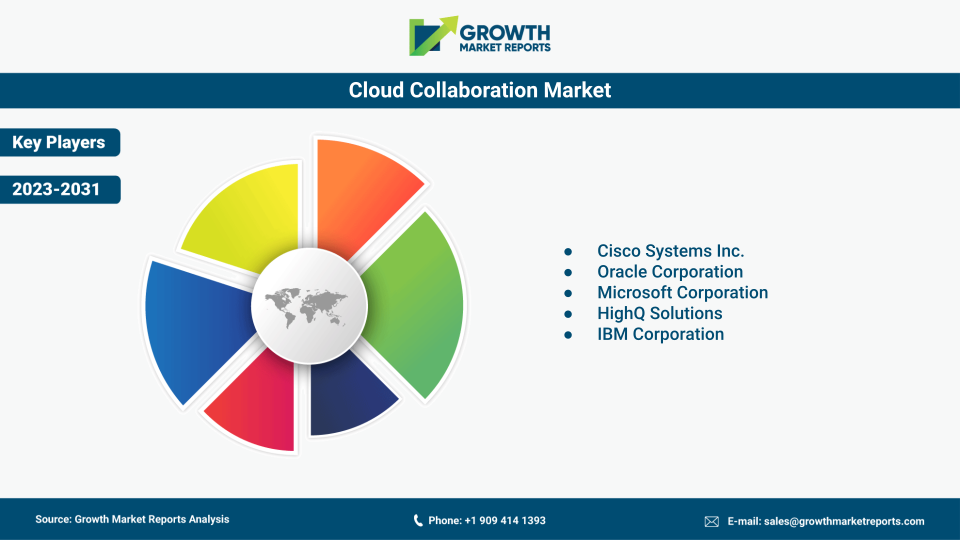

Cloud Collaboration Market Key Players

Frequently Asked Questions

Vendors compete by offering integrated solutions, advanced security features, industry-specific tools, flexible pricing, rapid deployment, and strong customer support. Strategic partnerships and continuous innovation are also key differentiators.

Key companies include Microsoft Corporation, Google LLC, Cisco Systems, IBM Corporation, Salesforce (Slack), Zoom Video Communications, Atlassian, Citrix, Box, Adobe, Oracle, Amazon Web Services, and others.

North America leads in market share due to mature digital infrastructure and early adoption, while Asia Pacific is the fastest-growing region, driven by rapid digitalization and increasing cloud investments.

Opportunities include the rise of hybrid/remote work, integration of AI and automation, and demand for secure, compliant solutions. Challenges involve data security, privacy concerns, integration with legacy systems, and user adoption.

Key end-users include BFSI, healthcare, IT and telecommunications, retail, education, government, and manufacturing, each leveraging cloud collaboration for improved communication, compliance, and productivity.

Major applications include project management, communication tools (such as messaging and video conferencing), document management, workflow automation, knowledge management, and virtual whiteboarding.

Large enterprises invest in comprehensive, integrated collaboration suites for global operations and compliance, while SMEs prefer affordable, easy-to-use, and scalable solutions with pay-as-you-go pricing models.

The market offers public cloud, private cloud, and hybrid cloud deployment modes. Public cloud is popular for its cost-effectiveness and scalability, while private cloud is favored by organizations with strict security needs. Hybrid cloud balances both approaches.

Key growth drivers include the widespread adoption of remote and hybrid work models, digital transformation initiatives, increased demand for real-time collaboration tools, and the integration of advanced technologies like AI and automation.

The global cloud collaboration market reached USD 52.4 billion in 2024 and is expected to grow at a CAGR of 13.8%, reaching USD 138.9 billion by 2033.

Table Of Content

Chapter 1 Executive Summary
Chapter 2 Assumptions and Acronyms Used
Chapter 3 Research Methodology
Chapter 4 Cloud Collaboration Market Overview
   4.1 Introduction
      4.1.1 Market Taxonomy
      4.1.2 Market Definition
      4.1.3 Macro-Economic Factors Impacting the Market Growth
   4.2 Cloud Collaboration Market Dynamics
      4.2.1 Market Drivers
      4.2.2 Market Restraints
      4.2.3 Market Opportunity
   4.3 Cloud Collaboration Market - Supply Chain Analysis
      4.3.1 List of Key Suppliers
      4.3.2 List of Key Distributors
      4.3.3 List of Key Consumers
   4.4 Key Forces Shaping the Cloud Collaboration Market
      4.4.1 Bargaining Power of Suppliers
      4.4.2 Bargaining Power of Buyers
      4.4.3 Threat of Substitution
      4.4.4 Threat of New Entrants
      4.4.5 Competitive Rivalry
   4.5 Global Cloud Collaboration Market Size & Forecast, 2023-2032
      4.5.1 Cloud Collaboration Market Size and Y-o-Y Growth
      4.5.2 Cloud Collaboration Market Absolute $ Opportunity

Chapter 5 Global Cloud Collaboration Market Analysis and Forecast By Component
   5.1 Introduction
      5.1.1 Key Market Trends & Growth Opportunities By Component
      5.1.2 Basis Point Share (BPS) Analysis By Component
      5.1.3 Absolute $ Opportunity Assessment By Component
   5.2 Cloud Collaboration Market Size Forecast By Component
      5.2.1 Solutions
      5.2.2 Services
   5.3 Market Attractiveness Analysis By Component

Chapter 6 Global Cloud Collaboration Market Analysis and Forecast By Deployment Mode
   6.1 Introduction
      6.1.1 Key Market Trends & Growth Opportunities By Deployment Mode
      6.1.2 Basis Point Share (BPS) Analysis By Deployment Mode
      6.1.3 Absolute $ Opportunity Assessment By Deployment Mode
   6.2 Cloud Collaboration Market Size Forecast By Deployment Mode
      6.2.1 Public Cloud
      6.2.2 Private Cloud
      6.2.3 Hybrid Cloud
   6.3 Market Attractiveness Analysis By Deployment Mode

Chapter 7 Global Cloud Collaboration Market Analysis and Forecast By Organization Size
   7.1 Introduction
      7.1.1 Key Market Trends & Growth Opportunities By Organization Size
      7.1.2 Basis Point Share (BPS) Analysis By Organization Size
      7.1.3 Absolute $ Opportunity Assessment By Organization Size
   7.2 Cloud Collaboration Market Size Forecast By Organization Size
      7.2.1 Large Enterprises
      7.2.2 Small and Medium Enterprises
   7.3 Market Attractiveness Analysis By Organization Size

Chapter 8 Global Cloud Collaboration Market Analysis and Forecast By Application
   8.1 Introduction
      8.1.1 Key Market Trends & Growth Opportunities By Application
      8.1.2 Basis Point Share (BPS) Analysis By Application
      8.1.3 Absolute $ Opportunity Assessment By Application
   8.2 Cloud Collaboration Market Size Forecast By Application
      8.2.1 Project Management
      8.2.2 Communication Tools
      8.2.3 Document Management
      8.2.4 Others
   8.3 Market Attractiveness Analysis By Application

Chapter 9 Global Cloud Collaboration Market Analysis and Forecast By End-User
   9.1 Introduction
      9.1.1 Key Market Trends & Growth Opportunities By End-User
      9.1.2 Basis Point Share (BPS) Analysis By End-User
      9.1.3 Absolute $ Opportunity Assessment By End-User
   9.2 Cloud Collaboration Market Size Forecast By End-User
      9.2.1 BFSI
      9.2.2 Healthcare
      9.2.3 IT and Telecommunications
      9.2.4 Retail
      9.2.5 Education
      9.2.6 Government
      9.2.7 Manufacturing
      9.2.8 Others
   9.3 Market Attractiveness Analysis By End-User

Chapter 10 Global Cloud Collaboration Market Analysis and Forecast by Region
   10.1 Introduction
      10.1.1 Key Market Trends & Growth Opportunities By Region
      10.1.2 Basis Point Share (BPS) Analysis By Region
      10.1.3 Absolute $ Opportunity Assessment By Region
   10.2 Cloud Collaboration Market Size Forecast By Region
      10.2.1 North America
      10.2.2 Europe
      10.2.3 Asia Pacific
      10.2.4 Latin America
      10.2.5 Middle East & Africa (MEA)
   10.3 Market Attractiveness Analysis By Region

Chapter 11 Coronavirus Disease (COVID-19) Impact 
   11.1 Introduction 
   11.2 Current & Future Impact Analysis 
   11.3 Economic Impact Analysis 
   11.4 Government Policies 
   11.5 Investment Scenario

Chapter 12 North America Cloud Collaboration Analysis and Forecast
   12.1 Introduction
   12.2 North America Cloud Collaboration Market Size Forecast by Country
      12.2.1 U.S.
      12.2.2 Canada
   12.3 Basis Point Share (BPS) Analysis by Country
   12.4 Absolute $ Opportunity Assessment by Country
   12.5 Market Attractiveness Analysis by Country
   12.6 North America Cloud Collaboration Market Size Forecast By Component
      12.6.1 Solutions
      12.6.2 Services
   12.7 Basis Point Share (BPS) Analysis By Component 
   12.8 Absolute $ Opportunity Assessment By Component 
   12.9 Market Attractiveness Analysis By Component
   12.10 North America Cloud Collaboration Market Size Forecast By Deployment Mode
      12.10.1 Public Cloud
      12.10.2 Private Cloud
      12.10.3 Hybrid Cloud
   12.11 Basis Point Share (BPS) Analysis By Deployment Mode 
   12.12 Absolute $ Opportunity Assessment By Deployment Mode 
   12.13 Market Attractiveness Analysis By Deployment Mode
   12.14 North America Cloud Collaboration Market Size Forecast By Organization Size
      12.14.1 Large Enterprises
      12.14.2 Small and Medium Enterprises
   12.15 Basis Point Share (BPS) Analysis By Organization Size 
   12.16 Absolute $ Opportunity Assessment By Organization Size 
   12.17 Market Attractiveness Analysis By Organization Size
   12.18 North America Cloud Collaboration Market Size Forecast By Application
      12.18.1 Project Management
      12.18.2 Communication Tools
      12.18.3 Document Management
      12.18.4 Others
   12.19 Basis Point Share (BPS) Analysis By Application 
   12.20 Absolute $ Opportunity Assessment By Application 
   12.21 Market Attractiveness Analysis By Application
   12.22 North America Cloud Collaboration Market Size Forecast By End-User
      12.22.1 BFSI
      12.22.2 Healthcare
      12.22.3 IT and Telecommunications
      12.22.4 Retail
      12.22.5 Education
      12.22.6 Government
      12.22.7 Manufacturing
      12.22.8 Others
   12.23 Basis Point Share (BPS) Analysis By End-User 
   12.24 Absolute $ Opportunity Assessment By End-User 
   12.25 Market Attractiveness Analysis By End-User

Chapter 13 Europe Cloud Collaboration Analysis and Forecast
   13.1 Introduction
   13.2 Europe Cloud Collaboration Market Size Forecast by Country
      13.2.1 Germany
      13.2.2 France
      13.2.3 Italy
      13.2.4 U.K.
      13.2.5 Spain
      13.2.6 Russia
      13.2.7 Rest of Europe
   13.3 Basis Point Share (BPS) Analysis by Country
   13.4 Absolute $ Opportunity Assessment by Country
   13.5 Market Attractiveness Analysis by Country
   13.6 Europe Cloud Collaboration Market Size Forecast By Component
      13.6.1 Solutions
      13.6.2 Services
   13.7 Basis Point Share (BPS) Analysis By Component 
   13.8 Absolute $ Opportunity Assessment By Component 
   13.9 Market Attractiveness Analysis By Component
   13.10 Europe Cloud Collaboration Market Size Forecast By Deployment Mode
      13.10.1 Public Cloud
      13.10.2 Private Cloud
      13.10.3 Hybrid Cloud
   13.11 Basis Point Share (BPS) Analysis By Deployment Mode 
   13.12 Absolute $ Opportunity Assessment By Deployment Mode 
   13.13 Market Attractiveness Analysis By Deployment Mode
   13.14 Europe Cloud Collaboration Market Size Forecast By Organization Size
      13.14.1 Large Enterprises
      13.14.2 Small and Medium Enterprises
   13.15 Basis Point Share (BPS) Analysis By Organization Size 
   13.16 Absolute $ Opportunity Assessment By Organization Size 
   13.17 Market Attractiveness Analysis By Organization Size
   13.18 Europe Cloud Collaboration Market Size Forecast By Application
      13.18.1 Project Management
      13.18.2 Communication Tools
      13.18.3 Document Management
      13.18.4 Others
   13.19 Basis Point Share (BPS) Analysis By Application 
   13.20 Absolute $ Opportunity Assessment By Application 
   13.21 Market Attractiveness Analysis By Application
   13.22 Europe Cloud Collaboration Market Size Forecast By End-User
      13.22.1 BFSI
      13.22.2 Healthcare
      13.22.3 IT and Telecommunications
      13.22.4 Retail
      13.22.5 Education
      13.22.6 Government
      13.22.7 Manufacturing
      13.22.8 Others
   13.23 Basis Point Share (BPS) Analysis By End-User 
   13.24 Absolute $ Opportunity Assessment By End-User 
   13.25 Market Attractiveness Analysis By End-User

Chapter 14 Asia Pacific Cloud Collaboration Analysis and Forecast
   14.1 Introduction
   14.2 Asia Pacific Cloud Collaboration Market Size Forecast by Country
      14.2.1 China
      14.2.2 Japan
      14.2.3 South Korea
      14.2.4 India
      14.2.5 Australia
      14.2.6 South East Asia (SEA)
      14.2.7 Rest of Asia Pacific (APAC)
   14.3 Basis Point Share (BPS) Analysis by Country
   14.4 Absolute $ Opportunity Assessment by Country
   14.5 Market Attractiveness Analysis by Country
   14.6 Asia Pacific Cloud Collaboration Market Size Forecast By Component
      14.6.1 Solutions
      14.6.2 Services
   14.7 Basis Point Share (BPS) Analysis By Component 
   14.8 Absolute $ Opportunity Assessment By Component 
   14.9 Market Attractiveness Analysis By Component
   14.10 Asia Pacific Cloud Collaboration Market Size Forecast By Deployment Mode
      14.10.1 Public Cloud
      14.10.2 Private Cloud
      14.10.3 Hybrid Cloud
   14.11 Basis Point Share (BPS) Analysis By Deployment Mode 
   14.12 Absolute $ Opportunity Assessment By Deployment Mode 
   14.13 Market Attractiveness Analysis By Deployment Mode
   14.14 Asia Pacific Cloud Collaboration Market Size Forecast By Organization Size
      14.14.1 Large Enterprises
      14.14.2 Small and Medium Enterprises
   14.15 Basis Point Share (BPS) Analysis By Organization Size 
   14.16 Absolute $ Opportunity Assessment By Organization Size 
   14.17 Market Attractiveness Analysis By Organization Size
   14.18 Asia Pacific Cloud Collaboration Market Size Forecast By Application
      14.18.1 Project Management
      14.18.2 Communication Tools
      14.18.3 Document Management
      14.18.4 Others
   14.19 Basis Point Share (BPS) Analysis By Application 
   14.20 Absolute $ Opportunity Assessment By Application 
   14.21 Market Attractiveness Analysis By Application
   14.22 Asia Pacific Cloud Collaboration Market Size Forecast By End-User
      14.22.1 BFSI
      14.22.2 Healthcare
      14.22.3 IT and Telecommunications
      14.22.4 Retail
      14.22.5 Education
      14.22.6 Government
      14.22.7 Manufacturing
      14.22.8 Others
   14.23 Basis Point Share (BPS) Analysis By End-User 
   14.24 Absolute $ Opportunity Assessment By End-User 
   14.25 Market Attractiveness Analysis By End-User

Chapter 15 Latin America Cloud Collaboration Analysis and Forecast
   15.1 Introduction
   15.2 Latin America Cloud Collaboration Market Size Forecast by Country
      15.2.1 Brazil
      15.2.2 Mexico
      15.2.3 Rest of Latin America (LATAM)
   15.3 Basis Point Share (BPS) Analysis by Country
   15.4 Absolute $ Opportunity Assessment by Country
   15.5 Market Attractiveness Analysis by Country
   15.6 Latin America Cloud Collaboration Market Size Forecast By Component
      15.6.1 Solutions
      15.6.2 Services
   15.7 Basis Point Share (BPS) Analysis By Component 
   15.8 Absolute $ Opportunity Assessment By Component 
   15.9 Market Attractiveness Analysis By Component
   15.10 Latin America Cloud Collaboration Market Size Forecast By Deployment Mode
      15.10.1 Public Cloud
      15.10.2 Private Cloud
      15.10.3 Hybrid Cloud
   15.11 Basis Point Share (BPS) Analysis By Deployment Mode 
   15.12 Absolute $ Opportunity Assessment By Deployment Mode 
   15.13 Market Attractiveness Analysis By Deployment Mode
   15.14 Latin America Cloud Collaboration Market Size Forecast By Organization Size
      15.14.1 Large Enterprises
      15.14.2 Small and Medium Enterprises
   15.15 Basis Point Share (BPS) Analysis By Organization Size 
   15.16 Absolute $ Opportunity Assessment By Organization Size 
   15.17 Market Attractiveness Analysis By Organization Size
   15.18 Latin America Cloud Collaboration Market Size Forecast By Application
      15.18.1 Project Management
      15.18.2 Communication Tools
      15.18.3 Document Management
      15.18.4 Others
   15.19 Basis Point Share (BPS) Analysis By Application 
   15.20 Absolute $ Opportunity Assessment By Application 
   15.21 Market Attractiveness Analysis By Application
   15.22 Latin America Cloud Collaboration Market Size Forecast By End-User
      15.22.1 BFSI
      15.22.2 Healthcare
      15.22.3 IT and Telecommunications
      15.22.4 Retail
      15.22.5 Education
      15.22.6 Government
      15.22.7 Manufacturing
      15.22.8 Others
   15.23 Basis Point Share (BPS) Analysis By End-User 
   15.24 Absolute $ Opportunity Assessment By End-User 
   15.25 Market Attractiveness Analysis By End-User

Chapter 16 Middle East & Africa (MEA) Cloud Collaboration Analysis and Forecast
   16.1 Introduction
   16.2 Middle East & Africa (MEA) Cloud Collaboration Market Size Forecast by Country
      16.2.1 Saudi Arabia
      16.2.2 South Africa
      16.2.3 UAE
      16.2.4 Rest of Middle East & Africa (MEA)
   16.3 Basis Point Share (BPS) Analysis by Country
   16.4 Absolute $ Opportunity Assessment by Country
   16.5 Market Attractiveness Analysis by Country
   16.6 Middle East & Africa (MEA) Cloud Collaboration Market Size Forecast By Component
      16.6.1 Solutions
      16.6.2 Services
   16.7 Basis Point Share (BPS) Analysis By Component 
   16.8 Absolute $ Opportunity Assessment By Component 
   16.9 Market Attractiveness Analysis By Component
   16.10 Middle East & Africa (MEA) Cloud Collaboration Market Size Forecast By Deployment Mode
      16.10.1 Public Cloud
      16.10.2 Private Cloud
      16.10.3 Hybrid Cloud
   16.11 Basis Point Share (BPS) Analysis By Deployment Mode 
   16.12 Absolute $ Opportunity Assessment By Deployment Mode 
   16.13 Market Attractiveness Analysis By Deployment Mode
   16.14 Middle East & Africa (MEA) Cloud Collaboration Market Size Forecast By Organization Size
      16.14.1 Large Enterprises
      16.14.2 Small and Medium Enterprises
   16.15 Basis Point Share (BPS) Analysis By Organization Size 
   16.16 Absolute $ Opportunity Assessment By Organization Size 
   16.17 Market Attractiveness Analysis By Organization Size
   16.18 Middle East & Africa (MEA) Cloud Collaboration Market Size Forecast By Application
      16.18.1 Project Management
      16.18.2 Communication Tools
      16.18.3 Document Management
      16.18.4 Others
   16.19 Basis Point Share (BPS) Analysis By Application 
   16.20 Absolute $ Opportunity Assessment By Application 
   16.21 Market Attractiveness Analysis By Application
   16.22 Middle East & Africa (MEA) Cloud Collaboration Market Size Forecast By End-User
      16.22.1 BFSI
      16.22.2 Healthcare
      16.22.3 IT and Telecommunications
      16.22.4 Retail
      16.22.5 Education
      16.22.6 Government
      16.22.7 Manufacturing
      16.22.8 Others
   16.23 Basis Point Share (BPS) Analysis By End-User 
   16.24 Absolute $ Opportunity Assessment By End-User 
   16.25 Market Attractiveness Analysis By End-User

Chapter 17 Competition Landscape 
   17.1 Cloud Collaboration Market: Competitive Dashboard
   17.2 Global Cloud Collaboration Market: Market Share Analysis, 2023
   17.3 Company Profiles (Details – Overview, Financials, Developments, Strategy) 
      17.3.1 Microsoft Corporation
Google LLC
Cisco Systems, Inc.
IBM Corporation
Oracle Corporation
Salesforce, Inc.
Slack Technologies, LLC
Zoom Video Communications, Inc.
Atlassian Corporation Plc
Dropbox, Inc.
Box, Inc.
Citrix Systems, Inc.
Adobe Inc.
Amazon Web Services, Inc.
RingCentral, Inc.
LogMeIn, Inc. (GoTo)
Fuze, Inc.
Zoho Corporation
Mitel Networks Corporation
Huawei Technologies Co., Ltd.

Methodology

Our Clients

Pfizer
Siemens Healthcare
The John Holland Group
FedEx Logistics
Nestle SA
General Mills
Microsoft
Dassault Aviation