Cloud-Based Video Streaming Market Research Report 2033

Cloud-Based Video Streaming Market Research Report 2033

Segments - by Component (Platform, Services), by Streaming Type (Live Streaming, Video on Demand), by Deployment Mode (Public Cloud, Private Cloud, Hybrid Cloud), by Application (Media & Entertainment, Education, Healthcare, Enterprise, Government, Others), by End-User (Individual, Commercial)

https://growthmarketreports.com/Raksha
Author : Raksha Sharma
https://growthmarketreports.com/Vaibhav
Fact-checked by : V. Chandola
https://growthmarketreports.com/Shruti
Editor : Shruti Bhat

Upcoming | Report ID :ICT-SE-5292 | 4.2 Rating | 92 Reviews | 289 Pages | Format : Docx PDF

Report Description


Cloud-Based Video Streaming Market Outlook

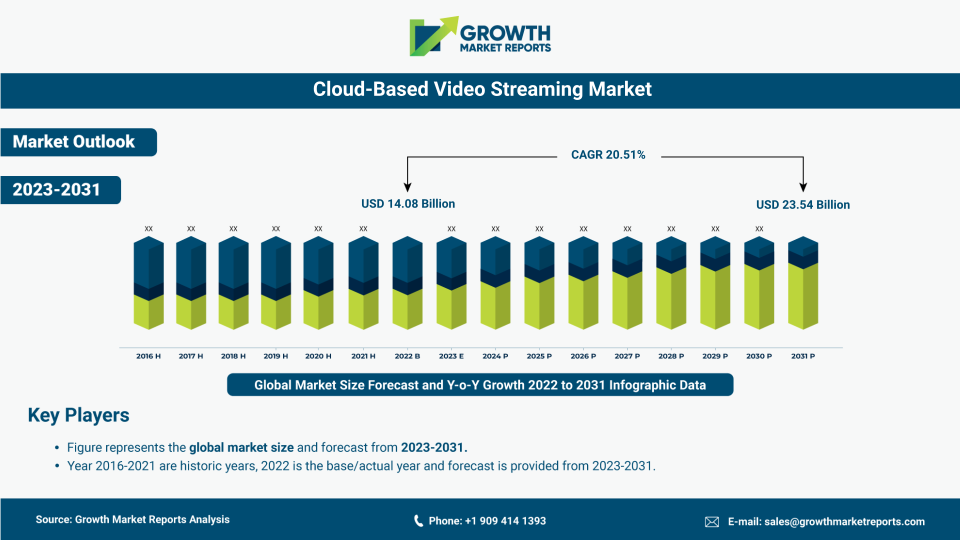
According to our latest research, the cloud-based video streaming market size globally stood at USD 85.3 billion in 2024. The market is experiencing robust expansion, supported by a strong compound annual growth rate (CAGR) of 18.7% from 2025 to 2033. By the end of 2033, the market is forecasted to reach an impressive USD 343.5 billion. This growth is primarily driven by the surging demand for high-quality, on-demand video content, rapid advancements in cloud technology, and the proliferation of internet-connected devices worldwide. As per our latest research, the market's dynamic evolution is set to redefine how content is delivered, consumed, and monetized across multiple sectors.

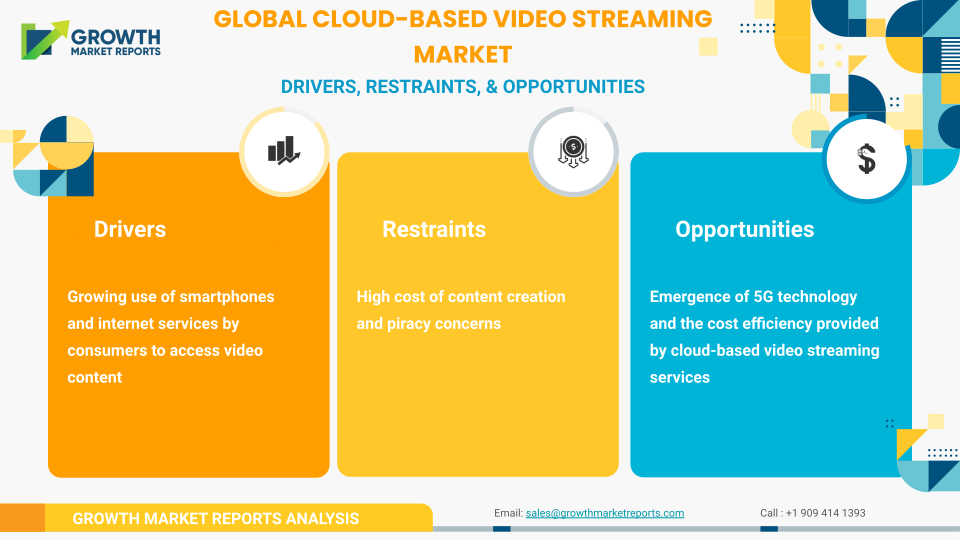
One of the most significant growth factors for the cloud-based video streaming market is the explosive rise in internet penetration and the widespread adoption of smart devices. With the global population increasingly accessing high-speed internet, the consumption of video content has shifted dramatically from traditional broadcast methods to digital platforms. The rise of smartphones, tablets, and smart TVs has made it easier for users to access video content anytime and anywhere, further propelling the demand for cloud-based streaming solutions. Additionally, the ongoing rollout of 5G networks is expected to further enhance streaming quality and reduce latency, making high-definition and even 4K/8K video streaming more accessible to a broader audience.

Another pivotal driver is the growing preference for personalized and interactive content experiences. Modern consumers expect tailored recommendations, interactive features, and seamless cross-device viewing, all of which are enabled by advanced cloud infrastructures. Cloud-based video streaming platforms leverage artificial intelligence and machine learning to analyze user preferences and viewing habits, delivering content that aligns with individual interests. This level of personalization not only boosts user engagement but also opens up new monetization avenues for service providers through targeted advertising and subscription models. Enterprises across various sectors, including media & entertainment, education, and healthcare, are increasingly adopting these solutions to enhance user engagement and operational efficiency.

Furthermore, the scalability and cost-efficiency offered by cloud-based video streaming solutions are attracting a wide range of organizations, from startups to large enterprises. Traditional on-premises video delivery infrastructures require significant upfront investments and ongoing maintenance, which can be prohibitive for many businesses. In contrast, cloud-based models offer flexible pricing, pay-as-you-go options, and the ability to scale resources up or down based on demand. This flexibility is particularly valuable in scenarios such as live events or sudden spikes in viewership, where the ability to rapidly provision additional resources ensures uninterrupted service delivery. The growing need for business continuity, disaster recovery, and global content distribution is further cementing the role of cloud-based video streaming in the digital transformation strategies of organizations worldwide.

Enterprise Streaming Media is becoming a pivotal component in the digital strategies of businesses across the globe. As enterprises seek to enhance their communication and engagement with both internal and external audiences, the demand for robust streaming solutions is on the rise. These solutions enable companies to broadcast live events, webinars, and corporate communications seamlessly, ensuring that their message reaches a wide audience without geographical constraints. The integration of enterprise streaming media into business operations not only facilitates real-time communication but also supports the creation of a rich repository of on-demand content, which can be accessed by employees and clients alike. This capability is particularly beneficial for training, onboarding, and knowledge sharing, helping organizations maintain a competitive edge in a rapidly evolving market.

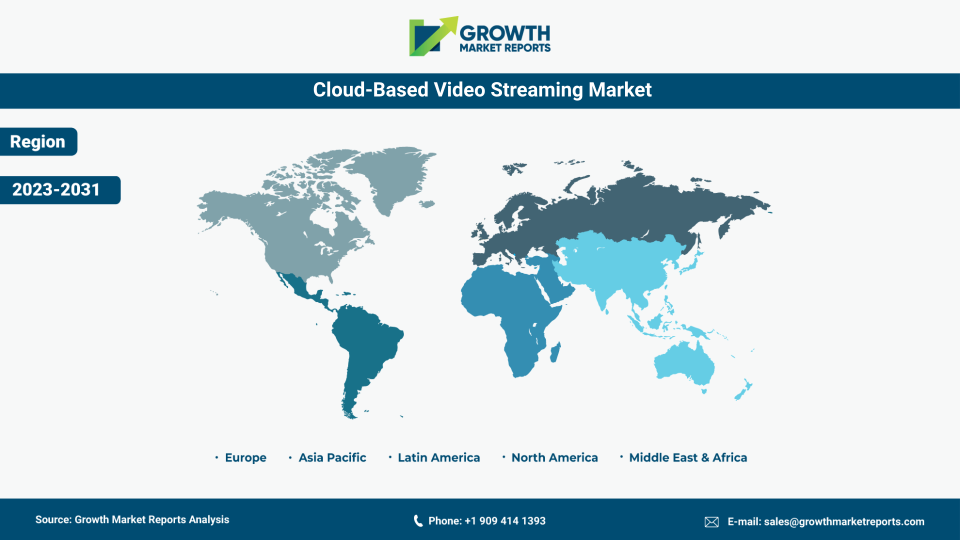
From a regional perspective, North America continues to dominate the cloud-based video streaming market, accounting for the largest share in 2024, followed closely by Europe and Asia Pacific. The presence of leading technology providers, high internet penetration, and a mature digital content ecosystem are key factors contributing to this leadership. However, the Asia Pacific region is emerging as the fastest-growing market, driven by a rapidly expanding internet user base, increased investments in digital infrastructure, and the rising popularity of local and regional streaming platforms. Countries such as China, India, and Japan are witnessing significant growth in both consumer and enterprise adoption of cloud-based video streaming services, setting the stage for sustained market expansion in the coming years.

Global Cloud-Based Video Streaming Industry Outlook

Component Analysis

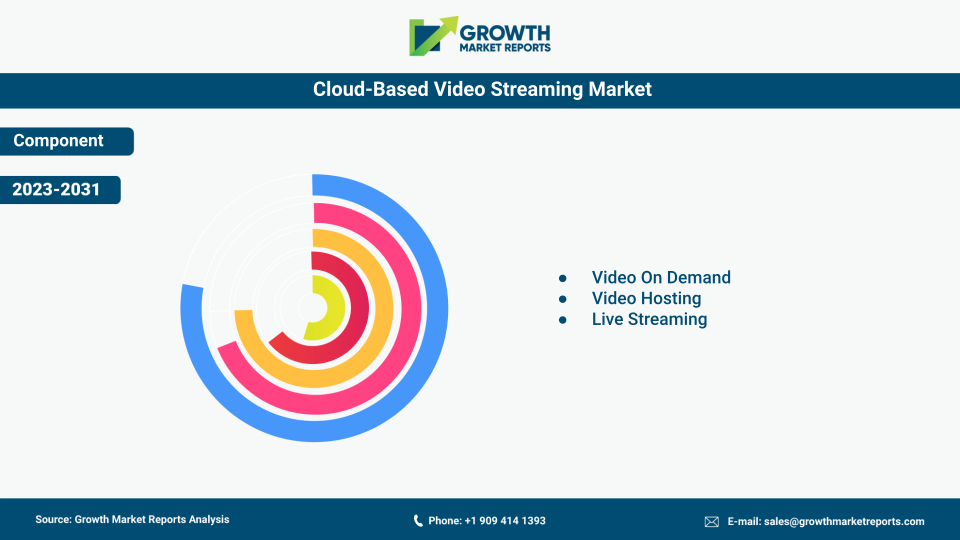
The component segment of the cloud-based video streaming market is bifurcated into platform and services, each playing a crucial role in the overall ecosystem. The platform segment encompasses the core infrastructure required to deliver, manage, and scale video content in the cloud. This includes content management systems, video encoding and transcoding solutions, content delivery networks (CDNs), and analytics tools. As organizations strive to deliver high-quality, buffer-free streaming experiences, the demand for robust and scalable platforms has surged. These platforms are increasingly integrating advanced technologies such as artificial intelligence for content recommendation and real-time analytics, enabling providers to optimize delivery and enhance user experiences.

Streaming Hardware plays a crucial role in the delivery of high-quality video content, ensuring that viewers receive a seamless and immersive experience. As the demand for video streaming continues to grow, the need for advanced hardware solutions that can support high-definition and ultra-high-definition content is becoming increasingly important. Streaming hardware, including encoders, decoders, and media servers, is essential for processing and delivering video content efficiently. These devices are designed to handle large volumes of data, optimize bandwidth usage, and reduce latency, ensuring that viewers enjoy uninterrupted streaming even during peak demand periods. The evolution of streaming hardware is also driving innovation in areas such as edge computing and adaptive bitrate streaming, further enhancing the quality and reliability of video delivery.

Services, on the other hand, include managed services, consulting, integration, and support services that help organizations deploy and maintain their cloud-based video streaming solutions. Managed services are gaining traction as enterprises look to outsource the complexities of video infrastructure management, allowing them to focus on core business activities. Consulting and integration services are particularly important for organizations transitioning from legacy systems to cloud-based architectures. These services ensure seamless migration, integration with existing IT environments, and adherence to security and compliance standards. The growing sophistication of video streaming requirements, including multi-device compatibility and global content delivery, is driving the demand for specialized services tailored to the unique needs of different industries.

The interplay between platform and services is critical for the successful deployment and operation of cloud-based video streaming solutions. While platforms provide the technological backbone, services ensure that these platforms are effectively implemented, optimized, and maintained. As competition intensifies, vendors are increasingly offering bundled solutions that combine both platform capabilities and value-added services. This integrated approach not only simplifies procurement for customers but also enhances the overall value proposition by ensuring end-to-end support throughout the video streaming lifecycle. The ability to offer comprehensive solutions is emerging as a key differentiator in the market, influencing vendor selection and customer loyalty.

Innovation within the component segment is also being driven by the need for enhanced security, scalability, and interoperability. As video content becomes a critical asset for organizations, ensuring its protection against unauthorized access, piracy, and cyber threats is paramount. Platform providers are investing in advanced encryption, digital rights management (DRM), and secure delivery mechanisms to address these concerns. At the same time, services are evolving to include proactive monitoring, threat detection, and incident response capabilities. The convergence of platform and services, underpinned by a strong focus on security and compliance, is shaping the future trajectory of the cloud-based video streaming market.

Report Scope

Attributes Details
Report Title Cloud-Based Video Streaming Market Research Report 2033
By Component Platform, Services
By Streaming Type Live Streaming, Video on Demand
By Deployment Mode Public Cloud, Private Cloud, Hybrid Cloud
By Application Media & Entertainment, Education, Healthcare, Enterprise, Government, Others
By End-User Individual, Commercial
Regions Covered North America, Europe, APAC, Latin America, MEA
Base Year 2024
Historic Data 2018-2023
Forecast Period 2025-2033
Number of Pages 289
Number of Tables & Figures 283
Customization Available Yes, the report can be customized as per your need.

Streaming Type Analysis

The streaming type segment of the cloud-based video streaming market is primarily divided into live streaming and video on demand (VoD), each catering to distinct use cases and audience preferences. Live streaming has gained significant momentum, particularly in sectors such as sports, entertainment, gaming, and corporate events. The ability to broadcast events in real-time to a global audience has transformed the way content is consumed and monetized. Live streaming platforms leverage cloud infrastructure to ensure low latency, high availability, and seamless scalability, enabling broadcasters to accommodate millions of concurrent viewers without compromising on quality. The rise of interactive features, such as live chats, polls, and real-time feedback, is further enhancing user engagement and driving adoption across various verticals.

Cloud Transcoding is revolutionizing the way video content is processed and delivered across different platforms and devices. As the consumption of video content becomes increasingly diverse, the ability to transcode video files into multiple formats and resolutions is critical for ensuring compatibility and optimal viewing experiences. Cloud transcoding solutions offer the flexibility and scalability needed to handle large volumes of video content, enabling providers to deliver high-quality streams to a global audience. By leveraging the power of cloud computing, these solutions can dynamically adjust to changing demand, ensuring efficient resource utilization and cost-effectiveness. The integration of cloud transcoding into video streaming workflows is enhancing the ability of providers to meet the growing expectations of viewers for seamless, high-definition content across all devices.

Video on demand (VoD) continues to be the dominant streaming type, accounting for the largest share of the cloud-based video streaming market. VoD platforms offer users the flexibility to access content at their convenience, with extensive libraries spanning movies, TV shows, educational content, and more. The proliferation of subscription-based and ad-supported VoD services has reshaped the media and entertainment landscape, giving rise to new business models and revenue streams. Cloud-based VoD platforms leverage advanced content management, recommendation engines, and analytics to deliver personalized viewing experiences, optimize content discovery, and maximize user retention. The ability to support multiple devices and deliver high-definition content is a key factor driving the widespread adoption of VoD solutions.

The convergence of live streaming and VoD is giving rise to hybrid models that combine the best of both worlds. For instance, events that are broadcast live are often made available on demand shortly after the live stream ends, allowing users to catch up at their convenience. This hybrid approach is particularly popular in sectors such as education, where live lectures are recorded and archived for future reference. Enterprises are also leveraging hybrid streaming solutions for internal communications, training, and customer engagement, ensuring that content is accessible to both live and on-demand audiences. The flexibility and scalability of cloud-based platforms are instrumental in supporting these hybrid use cases, enabling organizations to maximize reach and impact.

Technological advancements are further enhancing the capabilities of both live streaming and VoD platforms. The adoption of adaptive bitrate streaming, edge computing, and artificial intelligence is improving video quality, reducing buffering, and enabling real-time content personalization. As user expectations continue to evolve, the ability to deliver seamless, high-quality streaming experiences across diverse devices and network conditions is becoming a key competitive differentiator. The streaming type segment is expected to witness continued innovation and growth, driven by the increasing demand for immersive, interactive, and flexible content delivery solutions.

Deployment Mode Analysis

The deployment mode segment of the cloud-based video streaming market encompasses public cloud, private cloud, and hybrid cloud models, each offering distinct advantages and catering to different organizational needs. Public cloud deployment remains the most widely adopted model, favored for its cost-effectiveness, scalability, and ease of access. Leading public cloud providers offer robust infrastructure, global content delivery networks, and a wide range of value-added services, making it an attractive option for organizations seeking to rapidly deploy and scale their video streaming operations. Public cloud solutions are particularly popular among startups, small and medium enterprises, and consumer-focused platforms that prioritize agility and cost efficiency.

Private cloud deployment is gaining traction among organizations with stringent security, compliance, and data sovereignty requirements. By leveraging dedicated infrastructure, private cloud solutions offer enhanced control, customization, and isolation, making them ideal for sectors such as government, healthcare, and finance. Organizations can tailor their private cloud environments to meet specific regulatory standards, implement advanced security measures, and ensure that sensitive content remains protected at all times. While private cloud deployments typically involve higher upfront costs compared to public cloud, the long-term benefits in terms of security, compliance, and operational control are driving increased adoption among large enterprises and regulated industries.

Hybrid cloud deployment combines the best features of both public and private cloud models, offering organizations the flexibility to balance performance, security, and cost. In a hybrid cloud environment, organizations can leverage public cloud resources for non-sensitive workloads and high-traffic scenarios, while retaining sensitive data and mission-critical applications in a private cloud. This approach enables seamless workload migration, disaster recovery, and business continuity, ensuring uninterrupted service delivery even in the face of unexpected events. Hybrid cloud deployments are particularly well-suited for organizations with diverse operational requirements, enabling them to optimize resource utilization and adapt to changing business needs.

The choice of deployment mode is influenced by a range of factors, including organizational size, industry regulations, budget constraints, and strategic objectives. As cloud technologies continue to evolve, deployment models are becoming increasingly sophisticated, offering enhanced interoperability, automation, and management capabilities. The emergence of multi-cloud strategies, where organizations leverage multiple cloud providers and deployment models, is further expanding the options available to video streaming providers. The ability to seamlessly integrate and manage diverse cloud environments is emerging as a key success factor, enabling organizations to deliver high-quality streaming experiences while optimizing costs and mitigating risks.

Application Analysis

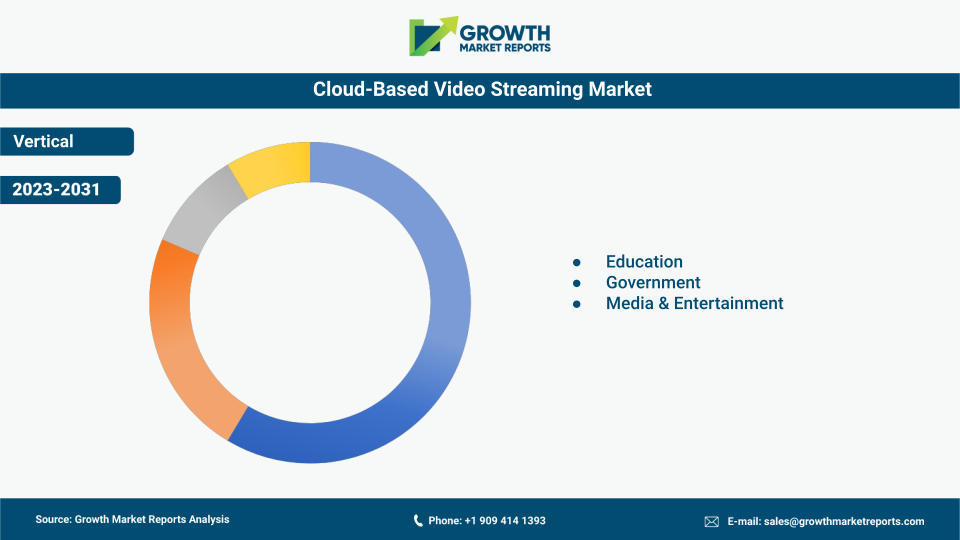
The application segment of the cloud-based video streaming market spans a diverse range of industries, including media & entertainment, education, healthcare, enterprise, government, and others. Media & entertainment remains the largest and most mature application area, driven by the insatiable demand for digital content, the rise of over-the-top (OTT) platforms, and the shift towards direct-to-consumer models. Leading media companies are leveraging cloud-based video streaming solutions to deliver high-definition content, support global distribution, and monetize through subscriptions, advertising, and pay-per-view models. The integration of advanced analytics, content recommendation engines, and interactive features is further enhancing user engagement and driving revenue growth in this segment.

The education sector is experiencing a significant transformation, with cloud-based video streaming playing a pivotal role in enabling remote learning, virtual classrooms, and digital content delivery. Educational institutions are adopting video streaming platforms to facilitate live lectures, webinars, and on-demand access to course materials, ensuring continuity of learning in the face of disruptions such as the COVID-19 pandemic. The ability to deliver interactive, personalized, and accessible learning experiences is driving widespread adoption across K-12, higher education, and corporate training environments. Cloud-based solutions offer the scalability, flexibility, and cost-effectiveness required to support diverse learning needs and large student populations.

In the healthcare sector, cloud-based video streaming is revolutionizing patient care, medical education, and telemedicine. Healthcare providers are leveraging video streaming platforms to conduct remote consultations, deliver medical training, and facilitate real-time collaboration among clinicians. The ability to securely stream high-definition video, share medical images, and integrate with electronic health records is enhancing the quality of care and improving patient outcomes. Regulatory compliance, data security, and interoperability are critical considerations in this segment, driving the adoption of specialized cloud-based solutions tailored to the unique needs of healthcare organizations.

Enterprises across various industries are increasingly adopting cloud-based video streaming for internal communications, training, marketing, and customer engagement. Video is emerging as a powerful tool for enhancing collaboration, disseminating information, and driving employee engagement. Organizations are leveraging live streaming for town hall meetings, product launches, and corporate events, while on-demand video is being used for training, onboarding, and knowledge sharing. The government sector is also embracing cloud-based video streaming for public communications, emergency response, and citizen engagement initiatives. The ability to deliver secure, scalable, and accessible video content is transforming the way organizations interact with employees, customers, and stakeholders.

End-User Analysis

The end-user segment of the cloud-based video streaming market is divided into individual and commercial users, each with distinct requirements and usage patterns. Individual users represent a significant portion of the market, driven by the growing popularity of consumer-focused streaming platforms such as Netflix, YouTube, and Amazon Prime Video. The demand for high-quality, on-demand content, personalized recommendations, and multi-device compatibility is shaping the development of consumer streaming solutions. Cloud-based platforms enable individual users to access a vast library of content, enjoy seamless playback across devices, and benefit from features such as offline viewing, parental controls, and social sharing.

Commercial users, including businesses, educational institutions, healthcare providers, and government agencies, are increasingly leveraging cloud-based video streaming to achieve a wide range of objectives. In the corporate sector, video streaming is being used for internal communications, training, marketing, and customer engagement. Educational institutions are adopting video streaming for remote learning, virtual classrooms, and digital content delivery. Healthcare providers are utilizing video streaming for telemedicine, remote consultations, and medical training. Government agencies are deploying video streaming solutions for public communications, emergency response, and citizen engagement initiatives. The ability to deliver secure, scalable, and customizable video content is critical for commercial users, driving the adoption of enterprise-grade cloud-based solutions.

The needs of individual and commercial users are converging in some areas, particularly as consumer-grade features such as personalized recommendations, interactive content, and social sharing are increasingly being adopted in enterprise and educational settings. At the same time, commercial users require advanced capabilities such as integration with existing IT systems, compliance with industry regulations, and support for large-scale deployments. Vendors are responding by offering flexible, modular solutions that can be tailored to the unique requirements of different end-user segments. The ability to address the diverse needs of both individual and commercial users is emerging as a key differentiator in the competitive landscape.

The growth of the end-user segment is being driven by a combination of technological advancements, changing consumer preferences, and the increasing importance of video as a communication, education, and entertainment tool. As the market continues to evolve, the ability to deliver high-quality, personalized, and secure video experiences will be critical to capturing and retaining users across both individual and commercial segments. The ongoing convergence of consumer and enterprise requirements is expected to drive continued innovation and growth in the cloud-based video streaming market.

Opportunities & Threats

The cloud-based video streaming market presents a multitude of opportunities for growth and innovation. One of the most promising areas is the integration of artificial intelligence and machine learning to enhance content discovery, personalization, and user engagement. AI-powered recommendation engines, real-time analytics, and automated content tagging are enabling providers to deliver more relevant and engaging experiences, driving user retention and monetization. The emergence of immersive technologies such as virtual reality (VR) and augmented reality (AR) is also creating new opportunities for interactive and experiential content delivery. As 5G networks become more widespread, the ability to deliver ultra-high-definition and low-latency streaming experiences will open up new use cases in gaming, sports, and live events.

Another significant opportunity lies in the expansion of cloud-based video streaming into emerging markets and underserved regions. As internet penetration and digital infrastructure improve in countries across Asia Pacific, Latin America, and Africa, there is substantial potential to tap into new user bases and drive market growth. Localized content, regional partnerships, and affordable pricing models will be key to capturing these opportunities. Enterprises and educational institutions in these regions are also increasingly adopting cloud-based video streaming to support remote work, online learning, and digital transformation initiatives. The ability to offer scalable, cost-effective, and accessible solutions will be critical to success in these high-growth markets.

Despite the numerous opportunities, the cloud-based video streaming market faces several restraining factors. Chief among these is the challenge of ensuring consistent quality of service in the face of network congestion, bandwidth limitations, and variable internet connectivity. Buffering, latency, and video quality degradation can significantly impact user satisfaction and retention, particularly in regions with less developed digital infrastructure. Security and privacy concerns also pose significant risks, as the proliferation of video content increases the potential for unauthorized access, piracy, and cyberattacks. Regulatory compliance, data sovereignty, and content licensing issues further complicate the operating environment, requiring providers to invest in robust security, compliance, and rights management solutions.

Regional Outlook

North America remains the largest and most mature market for cloud-based video streaming, accounting for approximately USD 33.8 billion of the global market in 2024. The region's leadership is underpinned by high internet penetration, a strong digital content ecosystem, and the presence of leading technology providers. The United States and Canada are at the forefront of innovation, with widespread adoption of OTT platforms, advanced cloud infrastructure, and a tech-savvy consumer base. The region is also witnessing strong enterprise adoption, with organizations across sectors leveraging video streaming for communication, training, and customer engagement. North America is expected to maintain its dominance over the forecast period, supported by ongoing investments in 5G, AI, and content delivery technologies.

Europe is the second-largest regional market, with a market size of USD 22.1 billion in 2024. The region is characterized by a diverse media landscape, strong regulatory frameworks, and high levels of digital adoption. Countries such as the United Kingdom, Germany, and France are leading the way in terms of cloud-based video streaming adoption, driven by the proliferation of OTT platforms, growing demand for localized content, and increasing investments in digital infrastructure. The European market is also witnessing significant growth in enterprise and educational applications, as organizations embrace remote work and online learning. The region is projected to grow at a CAGR of 16.5% through 2033, driven by ongoing digital transformation initiatives and the expansion of high-speed broadband networks.

The Asia Pacific region is emerging as the fastest-growing market for cloud-based video streaming, with a market size of USD 18.7 billion in 2024 and a forecasted CAGR of 22.3% through 2033. Rapid urbanization, increasing internet penetration, and the rising popularity of local and regional streaming platforms are key factors driving growth in countries such as China, India, Japan, and South Korea. The region is also witnessing strong enterprise and educational adoption, as organizations leverage video streaming to support digital transformation and remote engagement. Latin America and the Middle East & Africa are also experiencing steady growth, supported by improving digital infrastructure and increasing demand for digital content. The combined market size for these regions was approximately USD 10.7 billion in 2024, with significant potential for future expansion as internet access and digital literacy continue to improve.

Cloud-Based Video Streaming Market Statistics

Competitor Outlook

The cloud-based video streaming market is characterized by intense competition, rapid innovation, and a dynamic ecosystem of global and regional players. The competitive landscape is shaped by the presence of leading technology providers, established media companies, and a growing number of startups and niche players. Major vendors are continuously investing in research and development to enhance their platform capabilities, expand their service offerings, and differentiate themselves through advanced features such as AI-driven personalization, real-time analytics, and immersive content delivery. Strategic partnerships, mergers and acquisitions, and geographic expansion are common strategies employed by market leaders to strengthen their market position and tap into new growth opportunities.

The market is also witnessing the emergence of specialized players focused on specific verticals, use cases, or regions. These companies are leveraging deep industry expertise, local market knowledge, and tailored solutions to address the unique needs of different customer segments. For example, some vendors specialize in healthcare or education, offering secure, compliant, and feature-rich video streaming solutions designed for these sectors. Others focus on live streaming, gaming, or sports, delivering ultra-low latency and high-quality experiences for demanding applications. The ability to offer end-to-end solutions, including platform, services, and integration with third-party systems, is emerging as a key differentiator in the competitive landscape.

Innovation is a key driver of competitive advantage in the cloud-based video streaming market. Leading vendors are investing in advanced technologies such as edge computing, AI, machine learning, and blockchain to enhance the performance, security, and scalability of their solutions. The adoption of open standards, APIs, and interoperability frameworks is enabling seamless integration with existing IT environments and third-party applications, further enhancing the value proposition for customers. As the market continues to evolve, the ability to anticipate and respond to changing customer needs, regulatory requirements, and technological advancements will be critical to sustaining competitive advantage and driving long-term growth.

Some of the major companies operating in the cloud-based video streaming market include Amazon Web Services (AWS), Microsoft Azure, Google Cloud Platform, IBM Cloud Video, Akamai Technologies, Brightcove, Wowza Media Systems, Vimeo, Kaltura, Oracle Cloud, and Harmonic Inc.. AWS offers a comprehensive suite of video streaming solutions, including AWS Elemental Media Services and Amazon CloudFront, enabling scalable, secure, and high-quality content delivery. Microsoft Azure provides Azure Media Services, supporting live and on-demand streaming, content protection, and analytics. Google Cloud Platform offers end-to-end video streaming solutions, leveraging its global infrastructure and AI capabilities for personalized content delivery. IBM Cloud Video specializes in enterprise-grade streaming solutions, with a focus on security, scalability, and integration with existing IT systems.

Akamai Technologies is a leading provider of content delivery network (CDN) solutions, optimizing video streaming performance and reliability for global audiences. Brightcove and Wowza Media Systems are recognized for their flexible, feature-rich platforms that support a wide range of streaming use cases, from live events to on-demand content delivery. Vimeo and Kaltura offer cloud-based video platforms tailored for business, education, and enterprise applications, with a strong emphasis on user experience, customization, and integration. Oracle Cloud and Harmonic Inc. provide robust infrastructure and media processing solutions, enabling organizations to deliver high-quality video content at scale. These companies are at the forefront of innovation, driving the evolution of the cloud-based video streaming market and shaping the future of digital content delivery.

Key Players

  • Amazon Web Services (AWS)
  • Microsoft Corporation (Azure)
  • Google LLC (Google Cloud Platform)
  • IBM Corporation
  • Apple Inc.
  • Netflix Inc.
  • Hulu LLC
  • Tencent Cloud
  • Alibaba Cloud
  • Akamai Technologies
  • Brightcove Inc.
  • Kaltura Inc.
  • Wowza Media Systems
  • Vimeo Inc.
  • Cisco Systems Inc.
  • Oracle Corporation
  • Sony Corporation
  • Rakuten Group, Inc.
  • Muvi LLC
  • JW Player Inc.
Cloud-Based Video Streaming Market Overview

Segments

The Cloud-Based Video Streaming market has been segmented on the basis of

Component

  • Platform
  • Services

Streaming Type

  • Live Streaming
  • Video on Demand

Deployment Mode

  • Public Cloud
  • Private Cloud
  • Hybrid Cloud

Application

  • Media & Entertainment
  • Education
  • Healthcare
  • Enterprise
  • Government
  • Others

End-User

  • Individual
  • Commercial

Competitive Landscape

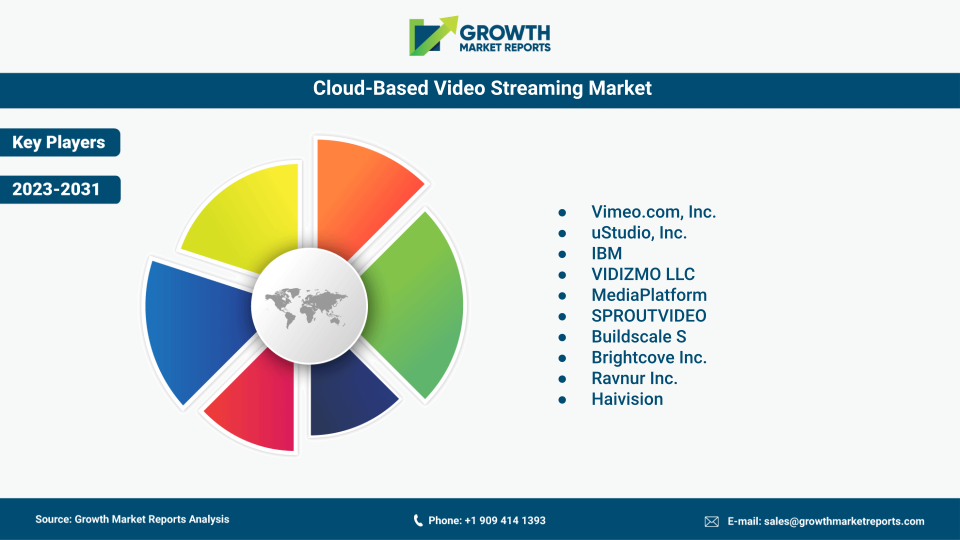
Key players competing in the global cloud-based video streaming market are Vimeo.com, Inc.; IBM; uStudio, Inc.; VIDIZMO LLC; MediaPlatform; SPROUTVIDEO; Buildscale; Brightcove Inc.; Ravnur Inc.; and Haivision

These companies in the cloud-based video streaming market adopted development strategies including diversifying product portfolios, acquisitions, mergers, collaboration, partnerships, product launches, and production expansion to expand their consumer base worldwide. For instance,

  • In March 2022, uStudio, a leading cloud-based video streaming platform services provider announced the integration of enterprise podcasting including video and audio content into Microsoft 365. uStudio consumers can access enterprise video and audio podcast content through Microsoft SharePoint, Search, and Teams applications.

Cloud-Based Video Streaming Market Key Players

Frequently Asked Questions

Yes, the report offers customization options to meet specific research or business requirements.

Opportunities include AI-driven personalization, immersive technologies (VR/AR), and expansion into emerging markets. Challenges involve ensuring quality of service, security, privacy, and regulatory compliance.

Leading companies include Amazon Web Services (AWS), Microsoft Azure, Google Cloud Platform, IBM Cloud Video, Akamai Technologies, Brightcove, Wowza Media Systems, Vimeo, Kaltura, Oracle Cloud, and Harmonic Inc.

Major industries include media & entertainment, education, healthcare, enterprise, and government, each leveraging video streaming for content delivery, training, communication, and engagement.

Deployment models include public cloud (cost-effective, scalable), private cloud (secure, customizable), and hybrid cloud (combining public and private benefits for flexibility and control).

The main types are live streaming and video on demand (VoD). Live streaming is popular for events and real-time broadcasts, while VoD dominates with flexible, on-demand content access.

The market is divided into platform (content management, encoding, CDN, analytics) and services (managed services, consulting, integration, and support). Both are essential for successful deployment and operation.

North America holds the largest market share, followed by Europe and Asia Pacific. The Asia Pacific region is the fastest-growing due to rapid internet adoption and investments in digital infrastructure.

Key growth drivers include increasing demand for high-quality, on-demand video content, advancements in cloud technology, widespread internet penetration, adoption of smart devices, and the rollout of 5G networks.

As of 2024, the global cloud-based video streaming market is valued at USD 85.3 billion, with expectations to reach USD 343.5 billion by 2033.

Table Of Content

Chapter 1 Executive Summary
Chapter 2 Assumptions and Acronyms Used
Chapter 3 Research Methodology
Chapter 4 Cloud-Based Video Streaming Market Overview
   4.1 Introduction
      4.1.1 Market Taxonomy
      4.1.2 Market Definition
      4.1.3 Macro-Economic Factors Impacting the Market Growth
   4.2 Cloud-Based Video Streaming Market Dynamics
      4.2.1 Market Drivers
      4.2.2 Market Restraints
      4.2.3 Market Opportunity
   4.3 Cloud-Based Video Streaming Market - Supply Chain Analysis
      4.3.1 List of Key Suppliers
      4.3.2 List of Key Distributors
      4.3.3 List of Key Consumers
   4.4 Key Forces Shaping the Cloud-Based Video Streaming Market
      4.4.1 Bargaining Power of Suppliers
      4.4.2 Bargaining Power of Buyers
      4.4.3 Threat of Substitution
      4.4.4 Threat of New Entrants
      4.4.5 Competitive Rivalry
   4.5 Global Cloud-Based Video Streaming Market Size & Forecast, 2023-2032
      4.5.1 Cloud-Based Video Streaming Market Size and Y-o-Y Growth
      4.5.2 Cloud-Based Video Streaming Market Absolute $ Opportunity

Chapter 5 Global Cloud-Based Video Streaming Market Analysis and Forecast By Component
   5.1 Introduction
      5.1.1 Key Market Trends & Growth Opportunities By Component
      5.1.2 Basis Point Share (BPS) Analysis By Component
      5.1.3 Absolute $ Opportunity Assessment By Component
   5.2 Cloud-Based Video Streaming Market Size Forecast By Component
      5.2.1 Platform
      5.2.2 Services
   5.3 Market Attractiveness Analysis By Component

Chapter 6 Global Cloud-Based Video Streaming Market Analysis and Forecast By Streaming Type
   6.1 Introduction
      6.1.1 Key Market Trends & Growth Opportunities By Streaming Type
      6.1.2 Basis Point Share (BPS) Analysis By Streaming Type
      6.1.3 Absolute $ Opportunity Assessment By Streaming Type
   6.2 Cloud-Based Video Streaming Market Size Forecast By Streaming Type
      6.2.1 Live Streaming
      6.2.2 Video on Demand
   6.3 Market Attractiveness Analysis By Streaming Type

Chapter 7 Global Cloud-Based Video Streaming Market Analysis and Forecast By Deployment Mode
   7.1 Introduction
      7.1.1 Key Market Trends & Growth Opportunities By Deployment Mode
      7.1.2 Basis Point Share (BPS) Analysis By Deployment Mode
      7.1.3 Absolute $ Opportunity Assessment By Deployment Mode
   7.2 Cloud-Based Video Streaming Market Size Forecast By Deployment Mode
      7.2.1 Public Cloud
      7.2.2 Private Cloud
      7.2.3 Hybrid Cloud
   7.3 Market Attractiveness Analysis By Deployment Mode

Chapter 8 Global Cloud-Based Video Streaming Market Analysis and Forecast By Application
   8.1 Introduction
      8.1.1 Key Market Trends & Growth Opportunities By Application
      8.1.2 Basis Point Share (BPS) Analysis By Application
      8.1.3 Absolute $ Opportunity Assessment By Application
   8.2 Cloud-Based Video Streaming Market Size Forecast By Application
      8.2.1 Media & Entertainment
      8.2.2 Education
      8.2.3 Healthcare
      8.2.4 Enterprise
      8.2.5 Government
      8.2.6 Others
   8.3 Market Attractiveness Analysis By Application

Chapter 9 Global Cloud-Based Video Streaming Market Analysis and Forecast By End-User
   9.1 Introduction
      9.1.1 Key Market Trends & Growth Opportunities By End-User
      9.1.2 Basis Point Share (BPS) Analysis By End-User
      9.1.3 Absolute $ Opportunity Assessment By End-User
   9.2 Cloud-Based Video Streaming Market Size Forecast By End-User
      9.2.1 Individual
      9.2.2 Commercial
   9.3 Market Attractiveness Analysis By End-User

Chapter 10 Global Cloud-Based Video Streaming Market Analysis and Forecast by Region
   10.1 Introduction
      10.1.1 Key Market Trends & Growth Opportunities By Region
      10.1.2 Basis Point Share (BPS) Analysis By Region
      10.1.3 Absolute $ Opportunity Assessment By Region
   10.2 Cloud-Based Video Streaming Market Size Forecast By Region
      10.2.1 North America
      10.2.2 Europe
      10.2.3 Asia Pacific
      10.2.4 Latin America
      10.2.5 Middle East & Africa (MEA)
   10.3 Market Attractiveness Analysis By Region

Chapter 11 Coronavirus Disease (COVID-19) Impact 
   11.1 Introduction 
   11.2 Current & Future Impact Analysis 
   11.3 Economic Impact Analysis 
   11.4 Government Policies 
   11.5 Investment Scenario

Chapter 12 North America Cloud-Based Video Streaming Analysis and Forecast
   12.1 Introduction
   12.2 North America Cloud-Based Video Streaming Market Size Forecast by Country
      12.2.1 U.S.
      12.2.2 Canada
   12.3 Basis Point Share (BPS) Analysis by Country
   12.4 Absolute $ Opportunity Assessment by Country
   12.5 Market Attractiveness Analysis by Country
   12.6 North America Cloud-Based Video Streaming Market Size Forecast By Component
      12.6.1 Platform
      12.6.2 Services
   12.7 Basis Point Share (BPS) Analysis By Component 
   12.8 Absolute $ Opportunity Assessment By Component 
   12.9 Market Attractiveness Analysis By Component
   12.10 North America Cloud-Based Video Streaming Market Size Forecast By Streaming Type
      12.10.1 Live Streaming
      12.10.2 Video on Demand
   12.11 Basis Point Share (BPS) Analysis By Streaming Type 
   12.12 Absolute $ Opportunity Assessment By Streaming Type 
   12.13 Market Attractiveness Analysis By Streaming Type
   12.14 North America Cloud-Based Video Streaming Market Size Forecast By Deployment Mode
      12.14.1 Public Cloud
      12.14.2 Private Cloud
      12.14.3 Hybrid Cloud
   12.15 Basis Point Share (BPS) Analysis By Deployment Mode 
   12.16 Absolute $ Opportunity Assessment By Deployment Mode 
   12.17 Market Attractiveness Analysis By Deployment Mode
   12.18 North America Cloud-Based Video Streaming Market Size Forecast By Application
      12.18.1 Media & Entertainment
      12.18.2 Education
      12.18.3 Healthcare
      12.18.4 Enterprise
      12.18.5 Government
      12.18.6 Others
   12.19 Basis Point Share (BPS) Analysis By Application 
   12.20 Absolute $ Opportunity Assessment By Application 
   12.21 Market Attractiveness Analysis By Application
   12.22 North America Cloud-Based Video Streaming Market Size Forecast By End-User
      12.22.1 Individual
      12.22.2 Commercial
   12.23 Basis Point Share (BPS) Analysis By End-User 
   12.24 Absolute $ Opportunity Assessment By End-User 
   12.25 Market Attractiveness Analysis By End-User

Chapter 13 Europe Cloud-Based Video Streaming Analysis and Forecast
   13.1 Introduction
   13.2 Europe Cloud-Based Video Streaming Market Size Forecast by Country
      13.2.1 Germany
      13.2.2 France
      13.2.3 Italy
      13.2.4 U.K.
      13.2.5 Spain
      13.2.6 Russia
      13.2.7 Rest of Europe
   13.3 Basis Point Share (BPS) Analysis by Country
   13.4 Absolute $ Opportunity Assessment by Country
   13.5 Market Attractiveness Analysis by Country
   13.6 Europe Cloud-Based Video Streaming Market Size Forecast By Component
      13.6.1 Platform
      13.6.2 Services
   13.7 Basis Point Share (BPS) Analysis By Component 
   13.8 Absolute $ Opportunity Assessment By Component 
   13.9 Market Attractiveness Analysis By Component
   13.10 Europe Cloud-Based Video Streaming Market Size Forecast By Streaming Type
      13.10.1 Live Streaming
      13.10.2 Video on Demand
   13.11 Basis Point Share (BPS) Analysis By Streaming Type 
   13.12 Absolute $ Opportunity Assessment By Streaming Type 
   13.13 Market Attractiveness Analysis By Streaming Type
   13.14 Europe Cloud-Based Video Streaming Market Size Forecast By Deployment Mode
      13.14.1 Public Cloud
      13.14.2 Private Cloud
      13.14.3 Hybrid Cloud
   13.15 Basis Point Share (BPS) Analysis By Deployment Mode 
   13.16 Absolute $ Opportunity Assessment By Deployment Mode 
   13.17 Market Attractiveness Analysis By Deployment Mode
   13.18 Europe Cloud-Based Video Streaming Market Size Forecast By Application
      13.18.1 Media & Entertainment
      13.18.2 Education
      13.18.3 Healthcare
      13.18.4 Enterprise
      13.18.5 Government
      13.18.6 Others
   13.19 Basis Point Share (BPS) Analysis By Application 
   13.20 Absolute $ Opportunity Assessment By Application 
   13.21 Market Attractiveness Analysis By Application
   13.22 Europe Cloud-Based Video Streaming Market Size Forecast By End-User
      13.22.1 Individual
      13.22.2 Commercial
   13.23 Basis Point Share (BPS) Analysis By End-User 
   13.24 Absolute $ Opportunity Assessment By End-User 
   13.25 Market Attractiveness Analysis By End-User

Chapter 14 Asia Pacific Cloud-Based Video Streaming Analysis and Forecast
   14.1 Introduction
   14.2 Asia Pacific Cloud-Based Video Streaming Market Size Forecast by Country
      14.2.1 China
      14.2.2 Japan
      14.2.3 South Korea
      14.2.4 India
      14.2.5 Australia
      14.2.6 South East Asia (SEA)
      14.2.7 Rest of Asia Pacific (APAC)
   14.3 Basis Point Share (BPS) Analysis by Country
   14.4 Absolute $ Opportunity Assessment by Country
   14.5 Market Attractiveness Analysis by Country
   14.6 Asia Pacific Cloud-Based Video Streaming Market Size Forecast By Component
      14.6.1 Platform
      14.6.2 Services
   14.7 Basis Point Share (BPS) Analysis By Component 
   14.8 Absolute $ Opportunity Assessment By Component 
   14.9 Market Attractiveness Analysis By Component
   14.10 Asia Pacific Cloud-Based Video Streaming Market Size Forecast By Streaming Type
      14.10.1 Live Streaming
      14.10.2 Video on Demand
   14.11 Basis Point Share (BPS) Analysis By Streaming Type 
   14.12 Absolute $ Opportunity Assessment By Streaming Type 
   14.13 Market Attractiveness Analysis By Streaming Type
   14.14 Asia Pacific Cloud-Based Video Streaming Market Size Forecast By Deployment Mode
      14.14.1 Public Cloud
      14.14.2 Private Cloud
      14.14.3 Hybrid Cloud
   14.15 Basis Point Share (BPS) Analysis By Deployment Mode 
   14.16 Absolute $ Opportunity Assessment By Deployment Mode 
   14.17 Market Attractiveness Analysis By Deployment Mode
   14.18 Asia Pacific Cloud-Based Video Streaming Market Size Forecast By Application
      14.18.1 Media & Entertainment
      14.18.2 Education
      14.18.3 Healthcare
      14.18.4 Enterprise
      14.18.5 Government
      14.18.6 Others
   14.19 Basis Point Share (BPS) Analysis By Application 
   14.20 Absolute $ Opportunity Assessment By Application 
   14.21 Market Attractiveness Analysis By Application
   14.22 Asia Pacific Cloud-Based Video Streaming Market Size Forecast By End-User
      14.22.1 Individual
      14.22.2 Commercial
   14.23 Basis Point Share (BPS) Analysis By End-User 
   14.24 Absolute $ Opportunity Assessment By End-User 
   14.25 Market Attractiveness Analysis By End-User

Chapter 15 Latin America Cloud-Based Video Streaming Analysis and Forecast
   15.1 Introduction
   15.2 Latin America Cloud-Based Video Streaming Market Size Forecast by Country
      15.2.1 Brazil
      15.2.2 Mexico
      15.2.3 Rest of Latin America (LATAM)
   15.3 Basis Point Share (BPS) Analysis by Country
   15.4 Absolute $ Opportunity Assessment by Country
   15.5 Market Attractiveness Analysis by Country
   15.6 Latin America Cloud-Based Video Streaming Market Size Forecast By Component
      15.6.1 Platform
      15.6.2 Services
   15.7 Basis Point Share (BPS) Analysis By Component 
   15.8 Absolute $ Opportunity Assessment By Component 
   15.9 Market Attractiveness Analysis By Component
   15.10 Latin America Cloud-Based Video Streaming Market Size Forecast By Streaming Type
      15.10.1 Live Streaming
      15.10.2 Video on Demand
   15.11 Basis Point Share (BPS) Analysis By Streaming Type 
   15.12 Absolute $ Opportunity Assessment By Streaming Type 
   15.13 Market Attractiveness Analysis By Streaming Type
   15.14 Latin America Cloud-Based Video Streaming Market Size Forecast By Deployment Mode
      15.14.1 Public Cloud
      15.14.2 Private Cloud
      15.14.3 Hybrid Cloud
   15.15 Basis Point Share (BPS) Analysis By Deployment Mode 
   15.16 Absolute $ Opportunity Assessment By Deployment Mode 
   15.17 Market Attractiveness Analysis By Deployment Mode
   15.18 Latin America Cloud-Based Video Streaming Market Size Forecast By Application
      15.18.1 Media & Entertainment
      15.18.2 Education
      15.18.3 Healthcare
      15.18.4 Enterprise
      15.18.5 Government
      15.18.6 Others
   15.19 Basis Point Share (BPS) Analysis By Application 
   15.20 Absolute $ Opportunity Assessment By Application 
   15.21 Market Attractiveness Analysis By Application
   15.22 Latin America Cloud-Based Video Streaming Market Size Forecast By End-User
      15.22.1 Individual
      15.22.2 Commercial
   15.23 Basis Point Share (BPS) Analysis By End-User 
   15.24 Absolute $ Opportunity Assessment By End-User 
   15.25 Market Attractiveness Analysis By End-User

Chapter 16 Middle East & Africa (MEA) Cloud-Based Video Streaming Analysis and Forecast
   16.1 Introduction
   16.2 Middle East & Africa (MEA) Cloud-Based Video Streaming Market Size Forecast by Country
      16.2.1 Saudi Arabia
      16.2.2 South Africa
      16.2.3 UAE
      16.2.4 Rest of Middle East & Africa (MEA)
   16.3 Basis Point Share (BPS) Analysis by Country
   16.4 Absolute $ Opportunity Assessment by Country
   16.5 Market Attractiveness Analysis by Country
   16.6 Middle East & Africa (MEA) Cloud-Based Video Streaming Market Size Forecast By Component
      16.6.1 Platform
      16.6.2 Services
   16.7 Basis Point Share (BPS) Analysis By Component 
   16.8 Absolute $ Opportunity Assessment By Component 
   16.9 Market Attractiveness Analysis By Component
   16.10 Middle East & Africa (MEA) Cloud-Based Video Streaming Market Size Forecast By Streaming Type
      16.10.1 Live Streaming
      16.10.2 Video on Demand
   16.11 Basis Point Share (BPS) Analysis By Streaming Type 
   16.12 Absolute $ Opportunity Assessment By Streaming Type 
   16.13 Market Attractiveness Analysis By Streaming Type
   16.14 Middle East & Africa (MEA) Cloud-Based Video Streaming Market Size Forecast By Deployment Mode
      16.14.1 Public Cloud
      16.14.2 Private Cloud
      16.14.3 Hybrid Cloud
   16.15 Basis Point Share (BPS) Analysis By Deployment Mode 
   16.16 Absolute $ Opportunity Assessment By Deployment Mode 
   16.17 Market Attractiveness Analysis By Deployment Mode
   16.18 Middle East & Africa (MEA) Cloud-Based Video Streaming Market Size Forecast By Application
      16.18.1 Media & Entertainment
      16.18.2 Education
      16.18.3 Healthcare
      16.18.4 Enterprise
      16.18.5 Government
      16.18.6 Others
   16.19 Basis Point Share (BPS) Analysis By Application 
   16.20 Absolute $ Opportunity Assessment By Application 
   16.21 Market Attractiveness Analysis By Application
   16.22 Middle East & Africa (MEA) Cloud-Based Video Streaming Market Size Forecast By End-User
      16.22.1 Individual
      16.22.2 Commercial
   16.23 Basis Point Share (BPS) Analysis By End-User 
   16.24 Absolute $ Opportunity Assessment By End-User 
   16.25 Market Attractiveness Analysis By End-User

Chapter 17 Competition Landscape 
   17.1 Cloud-Based Video Streaming Market: Competitive Dashboard
   17.2 Global Cloud-Based Video Streaming Market: Market Share Analysis, 2023
   17.3 Company Profiles (Details – Overview, Financials, Developments, Strategy) 
      17.3.1 Amazon Web Services (AWS)
Microsoft Corporation (Azure)
Google LLC (Google Cloud Platform)
IBM Corporation
Apple Inc.
Netflix Inc.
Hulu LLC
Tencent Cloud
Alibaba Cloud
Akamai Technologies
Brightcove Inc.
Kaltura Inc.
Wowza Media Systems
Vimeo Inc.
Cisco Systems Inc.
Oracle Corporation
Sony Corporation
Rakuten Group, Inc.
Muvi LLC
JW Player Inc.

Methodology

Our Clients

Dassault Aviation
Deloitte
Pfizer
Honda Motor Co. Ltd.
General Electric
Nestle SA
Microsoft
FedEx Logistics