Bioactive Ingredients Market Research Report 2033

Bioactive Ingredients Market Research Report 2033

Segments - by Product Type (Prebiotics, Probiotics, Amino Acids, Peptides & Proteins, Omega-3 & Structured Lipids, Phytochemicals & Plant Extracts, Carotenoids & Antioxidants, Vitamins & Minerals, Others), by Source (Plant, Animal, Microbial, Synthetic), by Application (Functional Food & Beverages, Dietary Supplements, Personal Care, Pharmaceuticals, Animal Nutrition, Others), by Distribution Channel (Online, Supermarkets/Hypermarkets, Specialty Stores, Others)

https://growthmarketreports.com/Anuradha
Author : Anuradha B. More
https://growthmarketreports.com/Vaibhav
Fact-checked by : Vaibhav Chandola
https://growthmarketreports.com/Shruti
Editor : Shruti Bhat

Upcoming | Report ID :FB-2033 | 4.3 Rating | 77 Reviews | 271 Pages | Format : Docx PDF

Report Description


Bioactive Ingredients Market Outlook

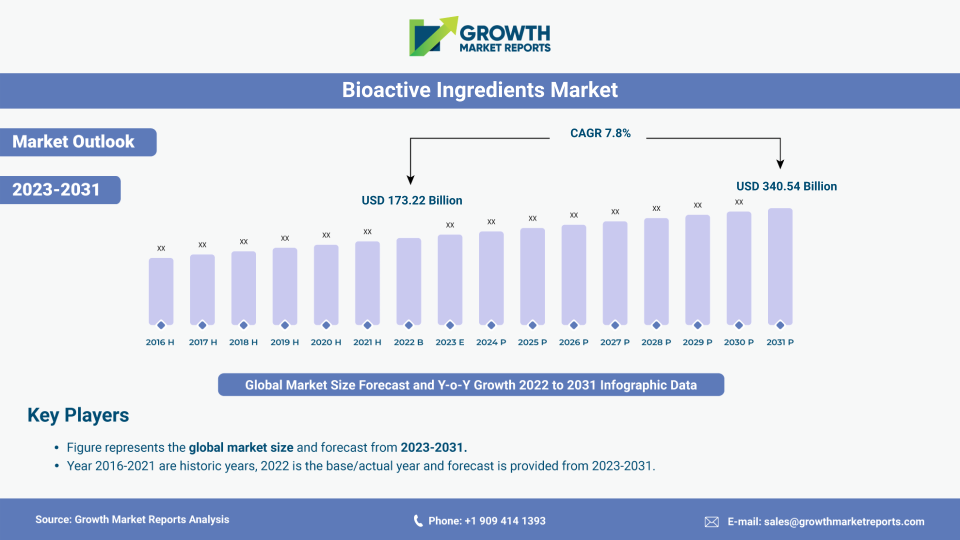
According to our latest research, the global Bioactive Ingredients market size in 2024 reached USD 42.7 billion, reflecting a robust industry driven by increasing consumer awareness of health and wellness. The market is experiencing significant growth, with a projected CAGR of 7.2% from 2025 to 2033. By the end of 2033, the bioactive ingredients market is forecasted to reach approximately USD 80.2 billion. The primary growth factor is the escalating demand for functional foods, dietary supplements, and nutraceuticals, as consumers worldwide seek products that deliver enhanced health benefits beyond basic nutrition.

One of the most influential growth drivers for the bioactive ingredients market is the increasing prevalence of lifestyle-related diseases, such as obesity, diabetes, and cardiovascular disorders. Consumers are becoming more health-conscious, prompting a shift towards preventive healthcare and wellness-oriented products. This trend is further amplified by the growing geriatric population, who are more susceptible to chronic illnesses and are actively seeking dietary supplements and functional foods enriched with bioactive compounds. The integration of bioactive ingredients in everyday food products, beverages, and personal care items is becoming a mainstream approach to address health concerns, thereby propelling market growth.

The food and beverage industry is undergoing a transformation, with manufacturers focusing on developing innovative products fortified with bioactive ingredients to meet evolving consumer preferences. The surge in demand for clean-label, natural, and organic products is encouraging companies to source bioactive compounds from plant, animal, and microbial origins. Additionally, advancements in extraction technologies and formulation methods have enabled the efficient incorporation of these ingredients without compromising taste, texture, or stability. The rise in disposable income, especially in emerging economies, is also contributing to the increased consumption of premium health and wellness products, further driving the market expansion.

Regulatory support and scientific validation are playing a crucial role in shaping the bioactive ingredients market. Governments and health authorities across the globe are recognizing the potential health benefits of these compounds and are implementing favorable regulations to ensure product safety and efficacy. This has led to increased research and development activities, resulting in the discovery of novel bioactive compounds and their applications across various industries. However, the market also faces challenges related to stringent regulatory requirements and the need for extensive clinical evidence to substantiate health claims, which can impact the pace of product launches and market penetration.

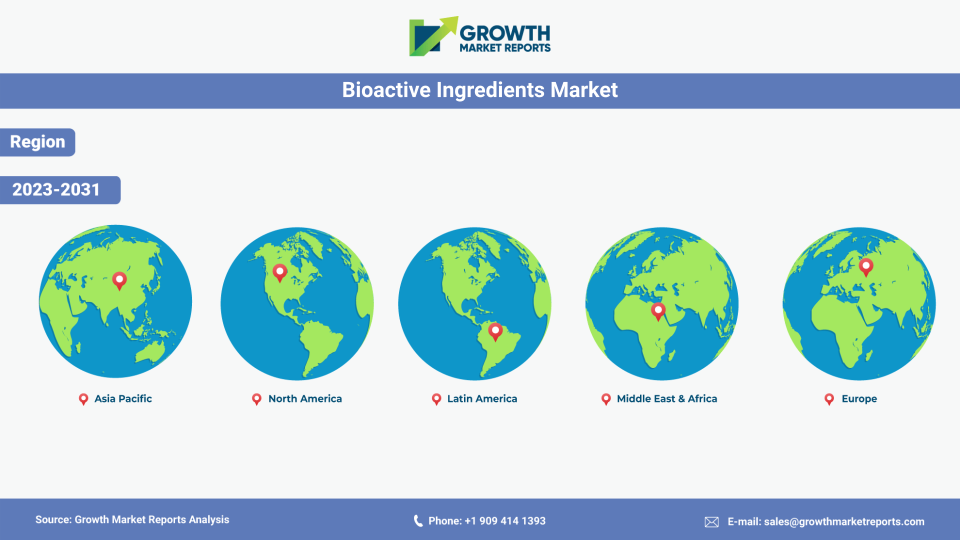
From a regional perspective, Asia Pacific is emerging as the fastest-growing market for bioactive ingredients, driven by rising health awareness, a growing middle-class population, and increasing demand for functional foods and dietary supplements. North America and Europe continue to dominate the market, owing to well-established food and beverage industries, high consumer awareness, and strong regulatory frameworks. Latin America and the Middle East & Africa are witnessing steady growth, supported by urbanization, changing dietary habits, and increasing investments in the healthcare and wellness sectors. Overall, the global bioactive ingredients market is poised for substantial growth, fueled by dynamic consumer trends, technological advancements, and expanding application scope.

Global Bioactive Ingredients Industry Outlook

Product Type Analysis

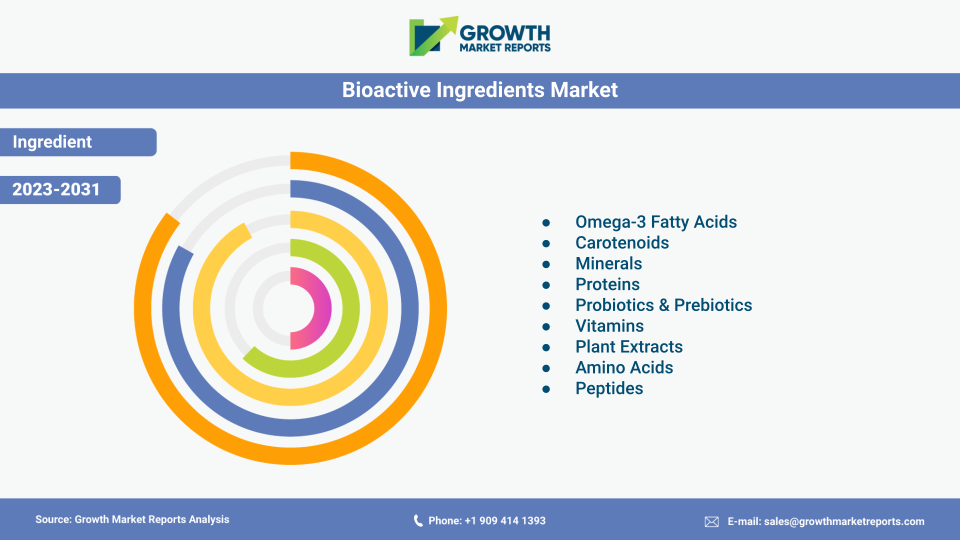
The bioactive ingredients market is segmented by product type into prebiotics, probiotics, amino acids, peptides & proteins, omega-3 & structured lipids, phytochemicals & plant extracts, carotenoids & antioxidants, vitamins & minerals, and others. Among these, probiotics and prebiotics are gaining significant traction due to their proven benefits in promoting gut health, enhancing immunity, and supporting overall well-being. The rising incidence of digestive disorders and the growing popularity of fermented foods are driving the demand for these ingredients. Probiotics, in particular, are being widely incorporated into dairy products, beverages, and dietary supplements, while prebiotics are increasingly used in functional foods to improve digestive health and nutrient absorption.

Amino acids, peptides, and proteins represent another prominent segment, fueled by the expanding sports nutrition and dietary supplement markets. These ingredients are essential for muscle growth, tissue repair, and metabolic functions, making them popular among athletes, fitness enthusiasts, and the aging population. The demand for plant-based proteins is also surging, driven by the rising trend of veganism and vegetarianism. Manufacturers are responding by developing innovative protein blends and peptide formulations that cater to diverse dietary preferences and health needs. The versatility of these ingredients enables their application in a wide range of products, from protein bars and shakes to fortified cereals and bakery items.

Omega-3 and structured lipids are witnessing robust demand, primarily due to their cardiovascular, cognitive, and anti-inflammatory benefits. Fish oil remains the dominant source of omega-3, but plant-based alternatives such as flaxseed and algal oils are gaining popularity among consumers seeking sustainable and allergen-free options. The increasing awareness of the importance of healthy fats in the diet is prompting food manufacturers to fortify their products with omega-3 fatty acids, further driving market growth. Additionally, structured lipids are being explored for their potential in weight management and metabolic health, opening new avenues for product innovation.

Phytochemicals, plant extracts, carotenoids, antioxidants, vitamins, and minerals collectively constitute a substantial share of the bioactive ingredients market. These compounds are valued for their antioxidant, anti-inflammatory, and immune-boosting properties, making them integral to functional foods, beverages, dietary supplements, and personal care products. The growing consumer preference for natural and plant-derived ingredients is fueling the demand for botanical extracts and phytochemicals. Carotenoids, such as beta-carotene and lycopene, are widely used for their role in eye health and as natural colorants, while vitamins and minerals continue to be essential fortification agents in a variety of food and beverage products.

Report Scope

Attributes Details
Report Title Bioactive Ingredients Market Research Report 2033
By Product Type Prebiotics, Probiotics, Amino Acids, Peptides & Proteins, Omega-3 & Structured Lipids, Phytochemicals & Plant Extracts, Carotenoids & Antioxidants, Vitamins & Minerals, Others
By Source Plant, Animal, Microbial, Synthetic
By Application Functional Food & Beverages, Dietary Supplements, Personal Care, Pharmaceuticals, Animal Nutrition, Others
By Distribution Channel Online, Supermarkets/Hypermarkets, Specialty Stores, Others
Regions Covered North America, Europe, APAC, Latin America, MEA
Base Year 2024
Historic Data 2018-2023
Forecast Period 2025-2033
Number of Pages 271
Number of Tables & Figures 333
Customization Available Yes, the report can be customized as per your need.

Source Analysis

Bioactive ingredients can be sourced from plants, animals, microbes, and synthetic origins, with each source offering unique benefits and applications. Plant-based sources dominate the market, driven by the increasing consumer inclination towards natural, clean-label, and sustainable products. Botanical extracts, phytochemicals, and plant proteins are widely used in functional foods, dietary supplements, and personal care products due to their perceived safety, efficacy, and minimal side effects. The growing popularity of herbal and traditional medicines, especially in Asia Pacific, is further boosting the demand for plant-derived bioactive ingredients.

Animal-based bioactive ingredients, including collagen, gelatin, omega-3 fatty acids, and certain peptides, continue to hold a significant share of the market. These ingredients are valued for their high bioavailability and potent health benefits, particularly in supporting joint, skin, and cardiovascular health. However, concerns related to animal welfare, sustainability, and allergenicity are prompting manufacturers to explore alternative sources and enhance transparency in sourcing practices. The rise of flexitarian and plant-based diets is also influencing the demand dynamics, with consumers seeking products that align with their ethical and dietary preferences.

Microbial sources of bioactive ingredients are gaining momentum, driven by advancements in fermentation technology and the ability to produce high-purity compounds with consistent quality. Probiotics, enzymes, and certain vitamins are commonly derived from microbial fermentation, offering functional benefits such as improved gut health, enhanced nutrient absorption, and immune support. The scalability and sustainability of microbial production methods make them an attractive option for manufacturers seeking to meet the growing demand for bioactive ingredients while minimizing environmental impact.

Synthetic bioactive ingredients, though representing a smaller share of the market, play a crucial role in ensuring product consistency, stability, and cost-effectiveness. These ingredients are often used when natural sources are limited, expensive, or subject to seasonal variability. Advances in biotechnology and synthetic biology are enabling the development of novel bioactive compounds with enhanced functionality and targeted health benefits. However, consumer preference for natural and organic products may pose challenges for the growth of synthetic bioactive ingredients, necessitating transparent labeling and robust safety assessments.

Application Analysis

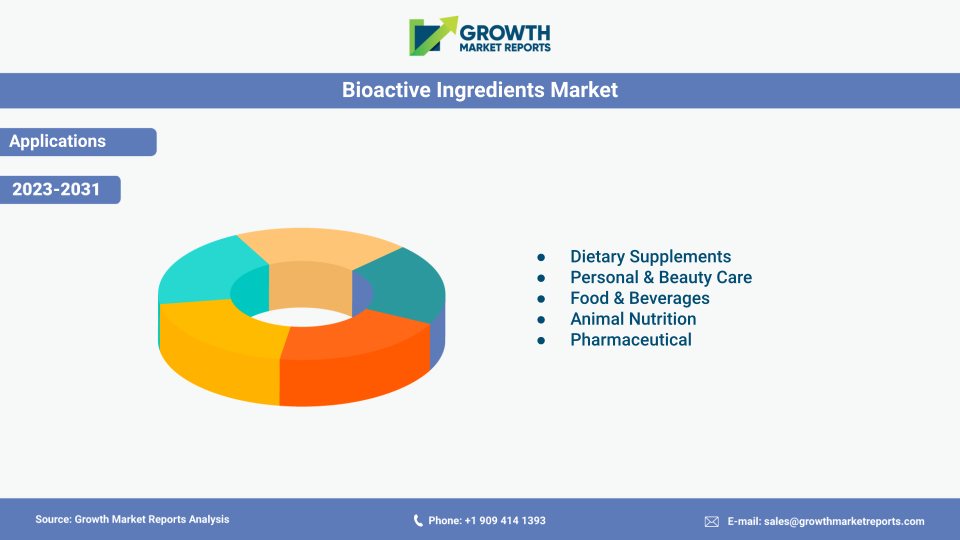
The application landscape of the bioactive ingredients market is broad, encompassing functional food & beverages, dietary supplements, personal care, pharmaceuticals, animal nutrition, and others. Functional foods and beverages represent the largest application segment, driven by the increasing consumer demand for products that offer health benefits beyond basic nutrition. Manufacturers are fortifying a wide range of products, including dairy, bakery, cereals, beverages, and snacks, with bioactive ingredients to address specific health concerns such as immunity, digestion, heart health, and cognitive function. The trend towards personalized nutrition is further fueling innovation in this segment, with companies developing targeted formulations based on individual health needs and preferences.

Dietary supplements are another key application area, experiencing rapid growth due to the rising awareness of preventive healthcare and the desire for convenient, on-the-go solutions to meet nutritional needs. Bioactive ingredients such as vitamins, minerals, amino acids, probiotics, and plant extracts are widely used in tablets, capsules, gummies, and powders to support overall health, enhance energy levels, and address specific deficiencies. The expanding geriatric population, coupled with the increasing prevalence of chronic diseases, is driving the demand for dietary supplements, particularly in developed markets such as North America and Europe.

The personal care industry is leveraging bioactive ingredients to develop innovative skincare, haircare, and cosmetic products with enhanced efficacy and safety profiles. Ingredients such as antioxidants, peptides, botanical extracts, and vitamins are being incorporated into creams, serums, shampoos, and lotions to address concerns related to aging, hydration, protection, and repair. The growing consumer preference for natural and organic personal care products is encouraging manufacturers to source bioactive ingredients from sustainable and traceable origins, further boosting market growth in this segment.

Pharmaceutical applications of bioactive ingredients are expanding, particularly in the development of novel drug formulations, nutraceuticals, and therapeutic agents. Bioactive peptides, phytochemicals, and omega-3 fatty acids are being explored for their potential in managing chronic diseases, supporting immune function, and enhancing drug delivery. The convergence of food, nutrition, and pharmaceuticals is giving rise to the concept of "pharma-nutrition," where bioactive ingredients are used to develop products that bridge the gap between conventional medicines and functional foods. Additionally, the animal nutrition segment is witnessing increased adoption of bioactive ingredients to improve animal health, productivity, and disease resistance, reflecting the growing importance of sustainable and high-quality animal feed solutions.

Distribution Channel Analysis

The distribution channel landscape for bioactive ingredients is evolving, with online platforms, supermarkets/hypermarkets, specialty stores, and other channels playing pivotal roles in market growth. Online distribution is witnessing exponential growth, driven by the increasing penetration of e-commerce, convenience of home delivery, and the availability of a wide range of products. Consumers are increasingly turning to online platforms to purchase dietary supplements, functional foods, and personal care products enriched with bioactive ingredients, attracted by competitive pricing, detailed product information, and user reviews. The COVID-19 pandemic has further accelerated the shift towards digital channels, prompting manufacturers to strengthen their online presence and invest in direct-to-consumer strategies.

Supermarkets and hypermarkets remain important distribution channels, particularly for functional foods and beverages. These retail outlets offer consumers the convenience of one-stop shopping, wide product assortments, and the ability to physically examine products before purchase. The growing trend of health and wellness sections within supermarkets is increasing the visibility and accessibility of bioactive ingredient-enriched products. Retailers are also collaborating with manufacturers to launch private label brands and exclusive product lines, further driving sales through this channel.

Specialty stores, including health food stores, pharmacies, and nutrition outlets, play a crucial role in catering to health-conscious consumers seeking expert advice and specialized products. These stores offer a curated selection of high-quality dietary supplements, functional foods, and personal care items, often accompanied by knowledgeable staff who can provide guidance on product selection and usage. The personalized shopping experience and focus on premium, niche products make specialty stores a preferred choice for discerning consumers seeking bioactive ingredient-enriched solutions.

Other distribution channels, such as direct sales, multi-level marketing, and healthcare practitioner recommendations, also contribute to the market's reach and penetration. Manufacturers are adopting omni-channel strategies to ensure seamless consumer access to their products, leveraging both online and offline channels to maximize market coverage. The integration of digital technologies, personalized marketing, and data analytics is enabling companies to better understand consumer preferences, optimize inventory management, and enhance the overall shopping experience.

Opportunities & Threats

The bioactive ingredients market presents a multitude of opportunities, primarily driven by the rising consumer demand for health-enhancing products and the expanding application scope across various industries. The increasing focus on preventive healthcare, coupled with advancements in research and development, is paving the way for the discovery of novel bioactive compounds with targeted health benefits. The growing trend of personalized nutrition and wellness is encouraging manufacturers to develop customized formulations that cater to individual health needs, preferences, and lifestyles. Additionally, the integration of digital technologies, such as artificial intelligence and big data analytics, is enabling companies to gain deeper insights into consumer behavior, optimize product development, and enhance marketing strategies.

Sustainability and clean-label trends are creating new growth avenues for bioactive ingredient manufacturers. Consumers are increasingly seeking products that are natural, organic, and sustainably sourced, prompting companies to invest in environmentally friendly production methods, transparent supply chains, and ethical sourcing practices. The development of plant-based, vegan, and allergen-free bioactive ingredients is opening up new market segments and attracting a broader consumer base. Furthermore, the rising demand for functional foods and beverages in emerging markets, driven by urbanization, rising incomes, and changing dietary habits, is presenting significant opportunities for market expansion and product diversification.

Despite the promising outlook, the bioactive ingredients market faces certain restraining factors, including stringent regulatory requirements, high R&D costs, and the need for robust scientific evidence to substantiate health claims. Regulatory authorities in different regions have varying standards for the approval and labeling of bioactive ingredients, which can create barriers to market entry and delay product launches. The complexity of extracting, isolating, and formulating bioactive compounds, coupled with the need for extensive clinical trials and safety assessments, can increase development timelines and costs. Additionally, the risk of adulteration, quality inconsistencies, and supply chain disruptions can pose challenges to manufacturers, necessitating rigorous quality control measures and transparent sourcing practices.

Regional Outlook

Asia Pacific stands out as the fastest-growing region in the bioactive ingredients market, with a market size of USD 13.6 billion in 2024 and a projected CAGR of 8.5% through 2033. The region's growth is fueled by rising health awareness, a burgeoning middle class, and increasing demand for functional foods, dietary supplements, and personal care products. Countries such as China, India, Japan, and South Korea are witnessing rapid urbanization, changing dietary patterns, and a growing focus on preventive healthcare, all of which are driving the adoption of bioactive ingredient-enriched products. The presence of a rich biodiversity and traditional medicine systems in the region is also contributing to the development and commercialization of plant-based bioactive compounds.

North America remains a dominant player, accounting for a market size of USD 12.1 billion in 2024, supported by a well-established food and beverage industry, high consumer awareness, and strong regulatory frameworks. The United States is the largest market within the region, driven by the widespread adoption of dietary supplements, functional foods, and personal care products. The growing prevalence of lifestyle-related diseases, coupled with the increasing popularity of clean-label and natural products, is fueling demand for bioactive ingredients. The region is also at the forefront of research and innovation, with leading universities, research institutes, and companies actively engaged in the development of novel bioactive compounds and formulations.

Europe closely follows North America, with a market size of USD 10.8 billion in 2024, characterized by a strong emphasis on health, wellness, and sustainability. The region is witnessing increased demand for organic, plant-based, and functional products, driven by stringent regulations, rising consumer awareness, and a growing aging population. Germany, France, the United Kingdom, and Italy are key markets, with a high penetration of dietary supplements and functional foods. Latin America and the Middle East & Africa are emerging as promising markets, with a combined market size of USD 6.2 billion in 2024, supported by urbanization, changing lifestyles, and increasing investments in the healthcare and wellness sectors. These regions offer significant growth potential, particularly as consumers become more health-conscious and seek products that support overall well-being.

Bioactive Ingredients Market Statistics

Competitor Outlook

The global bioactive ingredients market is characterized by intense competition, with a diverse array of multinational corporations, regional players, and emerging startups vying for market share. The competitive landscape is shaped by continuous innovation, strategic partnerships, mergers and acquisitions, and a strong focus on research and development. Companies are investing heavily in the discovery and commercialization of novel bioactive compounds, leveraging advanced extraction technologies, formulation methods, and clinical research to differentiate their products and address evolving consumer needs. The ability to offer high-quality, safe, and efficacious ingredients, coupled with robust supply chain management and regulatory compliance, is critical for success in this dynamic market.

Major players in the bioactive ingredients market are expanding their product portfolios through the development of customized formulations, targeted health solutions, and value-added products. Strategic collaborations with food and beverage manufacturers, pharmaceutical companies, and research institutions are enabling companies to accelerate product development, enhance market reach, and capitalize on emerging trends. The increasing focus on sustainability, clean-label ingredients, and transparency is prompting companies to adopt environmentally friendly production methods, ethical sourcing practices, and comprehensive traceability systems. Digital transformation and the integration of data analytics are further enhancing competitiveness by enabling companies to anticipate consumer trends, optimize operations, and deliver personalized solutions.

Innovation is at the core of the competitive strategy, with companies investing in the development of bioactive ingredients that offer multifunctional benefits, improved bioavailability, and targeted health outcomes. The rise of personalized nutrition and wellness is encouraging companies to leverage genomics, metabolomics, and artificial intelligence to develop products tailored to individual needs and preferences. Regulatory compliance and scientific validation remain key differentiators, with companies prioritizing rigorous safety assessments, clinical trials, and transparent labeling to build consumer trust and credibility. The ability to navigate complex regulatory landscapes and adapt to evolving market dynamics is essential for maintaining a competitive edge.

Some of the major companies operating in the global bioactive ingredients market include BASF SE, Koninklijke DSM N.V., Archer Daniels Midland Company, DuPont de Nemours, Inc., Cargill Incorporated, Kerry Group plc, Ingredion Incorporated, Lonza Group AG, Sabinsa Corporation, and Evonik Industries AG. BASF SE is renowned for its extensive portfolio of vitamins, carotenoids, omega-3 fatty acids, and other bioactive compounds, catering to the food, beverage, dietary supplement, and personal care industries. Koninklijke DSM N.V. is a global leader in nutritional ingredients, offering a wide range of vitamins, minerals, probiotics, and specialty ingredients backed by robust scientific research and sustainability initiatives.

Archer Daniels Midland Company (ADM) and Cargill Incorporated are prominent players in the plant-based bioactive ingredients segment, leveraging their expertise in agricultural sourcing, processing, and innovation to deliver high-quality proteins, fibers, and phytochemicals. DuPont de Nemours, Inc. and Kerry Group plc are recognized for their focus on functional food ingredients, including probiotics, enzymes, and natural extracts, with a strong emphasis on research, development, and customer collaboration. Lonza Group AG and Evonik Industries AG are key suppliers of specialty bioactive ingredients for pharmaceutical, nutraceutical, and personal care applications, offering customized solutions and advanced formulation capabilities.

Sabinsa Corporation is a leading provider of botanical extracts, phytonutrients, and specialty ingredients, with a strong focus on scientific validation, quality assurance, and sustainable sourcing. Ingredion Incorporated specializes in plant-based ingredients and clean-label solutions, catering to the evolving needs of food and beverage manufacturers worldwide. These companies are continuously expanding their global footprint through strategic acquisitions, partnerships, and investments in emerging markets, positioning themselves at the forefront of the rapidly evolving bioactive ingredients industry.

Key Players

  • BASF SE
  • Koninklijke DSM N.V.
  • Cargill, Incorporated
  • Archer Daniels Midland Company (ADM)
  • DuPont de Nemours, Inc.
  • Ingredion Incorporated
  • Kerry Group plc
  • E.I.D. Parry (India) Limited
  • Sabinsa Corporation
  • Lonza Group AG
  • Evonik Industries AG
  • Nutraceutical International Corporation
  • Glanbia plc
  • Associated British Foods plc
  • FMC Corporation
  • Novozymes A/S
  • Royal FrieslandCampina N.V.
  • Chr. Hansen Holding A/S
  • Roquette Frères
  • Taiyo International
Bioactive Ingredients Market Overview

Segments

The Bioactive Ingredients market has been segmented on the basis of

Product Type

  • Prebiotics
  • Probiotics
  • Amino Acids
  • Peptides & Proteins
  • Omega-3 & Structured Lipids
  • Phytochemicals & Plant Extracts
  • Carotenoids & Antioxidants
  • Vitamins & Minerals
  • Others

Source

  • Plant
  • Animal
  • Microbial
  • Synthetic

Application

  • Functional Food & Beverages
  • Dietary Supplements
  • Personal Care
  • Pharmaceuticals
  • Animal Nutrition
  • Others

Distribution Channel

  • Online
  • Supermarkets/Hypermarkets
  • Specialty Stores
  • Others

Competitive Landscape

Key players competing in the global bioactive ingredients market include Archer Daniels Midland Company; Ajinomoto Co. Inc.; FMC Corp.; E.I. du Pont Nemours and Company; Roquette Freres; Cargill Inc.; Koninklijke DSM N.V.; Ingredion Inc.; Arla Foods Amba; BASF SE; and Corbion.

Some of these players are engaged in several market strategies such as mergers, acquisitions, partnerships, collaborations, capacity expansion, and product launches to enhance their market shares.
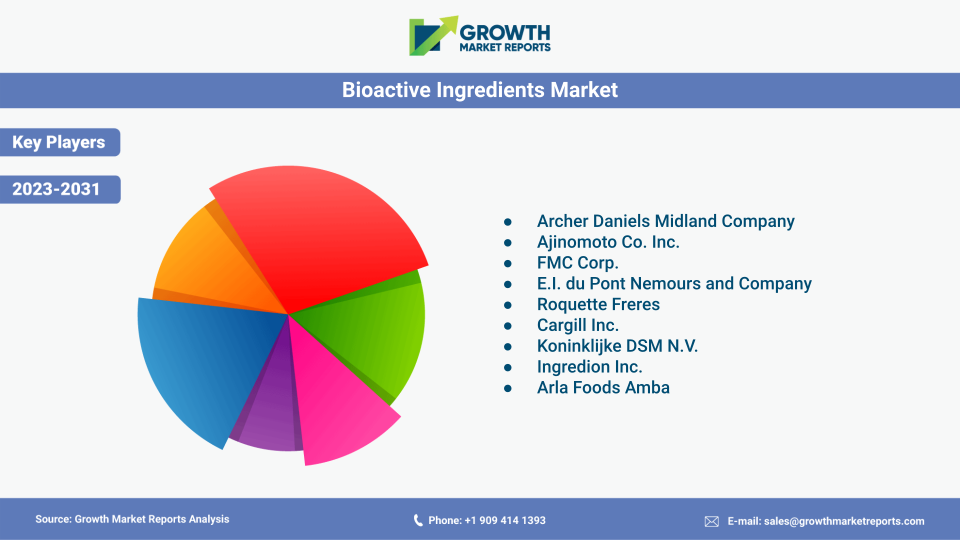

Bioactive Ingredients Market Key Players

Frequently Asked Questions

Key trends include the rise of personalized nutrition, demand for clean-label and sustainable products, advancements in digital technologies, and the development of plant-based, vegan, and allergen-free bioactive ingredients. Opportunities exist in emerging markets and through innovation in product development and sourcing.

Challenges include stringent regulatory requirements, high R&D costs, the need for robust scientific evidence to support health claims, risks of adulteration, and supply chain disruptions.

Major companies include BASF SE, Koninklijke DSM N.V., Cargill Incorporated, Archer Daniels Midland Company (ADM), DuPont de Nemours, Inc., Ingredion Incorporated, Kerry Group plc, Sabinsa Corporation, Lonza Group AG, and Evonik Industries AG.

Key distribution channels include online platforms, supermarkets/hypermarkets, specialty stores, and others. Online sales are growing rapidly due to e-commerce expansion, while supermarkets and specialty stores remain important for consumer access.

North America and Europe are the dominant markets due to established industries and high consumer awareness. Asia Pacific is the fastest-growing region, driven by rising health awareness and demand for functional foods. Latin America and the Middle East & Africa are also experiencing steady growth.

Bioactive ingredients are widely used in functional foods & beverages, dietary supplements, personal care products, pharmaceuticals, and animal nutrition. Functional foods & beverages represent the largest application segment.

Bioactive ingredients are sourced from plants, animals, microbes, and synthetic origins. Plant-based sources dominate due to consumer preference for natural and sustainable products, while animal-based, microbial, and synthetic sources also play important roles.

Probiotics and prebiotics are leading the market due to their benefits for gut health and immunity. Other significant segments include amino acids, peptides & proteins, omega-3 & structured lipids, phytochemicals & plant extracts, carotenoids & antioxidants, and vitamins & minerals.

Key growth drivers include increasing consumer awareness of health and wellness, rising prevalence of lifestyle-related diseases, growing demand for functional foods and dietary supplements, and advancements in extraction and formulation technologies.

As of 2024, the global bioactive ingredients market is valued at USD 42.7 billion and is projected to grow at a CAGR of 7.2% from 2025 to 2033, reaching approximately USD 80.2 billion by 2033.

Table Of Content

Chapter 1 Executive Summary
Chapter 2 Assumptions and Acronyms Used
Chapter 3 Research Methodology
Chapter 4 Bioactive Ingredients Market Overview
   4.1 Introduction
      4.1.1 Market Taxonomy
      4.1.2 Market Definition
      4.1.3 Macro-Economic Factors Impacting the Market Growth
   4.2 Bioactive Ingredients Market Dynamics
      4.2.1 Market Drivers
      4.2.2 Market Restraints
      4.2.3 Market Opportunity
   4.3 Bioactive Ingredients Market - Supply Chain Analysis
      4.3.1 List of Key Suppliers
      4.3.2 List of Key Distributors
      4.3.3 List of Key Consumers
   4.4 Key Forces Shaping the Bioactive Ingredients Market
      4.4.1 Bargaining Power of Suppliers
      4.4.2 Bargaining Power of Buyers
      4.4.3 Threat of Substitution
      4.4.4 Threat of New Entrants
      4.4.5 Competitive Rivalry
   4.5 Global Bioactive Ingredients Market Size & Forecast, 2023-2032
      4.5.1 Bioactive Ingredients Market Size and Y-o-Y Growth
      4.5.2 Bioactive Ingredients Market Absolute $ Opportunity

Chapter 5 Global Bioactive Ingredients Market Analysis and Forecast By Product Type
   5.1 Introduction
      5.1.1 Key Market Trends & Growth Opportunities By Product Type
      5.1.2 Basis Point Share (BPS) Analysis By Product Type
      5.1.3 Absolute $ Opportunity Assessment By Product Type
   5.2 Bioactive Ingredients Market Size Forecast By Product Type
      5.2.1 Prebiotics
      5.2.2 Probiotics
      5.2.3 Amino Acids
      5.2.4 Peptides & Proteins
      5.2.5 Omega-3 & Structured Lipids
      5.2.6 Phytochemicals & Plant Extracts
      5.2.7 Carotenoids & Antioxidants
      5.2.8 Vitamins & Minerals
      5.2.9 Others
   5.3 Market Attractiveness Analysis By Product Type

Chapter 6 Global Bioactive Ingredients Market Analysis and Forecast By Source
   6.1 Introduction
      6.1.1 Key Market Trends & Growth Opportunities By Source
      6.1.2 Basis Point Share (BPS) Analysis By Source
      6.1.3 Absolute $ Opportunity Assessment By Source
   6.2 Bioactive Ingredients Market Size Forecast By Source
      6.2.1 Plant
      6.2.2 Animal
      6.2.3 Microbial
      6.2.4 Synthetic
   6.3 Market Attractiveness Analysis By Source

Chapter 7 Global Bioactive Ingredients Market Analysis and Forecast By Application
   7.1 Introduction
      7.1.1 Key Market Trends & Growth Opportunities By Application
      7.1.2 Basis Point Share (BPS) Analysis By Application
      7.1.3 Absolute $ Opportunity Assessment By Application
   7.2 Bioactive Ingredients Market Size Forecast By Application
      7.2.1 Functional Food & Beverages
      7.2.2 Dietary Supplements
      7.2.3 Personal Care
      7.2.4 Pharmaceuticals
      7.2.5 Animal Nutrition
      7.2.6 Others
   7.3 Market Attractiveness Analysis By Application

Chapter 8 Global Bioactive Ingredients Market Analysis and Forecast By Distribution Channel
   8.1 Introduction
      8.1.1 Key Market Trends & Growth Opportunities By Distribution Channel
      8.1.2 Basis Point Share (BPS) Analysis By Distribution Channel
      8.1.3 Absolute $ Opportunity Assessment By Distribution Channel
   8.2 Bioactive Ingredients Market Size Forecast By Distribution Channel
      8.2.1 Online
      8.2.2 Supermarkets/Hypermarkets
      8.2.3 Specialty Stores
      8.2.4 Others
   8.3 Market Attractiveness Analysis By Distribution Channel

Chapter 9 Global Bioactive Ingredients Market Analysis and Forecast by Region
   9.1 Introduction
      9.1.1 Key Market Trends & Growth Opportunities By Region
      9.1.2 Basis Point Share (BPS) Analysis By Region
      9.1.3 Absolute $ Opportunity Assessment By Region
   9.2 Bioactive Ingredients Market Size Forecast By Region
      9.2.1 North America
      9.2.2 Europe
      9.2.3 Asia Pacific
      9.2.4 Latin America
      9.2.5 Middle East & Africa (MEA)
   9.3 Market Attractiveness Analysis By Region

Chapter 10 Coronavirus Disease (COVID-19) Impact 
   10.1 Introduction 
   10.2 Current & Future Impact Analysis 
   10.3 Economic Impact Analysis 
   10.4 Government Policies 
   10.5 Investment Scenario

Chapter 11 North America Bioactive Ingredients Analysis and Forecast
   11.1 Introduction
   11.2 North America Bioactive Ingredients Market Size Forecast by Country
      11.2.1 U.S.
      11.2.2 Canada
   11.3 Basis Point Share (BPS) Analysis by Country
   11.4 Absolute $ Opportunity Assessment by Country
   11.5 Market Attractiveness Analysis by Country
   11.6 North America Bioactive Ingredients Market Size Forecast By Product Type
      11.6.1 Prebiotics
      11.6.2 Probiotics
      11.6.3 Amino Acids
      11.6.4 Peptides & Proteins
      11.6.5 Omega-3 & Structured Lipids
      11.6.6 Phytochemicals & Plant Extracts
      11.6.7 Carotenoids & Antioxidants
      11.6.8 Vitamins & Minerals
      11.6.9 Others
   11.7 Basis Point Share (BPS) Analysis By Product Type 
   11.8 Absolute $ Opportunity Assessment By Product Type 
   11.9 Market Attractiveness Analysis By Product Type
   11.10 North America Bioactive Ingredients Market Size Forecast By Source
      11.10.1 Plant
      11.10.2 Animal
      11.10.3 Microbial
      11.10.4 Synthetic
   11.11 Basis Point Share (BPS) Analysis By Source 
   11.12 Absolute $ Opportunity Assessment By Source 
   11.13 Market Attractiveness Analysis By Source
   11.14 North America Bioactive Ingredients Market Size Forecast By Application
      11.14.1 Functional Food & Beverages
      11.14.2 Dietary Supplements
      11.14.3 Personal Care
      11.14.4 Pharmaceuticals
      11.14.5 Animal Nutrition
      11.14.6 Others
   11.15 Basis Point Share (BPS) Analysis By Application 
   11.16 Absolute $ Opportunity Assessment By Application 
   11.17 Market Attractiveness Analysis By Application
   11.18 North America Bioactive Ingredients Market Size Forecast By Distribution Channel
      11.18.1 Online
      11.18.2 Supermarkets/Hypermarkets
      11.18.3 Specialty Stores
      11.18.4 Others
   11.19 Basis Point Share (BPS) Analysis By Distribution Channel 
   11.20 Absolute $ Opportunity Assessment By Distribution Channel 
   11.21 Market Attractiveness Analysis By Distribution Channel

Chapter 12 Europe Bioactive Ingredients Analysis and Forecast
   12.1 Introduction
   12.2 Europe Bioactive Ingredients Market Size Forecast by Country
      12.2.1 Germany
      12.2.2 France
      12.2.3 Italy
      12.2.4 U.K.
      12.2.5 Spain
      12.2.6 Russia
      12.2.7 Rest of Europe
   12.3 Basis Point Share (BPS) Analysis by Country
   12.4 Absolute $ Opportunity Assessment by Country
   12.5 Market Attractiveness Analysis by Country
   12.6 Europe Bioactive Ingredients Market Size Forecast By Product Type
      12.6.1 Prebiotics
      12.6.2 Probiotics
      12.6.3 Amino Acids
      12.6.4 Peptides & Proteins
      12.6.5 Omega-3 & Structured Lipids
      12.6.6 Phytochemicals & Plant Extracts
      12.6.7 Carotenoids & Antioxidants
      12.6.8 Vitamins & Minerals
      12.6.9 Others
   12.7 Basis Point Share (BPS) Analysis By Product Type 
   12.8 Absolute $ Opportunity Assessment By Product Type 
   12.9 Market Attractiveness Analysis By Product Type
   12.10 Europe Bioactive Ingredients Market Size Forecast By Source
      12.10.1 Plant
      12.10.2 Animal
      12.10.3 Microbial
      12.10.4 Synthetic
   12.11 Basis Point Share (BPS) Analysis By Source 
   12.12 Absolute $ Opportunity Assessment By Source 
   12.13 Market Attractiveness Analysis By Source
   12.14 Europe Bioactive Ingredients Market Size Forecast By Application
      12.14.1 Functional Food & Beverages
      12.14.2 Dietary Supplements
      12.14.3 Personal Care
      12.14.4 Pharmaceuticals
      12.14.5 Animal Nutrition
      12.14.6 Others
   12.15 Basis Point Share (BPS) Analysis By Application 
   12.16 Absolute $ Opportunity Assessment By Application 
   12.17 Market Attractiveness Analysis By Application
   12.18 Europe Bioactive Ingredients Market Size Forecast By Distribution Channel
      12.18.1 Online
      12.18.2 Supermarkets/Hypermarkets
      12.18.3 Specialty Stores
      12.18.4 Others
   12.19 Basis Point Share (BPS) Analysis By Distribution Channel 
   12.20 Absolute $ Opportunity Assessment By Distribution Channel 
   12.21 Market Attractiveness Analysis By Distribution Channel

Chapter 13 Asia Pacific Bioactive Ingredients Analysis and Forecast
   13.1 Introduction
   13.2 Asia Pacific Bioactive Ingredients Market Size Forecast by Country
      13.2.1 China
      13.2.2 Japan
      13.2.3 South Korea
      13.2.4 India
      13.2.5 Australia
      13.2.6 South East Asia (SEA)
      13.2.7 Rest of Asia Pacific (APAC)
   13.3 Basis Point Share (BPS) Analysis by Country
   13.4 Absolute $ Opportunity Assessment by Country
   13.5 Market Attractiveness Analysis by Country
   13.6 Asia Pacific Bioactive Ingredients Market Size Forecast By Product Type
      13.6.1 Prebiotics
      13.6.2 Probiotics
      13.6.3 Amino Acids
      13.6.4 Peptides & Proteins
      13.6.5 Omega-3 & Structured Lipids
      13.6.6 Phytochemicals & Plant Extracts
      13.6.7 Carotenoids & Antioxidants
      13.6.8 Vitamins & Minerals
      13.6.9 Others
   13.7 Basis Point Share (BPS) Analysis By Product Type 
   13.8 Absolute $ Opportunity Assessment By Product Type 
   13.9 Market Attractiveness Analysis By Product Type
   13.10 Asia Pacific Bioactive Ingredients Market Size Forecast By Source
      13.10.1 Plant
      13.10.2 Animal
      13.10.3 Microbial
      13.10.4 Synthetic
   13.11 Basis Point Share (BPS) Analysis By Source 
   13.12 Absolute $ Opportunity Assessment By Source 
   13.13 Market Attractiveness Analysis By Source
   13.14 Asia Pacific Bioactive Ingredients Market Size Forecast By Application
      13.14.1 Functional Food & Beverages
      13.14.2 Dietary Supplements
      13.14.3 Personal Care
      13.14.4 Pharmaceuticals
      13.14.5 Animal Nutrition
      13.14.6 Others
   13.15 Basis Point Share (BPS) Analysis By Application 
   13.16 Absolute $ Opportunity Assessment By Application 
   13.17 Market Attractiveness Analysis By Application
   13.18 Asia Pacific Bioactive Ingredients Market Size Forecast By Distribution Channel
      13.18.1 Online
      13.18.2 Supermarkets/Hypermarkets
      13.18.3 Specialty Stores
      13.18.4 Others
   13.19 Basis Point Share (BPS) Analysis By Distribution Channel 
   13.20 Absolute $ Opportunity Assessment By Distribution Channel 
   13.21 Market Attractiveness Analysis By Distribution Channel

Chapter 14 Latin America Bioactive Ingredients Analysis and Forecast
   14.1 Introduction
   14.2 Latin America Bioactive Ingredients Market Size Forecast by Country
      14.2.1 Brazil
      14.2.2 Mexico
      14.2.3 Rest of Latin America (LATAM)
   14.3 Basis Point Share (BPS) Analysis by Country
   14.4 Absolute $ Opportunity Assessment by Country
   14.5 Market Attractiveness Analysis by Country
   14.6 Latin America Bioactive Ingredients Market Size Forecast By Product Type
      14.6.1 Prebiotics
      14.6.2 Probiotics
      14.6.3 Amino Acids
      14.6.4 Peptides & Proteins
      14.6.5 Omega-3 & Structured Lipids
      14.6.6 Phytochemicals & Plant Extracts
      14.6.7 Carotenoids & Antioxidants
      14.6.8 Vitamins & Minerals
      14.6.9 Others
   14.7 Basis Point Share (BPS) Analysis By Product Type 
   14.8 Absolute $ Opportunity Assessment By Product Type 
   14.9 Market Attractiveness Analysis By Product Type
   14.10 Latin America Bioactive Ingredients Market Size Forecast By Source
      14.10.1 Plant
      14.10.2 Animal
      14.10.3 Microbial
      14.10.4 Synthetic
   14.11 Basis Point Share (BPS) Analysis By Source 
   14.12 Absolute $ Opportunity Assessment By Source 
   14.13 Market Attractiveness Analysis By Source
   14.14 Latin America Bioactive Ingredients Market Size Forecast By Application
      14.14.1 Functional Food & Beverages
      14.14.2 Dietary Supplements
      14.14.3 Personal Care
      14.14.4 Pharmaceuticals
      14.14.5 Animal Nutrition
      14.14.6 Others
   14.15 Basis Point Share (BPS) Analysis By Application 
   14.16 Absolute $ Opportunity Assessment By Application 
   14.17 Market Attractiveness Analysis By Application
   14.18 Latin America Bioactive Ingredients Market Size Forecast By Distribution Channel
      14.18.1 Online
      14.18.2 Supermarkets/Hypermarkets
      14.18.3 Specialty Stores
      14.18.4 Others
   14.19 Basis Point Share (BPS) Analysis By Distribution Channel 
   14.20 Absolute $ Opportunity Assessment By Distribution Channel 
   14.21 Market Attractiveness Analysis By Distribution Channel

Chapter 15 Middle East & Africa (MEA) Bioactive Ingredients Analysis and Forecast
   15.1 Introduction
   15.2 Middle East & Africa (MEA) Bioactive Ingredients Market Size Forecast by Country
      15.2.1 Saudi Arabia
      15.2.2 South Africa
      15.2.3 UAE
      15.2.4 Rest of Middle East & Africa (MEA)
   15.3 Basis Point Share (BPS) Analysis by Country
   15.4 Absolute $ Opportunity Assessment by Country
   15.5 Market Attractiveness Analysis by Country
   15.6 Middle East & Africa (MEA) Bioactive Ingredients Market Size Forecast By Product Type
      15.6.1 Prebiotics
      15.6.2 Probiotics
      15.6.3 Amino Acids
      15.6.4 Peptides & Proteins
      15.6.5 Omega-3 & Structured Lipids
      15.6.6 Phytochemicals & Plant Extracts
      15.6.7 Carotenoids & Antioxidants
      15.6.8 Vitamins & Minerals
      15.6.9 Others
   15.7 Basis Point Share (BPS) Analysis By Product Type 
   15.8 Absolute $ Opportunity Assessment By Product Type 
   15.9 Market Attractiveness Analysis By Product Type
   15.10 Middle East & Africa (MEA) Bioactive Ingredients Market Size Forecast By Source
      15.10.1 Plant
      15.10.2 Animal
      15.10.3 Microbial
      15.10.4 Synthetic
   15.11 Basis Point Share (BPS) Analysis By Source 
   15.12 Absolute $ Opportunity Assessment By Source 
   15.13 Market Attractiveness Analysis By Source
   15.14 Middle East & Africa (MEA) Bioactive Ingredients Market Size Forecast By Application
      15.14.1 Functional Food & Beverages
      15.14.2 Dietary Supplements
      15.14.3 Personal Care
      15.14.4 Pharmaceuticals
      15.14.5 Animal Nutrition
      15.14.6 Others
   15.15 Basis Point Share (BPS) Analysis By Application 
   15.16 Absolute $ Opportunity Assessment By Application 
   15.17 Market Attractiveness Analysis By Application
   15.18 Middle East & Africa (MEA) Bioactive Ingredients Market Size Forecast By Distribution Channel
      15.18.1 Online
      15.18.2 Supermarkets/Hypermarkets
      15.18.3 Specialty Stores
      15.18.4 Others
   15.19 Basis Point Share (BPS) Analysis By Distribution Channel 
   15.20 Absolute $ Opportunity Assessment By Distribution Channel 
   15.21 Market Attractiveness Analysis By Distribution Channel

Chapter 16 Competition Landscape 
   16.1 Bioactive Ingredients Market: Competitive Dashboard
   16.2 Global Bioactive Ingredients Market: Market Share Analysis, 2023
   16.3 Company Profiles (Details – Overview, Financials, Developments, Strategy) 
      16.3.1 BASF SE
Koninklijke DSM N.V.
Cargill, Incorporated
Archer Daniels Midland Company (ADM)
DuPont de Nemours, Inc.
Ingredion Incorporated
Kerry Group plc
E.I.D. Parry (India) Limited
Sabinsa Corporation
Lonza Group AG
Evonik Industries AG
Nutraceutical International Corporation
Glanbia plc
Associated British Foods plc
FMC Corporation
Novozymes A/S
Royal FrieslandCampina N.V.
Chr. Hansen Holding A/S
Roquette Frères
Taiyo International

Methodology

Our Clients

Siemens Healthcare
Pfizer
Deloitte
Dassault Aviation
Honda Motor Co. Ltd.
The John Holland Group
General Electric
FedEx Logistics