Segments - by Product Type (Electronic Bidets, Non-Electric Bidets, Portable Bidets, Others), by Application (Residential, Commercial, Institutional), by Installation Type (Standalone, Attachment, Integrated), by Distribution Channel (Online Stores, Supermarkets/Hypermarkets, Specialty Stores, Others)
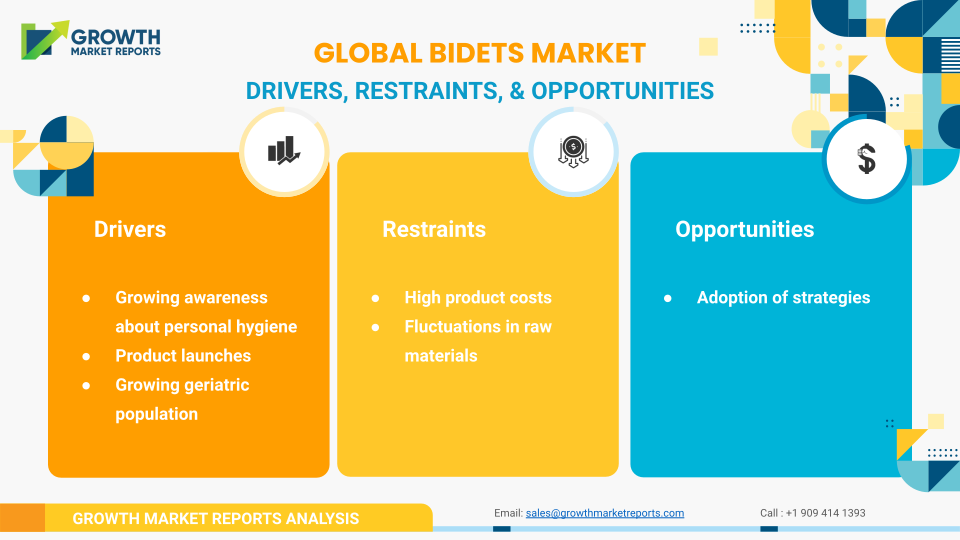
According to our latest research, the global bidets market size reached USD 5.7 billion in 2024, driven by growing awareness of hygiene and sustainability. The market is expected to expand at a robust CAGR of 8.3% from 2025 to 2033, reaching a forecasted market size of USD 11.3 billion by 2033. This significant growth trajectory is primarily attributed to increasing consumer preference for advanced hygiene solutions, rising environmental concerns regarding water and paper waste, and a surge in infrastructural developments across both residential and commercial sectors.
One of the core growth factors fueling the bidets market is the increasing global emphasis on personal hygiene and sanitation. The COVID-19 pandemic notably heightened consumer awareness about the importance of personal cleanliness, leading to a surge in demand for bidets in both developed and emerging economies. Additionally, the growing prevalence of health conditions such as urinary tract infections and hemorrhoids, which can be alleviated through the use of bidets, has further propelled market demand. Educational campaigns and endorsements by healthcare professionals have also played a pivotal role in shifting consumer preferences from traditional toilet paper to bidet systems, especially electronic bidets that offer enhanced comfort and hygiene features.
Another significant driver of the bidets market is the increasing focus on environmental sustainability. Bidets are widely recognized for their ability to reduce toilet paper consumption, thereby decreasing deforestation and water usage associated with paper production. This eco-friendly aspect resonates strongly with environmentally conscious consumers and organizations aiming to reduce their carbon footprint. Governments and regulatory bodies in several regions have introduced incentives and guidelines promoting water-efficient fixtures, further accelerating bidet adoption. Moreover, advancements in product design and technology, such as self-cleaning nozzles and energy-efficient heating systems, have made bidets more appealing to a broader consumer base.
Technological innovation has also played a crucial role in expanding the bidets market. The integration of smart features like temperature control, adjustable water pressure, remote controls, and even connectivity with home automation systems has transformed bidets from basic sanitary fixtures into sophisticated bathroom solutions. These advancements have particularly resonated with younger, tech-savvy consumers and luxury home builders looking to differentiate their offerings. As manufacturers continue to invest in research and development, the introduction of new models with enhanced user experience and energy-saving capabilities is expected to further drive market growth over the forecast period.
The advent of the Smart Bidet Attachment has revolutionized the way consumers approach bathroom hygiene. These attachments offer a seamless integration with existing toilet systems, providing an affordable and efficient solution for those looking to upgrade their bathroom experience without extensive renovations. The Smart Bidet Attachment is particularly appealing for its user-friendly features, such as adjustable water pressure, temperature control, and even remote operation, which cater to the growing demand for convenience and personalization in home fixtures. As more consumers become aware of the benefits of smart technology in everyday life, the adoption of these attachments is expected to rise, contributing significantly to the overall growth of the bidets market.
Regionally, Asia Pacific remains the dominant market for bidets, accounting for the largest revenue share in 2024, followed by Europe and North America. The high penetration rate in countries such as Japan and South Korea, combined with rising adoption in China and India, underscores the region's leadership. Europe continues to witness steady growth, particularly in Western European nations where sustainability and hygiene standards are high. Meanwhile, North America is experiencing rapid market expansion, fueled by changing consumer perceptions and increasing product availability. Latin America and the Middle East & Africa, although currently smaller markets, are poised for substantial growth as awareness and urbanization increase.
The bidets market by product type is segmented into electronic bidets, non-electric bidets, portable bidets, and others. Among these, electronic bidets have emerged as the fastest-growing segment, accounting for a substantial share of the global market in 2024. The surge in demand for electronic bidets is primarily attributed to their advanced features, such as heated seats, adjustable water temperature, air dryers, and self-cleaning nozzles, which greatly enhance user comfort and hygiene. These features appeal particularly to urban consumers and those with higher disposable incomes who seek convenience and luxury in their bathroom fixtures. The integration of smart technology, including remote controls and app-based operation, has further contributed to the growing popularity of electronic bidets, positioning them as a premium product in the market.
Non-electric bidets continue to hold a significant share of the bidets market, especially in regions where affordability and ease of installation are key purchasing criteria. These bidets are preferred in many residential and institutional settings due to their lower cost, minimal maintenance requirements, and the absence of a need for electrical connections. Non-electric bidets are particularly popular in emerging economies, where infrastructural limitations may restrict the adoption of electronic models. Manufacturers are increasingly focusing on enhancing the durability and functionality of non-electric bidets to cater to this price-sensitive segment, ensuring sustained market growth.
The portable bidets segment, while currently smaller in comparison to electronic and non-electric types, is witnessing rapid growth, driven by increasing travel activities and heightened hygiene awareness. Portable bidets offer a convenient and cost-effective solution for on-the-go personal hygiene, making them particularly attractive to travelers, campers, and individuals with specific medical needs. The COVID-19 pandemic further accelerated the adoption of portable bidets, as consumers sought portable hygiene solutions to minimize contact in public restrooms. As product designs continue to evolve, offering greater ease of use and compactness, the portable bidets segment is expected to capture a larger share of the market in the coming years.
Other types of bidets, including combination units and specialty models designed for specific user groups such as elderly or disabled individuals, also contribute to the diversity of the bidets market. These products often incorporate unique features like ergonomic controls, enhanced accessibility, and antimicrobial materials, catering to niche segments with specialized requirements. The growing trend of inclusive design in bathroom fixtures is likely to drive further innovation in this segment, expanding the market reach to a broader demographic. Overall, the product type segmentation of the bidets market reflects a dynamic landscape characterized by technological advancement, evolving consumer preferences, and increasing emphasis on sustainability and accessibility.
| Attributes | Details |
| Report Title | Bidets Market Research Report 2033 |
| By Product Type | Electronic Bidets, Non-Electric Bidets, Portable Bidets, Others |
| By Application | Residential, Commercial, Institutional |
| By Installation Type | Standalone, Attachment, Integrated |
| By Distribution Channel | Online Stores, Supermarkets/Hypermarkets, Specialty Stores, Others |
| Regions Covered | North America, Europe, APAC, Latin America, MEA |
| Base Year | 2024 |
| Historic Data | 2018-2023 |
| Forecast Period | 2025-2033 |
| Number of Pages | 299 |
| Number of Tables & Figures | 374 |
| Customization Available | Yes, the report can be customized as per your need. |
The application segment of the bidets market is categorized into residential, commercial, and institutional uses. Residential applications dominate the market, accounting for the largest share in 2024, as more homeowners prioritize hygiene and comfort in their bathrooms. The rising trend of home renovations and the increasing availability of affordable and easy-to-install bidet solutions have further fueled demand in the residential sector. Consumers are increasingly opting for both standalone and integrated bidet systems, driven by the desire for advanced hygiene and the influence of global lifestyle trends. Manufacturers are responding by offering a wide range of aesthetically appealing and technologically advanced products tailored to residential needs, ensuring robust market expansion in this segment.
Commercial applications of bidets are also experiencing significant growth, particularly in the hospitality, healthcare, and corporate sectors. Hotels, resorts, and luxury apartments are increasingly incorporating bidets as part of their premium amenities to enhance guest comfort and differentiate themselves in a competitive market. In healthcare settings, bidets are valued for their ability to improve patient hygiene and reduce the risk of infections, making them a preferred choice in hospitals, clinics, and eldercare facilities. The commercial segment is further supported by regulatory initiatives promoting the adoption of water-efficient and hygienic bathroom fixtures in public and commercial buildings, driving sustained demand for bidets.
Institutional applications, including schools, universities, government buildings, and public restrooms, represent a growing segment of the bidets market. The increasing focus on public health and hygiene, coupled with the need to accommodate diverse user groups, has led to the installation of bidets in various institutional settings. Educational campaigns and government initiatives aimed at improving sanitation standards in public facilities have further accelerated the adoption of bidets in this segment. Manufacturers are developing robust and vandal-resistant models specifically designed for high-traffic institutional environments, ensuring durability and ease of maintenance.
The diversification of bidet applications across residential, commercial, and institutional sectors underscores the broad appeal and versatility of these products. As consumer awareness of the benefits of bidets continues to grow and regulatory standards evolve, the market is expected to witness increased penetration across all application segments. The ongoing trend of urbanization and the expansion of smart city projects are also likely to create new opportunities for bidet adoption in both existing and new infrastructure, further driving market growth over the forecast period.
The bidets market by installation type is segmented into standalone, attachment, and integrated bidets. Standalone bidets, which are traditional fixtures installed separately from the toilet, have long been popular in European and some Asian markets. These bidets are valued for their durability and comprehensive hygiene features, making them a preferred choice in luxury residential and hospitality settings. However, their installation typically requires more space and plumbing work, which can limit their adoption in smaller bathrooms or older buildings. Despite these challenges, standalone bidets continue to maintain a stable market share, particularly in regions with established cultural preferences for this installation type.
Attachment bidets, which can be easily fitted onto existing toilet seats, have gained significant traction in recent years due to their affordability, ease of installation, and minimal space requirements. These products appeal to a wide range of consumers, including renters and homeowners seeking a cost-effective way to upgrade their bathroom hygiene without major renovations. The rise of DIY home improvement trends and the availability of a variety of attachment models, from basic non-electric to advanced electronic versions, have further boosted the popularity of this installation type. Manufacturers are continually innovating to enhance the functionality and aesthetics of attachment bidets, ensuring their continued growth in the market.
Integrated bidets, which combine the functions of a toilet and a bidet in a single unit, represent the most technologically advanced segment of the bidets market. These products are particularly popular in high-end residential and commercial projects, where space optimization and premium features are key considerations. Integrated bidets offer a seamless and modern bathroom experience, often featuring advanced functionalities such as automatic flushing, deodorization, and customizable user settings. The increasing demand for smart home solutions and the trend toward minimalist bathroom designs are expected to drive the adoption of integrated bidets, especially in urban environments where space is at a premium.
The installation type segmentation of the bidets market reflects the diverse needs and preferences of consumers across different regions and application settings. While standalone bidets continue to be favored in traditional markets, the rapid adoption of attachment and integrated models highlights the marketÂ’s shift toward convenience, innovation, and space efficiency. As manufacturers invest in developing more versatile and user-friendly products, the market is expected to witness further diversification and growth across all installation types, catering to the evolving demands of modern consumers.
The distribution channel segment of the bidets market includes online stores, supermarkets/hypermarkets, specialty stores, and others. Online stores have emerged as the fastest-growing distribution channel, driven by the increasing prevalence of e-commerce and the convenience of online shopping. Consumers are increasingly turning to online platforms to research, compare, and purchase bidets, attracted by the wide product selection, competitive pricing, and home delivery options. Major e-commerce players and dedicated online retailers are expanding their offerings to include a diverse range of bidet products, supported by detailed product information, customer reviews, and virtual consultations. The COVID-19 pandemic further accelerated the shift toward online shopping, making this channel a critical driver of market growth.
Supermarkets and hypermarkets continue to play a significant role in the bidets market, particularly in regions where consumers prefer to make in-person purchases of home improvement products. These retail outlets offer the advantage of immediate product availability and the opportunity for consumers to physically examine and compare different models before making a purchase. Supermarkets and hypermarkets often collaborate with leading bidet manufacturers to offer exclusive promotions and bundled deals, attracting price-sensitive customers and driving sales volume. The presence of knowledgeable sales staff and after-sales support further enhances the appeal of this distribution channel.
Specialty stores, which focus on bathroom fixtures and home improvement products, are a key distribution channel for high-end and technologically advanced bidet models. These stores cater to discerning customers seeking expert advice, personalized service, and access to the latest innovations in bathroom technology. Specialty stores often collaborate with architects, interior designers, and contractors to provide comprehensive solutions for residential and commercial projects. The growing trend of bathroom remodeling and the increasing demand for premium fixtures are expected to support the continued growth of specialty stores in the bidets market.
Other distribution channels, including direct sales, wholesalers, and institutional procurement, also contribute to the overall market dynamics. Direct sales channels, particularly those operated by leading manufacturers, offer the advantage of customized solutions and direct customer engagement. Institutional procurement channels, such as government tenders and bulk purchases for commercial and public facilities, play a crucial role in expanding bidet adoption in large-scale projects. As the market continues to evolve, the diversification of distribution channels is expected to enhance product accessibility and drive further growth across all segments.
The bidets market presents a multitude of opportunities for growth and innovation, particularly in the areas of technological advancement and product customization. The increasing integration of smart features, such as IoT connectivity, voice control, and personalized user settings, offers manufacturers the chance to differentiate their products and cater to tech-savvy consumers. The growing trend of smart homes and the rising demand for connected bathroom solutions are expected to create new avenues for market expansion. Additionally, the emphasis on sustainability and water conservation presents opportunities for the development of eco-friendly bidet models that align with global environmental goals. Manufacturers can capitalize on these trends by investing in research and development and collaborating with technology partners to create innovative, energy-efficient products.
Another significant opportunity lies in the expansion of the bidets market into emerging economies, where rising urbanization, increasing disposable incomes, and growing awareness of hygiene are driving demand for modern bathroom fixtures. Governments in these regions are increasingly focusing on improving sanitation standards and promoting the adoption of water-efficient technologies, creating a favorable environment for bidet adoption. Market players can leverage strategic partnerships with local distributors, invest in targeted marketing campaigns, and offer affordable product lines to capture a larger share of these high-growth markets. The potential for public-private partnerships and government incentives further enhances the growth prospects in emerging regions.
Despite the positive outlook, the bidets market faces several restraining factors, the most prominent of which is the lack of consumer awareness and cultural acceptance in certain regions. In many parts of North America, the Middle East, and Africa, bidets are still perceived as niche or unfamiliar products, limiting their adoption. Overcoming these barriers requires sustained educational efforts, targeted marketing, and the demonstration of the tangible benefits of bidet use. Additionally, the higher upfront cost of advanced bidet models and the need for plumbing or electrical modifications can deter price-sensitive consumers. Addressing these challenges will be essential for manufacturers and distributors seeking to maximize market penetration and ensure long-term growth.
Asia Pacific remains the undisputed leader in the global bidets market, accounting for approximately USD 2.7 billion in revenue in 2024. The regionÂ’s dominance is driven by high market penetration in countries like Japan and South Korea, where bidets are considered a standard bathroom fixture. China and India are also witnessing rapid growth, fueled by urbanization, rising disposable incomes, and increasing awareness of hygiene and sustainability. The presence of leading manufacturers and continuous product innovation further support the regionÂ’s strong market position. The Asia Pacific market is expected to maintain a robust growth trajectory, with a projected CAGR of 9.1% from 2025 to 2033, outpacing other regions.
Europe is the second-largest market for bidets, with a market size of approximately USD 1.4 billion in 2024. The regionÂ’s growth is underpinned by high hygiene standards, a strong emphasis on sustainability, and the widespread adoption of water-saving bathroom fixtures. Western European countries, including Italy, France, and Germany, have long embraced bidets as a staple of bathroom design, while Eastern Europe is gradually catching up due to rising living standards and modernization efforts. The European market is characterized by a strong presence of both established and emerging players, with a focus on product innovation and compliance with stringent environmental regulations. Continued investment in smart home technologies and the growing trend of bathroom remodeling are expected to drive further growth in this region.
North America, with a market size of around USD 1.1 billion in 2024, is experiencing rapid growth as changing consumer perceptions and increasing product availability drive bidet adoption. The United States and Canada are witnessing a cultural shift toward advanced hygiene solutions, supported by educational campaigns and endorsements by healthcare professionals. The North American market is characterized by a strong demand for electronic and integrated bidet models, particularly in urban areas and among younger consumers. As manufacturers continue to expand their product offerings and distribution networks, the region is expected to achieve a CAGR of 8.6% over the forecast period, making it one of the fastest-growing markets globally.
The global bidets market is highly competitive, with a diverse mix of established multinational corporations and innovative new entrants vying for market share. The competitive landscape is characterized by continuous product innovation, strategic partnerships, and a strong focus on research and development. Leading companies are investing heavily in the development of advanced bidet models that incorporate smart features, energy efficiency, and eco-friendly materials. These players are also expanding their global footprint through mergers and acquisitions, collaborations with local distributors, and the establishment of manufacturing facilities in high-growth regions. The emphasis on brand reputation, product quality, and customer service is a key differentiator in this competitive market.
In recent years, the competitive dynamics of the bidets market have been shaped by the entry of technology-focused companies and startups offering innovative solutions tailored to the needs of modern consumers. These new entrants are leveraging digital marketing, e-commerce platforms, and direct-to-consumer sales models to rapidly gain market traction. The growing demand for customized and aesthetically appealing bidet solutions has prompted established players to diversify their product portfolios and invest in design and user experience enhancements. The increasing importance of sustainability and regulatory compliance has also driven companies to develop water-saving and energy-efficient products, further intensifying competition.
Major companies operating in the bidets market include TOTO Ltd., Kohler Co., Roca Sanitario S.A., LIXIL Corporation, Geberit AG, Bio Bidet, Brondell Inc., and Villeroy & Boch. TOTO Ltd., a Japanese multinational, is widely recognized as a market leader, known for its innovation and high-quality electronic bidet models. Kohler Co., an American company, has a strong presence in North America and Europe, offering a wide range of integrated and standalone bidet solutions. Roca Sanitario S.A. and LIXIL Corporation are prominent players in Europe and Asia, respectively, with a focus on sustainable and technologically advanced products. Geberit AG, based in Switzerland, is renowned for its commitment to water-saving technologies and smart bathroom solutions.
Bio Bidet and Brondell Inc. are notable for their focus on the North American market, offering a diverse range of electronic and attachment bidet models designed for easy installation and user convenience. Villeroy & Boch, a German manufacturer, is recognized for its premium bathroom fixtures and design-oriented bidet solutions. These companies, along with numerous regional and local players, are engaged in intense competition to capture market share through product differentiation, strategic pricing, and superior customer service. The ongoing trend of bathroom modernization, coupled with rising consumer awareness and technological advancement, is expected to further intensify competition and drive innovation in the global bidets market over the forecast period.
The Bidets market has been segmented on the basis of
Players in the global bidets market include HCG; Roca Sanitario, S.A; Coway; Duravit AG; Geberit AG; TOTO LTD.; Kohler Co.; LIXIL Corporation; Brondell; and Panasonic Holdings Corporation. These companies adopt strategies such as acquisitions, partnerships, collaboration, mergers, R&D investments, and product launches to boost the market. For instance,
Key companies include TOTO Ltd., Kohler Co., LIXIL Group Corporation, Roca Sanitario S.A., Geberit AG, Villeroy & Boch AG, Duravit AG, Bio Bidet, Panasonic Corporation, Brondell Inc., and others.
Online stores are the fastest-growing distribution channel, followed by supermarkets/hypermarkets and specialty stores. Direct sales and institutional procurement also play important roles.
The market includes standalone bidets, attachment bidets, and integrated bidets. Attachment and integrated models are gaining popularity due to their convenience, ease of installation, and space-saving features.
Bidets are used in residential, commercial, and institutional settings. Residential applications dominate, but commercial (hotels, healthcare, offices) and institutional (schools, public restrooms) segments are also growing.
Bidets help reduce toilet paper consumption, which in turn decreases deforestation and water usage associated with paper production. Many governments are also promoting water-efficient fixtures, further supporting bidet adoption.
Key growth drivers include rising consumer preference for advanced hygiene solutions, increased environmental awareness, technological innovation, and expanding infrastructural development in residential and commercial sectors.
The main product types in the bidets market are electronic bidets, non-electric bidets, portable bidets, and other specialty models such as combination units and those designed for elderly or disabled individuals.
Asia Pacific is the leading region in the bidets market, followed by Europe and North America. Countries like Japan, South Korea, China, and India are key contributors to the market's growth.
The bidets market is expected to grow at a CAGR of 8.3% from 2025 to 2033, reaching a forecasted market size of USD 11.3 billion by 2033.
As of 2024, the global bidets market size reached USD 5.7 billion, driven by increasing awareness of hygiene and sustainability.