Automotive MEMS Sensors Market Research Report 2033

Automotive MEMS Sensors Market Research Report 2033

Segments - by Sensor Type (Accelerometers, Gyroscopes, Pressure Sensors, Microphones, Others), by Application (Safety & Security, Powertrain, Chassis, Infotainment, Others), by Vehicle Type (Passenger Cars, Light Commercial Vehicles, Heavy Commercial Vehicles, Electric Vehicles), by Sales Channel (OEM, Aftermarket)

https://growthmarketreports.com/Raksha
Author : Raksha Sharma
https://growthmarketreports.com/Vaibhav
Fact-checked by : V. Chandola
https://growthmarketreports.com/Shruti
Editor : Shruti Bhat

Upcoming | Report ID :AL-1722 | 4.8 Rating | 60 Reviews | 265 Pages | Format : Docx PDF

Report Description


Automotive MEMS Sensors Market Outlook

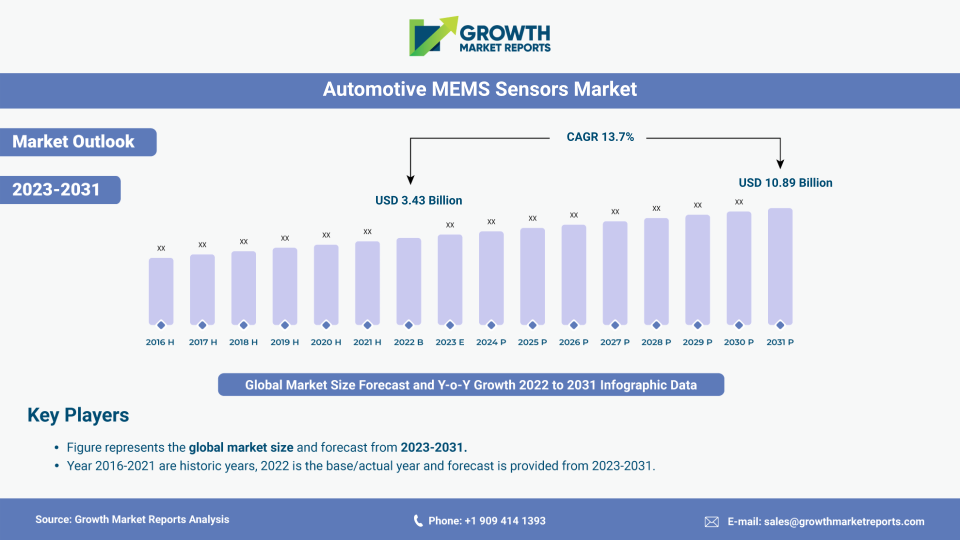
According to the latest research conducted in 2025, the global Automotive MEMS Sensors market size is valued at USD 3.85 billion in 2024. The market is experiencing robust momentum with a compound annual growth rate (CAGR) of 8.3% projected between 2025 and 2033. By the end of 2033, the Automotive MEMS Sensors market is forecasted to reach approximately USD 7.72 billion. This expansion is primarily driven by the increasing integration of advanced safety and infotainment features in vehicles, coupled with the ongoing electrification trend in the automotive industry.

The growth of the Automotive MEMS Sensors market is significantly influenced by the rising demand for vehicle safety and security systems. Stringent government regulations mandating the inclusion of advanced driver assistance systems (ADAS), electronic stability control, and airbag deployment mechanisms have led to a surge in the adoption of MEMS-based sensors such as accelerometers and gyroscopes. These sensors play a crucial role in real-time monitoring of vehicle dynamics, ensuring prompt activation of safety systems. Additionally, the increasing consumer preference for enhanced in-car safety, especially in emerging economies, is propelling automakers to integrate sophisticated MEMS sensors across various vehicle segments. As automotive manufacturers continue to prioritize safety innovations, the demand for MEMS sensors is expected to witness sustained growth throughout the forecast period.

Another key growth factor for the Automotive MEMS Sensors market is the rapid advancement in vehicle electrification and the proliferation of electric vehicles (EVs). MEMS sensors are integral to ensuring the optimal performance of EV powertrains, battery management systems, and regenerative braking mechanisms. As governments worldwide push for lower carbon emissions and offer incentives for EV adoption, automakers are ramping up their investments in MEMS sensor technologies to enhance energy efficiency, range, and safety. Furthermore, the integration of MEMS sensors in EVs enables precise monitoring of critical parameters such as temperature, pressure, and acceleration, which is essential for battery safety and longevity. The growing EV market, particularly in regions such as Asia Pacific and Europe, is expected to create substantial opportunities for MEMS sensor manufacturers over the next decade.

The evolution of connected and autonomous vehicles is also fueling the growth of the Automotive MEMS Sensors market. Modern vehicles are increasingly equipped with infotainment systems, advanced navigation, and telematics, all of which rely on MEMS sensors for accurate data acquisition and processing. The rise of smart mobility solutions and the Internet of Things (IoT) in automotive applications have further expanded the scope of MEMS sensors, enabling real-time vehicle-to-vehicle and vehicle-to-infrastructure communication. As the industry moves towards higher levels of automation, the demand for high-precision MEMS sensors capable of supporting complex algorithms and artificial intelligence is set to rise. This trend is particularly evident in developed markets such as North America and Europe, where significant investments are being made in autonomous driving technologies.

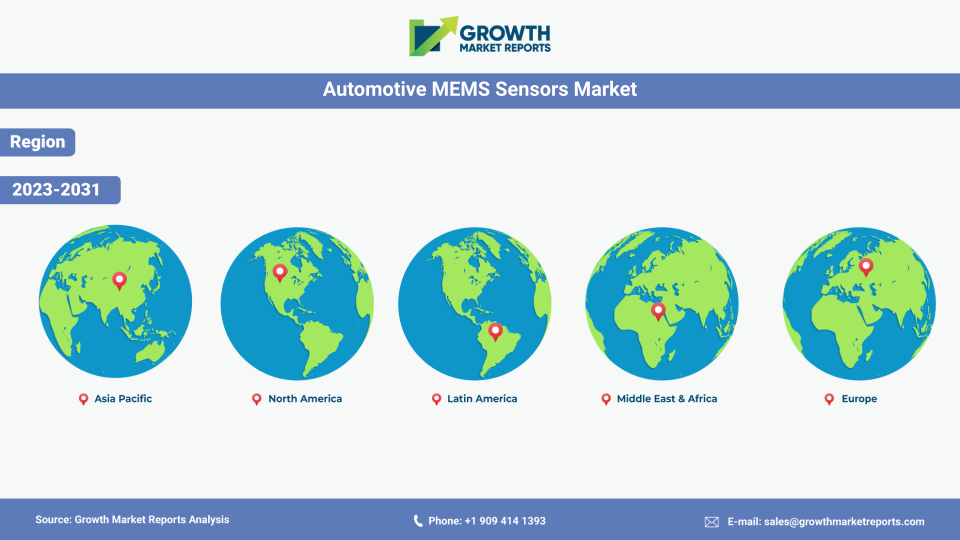
From a regional perspective, Asia Pacific remains the dominant market for Automotive MEMS Sensors, accounting for the largest share in 2024. This is attributed to the presence of leading automotive manufacturing hubs in China, Japan, and South Korea, as well as the rapid adoption of electric and connected vehicles in these countries. North America and Europe are also significant contributors, driven by early adoption of advanced automotive technologies and strong regulatory frameworks. Meanwhile, Latin America and the Middle East & Africa are emerging as promising markets, supported by increasing investments in automotive infrastructure and a growing focus on vehicle safety standards. The regional dynamics are expected to evolve further as global automakers expand their footprint in high-growth markets and tailor their product offerings to local consumer preferences.

Global Automotive MEMS Sensors Industry Outlook

Sensor Type Analysis

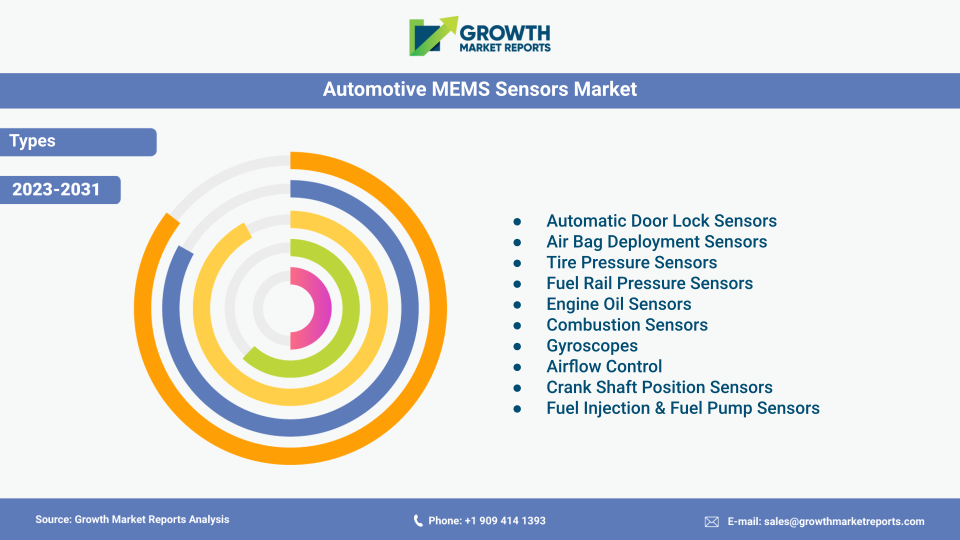
The sensor type segment in the Automotive MEMS Sensors market encompasses accelerometers, gyroscopes, pressure sensors, microphones, and other specialized sensors. Among these, accelerometers hold a significant share due to their critical role in vehicle safety systems like airbag deployment, electronic stability control, and rollover detection. The increasing stringency of safety regulations worldwide has led to the mandatory inclusion of accelerometers in both passenger and commercial vehicles. Gyroscopes, on the other hand, are gaining traction for their ability to measure angular velocity and support advanced driver assistance systems such as lane-keeping assist and adaptive cruise control. The integration of gyroscopes is expected to grow further as automakers pursue higher levels of vehicle autonomy.

Pressure sensors represent another vital sub-segment, primarily used in tire pressure monitoring systems (TPMS), engine management, and transmission control. The growing focus on fuel efficiency and emission control has driven the adoption of pressure sensors, particularly in regions with stringent environmental regulations. These sensors enable precise monitoring of engine parameters, ensuring optimal combustion and reduced emissions. Microphones, though a smaller segment, are increasingly being utilized in infotainment systems, voice recognition, and active noise cancellation technologies. The demand for high-fidelity audio experiences and hands-free communication in vehicles is propelling the growth of MEMS microphones, especially in premium and luxury car segments.

Other specialized MEMS sensors, such as magnetometers and humidity sensors, are finding applications in niche areas like navigation, climate control, and anti-theft systems. The continuous innovation in MEMS fabrication technologies has enabled the development of multi-functional sensors that combine accelerometer, gyroscope, and magnetometer functionalities in a single package. This trend is particularly beneficial for space-constrained automotive applications, as it reduces the overall sensor footprint while enhancing performance. The growing emphasis on sensor fusion and integration is expected to drive further advancements in this segment, enabling more sophisticated automotive systems.

The competitive landscape for sensor types is characterized by intense R&D efforts and strategic collaborations between automotive OEMs and sensor manufacturers. Leading players are investing in miniaturization, increased sensitivity, and robustness of MEMS sensors to meet the evolving demands of the automotive industry. The emergence of new applications, such as driver monitoring systems and in-cabin environmental sensing, is creating additional opportunities for sensor innovation. As vehicles become more connected and autonomous, the market for advanced MEMS sensor types is poised for significant expansion, offering lucrative prospects for both established and emerging players.

Report Scope

Attributes Details
Report Title Automotive MEMS Sensors Market Research Report 2033
By Sensor Type Accelerometers, Gyroscopes, Pressure Sensors, Microphones, Others
By Application Safety & Security, Powertrain, Chassis, Infotainment, Others
By Vehicle Type Passenger Cars, Light Commercial Vehicles, Heavy Commercial Vehicles, Electric Vehicles
By Sales Channel OEM, Aftermarket
Regions Covered North America, Europe, APAC, Latin America, MEA
Countries Covered North America (United States, Canada), Europe (Germany, France, Italy, United Kingdom, Spain, Russia, Rest of Europe), Asia Pacific (China, Japan, South Korea, India, Australia, South East Asia (SEA), Rest of Asia Pacific), Latin America (Mexico, Brazil, Rest of Latin America), Middle East & Africa (Saudi Arabia, South Africa, United Arab Emirates, Rest of Middle East & Africa)
Base Year 2024
Historic Data 2018-2023
Forecast Period 2025-2033
Number of Pages 265
Number of Tables & Figures 282
Customization Available Yes, the report can be customized as per your need.

Application Analysis

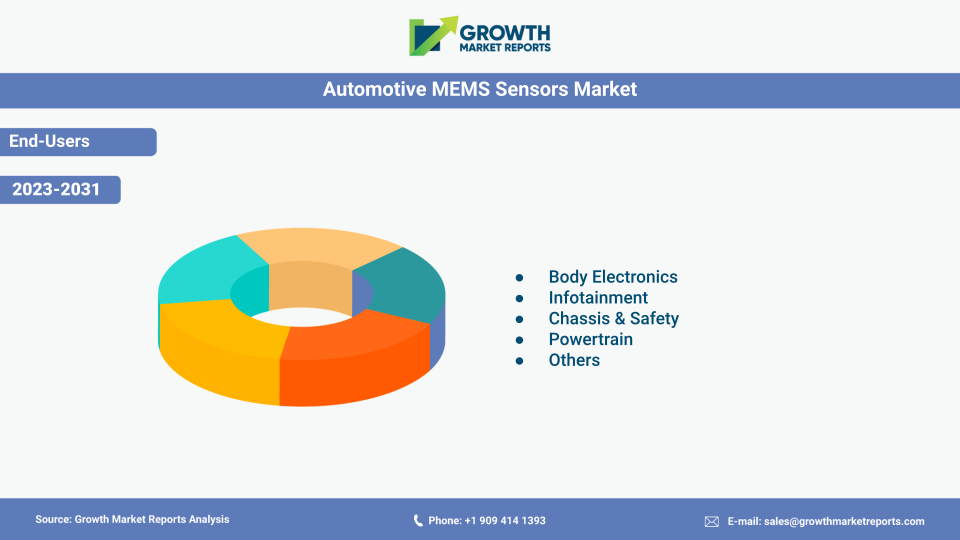
The application segment of the Automotive MEMS Sensors market is broadly categorized into safety & security, powertrain, chassis, infotainment, and others. Safety & security applications dominate the market, driven by regulatory mandates and increasing consumer awareness about vehicle safety. MEMS sensors are integral to systems such as airbags, stability control, anti-lock braking, and collision detection. The growing adoption of ADAS features, including lane departure warning, blind-spot detection, and automatic emergency braking, is further boosting the demand for MEMS sensors in safety-critical applications. Automakers are increasingly leveraging sensor data to enhance occupant protection and minimize accident risks, making safety & security the most lucrative application area.

Powertrain applications constitute a significant share of the MEMS sensors market, particularly with the rise of electric and hybrid vehicles. MEMS sensors are used for monitoring engine parameters, battery temperature, and pressure in fuel and brake lines. The shift towards electrification has intensified the need for precise sensor data to optimize energy management, improve range, and ensure battery safety. In traditional internal combustion engine vehicles, MEMS sensors contribute to emission control and fuel efficiency by enabling real-time monitoring and adjustment of engine functions. The convergence of powertrain electrification and MEMS sensor technology is expected to drive substantial growth in this segment.

Chassis applications involve the use of MEMS sensors for vehicle dynamics control, suspension systems, and braking. Sensors such as accelerometers and gyroscopes provide critical data for stability control, adaptive suspension, and anti-lock braking systems. The increasing adoption of electronic chassis management systems in both passenger and commercial vehicles is fueling the demand for high-performance MEMS sensors. Infotainment applications, while relatively smaller in terms of market share, are witnessing rapid growth due to consumer demand for advanced audio, navigation, and connectivity features. MEMS microphones and inertial sensors are central to enhancing the user experience in modern infotainment systems.

Other applications of MEMS sensors in the automotive sector include climate control, tire pressure monitoring, and driver monitoring systems. The integration of sensors in these areas is aimed at improving comfort, convenience, and safety. For instance, humidity sensors help maintain optimal cabin conditions, while driver monitoring systems leverage MEMS sensors to detect drowsiness and distraction. As the automotive industry continues to innovate and expand the range of in-vehicle applications, the scope for MEMS sensors is expected to broaden, driving market growth across multiple application areas.

Vehicle Type Analysis

The vehicle type segment in the Automotive MEMS Sensors market includes passenger cars, light commercial vehicles (LCVs), heavy commercial vehicles (HCVs), and electric vehicles (EVs). Passenger cars represent the largest market segment, owing to their high production volumes and the widespread adoption of safety, infotainment, and comfort features. The increasing consumer demand for technologically advanced vehicles, coupled with regulatory mandates for safety systems, is driving the integration of MEMS sensors in passenger cars. Automakers are focusing on differentiating their offerings through advanced sensor-based features, further fueling market growth in this segment.

Light commercial vehicles (LCVs) are also significant contributors to the MEMS sensors market, particularly in developed regions such as North America and Europe. The adoption of MEMS sensors in LCVs is driven by the need for enhanced safety, fuel efficiency, and fleet management capabilities. Features such as electronic stability control, tire pressure monitoring, and telematics are becoming standard in this vehicle category, leading to increased sensor deployment. Heavy commercial vehicles (HCVs), while representing a smaller market share, are witnessing growing adoption of MEMS sensors for applications such as load monitoring, stability control, and driver assistance. The emphasis on road safety and regulatory compliance in the commercial vehicle sector is expected to drive further growth in this segment.

Electric vehicles (EVs) are emerging as a high-growth segment for MEMS sensors, driven by the global shift towards sustainable mobility. MEMS sensors are critical for battery management, thermal management, and powertrain control in EVs. The increasing penetration of EVs in key markets such as China, Europe, and North America is creating substantial opportunities for sensor manufacturers. As automakers invest in next-generation EV platforms, the demand for advanced MEMS sensors capable of supporting high-voltage systems and complex control algorithms is set to rise. The convergence of electrification and sensor technology is expected to redefine the competitive landscape of the automotive industry.

The vehicle type segment is characterized by varying adoption rates and technological requirements across different categories. While passenger cars and EVs are leading the adoption of advanced MEMS sensors, commercial vehicles are gradually catching up as regulatory standards evolve and fleet operators recognize the benefits of sensor-driven solutions. The ongoing digital transformation of the automotive sector is expected to accelerate the integration of MEMS sensors across all vehicle types, driving market growth and innovation over the forecast period.

Sales Channel Analysis

The sales channel segment in the Automotive MEMS Sensors market is bifurcated into OEM (Original Equipment Manufacturer) and aftermarket channels. The OEM segment dominates the market, accounting for the majority of MEMS sensor sales. This is attributed to the increasing trend of factory-fitted safety, infotainment, and powertrain systems in new vehicles. Automotive manufacturers are collaborating closely with sensor suppliers to develop customized solutions that meet specific vehicle requirements and regulatory standards. The integration of MEMS sensors at the OEM level ensures optimal performance, reliability, and compatibility with vehicle systems, making it the preferred sales channel for most automakers.

The aftermarket segment, while smaller in comparison, is witnessing steady growth driven by the rising demand for vehicle upgrades, retrofits, and maintenance. Consumers and fleet operators are increasingly opting for aftermarket MEMS sensor solutions to enhance vehicle safety, comfort, and connectivity. The proliferation of connected car technologies and the growing awareness about the benefits of sensor-based systems are fueling the adoption of aftermarket sensors. However, the aftermarket segment faces challenges related to compatibility, installation complexity, and quality assurance, which may limit its growth potential to some extent.

OEMs are leveraging their scale and technological capabilities to drive innovation in MEMS sensor integration. Strategic partnerships, joint ventures, and long-term supply agreements with leading sensor manufacturers are common strategies employed by OEMs to secure a competitive edge. The focus on end-to-end system integration, quality control, and compliance with international standards is central to the OEM sales channel. As the automotive industry moves towards higher levels of automation and electrification, the role of OEMs in driving MEMS sensor adoption is expected to become even more prominent.

The aftermarket channel is characterized by a diverse ecosystem of distributors, retailers, and service providers catering to a wide range of vehicle models and customer preferences. The increasing availability of plug-and-play sensor solutions and the rise of e-commerce platforms are making it easier for consumers to access and install aftermarket sensors. As vehicles age and new technologies become available, the aftermarket segment is expected to offer incremental growth opportunities for MEMS sensor manufacturers, particularly in regions with large vehicle fleets and high vehicle replacement rates.

Opportunities & Threats

The Automotive MEMS Sensors market presents several compelling opportunities for market participants. One of the most significant opportunities lies in the ongoing transformation of the automotive industry towards electrification and autonomy. As electric and autonomous vehicles become mainstream, the demand for high-performance MEMS sensors capable of supporting complex control systems, battery management, and real-time data processing is set to surge. Sensor manufacturers that invest in advanced R&D, miniaturization, and sensor fusion technologies will be well-positioned to capitalize on this trend. Additionally, the growing emphasis on vehicle connectivity and IoT integration is creating new avenues for MEMS sensor applications in areas such as telematics, predictive maintenance, and smart mobility solutions.

Another major opportunity stems from the increasing regulatory focus on vehicle safety and emissions. Governments worldwide are implementing stringent standards for safety, fuel efficiency, and environmental performance, driving automakers to integrate advanced MEMS sensors across a broader range of vehicle models. The rise of smart cities and intelligent transportation systems is also expected to boost the adoption of MEMS sensors for vehicle-to-everything (V2X) communication, traffic management, and infrastructure monitoring. Emerging markets in Asia Pacific, Latin America, and the Middle East & Africa offer untapped potential for sensor manufacturers, as automotive production and sales continue to rise in these regions. The ability to offer customized, cost-effective sensor solutions tailored to local market needs will be a key differentiator for companies seeking to expand their global footprint.

Despite the promising outlook, the Automotive MEMS Sensors market faces certain restraints that could hinder its growth. One of the primary challenges is the intense price competition and commoditization of standard MEMS sensor products. As the market becomes more crowded, manufacturers are under pressure to reduce costs while maintaining high levels of performance and reliability. This can impact profit margins and limit investments in innovation. Additionally, the complexity of integrating MEMS sensors with existing vehicle architectures, particularly in the aftermarket segment, poses technical and logistical challenges. Issues related to sensor calibration, compatibility, and long-term durability must be addressed to ensure widespread adoption and customer satisfaction.

Regional Outlook

Asia Pacific is the largest and fastest-growing region in the Automotive MEMS Sensors market, accounting for a market value of approximately USD 1.7 billion in 2024. The region’s dominance is attributed to the presence of leading automotive manufacturing hubs in China, Japan, and South Korea, as well as the rapid adoption of electric and connected vehicles. China, in particular, is a major growth driver, with its robust automotive industry, government incentives for electric vehicles, and increasing focus on smart mobility solutions. The region is expected to maintain a strong CAGR of 9.1% through 2033, fueled by rising vehicle production, technological advancements, and favorable regulatory policies.

North America is another significant market, with a value of around USD 900 million in 2024. The region benefits from early adoption of advanced automotive technologies, strong regulatory frameworks for vehicle safety, and a high concentration of leading automakers and technology companies. The United States is at the forefront of innovation in autonomous driving, connected vehicles, and electric mobility, driving the demand for high-precision MEMS sensors. Canada and Mexico also contribute to regional growth through their expanding automotive manufacturing sectors and cross-border supply chain integration. North America is expected to witness steady growth, supported by ongoing investments in research, development, and infrastructure.

Europe holds a substantial share of the Automotive MEMS Sensors market, with a market size of about USD 800 million in 2024. The region is characterized by stringent safety and emission regulations, a strong focus on sustainability, and a well-established automotive industry. Germany, France, and the United Kingdom are key markets, driven by the presence of leading OEMs, Tier 1 suppliers, and a robust innovation ecosystem. The European Union’s commitment to reducing carbon emissions and promoting electric mobility is expected to drive further adoption of MEMS sensors in the region. Meanwhile, Latin America and the Middle East & Africa are emerging as promising markets, supported by increasing vehicle production, rising consumer awareness about safety, and growing investments in automotive infrastructure. Together, these regions account for the remainder of the global market, with significant growth potential as automotive technologies continue to evolve.

Automotive MEMS Sensors Market Statistics

Competitor Outlook

The Automotive MEMS Sensors market is highly competitive, with a diverse mix of established players and innovative startups vying for market share. The competitive landscape is shaped by factors such as technological innovation, product quality, pricing strategies, and strategic partnerships with automotive OEMs. Leading companies are investing heavily in research and development to enhance sensor performance, miniaturization, and integration capabilities. The ability to offer customized solutions that meet the specific requirements of automakers is a key differentiator in this market. Additionally, companies are focusing on expanding their global footprint through mergers, acquisitions, and collaborations with regional players.

The market is witnessing a trend towards consolidation, as larger players acquire smaller firms to strengthen their product portfolios and gain access to new technologies. Intellectual property rights, patents, and proprietary technologies play a crucial role in maintaining a competitive edge. Companies are also leveraging their expertise in semiconductor manufacturing and MEMS fabrication to achieve economies of scale and reduce production costs. The increasing demand for sensor fusion and multi-functional sensors is driving collaboration between sensor manufacturers, automotive suppliers, and technology firms, leading to the development of integrated solutions for advanced automotive applications.

In addition to traditional automotive sensor manufacturers, technology companies specializing in IoT, artificial intelligence, and data analytics are entering the market. These entrants are bringing new perspectives and capabilities, particularly in the areas of connected vehicles, autonomous driving, and smart mobility. The competitive dynamics are further influenced by the rapid pace of technological change, evolving customer preferences, and the need for compliance with international standards and regulations. Companies that can adapt quickly to market trends and deliver high-quality, reliable sensor solutions are likely to succeed in this dynamic environment.

Major companies operating in the Automotive MEMS Sensors market include Robert Bosch GmbH, Denso Corporation, Infineon Technologies AG, STMicroelectronics, Analog Devices Inc., NXP Semiconductors, Murata Manufacturing Co., Ltd., Panasonic Corporation, TDK Corporation, and Texas Instruments Incorporated. Bosch is recognized for its leadership in MEMS sensor innovation and its strong relationships with global automotive OEMs. Denso and Infineon are known for their extensive product portfolios and focus on safety and powertrain applications. STMicroelectronics and Analog Devices are prominent players in the development of high-performance accelerometers and gyroscopes. NXP Semiconductors and Murata Manufacturing are expanding their presence in the EV and connected vehicle segments, while Panasonic, TDK, and Texas Instruments are leveraging their expertise in electronics and sensor integration to capture new opportunities in the market.

These companies are continuously investing in advanced manufacturing processes, quality assurance, and supply chain optimization to meet the growing demand for MEMS sensors in the automotive industry. Strategic collaborations with automakers, technology providers, and research institutions are central to their growth strategies. As the market evolves, the ability to deliver innovative, reliable, and cost-effective sensor solutions will be critical for maintaining a competitive advantage and capturing new growth opportunities in the global Automotive MEMS Sensors market.

Key Players

  • Robert Bosch GmbH
  • Denso Corporation
  • Infineon Technologies AG
  • STMicroelectronics
  • Analog Devices Inc.
  • NXP Semiconductors
  • Texas Instruments Incorporated
  • Sensata Technologies
  • Panasonic Corporation
  • Murata Manufacturing Co., Ltd.
  • TDK Corporation (including InvenSense)
  • Honeywell International Inc.
  • TE Connectivity Ltd.
  • Allegro MicroSystems, Inc.
  • Melexis NV
  • CTS Corporation
  • MEMSIC Inc.
  • ROHM Co., Ltd.
  • Kionix, Inc. (a ROHM Group Company)
  • Continental AG
Automotive MEMS Sensors Market Overview

Segments

The Automotive MEMS Sensors market has been segmented on the basis of

Sensor Type

  • Accelerometers
  • Gyroscopes
  • Pressure Sensors
  • Microphones
  • Others

Application

  • Safety & Security
  • Powertrain
  • Chassis
  • Infotainment
  • Others

Vehicle Type

  • Passenger Cars
  • Light Commercial Vehicles
  • Heavy Commercial Vehicles
  • Electric Vehicles

Sales Channel

  • OEM
  • Aftermarket

Competitive Landscape

Key players competing in the automotive MEMS sensors market include Robert Bosch GmbH; STMicroelectronics NV; Infineon Technologies AG; General Electric Co.; Delphi Automotive PLC; Freescale Semiconductors Ltd.; Analog Devices Inc.; Panasonic Corp.; Sensata Technologies, Inc.; Denso Corp.; Hitachi, Ltd.; General Electronic Company; and Murata Manufacturing Co., Ltd.

Some of these players are using several market strategies such as acquisitions, merger, collaborations, partnerships, capacity expansion, and product launches to enhance their market shares and raise their production line of the business in the coming years.
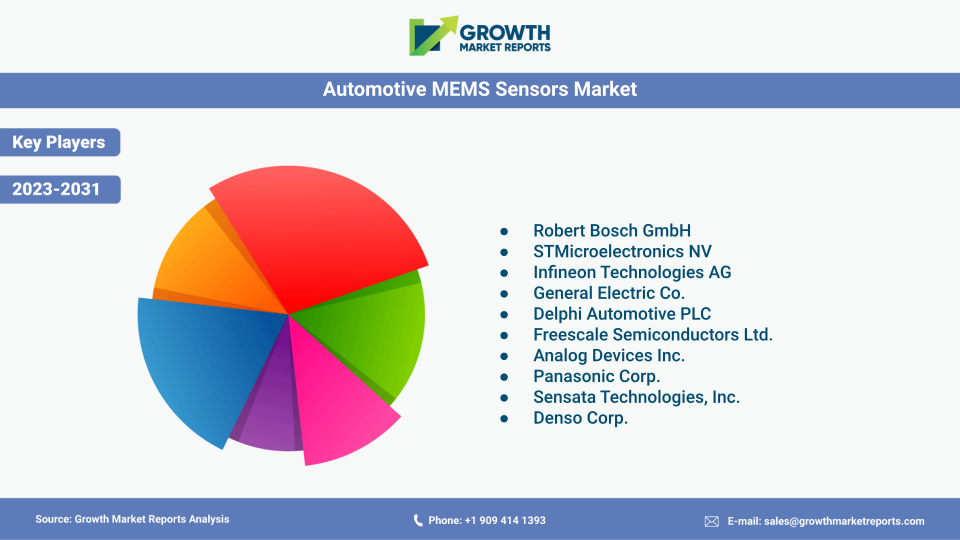

Automotive MEMS Sensors Market Key Players

Frequently Asked Questions

Opportunities include the growth of electric and autonomous vehicles, increasing regulatory focus on safety and emissions, expansion in emerging markets, and the development of advanced, multi-functional, and miniaturized sensor solutions.

Key challenges include intense price competition, commoditization of standard products, integration complexity, sensor calibration and compatibility issues, and the need for long-term durability.

The market is primarily divided into OEM (Original Equipment Manufacturer) and aftermarket channels, with OEMs accounting for the majority of sales due to factory-fitted sensor systems in new vehicles.

Major companies include Robert Bosch GmbH, Denso Corporation, Infineon Technologies AG, STMicroelectronics, Analog Devices Inc., NXP Semiconductors, Murata Manufacturing, Panasonic Corporation, TDK Corporation, and Texas Instruments.

Primary applications include safety & security (airbags, stability control, ADAS), powertrain monitoring, chassis control, infotainment systems, climate control, tire pressure monitoring, and driver monitoring systems.

MEMS sensors in EVs are used for battery management, powertrain control, thermal management, and regenerative braking. They enable precise monitoring of parameters like temperature, pressure, and acceleration, which is essential for battery safety and performance.

The main types include accelerometers, gyroscopes, pressure sensors, microphones, and specialized sensors like magnetometers and humidity sensors. Accelerometers and gyroscopes are particularly critical for safety and ADAS features.

Asia Pacific is the dominant region, driven by automotive manufacturing hubs in China, Japan, and South Korea. North America and Europe also hold significant shares due to early adoption of advanced automotive technologies and strong regulatory frameworks.

Key growth drivers include the increasing integration of advanced safety and infotainment features, vehicle electrification, stringent government safety regulations, and the rise of connected and autonomous vehicles.

The global Automotive MEMS Sensors market is forecasted to reach approximately USD 7.72 billion by the end of 2033, growing from USD 3.85 billion in 2024 at a CAGR of 8.3%.

Table Of Content

Chapter 1 Executive Summary
Chapter 2 Assumptions and Acronyms Used
Chapter 3 Research Methodology
Chapter 4 Automotive MEMS Sensors Market Overview
   4.1 Introduction
      4.1.1 Market Taxonomy
      4.1.2 Market Definition
      4.1.3 Macro-Economic Factors Impacting the Market Growth
   4.2 Automotive MEMS Sensors Market Dynamics
      4.2.1 Market Drivers
      4.2.2 Market Restraints
      4.2.3 Market Opportunity
   4.3 Automotive MEMS Sensors Market - Supply Chain Analysis
      4.3.1 List of Key Suppliers
      4.3.2 List of Key Distributors
      4.3.3 List of Key Consumers
   4.4 Key Forces Shaping the Automotive MEMS Sensors Market
      4.4.1 Bargaining Power of Suppliers
      4.4.2 Bargaining Power of Buyers
      4.4.3 Threat of Substitution
      4.4.4 Threat of New Entrants
      4.4.5 Competitive Rivalry
   4.5 Global Automotive MEMS Sensors Market Size & Forecast, 2023-2032
      4.5.1 Automotive MEMS Sensors Market Size and Y-o-Y Growth
      4.5.2 Automotive MEMS Sensors Market Absolute $ Opportunity

Chapter 5 Global Automotive MEMS Sensors Market Analysis and Forecast By Sensor Type
   5.1 Introduction
      5.1.1 Key Market Trends & Growth Opportunities By Sensor Type
      5.1.2 Basis Point Share (BPS) Analysis By Sensor Type
      5.1.3 Absolute $ Opportunity Assessment By Sensor Type
   5.2 Automotive MEMS Sensors Market Size Forecast By Sensor Type
      5.2.1 Accelerometers
      5.2.2 Gyroscopes
      5.2.3 Pressure Sensors
      5.2.4 Microphones
      5.2.5 Others
   5.3 Market Attractiveness Analysis By Sensor Type

Chapter 6 Global Automotive MEMS Sensors Market Analysis and Forecast By Application
   6.1 Introduction
      6.1.1 Key Market Trends & Growth Opportunities By Application
      6.1.2 Basis Point Share (BPS) Analysis By Application
      6.1.3 Absolute $ Opportunity Assessment By Application
   6.2 Automotive MEMS Sensors Market Size Forecast By Application
      6.2.1 Safety & Security
      6.2.2 Powertrain
      6.2.3 Chassis
      6.2.4 Infotainment
      6.2.5 Others
   6.3 Market Attractiveness Analysis By Application

Chapter 7 Global Automotive MEMS Sensors Market Analysis and Forecast By Vehicle Type
   7.1 Introduction
      7.1.1 Key Market Trends & Growth Opportunities By Vehicle Type
      7.1.2 Basis Point Share (BPS) Analysis By Vehicle Type
      7.1.3 Absolute $ Opportunity Assessment By Vehicle Type
   7.2 Automotive MEMS Sensors Market Size Forecast By Vehicle Type
      7.2.1 Passenger Cars
      7.2.2 Light Commercial Vehicles
      7.2.3 Heavy Commercial Vehicles
      7.2.4 Electric Vehicles
   7.3 Market Attractiveness Analysis By Vehicle Type

Chapter 8 Global Automotive MEMS Sensors Market Analysis and Forecast By Sales Channel
   8.1 Introduction
      8.1.1 Key Market Trends & Growth Opportunities By Sales Channel
      8.1.2 Basis Point Share (BPS) Analysis By Sales Channel
      8.1.3 Absolute $ Opportunity Assessment By Sales Channel
   8.2 Automotive MEMS Sensors Market Size Forecast By Sales Channel
      8.2.1 OEM
      8.2.2 Aftermarket
   8.3 Market Attractiveness Analysis By Sales Channel

Chapter 9 Global Automotive MEMS Sensors Market Analysis and Forecast by Region
   9.1 Introduction
      9.1.1 Key Market Trends & Growth Opportunities By Region
      9.1.2 Basis Point Share (BPS) Analysis By Region
      9.1.3 Absolute $ Opportunity Assessment By Region
   9.2 Automotive MEMS Sensors Market Size Forecast By Region
      9.2.1 North America
      9.2.2 Europe
      9.2.3 Asia Pacific
      9.2.4 Latin America
      9.2.5 Middle East & Africa (MEA)
   9.3 Market Attractiveness Analysis By Region

Chapter 10 Coronavirus Disease (COVID-19) Impact 
   10.1 Introduction 
   10.2 Current & Future Impact Analysis 
   10.3 Economic Impact Analysis 
   10.4 Government Policies 
   10.5 Investment Scenario

Chapter 11 North America Automotive MEMS Sensors Analysis and Forecast
   11.1 Introduction
   11.2 North America Automotive MEMS Sensors Market Size Forecast by Country
      11.2.1 U.S.
      11.2.2 Canada
   11.3 Basis Point Share (BPS) Analysis by Country
   11.4 Absolute $ Opportunity Assessment by Country
   11.5 Market Attractiveness Analysis by Country
   11.6 North America Automotive MEMS Sensors Market Size Forecast By Sensor Type
      11.6.1 Accelerometers
      11.6.2 Gyroscopes
      11.6.3 Pressure Sensors
      11.6.4 Microphones
      11.6.5 Others
   11.7 Basis Point Share (BPS) Analysis By Sensor Type 
   11.8 Absolute $ Opportunity Assessment By Sensor Type 
   11.9 Market Attractiveness Analysis By Sensor Type
   11.10 North America Automotive MEMS Sensors Market Size Forecast By Application
      11.10.1 Safety & Security
      11.10.2 Powertrain
      11.10.3 Chassis
      11.10.4 Infotainment
      11.10.5 Others
   11.11 Basis Point Share (BPS) Analysis By Application 
   11.12 Absolute $ Opportunity Assessment By Application 
   11.13 Market Attractiveness Analysis By Application
   11.14 North America Automotive MEMS Sensors Market Size Forecast By Vehicle Type
      11.14.1 Passenger Cars
      11.14.2 Light Commercial Vehicles
      11.14.3 Heavy Commercial Vehicles
      11.14.4 Electric Vehicles
   11.15 Basis Point Share (BPS) Analysis By Vehicle Type 
   11.16 Absolute $ Opportunity Assessment By Vehicle Type 
   11.17 Market Attractiveness Analysis By Vehicle Type
   11.18 North America Automotive MEMS Sensors Market Size Forecast By Sales Channel
      11.18.1 OEM
      11.18.2 Aftermarket
   11.19 Basis Point Share (BPS) Analysis By Sales Channel 
   11.20 Absolute $ Opportunity Assessment By Sales Channel 
   11.21 Market Attractiveness Analysis By Sales Channel

Chapter 12 Europe Automotive MEMS Sensors Analysis and Forecast
   12.1 Introduction
   12.2 Europe Automotive MEMS Sensors Market Size Forecast by Country
      12.2.1 Germany
      12.2.2 France
      12.2.3 Italy
      12.2.4 U.K.
      12.2.5 Spain
      12.2.6 Russia
      12.2.7 Rest of Europe
   12.3 Basis Point Share (BPS) Analysis by Country
   12.4 Absolute $ Opportunity Assessment by Country
   12.5 Market Attractiveness Analysis by Country
   12.6 Europe Automotive MEMS Sensors Market Size Forecast By Sensor Type
      12.6.1 Accelerometers
      12.6.2 Gyroscopes
      12.6.3 Pressure Sensors
      12.6.4 Microphones
      12.6.5 Others
   12.7 Basis Point Share (BPS) Analysis By Sensor Type 
   12.8 Absolute $ Opportunity Assessment By Sensor Type 
   12.9 Market Attractiveness Analysis By Sensor Type
   12.10 Europe Automotive MEMS Sensors Market Size Forecast By Application
      12.10.1 Safety & Security
      12.10.2 Powertrain
      12.10.3 Chassis
      12.10.4 Infotainment
      12.10.5 Others
   12.11 Basis Point Share (BPS) Analysis By Application 
   12.12 Absolute $ Opportunity Assessment By Application 
   12.13 Market Attractiveness Analysis By Application
   12.14 Europe Automotive MEMS Sensors Market Size Forecast By Vehicle Type
      12.14.1 Passenger Cars
      12.14.2 Light Commercial Vehicles
      12.14.3 Heavy Commercial Vehicles
      12.14.4 Electric Vehicles
   12.15 Basis Point Share (BPS) Analysis By Vehicle Type 
   12.16 Absolute $ Opportunity Assessment By Vehicle Type 
   12.17 Market Attractiveness Analysis By Vehicle Type
   12.18 Europe Automotive MEMS Sensors Market Size Forecast By Sales Channel
      12.18.1 OEM
      12.18.2 Aftermarket
   12.19 Basis Point Share (BPS) Analysis By Sales Channel 
   12.20 Absolute $ Opportunity Assessment By Sales Channel 
   12.21 Market Attractiveness Analysis By Sales Channel

Chapter 13 Asia Pacific Automotive MEMS Sensors Analysis and Forecast
   13.1 Introduction
   13.2 Asia Pacific Automotive MEMS Sensors Market Size Forecast by Country
      13.2.1 China
      13.2.2 Japan
      13.2.3 South Korea
      13.2.4 India
      13.2.5 Australia
      13.2.6 South East Asia (SEA)
      13.2.7 Rest of Asia Pacific (APAC)
   13.3 Basis Point Share (BPS) Analysis by Country
   13.4 Absolute $ Opportunity Assessment by Country
   13.5 Market Attractiveness Analysis by Country
   13.6 Asia Pacific Automotive MEMS Sensors Market Size Forecast By Sensor Type
      13.6.1 Accelerometers
      13.6.2 Gyroscopes
      13.6.3 Pressure Sensors
      13.6.4 Microphones
      13.6.5 Others
   13.7 Basis Point Share (BPS) Analysis By Sensor Type 
   13.8 Absolute $ Opportunity Assessment By Sensor Type 
   13.9 Market Attractiveness Analysis By Sensor Type
   13.10 Asia Pacific Automotive MEMS Sensors Market Size Forecast By Application
      13.10.1 Safety & Security
      13.10.2 Powertrain
      13.10.3 Chassis
      13.10.4 Infotainment
      13.10.5 Others
   13.11 Basis Point Share (BPS) Analysis By Application 
   13.12 Absolute $ Opportunity Assessment By Application 
   13.13 Market Attractiveness Analysis By Application
   13.14 Asia Pacific Automotive MEMS Sensors Market Size Forecast By Vehicle Type
      13.14.1 Passenger Cars
      13.14.2 Light Commercial Vehicles
      13.14.3 Heavy Commercial Vehicles
      13.14.4 Electric Vehicles
   13.15 Basis Point Share (BPS) Analysis By Vehicle Type 
   13.16 Absolute $ Opportunity Assessment By Vehicle Type 
   13.17 Market Attractiveness Analysis By Vehicle Type
   13.18 Asia Pacific Automotive MEMS Sensors Market Size Forecast By Sales Channel
      13.18.1 OEM
      13.18.2 Aftermarket
   13.19 Basis Point Share (BPS) Analysis By Sales Channel 
   13.20 Absolute $ Opportunity Assessment By Sales Channel 
   13.21 Market Attractiveness Analysis By Sales Channel

Chapter 14 Latin America Automotive MEMS Sensors Analysis and Forecast
   14.1 Introduction
   14.2 Latin America Automotive MEMS Sensors Market Size Forecast by Country
      14.2.1 Brazil
      14.2.2 Mexico
      14.2.3 Rest of Latin America (LATAM)
   14.3 Basis Point Share (BPS) Analysis by Country
   14.4 Absolute $ Opportunity Assessment by Country
   14.5 Market Attractiveness Analysis by Country
   14.6 Latin America Automotive MEMS Sensors Market Size Forecast By Sensor Type
      14.6.1 Accelerometers
      14.6.2 Gyroscopes
      14.6.3 Pressure Sensors
      14.6.4 Microphones
      14.6.5 Others
   14.7 Basis Point Share (BPS) Analysis By Sensor Type 
   14.8 Absolute $ Opportunity Assessment By Sensor Type 
   14.9 Market Attractiveness Analysis By Sensor Type
   14.10 Latin America Automotive MEMS Sensors Market Size Forecast By Application
      14.10.1 Safety & Security
      14.10.2 Powertrain
      14.10.3 Chassis
      14.10.4 Infotainment
      14.10.5 Others
   14.11 Basis Point Share (BPS) Analysis By Application 
   14.12 Absolute $ Opportunity Assessment By Application 
   14.13 Market Attractiveness Analysis By Application
   14.14 Latin America Automotive MEMS Sensors Market Size Forecast By Vehicle Type
      14.14.1 Passenger Cars
      14.14.2 Light Commercial Vehicles
      14.14.3 Heavy Commercial Vehicles
      14.14.4 Electric Vehicles
   14.15 Basis Point Share (BPS) Analysis By Vehicle Type 
   14.16 Absolute $ Opportunity Assessment By Vehicle Type 
   14.17 Market Attractiveness Analysis By Vehicle Type
   14.18 Latin America Automotive MEMS Sensors Market Size Forecast By Sales Channel
      14.18.1 OEM
      14.18.2 Aftermarket
   14.19 Basis Point Share (BPS) Analysis By Sales Channel 
   14.20 Absolute $ Opportunity Assessment By Sales Channel 
   14.21 Market Attractiveness Analysis By Sales Channel

Chapter 15 Middle East & Africa (MEA) Automotive MEMS Sensors Analysis and Forecast
   15.1 Introduction
   15.2 Middle East & Africa (MEA) Automotive MEMS Sensors Market Size Forecast by Country
      15.2.1 Saudi Arabia
      15.2.2 South Africa
      15.2.3 UAE
      15.2.4 Rest of Middle East & Africa (MEA)
   15.3 Basis Point Share (BPS) Analysis by Country
   15.4 Absolute $ Opportunity Assessment by Country
   15.5 Market Attractiveness Analysis by Country
   15.6 Middle East & Africa (MEA) Automotive MEMS Sensors Market Size Forecast By Sensor Type
      15.6.1 Accelerometers
      15.6.2 Gyroscopes
      15.6.3 Pressure Sensors
      15.6.4 Microphones
      15.6.5 Others
   15.7 Basis Point Share (BPS) Analysis By Sensor Type 
   15.8 Absolute $ Opportunity Assessment By Sensor Type 
   15.9 Market Attractiveness Analysis By Sensor Type
   15.10 Middle East & Africa (MEA) Automotive MEMS Sensors Market Size Forecast By Application
      15.10.1 Safety & Security
      15.10.2 Powertrain
      15.10.3 Chassis
      15.10.4 Infotainment
      15.10.5 Others
   15.11 Basis Point Share (BPS) Analysis By Application 
   15.12 Absolute $ Opportunity Assessment By Application 
   15.13 Market Attractiveness Analysis By Application
   15.14 Middle East & Africa (MEA) Automotive MEMS Sensors Market Size Forecast By Vehicle Type
      15.14.1 Passenger Cars
      15.14.2 Light Commercial Vehicles
      15.14.3 Heavy Commercial Vehicles
      15.14.4 Electric Vehicles
   15.15 Basis Point Share (BPS) Analysis By Vehicle Type 
   15.16 Absolute $ Opportunity Assessment By Vehicle Type 
   15.17 Market Attractiveness Analysis By Vehicle Type
   15.18 Middle East & Africa (MEA) Automotive MEMS Sensors Market Size Forecast By Sales Channel
      15.18.1 OEM
      15.18.2 Aftermarket
   15.19 Basis Point Share (BPS) Analysis By Sales Channel 
   15.20 Absolute $ Opportunity Assessment By Sales Channel 
   15.21 Market Attractiveness Analysis By Sales Channel

Chapter 16 Competition Landscape 
   16.1 Automotive MEMS Sensors Market: Competitive Dashboard
   16.2 Global Automotive MEMS Sensors Market: Market Share Analysis, 2023
   16.3 Company Profiles (Details – Overview, Financials, Developments, Strategy) 
      16.3.1 Robert Bosch GmbH
Denso Corporation
Infineon Technologies AG
STMicroelectronics
Analog Devices Inc.
NXP Semiconductors
Texas Instruments Incorporated
Sensata Technologies
Panasonic Corporation
Murata Manufacturing Co., Ltd.
TDK Corporation (including InvenSense)
Honeywell International Inc.
TE Connectivity Ltd.
Allegro MicroSystems, Inc.
Melexis NV
CTS Corporation
MEMSIC Inc.
ROHM Co., Ltd.
Kionix, Inc. (a ROHM Group Company)
Continental AG

Methodology

Our Clients

sinopec
Honda Motor Co. Ltd.
FedEx Logistics
Dassault Aviation
Microsoft
Deloitte
Pfizer
General Electric