Segments - by Product Type (CCD Imaging Colorimeters, CMOS Imaging Colorimeters, Others), by Application (Display Testing, Automotive Lighting, Luminaire Measurement, Surface Inspection, Others), by End-User (Electronics, Automotive, Aerospace & Defense, Lighting, Research & Academia, Others)
As per our latest research, the global Imaging Colorimeters market size stood at USD 314.2 million in 2024, with a robust year-on-year growth driven by increasing demand for precision light and color measurement solutions across various industries. The market is projected to expand at a CAGR of 7.8% during the forecast period, reaching a value of USD 621.7 million by 2033. This impressive growth trajectory is underpinned by rapid advancements in display technologies, stringent quality control standards in automotive lighting, and the ongoing digital transformation in manufacturing and research environments.
One of the primary growth factors fueling the Imaging Colorimeters market is the surging adoption of high-resolution displays in consumer electronics, automotive infotainment systems, and professional visualization equipment. As manufacturers strive to deliver superior visual experiences, the need for accurate color and luminance measurement has become paramount. Imaging colorimeters, with their ability to provide spatially resolved color data, are increasingly being integrated into production lines for real-time quality assurance. Furthermore, the proliferation of OLED, micro-LED, and other next-generation display technologies has intensified the demand for advanced colorimetric testing solutions, further propelling market expansion.
Another significant driver for the Imaging Colorimeters market is the rapid evolution of automotive lighting systems, particularly in the context of adaptive headlights, ambient interior lighting, and advanced driver-assistance systems (ADAS). Stringent regulatory standards governing automotive lighting safety and performance have compelled manufacturers to adopt precise measurement techniques, where imaging colorimeters offer unparalleled advantages in terms of speed, accuracy, and repeatability. Additionally, the growing trend towards smart and connected vehicles has catalyzed the integration of sophisticated lighting modules, necessitating comprehensive colorimetric validation throughout the supply chain.
The increasing emphasis on energy efficiency and sustainability in lighting solutions has also contributed to the rising adoption of imaging colorimeters. In the lighting industry, manufacturers are leveraging these instruments for luminaire measurement, ensuring compliance with global energy standards and customer expectations for color consistency. Moreover, the deployment of imaging colorimeters in surface inspection applications across industrial manufacturing is gaining traction, as companies seek to minimize defects and enhance product quality. The convergence of automation, machine vision, and color science is expected to create new avenues for market growth over the next decade.
In recent years, the advent of Remote-Expert Glasses for Imaging Engineers has revolutionized the way imaging colorimeters are utilized in various industries. These advanced glasses enable engineers to access real-time data and perform precise measurements without being physically present at the site. This technology is particularly beneficial in remote locations or hazardous environments where traditional methods may pose challenges. By integrating augmented reality and real-time data sharing, Remote-Expert Glasses enhance the efficiency and accuracy of imaging processes, allowing engineers to collaborate seamlessly with on-site teams. As the demand for remote solutions grows, the adoption of such innovative tools is expected to increase, further driving advancements in imaging colorimetry and expanding its application scope across industries.
From a regional perspective, Asia Pacific continues to dominate the Imaging Colorimeters market, accounting for the largest revenue share in 2024, primarily driven by the presence of leading electronics and automotive manufacturers in countries like China, Japan, and South Korea. North America and Europe also represent significant markets, characterized by robust investments in research and development, stringent regulatory frameworks, and early adoption of advanced testing technologies. Meanwhile, emerging economies in Latin America and the Middle East & Africa are gradually embracing imaging colorimeters, spurred by industrial modernization and the expansion of the electronics and lighting sectors.
The Imaging Colorimeters market is segmented by product type into CCD Imaging Colorimeters, CMOS Imaging Colorimeters, and Others. Among these, CCD Imaging Colorimeters have traditionally held the largest market share, owing to their superior sensitivity, low noise characteristics, and high dynamic range. These attributes make CCD-based systems particularly well-suited for applications requiring precise color and luminance measurements, such as display testing and automotive lighting validation. The ability of CCD sensors to deliver consistent and repeatable results has made them the preferred choice for high-end quality assurance processes in manufacturing environments.
However, the market is witnessing a significant shift towards CMOS Imaging Colorimeters, driven by advancements in CMOS sensor technology that have narrowed the performance gap with CCDs. CMOS imaging colorimeters offer several advantages, including lower power consumption, faster readout speeds, and the potential for on-chip integration of advanced processing features. These benefits have made CMOS-based systems increasingly attractive for real-time, high-throughput applications, such as surface inspection and automated production line testing. As the cost-performance ratio of CMOS sensors continues to improve, their adoption is expected to accelerate, gradually eroding the dominance of CCD-based solutions.
The "Others" category encompasses emerging sensor technologies and hybrid imaging solutions designed to address specialized application requirements. This segment includes multispectral and hyperspectral imaging colorimeters, which are gaining traction in research, academia, and industries where detailed spectral analysis is crucial. While currently representing a smaller share of the overall market, these advanced systems are expected to witness robust growth as industries increasingly demand comprehensive colorimetric and spectral data for material analysis, quality control, and innovation in product development.
The development of Aggregate Imaging Systems has marked a significant milestone in the field of imaging colorimetry, offering comprehensive solutions for large-scale and complex applications. These systems integrate multiple imaging colorimeters to provide a holistic view of color and luminance across extensive surfaces or intricate assemblies. By aggregating data from various points, these systems deliver unparalleled insights into color uniformity, defect detection, and quality control, particularly in industries such as automotive, aerospace, and consumer electronics. The ability to capture and analyze data from multiple perspectives enhances the precision and reliability of colorimetric assessments, making Aggregate Imaging Systems an indispensable tool for manufacturers striving to meet high-quality standards and optimize production processes.
The competitive landscape within the product type segment is characterized by continuous innovation, with manufacturers striving to enhance sensor resolution, sensitivity, and processing capabilities. The integration of artificial intelligence and machine learning algorithms into imaging colorimeters is emerging as a key trend, enabling smarter data analysis, anomaly detection, and predictive maintenance. As end-users seek to optimize their testing and inspection workflows, the demand for versatile, high-performance imaging colorimeters across all product types is set to rise steadily throughout the forecast period.
| Attributes | Details |
| Report Title | Imaging Colorimeters Market Research Report 2033 |
| By Product Type | CCD Imaging Colorimeters, CMOS Imaging Colorimeters, Others |
| By Application | Display Testing, Automotive Lighting, Luminaire Measurement, Surface Inspection, Others |
| By End-User | Electronics, Automotive, Aerospace & Defense, Lighting, Research & Academia, Others |
| Regions Covered | North America, Europe, APAC, Latin America, MEA |
| Base Year | 2024 |
| Historic Data | 2018-2023 |
| Forecast Period | 2025-2033 |
| Number of Pages | 255 |
| Number of Tables & Figures | 349 |
| Customization Available | Yes, the report can be customized as per your need. |
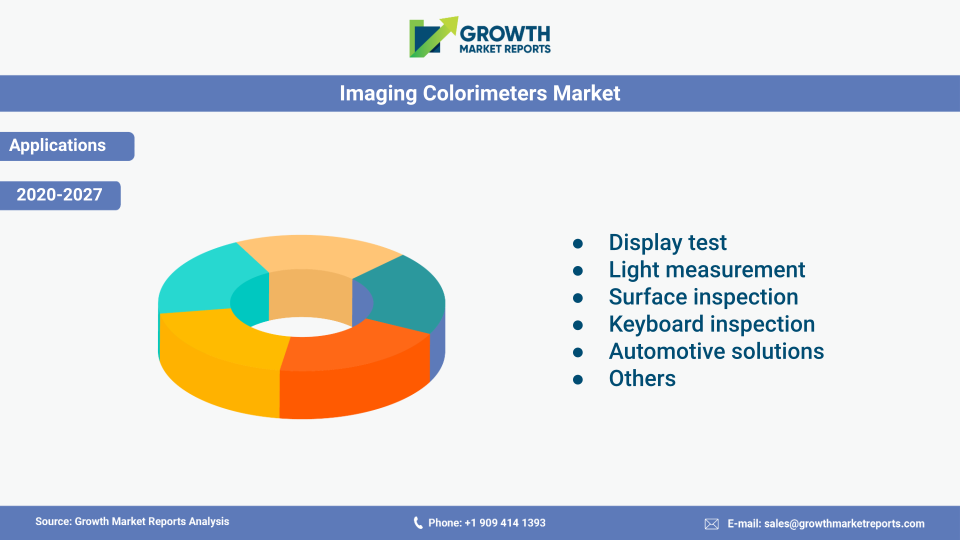
The application landscape of the Imaging Colorimeters market is diverse, with key segments including Display Testing, Automotive Lighting, Luminaire Measurement, Surface Inspection, and Others. Display Testing remains the largest and most mature application, driven by the relentless pace of innovation in consumer electronics, professional displays, and digital signage. Imaging colorimeters play a critical role in ensuring uniformity, color accuracy, and luminance consistency across display panels, helping manufacturers meet stringent quality standards and enhance user experiences. As display technologies evolve towards higher resolutions and more complex architectures, the demand for advanced colorimetric testing solutions is expected to intensify.
Automotive Lighting is another high-growth application segment, fueled by the increasing adoption of LED, laser, and adaptive lighting systems in modern vehicles. Imaging colorimeters are indispensable in validating the color, intensity, and distribution of automotive lighting components, ensuring compliance with regulatory requirements and consumer expectations for safety and aesthetics. The integration of imaging colorimeters into automotive production lines has enabled real-time, non-contact measurement of lighting modules, significantly improving throughput and reducing the risk of defects. As the automotive industry embraces electrification and autonomous driving, the complexity of lighting systems is expected to rise, further driving demand for sophisticated colorimetric testing tools.
In the Luminaire Measurement segment, imaging colorimeters are widely used for evaluating the performance of lighting fixtures, including luminaires, lamps, and LEDs. Manufacturers rely on these instruments to assess parameters such as color temperature, color rendering index (CRI), and spatial luminance distribution, ensuring that products meet energy efficiency standards and deliver consistent illumination. The push towards smart lighting solutions and human-centric lighting design is creating new opportunities for imaging colorimeters, as stakeholders seek to optimize lighting quality for diverse environments, from offices and retail spaces to healthcare facilities and public infrastructure.
Surface Inspection represents a rapidly growing application area, as industries across electronics, automotive, and manufacturing sectors seek to enhance product quality and reduce waste. Imaging colorimeters enable precise detection of surface defects, color variations, and contamination, facilitating automated inspection and quality control processes. The integration of imaging colorimeters with machine vision systems and robotics is transforming industrial inspection, enabling faster, more reliable, and cost-effective quality assurance. Other emerging applications include research, material science, and environmental monitoring, where imaging colorimeters provide valuable insights into colorimetric properties and spatial distribution of materials and surfaces.
The Imaging Colorimeters market serves a broad spectrum of end-users, including Electronics, Automotive, Aerospace & Defense, Lighting, Research & Academia, and Others. The Electronics sector accounts for the largest share of the market, driven by the proliferation of high-performance displays, smartphones, tablets, and wearables. Manufacturers in this segment rely heavily on imaging colorimeters to ensure the visual quality and consistency of their products, particularly as consumer expectations for display performance continue to rise. The rapid pace of innovation in display technologies, coupled with the need for efficient, automated quality assurance, is expected to sustain strong demand for imaging colorimeters in the electronics industry.
The Automotive industry is another major end-user, leveraging imaging colorimeters for a wide range of applications, from headlamp and taillight testing to interior ambient lighting validation. As vehicles become increasingly connected and autonomous, the complexity of lighting systems has grown, necessitating advanced measurement solutions to ensure safety, compliance, and user satisfaction. The push towards electric vehicles (EVs) and the integration of new lighting technologies are further amplifying the need for precise colorimetric testing throughout the automotive value chain.
In the Aerospace & Defense sector, imaging colorimeters are employed for testing cockpit displays, instrument panels, and exterior lighting systems. The stringent performance and reliability requirements in this industry demand high-precision measurement tools capable of operating in challenging environments. Imaging colorimeters enable manufacturers and maintenance teams to verify color and luminance parameters, ensuring compliance with industry standards and enhancing operational safety. The ongoing modernization of aircraft and defense systems is expected to drive steady demand for imaging colorimeters in this segment.
The Lighting industry, encompassing manufacturers of luminaires, lamps, and LEDs, represents a significant end-user group for imaging colorimeters. These instruments are essential for quality assurance, product development, and regulatory compliance, enabling manufacturers to deliver energy-efficient, high-quality lighting solutions. The growing adoption of smart and connected lighting systems is creating new opportunities for imaging colorimeters, as stakeholders seek to optimize lighting performance for diverse applications. Research & Academia also constitute an important end-user segment, utilizing imaging colorimeters for fundamental research, material analysis, and educational purposes. Other end-users include industrial manufacturing, medical device companies, and environmental monitoring agencies, reflecting the versatility and broad applicability of imaging colorimeters across sectors.
The Imaging Colorimeters market presents a wealth of opportunities for stakeholders, driven by ongoing technological advancements and the expanding scope of applications. One of the most promising opportunities lies in the integration of artificial intelligence and machine learning algorithms with imaging colorimeters, enabling automated data analysis, anomaly detection, and predictive maintenance. This convergence of color science and AI is expected to enhance the efficiency, accuracy, and scalability of colorimetric testing, opening new avenues for innovation in quality assurance and industrial inspection. Additionally, the growing adoption of Industry 4.0 principles and smart manufacturing practices is driving demand for connected, intelligent measurement solutions, positioning imaging colorimeters as a critical enabler of digital transformation in manufacturing and research.
Another key opportunity is the rising demand for imaging colorimeters in emerging markets, particularly in Asia Pacific, Latin America, and the Middle East & Africa. As these regions undergo rapid industrialization and technological modernization, there is a growing need for advanced quality control and inspection tools across electronics, automotive, and lighting sectors. The increasing focus on energy efficiency, sustainability, and regulatory compliance is also creating new growth prospects for imaging colorimeters, as manufacturers seek to meet global standards and enhance their competitive positioning. Furthermore, the development of multispectral and hyperspectral imaging technologies is expected to unlock new applications in material science, environmental monitoring, and life sciences, further expanding the addressable market for imaging colorimeters.
Despite these opportunities, the Imaging Colorimeters market faces several restraints that could hinder its growth trajectory. One of the primary challenges is the relatively high cost of advanced imaging colorimeters, which may limit adoption among small and medium-sized enterprises (SMEs) and organizations with constrained budgets. The complexity of integrating imaging colorimeters into existing production lines and workflows can also pose barriers, particularly for industries with legacy systems and limited technical expertise. Additionally, the market is subject to intense competition from alternative measurement technologies, such as spot colorimeters and spectroradiometers, which may offer lower-cost or simpler solutions for certain applications. Addressing these challenges will require ongoing innovation, strategic partnerships, and targeted customer education efforts by market participants.
The Asia Pacific region is the dominant force in the global Imaging Colorimeters market, accounting for approximately 38% of the total market revenue in 2024, which translates to about USD 119.4 million. The region's leadership is underpinned by the presence of major electronics and automotive manufacturing hubs in China, Japan, South Korea, and Taiwan. Rapid industrialization, technological advancement, and strong government support for innovation have fueled the adoption of imaging colorimeters across a wide range of applications, from display testing to industrial inspection. The Asia Pacific market is expected to maintain its growth momentum, registering a CAGR of 8.4% through 2033, as regional manufacturers continue to invest in automation, quality control, and digital transformation initiatives.
North America is another significant market for imaging colorimeters, with a market size of USD 82.7 million in 2024, representing 26% of the global market. The region benefits from a strong ecosystem of technology providers, research institutions, and early adopters of advanced testing and inspection solutions. The United States, in particular, is a major driver of market growth, with robust demand from the electronics, automotive, aerospace, and lighting industries. The emphasis on regulatory compliance, product safety, and innovation has spurred the adoption of imaging colorimeters in both manufacturing and research settings. Canada and Mexico are also emerging as important markets, supported by investments in industrial modernization and the expansion of the automotive and electronics sectors.
Europe holds a substantial share of the Imaging Colorimeters market, with a market size of USD 75.4 million in 2024, accounting for 24% of global revenue. The region is characterized by stringent quality standards, a strong focus on sustainability, and a vibrant ecosystem of research and innovation. Germany, France, and the United Kingdom are the leading contributors to market growth, driven by the presence of leading automotive, lighting, and electronics manufacturers. The European market is also witnessing increased adoption of imaging colorimeters in aerospace, defense, and academic research, reflecting the region's commitment to technological excellence. Latin America and the Middle East & Africa collectively account for the remaining 12% of the global market, with a combined market size of USD 37.7 million in 2024. These regions are gradually embracing imaging colorimeters, spurred by industrial development, infrastructure investments, and the expansion of the electronics and lighting sectors.
The competitive landscape of the Imaging Colorimeters market is characterized by the presence of several established players, as well as a growing number of innovative startups and niche technology providers. Leading companies are focused on expanding their product portfolios, enhancing sensor performance, and integrating advanced software capabilities to address the evolving needs of end-users. Strategic partnerships, mergers and acquisitions, and investments in research and development are common strategies employed by market participants to strengthen their market position and drive innovation. The market is also witnessing increased collaboration between hardware manufacturers, software developers, and system integrators, aimed at delivering comprehensive, turnkey solutions for quality assurance and industrial inspection.
Product differentiation is a key focus area for competitors in the Imaging Colorimeters market, with companies striving to offer instruments with higher resolution, faster measurement speeds, and enhanced data analysis capabilities. The integration of artificial intelligence, machine learning, and cloud connectivity is emerging as a major trend, enabling smarter and more efficient colorimetric testing. Leading players are also investing in the development of user-friendly interfaces, automated calibration routines, and remote monitoring features, aimed at simplifying the adoption and operation of imaging colorimeters across diverse industries.
The market is highly dynamic, with new entrants and disruptive technologies continuously reshaping the competitive landscape. Startups and niche players are leveraging advances in sensor technology, optics, and software to introduce innovative solutions tailored to specific applications, such as multispectral imaging, hyperspectral analysis, and real-time defect detection. This wave of innovation is fostering healthy competition and driving the overall growth and evolution of the Imaging Colorimeters market. At the same time, established players are leveraging their global reach, technical expertise, and customer relationships to maintain their leadership positions and expand into new markets and application areas.
Some of the major companies operating in the Imaging Colorimeters market include Radiant Vision Systems, Konica Minolta, Instrument Systems, TechnoTeam Bildverarbeitung GmbH, Admesy, ELDIM, and Topcon Technohouse Corporation. Radiant Vision Systems is renowned for its high-performance imaging colorimeters and photometers, serving leading display, automotive, and lighting manufacturers worldwide. Konica Minolta offers a comprehensive portfolio of color measurement solutions, including advanced imaging colorimeters for industrial and research applications. Instrument Systems specializes in precision light and color measurement instruments, with a strong focus on display testing and automotive lighting. TechnoTeam Bildverarbeitung GmbH is recognized for its innovative imaging colorimeters and software solutions for quality assurance and industrial inspection. Admesy provides versatile color and light measurement systems for display, lighting, and automotive applications, while ELDIM and Topcon Technohouse Corporation are known for their expertise in optical measurement and imaging technologies. These companies, along with several emerging players, are at the forefront of innovation in the Imaging Colorimeters market, driving the adoption of advanced measurement solutions across industries and geographies.
The Imaging Colorimeters market has been segmented on the basis of
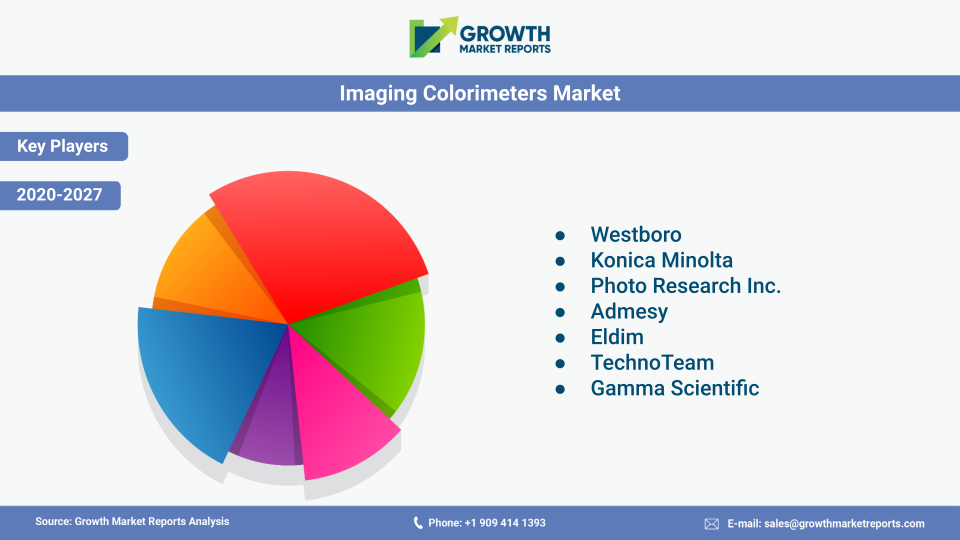
The global imaging colorimeters market is dominated by key players such as Westboro, Konica Minolta, Photo Research Inc., Admesy, Eldim, TechnoTeam, and Gamma Scientific. These companies have robust distribution channels at a global level. In addition, these companies offer a broad product range in the imaging colorimeters market. These key manufacturers adopt diverse approaches such as collaborations, contracts, agreements, and new product development, to sustain their market status.
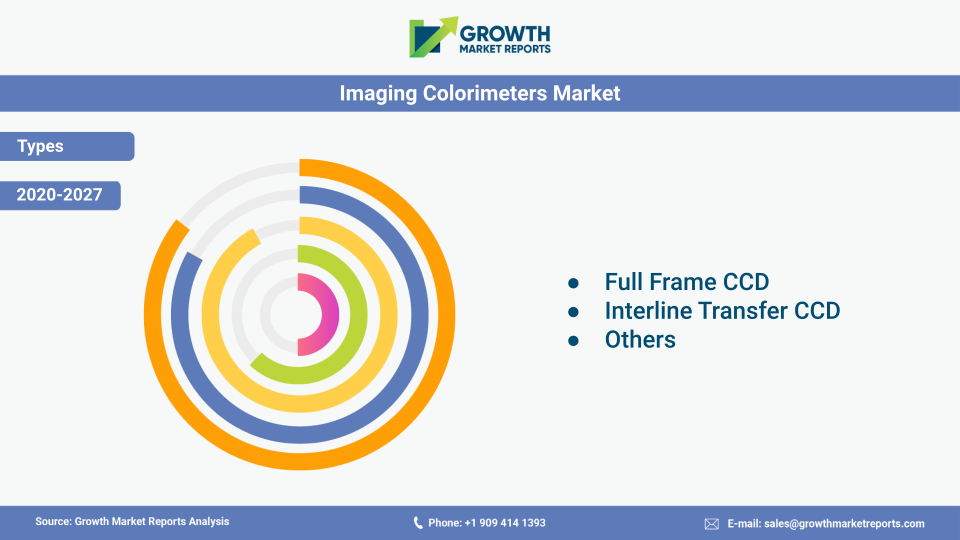
The Full Frame CCD segment accounted for the largest market share in terms of Revenue (USD Million) in 2019. The Full Frame CCD segment is projected to witness significant incremental dollar opportunity from 2020 to 2027 due to increasing applications of Full Frame CCD in the Display Test and Light Measurement. The China market is expected to register significant CAGR growth over the forecast period. U.S accounts for the largest share of the imaging colorimeter market due to increasing industrialization in the U.S. and also the rise in demand for displays such as LEDs and LCDs among consumers.

Additional company profiles can be provided on request.
Yes, the technology landscape analysis is available.
Yes, the report gives the brief introduction of the types of Imaging Colorimeters.
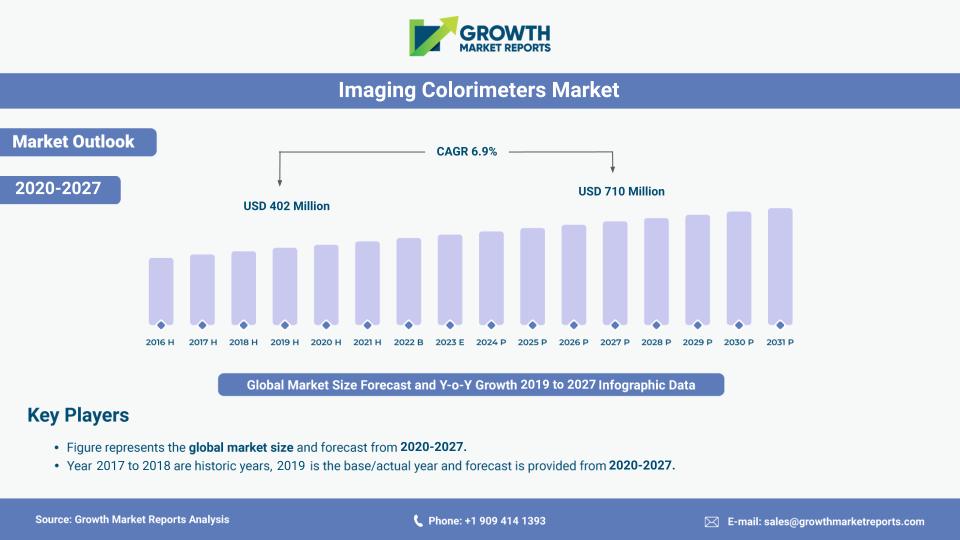
According to this Growth Market Reports report, the market from Imaging Colorimeters is likely to register a CAGR over 6.9% during forecast period 2020-2027, with an anticipated valuation of USD 710 million by the end of the 2027.
In addition to market size (in USD Million) and Company Market Share (in % for base year 2019), other data such as technology landscape, regulatory landscape, and entry level strategy.
Rising production of electronics components, such as displays, keyboards, smartphones, and others is expected to be a key factor driving the market during the forecast period.
Consumer electronics and automotive among others are the key end-user/application that are driving the Imaging Colorimeters market.
Factors such as competitive strength and market positioning are some of the key areas considered while selecting top companies to be profiled.
COVID-19 has hampered the Imaging Colorimeters industry. Detailed analysis will be covered in the final report
The base year considered for the global Imaging Colorimeters market report is 2019. The complete analysis period is 2017 to 2027, wherein, 2017 & 2018 are the historic years and the forecast is provided from 2020 to 2027.
Major Manufactures include, Westboro, Konica Minolta, Photo Research Inc., Admesy, Eldim, TechnoTeam, and Gamma Scientific among others.