Segments - by Product Type (Audio Unit, Display Unit, Navigation Unit, Communication Unit, Others), by Operating System (Linux, QNX, Microsoft, Android, Others), by Vehicle Type (Passenger Cars, Light Commercial Vehicles, Heavy Commercial Vehicles), by Connectivity (Bluetooth, Wi-Fi, 4G/5G, Others), by Sales Channel (OEM, Aftermarket)
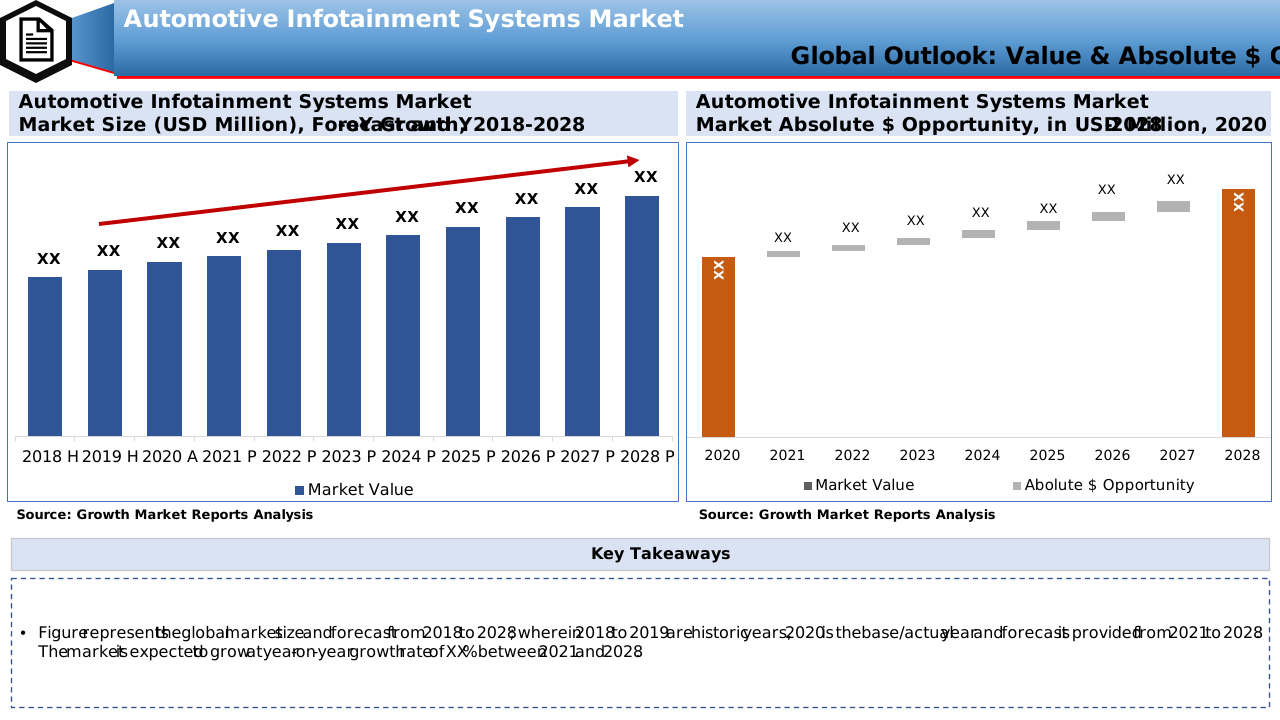
As per our latest research, the global automotive infotainment systems market size reached USD 28.6 billion in 2024, reflecting robust demand across both developed and emerging economies. The market is projected to grow at a CAGR of 8.2% from 2025 to 2033, with the market expected to reach USD 56.3 billion by 2033. This impressive growth is primarily driven by the rapid integration of advanced connectivity features, increasing consumer demand for in-car entertainment, and the proliferation of smart vehicles. The expanding adoption of electric vehicles and autonomous driving technologies is further amplifying the need for sophisticated infotainment systems, underlining the market's dynamic evolution.
One of the primary growth factors for the automotive infotainment systems market is the escalating consumer preference for enhanced in-vehicle experiences. Modern consumers increasingly seek seamless connectivity, intuitive user interfaces, and access to a wide array of entertainment and navigation options while on the move. This shift in consumer expectations has compelled automakers to prioritize infotainment innovation, integrating features such as voice recognition, gesture controls, and real-time data analytics. The convergence of smartphones with vehicle systems, driven by technologies like Apple CarPlay and Android Auto, is also fueling market expansion, as it allows users to mirror their mobile experiences within the vehicle, thereby elevating convenience and engagement.
Another significant driver propelling market growth is the technological advancements in connectivity and communication infrastructure. The rollout of high-speed internet networks, particularly 4G/5G, has revolutionized the automotive infotainment landscape by enabling real-time updates, cloud-based services, and over-the-air software upgrades. Automakers are increasingly leveraging these capabilities to deliver personalized content, remote diagnostics, and advanced navigation services. Additionally, the integration of artificial intelligence and machine learning into infotainment systems is creating new avenues for user personalization and predictive functionalities, further enhancing the value proposition for both manufacturers and consumers.
The rise of Electric Vehicle Infotainment systems is revolutionizing the automotive industry, offering a seamless blend of entertainment, connectivity, and navigation tailored specifically for electric vehicles. As EVs become more prevalent, the demand for infotainment systems that cater to the unique needs of electric vehicle drivers is growing. These systems often include features such as energy consumption monitoring, charging station locators, and integration with smart home devices, enhancing the overall driving experience. Automakers are investing in developing infotainment solutions that not only provide entertainment but also support the eco-friendly ethos of electric vehicles. This trend is expected to drive further innovation in the infotainment sector, as manufacturers strive to deliver cutting-edge technology that aligns with the sustainable goals of the electric vehicle market.
The regulatory landscape and safety standards are also playing a pivotal role in shaping the automotive infotainment systems market. Governments across the globe are mandating stricter guidelines regarding driver distraction, which is prompting manufacturers to develop systems that balance entertainment and safety. Features such as heads-up displays, voice-activated controls, and context-aware notifications are being incorporated to minimize driver distraction and ensure compliance with regulatory requirements. Furthermore, the rising emphasis on vehicle-to-everything (V2X) communication and connected car ecosystems is fostering the development of infotainment solutions that support not only entertainment but also critical safety and navigation functionalities.
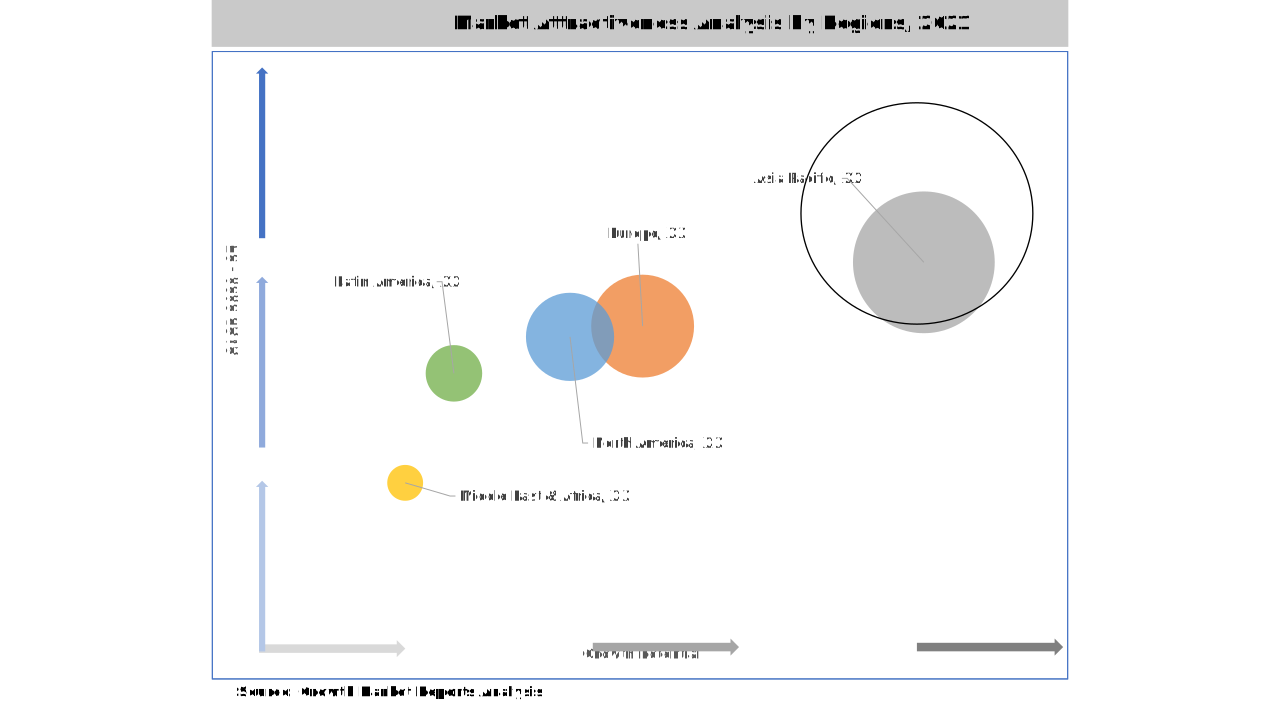
Regionally, the Asia Pacific market stands out as a key growth engine, driven by rapid urbanization, rising disposable incomes, and the expanding automotive sector in countries such as China, India, and Japan. North America and Europe continue to witness strong demand, owing to high consumer awareness, advanced infrastructure, and a robust presence of leading automotive OEMs. Meanwhile, Latin America and the Middle East & Africa are experiencing gradual adoption, supported by increasing investments in automotive technology and improving economic conditions. This diverse regional landscape underscores the global nature of opportunities within the automotive infotainment systems market.
In-Vehicle Infotainment systems are increasingly becoming a focal point for automakers aiming to enhance the driving experience. These systems integrate entertainment, navigation, and communication features into a single platform, providing drivers and passengers with a comprehensive suite of functionalities. The evolution of in-vehicle infotainment is driven by advancements in connectivity technologies, allowing for seamless integration with smartphones and other digital devices. As consumer expectations rise, automakers are prioritizing the development of infotainment systems that offer intuitive interfaces, personalized content, and real-time updates. This shift towards more sophisticated in-vehicle infotainment solutions is reshaping the automotive landscape, as manufacturers seek to differentiate their offerings through enhanced user experiences.
The product type segment of the automotive infotainment systems market encompasses audio units, display units, navigation units, communication units, and others. Audio units have historically dominated this segment, serving as the foundation of in-car entertainment. These systems have evolved from basic radio receivers to sophisticated multimedia hubs capable of supporting various audio formats, streaming services, and high-fidelity sound experiences. The rise in demand for premium audio experiences has led to partnerships between automakers and renowned audio brands, resulting in the integration of advanced surround sound systems and customizable audio profiles, which are highly valued by consumers seeking luxury and comfort.
Display units are witnessing exponential growth, fueled by the proliferation of digital dashboards, touchscreens, and heads-up displays. Modern vehicles are increasingly equipped with large, high-resolution screens that serve as the central interface for infotainment, navigation, and vehicle diagnostics. The transition from analog to digital displays not only enhances aesthetics but also facilitates intuitive user interactions, enabling drivers and passengers to access a wide range of functions with minimal distraction. The trend towards multi-screen configurations and curved displays is further elevating the user experience, making display units a critical differentiator in the market.
The concept of In Vehicle Infotainment has evolved significantly over the years, transforming from basic audio systems to complex digital platforms that enhance the overall driving experience. Modern in vehicle infotainment systems offer a wide range of features, including voice recognition, gesture controls, and cloud-based services, all designed to provide a seamless and engaging user experience. As technology continues to advance, the integration of artificial intelligence and machine learning into infotainment systems is enabling more personalized and predictive functionalities. This evolution is not only enhancing convenience and safety for drivers but also opening up new opportunities for automakers to innovate and deliver unique value propositions to consumers.
Navigation units have become indispensable, particularly with the rise of connected and autonomous vehicles. Real-time navigation systems now offer dynamic routing, traffic updates, and integration with location-based services, significantly improving journey efficiency and safety. The integration of augmented reality (AR) elements in navigation displays, such as overlaying directions onto live camera feeds, is gaining traction, offering users a more immersive and intuitive navigation experience. As urbanization intensifies and smart city initiatives expand, the demand for advanced navigation solutions is expected to surge, further bolstering this product segment.
Communication units are gaining prominence as vehicle connectivity becomes a cornerstone of modern automotive design. These units facilitate seamless communication between the vehicle, external networks, and other vehicles, enabling features such as hands-free calling, emergency assistance, and remote vehicle monitoring. The advent of vehicle-to-vehicle (V2V) and vehicle-to-infrastructure (V2I) communication is expanding the scope of infotainment systems, allowing for enhanced safety, traffic management, and infotainment content delivery. The “others” category, which includes rear-seat entertainment and specialized infotainment modules, is also growing, particularly in luxury and family vehicles where passenger comfort and engagement are prioritized.
| Attributes | Details |
| Report Title | Automotive Infotainment Systems Market Research Report 2033 |
| By Product Type | Audio Unit, Display Unit, Navigation Unit, Communication Unit, Others |
| By Operating System | Linux, QNX, Microsoft, Android, Others |
| By Vehicle Type | Passenger Cars, Light Commercial Vehicles, Heavy Commercial Vehicles |
| By Connectivity | Bluetooth, Wi-Fi, 4G/5G, Others |
| By Sales Channel | OEM, Aftermarket |
| Regions Covered | North America, Europe, APAC, Latin America, MEA |
| Base Year | 2024 |
| Historic Data | 2018-2023 |
| Forecast Period | 2025-2033 |
| Number of Pages | 279 |
| Number of Tables & Figures | 274 |
| Customization Available | Yes, the report can be customized as per your need. |
The operating system segment is a critical determinant of infotainment system performance, user experience, and compatibility. Linux-based platforms have emerged as a preferred choice for many OEMs due to their open-source nature, flexibility, and robust security features. The adoption of Automotive Grade Linux (AGL) is accelerating, enabling automakers to customize interfaces and functionalities while reducing development costs. The collaborative ecosystem around Linux fosters rapid innovation and the integration of emerging technologies such as artificial intelligence, making it a compelling option for next-generation infotainment systems.
QNX, developed by BlackBerry, remains a dominant player in the automotive infotainment operating system market, especially in premium vehicles. Renowned for its real-time capabilities, reliability, and stringent security protocols, QNX is often selected for applications where safety and stability are paramount. Its modular architecture allows for seamless integration with various hardware platforms and third-party applications, making it a versatile choice for automakers aiming to deliver high-performance infotainment solutions. The extensive deployment of QNX in telematics, digital instrument clusters, and advanced driver-assistance systems (ADAS) further underscores its market significance.
Microsoft has maintained a steady presence in the automotive infotainment space through its Windows Embedded Automotive platform. While its market share has diminished in recent years due to the rise of open-source alternatives, MicrosoftÂ’s solutions continue to power infotainment systems in select vehicle models, particularly in North America and Europe. The companyÂ’s focus on cloud connectivity, voice recognition, and integration with MicrosoftÂ’s broader ecosystem adds value for consumers seeking a familiar and connected experience. However, the competitive landscape is intensifying as new entrants and established tech giants vie for market share.
Android has rapidly gained traction, driven by its widespread familiarity, rich app ecosystem, and continuous updates from Google. Android Automotive OS, a fully embedded version of Android, is being adopted by leading automakers to deliver a seamless, customizable, and connected infotainment experience. The integration of Google Assistant, Google Maps, and access to the Google Play Store enhances user convenience and expands functionality. The open architecture of Android allows for extensive customization, enabling automakers to differentiate their offerings while leveraging a robust developer community to accelerate innovation.
The “others” category includes proprietary operating systems developed by automakers and specialized vendors. These platforms are typically tailored to specific vehicle models or brands, offering unique features and user experiences. While they may lack the scalability of mainstream options, proprietary systems enable automakers to maintain greater control over system integration, security, and branding. As the market continues to evolve, interoperability and compatibility with external devices and services will remain key considerations for operating system selection in automotive infotainment systems.
The vehicle type segment divides the automotive infotainment systems market into passenger cars, light commercial vehicles (LCVs), and heavy commercial vehicles (HCVs). Passenger cars constitute the largest share of the market, driven by high consumer expectations for comfort, connectivity, and entertainment. Automakers are increasingly equipping even entry-level and mid-range vehicles with advanced infotainment features, reflecting the growing importance of in-car experiences as a differentiator in a competitive market. The proliferation of electric and hybrid passenger cars is further accelerating the adoption of next-generation infotainment systems, as these vehicles often serve as showcases for cutting-edge technology.
Light commercial vehicles represent a significant and growing segment, particularly as businesses seek to enhance fleet management, driver productivity, and safety. Infotainment systems in LCVs often prioritize navigation, communication, and telematics functionalities, enabling real-time tracking, route optimization, and compliance with regulatory requirements. The integration of infotainment with fleet management software and mobile applications is becoming increasingly common, providing businesses with actionable insights and improving operational efficiency. As e-commerce and last-mile delivery services expand, the demand for connected LCVs equipped with advanced infotainment solutions is expected to rise.
Heavy commercial vehicles, including trucks and buses, are gradually embracing infotainment technology, albeit at a slower pace compared to passenger cars and LCVs. In this segment, the focus is primarily on navigation, safety, and communication features that support long-haul operations and driver well-being. Infotainment systems designed for HCVs often include specialized functionalities such as driver fatigue monitoring, fleet telematics, and integration with logistics platforms. As regulations regarding driver hours and safety become more stringent, the adoption of infotainment systems that enhance compliance and operational oversight is anticipated to increase.
The customization of infotainment systems based on vehicle type is a key trend, with OEMs and suppliers developing tailored solutions to address the unique needs of each segment. For instance, luxury passenger cars may feature multi-zone entertainment, rear-seat displays, and premium audio systems, while commercial vehicles prioritize durability, ease of use, and integration with business applications. This segmentation ensures that infotainment solutions deliver maximum value to end users, whether they are individual consumers or fleet operators.
Overall, the diversification of vehicle types and the evolving expectations of drivers and passengers are shaping the future of the automotive infotainment systems market. As connectivity becomes ubiquitous and vehicles transform into mobile digital platforms, the demand for innovative, adaptable, and user-centric infotainment solutions will continue to grow across all vehicle categories.
The connectivity segment is a cornerstone of the modern automotive infotainment systems market, encompassing technologies such as Bluetooth, Wi-Fi, 4G/5G, and other emerging standards. Bluetooth remains a fundamental feature, enabling hands-free calling, audio streaming, and device pairing. Its widespread adoption is driven by its reliability, ease of use, and compatibility with a broad range of consumer electronics. Automakers are continuously enhancing Bluetooth capabilities to support multiple device connections, improved audio quality, and seamless transitions between devices, thereby enhancing the overall in-car experience.
Wi-Fi connectivity is becoming increasingly prevalent, especially in premium and mid-range vehicles. In-car Wi-Fi hotspots enable passengers to access the internet, stream media, and connect multiple devices simultaneously, transforming vehicles into mobile offices and entertainment centers. The integration of Wi-Fi with infotainment systems supports a wide range of applications, from over-the-air software updates to real-time navigation and vehicle diagnostics. As consumer reliance on digital services grows, the demand for robust and high-speed in-car Wi-Fi solutions is expected to surge.
The advent of 4G/5G connectivity is revolutionizing the automotive infotainment landscape by enabling ultra-fast data transmission, low latency, and real-time communication. 4G networks have already facilitated the rise of connected cars, offering features such as live traffic updates, streaming services, and remote vehicle management. The rollout of 5G is set to take these capabilities to the next level, supporting advanced applications such as augmented reality navigation, cloud gaming, and vehicle-to-everything (V2X) communication. Automakers are partnering with telecom providers to integrate 4G/5G modules into vehicles, ensuring future-proof connectivity and unlocking new revenue streams through subscription-based services.
The “others” category includes emerging connectivity technologies such as Near Field Communication (NFC), Ultra-Wideband (UWB), and satellite communication. These technologies offer unique advantages in specific use cases, such as secure keyless entry, precise location tracking, and connectivity in remote or underserved areas. As the automotive industry continues to innovate, the integration of multiple connectivity options will become standard practice, enabling vehicles to interact seamlessly with external ecosystems, smart devices, and infrastructure.
Ultimately, connectivity is the backbone of modern infotainment systems, enabling a continuous flow of information, entertainment, and services. The evolution of connectivity standards will continue to drive innovation, enhance user experiences, and create new business models in the automotive infotainment systems market.
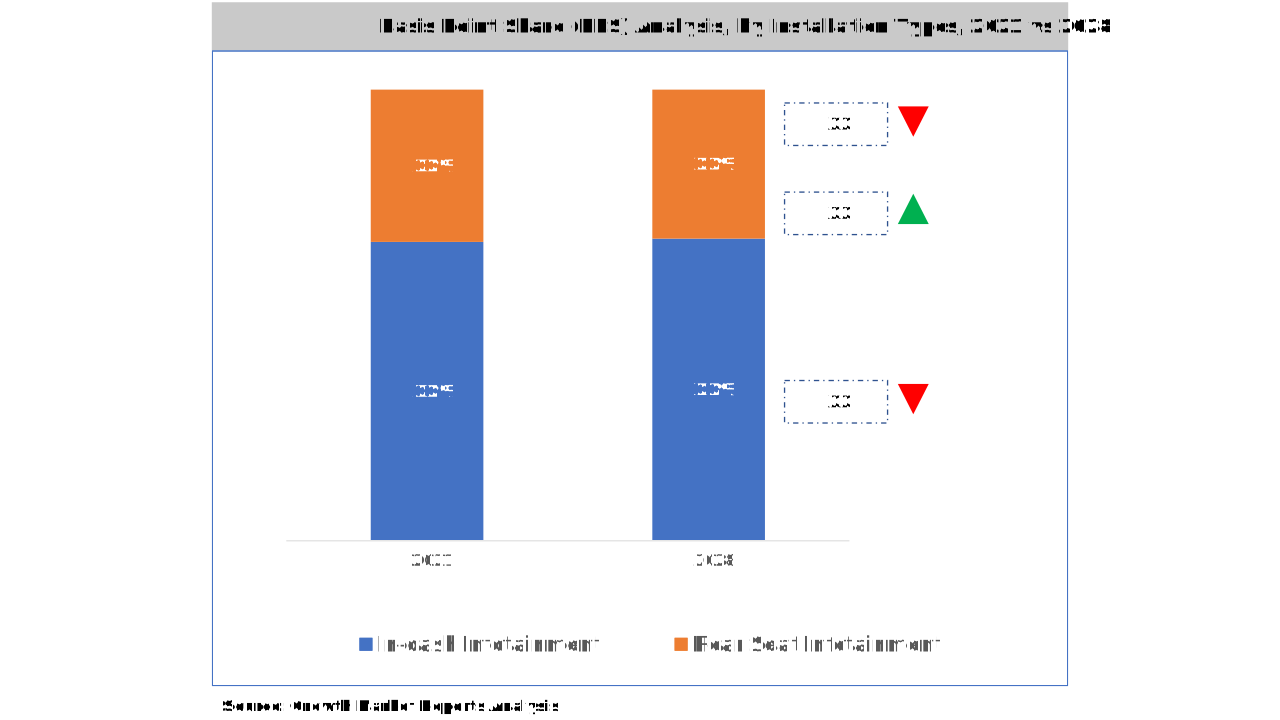
The sales channel segment in the automotive infotainment systems market is primarily divided into OEM (Original Equipment Manufacturer) and aftermarket channels. OEMs account for the majority of market share, as automakers increasingly integrate infotainment systems into vehicles during the manufacturing process. OEM-installed systems are typically tailored to specific vehicle models and brands, ensuring seamless integration, consistent performance, and compliance with safety and regulatory standards. The growing trend of offering infotainment as a standard or optional feature across various vehicle segments is further boosting OEM sales, as consumers prefer factory-installed solutions for reliability and warranty coverage.
The aftermarket segment caters to vehicle owners seeking to upgrade or replace their existing infotainment systems. This channel offers a wide range of products, from basic audio units to advanced multimedia and navigation systems, allowing consumers to customize their in-car experience. The aftermarket is particularly popular in regions with a large base of older vehicles, where retrofitting modern infotainment solutions can significantly enhance functionality and value. The proliferation of online retail platforms and specialized installers has made aftermarket products more accessible, driving growth in this segment.
OEMs are increasingly collaborating with technology companies and software developers to enhance the capabilities of factory-installed infotainment systems. These partnerships enable the integration of cutting-edge features such as voice assistants, app ecosystems, and cloud-based services, providing a competitive edge in the market. Additionally, OEMs are leveraging data analytics to offer personalized content, predictive maintenance, and targeted marketing, creating new revenue streams and strengthening customer loyalty.
The aftermarket segment is witnessing a shift towards smart, connected solutions that mirror the capabilities of OEM systems. Leading aftermarket brands are investing in research and development to deliver products that support the latest connectivity standards, user interfaces, and integration with mobile devices. The emergence of plug-and-play solutions and wireless installation options is reducing the complexity and cost of aftermarket upgrades, making them more attractive to a broader range of consumers.
Both OEM and aftermarket channels face challenges related to compatibility, security, and regulatory compliance. Ensuring seamless integration with vehicle electronics, protecting against cyber threats, and adhering to evolving safety standards are critical success factors for market participants. As the automotive infotainment systems market continues to evolve, the interplay between OEM and aftermarket channels will shape the competitive landscape and influence the adoption of new technologies.
The automotive infotainment systems market is rife with opportunities as the automotive industry undergoes a digital transformation. The growing adoption of electric and autonomous vehicles presents a significant opportunity for infotainment providers to develop systems that cater to new mobility paradigms. Electric vehicles, with their advanced electronics and emphasis on user experience, serve as ideal platforms for showcasing next-generation infotainment solutions. Autonomous vehicles, in particular, are expected to redefine the role of infotainment, as passengers shift their focus from driving to entertainment, productivity, and connectivity. This transition opens up avenues for immersive experiences such as video streaming, gaming, and virtual meetings, creating new revenue streams for automakers and technology providers.
Another major opportunity lies in the integration of infotainment systems with emerging technologies such as artificial intelligence, machine learning, and the Internet of Things (IoT). AI-powered voice assistants, predictive navigation, and personalized content recommendations are transforming the way users interact with their vehicles. The ability to collect and analyze data from infotainment systems enables automakers to deliver tailored services, enhance safety, and optimize vehicle performance. Furthermore, the expansion of smart city initiatives and connected infrastructure is creating opportunities for infotainment systems to play a central role in urban mobility, traffic management, and environmental monitoring.
Despite these opportunities, the market faces several restraining factors, chief among them being cybersecurity risks. As vehicles become increasingly connected, they are exposed to a growing array of cyber threats, including hacking, data breaches, and remote manipulation. Ensuring the security and privacy of infotainment systems is a top priority for automakers, regulators, and consumers alike. The complexity of integrating multiple connectivity standards, operating systems, and third-party applications adds to the challenge, requiring robust security protocols and continuous monitoring. Additionally, the high cost of advanced infotainment systems and concerns regarding driver distraction may hinder adoption in certain segments, particularly in price-sensitive markets.
The Asia Pacific region is the largest and fastest-growing market for automotive infotainment systems, accounting for USD 11.2 billion in 2024. The regionÂ’s rapid urbanization, expanding middle class, and strong automotive manufacturing base in countries like China, India, Japan, and South Korea are driving substantial demand for advanced infotainment solutions. The increasing penetration of electric vehicles and government initiatives supporting smart mobility further contribute to market growth. The Asia Pacific market is projected to grow at a CAGR of 9.1% through 2033, outpacing other regions and solidifying its position as a global leader in automotive technology adoption.
North America remains a key market, with a market size of USD 8.4 billion in 2024. The region benefits from high consumer awareness, a strong presence of leading automakers, and advanced infrastructure supporting connected vehicles. The integration of infotainment systems with telematics, autonomous driving technologies, and cloud-based services is particularly pronounced in the United States and Canada. North American consumers prioritize features such as voice control, smartphone integration, and real-time navigation, driving continuous innovation and investment in infotainment solutions.
Europe accounted for USD 6.8 billion of the global market in 2024, underpinned by stringent safety regulations, a focus on sustainability, and a robust automotive industry. European automakers are at the forefront of integrating infotainment with advanced driver-assistance systems (ADAS) and electric vehicle platforms. The regionÂ’s emphasis on environmental standards and digital innovation is fostering the development of infotainment solutions that enhance both user experience and vehicle efficiency. Meanwhile, Latin America and the Middle East & Africa collectively contributed USD 2.2 billion to the global market, with gradual adoption driven by improving economic conditions, rising vehicle ownership, and increasing investments in automotive technology. These regions present significant growth potential as infrastructure and consumer preferences continue to evolve.
The automotive infotainment systems market is characterized by intense competition, continuous innovation, and a dynamic interplay between automotive OEMs, technology providers, and component suppliers. The market landscape is shaped by the rapid pace of technological advancement, evolving consumer expectations, and the increasing convergence of automotive and consumer electronics industries. Leading players are investing heavily in research and development to differentiate their offerings, enhance user experiences, and address emerging trends such as connectivity, personalization, and autonomous driving. Strategic partnerships, mergers and acquisitions, and collaborations with software developers are common strategies employed to expand product portfolios and accelerate time-to-market.
The competitive dynamics are further influenced by the entry of technology giants such as Google, Apple, and Microsoft, who bring expertise in software development, cloud computing, and artificial intelligence to the automotive domain. These companies are collaborating with automakers to integrate their platforms and services into infotainment systems, thereby expanding their reach and influence. At the same time, traditional automotive suppliers are adapting to the digital era by developing modular, scalable, and upgradable infotainment solutions that cater to diverse vehicle types and consumer preferences. The ability to offer seamless integration, robust security, and continuous updates is becoming a key differentiator in the market.
Price competition remains a significant factor, particularly in the aftermarket segment, where consumers have a wide range of options at varying price points. OEMs, on the other hand, focus on delivering value through advanced features, brand partnerships, and comprehensive warranty coverage. The shift towards software-defined vehicles and subscription-based services is creating new revenue streams and altering traditional business models. Companies that can effectively leverage data analytics, cloud connectivity, and user-centric design are well-positioned to capture market share and drive long-term growth.
Key players in the automotive infotainment systems market include Panasonic Corporation, Harman International (a Samsung company), Robert Bosch GmbH, Continental AG, Alpine Electronics, Pioneer Corporation, Denso Corporation, and Visteon Corporation. Panasonic is renowned for its innovative display and connectivity solutions, while Harman International leads in premium audio and connected car technologies. Bosch and Continental are at the forefront of integrating infotainment with advanced safety and driver-assistance systems. Alpine and Pioneer cater to both OEM and aftermarket segments, offering a wide range of audio, navigation, and multimedia products. Denso and Visteon specialize in scalable infotainment platforms that support emerging connectivity standards and digital interfaces.
These companies are continuously expanding their product portfolios through strategic investments in artificial intelligence, cloud computing, and cybersecurity. For instance, HarmanÂ’s acquisition by Samsung has enabled the integration of consumer electronics expertise with automotive solutions, resulting in cutting-edge infotainment platforms. Bosch and Continental are leveraging their expertise in automotive electronics to deliver holistic solutions that encompass infotainment, telematics, and ADAS. The competitive landscape is expected to remain dynamic, with ongoing innovation, strategic alliances, and a relentless focus on enhancing the in-car experience for consumers worldwide.
The Automotive Infotainment Systems market has been segmented on the basis of
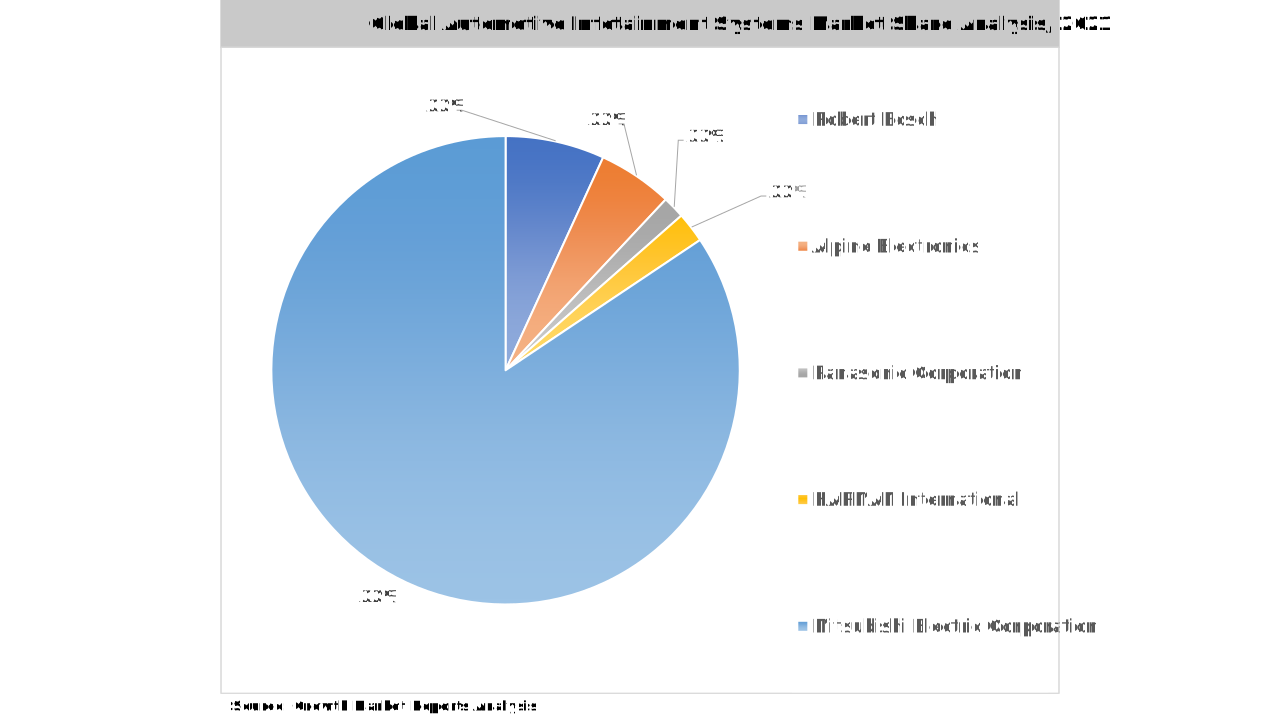
Key players operating in the Global Automotive infotainment systems market includes Robert Bosch, Alpine Electronics, Panasonic Corporation, HARMAN International, and Mitsubishi Electric Corporation.
AI and 5G are enabling advanced features such as voice assistants, predictive navigation, personalized content, real-time updates, and enhanced connectivity, transforming the in-car user experience.
Key players include Panasonic Corporation, Harman International (Samsung), Robert Bosch GmbH, Continental AG, Denso Corporation, Alpine Electronics, Pioneer Corporation, Visteon Corporation, and others.
Major challenges include cybersecurity risks, high costs of advanced systems, concerns over driver distraction, and the complexity of integrating multiple technologies and standards.
OEM infotainment systems are factory-installed by automakers, ensuring seamless integration and compliance. Aftermarket systems are installed post-purchase, allowing vehicle owners to upgrade or customize their in-car experience.
Connectivity technologies like Bluetooth, Wi-Fi, 4G/5G, NFC, and satellite communication enable features such as hands-free calling, internet access, real-time navigation, and integration with smart devices.
Popular operating systems include Linux (notably Automotive Grade Linux), QNX, Microsoft Windows Embedded Automotive, Android Automotive OS, and proprietary systems developed by automakers.
Major product types include audio units, display units, navigation units, communication units, and others such as rear-seat entertainment modules.
Asia Pacific is the largest and fastest-growing region, followed by North America and Europe. Latin America and the Middle East & Africa are also experiencing gradual adoption and growth.
Key growth drivers include increasing demand for in-car entertainment, rapid integration of connectivity features, proliferation of smart and electric vehicles, and advancements in autonomous driving technologies.
The global automotive infotainment systems market reached USD 28.6 billion in 2024 and is projected to grow at a CAGR of 8.2% from 2025 to 2033, reaching USD 56.3 billion by 2033.