Head Up Display Market Research Report 2033

Head Up Display Market Research Report 2033

Segments - by Component (Display Units, Projection Units, Video Generators, Software), by Technology (Conventional HUD, Augmented Reality HUD, Windshield HUD, Combiner HUD), by Application (Automotive, Aviation, Military & Defense, Healthcare, Sports, Others), by Sales Channel (OEM, Aftermarket)

https://growthmarketreports.com/Raksha
Author : Raksha Sharma
https://growthmarketreports.com/Vaibhav
Fact-checked by : V. Chandola
https://growthmarketreports.com/Shruti
Editor : Shruti Bhat

Upcoming | Report ID :AL-260 | 4.2 Rating | 33 Reviews | 266 Pages | Format : Docx PDF

Report Description


Head Up Display Market Outlook

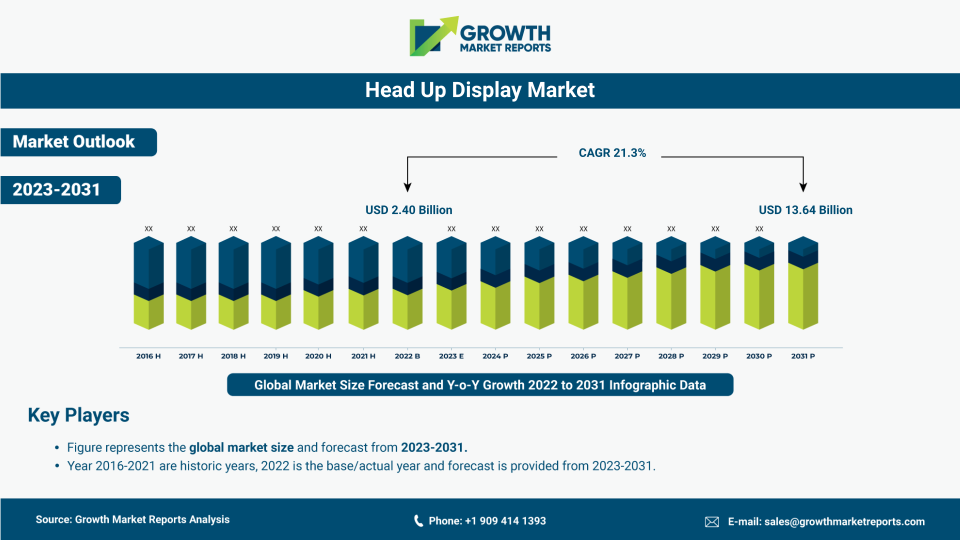
According to our latest research, the global Head Up Display (HUD) market size in 2024 stands at USD 2.9 billion, demonstrating robust momentum driven by technological innovation and the increasing integration of HUDs across diverse industries. The market is projected to expand at a CAGR of 20.3% from 2025 to 2033, reaching an impressive USD 17.6 billion by the end of the forecast period. This remarkable growth is primarily fueled by escalating demand for advanced driver assistance systems, rising consumer awareness regarding vehicle and operational safety, and the proliferation of connected and autonomous vehicles worldwide.

The primary growth factor propelling the Head Up Display market is the automotive sector’s rapid adoption of HUDs, which significantly enhance driver safety and situational awareness. As automakers strive to differentiate their offerings in an increasingly competitive landscape, HUD integration has become a critical feature in both premium and mid-range vehicles. This trend is further amplified by stringent regulatory mandates aiming to reduce road accidents and fatalities, thereby encouraging OEMs to incorporate advanced safety technologies such as HUDs. Additionally, the evolution of display technologies—such as augmented reality and high-resolution projection—has enabled the development of more intuitive, immersive, and user-friendly HUD systems that can project critical information directly into the driver’s line of sight, minimizing distractions and improving overall driving experience.

Another significant driver is the expanding application of HUDs beyond the automotive industry, particularly in sectors like aviation, defense, and healthcare. In aviation, HUDs have long been standard in commercial and military aircraft, providing pilots with vital flight data and navigation information. The military and defense sector continues to invest heavily in HUD technology to enhance situational awareness and operational efficiency for pilots, vehicle operators, and ground troops. Meanwhile, the healthcare industry is leveraging HUDs for advanced surgical visualization and real-time data display, streamlining complex procedures and improving patient outcomes. These cross-industry applications are broadening the marketÂ’s addressable base, fostering innovation, and accelerating adoption rates.

The marketÂ’s growth is also underpinned by continuous advancements in software and connectivity, which have enabled the integration of HUDs with a wide array of sensors, cameras, and telematics systems. This convergence is paving the way for next-generation HUDs capable of delivering augmented reality experiences, real-time hazard detection, and personalized content. Furthermore, the proliferation of smart cities, the rise of autonomous vehicles, and the growing consumer appetite for connected mobility solutions are creating fertile ground for HUD adoption. The increasing affordability of HUD solutions, especially through the aftermarket channel, is democratizing access to this technology and driving penetration in emerging markets.

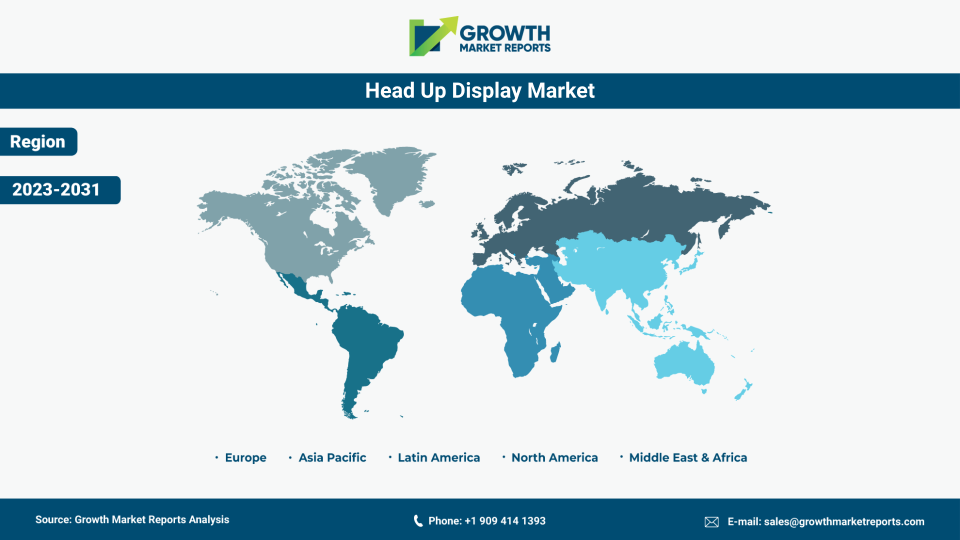
From a regional perspective, North America and Europe have traditionally dominated the Head Up Display market, owing to their mature automotive industries, high consumer purchasing power, and early adoption of advanced driver assistance systems. However, the Asia Pacific region is emerging as the fastest-growing market, fueled by rapid urbanization, surging vehicle production, and rising investments in smart mobility infrastructure. Countries such as China, Japan, and South Korea are witnessing substantial HUD deployments, both in new vehicles and as aftermarket upgrades. Latin America and the Middle East & Africa are also showing promising signs of growth, albeit from a smaller base, as OEMs and technology providers expand their footprint in these regions.

Global Head Up Display Industry Outlook

Component Analysis

The Head Up Display market is segmented by component into Display Units, Projection Units, Video Generators, and Software. Display Units represent the most critical component, as they are responsible for rendering the visual information projected onto the windshield or combiner. The evolution of display technologies, including the transition from traditional LCDs to OLED and microLED displays, has significantly improved image clarity, brightness, and color accuracy. Enhanced display units are now capable of supporting high-resolution graphics and dynamic content, which is essential for applications such as augmented reality HUDs. The demand for robust, sunlight-readable, and energy-efficient display units is expected to remain strong, especially as HUDs become standard in a wider range of vehicles and aircraft.

Projection Units play a pivotal role in determining the quality and precision of the information displayed. Modern projection units utilize advanced optics and laser-based systems to ensure that data is projected accurately onto curved windshields or combiners without distortion. Innovations in projection technology have enabled the development of compact, lightweight, and cost-effective units that can be seamlessly integrated into vehicle dashboards or cockpits. The shift towards laser-based and DLP (Digital Light Processing) projection systems is particularly noteworthy, as these technologies offer superior brightness, color fidelity, and operational reliability compared to traditional lamp-based systems.

Video Generators are the core processing units that convert raw data from vehicle sensors, navigation systems, and external sources into visual content compatible with HUD displays. The sophistication of video generators has increased markedly in recent years, enabling real-time rendering of complex graphics, adaptive content, and contextual information. These advancements are crucial for supporting the growing trend of augmented reality HUDs, which require high-speed processing and seamless integration with vehicle telematics and infotainment systems. As vehicles become increasingly connected and autonomous, the role of video generators in delivering personalized, context-aware information will become even more central to the HUD ecosystem.

Software forms the backbone of HUD functionality, orchestrating the interaction between hardware components and ensuring smooth, intuitive user experiences. Modern HUD software platforms support a wide range of features, including customizable interfaces, voice recognition, gesture control, and real-time data analytics. The integration of artificial intelligence and machine learning algorithms is opening new frontiers in predictive analytics, hazard detection, and adaptive content delivery. As the HUD market matures, software differentiation will become a key competitive factor, with vendors vying to offer the most intuitive, feature-rich, and secure solutions to OEMs and end-users alike.

Report Scope

Attributes Details
Report Title Head Up Display Market Research Report 2033
By Component Display Units, Projection Units, Video Generators, Software
By Technology Conventional HUD, Augmented Reality HUD, Windshield HUD, Combiner HUD
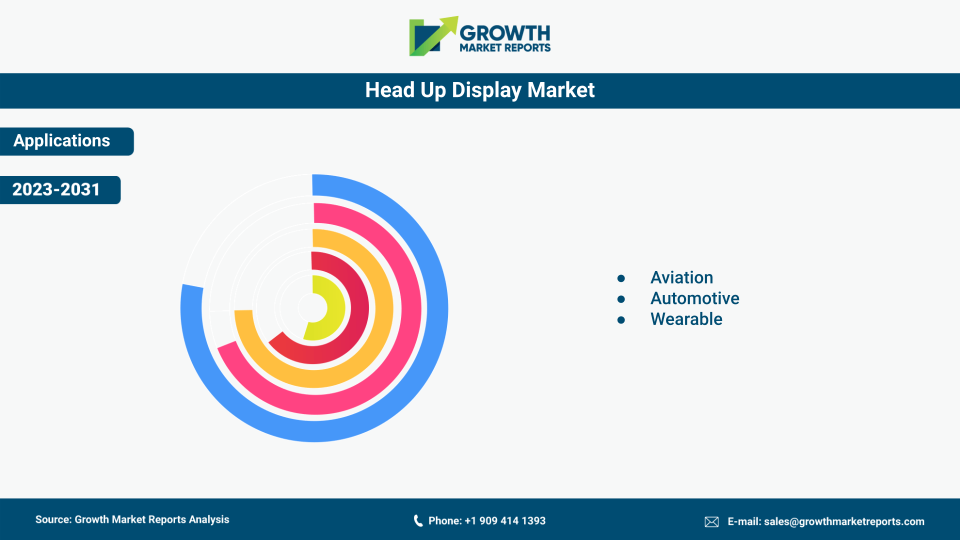
By Application Automotive, Aviation, Military & Defense, Healthcare, Sports, Others
By Sales Channel OEM, Aftermarket
Regions Covered North America, Europe, APAC, Latin America, MEA
Base Year 2024
Historic Data 2018-2023
Forecast Period 2025-2033
Number of Pages 266
Number of Tables & Figures 383
Customization Available Yes, the report can be customized as per your need.

Technology Analysis

The Head Up Display market is characterized by a diverse array of technologies, including Conventional HUD, Augmented Reality HUD, Windshield HUD, and Combiner HUD. Conventional HUDs have served as the industry’s foundation, providing basic information such as speed, navigation, and warning signals directly in the driver’s line of sight. These systems are widely adopted in both automotive and aviation sectors, offering a proven track record of reliability and safety enhancement. However, the limitations of conventional HUDs—such as restricted field of view and static content—are prompting manufacturers to explore more advanced technologies.

Augmented Reality HUDs represent the cutting edge of HUD innovation, overlaying real-time, context-sensitive information onto the physical environment. By leveraging advanced sensors, cameras, and computer vision algorithms, augmented reality HUDs can project navigation cues, hazard alerts, and lane guidance directly onto the road. This immersive experience not only enhances situational awareness but also reduces cognitive load, making driving safer and more intuitive. The adoption of augmented reality HUDs is accelerating, particularly among premium automotive brands and next-generation aircraft, as consumers and operators seek more engaging and informative user experiences.

Windshield HUDs are gaining traction as the preferred solution for automotive applications, as they project information directly onto the full windshield, offering a larger display area and minimizing the need for additional hardware. This technology is particularly well-suited to vehicles with complex dashboard designs or limited space for traditional combiner-based HUDs. The rise of electric and autonomous vehicles, which often feature minimalist interiors, is further fueling demand for windshield HUDs. Manufacturers are investing heavily in developing high-transparency, distortion-free projection systems that can deliver crisp, legible content across a wide range of ambient lighting conditions.

The development of OLED Windshield Heads-Up Display technology marks a significant advancement in the field of automotive displays. OLED technology offers superior brightness, contrast, and color accuracy, making it ideal for projecting information onto vehicle windshields. This innovation allows for clearer and more vibrant displays, even in challenging lighting conditions, enhancing the driver's ability to process information quickly and accurately. As manufacturers continue to explore the potential of OLED displays, the integration of this technology into HUD systems is set to redefine the standards of visual clarity and user experience in the automotive industry.

Combiner HUDs, which utilize a dedicated transparent screen or combiner to reflect information into the driverÂ’s line of sight, remain popular in entry-level and mid-range vehicles due to their cost-effectiveness and ease of integration. While combiner HUDs may offer a more limited display area compared to windshield HUDs, ongoing improvements in optical design and materials are enhancing their performance and visual appeal. As the cost of advanced projection and display technologies continues to decline, the distinction between combiner and windshield HUDs is expected to blur, with manufacturers offering hybrid solutions tailored to specific vehicle architectures and user preferences.

Application Analysis

The application landscape for Head Up Displays is broadening rapidly, with the automotive sector remaining the largest and most dynamic market. HUDs are increasingly being adopted as standard or optional features in passenger cars, commercial vehicles, and two-wheelers, driven by growing consumer demand for safety, convenience, and connectivity. The integration of HUDs with advanced driver assistance systems (ADAS), navigation, and infotainment platforms is transforming the in-vehicle experience, enabling drivers to access critical information without diverting their attention from the road. Automakers are also leveraging HUDs as a key differentiator in the race towards autonomous and semi-autonomous vehicles, where real-time data visualization is essential for building trust and confidence among users.

In the aviation industry, HUDs have long been a staple in both commercial and military cockpits, providing pilots with essential flight data, navigation cues, and situational awareness. The adoption of HUDs in next-generation aircraft is being driven by the need to enhance operational safety, reduce pilot workload, and comply with increasingly stringent regulatory requirements. Advanced HUD systems are now capable of integrating with synthetic vision, enhanced vision, and head-tracking technologies, offering pilots a comprehensive, real-time view of their environment even in challenging weather or low-visibility conditions.

The military and defense sector represents a significant growth opportunity for the Head Up Display market, as armed forces worldwide invest in advanced situational awareness solutions for pilots, vehicle crews, and dismounted soldiers. HUDs are being deployed in a wide range of platforms, from fighter jets and helicopters to armored vehicles and wearable systems, enabling operators to access mission-critical information without compromising their focus or mobility. The integration of augmented reality, night vision, and sensor fusion capabilities is further enhancing the tactical effectiveness and survivability of military personnel in complex operational environments.

Beyond automotive, aviation, and defense, the healthcare industry is emerging as a promising application area for HUD technology. Surgeons and medical professionals are utilizing HUDs for real-time visualization of patient data, imaging, and procedural guidance during complex surgeries and interventions. These systems are helping to improve precision, reduce errors, and enhance outcomes in a variety of clinical settings. Additionally, the sports and entertainment sectors are exploring HUDs for applications such as athlete performance monitoring, immersive fan experiences, and augmented reality gaming, further expanding the marketÂ’s reach and potential.

Sales Channel Analysis

The Head Up Display market is segmented by sales channel into OEM (Original Equipment Manufacturer) and Aftermarket. The OEM segment dominates the market, accounting for the majority of HUD installations in new vehicles and aircraft. OEMs are increasingly partnering with technology providers and display manufacturers to integrate advanced HUD systems as factory-installed features, responding to consumer demand for enhanced safety and convenience. The proliferation of OEM-installed HUDs is being driven by regulatory mandates, competitive differentiation, and the need to future-proof vehicles against evolving mobility trends.

The Aftermarket segment is experiencing rapid growth, fueled by rising consumer awareness and the increasing availability of affordable, plug-and-play HUD solutions. Aftermarket HUDs are particularly popular among owners of older vehicles or entry-level models that do not come equipped with factory-installed systems. These solutions offer a cost-effective way to upgrade vehicle safety and connectivity, often featuring wireless connectivity, smartphone integration, and customizable display options. The growth of online retail channels and the expansion of automotive accessory shops are further boosting the accessibility and adoption of aftermarket HUDs.

OEMs are focusing on developing proprietary HUD platforms that can be seamlessly integrated with their vehiclesÂ’ infotainment, telematics, and ADAS systems. This approach allows for greater customization, improved reliability, and enhanced user experiences. Leading automakers are also investing in research and development to create next-generation HUDs with augmented reality, 3D graphics, and gesture control capabilities, positioning themselves at the forefront of the smart mobility revolution.

In the aftermarket space, a diverse ecosystem of manufacturers, distributors, and retailers is emerging, offering a wide range of HUD products tailored to different vehicle types, budgets, and user preferences. The availability of universal and vehicle-specific kits, coupled with advancements in wireless connectivity and mobile app integration, is making it easier than ever for consumers to retrofit their vehicles with advanced HUD technology. As the cost of components continues to decline and consumer demand for safety features rises, the aftermarket segment is expected to play an increasingly important role in the overall growth of the HUD market.

Opportunities & Threats

The Head Up Display market is brimming with opportunities, driven by the convergence of advanced display technologies, connectivity, and user-centric design. One of the most promising opportunities lies in the integration of HUDs with autonomous and connected vehicle platforms. As vehicles become more intelligent and data-driven, the ability to present real-time, context-aware information directly in the driverÂ’s field of view will be critical for ensuring safety, comfort, and user engagement. The rise of electric vehicles, shared mobility, and smart city initiatives is also creating new use cases and demand for HUD technology, as stakeholders seek to enhance the in-vehicle experience and differentiate their offerings in a crowded marketplace.

Another significant opportunity is the expansion of HUD applications into new industries and use cases. In healthcare, for example, the adoption of HUDs for surgical visualization, remote consultations, and medical training is opening up new revenue streams and innovation pathways. The sports, entertainment, and education sectors are also exploring HUDs for immersive experiences, real-time analytics, and interactive learning. As display and projection technologies continue to evolve, the potential for lightweight, wearable, and highly customizable HUD solutions is expanding, enabling new business models and partnerships across the value chain.

Despite these opportunities, the Head Up Display market faces several restraining factors that could hinder its growth trajectory. High development and integration costs, particularly for advanced augmented reality HUDs, remain a significant barrier for widespread adoption, especially in price-sensitive markets. Technical challenges related to display brightness, clarity, and compatibility with different windshield shapes and materials also pose risks to product performance and user satisfaction. Additionally, concerns around driver distraction, cybersecurity, and data privacy must be addressed through robust regulatory frameworks and industry standards to ensure safe and responsible deployment of HUD technology.

Regional Outlook

North America continues to lead the global Head Up Display market, accounting for approximately 35% of the total market revenue in 2024, or around USD 1.0 billion. The regionÂ’s dominance is underpinned by a mature automotive industry, high consumer awareness, and early adoption of advanced safety technologies. Major automakers and technology providers based in the United States and Canada are at the forefront of HUD innovation, driving the development and commercialization of next-generation solutions. The presence of leading aerospace and defense contractors further bolsters the market, with significant investments in HUD systems for commercial and military aircraft.

Europe holds a substantial share of the Head Up Display market, contributing roughly 28% of global revenues, or about USD 812 million in 2024. The regionÂ’s growth is fueled by stringent safety regulations, a strong focus on vehicle electrification, and the presence of leading luxury automotive brands. Countries such as Germany, France, and the United Kingdom are key innovation hubs, with OEMs and tier-one suppliers investing heavily in HUD research and development. The European market is also witnessing increased adoption of HUDs in aviation and defense applications, supported by robust government funding and collaborative industry initiatives. The region is expected to grow at a steady CAGR of 19.7% through 2033.

The Asia Pacific region is emerging as the fastest-growing market for Head Up Displays, with a market size of USD 870 million in 2024, representing about 30% of global revenues. The regionÂ’s rapid expansion is driven by surging vehicle production, rising disposable incomes, and growing investments in smart mobility infrastructure. China, Japan, and South Korea are leading the charge, with local OEMs and technology firms aggressively pursuing HUD integration in both new vehicles and aftermarket solutions. The proliferation of electric vehicles, coupled with government initiatives to enhance road safety and promote advanced driver assistance systems, is expected to propel the Asia Pacific HUD market at a CAGR exceeding 22% over the forecast period. Latin America and the Middle East & Africa, while currently accounting for a smaller share of the market, are poised for steady growth as economic conditions improve and consumer demand for advanced safety features rises.

Head Up Display Market Statistics

Competitor Outlook

The competitive landscape of the Head Up Display market is characterized by intense rivalry among global technology giants, automotive OEMs, specialized HUD manufacturers, and innovative startups. Companies are vying to capture market share by investing heavily in research and development, forging strategic partnerships, and expanding their product portfolios. The rapid pace of technological innovation, coupled with evolving consumer preferences and regulatory requirements, is driving continuous product differentiation and the introduction of new features such as augmented reality, 3D visualization, and gesture control. As the market matures, players are also focusing on improving cost efficiency, scalability, and integration capabilities to meet the diverse needs of OEMs and end-users across different regions and industries.

Strategic collaborations and joint ventures are becoming increasingly common, as companies seek to leverage complementary strengths and accelerate time-to-market for new HUD solutions. For example, partnerships between display technology providers, automotive suppliers, and software developers are enabling the creation of integrated, end-to-end HUD platforms that offer seamless connectivity, advanced analytics, and customizable user interfaces. Mergers and acquisitions are also reshaping the competitive landscape, with larger players acquiring niche technology firms to gain access to proprietary innovations, intellectual property, and specialized talent.

The entry of technology giants and consumer electronics companies into the HUD market is intensifying competition and driving down prices, particularly in the aftermarket segment. These new entrants are leveraging their expertise in display technology, connectivity, and user experience design to develop disruptive, consumer-friendly HUD products that appeal to a broader audience. Meanwhile, established automotive and aerospace suppliers are doubling down on their core competencies in system integration, reliability, and safety, positioning themselves as trusted partners for OEMs and government agencies.

Some of the major companies operating in the global Head Up Display market include Continental AG, Denso Corporation, Panasonic Corporation, BAE Systems, Nippon Seiki Co., Ltd., Visteon Corporation, Thales Group, Bosch, Garmin Ltd., and Pioneer Corporation. Continental AG is renowned for its advanced automotive HUD solutions, offering both combiner and windshield HUDs with augmented reality capabilities. Denso Corporation and Panasonic Corporation are leading suppliers of HUD systems for both automotive and aviation applications, leveraging their expertise in display technology and system integration. BAE Systems and Thales Group are prominent players in the defense and aerospace segments, providing cutting-edge HUD solutions for military aircraft and ground vehicles. Nippon Seiki Co., Ltd. and Visteon Corporation are recognized for their innovation in automotive HUDs, with a strong focus on user experience and customization. Bosch, Garmin Ltd., and Pioneer Corporation are actively expanding their presence in the aftermarket and OEM segments, offering a wide range of HUD products tailored to different vehicle types and user preferences.

These companies are continuously investing in the development of next-generation HUD technologies, including augmented reality, holographic projection, and advanced user interfaces. Their efforts are supported by a robust ecosystem of suppliers, research institutions, and industry associations, fostering collaboration and knowledge sharing across the value chain. As the Head Up Display market continues to evolve, the ability to deliver innovative, reliable, and cost-effective solutions will be the key to sustained competitive advantage and long-term growth.

Key Players

  • Continental AG
  • Denso Corporation
  • Nippon Seiki Co., Ltd.
  • Visteon Corporation
  • Yazaki Corporation
  • Panasonic Corporation
  • Robert Bosch GmbH
  • Garmin Ltd.
  • Pioneer Corporation
  • HUDWAY LLC
  • BOSCH Display Solutions
  • Harman International Industries, Inc.
  • WayRay AG
  • Thales Group
  • BAE Systems plc
  • Rockwell Collins (now part of Collins Aerospace)
  • Esterline Technologies Corporation
  • MicroVision, Inc.
  • Texas Instruments Incorporated
  • FIC (Foxconn International Holdings Limited)
Head Up Display Market Overview

Segments

The Head Up Display market has been segmented on the basis of

Component

  • Display Units
  • Projection Units
  • Video Generators
  • Software

Technology

  • Conventional HUD
  • Augmented Reality HUD
  • Windshield HUD
  • Combiner HUD

Application

  • Automotive
  • Aviation
  • Military & Defense
  • Healthcare
  • Sports
  • Others

Sales Channel

  • OEM
  • Aftermarket

Competitive Landscape

Key players in the global head up display market include Continental AG, BAE Systems, Elbit Systems, DENSO Corporation, Robert Bosch LLC, YAZAKI Corporation, and Visteon Corporation. Head up display systems have shown rising usage in automotive industry, as it has various safety features, which reduce accidents.
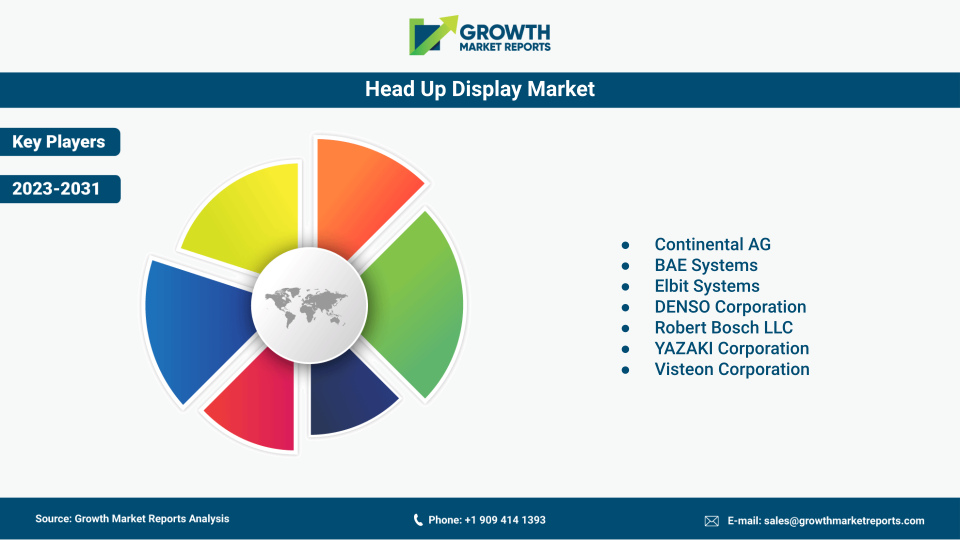

Global Head Up Display Market Key Players

Frequently Asked Questions

Yes, the Head Up Display market research report can be customized according to specific requirements, providing tailored insights and data for different business or research needs.

Opportunities include integration with autonomous and connected vehicles, expansion into new industries like healthcare and sports, and the development of lightweight, wearable HUDs. Challenges involve high development costs, technical issues with display clarity and compatibility, and concerns about driver distraction and cybersecurity.

Key companies include Continental AG, Denso Corporation, Nippon Seiki Co., Ltd., Visteon Corporation, Yazaki Corporation, Panasonic Corporation, Robert Bosch GmbH, Garmin Ltd., Pioneer Corporation, HUDWAY LLC, BOSCH Display Solutions, Harman International, WayRay AG, Thales Group, BAE Systems, Rockwell Collins, Esterline Technologies, MicroVision, Texas Instruments, and FIC (Foxconn International Holdings).

The HUD market is segmented into OEM (Original Equipment Manufacturer) and Aftermarket channels. OEMs dominate with factory-installed HUDs, while the aftermarket segment is growing rapidly due to affordable, plug-and-play solutions for older or entry-level vehicles.

A HUD system typically consists of Display Units, Projection Units, Video Generators, and Software. Each component plays a critical role in rendering, projecting, processing, and managing the visual information displayed to the user.

North America and Europe currently lead the HUD market due to mature automotive industries and early adoption of advanced safety technologies. However, Asia Pacific is the fastest-growing region, driven by rapid urbanization, increasing vehicle production, and investments in smart mobility infrastructure.

The main HUD technologies include Conventional HUD, Augmented Reality HUD, Windshield HUD, and Combiner HUD. Each offers different features and levels of information integration, with augmented reality HUDs providing the most immersive and context-sensitive experiences.

Beyond automotive, HUD technology is being adopted in aviation (commercial and military aircraft), defense (for pilots, vehicle operators, and ground troops), healthcare (for surgical visualization and real-time data display), as well as in sports, entertainment, and education sectors.

Key growth drivers include the rapid adoption of HUDs in the automotive sector, increased demand for advanced driver assistance systems, rising consumer awareness about safety, technological innovations such as augmented reality, and expanding applications in aviation, defense, and healthcare.

As of 2024, the global Head Up Display (HUD) market is valued at USD 2.9 billion. It is projected to grow at a CAGR of 20.3% from 2025 to 2033, reaching USD 17.6 billion by the end of the forecast period.

Table Of Content

Chapter 1 Executive Summary
Chapter 2 Assumptions and Acronyms Used
Chapter 3 Research Methodology
Chapter 4 Head Up Display Market Overview
   4.1 Introduction
      4.1.1 Market Taxonomy
      4.1.2 Market Definition
      4.1.3 Macro-Economic Factors Impacting the Market Growth
   4.2 Head Up Display Market Dynamics
      4.2.1 Market Drivers
      4.2.2 Market Restraints
      4.2.3 Market Opportunity
   4.3 Head Up Display Market - Supply Chain Analysis
      4.3.1 List of Key Suppliers
      4.3.2 List of Key Distributors
      4.3.3 List of Key Consumers
   4.4 Key Forces Shaping the Head Up Display Market
      4.4.1 Bargaining Power of Suppliers
      4.4.2 Bargaining Power of Buyers
      4.4.3 Threat of Substitution
      4.4.4 Threat of New Entrants
      4.4.5 Competitive Rivalry
   4.5 Global Head Up Display Market Size & Forecast, 2023-2032
      4.5.1 Head Up Display Market Size and Y-o-Y Growth
      4.5.2 Head Up Display Market Absolute $ Opportunity

Chapter 5 Global Head Up Display Market Analysis and Forecast By Component
   5.1 Introduction
      5.1.1 Key Market Trends & Growth Opportunities By Component
      5.1.2 Basis Point Share (BPS) Analysis By Component
      5.1.3 Absolute $ Opportunity Assessment By Component
   5.2 Head Up Display Market Size Forecast By Component
      5.2.1 Display Units
      5.2.2 Projection Units
      5.2.3 Video Generators
      5.2.4 Software
   5.3 Market Attractiveness Analysis By Component

Chapter 6 Global Head Up Display Market Analysis and Forecast By Technology
   6.1 Introduction
      6.1.1 Key Market Trends & Growth Opportunities By Technology
      6.1.2 Basis Point Share (BPS) Analysis By Technology
      6.1.3 Absolute $ Opportunity Assessment By Technology
   6.2 Head Up Display Market Size Forecast By Technology
      6.2.1 Conventional HUD
      6.2.2 Augmented Reality HUD
      6.2.3 Windshield HUD
      6.2.4 Combiner HUD
   6.3 Market Attractiveness Analysis By Technology

Chapter 7 Global Head Up Display Market Analysis and Forecast By Application
   7.1 Introduction
      7.1.1 Key Market Trends & Growth Opportunities By Application
      7.1.2 Basis Point Share (BPS) Analysis By Application
      7.1.3 Absolute $ Opportunity Assessment By Application
   7.2 Head Up Display Market Size Forecast By Application
      7.2.1 Automotive
      7.2.2 Aviation
      7.2.3 Military & Defense
      7.2.4 Healthcare
      7.2.5 Sports
      7.2.6 Others
   7.3 Market Attractiveness Analysis By Application

Chapter 8 Global Head Up Display Market Analysis and Forecast By Sales Channel
   8.1 Introduction
      8.1.1 Key Market Trends & Growth Opportunities By Sales Channel
      8.1.2 Basis Point Share (BPS) Analysis By Sales Channel
      8.1.3 Absolute $ Opportunity Assessment By Sales Channel
   8.2 Head Up Display Market Size Forecast By Sales Channel
      8.2.1 OEM
      8.2.2 Aftermarket
   8.3 Market Attractiveness Analysis By Sales Channel

Chapter 9 Global Head Up Display Market Analysis and Forecast by Region
   9.1 Introduction
      9.1.1 Key Market Trends & Growth Opportunities By Region
      9.1.2 Basis Point Share (BPS) Analysis By Region
      9.1.3 Absolute $ Opportunity Assessment By Region
   9.2 Head Up Display Market Size Forecast By Region
      9.2.1 North America
      9.2.2 Europe
      9.2.3 Asia Pacific
      9.2.4 Latin America
      9.2.5 Middle East & Africa (MEA)
   9.3 Market Attractiveness Analysis By Region

Chapter 10 Coronavirus Disease (COVID-19) Impact 
   10.1 Introduction 
   10.2 Current & Future Impact Analysis 
   10.3 Economic Impact Analysis 
   10.4 Government Policies 
   10.5 Investment Scenario

Chapter 11 North America Head Up Display Analysis and Forecast
   11.1 Introduction
   11.2 North America Head Up Display Market Size Forecast by Country
      11.2.1 U.S.
      11.2.2 Canada
   11.3 Basis Point Share (BPS) Analysis by Country
   11.4 Absolute $ Opportunity Assessment by Country
   11.5 Market Attractiveness Analysis by Country
   11.6 North America Head Up Display Market Size Forecast By Component
      11.6.1 Display Units
      11.6.2 Projection Units
      11.6.3 Video Generators
      11.6.4 Software
   11.7 Basis Point Share (BPS) Analysis By Component 
   11.8 Absolute $ Opportunity Assessment By Component 
   11.9 Market Attractiveness Analysis By Component
   11.10 North America Head Up Display Market Size Forecast By Technology
      11.10.1 Conventional HUD
      11.10.2 Augmented Reality HUD
      11.10.3 Windshield HUD
      11.10.4 Combiner HUD
   11.11 Basis Point Share (BPS) Analysis By Technology 
   11.12 Absolute $ Opportunity Assessment By Technology 
   11.13 Market Attractiveness Analysis By Technology
   11.14 North America Head Up Display Market Size Forecast By Application
      11.14.1 Automotive
      11.14.2 Aviation
      11.14.3 Military & Defense
      11.14.4 Healthcare
      11.14.5 Sports
      11.14.6 Others
   11.15 Basis Point Share (BPS) Analysis By Application 
   11.16 Absolute $ Opportunity Assessment By Application 
   11.17 Market Attractiveness Analysis By Application
   11.18 North America Head Up Display Market Size Forecast By Sales Channel
      11.18.1 OEM
      11.18.2 Aftermarket
   11.19 Basis Point Share (BPS) Analysis By Sales Channel 
   11.20 Absolute $ Opportunity Assessment By Sales Channel 
   11.21 Market Attractiveness Analysis By Sales Channel

Chapter 12 Europe Head Up Display Analysis and Forecast
   12.1 Introduction
   12.2 Europe Head Up Display Market Size Forecast by Country
      12.2.1 Germany
      12.2.2 France
      12.2.3 Italy
      12.2.4 U.K.
      12.2.5 Spain
      12.2.6 Russia
      12.2.7 Rest of Europe
   12.3 Basis Point Share (BPS) Analysis by Country
   12.4 Absolute $ Opportunity Assessment by Country
   12.5 Market Attractiveness Analysis by Country
   12.6 Europe Head Up Display Market Size Forecast By Component
      12.6.1 Display Units
      12.6.2 Projection Units
      12.6.3 Video Generators
      12.6.4 Software
   12.7 Basis Point Share (BPS) Analysis By Component 
   12.8 Absolute $ Opportunity Assessment By Component 
   12.9 Market Attractiveness Analysis By Component
   12.10 Europe Head Up Display Market Size Forecast By Technology
      12.10.1 Conventional HUD
      12.10.2 Augmented Reality HUD
      12.10.3 Windshield HUD
      12.10.4 Combiner HUD
   12.11 Basis Point Share (BPS) Analysis By Technology 
   12.12 Absolute $ Opportunity Assessment By Technology 
   12.13 Market Attractiveness Analysis By Technology
   12.14 Europe Head Up Display Market Size Forecast By Application
      12.14.1 Automotive
      12.14.2 Aviation
      12.14.3 Military & Defense
      12.14.4 Healthcare
      12.14.5 Sports
      12.14.6 Others
   12.15 Basis Point Share (BPS) Analysis By Application 
   12.16 Absolute $ Opportunity Assessment By Application 
   12.17 Market Attractiveness Analysis By Application
   12.18 Europe Head Up Display Market Size Forecast By Sales Channel
      12.18.1 OEM
      12.18.2 Aftermarket
   12.19 Basis Point Share (BPS) Analysis By Sales Channel 
   12.20 Absolute $ Opportunity Assessment By Sales Channel 
   12.21 Market Attractiveness Analysis By Sales Channel

Chapter 13 Asia Pacific Head Up Display Analysis and Forecast
   13.1 Introduction
   13.2 Asia Pacific Head Up Display Market Size Forecast by Country
      13.2.1 China
      13.2.2 Japan
      13.2.3 South Korea
      13.2.4 India
      13.2.5 Australia
      13.2.6 South East Asia (SEA)
      13.2.7 Rest of Asia Pacific (APAC)
   13.3 Basis Point Share (BPS) Analysis by Country
   13.4 Absolute $ Opportunity Assessment by Country
   13.5 Market Attractiveness Analysis by Country
   13.6 Asia Pacific Head Up Display Market Size Forecast By Component
      13.6.1 Display Units
      13.6.2 Projection Units
      13.6.3 Video Generators
      13.6.4 Software
   13.7 Basis Point Share (BPS) Analysis By Component 
   13.8 Absolute $ Opportunity Assessment By Component 
   13.9 Market Attractiveness Analysis By Component
   13.10 Asia Pacific Head Up Display Market Size Forecast By Technology
      13.10.1 Conventional HUD
      13.10.2 Augmented Reality HUD
      13.10.3 Windshield HUD
      13.10.4 Combiner HUD
   13.11 Basis Point Share (BPS) Analysis By Technology 
   13.12 Absolute $ Opportunity Assessment By Technology 
   13.13 Market Attractiveness Analysis By Technology
   13.14 Asia Pacific Head Up Display Market Size Forecast By Application
      13.14.1 Automotive
      13.14.2 Aviation
      13.14.3 Military & Defense
      13.14.4 Healthcare
      13.14.5 Sports
      13.14.6 Others
   13.15 Basis Point Share (BPS) Analysis By Application 
   13.16 Absolute $ Opportunity Assessment By Application 
   13.17 Market Attractiveness Analysis By Application
   13.18 Asia Pacific Head Up Display Market Size Forecast By Sales Channel
      13.18.1 OEM
      13.18.2 Aftermarket
   13.19 Basis Point Share (BPS) Analysis By Sales Channel 
   13.20 Absolute $ Opportunity Assessment By Sales Channel 
   13.21 Market Attractiveness Analysis By Sales Channel

Chapter 14 Latin America Head Up Display Analysis and Forecast
   14.1 Introduction
   14.2 Latin America Head Up Display Market Size Forecast by Country
      14.2.1 Brazil
      14.2.2 Mexico
      14.2.3 Rest of Latin America (LATAM)
   14.3 Basis Point Share (BPS) Analysis by Country
   14.4 Absolute $ Opportunity Assessment by Country
   14.5 Market Attractiveness Analysis by Country
   14.6 Latin America Head Up Display Market Size Forecast By Component
      14.6.1 Display Units
      14.6.2 Projection Units
      14.6.3 Video Generators
      14.6.4 Software
   14.7 Basis Point Share (BPS) Analysis By Component 
   14.8 Absolute $ Opportunity Assessment By Component 
   14.9 Market Attractiveness Analysis By Component
   14.10 Latin America Head Up Display Market Size Forecast By Technology
      14.10.1 Conventional HUD
      14.10.2 Augmented Reality HUD
      14.10.3 Windshield HUD
      14.10.4 Combiner HUD
   14.11 Basis Point Share (BPS) Analysis By Technology 
   14.12 Absolute $ Opportunity Assessment By Technology 
   14.13 Market Attractiveness Analysis By Technology
   14.14 Latin America Head Up Display Market Size Forecast By Application
      14.14.1 Automotive
      14.14.2 Aviation
      14.14.3 Military & Defense
      14.14.4 Healthcare
      14.14.5 Sports
      14.14.6 Others
   14.15 Basis Point Share (BPS) Analysis By Application 
   14.16 Absolute $ Opportunity Assessment By Application 
   14.17 Market Attractiveness Analysis By Application
   14.18 Latin America Head Up Display Market Size Forecast By Sales Channel
      14.18.1 OEM
      14.18.2 Aftermarket
   14.19 Basis Point Share (BPS) Analysis By Sales Channel 
   14.20 Absolute $ Opportunity Assessment By Sales Channel 
   14.21 Market Attractiveness Analysis By Sales Channel

Chapter 15 Middle East & Africa (MEA) Head Up Display Analysis and Forecast
   15.1 Introduction
   15.2 Middle East & Africa (MEA) Head Up Display Market Size Forecast by Country
      15.2.1 Saudi Arabia
      15.2.2 South Africa
      15.2.3 UAE
      15.2.4 Rest of Middle East & Africa (MEA)
   15.3 Basis Point Share (BPS) Analysis by Country
   15.4 Absolute $ Opportunity Assessment by Country
   15.5 Market Attractiveness Analysis by Country
   15.6 Middle East & Africa (MEA) Head Up Display Market Size Forecast By Component
      15.6.1 Display Units
      15.6.2 Projection Units
      15.6.3 Video Generators
      15.6.4 Software
   15.7 Basis Point Share (BPS) Analysis By Component 
   15.8 Absolute $ Opportunity Assessment By Component 
   15.9 Market Attractiveness Analysis By Component
   15.10 Middle East & Africa (MEA) Head Up Display Market Size Forecast By Technology
      15.10.1 Conventional HUD
      15.10.2 Augmented Reality HUD
      15.10.3 Windshield HUD
      15.10.4 Combiner HUD
   15.11 Basis Point Share (BPS) Analysis By Technology 
   15.12 Absolute $ Opportunity Assessment By Technology 
   15.13 Market Attractiveness Analysis By Technology
   15.14 Middle East & Africa (MEA) Head Up Display Market Size Forecast By Application
      15.14.1 Automotive
      15.14.2 Aviation
      15.14.3 Military & Defense
      15.14.4 Healthcare
      15.14.5 Sports
      15.14.6 Others
   15.15 Basis Point Share (BPS) Analysis By Application 
   15.16 Absolute $ Opportunity Assessment By Application 
   15.17 Market Attractiveness Analysis By Application
   15.18 Middle East & Africa (MEA) Head Up Display Market Size Forecast By Sales Channel
      15.18.1 OEM
      15.18.2 Aftermarket
   15.19 Basis Point Share (BPS) Analysis By Sales Channel 
   15.20 Absolute $ Opportunity Assessment By Sales Channel 
   15.21 Market Attractiveness Analysis By Sales Channel

Chapter 16 Competition Landscape 
   16.1 Head Up Display Market: Competitive Dashboard
   16.2 Global Head Up Display Market: Market Share Analysis, 2023
   16.3 Company Profiles (Details – Overview, Financials, Developments, Strategy) 
      16.3.1 Continental AG
Denso Corporation
Nippon Seiki Co., Ltd.
Visteon Corporation
Yazaki Corporation
Panasonic Corporation
Robert Bosch GmbH
Garmin Ltd.
Pioneer Corporation
HUDWAY LLC
BOSCH Display Solutions
Harman International Industries, Inc.
WayRay AG
Thales Group
BAE Systems plc
Rockwell Collins (now part of Collins Aerospace)
Esterline Technologies Corporation
MicroVision, Inc.
Texas Instruments Incorporated
FIC (Foxconn International Holdings Limited)

Methodology

Our Clients

The John Holland Group
sinopec
FedEx Logistics
Microsoft
Dassault Aviation
Siemens Healthcare
General Electric
Honda Motor Co. Ltd.