Segments - by Component (Laser Scanners, Navigation and Positioning Systems, Cameras, GPS/GNSS Receivers, Others), by Type (Terrestrial, Aerial, Mobile, Short-range), by Technology (Mechanical, Solid-state), by Application (Automotive, Aerospace & Defense, Environmental, Mapping & Surveying, Agriculture, Mining, Construction, Others), by End-User (Government, Commercial, Industrial, Others)
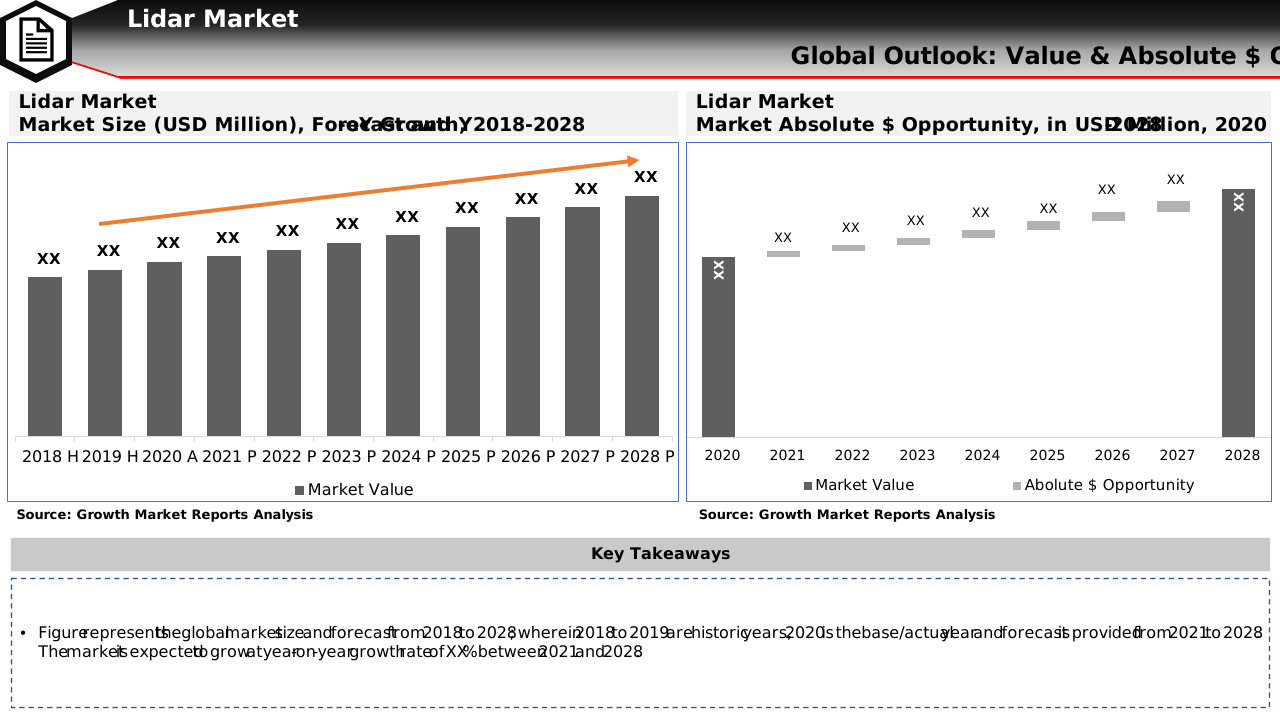
According to our latest research, the global LiDAR market size reached USD 2.35 billion in 2024, driven by rapid advancements in autonomous vehicle technology, infrastructure development, and environmental monitoring. The market is expanding at a robust CAGR of 18.7% and is projected to attain a value of USD 11.51 billion by 2033. This impressive growth trajectory is underpinned by the increasing adoption of LiDAR systems across diverse applications, including automotive, mapping, surveying, and industrial automation, as organizations seek high-precision, three-dimensional data for enhanced decision-making and operational efficiency.
One of the primary growth factors for the LiDAR market is the accelerating integration of LiDAR technology in the automotive sector, particularly in advanced driver-assistance systems (ADAS) and autonomous vehicles. Automakers are leveraging LiDARÂ’s ability to generate real-time, high-resolution 3D maps of the environment, which is crucial for safe navigation and object detection. As regulatory bodies around the world push for higher safety standards and as consumer demand for self-driving vehicles intensifies, the requirement for reliable sensing technologies like LiDAR continues to surge. Moreover, significant investments from both established automotive giants and innovative startups in the development and deployment of LiDAR-based solutions are further propelling market growth.
Another significant driver is the growing utilization of LiDAR in mapping, surveying, and environmental monitoring. LiDARÂ’s capability to accurately capture large-scale topographical data in a fraction of the time compared to traditional methods has made it indispensable for geospatial professionals. Government agencies and private sector players are increasingly using LiDAR for flood modeling, forestry management, coastline mapping, and urban planning. The technologyÂ’s ability to penetrate vegetation and deliver precise elevation models is particularly valuable for infrastructure development and disaster management. The ongoing digitization of land records and the need for smart city planning are also fueling demand for advanced LiDAR solutions.
Furthermore, the continuous evolution of LiDAR technology itself is a crucial growth catalyst. Innovations such as solid-state LiDAR, which offers enhanced durability, compactness, and cost-effectiveness compared to mechanical counterparts, are broadening the scope of applications and making LiDAR more accessible to a wider range of industries. The miniaturization of components and the integration of LiDAR with artificial intelligence (AI) and machine learning algorithms are enabling new functionalities, such as real-time object classification and predictive analytics. These advancements are not only driving adoption in established sectors but are also opening doors in emerging fields like robotics, drone-based delivery, and precision agriculture.
From a regional perspective, North America currently leads the global LiDAR market owing to its early adoption of advanced technologies, substantial investments in autonomous vehicles, and robust infrastructure for research and development. However, the Asia Pacific region is rapidly emerging as a high-growth market, fueled by increasing government initiatives in smart city projects, expanding automotive manufacturing hubs, and a rising focus on disaster management and environmental conservation. Europe also remains a significant contributor, especially in mapping, surveying, and environmental monitoring, supported by stringent regulatory standards and a strong emphasis on sustainability.
Flash LiDAR technology is emerging as a transformative force in the LiDAR market, offering significant advantages in terms of speed and efficiency. Unlike traditional scanning LiDAR systems that emit laser pulses sequentially, Flash LiDAR illuminates an entire scene with a single laser pulse, capturing a full 3D image in an instant. This capability is particularly beneficial for applications requiring rapid data acquisition, such as autonomous vehicles navigating dynamic environments or drones conducting real-time surveillance. The ability to capture high-resolution data quickly and accurately makes Flash LiDAR an attractive option for industries seeking to enhance operational efficiency and safety. As the technology continues to evolve, it is likely to play a pivotal role in expanding the adoption of LiDAR across new and existing markets.
The component segment of the LiDAR market comprises laser scanners, navigation and positioning systems, cameras, GPS/GNSS receivers, and other supporting elements. Laser scanners are the core component of any LiDAR system, responsible for emitting laser pulses and measuring the reflected signals to determine distances with high precision. The demand for advanced laser scanners is escalating as industries seek higher accuracy and faster data acquisition rates. Technological improvements in laser diodes and optics have enabled the development of compact, energy-efficient scanners suitable for integration into vehicles, drones, and handheld devices, broadening the practical applications of LiDAR technology.
Navigation and positioning systems are equally critical, as they ensure the accurate georeferencing of LiDAR data. These systems, which often combine inertial measurement units (IMUs) with sophisticated algorithms, are essential for applications that require precise spatial information, such as aerial mapping and autonomous navigation. The integration of real-time kinematic (RTK) positioning and advanced sensor fusion techniques has significantly enhanced the reliability and accuracy of LiDAR systems, making them indispensable in fields like construction, mining, and environmental monitoring where geospatial precision is paramount.
The camera component in LiDAR systems plays a vital role in augmenting the captured point cloud data with color and texture information, enabling more detailed and context-rich 3D models. The synergy between LiDAR and high-resolution imaging is particularly valuable in applications such as urban planning, heritage conservation, and accident reconstruction, where visual context is as important as geometric accuracy. The continuous improvements in camera resolution, frame rates, and integration capabilities are making LiDAR systems more versatile and appealing to a broader range of end-users.
GPS/GNSS receivers serve as the backbone for precise positioning in mobile and aerial LiDAR platforms. The ongoing advancements in satellite navigation technologies, including the deployment of new constellations and the enhancement of signal processing algorithms, are improving the performance and reliability of GPS/GNSS receivers in challenging environments. This is particularly important for applications such as corridor mapping, infrastructure inspection, and large-scale environmental surveys, where accurate geolocation is non-negotiable. The convergence of these components is enabling the development of integrated LiDAR solutions that deliver unparalleled accuracy, efficiency, and ease of use.
| Attributes | Details |
| Report Title | Lidar Market Research Report 2033 |
| By Component | Laser Scanners, Navigation and Positioning Systems, Cameras, GPS/GNSS Receivers, Others |
| By Type | Terrestrial, Aerial, Mobile, Short-range |
| By Technology | Mechanical, Solid-state |
| By Application | Automotive, Aerospace & Defense, Environmental, Mapping & Surveying, Agriculture, Mining, Construction, Others |
| By End-User | Government, Commercial, Industrial, Others |
| Regions Covered | North America, Europe, APAC, Latin America, MEA |
| Base Year | 2024 |
| Historic Data | 2018-2023 |
| Forecast Period | 2025-2033 |
| Number of Pages | 292 |
| Number of Tables & Figures | 257 |
| Customization Available | Yes, the report can be customized as per your need. |
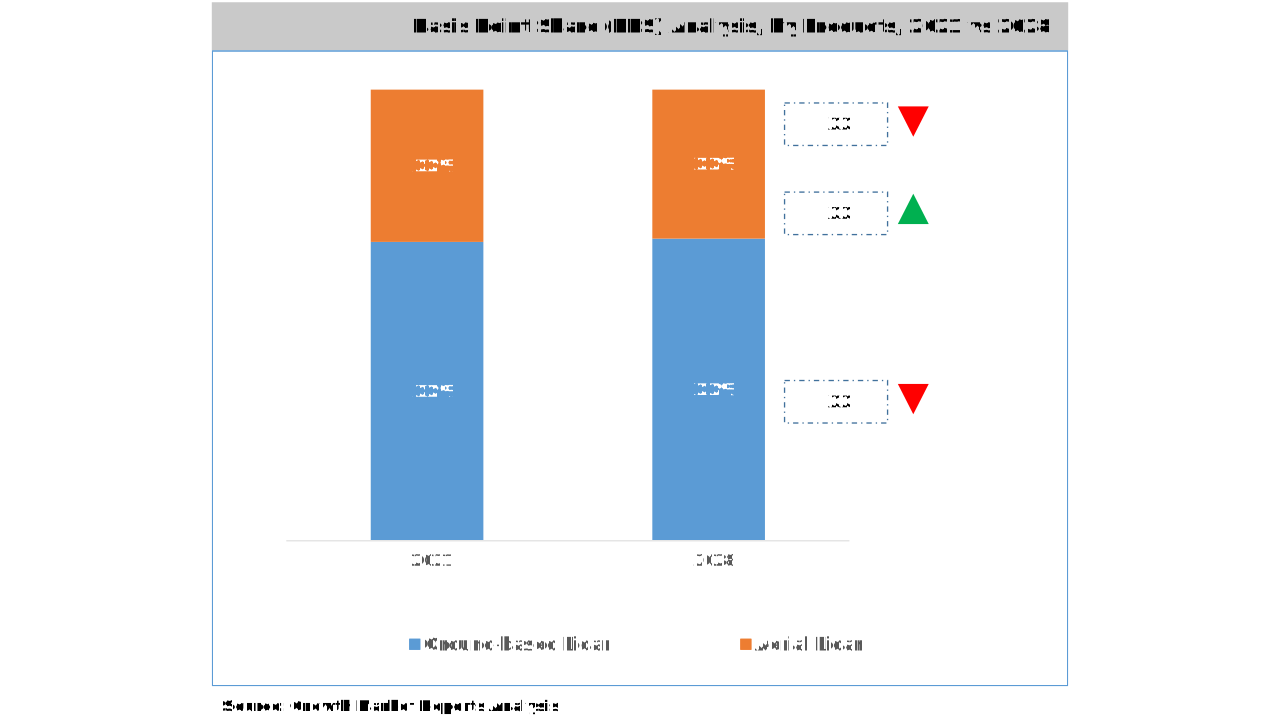
The LiDAR market is segmented by type into terrestrial, aerial, mobile, and short-range systems, each tailored to specific operational requirements and use cases. Terrestrial LiDAR systems, which are typically tripod-mounted or vehicle-mounted, are widely used for ground-based surveying, construction site monitoring, and infrastructure inspection. These systems offer exceptional accuracy and are capable of capturing detailed 3D models of buildings, bridges, and other structures. The adoption of terrestrial LiDAR is being driven by the need for rapid, non-intrusive data collection in civil engineering and asset management, as well as the growing emphasis on digital twins for urban planning.
Aerial LiDAR systems, deployed on manned aircraft or unmanned aerial vehicles (UAVs), are indispensable for large-scale topographic mapping, forestry management, and disaster assessment. The ability of aerial LiDAR to cover vast areas in a short time, combined with its capacity to penetrate vegetation and generate accurate elevation models, has revolutionized geospatial data collection. Recent advancements in lightweight, high-performance LiDAR sensors have enabled the deployment of aerial LiDAR on compact drones, making it accessible to smaller organizations and opening new opportunities in agriculture, environmental monitoring, and infrastructure development.
Mobile LiDAR systems, which are mounted on vehicles or handheld platforms, are gaining traction for applications that require rapid data acquisition over extensive linear corridors, such as roadways, railways, and utility networks. The integration of high-precision IMUs and real-time processing capabilities allows mobile LiDAR to deliver accurate, georeferenced point clouds even in dynamic environments. The growing adoption of mobile mapping solutions by transportation agencies, utility companies, and municipalities is driving demand for innovative LiDAR technologies that offer scalability, flexibility, and cost-effectiveness.
Short-range LiDAR systems are designed for applications that demand high-resolution data at close distances, such as robotics, industrial automation, and security. These systems are characterized by their compact size, low power consumption, and ability to operate effectively in cluttered or confined spaces. The proliferation of short-range LiDAR in emerging fields like warehouse automation, autonomous delivery robots, and smart home devices is expected to fuel significant market growth. The continuous evolution of miniaturized LiDAR sensors, coupled with advancements in processing algorithms, is enabling new use cases and driving the adoption of LiDAR technology across a broader spectrum of industries.
The LiDAR market is divided by technology into mechanical and solid-state systems, each offering distinct advantages and catering to different application requirements. Mechanical LiDAR systems, which rely on rotating components to scan the environment, have traditionally dominated the market due to their ability to provide 360-degree coverage and deliver high-resolution, long-range data. These systems are widely used in automotive, mapping, and surveying applications, where comprehensive spatial awareness is essential. However, the mechanical nature of these systems can result in higher costs, increased maintenance requirements, and larger form factors, which may limit their suitability for certain use cases.
Solid-state LiDAR represents a significant technological leap, offering compact, durable, and cost-effective alternatives to traditional mechanical systems. By eliminating moving parts, solid-state LiDAR reduces the risk of mechanical failure and enables seamless integration into vehicles, drones, and portable devices. The rapid advancements in microelectromechanical systems (MEMS), optical phased arrays, and flash LiDAR technologies are driving the adoption of solid-state solutions, particularly in the automotive sector, where reliability, scalability, and affordability are paramount. The ability to mass-produce solid-state LiDAR at lower costs is expected to accelerate the deployment of autonomous vehicles and smart infrastructure.
The transition from mechanical to solid-state LiDAR is also being facilitated by the convergence of LiDAR with other sensing technologies, such as radar and computer vision. Hybrid systems that combine the strengths of multiple sensor modalities are delivering enhanced perception capabilities, improved redundancy, and greater operational flexibility. This trend is particularly evident in advanced driver-assistance systems (ADAS), robotics, and industrial automation, where the ability to perceive and interpret complex environments in real time is critical for safety and efficiency.
Despite the growing momentum behind solid-state LiDAR, mechanical systems continue to hold a significant share of the market, particularly in applications that demand long-range, high-resolution data and where the cost of failure is high. The ongoing innovation in both mechanical and solid-state technologies is fostering healthy competition, driving down costs, and expanding the range of available solutions. As the market matures, the coexistence of multiple LiDAR technologies is expected to persist, with each addressing the unique needs of specific industries and applications.
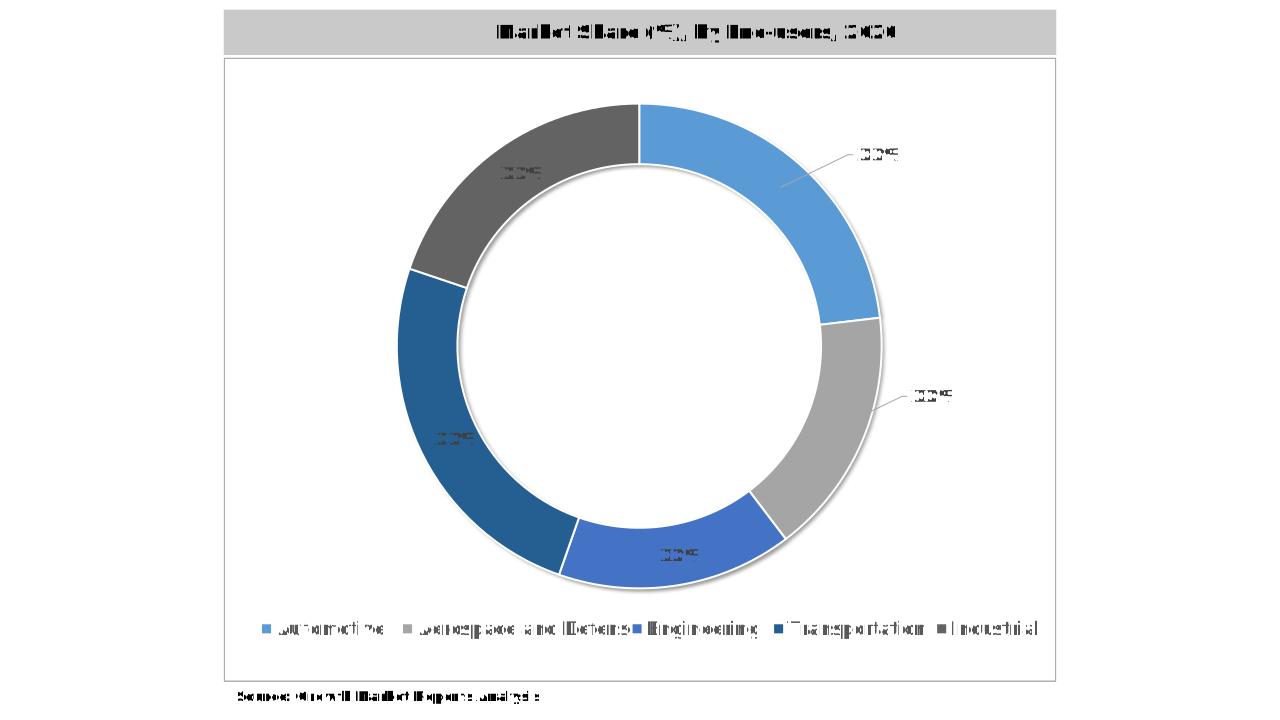
The application landscape for the LiDAR market is vast and diverse, encompassing sectors such as automotive, aerospace and defense, environmental monitoring, mapping and surveying, agriculture, mining, construction, and more. In the automotive sector, LiDAR is a cornerstone technology for enabling autonomous driving, collision avoidance, and advanced driver-assistance systems. Leading automakers and technology firms are investing heavily in the integration of LiDAR sensors into next-generation vehicles, aiming to enhance safety, reliability, and user experience. The increasing regulatory focus on vehicle safety standards and the growing consumer demand for advanced features are expected to sustain robust growth in this segment.
Aerospace and defense is another major application area, where LiDAR is used for terrain mapping, obstacle detection, and mission planning. The ability of LiDAR to operate effectively in challenging environments, such as dense forests, mountainous terrain, and urban landscapes, makes it invaluable for military operations, search and rescue missions, and disaster response. The adoption of LiDAR in unmanned aerial vehicles (UAVs) and satellite platforms is further expanding the scope of applications, enabling real-time data collection and analysis for strategic decision-making.
In the realm of environmental monitoring, LiDAR plays a critical role in assessing and managing natural resources, monitoring ecosystems, and supporting climate change research. The technologyÂ’s capacity to generate detailed elevation models, measure vegetation structure, and detect subtle changes in landforms is essential for applications such as flood risk assessment, forest inventory, and habitat mapping. Government agencies, research institutions, and environmental organizations are increasingly leveraging LiDAR to inform policy decisions, optimize resource allocation, and enhance sustainability efforts.
Mapping and surveying remain foundational applications for LiDAR, with the technology being widely adopted by civil engineers, urban planners, and geospatial professionals. The ability to rapidly capture high-precision, three-dimensional data over large areas is transforming the way infrastructure projects are planned, executed, and maintained. LiDAR is also gaining traction in agriculture, where it is used for precision farming, crop monitoring, and soil analysis, as well as in mining and construction, where it supports site analysis, volume calculations, and safety management. The versatility and scalability of LiDAR are enabling new use cases and driving adoption across a broad spectrum of industries.
The LiDAR market serves a diverse array of end-users, including government agencies, commercial enterprises, industrial organizations, and others. Government entities are among the largest adopters of LiDAR technology, utilizing it for applications such as infrastructure development, urban planning, disaster management, and environmental monitoring. The ability of LiDAR to deliver accurate, up-to-date geospatial data is invaluable for public sector initiatives aimed at improving safety, efficiency, and sustainability. Government funding and policy support are also playing a pivotal role in driving research, development, and deployment of LiDAR solutions.
The commercial sector is experiencing rapid growth in LiDAR adoption, particularly in industries such as automotive, real estate, and logistics. Companies are leveraging LiDAR to enhance operational efficiency, improve asset management, and deliver innovative products and services. For example, logistics providers are using LiDAR-equipped vehicles for warehouse automation and route optimization, while real estate developers are employing LiDAR for site analysis and project planning. The increasing availability of cost-effective, scalable LiDAR solutions is making the technology accessible to a wider range of commercial users.
In the industrial segment, LiDAR is being deployed for applications such as process automation, quality control, and safety management. Manufacturing facilities are integrating LiDAR sensors into robotic systems and production lines to enable real-time monitoring, defect detection, and precise measurement. The ability of LiDAR to operate in harsh environments and deliver reliable data is particularly valuable in sectors such as mining, oil and gas, and utilities. The growing emphasis on Industry 4.0 and smart manufacturing is expected to drive continued investment in LiDAR-based solutions.
Other end-users, including research institutions, non-profit organizations, and educational entities, are also contributing to the growth of the LiDAR market. These organizations are using LiDAR for scientific research, environmental studies, and educational programs, benefiting from the technologyÂ’s ability to provide rich, accurate data for analysis and visualization. The collaborative efforts between academia, industry, and government are fostering innovation and expanding the boundaries of what is possible with LiDAR technology.
The LiDAR market presents significant opportunities for growth and innovation, particularly as advancements in sensor technology, data processing, and artificial intelligence continue to expand the range of potential applications. The integration of LiDAR with AI and machine learning is enabling real-time object detection, classification, and predictive analytics, which are critical for autonomous vehicles, robotics, and smart infrastructure. The emergence of new business models, such as LiDAR-as-a-Service and cloud-based data analytics, is lowering barriers to adoption and enabling organizations of all sizes to leverage the benefits of high-precision 3D data. The increasing focus on sustainability and environmental stewardship is also creating opportunities for LiDAR in areas such as renewable energy, conservation, and climate change mitigation.
Another key opportunity lies in the ongoing miniaturization and cost reduction of LiDAR components, which is making the technology accessible to a broader range of industries and applications. The development of solid-state and MEMS-based LiDAR sensors is enabling integration into consumer electronics, drones, and portable devices, opening up new markets and use cases. The proliferation of smart cities, connected infrastructure, and the Internet of Things (IoT) is expected to drive demand for LiDAR-enabled solutions that deliver real-time situational awareness, asset tracking, and predictive maintenance. Partnerships and collaborations between technology providers, system integrators, and end-users are fostering innovation and accelerating the deployment of next-generation LiDAR systems.
Despite the many opportunities, the LiDAR market faces certain restraining factors that could impact growth. High initial costs, particularly for advanced mechanical systems, can be a barrier for small and medium-sized enterprises and organizations in developing regions. Technical challenges related to data processing, integration with existing systems, and performance in adverse weather conditions also pose significant hurdles. Additionally, the competitive landscape is evolving rapidly, with new entrants and disruptive technologies potentially reshaping market dynamics. Addressing these challenges will require ongoing investment in research and development, as well as collaboration across the value chain to ensure interoperability, reliability, and affordability.
North America remains the dominant region in the LiDAR market, accounting for approximately 38% of global revenue in 2024, driven by early adoption of autonomous vehicle technology, robust investments in infrastructure, and a strong ecosystem of technology providers. The United States, in particular, is a hub for innovation, with leading automotive manufacturers, research institutions, and government agencies spearheading the development and deployment of LiDAR solutions. The regionÂ’s commitment to smart city initiatives, environmental monitoring, and disaster management is expected to sustain high demand for LiDAR technology over the forecast period.
The Asia Pacific region is emerging as the fastest-growing market, with a projected CAGR of 22.3% through 2033. This growth is fueled by expanding automotive manufacturing hubs, increasing government investments in infrastructure and smart city projects, and a rising focus on environmental conservation. China, Japan, and South Korea are at the forefront of LiDAR adoption, leveraging the technology for urban planning, transportation management, and industrial automation. The regionÂ’s large and diverse population, coupled with rapid urbanization and technological advancement, presents significant opportunities for market expansion and innovation.
Europe also plays a significant role in the global LiDAR market, contributing around 28% of total revenue in 2024. The regionÂ’s emphasis on sustainability, stringent regulatory standards, and a strong tradition of mapping and surveying are driving adoption across multiple sectors. Countries such as Germany, the United Kingdom, and France are investing in smart infrastructure, environmental monitoring, and disaster resilience, supported by a well-established ecosystem of technology providers and research institutions. The Middle East & Africa and Latin America, while currently smaller markets, are showing increasing interest in LiDAR technology for infrastructure development, resource management, and disaster response, and are expected to experience steady growth in the coming years.
The competitive landscape of the LiDAR market is characterized by intense innovation, strategic partnerships, and a dynamic mix of established players and emerging startups. Leading companies are investing heavily in research and development to enhance the performance, reliability, and affordability of their LiDAR solutions. The market is witnessing a trend towards vertical integration, with companies seeking to control the entire value chain from component manufacturing to system integration and data analytics. This approach enables them to deliver end-to-end solutions tailored to the specific needs of different industries and applications, strengthening their competitive position and driving customer loyalty.
Collaboration and partnership are also key strategies in the LiDAR market, as technology providers team up with automotive manufacturers, drone companies, and system integrators to accelerate the development and deployment of LiDAR-enabled solutions. These alliances are fostering innovation, reducing time-to-market, and enabling the creation of comprehensive, interoperable systems that deliver superior value to end-users. The market is also witnessing a wave of mergers and acquisitions, as companies seek to expand their technology portfolios, enter new markets, and achieve economies of scale.
Emerging startups are playing a pivotal role in driving innovation and disrupting traditional business models in the LiDAR market. These companies are leveraging cutting-edge technologies such as solid-state sensors, MEMS, and AI-powered data processing to develop next-generation LiDAR solutions that are smaller, cheaper, and more versatile than ever before. Their agility and willingness to experiment with new business models, such as LiDAR-as-a-Service and cloud-based analytics, are challenging established players and reshaping the competitive landscape.
Some of the major companies in the LiDAR market include Velodyne Lidar Inc., Leica Geosystems AG (part of Hexagon AB), Teledyne Optech, RIEGL Laser Measurement Systems GmbH, Trimble Inc., FARO Technologies Inc., Innoviz Technologies, Quanergy Systems Inc., Luminar Technologies, and Ouster Inc. These companies are at the forefront of innovation, offering a wide range of LiDAR solutions tailored to automotive, industrial, mapping, and environmental applications. Velodyne Lidar, for example, is renowned for its high-performance sensors used in autonomous vehicles, while Leica Geosystems specializes in precision mapping and surveying solutions. Teledyne Optech and RIEGL are leaders in airborne and terrestrial LiDAR systems, serving the needs of geospatial professionals and environmental scientists. Innoviz Technologies and Luminar are driving advancements in solid-state LiDAR for automotive and industrial applications, while Quanergy and Ouster are known for their scalable, cost-effective solutions for smart infrastructure and IoT.
These industry leaders are continuously expanding their product portfolios, investing in advanced manufacturing capabilities, and forging strategic partnerships to maintain their competitive edge. Their commitment to quality, innovation, and customer satisfaction is helping to drive the widespread adoption of LiDAR technology and shape the future of the market. As the competitive landscape continues to evolve, companies that can deliver reliable, high-performance, and cost-effective LiDAR solutions will be well-positioned to capitalize on the growing demand across a wide range of industries and applications.
The Lidar market has been segmented on the basis of
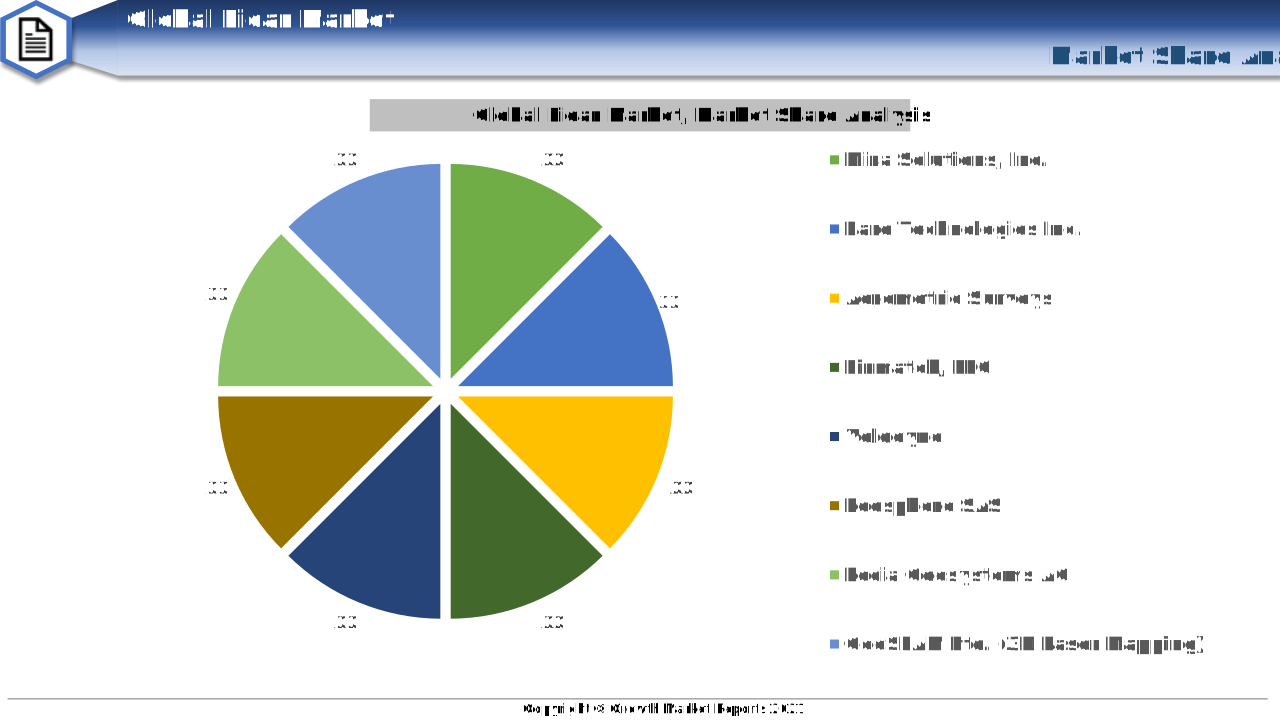
Key players competing in the global lidar market include Mira Solutions, Inc., Faro Technologies Inc., Aerometric Surveys, Firmatek, LLC, Veldoyne, Leosphere SAS, Lecia Geosystems AG, and GeoSLAM Ltd. (3D Laser Mapping). Some of these players are engaged in several market strategies such as mergers, acquisitions, partnerships, collaborations, capacity expansion, and product launches to enhance their market shares and strengthen their position. For instance,
In July 2019, Quanergy did distribution partnership with Ingram Micro Brazil; it marks Quanergy entrance in the South America market.
In January 2020, DENSO Corporation and Qualcomm Technologies, Inc. announced working together for developing next-generation cockpit systems.
LiDAR is increasingly integrated with AI and machine learning for real-time object detection and predictive analytics, and is combined with other sensors like radar and cameras to enhance perception in autonomous vehicles, robotics, and industrial automation.
Challenges include high initial costs (especially for mechanical systems), technical hurdles in data processing and integration, performance issues in adverse weather, and increasing competition from new entrants and disruptive technologies.
Major LiDAR companies include Velodyne Lidar Inc., Leica Geosystems AG, Teledyne Optech, RIEGL Laser Measurement Systems, Trimble Inc., FARO Technologies, Innoviz Technologies, Quanergy Systems, Luminar Technologies, and Ouster Inc.
A typical LiDAR system includes laser scanners, navigation and positioning systems (often with IMUs), cameras, GPS/GNSS receivers, and other supporting elements for accurate 3D data capture.
North America currently leads the LiDAR market, followed by Europe and the rapidly growing Asia Pacific region. North America accounts for about 38% of global revenue, with strong adoption in the US.
Solid-state LiDAR eliminates moving parts, offering enhanced durability, compactness, and cost-effectiveness compared to mechanical LiDAR, which uses rotating components for 360-degree coverage and long-range data.
LiDAR systems are segmented into terrestrial, aerial, mobile, and short-range types, each tailored for specific applications such as ground-based surveying, large-scale mapping, corridor mapping, and robotics.
Key industries adopting LiDAR include automotive (especially for ADAS and autonomous vehicles), mapping and surveying, environmental monitoring, industrial automation, aerospace and defense, agriculture, mining, and construction.
The LiDAR market is expected to grow at a CAGR of 18.7%, reaching an estimated value of USD 11.51 billion by 2033.
As of 2024, the global LiDAR market size reached USD 2.35 billion, driven by advancements in autonomous vehicles, infrastructure development, and environmental monitoring.