Antenna Market Research Report 2033

Antenna Market Research Report 2033

Segments - by Type (Wire Antenna, Aperture Antenna, Microstrip Antenna, Array Antenna, Reflector Antenna, Others), by Technology (Smart Antenna, Conventional Antenna), by Application (Automotive, Consumer Electronics, Healthcare, Aerospace & Defense, Telecommunication, Industrial, Others), by Frequency Range (HF/VHF/UHF, Microwave, Millimeter Wave)

https://growthmarketreports.com/Raksha
Author : Raksha Sharma
https://growthmarketreports.com/Vaibhav
Fact-checked by : V. Chandola
https://growthmarketreports.com/Shruti
Editor : Shruti Bhat

Upcoming | Report ID :ICT-SE-773 | 4.4 Rating | 74 Reviews | 257 Pages | Format : Docx PDF

Report Description


Antenna Market Outlook

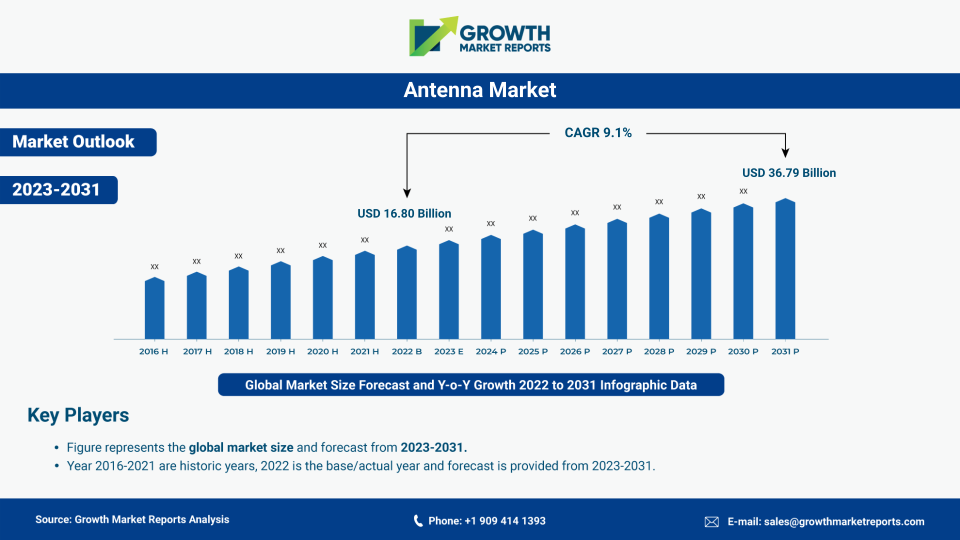
According to our latest research, the global antenna market size reached USD 22.8 billion in 2024, driven by robust advancements in wireless communication technologies and increasing adoption across diverse industries. The market is projected to expand at a CAGR of 7.2% from 2025 to 2033, with the forecasted global market size expected to attain USD 42.6 billion by the end of 2033. This growth is primarily fueled by the escalating demand for high-speed connectivity, the rapid proliferation of IoT devices, and ongoing investments in 5G infrastructure worldwide, as per our latest research findings.

The antenna market is witnessing substantial growth owing to the rising integration of advanced wireless communication systems in consumer electronics, automotive, and industrial sectors. The surge in demand for smartphones, tablets, and wearable devices is significantly contributing to the market expansion, as these products require highly efficient and compact antennas to ensure seamless connectivity. Moreover, the ongoing evolution of smart home and smart city projects is further propelling the demand for various types of antennas, particularly those supporting IoT and machine-to-machine (M2M) communication. The continuous innovation in antenna design, such as miniaturization and multi-band capabilities, is also enhancing their adoption in space-constrained devices, thereby accelerating market growth.

Another critical growth factor for the antenna market is the extensive deployment of 5G networks across developed and emerging economies. The transition from 4G to 5G necessitates the use of advanced antenna technologies, such as massive MIMO and beamforming, to support higher data rates, lower latency, and increased network capacity. Telecom operators are investing heavily in upgrading their infrastructure, which includes installing new base stations equipped with sophisticated antennas. This trend is not only boosting the demand for traditional antennas but also for smart antennas that can dynamically adapt to changing network conditions, thus optimizing performance and spectrum utilization. Additionally, the increasing use of antennas in autonomous vehicles, unmanned aerial vehicles (UAVs), and industrial automation is further expanding the marketÂ’s potential.

The growing emphasis on defense modernization and aerospace innovation is also playing a pivotal role in driving the antenna market. Governments worldwide are allocating substantial budgets for enhancing their defense communication systems, radar, and satellite-based surveillance, all of which require specialized antennas. The aerospace sector, with its focus on next-generation aircraft and satellite communications, is also a significant contributor to market growth. Furthermore, the healthcare sector is leveraging advanced antenna technologies for telemedicine, remote monitoring, and medical imaging applications, thereby broadening the scope of the market. These multifaceted growth drivers are collectively shaping a dynamic and competitive landscape for the global antenna industry.

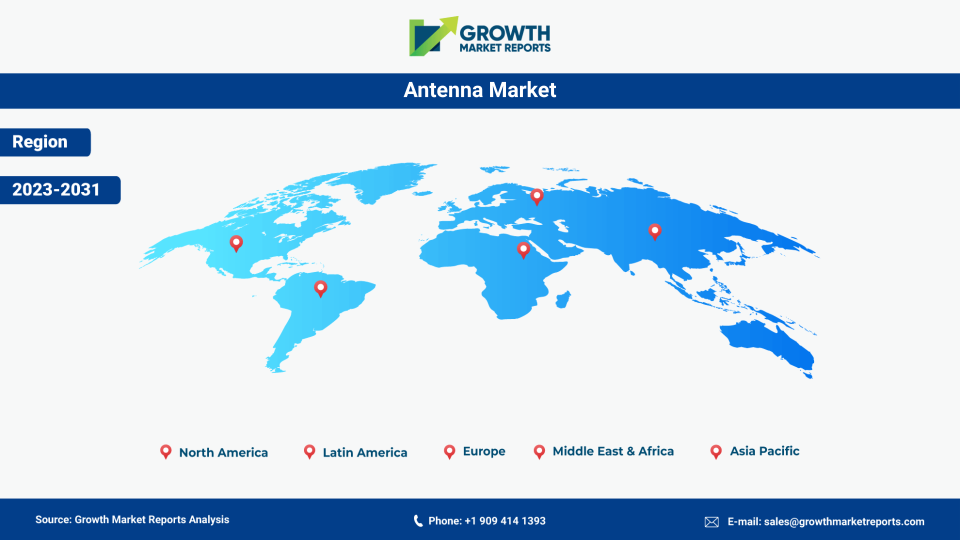
Regionally, Asia Pacific stands out as the dominant market, fueled by rapid industrialization, expanding telecom infrastructure, and the presence of leading consumer electronics manufacturers. North America and Europe are also significant contributors, driven by strong investments in 5G, automotive innovation, and defense modernization. Latin America and the Middle East & Africa are gradually emerging as promising markets, supported by increasing digitalization and infrastructure development initiatives. Each region presents unique growth opportunities and challenges, making the global antenna market highly dynamic and regionally diverse.

Global Antenna Industry Outlook

Type Analysis

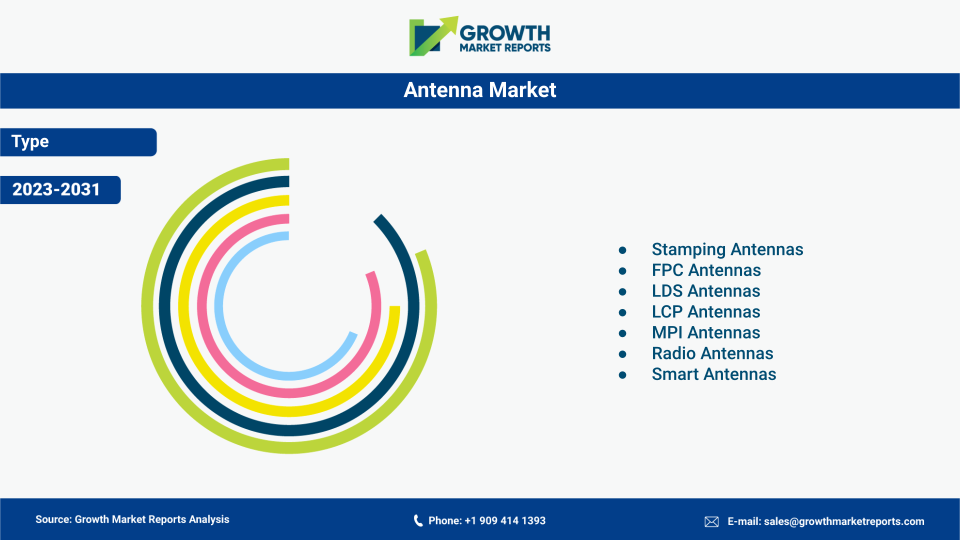
The antenna market by type encompasses a diverse range of products, including wire antennas, aperture antennas, microstrip antennas, array antennas, reflector antennas, and others. Wire antennas, such as dipole and monopole antennas, remain widely used due to their simplicity, cost-effectiveness, and broad applicability in both consumer and industrial applications. These antennas are particularly prevalent in radio broadcasting, wireless communication, and automotive sectors, where reliability and ease of installation are critical. However, the demand for wire antennas is gradually being supplemented by more advanced types as industries seek higher performance and miniaturization.

Aperture antennas, which include horn and slot antennas, are gaining traction in applications requiring high directivity and efficiency, such as radar systems, satellite communications, and aerospace. These antennas are valued for their ability to operate at higher frequencies and deliver focused radiation patterns, making them ideal for specialized industrial and defense applications. The ongoing advancements in aperture antenna design, such as lightweight materials and enhanced bandwidth, are further expanding their adoption across multiple sectors. The versatility and performance benefits of aperture antennas position them as a key segment within the overall antenna market.

Microstrip antennas, also known as patch antennas, have witnessed significant growth due to their compact size, low profile, and ease of integration with printed circuit boards (PCBs). These antennas are extensively used in mobile devices, GPS systems, and wireless LANs, where space constraints and aesthetic considerations are paramount. The proliferation of IoT devices and the miniaturization trend in electronics are major drivers for the microstrip antenna segment. Additionally, ongoing research in materials science and antenna engineering is enabling the development of multi-band and wideband microstrip antennas, further enhancing their utility in emerging applications.

Array antennas and reflector antennas represent advanced segments within the antenna market, catering to high-performance requirements in telecommunications, radar, and satellite communications. Array antennas, which consist of multiple radiating elements, offer superior gain, directivity, and beamforming capabilities, making them indispensable for 5G base stations, military radar, and space exploration missions. Reflector antennas, such as parabolic dishes, are widely used in satellite and deep-space communication due to their ability to focus signals over long distances. The continuous innovation in array and reflector antenna technologies is enabling new possibilities in wireless communication and remote sensing, thereby driving segment growth.

Report Scope

Attributes Details
Report Title Antenna Market Research Report 2033
By Type Wire Antenna, Aperture Antenna, Microstrip Antenna, Array Antenna, Reflector Antenna, Others
By Technology Smart Antenna, Conventional Antenna
By Application Automotive, Consumer Electronics, Healthcare, Aerospace & Defense, Telecommunication, Industrial, Others
By Frequency Range HF/VHF/UHF, Microwave, Millimeter Wave
Regions Covered North America, Europe, APAC, Latin America, MEA
Base Year 2024
Historic Data 2018-2023
Forecast Period 2025-2033
Number of Pages 257
Number of Tables & Figures 363
Customization Available Yes, the report can be customized as per your need.

Technology Analysis

The antenna market is segmented by technology into smart antennas and conventional antennas, each playing a distinct role in the evolving landscape of wireless communication. Conventional antennas, which include traditional wire, aperture, and reflector designs, continue to hold a significant share of the market due to their established performance, reliability, and cost-effectiveness. These antennas are widely used in legacy systems, broadcast applications, and basic wireless communication setups where advanced features such as beamforming and adaptive control are not required. The simplicity and proven track record of conventional antennas ensure their continued relevance, especially in cost-sensitive and less complex applications.

Smart antennas represent a transformative segment within the antenna market, driven by the increasing demand for high-speed, high-capacity wireless networks. Smart antennas leverage advanced signal processing techniques to dynamically adapt their radiation patterns, optimize signal strength, and mitigate interference. This capability is particularly valuable in 5G networks, where massive MIMO (Multiple Input Multiple Output) and beamforming technologies are essential for achieving enhanced data rates, network reliability, and spectral efficiency. The adoption of smart antennas is expanding rapidly across telecom, automotive, and industrial sectors, as organizations seek to maximize network performance and support emerging applications such as autonomous vehicles and smart factories.

The Smartphone Antenna segment is witnessing significant advancements as manufacturers strive to meet the growing demand for high-performance mobile devices. With the proliferation of smartphones, the need for compact, multi-band antennas that can support a wide range of communication protocols has become paramount. These antennas are designed to provide seamless connectivity across cellular, Wi-Fi, Bluetooth, and NFC networks, ensuring users can access high-speed data and voice services without interruption. The integration of advanced materials and miniaturization techniques is enabling the development of antennas that fit within the sleek designs of modern smartphones, while still delivering robust performance. As the smartphone market continues to expand, the innovation in antenna technology will be a key factor in enhancing user experience and device capabilities.

The transition from conventional to smart antenna technologies is being accelerated by the growing complexity of wireless environments and the need for seamless connectivity in densely populated urban areas. Smart antennas offer significant advantages in terms of spatial diversity, interference cancellation, and dynamic resource allocation, making them ideal for next-generation communication systems. The integration of artificial intelligence and machine learning algorithms into smart antenna systems is further enhancing their adaptability and performance, enabling real-time optimization based on changing network conditions. This technological evolution is reshaping the competitive landscape and opening new avenues for innovation in the antenna market.

Despite the rapid growth of smart antennas, conventional antennas continue to find favor in applications where simplicity, cost, and legacy compatibility are paramount. Many industries, particularly in developing regions, still rely on conventional antenna solutions due to budget constraints and infrastructure limitations. However, as the benefits of smart antennas become more widely recognized and technology costs decline, the shift towards intelligent antenna systems is expected to accelerate. This ongoing transition underscores the dynamic interplay between established and emerging technologies within the global antenna market.

Application Analysis

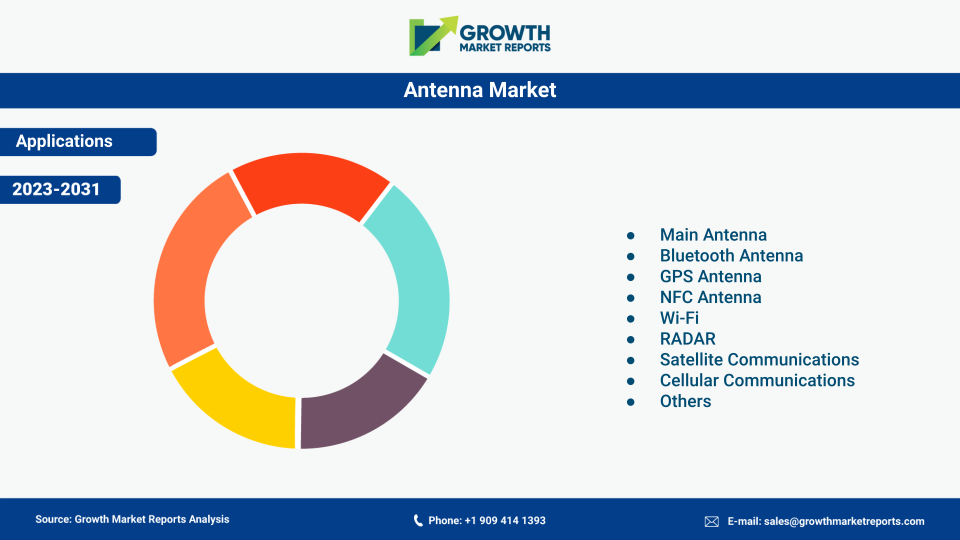
The application landscape of the antenna market is broad and diverse, encompassing automotive, consumer electronics, healthcare, aerospace and defense, telecommunication, industrial, and other sectors. In the automotive sector, antennas are integral to advanced driver-assistance systems (ADAS), vehicle-to-everything (V2X) communication, infotainment, and navigation systems. The increasing adoption of connected and autonomous vehicles is driving demand for high-performance antennas capable of supporting multiple communication protocols and frequency bands. Automakers are investing in innovative antenna designs to enhance vehicle connectivity, safety, and user experience, thereby fueling market growth in this segment.

Consumer electronics represent one of the largest and fastest-growing application segments for antennas. The proliferation of smartphones, tablets, wearable devices, smart TVs, and home automation systems is creating substantial demand for compact, multi-functional antennas. Manufacturers are focusing on integrating advanced antenna solutions that support Wi-Fi, Bluetooth, NFC, and cellular connectivity within increasingly smaller form factors. The trend towards smart homes and IoT-enabled devices is further amplifying the need for reliable and efficient antennas, as consumers seek seamless connectivity and enhanced device interoperability.

The healthcare sector is emerging as a significant application area for antennas, driven by the adoption of telemedicine, remote patient monitoring, and wireless medical devices. Antennas play a crucial role in enabling real-time data transmission, remote diagnostics, and wireless imaging, thereby improving patient outcomes and operational efficiency. The COVID-19 pandemic has accelerated the digital transformation of healthcare, with hospitals and clinics increasingly relying on wireless communication solutions. As healthcare providers continue to embrace digital health technologies, the demand for specialized medical antennas is expected to grow steadily.

Aerospace and defense applications demand highly specialized antennas capable of withstanding extreme conditions and delivering reliable performance in mission-critical scenarios. These include radar systems, satellite communications, electronic warfare, and unmanned aerial vehicles (UAVs). The emphasis on defense modernization, space exploration, and secure communication networks is driving investments in advanced antenna technologies. Similarly, the telecommunication sector is a major consumer of antennas, particularly with the rollout of 5G networks and the expansion of fiber-to-the-home (FTTH) and wireless broadband services. Industrial applications, including factory automation, asset tracking, and wireless sensor networks, are also contributing to the growing demand for robust and versatile antenna solutions.

Frequency Range Analysis

The antenna market is segmented by frequency range into HF/VHF/UHF, microwave, and millimeter wave bands, each catering to distinct sets of applications and performance requirements. HF (High Frequency), VHF (Very High Frequency), and UHF (Ultra High Frequency) antennas are widely used in broadcasting, marine, aviation, and public safety communications. These frequency bands offer long-range coverage and are suitable for both fixed and mobile communication systems. The enduring relevance of HF/VHF/UHF antennas is underscored by their extensive deployment in radio, television, and emergency communication networks worldwide.

Microwave antennas operate in the frequency range of 1 GHz to 30 GHz and are essential for high-capacity point-to-point communication links, satellite communications, radar systems, and wireless backhaul. The growing demand for high-speed internet, mobile data, and satellite-based services is driving the adoption of microwave antennas in telecom, defense, and broadcasting sectors. The ability of microwave antennas to support high data rates, low latency, and long-distance transmission makes them indispensable for modern communication infrastructure. Ongoing advancements in microwave antenna design, such as increased bandwidth and compact form factors, are further enhancing their market prospects.

Millimeter wave antennas, operating in the 30 GHz to 300 GHz frequency range, are gaining prominence with the advent of 5G and beyond-5G (B5G) technologies. These antennas enable ultra-high-speed data transmission, low latency, and massive network capacity, making them ideal for next-generation mobile networks, automotive radar, and high-resolution imaging systems. The deployment of millimeter wave antennas is expanding rapidly, particularly in urban areas where spectrum congestion and capacity constraints are significant challenges. The integration of millimeter wave technology into consumer electronics, automotive, and industrial applications is opening new frontiers for innovation and market growth.

The choice of frequency range is a critical determinant of antenna performance, influencing factors such as coverage, bandwidth, and interference susceptibility. Manufacturers are increasingly offering multi-band and wideband antenna solutions to address the diverse needs of modern communication systems. The ongoing spectrum allocation and regulatory developments, particularly in the context of 5G and IoT, are shaping the frequency landscape and influencing market dynamics. As wireless communication continues to evolve, the demand for antennas capable of operating across multiple frequency bands is expected to rise, driving further innovation and market expansion.

Opportunities & Threats

The antenna market presents a wealth of opportunities driven by the rapid adoption of emerging technologies and the expanding scope of wireless communication. The rollout of 5G networks worldwide is a major opportunity, as it necessitates the deployment of advanced antenna systems, including massive MIMO, beamforming, and millimeter wave antennas. The proliferation of IoT devices across smart cities, industrial automation, and healthcare is also creating new avenues for antenna manufacturers. Furthermore, the increasing focus on autonomous vehicles, UAVs, and space exploration is generating demand for specialized antennas with enhanced performance and reliability. The integration of artificial intelligence and machine learning into antenna design and optimization is another promising area, enabling real-time adaptation and improved network efficiency.

The ongoing digital transformation across industries is opening up additional opportunities for the antenna market. The surge in demand for high-speed broadband, remote working, and online education is driving investments in telecom infrastructure and wireless connectivity solutions. The development of smart home and smart building technologies is further boosting the need for innovative antenna solutions that support seamless device interoperability and connectivity. Additionally, advancements in materials science, such as the use of metamaterials and flexible substrates, are enabling the creation of next-generation antennas with superior performance, durability, and form factor versatility. These trends are expected to create substantial growth opportunities for market participants over the forecast period.

Despite the promising outlook, the antenna market faces several challenges and restraining factors. One of the primary threats is the intense competition among manufacturers, which puts pressure on pricing and profit margins. The rapid pace of technological change also poses a challenge, as companies must continuously invest in research and development to stay ahead of the curve. Regulatory constraints related to spectrum allocation and electromagnetic interference can impede market growth, particularly in regions with stringent compliance requirements. Additionally, the complexity of integrating advanced antenna systems into existing infrastructure and devices can increase development costs and time-to-market, potentially limiting adoption in certain segments. Addressing these challenges will be crucial for sustaining long-term growth and competitiveness in the global antenna market.

Regional Outlook

Asia Pacific remains the largest and most dynamic market for antennas, accounting for approximately 38% of the global market share in 2024, with a market size of USD 8.7 billion. The regionÂ’s growth is driven by rapid industrialization, expanding telecom infrastructure, and the presence of leading consumer electronics manufacturers in countries such as China, Japan, South Korea, and India. The ongoing rollout of 5G networks, coupled with rising investments in smart cities and IoT projects, is fueling demand for advanced antenna solutions. Asia Pacific is expected to maintain a robust growth trajectory, with a projected CAGR of 8.1% through 2033, as governments and private sector players continue to prioritize digital transformation and connectivity.

North America is another key market, with a 2024 market size of USD 6.1 billion, driven by strong investments in 5G infrastructure, automotive innovation, and defense modernization. The United States, in particular, is at the forefront of adopting smart antennas and millimeter wave technologies for next-generation wireless communication. The regionÂ’s mature telecom sector, coupled with a high concentration of technology companies and research institutions, provides a conducive environment for innovation and market expansion. North America is expected to witness steady growth over the forecast period, supported by ongoing advancements in wireless technology and increasing demand for connected devices.

Europe holds a significant share of the global antenna market, with a 2024 market size of USD 5.2 billion, driven by robust investments in automotive, aerospace, and industrial automation sectors. Countries such as Germany, the United Kingdom, and France are leading the adoption of advanced antenna technologies for smart transportation, defense communication, and Industry 4.0 initiatives. The European UnionÂ’s focus on digital infrastructure and cross-border connectivity is further enhancing market prospects. Meanwhile, Latin America and the Middle East & Africa are gradually emerging as promising markets, with a combined market size of USD 2.8 billion in 2024. These regions are benefiting from increasing digitalization, infrastructure development, and rising demand for wireless communication solutions, although growth rates may vary depending on local economic and regulatory conditions.

Antenna Market Statistics

Competitor Outlook

The global antenna market is characterized by intense competition, with a mix of established players and emerging companies striving for market share through innovation, strategic partnerships, and geographic expansion. Leading companies are investing heavily in research and development to introduce advanced antenna solutions that cater to the evolving needs of various industries. The competitive landscape is further shaped by mergers and acquisitions, collaborations with technology providers, and the pursuit of intellectual property rights to strengthen market positioning. Companies are also focusing on expanding their product portfolios to address the growing demand for multi-band, wideband, and smart antenna systems across diverse applications.

Key players in the antenna market are leveraging their technical expertise and global presence to capitalize on emerging opportunities, particularly in 5G, IoT, and automotive segments. The ability to deliver customized solutions, rapid prototyping, and efficient supply chain management are critical success factors in this highly dynamic market. In addition, companies are increasingly adopting sustainable manufacturing practices and eco-friendly materials to align with regulatory requirements and consumer preferences. The rise of start-ups and niche players specializing in cutting-edge technologies, such as metamaterial antennas and AI-driven optimization, is adding a new dimension to the competitive landscape, fostering innovation and market dynamism.

Major companies in the antenna market include TE Connectivity, Laird Connectivity, Cobham Limited, Amphenol Corporation, Molex LLC, Antenova Ltd, CommScope Holding Company, Inc., and Samsung Electro-Mechanics. TE Connectivity is renowned for its extensive range of antenna solutions catering to automotive, industrial, and consumer electronics applications. Laird Connectivity is a leading provider of wireless modules and antenna systems, with a strong focus on IoT and industrial automation. Cobham Limited specializes in advanced antenna technologies for aerospace, defense, and satellite communication, while Amphenol Corporation offers a broad portfolio of antennas for telecom, automotive, and medical sectors.

Molex LLC and Antenova Ltd are prominent players in the consumer electronics and IoT antenna segments, known for their innovative designs and integration capabilities. CommScope Holding Company, Inc. is a global leader in network infrastructure solutions, including advanced antenna systems for wireless communication and broadband networks. Samsung Electro-Mechanics is at the forefront of developing compact, high-performance antennas for smartphones, tablets, and wearable devices. These companies are continually investing in R&D, strategic alliances, and global expansion to maintain their competitive edge and address the evolving demands of the antenna market.

Key Players

  • Laird Connectivity
  • TE Connectivity
  • Amphenol Corporation
  • Honeywell International Inc.
  • CommScope Holding Company, Inc.
  • Cobham Limited
  • Harada Industry Co., Ltd.
  • Antenna Company
  • Molex LLC
  • Airgain, Inc.
  • Shenzhen Sunway Communication Co., Ltd.
  • Taoglas Group Holdings Limited
  • Pulse Electronics (Yageo Corporation)
  • Kathrein SE
  • Rohde & Schwarz GmbH & Co KG
  • HUBER+SUHNER AG
  • Qorvo, Inc.
  • Pasternack Enterprises, Inc.
  • MTI Wireless Edge Ltd.
  • Galtronics Corporation Ltd.
Antenna Market Overview

Segments

The Antenna market has been segmented on the basis of

Type

  • Wire Antenna
  • Aperture Antenna
  • Microstrip Antenna
  • Array Antenna
  • Reflector Antenna
  • Others

Technology

  • Smart Antenna
  • Conventional Antenna

Application

  • Automotive
  • Consumer Electronics
  • Healthcare
  • Aerospace & Defense
  • Telecommunication
  • Industrial
  • Others

Frequency Range

  • HF/VHF/UHF
  • Microwave
  • Millimeter Wave

Competitive Landscape

Some of the leading manufacturers in the market are TE Connectivity Ltd, Fractus Antennas SL, Antcom Corporation, Pulse Electronics Corporation, Circomm Technology Corp Cobham PLC, Murata Manufacturing Co. Ltd, Motorola Solutions Inc., Comrod Communication ASA, and Viasat Inc.


Global Antenna Market Key Players

Frequently Asked Questions

Yes, the Antenna Market Research Report 2033 offers customization options to meet specific business or research requirements.

Opportunities include the rollout of 5G, IoT proliferation, autonomous vehicles, and AI-driven antenna optimization. Threats involve intense competition, rapid technological change, regulatory constraints, and integration complexity.

Major players include TE Connectivity, Laird Connectivity, Amphenol Corporation, Honeywell International Inc., CommScope, Cobham Limited, Molex LLC, Antenova Ltd, Samsung Electro-Mechanics, and others.

The market covers HF/VHF/UHF, microwave (1 GHz to 30 GHz), and millimeter wave (30 GHz to 300 GHz) antennas, supporting diverse applications from broadcasting and public safety to 5G and satellite communications.

Antennas are widely used in automotive (ADAS, V2X, infotainment), consumer electronics (smartphones, wearables, smart TVs), healthcare (telemedicine, remote monitoring), aerospace & defense (radar, satellite), telecommunications (5G, broadband), and industrial automation.

The market is segmented into conventional antennas (such as wire, aperture, and reflector antennas) and smart antennas, which use advanced signal processing for dynamic adaptation, beamforming, and interference mitigation.

The antenna market includes wire antennas, aperture antennas, microstrip (patch) antennas, array antennas, reflector antennas, and others, each catering to specific applications and performance requirements.

Asia Pacific is the dominant region, driven by rapid industrialization, expanding telecom infrastructure, and leading electronics manufacturers. North America and Europe also hold significant shares due to strong 5G investments, automotive innovation, and defense modernization.

Key growth drivers include advancements in wireless communication technologies, the proliferation of IoT devices, increased investments in 5G infrastructure, and rising demand across industries such as automotive, consumer electronics, and healthcare.

The global antenna market reached USD 22.8 billion in 2024 and is projected to grow at a CAGR of 7.2% from 2025 to 2033, reaching USD 42.6 billion by 2033.

Table Of Content

Chapter 1 Executive Summary
Chapter 2 Assumptions and Acronyms Used
Chapter 3 Research Methodology
Chapter 4 Antenna Market Overview
   4.1 Introduction
      4.1.1 Market Taxonomy
      4.1.2 Market Definition
      4.1.3 Macro-Economic Factors Impacting the Market Growth
   4.2 Antenna Market Dynamics
      4.2.1 Market Drivers
      4.2.2 Market Restraints
      4.2.3 Market Opportunity
   4.3 Antenna Market - Supply Chain Analysis
      4.3.1 List of Key Suppliers
      4.3.2 List of Key Distributors
      4.3.3 List of Key Consumers
   4.4 Key Forces Shaping the Antenna Market
      4.4.1 Bargaining Power of Suppliers
      4.4.2 Bargaining Power of Buyers
      4.4.3 Threat of Substitution
      4.4.4 Threat of New Entrants
      4.4.5 Competitive Rivalry
   4.5 Global Antenna Market Size & Forecast, 2023-2032
      4.5.1 Antenna Market Size and Y-o-Y Growth
      4.5.2 Antenna Market Absolute $ Opportunity

Chapter 5 Global Antenna Market Analysis and Forecast By Type
   5.1 Introduction
      5.1.1 Key Market Trends & Growth Opportunities By Type
      5.1.2 Basis Point Share (BPS) Analysis By Type
      5.1.3 Absolute $ Opportunity Assessment By Type
   5.2 Antenna Market Size Forecast By Type
      5.2.1 Wire Antenna
      5.2.2 Aperture Antenna
      5.2.3 Microstrip Antenna
      5.2.4 Array Antenna
      5.2.5 Reflector Antenna
      5.2.6 Others
   5.3 Market Attractiveness Analysis By Type

Chapter 6 Global Antenna Market Analysis and Forecast By Technology
   6.1 Introduction
      6.1.1 Key Market Trends & Growth Opportunities By Technology
      6.1.2 Basis Point Share (BPS) Analysis By Technology
      6.1.3 Absolute $ Opportunity Assessment By Technology
   6.2 Antenna Market Size Forecast By Technology
      6.2.1 Smart Antenna
      6.2.2 Conventional Antenna
   6.3 Market Attractiveness Analysis By Technology

Chapter 7 Global Antenna Market Analysis and Forecast By Application
   7.1 Introduction
      7.1.1 Key Market Trends & Growth Opportunities By Application
      7.1.2 Basis Point Share (BPS) Analysis By Application
      7.1.3 Absolute $ Opportunity Assessment By Application
   7.2 Antenna Market Size Forecast By Application
      7.2.1 Automotive
      7.2.2 Consumer Electronics
      7.2.3 Healthcare
      7.2.4 Aerospace & Defense
      7.2.5 Telecommunication
      7.2.6 Industrial
      7.2.7 Others
   7.3 Market Attractiveness Analysis By Application

Chapter 8 Global Antenna Market Analysis and Forecast By Frequency Range
   8.1 Introduction
      8.1.1 Key Market Trends & Growth Opportunities By Frequency Range
      8.1.2 Basis Point Share (BPS) Analysis By Frequency Range
      8.1.3 Absolute $ Opportunity Assessment By Frequency Range
   8.2 Antenna Market Size Forecast By Frequency Range
      8.2.1 HF/VHF/UHF
      8.2.2 Microwave
      8.2.3 Millimeter Wave
   8.3 Market Attractiveness Analysis By Frequency Range

Chapter 9 Global Antenna Market Analysis and Forecast by Region
   9.1 Introduction
      9.1.1 Key Market Trends & Growth Opportunities By Region
      9.1.2 Basis Point Share (BPS) Analysis By Region
      9.1.3 Absolute $ Opportunity Assessment By Region
   9.2 Antenna Market Size Forecast By Region
      9.2.1 North America
      9.2.2 Europe
      9.2.3 Asia Pacific
      9.2.4 Latin America
      9.2.5 Middle East & Africa (MEA)
   9.3 Market Attractiveness Analysis By Region

Chapter 10 Coronavirus Disease (COVID-19) Impact 
   10.1 Introduction 
   10.2 Current & Future Impact Analysis 
   10.3 Economic Impact Analysis 
   10.4 Government Policies 
   10.5 Investment Scenario

Chapter 11 North America Antenna Analysis and Forecast
   11.1 Introduction
   11.2 North America Antenna Market Size Forecast by Country
      11.2.1 U.S.
      11.2.2 Canada
   11.3 Basis Point Share (BPS) Analysis by Country
   11.4 Absolute $ Opportunity Assessment by Country
   11.5 Market Attractiveness Analysis by Country
   11.6 North America Antenna Market Size Forecast By Type
      11.6.1 Wire Antenna
      11.6.2 Aperture Antenna
      11.6.3 Microstrip Antenna
      11.6.4 Array Antenna
      11.6.5 Reflector Antenna
      11.6.6 Others
   11.7 Basis Point Share (BPS) Analysis By Type 
   11.8 Absolute $ Opportunity Assessment By Type 
   11.9 Market Attractiveness Analysis By Type
   11.10 North America Antenna Market Size Forecast By Technology
      11.10.1 Smart Antenna
      11.10.2 Conventional Antenna
   11.11 Basis Point Share (BPS) Analysis By Technology 
   11.12 Absolute $ Opportunity Assessment By Technology 
   11.13 Market Attractiveness Analysis By Technology
   11.14 North America Antenna Market Size Forecast By Application
      11.14.1 Automotive
      11.14.2 Consumer Electronics
      11.14.3 Healthcare
      11.14.4 Aerospace & Defense
      11.14.5 Telecommunication
      11.14.6 Industrial
      11.14.7 Others
   11.15 Basis Point Share (BPS) Analysis By Application 
   11.16 Absolute $ Opportunity Assessment By Application 
   11.17 Market Attractiveness Analysis By Application
   11.18 North America Antenna Market Size Forecast By Frequency Range
      11.18.1 HF/VHF/UHF
      11.18.2 Microwave
      11.18.3 Millimeter Wave
   11.19 Basis Point Share (BPS) Analysis By Frequency Range 
   11.20 Absolute $ Opportunity Assessment By Frequency Range 
   11.21 Market Attractiveness Analysis By Frequency Range

Chapter 12 Europe Antenna Analysis and Forecast
   12.1 Introduction
   12.2 Europe Antenna Market Size Forecast by Country
      12.2.1 Germany
      12.2.2 France
      12.2.3 Italy
      12.2.4 U.K.
      12.2.5 Spain
      12.2.6 Russia
      12.2.7 Rest of Europe
   12.3 Basis Point Share (BPS) Analysis by Country
   12.4 Absolute $ Opportunity Assessment by Country
   12.5 Market Attractiveness Analysis by Country
   12.6 Europe Antenna Market Size Forecast By Type
      12.6.1 Wire Antenna
      12.6.2 Aperture Antenna
      12.6.3 Microstrip Antenna
      12.6.4 Array Antenna
      12.6.5 Reflector Antenna
      12.6.6 Others
   12.7 Basis Point Share (BPS) Analysis By Type 
   12.8 Absolute $ Opportunity Assessment By Type 
   12.9 Market Attractiveness Analysis By Type
   12.10 Europe Antenna Market Size Forecast By Technology
      12.10.1 Smart Antenna
      12.10.2 Conventional Antenna
   12.11 Basis Point Share (BPS) Analysis By Technology 
   12.12 Absolute $ Opportunity Assessment By Technology 
   12.13 Market Attractiveness Analysis By Technology
   12.14 Europe Antenna Market Size Forecast By Application
      12.14.1 Automotive
      12.14.2 Consumer Electronics
      12.14.3 Healthcare
      12.14.4 Aerospace & Defense
      12.14.5 Telecommunication
      12.14.6 Industrial
      12.14.7 Others
   12.15 Basis Point Share (BPS) Analysis By Application 
   12.16 Absolute $ Opportunity Assessment By Application 
   12.17 Market Attractiveness Analysis By Application
   12.18 Europe Antenna Market Size Forecast By Frequency Range
      12.18.1 HF/VHF/UHF
      12.18.2 Microwave
      12.18.3 Millimeter Wave
   12.19 Basis Point Share (BPS) Analysis By Frequency Range 
   12.20 Absolute $ Opportunity Assessment By Frequency Range 
   12.21 Market Attractiveness Analysis By Frequency Range

Chapter 13 Asia Pacific Antenna Analysis and Forecast
   13.1 Introduction
   13.2 Asia Pacific Antenna Market Size Forecast by Country
      13.2.1 China
      13.2.2 Japan
      13.2.3 South Korea
      13.2.4 India
      13.2.5 Australia
      13.2.6 South East Asia (SEA)
      13.2.7 Rest of Asia Pacific (APAC)
   13.3 Basis Point Share (BPS) Analysis by Country
   13.4 Absolute $ Opportunity Assessment by Country
   13.5 Market Attractiveness Analysis by Country
   13.6 Asia Pacific Antenna Market Size Forecast By Type
      13.6.1 Wire Antenna
      13.6.2 Aperture Antenna
      13.6.3 Microstrip Antenna
      13.6.4 Array Antenna
      13.6.5 Reflector Antenna
      13.6.6 Others
   13.7 Basis Point Share (BPS) Analysis By Type 
   13.8 Absolute $ Opportunity Assessment By Type 
   13.9 Market Attractiveness Analysis By Type
   13.10 Asia Pacific Antenna Market Size Forecast By Technology
      13.10.1 Smart Antenna
      13.10.2 Conventional Antenna
   13.11 Basis Point Share (BPS) Analysis By Technology 
   13.12 Absolute $ Opportunity Assessment By Technology 
   13.13 Market Attractiveness Analysis By Technology
   13.14 Asia Pacific Antenna Market Size Forecast By Application
      13.14.1 Automotive
      13.14.2 Consumer Electronics
      13.14.3 Healthcare
      13.14.4 Aerospace & Defense
      13.14.5 Telecommunication
      13.14.6 Industrial
      13.14.7 Others
   13.15 Basis Point Share (BPS) Analysis By Application 
   13.16 Absolute $ Opportunity Assessment By Application 
   13.17 Market Attractiveness Analysis By Application
   13.18 Asia Pacific Antenna Market Size Forecast By Frequency Range
      13.18.1 HF/VHF/UHF
      13.18.2 Microwave
      13.18.3 Millimeter Wave
   13.19 Basis Point Share (BPS) Analysis By Frequency Range 
   13.20 Absolute $ Opportunity Assessment By Frequency Range 
   13.21 Market Attractiveness Analysis By Frequency Range

Chapter 14 Latin America Antenna Analysis and Forecast
   14.1 Introduction
   14.2 Latin America Antenna Market Size Forecast by Country
      14.2.1 Brazil
      14.2.2 Mexico
      14.2.3 Rest of Latin America (LATAM)
   14.3 Basis Point Share (BPS) Analysis by Country
   14.4 Absolute $ Opportunity Assessment by Country
   14.5 Market Attractiveness Analysis by Country
   14.6 Latin America Antenna Market Size Forecast By Type
      14.6.1 Wire Antenna
      14.6.2 Aperture Antenna
      14.6.3 Microstrip Antenna
      14.6.4 Array Antenna
      14.6.5 Reflector Antenna
      14.6.6 Others
   14.7 Basis Point Share (BPS) Analysis By Type 
   14.8 Absolute $ Opportunity Assessment By Type 
   14.9 Market Attractiveness Analysis By Type
   14.10 Latin America Antenna Market Size Forecast By Technology
      14.10.1 Smart Antenna
      14.10.2 Conventional Antenna
   14.11 Basis Point Share (BPS) Analysis By Technology 
   14.12 Absolute $ Opportunity Assessment By Technology 
   14.13 Market Attractiveness Analysis By Technology
   14.14 Latin America Antenna Market Size Forecast By Application
      14.14.1 Automotive
      14.14.2 Consumer Electronics
      14.14.3 Healthcare
      14.14.4 Aerospace & Defense
      14.14.5 Telecommunication
      14.14.6 Industrial
      14.14.7 Others
   14.15 Basis Point Share (BPS) Analysis By Application 
   14.16 Absolute $ Opportunity Assessment By Application 
   14.17 Market Attractiveness Analysis By Application
   14.18 Latin America Antenna Market Size Forecast By Frequency Range
      14.18.1 HF/VHF/UHF
      14.18.2 Microwave
      14.18.3 Millimeter Wave
   14.19 Basis Point Share (BPS) Analysis By Frequency Range 
   14.20 Absolute $ Opportunity Assessment By Frequency Range 
   14.21 Market Attractiveness Analysis By Frequency Range

Chapter 15 Middle East & Africa (MEA) Antenna Analysis and Forecast
   15.1 Introduction
   15.2 Middle East & Africa (MEA) Antenna Market Size Forecast by Country
      15.2.1 Saudi Arabia
      15.2.2 South Africa
      15.2.3 UAE
      15.2.4 Rest of Middle East & Africa (MEA)
   15.3 Basis Point Share (BPS) Analysis by Country
   15.4 Absolute $ Opportunity Assessment by Country
   15.5 Market Attractiveness Analysis by Country
   15.6 Middle East & Africa (MEA) Antenna Market Size Forecast By Type
      15.6.1 Wire Antenna
      15.6.2 Aperture Antenna
      15.6.3 Microstrip Antenna
      15.6.4 Array Antenna
      15.6.5 Reflector Antenna
      15.6.6 Others
   15.7 Basis Point Share (BPS) Analysis By Type 
   15.8 Absolute $ Opportunity Assessment By Type 
   15.9 Market Attractiveness Analysis By Type
   15.10 Middle East & Africa (MEA) Antenna Market Size Forecast By Technology
      15.10.1 Smart Antenna
      15.10.2 Conventional Antenna
   15.11 Basis Point Share (BPS) Analysis By Technology 
   15.12 Absolute $ Opportunity Assessment By Technology 
   15.13 Market Attractiveness Analysis By Technology
   15.14 Middle East & Africa (MEA) Antenna Market Size Forecast By Application
      15.14.1 Automotive
      15.14.2 Consumer Electronics
      15.14.3 Healthcare
      15.14.4 Aerospace & Defense
      15.14.5 Telecommunication
      15.14.6 Industrial
      15.14.7 Others
   15.15 Basis Point Share (BPS) Analysis By Application 
   15.16 Absolute $ Opportunity Assessment By Application 
   15.17 Market Attractiveness Analysis By Application
   15.18 Middle East & Africa (MEA) Antenna Market Size Forecast By Frequency Range
      15.18.1 HF/VHF/UHF
      15.18.2 Microwave
      15.18.3 Millimeter Wave
   15.19 Basis Point Share (BPS) Analysis By Frequency Range 
   15.20 Absolute $ Opportunity Assessment By Frequency Range 
   15.21 Market Attractiveness Analysis By Frequency Range

Chapter 16 Competition Landscape 
   16.1 Antenna Market: Competitive Dashboard
   16.2 Global Antenna Market: Market Share Analysis, 2023
   16.3 Company Profiles (Details – Overview, Financials, Developments, Strategy) 
      16.3.1 Laird Connectivity
TE Connectivity
Amphenol Corporation
Honeywell International Inc.
CommScope Holding Company, Inc.
Cobham Limited
Harada Industry Co., Ltd.
Antenna Company
Molex LLC
Airgain, Inc.
Shenzhen Sunway Communication Co., Ltd.
Taoglas Group Holdings Limited
Pulse Electronics (Yageo Corporation)
Kathrein SE
Rohde & Schwarz GmbH & Co KG
HUBER+SUHNER AG
Qorvo, Inc.
Pasternack Enterprises, Inc.
MTI Wireless Edge Ltd.
Galtronics Corporation Ltd.

Methodology

Our Clients

Honda Motor Co. Ltd.
Microsoft
Siemens Healthcare
Dassault Aviation
sinopec
FedEx Logistics
The John Holland Group
Pfizer