Segments - by Component (Hardware, Software, Services), by Deployment Mode (On-Premises, Cloud-Based), by Organization Size (Small and Medium Enterprises, Large Enterprises), by End-User (BFSI, IT and Telecommunications, Healthcare, Government, Retail, Manufacturing, Others)
This report is updated with the latest market data and insights as of June 2026. Base year: 2025 | Forecast period: 2026-2034
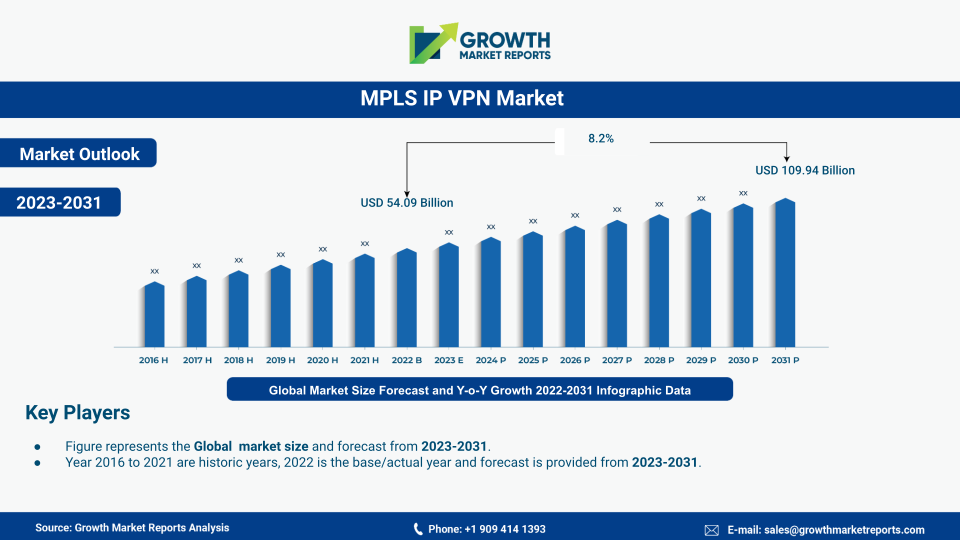
According to our latest research, the global MPLS IP VPN market size reached USD 40.5 billion in 2025, reflecting robust demand from enterprises seeking secure, scalable, and reliable connectivity solutions. The market is expected to grow at a CAGR of 7.2% during the forecast period, reaching a projected value of USD 76.8 billion by 2034. This growth is primarily driven by the increasing adoption of cloud-based services, digital transformation initiatives across industries, and the rising need for secure and efficient data transmission in an era of heightened cybersecurity threats. As per our latest research, the MPLS IP VPN market continues to evolve, underpinned by significant investments in network infrastructure and the proliferation of remote work and hybrid IT environments. Organizations evaluating their wide-area network strategies are also exploring adjacent solutions such as MPLS services to complement their core IP VPN deployments.
One of the most significant growth factors for the MPLS IP VPN market is the ongoing digital transformation across various sectors. Enterprises are increasingly relying on cloud-based applications and distributed workforces, which necessitate robust and secure connectivity to ensure seamless business operations. MPLS IP VPN solutions offer dedicated, private, and highly secure communication channels that cater to these requirements, making them a preferred choice for organizations with complex networking needs. Furthermore, the rise in cyberattacks and data breaches has compelled businesses to adopt network solutions that provide enhanced security, reliability, and performance, all of which are hallmarks of MPLS IP VPN technology. The market is also being propelled by the need for compliance with stringent regulatory standards, especially in industries like BFSI and healthcare, where secure data transmission is paramount.
Another key driver for the growth of the MPLS IP VPN market is the increasing demand for bandwidth and the proliferation of IoT devices. As organizations expand their digital footprint and integrate more connected devices into their operations, the volume of data being transmitted across networks has surged exponentially. MPLS IP VPNs are uniquely positioned to address these challenges by offering high-performance, scalable, and reliable networking solutions that can handle large volumes of traffic without compromising on security or quality of service. Additionally, the flexibility of MPLS IP VPNs in supporting multi-site connectivity and prioritizing mission-critical applications has further cemented their role as a foundational technology for modern enterprise networking. Service providers managing complex routing environments are increasingly turning to Segment Routing Traffic Engineering controllers to automate and optimize path selection across MPLS backbones.
The rapid shift towards remote and hybrid work models has also played a pivotal role in shaping the MPLS IP VPN market landscape. Organizations are increasingly seeking network solutions that can provide secure and seamless access to corporate resources for employees working from diverse locations. MPLS IP VPNs enable businesses to extend their secure network perimeter beyond traditional office boundaries, ensuring that remote users can access applications and data with the same level of security and performance as on-premises users. This trend is expected to continue as businesses prioritize network agility, flexibility, and security in 2025 and beyond, further fueling the adoption of MPLS IP VPN solutions across various industries.
As organizations continue to adapt to the evolving digital landscape, the role of Enterprise VPN solutions has become increasingly vital. Enterprise VPNs provide a secure and private network connection over the internet, allowing businesses to safeguard their data and communications from potential cyber threats. With the rise of remote work and the need for secure access to corporate resources, Enterprise VPNs have become a cornerstone for businesses aiming to maintain operational continuity and data integrity. These solutions not only enhance security but also offer flexibility and scalability, enabling enterprises to efficiently manage their network infrastructure while supporting a distributed workforce. As the demand for robust security measures grows, the integration of Enterprise VPNs with existing MPLS IP VPN infrastructures is becoming a strategic priority for many organizations.
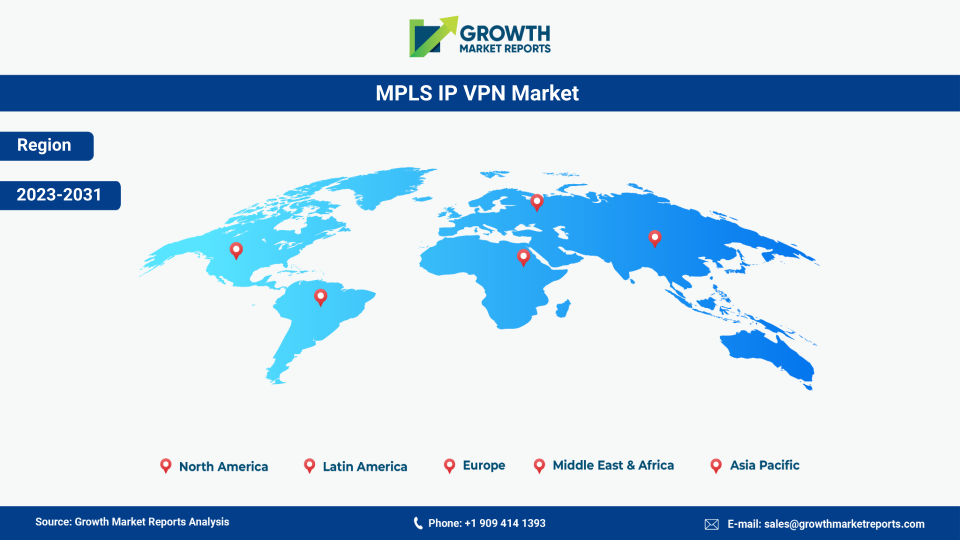
From a regional perspective, North America currently dominates the MPLS IP VPN market, accounting for approximately 37.8% of global revenues in 2025. The region's leadership can be attributed to the presence of large enterprises, advanced IT infrastructure, and a high adoption rate of cloud-based services. Europe follows closely, driven by stringent data protection regulations and a strong emphasis on network security. Meanwhile, the Asia Pacific region is witnessing the fastest growth, propelled by rapid digitalization, increasing investments in network infrastructure, and the expansion of multinational corporations in emerging markets. Latin America and the Middle East & Africa are also experiencing steady growth, albeit at a comparatively slower pace, as organizations in these regions gradually embrace digital transformation and modern networking solutions.
The MPLS IP VPN market is segmented by component into hardware, software, and services, each playing a critical role in the overall ecosystem. The hardware segment encompasses routers, switches, and other physical devices essential for establishing and maintaining MPLS-based networks. These components form the backbone of MPLS IP VPN infrastructure, ensuring reliable data transmission and high network availability. As organizations upgrade their network infrastructure to support higher bandwidth and advanced security features, demand for next-generation hardware continues to grow. Hardware vendors are also integrating advanced functionalities such as deep packet inspection and automated failover to enhance the robustness and resilience of MPLS networks, thereby driving further adoption in this segment. Vendors of IP MPLS equipment are investing heavily in platforms that support both legacy MPLS and next-generation segment routing architectures simultaneously.
The software segment is witnessing significant growth, owing to the increasing adoption of network virtualization and software-defined networking (SDN) technologies. MPLS IP VPN software solutions enable organizations to manage, monitor, and optimize their network infrastructure with greater flexibility and efficiency. Software-defined MPLS solutions offer enhanced scalability, centralized control, and simplified network management, making them particularly attractive for large enterprises and service providers. The integration of artificial intelligence (AI) and machine learning (ML) capabilities into MPLS management software is also gaining traction, enabling predictive analytics, automated troubleshooting, and proactive network optimization. This trend is expected to accelerate as organizations seek to reduce operational complexity and improve network performance through 2034.
Services represent the largest component of the MPLS IP VPN market in 2025, encompassing consulting, integration, support, and managed services. As businesses increasingly outsource network management to specialized service providers, the demand for comprehensive MPLS IP VPN services is on the rise. Managed service providers (MSPs) offer end-to-end solutions, from network design and implementation to ongoing maintenance and support, allowing organizations to focus on their core business activities. The growing complexity of enterprise networks, coupled with the need for round-the-clock monitoring and rapid incident response, is driving the adoption of managed MPLS connectivity across industries. Additionally, service providers are differentiating themselves by offering value-added services such as network security, compliance management, and performance optimization.
The interplay between hardware, software, and services is shaping the evolution of the MPLS IP VPN market. Organizations are increasingly seeking integrated solutions that combine best-in-class hardware with advanced software capabilities and expert services. Vendors are responding by offering bundled solutions that address the end-to-end networking needs of enterprises, from infrastructure deployment to ongoing management and optimization. This holistic approach not only simplifies procurement and deployment but also ensures seamless interoperability and maximized return on investment for customers. As the market continues to mature through 2034, the convergence of hardware, software, and services will remain a key driver of innovation and growth in the MPLS IP VPN ecosystem.
| Attributes | Details |
| Report Title | MPLS IP VPN Market Research Report 2034 |
| By Component | Hardware, Software, Services |
| By Deployment Mode | On-Premises, Cloud-Based |
| By Organization Size | Small and Medium Enterprises, Large Enterprises |
| By End-User | BFSI, IT and Telecommunications, Healthcare, Government, Retail, Manufacturing, Others |
| Regions Covered | North America, Europe, APAC, Latin America, MEA |
| Base Year | 2025 |
| Historic Data | 2019-2024 |
| Forecast Period | 2026-2034 |
| Number of Pages | 278 |
| Number of Tables & Figures | 362 |
| Customization Available | Yes, the report can be customized as per your need. |
Deployment mode is a critical consideration in the MPLS IP VPN market, with organizations choosing between on-premises and cloud-based solutions based on their unique requirements. On-premises deployment remains a preferred option for enterprises with stringent security, compliance, and performance needs. By maintaining full control over their network infrastructure, organizations can tailor their MPLS IP VPN solutions to meet specific operational and regulatory requirements. On-premises deployments are particularly prevalent in industries such as BFSI, healthcare, and government, where data privacy and security are paramount. However, the higher upfront costs and ongoing maintenance responsibilities associated with on-premises solutions can be a barrier for smaller organizations with limited IT resources.
Cloud-based deployment is gaining significant traction in the MPLS IP VPN market in 2025, driven by the growing adoption of cloud computing and the need for flexible, scalable networking solutions. Cloud-based MPLS IP VPNs offer several advantages, including reduced capital expenditure, simplified management, and rapid scalability to accommodate changing business needs. Organizations can leverage cloud-based solutions to connect distributed offices, remote workers, and mobile devices securely and efficiently, without the need for extensive on-premises infrastructure. The rise of hybrid and multi-cloud environments is further accelerating the shift towards cloud-based MPLS IP VPNs, as businesses seek to integrate their on-premises and cloud resources seamlessly. The growing interest in BGP VPN services platforms is also reshaping how service providers architect scalable, cloud-native virtual private network solutions for enterprise customers.
Hybrid deployment models are also emerging as a popular choice among organizations looking to balance the benefits of on-premises control with the flexibility of cloud-based solutions. By adopting a hybrid approach, businesses can optimize their network architecture to support diverse workloads, regulatory requirements, and geographic locations. Hybrid MPLS IP VPN deployments enable organizations to maintain critical applications and sensitive data on-premises, while leveraging the scalability and agility of the cloud for less sensitive workloads. This approach is particularly relevant for large enterprises with complex networking needs and global operations, as it allows them to adapt to evolving business requirements and regulatory landscapes.
The choice of deployment mode is influenced by several factors, including organizational size, industry vertical, regulatory environment, and IT maturity. Vendors are increasingly offering flexible deployment options and migration services to help organizations transition from traditional on-premises models to cloud-based or hybrid architectures. As digital transformation initiatives continue to reshape the business landscape through 2034, the demand for cloud-based and hybrid MPLS IP VPN solutions is expected to outpace on-premises deployments, driving innovation and competition in the market.
The MPLS IP VPN market serves organizations of all sizes, from small and medium enterprises (SMEs) to large enterprises, each with distinct networking needs and challenges. Large enterprises represent the largest segment of the market, driven by their complex, multi-site operations and high-volume data transmission requirements. These organizations typically require robust, scalable, and secure networking solutions to connect geographically dispersed offices, data centers, and remote workers. MPLS IP VPNs offer the performance, reliability, and security needed to support mission-critical applications and ensure seamless business continuity. Large enterprises also have the resources to invest in advanced networking technologies and managed services, further fueling demand in this segment.
Small and medium enterprises (SMEs) are increasingly recognizing the benefits of MPLS IP VPN solutions as they embark on digital transformation journeys and expand their operations in 2025. While SMEs may have more limited budgets and IT resources compared to large enterprises, they still require secure and reliable connectivity to support cloud-based applications, remote work, and customer engagement. The availability of cost-effective, scalable MPLS IP VPN solutions tailored to the needs of SMEs has lowered the barriers to adoption, enabling smaller organizations to compete more effectively in the digital economy. Vendors are responding by offering flexible pricing models, simplified deployment options, and managed services designed specifically for the SME segment.
The growing adoption of cloud-based MPLS IP VPN solutions is particularly beneficial for SMEs, as it allows them to access enterprise-grade networking capabilities without the need for significant upfront investment in hardware and infrastructure. Cloud-based solutions offer rapid deployment, easy scalability, and simplified management, making them an attractive option for resource-constrained organizations. Additionally, the rise of managed service providers has enabled SMEs to outsource network management and focus on core business activities, further driving adoption in this segment. For organizations requiring secure mobile connectivity alongside fixed MPLS links, vendors are increasingly bundling mobile VPN capabilities into unified network service packages.
As organizations of all sizes continue to embrace digital transformation and remote work through 2034, the demand for flexible, scalable, and secure networking solutions is expected to grow steadily. Vendors are increasingly offering modular, customizable MPLS IP VPN solutions that can be tailored to the unique needs of different organization sizes, ensuring that businesses of all scales can benefit from advanced networking technologies. The ability to support both large-scale, complex deployments and smaller, agile implementations will be a key differentiator for vendors in the competitive MPLS IP VPN market.
The MPLS IP VPN market caters to a diverse range of end-users, including BFSI, IT and telecommunications, healthcare, government, retail, manufacturing, and others. The BFSI sector is a major contributor to market growth in 2025, driven by the need for secure, high-performance networking solutions to support digital banking, online transactions, and regulatory compliance. MPLS IP VPNs provide the security, reliability, and scalability required to handle sensitive financial data and ensure uninterrupted service delivery. Financial institutions are also leveraging MPLS IP VPNs to connect branch offices, ATMs, and remote employees, enabling seamless communication and collaboration across the organization.
The IT and telecommunications sector is another significant end-user of MPLS IP VPN solutions, as service providers and technology companies require robust networking infrastructure to deliver high-quality services to their customers. MPLS IP VPNs enable service providers to offer managed connectivity solutions to enterprise clients, supporting a wide range of applications from voice and video to cloud computing and IoT. The growing demand for bandwidth, low latency, and secure data transmission in the IT and telecommunications sector is driving continuous innovation and investment in MPLS IP VPN technologies through the forecast period.
Healthcare organizations are increasingly adopting MPLS IP VPN solutions to support electronic health records (EHR), telemedicine, and secure communication between healthcare providers. The need for HIPAA-compliant and GDPR-aligned networking solutions, coupled with the growing volume of patient data and the rise of remote healthcare services, is fueling demand in this sector. MPLS IP VPNs offer the security, reliability, and performance required to support critical healthcare applications and ensure patient privacy and data integrity.
Government agencies and public sector organizations are also significant end-users of MPLS IP VPN solutions, as they require secure, reliable connectivity to support public services, emergency response, and inter-agency communication. The need for compliance with data protection regulations and the growing threat of cyberattacks are driving government investments in advanced networking technologies. Other end-users such as retail and manufacturing are leveraging MPLS IP VPNs to support supply chain management, point-of-sale systems, and connected manufacturing processes, further expanding the market's reach and impact through 2034.
The MPLS IP VPN market presents several compelling opportunities for growth and innovation through 2034. One of the most significant opportunities lies in the integration of MPLS IP VPN solutions with emerging technologies such as SD-WAN, AI, and IoT. By combining the strengths of MPLS with the flexibility and agility of SD-WAN, organizations can optimize network performance, reduce costs, and enhance security. AI-powered analytics and automation can further streamline network management, enabling proactive monitoring, rapid incident response, and continuous optimization. The proliferation of IoT devices and the rise of smart cities also present new opportunities for MPLS IP VPN vendors to offer secure, scalable connectivity solutions that support a wide range of applications and use cases.
Another key opportunity for the MPLS IP VPN market is the growing demand for managed services and as-a-service offerings. As organizations seek to reduce operational complexity and focus on core business activities, the demand for outsourced network management and support is on the rise. Managed service providers can capitalize on this trend by offering comprehensive MPLS IP VPN solutions that encompass network design, deployment, monitoring, and optimization. The ability to deliver value-added services such as security, compliance, and performance management will be a key differentiator in an increasingly competitive market. Additionally, the expansion of MPLS IP VPN solutions into emerging markets across Asia Pacific, Latin America, and the Middle East & Africa presents new growth opportunities for vendors and service providers looking to diversify their revenue streams.
Despite the numerous opportunities, the MPLS IP VPN market faces several challenges and threats that could impact its growth trajectory. One of the primary restraining factors is the increasing competition from alternative networking technologies such as SD-WAN and direct internet access (DIA). These technologies offer greater flexibility, cost savings, and simplified management compared to traditional MPLS solutions, making them attractive options for organizations seeking to modernize their network infrastructure. The high cost of MPLS IP VPN deployments, particularly for smaller organizations, can also be a barrier to adoption. Additionally, the complexity of managing and maintaining MPLS networks, coupled with the need for specialized skills and expertise, may deter some organizations from investing in this technology. Vendors must address these challenges by offering innovative, cost-effective solutions and robust support services to remain competitive in the evolving market landscape through 2034.
North America remains the largest regional market for MPLS IP VPN solutions, with a market size of USD 15.3 billion in 2025. The region's dominance can be attributed to the presence of large enterprises, advanced IT infrastructure, and a high adoption rate of cloud-based services. The United States is the primary contributor to market growth in North America, driven by significant investments in network infrastructure, cybersecurity, and digital transformation initiatives. The region is also home to several leading MPLS IP VPN vendors and managed service providers, further strengthening its position in the global market. North America is forecast to grow at a CAGR of 6.7% through 2034.
Europe is the second-largest regional market, with a market size of USD 11.1 billion in 2025. The region's growth is driven by stringent data protection regulations such as GDPR, and a strong emphasis on network security and compliance. Countries such as Germany, the United Kingdom, and France are leading adopters of MPLS IP VPN solutions, particularly in the BFSI, healthcare, and government sectors. The European market is expected to grow at a CAGR of 6.9% during the forecast period, supported by ongoing investments in digital infrastructure and the increasing adoption of cloud-based services.
The Asia Pacific region is experiencing the fastest growth in the MPLS IP VPN market, with a market size of USD 9.2 billion in 2025 and a projected CAGR of 9.5% through 2034. Rapid digitalization, increasing investments in network infrastructure, and the expansion of multinational corporations in emerging markets such as China, India, and Southeast Asia are driving demand for advanced networking solutions. The region's large population, growing internet penetration, and rising adoption of cloud computing are further fueling market growth. Latin America and the Middle East & Africa collectively accounted for USD 4.9 billion in 2025, with steady growth expected as organizations in these regions gradually embrace digital transformation and modern networking solutions.
The MPLS IP VPN market is characterized by intense competition and a dynamic landscape, with numerous global and regional players vying for market share in 2025. The competitive environment is shaped by ongoing technological innovation, strategic partnerships, and mergers and acquisitions aimed at expanding product portfolios and customer bases. Vendors are investing heavily in research and development to enhance the performance, security, and scalability of their MPLS IP VPN solutions, as well as to integrate emerging technologies such as SD-WAN, AI, and cloud-based management. The ability to offer comprehensive, end-to-end solutions that address the evolving needs of enterprise customers is a key differentiator in the highly competitive MPLS IP VPN market.
Leading vendors are also focusing on expanding their global footprint through strategic alliances with service providers, system integrators, and channel partners. These partnerships enable vendors to deliver integrated solutions, access new markets, and provide localized support to customers. The rise of managed service providers has further intensified competition, as MSPs offer value-added services such as network monitoring, security, and compliance management to differentiate themselves in the marketplace. Pricing pressure and the commoditization of basic MPLS services have prompted vendors to innovate and offer differentiated solutions that deliver greater value to customers through 2034.
Customer-centricity is becoming increasingly important in the MPLS IP VPN market, with vendors placing a strong emphasis on delivering exceptional customer experiences, responsive support, and tailored solutions. The ability to understand and address the unique networking requirements of different industries, organization sizes, and geographic regions is critical to winning and retaining customers in a crowded market. Vendors are also leveraging digital channels, self-service portals, and AI-powered support tools to enhance customer engagement and streamline service delivery.
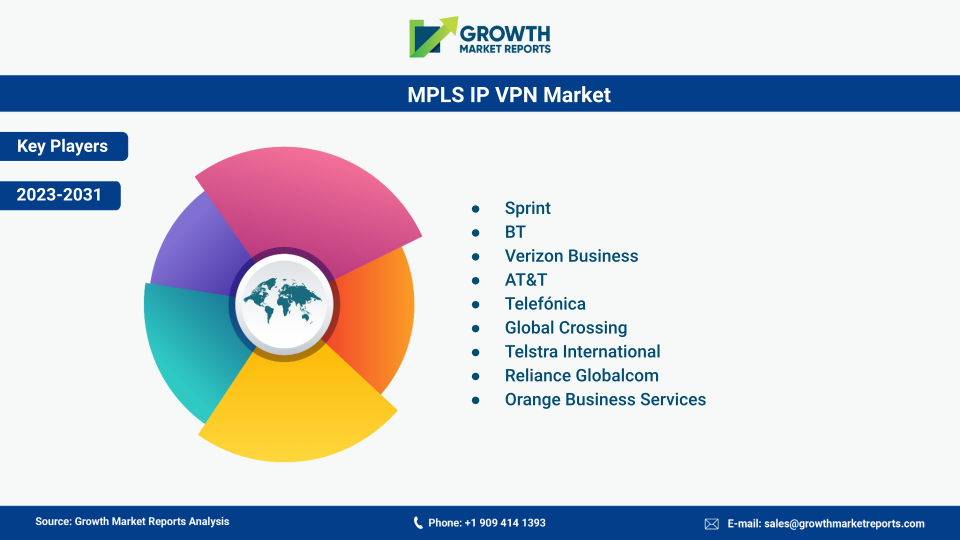
Some of the major companies operating in the MPLS IP VPN market include AT&T, Verizon Communications, Orange Business Services, BT Group, NTT Communications, Lumen Technologies, Tata Communications, Vodafone Group, China Telecom Global, Telefonica, Deutsche Telekom (T-Systems), Comcast Business, Telstra, Singtel, China Unicom, KDDI Corporation, Colt Technology Services, Zayo Group, GTT Communications, and Telia Carrier. AT&T and Verizon Communications are global leaders in managed MPLS IP VPN services, offering comprehensive connectivity portfolios backed by extensive North American and international network infrastructure. Orange Business Services and BT Group dominate the European market, leveraging their multinational network footprints to serve large enterprise and public sector clients. NTT Communications, KDDI Corporation, Singtel, and China Telecom Global are key players across the Asia Pacific region, delivering scalable MPLS solutions aligned with the region's rapid digitalization trajectory.
Lumen Technologies, Colt Technology Services, Zayo Group, GTT Communications, and Telia Carrier are carving out strong positions by targeting specific verticals and geographies, offering competitive pricing, and integrating SD-WAN overlays with existing MPLS backbones. Tata Communications continues to expand its global MPLS IP VPN footprint, particularly in emerging markets across South Asia, the Middle East, and Africa. These companies are continuously innovating to stay ahead of the competition, investing in next-generation technologies, and expanding their service offerings to meet the evolving needs of enterprise customers through 2034.
In summary, the MPLS IP VPN market is highly competitive and rapidly evolving, with leading vendors and service providers vying for market leadership through innovation, strategic partnerships, and customer-centric solutions. The ability to deliver integrated, scalable, and secure networking solutions that address the diverse needs of enterprise customers will be critical to success in this dynamic market landscape through 2034.
The MPLS IP VPN market has been segmented on the basis of
Yes. Vendors offer modular, scalable MPLS IP VPN solutions tailored to both small and medium enterprises (SMEs) and large enterprises. Large enterprises benefit from high-capacity, multi-site deployments with advanced security and QoS features. SMEs can access cost-effective, cloud-delivered or managed MPLS IP VPN options with simplified setup and flexible pricing. Managed service providers play a key role in making enterprise-grade networking accessible to SMEs, allowing them to outsource network management while focusing on core business operations.
MPLS IP VPNs enable organizations to extend their secure network perimeter to remote and hybrid workers by providing private, dedicated communication channels that guarantee quality of service and data security. Employees working from home, branch offices, or mobile locations can access corporate applications and data with the same performance and security as on-premises users. As hybrid work becomes the norm in 2025 and beyond, MPLS IP VPNs are increasingly integrated with cloud-based access solutions and zero-trust security frameworks to deliver a seamless and secure user experience.
Leading vendors and service providers in 2025 include AT&T, Verizon Communications, Orange Business Services, BT Group, NTT Communications, Lumen Technologies, Tata Communications, Vodafone Group, China Telecom Global, Telefonica, Deutsche Telekom (T-Systems), Comcast Business, Telstra, Singtel, China Unicom, KDDI Corporation, Colt Technology Services, Zayo Group, GTT Communications, and Telia Carrier. These players compete on network reach, service quality, pricing, managed service capabilities, and integration with cloud and SD-WAN platforms.
Major opportunities include integration with SD-WAN and AI-driven analytics, expansion of managed and as-a-service offerings, and growth in emerging markets across Asia Pacific, Latin America, and the Middle East & Africa. The IoT boom and smart city initiatives also open new connectivity use cases. Primary threats include competition from SD-WAN and direct internet access alternatives, which offer lower costs and greater agility. High deployment complexity, the need for specialized expertise, and pricing pressure from commoditization of basic MPLS services also pose ongoing challenges.
BFSI is the dominant end-user segment, leveraging MPLS IP VPNs for secure digital banking, transaction processing, and regulatory compliance. IT and telecommunications firms rely on these solutions to deliver managed connectivity to enterprise clients. Healthcare organizations use MPLS IP VPNs to support EHR systems, telemedicine, and HIPAA-compliant data transmission. Government, retail, and manufacturing sectors are also significant adopters, using MPLS IP VPNs for secure inter-agency communication, supply chain management, and connected industrial operations.
On-premises deployment remains preferred by large enterprises in regulated sectors such as BFSI, healthcare, and government, where maximum control over network infrastructure and data privacy are paramount. Cloud-based deployment is growing rapidly, offering reduced capital expenditure, simplified management, and fast scalability for distributed organizations. Hybrid models are gaining traction among organizations seeking to balance on-premises security with cloud flexibility, and this trend is expected to intensify through 2034 as multi-cloud adoption accelerates.
The MPLS IP VPN market is segmented into three primary components: hardware (34.2% share in 2025), services (37.2%), and software (28.6%). Services represent the largest and fastest-growing component, driven by strong demand for managed MPLS solutions, consulting, and integration. Hardware remains critical for infrastructure buildout, while software is seeing rapid uptake due to the rise of SDN, network virtualization, and AI-powered management platforms.
North America leads the global MPLS IP VPN market, accounting for approximately 37.8% of total revenues in 2025, valued at around USD 15.3 billion. Europe holds the second-largest share at 27.4%, while Asia Pacific is the fastest-growing region with a projected CAGR of 9.5% through 2034, reflecting rapid digitalization and infrastructure investment in China, India, and Southeast Asia. Latin America and the Middle East & Africa collectively represent around 12.2% of the market and are experiencing steady growth.
Key growth drivers include rapid digital transformation across industries, increasing adoption of cloud-based applications, the proliferation of IoT devices, and the growing need for secure multi-site enterprise connectivity. Heightened cybersecurity threats and regulatory compliance requirements, particularly in BFSI and healthcare, are also compelling organizations to invest in robust MPLS IP VPN infrastructure. Additionally, the expansion of remote and hybrid work environments continues to fuel demand for scalable, private networking solutions through 2034.
The global MPLS IP VPN market reached USD 40.5 billion in 2025 and is projected to grow at a CAGR of 7.2% during the forecast period 2026-2034, reaching approximately USD 76.8 billion by 2034. This growth is underpinned by rising enterprise demand for secure, high-performance connectivity, accelerating cloud adoption, and the expansion of hybrid work models across industries worldwide.