Segments - by Service Type (Logging, Well Intervention, Completion, Recovery, Others), by Hole Type (Open Hole, Cased Hole), by Application (Onshore, Offshore), by End-User (Oil & Gas, Mining, Others)
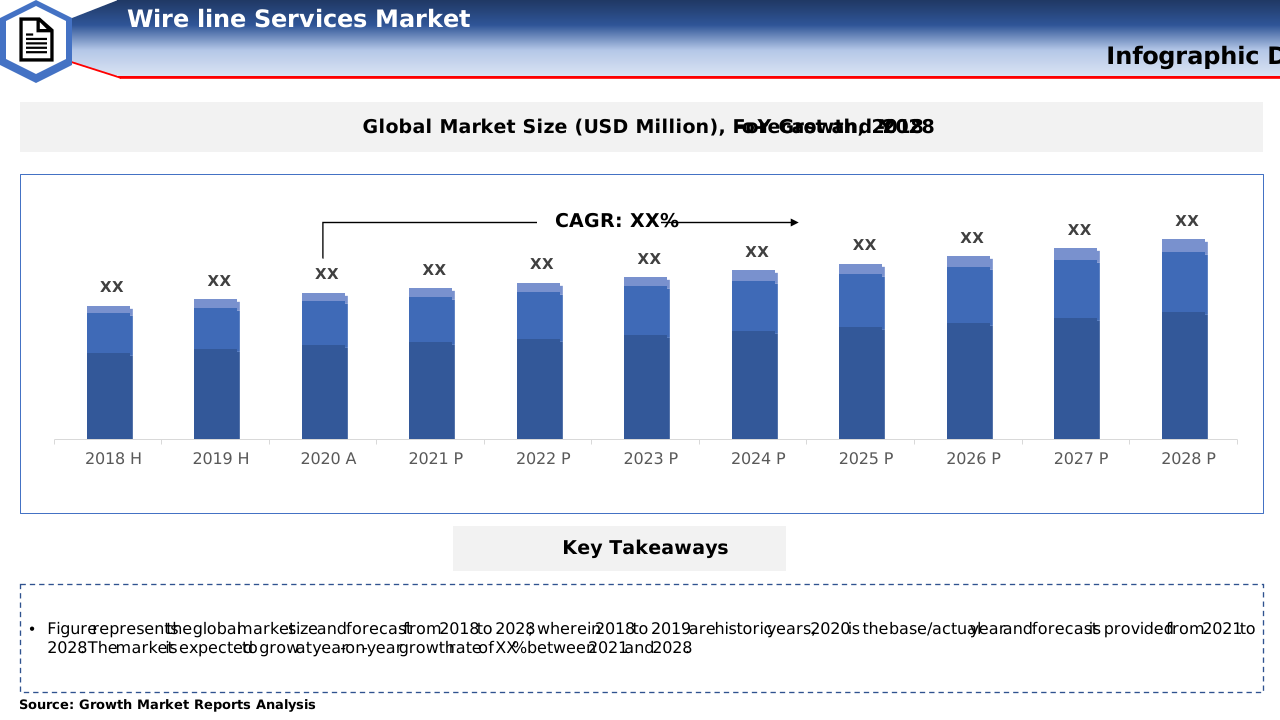
As per our latest research, the global Wireline Services market size reached USD 9.8 billion in 2024, and is projected to grow at a robust CAGR of 6.2% from 2025 to 2033. By the end of the forecast period in 2033, the market is expected to attain a value of approximately USD 16.8 billion. The primary growth factor driving this market is the increasing complexity and depth of oil and gas exploration and production (E&P) activities, which necessitate advanced well intervention and logging solutions.
The expansion of unconventional hydrocarbon resources, such as shale gas and tight oil, is a significant driver for the wireline services market. These unconventional reserves require sophisticated well logging, completion, and intervention services to maximize extraction efficiency and ensure reservoir integrity. The growing adoption of horizontal drilling and hydraulic fracturing technologies has increased the demand for both open hole and cased hole wireline services. Additionally, as mature oilfields age, the need for well intervention and recovery services rises, further fueling market growth. The integration of digital technologies, such as real-time data acquisition and advanced analytics, is also transforming wireline operations, allowing for improved decision-making and operational efficiency.
Another crucial growth factor is the rising global energy demand, especially in emerging economies across Asia Pacific and the Middle East. These regions are investing heavily in upstream oil and gas projects to secure energy supplies and reduce import dependencies. This, in turn, is boosting the demand for wireline services that support exploration, production, and maintenance activities. Furthermore, the shift towards deeper offshore reserves, particularly in regions like Latin America and West Africa, is creating lucrative opportunities for wireline service providers. These offshore projects require highly specialized and reliable wireline interventions to address challenging reservoir conditions and ensure operational safety.
Technological advancements in wireline tools and services are also contributing to market expansion. Innovations such as high-temperature and high-pressure (HTHP) wireline tools, fiber-optic sensing, and digital slickline systems are enabling operators to access challenging reservoirs and gather more accurate subsurface data. These advancements are not only enhancing the efficiency of wireline operations but also reducing operational risks and downtime. Moreover, the increasing emphasis on well integrity management and regulatory compliance is prompting operators to invest in advanced wireline solutions for routine monitoring and maintenance. This trend is expected to continue throughout the forecast period, supporting sustained growth in the wireline services market.
Wireline Logging plays a pivotal role in the oil and gas industry by providing critical subsurface data that informs exploration and production decisions. This process involves deploying a series of tools into a wellbore to measure various properties of the rock and fluid, which helps in understanding the geological formations and reservoir characteristics. The data obtained from wireline logging is essential for assessing the potential of hydrocarbon reserves, optimizing drilling operations, and ensuring the integrity of well structures. As the industry continues to explore deeper and more complex reservoirs, the demand for advanced wireline logging technologies is expected to grow, enabling operators to make more informed decisions and improve recovery rates.
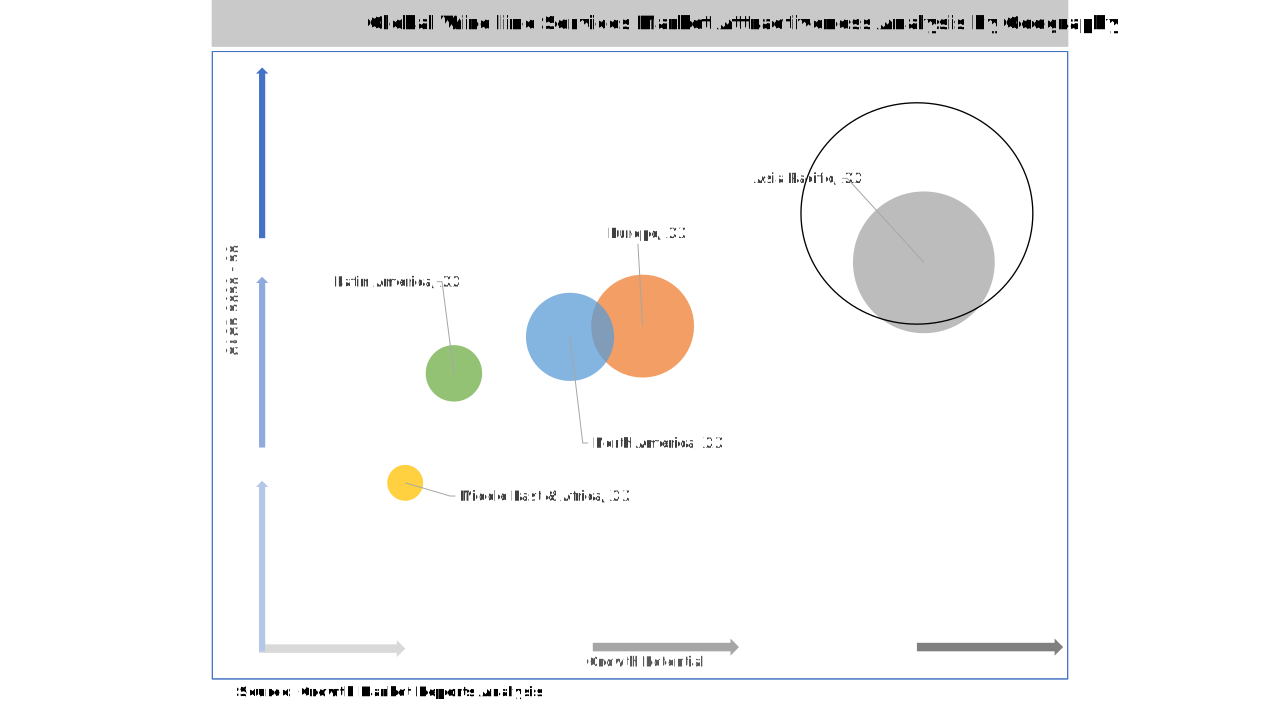
Regionally, North America continues to dominate the wireline services market, driven by extensive shale gas and tight oil activities in the United States and Canada. The Asia Pacific region is witnessing rapid growth, fueled by increasing exploration and production investments in countries like China, India, and Australia. The Middle East & Africa remains a key market due to ongoing upstream projects in the Gulf region and emerging opportunities in Africa. Europe and Latin America are also significant contributors, with steady investments in offshore and mature field developments. The global wireline services market is thus characterized by a dynamic regional landscape, with each region exhibiting unique growth drivers and challenges.
The wireline services market is segmented by service type into logging, well intervention, completion, recovery, and others. Logging services hold the largest share, primarily due to their critical role in reservoir characterization and well evaluation. Logging services provide vital subsurface data that guide exploration and production decisions, making them indispensable across all stages of the well lifecycle. The rising complexity of reservoirs, especially unconventional and deepwater fields, has heightened the demand for advanced logging technologies such as formation evaluation, production logging, and cement bond logging. Operators are increasingly relying on real-time logging data to optimize drilling and completion operations, reduce non-productive time, and enhance hydrocarbon recovery rates.
Well intervention services are witnessing significant growth, driven by the need to maintain and enhance production from aging wells. As conventional fields mature, operators are focusing on maximizing recovery and extending the productive life of wells through interventions such as perforation, stimulation, and mechanical repairs. Wireline-enabled interventions are preferred due to their cost-effectiveness, versatility, and ability to perform multiple operations in a single run. The integration of digital slickline and electric line technologies is further enhancing the capabilities of well intervention services, enabling precise control, monitoring, and data acquisition during intervention activities.
Completion services represent another vital segment within the wireline services market. These services encompass a range of activities designed to prepare wells for production, including setting plugs, perforating casings, and deploying downhole equipment. The growing adoption of complex completion techniques, such as multistage fracturing and intelligent completions, is driving demand for specialized wireline tools and services. Completion services are particularly critical in unconventional and offshore developments, where well designs are more intricate and require tailored solutions to ensure optimal production performance.
Recovery services, though a smaller segment, are gaining traction as operators increasingly focus on enhanced oil recovery (EOR) and well remediation activities. Wireline recovery services support operations such as fishing, debris removal, and retrieval of stuck tools, which are essential for maintaining well integrity and minimizing downtime. The "others" segment includes niche services such as pipe recovery, fluid sampling, and pressure testing, which are integral to specific well operations. Overall, the diverse range of wireline services caters to the evolving needs of the oil and gas industry, supporting efficient and safe well operations across various field environments.
| Attributes | Details |
| Report Title | Wire line Services Market Research Report 2033 |
| By Service Type | Logging, Well Intervention, Completion, Recovery, Others |
| By Hole Type | Open Hole, Cased Hole |
| By Application | Onshore, Offshore |
| By End-User | Oil & Gas, Mining, Others |
| Regions Covered | North America, Europe, APAC, Latin America, MEA |
| Base Year | 2024 |
| Historic Data | 2018-2023 |
| Forecast Period | 2025-2033 |
| Number of Pages | 262 |
| Number of Tables & Figures | 322 |
| Customization Available | Yes, the report can be customized as per your need. |
The wireline services market is segmented by hole type into open hole and cased hole services. Open hole wireline services are essential during the early stages of well development, providing critical geological and petrophysical data before casing is installed. These services include formation evaluation, borehole imaging, and acoustic logging, which help operators assess reservoir potential and make informed drilling decisions. The demand for open hole services is particularly strong in exploration wells and unconventional plays, where accurate reservoir characterization is paramount for economic viability. Technological advancements, such as advanced resistivity and nuclear magnetic resonance (NMR) logging, are enhancing the precision and reliability of open hole measurements.
Cased hole wireline services are predominantly used in completed wells for production monitoring, well integrity assessment, and intervention operations. These services include production logging, casing inspection, cement evaluation, and perforation. The increasing emphasis on well integrity management, regulatory compliance, and production optimization is driving the adoption of cased hole services. Operators are leveraging cased hole technologies to detect and mitigate issues such as casing corrosion, leaks, and formation damage, thereby safeguarding production assets and ensuring operational safety. The integration of digital and fiber-optic technologies is further expanding the capabilities of cased hole services, enabling real-time data transmission and advanced diagnostics.
The choice between open hole and cased hole services is largely determined by the wellÂ’s lifecycle stage and operational objectives. In exploration and appraisal wells, open hole services are indispensable for initial reservoir assessment and well planning. In contrast, cased hole services become more prominent during the production and maintenance phases, supporting ongoing monitoring and intervention activities. The growing complexity of well architectures, such as extended reach and multilateral wells, is driving demand for both open hole and cased hole wireline solutions, as operators seek to maximize reservoir contact and production efficiency.
Innovation in wireline tool design and deployment methods is also influencing the dynamics of the hole type segment. The development of compact, high-strength wireline cables and modular tool strings is enabling access to challenging well environments, including high-deviation and deepwater wells. These innovations are expanding the application scope of both open hole and cased hole services, allowing operators to address a broader range of technical challenges. As the oil and gas industry continues to push the boundaries of exploration and production, the demand for advanced wireline services across both hole types is expected to remain strong.
The application segment of the wireline services market is bifurcated into onshore and offshore operations. Onshore applications account for the majority of market revenue, owing to the sheer volume of onshore wells and the relative ease of access for wireline operations. Onshore wireline services are widely utilized in conventional and unconventional plays, including shale basins, tight sands, and coalbed methane fields. The proliferation of horizontal drilling and multi-stage fracturing in onshore fields, particularly in North America and Asia Pacific, is driving robust demand for wireline logging, completion, and intervention services. Onshore projects typically offer shorter mobilization times and lower operational costs, making wireline services more accessible to a broader range of operators.
Offshore applications, while representing a smaller share of the market, are characterized by higher service intensity and greater technical complexity. Offshore wireline services are critical for deepwater and ultra-deepwater developments, where challenging reservoir conditions and high operational risks necessitate advanced well intervention and monitoring solutions. The increasing investment in offshore exploration and production, especially in regions like Latin America, West Africa, and Southeast Asia, is creating significant opportunities for wireline service providers. Offshore wireline operations often involve specialized equipment, such as subsea deployment systems and high-pressure/high-temperature (HPHT) tools, to ensure safe and reliable performance in harsh environments.
The growing focus on offshore field development and redevelopment projects is also boosting demand for wireline services. Mature offshore fields require routine well interventions, integrity assessments, and production optimization activities, all of which depend on reliable wireline solutions. The integration of digital technologies, such as remote monitoring and real-time data transmission, is enhancing the efficiency and safety of offshore wireline operations. These advancements are enabling operators to minimize downtime, reduce operational costs, and improve decision-making in complex offshore environments.
The application landscape for wireline services is further shaped by regulatory and environmental considerations. Both onshore and offshore operators are subject to stringent safety and environmental regulations, which mandate regular well integrity checks and data acquisition activities. Compliance with these regulations is driving the adoption of advanced wireline technologies that offer precise diagnostics and comprehensive reporting capabilities. As the industry continues to evolve, the application of wireline services across both onshore and offshore settings will remain integral to the success of oil and gas exploration and production operations.
The end-user segment of the wireline services market is primarily divided into oil and gas, mining, and others. The oil and gas sector is the dominant end-user, accounting for the bulk of market demand. Wireline services are indispensable throughout the oil and gas value chain, from exploration and appraisal to production and abandonment. The sectorÂ’s ongoing focus on maximizing hydrocarbon recovery, reducing non-productive time, and ensuring well integrity is driving sustained investment in wireline technologies. The adoption of advanced wireline logging, intervention, and completion services is particularly pronounced in unconventional and deepwater projects, where operational challenges are more complex and the stakes are higher.
The mining industry represents an emerging end-user segment for wireline services, particularly in the context of mineral exploration and resource evaluation. Wireline logging tools are used to acquire geophysical and geotechnical data from boreholes, supporting resource estimation and mine planning activities. The increasing demand for critical minerals, such as lithium, cobalt, and rare earth elements, is driving investment in advanced exploration technologies, including wireline services. Mining companies are leveraging wireline data to enhance the accuracy of resource models, optimize drilling campaigns, and reduce exploration risks.
The "others" category includes industries such as geothermal energy, environmental monitoring, and underground infrastructure. In geothermal energy, wireline services are used for reservoir characterization, temperature profiling, and well integrity assessment. Environmental monitoring applications include groundwater studies, contamination assessments, and subsurface mapping, all of which benefit from wireline logging technologies. The versatility of wireline services enables their application across a wide range of subsurface industries, supporting data-driven decision-making and operational efficiency.
The end-user landscape is evolving in response to broader industry trends, such as the energy transition and the growing emphasis on sustainability. Oil and gas companies are increasingly investing in digitalization and automation, driving demand for wireline solutions that offer real-time data acquisition and remote operation capabilities. Mining and other industries are also adopting wireline technologies to improve resource efficiency and minimize environmental impacts. As the range of end-user applications expands, the wireline services market is poised for continued growth and diversification.
The wireline services market presents significant opportunities for growth, particularly in the context of digital transformation and technological innovation. The integration of advanced data analytics, artificial intelligence, and IoT-enabled sensors is revolutionizing wireline operations, enabling operators to acquire, process, and interpret subsurface data with unprecedented accuracy and speed. These advancements are facilitating predictive maintenance, automated decision-making, and real-time optimization of well operations. Service providers that invest in digital solutions are well-positioned to capture new business and differentiate themselves in a competitive market. Additionally, the growing focus on enhanced oil recovery (EOR) and well integrity management is creating demand for specialized wireline services, such as high-resolution imaging, fiber-optic sensing, and advanced recovery tools.
Emerging markets and new energy sectors also offer promising opportunities for wireline service providers. The expansion of exploration and production activities in regions such as Asia Pacific, Africa, and Latin America is driving demand for wireline solutions tailored to local geological and operational challenges. The rise of geothermal energy and the increasing emphasis on carbon capture and storage (CCS) are opening new avenues for wireline applications beyond traditional oil and gas. Service providers that diversify their offerings and develop expertise in these emerging sectors can tap into additional revenue streams and mitigate the impact of oil price volatility.
However, the wireline services market faces certain restraining factors, the most prominent being the cyclical nature of the oil and gas industry. Fluctuations in crude oil prices can significantly impact exploration and production budgets, leading to delays or cancellations of drilling and intervention projects. This, in turn, affects the demand for wireline services, particularly in regions where upstream activity is closely tied to commodity prices. Additionally, the market is subject to stringent regulatory requirements and environmental standards, which can increase operational costs and create barriers to entry for new players. Service providers must continually invest in technology, training, and compliance to navigate these challenges and maintain their competitive edge.
North America remains the largest regional market for wireline services, accounting for approximately USD 3.6 billion in revenue in 2024. The regionÂ’s dominance is underpinned by the ongoing development of shale plays in the United States and Canada, which require extensive wireline logging, completion, and intervention services. The adoption of advanced drilling techniques, such as horizontal drilling and hydraulic fracturing, is driving demand for high-performance wireline solutions. North America is also a leader in digitalization and automation, with operators increasingly leveraging real-time data and remote monitoring technologies to enhance operational efficiency and reduce costs. The region is expected to maintain a strong growth trajectory, with a projected CAGR of 5.8% through 2033.
Asia Pacific is emerging as the fastest-growing regional market, with revenue reaching USD 2.1 billion in 2024. The regionÂ’s growth is fueled by rising energy demand, ongoing exploration and production investments, and the development of unconventional resources in countries such as China, India, and Australia. National oil companies and international operators are ramping up upstream activities to secure domestic energy supplies and reduce import dependencies. The increasing complexity of reservoirs and the need for advanced well intervention services are driving adoption of wireline technologies across the region. Asia Pacific is expected to outpace other regions in terms of growth rate, supported by favorable government policies and sustained investment in oil and gas infrastructure.
The Middle East & Africa and Latin America are also significant contributors to the global wireline services market, with revenues of USD 2.0 billion and USD 1.7 billion respectively in 2024. The Middle East continues to invest heavily in upstream projects, particularly in the Gulf region, where national oil companies are focused on maintaining production capacity and maximizing recovery from mature fields. Africa is witnessing increased exploration activity, especially in offshore basins. Latin America, led by Brazil and Mexico, is investing in deepwater and pre-salt developments that require sophisticated wireline interventions. Europe, with revenue of USD 1.4 billion in 2024, remains a mature market, characterized by ongoing redevelopment of North Sea fields and a growing focus on sustainability and digital transformation.
The competitive landscape of the wireline services market is characterized by the presence of several global and regional players, each striving to enhance their market position through technological innovation, strategic partnerships, and geographic expansion. The market is moderately consolidated, with a few large multinational service providers dominating the high-end segment, while numerous smaller companies cater to regional and niche markets. The leading players are focused on expanding their service portfolios, investing in digital technologies, and strengthening their presence in high-growth regions such as Asia Pacific and the Middle East. The ability to offer integrated solutions, combining wireline services with other well intervention and production optimization offerings, is a key differentiator in the market.
Innovation and R&D are central to the competitive strategy of leading wireline service providers. Companies are investing heavily in the development of advanced wireline tools, such as high-resolution imaging systems, digital slickline, and fiber-optic sensing technologies. These innovations are enabling operators to access challenging reservoirs, acquire more accurate data, and perform interventions with greater precision and efficiency. The integration of artificial intelligence and machine learning into wireline data analysis is also emerging as a competitive advantage, allowing service providers to deliver actionable insights and predictive maintenance solutions to their clients.
Strategic alliances, mergers and acquisitions, and joint ventures are common in the wireline services market, as companies seek to expand their technological capabilities and geographic reach. Partnerships with oilfield equipment manufacturers, software developers, and local service providers are enabling global players to offer end-to-end solutions and tailor their offerings to specific customer needs. The increasing emphasis on sustainability and environmental stewardship is also influencing competitive dynamics, with service providers developing eco-friendly wireline solutions and adopting best practices in health, safety, and environmental (HSE) management.
Major companies operating in the wireline services market include Schlumberger Limited, Halliburton Company, Baker Hughes Company, Weatherford International plc, and Expro Group. Schlumberger is renowned for its comprehensive suite of wireline logging, completion, and intervention services, supported by a strong global presence and a commitment to innovation. Halliburton offers a broad portfolio of wireline solutions, with a focus on digital integration and real-time data analytics. Baker Hughes is recognized for its advanced wireline technologies and expertise in high-pressure/high-temperature (HPHT) applications. Weatherford specializes in well intervention and completion services, leveraging its global footprint and technical know-how. Expro Group is known for its focus on well flow optimization and offshore wireline services, particularly in challenging environments.
These leading players are continually evolving their strategies to address changing market dynamics, customer expectations, and regulatory requirements. By investing in technology, expanding their service offerings, and strengthening their regional presence, they are well-positioned to capitalize on emerging opportunities and maintain their competitive edge in the global wireline services market.
The Wire line Services market has been segmented on the basis of
Key players competing in the wire line services market include Expro International Group PLC, Schlumberger Limited; Baker Hughes Company, Halliburton Company, and Weatherford International PLC.
Some of these players are using several market strategies such as mergers, acquisitions, partnerships, collaborations, capacity expansion, and product launches to increase their market shares.
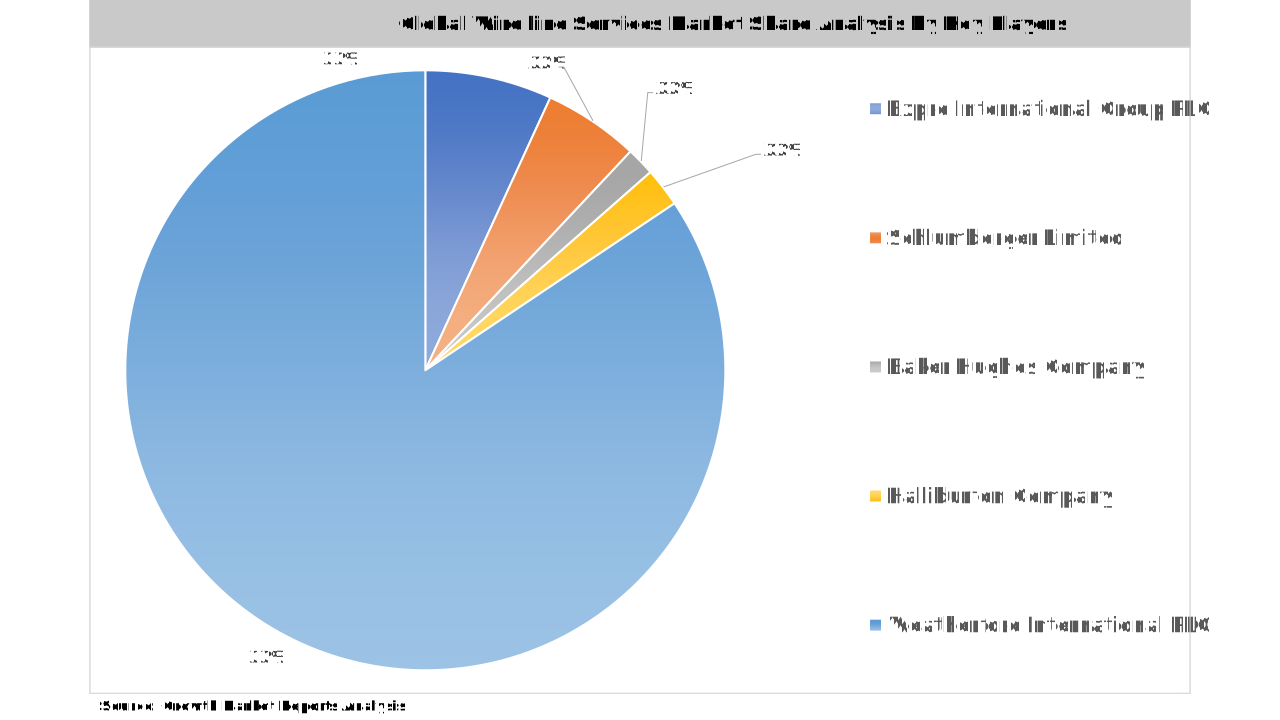
Major players include Schlumberger, Halliburton, Baker Hughes, Weatherford International, Expro Group, Superior Energy Services, Archer Limited, Pioneer Energy Services, and others.
Challenges include the cyclical nature of the oil and gas industry, fluctuations in crude oil prices, stringent regulatory requirements, and high operational costs related to compliance and technology upgrades.
Innovations include high-temperature/high-pressure (HTHP) tools, fiber-optic sensing, digital slickline systems, real-time data acquisition, and advanced analytics, all of which improve operational efficiency and data accuracy.
The oil and gas sector is the dominant end-user, followed by mining and other industries such as geothermal energy, environmental monitoring, and underground infrastructure.
Wireline services are applied in both onshore and offshore operations. Onshore applications dominate due to the volume of wells, while offshore services are critical for deepwater and technically complex projects.
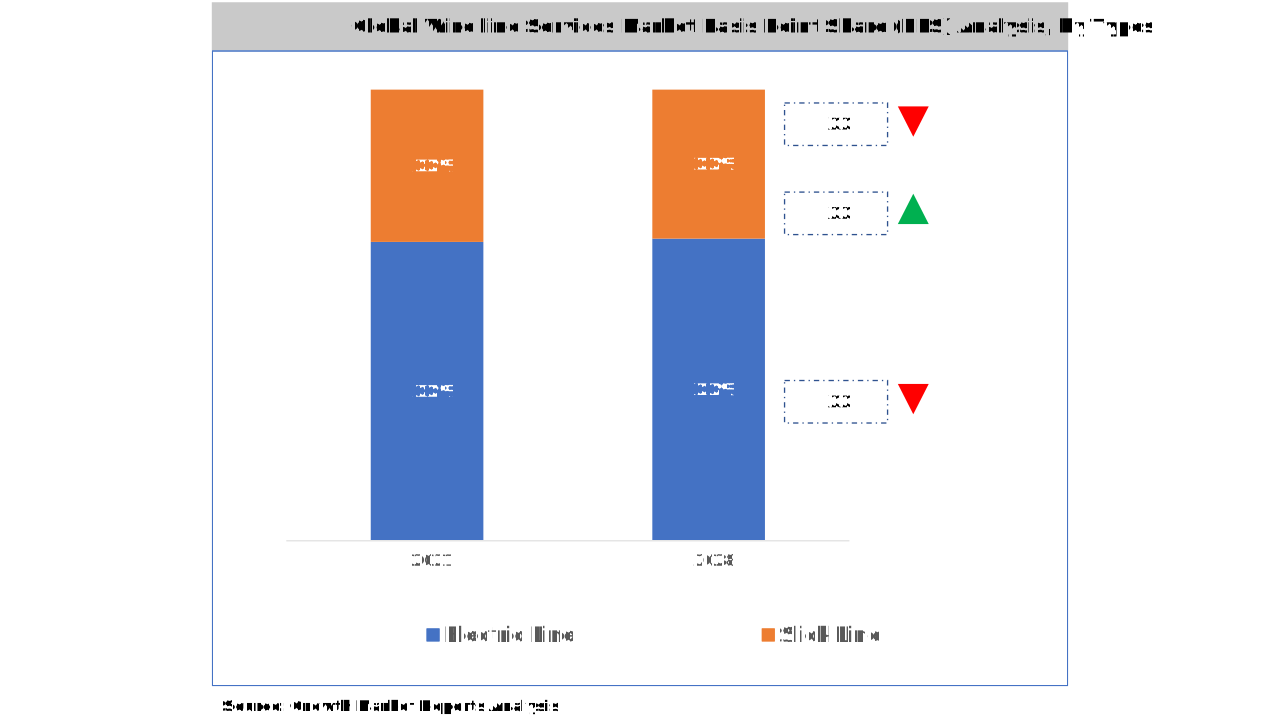
Open hole wireline services are used during early well development to provide geological and petrophysical data before casing. Cased hole services are used in completed wells for production monitoring, well integrity assessment, and interventions.
The market is segmented by service type into logging, well intervention, completion, recovery, and others. Logging services hold the largest share due to their critical role in reservoir characterization and well evaluation.
North America is the largest regional market, driven by shale gas and tight oil activities in the US and Canada. Asia Pacific is the fastest-growing region, with significant investments in China, India, and Australia. The Middle East & Africa and Latin America are also notable contributors.
Key growth drivers include increasing complexity and depth of oil and gas exploration, expansion of unconventional resources (like shale gas and tight oil), adoption of digital technologies, rising global energy demand, and investments in upstream projects, especially in Asia Pacific and the Middle East.
The global wireline services market reached USD 9.8 billion in 2024 and is projected to grow at a CAGR of 6.2% from 2025 to 2033, reaching approximately USD 16.8 billion by 2033.