Segments - by Material Type (Wood, Steel, Concrete, Composite), by Pole Size (Below 40 ft, 40-70 ft, Above 70 ft), by Application (Transmission, Distribution), by End-User (Residential, Commercial, Industrial, Utilities), by Installation Type (New Installation, Replacement)
As per our latest research, the global utility poles market size reached USD 49.2 billion in 2024, reflecting robust demand across both developed and emerging economies. The market is expected to grow at a CAGR of 4.8% from 2025 to 2033, reaching a forecasted value of USD 75.2 billion by 2033. This growth is primarily driven by the ongoing modernization of grid infrastructure, increasing investments in renewable energy transmission, and the replacement of aging utility poles worldwide.
A key growth factor for the utility poles market is the accelerating adoption of smart grid technologies, which require reliable and resilient infrastructure to support advanced metering, distributed energy resources, and enhanced grid management. Governments and utilities are investing heavily in upgrading existing transmission and distribution networks to accommodate the rising demand for electricity, particularly in urbanizing regions. These upgrades necessitate the installation of new utility poles with advanced materials and design, boosting market expansion. Furthermore, the increasing frequency of extreme weather events and natural disasters has highlighted the need for more durable and resilient pole materials, such as steel and composites, to ensure uninterrupted power supply and minimize outage costs.
Another significant driver is the global push for rural electrification, especially in developing economies across Asia Pacific and Africa. Large-scale government initiatives and public-private partnerships are focused on extending the electricity grid to underserved rural and remote areas, necessitating the deployment of millions of new utility poles. The market is also witnessing a shift toward composite and concrete poles, which offer superior lifespan and lower maintenance compared to traditional wood poles. Additionally, the growing trend of underground cabling in urban centers is creating new opportunities for hybrid pole systems and innovative installation techniques, further contributing to market growth.
The replacement of aging utility infrastructure in mature markets such as North America and Europe is providing another layer of momentum for the utility poles market. Many existing poles, particularly those made from wood, are reaching the end of their service life and require replacement with modern, more resilient alternatives. This replacement cycle is being accelerated by regulatory requirements for grid reliability and safety, as well as the need to support new telecommunications and broadband networks. The integration of utility poles with smart sensors and IoT devices is also emerging as a key trend, enabling real-time monitoring of grid health and facilitating predictive maintenance. These technological advancements are expected to drive sustained demand for utility poles through the forecast period.
The foundation of utility poles, particularly the Distribution Pole Foundation, plays a crucial role in ensuring the stability and longevity of the poles. A well-constructed foundation is essential for supporting the weight and stress that utility poles endure, especially in areas prone to extreme weather conditions. The design and materials used in the foundation can significantly impact the overall performance of the pole, influencing factors such as load-bearing capacity and resistance to environmental challenges. As the demand for reliable electricity distribution continues to rise, the importance of robust foundation solutions becomes increasingly evident. Innovations in foundation technology, such as the use of advanced materials and construction techniques, are contributing to the development of more resilient and durable utility poles, capable of withstanding the test of time and nature.
Regionally, Asia Pacific remains the largest and fastest-growing market for utility poles, accounting for over 38% of global demand in 2024. Rapid urbanization, extensive electrification projects, and expanding industrialization are fueling significant investments in power transmission and distribution infrastructure across China, India, and Southeast Asia. North America and Europe also represent substantial markets, driven by grid modernization and replacement initiatives, while Latin America and the Middle East & Africa are witnessing steady growth due to ongoing electrification and infrastructure development projects. The interplay of these regional dynamics is shaping the global outlook for the utility poles market, with sustained opportunities for manufacturers and service providers.
The utility poles market is segmented by material type into wood, steel, concrete, and composite poles, each offering distinct advantages and facing specific challenges. Wood poles have traditionally dominated the market due to their cost-effectiveness, ease of installation, and widespread availability. However, concerns regarding environmental sustainability, susceptibility to rot, insect damage, and shorter service life are driving a gradual shift toward alternative materials. Despite these challenges, wood poles continue to be widely used, particularly in rural and cost-sensitive applications, due to their low upfront cost and established supply chains. Regulatory pressures to use sustainably sourced wood and apply environmentally friendly preservatives are influencing the wood pole segment, prompting manufacturers to innovate with new treatment methods and sourcing strategies.
Steel poles are gaining significant traction in the utility poles market, especially in regions prone to extreme weather conditions such as hurricanes, wildfires, and heavy snow. Steel offers superior strength, durability, and resistance to environmental hazards, making it an ideal choice for critical transmission and distribution applications. The non-combustible nature of steel poles is particularly valuable in wildfire-prone areas, where they can help reduce the risk of power outages and infrastructure damage. While steel poles have higher upfront costs compared to wood, their longer lifespan and lower maintenance requirements often result in favorable total cost of ownership. The increasing adoption of galvanized steel and advanced coatings is further enhancing the performance and longevity of steel utility poles, driving their market share.
Concrete poles are another important segment, favored for their high load-bearing capacity, resistance to corrosion, and minimal maintenance needs. They are commonly used in coastal and high-humidity environments where wood and steel poles may deteriorate more rapidly. The durability and stability of concrete poles make them suitable for both transmission and distribution applications, including areas with challenging soil conditions. Innovations in pre-stressed and spun concrete technology are enabling lighter, more cost-effective designs, expanding the applicability of concrete poles in diverse settings. However, challenges related to transportation and installation due to their weight and bulkiness must be carefully managed to optimize project costs.
Composite utility poles, made from advanced materials such as fiberglass-reinforced polymers, are emerging as a high-performance alternative in the utility poles market. These poles offer exceptional resistance to rot, corrosion, insects, and electrical conductivity, making them ideal for harsh and remote environments. Composite poles are lightweight, facilitating easier transportation and installation, which is particularly advantageous in difficult-to-access locations. Their long service life and minimal maintenance requirements are driving adoption in both developed and developing markets. Despite their higher initial cost, the total lifecycle benefits of composite poles are becoming increasingly recognized, especially in applications where reliability and durability are paramount. As technology advances and production scales up, composite poles are expected to capture a growing share of the market.
| Attributes | Details |
| Report Title | Utility Poles Market Research Report 2033 |
| By Material Type | Wood, Steel, Concrete, Composite |
| By Pole Size | Below 40 ft, 40-70 ft, Above 70 ft |
| By Application | Transmission, Distribution |
| By End-User | Residential, Commercial, Industrial, Utilities |
| By Installation Type | New Installation, Replacement |
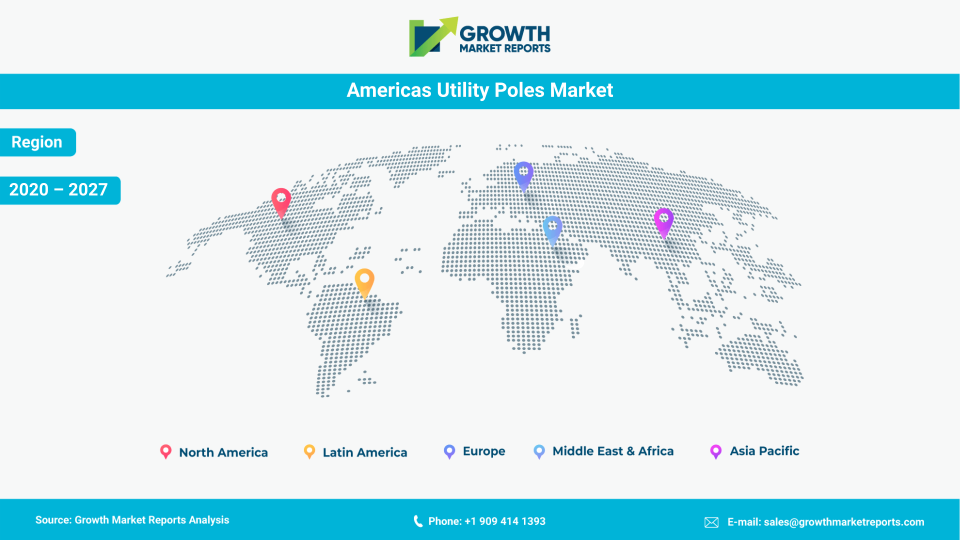
| Regions Covered | North America, Europe, APAC, Latin America, MEA |
| Base Year | 2024 |
| Historic Data | 2018-2023 |
| Forecast Period | 2025-2033 |
| Number of Pages | 250 |
| Number of Tables & Figures | 392 |
| Customization Available | Yes, the report can be customized as per your need. |
Pole size is a critical segment in the utility poles market, as it directly influences the application, installation complexity, and overall project cost. The market is primarily divided into three categories: below 40 feet, 40-70 feet, and above 70 feet. Poles below 40 feet are predominantly used in distribution networks, residential areas, and low-voltage applications. Their smaller size makes them easier and less expensive to install, which is particularly beneficial for rural electrification and small-scale commercial projects. These poles are often made from wood or composite materials, balancing cost and performance requirements. The demand for below 40 feet poles remains steady, supported by ongoing grid expansion and maintenance activities in both developed and emerging markets.
The 40-70 feet pole segment represents the largest share of the utility poles market, serving a wide range of medium- to high-voltage transmission and distribution applications. These poles are essential for supporting overhead power lines across urban, suburban, and industrial settings, where greater height is required to maintain safe clearance from obstacles and ensure reliable power delivery. Steel, concrete, and composite materials are commonly used in this segment to provide the necessary strength and durability. The increasing complexity of urban infrastructure, coupled with the need for higher-capacity transmission lines, is driving demand for poles in the 40-70 feet range. Technological advancements in pole design and manufacturing are enabling the production of lighter, stronger poles that can be customized to meet specific project requirements.
Poles above 70 feet are primarily used in high-voltage transmission networks, where long spans and heavy conductor loads necessitate robust and tall structures. These poles are critical for interconnecting power plants, substations, and major load centers across vast distances. The installation of above 70 feet poles is a complex and capital-intensive process, often involving specialized equipment and logistics. Steel and pre-stressed concrete are the preferred materials for these applications, offering the strength and stability needed to withstand extreme weather and mechanical stresses. The growing integration of renewable energy sources, such as wind and solar farms, into national grids is fueling demand for high-capacity transmission infrastructure, including tall utility poles capable of supporting large-scale power flows.
The selection of pole size is influenced by a variety of factors, including terrain, environmental conditions, regulatory requirements, and the specific needs of the power network. Utilities and project developers must carefully assess these variables to optimize the balance between cost, performance, and reliability. Innovations in modular pole construction and advanced materials are enabling greater flexibility in pole sizing, allowing for tailored solutions that address the unique challenges of each project. As the global demand for electricity continues to rise, the utility poles market is expected to see sustained growth across all size segments, with particular emphasis on medium and large poles to support expanding grid infrastructure.
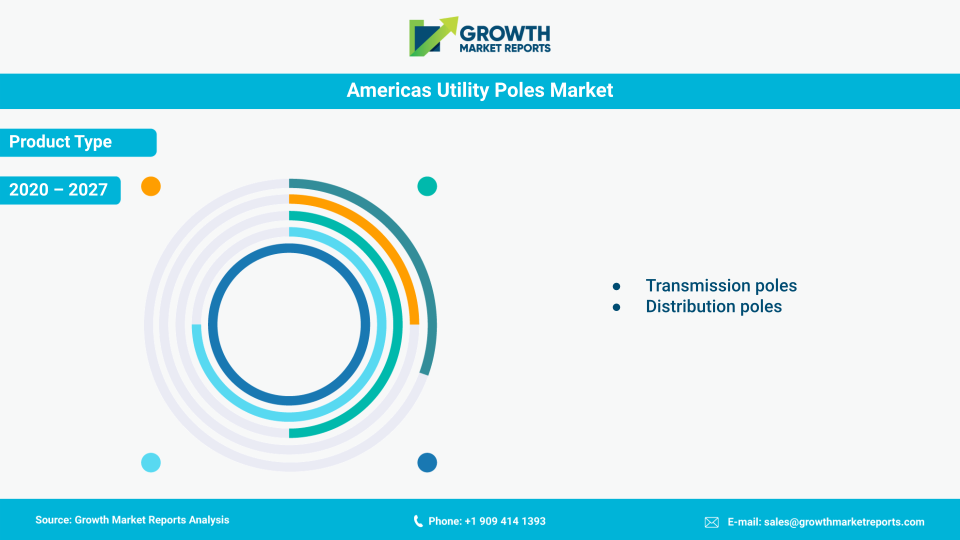
The utility poles market is segmented by application into transmission and distribution, each with distinct requirements and growth drivers. Transmission poles are designed to carry high-voltage electricity over long distances, connecting power generation facilities with substations and major load centers. These poles must withstand significant mechanical loads, environmental stresses, and the risk of damage from extreme weather events. The ongoing expansion of renewable energy projects, such as wind and solar farms, is driving substantial investment in new transmission infrastructure, necessitating the deployment of advanced utility poles capable of supporting higher voltages and longer spans. The modernization of aging transmission networks in developed markets is further contributing to the demand for robust, durable pole solutions.
Distribution poles, on the other hand, are used to deliver electricity from substations to end-users, including residential, commercial, and industrial customers. This segment accounts for the majority of utility pole installations worldwide, given the extensive nature of low- and medium-voltage distribution networks. Distribution poles are typically shorter and less robust than transmission poles, but they must be capable of supporting a variety of equipment, such as transformers, switches, and street lighting. The ongoing expansion of urban and suburban areas, coupled with efforts to improve grid reliability and resilience, is driving sustained demand for distribution poles. Upgrades to accommodate distributed energy resources, electric vehicle charging infrastructure, and smart grid technologies are further shaping the evolution of this segment.
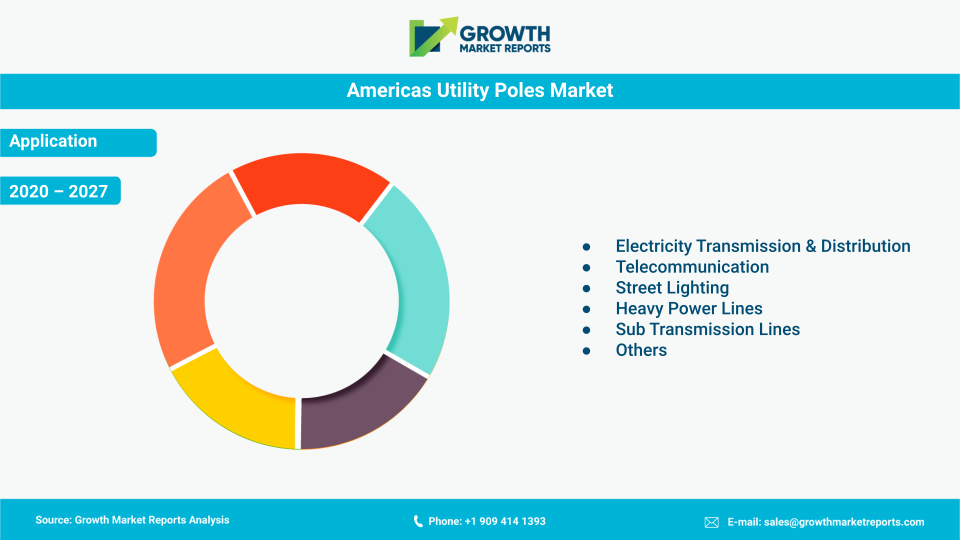
The integration of telecommunications and broadband services with power distribution networks is creating new opportunities for multi-purpose utility poles. Utilities are increasingly collaborating with telecom providers to deploy poles that can support both electrical and data transmission equipment, optimizing infrastructure investment and minimizing environmental impact. This trend is particularly pronounced in regions pursuing digital transformation and rural broadband initiatives, where shared pole infrastructure can accelerate project timelines and reduce costs. The convergence of power and communications networks is expected to be a key growth driver for the utility poles market in the coming years.
Both transmission and distribution applications are facing increasing scrutiny regarding environmental impact, safety, and reliability. Regulatory agencies are imposing stricter standards for pole design, materials, and installation practices to ensure long-term performance and minimize risks to public safety. Utilities are responding by investing in advanced pole technologies, such as fire-resistant coatings, anti-corrosion treatments, and integrated monitoring systems. These innovations are enhancing the durability and functionality of utility poles across all applications, supporting the ongoing evolution of modern power networks. As the demand for reliable, efficient, and resilient electricity delivery continues to grow, the application segment will remain a focal point for innovation and investment in the utility poles market.
The end-user segment of the utility poles market encompasses residential, commercial, industrial, and utility sectors, each with unique requirements and growth dynamics. The residential sector represents a significant share of utility pole demand, driven by the ongoing expansion of suburban and rural housing developments, as well as efforts to improve access to reliable electricity in underserved communities. Residential utility poles are primarily used for low-voltage distribution networks, supporting the delivery of electricity to individual homes and neighborhoods. The growing adoption of distributed energy resources, such as rooftop solar panels and home battery systems, is driving new demand for smart poles capable of supporting bidirectional power flows and advanced metering infrastructure.
The commercial sector is characterized by the need for robust and reliable power distribution to support businesses, retail centers, office complexes, and public facilities. Commercial utility poles must accommodate a higher density of electrical equipment and often require enhanced safety features to comply with building codes and regulatory standards. The increasing electrification of commercial transportation, including electric vehicle charging stations and public transit systems, is driving additional demand for utility poles in this segment. Utilities and developers are investing in advanced pole designs that can support both power and data transmission, enabling the integration of smart building technologies and IoT-enabled services.
Industrial end-users, including manufacturing plants, mining operations, and large-scale infrastructure projects, require heavy-duty utility poles capable of supporting high-capacity transmission and distribution networks. These applications often involve challenging environmental conditions, such as exposure to chemicals, extreme temperatures, and mechanical stresses. As a result, industrial utility poles are typically constructed from steel or composite materials to ensure maximum durability and performance. The ongoing expansion of industrial activity in emerging markets, coupled with efforts to modernize aging infrastructure in developed regions, is fueling sustained demand for utility poles in the industrial sector. The integration of real-time monitoring and predictive maintenance technologies is further enhancing the value proposition for industrial end-users.
The utility sector itself is the largest end-user of utility poles, responsible for the planning, installation, and maintenance of transmission and distribution networks. Utilities are under increasing pressure to improve grid reliability, integrate renewable energy sources, and comply with stringent regulatory requirements for safety and environmental performance. This is driving investment in advanced pole materials, smart monitoring systems, and innovative installation techniques. Utilities are also exploring new business models, such as pole sharing and infrastructure leasing, to optimize asset utilization and reduce costs. The evolving needs of utility end-users are shaping the direction of innovation and investment in the utility poles market, with a focus on enhancing reliability, resilience, and sustainability.
The utility poles market is segmented by installation type into new installation and replacement, each representing distinct growth drivers and challenges. New installations are primarily driven by the expansion of power transmission and distribution networks to accommodate growing electricity demand, urbanization, and rural electrification initiatives. Developing regions, particularly in Asia Pacific and Africa, are witnessing substantial investment in new utility pole installations as governments and utilities work to extend grid access to underserved communities. The proliferation of renewable energy projects, such as wind and solar farms, is also fueling demand for new utility poles to support the integration of distributed generation resources into national grids.
Replacement installations are a major growth area in mature markets such as North America and Europe, where a significant portion of existing utility poles are reaching the end of their service life. The replacement cycle is being accelerated by regulatory requirements for grid reliability, safety, and resilience, as well as the increasing frequency of extreme weather events and natural disasters. Utilities are prioritizing the replacement of aging wood poles with more durable alternatives, such as steel, concrete, and composite materials, to enhance grid performance and minimize maintenance costs. The integration of smart monitoring technologies is enabling utilities to identify and prioritize poles in need of replacement, optimizing maintenance schedules and resource allocation.
The choice between new installation and replacement is influenced by a variety of factors, including grid expansion plans, regulatory mandates, environmental considerations, and budget constraints. Utilities must carefully assess the condition and performance of existing infrastructure to determine the most cost-effective and reliable approach to network modernization. Advances in pole design, materials, and installation techniques are enabling faster, safer, and more efficient deployment of both new and replacement poles, reducing project timelines and minimizing disruption to communities and businesses.
The interplay between new installation and replacement activities is expected to drive sustained demand for utility poles across all regions and market segments. As utilities and governments continue to invest in grid modernization, electrification, and resilience, the need for both new and replacement utility poles will remain a key driver of market growth. The ongoing evolution of installation practices, supported by technological innovation and regulatory support, will shape the future trajectory of the utility poles market through the forecast period.
The utility poles market presents significant opportunities for growth and innovation, driven by the global transition to smart grids, the integration of renewable energy, and the expansion of electrification initiatives in developing regions. The adoption of advanced materials, such as composites and high-performance steel, is enabling the development of utility poles with superior durability, resilience, and environmental performance. These innovations are opening new markets and applications, particularly in areas prone to extreme weather and challenging environmental conditions. The integration of smart monitoring and IoT technologies is creating opportunities for utilities to enhance grid reliability, optimize maintenance, and reduce operational costs. As the demand for reliable, efficient, and sustainable electricity delivery continues to grow, manufacturers and service providers in the utility poles market are well-positioned to capitalize on emerging trends and technologies.
Another key opportunity lies in the convergence of power and telecommunications infrastructure, driven by the rollout of broadband and 5G networks. Utilities and telecom providers are increasingly collaborating to deploy multi-purpose poles that support both electrical and data transmission equipment, optimizing infrastructure investment and accelerating the deployment of digital services. This trend is particularly pronounced in regions pursuing digital transformation and rural connectivity initiatives, where shared pole infrastructure can deliver significant cost and time savings. The development of innovative pole designs and installation techniques is enabling faster, safer, and more efficient deployment of new infrastructure, further enhancing the value proposition for utilities, telecom providers, and end-users.
Despite these opportunities, the utility poles market faces several restraining factors, including rising raw material costs, regulatory challenges, and environmental concerns. The increasing cost of steel, concrete, and composite materials is putting pressure on manufacturers and utilities to optimize procurement and supply chain strategies. Regulatory requirements for environmental sustainability, safety, and performance are becoming more stringent, necessitating ongoing investment in research and development to meet evolving standards. Environmental concerns related to deforestation, chemical treatments, and end-of-life disposal are also influencing material selection and manufacturing practices. Addressing these challenges will require continued innovation, collaboration, and investment across the utility poles value chain.
Asia Pacific dominates the utility poles market, accounting for approximately USD 18.7 billion in market value in 2024, driven by rapid urbanization, extensive rural electrification projects, and expanding industrial activity. China and India are the primary contributors, with large-scale investments in grid expansion and modernization to support economic growth and rising electricity demand. Southeast Asian countries are also investing heavily in infrastructure development, further boosting demand for utility poles. The market in Asia Pacific is expected to grow at a CAGR of 5.6% through 2033, outpacing other regions due to sustained government support and robust infrastructure spending.
North America represents the second-largest market, with a value of USD 13.2 billion in 2024, driven by the replacement of aging infrastructure, grid modernization initiatives, and the integration of renewable energy sources. The United States and Canada are leading the charge, with utilities investing in advanced pole materials and smart monitoring systems to enhance grid reliability and resilience. The increasing frequency of extreme weather events, such as hurricanes and wildfires, is accelerating the replacement of traditional wood poles with more durable alternatives. The North American market is characterized by a strong focus on innovation, regulatory compliance, and sustainability, shaping the direction of product development and investment in the region.
Europe, Latin America, and the Middle East & Africa collectively account for the remaining share of the global utility poles market, with values of USD 8.9 billion, USD 4.3 billion, and USD 4.1 billion respectively in 2024. Europe is focused on grid modernization, renewable energy integration, and the replacement of legacy infrastructure, particularly in Western and Northern European countries. Latin America is witnessing steady growth due to ongoing electrification and infrastructure development projects, while the Middle East & Africa are investing in new installations to support urbanization and economic diversification. Each region presents unique challenges and opportunities, shaped by local regulatory frameworks, market dynamics, and infrastructure needs.
The utility poles market is highly competitive and fragmented, featuring a mix of global manufacturers, regional players, and specialized providers. The competitive landscape is shaped by factors such as product quality, material innovation, pricing, supply chain reliability, and customer service. Leading companies are investing heavily in research and development to develop advanced pole materials, coatings, and monitoring systems that offer superior performance, durability, and environmental sustainability. Strategic partnerships, mergers, and acquisitions are common as companies seek to expand their product portfolios, enter new markets, and enhance their competitive positioning. The ability to offer customized solutions, rapid delivery, and comprehensive support services is increasingly important in securing long-term contracts with utilities and infrastructure developers.
Innovation is a key differentiator in the utility poles market, with manufacturers focusing on the development of composite and hybrid poles, smart monitoring technologies, and eco-friendly manufacturing processes. The integration of IoT sensors and data analytics is enabling utilities to monitor pole health in real time, optimize maintenance schedules, and reduce operational costs. Companies are also exploring new business models, such as pole leasing and infrastructure-as-a-service, to provide greater flexibility and value to customers. Environmental sustainability is a growing priority, with leading players adopting sustainable sourcing, recycling, and end-of-life management practices to minimize their environmental footprint and comply with regulatory requirements.
Major companies operating in the global utility poles market include Valmont Industries, Stella-Jones Inc., KEC International, Skipper Limited, and Omega Factory. Valmont Industries is a global leader in engineered products and services for infrastructure and agriculture, offering a comprehensive range of steel, concrete, and composite utility poles. Stella-Jones Inc. specializes in the production and distribution of pressure-treated wood products, including utility poles, serving utilities and telecommunications companies across North America. KEC International is a leading provider of infrastructure solutions, including transmission and distribution poles, with a strong presence in Asia, Africa, and the Middle East. Skipper Limited and Omega Factory are recognized for their expertise in steel and composite pole manufacturing, serving diverse markets and applications worldwide.
These companies are focused on expanding their global footprint through strategic investments in manufacturing capacity, supply chain optimization, and customer engagement. They are also collaborating with utilities, government agencies, and technology providers to develop innovative solutions that address the evolving needs of the power and telecommunications sectors. As the utility poles market continues to evolve, the ability to deliver high-quality, reliable, and sustainable products and services will be critical to maintaining competitive advantage and driving long-term growth. The ongoing transformation of the utility infrastructure landscape presents significant opportunities for established players and new entrants alike, shaping the future trajectory of the global utility poles market.
The Utility Poles market has been segmented on the basis of
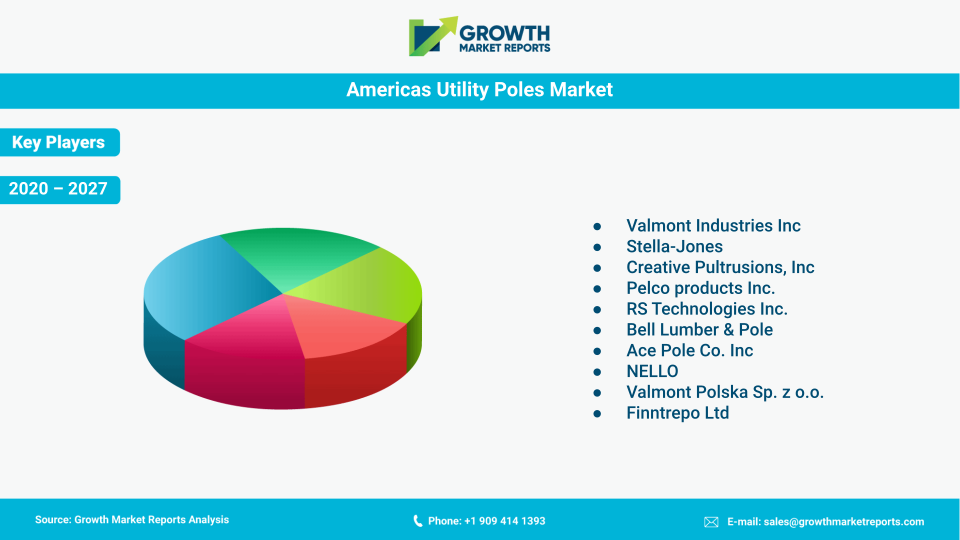
Top players in the market include Bell Lumber & Pole, Stella-Jones, NELLO, Pelco products Inc., and others are considered as key manufacturers of utility poles based on their revenue, research development (R&D) activities, product offerings, regional presence, and supply chain management system. The players are adopting key strategies such as acquisition, collaborations, and geographical expansion where potential opportunity for the Utility Poles Market. For Instance,
Major manufacturers include, Bell Lumber & Pole, Stella-Jones, NELLO, Pelco products Inc., and others
The electricity and telecommunication industry is the key end-user driving the utility poles market growth.
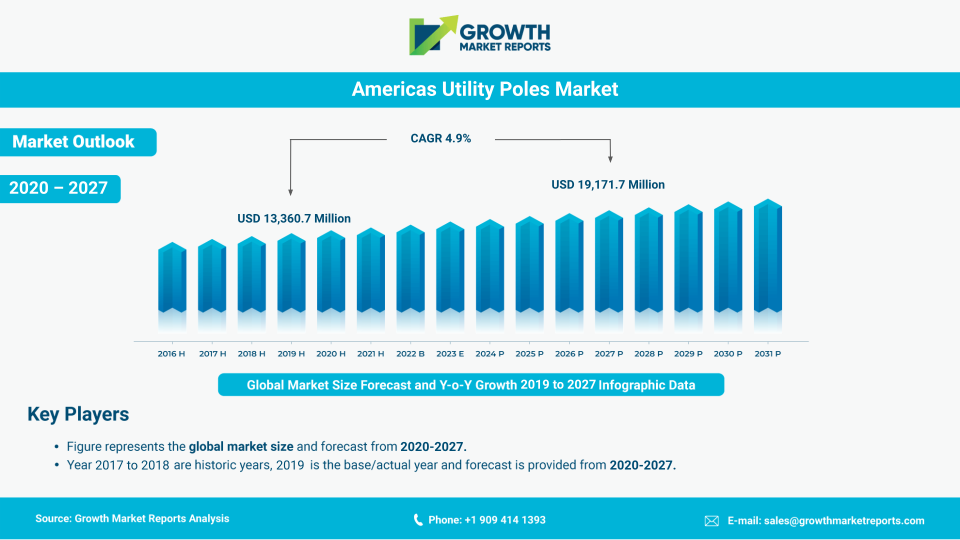
The base year considered for the Americas Utility Poles Market report is 2019. The complete analysis period is 2017 to 2027, wherein, 2017, and 2018 are the historic years and the forecast is provided from 2020 to 2027.
COVID-19 is impacting the production process of several manufacturing industries including the utility pole manufacturing business. Moreover, trade barriers are further reducing the demand-supply outlook, which has affected the demand for the utility poles. Factors such as the closure of manufacturing plants in the Americas and large-scale manufacturing interruptions have negatively impacted the market.
Factors such as competitive strength and market positioning are key areas considered while selecting top companies to be profiled.
Growing consumption of energy, continuous advances and growth of telecommunications industry, increasing application of utility poles, in power supply, telecommunication and street lightning are the factors propelling the market growth.
In addition to market size (in US$ Million), Company Market Share (in % for base year 2019), Market Volume (Thousands unit), other data such as energy demand outlook by region, and corrosion control methods being adopted in the final report.
According to this Growth Market Reports report, the market from Utility Poles Market is likely to register a CAGR of 4.9% during forecast period 2020-2027, with an anticipated valuation of US$ 19,171.7 million by the end of the 2027.
Yes, the report includes the volume data in the final report.
Additional company profiles can be provided on request.